The Rolex GMT-Master II has become one of those watches that almost doesn’t need explaining anymore. The Pepsi bezel, the travel-watch identity, the mix of sport-watch practicality and collector mythology — it’s all baked into the design language at this point. But for most buyers, the real conversation is not whether the GMT-Master II is desirable. It obviously is. The better question is what you buy when you want some of that same travel-watch energy without stepping into Rolex pricing, waitlists, secondary-market premiums, or the general weirdness that comes with chasing one.
That’s where the Imperial Oceanguard GMT and Vaer G2 Meridian GMT make for an interesting affordable Rolex GMT-Master II showdown. Both borrow from the larger Pepsi/GMT tradition, but they do it in very different ways. The Imperial leans more vintage, mechanical, limited-run, and microbrand enthusiast. The Vaer leans more practical, modern, quartz-powered, and easy to live with. So the real question is not which one is the better Rolex alternative on paper. It’s which one actually makes more sense once the GMT-Master II inspiration fades into the background and you’re just wearing the thing.
Overview & Identity
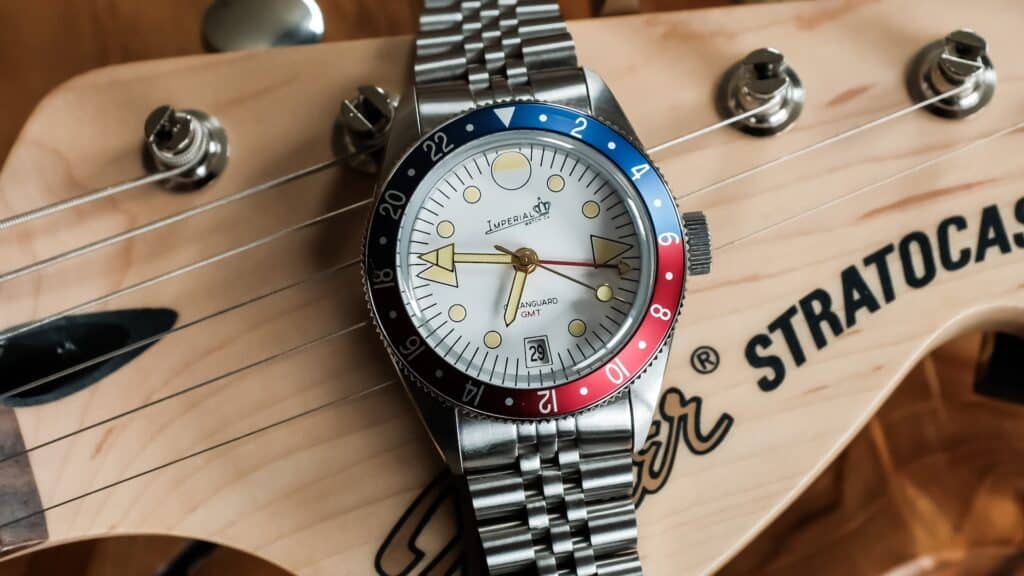
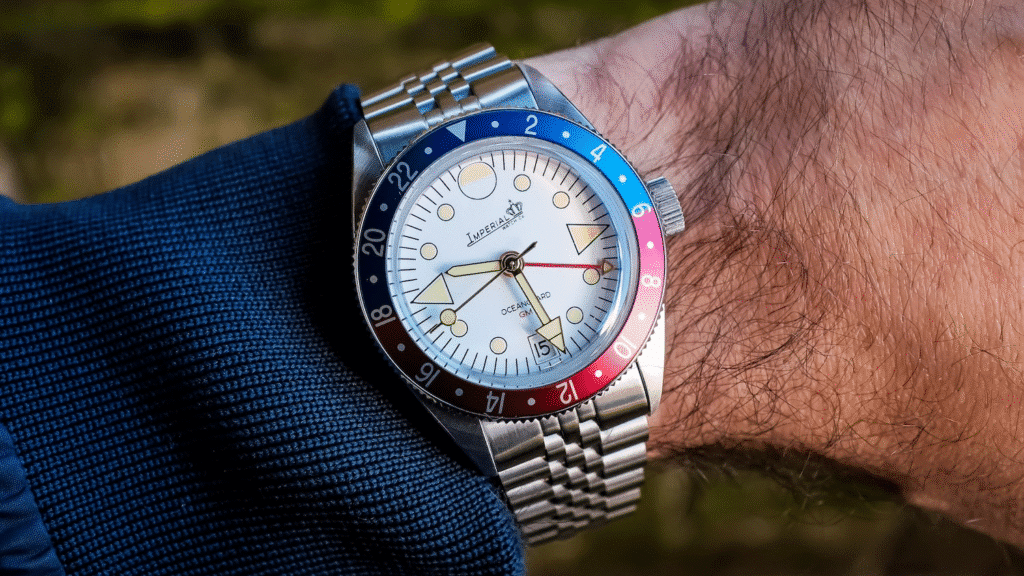
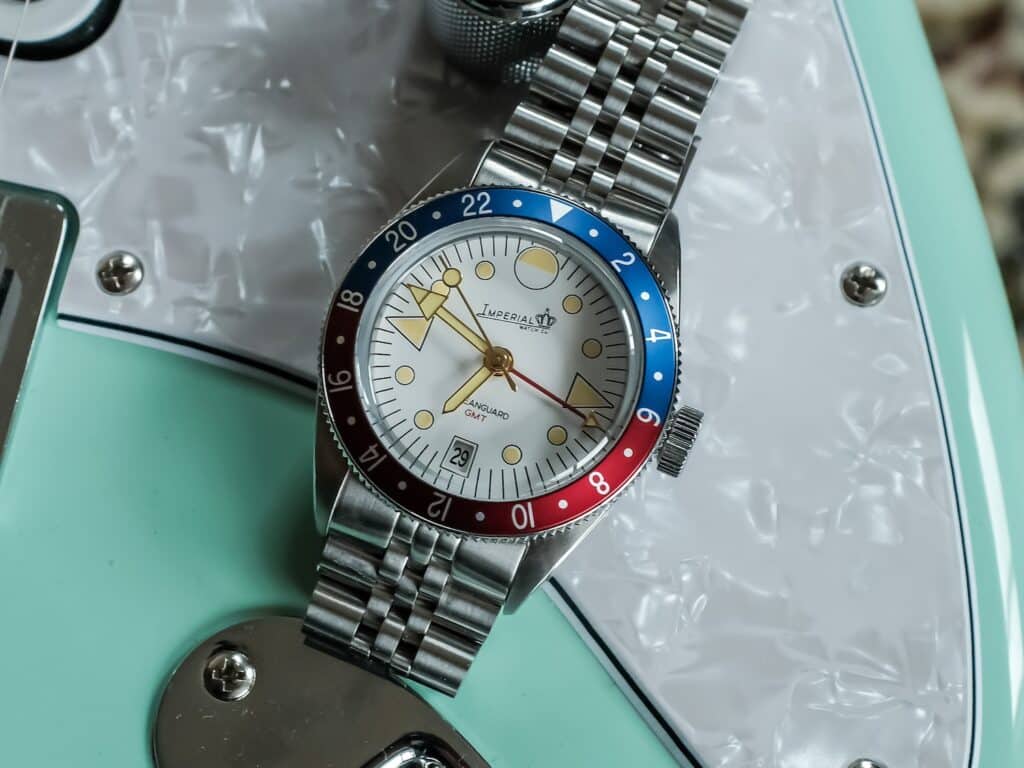
The Imperial Oceanguard GMT feels like the more romantic take on the affordable GMT formula. In our hands-on review, the “Jet Wash White” model immediately brought to mind the elusive Rolex 6542 “Albino” GMT-Master, but the watch didn’t feel like a lazy copy. It has a vintage-focused case size, a bi-colored bezel, a jubilee-style bracelet, and an NH34 mechanical GMT movement that gives it the kind of enthusiast appeal a lot of collectors still want at this price. It’s also clearly a microbrand watch in the best sense: limited, a little quirky, and more personality-driven than something designed to be endlessly available.
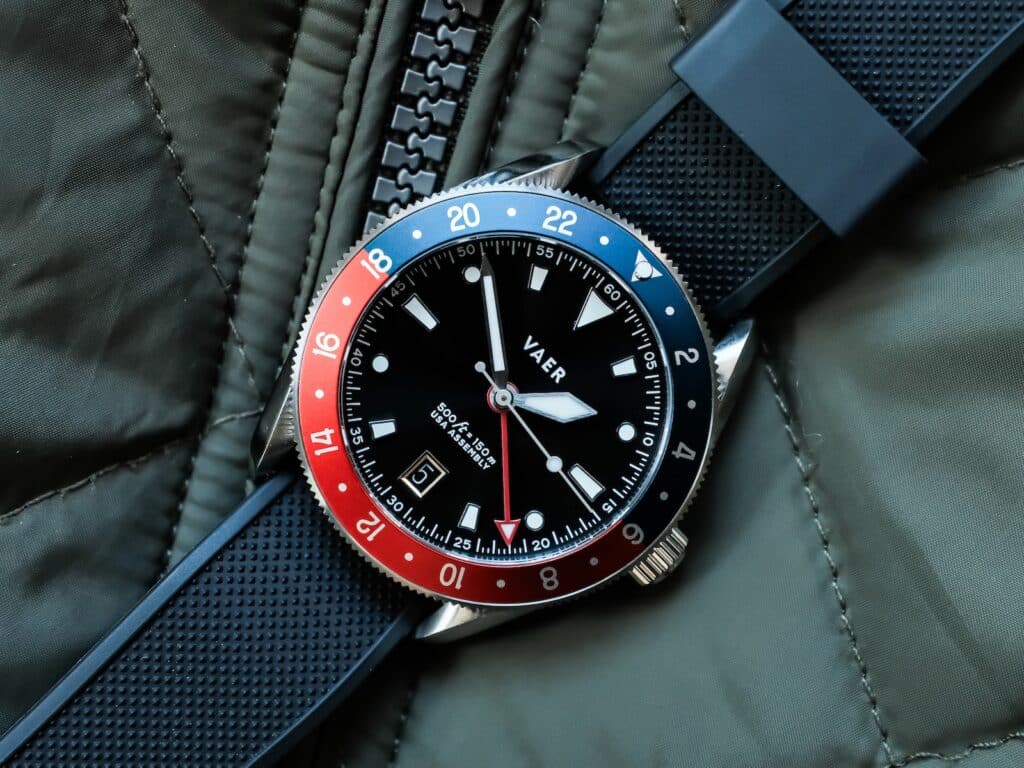
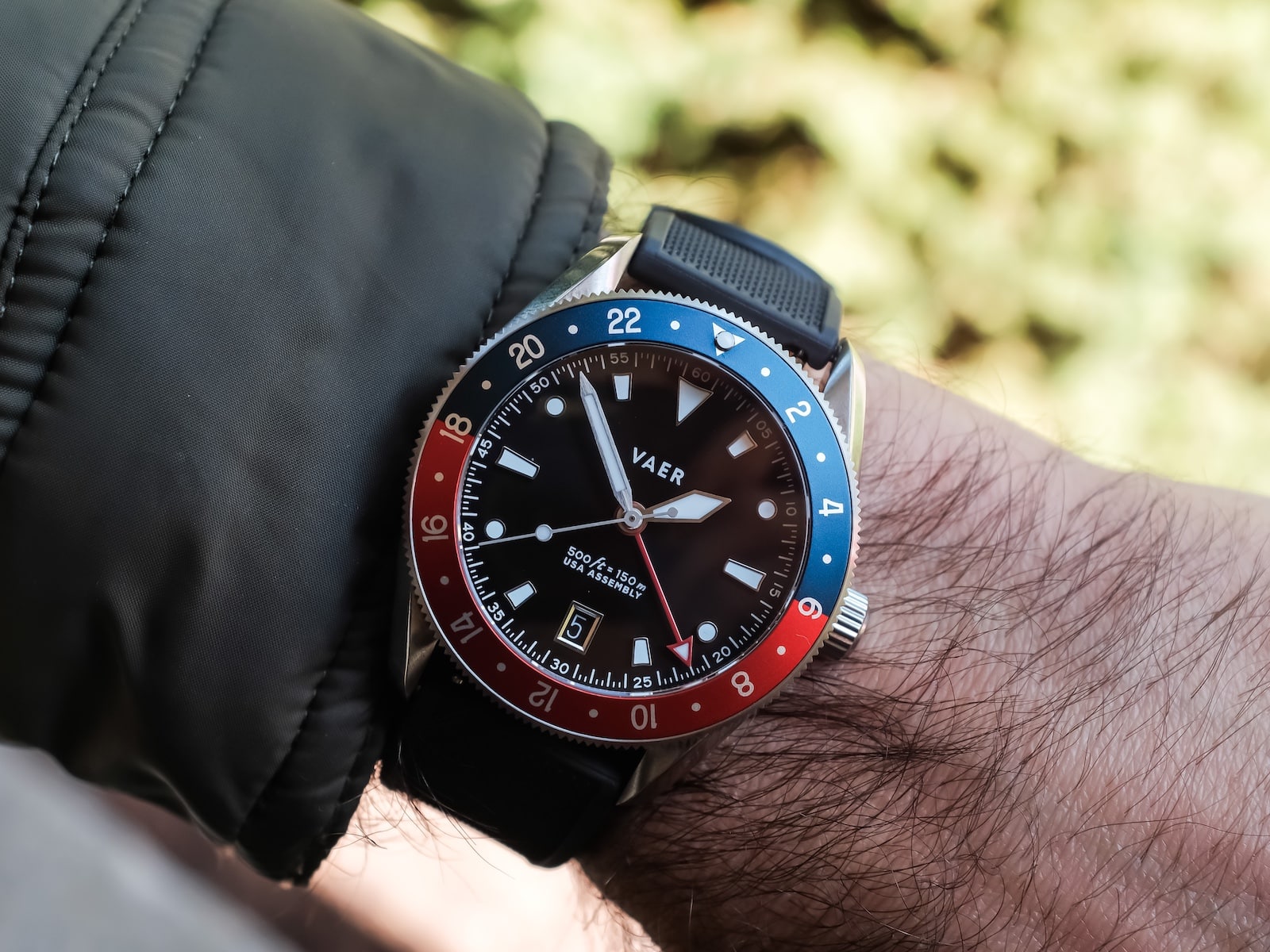
The Vaer G2 Meridian GMT takes a more grounded route. It still sits squarely in Pepsi GMT territory, but it feels less interested in recreating a specific vintage reference and more interested in building an easy, wearable everyday travel watch. The aluminum bezel, 39mm case, quartz Ronda GMT movement, and lightweight feel all push it toward practicality. While we conducted our hands-on review, the G2 Meridian came across as a watch you could throw on for travel, weekends, errands, or daily wear without making the ownership experience feel precious.
- The Imperial Oceanguard GMT is the more enthusiast-facing affordable GMT, with vintage Rolex-adjacent charm, mechanical appeal, and limited-run personality.
- The Vaer G2 Meridian GMT is the more practical affordable Pepsi GMT, built around slim wearability, quartz convenience, and everyday ease.
Design & Wearability: Vintage Microbrand Charm vs Modern Grab-and-Go Practicality
The Imperial Oceanguard GMT makes its case through vintage proportions and a more nostalgic design language. At 38mm in diameter, 47mm lug to lug, and 14mm thick, it has the footprint of an older-school sports watch, even if the thickness is still noticeable. In our review, that sizing helped the watch wear more comfortably than expected, especially because the overall silhouette feels closer to a vintage skin diver than a modern oversized GMT. The large 7.5mm crown adds to that tool-watch personality, and the bi-colored bezel gives it the GMT identity people are looking for without making the whole thing feel too costume-like.
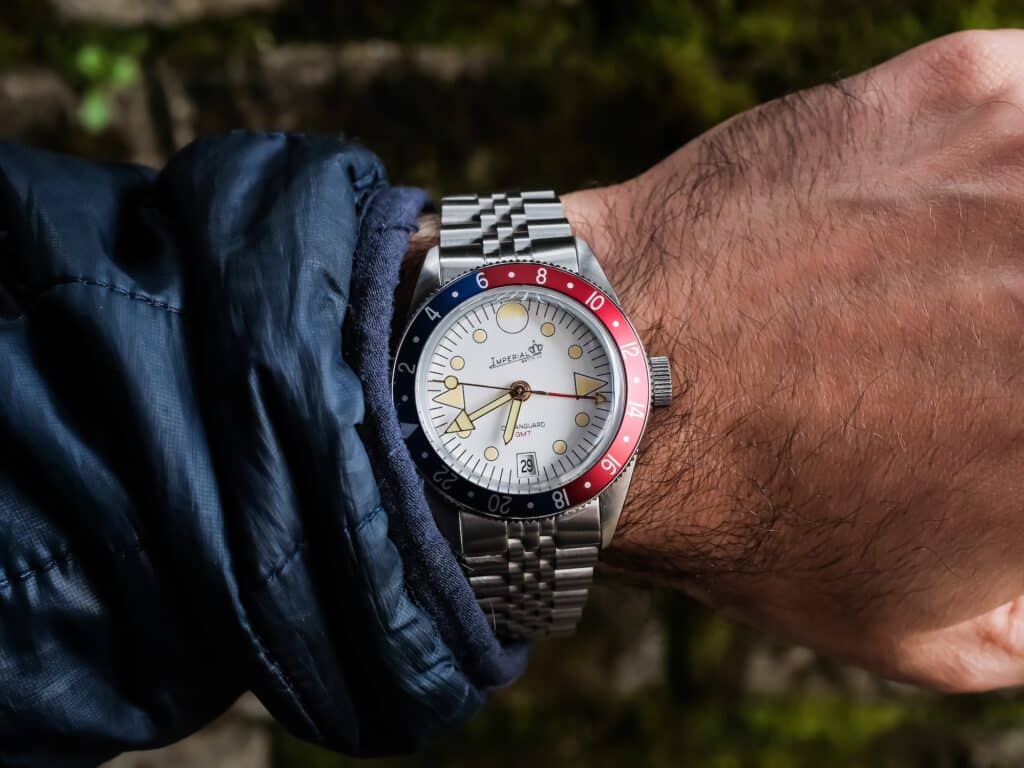
The “Jet Wash White” dial is where the Imperial really separates itself. The colorway has that rare white-dial GMT charm, and the warm lume tones keep it from feeling sterile. The big dots-and-triangles layout gives the dial strong legibility, while the date at 6 o’clock keeps the design balanced. It is busier than a simple field watch, obviously, but for a GMT with vintage inspiration, the layout works. The jubilee-style bracelet also fits the personality well. It tapers from 20mm to 16mm, articulates comfortably, and gives the watch the right vintage travel-watch feel. The clasp is a little thick, but the tool-less microadjust helps make up for that.
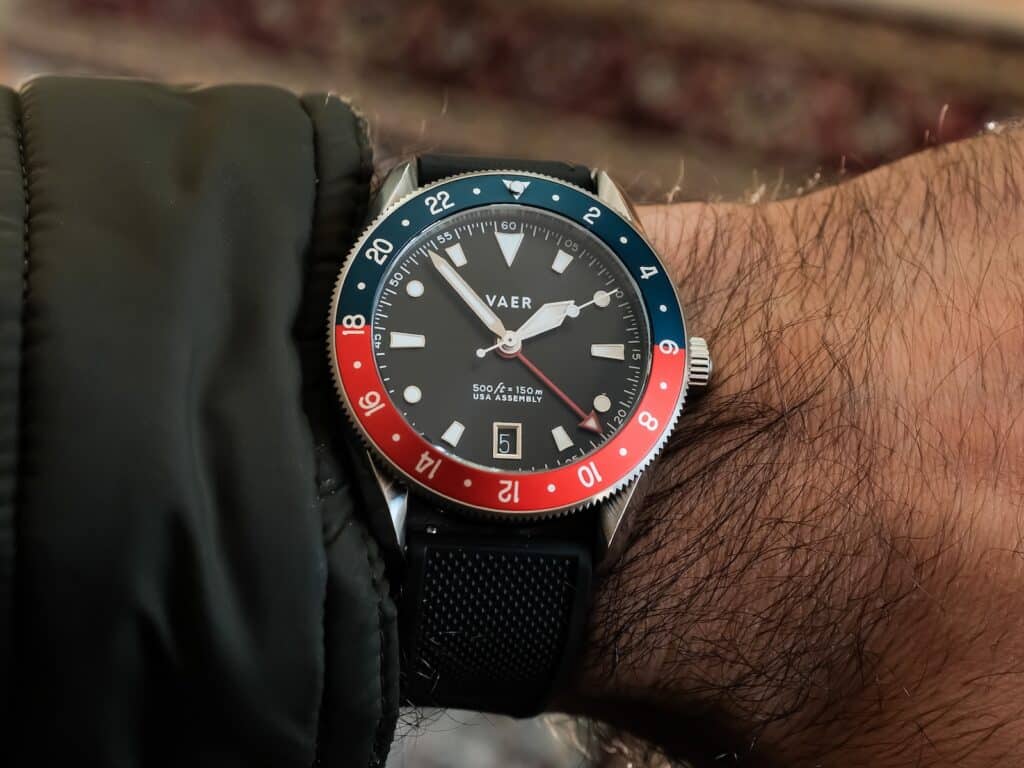
The Vaer G2 Meridian GMT is more restrained. The 39mm case, 46mm lug-to-lug measurement, and just-over-10mm thickness make it the easier watch to wear day to day. That thinness matters. A lot of affordable GMTs sound good on paper and then wear like small hockey pucks, but the Vaer avoids that trap. In our time with it, the case felt light, flat, and almost effortless, especially on the rubber strap. That gives it a very different personality from the Imperial. Where the Oceanguard feels like a fun enthusiast GMT, the Vaer feels like the one you grab without thinking.
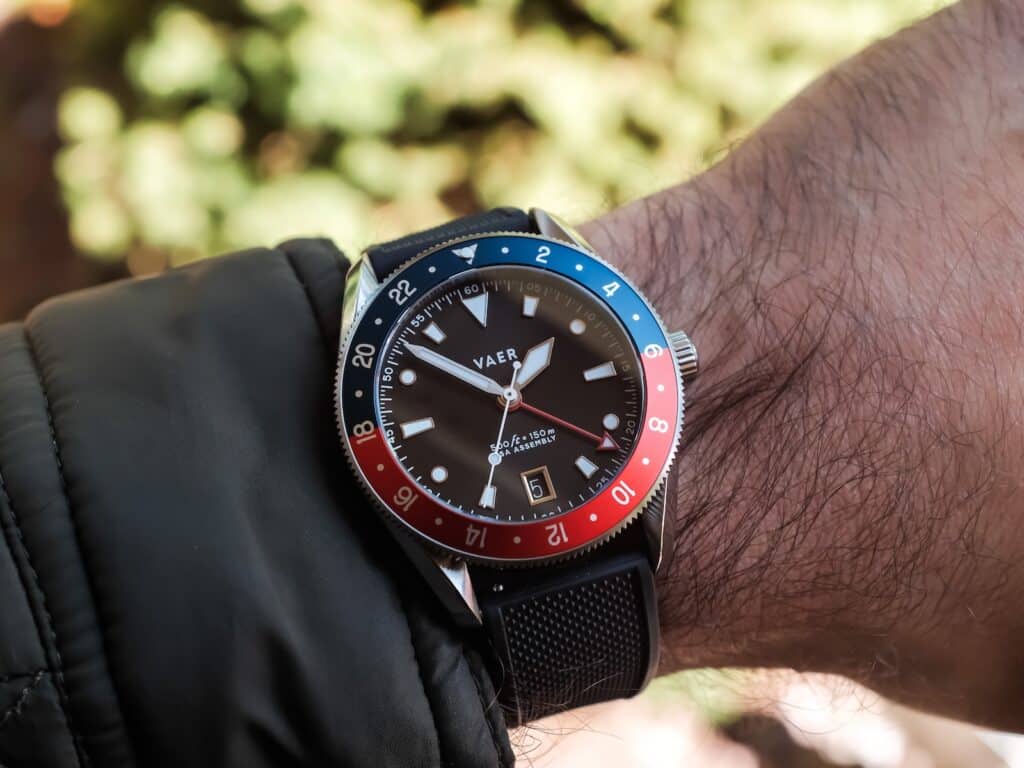
The dial and bezel also feel more modern in execution. The Pepsi colorway is familiar, but Vaer doesn’t overplay the vintage angle. Applied markers, a balanced date at 6 o’clock, strong contrast, and usable lume all make the watch feel straightforward. The aluminum bezel insert also makes sense here. Ceramic may sound more premium, but aluminum fits the watch’s lighter, more casual character. The one real issue is bezel alignment. In our review, the bidirectional action felt good, but there was some play, and the alignment didn’t always land perfectly on the markers. For some buyers, that will be easy to ignore. For others, it will be the detail they see every time.
- The Imperial Oceanguard GMT delivers more vintage charm, stronger mechanical-watch personality, and a bracelet setup that fits the old-school GMT mood.
- The Vaer G2 Meridian GMT is slimmer, lighter, more modern, and easier to wear as a low-maintenance everyday travel watch.
Build Quality & Technical Approach
Both watches aim for affordable GMT appeal, but they get there through very different priorities. The Imperial feels like it was made for the enthusiast who still wants a mechanical movement and a more collectible microbrand experience. The Vaer feels like it was made for the buyer who wants the GMT look and function without turning ownership into another hobby chore.
Movements
The Imperial Oceanguard GMT uses the Seiko NH34, which has become one of the most important affordable GMT movements in recent years. It’s mechanical, accessible, and gives smaller brands a way to build real GMT watches without pushing prices too far upmarket. In use, the NH34 gives the Oceanguard the kind of mechanical charm many enthusiasts still prefer. It is not a flyer GMT, and the independently adjustable hand is the 24-hour GMT hand, but that setup still works well when paired with a rotating 24-hour bezel. In our hands-on time, accuracy and movement behavior gave us no issues, and the whole setup felt appropriate for the price.
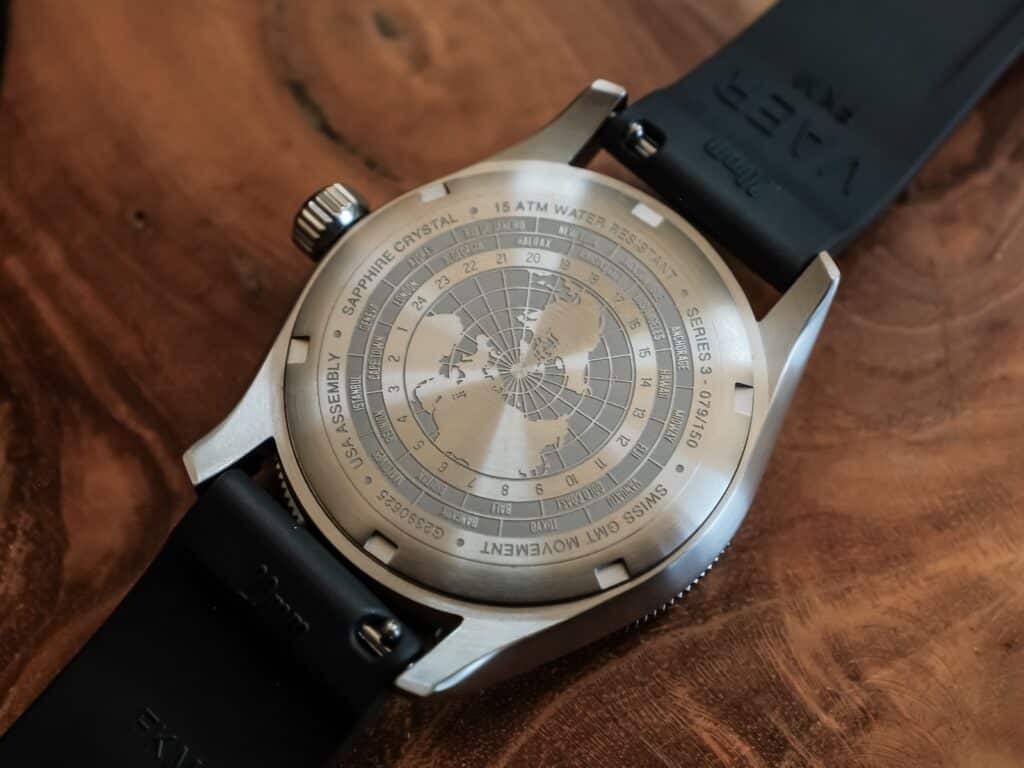
The Vaer G2 Meridian GMT uses a Swiss-made Ronda 515.24H quartz movement. That gives it a very different kind of appeal. It’s a caller-style GMT, so you adjust the 24-hour hand independently rather than jumping the local hour hand, but the ownership experience is extremely simple. It is always running, always ready, and doesn’t need winding, wearing, or resetting after sitting for a few days. For a travel watch or casual daily GMT, that matters. It may not satisfy someone looking for mechanical romance, but it makes a very strong argument for actual use.
- Imperial wins on mechanical charm.
- Vaer wins on convenience with a quartz movement.
Case Construction & Finishing
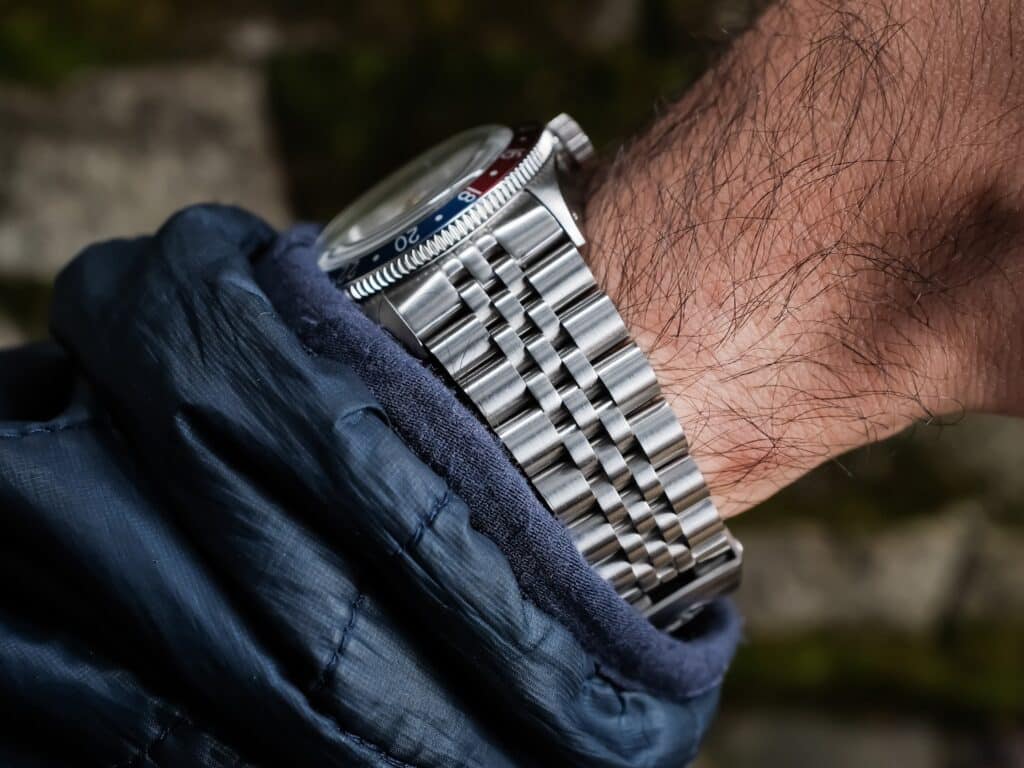
The Imperial Oceanguard GMT uses an all-stainless-steel case with utilitarian finishing. It doesn’t feel flashy, and that’s part of the appeal. The 38mm case gives it a compact vintage footprint, while the 200 meters of water resistance and screw-down crown add real sports-watch credibility. The large crown is one of those details that could have felt awkward, but in practice it ties into the design and makes the watch easier to operate. The 14mm thickness is the main drawback, but because the watch is smaller across the wrist, it doesn’t become a dealbreaker.
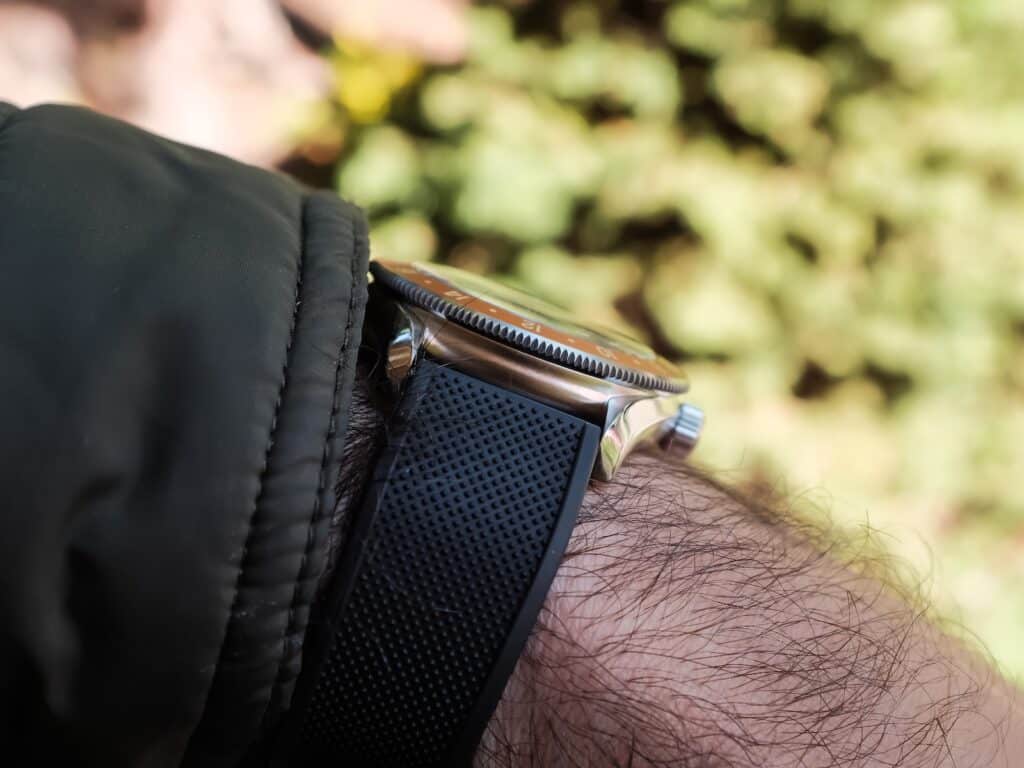
The Vaer G2 Meridian GMT is the cleaner everyday case. At 39mm wide and a little over 10mm thick, it wears noticeably flatter than the Imperial. The mix of brushed and polished surfaces gives it enough visual interest without making it feel dressy or fragile. The screw-down crown is easy to use, and the solid caseback fits the watch’s practical identity. Water resistance is 150 meters, which is more than enough for everyday travel, swimming, and general wear. It gives up 50 meters to the Imperial on paper, but in normal use, that difference probably won’t matter much.
- Imperial feels more vintage and enthusiast-driven.
- Vaer feels more refined for daily wear because the case is slimmer, lighter, and less demanding on the wrist.
Crystals & Bezel Execution
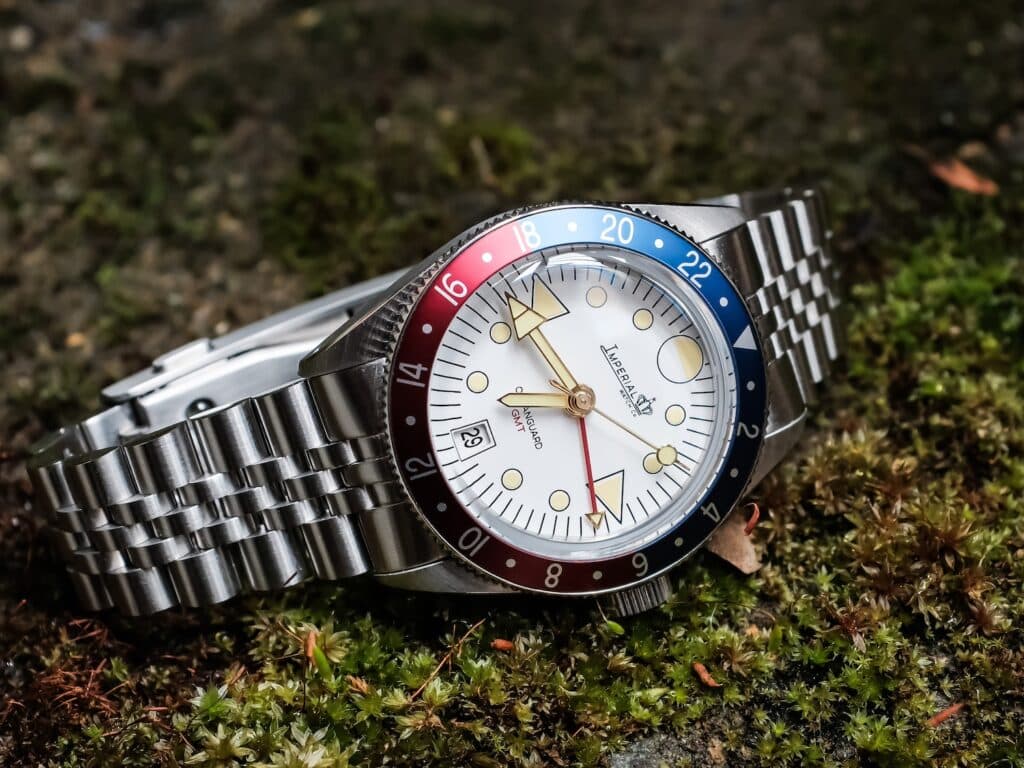
The Imperial Oceanguard GMT keeps things in line with the affordable mechanical GMT formula. The bi-colored bezel is central to the whole watch, and it gives the Oceanguard its most obvious Rolex GMT-adjacent personality. It’s not trying to be a modern ceramic Pepsi GMT. It’s more about vintage charm and practical second-time-zone tracking.
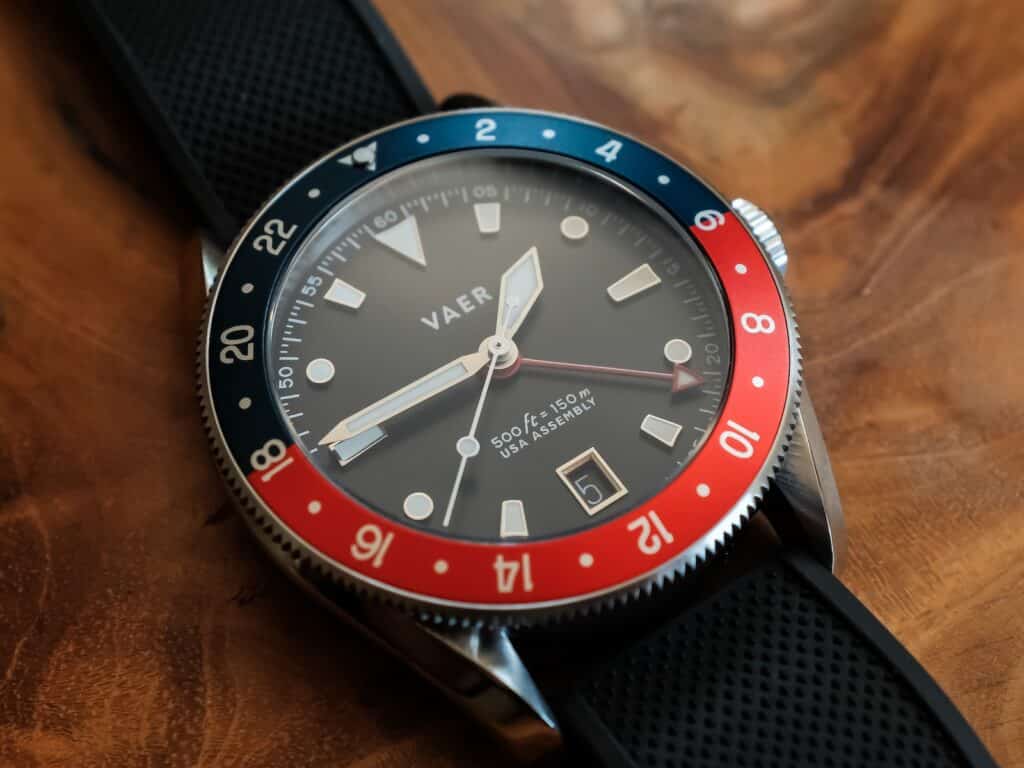
The Vaer G2 Meridian GMT uses an aluminum bezel insert as well, and that choice works for the watch. The issue is execution. The bezel action itself was defined and useful during our review, but the play and imperfect alignment stood out. On a watch that trades heavily on the familiar Pepsi GMT look, bezel alignment matters more than it might on a less symmetrical design. It doesn’t ruin the watch, but it is the biggest real-world flaw in the Vaer’s package.
- The Imperial feels more emotionally convincing as a vintage-style GMT.
- The Vaer is very usable, but the bezel alignment issue weakens its case if you’re picky about details.
Water Resistance & Daily Durability
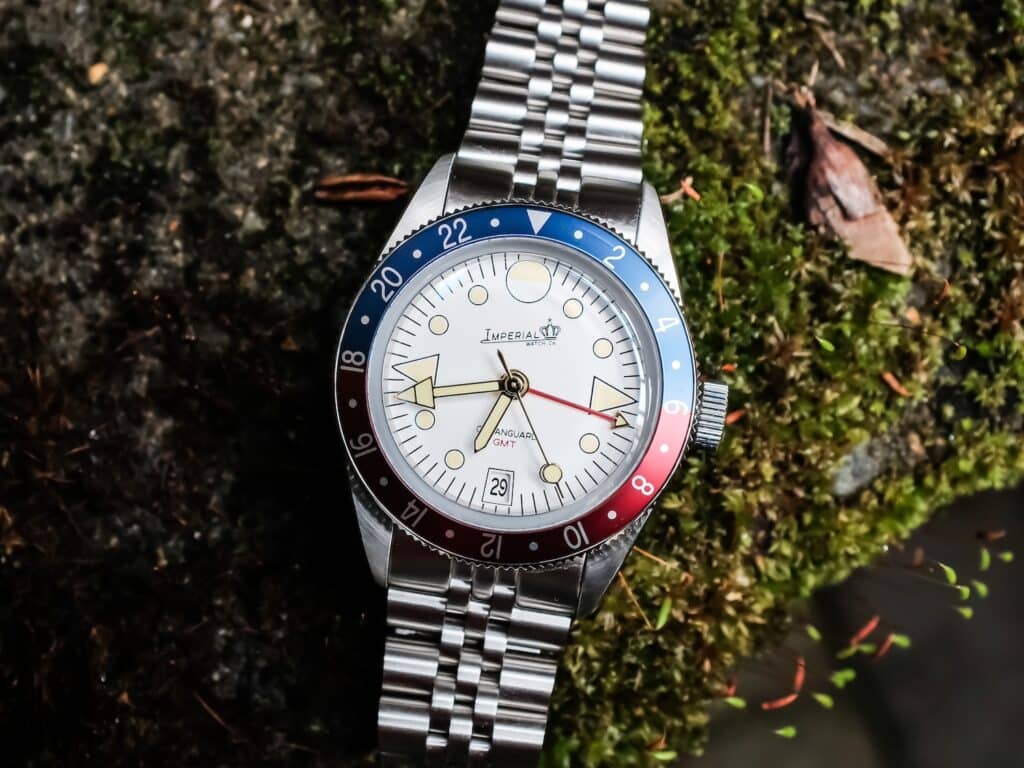
The Imperial Oceanguard GMT offers 200 meters of water resistance, which gives it a stronger sports-watch foundation than many affordable GMTs. Paired with the screw-down crown, stainless-steel case, and bracelet, it feels like a watch you can actually wear hard instead of treating as a fragile homage piece.
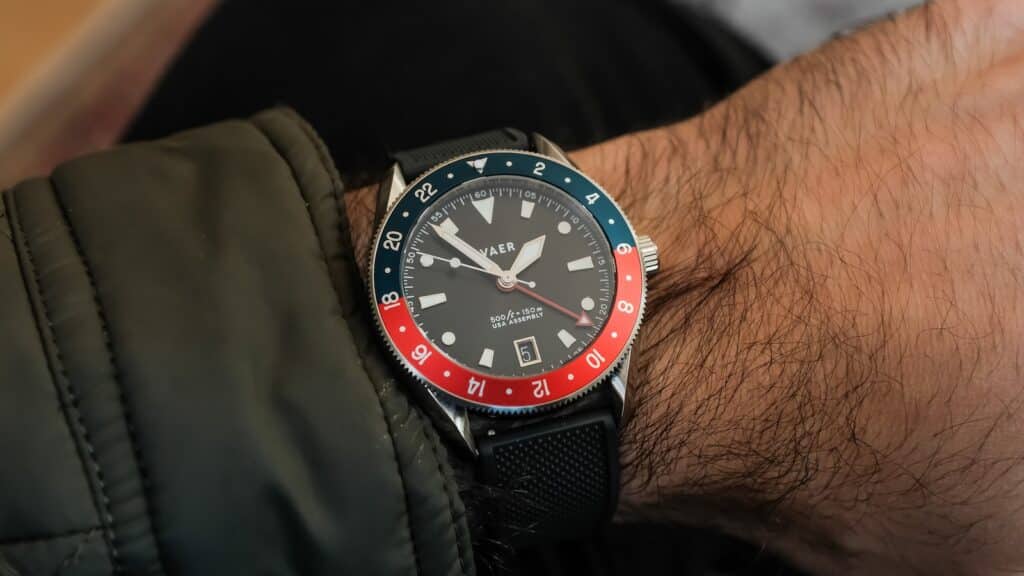
The Vaer G2 Meridian GMT offers 150 meters of water resistance, which still removes most real-world concern. It’s not a dive watch, but it does not need to be babied. The quartz movement also adds to that durability story in a practical way. There’s less mechanical fuss, less resetting, and less worry if it sits for a while between wears.
- Imperial has the stronger water-resistance spec.
- Vaer has the easier long-term ownership experience.
Cost Considerations
The Imperial Oceanguard GMT came in under $600, which makes its pitch pretty compelling if you want a mechanical, vintage-style GMT with a limited microbrand feel. You’re paying for the NH34 movement, the compact case, the jubilee-style bracelet, the water resistance, and the less common white-dial GMT look. The catch is availability. With each colorway limited to 25 pieces, this is not the kind of watch you can always casually recommend to someone six months later. That scarcity adds charm, but it also makes it less useful as a broad affordable Rolex GMT-Master II alternative.
The Vaer G2 Meridian GMT is much easier to understand at $399. It is cheaper, more available, slimmer, and more practical. You are giving up the mechanical movement, the 200-meter water resistance, and some of the enthusiast microbrand charm. But you are gaining a watch that makes more sense as a true grab-and-go GMT. For someone who wants the Pepsi GMT look without overthinking the purchase, the Vaer is the simpler recommendation.
If the Imperial feels like the cooler enthusiast pick, the Vaer feels like the smarter everyday buy.
Final Thoughts: Which Affordable Rolex GMT-Master II Alternative Makes More Sense?
The Imperial Oceanguard GMT is the one we’d point toward if you want more character. It has the mechanical movement, the vintage proportions, the jubilee-style bracelet, the white-dial GMT charm, and the limited-run microbrand personality. It feels like a watch made for someone who enjoys the story around the object almost as much as the object itself. It is not the easiest recommendation for everyone, partly because of the thicker case and partly because limited availability makes it harder to buy. But as an enthusiast-focused affordable GMT, it has a lot going for it.
The Vaer G2 Meridian GMT is the one we’d recommend to someone who wants the Pepsi GMT experience in the most practical form. It’s slimmer, lighter, less expensive, and easier to wear every day. The quartz movement may not excite mechanical purists, but it makes the watch better at being ready whenever you need it. That matters for a travel-style watch. The bezel alignment issue is the biggest drawback, and it is worth knowing about before buying. But if you can live with that, the G2 Meridian makes a very strong case as a practical, affordable GMT-Master II-adjacent daily.
So which one wins this affordable Rolex GMT-Master II showdown?
For us, the edge goes to the Vaer G2 Meridian GMT because it better captures what most buyers actually need from this category: the Pepsi GMT look, easy wearability, travel-friendly utility, and a price that keeps the whole thing grounded. The Imperial Oceanguard GMT is probably the more interesting watch for collectors, and it may be the one we’d rather talk about over drinks. But the Vaer is the one that makes more sense as a real-world affordable GMT you can wear without thinking too hard.
That said, if your version of value includes mechanical charm, microbrand personality, and a stronger vintage GMT vibe, the Imperial is absolutely the more emotionally compelling pick.
Let us know your thoughts on our analysis in the comments below.

Co-Founder and Senior Editor
Kaz has been collecting watches since 2015, but he’s been fascinated by product design, the Collector’s psychology, and brand marketing his whole life. While sharing the same strong fondness for all things horologically-affordable as Mike (his TBWS partner in crime), Kaz’s collection niche is also focused on vintage Soviet watches as well as watches that feature a unique, but well-designed quirk or visual hook.
Kaz, I don’t know why I was so negatively impressed by ALL of the photos, but my guess is they had terribly badly matched handsets. A couple had ”3” and “9” indices that were the usual size and shape of GMT indicator hands. The GMT hands in all of them were miniscule. I did not like any of the watches displayed. I guess I’ll wait for better luck next time for what I like best.
Taste is taste, and if the proportions don’t work for you visually, nothing else about the watch is going to save it. Hopefully the next roundup lands better. Thanks for reading.