A durable watch usually announces itself in a pretty unglamorous way. It’s the one that keeps ending up on the wrist when we’re late, digging through the yard, heading to the pool, or just too tired to baby anything that day. It may live on a hallway table beside the keys instead of in a watch roll, and after a while, that tells us more than any macho spec sheet ever will. So this list of the most durable watches comes down to a simple question: which pieces still feel built to last once the novelty wears off and they have to function as actual everyday watches?
We’re coming at that question the way most collectors do, by remembering what stuck. At TBWS, we’ve spent years living with watches long enough to get past the opening crush, including pieces we deliberately waited on before reviewing, divers that won us over with function-first design instead of theatrics, and others that impressed us while still showing their trade-offs—like the kind of heft that keeps a supposedly serious tool watch from being a true wear-and-forget companion. That’s why our honest watch reviews tend to trust behavior over brochure copy: if a watch can survive real use, feel right on the wrist, and still make sense after the honeymoon phase, it belongs here.
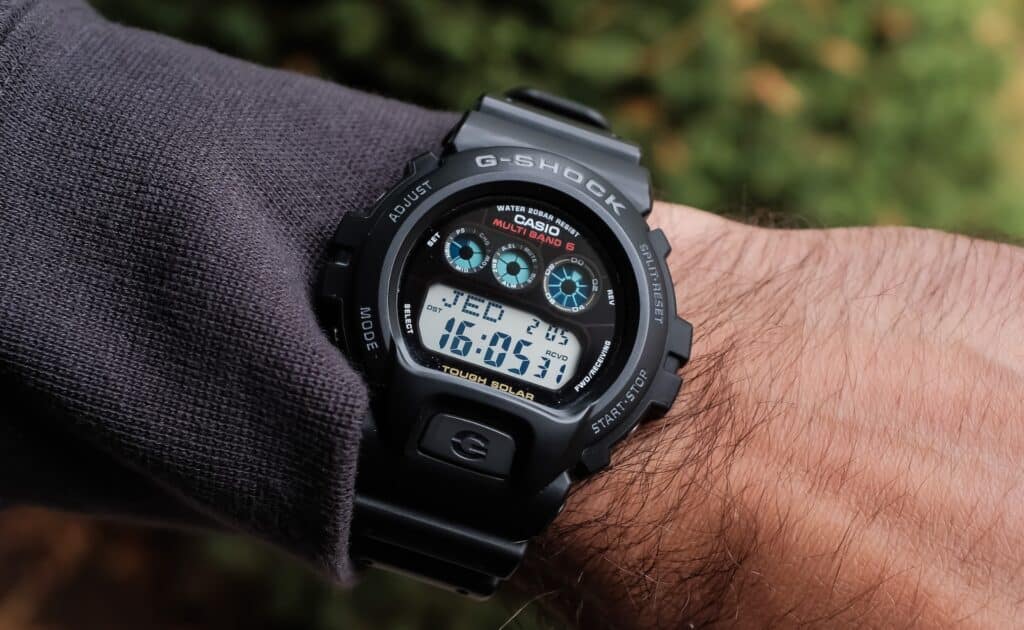
Casio G-Shock GW6900-1
| Price: | $140 |
| Water Resistance: | 200m |
| Case Dimensions: | 53.2mm (diameter) x 50mm (lug-to-lug) x 17.7mm (thickness) |
| Lug Width: | 16mm |
| Movement: | Solar Quartz Module 3179 |
Not every durable watch has to look like a traditional tool diver to earn its keep. The GW6900 has always felt more honest than that. It’s the watch we grab when the day looks messy, and we don’t feel like negotiating with our gear—yard work, rushed mornings, rain, knocks, water, whatever. It replaces the usual dive-watch theatrics with a kind of blunt usefulness that makes a lot more sense in everyday life.
What still surprises us is how wearable it is once it’s on. On paper, the case sounds too big at a little over 50mm wide and almost 18mm thick, but the resin construction and steel caseback keep the weight low enough that it never feels like a brick. It wears more like a protective shell than a dense chunk of watch, which is probably why we stop noticing it until it smacks a doorframe or catches on a hard surface. Usually, the watch comes away looking better than whatever it hit.
The digital display is busy for the first couple of days, no question. That triple-eye layout can read like a dashboard until your brain adjusts to it. After that, it becomes quite easy to live with. The main screen handles time and date cleanly, the upper indicators keep track of things like stopwatch activity or radio syncing, and the little dual-time display tucked into the corner is one of those features we ended up appreciating more than expected. The stopwatch measures down to 1/100 of a second, and we’ve used it for everything from workouts to timing a pour-over. Add in a countdown timer and five alarms, and it covers more daily annoyances than most analog watches ever could.
The low-maintenance part is where this thing really earns its spot. Tough Solar means regular exposure to light keeps it going, so battery changes are more or less a non-issue. Multi-Band 6 syncs to atomic time signals overnight across regions such as the U.S., UK, Japan, Germany, and China, and, in our experience, it corrects itself most nights without us doing a thing. We’ve left it sitting for weeks, picked it back up, and found it still ready to go. The large front button activates a bright green EL backlight that illuminates the entire display evenly. It’s older-school compared to newer LED setups, but it works without drama.
Even the stock strap makes sense once it breaks in. Out of the box, the resin has that slightly stiff, squeaky feel G-Shock fans know all too well, but it loosens up pretty quickly and starts wrapping the wrist better than expected. It dries fast after water exposure, stays comfortable over long stretches, and never gives much reason to start shopping for replacements.
Pros
- Solar charging keeps upkeep to a near-zero level.
- The green EL backlight is bright, simple, and easy to use at night.
- Stopwatch, timer, alarms, and dual time all add real daily utility.
- Atomic radio syncing keeps accuracy dialed in with almost no effort.
- The lightweight resin build makes the size easier to live with than the measurements suggest.
Cons
- It still wears large, and smaller wrists will notice that immediately.
- The resin strap starts stiffer and noisier than we’d like.
- The display takes a little time to feel intuitive.
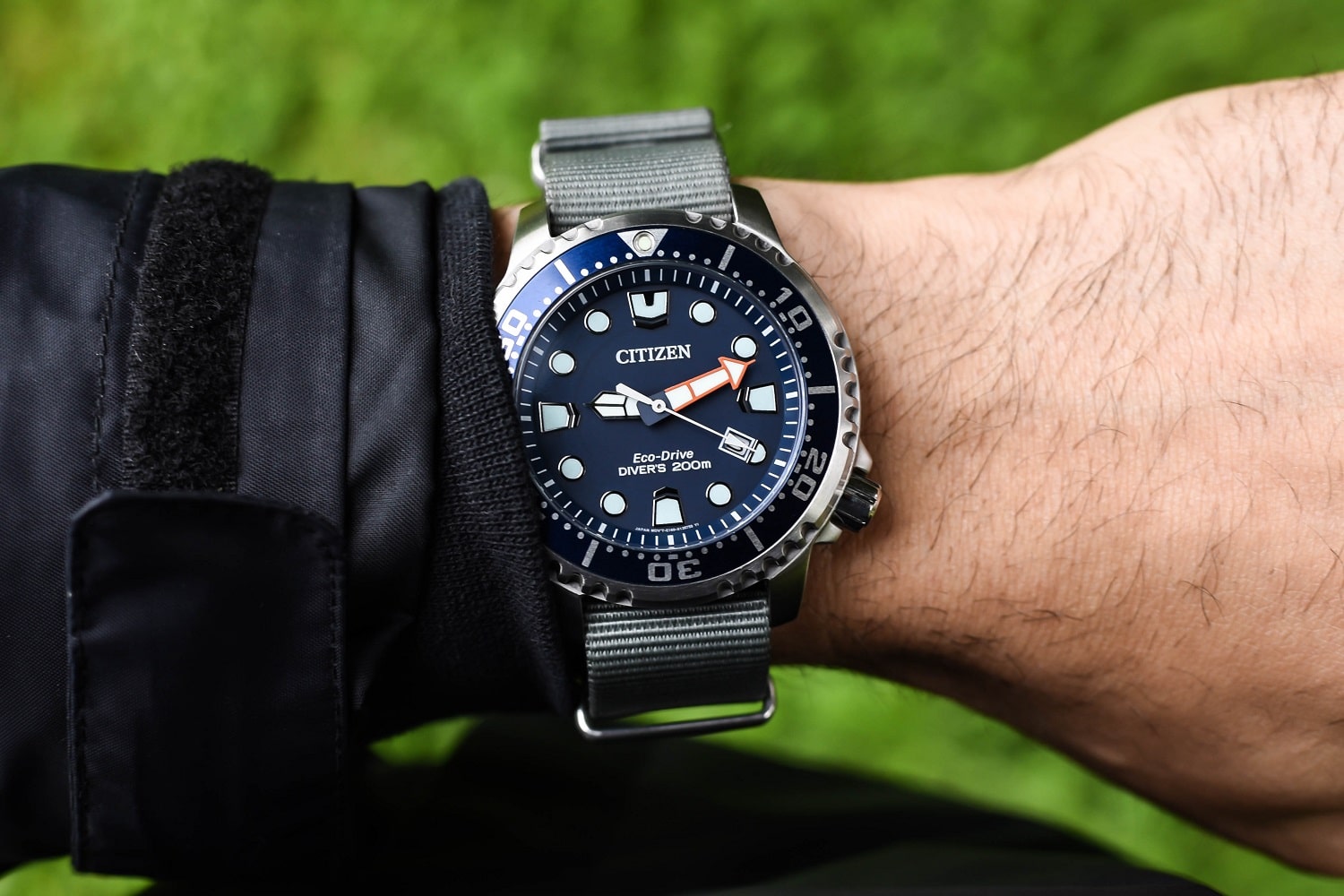
Citizen Promaster Diver BN0151
| Price: | $250 – $350 |
| Water Resistance: | 200m |
| Case Dimensions: | 43mm (diameter) x 48mm (lug-to-lug) x 11.5mm (thickness) |
| Lug Width: | 20mm |
| Movement: | Citizen Eco-Drive E168 |
The BN0151 earns its place here because it makes durability feel uneventful, which is often the point. It’s not a watch that begs for attention every time you glance down. It’s the one that slips into the rotation and then quietly stays there because nothing about owning it feels demanding. We kept coming back to it for the same reason people keep a good flashlight in the junk drawer: it works, it’s ready, and it doesn’t turn routine use into a maintenance ritual.
A lot of that comes back to Citizen’s Eco-Drive setup. Once fully charged, we consistently saw around six months of runtime, and during hands-on testing, it stayed within roughly ±15 seconds per month. That kind of performance changes how the watch fits into daily life. There’s no winding habit to build and no battery swap hanging over your head. We only ran into the low-power indicator once, and even then, a little time under light brought it right back. For a watch that’s supposed to feel dependable over the long haul, that low-drama ownership experience matters more than people sometimes admit.
It also wears with less bulk than the 43mm case size suggests. The short lug-to-lug span and the way the case curves downward help it sit securely, while the overall weight feels lighter than expected, almost flirting with that airy titanium feel even though it isn’t trying to make a big show of it. The 4 o’clock crown is another practical choice that pays off over long wear. It stays out of the way and doesn’t jab the wrist, which is the kind of detail that separates a watch you respect from a watch you keep reaching for. Add 200 meters of water resistance, and it becomes the sort of piece we never thought twice about wearing in the pool or through rougher conditions.
Long-term trust also comes from how readable the thing is. In daylight, the hands and markers stand out cleanly, and in low light, the aqua-toned lume stays visible for hours. The little lume pip on the seconds hand helps too, especially when you want that quick reassurance that the watch is still running without staring at it. The blue dial shifts slightly toward purple at certain angles, adding some personality without compromising legibility. Even the mineral crystal held up better than expected during extended wear. We didn’t come away wishing it had sapphire every time we brushed past something.
That said, the weak spots are real, not deal-breakers. The bezel’s 60-click action feels measured and controlled, and alignment stayed consistent in our experience, but the grip can get a little slippery when wet. The stock polyurethane strap also feels pretty stiff at first and takes longer than we’d like to loosen up. We moved it onto a NATO quite early, and honestly, that made the whole watch feel better balanced and easier to live with.
Pros
- Eco-Drive keeps upkeep minimal while still delivering about six months of runtime on a full charge.
- Accuracy stayed around ±15 seconds per month in our testing, which makes it easy to leave alone and wear.
- The case wears smaller and lighter than the numbers suggest, helped by the short span and downward curve.
- Day-to-day legibility is excellent, and the lume remains useful for hours.
- The 4 o’clock crown and 200m water resistance make it easy to wear hard without much second-guessing.
Cons
- The mineral crystal holds up well, but it still won’t match sapphire for scratch resistance.
- The bezel action is controlled and well-aligned, though the edge can feel slick when your hands are wet.
- The stock polyurethane strap does the job, but it starts stiff and takes a while to break in.
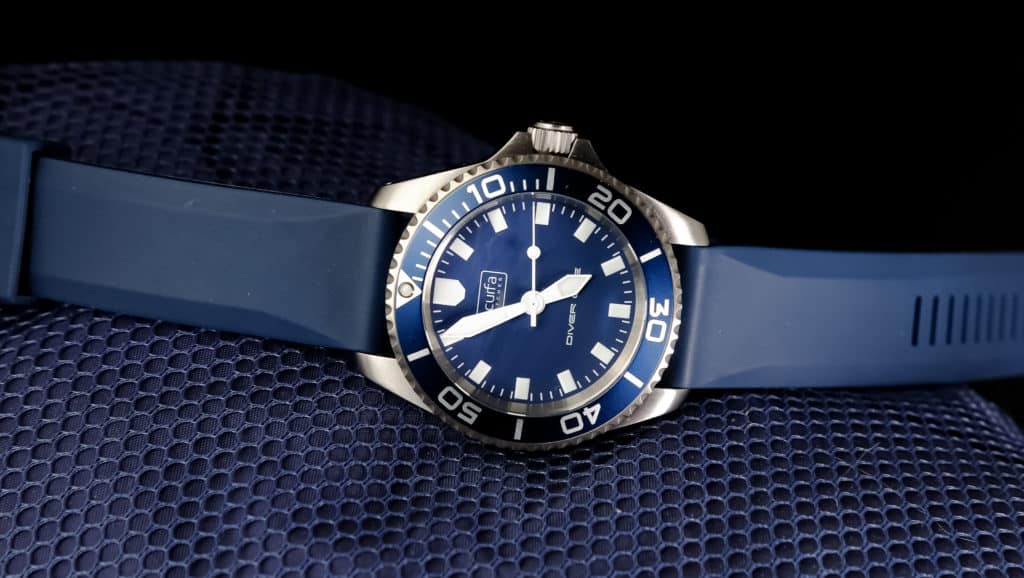
Scurfa Diver One
| Price: | $250 – $399 |
| Water Resistance: | 500m |
| Case Dimensions: | 40mm (diameter) x 47mm (lug-to-lug) x 14mm (thickness) |
| Lug Width: | 20mm |
| Movement: | ETA F06.402 (Quartz Movement) |
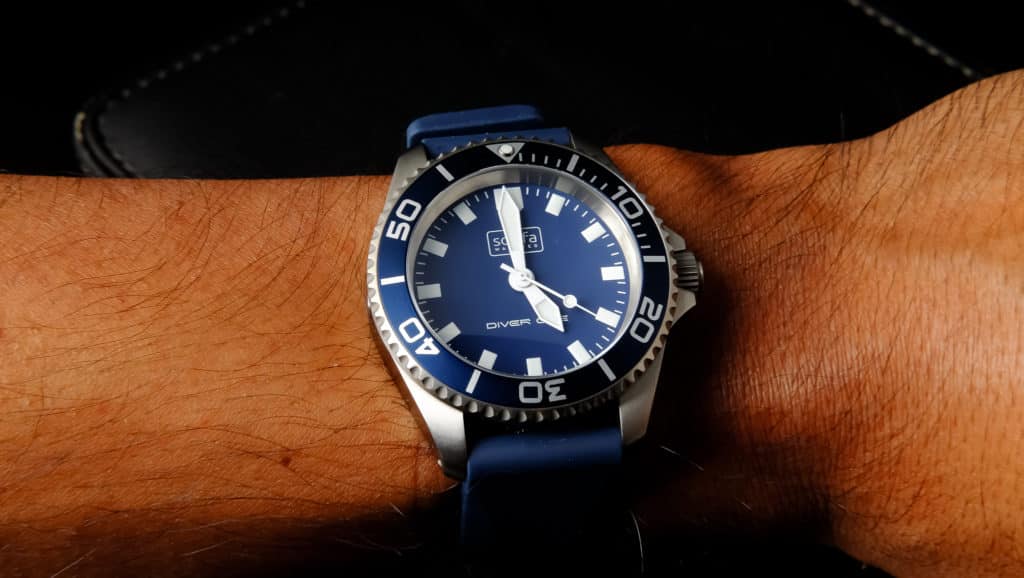
The first thing that wins us over with the Diver One is how little mass it carries for a watch this serious. Titanium can sometimes make a watch feel a bit hollow or too featherweight to inspire confidence, but that’s not what happens here. The case feels solid, but without the kind of heft that makes a long day of wear a chore. That matters with a tool watch, because durability is a lot easier to appreciate when the thing doesn’t constantly remind you it’s on your wrist.
What makes the watch more interesting is that it doesn’t come from a boardroom idea of toughness. Paul Scurfield, a saturation diver, designed it, and that practical background shows up all over it. The 500 meters of water resistance, screw-down crown, and helium escape valve don’t read like empty flexes here. They feel like decisions made by someone who understands what reliability looks like when failure would be more than an inconvenience. That’s a different kind of credibility than most “built for adventure” marketing copy tries to fake.
Even with a 40mm case and 14mm thickness, the Diver One wears flatter than we expected. The contoured mid-case helps keep wrist contact to a minimum, making it more comfortable than many divers that sound similar on paper. It sits securely, works well on land, and never feels like it’s fighting the wrist. The included rubber strap helps with that, too. It feels tough, secure, and no-nonsense, and the drilled lugs reinforce the idea that this is a watch meant to be used, not fussed over.
The dial and bezel stay focused on function, but they’re not dead inside. The sword hands and oversized hour markers make the watch easy to read in poor light, and that matte blue dial has enough tonal shift in daylight to keep it from feeling sterile. The domed sapphire crystal adds a little edge distortion, which gives the watch some visual character without getting in the way. Lume is another strong point. The BGW9 Super-LumiNova gets bright quickly, including in those short bursts of light where some watches barely wake up, and it stays useful after that. The bezel action is equally convincing—firm, precise, and grippy enough to feel deliberate whether you’re timing a dive or something far less heroic, like coffee.
Inside, the Swiss Ronda 713SM quartz movement fits the watch’s personality perfectly. It’s accurate, dependable, and paired with a five-year battery life, making ownership as straightforward as it gets. The only real compromise is philosophical, more than practical. If you need a mechanical movement to feel emotionally invested in a watch, this one may leave you cold. And while it wears flatter than expected, 14mm is still 14mm, so smaller wrists may find it a bit too tall. Still, as a durable watch that feels engineered with actual purpose, the Diver One makes a very convincing case for itself. For more detailed insights, check out our hands-on review.
Pros
- The titanium case feels quite sturdy while staying light enough for long, easy wear.
- The rubber strap, titanium hardware, and drilled lugs all support the watch’s use-first design.
- Legibility is excellent thanks to the sword hands, oversized markers, and strong BGW9 lume.
- The bezel action feels precise and confident, with enough grip to be useful in practice.
- 500m water resistance, a screw-down crown, and a helium escape valve give it real tool-watch credibility.
Cons
- The quartz movement makes sense here, but mechanical diehards may not connect with it.
- At 14mm thick, it can still feel a bit tall on smaller wrists.
Casio G-Shock Mudmaster GG-1000
| Price: | $350 – $500 |
| Water Resistance: | 200m |
| Case Dimensions: | 56.2mm (diameter) x 55.3mm (lug-to-lug) x 17.3mm (thickness) |
| Lug Width: | 24mm |
| Movement: | Quartz Module 5476 |
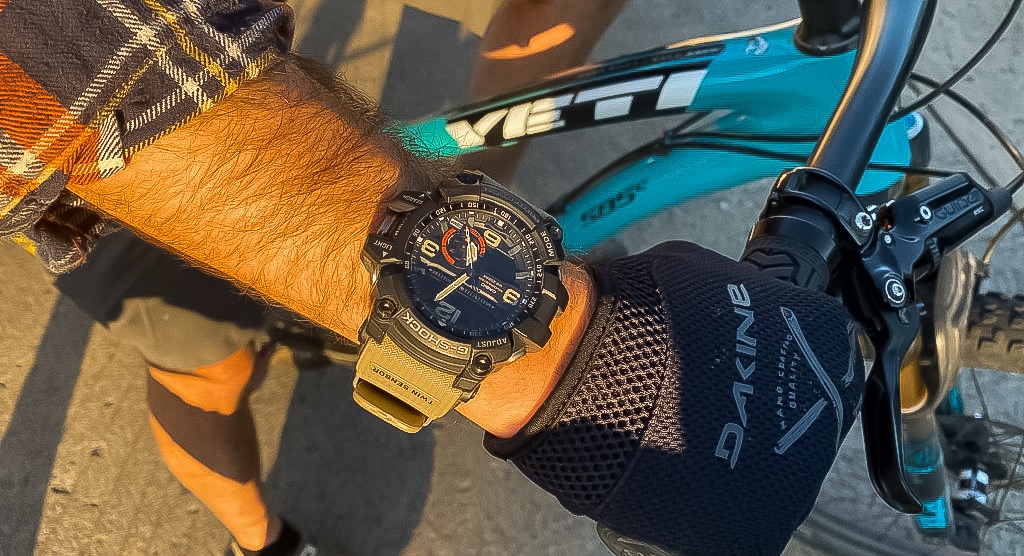
The Mudmaster earns its place here by being overbuilt. It feels less like a watch designed around elegance and more like a piece of equipment that happens to tell time. During our hands-on time with it, that sense of purpose came through immediately. This is the watch we’d trust for dirty work, rough weekends, job sites, trail runs, and any situation where mud, grit, or impacts are part of the deal rather than an occasional inconvenience. It looks like it could survive being kicked under a truck seat for a month, and honestly, that’s part of the appeal.
A lot of that confidence comes from the Mud Resist construction. Casio uses internal gaskets and a case design meant to keep out sand, dirt, and debris, and that’s the kind of engineering choice that matters more than a fancy finish ever could on a watch like this. The oversized bezel helps, too. It adds to the full tank-like look, sure, but more importantly, it gives the case real protection. Casio’s usual shock resistance is here as well, so the whole thing feels built to survive abuse first and ask questions later.
Of course, that durability comes with presence. At 56.2mm across and 17.3mm tall, this is not a subtle watch, and we wouldn’t pretend otherwise. Anyone with a wrist under about 7 inches is probably going to feel that size right away. Still, the resin strap does more work than expected. It helps the watch settle onto the wrist better than the measurements suggest, especially during active wear, and keeps the whole package from feeling as punishing as it looks. It’s still huge, but it’s wearable huge, which is not always the same thing.
The feature set leans hard into practical outdoor utility. The built-in compass and thermometer were both useful in our testing across different conditions. Neither felt lab-grade precise, but both were dependable enough for the kind of general directional and environmental checks most people would realistically use them for. Beyond that, you get the familiar G-Shock toolkit: stopwatch, five alarms with snooze, world time across 31 zones, and all the everyday toughness the brand is known for. The trade-off is that the version we reviewed skips Tough Solar, so battery changes are still part of the ownership picture every couple of years. Ours ran without any problems during the review period, but it’s worth knowing if you prefer something more self-sufficient.
Not every detail lands cleanly. The LED backlight works, but only barely. It provides enough illumination to read the time in the dark, though not much more. The negative LCD is another weak point. In bright outdoor light, we found it harder to read than we wanted, and that happened often enough to be more than a minor complaint. It’s also never going to disappear under a cuff without a fight. But that’s the bargain here: refinement takes a back seat to survivability. And for the right person, that’s why the Mudmaster makes sense.
Pros
- Mud Resist construction does a great job keeping dirt, sand, and debris out.
- The oversized bezel and shock-resistant build make it feel ready for serious abuse.
- Compass, thermometer, world time, alarms, and stopwatch give it real outdoor utility.
- The resin strap helps the watch wear more comfortably than the dimensions would suggest.
Cons
- The negative LCD can be frustrating to read in strong daylight.
- The backlight is functional, but weaker than we’d like in dark conditions.
- The model we reviewed does not have Tough Solar, so battery swaps are still part of the deal.
- Its size is a real commitment, especially for smaller wrists.
Seiko Turtle
| Price: | $370 – $525 |
| Water Resistance: | 200m |
| Case Dimensions: | 44.3mm (diameter) x 48mm (lug-to-lug) x 14mm (thickness) |
| Lug Width: | 22mm |
| Movement: | Seiko 4R36 |
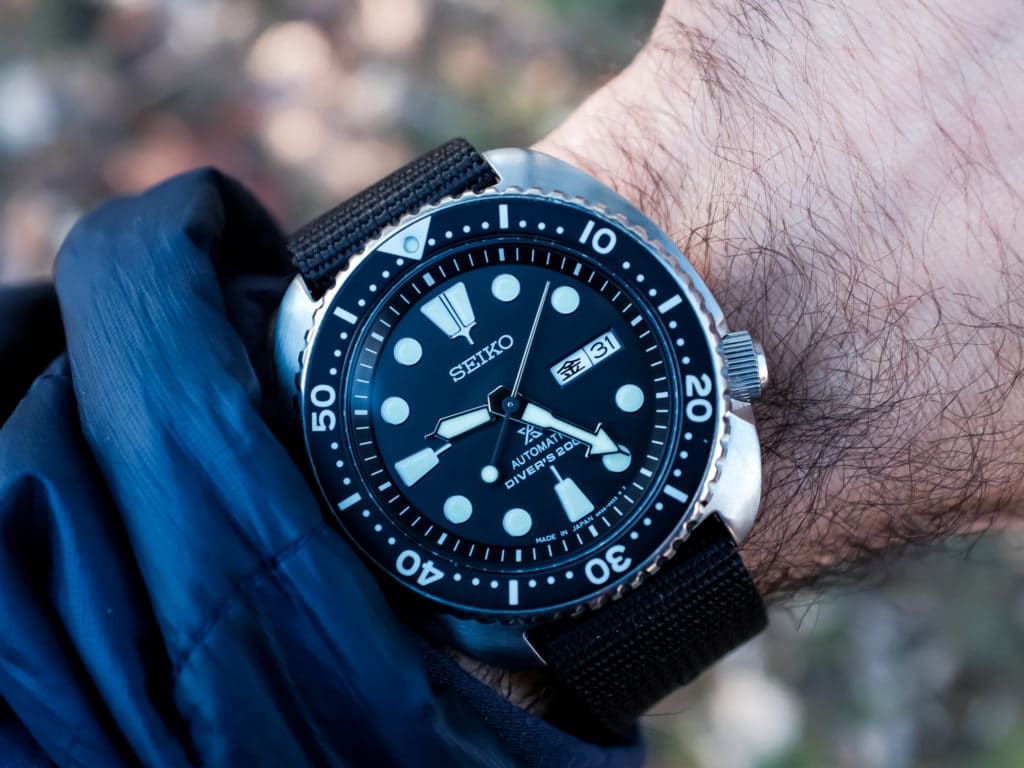
The Turtle sticks around because it feels like a watch designed for use without much ceremony. It has that familiar Seiko habit of looking a bit unruly on paper and then making immediate sense once it’s on the wrist. Yes, it’s a large watch at over 44mm, but the cushion case spreads that size outward rather than piling it up in height, and that changes the whole experience. On a larger wrist, it wears with a settled, planted comfort that has kept it in our rotation through long travel days, beach trips, and the sort of weekends where a watch gets knocked around without anyone writing a formal apology.
A lot of that day-to-day comfort comes down to small ergonomic choices. The crown is pushed slightly off to the side, and that matters more than it might seem. On the wrist, it stays clear of the back of the hand, rather than digging in when you bend or move around. For a watch this substantial, that one detail helps it feel less clumsy than many smaller divers we’ve worn. The stock silicone strap is better than older Seiko efforts, too. It’s soft enough out of the box to be perfectly usable, though the Turtle becomes even easier to live with once you start swapping straps. NATO options, in particular, suit it well and make the watch feel even more adaptable as an everyday wearer.
Legibility is another reason this watch feels built to last. The matte black dial keeps glare under control outdoors, and the oversized Lumibrite markers are easy to read in poor light without any squinting or second-guessing. It has that straightforward tool-watch clarity that makes quick time checks feel effortless. Seiko’s use of Hardlex instead of sapphire will always start debates online. Still, in our experience, it holds up well enough in real wear and helps keep the overall watch from drifting into a different price conversation. Even the Prospex “X,” which gets more online outrage than it deserves, tends to disappear once the watch is actually worn rather than photographed to death.
Inside, the 4R36 automatic movement does its job in a very Seiko way. Our example ran about +35 to +45 seconds per day, which is not very precise but typical and easy enough to manage, thanks to hacking and hand-winding. The bezel action feels reassuring in use, even if alignment can still be a little inconsistent across individual watches. That’s part of the Turtle bargain. You’re getting a durable, highly wearable diver with real personality, but not a clinically perfect one. Some versions add extra charm, including “Made in Japan” variants and models with a Kanji day wheel. The Kanji is fun at first, though the novelty can slow down a glance once you’ve lived with it for a while. Still, for a watch that keeps proving itself through actual wear, the Turtle remains easy to forgive.
Pros
- The cushion case wears more comfortably than the dimensions suggest, especially on larger wrists.
- The offset crown improves long-wear comfort and keeps the case from feeling cumbersome.
- Matte dial treatment and strong Lumibrite make it easy to read in bright or dim conditions.
- It’s versatile on straps, which helps it transition easily between different kinds of daily use.
- The screw-down crown and solid water resistance give it the kind of durability that encourages regular wear.
Cons
- Bezel alignment can still be inconsistent across examples.
- The 4R36 is practical and easy to live with, but accuracy can vary more than some buyers will like.
- The Kanji day wheel adds character, though it can be slower to read once the novelty wears off.
Seiko Samurai
| Price: | $400 – $500 |
| Water Resistance: | 200m |
| Case Dimensions: | 43.8mm (diameter) x 47mm (lug-to-lug) x 13mm (thickness) |
| Lug Width: | 22mm |
| Movement: | Seiko 4R35 (Mechanical) |
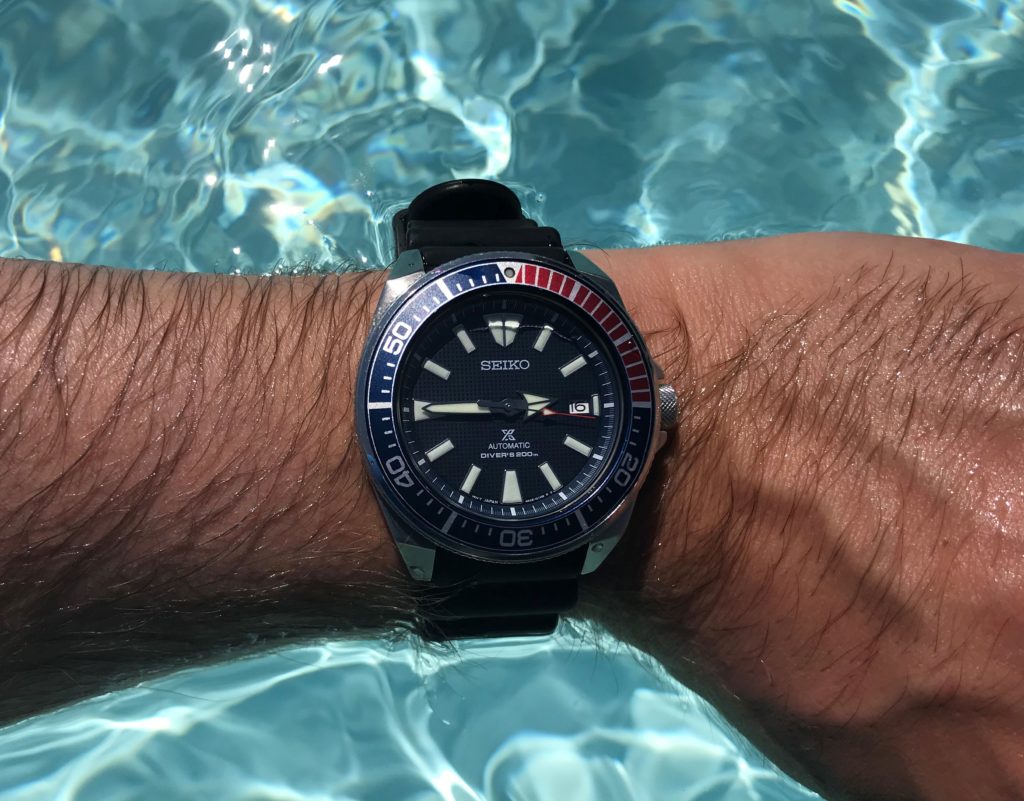
The Seiko Samurai feels built to last in a very Seiko way. It looks harder-edged and more aggressive than many divers in the Prospex lineup, and that changes how it comes across on the wrist. The stainless steel case is all sharp surfaces, brushed planes, and deep transitions between light and shadow. On paper, it sounds like it should wear tall and awkward. But in practice, it hugs the wrist better than expected, much like other Seiko divers we’ve lived with. The sloped crown guards help with that, too. They make the screw-down crown easy to grab while still protecting it, and the coarse knurling adds to the no-nonsense tool-watch feel.
What surprised us most during testing was the bracelet. The case and end links flow into each other so naturally that the watch almost looks incomplete without them. And that’s why we never felt much urgency to swap it out. That is saying something, because Seiko divers usually tempt us onto NATOs pretty quickly. Here, the 22 mm bracelet feels wide enough to anchor the case without becoming clunky, and ours felt secure and well-made. Drilled lugs are still a welcome touch, making strap changes easy. The bezel follows the same theme as the crown, with bold knurling and a firm, confident feel, though our example was noticeably stiff to turn. That does not ruin the watch, but it is one of those Seiko quirks worth knowing before you buy.
The dial side keeps the personality high without losing utility. The blue dial shifts between lighter and darker tones depending on the light, and the applied markers with strong Seiko lume keep things easy to read. We also came around to the Monster-style hands. Purists may grumble, but they match the case better than expected and make the whole watch feel coherent.
The 4R35 automatic movement is straightforward and reliable, with hacking, hand-winding, and a 40-hour reserve. It is not a precision monster, but it is easy to live with. That said, our one long-term hesitation is purely cosmetic. With a case this angular and dramatic, we are not convinced it will wear scratches as gracefully as a simpler beater. So this is less a carefree knockaround watch and more a durable, character-heavy diver for someone who wants toughness with a little attitude. For a deeper dive into our personal insights, read our dedicated review.
Pros
- The angular brushed case feels tough and distinct without wearing as large as the numbers suggest.
- Crown guards and aggressive knurling make the screw-down crown easy to use.
- Bracelet integration is excellent, and the stock bracelet is very comfortable for this category.
- Strong lume and bold handset keep legibility high in daily use.
- Drilled lugs make strap changes easy if you do want to experiment.
Cons
- The bezel action on our example was very stiff.
- The 4R35 is dependable, but accuracy expectations should stay realistic.
- Sharp case geometry may show wear less gracefully than rounder Seiko divers.
Baby Dreadnought PRS-52
| Price: | $470 |
| Water Resistance: | 300m |
| Case Dimensions: | 38mm (diameter) x 45mm (lug-to-lug) x 13mm (thickness) |
| Lug Width: | 18mm |
| Movement: | Miyota 9015 |
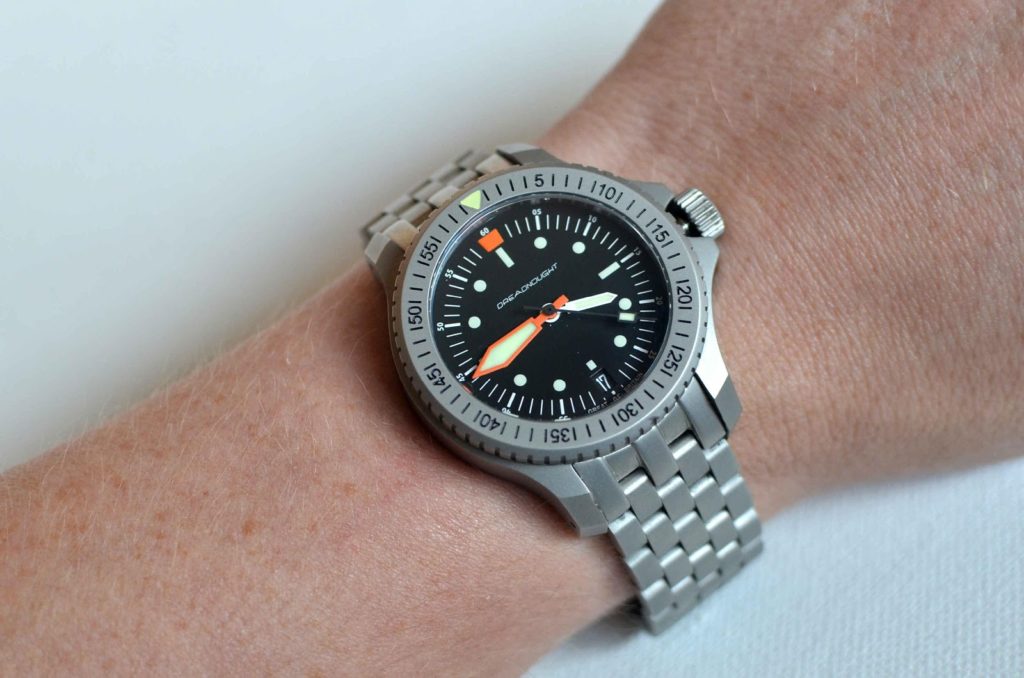
The PRS-52 feels durable before you even strap it on. A lot of that comes down to mass and finish. At 165 grams on the bracelet, it has that dense, reassuring weight that some of us still associate with a serious tool watch. The fully bead-blasted 316L steel case gives it a stripped-down, workmanlike look that suits the watch perfectly. What stuck with us most during our hands-on review, though, was how deliberate the whole thing feels. The case is milled from a single block of steel, the bezel skips the usual insert and instead rotates through 120 firm clicks, and even the side profile has a sharp edge that makes the watch feel severe in a way most modern divers avoid. It does not try to charm you. It feels built.
The proportions help too. Despite the “Baby” nickname, the 38mm width and 45mm lug-to-lug measurement land more in mid-size territory than truly compact. On the wrist, it wears balanced but still carries real presence, which makes it easy to see why collectors who like oddball, overbuilt pieces tend to latch onto it. The drilled, angular lugs made strap changes easy during testing, and yes, we still ended up throwing it on NATOs because old habits die hard. That said, the bracelet deserves more respect than we expected. The slim-sounding 18mm lug width never felt fragile because the solid end links locked into the case with zero play, and the bead-blasted engineer-style bracelet felt like a natural extension of the watch rather than an afterthought. Sizing it was another story. The screw pins were stubborn enough that handing the job to someone with proper tools felt like the smarter move. Once sized, though, the clasp’s roughly 15mm of micro-adjustment made it easier to dial in comfort.
The dial and movement keep the same no-nonsense tone. The layout has familiar dive-watch cues, but it never feels lazy or copied. Circular lume plots alternate with striped markers; the date sits cleanly at six; the text is sparse enough to feel intentional. “Dreadnought” across the upper half could have felt corny, but here it somehow works, and “Great Britain” down near the date adds a little personality without trying too hard. We also liked the way the oversized sword minute hand and orange block at twelve give the watch enough visual bite, while the black paddle seconds hand stays mostly out of the way during daily wear.
Inside, the Miyota 9015 fits the watch’s character better than a more prestigious movement probably would. Ours ran around 8 seconds per day, which is more than respectable in real use, and the hacking, manual winding, and date complication make it easy to live with. It is not a dress-anywhere watch, and the weight will not be for everyone, but for someone who wants a durable watch that feels unapologetically built for use, the PRS-52 makes a strong case.
Pros
- One-piece bead-blasted steel case feels overbuilt and purpose-driven.
- Mid-size dimensions keep it wearable while still giving it a strong wrist presence.
- Dial layout feels distinctive, readable, and uncluttered.
- Miyota 9015 delivers solid real-world accuracy and adds useful everyday features, such as hacking and hand-winding.
- Bracelet construction feels quite secure once properly sized.
Cons
- Bracelet sizing can be frustrating without the right tools.
- The severe, utilitarian design limits how often it makes sense in dressier settings.
- At 165 grams, it feels heavy compared to lighter modern divers.
Citizen Promaster Aqualand Depth Meter
| Price: | $550 |
| Water Resistance: | 200m |
| Case Dimensions: | 50.7mm (diameter) x 51mm (lug-to-lug) x 14.8mm (thickness) |
| Lug Width: | 24mm |
| Movement: | Citizen C520 Quartz |
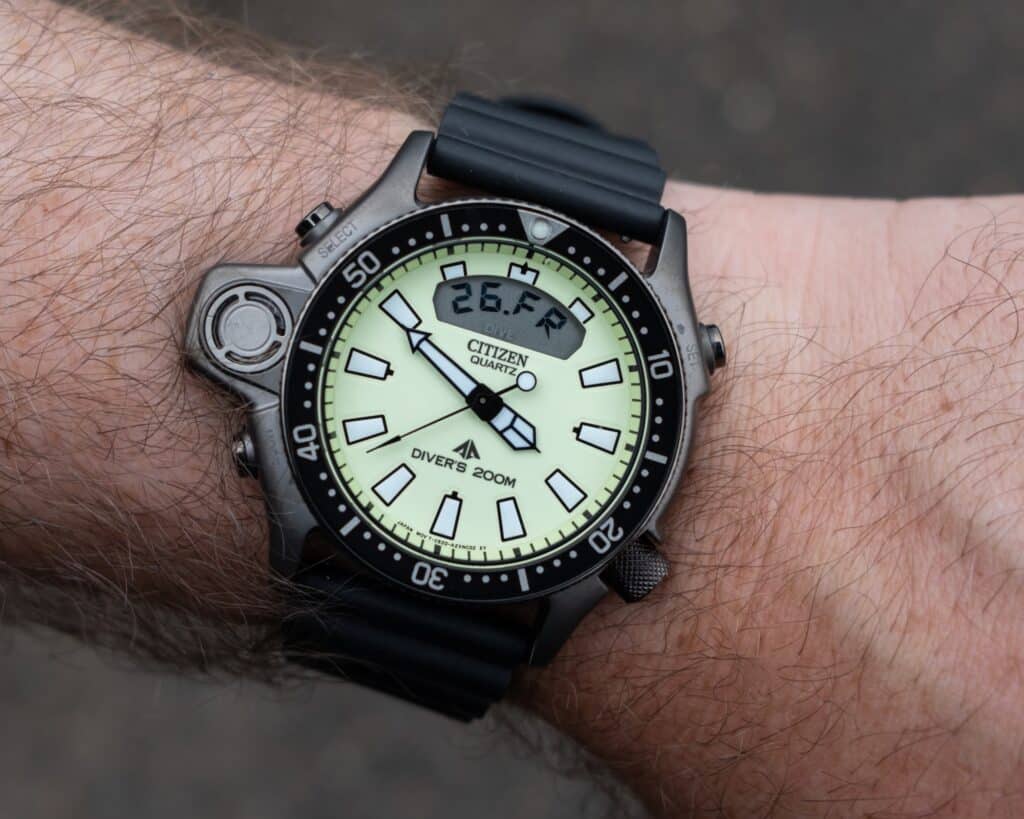
The Aqualand earns its place here because it feels less like a casual diver and more like gear you happen to wear on your wrist. That starts with the size. The main case sits around 43mm, but once you account for the external depth sensor, the watch stretches closer to 50mm across, with a 24mm strap to match. That sounds like a lot, and on smaller wrists it absolutely will be, but on a broader wrist it fills the space in a way many standard dive watches do not. During our time with it, the watch never felt awkward because it was big. It felt intentional, almost as if Citizen had decided early on that subtlety was not the job here.
That sense of purpose carries straight into the feature set. This is not a dive-style watch with a few sporty cues tacked on. It functions as a full dive computer, with depth tracking, dive logs, safety alerts, and warnings for ascending too quickly. Most of us don’t use all of that every week, but it still changes the watch’s personality, even when those functions stay in the background. It feels genuinely capable. Day to day, the digital side still pulls its weight with alarm, chronograph, elapsed time, and calendar functions. Once the analog hands and digital display are properly set up, they stay aligned without much babysitting. That matters on a watch like this because a complicated layout gets old fast if it demands constant attention.
The rest of the watch backs up the durable-tool-watch vibe nicely. The bezel has a firm, deliberate action and is properly aligned, which we do not take for granted. The screw-down crown is large and easy to grip, and the pushers start to make more sense the longer you live with the watch. The rubber strap is another win. It is soft, ventilated, and long enough to wear securely without feeling like it is barely hanging on. Legibility is mostly strong, especially in the dark, where the fully lumed dial stays bright for hours, though there is a trade-off there. When the whole dial is glowing at once, contrast can dip a bit. It never made the watch unreadable for us, but it is noticeable. Add in reliable quartz performance and the fact that these often trade below retail on the pre-owned market, and the Aqualand starts to look like one of those niche tools that quietly offers more staying power than flashier options.
Pros
- The oversized case and external depth sensor give it real wrist presence and make it feel like purpose-built equipment.
- Full dive computer functionality adds genuine capability, not just dive-watch styling.
- Quartz movement keeps the watch dependable with minimal upkeep.
- The rubber strap is soft, breathable, and long enough to wear comfortably and securely.
- Strong lume stays visible for hours in low light.
- Pre-owned pricing often makes it an especially compelling value.
Cons
- The broad case footprint and 24mm strap can feel like too much on smaller wrists.
- The fully lumed dial can lose some contrast in certain conditions.
- Many dive-specific functions may go unused in everyday wear.
- Strap options are more limited because of the larger lug width.
Nodus Sector Deep
| Price: | $599 |
| Water Resistance: | 500m |
| Case Dimensions: | 38mm (diameter) x 47mm (lug-to-lug) x 13.6mm (thickness) |
| Lug Width: | 20mm |
| Movement: | Seiko NH35 (Mechanical Movement) |
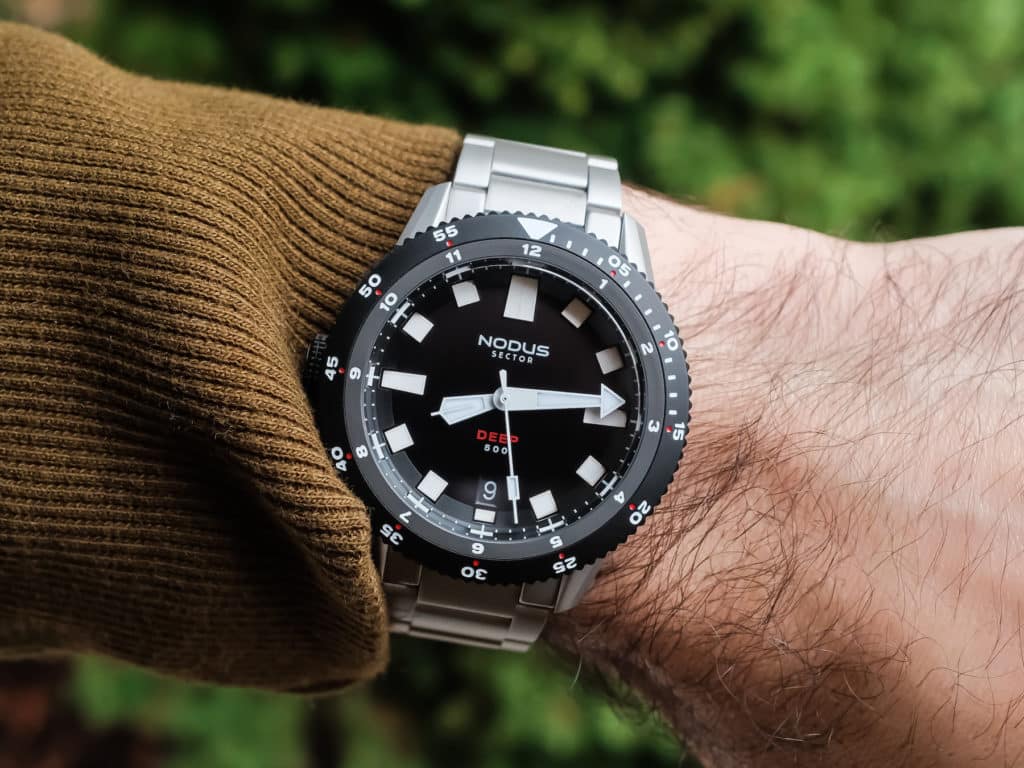
The Sector Deep makes a strong case for durability by refusing to feel delicate. That sounds obvious, but a lot of compact divers still end up wearing like scaled-down desk toys. This one does not. The 38mm case sits low and balanced, and that matters because a watch is a lot easier to trust when it stays planted instead of wobbling around through a normal day. We kept noticing how little drama there was to wearing it. Even after hours on the wrist, it never felt top-heavy or awkward, which is usually the first sign of a watch trying to be tougher than it is.
A big part of that ease comes from the left-side crown. It seems like a quirky design move until you spend real time with it. Then it starts to feel like one of the smartest decisions on the watch. It keeps the crown from digging into the wrist during long wear, which makes the Sector Deep feel better suited to actual daily use instead of occasional “tool watch” cosplay. The matte DLC bezel helps reinforce that impression. It stays subdued, resists glare, and has enough grip to feel useful when your hands are busy. In our in-depth review, we also appreciated the dual-scale setup more than expected. It adds practical timing flexibility without turning the watch into a visual mess.
The dial does a nice job of looking considered without becoming precious. The white PVD surrounds catch light in a restrained way, and the lume-filled centers taper toward the cardinal points, giving the dial a bit of dome shape when viewed straight on. More importantly, none of that gets in the way of readability. In low light, the BGW9 Super-LumiNova held up well in our testing and remained legible through the night without dropping off too quickly. Inside, the Seiko NH35 feels like the right call for a watch built around staying power. Nodus regulates it in-house, and our samples hovered around ±10 seconds per day. That is the kind of accuracy that inspires confidence without asking the owner to obsess over it. The 41-hour reserve also makes it easy to rotate in and out without feeling needy.
The bracelet continues that same durable, use-first mindset. Screw links made sizing simple, and the taper from 20mm to 18mm kept the clasp from feeling oversized. The NodeX micro-adjustment system is one of those features that proves its worth over time, especially when wrist size changes with heat, activity, or a long day outside. The only catch is that when the clasp is fully extended, some hardware becomes visible, slightly disrupting the otherwise clean look. And while the asymmetrical layout makes practical sense, it will not be everyone’s idea of handsome. Still, for a watch that feels thoughtfully engineered to take regular wear without turning every feature into a sales pitch, the Sector Deep is easy to take seriously.
Pros
- Low-profile 38mm case stays balanced and comfortable through long stretches of wear.
- Left-side crown improves long-term comfort and avoids wrist bite.
- The matte DLC bezel is easy to grip, cuts glare effectively, and feels built for regular use.
- BGW9 lume stays readable through the night.
- In-house-regulated NH35 delivers reassuring real-world accuracy of around +/- 10 seconds per day.
- NodeX clasp makes quick-fit adjustments easy as conditions change.
- Screw-link bracelet and sensible taper add to the watch’s everyday sturdiness.
Cons
- The asymmetrical case layout is practical, but it may not appeal to those who prefer a more traditional look.
- Exposed clasp hardware when fully extended interrupts the otherwise clean design.
CWC SBS Diver

| Price: | $960 |
| Water Resistance: | 300m |
| Case Dimensions: | 45mm (diameter incl. crown) x 47mm (lug-to-lug) x 11mm (thickness) |
| Lug Width: | 20mm |
| Movement: | Ronda Swiss-made 517 quartz |
The SBS Diver earns its place here by doing almost nothing to impress you at first glance. That sounds like a backhanded compliment, but it is why the watch works. After spending enough time with it, we came away feeling this is what durability looks like when it is treated as a requirement rather than a marketing angle. The black PVD case keeps the whole watch visually quiet, and the construction feels denser than the dimensions would suggest. There is real solidity here, but it never tips over into feeling awkward or unnecessarily heavy on the wrist. That balance matters. A watch that feels built to last still has to be something you will wear, and the SBS Diver never gave us an excuse to leave it behind.
What helps is its adaptability in daily use. This watch has a straightforward, military-minded personality, but it is not rigid about how it wears. We tried it on single-pass nylon straps, RAF-style options, and other no-fuss utilitarian setups, and each one felt natural. The watch changed character a little with each swap, but never lost that blunt, purpose-driven feel. That kind of strap versatility gives it more staying power than you might expect from something this severe. It felt as right on a camping trip as it did running errands or getting through a long day out, which is a good sign that a watch has genuine range rather than just a tough-looking costume.
Legibility follows the same practical logic. The dial can seem a bit crowded when you first look at it, but that impression fades pretty quickly once you start using it in real conditions. The oversized hour markers and sword hands make quick checks easy, especially in low light or when you are moving. The flat crystal helps outdoors, too, by keeping glare under control, which makes a noticeable difference during longer stretches outside. Lume is another strength. The “circle L” marking tells you Luminova is on board, and in practice, it charged fast and stayed visible through most of the night without much fuss.
The quartz movement completes the picture. Over five weeks of wear and timing, the watch stayed within five seconds, which is the kind of low-maintenance dependability we want in a watch built around real use. It does not ask for much, and that becomes part of its appeal over time. The only real caveats are that the dial layout will not click with everyone immediately, and the price can feel a little steep next to other quartz options on paper. But the SBS Diver makes more sense once you stop comparing specifications and start thinking about long-term trust.
Pros
- Dense, reassuring case construction feels built for hard use.
- Black PVD finish keeps the watch subdued and purpose-driven.
- Oversized markers and sword hands make real-world legibility strong.
- Luminova charges quickly and remains visible for most of the night.
- Flat crystal cuts glare well during outdoor wear.
- Works naturally on a variety of utilitarian straps, which adds to its long-term versatility.
Cons
- Pricing sits above many quartz alternatives that may look similar on paper.
- The dial can feel slightly busy until you have spent some time with it.
Marathon TSAR
| Price: | $1200 |
| Water Resistance: | 300m |
| Case Dimensions: | 41mm (diameter) x 48mm (lug-to-lug) x 14mm (thickness) |
| Lug Width: | 20mm |
| Movement: | ETA F06 quartz |
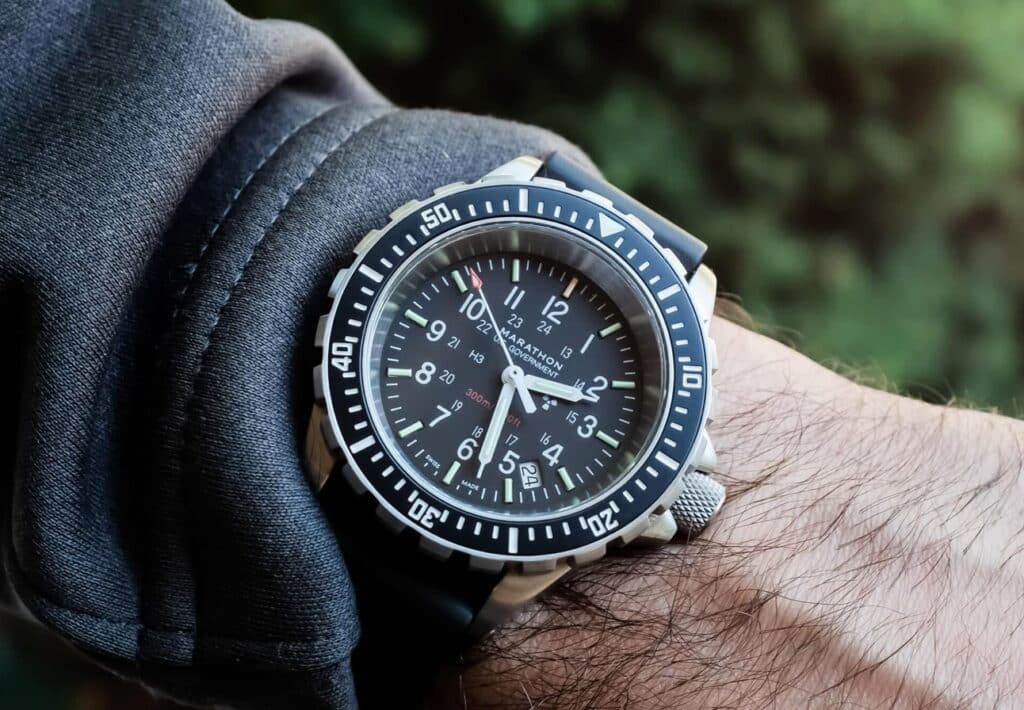
The TSAR feels durable in a way that quickly stops being theoretical. You can see where it came from. This is a watch designed for search-and-rescue use, and on the wrist it feels like something meant to be handled hard rather than admired from a safe distance. The 41mm case is thick, fully brushed, and slab-sided, which gives it a dense, industrial feel. There is real heft here, but it works in the watch’s favor. Instead of feeling excessive, the weight adds a kind of confidence that makes the TSAR easy to trust when the day gets rough.
A lot of that trust comes from the controls. The oversized crown and deeply cut bezel teeth feel like they were designed for use first, not aesthetics, and that becomes obvious the moment you start handling the watch. Even with gloves on, the crown is easy to grab, and the 120-click bezel turned with a reassuring sense of authority during our time with it. Nothing about it felt soft, vague, or fiddly. It has the kind of tactile clarity that matters more over time than a polished case flank ever could. This is also one of those watches that ask little of the wearer. Salt water, concrete, long physical days, none of it feels dramatic with the TSAR on the wrist.
Legibility is another big reason it feels built to last. Whether you go for the dial with “US GOVERNMENT” printed on it or the cleaner version, the layout stays straightforward to parse. The small touch of red in the depth rating gives the black dial enough contrast without pushing it into decoration. More importantly, the tritium tube markers change how the watch works in real life. In our hands-on use, that constant glow meant the dial stayed readable in complete darkness without needing any charge beforehand. MaraGlo adds a little extra brightness after exposure to light, but it never overwhelms the dial or turns the night view into a gimmick.
Inside, the ETA F06 quartz movement suits the watch’s personality perfectly. It is here for reliability, not romance, and in our testing, it ran at roughly half a second per day, which is more than enough to support the TSAR’s ready-whenever-you-need-it character. Battery life is rated at around 3 years, which feels sensible, even if some modern high-accuracy quartz options can stretch it further. The strap choices continue the same theme. The steel bracelet feels secure and substantial, while the rubber strap is thick, durable, and comfortable, and it carries that faint vanilla scent Marathon owners tend to recognize.
The trade-offs are mostly about refinement. The case is chunky enough to fight with tighter sleeves, the bracelet skips things like micro-adjustment and quick-release spring bars, and the watch’s tool-first design is never going to pass as dressy. Still, if your idea of a durable watch is one you can wear without second-guessing, the TSAR makes a compelling case.
Pros
- The thick brushed case feels dense, tough, and purpose-built.
- Oversized crown and aggressive bezel teeth are easy to use, even with gloves.
- Tritium tubes provide constant visibility in the dark with no charging needed.
- ETA F06 quartz movement delivers dependable real-world performance.
- Both bracelet and rubber strap options feel suited to hard use.
Cons
- The chunky case profile can be awkward under snug sleeves.
- The blunt, utilitarian design has little range beyond casual or tool-watch settings.
- Battery life is solid, though not as long as some modern high-accuracy quartz alternatives.
- Bracelet lacks micro-adjustment and quick-release convenience.
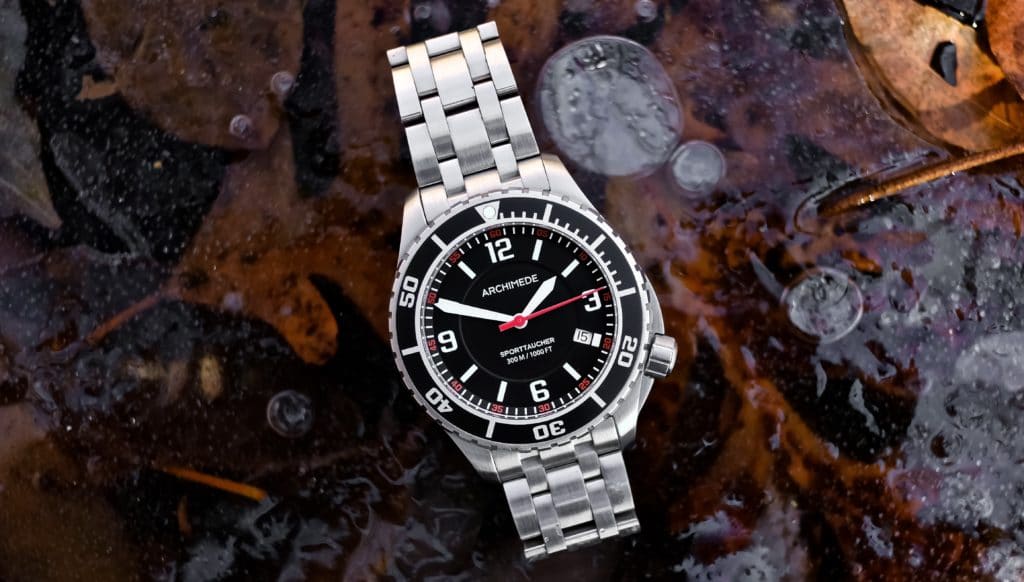
Archimede SportTaucher
| Price: | $1,230 |
| Water Resistance: | 300m |
| Case Dimensions: | 41.5mm (diameter) x 49.7mm (lug-to-lug) x 12mm (thickness) |
| Lug Width: | 20mm |
| Movement: | Sellita SW200-1 Swiss automatic |
The SportTaucher feels durable in a way that does not need much performance theater. It is not trying to look tactical, distressed, or overbuilt for effect. It feels properly made. The case has that sharply machined, almost CNC-cut look that sets the tone. There are no polished edges that are trying to make it look more expensive or more refined than it is. Everything about it leans toward practical use, and after spending extended time with it, that straightforward approach started to feel like the whole point. On paper, the dimensions suggest a lot of watch. On the wrist, though, it settles into a very manageable middle ground. You always notice it, but it never drifts into that clumsy, overcommitted tool-watch territory.
One of the details we appreciated most over time was the 4 o’clock crown. During long hours at a keyboard and on more active weekends outside, it stayed clear of the wrist and never turned into an annoyance. The crown itself also feels like it belongs on a watch built for regular use. It is large, easy to grip, and threads down smoothly, which makes the simple act of setting the watch feel more reassuring than it should. Inside, the Sellita SW200 kept things straightforward. Our example ran in the expected five to ten seconds-per-day range, which felt honest and dependable in daily wear. The trade-off is the 38-hour power reserve. Leave it sitting for a couple of days, and you may be resetting it, which is not unusual, but it is still worth knowing if your watches rotate in and out often.
The dial supports that same built-to-last character without turning clinical. Archimede uses a molded chapter ring that sits slightly above the dial rather than relying on a simple printed ring, and that choice does more than add visual interest. It also helps avoid the kind of alignment issues we run into on many affordable divers. The recessed center section creates a gentle slope toward the markers, softening the case design’s tougher edges enough. The sword hands carry enough lume to stay visible well into the night, and the red second hand adds a useful little burst of contrast that makes quick checks easier during the day.
The bracelet turned out better than expected, too. At a glance, the chunky five-link design looks like it might wear awkwardly, but once it is on, the articulation is better. It wraps the wrist naturally and stays comfortable over long stretches. The clasp has enough micro-adjustment to get the fit where it needs to be without making the underside of the watch feel oversized. The only real compromise we kept coming back to was the bezel. It aligned properly and clicked with confidence, but if you look for flaws, there is a small amount of vertical play. It is not enough to ruin the watch, but it is the one detail that reminds you this is still a value-minded tool diver. Even so, after a few weeks of regular wear, the SportTaucher came across as the kind of watch that earns trust by being solid where it matters most.
Pros
- The sharply machined case gives the watch a tough, tool-ready feel.
- The crown is large, easy to grip, and threads down smoothly.
- The molded chapter ring helps avoid the alignment issues common on many affordable divers.
- Sword hands with strong lume stay visible deep into the night.
- The five-link bracelet articulates well and stays comfortable over long wear.
- Clasp offers enough micro-adjustment to fine-tune fit without excess bulk.
Cons
- The bezel has a slight bit of vertical play, even though the clicks feel positive.
- The SW200’s 38-hour power reserve is shorter than that of many newer movements.
- Case presence may still feel substantial on smaller wrists.
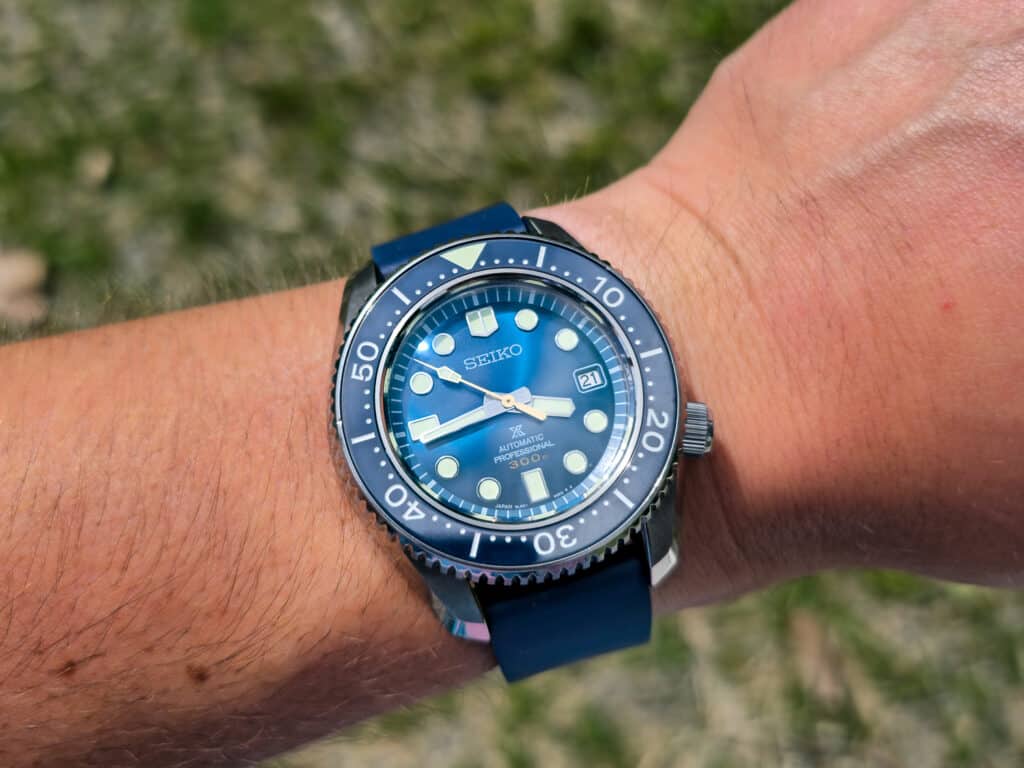
Seiko Marinemaster (SLA023J1)
| Price: | $3,100 |
| Water Resistance: | 300m |
| Case Dimensions: | 44mm (diameter) x 50.5mm (lug-to-lug) x 15.4mm (thickness) |
| Lug Width: | 20mm |
| Movement: | Seiko 8L35 (Automatic Movement) |
The Marinemaster 300 feels durable in the old-school Seiko way, which is to say it does not try to hide how serious it is. At roughly 44mm and pushing close to 200 grams on the bracelet, this is a watch with real mass behind it. You notice that immediately. On a larger wrist, that heft can feel reassuring rather than excessive, like the watch is filling the space the way a proper tool diver should. What surprised us, though, was how much better it wore than the numbers suggest. The monocoque case gives it that solid, one-piece feel, while the sculpted sides and polished flanks visually slim things down. Add the relatively compact dial and smooth caseback, and the watch wears with less sprawl than you might expect from something this substantial.
That feeling of long-term toughness carries into the parts you interact with most. The bezel sits high, is easy to grip, and works well even with gloves on. Its action is not crisp in the usual Swiss-clicky way. Instead, it has a smoother, more controlled resistance that feels deliberate every time you use it. The dial also does more than look good. The blue version shifts nicely as the light changes, but it never turns into a distracting sunburst showpiece. Small touches like the framed date and restrained gold accents give it some character without softening the watch’s purpose-built feel. Lume is where it really starts to separate itself. It charges fast, glows hard, and stays visible through the night.
Inside, the 8L35 backs up the rest of the watch with the kind of consistency we want from something built to last. Our experience was around +/- 4 seconds per day, which is a noticeable step up from Seiko’s more affordable mechanical divers and better than the official rating suggests. Where the Marinemaster stumbles is the bracelet. It is heavy, the links are long, and the articulation is not where we would want it for a watch at this level. The male end links also stretch the effective footprint, which makes the whole package feel larger than necessary. We moved ours onto rubber and NATO pretty quickly, and that changed the watch dramatically. On a better strap, it stopped feeling cumbersome and became the sort of overbuilt diver you want to keep wearing.
The only other long-term caveat is serviceability. The monocoque case adds to the solid feel, but it also means the movement has to be accessed from the front, which is worth remembering down the road. Even so, if your idea of durability includes heft, serious lume, and a case that feels carved rather than assembled, the Marinemaster 300 still makes a compelling argument. Check out our in-depth testing insights for a more comprehensive understanding of this piece.
Pros
- Monocoque case construction gives the watch a dense, highly solid feel.
- Sculpted case sides and a compact dial help it wear smaller than the specs suggest.
- The bezel is tall, easy to grip, and has a smooth, confident action.
- Lume is very strong and remains visible through the night.
- The 8L35 delivers impressive real-world accuracy at around +/- 4 seconds per day.
- Smooth caseback helps the watch sit evenly on the wrist despite its size.
Cons
- The stock bracelet is very heavy and not too comfortable.
- Long links and limited articulation make the bracelet feel less refined than the rest of the watch.
- Male end links increase the overall wrist footprint.
- Front-loading service access is less convenient for long-term maintenance.
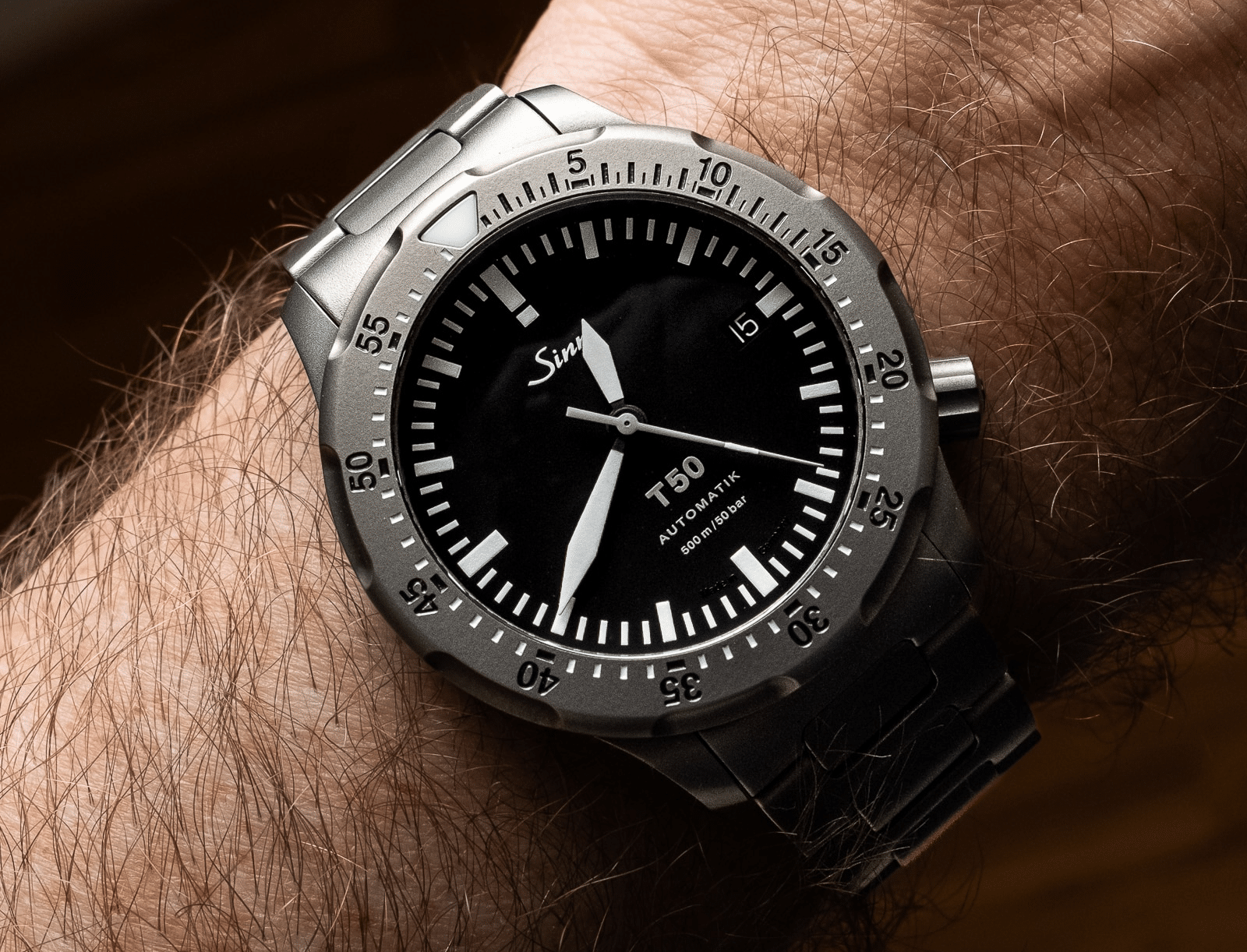
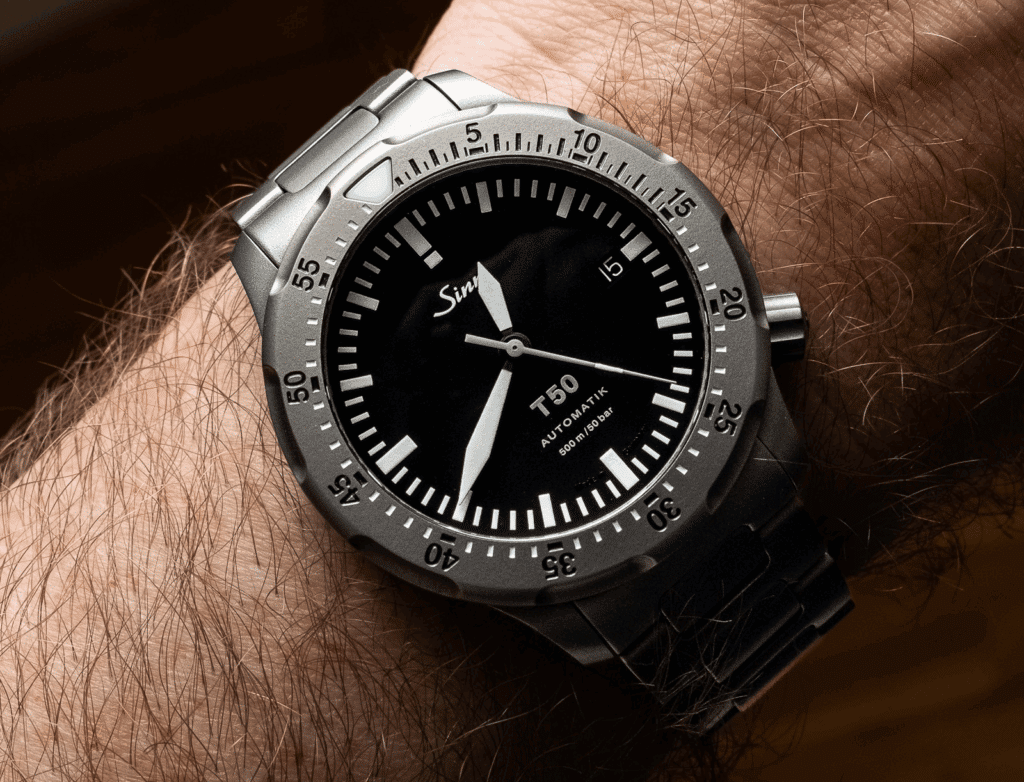
Sinn T50
| Price: | $4,280 |
| Water Resistance: | 500m |
| Case Dimensions: | 41mm (diameter) x 47mm (lug-to-lug) x 12mm (thickness) |
| Lug Width: | 20mm |
| Movement: | Sellita SW 300-1 |
The T50 feels like Sinn trimming the fat off the modern tool diver idea and keeping only the parts that matter. What stood out to us most was how durability here is tied to restraint rather than bulk. The matte titanium case keeps reflections down, avoids any unnecessary flash, and wears much lighter than a watch this capable has any right to. On a 7-inch wrist, roughly 95 grams made it easy to forget about during the day, whether we were working with our hands, riding, or doing the usual weekday shuffle. That low weight does not make it feel flimsy, either. It makes the watch easier to live with for longer stretches, which is a big part of what makes something feel built to last in the first place. The 4 o’clock crown helped too. It was easy to use in testing and never got in the way of wrist movement.
The bezel is where Sinn’s practical thinking comes through. The captive system requires you to press down before turning it, and in real wear, that added a level of security we ended up appreciating more than expected. A normal bezel can get nudged. This one stayed put when the watch took a knock. The tegimented bezel also held up better than untreated titanium does, showing noticeably fewer marks over time. That matters because titanium can start to look tired pretty quickly if the hardening isn’t there.
Sinn’s moisture control system adds another layer of long-term reassurance. It is the kind of feature that does not scream for attention, but it fits the whole point of a watch like this. The dial follows the same logic. Black and white, sword hands, clear markers, and a date window that blends in instead of shouting. It is easy to read without feeling sterile. The lume patch on the seconds hand helped confirm the watch was running in the dark, though we did find ourselves wishing it were larger for faster checks.
Inside, the SW300 backed up the rest of the watch with strong real-world performance. Our example averaged around +2 to -3 seconds per day, which felt solid for a watch built around reliability rather than theatrics. The one limitation is the 42-hour power reserve. If you rotate watches a lot and let this one sit for a day or two, there is a good chance it will stop. The bracelet was a bit more complicated as well. The H-link design is comfortable and visually suits the watch, but the diver extension was too easy to release, which did not inspire much trust. Once we removed the extension and secured the end link with a spring bar, things improved. Thankfully, drilled lugs make strap swaps easy, and the T50 works well on rubber, canvas, or NATO if you want the rest of the watch without the bracelet headache.
Taken as a whole, this is one of those rare titanium divers that feels genuinely engineered for long-term use, not just sold on the idea.
Pros
- Matte titanium case keeps weight low and comfort high without making the watch feel insubstantial.
- Tegimented bezel resists scuffs better than standard titanium tends to.
- The captive bezel system adds real security and prevents accidental movement during daily wear.
- Straightforward black-and-white dial stays very legible without extra clutter.
- The moisture control system adds an extra layer of long-term protection for the movement.
- Drilled lugs make it easy to move the watch onto rubber, canvas, or NATO straps.
Cons
- The 42-hour power reserve is limited if you rotate watches often.
- The diver extension on the bracelet can release too easily and feels poorly judged.
- The lume marker on the seconds hand is useful, but a larger patch would be easier to spot quickly at night.
- Servicing and repairs need to go through Sinn, which is less convenient than local options.
If there are any durable and highly reliable watches you feel should be included, please let us know in the comments and we’ll do our best to get one in for review. Also please feel free to share your thoughts on the picks that did make the cut.

Co-Founder and Senior Editor
Kaz has been collecting watches since 2015, but he’s been fascinated by product design, the Collector’s psychology, and brand marketing his whole life. While sharing the same strong fondness for all things horologically-affordable as Mike (his TBWS partner in crime), Kaz’s collection niche is also focused on vintage Soviet watches as well as watches that feature a unique, but well-designed quirk or visual hook.
Nodus is now using a different clasp on the Sector Deep and it has fixed the visual problem of that exposed metal piece during full extension. I bought the yellow dial version and it makes for a very appealing spring/summer watch.
Hi, Mark:
That’s amazing – thank you for the callout on the Nodus update! We reviewed this model when it first came out so we’re glad to hear that they’ve address the bracelet clasp issue.
Best,
-Kaz
The omission of marathon invalidates this entire article
Hi, Jeff:
You may have missed it, but our list does in fact include the Marathon TSAR. We agree that any discussion about durability and reliability has to include Marathon.
Best,
-Kaz
Most of the watches are so large in diameter and anchor heavy that the average Joe will go for the newer smaller divers from Citizen and Seiko. 40mm is my max and some of these in that size are good values I think. Why don’t you do a review on the new smaller divers better suited for swimming/snorkeling for the non-scuba “Joe’s”. I have a Seiko Orange “UFO” from my snorkeling years with a lighter band. Good reading!
Hi, John:
That’s a great idea actually! While we de feature some smaller watches in this list, there certainly are many smaller options that we can conduct hands-on reviews with in order to determine if they make the cut.
Thank you for the callout and idea!
-Kaz
I bought my Rolex Oyster Perpetual in 1962 in Ceuta, Northern Africa as a present to myself on my 21st birthday. It’s new price then was $250. It has survived numerous blows and buffets over an active lifetime. It’s been serviced a few times, but still runs perfectly.