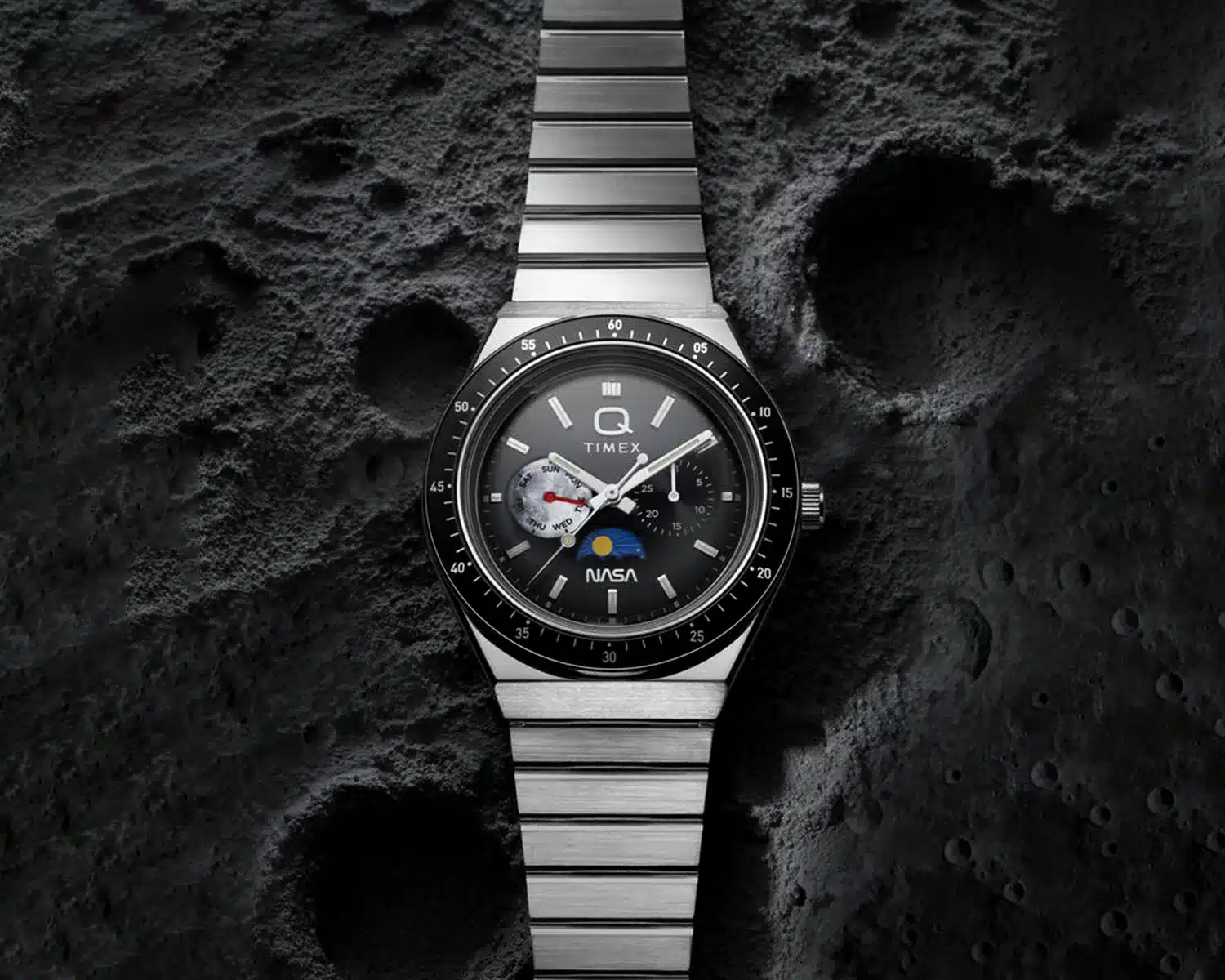
Space-themed watches have a way of going sideways fast. As a Speedmaster owner, I’ve watched more than a few Swiss brands lean so hard into Apollo mythology that the watch itself gets lost somewhere beneath the marketing. So when Timex announced the Q Timex NASA, my first instinct was skepticism. What I didn’t expect was to find the execution this nice and restrained.
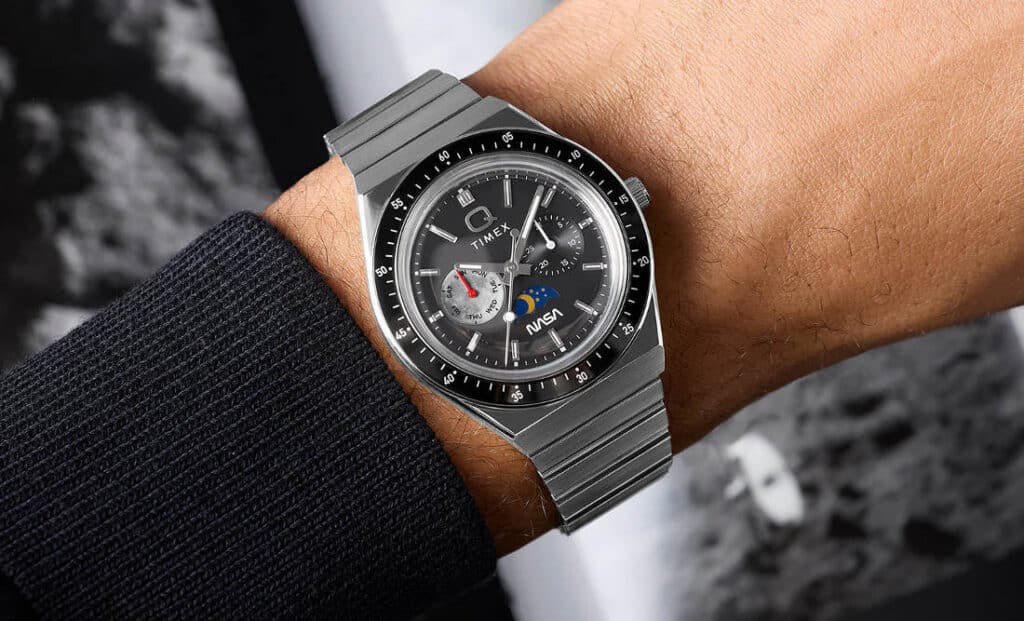
The Timex Q Timex NASA draws its inspiration from the Apollo 17 lunar landing of 1972, and Timex is upfront about the fact that there’s no direct historical connection to the mission itself. Rather than manufacturing a heritage story it doesn’t own, the brand is treating this as a tribute, and the design reflects that approach. The result sits comfortably in the Q collection’s broader design language: a 40mm stainless steel case, hide lugs, a tapering flat-link bracelet, and a heavily domed acrylic crystal that gives the whole thing a vintage character without overselling it.
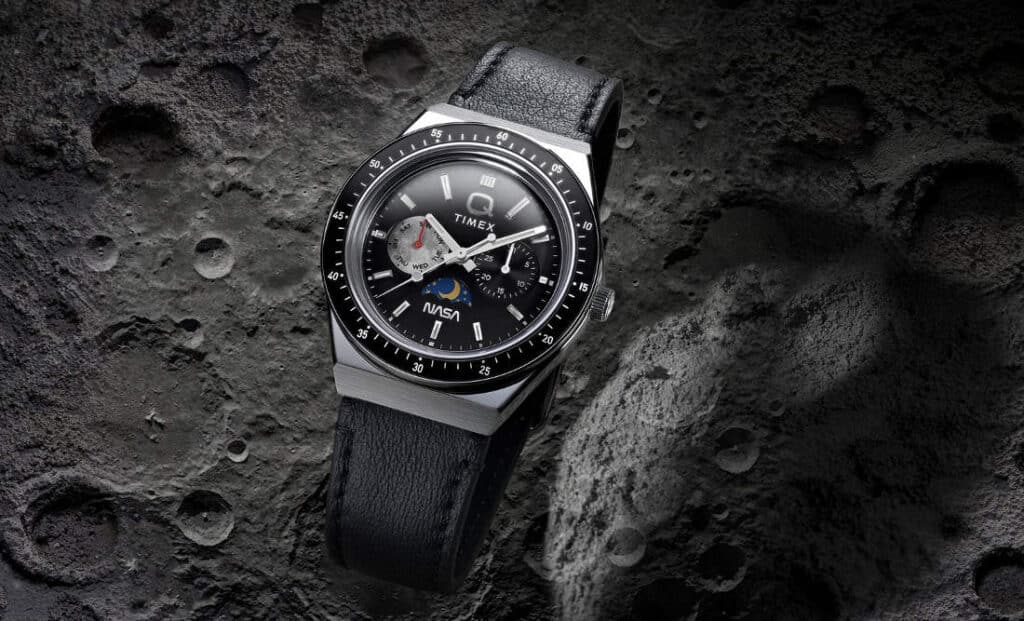
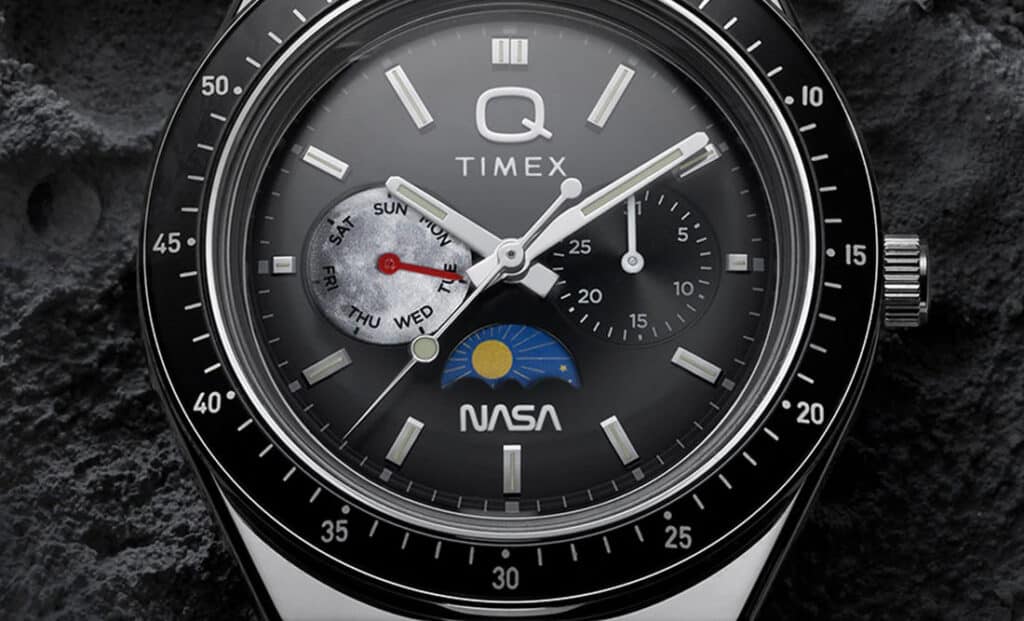
What makes the dial interesting is how it sidesteps the obvious. The tri-compax layout looks, at first glance, like a traditional chronograph. That said, there’s no elapsed time function here. The movement is quartz, and each subdial has a calendar purpose: date at 3, day-of-week at 9, and a sun and moon phase indicator at 6. That moon phase subdial carries the NASA logo, which some people will love and others will find a step too far.
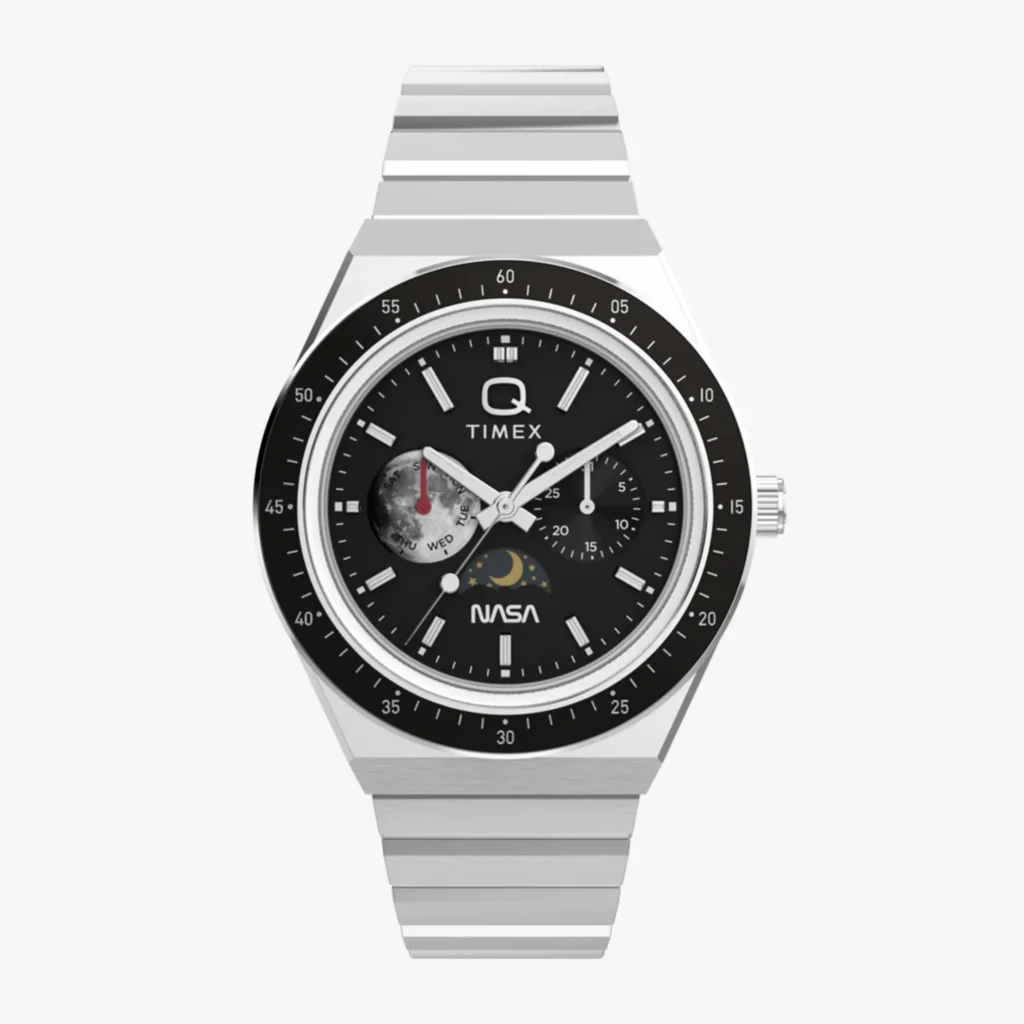
The more genuinely interesting detail is the day subdial at 9, which has been styled to resemble a photorealistic lunar surface and is fully luminescent. It’s a nerdy touch, and it works better than it probably should. The external bezel presents a tachymeter-style look but is fixed and decorative, carrying 60-minute markings that don’t do anything. That’s a mild head-scratcher, though not a dealbreaker at this price.
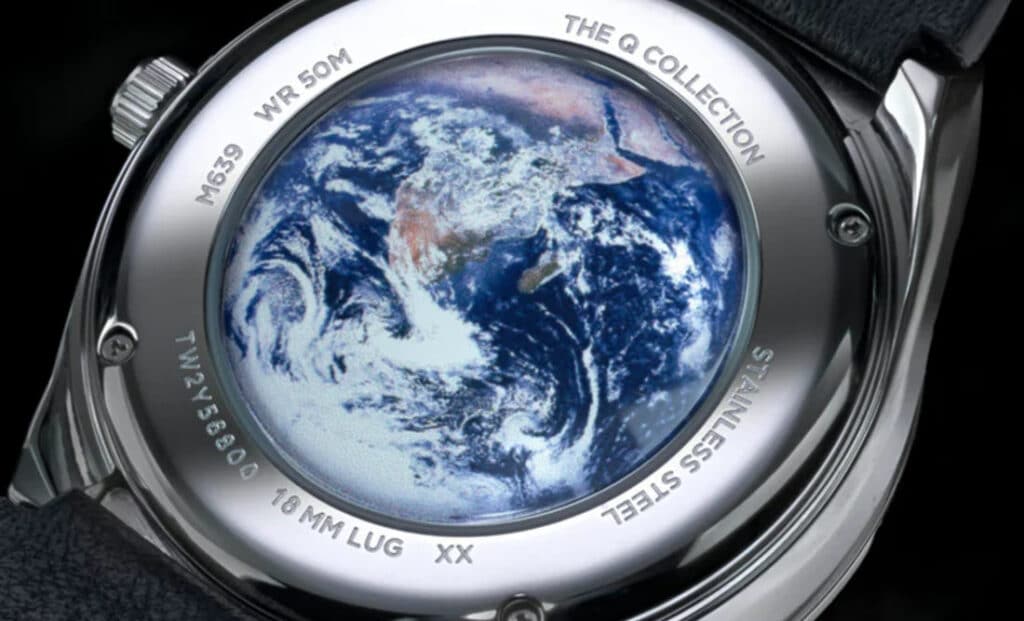
Turn it over and you’ll find the “Blue Marble” photograph, the famous full-color image of Earth captured during the Apollo 17 mission, reproduced on the solid caseback. It can read as either charming or excessive depending on your tolerance for themed watches. I lean toward charming, mostly because it’s hidden. The watch doesn’t announce itself as a space tribute from across the room, and I think that’s the right call. Water resistance sits at 50 meters, which is appropriate for a daily-use piece at this positioning. Pricing comes in at $249 on the steel bracelet and $229 on the black leather strap.
Whether the Q Timex NASA finds its audience probably depends on how much the NASA co-branding resonates with buyers who aren’t already deep in the watch hobby. For collectors, this is a casual piece, and it seems to know that. I’m still not entirely sure how I feel about the bezel, but I’m curious enough to want to see it in person.

Co-Founder & Senior Editor
Michael Peñate is an American writer, photographer, and podcaster based in Seattle, Washington. His work typically focuses on the passage of time and the tools we use to connect with that very journey. From aviation to music and travel, his interests span a multitude of disciplines that often intersect with the world of watches – and the obsessive culture behind collecting them.
Timex is making a comeback, but this one is a pass for me.
Thankfully they have plenty for us to choose from!
Thanks for the review. It’s pretty cool. Not a GADA or a daily banger, but a once-in-a-whiler. Limited edition, after all. Eventually, a moderate collectors’ item in the watch groups, maybe. I’m tempted to buy one at its moderate cost. The fixed but numbered bezel is the biggest negative for me. I’m bugged by stuff that looks as if it should work but doesn’t. Add 10-15 bucks to the price and make it uni-directional. Overall, interesting, cookie and unique.
“Once-in-a-whiler” is a great way to put it. And I completely understand the fixed bezel frustration. When something looks functional but isn’t, it creates this weird disconnect that’s hard to get past. At this price point, a functioning uni-directional bezel shouldn’t be a big ask. They’re easy to implement. Thanks for reading.