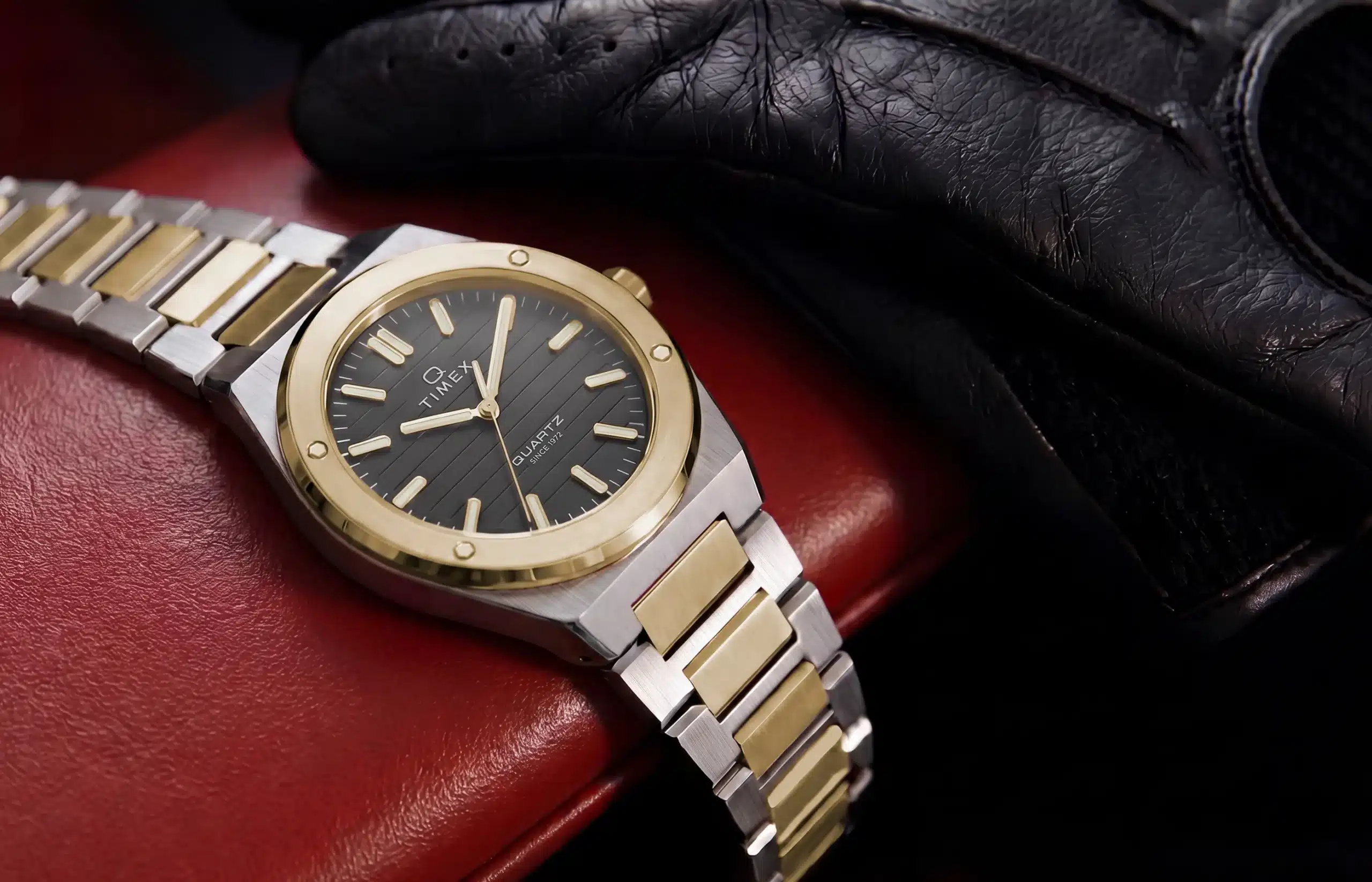
Timex has spent the last couple of years working its way through some very familiar corners of watch design. We’ve seen a Seamaster-style diver, a tricolor chronograph borrowing the Zenith El Primero layout, and enough Rolex-adjacent divers to establish a pretty clear pattern. Most of these releases have landed somewhere in the territory between homage and flattery. With the new Q Timex Marbella, the brand is taking on one of the most recognizable integrated sports-watch designs around.
At first glance, the reference is pretty clear. The Marbella pulls heavily from the Gérald Genta-designed IWC Ingenieur introduced in 1976. IWC brought that design back in 2023, and the modern Ingenieur has since become one of the more talked-about integrated sports watches of the current era.
There’s also a small historical wrinkle in seeing this design show up under the Q Timex name. The Q line traces back to Timex’s quartz watches of the early 1970s, right around the period when inexpensive quartz technology was reshaping the industry. Genta’s steel sports watches, including the Ingenieur, arrived partly within the high-end industry’s response to that changing landscape. Now Timex is pairing its quartz heritage branding with that same design language. Funny how these things come around.
And yes, I have some bias here. I’ve spent more evenings than I’d care to admit staring at Ingenieur listings I have no real business buying. A $219 watch that gets this close visually is naturally going to catch my attention.
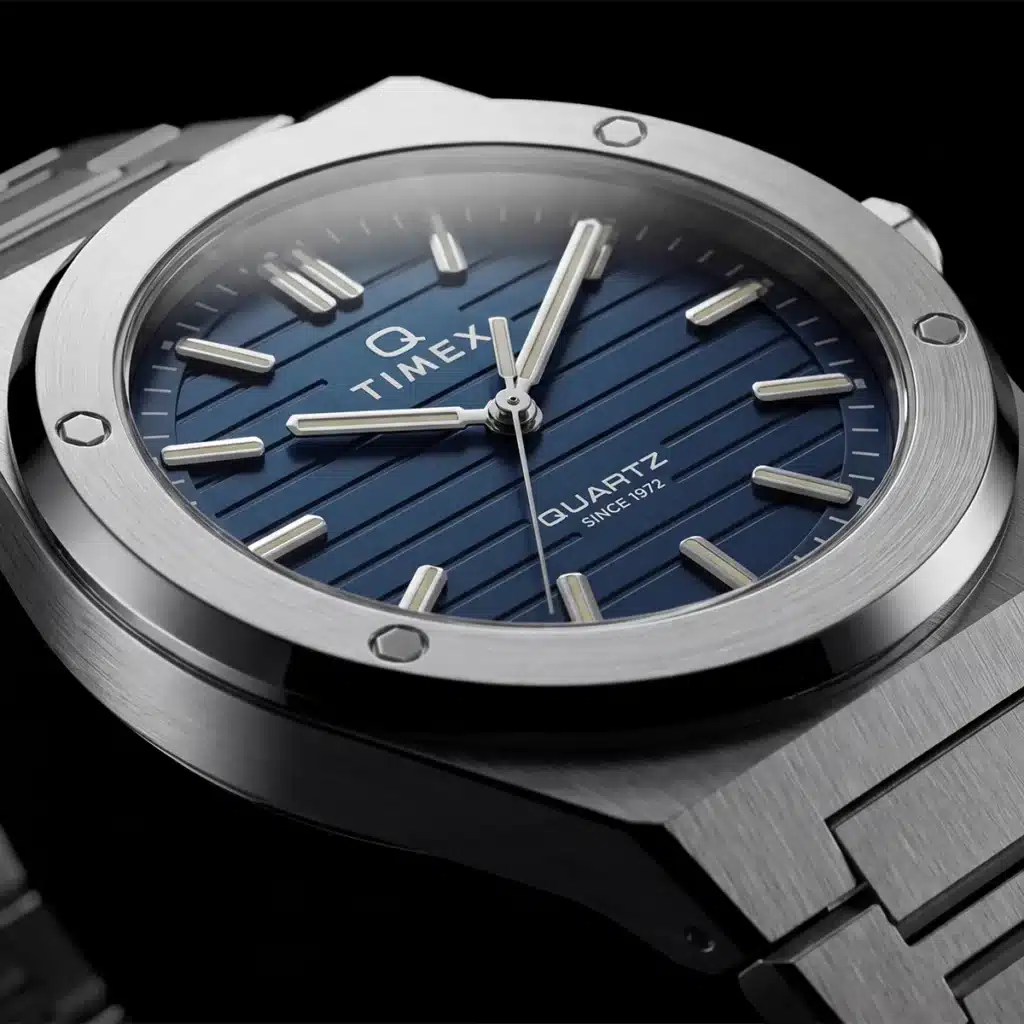
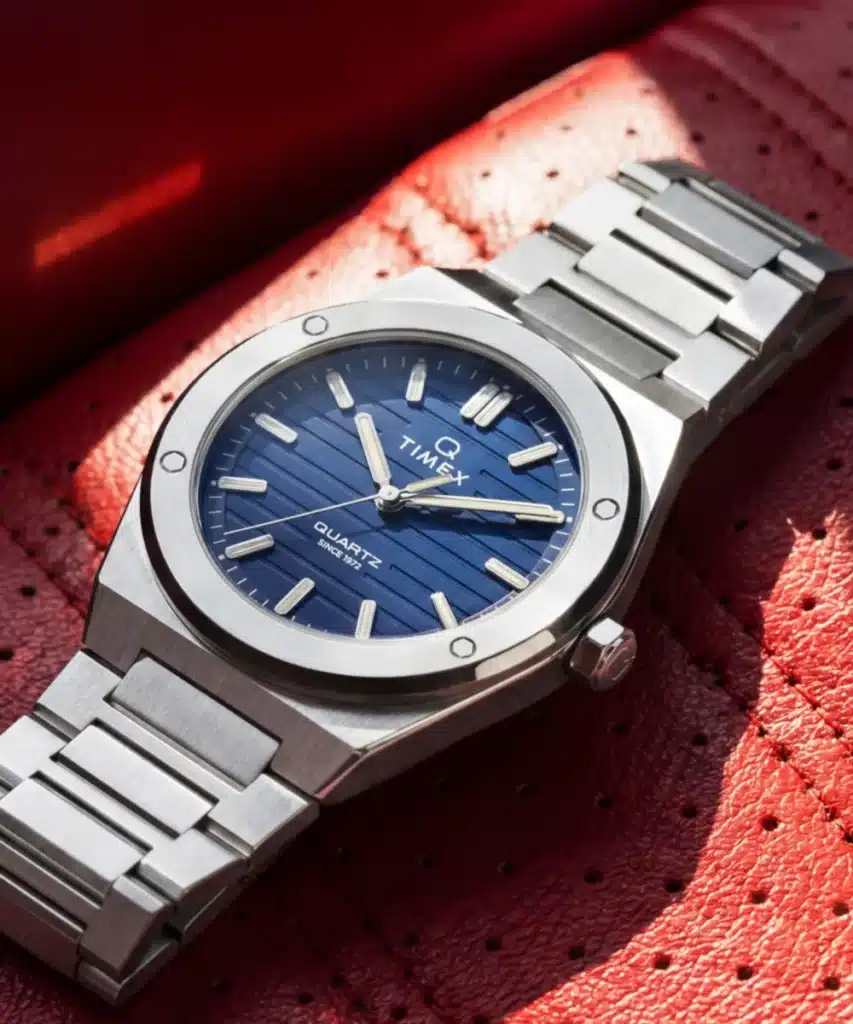
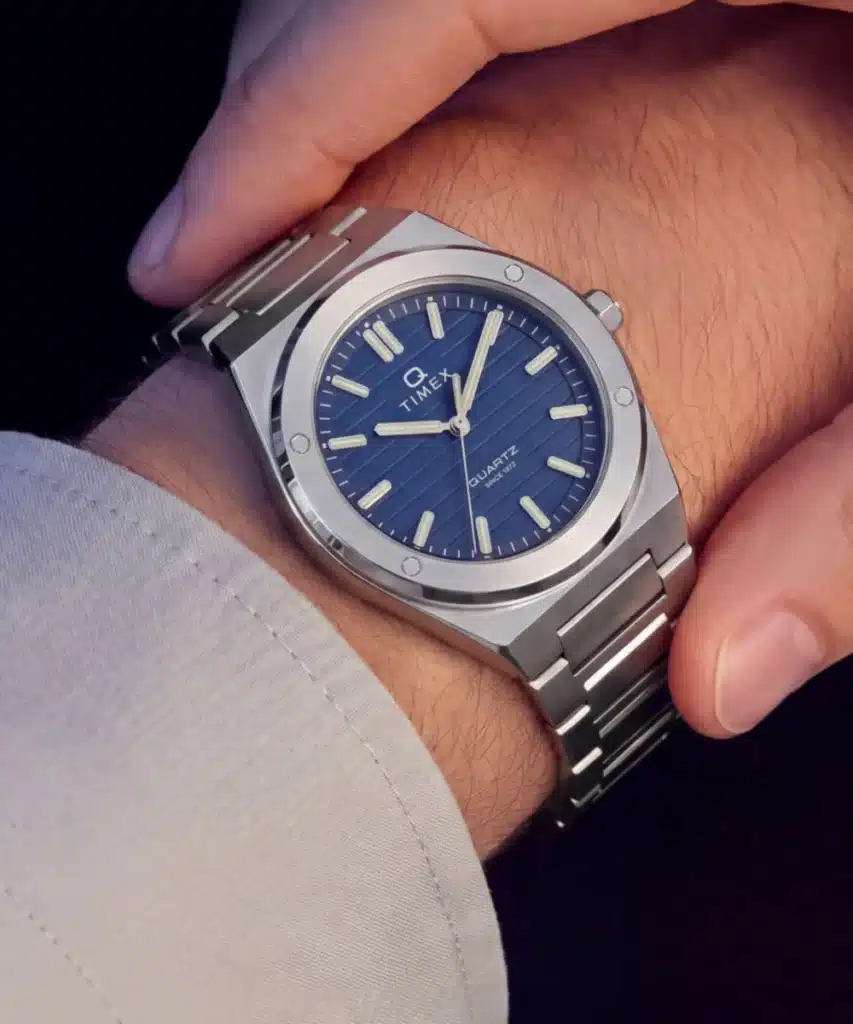
The Marbella is also pretty direct about where it gets its inspiration. The circular-brushed bezel, exposed bolts, integrated bracelet, and textured blue dial all point toward the Ingenieur. There isn’t much of a spot-the-reference game happening here. However, once you acknowledge the obvious source material, the Marbella still comes across as a good-looking watch on its own terms.
The dimensions are probably the first thing that stands out. The stainless steel case measures 40.5mm across and just 9.5mm thick, with a 50mm lug-to-lug. That relatively slim profile is encouraging for an integrated-bracelet design, especially when plenty of watches in this category can get thick quickly.

The brushed steel bracelet closes with a deployant clasp, while the textured blue dial gets applied indices and lume. Around it, the circular-brushed bezel and exposed bolts do most of the work establishing that familiar Genta-era silhouette.
Water resistance is rated to 50 meters, which should be fine for rain and the occasional splash, though I wouldn’t approach it as a serious swimming watch. The crystal is mineral rather than sapphire, and the quartz movement is completely in line with the Q Timex brief. I doubt the movement itself will be the reason anyone gets excited about this one.
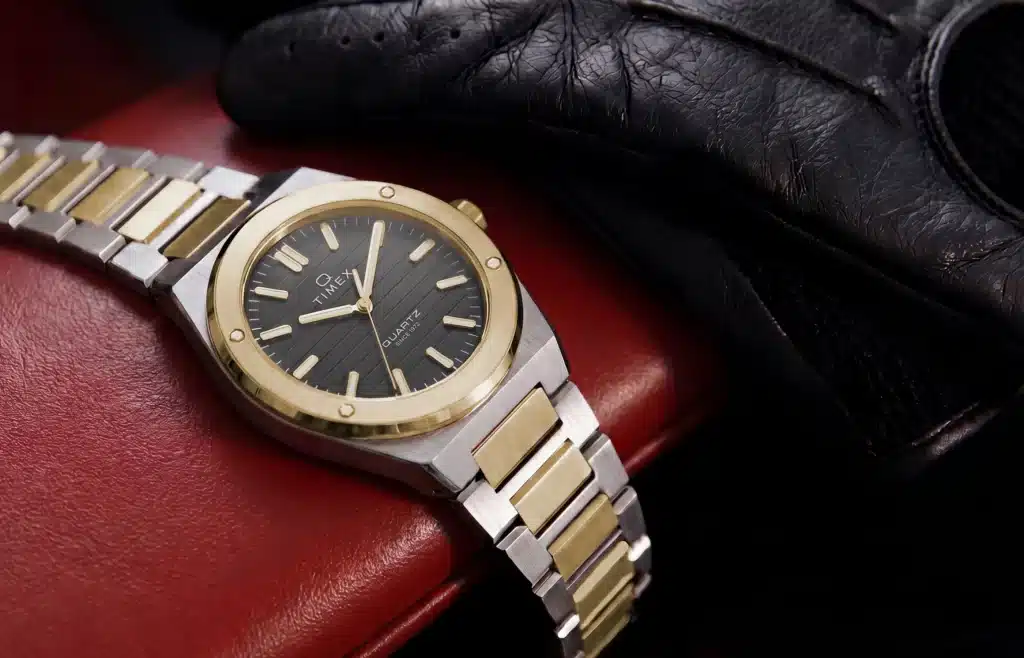
The integrated bracelet creates another limitation. With a case designed around this bracelet architecture, easy strap changes aren’t really part of the equation. You’ll want to be comfortable with the complete package as Timex designed it.
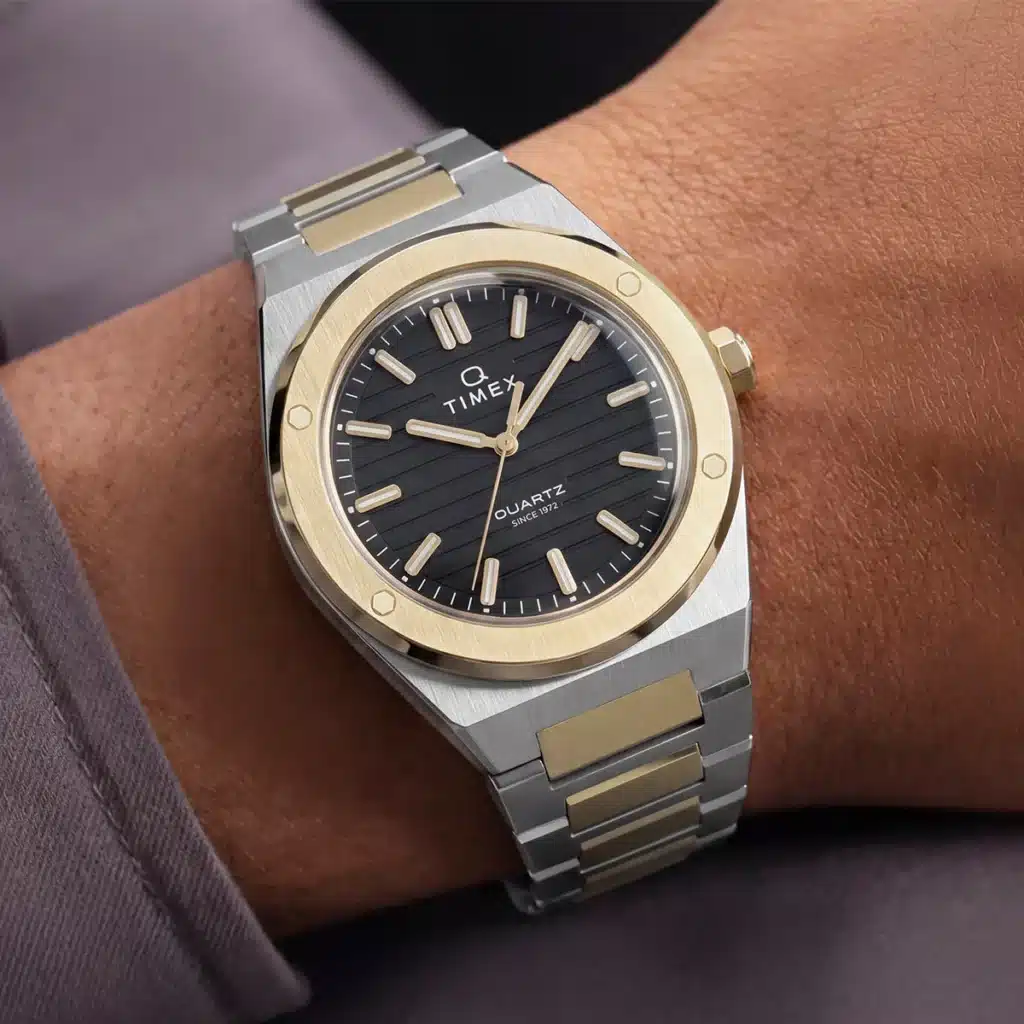
Even so, the pricing puts the Marbella in an interesting spot. You’re looking at $219 for the steel model, with a two-tone version available at $239. The IWC Ingenieur it so clearly channels sits closer to $12,900. That comparison doesn’t make the two watches equivalent in any meaningful sense, though it does explain why something like the Marbella might get the attention of people who enjoy the Ingenieur design and have no intention of spending five figures to get it.
Timex has shown repeatedly that there’s an audience for familiar designs at approachable prices, and the Marbella is one of the more direct examples we’ve seen from the brand. For someone like me, who continues to spend an unreasonable amount of time looking at Ingenieurs, I’m curious whether this would actually scratch that itch or simply make the original more difficult to ignore. I don’t know yet. And this feels like one of those watches where the answer probably won’t become clear until we can spend some time with it.

Co-Founder & Senior Editor
Michael Peñate is an American writer, photographer, and podcaster based in Seattle, Washington. His work typically focuses on the passage of time and the tools we use to connect with that very journey. From aviation to music and travel, his interests span a multitude of disciplines that often intersect with the world of watches – and the obsessive culture behind collecting them.