Both the Timex Meridian and the Orient Mako II are pitched as affordable divers that can handle everyday wear while borrowing enough dive-watch credibility to feel legit. But once you’ve lived with them, worn them through long days, adjusted their bracelets half-asleep, and checked the time in less-than-ideal lighting, the differences start to feel a lot less theoretical. The real question we kept coming back to as we reviewed these pieces was simple: which one actually holds up as the better budget dive watch when you stop romanticizing the purchase and just wear the thing?
That said, we’ve spent years rotating through the best watches under 500, including extended time with both the Meridian and the Mako II. That means dealing with their quirks, noticing what gets annoying over time, and figuring out what makes sense for daily use. After more than a decade of reviewing best-value watches the hard way, this comparison exists to answer one thing honestly: if you’re choosing between the Timex Meridian and the Orient Mako II, which one truly earns a spot on your wrist.
Overview & Identity
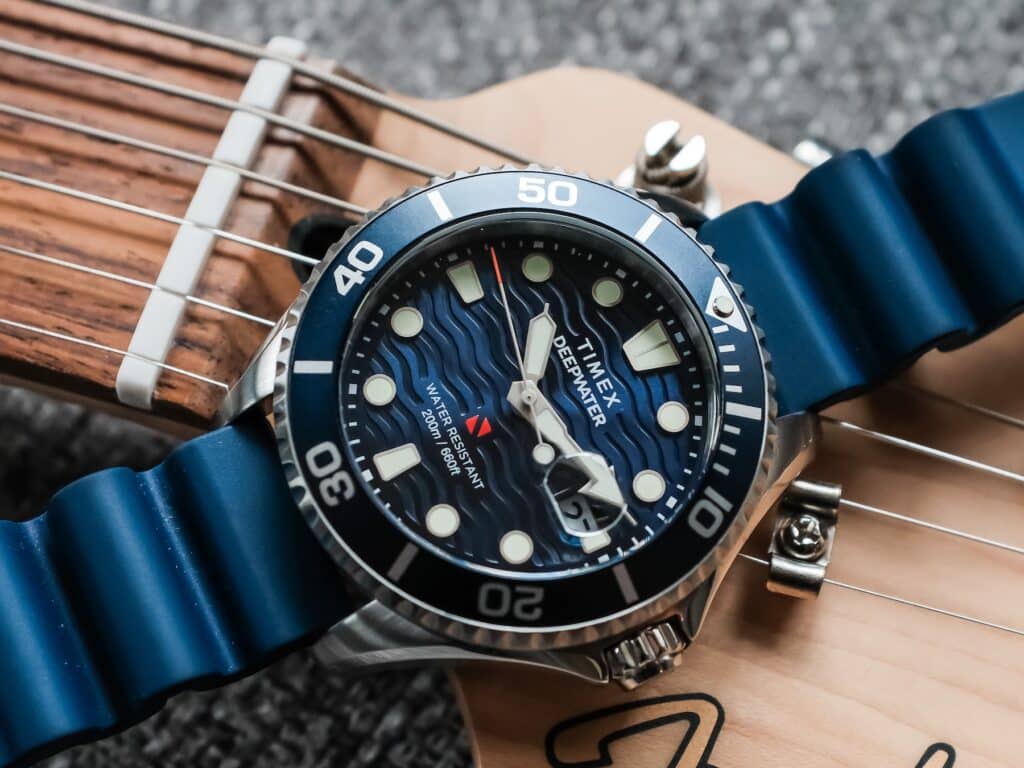
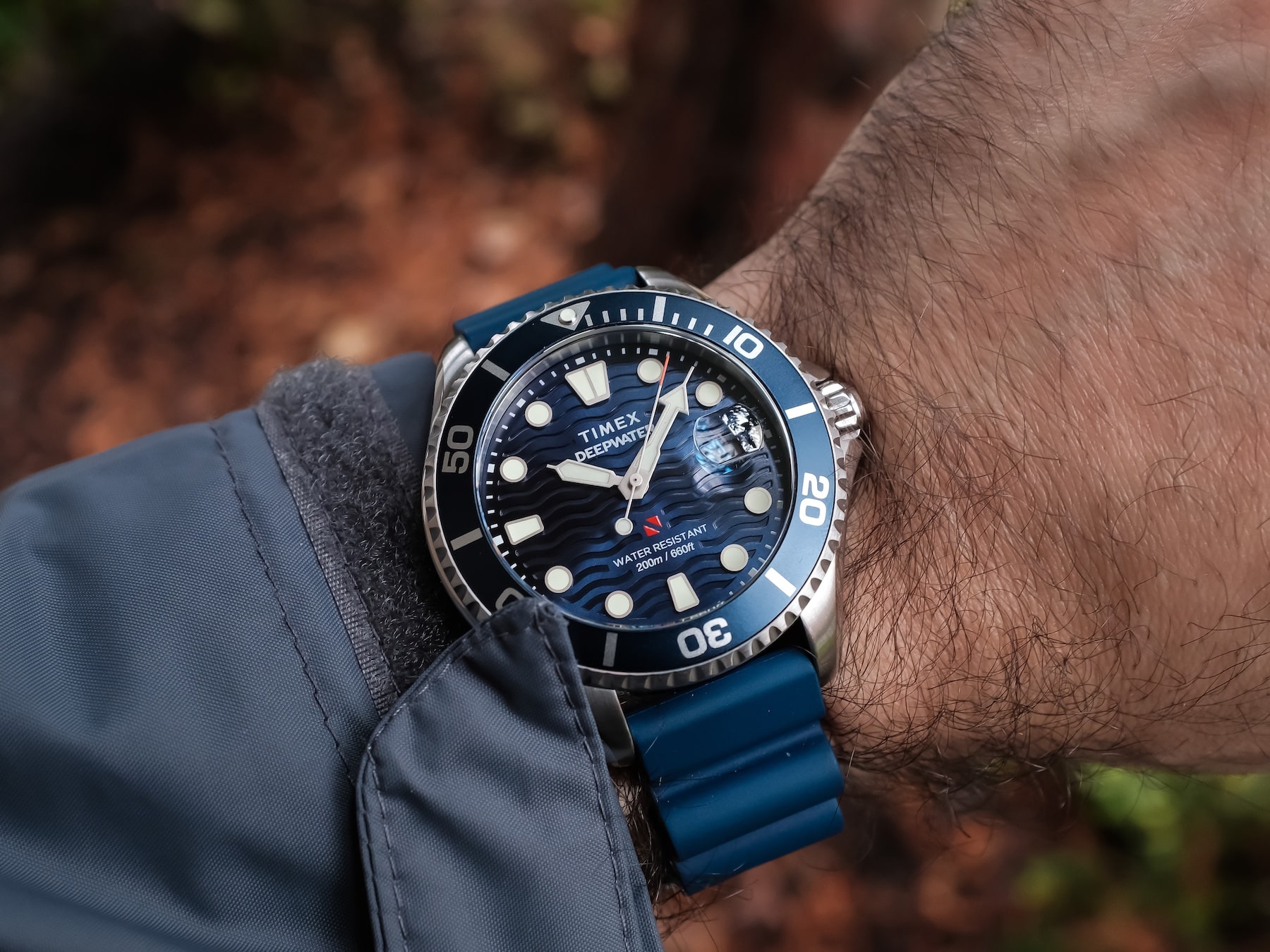
The Timex Meridian (specifically the Deepwater Meridian 200 we spent time with) comes across as Timex trying to shake off its “easygoing quartz beater” reputation and build something with a bit more attitude. In our hands-on review, it didn’t feel like a throwback piece or a nostalgia play; it felt deliberate. There’s a noticeable bulk to it, the kind that immediately reminded us of chunkier divers like the Sea-Dweller (purely in presence, not spec-for-spec). The case has weight, the design leans bold, and nothing about it tries to downplay that. Timex clearly built this as a modern, spec-forward dive watch. It’s unapologetic in size and presence, and that confidence defines the whole experience on the wrist.
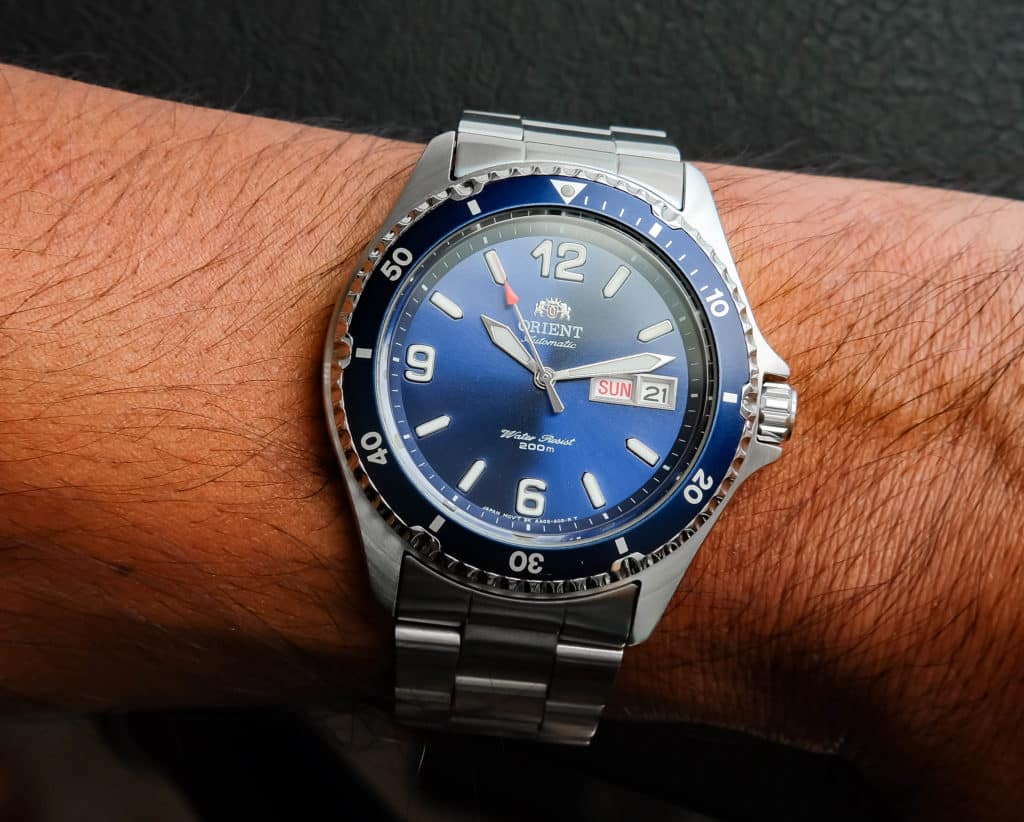
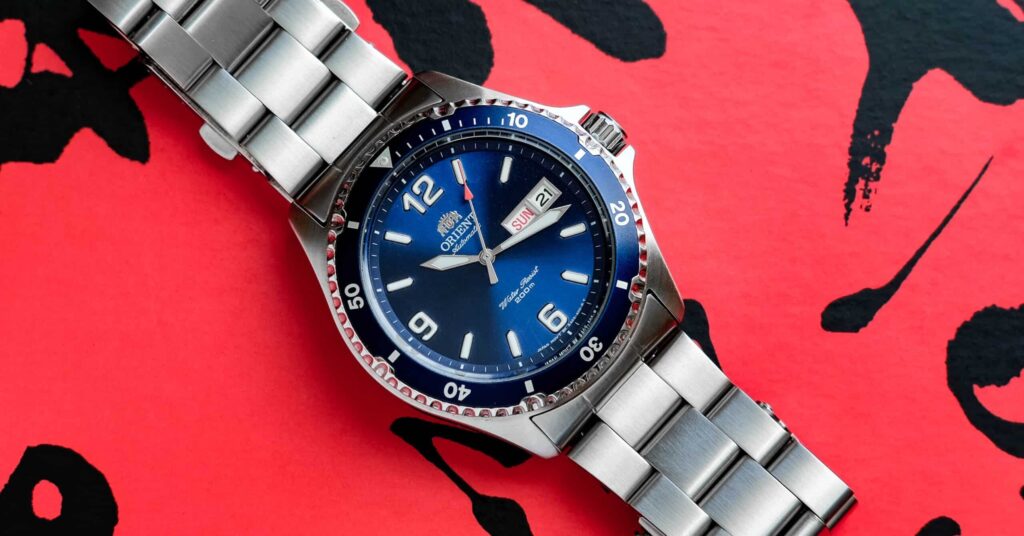
The Orient Mako II, on the other hand, feels like a watch that already knows what it is and doesn’t see a reason to change much. After spending time with it, it’s easy to understand why this model keeps coming up in beginner watch guide discussions. The original Mako earned its reputation over years of being one of the most recommended budget watch offerings, and the Mako II builds on that by fixing what didn’t work: mainly the movement. The updated F6922 caliber addressed many long-standing complaints from the community, but beyond that, Orient didn’t try to reinvent the formula. It still wears like a classic, no-frills diver: familiar, slightly conservative, and very easy to live with over time.
- The Timex Meridian is a bold, modern diver that leans into size, presence, and a more aggressive tool-watch identity.
- The Orient Mako II is a refined evolution of a long-standing favorite, focused on reliability and everyday wearability over reinvention.
Design & Wearability: Bold Dive Presence vs Classic Everyday Balance
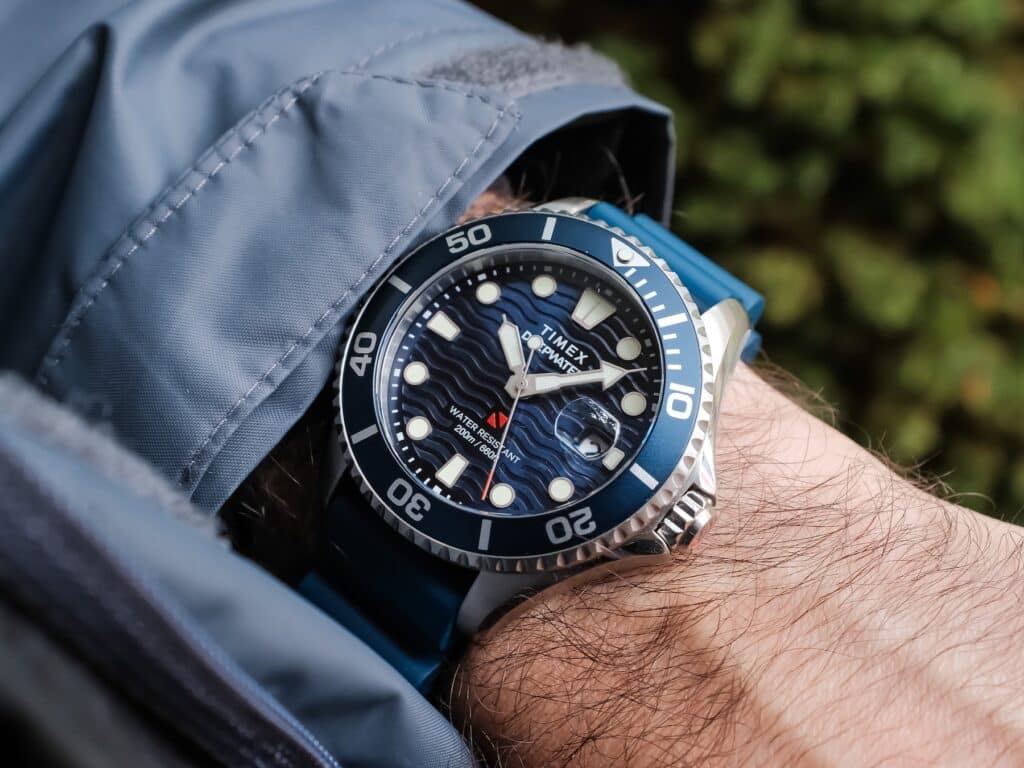
Timex leans into a more expressive, almost “look what we can do” approach with the Meridian. During our time with the Deepwater Meridian 200, the dial stood out, not because it’s loud, but because it feels intentionally layered. The blue sunburst base has a subtle wave texture that catches light differently depending on the angle (it’s one of those dials you end up tilting around more than you’d expect). There’s a bit of Seamaster inspiration in there, but it doesn’t come across as derivative. The applied indices, crisp white text, and that small red diver’s flag add contrast without tipping into clutter. On the wrist, it wears like a proper tool watch: thick, solid, and a bit imposing. This isn’t one of those watches for small wrists you forget you’re wearing. It has presence, and you feel it throughout the day (in a good way if you like your divers with some heft).
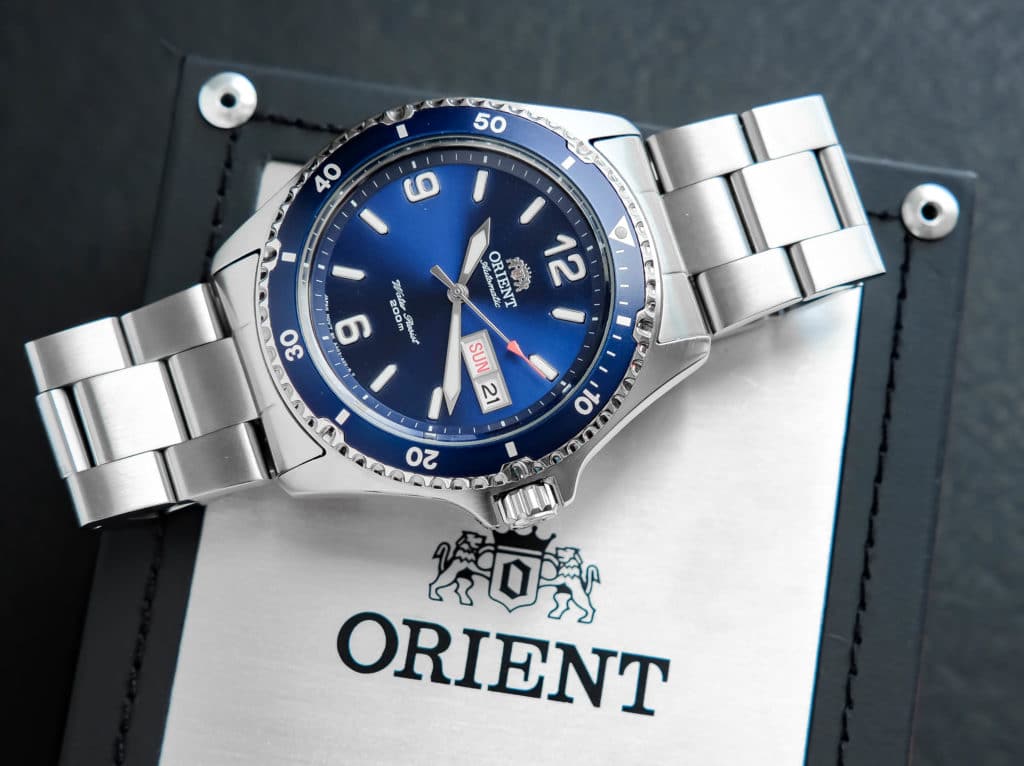
The Orient Mako II takes a much more restrained route, and honestly, that’s part of why it’s stuck around as one of the more underrated watch brands’ staples in this price range. As mentioned in our dedicated review, the deep blue sunburst dial doesn’t jump out immediately, but spend a little time with it, and you start to notice how dynamic it is. The light plays across the dial in a softer, more fluid way compared to the Meridian’s textured approach. Applied markers sit cleanly against that blue backdrop, and the beveled chapter ring adds a bit of depth without overcomplicating things. Small details, like the polished accents on the markers and the subtle red tip on the second hand, give it enough personality. Where the Mako II really settles in, though, is comfort. The oyster-style bracelet (with its mix of brushed tops and polished sides) feels more traditional, and while the hollow end links are noticeable off the wrist, they don’t really take away from daily wear. An interesting feature of the clasp is the decision to sandblast the inner folding joint rather than high-polish it. Overall, it’s the kind of watch you can throw on in the morning and not think about again until you take it off at night.
- The Timex Meridian delivers a bold, textured design with a larger, more tool-focused wrist presence.
- The Orient Mako II offers a cleaner, more balanced design that prioritizes comfort and long-term wearability.
Build Quality & Technical Approach
Both the Timex Meridian and the Orient Mako II play in the same budget diver sandbox, but one shows up like it’s ready for a bar fight, while the other quietly proves it’s been doing this for years.
Movements:
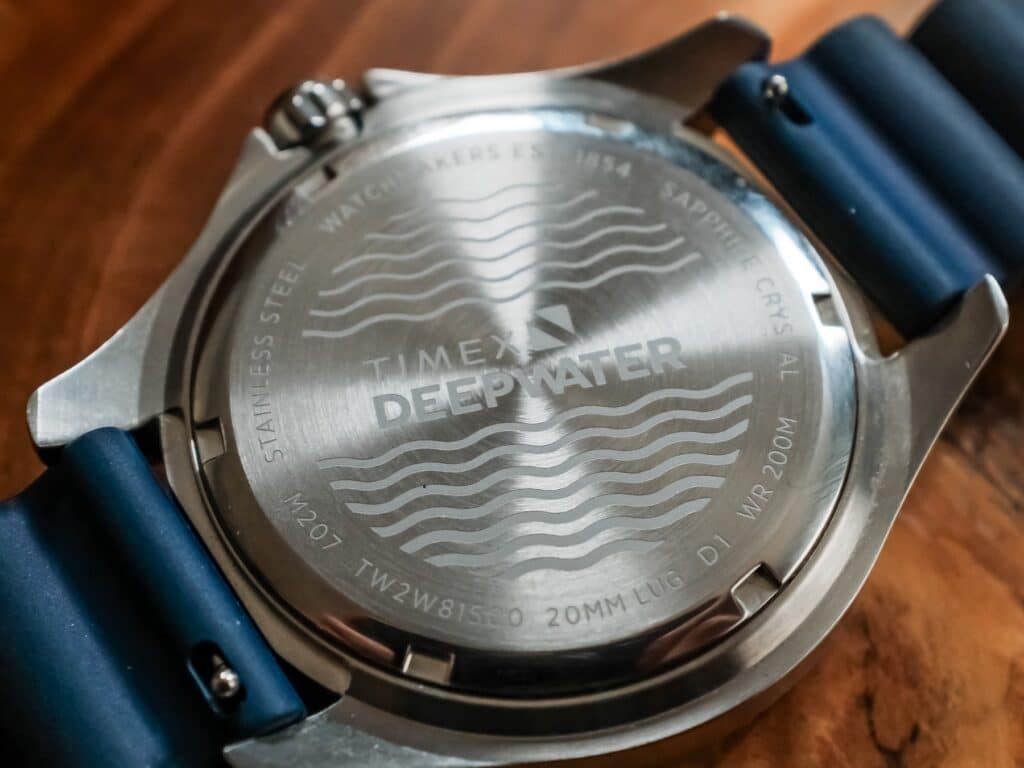
The Timex Meridian keeps things straightforward, and honestly, that’s part of its appeal. Inside, you’re getting a Seiko Epson VX42E quartz movement, which isn’t trying to win over mechanical purists. It hacks, has a quickset date, and runs for about three years on a single battery. No drama, no fuss. Setting the time feels crisp, the crown action is stable, and the hands snap into place without that vague “did it actually set?” feeling you sometimes get at this price. It’s the kind of movement you don’t think about after day one, and for a watch that’s likely to be tossed in a bag, worn while doing something messy, or picked up after sitting for a week, that reliability matters more than anything else. It’s a quartz diver that knows exactly what it is and doesn’t pretend otherwise.
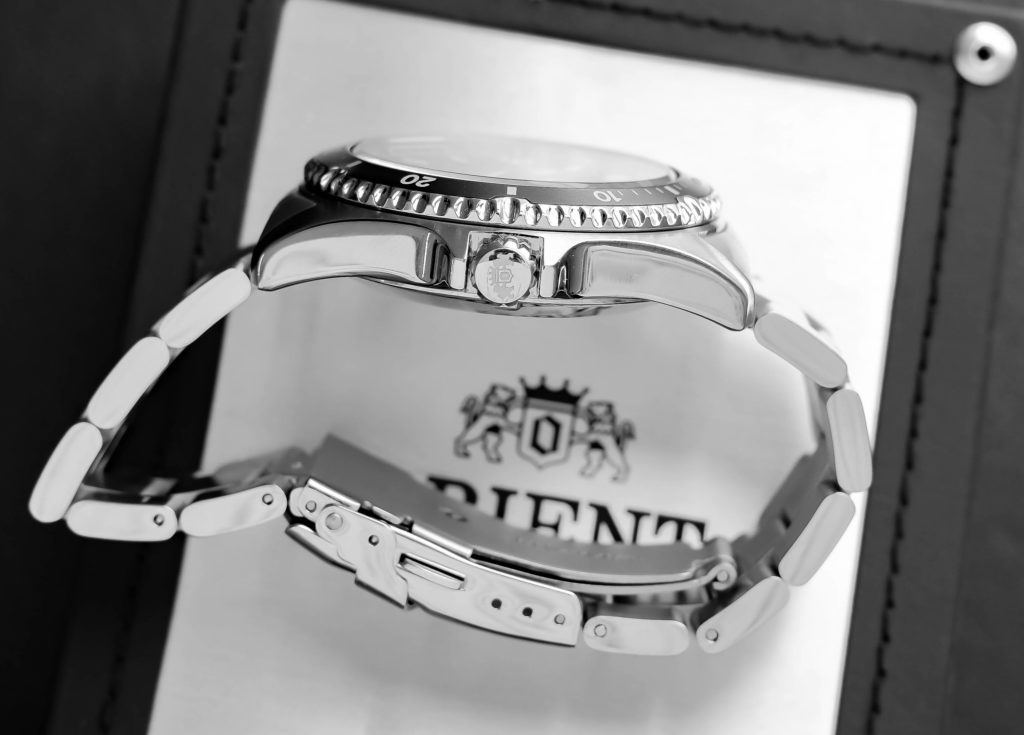
The Orient Mako II takes the opposite route, leaning fully into the appeal of mechanical ownership with its in-house F6922 caliber. On paper, it’s what you’d expect from one of the best automatic watches under 500: 22 jewels, around a 40-hour power reserve, and rated accuracy of -15/+15 seconds per day. But the real difference shows up in daily use. Compared to older Mako models, the addition of hacking and manual winding changes the experience entirely. You can stop the second hand to set it precisely, and if the watch runs out of power, a few turns of the crown bring it back to life. There’s no need to shake it around like you’re trying to wake it up. The winding action itself has a bit of resistance (not buttery smooth, but satisfying in its own way), which adds to that tactile, mechanical feel. It’s not the most refined movement out there, but it delivers a hands-on experience that makes you feel more connected to the watch. That’s clearly something quartz doesn’t try to (and cannot) replicate.
Case Construction & Finishing:
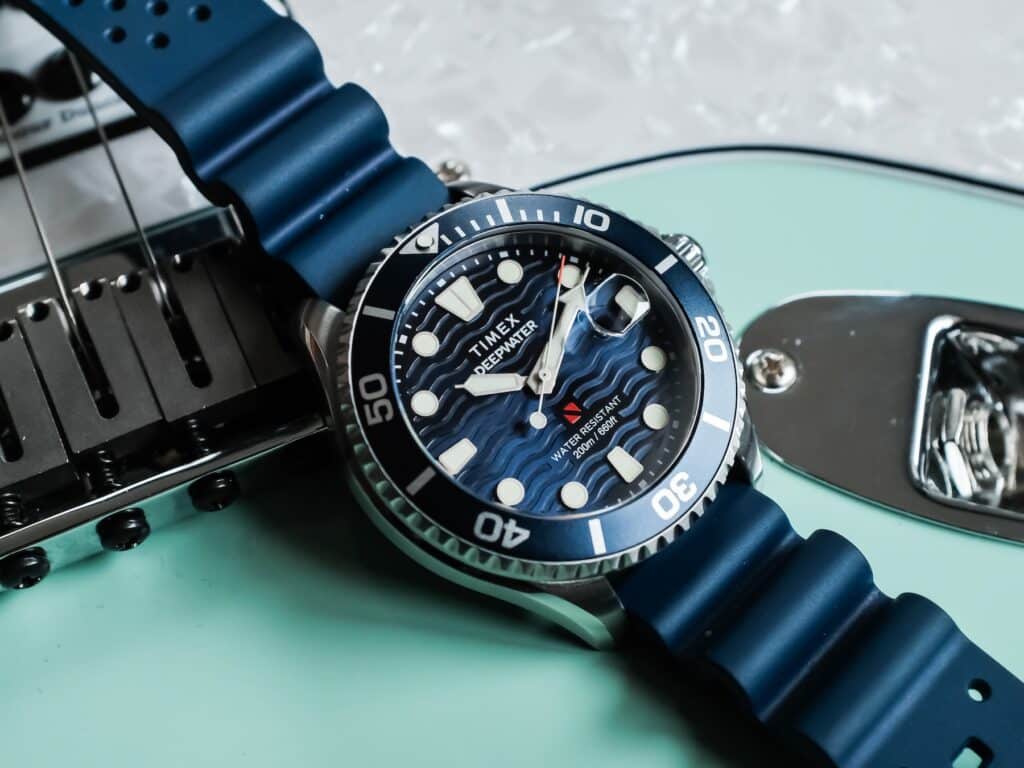
The Timex Deepwater Meridian 200 leans into its size, but not in a careless way. At 44mm wide and around 12.5mm thick, it wears big, but the curved lugs and flat caseback do a lot of the heavy lifting in keeping it comfortable. Even with a longer lug-to-lug, it sits lower on the wrist than expected, which makes a difference over a full day of wear. The bezel is one of those pleasant surprises. It’s aluminum, 120 clicks, and far more refined than we expected at this price. During our time with it, the action felt tight and consistent, with clean clicks and no looseness or hollow feel. It gives off that reassuring “this was put together properly” impression without trying to over-deliver on finishing flourishes.
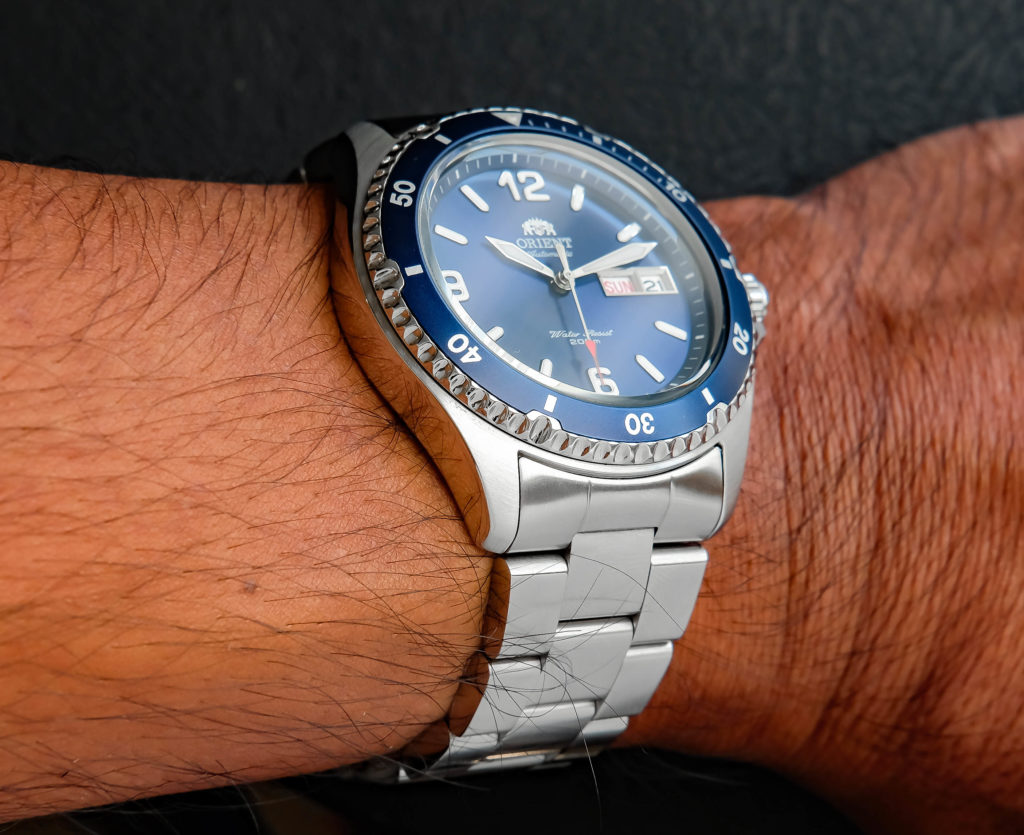
The Orient Mako II approaches case construction with more restraint, and it shows in how balanced it feels on the wrist. At 41.5mm wide, 47mm lug-to-lug, and about 13mm thick, it lands right in that sweet spot for everyday watches. Nothing about the proportions feels exaggerated. What stood out most during our hands-on time was how smoothly the finishing transitions are handled. The polished case sides flow into brushed surfaces on the lugs without any harsh lines, giving it a more refined look than you’d expect at this level. The bezel has been updated to 120 clicks as well, and while it can feel a bit stiff to get moving initially, the action itself is solid and satisfying once engaged. The polished coin edge adds a bit of visual pop, though it’s more about aesthetics than grip. It’s a case that doesn’t try to stand out loudly, but the longer you wear it, the more you notice the small details that were done right.
Water Resistance & Lume:
The Timex Deepwater Meridian 200 doesn’t mess around when it comes to dive specs. It gives you the full 200 meters of water resistance, backed by a proper screw-down crown and caseback that feel like they belong to a diver. During our time with it, the crown action stood out in a good way: smooth threading with the right amount of resistance to feel secure without being annoying. It’s one of those small details that makes you trust the watch a bit more when you’re around water (or, more realistically, washing your hands and overthinking it). The lume holds its own, too. Super-LumiNova on the hands and markers glows bright and stays readable long enough to be genuinely useful, not just a quick flash before fading into nothing. It’s not trying to outperform the heavy hitters, but it doesn’t feel like an afterthought either.
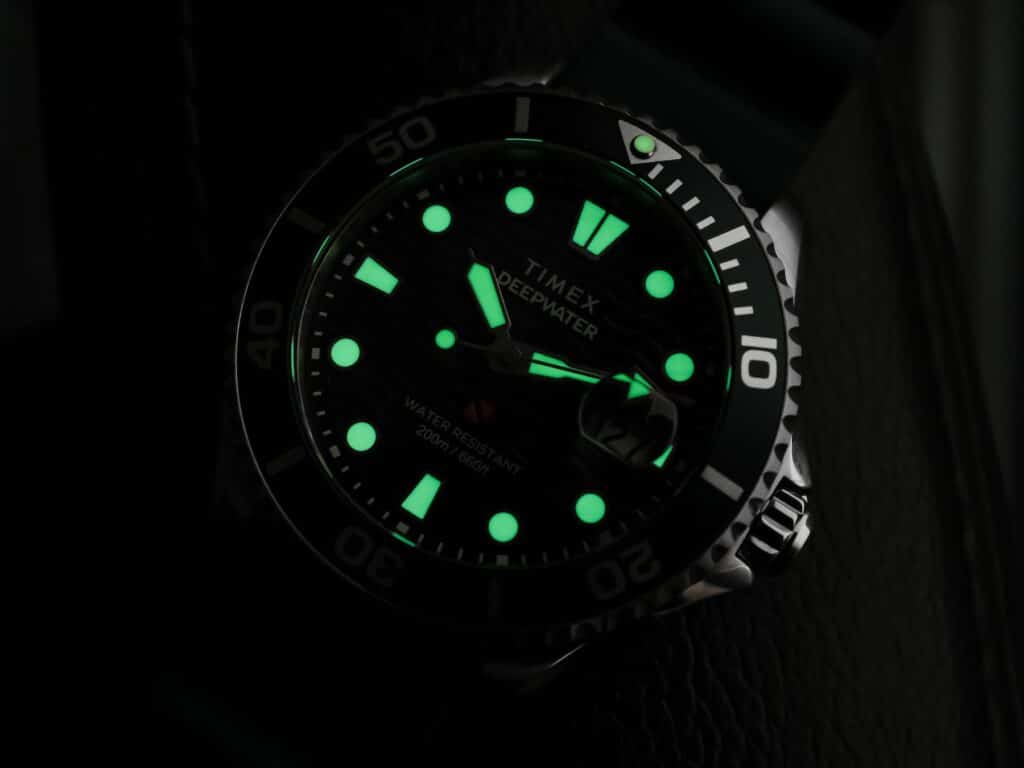
The Orient Mako II matches the Meridian on paper, with its own 200-meter rating, screw-down crown, and caseback, but the experience feels a bit more in line with its price. It’s dependable, no question, but it doesn’t go out of its way to impress. The lume does the job: markers and hands are filled and easy enough to read in low light, but it’s more “gets you through the night” than “lights up the room.” Compared to a few aggressive Seiko competitors, it can feel a bit subdued. That said, for everyday use, such as checking the time in a dim room or early morning, it holds up fine.
Crystals:
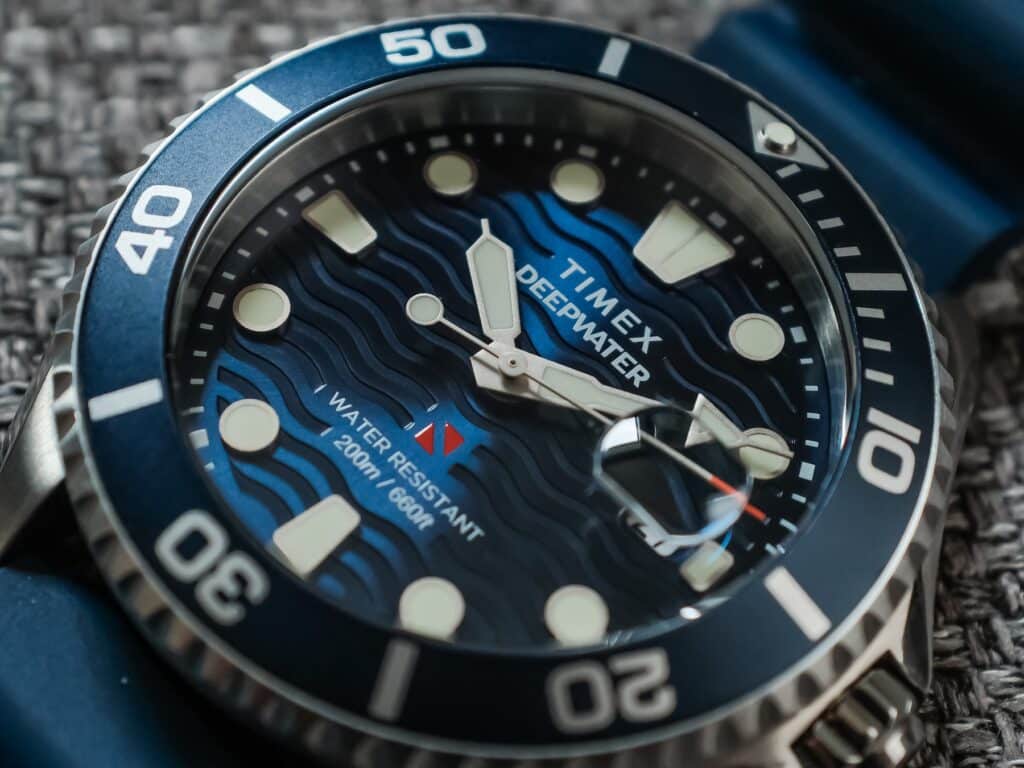
The Timex Deepwater Meridian 200 goes with sapphire, which is exactly what you want to see at this price point. In our time with it, the crystal felt clear and practical, with enough anti-reflective coating to keep glare under control in most situations. It doesn’t completely disappear like higher-end pieces, but it does the job without getting in your way. The cyclops over the date is one of those features that can go either way depending on your taste (we’ve complained about them before), but here it’s handled cleanly. Distortion is minimal, making the date easier to read without feeling like an afterthought. It’s a functional setup that leans more toward usability than toward impressing on paper.

The Orient Mako II takes a more cost-conscious route with a mineral crystal, and honestly, that tracks with the rest of the watch. It’s not as scratch-resistant as sapphire, and over time, you’ll probably pick up a few marks if you’re wearing it regularly. That said, during our experience with it, it never felt like a dealbreaker. The clarity is perfectly fine for daily use. It’s one of those trade-offs that makes sense: you’re giving up a bit of long-term scratch resistance in exchange for a lower entry point into mechanical dive watches.
- The Timex Meridian prioritizes low-maintenance reliability with its quartz movement, paired with a solid, oversized case, strong bezel action, and sapphire crystal, built for hassle-free, grab-and-go use without much thought.
- The Orient Mako II leans into mechanical ownership with its in-house automatic movement, more balanced case proportions, and traditional finishing, accepting small trade-offs like mineral crystal in exchange for a more engaging, hands-on experience.
Cost Considerations
The Timex Deepwater Meridian 200 lands at around $259, which puts it in that slightly awkward middle ground: not cheap enough to be an impulse buy, but not expensive enough to demand serious justification either. And honestly, that’s part of why it works. In our experience, it’s the kind of watch that sneaks up on you. It’s not riding hype, not tied to some legacy story, and not trying to win you over with nostalgia. But once you handle it, the case finishing, the weight, and the overall tactile feel make it clear where the money went. It feels like Timex stretching a bit beyond its usual lane: still accessible, but with enough substance to justify the bump. It’s not a “why is this so expensive?” moment. It’s more of an “okay, I get it” after a few days on the wrist.
The Orient Mako II sits right in that $200–$300 range, depending on the variant, and it feels like it knows exactly who it’s for. This is one of those best value watches that doesn’t require a mental spreadsheet to justify. From our time with it, the experience feels complete straight out of the box. Nothing about it screams “you should’ve spent more.” Even with its quirks (and there are a few), the overall package comes together in a way that feels greater than the sum of its parts. It’s a mechanical diver you can buy without overthinking, wear without worrying, and keep in rotation without constantly questioning the decision. Not many watches at this price manage to pull that off without some catch.
Final Thoughts: Which One Actually Holds Up When You Just Wear It?
After spending real time with both the Timex Meridian and the Orient Mako II, here’s the honest answer: if you’re judging this the way most of us actually live: with rotation, desk diving, weekend wear, and the occasional “I forgot I even had this on” moment, the Orient Mako II comes out ahead.
Not because it’s more exciting. Not because it wins on specs across the board. But because it’s easier to live with over time. The proportions are more forgiving, the mechanical movement adds a layer of engagement (without becoming a chore), and the overall package settles into your routine without asking much from you. It’s one of those rare watches worth the money where the longer you own it, the more it makes sense. You stop thinking about what it lacks and start appreciating how complete it feels.
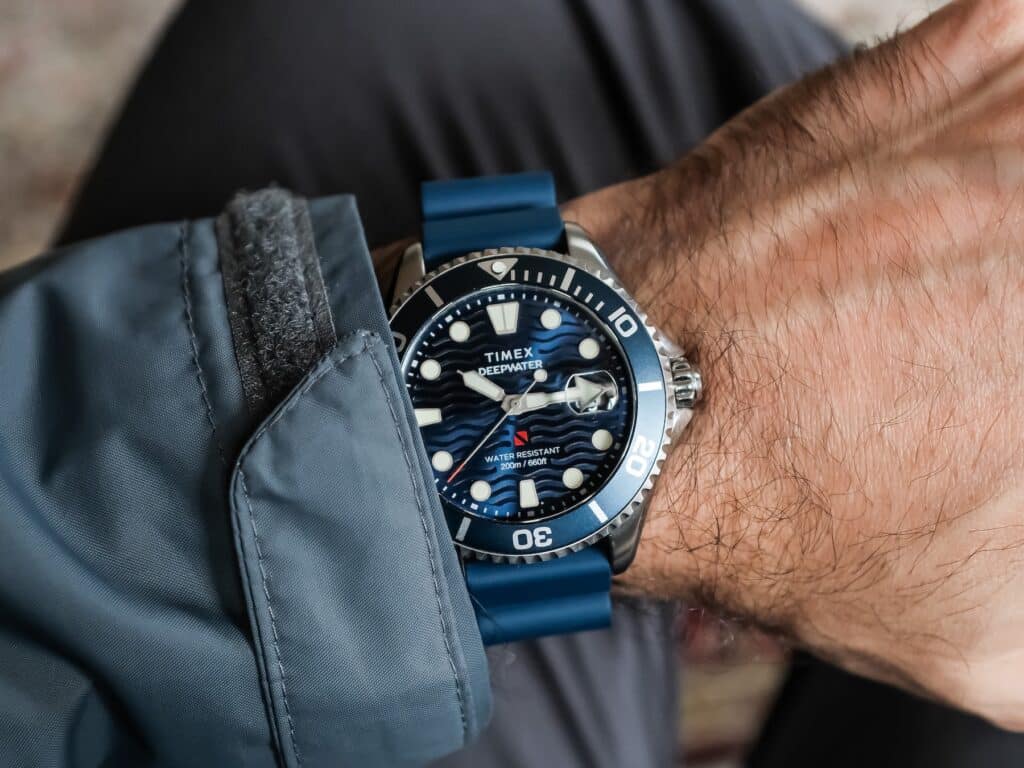
The Timex Meridian, on the other hand, isn’t necessarily a bad watch. It actually feels tougher, more modern, and a bit more deliberate in its construction. The quartz movement makes it dead simple to own, and the case has a presence that some people will absolutely prefer. But that same boldness can work against it. It’s bigger, a bit less versatile, and not something everyone will reach for every day. It’s the watch you wear when you want a diver on your wrist, not the one you forget you’re wearing, and that distinction matters more than you’d think.
So at the end of the day, we feel the Orient Mako II is the better affordable dive watch. Let us know your thoughts on our analysis after hands-on testing in the comments below.

Co-Founder and Senior Editor
Kaz has been collecting watches since 2015, but he’s been fascinated by product design, the Collector’s psychology, and brand marketing his whole life. While sharing the same strong fondness for all things horologically-affordable as Mike (his TBWS partner in crime), Kaz’s collection niche is also focused on vintage Soviet watches as well as watches that feature a unique, but well-designed quirk or visual hook.
It will be a long time before I see Timex even remotely challenge an Orient mechanical watch beyond aesthetics. I love my cheap Timex watches, but I certainly know they don’t play in the same lane as the Orient divers.
Hi, Lonnie:
To be honest we were pretty surprised by how the Meridian felt in terms of quality. Sure Timex has cheaper options around $50 and those are the ones that I wouldn’t compare against an Orient. But the engineering, quality, and wrist feel are a step above the other budget Timex pieces which is why it at least felt appropriate to compare these two hands-on.
Best,
-Kaz
The Timex is a better looking watch then the Orient, but the Timex is completely outclassed by the Orient.
The Timex runs on a cheap quartz movement while the Orient sports a tried and tested automatic movement that will be still running when the Timex is in the bin.
I think the quartz vs. mechanical debate is more nuanced than that. A well-made quartz movement can outlast a lot of automatics with fewer maintenance costs along the way. Both have their place. But the Orient does offer a lot mechanically for the money, no question there.