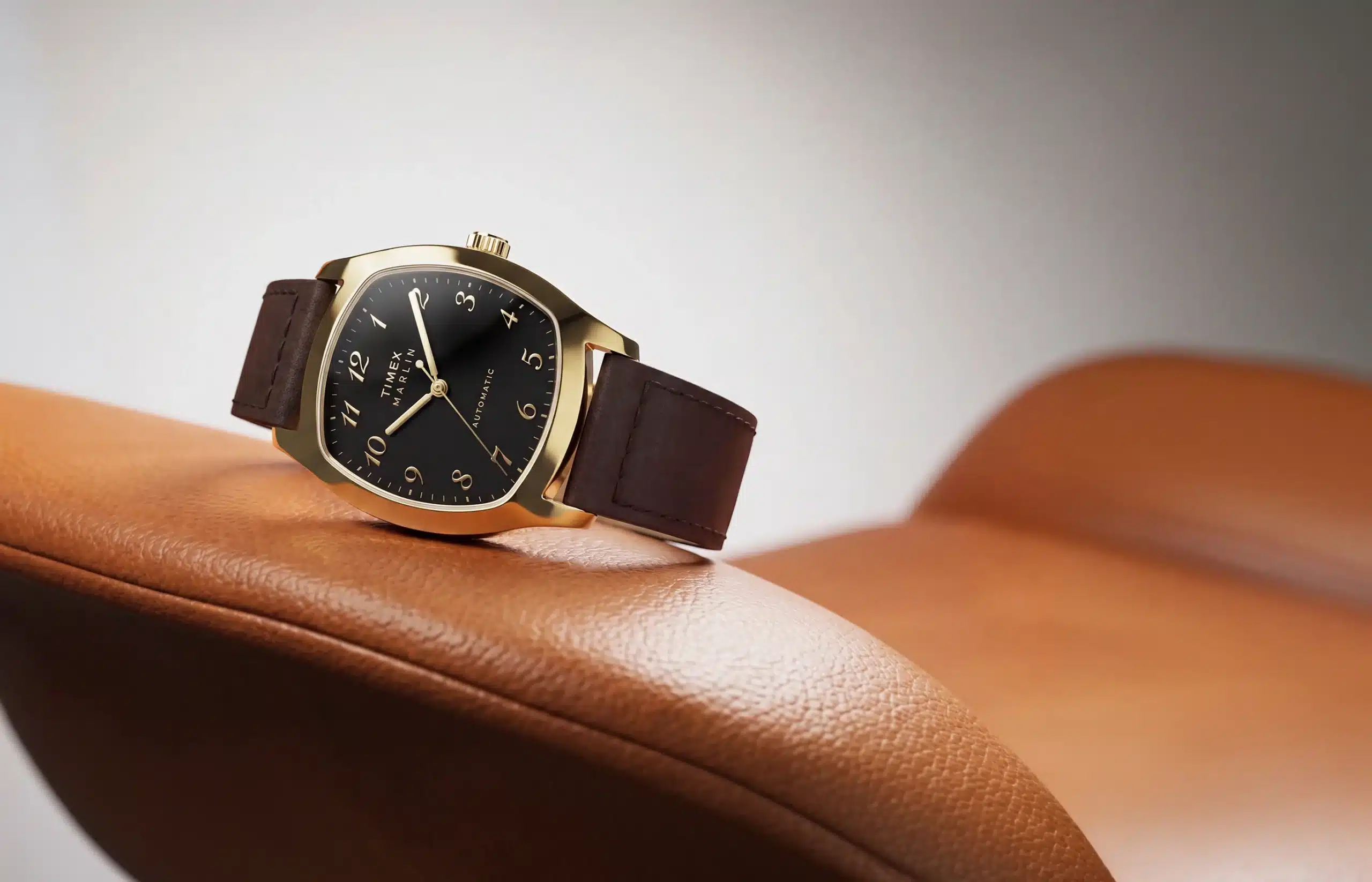
I’m starting to think the Marlin isn’t really a specific watch anymore. When Timex revived the name in 2017, the idea was much easier to define. That Marlin was a 34mm, hand-wound dress watch based closely on a Timex from the 1960s. Today, Timex lists several Marlin references, covering different sizes, complications, movements, and designs. The connection between them has become increasingly loose, with mid-century styling doing most of the work.
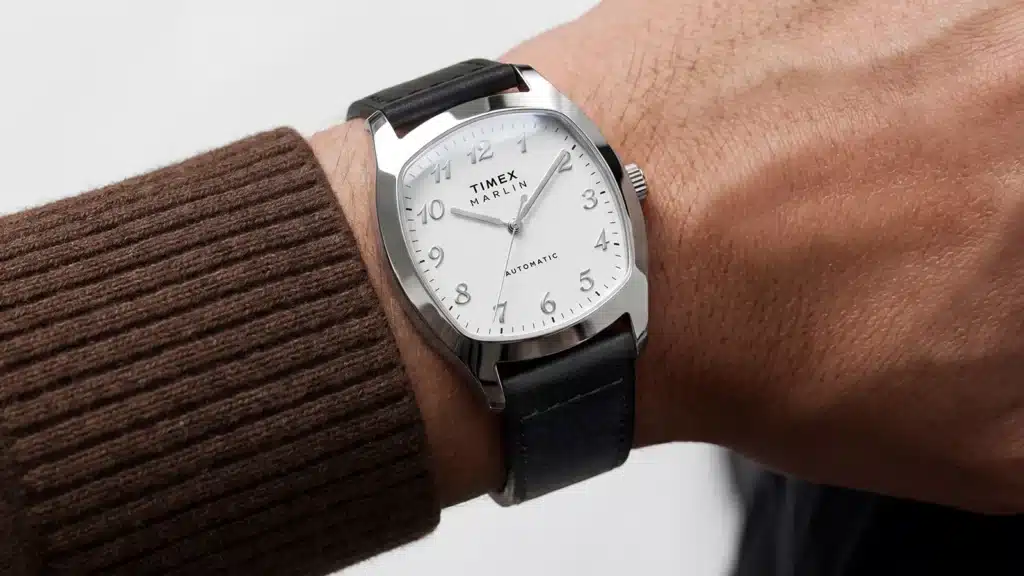
The new Marlin Chatham Automatic might be the clearest example yet. Timex has given the Chatham a 36mm cushion case, a first for the modern Timex Marlin collection. It measures 44.5mm lug-to-lug and 12mm thick, with a polished stainless-steel case, mineral crystal, display caseback, and 50 meters of water resistance.
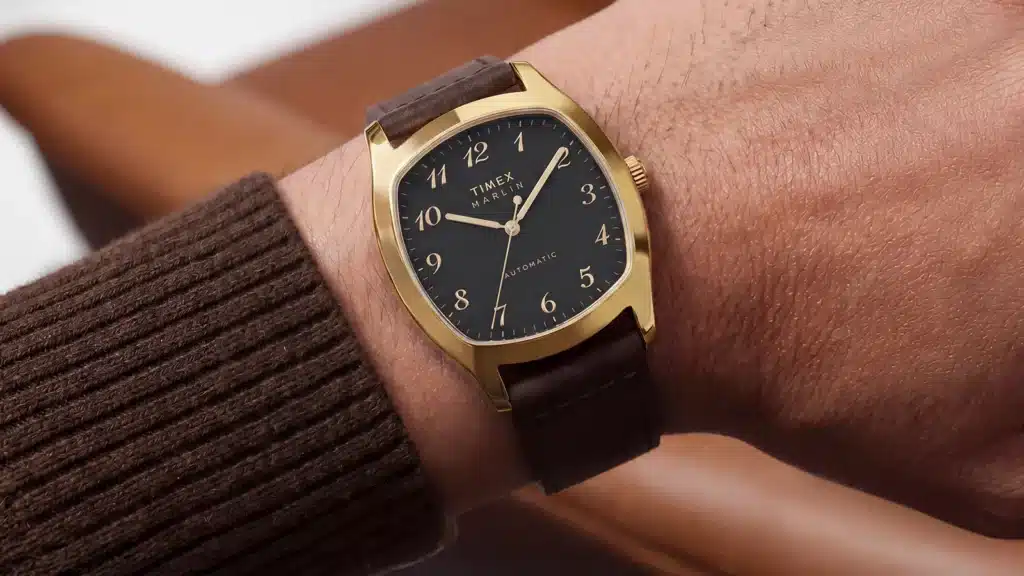
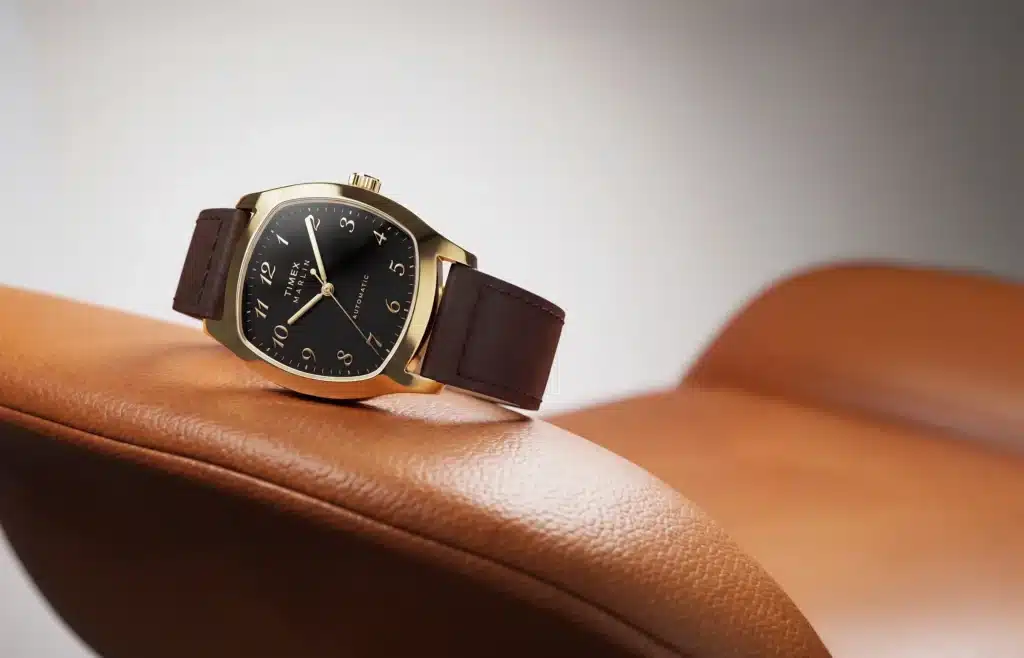
I think 36mm was the right call. Cushion cases tend to look larger than their measurements suggest because there’s simply more case surrounding the dial. Going much larger could have pushed the Chatham away from the compact dress-watch proportions that make the design interesting in the first place. Timex says the Chatham combines 1960s style with “relaxed coastal charm.” I have no idea what makes a watch coastal, so we’ll leave that part alone. The 1960s influence is easier to see, particularly on the dial. And to me, that dial is the reason to care about this watch.
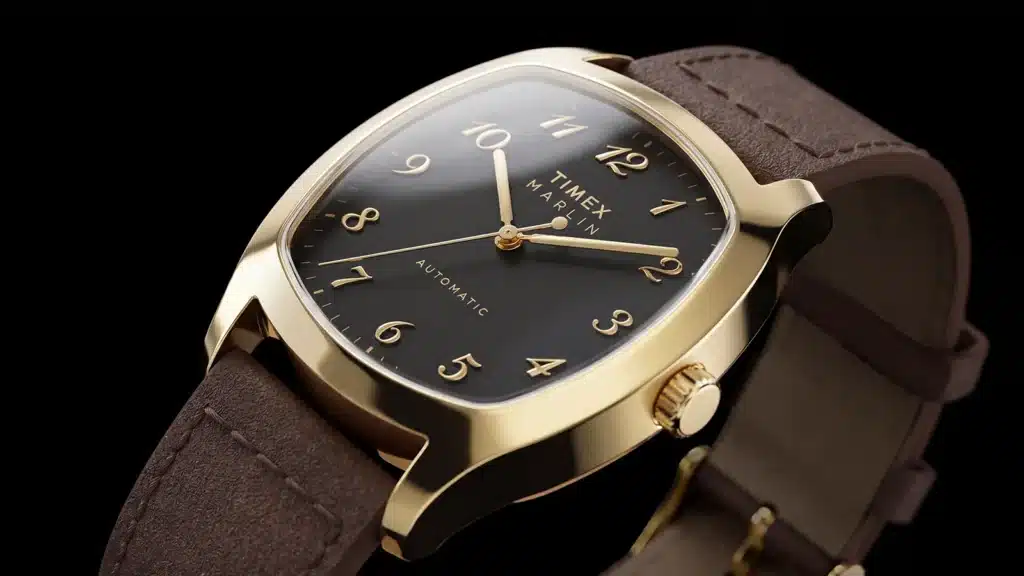
Timex went with applied Breguet-style Arabic numerals, an open minute track, rounded baton hands, and very little text. I never expected applied Breguet numerals to show up on a modern Timex, and they change the character of the Chatham considerably. There are plenty of inexpensive watches trying to capture some vague version of mid-century dress-watch design. This one at least has a recognizable face.
Two versions are available. The $289 model combines a steel case, white dial, silver-tone hands and markers, and a black leather strap. A $299 version pairs a gold-tone case with a black dial, gold-tone dial furniture, and brown leather.
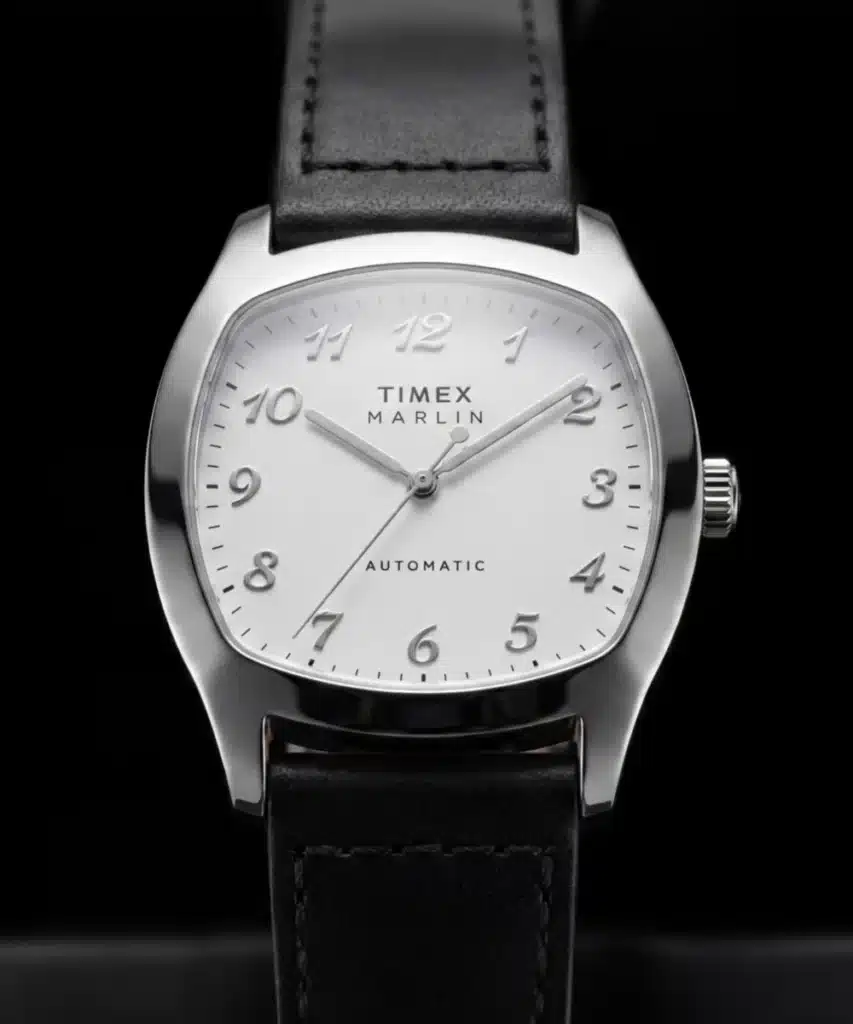
In my opinion, the steel version is the one to get excited about. The white dial gives the numerals room to stand out, and the black strap keeps the whole thing relatively restrained. The gold-tone model pushes the vintage styling further, which may be exactly what some people want.
Inside, Timex uses the Miyota 8215 automatic. It’s a familiar Japanese movement with 21 jewels and about 42 hours of power reserve. Timex quotes an accuracy range of -20/+40 seconds per day. Both watches come on 20mm quick-release leather straps.
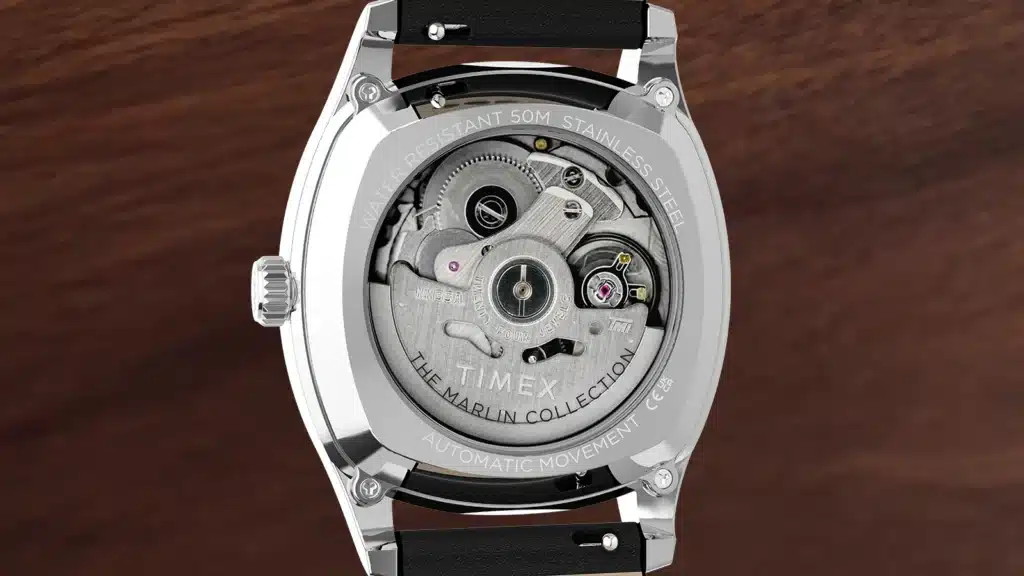
At around $300, I’m fine with that movement choice. You can certainly find affordable automatics with more impressive specifications, and a sapphire crystal would have been welcome. My take is that the Chatham has to make its case on design, and the movement is adequate for what Timex is trying to do here. A more impressive caliber wouldn’t necessarily make those Breguet numerals or that cushion case any more interesting. The bigger story is what Timex is doing with the Marlin name.
To me, Marlin has become the company’s home for mechanical watches built around a broad idea of mid-century design. The Chatham bears very little resemblance to the modest hand-wound Marlin that restarted everything in 2017. Nine years and dozens of references later, that seems intentional. I think the Chatham gets away with stretching the name because the watch has an identity of its own. The cushion case helps, though those applied numerals are what really sell the idea for me.
With so many Marlins currently listed by Timex, there’s still a question hanging over the collection. How far can Timex stretch the name before “Marlin” simply becomes another word for “mechanical Timex”? The Chatham suggests we may already be there.

Co-Founder & Senior Editor
Michael Peñate is an American writer, photographer, and podcaster based in Seattle, Washington. His work typically focuses on the passage of time and the tools we use to connect with that very journey. From aviation to music and travel, his interests span a multitude of disciplines that often intersect with the world of watches – and the obsessive culture behind collecting them.
Do you think this was the world’s fastest turnaround to homage the new Hamilton American classic cushion they just released?
Haha if anyone can pull that off, it’s Timex.