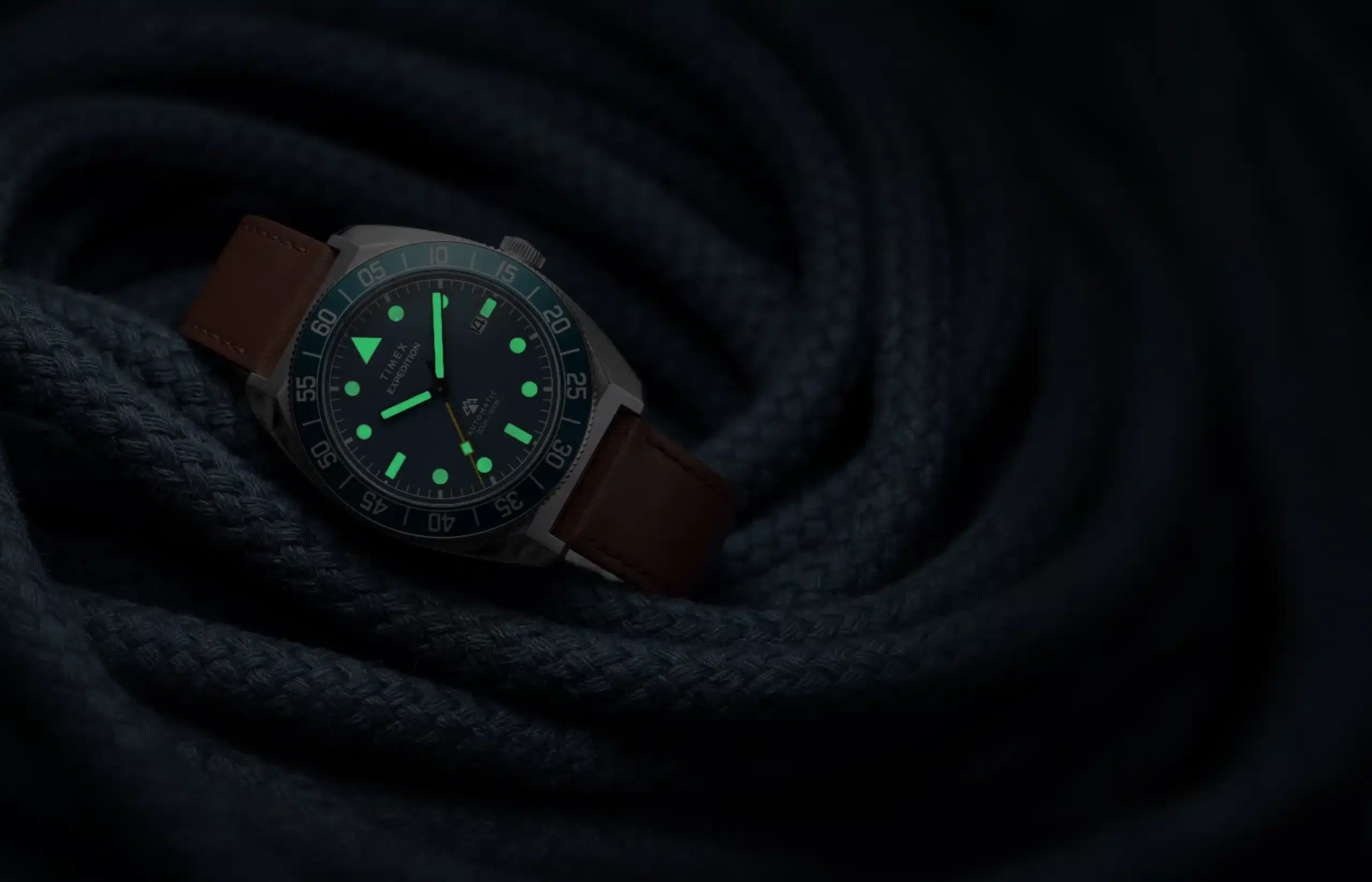
Timex has added another mechanical watch to the Expedition Pioneer lineup, and at first glance, the interesting part is how far the Expedition name has traveled. For a long time, Expedition was easy to understand. These were affordable Timex field watches built around simple outdoor utility. The Expedition Pioneer series has gradually stretched that definition, bringing in titanium cases, automatic movements, GMT functionality, sapphire crystals, and 200 meters of water resistance. The new Expedition Pioneer Automatic continues that shift, this time with a stainless-steel case and prices starting at $429.
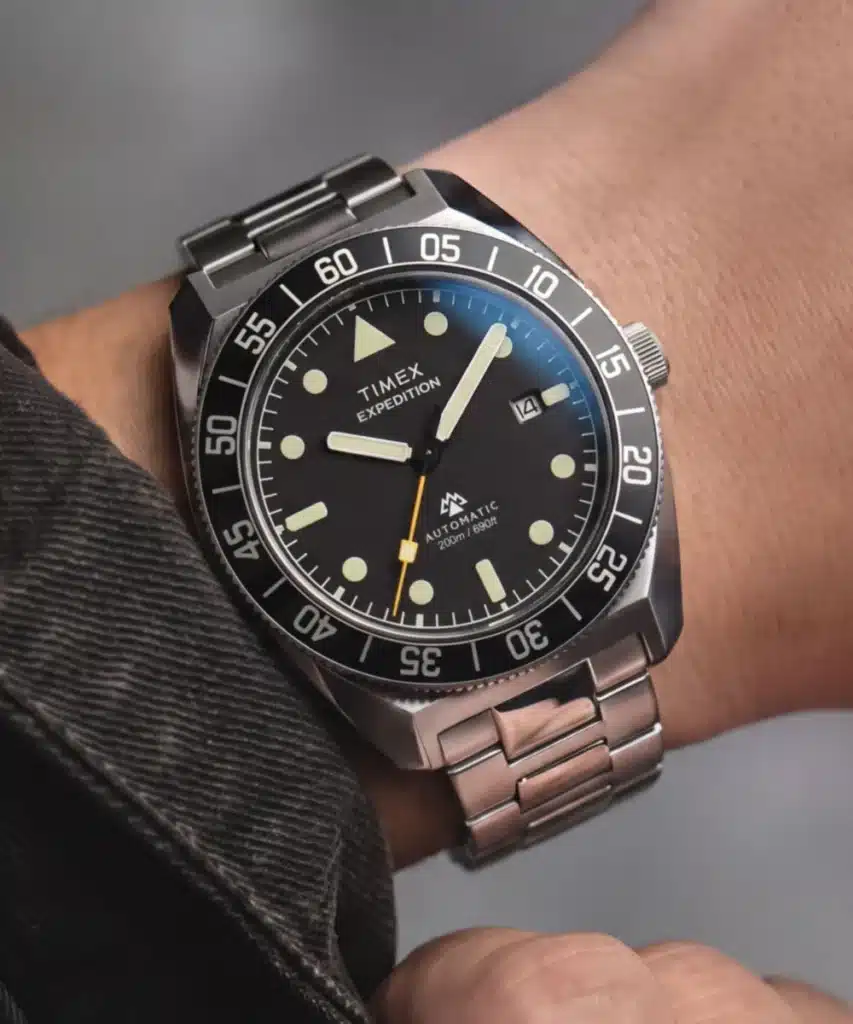
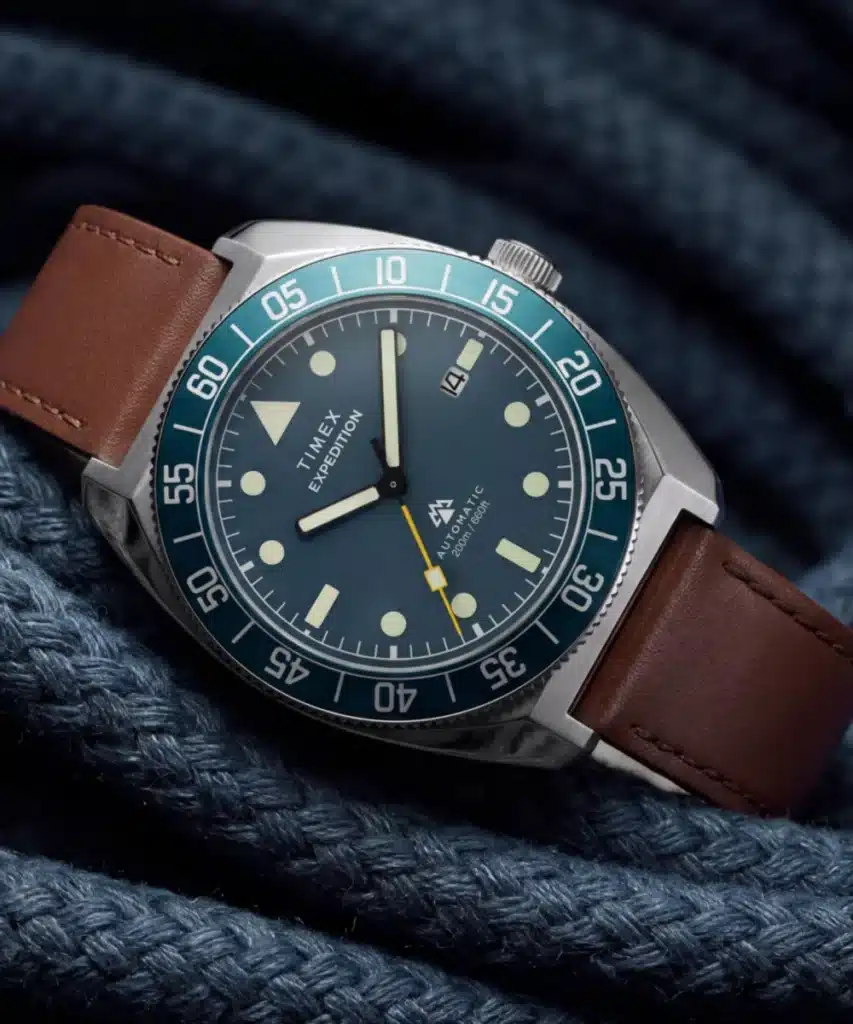
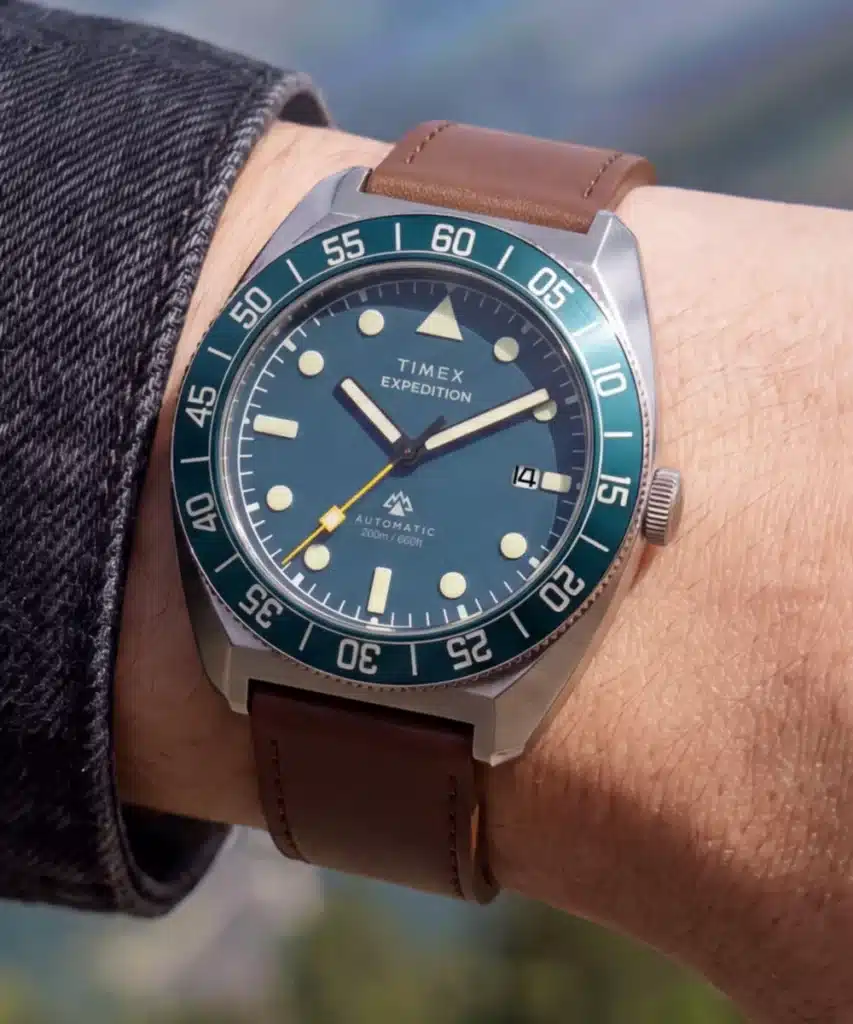
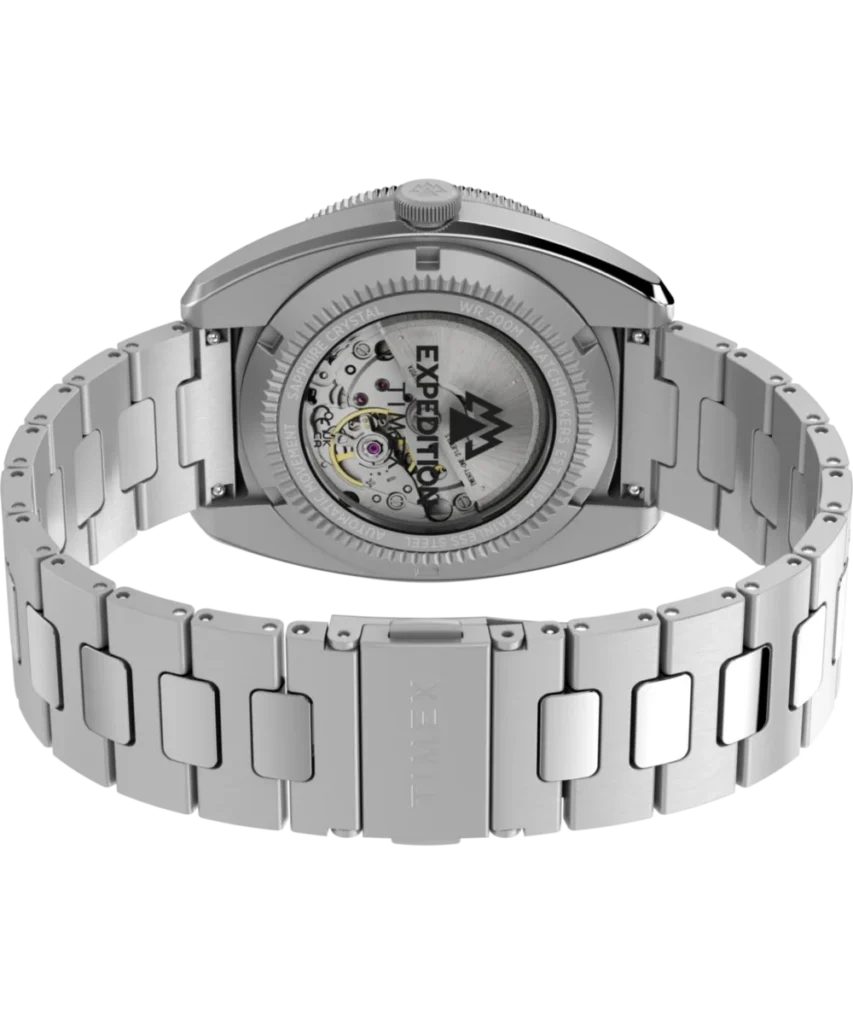
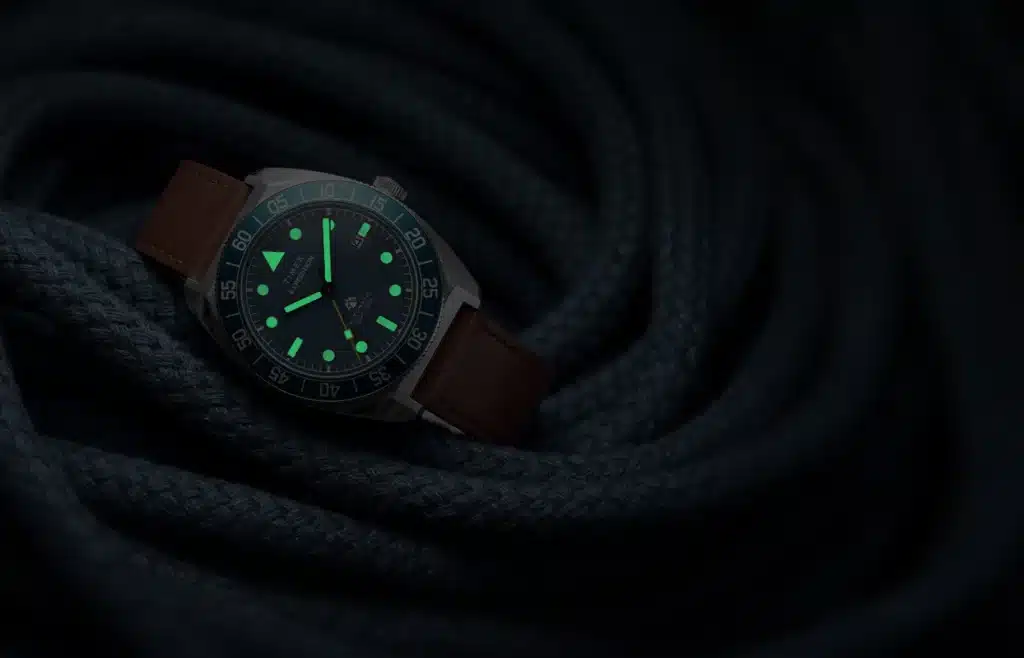
That makes this a fairly serious mechanical watch wearing a name still closely associated with some of Timex’s most accessible models. The case measures 41mm across, 48mm lug-to-lug, and 14mm thick, with a combination of brushed and polished surfaces. Sapphire covers the dial, water resistance is rated to 200 meters, and another sapphire crystal provides a view of the movement through the caseback. Buyers get either a blue dial on brown leather for $429 or a black dial on a stainless-steel bracelet for $459.
Steel is also a meaningful change within the Pioneer lineup. Earlier automatic time-and-date and GMT versions leaned on titanium, which helped separate them from plenty of similarly priced watches. Stainless steel is considerably less exotic. However, dropping the material also brings the price down, and that trade feels reasonable given everything else Timex kept.
Inside is a Miyota 8215, replacing the Seiko NH35 found in the titanium time-and-date model. We’d consider that mostly a lateral move. Both are familiar Japanese automatic movements operating at 21,600 vibrations per hour with roughly 40 hours of power reserve. Neither gives the Pioneer much mechanical bragging material, which is probably fine for what this watch is trying to accomplish.
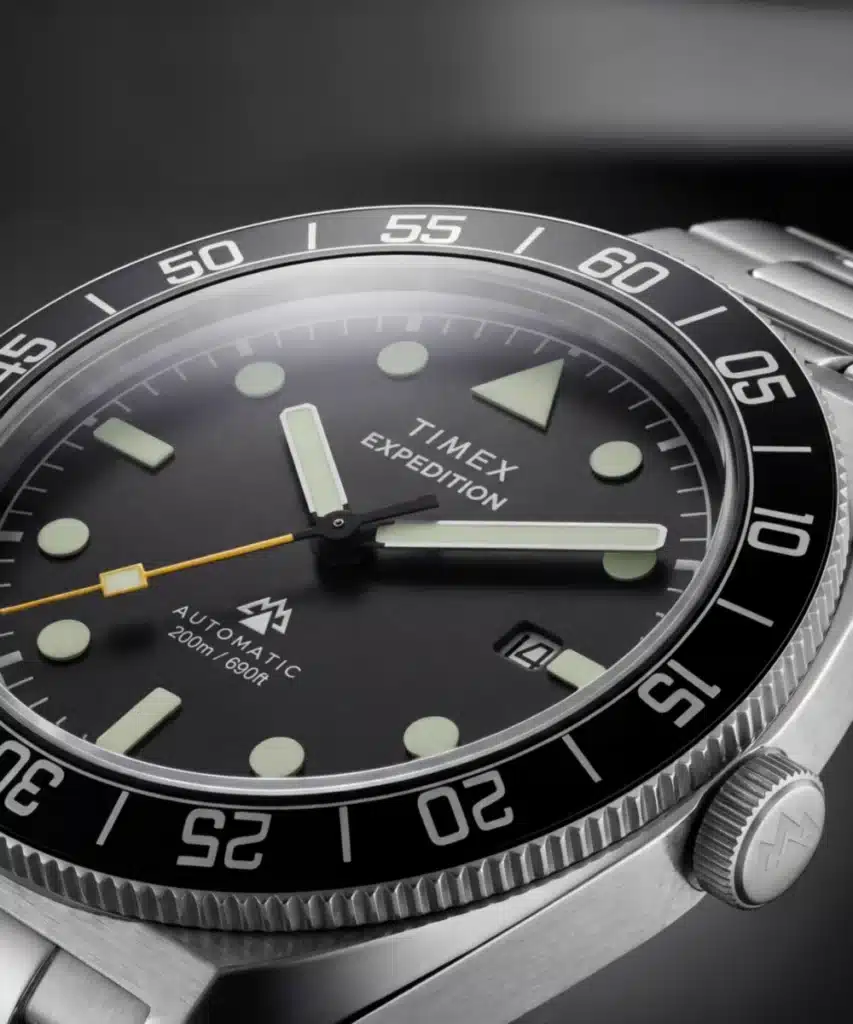
The more interesting choice is sitting around the dial. Timex uses a 60-minute bezel with numerals at five-minute intervals and small hash marks between them. Visually, it carries some of the character of the Pioneer GMT’s 24-hour bezel despite functioning as an elapsed-time scale. It’s unusual, and we think that works here. There are enough conventional dive-style bezels in this price range already.
Timex itself needs to clarify one detail. Its U.S. product page currently describes the bezel as “bidirectional” in the feature list and specifications while calling it a “unidirectional ratcheting top ring” in the product description. Until that gets sorted, we wouldn’t make assumptions about the actual mechanism.
The pricing presents the larger question. Sapphire, 200m water resistance, an automatic movement, and a steel case make $429 or $459 look compelling within Timex’s catalog. Venture into the microbrand world, however, and those specifications become considerably more common.
That may be beside the larger point. The Expedition Pioneer increasingly looks like Timex testing how far it can push a collection historically associated with inexpensive outdoor watches. This steel automatic makes that evolution especially easy to see. Whether buyers are ready to think of a roughly $450 Timex Expedition the same way remains the interesting part.

Co-Founder & Senior Editor
Michael Peñate is an American writer, photographer, and podcaster based in Seattle, Washington. His work typically focuses on the passage of time and the tools we use to connect with that very journey. From aviation to music and travel, his interests span a multitude of disciplines that often intersect with the world of watches – and the obsessive culture behind collecting them.