With inexpensive watches, spending less is easy to justify. The harder part is figuring out whether the savings are worth the compromises we’ll have to live with. That’s the decision behind the Timex Easy Reader vs. Amazon Essentials Easy to Read: does the Timex’s higher price translate into a noticeably better everyday experience, or are the Amazon Essentials’ shortcomings minor enough to make the cheaper option more sensible? We’re not looking for a winner based on brand recognition or a longer feature list. What matters is which differences we’ll actually notice once either watch becomes part of our daily routine.
At TBWS, we’ve spent a decade reviewing watches hands-on, paying attention to the details that matter beyond the first impression: how a watch feels on the wrist, how easily we can read it, and which little frustrations affect everyday ownership. Our separate reviews of the Timex Easy Reader and Amazon Essentials document those experiences, highlighting what worked and where each watch fell short. Drawing on those firsthand observations, we’ll examine whether the extra cost buys enough comfort, practicality, and overall execution to justify itself.
Overview and Identity

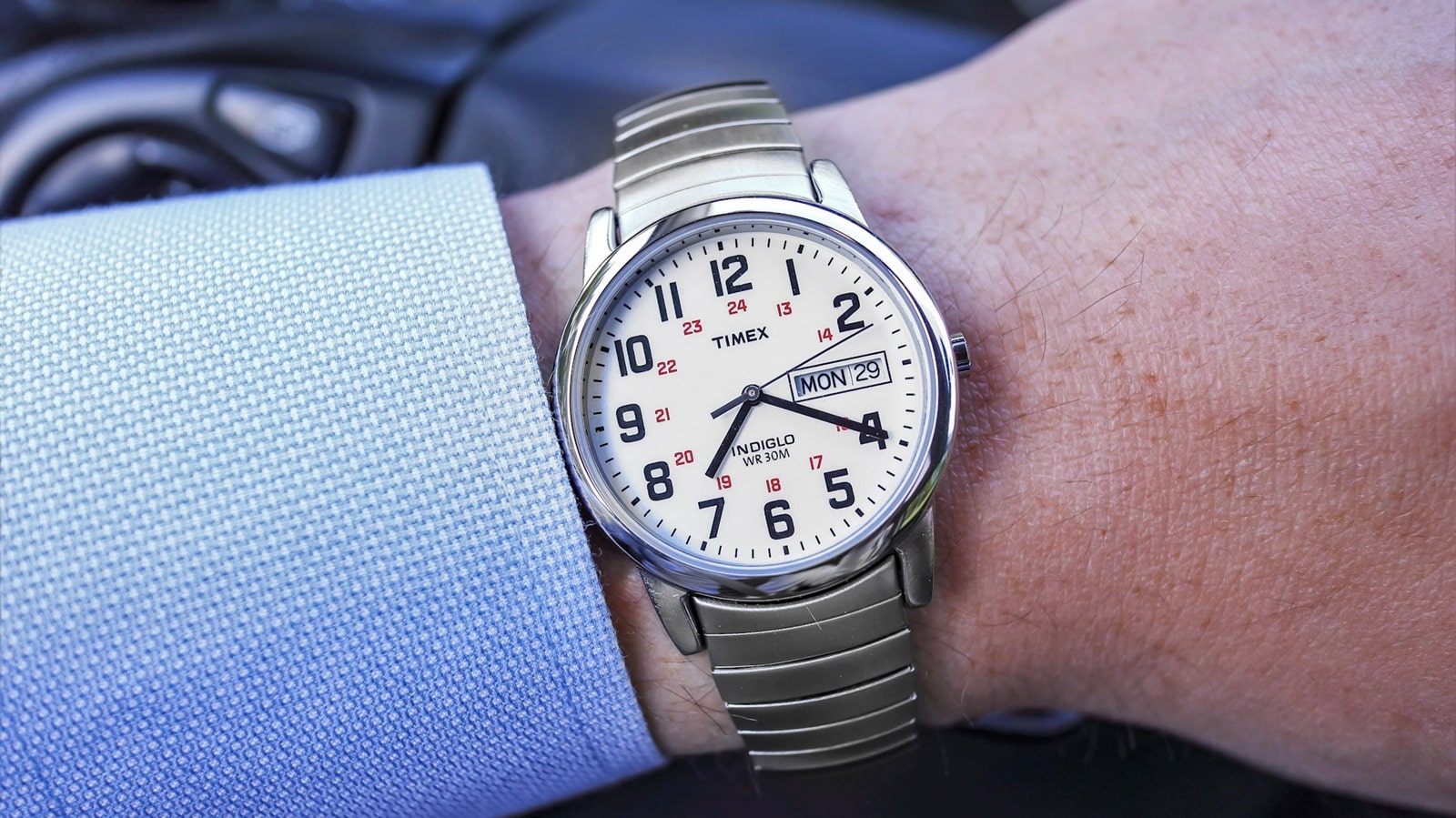
The Timex Easy Reader is an everyman’s watch, and our hands-on experience gives that description more weight than any marketing pitch could. We recall seeing a 70-year-old grocery store cashier wearing one every day and meeting another owner at a local restaurant who had kept his Easy Reader for 15 years and still loved it. That’s the sort of everyday loyalty that’s hard to manufacture. Expansion bracelets don’t exactly get the youths going, but that’s part of the Easy Reader’s appeal. It doesn’t need to chase trends or convince anyone that it’s something special. It’s a straightforward watch that has earned a place in people’s everyday lives, sometimes for well over a decade.
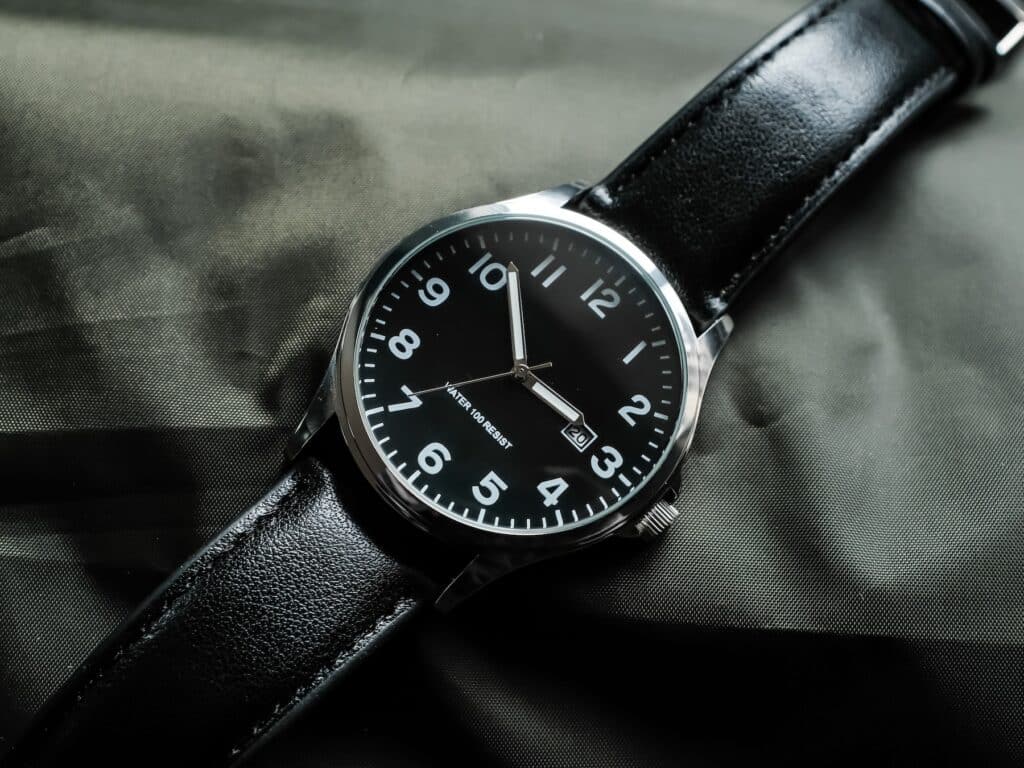
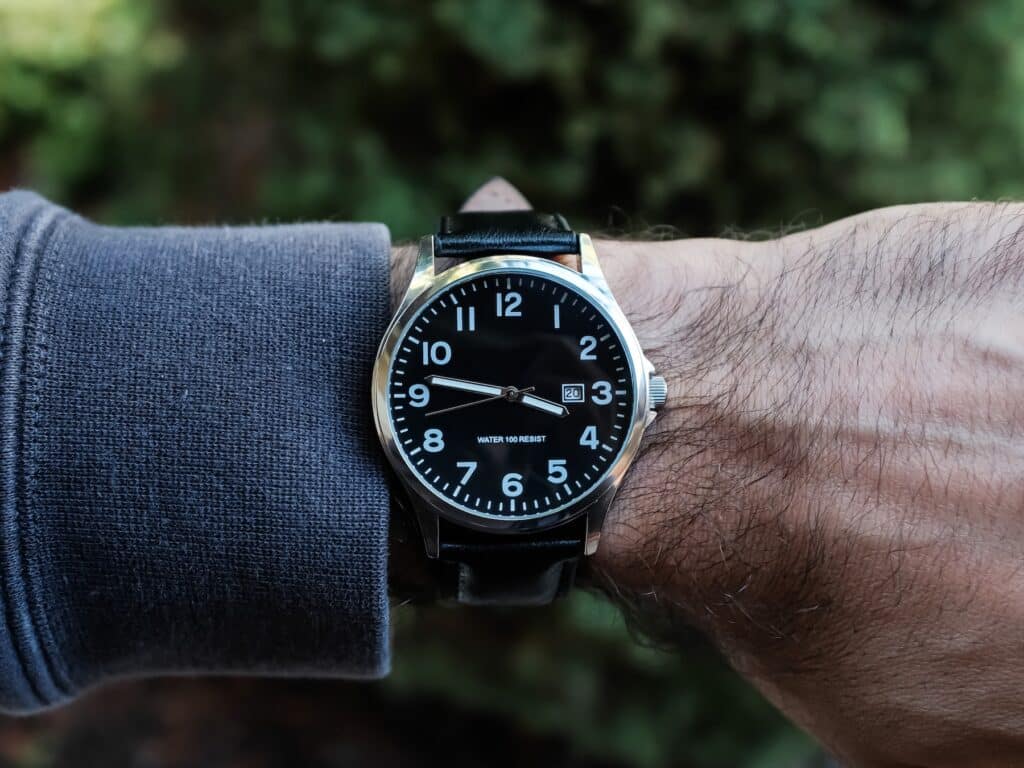
The Amazon Essentials Easy to Read 42mm made a rather different first impression during our hands-on review, although we nearly overlooked it in the first place. Its Amazon listing was so plain that it almost blended into the background. We weren’t expecting much, either. A flimsy case, rough-looking dial, and a strap we’d want to replace immediately seemed like reasonable assumptions going in. The watch surprised us within the first few minutes. It arrived already running, and removing the protective film revealed a surprisingly clean presentation. The printing looked neat, the hands appeared properly aligned at a glance, and the polished bezel gave the otherwise ordinary-looking case a little definition without making things unnecessarily fussy. Our initial impression was considerably better than the budget-watch disaster we’d prepared ourselves for.
Dial and Bracelet/Strap: Timex’s Everyday Convenience vs. Amazon’s Comfort Compromises
The Timex Easy Reader has a dial that makes you wonder why some watchmakers work so hard to make telling the time complicated. Its layout felt more like an old railroad watch than a conventional field watch, with a clean white background, crisp black Arabic numerals, and smaller red numerals marking the 24-hour track. Timex doesn’t claim either identity, but the emphasis on readability is unmistakable. We particularly like how the day and date displays blend into the black-and-white layout rather than interrupting it with contrasting colors. There’s one minor annoyance: the date can be adjusted in either direction, but the day doesn’t have a quickset mechanism. We’d also appreciate a little more dial texture and depth, although that might be asking for more personality than this watch needs.

The expansion bracelet is arguably the more distinctive part of the Easy Reader package. We don’t get many watches that arrive with this kind of band, and Timex has made a good case for bringing it back into the conversation. There’s no clasp to fiddle with or buckle to fasten. Just stretch it, slide it over the wrist, and get on with the day. Timex has also fitted end links, so the bracelet looks like it belongs there rather than something added to clear out the parts bin. We found it comfortable and genuinely convenient during wear, although anyone with particularly hairy wrists might have a different opinion. Those links can be less forgiving. It isn’t the bracelet we’d choose for every watch, but it suits the Easy Reader’s straightforward personality.
The Amazon Essentials takes a similarly uncomplicated approach to legibility, but there’s less to appreciate once we’ve checked the time. Its large Arabic numerals dominate the dial, the hands are easy to distinguish, and the contrast does most of the heavy lifting. During our in-depth testing, we rarely had to work to read it, which is exactly what the product name promises. We wouldn’t call the dial particularly interesting, and we never found ourselves staring at it for the sheer pleasure of looking at it. That’s not necessarily a criticism; sometimes we just want to know whether we’re late. The date window, however, is harder to defend. It’s small enough that reading it requires a more deliberate look, and we never grew particularly fond of that arrangement. The Amazon gets the fundamentals of legibility right, but it doesn’t have the same balanced execution we appreciate in the Timex.
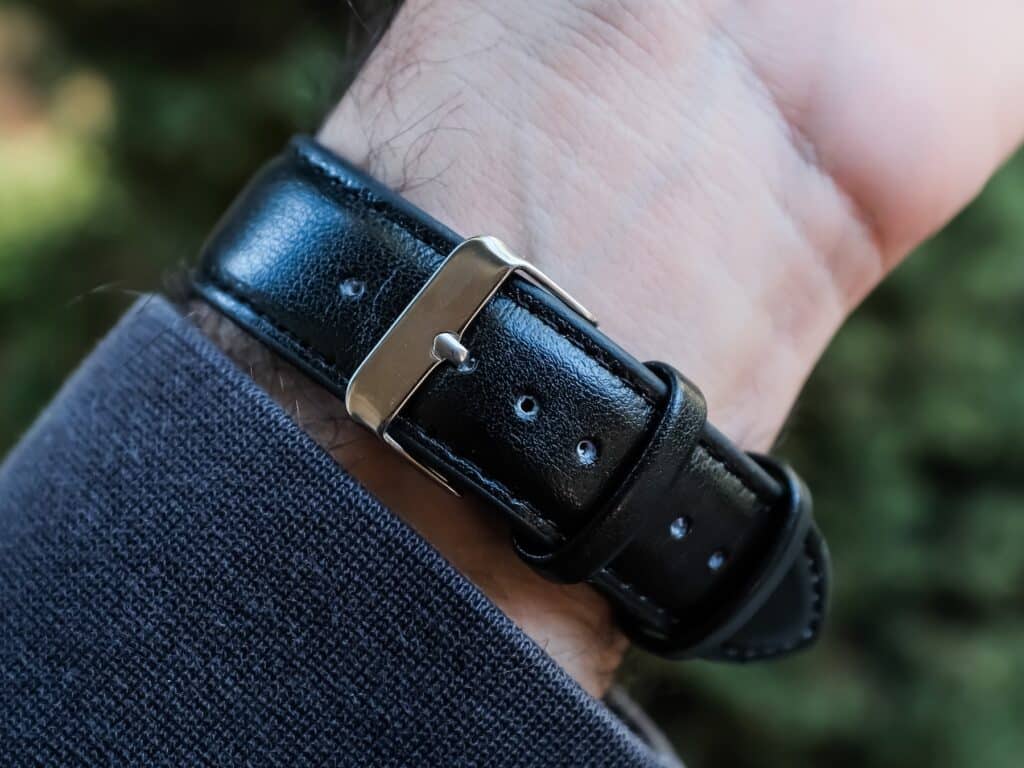
The leather strap is where our enthusiasm for the Amazon starts running out. It arrived stiff, which wasn’t unexpected, but we assumed regular wear would eventually soften it up. That never happened. The strap remained rigid and uncomfortable, making its presence known whenever we fastened the watch or wore it for longer stretches. The minimal stitching also gave us the impression that adhesive was doing much of the work, although we can’t confirm that without taking the strap apart. The lightweight case doesn’t help matters, either. There’s little weight to settle the watch against the wrist, so the strap dictates much of the wearing experience. We’d be tempted to experiment with a NATO strap, though that’s hardly an endorsement of the one Amazon supplies. When the first thing we want to do with a watch is replace its strap, something hasn’t quite worked.
Build Quality & Technical Approach
The Timex Easy Reader and Amazon Essentials Watch stay firmly in everyday quartz territory, but they don’t feel equally considered in execution. This is where we move beyond the clean dials and look at what sits underneath and around them: case construction, movement performance, crystal quality, illumination, and the little details that separate a thoughtfully executed budget watch from one that reminds us exactly where the money was saved. Neither is trying to reinvent quartz timekeeping, but getting the basics right shouldn’t be particularly difficult.
Movements

The Timex Easy Reader runs on quartz, which suits its no-nonsense personality. There’s no winding routine, power reserve to monitor, or mechanical movement demanding attention every time we leave the watch in a drawer. Set it and forget it. Its appeal is built around everyday practicality, and a battery-powered movement fits that brief particularly well. During our time with the watch, we didn’t encounter the sort of setting frustrations that can make an otherwise straightforward quartz watch unnecessarily irritating. The small crown takes a little patience to operate, particularly for anyone with larger fingers, but once the watch is set, there’s little reason to think about the movement. That’s exactly what we want from something designed to make telling the time as uncomplicated as possible.
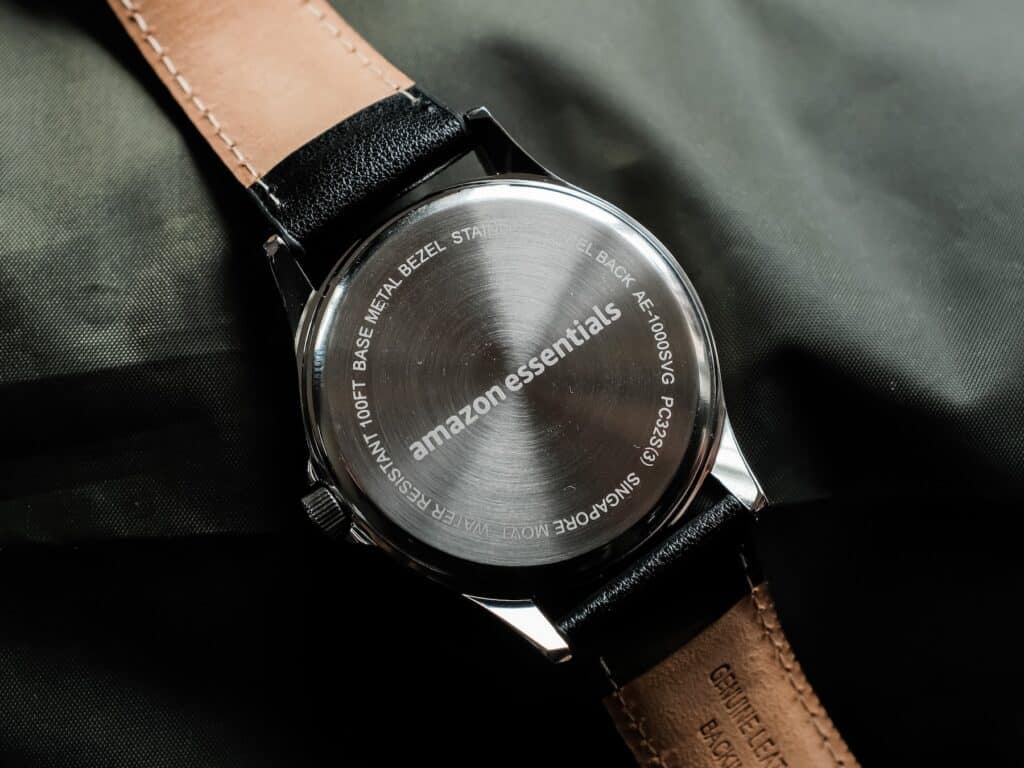
The Amazon Easy to Read takes the same quartz route, although its caseback doesn’t identify the caliber. While testing, its timekeeping remained consistent enough that we stopped thinking about the movement. We didn’t test its accuracy against a reference clock, so we won’t invent numbers. One annoyance did stand out: the minute hand jumped when we pushed the crown back in, making precise time-setting frustrating. Battery life remains unconfirmed, and we haven’t spent enough time with the watch to make meaningful claims about long-term reliability. Neither watch offers much excitement mechanically, but that’s hardly the point at these prices. The Amazon’s crown-setting issue is an irritating blemish on an otherwise uncomplicated experience, particularly when the Timex manages to deliver the same basic convenience without that frustration.
Case Construction, Finishing, and Wearability
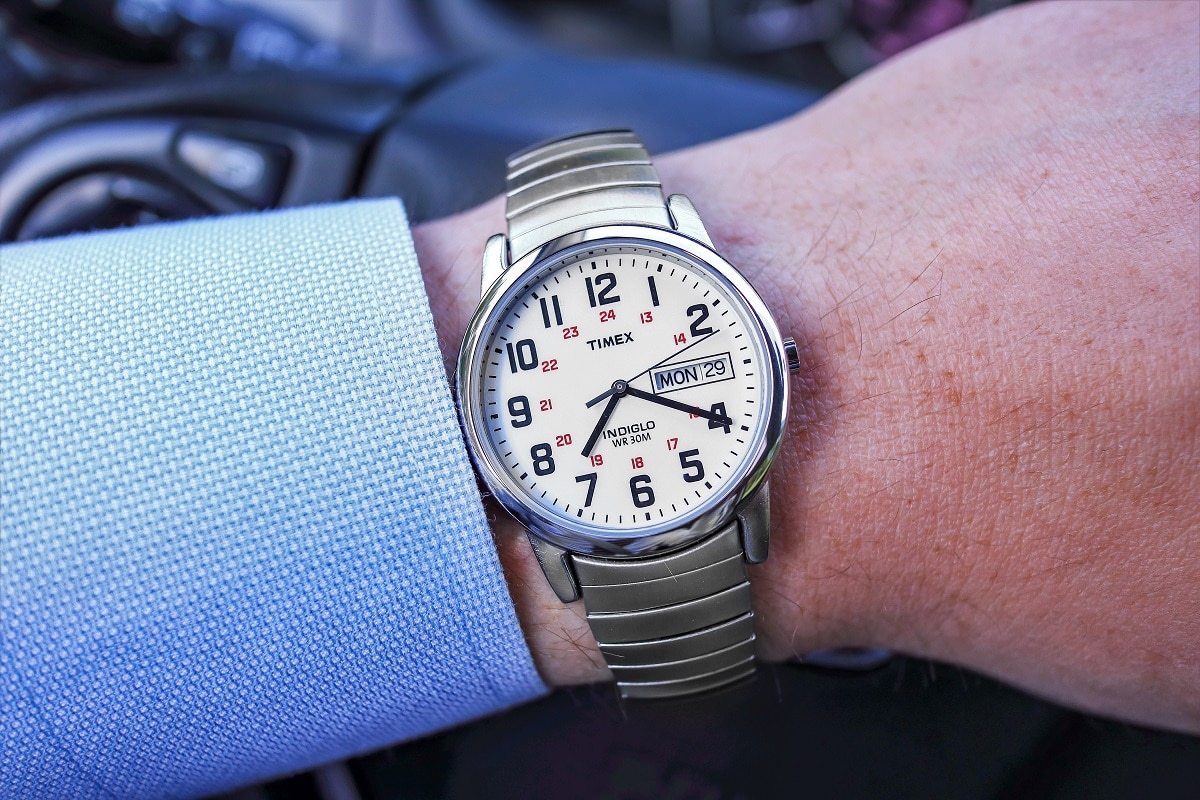
The Timex Easy Reader gets everyday proportions right without trying to make a 35mm watch feel bigger. Its brass case is lightweight but never gives us the impression that Timex has cut corners to get there. At just 8mm thick, it slips under shirt cuffs without a fight. The finishing also shows a bit more thought than the otherwise plain design might indicate. The lugs have an unusual interior chamfer, or cutaway, as they approach the case, adding visual interest without turning the Easy Reader into a design exercise. Their brushed tops match the bracelet links, while the remaining case surfaces are polished. It’s a subtle combination, but it keeps the watch from looking completely flat. The small crown is less successful. Anyone with larger fingers might find it fiddly to operate, although this isn’t a watch we’ll need to reset every morning.
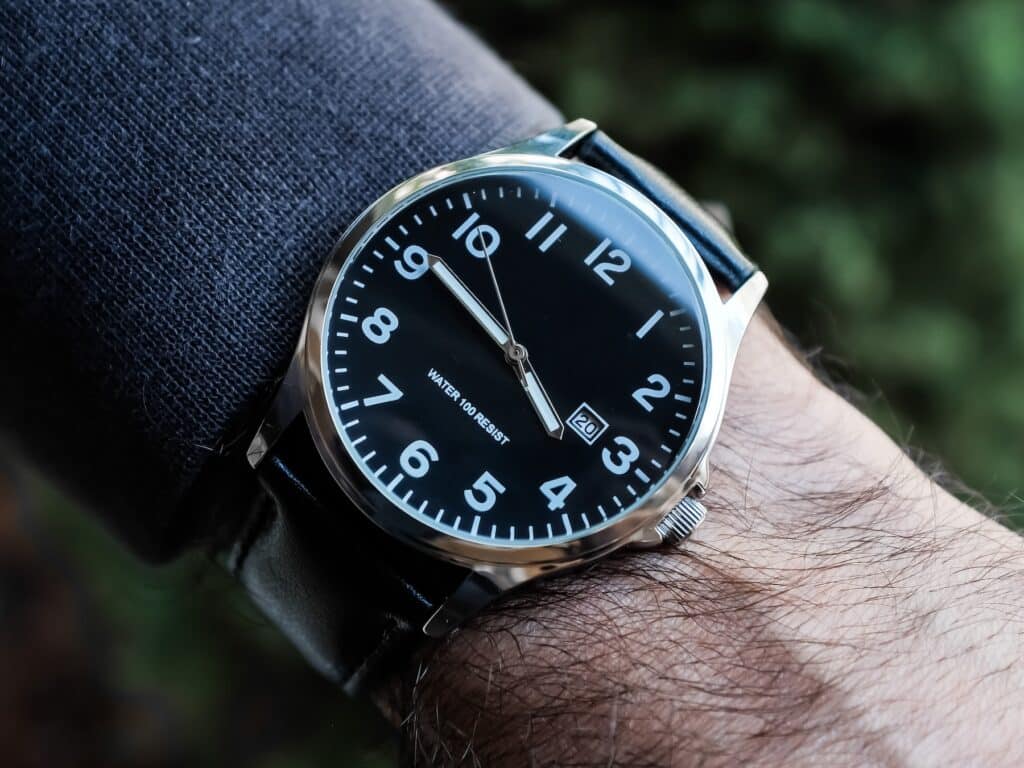
The Amazon Essentials goes in the opposite direction with its 42mm case, and we can’t pretend that extra diameter goes unnoticed. On a 6.75-inch wrist, the size is apparent when you look straight down, though its relatively flat profile keeps it from becoming an obstacle during everyday wear. We couldn’t find a reliable published thickness figure, so we’ll leave the spec-sheet guessing to someone else. The real giveaway is the weight. The case feels very light, and we never quite shook the impression that the construction was basic. Amazon also doesn’t provide enough information to confidently identify the case material. A plated base metal with a stainless steel caseback is a possibility, but that’s speculation. We opted for the silver-tone version rather than risk how the gold-tone finish might look after repeated wear around the case edges. To be fair, the flat profile keeps the larger case from becoming a comfort problem. But there’s a difference between a watch feeling light because it’s thoughtfully proportioned and feeling light because the construction leaves little to get excited about.
Crystals and Bezels

The Timex Easy Reader uses mineral glass, which is hardly going to impress anyone who spends their time debating sapphire versus acrylic on watch forums. Then again, this is an inexpensive everyday watch. More importantly, we experienced almost no visibility issues during wear. The clean white dial and crisp black numerals keep everything easy to read without needing an anti-reflective coating to bail them out. The bezel follows the same no-nonsense approach. It’s a fixed, polished metal ring integrated into the round brass case, with no rotating action, textured grip, or pretend dive-watch ambitions. It simply frames the crystal and dial, adding a little polish without making the design busy. There’s not much to discuss here, which is probably exactly how Timex intended it.
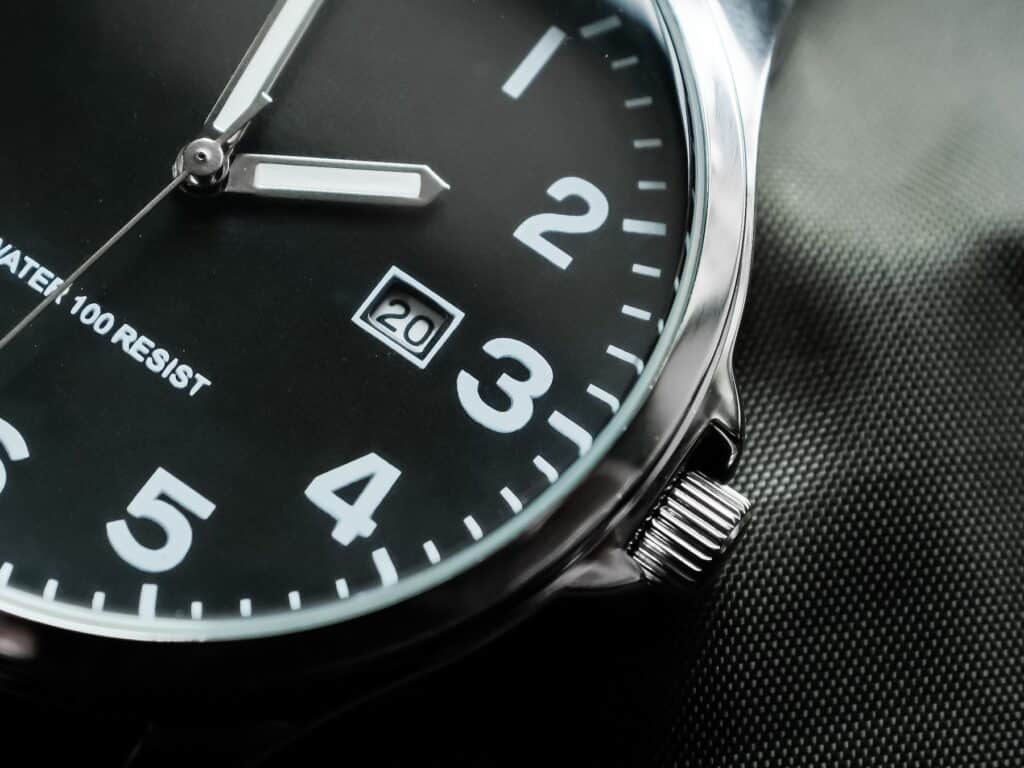
The Amazon Essentials Watch also uses a polished bezel, and we think it does a decent job of giving the otherwise plain case some definition. However, the crystal is less convincing. We found no evidence of useful anti-reflective treatment, and reflections became noticeable under direct light and overhead lighting. The large Arabic numerals deserve credit for keeping the dial readable most of the time, but we shouldn’t have to work around glare on a watch whose entire selling point is easy readability. It’s not an absolute dealbreaker, but it’s an unnecessary compromise when checking the time should be the least complicated part of ownership. Both watches keep their bezels strictly decorative, but the Timex does a better job of keeping the crystal out of the way when we’re trying to read the dial.
Water Resistance & Lume

The Timex Easy Reader has 30 meters of water resistance, so let’s get one thing out of the way: this isn’t the watch we’d take swimming. Timex gives us enough protection for an uncomplicated everyday watch, but we’d keep the aquatic ambitions modest. Its nighttime illumination is a different story. Instead of relying on a couple of glowing hands and hoping for the best, the Easy Reader has Indiglo, which lights up nearly the full dial at the push of a button. We love this approach because it makes checking the time in the dark effortless. No tilting the watch toward a streetlight or waiting for our eyes to adjust. It’s a small convenience that makes considerably more sense in actual use than another decorative feature that looks good on a specification sheet.
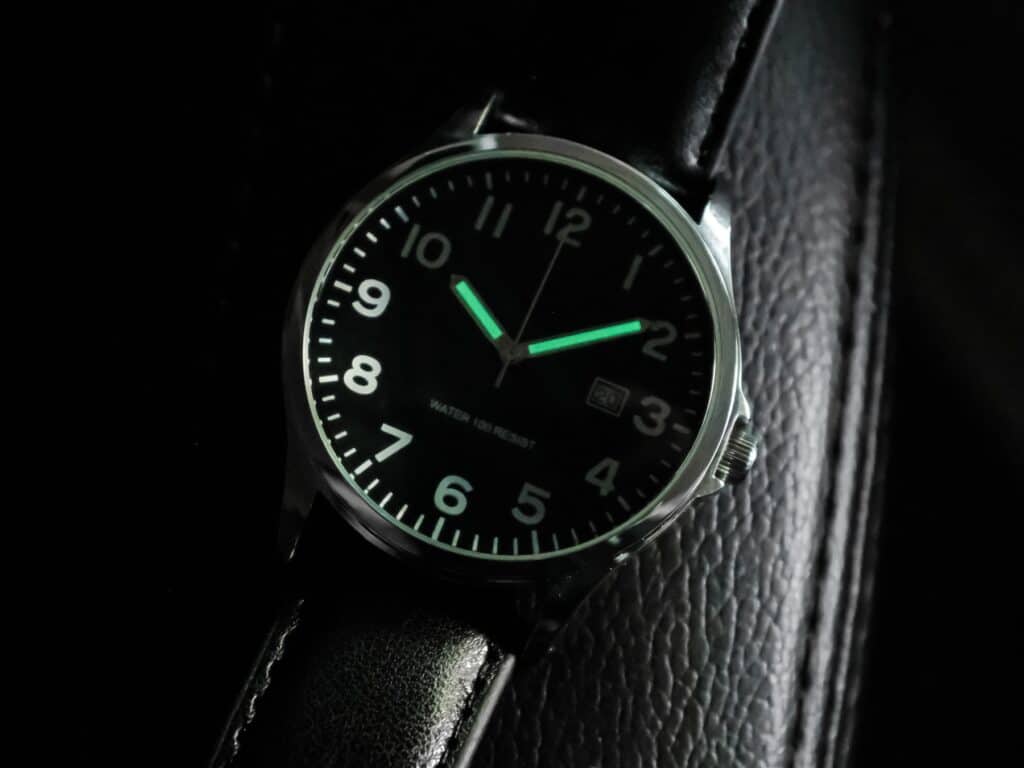
The Amazon Essentials also carries a 30-meter water-resistance rating, marked as 100 feet on the caseback. We’d treat that as splash protection, not an invitation to swim or shower with it. We didn’t test its limits, and the supplied leather strap gives us even less reason to experiment. Nighttime visibility relies on conventional lume, but only the hands glow. They provide enough illumination for a quick check after normal light exposure, although the unlit hour markers make it harder to orient ourselves in the dark. It’s functional, and we didn’t find it particularly troublesome during normal wear, but it doesn’t offer the same convenience as Indiglo. The difference becomes especially apparent when we consider that both watches place such a strong emphasis on readability.
Cost Considerations
The Timex Easy Reader T20461 has recently been listed around $69 through a third-party retailer, although prices vary considerably by seller. That’s a meaningful investment relative to the Amazon Essentials, particularly when both watches accomplish the same fundamental task of displaying the time. We aren’t paying for an elaborate movement, premium case materials, or the sort of technical specifications that usually attract enthusiasts. Instead, the Easy Reader makes its strongest argument through the quality of its everyday experience. Its compact proportions, uncomplicated dial, convenient bracelet, and Indiglo illumination are all features we genuinely appreciated during our hands-on review.
That combination matters because inexpensive watches can become surprisingly frustrating when small compromises begin to accumulate. A difficult strap, awkward crown, or poorly executed dial might seem insignificant when we’re evaluating a watch on paper, but those details become considerably more apparent after regular wear. The Timex isn’t without limitations. Its brass case won’t satisfy collectors looking for more substantial materials, and the expansion bracelet won’t appeal to everyone. Nevertheless, we found that the different elements worked together in a way that made the watch easy to appreciate. As we put it in our original review, it does everything it’s supposed to and nothing more. That’s precisely why it works.
The Amazon Essentials Easy to Read remains available around $23 through recent third-party price listings, making it substantially less expensive than the Timex at the prices referenced here. That’s an appealing proposition for a fully functional quartz watch with an easy-to-read dial, date display, and a conventional leather-style strap. Our expectations were modest going into the review, and we came away more impressed with the watch than we anticipated. The dial printing was cleaner than expected, the case presentation was reasonably tidy, and the movement handled ordinary timekeeping without giving us much reason for concern. There’s genuine value in getting those basics right at such a low asking price.
The catch is that basic competence doesn’t automatically translate into something we want to wear regularly. We found ourselves reaching for other watches in our collection, and the stiff strap certainly didn’t help. Replacing it with something more comfortable would likely improve the experience, but that introduces another expense and undermines part of the appeal of buying such an inexpensive watch in the first place. The larger case, noticeable crystal reflections, and frustrating minute-hand movement during setting also make the Amazon feel less polished than the Timex. None of these shortcomings is particularly surprising at this price, but acknowledging them is important when deciding whether the savings are worthwhile.
Ultimately, the price difference creates a familiar question about diminishing returns. We wouldn’t argue that the Timex is several times better simply because it costs considerably more, and the Amazon Essentials demonstrates that functional quartz timekeeping doesn’t need to be expensive. However, the Easy Reader offers improvements that directly affect how enjoyable the watch is to wear rather than merely making its specification sheet more impressive. Comfort, convenience, and legibility are fundamental qualities in an everyday watch, and Timex executes them more convincingly. For someone who intends to wear either watch regularly, those differences provide a reasonable justification for spending more.
Final Thoughts: Does the Timex Easy Reader Justify the Extra Spend?
The Timex Easy Reader reminded us why uncomplicated watches can be so satisfying. There’s nothing particularly ambitious about its design, and it’s unlikely to excite collectors who prioritize movement technology or elaborate case finishing. But after spending time with it, we came to appreciate how effectively the different elements work together. The readable dial, comfortable expansion bracelet, compact proportions, and Indiglo illumination make it remarkably easy to live with. We can understand why some owners continue wearing the same Easy Reader for years, even when more technically impressive watches are available.
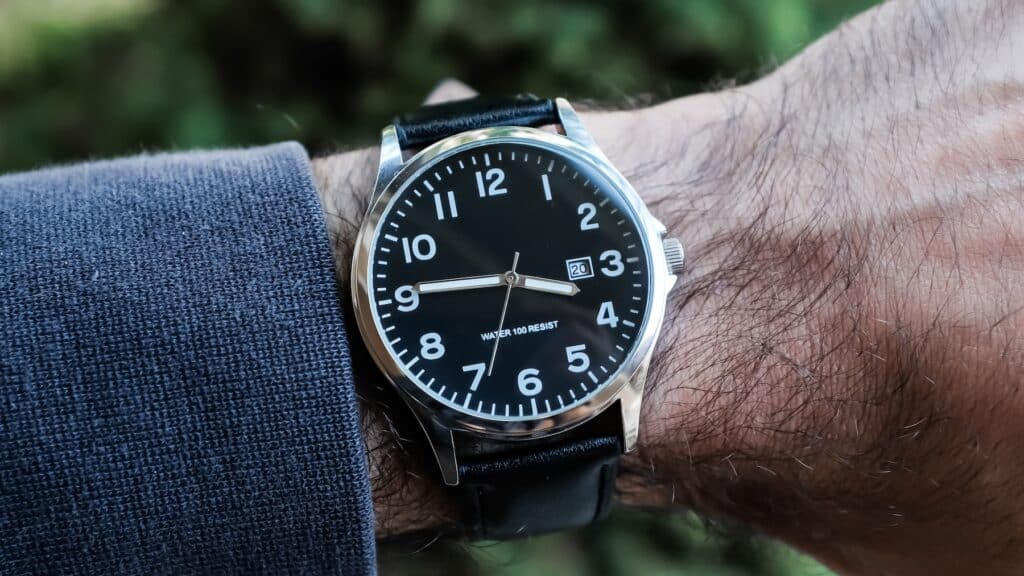
The Amazon Essentials surprised us in a different way. We approached the review expecting an inexpensive watch that would struggle to meet even modest expectations, but its clean presentation and competent basic timekeeping earned more respect than we anticipated. At approximately $23, it demonstrates how little we need to spend for a functional analog watch. Unfortunately, the stiff strap made it difficult to enjoy wearing regularly, and smaller frustrations involving the date window, crystal reflections, and crown operation gradually became harder to overlook. It wasn’t a bad watch, but it never became one we instinctively wanted to reach for.
There are reasonable arguments for choosing either model. The Amazon Essentials makes sense for someone who wants the lowest possible price and doesn’t place much importance on finishing, wrist comfort, or nighttime illumination. It could also be an appealing starting point for someone curious about inexpensive watches, particularly if they’re willing to experiment with a replacement strap. The Timex, meanwhile, is better suited to someone looking for a dependable everyday companion without spending a great deal of money. Its smaller case and expansion bracelet won’t suit every preference, but the overall execution feels considerably more deliberate.
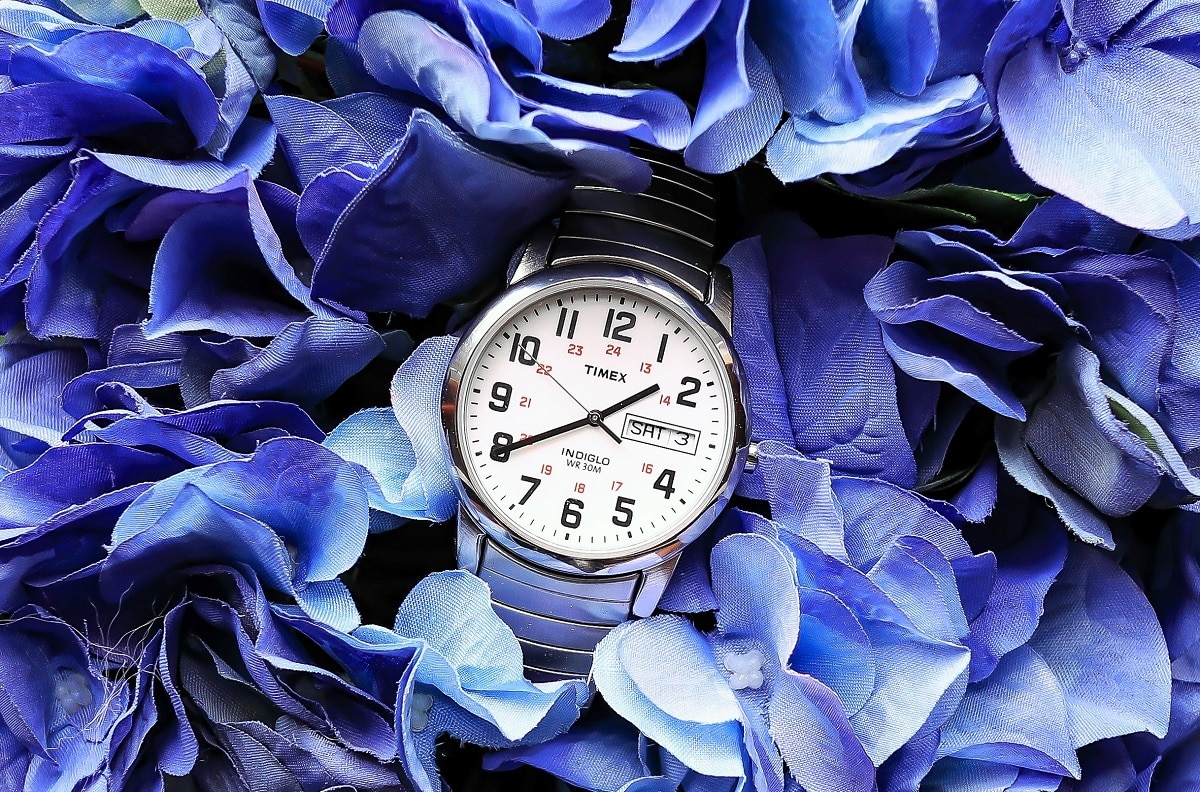
Our pick is the Timex Easy Reader, and we think its higher price is justified by the experience of actually wearing it. That doesn’t mean the Amazon Essentials fails at its intended purpose. It tells the time, looks better than we expected, and costs remarkably little. But when we’re spending our own money on something we intend to wear regularly, we’d rather pay more for a watch that feels comfortable and requires fewer compromises. The Amazon shows how little a functional analog watch can cost; the Timex reminds us why getting the everyday details right is worth paying for.

Co-Founder and Senior Editor
Kaz has been collecting watches since 2015, but he’s been fascinated by product design, the Collector’s psychology, and brand marketing his whole life. While sharing the same strong fondness for all things horologically-affordable as Mike (his TBWS partner in crime), Kaz’s collection niche is also focused on vintage Soviet watches as well as watches that feature a unique, but well-designed quirk or visual hook.