Controversial watches are usually more revealing than universally loved ones. A watch everyone agrees on can be easy to summarize, but a watch that splits collectors down the middle tends to expose what people value most: originality, comfort, heritage, price, proportions, servicing, or the simple pleasure of wearing something that makes the comment section lose its mind. This list exists because our archive has plenty of those watches. The goal here is not to declare one side correct. It’s to look at the most-debated watch models and explain why collectors disagree, after the hype, the forum arguments, and the first week of wrist time have worn off.
That said, we’ve been writing honest watch reviews for about a decade, and the useful part of that isn’t a badge of authority so much as a long record of changing our minds in public. We’ve reviewed affordable watches, microbrand watches, oddball icons, misunderstood alternatives, and pieces that make perfect sense on the wrist while making almost no sense in a comment thread. Some of these watches earned respect because they delivered more than their reputation suggested; others exposed trade-offs that collectors tend to forgive or punish depending on their own baggage. All models here landed in our archive for different reasons, but they share one useful trait: none of them lets collectors stay neutral for long.
Invicta Pro Diver
| Price: | $60 – $80 |
| Water Resistance: | 200m |
| Case Dimensions: | 40mm (diameter) x 48mm (lug-to-lug) x 14mm (thickness) |
| Lug Width: | 20mm |
| Movement: | NH35A (Mechanical) |
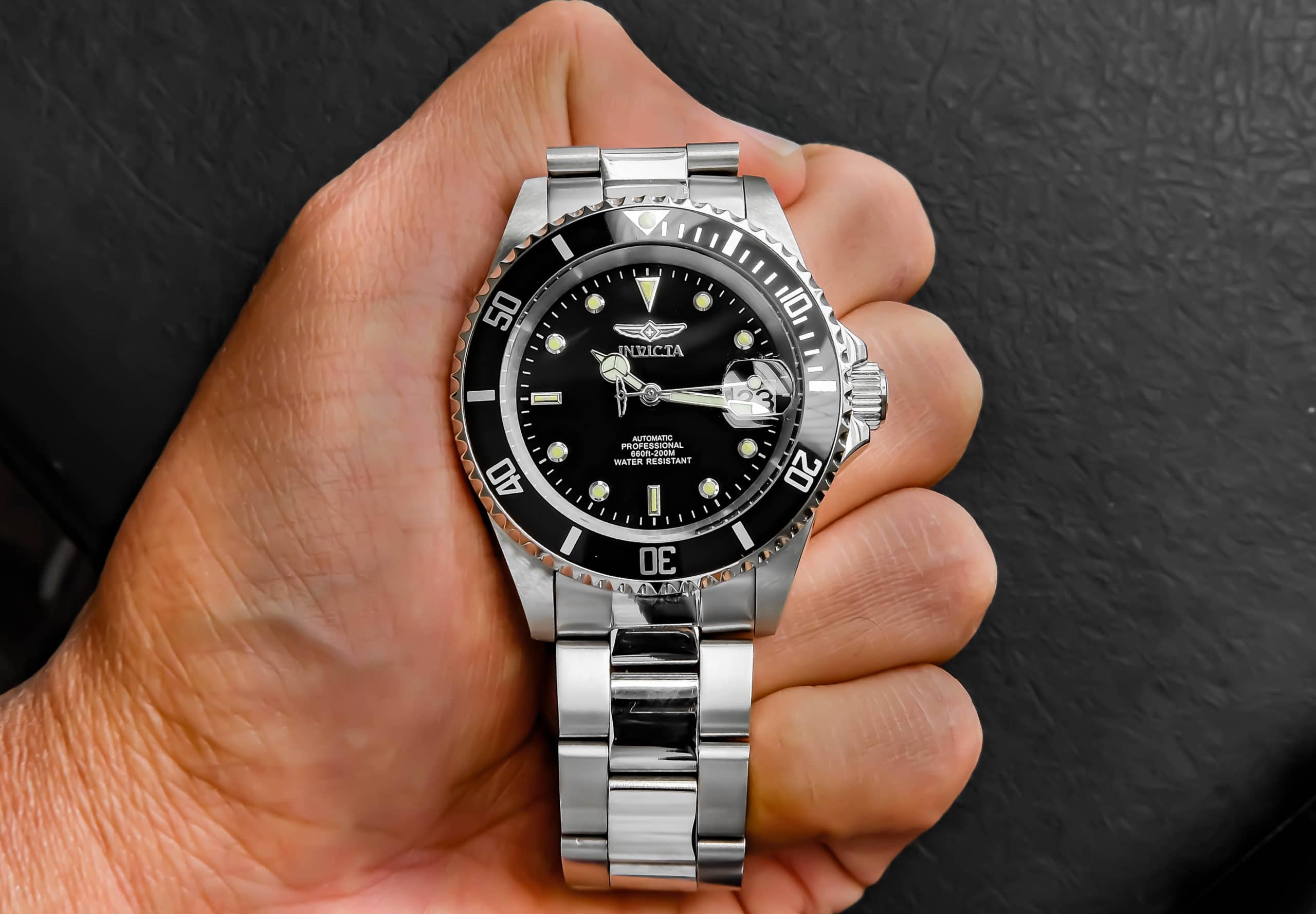
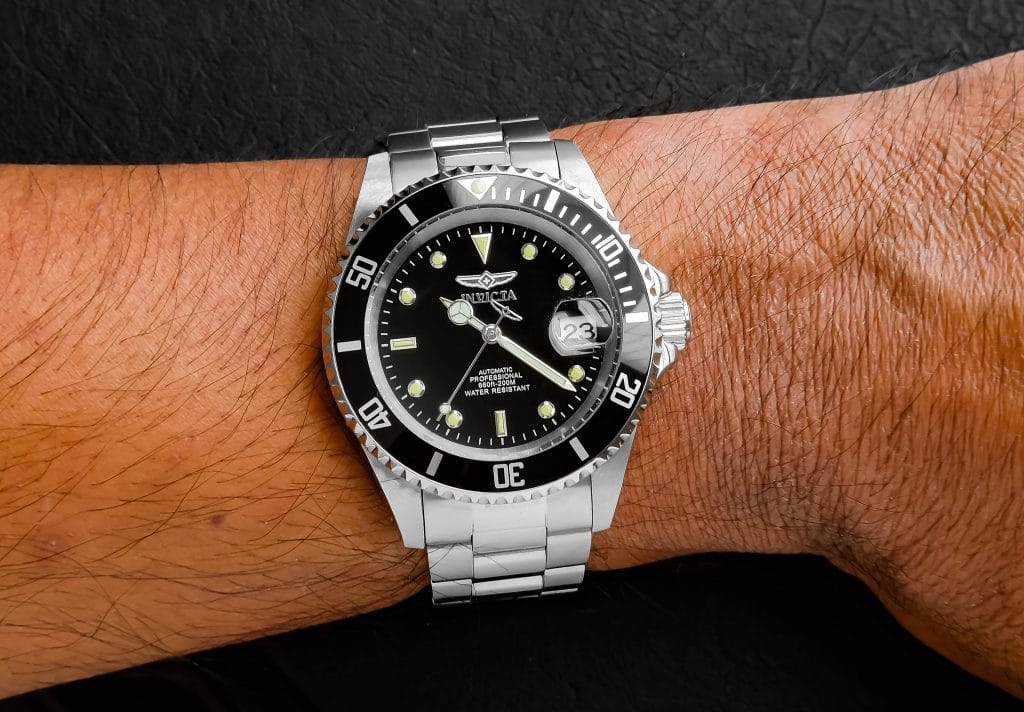
The Invicta Pro Diver is on this list because it forces collectors into the value-versus-originality debate almost immediately. Nobody is confused about where the design language comes from, and that alone is enough for some people to write it off. But once it’s on the wrist, the conversation gets less tidy. The familiar 40mm Sub-style case is executed better than many want to admit, with proportions that settle in quickly and a lug-to-lug length that sits flat without that awkward “cheap watch trying to act expensive” feeling. It wears naturally from the first day, and for an affordable everyday watch, that matters more than forum purity points.
The aluminum bezel is one of the better surprises. It clicks with more confidence than expected, with only a little play between positions, and it handles the timing most owners will use it for: coffee, parking meters, lunch breaks, and whatever else life throws at a rotating bezel. The crown is large enough to grip easily, so manual winding doesn’t feel like a chore. The dial also does more than the price prepares you for, with applied markers and hands that catch light nicely during the day. Then the lights go down, and the budget shows up. The lume is uneven and fades quickly, with the hands hanging around longer than the markers. It is usable in short bursts, but nobody should confuse it for a serious low-light performer.
The bracelet effectively adds to the argument. It starts at 20mm and tapers to around 18mm at the clasp, which helps the watch feel balanced over a full day. The hollow end links are there if you go looking for them, but the bracelet articulates smoothly, avoids sharp unfinished edges, and feels more substantial than expected. The clasp gives you useful micro-adjustments, though the flip lock is stiff and showed wear sooner than we’d like.
Inside, the NH35A keeps everything grounded. It wound smoothly, ran steadily during our time reviewing it, and should be easy to maintain in the long term. Rain, swimming, and accidental soakings weren’t an issue as long as the crown was screwed down. It is not a purpose-built dive tool, and the mineral crystal, inconsistent lume, and loud case-side Invicta branding all keep expectations in check. Still, as a cheap dive watch that gets the basics right, the Pro Diver is hard to dismiss entirely. That is why collectors keep arguing about it.
Pros
- Comfortable 40mm case with settled, easy-wearing proportions.
- The bezel action feels firmer and more useful than expected.
- Reliable NH35A movement with simple long-term ownership.
- The bracelet has decent taper, smooth articulation, and clean finishing.
Cons
- Stiff clasp/flip lock shows wear sooner than ideal.
- Case-side Invicta branding looks polarizing.
- Mineral crystal limits scratch resistance.
- Lume is uneven and fades faster than we’d like.
San Martin SN004 MilSub
| Price: | $167 – $200 |
| Water Resistance: | 200m |
| Case Dimensions: | 38mm (diameter) x 46mm (lug-to-lug) x 13mm (thickness) |
| Lug Width: | 20mm |
| Movement: | NH35 Seiko Automatic |
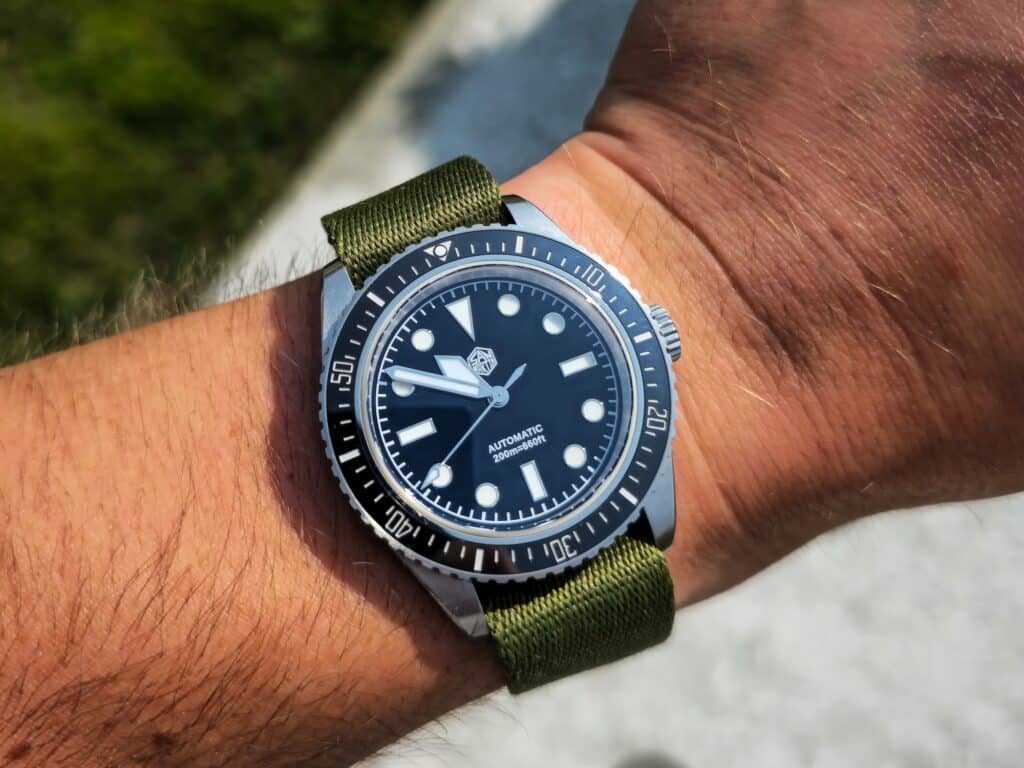
The San Martin SN004 MilSub earns its controversial status by refusing to be dismissed as cheap copycat fluff. Yes, it leans hard into familiar vintage dive-watch cues, and for some collectors, that’s where the conversation ends. But on the wrist, the watch complicates the usual homage debate by being far more considered than its price suggests. The 38mm case is the first clue. It wears compact and balanced, especially on smaller wrists that often get punished by chunky divers pretending to be “toolish.” Across several wrists, it felt solid, deliberate, and quite well-tolerated for a sub-$200 microbrand diver.
The case finishing does a lot of quiet work here. Brushing along the lugs and case sides is clean, while the polished bevel running through the case adds enough contrast to keep the watch from feeling flat. At 13mm thick, it has some height, but much of that comes from the domed sapphire crystal. That crystal adds presence without making the watch feel top-heavy, and the slight distortion it creates at certain angles gives the dial a softer vintage-adjacent look. It’s not subtle about its influences, but the execution is strong enough that the usual “homage bad” reaction starts to feel too easy.
The dial and bezel are where the SN004 becomes harder to argue against. The glossy black dial plays nicely with light, and the applied markers stand proud enough to give the surface some real depth. After extended exposure during testing, the blue BGW9 lume came on bright and remained readable longer than that of many watches we’ve tested in this category. The ceramic bezel has a gear-tooth edge that’s easy to grip, even with wet hands, and the 120-click action stayed smooth and consistent with no noticeable wobble. The hands are nicely finished, though their flat profile can lose contrast in harsh light, especially when glare hits the crystal. The printed dial text is clean but plain, which only stands out because so much of the rest of the watch feels thoughtful.
The NH35 inside keeps ownership simple. During our testing, it ran around 7 to 9 seconds per day, which is perfectly acceptable for the movement and the price. It’s also familiar to most watchmakers and easy to service, so long-term upkeep doesn’t feel intimidating. The bracelet follows the case with clean brushing and screw links that make sizing painless, though the clasp edges are sharper than we’d like, and occasionally caught a stray hair during extended wear. Several of us eventually preferred it on a NATO or canvas strap, where the watch felt lighter and more honest about its utilitarian personality. That’s the SN004 problem in one sentence: it borrows heavily, but it also wears, clicks, glows, and functions well enough that dismissing it outright feels a little wrong.
Pros
- The compact 38mm case wears quite well on smaller wrists.
- Case finishing and tolerances feel stronger than the price suggests.
- Ceramic bezel action is smooth, precise, and free of noticeable play.
- BGW9 lume is bright and stays legible longer than expected.
Cons
- Flat hands can lose contrast under harsh light or glare.
- Dial text is clean but less refined than the rest of the watch.
- The clasp edges feel sharp during extended wear.
Seiko 5KX
| Price: | $200 – $350 |
| Water Resistance: | 100m |
| Case Dimensions: | 42.5mm (diameter) x 46mm (lug-to-lug) x 13.5mm (thickness) |
| Lug Width: | 22mm |
| Movement: | Seiko 4R36 |
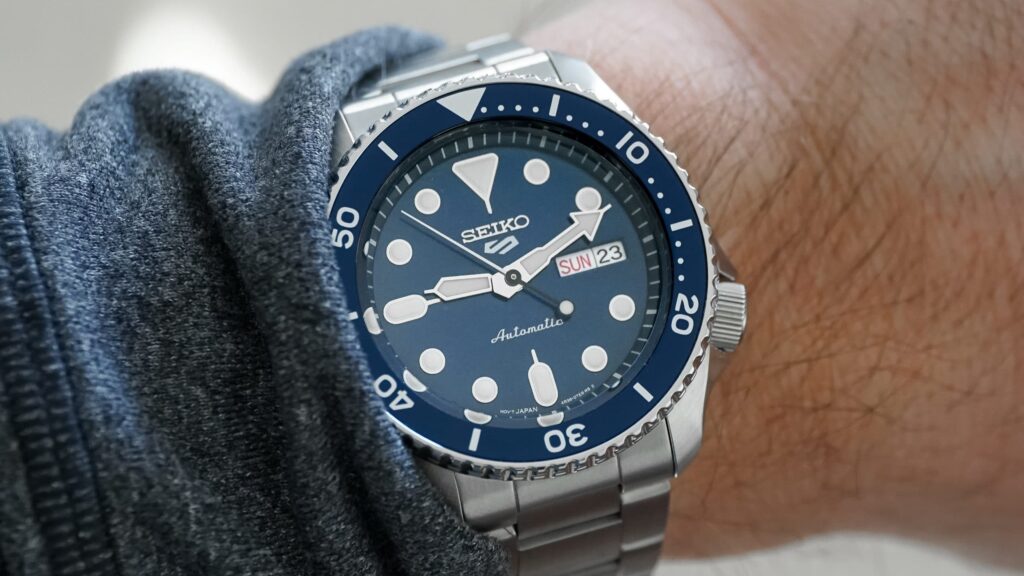
The Seiko 5 Sports SRPD51/5KX is controversial because it lives under the SKX’s shadow, whether it wants to or not. Collectors who loved the SKX tend to judge the 5KX by what it lost, while newer buyers often see it for what it is: a more modernized, polished, easier-to-own everyday Seiko with the same familiar outline. That disagreement is why it belongs here. The 5KX doesn’t feel like a clean replacement for the SKX, but it also doesn’t feel like a lazy reissue. It lands somewhere messier, which is where watch arguments get more interesting.
On the wrist, the case still carries that recognizable Seiko dive-watch shape. The 46mm lug-to-lug gives it real presence without making it sprawl, and the 13.5mm thickness adds some weight without turning the watch into a slab. Smaller wrists may still notice the height, especially from the side, but the overall footprint stays manageable. The compact 4 o’clock crown keeps the familiar Seiko feel, and the milled grip makes it easier to use than some older executions. Drilled lugs are a small detail, but they matter here because the SRPD51 is the kind of watch that practically begs for strap changes. Moving it from the stock bracelet to a NATO or rubber strap changes the personality quickly, and honestly, it helps the watch feel more at home.
The blue sunburst dial gives the SRPD51 much of its charm. It shifts from a deeper navy to a brighter, almost electric blue in strong light, while the matte blue aluminum bezel keeps the look cohesive instead of overly shiny. Applied indices and an applied logo add more depth than many SKX-era dials, and that’s part of why the watch feels a touch more refined than its price suggests. The Lumibrite is classic Seiko in the best way: bright, long-lasting, and stronger than what we often see from many divers around this money. During hands-on testing, its brightness and staying power felt closer to some higher-end Prospex models than we expected.
Inside, the in-house 4R36 movement gives the SRPD51 two upgrades collectors wanted for years: hacking and hand-winding. The display caseback also gives newer mechanical-watch fans a look at what’s going on, which feels appropriate for a Seiko 5. The bracelet is where the modernization story loses some momentum. The clasp feels thin, the adjustment links are fiddly, and the whole setup trails behind the case and dial finishing. Then there’s the bigger debate: the SRPD51 is not ISO-certified, so collectors looking for the old SKX’s true dive-watch credentials will see it as watered down. As an affordable everyday watch, though, it still delivers a tough, wearable, distinctly Seiko experience. Whether that feels like progress or a compromise depends on how much of the SKX you brought into the conversation.
Pros
- Familiar Seiko case shape with improved finishing and drilled lugs.
- Lumibrite is bright, long-lasting, and stronger than that of many watches at this price.
- Blue sunburst dial and applied markers add depth and visual energy.
- 4R36 movement adds hacking and hand-winding.
Cons
- No ISO certification, which limits its credibility as a true dive watch.
- The bracelet feels dated compared to the case and dial.
- The clasp feels thin, and the adjustment links are fussy.
- Case height can look tall on smaller wrists.
Maurice Lacroix Aikon Automatic

| Price: | Starts $1,990 |
| Water Resistance: | 200m |
| Case Dimensions: | 42mm (diameter) x 48mm (lug-to-lug) x 11mm (thickness) |
| Lug Width: | Integrated bracelet, starts 25mm at lugs, tapering down to 20mm at the clasp |
| Movement: | ML115 Caliber (Maurice Lacroix branded base Sellita SW200) |
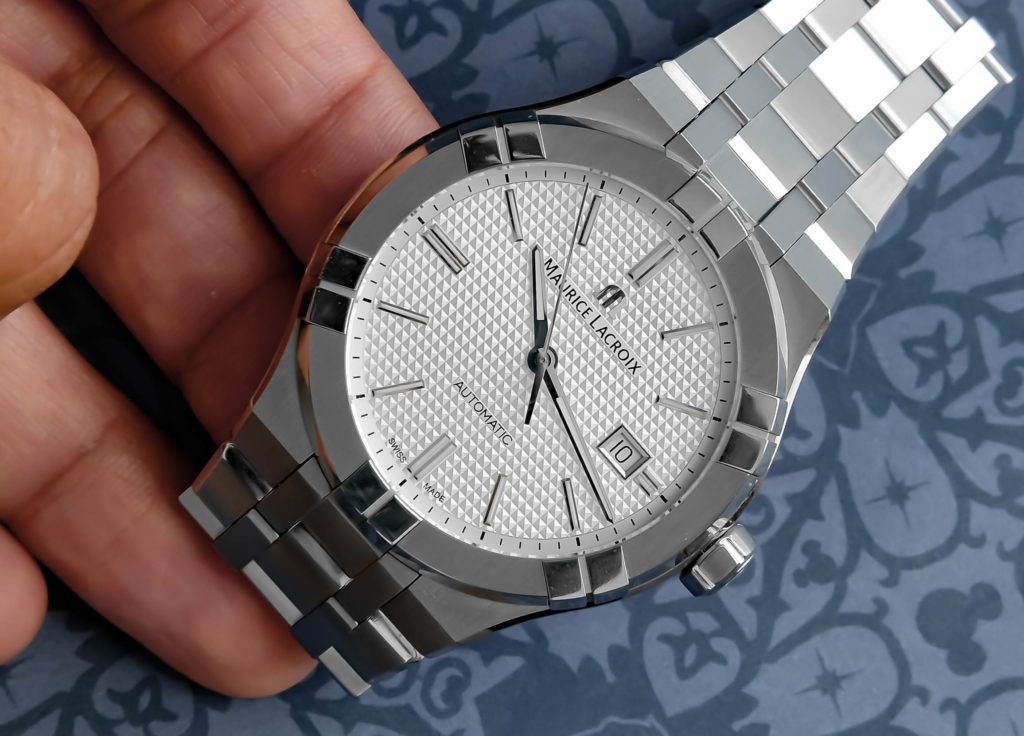
The Maurice Lacroix Aikon Automatic divides collectors because it lives in that messy integrated-bracelet space where execution and originality are judged simultaneously. Some people see it as a sharp, well-built way into the category without paying luxury-brand money. Others see the Royal Oak-adjacent energy and check out before the clasp even closes. After wearing it, the argument feels less simple than either side wants it to be. The Aikon doesn’t win because it rewrites the design language. It wins points because the case, bracelet, finishing, and daily usability feel more convincing than the usual “inspired by” dismissal allows.
The bracelet does most of the persuasion. Its mix of brushing and polished bevels catches light constantly, so even small wrist movements make the watch feel more alive than a flat slab of steel. The taper from 25mm down to 20mm keeps the whole thing from wearing like a cuff, and the hidden butterfly clasp preserves the clean, uninterrupted look across the wrist. Once sized properly, comfort is strong enough for a full workday and whatever comes after. However, getting there is less charming. The pin-and-collar system is fiddly and unfriendly, the kind of sizing experience that makes you briefly wonder if owning watches is a character flaw. The quick-release setup is helpful, but the proprietary lug shape means you’re mostly staying inside Maurice Lacroix’s strap ecosystem.
At 42mm, the Aikon has a clear presence, though the proportions and clean case finishing stop it from feeling too blunt. There are crisp transitions between brushed and polished surfaces when viewed up close, and the overall case-and-bracelet integration gives the watch a confident, cohesive feel. Sapphire crystals on the front and back add clarity, while the screw-down crown, combined with 200 meters of water resistance, makes the watch more than just office jewelry. It can handle rain, travel, daily bumps, and the kind of casual abuse that comes from wearing one watch all day instead of babying it between desk and dinner.
The dial keeps things textured without turning chaotic. The grid pattern adds depth, and visually, it fits the angular case design well. Legibility is the weak point, though. The polished hands can lose contrast in bright light, and we found ourselves tilting the watch at times to get a cleaner read. The ML115 movement brings the experience back to earth. It is essentially a dressed-up SW200, reliable and familiar, but the winding has that slightly gritty feel we’ve come to expect from the platform. It works, but it doesn’t feel as refined as the exterior finishing. That tension is why collectors disagree about the Aikon. As part of an integrated-bracelet design, it delivers real wrist presence, comfort, water resistance, and a finished look for the money. As an originality test, it gives skeptics plenty to chew on.
Pros
- Cohesive case and bracelet design give it a strong wrist presence.
- Bracelet finishing stands out, especially once properly sized.
- The hidden butterfly clasp keeps the profile clean and uninterrupted.
- 200m water resistance adds useful everyday durability.
Cons
- Design language sits close enough to familiar luxury cues to divide collectors.
- Proprietary lugs limit strap flexibility.
- Polished hands lose contrast in bright conditions.
- ML115 movement feels more basic than the rest of the watch.
- Pin-and-collar sizing can be frustrating.
Omega Speedmaster Reduced
| Price: | $2,300 – $6,000 |
| Water Resistance: | 30m |
| Case Dimensions: | 38mm (diameter) x 44mm (lug-to-lug) x 12mm (thickness) |
| Lug Width: | 18mm |
| Movement: | Omega Cal. 3220 (based on the ETA 2890) |
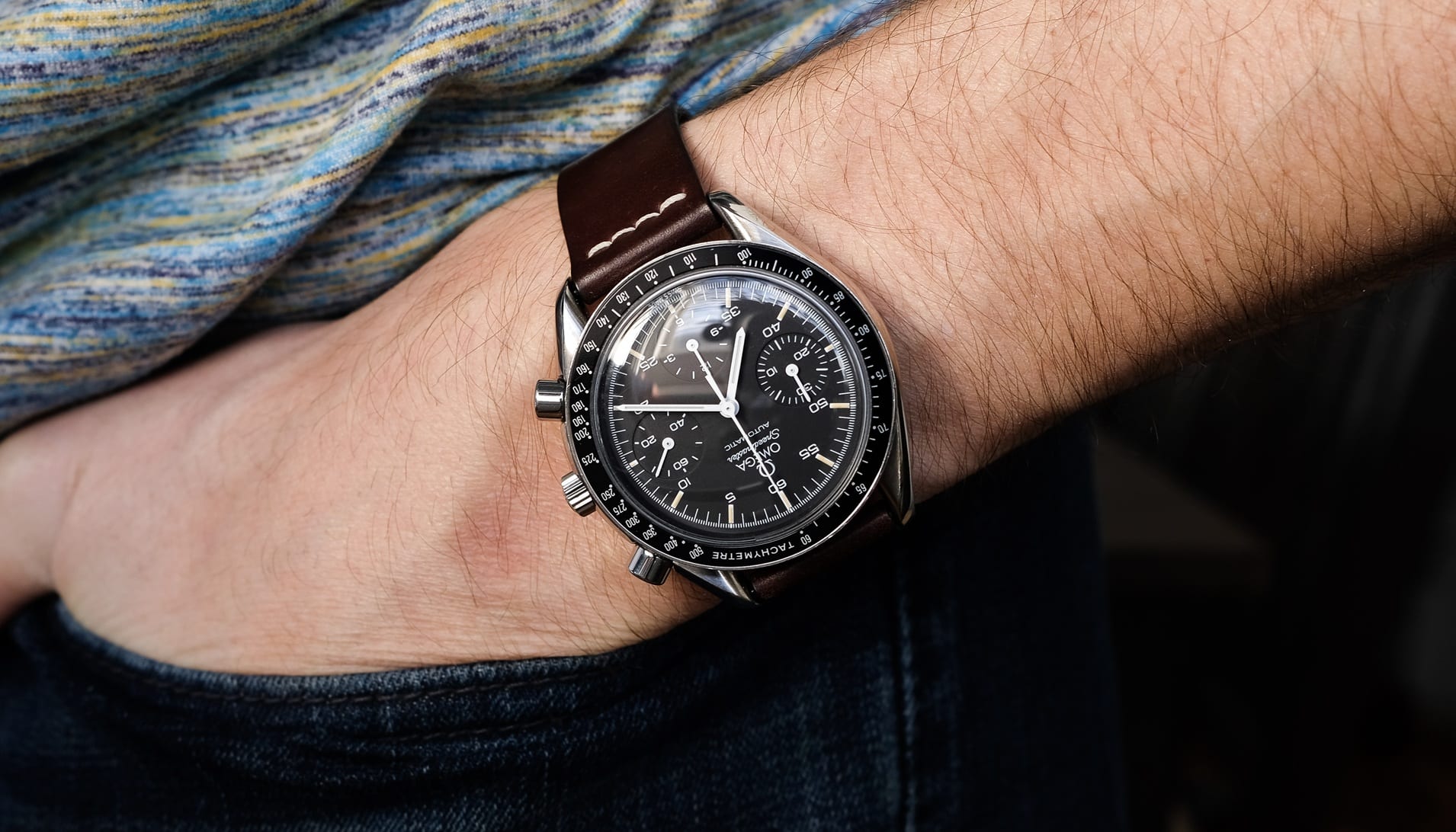
The Omega Speedmaster Reduced belongs here because it has spent most of its life being judged against the wrong watch. Search around long enough, and the conversation almost always turns into a Speedmaster Professional Moonwatch comparison, usually with the Reduced framed as the lesser option before anyone talks about how it wears. That’s the part we keep coming back to. The Professional is 42mm, while the Reduced is 38mm; the more meaningful number is the 44mm lug-to-lug. On medium and smaller wrists, that makes the watch feel like a real Speedmaster you can wear daily without worrying about overhang or cuff clearance.
The case proportions are where collectors start arguing. The Reduced is about 12mm thick, which is close to the Moonwatch, so the smaller diameter can make it look a little squat from some angles. The lugs are also shorter and less sharply defined than the Professional’s, which purists notice immediately. Then there are the flanks. The chronograph pushers sit higher while the crown sits lower, and yes, it looks odd once you see it. But that offset comes from the stacked movement architecture, not sloppy design. For the reader, the practical takeaway is simple: the Reduced wears more easily, but it does not deliver the exact visual balance of the Moonwatch. That trade-off is the whole argument.
The dial retains the Speedmaster language, but not without changes. You still get the 3, 6, 9 subdial layout, white hands over a black dial, and enough Speedmaster DNA to feel familiar at a glance. Look longer, and the differences show up. The running seconds move to the opposite side, the subdials are pushed outward into the indices, and the minute markers sit below the indices. That can make the dial feel slightly unbalanced, especially if you’re used to the Professional. It is not a dealbreaker on the wrist, but it is one of those details collectors either stop caring about or never stop seeing. Later modern 38mm Speedmaster Automatic versions brought in more colors and a date at 6 o’clock, though the classic monochrome Reduced remains the cleanest entry point for most buyers.
Inside, the Omega Cal. 3220 is the other source of tension. It uses an ETA 2890 base with a DD2020 chronograph module stacked on top. That explains the pusher placement, subdial spacing, and crown position. It also explains why service conversations get dramatic fast. A full service can cost more than people expect, and replacement dials can be hard to source, especially if the watch has a questionable service history. That said, the fear can get exaggerated. Many independent watchmakers replace the chronograph module rather than fully service it, and the watch itself remains completely functional. The bigger lifestyle difference is that the Reduced is automatic. You lose the morning winding ritual of the Moonwatch, but you gain convenience if this is your daily Omega.
The 18mm bracelet looks Speedmaster-correct and uses a pressure clasp without a safety, but the narrow lug width and limited taper can make it feel a little off. A thicker leather strap, a tan or brown vintage-style strap, or a NATO strap helps bulk up the stance and makes the watch feel more naturally balanced. That’s why the Reduced still makes sense. It may always live in the Moonwatch’s shadow, but for collectors who want the Speedmaster feeling in a smaller, more wearable, often more attainable package, it earns its place. For more detailed insights, read our dedicated comparison between the Reduced and the Professional Moonwatch.
Pros
- 38mm case and 44mm lug-to-lug make it far easier to wear on small to medium wrists.
- Automatic movement adds daily convenience for buyers who do not want to wind a chronograph every morning.
- White hands over the black dial keep the core Speedmaster look clear and familiar.
- Strong availability and wider selection make it an approachable way into vintage Omega chronographs.
- It carries enough Speedmaster DNA to feel connected to the family without wearing like a Moonwatch clone.
Cons
- The dial can feel visually unbalanced due to the outward subdials and the altered running seconds layout.
- Offset crown and pusher placement bothers collectors who want classic Speedmaster symmetry.
- The 18mm bracelet and limited taper can feel narrow for the case style.
- Servicing is costly, and replacement dials can be difficult to source.
Panerai Luminor Marina PAM00777
| Price: | $3,600 – $5,000 |
| Water Resistance: | 100m |
| Case Dimensions: | 44mm (diameter) x 53mm (lug to lug) x 15mm (thickness) |
| Lug Width: | 24mm |
| Movement: | In-house, manual-winding P.6000 |
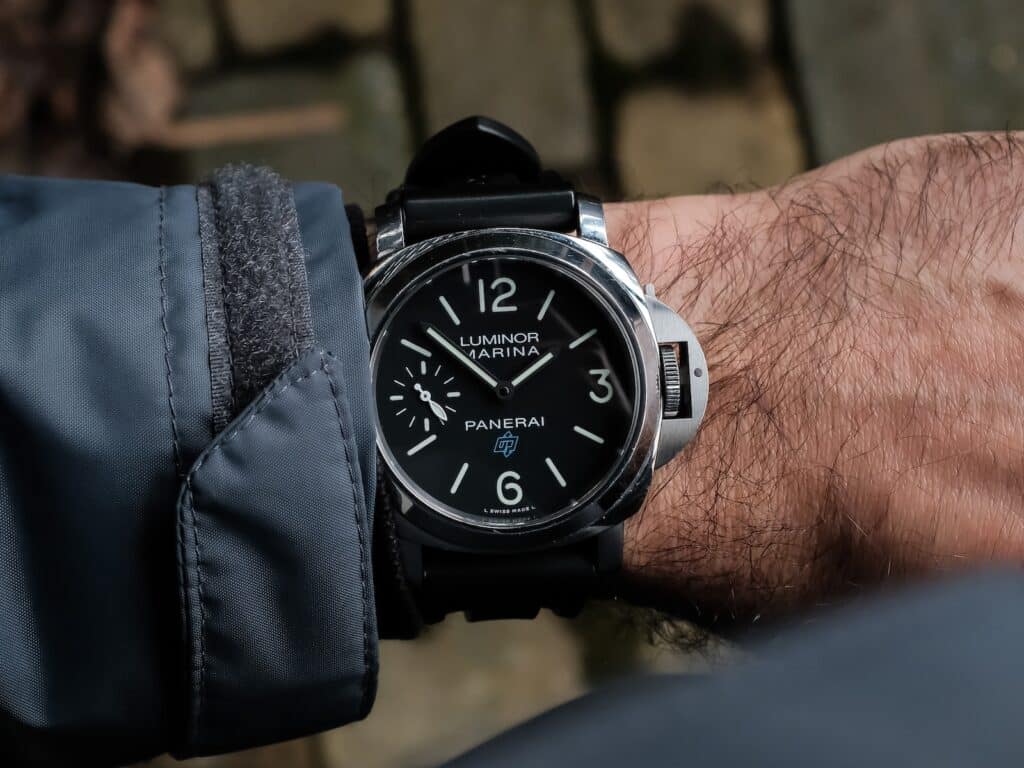
The Panerai Luminor Marina PAM00777 enters this list because its whole personality depends on whether you buy into oversized minimalism. To one collector, the 44mm case may feel confident, clean, and instantly recognizable. To another, it may read like a watch that forgot wrists come in more than one size. Panerai’s broader baggage around past build-quality complaints also gives skeptics more fuel, so the PAM00777 walks into the room already carrying an argument. After wearing it, though, the size stops feeling like a spec and becomes the point. This watch does not try to shrink itself visually, and that honesty is either refreshing or exhausting, depending on your wrist and tolerance for big-watch energy.
The dial keeps the experience simple, in a way that works better on the wrist than in photos. The large printed numerals and indices make it easy to read at a glance, while the running seconds at 9 o’clock add a little motion without cluttering the design. The blue logo at 6 o’clock is a small touch, but it breaks up the otherwise spare dial enough to give it some personality. That restraint is part of the disagreement. Some collectors see a clean, legible, purpose-built layout. Others see a lot of space inside a very large case.
The crown guard is where the watch feels most distinctly Panerai. The lever action is precise, and opening it to wind or set the watch becomes part of the ownership rhythm. It is not just visual theater; it changes how you interact with the piece day-to-day. The manual-winding P.6000 movement supports that ritual with a useful 3-day power reserve, so it can sit in a rotation for a bit without immediately going dead. Hacking seconds make precise setting easy, and while we reviewed it, the movement was reliable and straightforward to live with. The solid caseback means there is no movement to admire, but on this watch, dependability matters more than decoration.
On larger wrists, the polished case has real presence without feeling like it is trying to imitate something else. The downside is that the polished finish picks up scratches easily, and regular wear will leave evidence. We never felt the urge to baby it, but the marks do show. The 24mm rubber strap matches the watch’s scale and feels high-quality from the start, though it takes a little time to get used to its width. Once settled, it becomes quite comfortable for a watch this large, and we kept returning to it because it suits the PAM00777 so naturally. Strap variety is more limited at this size, and water resistance trails some traditional dive watches, but the bigger divide remains philosophical. The Luminor Marina is either a confident expression of Panerai’s identity or a comically overbuilt minimalist watch. Both reactions make sense, which is why collectors still argue about it.
Pros
- Strong 44mm case presence works well on larger wrists.
- P.6000 manual movement is reliable and offers a practical 3-day power reserve.
- The clean dial is very legible, with a subtle personality from the blue logo.
- The crown guard lever adds a precise, satisfying daily interaction.
- The rubber strap feels well-made and matches the watch’s scale.
Cons
- The polished case shows scratches easily with regular wear.
- 24mm strap width feels substantial and limits variety.
- Water resistance is lower than that of some traditional dive watches.
- Panerai’s past build-quality baggage gives skeptics more reason to hesitate.
What are your thoughts on these controversial reviews? If there are any picks you feel aren’t deserving of their controversial reputation, please let us know in the comments below. Also be sure to share any other ideas for watches we should review that tend to divide the watch collector community.

Co-Founder and Senior Editor
Kaz has been collecting watches since 2015, but he’s been fascinated by product design, the Collector’s psychology, and brand marketing his whole life. While sharing the same strong fondness for all things horologically-affordable as Mike (his TBWS partner in crime), Kaz’s collection niche is also focused on vintage Soviet watches as well as watches that feature a unique, but well-designed quirk or visual hook.
Knew Pro Diver would be on this list. Reminded me that you guys really need to review an Amazon Essentials watch!
Hi, RainbowInvictaFanClub!
Even years after reviewing the watch, we still find ourselves in positions of having to defend the pro diver lol. Yes! I need to review that amazon essentials watch we were talking about on the podcast – thank you for the reminder. Also I really appreciate when you comment because your name makes me laugh – maybe I should have included the Invicta Bolt review I had done in this piece as well haha.
Best,
-Kaz
Has there ever been a watch more hated than the Invicta? I’ll give you a hot take: it’s a much better watch than a Seiko at 4X the price. The Pro Diver got me into watch modding, I still have that original one from 2011 or so, now modded to a mil-spec style, with sapphire crystal. I mean how much do you have to spend on a Seiko before you get a sapphire crystal and milled clasp? $500+?
Buy one, don’t like the engraved case, take it off with some sandpaper, don’t like the too rolex look? Buy some new hands, and a dial. About the only trouble is finding bezel inserts. I have a second Pro Diver I bought on sale, it now has a micro adjust milled bracelet ($28) a ceramic GMT bezel and snowflake hands. Do people think it’s a GMT Master? Don’t know, don’t care, it’s a fun reliable $100 watch I’m not concerned about getting knocked around or getting lost/stolen.
Hi, Peter:
We’ve said before many times that the majority of watch collectors owe a debt of some kind to Invicta due to the fact that its very often someone’s first watch. But that really doesn’t diminish the quality of the product you’re getting, especially in the case of the pro diver. To your point, the pro diver has given a ton of people the perfect canvas to mod (and mod to the point of exceeding the quality of other more expensive watches). We’ll always stand up for the pro diver because it really is hard to beat for the price. Thank you for checking out our piece and sharing your personal experiences with the pro diver.
Best,
-Kaz
This watch sits right next to my Seiko you wouldn’t even know the difference
Which watch?