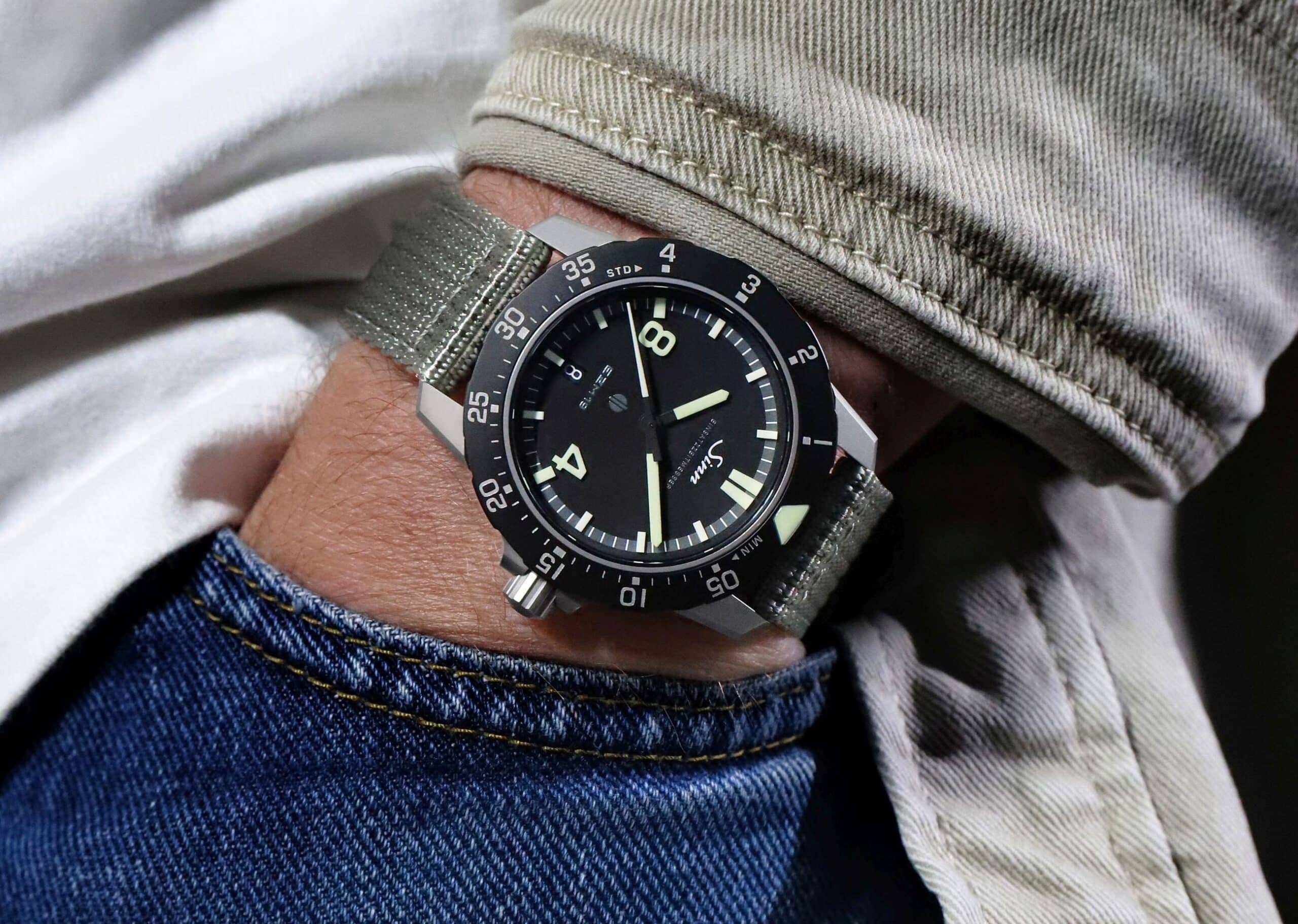
Sinn has added another watch to its long-running Einsatzzeitmesser, or Mission Timer, family, and I think the new EZM 19 might be one of the stranger interpretations of the concept. Developed around what Sinn describes as the needs of command staff working through time-sensitive operations, the watch organizes its dial around prominent four-hour intervals. That sounds extremely specific. Then again, this is Sinn, and to me, that specificity is a big part of why the EZM 19 works.
The EZM line dates back to 1997, when the original EZM 1 was developed for Germany’s ZUZ customs special unit. Sinn has since applied the concept to watches intended around diving, firefighting, emergency services, and other specialized jobs. The EZM 19 extends that thinking toward the people coordinating operations rather than carrying them out. If you ask me, you don’t have to completely buy into that premise to find the watch interesting.
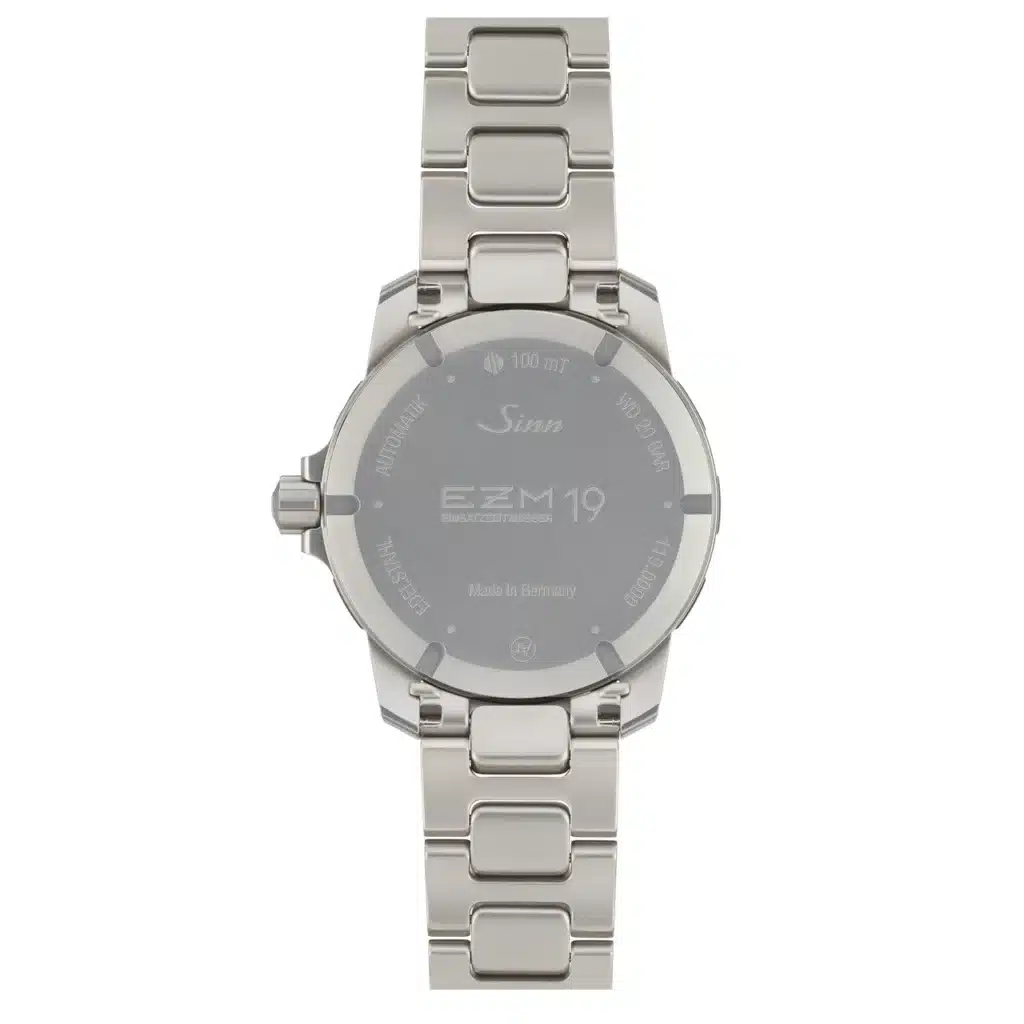
The 41mm bead-blasted stainless steel case measures 11.4mm thick and 46.5mm lug-to-lug. Inside is a Sellita SW300-1 automatic movement, while water resistance is rated to 200 meters. Sinn also brings plenty of its familiar engineering to the package, including Ar-Dehumidifying Technology, magnetic resistance to 80,000 A/m, and claimed functional reliability between -45°C and +80°C.
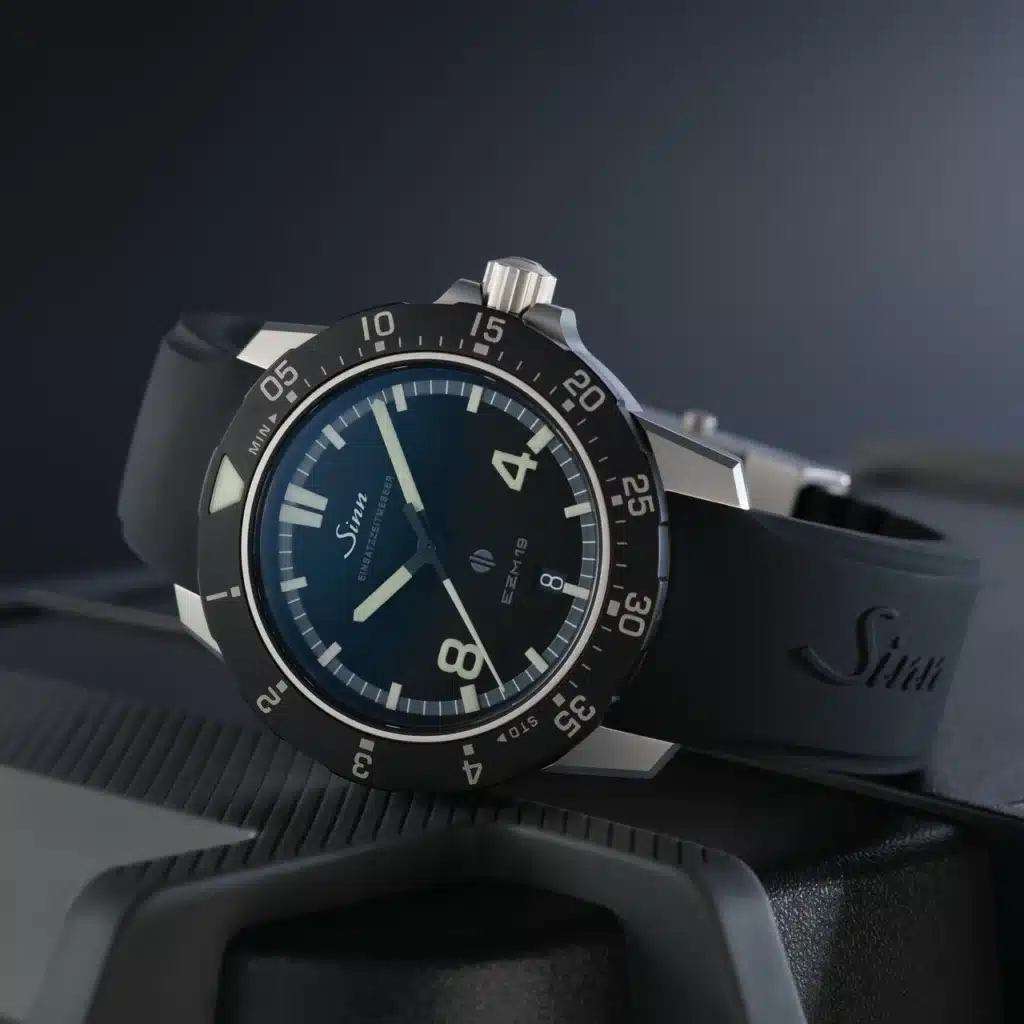
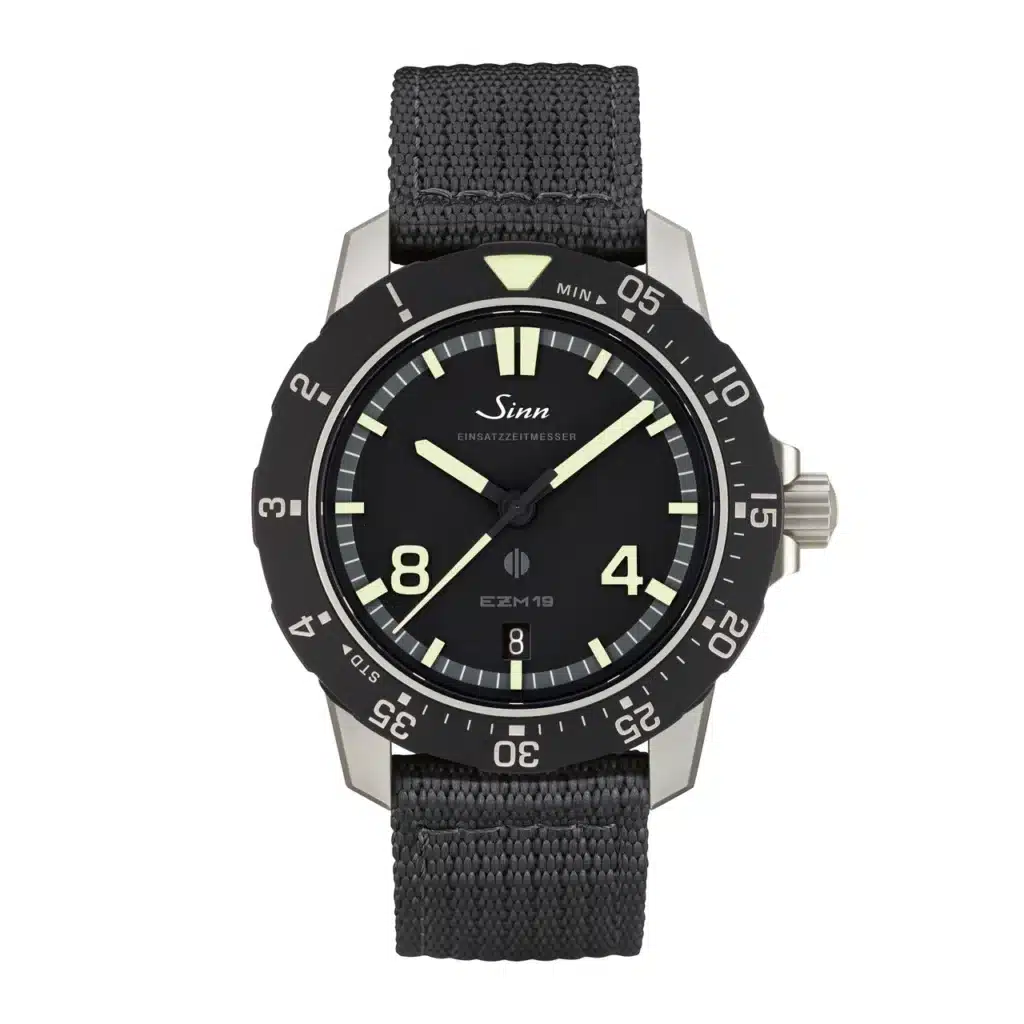
There’s also a captive rotating bezel with a black hard coating applied over a TEGIMENT-hardened base. Look closely and you’ll find two scales. One tracks minutes clockwise while another counts hours counterclockwise. The dial is where things get properly weird.
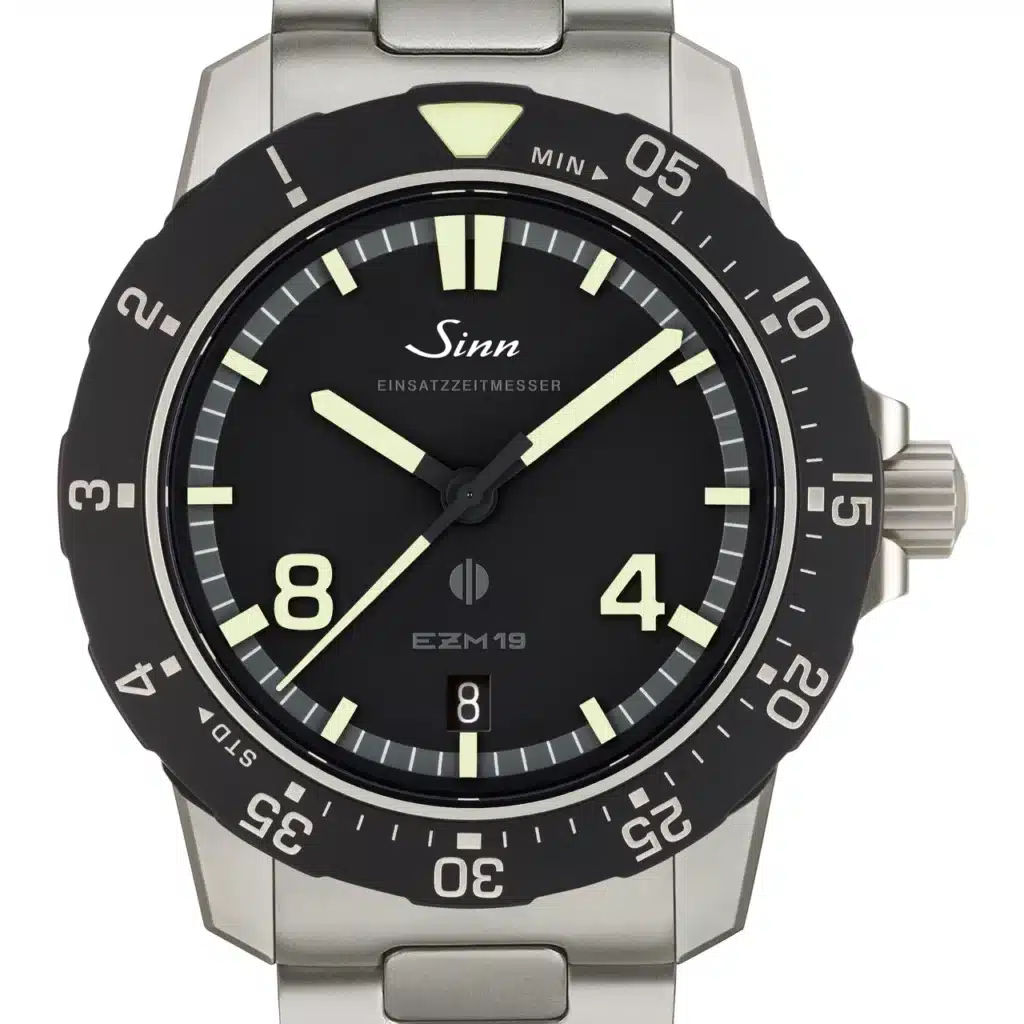
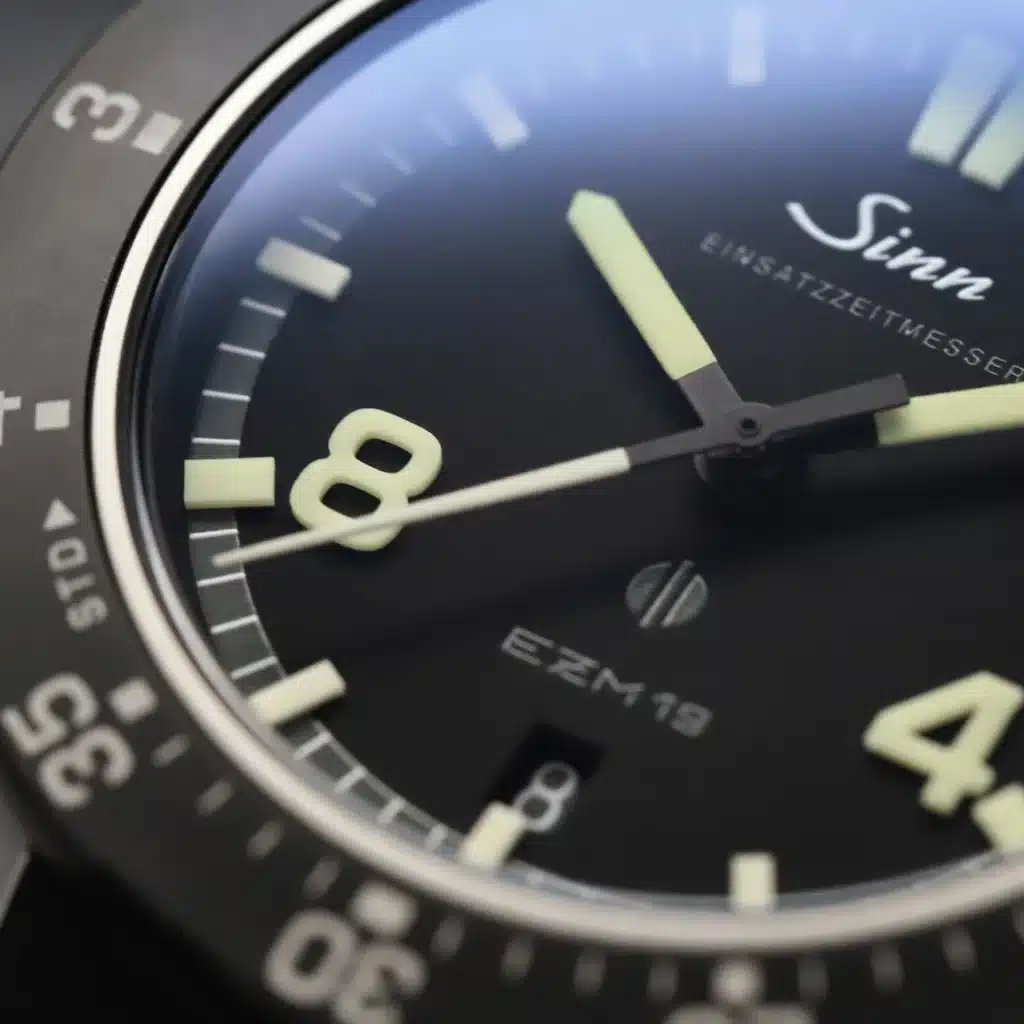
Large luminous markers at 12, 4, and 8 divide the display into four-hour blocks. Sinn says these intervals correspond with time cycles used in real operational environments, with the bezel allowing shorter events such as briefings and handovers to be tracked alongside them. Hybrid ceramic luminous elements are used for the markers, while the hour and minute hands share their color treatment to establish a clear visual hierarchy.
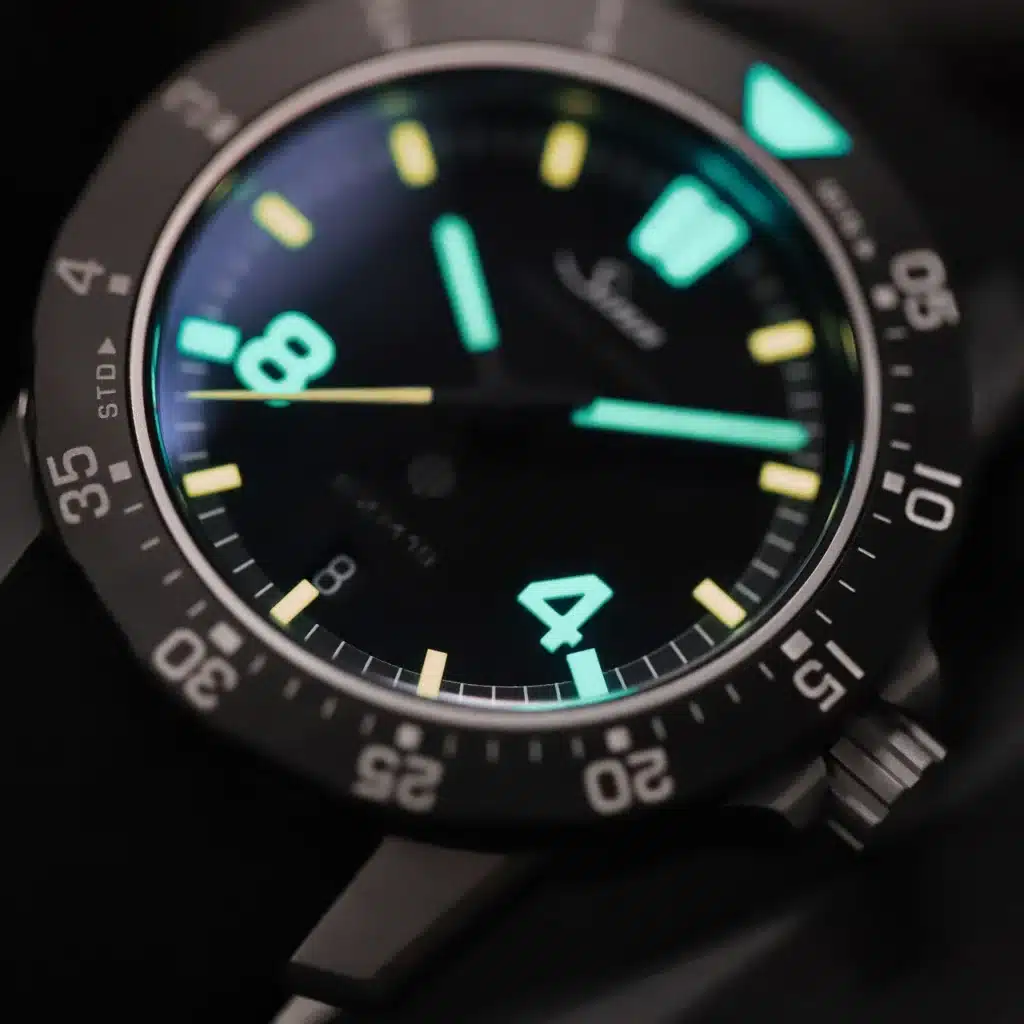
Personally, I love the way it looks. Those huge markers give the EZM 19 an identity that makes sense within the broader Sinn catalog, even before you get into the explanation behind them. To me, this is exactly the sort of strange, function-driven design Sinn tends to handle well. I’m less convinced that enthusiasts need the command-staff story to appreciate it.
Starting at $2,490 on textile strap in the U.S., some buyers will inevitably look at the SW300-1 and question the price. My take is that the movement misses the more interesting part of the discussion. Sinn has put the engineering elsewhere: case technology, bezel construction, magnetic protection, temperature resistance, dehumidification, and that unusual luminous display.
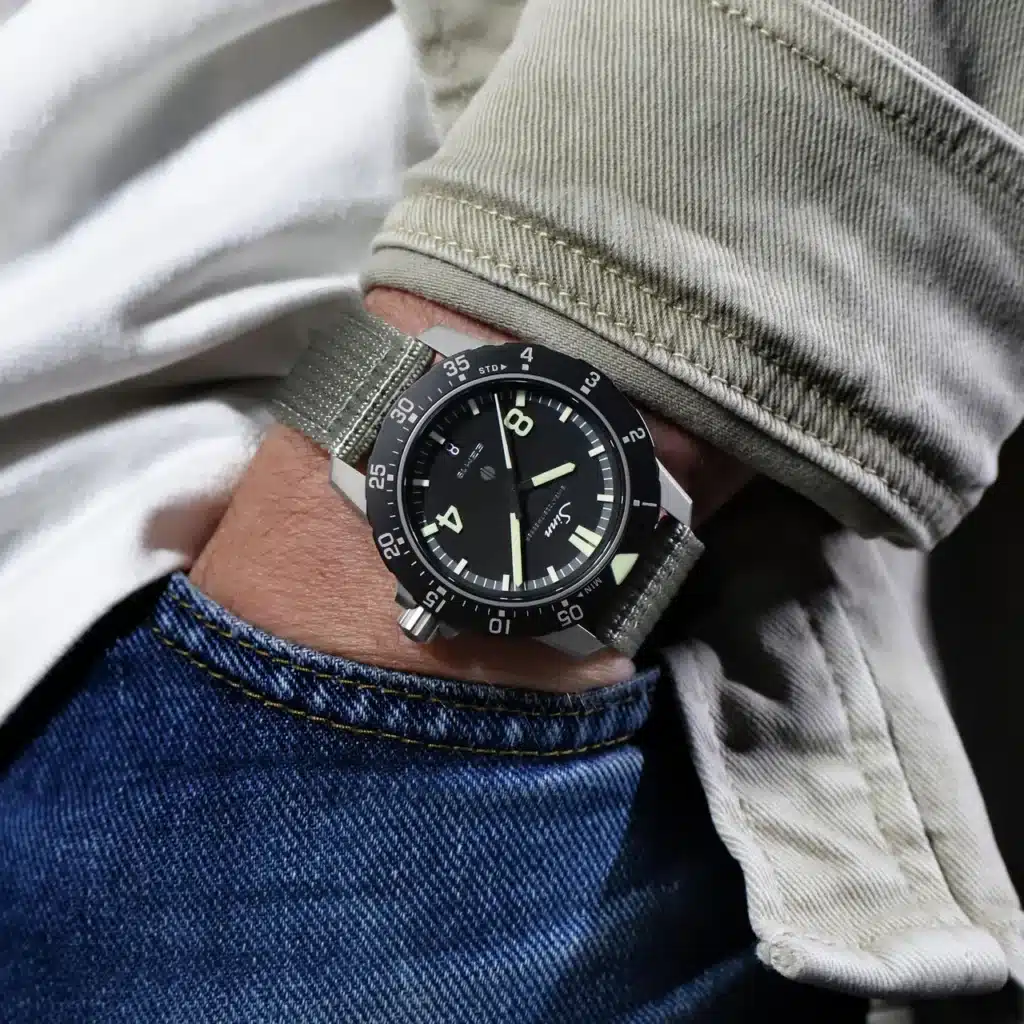
If you ask me, that’s where the EZM 19 makes its strongest case. But, does organizing a watch around four-hour intervals become genuinely useful once you remove it from Sinn’s proposed operational environment? I think that’s much harder to determine from a press release. We’d need to spend time with one to know. For now, though, I think the EZM 19 represents Sinn at its most interesting: deeply specific, engineering-heavy, and just strange enough to make you wonder whether its peculiar solution might actually have some usefulness in everyday life.

Co-Founder & Senior Editor
Michael Peñate is an American writer, photographer, and podcaster based in Seattle, Washington. His work typically focuses on the passage of time and the tools we use to connect with that very journey. From aviation to music and travel, his interests span a multitude of disciplines that often intersect with the world of watches – and the obsessive culture behind collecting them.
Omg THANK YOU for bringing this to my attention.
It’s a weird one! But as usual with Sinn, it looks great. Thanks for reading.