
Affordable Japanese dive watches have become something of a benchmark for what enthusiasts should expect from an inexpensive mechanical watch. Seiko and Orient have spent decades producing automatic divers that offer substantial water resistance, recognizable styling, and movements developed within their respective companies. But sharing those fundamentals doesn’t necessarily mean their watches deliver the same experience. Some emphasize function and durability above everything else, while others try to balance practical capability with the refinement and proportions of a more traditional everyday watch.
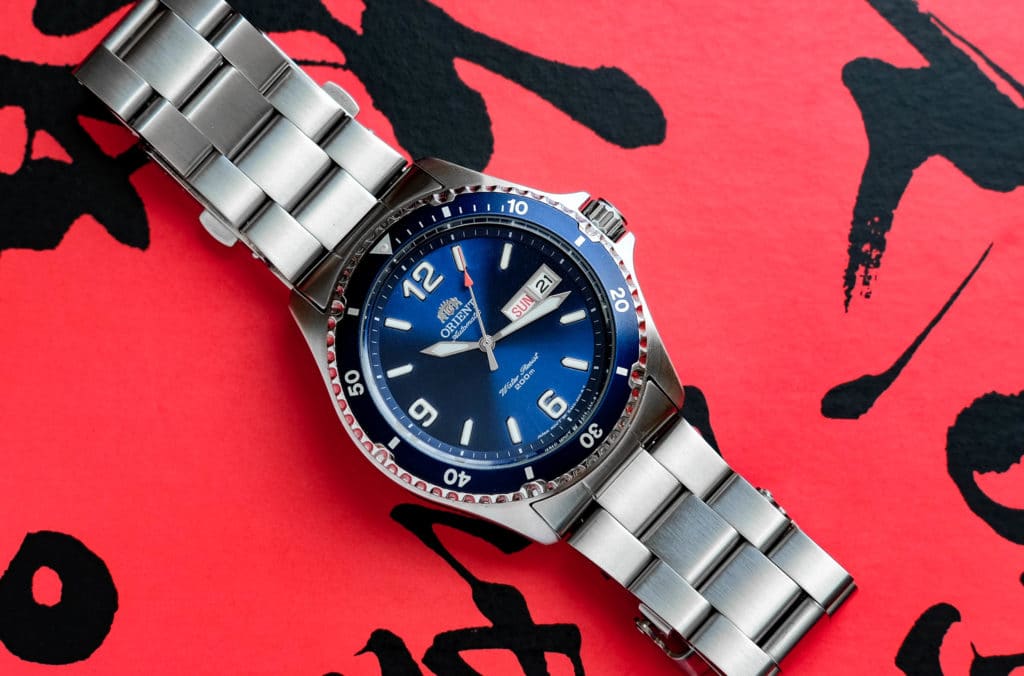
The Seiko Turtle and Orient Mako II represent those two approaches particularly well. The Turtle draws from Seiko’s historic 6309 design, with a distinctive cushion case and an emphasis on legibility and straightforward functionality. The Mako II adopts a more conventional dive-watch profile, pairing polished details and a comfortable bracelet with a capable automatic movement. We’ve reviewed both models hands-on, although through separate experiences, and each left a particularly strong impression. The question is whether Seiko’s enduring tool-watch design is worth choosing over Orient’s more affordable and surprisingly refined alternative.
Overview and Identity
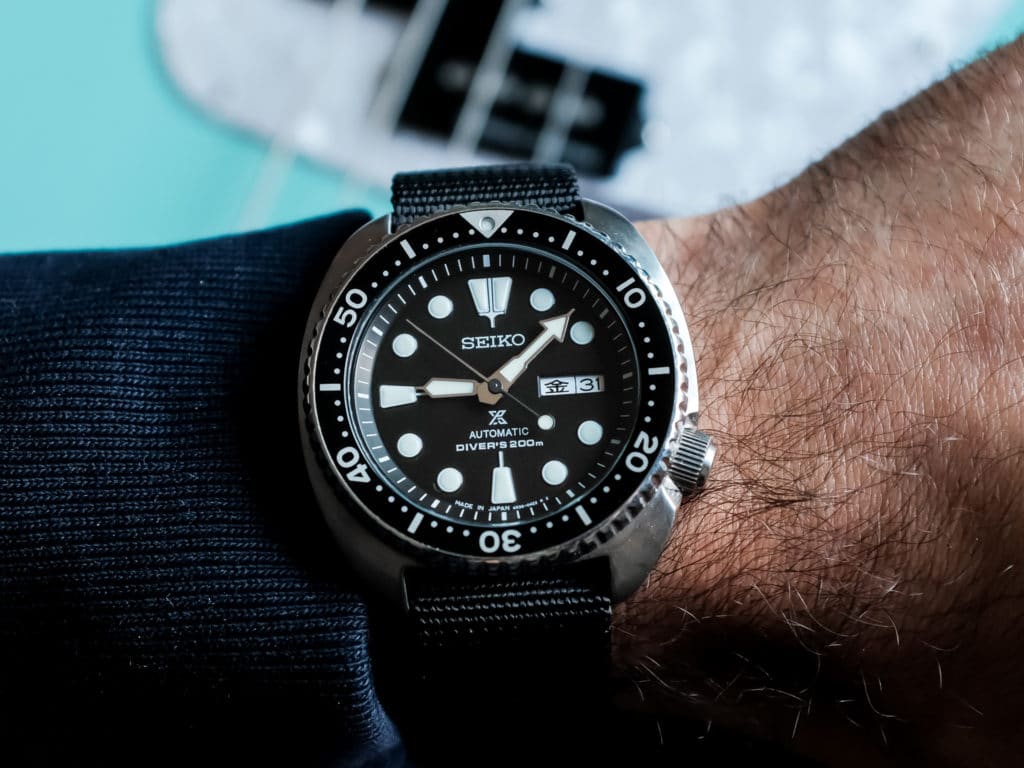
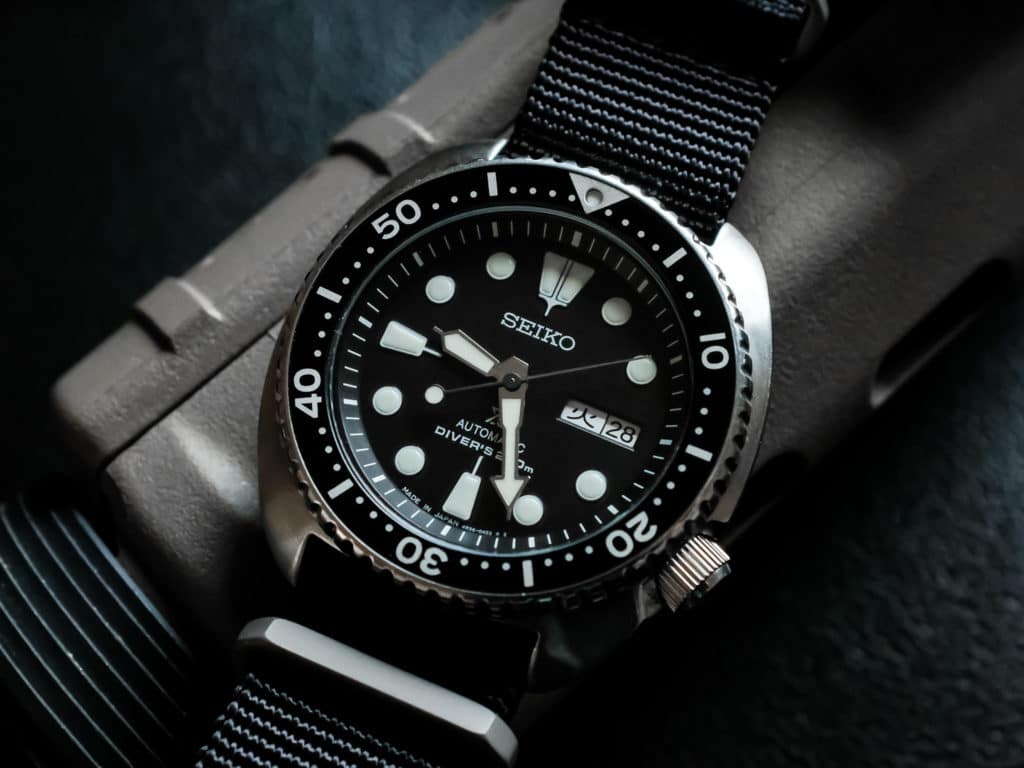
The Seiko Turtle occupies an important position within the brand’s dive-watch history. Introduced in its modern form in 2016, the collection revived the familiar cushion-shaped case associated with Seiko’s 6309 divers of the 1970s and 1980s. Our hands-on Seiko Turtle review focused on the Japanese-market SBDY015, a close relative of the popular SRP777 distinguished by its Kanji day wheel and Made in Japan dial printing. After buying and selling several examples, we eventually settled on this particular Turtle and continued wearing it for years. That extended experience provided a useful perspective on why the design has remained appealing even as Seiko has introduced countless newer divers.

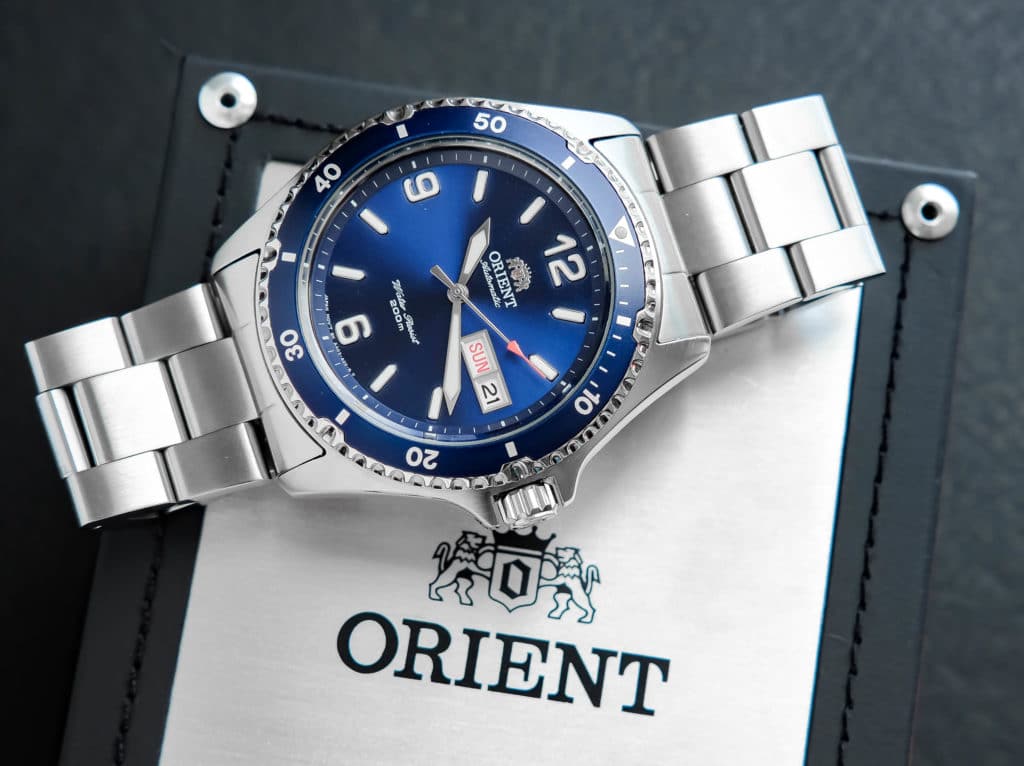
The Orient Mako II has a different history, rooted in the brand’s efforts to improve one of its most successful affordable dive-watch collections. The original Mako established a reputation for value but relied on an older movement that lacked hacking and manual winding, with a separate button for adjusting the day. The second generation addressed those shortcomings while preserving much of the design’s familiar character. Our hands-on review covered the blue-dial FAA02002D9, which we appreciated for its balanced case finishing, attractive dial, and considerably improved bracelet. Unlike the Seiko’s distinctive vintage-derived shape, the Orient offers a more traditional interpretation of what an everyday automatic diver should look and feel like.
Dial and Straps/Bracelets
The Seiko Turtle SBDY015 features a matte black dial that prioritizes legibility over elaborate decoration. Its large LumiBrite-filled markers are easy to distinguish, and the familiar Seiko handset provides a clear indication of the time without demanding much attention. There’s little about the arrangement that feels unnecessarily complicated, although the Prospex logo and day-date display introduce some additional visual information. Our Japanese-market example also features a Kanji day wheel, which adds a collectible distinction even if it isn’t always especially useful to someone who doesn’t read Japanese. The strength of the Turtle’s dial is its ability to remain immediately readable while retaining the recognizable personality of a classic Seiko diver.
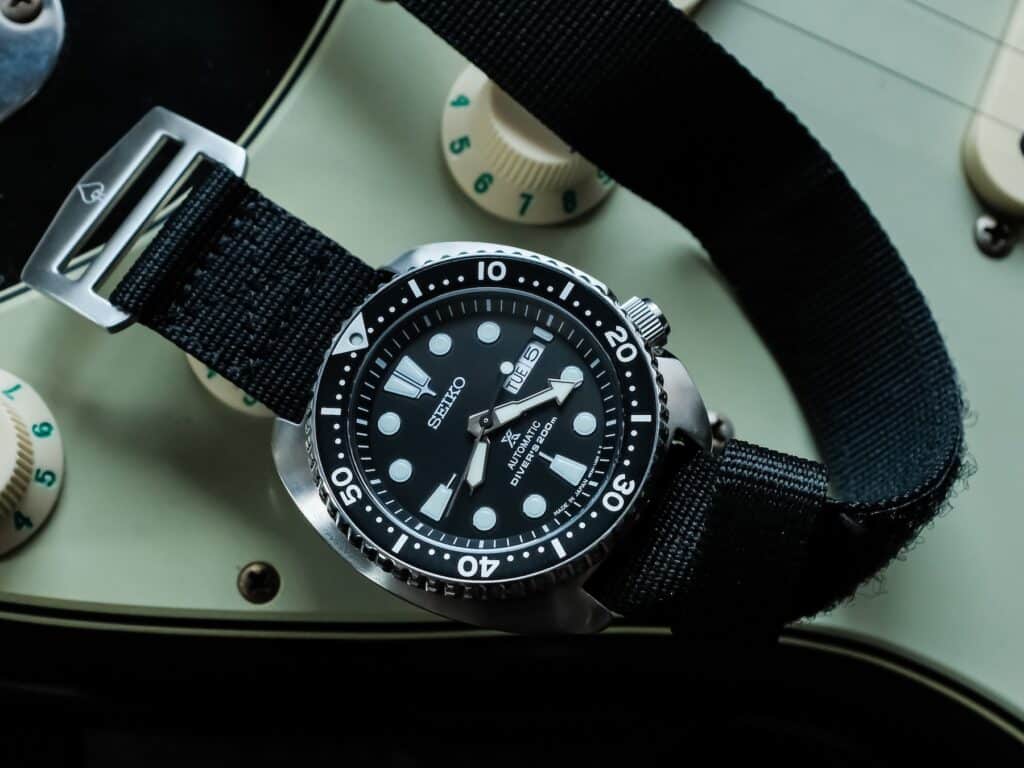
The Turtle originally arrived on one of Seiko’s soft vented silicone straps, complete with a substantial buckle and steel keeper. It’s a comfortable arrangement that suits the watch’s practical identity, although we’ve found the case particularly appealing when paired with aftermarket alternatives. We spent considerable time wearing this example on a Ute strap and later a Prometheus Design Werx Ti-NATO with titanium hardware. The cushion case works remarkably well with different materials and colors, making the watch easy to adapt without compromising its character. We haven’t evaluated this particular Turtle on the factory steel bracelet, so any comparison of the two watches’ bracelet quality needs to acknowledge that limitation.
The Orient Mako II FAA02002D9 takes a more decorative approach, using a rich blue sunburst dial that changes character as light moves across its surface. Applied hour markers feature polished metal surrounds, while the day-date window receives similar detailing. Sword-shaped hands complement the familiar arrangement, and a red-tipped seconds hand provides a subtle contrast against the blue background. We particularly appreciated the way the polished elements create visual interest without making the dial feel excessively elaborate. The raised chapter ring adds another layer of depth, and the overall arrangement feels more refined than we’d ordinarily expect from such an inexpensive automatic diver. It’s a notably different visual experience from the Seiko’s deliberately restrained black dial.
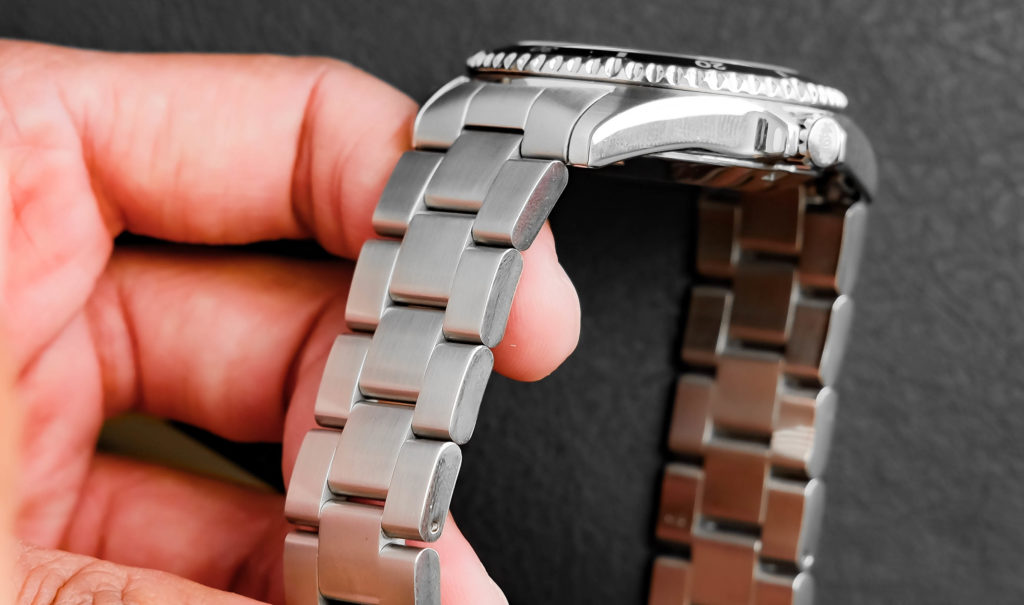
The Mako II’s factory stainless steel bracelet was one of the more pleasant surprises during our review. Its Oyster-style links combine brushed upper surfaces with polished sides, creating a natural continuation of the case’s finishing. The end links are hollow, and their lightweight construction becomes apparent when the bracelet is removed, but that didn’t significantly undermine the experience while wearing the watch. We also appreciated the double-locking push-button clasp, available micro-adjustments, and the attention Orient paid to small finishing details. It’s not a bracelet we’d confuse with something from a considerably more expensive watch, but the overall execution contributes meaningfully to the Mako II’s appeal as an everyday diver.
Build Quality & Technical Approach
Both watches offer the familiar combination of automatic movements, stainless steel cases, rotating dive bezels, and substantial water resistance. Their differences become more apparent in the details. Seiko places considerable emphasis on the Turtle’s distinctive case shape, legibility, and straightforward operation, while Orient uses more conventional dimensions and decorative finishing to create a balanced everyday watch. Neither approach is inherently superior, but they lead to noticeably different ownership experiences.
Movements
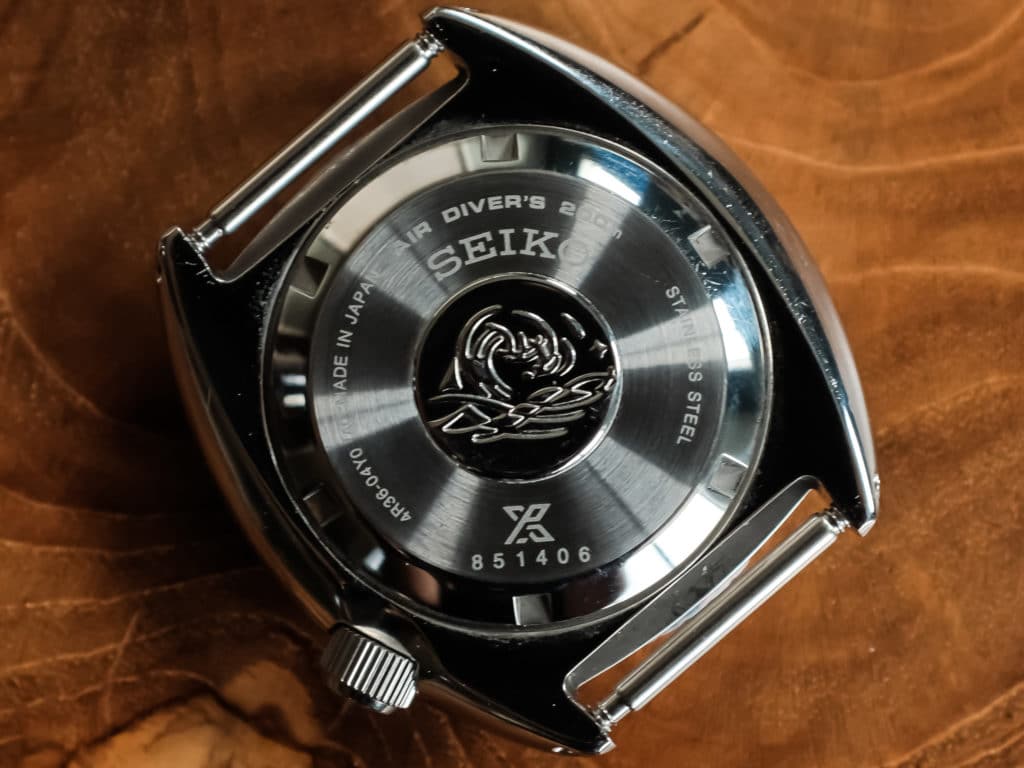
The Seiko Turtle uses the automatic 4R36 caliber, providing hacking seconds, manual winding, a day-date display, and approximately 41 hours of power reserve. It’s a familiar movement throughout Seiko’s affordable collection, and its relatively uncomplicated construction is part of the appeal. Our SBDY015 performed comfortably within Seiko’s published accuracy parameters during the original review, although our team noted that performance can vary considerably between individual 4R movements. We appreciate having the ability to wind and set the watch manually, particularly when rotating through a collection. Nevertheless, the 4R36 isn’t especially sophisticated, and buyers shouldn’t expect chronometer-level performance simply because the movement has proven capable of delivering years of ordinary use.
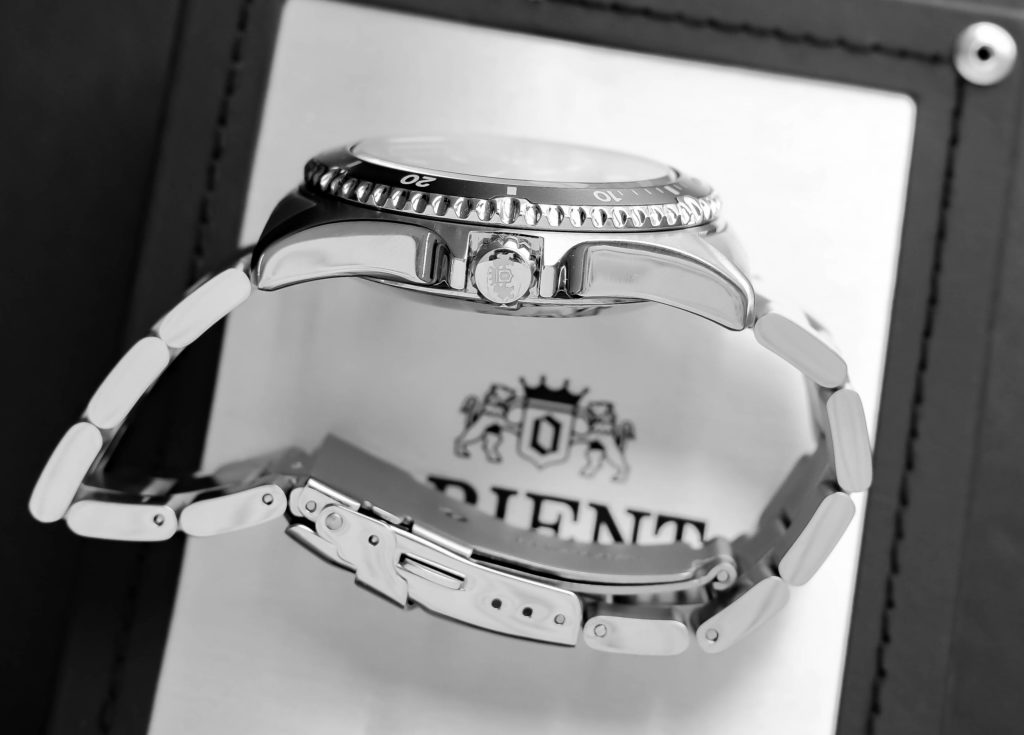
The Orient Mako II uses the in-house F6922 automatic caliber, which represented an important improvement over the original Mako’s older 46943 movement. The updated caliber introduced hacking seconds, manual winding, and integrated day-date adjustment through the crown. With approximately 40 hours of power reserve, the basic specifications are fairly close to Seiko’s 4R36, but the changes made the Mako II considerably more convenient than its predecessor. We found the hacking action smooth and the hand-winding mechanism satisfying, although it had a noticeably tactile feel rather than the buttery resistance associated with some other movements. The removal of the original Mako’s separate day-adjustment button also made the design more conventional, sacrificing a little personality in exchange for easier operation.
Neither movement creates a decisive advantage on specifications alone. Both provide the functions we’d expect from a modern entry-level automatic diver, and their power reserves are sufficiently similar that the difference has little practical significance. The Seiko benefits from the familiarity of a movement used across a substantial range of watches, while the Orient demonstrates how effectively the company updated an aging design without abandoning the qualities that made the Mako popular. Our original reviews didn’t establish a controlled accuracy comparison between these individual watches, so we wouldn’t declare one movement more precise based on impressions alone. For everyday ownership, both offer a capable mechanical experience without the complexity of more elaborate calibers.
Case Construction, Finishing & Wearability
The Seiko Turtle SBDY015 measures 44.3mm across, approximately 48mm lug to lug, and 14mm thick. Those dimensions can seem intimidating, particularly for someone accustomed to smaller everyday watches, but the case wears considerably more comfortably than its diameter suggests. The broad cushion shape distributes its visual weight across the wrist, while the relatively short lug-to-lug measurement prevents it from feeling excessively long. The recessed screw-down crown at four o’clock also helps minimize interference with the wrist. We found the watch comfortable on a 6.75-inch wrist despite its substantial overall dimensions, reinforcing the idea that case shape is often more important than diameter when assessing how a watch actually wears.
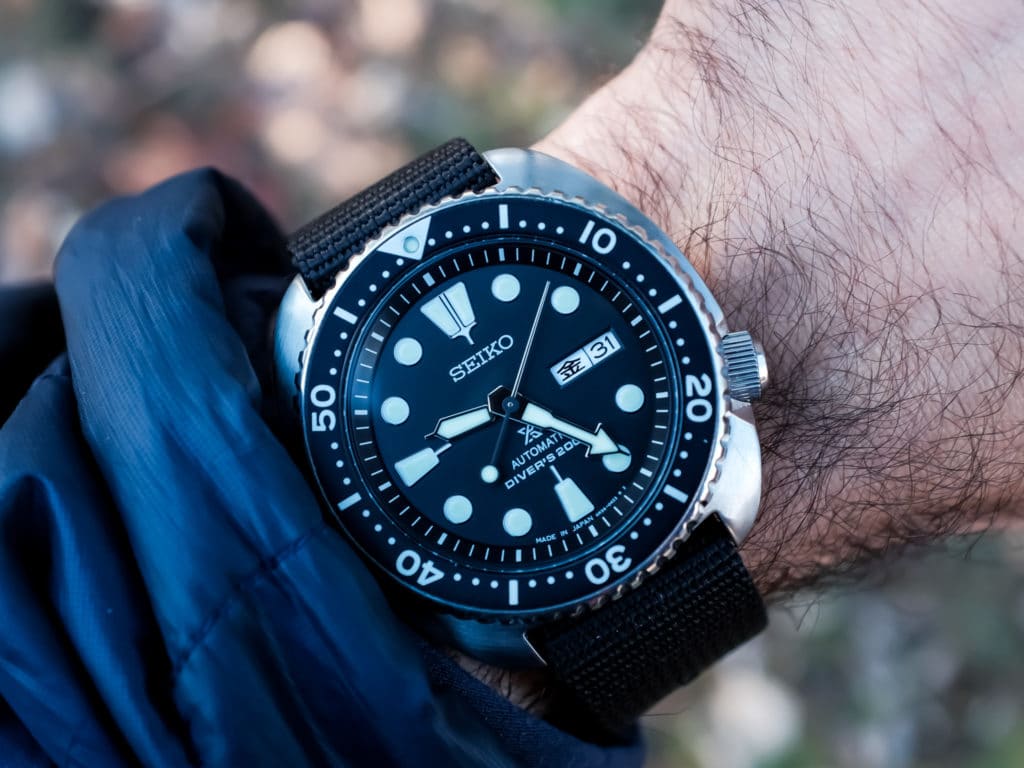
The Turtle’s stainless steel construction favors durability and familiarity rather than intricate decorative finishing. Its asymmetrical case pays tribute to the original 6309, although the modern lugs extend slightly farther than those of its predecessor. We would have appreciated preserving the vintage model’s even more compact lug arrangement, but the contemporary interpretation remains surprisingly comfortable. The case has a reassuring solidity that suits the watch’s identity, and the overall design has proven capable of remaining interesting through years of ownership. There are certainly more elaborately finished watches available, yet the Turtle’s appeal comes from how successfully its proportions, crown placement, and familiar silhouette work together.
The Orient Mako II measures 41.5mm across, approximately 47mm lug to lug, and 13mm thick, giving it a more compact and conventional profile than the Seiko. Those dimensions help make the watch particularly versatile, especially for someone who wants a dive watch that doesn’t dominate the wrist. During our review, one of the most impressive details was the transition between the polished case sides and brushed upper surfaces. Rather than creating exaggerated boundaries between finishes, Orient achieved a relatively seamless appearance that added a surprising sense of refinement. The case also integrates naturally with the supplied bracelet, an important detail when considering how much of the watch’s visual identity depends on that connection.
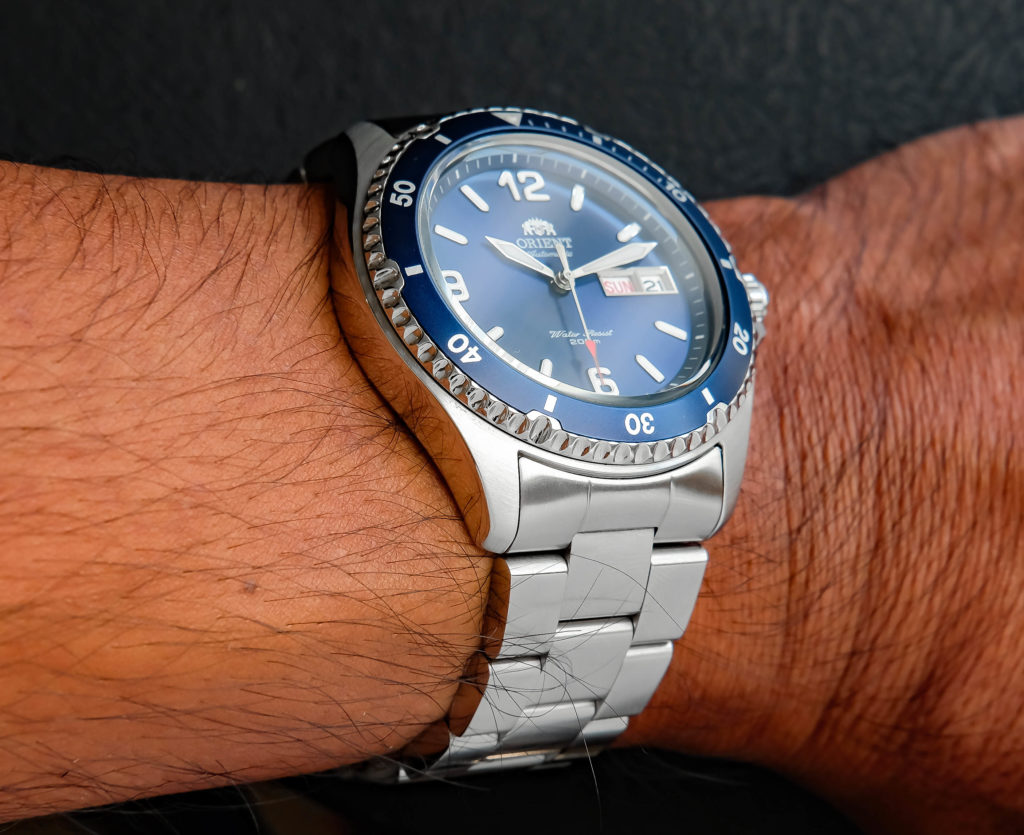
While the Seiko communicates its personality through an unmistakable case shape, the Orient makes a strong impression through the balance of its more conventional proportions. The polished surfaces and familiar dive-watch silhouette give the Mako II a slightly dressier personality without undermining its functional design. We appreciated how comfortable the watch felt and how naturally its various components complemented one another. The Seiko remains the more distinctive piece, particularly for collectors who appreciate the history of Japanese dive-watch design, but the Mako II offers a compelling alternative for someone who prefers more restrained dimensions. The differences here are less about one watch being objectively better constructed than about which approach feels more appropriate for everyday wear.
Crystals and Bezels
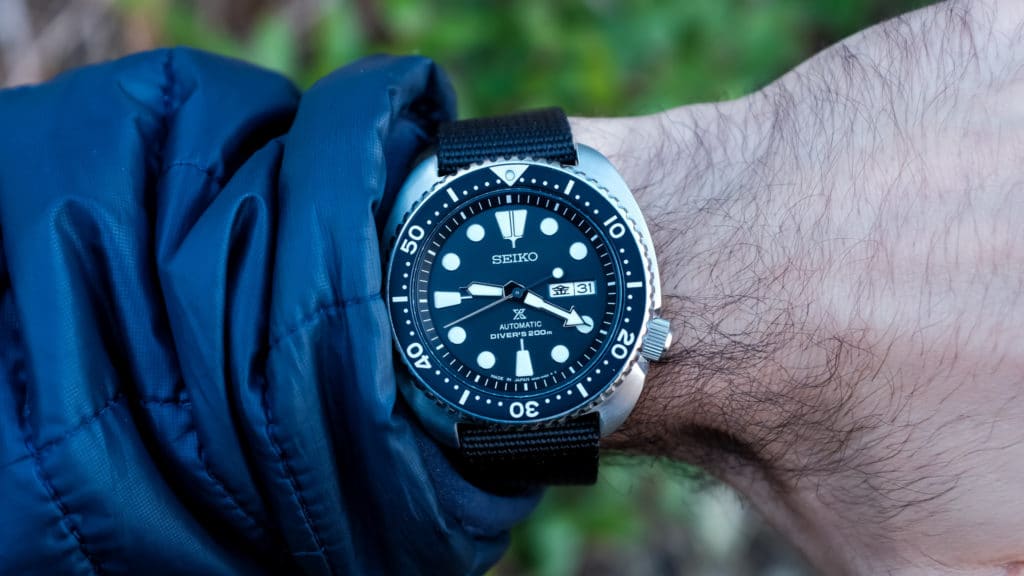
The Seiko Turtle uses a Hardlex crystal and a conventional unidirectional rotating bezel with an aluminum insert. Neither material is especially elaborate, but both are familiar components in affordable dive watches. We’ve never found the Hardlex crystal on our reviewed Turtle to be a significant obstacle during ordinary use, and the bezel itself operates smoothly. Unfortunately, our SBDY015 suffers from a noticeably misaligned bezel insert, one of the more frustrating quality-control issues associated with some Seiko divers. It’s disappointing because the mechanism otherwise feels satisfying, and a watch built around such a straightforward design should be capable of aligning its timing markings correctly. The Turtle’s materials are practical, but our particular example demonstrates that execution matters as much as the specifications.
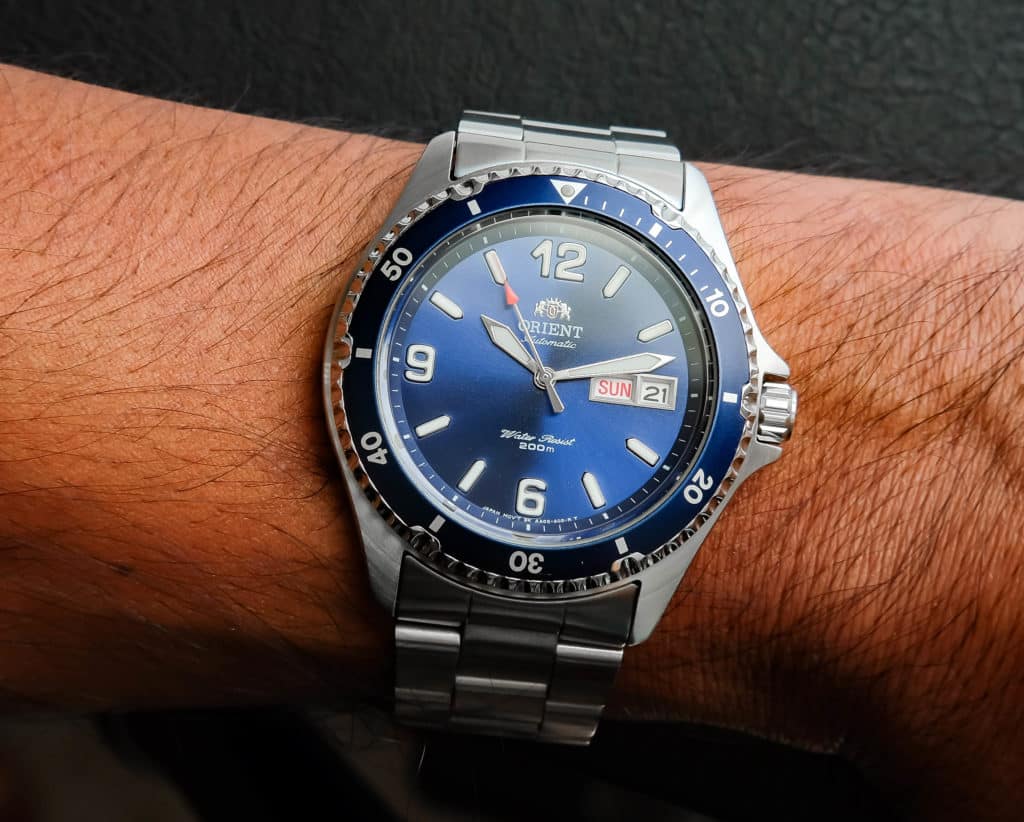
The Orient Mako II FAA02002D9 also uses a mineral crystal rather than sapphire, along with an aluminum bezel insert. Its updated 120-click unidirectional bezel feels precise once rotating, although we found it unnecessarily difficult to grip. The problem appeared to stem from the sloping, polished bezel edge rather than excessive mechanical resistance. Once it moved, the action delivered a satisfying click, making the overall experience more frustrating than fundamentally defective. The polished detailing contributes to the watch’s appearance but slightly compromises usability. It’s an interesting contrast with Seiko: the Turtle’s bezel is comfortable to operate but suffers from alignment problems, while the Orient’s feels well-defined once moving but is less convenient to engage.
Water Resistance & Lume
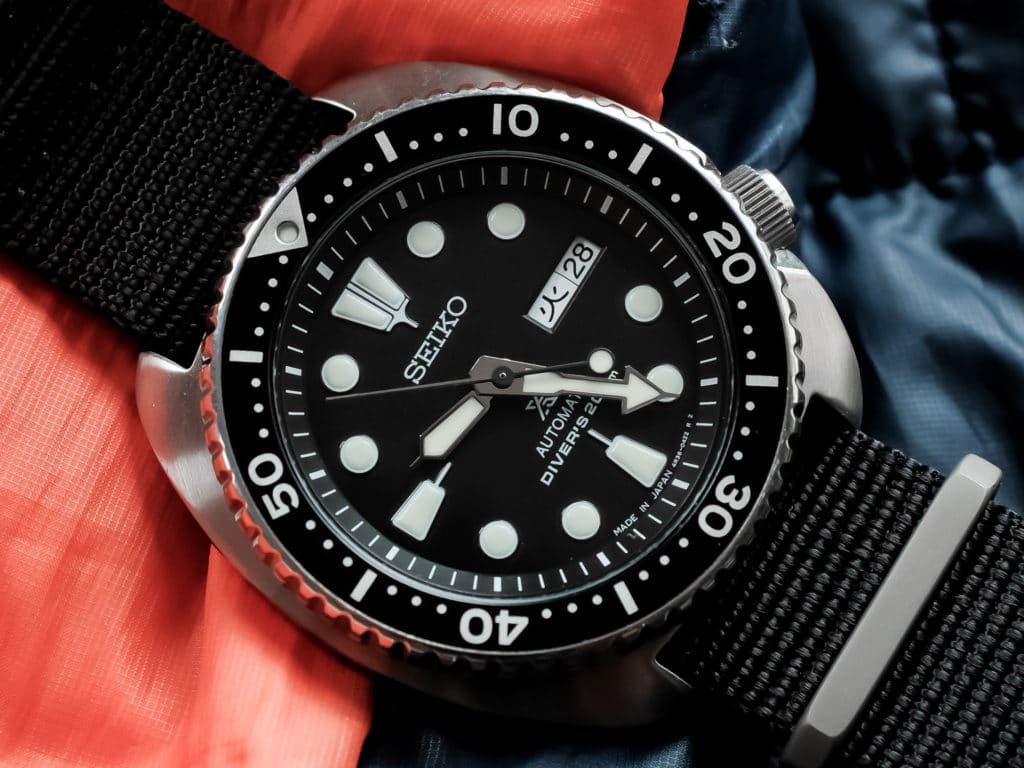
The Seiko Turtle offers 200 meters of water resistance, supported by a screw-down crown and caseback. Its straightforward construction makes it a practical choice for swimming and recreational diving when properly maintained and used within the manufacturer’s guidance. The substantial LumiBrite markers are another important strength, providing exceptional low-light legibility through their size and clear arrangement. We particularly appreciate that the dial remains easy to interpret without relying on elaborate decorative elements. While we didn’t carry out a controlled comparison of luminous performance between the watches, our extended experience with the Turtle supports its reputation for highly effective legibility. These qualities reinforce why the design has remained popular among enthusiasts looking for a traditional, capable Japanese diver.
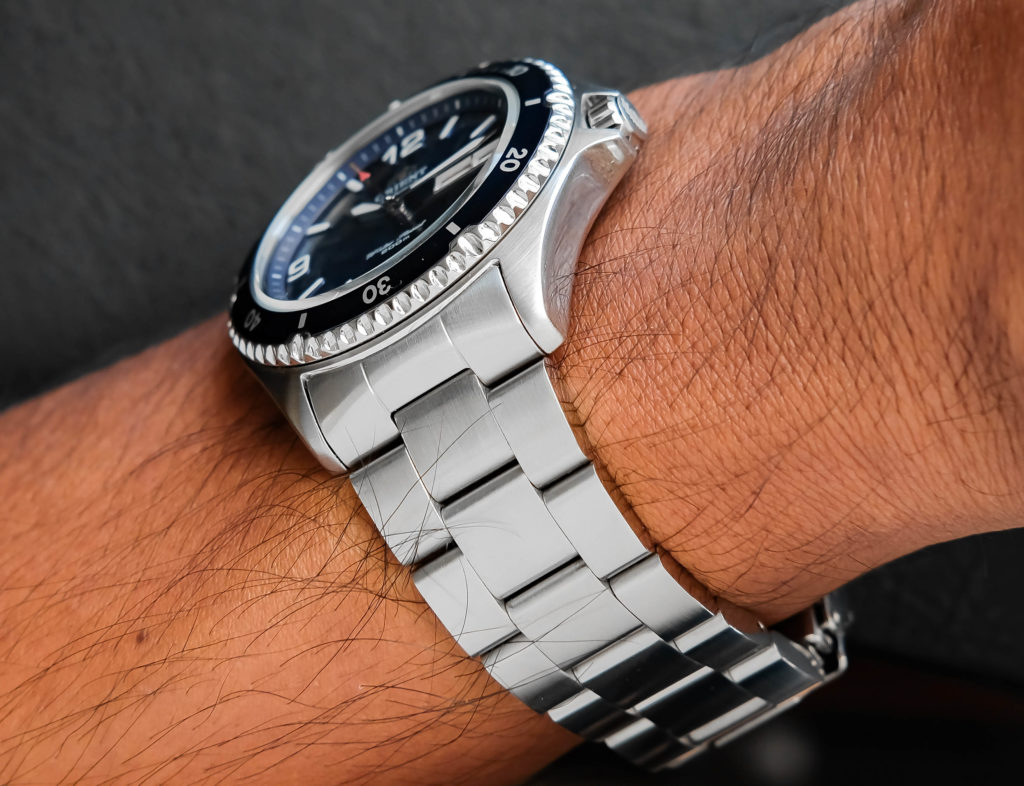
The Orient Mako II also carries a 200-meter water-resistance rating, with a screw-down crown and caseback. That gives it substantial protection for ordinary aquatic activities, although the manufacturer-specific water-resistance and diving guidance should still be respected. Its luminous material is applied to the hands and hour markers, providing useful visibility in darker conditions. During our original review, we found the lume appropriate for the watch’s price, although we acknowledged that contemporary Seiko divers could present stronger competition in this area. The applied markers and polished hands give the Mako II more decorative depth in daylight, while the Turtle’s larger, more functional dial elements create a particularly straightforward low-light experience. Both provide useful visibility, but the Seiko places greater emphasis on immediate readability.
Cost Considerations
The Seiko Turtle has traditionally occupied a particularly appealing position within the affordable Japanese dive-watch market, although current retail prices deserve some context. Our reviewed SBDY015 is an older Japanese-market model, while the closely related SRPE93 currently carries a U.S. manufacturer’s suggested retail price of $525. That provides a reasonable modern reference point without suggesting the watches are identical. The Turtle offers a recognizable case design, an automatic movement, strong legibility, and substantial water resistance, but those attributes aren’t especially unusual among contemporary Japanese divers. Much of its appeal comes from the familiarity of the design and the satisfaction of owning something connected to Seiko’s longstanding dive-watch history.
We also need to acknowledge the Turtle’s imperfections when considering its value. Our example has an improperly aligned bezel insert, and the 4R36 movement doesn’t guarantee particularly impressive accuracy from one watch to another. These shortcomings become harder to overlook as retail prices rise, particularly when competing manufacturers offer similarly capable watches for considerably less. At the same time, our review team’s experience with multiple Turtles provides an important counterpoint. The SBDY015 remained in the collection after other examples came and went, suggesting that its appeal extends beyond what a specification sheet or retail comparison can explain. That kind of long-term satisfaction is difficult to quantify, but it remains relevant when deciding which watch deserves a place in a collection.
The exact Orient Mako II FAA02002D9 we reviewed has recently been listed around $219 through third-party retailers, although prices and availability vary. That’s substantially less than the current U.S. MSRP of the Seiko SRPE93, but it isn’t a perfectly equivalent comparison between two watches sold through identical channels. Our original Mako II review discussed significantly lower prices that were available at the time, and we wouldn’t present those historical figures as though they remain current. What matters is that the Mako II continues to offer an accessible automatic-diver experience, with 200 meters of water resistance, a capable movement, and a factory bracelet that performed better than we expected.
The Orient’s value becomes particularly apparent when examining its finishing and overall balance. Its polished and brushed surfaces blend naturally, the blue sunburst dial has genuine visual depth, and the bracelet feels more substantial than its hollow end links might suggest. There are shortcomings, especially the difficult-to-grip bezel and mineral crystal, but the watch feels carefully considered rather than simply assembled to meet a low price point. We wouldn’t claim that its finish surpasses the Seiko in every respect, nor would we overlook the Turtle’s stronger visual identity. Nevertheless, the Mako II provides a satisfying combination of practicality, comfort, and presentation at a price that makes its compromises easier to accept.
The decision ultimately depends on what we value most in an affordable automatic diver. If we’re looking for a distinctive design with decades of history behind it, the Seiko Turtle has an advantage that the Orient can’t fully replicate. Its familiar case shape and exceptional legibility remain compelling even when a cheaper alternative performs many of the same tasks. But if our priorities are comfortable proportions, a well-executed factory bracelet, attractive finishing, and a lower initial investment, the Mako II makes a particularly strong case. We don’t think the price difference automatically makes Seiko difficult to recommend, but it does require the Turtle’s distinctive qualities to matter personally to the buyer.
Final Thoughts: Seiko Turtle or Orient Mako II?
The Seiko Turtle remains one of the more satisfying interpretations of a classic Japanese dive watch. Its cushion case, exceptionally readable dial, and practical strap compatibility give it a personality that feels immediately recognizable. We’ve spent years enjoying the SBDY015, and that continued appeal matters more than its relatively basic movement or imperfect bezel alignment. There’s something reassuring about a design that doesn’t seem interested in changing simply to follow contemporary trends. The Turtle isn’t the most refined affordable diver we’ve encountered, but its combination of comfort, familiarity, and functionality explains why it has remained relevant through so many variations and competing releases.
The Orient Mako II makes its argument through a different set of strengths. Its case feels compact and balanced, the blue sunburst dial is attractive without becoming excessively decorative, and the included bracelet contributes positively to the overall experience. We were particularly impressed by the attention Orient paid to finishing details that could easily have been neglected at this price. The updated F6922 movement also addressed some of the original Mako’s most frustrating functional limitations, creating a more convenient watch without completely abandoning the design’s identity. Its difficult-to-operate bezel remains an annoyance, but the overall package is considerably more satisfying than its relatively modest price might suggest.
Choosing between them requires deciding whether we value the personality of the watch or the balance of its individual components more highly. The Turtle feels like a deliberate continuation of a recognizable historical design, with an emphasis on practicality and a case shape that’s difficult to mistake for anything else. The Mako II feels like a carefully assembled everyday diver that avoids drawing too much attention to any particular feature. Both approaches work, and both have enough shortcomings to prevent an uncomplicated victory.
Our pick for overall value is the Orient Mako II, particularly for someone buying their first automatic dive watch or looking for a versatile everyday option without spending unnecessarily. Its comfortable dimensions, appealing dial, and surprisingly well-executed bracelet deliver an experience that feels remarkably complete for the money. But the Seiko Turtle would still be our recommendation for enthusiasts who specifically appreciate vintage-derived tool-watch design, generous lume, and the distinctive comfort of its cushion case. The Orient wins on the balance of affordability and refinement, while the Seiko offers something less easily measured: a recognizable identity that has kept us returning to the same watch for years.

Co-Founder and Senior Editor
Kaz has been collecting watches since 2015, but he’s been fascinated by product design, the Collector’s psychology, and brand marketing his whole life. While sharing the same strong fondness for all things horologically-affordable as Mike (his TBWS partner in crime), Kaz’s collection niche is also focused on vintage Soviet watches as well as watches that feature a unique, but well-designed quirk or visual hook.