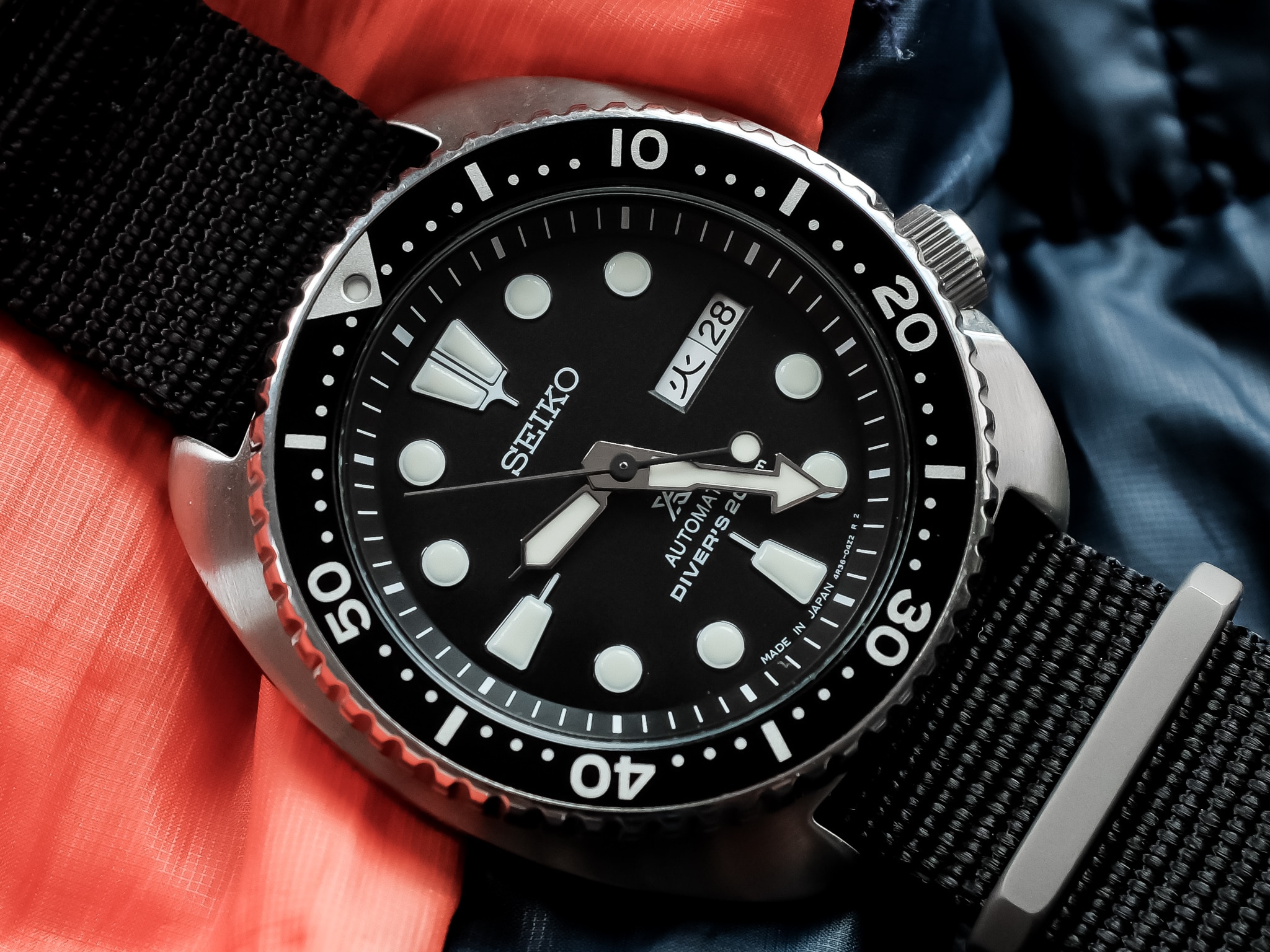
Put a Seiko Turtle and an Omega Seamaster Diver 300M side by side and the gap looks almost unfair. One is the diver you grab without thinking, toss in a bag, and wear through a rainstorm. The other spends more time under a shirt cuff than under water. Both wear the dive-watch uniform, yet they answer very different questions about what you want out of one. Price is the obvious difference here, and the least interesting one. What’s worth digging into is what the extra money actually buys once the watch is on your wrist, day after day, long after the unboxing high fades.
After more than a decade of living with divers at both ends of the price ladder, we’ve learned that a spec sheet rarely settles this kind of debate. The Turtle has earned a reputation as one of the most respected affordable divers you can buy, a genuine beater with real heritage behind it. The Seamaster carries luxury-Swiss polish and a level of enthusiast credibility most of its rivals only wish they had. So this comparison sets out to do something more useful than crown a winner. We want to understand where each watch actually belongs, and which one earns its place on your wrist for the way you really live.
Overview and Identity
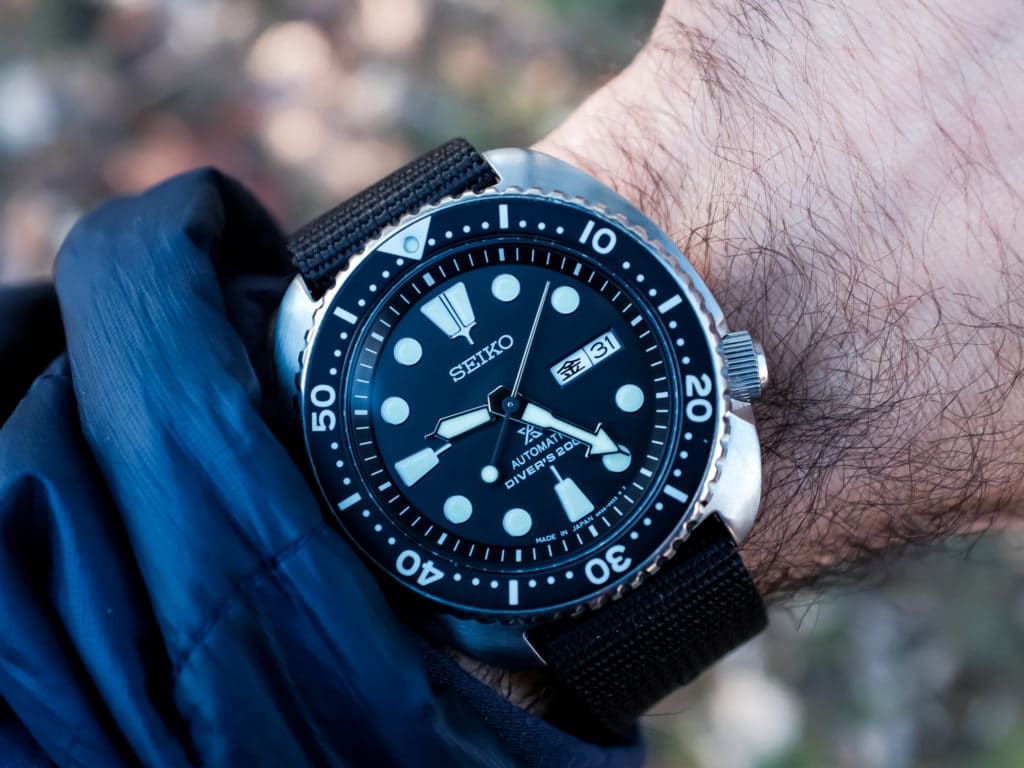
The Seiko Turtle is the watch a lot of us reach for when we want a proper dive watch and don’t want to think too hard about it. Its cushion case traces back to the 6309 divers Seiko built from 1976 to 1988, models that saw hard use on plenty of wrists, some of them military. When Seiko reissued the shape in 2016 as the SRP777, the response was immediate, and the line has held its place as one of the brand’s best values ever since. We had the opportunity to conduct a hands-on review of the Turtle, and after years in the rotation it’s the one modern Seiko diver that never left. It’s simple, tough, and easy to live with, which is exactly why it keeps showing up in enthusiast collections that also hold watches worth ten times as much.
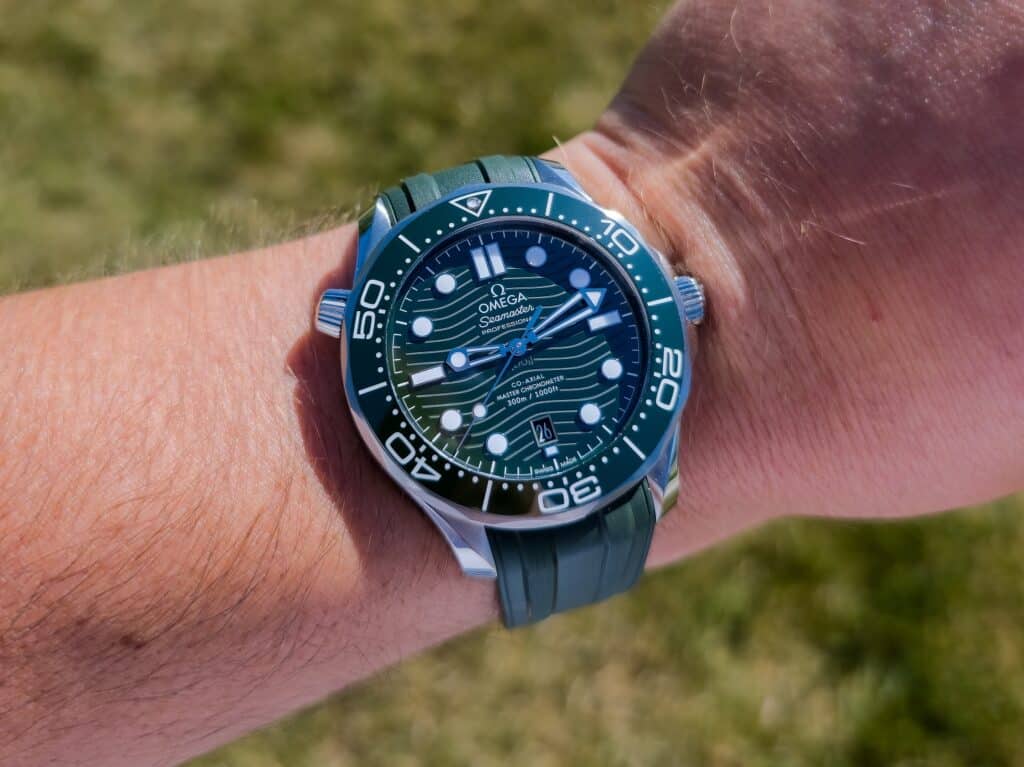
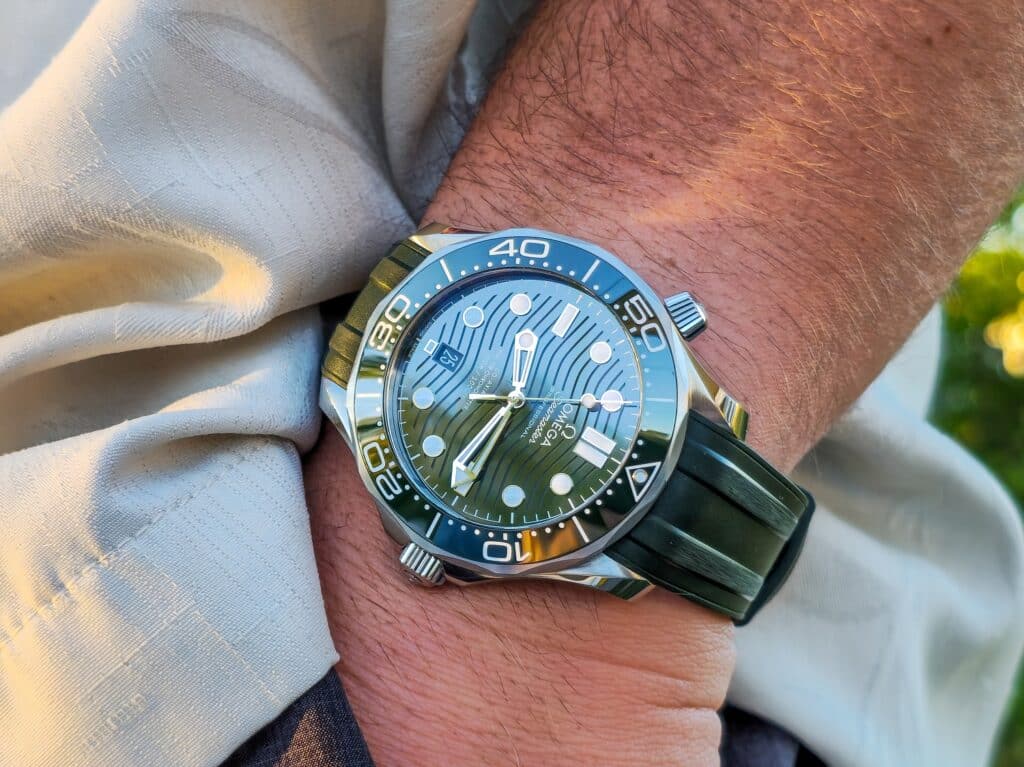
The Omega Seamaster Diver 300M carries a different kind of weight. It’s been a fixture of Omega’s catalog since 1993, it’s spent decades on James Bond’s wrist, and it wears its luxury-Swiss ambitions openly. In our hands-on review we came away describing it as more fine jewelry than unabashed tool, and that framing stuck. The wave dial, skeleton hands, twisted lyre lugs, and helium escape valve give it a design language nothing else quite copies. It’s a diver you can absolutely swim with, though it makes its strongest case sliding under a jacket sleeve. The credibility is real, earned through genuine movement engineering rather than the logo alone, even if the watch clearly enjoys being looked at.
- The Seiko Turtle is the low-stakes, go-anywhere diver with real vintage lineage, and it earns its keep by making the everyday dive-watch decision effortless.
- The Omega Seamaster Diver 300M is the luxury-Swiss diver with genuine enthusiast credibility, leaning dressy and refined where the Turtle leans rugged and easygoing.
Dial, Bracelet & Wearability: Rugged Simplicity vs Dress-Diver Polish
The Turtle’s dial is the kind of thing Seiko has quietly perfected over decades. It’s matte black, clean, and stacked with beefy Lumibrite markers that are almost impossible to misread at a glance. Legibility is the whole point, and it delivers. The JDM SBDY015 adds a small nerdy thrill with its Made in Japan text and Kanji day wheel, though we’ll admit the Kanji is arguably less functional if you can’t actually read it. The Prospex X logo drew years of complaints from purists, but in person it never bothered us. Nothing here is trying to be clever, and the dial is better for it.
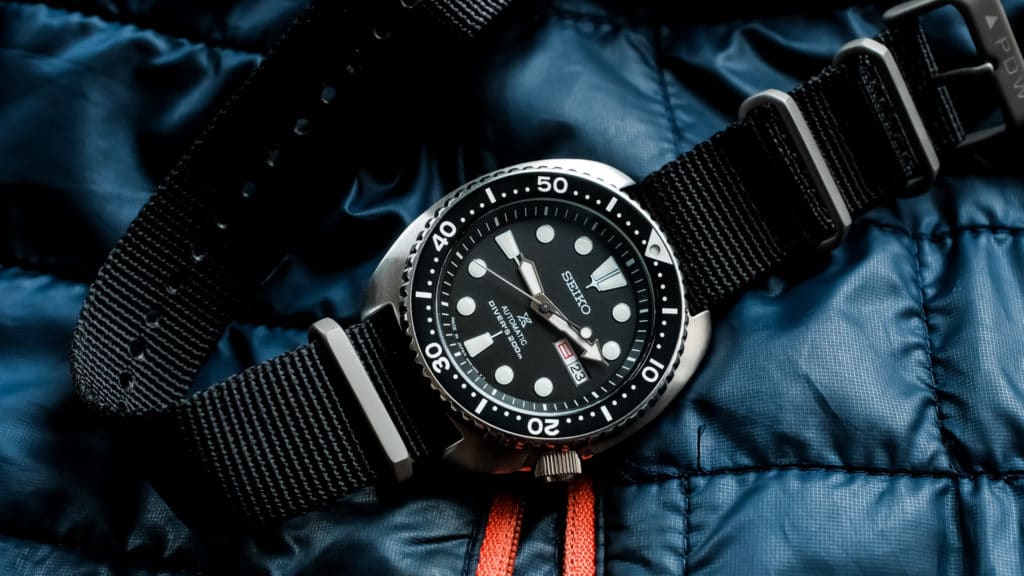
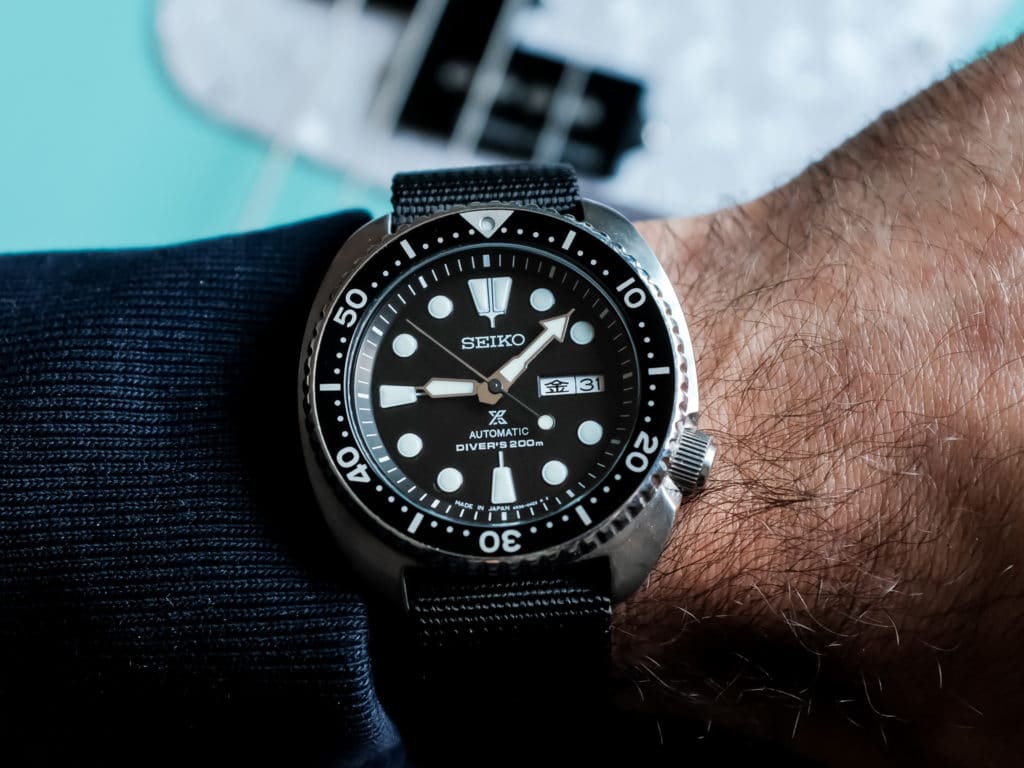
On the wrist, the Seiko magic everyone talks about is real. At 44.3mm across with a 48mm lug-to-lug and 14mm of thickness, the numbers sound big, yet the cushion case tucks in and wears smaller than the spec sheet suggests. The stock soft vented silicone strap is a real improvement over older Seiko rubber, comfortable straight out of the box. Swap it onto a NATO, though, and the watch feels like home. The bezel has a smooth, satisfying action, and its aluminum insert suits the watch’s honest character. Our one recurring gripe is the bezel-to-insert alignment, a Seiko quirk this example didn’t escape.
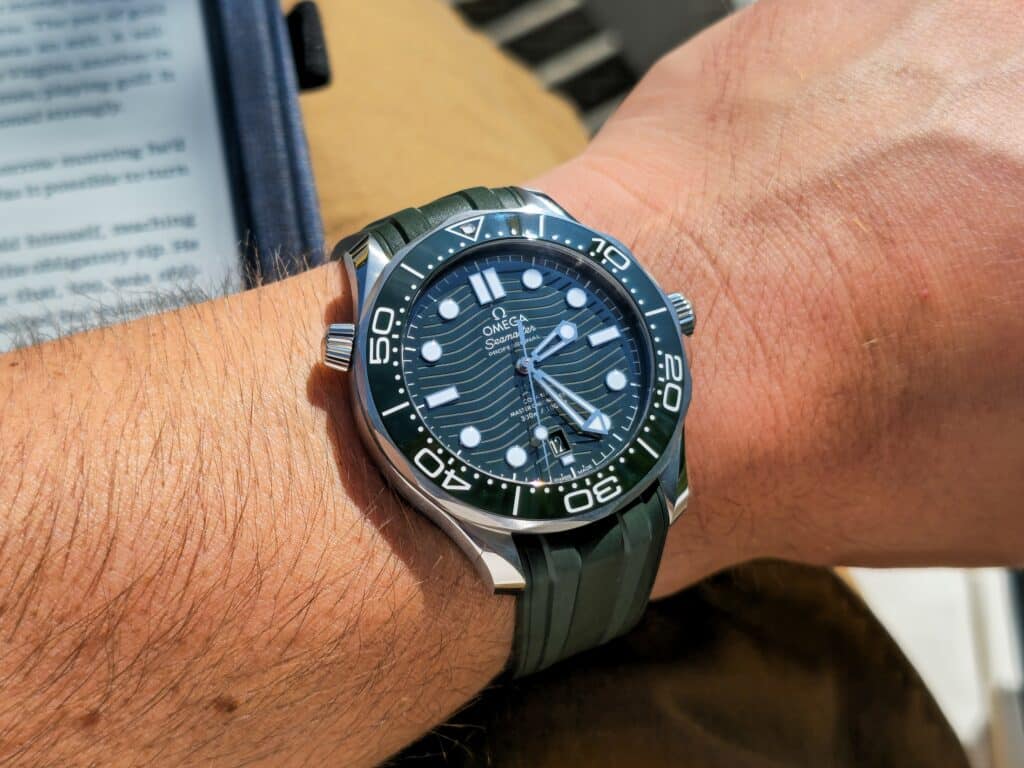
The Seamaster’s dial works in the opposite register. Omega laser-engraves the wave pattern into polished ceramic, and the result has a depth and luster closer to enamel than to a standard printed dial. On the green example we handled, the color shifts from olive drab to bright tropical depending on the light, and the date disc is color-matched so precisely it disappears into the dial. The skeleton hands are the trade-off. They look unmistakably Seamaster, but they give up a little legibility against the lumed markers, which is the sort of compromise you accept for the identity you’re buying.
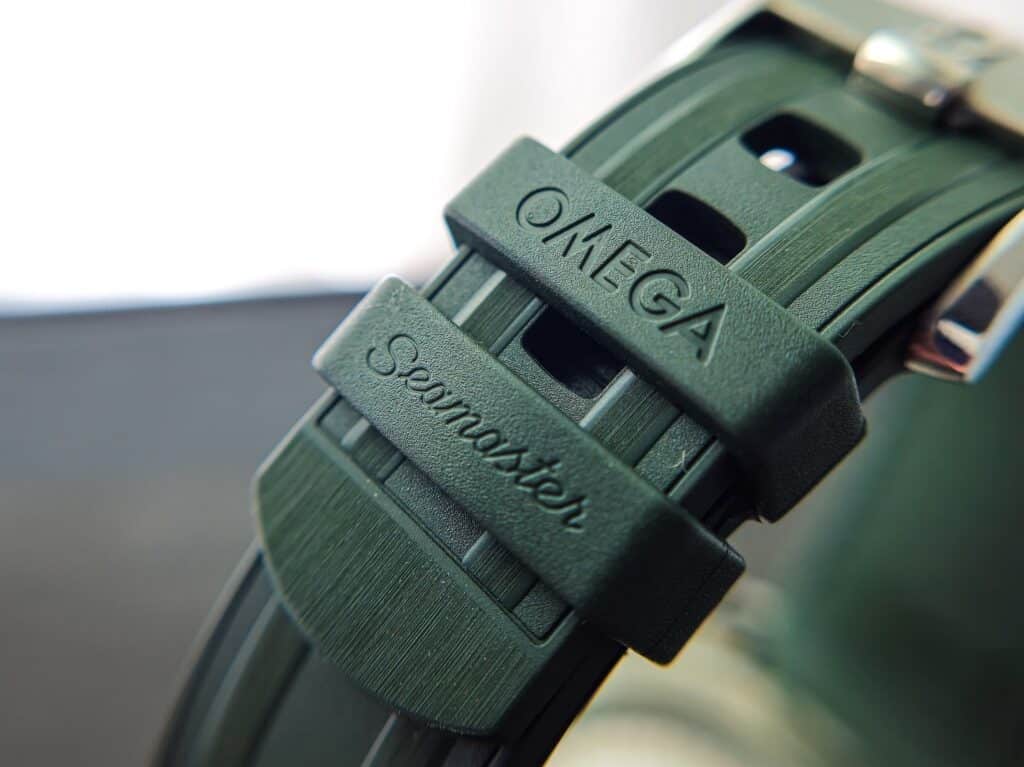
At 42mm wide, 49.9mm lug-to-lug, and 13.9mm thick, the Seamaster reads larger on paper than the Turtle in some ways and slimmer in others. What surprised us most is how thin it wears. The twisted lyre lugs are high polished on top and taper into a razor-thin bevel that makes some of the case width vanish, and the watch feels closer to 12mm thick than 14. We spent our time with it on the green rubber strap, which is soft, well finished, and a better match for the case than the bracelet. The bracelet is the weak link, heavy and oddly reluctant to taper from its 20mm lugs, so the strap is where this watch feels happiest.
- The Seiko Turtle keeps things honest with a hyper-legible dial and a cushion case that wears smaller than its numbers, though the bezel alignment is a familiar Seiko compromise.
- The Omega Seamaster pairs a ceramic wave dial and razor-thin lyre lugs with genuinely impressive wrist presence, even if the skeleton hands and lackluster bracelet ask you to make a couple of concessions.
Build Quality & Technical Approach
A shared silhouette is where the similarities end. Move past first impressions and these two watches represent completely different ideas of what makes a diver good. This is the part of the conversation where the price gap starts to explain itself, in the movement, the case finishing, the bezel action, the crystal, and all the small engineering decisions that only register after the honeymoon phase wears off.
Movements:
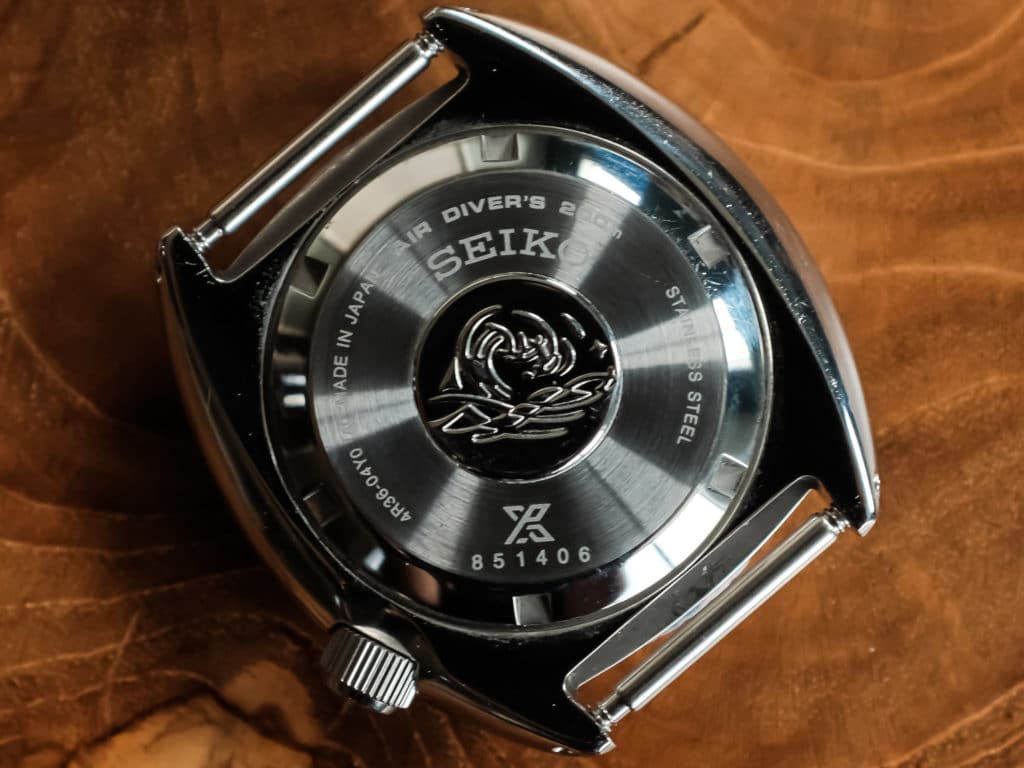
The Turtle runs Seiko’s 4R36, an in-house automatic that’s essentially a 7S26 with hacking and hand-winding added. It’s the branded sibling of the widely used NH36, which turns up in divers costing several times more, and that ubiquity is a feature rather than a knock. You get roughly 40 hours of power reserve and an accuracy rating of -35/+45 seconds per day, which sounds loose on paper. In practice it’s luck of the draw, and the one in our long-term example has comfortably beaten its own spec. It won’t win any chronometer awards, but it’s proven, serviceable almost anywhere, and easy to forget about. That’s the whole job.
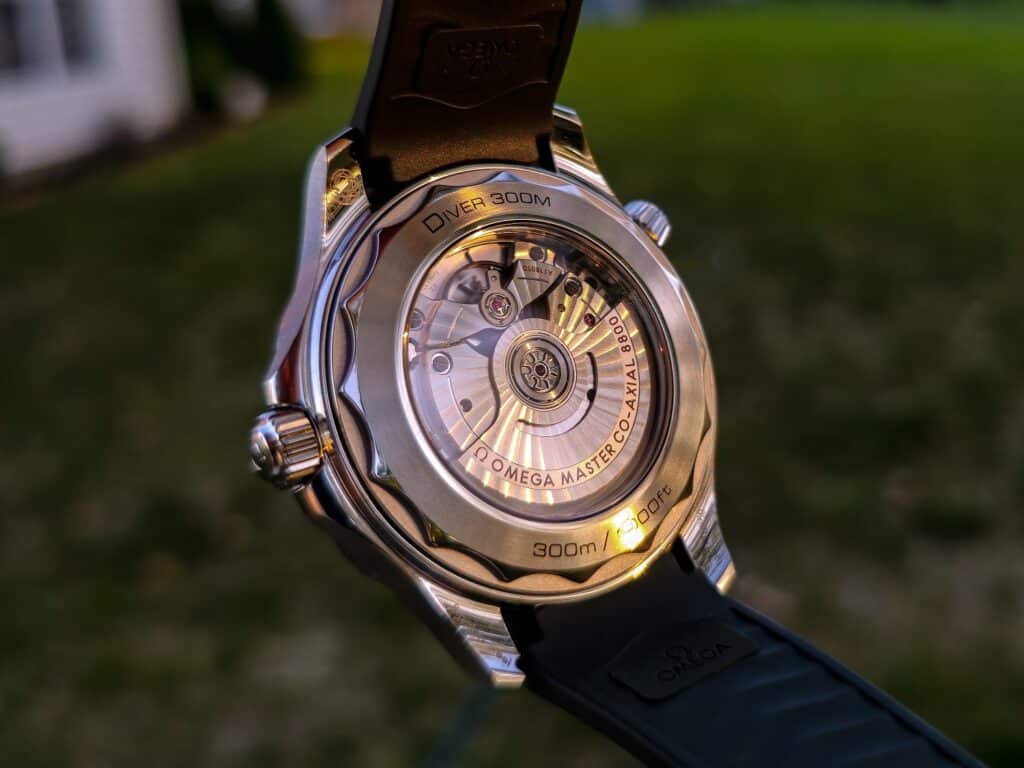
The Seamaster answers with the Calibre 8800, a Co-Axial Master Chronometer that operates in a different universe. It’s METAS certified to -0/+5 seconds a day, and the example we tested held to within a second per day. It’s anti-magnetic to 15,000 gauss, carries a 55-hour reserve, and uses the George Daniels co-axial escapement to stretch out service intervals. It also has one genuine quirk: it beats at 25,200 vph, slower than the 28,800 Swiss standard, which gives the seconds hand a slightly different cadence. The finishing is lovely through the sapphire caseback, even if it softens a touch under a loupe. This is engineering ambition you can measure, and it’s a large part of what you’re paying for.
Case Construction & Finishing:
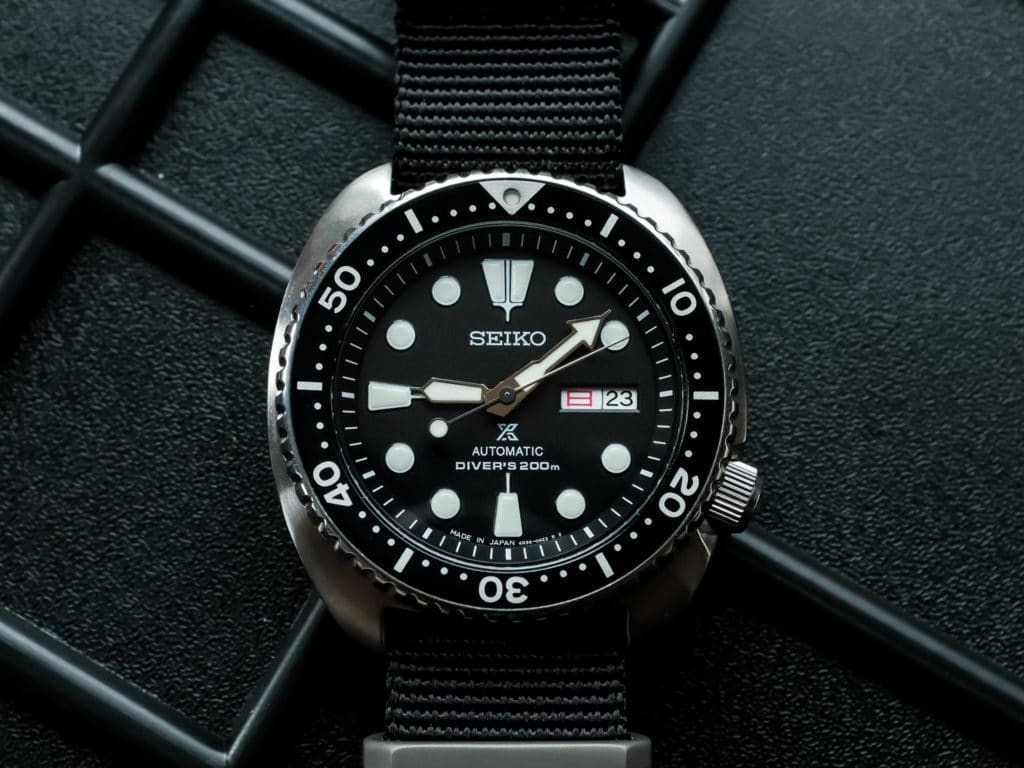
The Turtle’s case is the reason most of us consider one in the first place. Finding a well-executed classic cushion diver without a designer’s reinterpretation getting in the way is harder than it should be. The asymmetric case with its offset screw-down crown at 4 o’clock is pure 6309 DNA, and the stainless steel finishing is honest, mostly matte brushed with just enough contrast to look intentional. It’s tough, water resistant to 200 meters, and clearly built to be knocked around. Nobody’s studying this case under raking light, and it isn’t asking you to. It just gets on with the job.
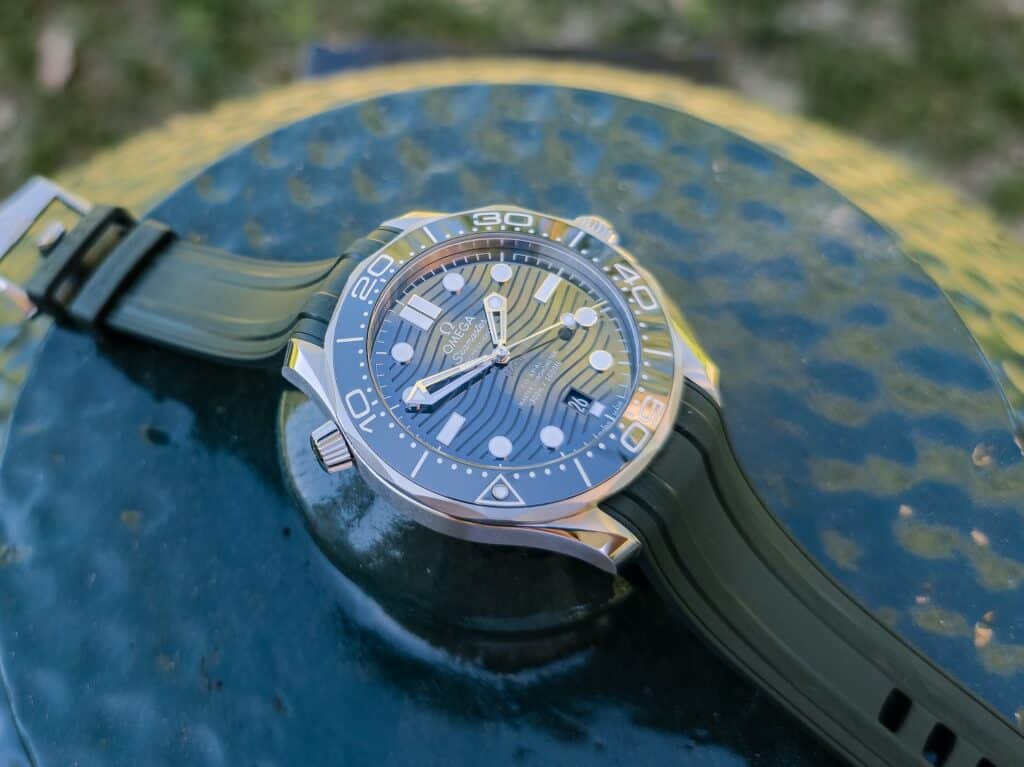
The Seamaster treats its case as a showpiece. The lyre lugs are the highlight, high polished on top and twisting into a fine bevel that runs the length of the case beneath the bezel, catching light as you move. The brushing on the flanks is fine and deep, among the best in the segment, and the art-deco gear-tooth caseback frames the sapphire display window with real care. This is finishing that makes plenty of pricier tool watches look plain by comparison. It’s the clearest place your money shows up, and unlike the movement, you don’t need a loupe to see it.
Crystals & Bezels:
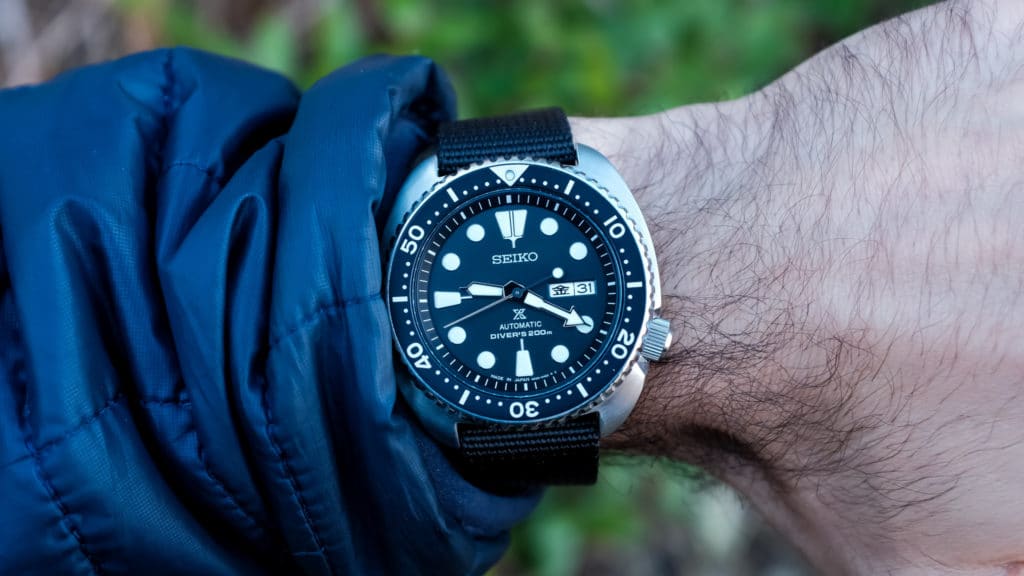
Up front, the Turtle uses Seiko’s Hardlex mineral crystal rather than sapphire. It’s more scratch-prone than sapphire, and at this price that’s a fair trade we’ve never lost sleep over. The unidirectional bezel has a smooth, pleasant action with an aluminum insert that fits the watch’s character. There’s a bit of play if you go looking for it, and the alignment issue we mentioned earlier is the one real annoyance. For timing a parking meter or a pot of coffee, it does everything it needs to and nothing it doesn’t.
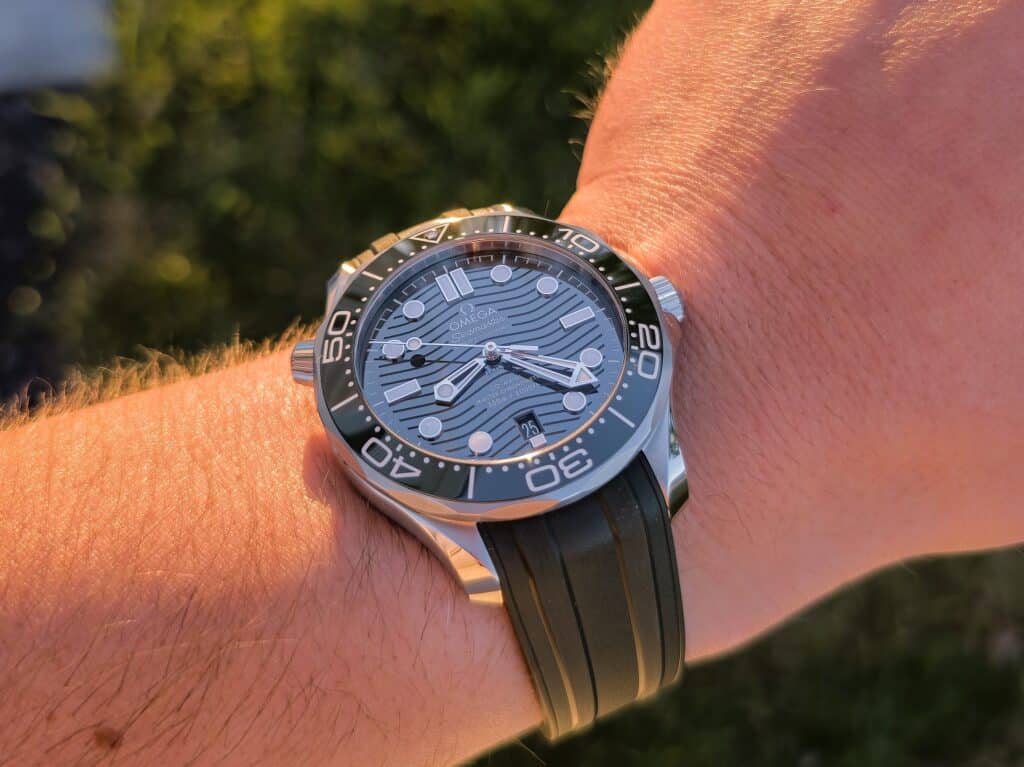
The Seamaster’s sapphire crystal is one of the best we’ve come across, with external anti-reflective coating that makes it all but disappear in most light. The catch is that outside AR can pick up fine scratches over time, so it’s worth handling with a little care. The ceramic bezel is a more mixed story. Its 60-click action is crisp with no back play, and the insert looks superb, yet the rotation itself feels oddly characterless next to a Submariner’s glide, and the scalloped edge takes concentration to grip. It looks the part more convincingly than it performs.
Water Resistance & Lume:
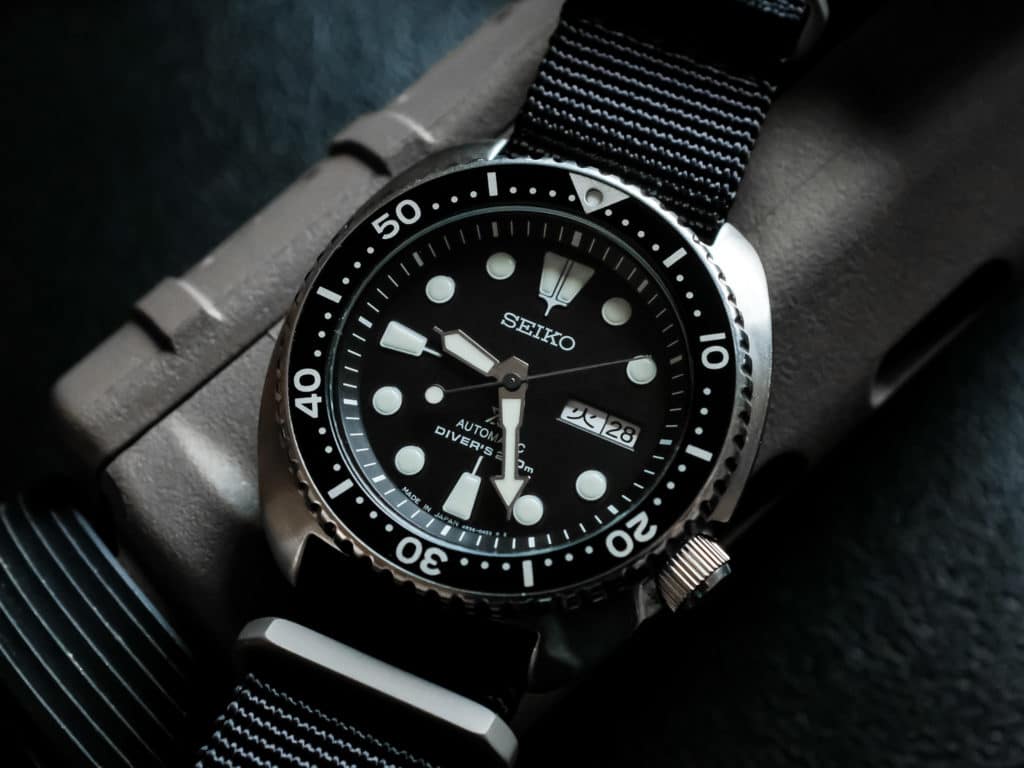
Both watches are rated for real water, and both back it up. The Turtle’s 200 meters, screw-down crown, and screw-down caseback have never given us a reason to hesitate in the rain or the pool. The lume is classic Seiko, a generous Lumibrite application that lights up bright and reads easily in the dark, arguably brighter at first charge than the Omega. It’s the kind of no-drama performance that made these divers a default recommendation in the first place.
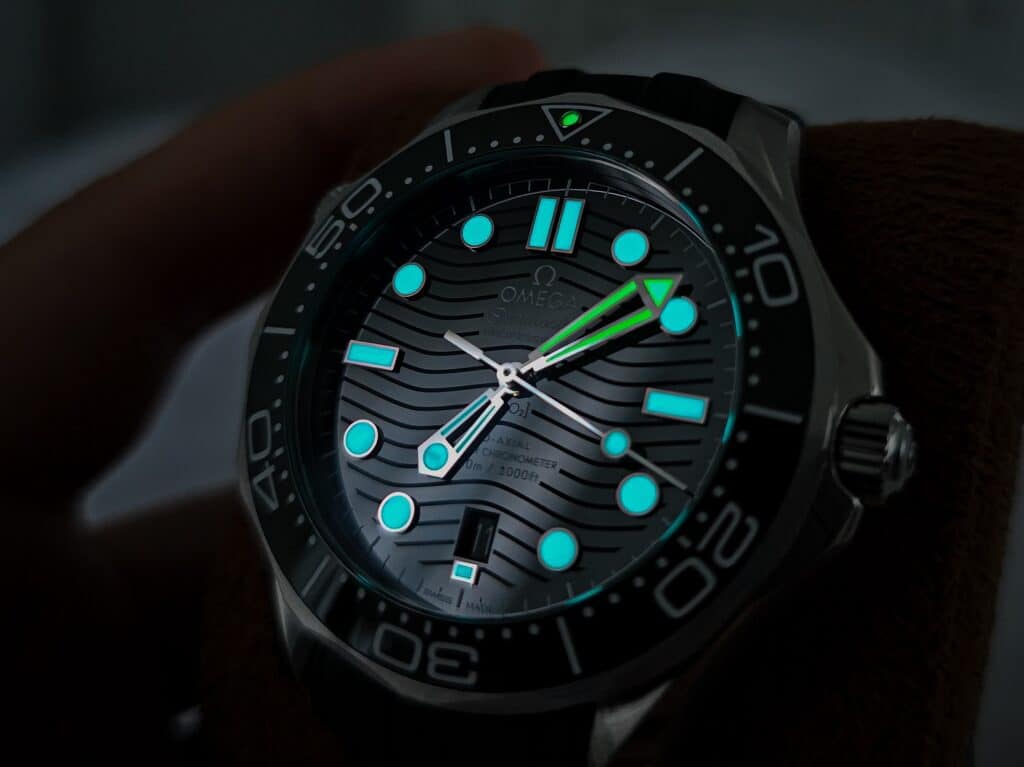
The Seamaster carries 300 meters of resistance behind a screw-down crown and that signature helium escape valve at 10 o’clock, a tool-watch flourish on a fairly dressy diver. The lume is more about artistry than output, with blue on the markers and hands and a green minute hand and bezel pip that make orientation easy. It glows with a distinctive character, though it’s dimmer and shorter-lived than a Seiko’s, which tells you where each brand put its priorities.
- The Seiko Turtle nails the fundamentals, pairing a proven 4R36 with a rugged 200-meter case, honest finishing, and lume that still outshines watches many times its price.
- The Omega Seamaster earns its premium through measurable engineering and showpiece finishing, from the METAS-certified Calibre 8800 to the lyre-lug case, with a characterless bezel the main asterisk.
Cost Considerations
The Turtle has always lived in easy-decision territory. The current SRPE93 lists at $525, and street prices routinely land a good bit lower, often somewhere from $350 to $450 depending on where you look. At that money, the value case barely needs making. You’re getting authentic dive-watch heritage, a proven automatic, and 200 meters of water resistance for roughly the cost of a nice dinner for four. Even if it isn’t perfect, the compromises are small enough that buyer’s remorse rarely enters the picture. It’s one of the safer bets in the affordable dive-watch space, full stop.
The Seamaster sits at the other end of the ledger. As we reviewed it, the green model ran $5,600 on rubber and $5,900 on the bracelet, and Omega’s prices have climbed since, so the current figure is worth confirming before you commit. Either way, you’re spending somewhere in the neighborhood of a small used car for a watch that leans dressy. Unlike the Rolex it’s often cross-shopped against, the Seamaster is relatively easy to walk in and buy, which counts for a lot. What you’re paying for is refinement, engineering, and a genuinely distinctive identity, and whether that’s worth it depends entirely on how much those things matter to you.
Final Thoughts: Does the Refinement Earn Its Keep?
After time with both, the honest takeaway is that the extra money doesn’t buy a watch that tells time meaningfully better. The Turtle and the Seamaster both do the core job with room to spare. What the Omega buys is refinement you feel rather than read on a spec sheet: the razor-thin lyre lugs, the ceramic dial, the silky crown, the movement you can trust to a second a day, and the design identity nothing else replicates. Those things are real, and living with the watch makes them obvious. Whether they justify a gap this wide is the harder question.
For most people, most of the time, we’d point them straight at the Turtle. It captures the part of the dive-watch experience that makes you want to strap one on in the morning, and it does it for a few hundred dollars without asking you to baby it. The Seamaster is the more impressive object by almost every measure, though impressive and sensible aren’t always the same watch. That’s the trade-off worth sitting with.
So here’s where we land:
- Choose the Seiko Turtle if you want the strongest overall value and a genuine go-anywhere beater. It delivers far more of the everyday dive-watch experience than its price suggests, and it’s the one we’d hand to most enthusiasts without hesitation.
- Choose the Omega Seamaster Diver 300M if refinement, movement engineering, and a singular design identity genuinely move you, and you’re comfortable paying luxury-Swiss money for a diver that leans dressier than it looks.
The refinement is real, and we felt it every time we handled the Seamaster. But you don’t have to pay for it to enjoy wearing a great dive watch every single day. The Turtle proves that much on its own, which is probably why it’s still here after all the flashier watches came and went. The Seamaster is unquestionably the better-made watch. For most enthusiasts, though, the Turtle is the better buy.

Co-Founder & Senior Editor
Michael Peñate is an American writer, photographer, and podcaster based in Seattle, Washington. His work typically focuses on the passage of time and the tools we use to connect with that very journey. From aviation to music and travel, his interests span a multitude of disciplines that often intersect with the world of watches – and the obsessive culture behind collecting them.
I have both but the turtle just feels better on my wrist.And to tell you the truth when I wear the Seamaster I’m constantly aware not hit it on door frames
That’s always part of the beauty of rocking a nice budget-friendly diver, Geoff.
I loved the blue Seamaster 300M I bought so much, I went out and bought the green one too!
I’m jealous 😉