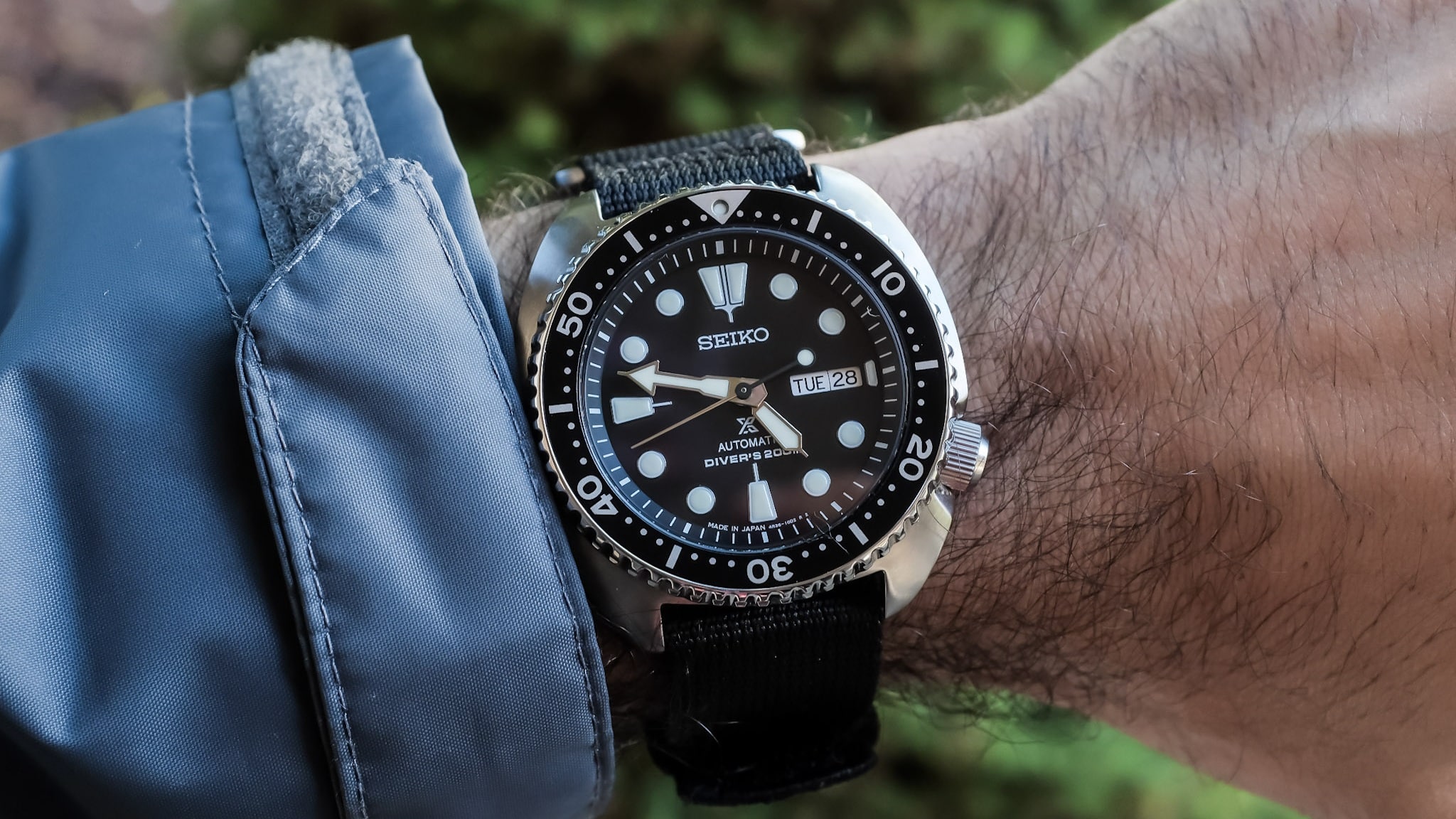
Seiko has enjoyed a pretty comfortable position in the affordable dive watch category for years, and the Turtle is a big reason why. Even with the brand’s seemingly endless parade of new Prospex models, special editions, and increasingly expensive divers, the Turtle continues to make a strong argument for keeping things simple. It’s relatively inexpensive, easy to live with, and has enough history behind it to satisfy collectors who care about that sort of thing. We’d probably have a much easier time discussing affordable dive watches if Seiko would stop making so many other versions of essentially the same thing.
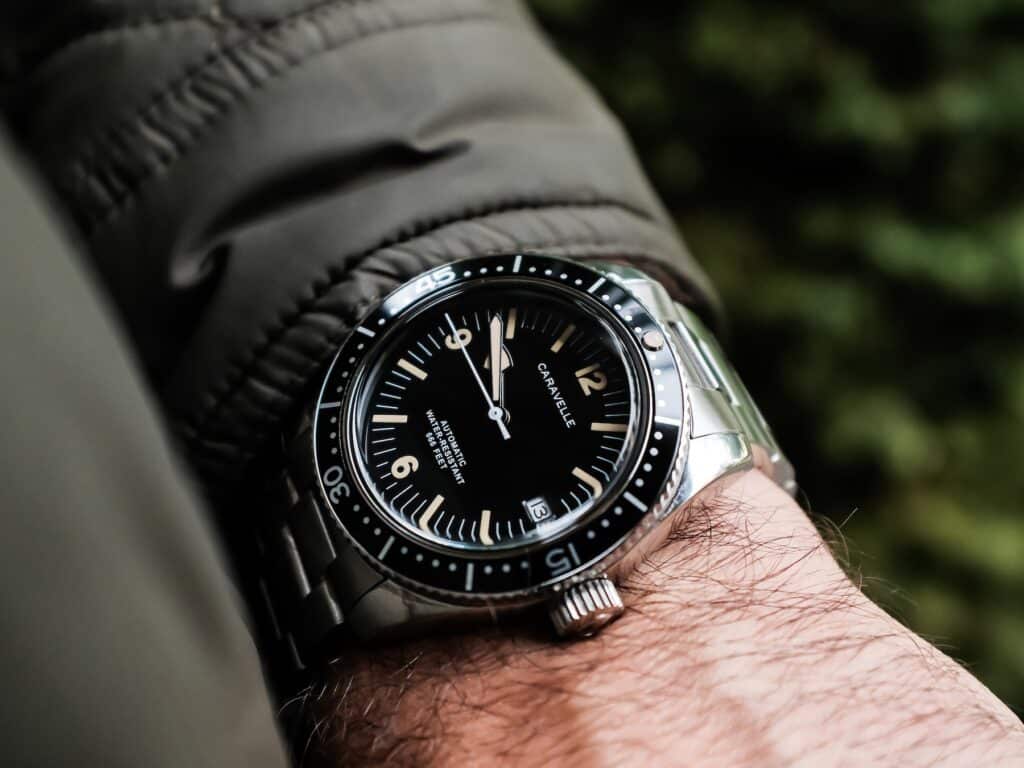
But Bulova has been digging through its own archives lately, and the revived Caravelle Sea Hunter gives us a reason to reconsider that familiar recommendation. At $425, it brings a smaller 39mm case, an automatic movement, and 200 meters of water resistance to a category Seiko has dominated for years. We’ve reviewed both watches independently, although our experiences with them have been quite different. The Turtle has survived several rounds of buying, selling, and eventually finding its way back into the collection, while the Sea Hunter was purchased in hopes of finding a black-dial diver on a bracelet worth keeping. With both watches offering their own take on the affordable automatic diver, we’re interested in figuring out whether Bulova has done enough to give us a reason to choose something other than the Turtle.
Overview and Identity
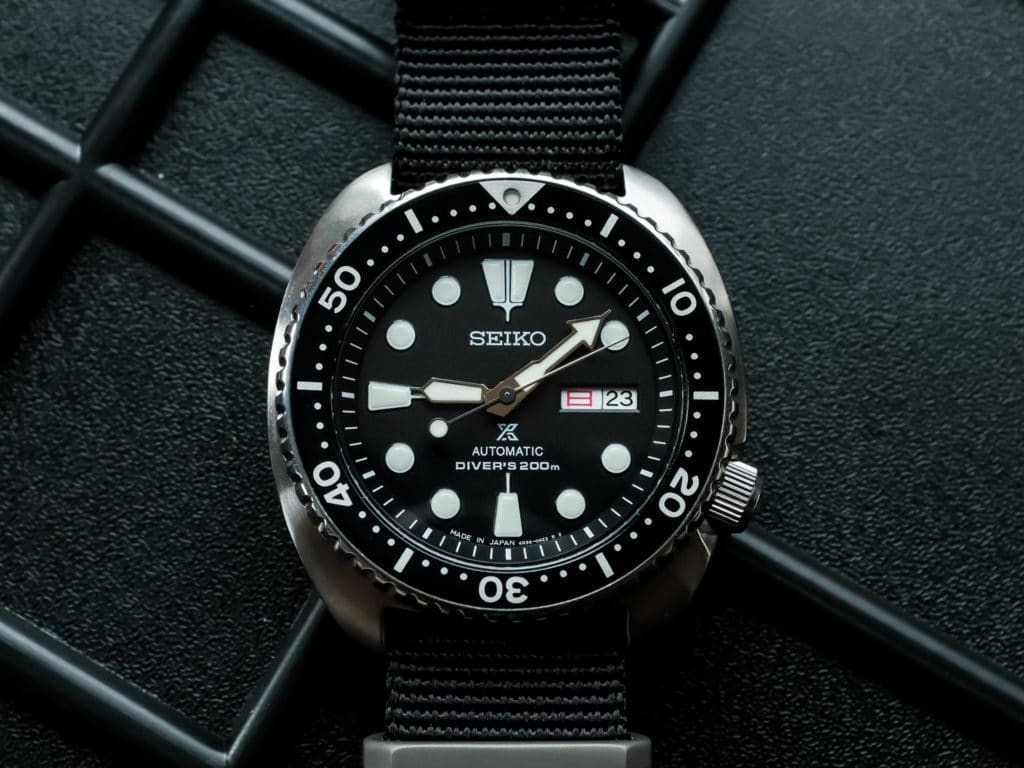
The Seiko Turtle barely needs an introduction among dive watch enthusiasts. The modern collection traces its design back to the 6309-series divers manufactured between 1976 and 1988, with Seiko reviving the familiar cushion-shaped case in 2016. The original watches became favorites among divers, military personnel, and collectors, and their modern counterparts have spent the last decade building a following of their own. Our Turtle review focuses on the SBDY015, a Japanese domestic market version of the SRP777. It’s mechanically and visually close to the standard black-dial Turtle, aside from details such as the Japanese market markings and Kanji day wheel. We’ve gone through several examples of the Turtle over the years, and the SBDY015 was the one that finally stayed. Make of that what you will, but we generally consider it a good sign when we stop selling the same watch back to ourselves.
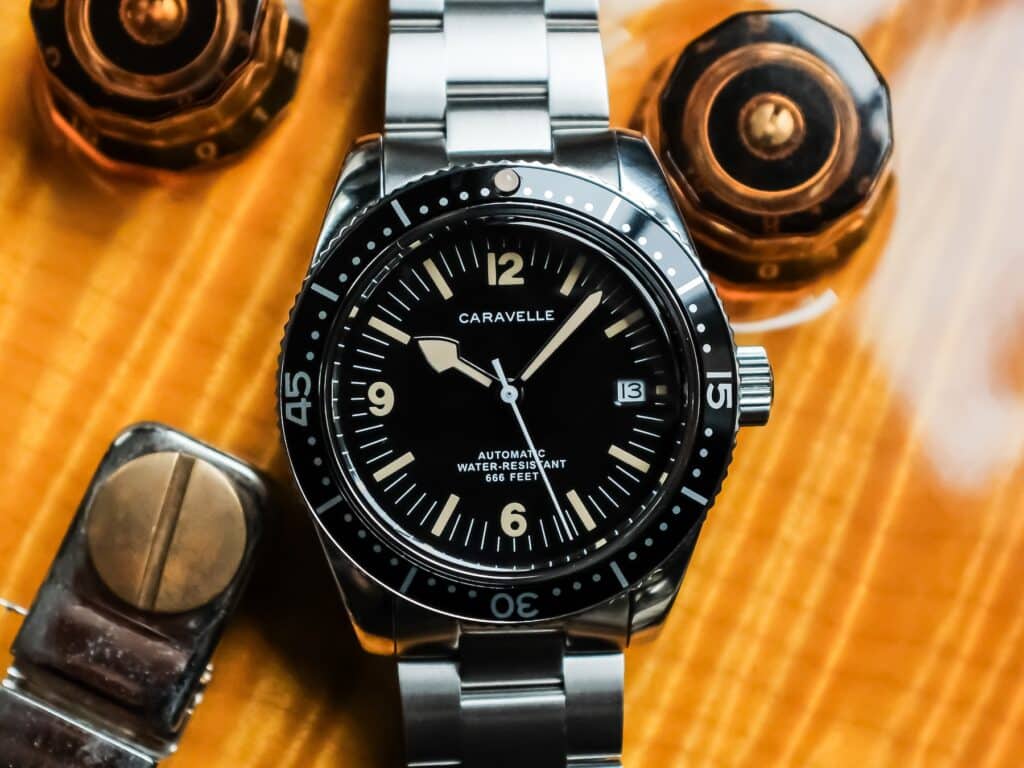
Caravelle isn’t exactly a name that comes up often when we’re discussing affordable dive watches. Bulova introduced the brand in 1962, positioning it as a more accessible alternative to its main collection. By 1968, Caravelle had become the largest-selling jeweled-movement watch manufacturer in the United States, which makes its relative obscurity among modern watch enthusiasts a little amusing. For a company that was once moving that many watches, you’d think we’d hear more about it. The original Sea Hunter models were part of that history, with some carrying the familiar 666-foot depth rating associated with Bulova’s older dive watches. Rather than producing a painstaking reproduction of one particular reference, Bulova has taken the general appearance of those early designs and adapted it into something more contemporary. The result (we we reviewed hands-on) still looks like a watch that could have been pulled from a decades-old catalog, although thankfully we aren’t dealing with the mechanical uncertainties or inflated asking prices that sometimes accompany actual vintage divers.
For our purposes, that makes the Sea Hunter more interesting than another inexpensive watch trying to look vaguely like a Submariner. Bulova has enough history of its own to avoid borrowing someone else’s, and we’re glad to see the company using it.
Dial and Straps/Bracelets: Seiko’s Familiar Formula vs Vintage Caravelle Styling
The Turtle takes a conventional approach to its dial, and we’re not convinced that’s a disadvantage. Seiko has been producing highly legible dive watches for decades, and the familiar combination of large luminous markers, broad hands, and a matte black background remains difficult to criticize. There’s nothing particularly delicate about the appearance, but that’s part of the attraction. We can read the time immediately, and the dial never seems to demand more attention than necessary. Our SBDY015 adds a few details that make it particularly enjoyable from a collector’s perspective. The Japanese domestic market printing and Kanji day wheel give the watch a little extra character, even if the latter isn’t especially useful for anyone who doesn’t read Japanese. We also have no objection to the Prospex logo, despite the amount of digital ink that’s been spilled complaining about it. There are certainly worse things Seiko could put on a dial.
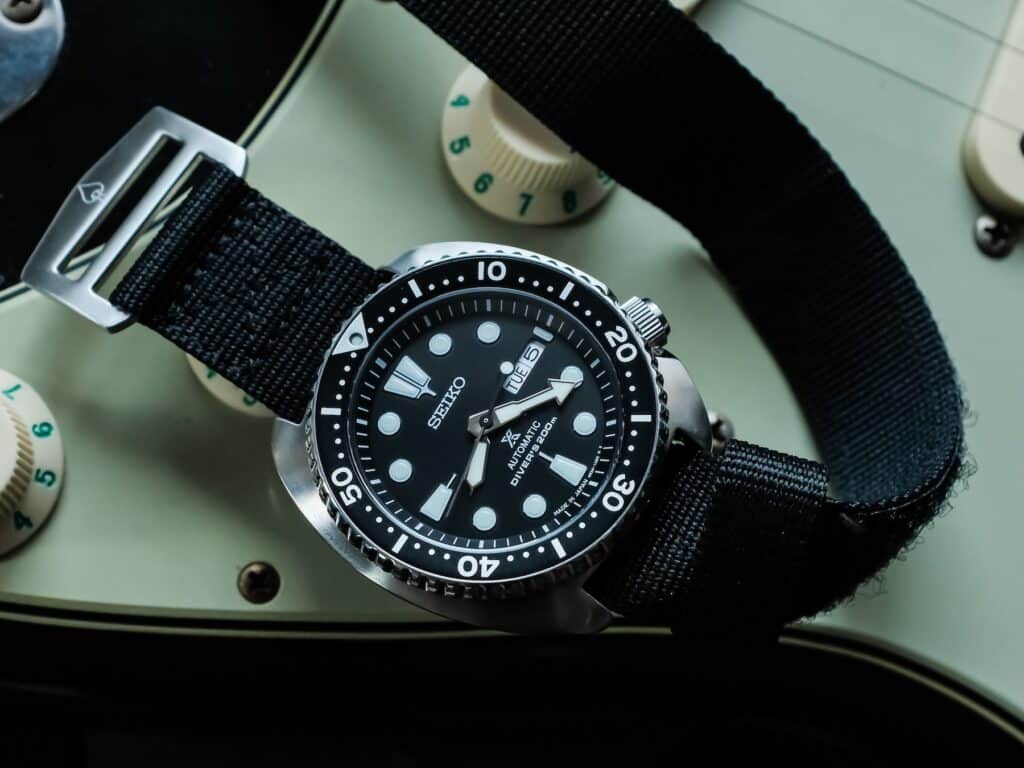
The standard Turtle is commonly found on Seiko’s silicone dive strap or a stainless steel bracelet, depending on the reference. Our hands-on experience has primarily involved the silicone strap and a variety of aftermarket NATO options, so we won’t pretend to have an informed opinion about the factory steel bracelet. The silicone strap itself is comfortable enough, but the Turtle is one of those watches that almost encourages experimentation. Its 22mm lug width opens up plenty of aftermarket options, and the cushion case looks surprisingly natural on different colors and materials. We’ve worn ours on everything from conventional NATO straps to titanium-hardware alternatives, and very few combinations have felt out of place.
The Caravelle Sea Hunter has one of the more unusual dials we’ve encountered on a contemporary diver at this price. The handset is the immediate attraction, with shapes that distinguish it from the familiar Mercedes, sword, and arrow hands that seem to populate half the affordable dive watch market. It’s a small distinction, but one we appreciate. The black dial provides a straightforward background, while the relatively discreet date window offers some everyday practicality without drawing too much attention to itself. Unfortunately, Bulova also decided the Sea Hunter needed a fairly heavy application of vintage-colored lume. We’re not automatically opposed to artificially aged luminous material, although we’re becoming increasingly selective about where it works. In this case, the brown coloring feels unnecessary. That said, the rest of the design has enough personality to keep the lume from becoming a fatal distraction. The Sea Hunter looks like its own watch, and that’s more than we can say for some of the affordable divers we’ve encountered over the years.
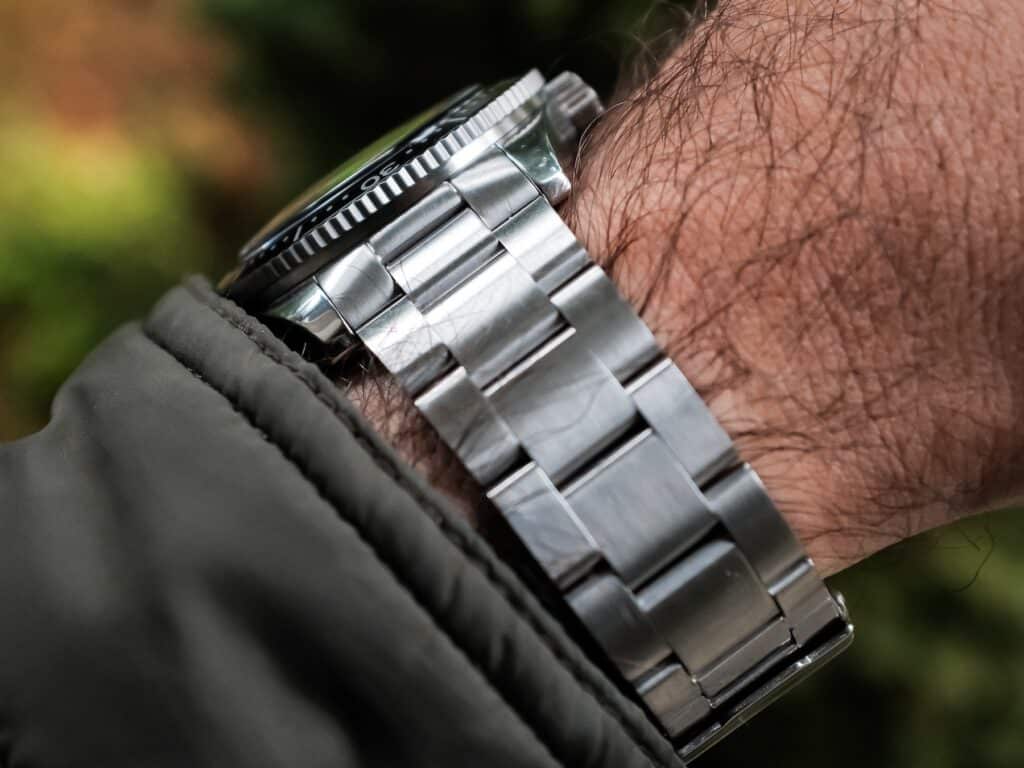
Bulova also made several sensible decisions with the bracelet. It tapers from 20mm to 18mm, features solid end links, and includes multiple micro-adjustment positions along with a folding dive extension. Quick-release spring bars are another welcome addition, particularly for anyone who enjoys swapping straps without turning the process into a test of patience. The bracelet isn’t especially sophisticated. There’s some looseness and noise when handling it, and nobody is going to confuse it with the bracelet on a substantially more expensive Swiss diver. But at $425, we’re more concerned about whether it fits properly and remains comfortable than whether it sounds expensive when we shake it around. Besides, if bracelet refinement is your highest priority, this probably isn’t the price bracket where you’ll find complete satisfaction.
The Caravelle has the more interesting bracelet package on paper, especially with those quick-release spring bars. The Seiko, however, has become one of our favorite watches to experiment with, and we’re not convinced we’d enjoy it quite as much if it spent its entire life on the original strap.
Build Quality & Technical Approach
There’s a tendency to become overly concerned with specifications whenever two affordable automatic watches occupy the same general price range. We understand the temptation. Comparing calibers, crystal materials, and water-resistance ratings is easy, and it gives us something to argue about before either watch has spent a minute on the wrist. But inexpensive mechanical divers have always involved compromises, and the more interesting question is which of those compromises we can comfortably ignore after the novelty wears off.
Movements:
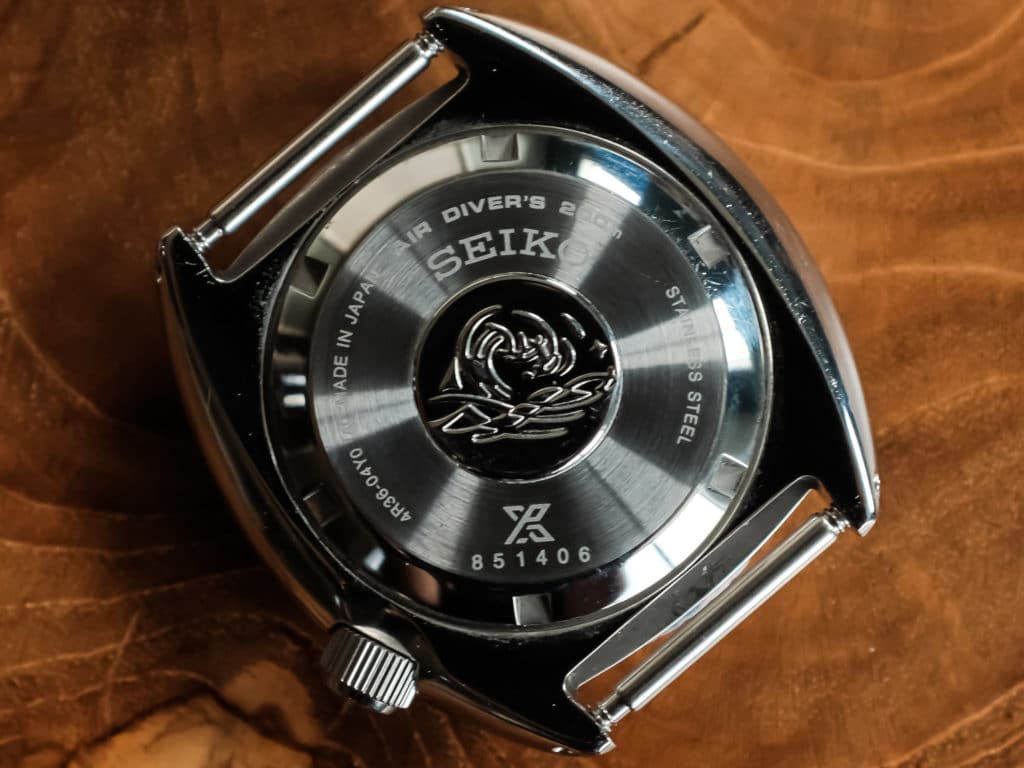
Seiko’s 4R36 isn’t exactly an exotic alternative. This automatic caliber operates at the same 21,600 vibrations per hour and provides roughly 41 hours of power reserve, along with hacking seconds, hand-winding, and a day-date complication. Its published accuracy tolerance of minus 35 to plus 45 seconds per day is actually wider than the Miyota’s, which might surprise buyers expecting Seiko to offer the more impressive movement on paper. Of course, published tolerances and individual timekeeping results are two different things. Our Turtle has performed considerably better than Seiko’s stated range would lead us to expect, although we’re familiar enough with the 4R family to know that results can vary from one example to the next.
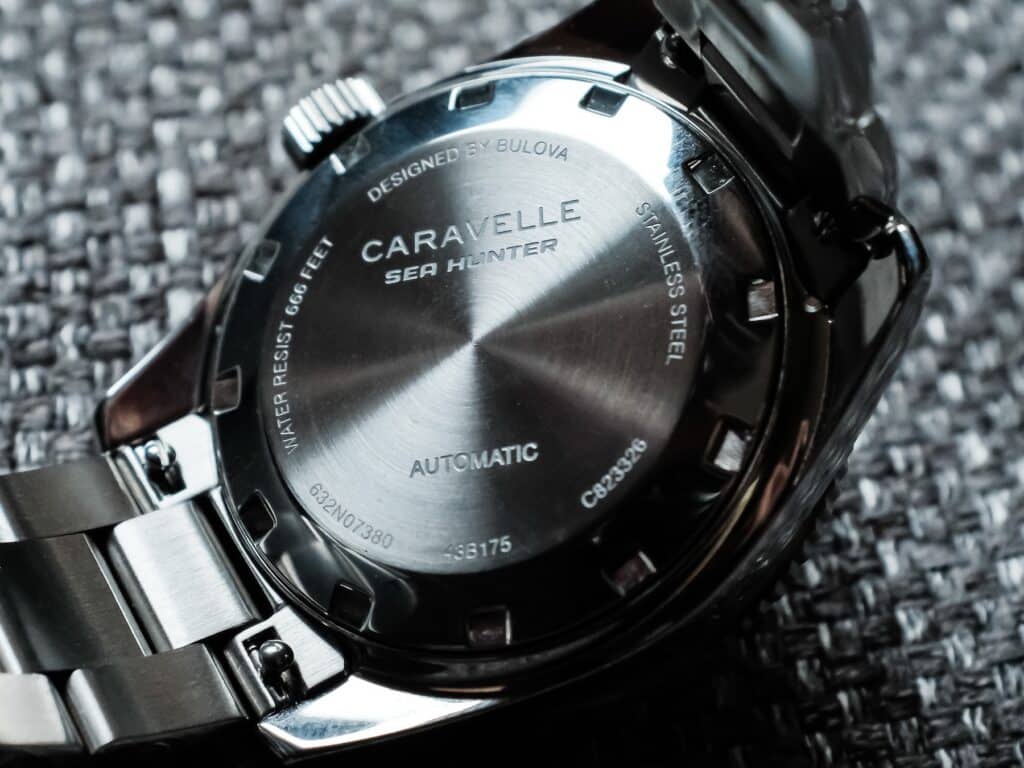
Inside the Caravelle Sea Hunter is the Miyota 8215-33E automatic movement, a 21-jewel caliber operating at 21,600 vibrations per hour. It offers approximately 42 hours of power reserve, hacking seconds, and a date complication, with a published accuracy range of minus 20 to plus 40 seconds per day. The movement delivers the functionality we’d expect from an automatic dive watch, and the power reserve is perfectly adequate if you’re wearing it regularly. Leave it sitting for a couple of days and you’ll probably need to reset it, but anyone with a collection of affordable automatics should already be well acquainted with that routine. Our only real complaint with the Miyota movement is the rough, somewhat crunchy feeling when winding it manually through the crown. It’s not a dealbreaker, but it does make the movement feel rather inexpensive.
Neither movement gives us a particularly strong reason to choose one watch over the other. We’d welcome better regulation and a more pleasant winding experience, but the mechanical differences here aren’t substantial enough to determine the outcome of the comparison. If movement specifications are your primary concern, there are probably more rewarding arguments to have at a watch meetup.
Case Construction, Finishing & Wearability:
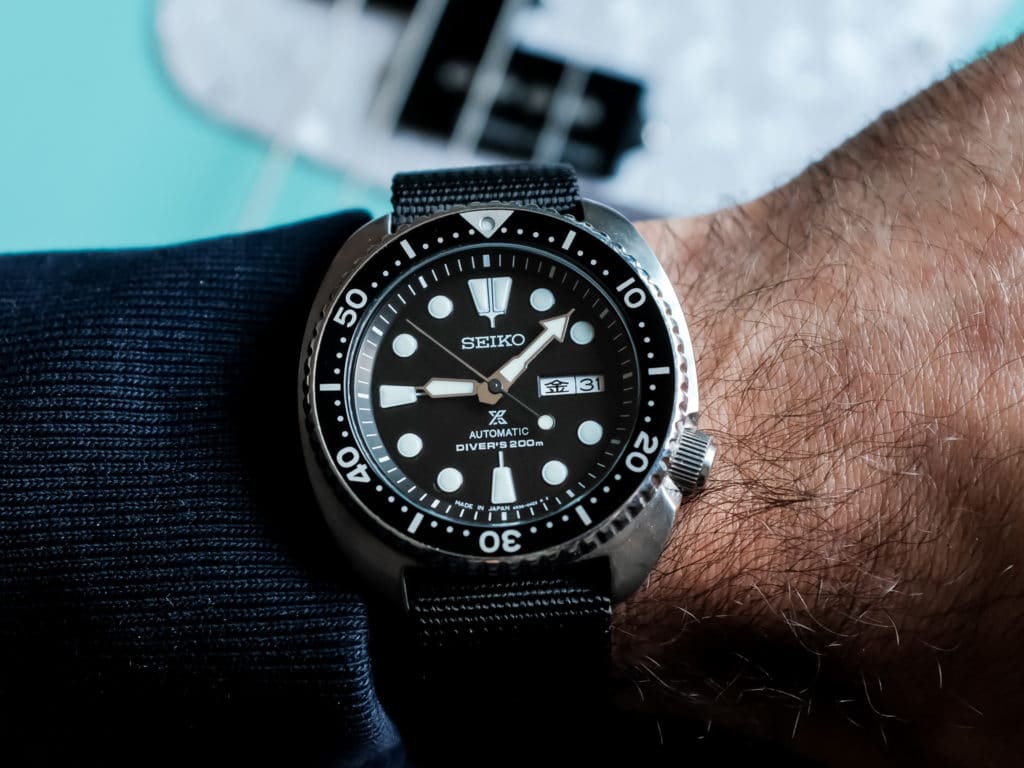
Seiko’s cushion-shaped diver measures 44.3mm across, approximately 48mm lug to lug, and 14mm thick. On paper, the Turtle sounds enormous compared with the Sea Hunter. In practice, we’ve found it remarkably comfortable on a 6.75-inch wrist. A lot of that comes down to the case geometry. The Turtle’s relatively short lugs and broad cushion profile help distribute its size across the wrist, while the four o’clock crown avoids the awkward protrusion we sometimes encounter with conventional three o’clock arrangements. It’s still a large watch, and we aren’t going to pretend it magically becomes a 38mm diver once worn. But its dimensions are considerably less intimidating than they appear in a spec chart.
Seiko did alter the case slightly from the original 6309 design, including lengthening the lugs. We would have liked to see the more compact vintage proportions preserved, although the modern interpretation remains one of our favorite affordable Seiko case designs.
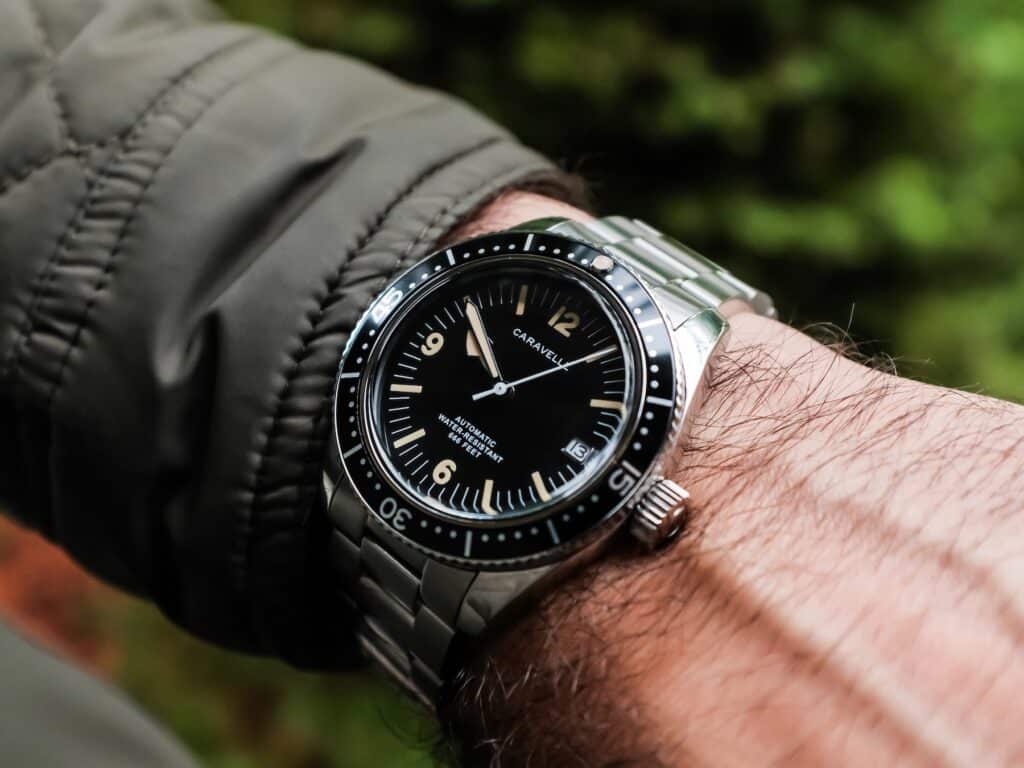
The Caravelle Sea Hunter measures 39mm in diameter, with a 45.5mm lug-to-lug distance. Those are appealing dimensions for a vintage-inspired diver, particularly when so many contemporary models seem determined to push well beyond 42mm. The case has a fairly simple stainless steel construction with polished surfaces that fit the watch’s period styling. It’s hardly elaborate finishing, but we wouldn’t expect elaborate finishing on something selling for $425. The slightly awkward part is its thickness. At 14.3mm, the Sea Hunter is taller than we might expect from a watch with such a compact diameter. Much of that visual height comes from the domed crystal, and the relatively small footprint means there’s a noticeable concentration of weight on the wrist. Our review team found that the proportions worked better in practice than those measurements suggest, particularly on a smaller wrist, but it’s worth remembering that a 39mm diameter doesn’t automatically guarantee a slim or unobtrusive watch.
Both watches make a reasonable argument for ignoring diameter measurements in isolation. The Caravelle gives smaller-wristed collectors a more compact starting point, while the Turtle demonstrates just how much case shape can influence wearability. We’d encourage anyone deciding between them to pay more attention to the complete dimensions than the number printed next to the diameter.
Crystals and Bezels:
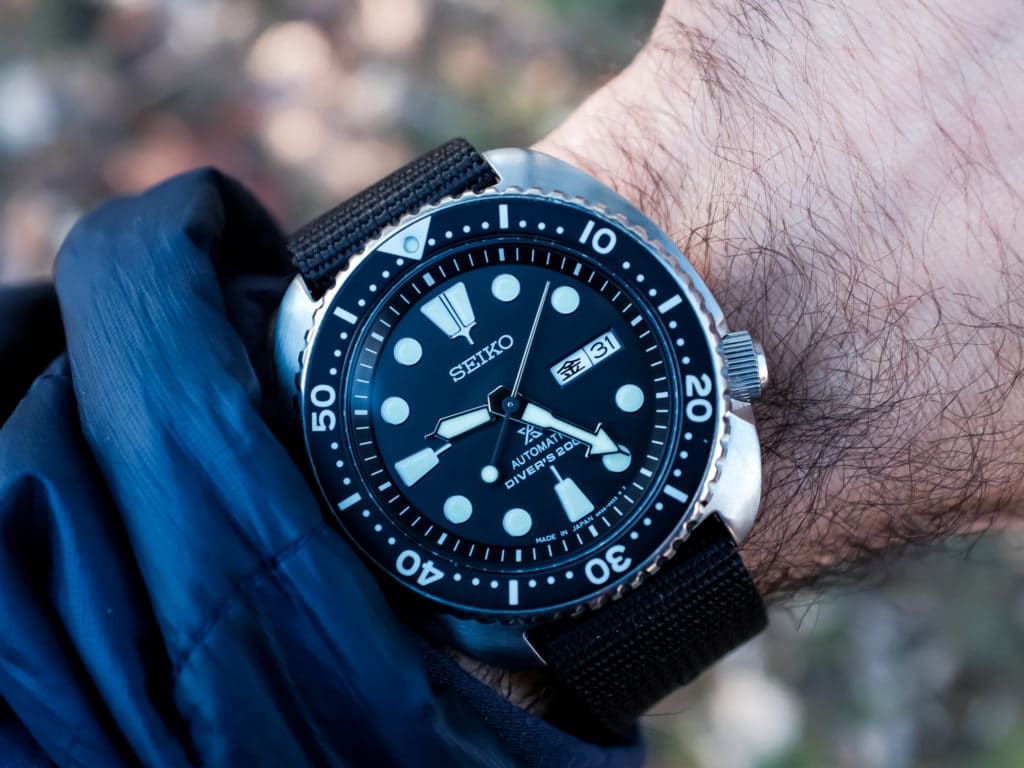
The Turtle comes with Seiko’s familiar Hardlex crystal, a material that has generated enough arguments among affordable watch collectors to deserve its own discussion forum. We’d certainly welcome sapphire as standard equipment, but our experiences with Hardlex haven’t given us much reason to complain. It has generally held up well, and we aren’t particularly interested in treating every mineral-based crystal as an automatic disqualification. The bezel is a different matter. Our Turtle suffers from the familiar alignment problem found on far too many affordable Seiko divers. It’s frustrating because the rotating action itself feels quite good, with a smoothness that makes the misalignment seem even more ridiculous. Seiko can produce an enjoyable bezel mechanism and an excellent dive watch dial, yet somehow bringing the two into perfect alignment remains an occasional challenge.
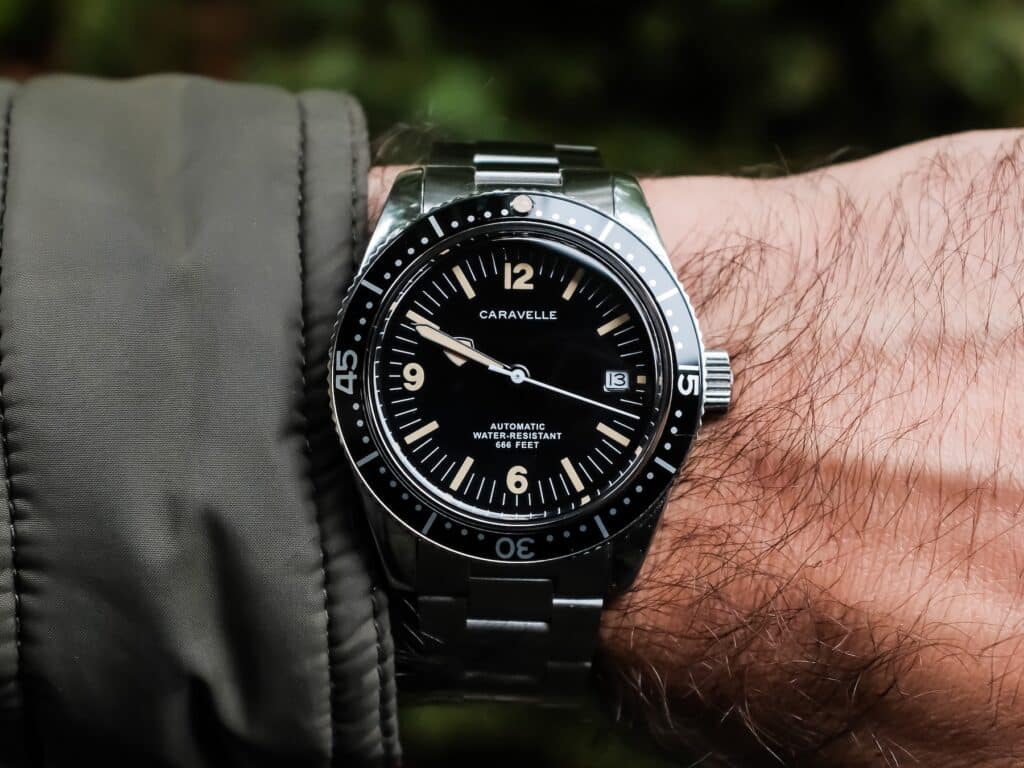
Bulova opted for a domed mineral crystal on the Sea Hunter, which is simultaneously one of its most attractive design features and one of its more frustrating technical decisions. The pronounced dome contributes a great deal to the watch’s vintage appearance, particularly when viewed from the side. We wouldn’t want Bulova to flatten the entire profile just to make the watch look thinner. But we do wish that dome were made from sapphire. It’s difficult to get excited about a watch’s attractive crystal when the prospect of scratching it becomes part of the ownership experience. The Caravelle’s rotating bezel uses an aluminum insert, with exposed aluminum numerals that introduce a slightly more contemporary detail to an otherwise vintage-looking watch. The grip is adequate, although the action feels rather hollow compared with some of the better bezels we’ve encountered.
The Caravelle gives us a bezel that could feel better, while the Turtle gives us one that could line up better. Pick your annoyance. We’d prefer neither issue existed, but neither has been serious enough to ruin our overall experience with these watches.
Water Resistance & Lume:
Both the Caravelle Sea Hunter and Seiko Turtle offer 200 meters of water resistance, supported by screw-down crowns and closed casebacks. That’s a healthy amount of capability for watches that will probably spend far more time at a desk, in a car, or sitting next to a swimming pool than exploring the ocean floor. We appreciate having that margin of confidence, even if most of us aren’t remotely close to testing its limits. A proper dive watch should be able to handle ordinary aquatic activities without becoming another thing we need to worry about, and both models satisfy that expectation on paper.
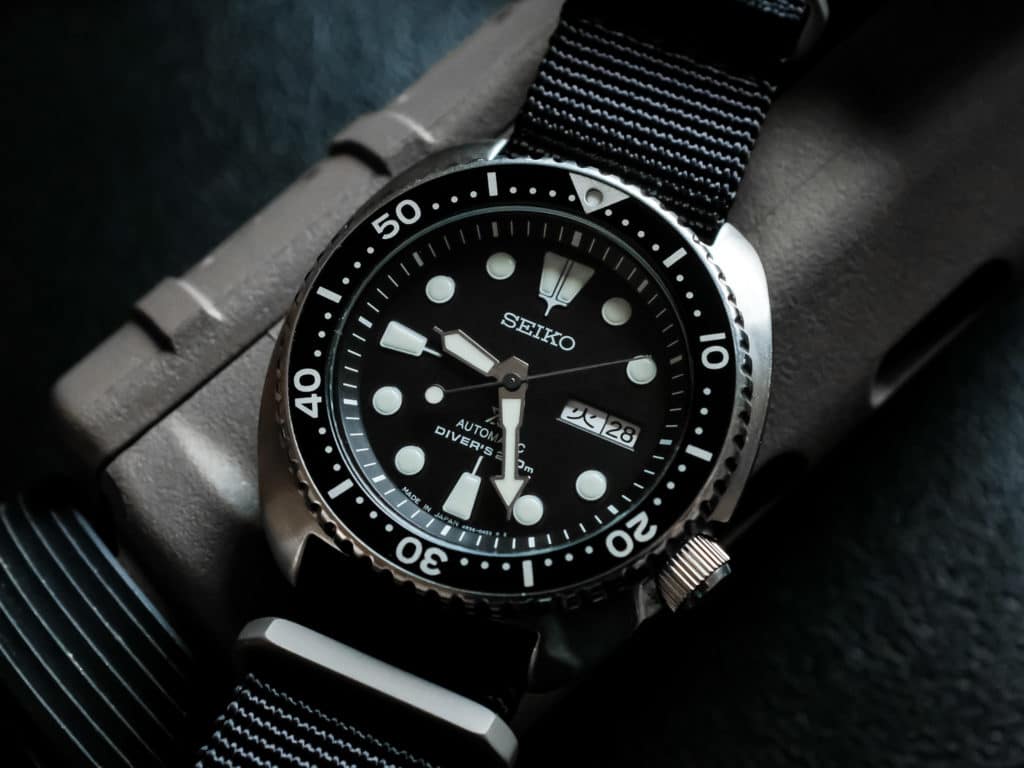
The Turtle benefits from Seiko’s familiar Lumibrite application, paired with generously sized indices and hands. We’ve always enjoyed the way Seiko prioritizes readability on its divers, and the Turtle is no exception. The combination of substantial luminous surfaces and a relatively uncluttered dial makes it particularly easy to use when lighting conditions aren’t ideal.
Bulova’s Sea Hunter uses brown-toned luminous material to reinforce its vintage appearance, which we’ve already established isn’t our favorite design decision. More importantly, we don’t have enough comparable nighttime testing to claim that it performs better or worse than the Seiko in any measurable way. We can criticize the color choice without inventing a lume competition.
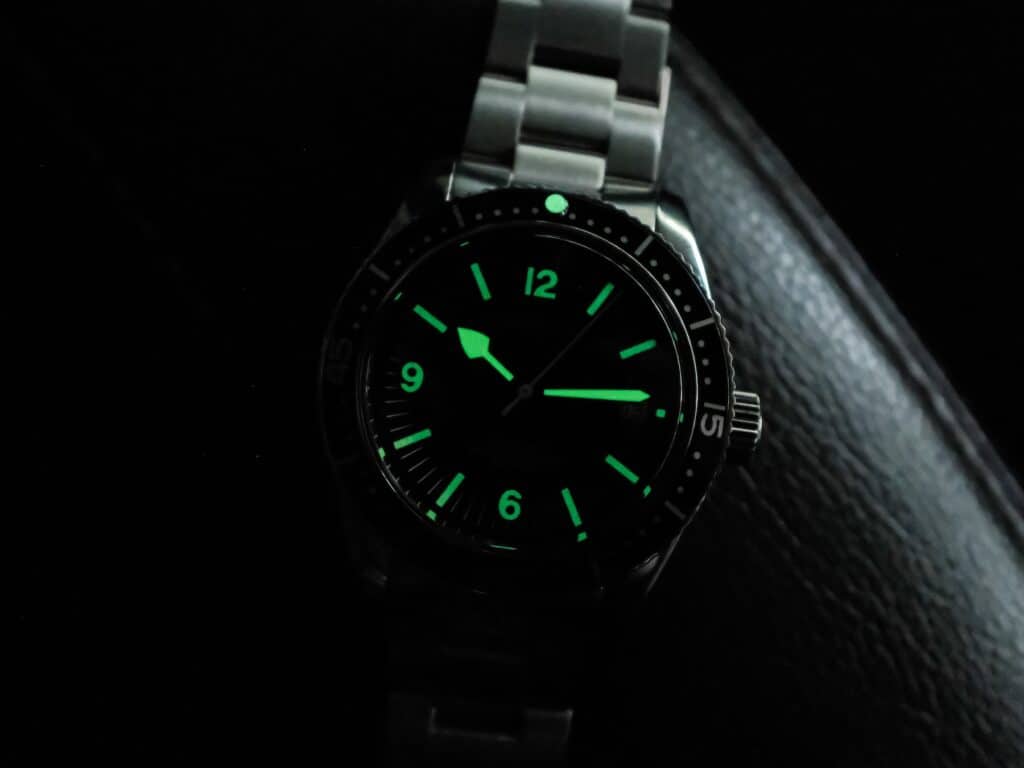
This is one of those areas where the Turtle’s less decorative approach works in its favor. The Caravelle is trying to capture the appearance of an older dive watch, while the Seiko is more concerned with maintaining the practical qualities that helped make its predecessors popular. We enjoy both approaches, but when legibility is the priority, we’re inclined to side with the Turtle.
Cost Considerations
The Seiko Turtle has historically benefited from aggressive street pricing. Our original review referenced examples of the SRP777 and subsequent SRPE93 selling for approximately $370, well below the prices associated with some of Seiko’s more elaborate Prospex releases. That was an excellent deal for a mechanical diver with the Turtle’s reputation, although we’d want to check current retail availability before assuming those same prices still apply. What makes the Turtle particularly appealing isn’t simply that it can be purchased for relatively little money. It’s that we’ve already experienced the kind of longevity in a collection that makes an affordable watch feel like money well spent. There are plenty of inexpensive watches that seem exciting for a few weeks. Finding one that still gets wrist time years later is a little more difficult.
The Caravelle Sea Hunter retails for $425, and we think Bulova has assembled a fairly convincing package for the money. The case dimensions are appealing, the design has some legitimate historical character, and the automatic movement offers everything most buyers will need. We also appreciate the bracelet’s practical features, particularly the quick-release spring bars and adjustment options. Where the value argument becomes more complicated is in the details. The mineral crystal, uninspiring bezel feel, and inexpensive movement all make it fairly obvious where Bulova has controlled costs. We can accept those compromises individually, but at $425, the Sea Hunter isn’t competing in a vacuum. There are quite a few established automatic divers available around that figure, and buyers have every reason to be selective.
That’s where the Caravelle faces its biggest challenge. We’re not convinced buyers would be disappointed with what Bulova offers, particularly if the Sea Hunter’s smaller case and unusual styling are what attracted them in the first place. But the Turtle comes with years of demonstrated appeal, a recognizable design, and an enormous community of owners who’ve already figured out how to make the most of it. At comparable prices, we’d rather spend our money on the Seiko. Not because the Caravelle represents poor value, but because the Turtle has already answered many of the questions we normally have about an affordable watch’s long-term appeal.
Final Thoughts: Can the Bulova Caravelle Sea Hunter Challenge the Seiko Turtle?
For us, the Seiko Turtle remains the more convincing affordable dive watch. Its comfortable case, excellent legibility, and dependable movement have kept us coming back despite some familiar Seiko shortcomings. We’d certainly appreciate a sapphire crystal and a bezel that actually lines up properly, but neither issue has been enough to sour our opinion of the watch. After years of owning different Turtles, we’re still finding reasons to keep one around.
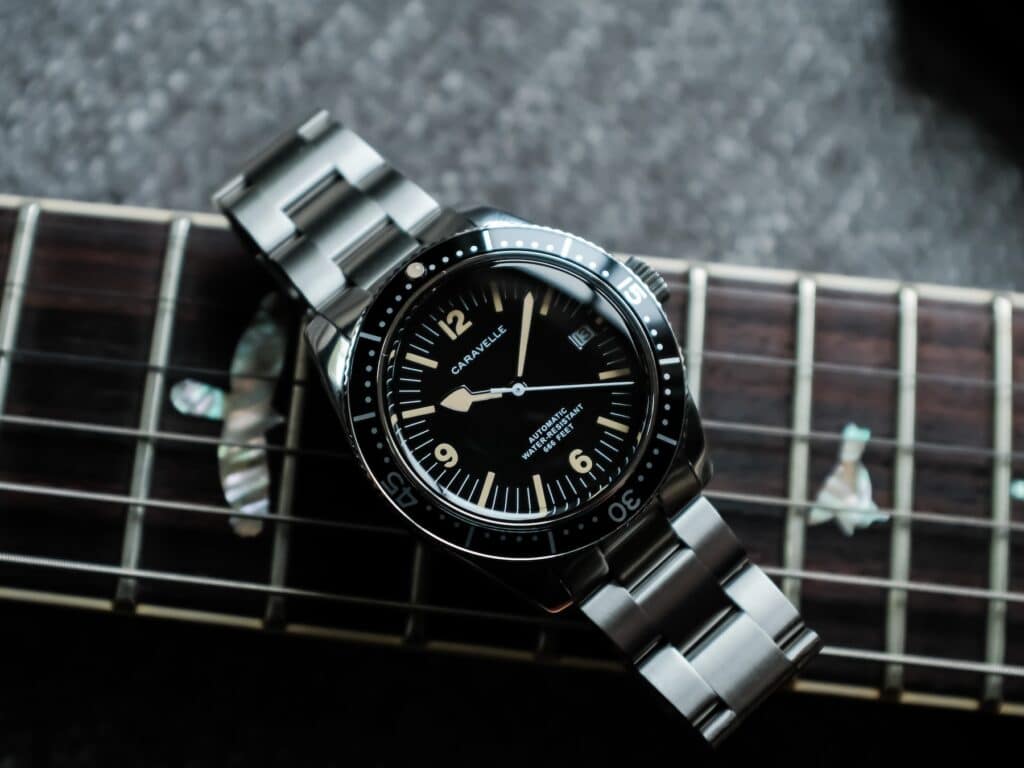
Our experience with the two watches is probably the best explanation for that preference. We’ve bought, sold, and eventually returned to the Turtle several times, while the Caravelle never quite secured a permanent place in the collection. There wasn’t anything particularly wrong with the Sea Hunter, either. It simply didn’t inspire the same desire to keep wearing it, which is something we’ve learned to pay attention to after years of collecting watches.
The Caravelle still has plenty going for it, particularly if you prefer a smaller case and something with a little more vintage character. We appreciate that Bulova has drawn from its own history rather than borrowing another brand’s design, and the unusual handset, compact dimensions, and practical bracelet features make the Sea Hunter worth considering. At $425, it’s a respectable option for anyone who finds the Turtle too large or simply wants something less familiar.
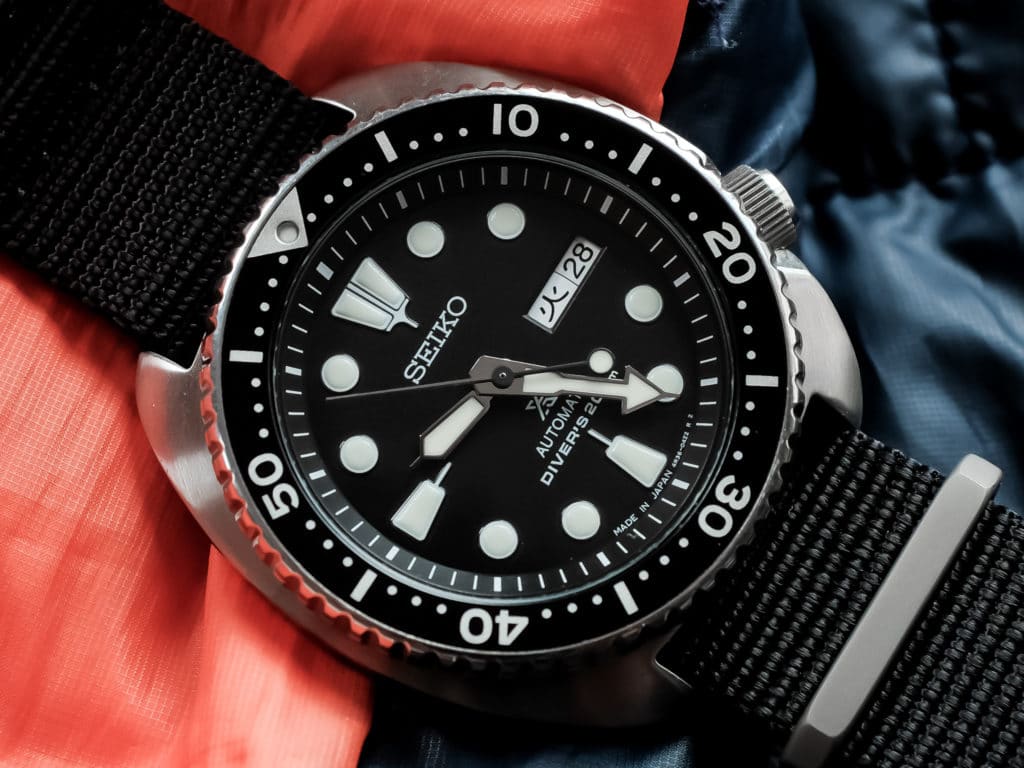
Our verdict: choose the Seiko Turtle. We aren’t suggesting that it’s the more refined watch in every respect, and Seiko has had plenty of opportunities to address its lingering quality-control issues. But when we’re spending our own money on an affordable automatic diver, we’d rather choose the watch we’ve repeatedly returned to than one we struggled to make room for in the collection. The Sea Hunter is an interesting alternative, but the Turtle is still the one we’d buy again.

Co-Founder and Senior Editor
Kaz has been collecting watches since 2015, but he’s been fascinated by product design, the Collector’s psychology, and brand marketing his whole life. While sharing the same strong fondness for all things horologically-affordable as Mike (his TBWS partner in crime), Kaz’s collection niche is also focused on vintage Soviet watches as well as watches that feature a unique, but well-designed quirk or visual hook.