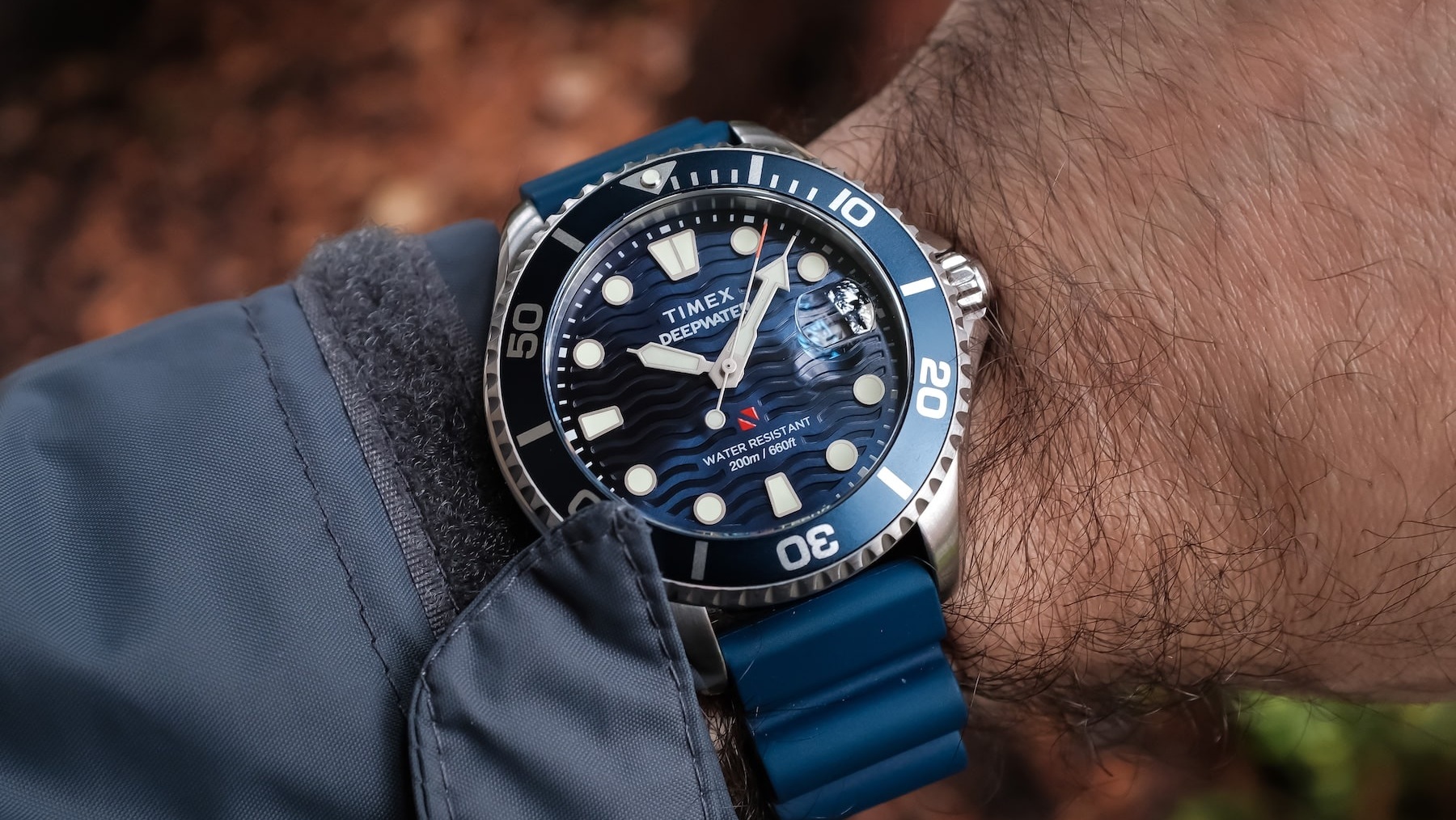
Seiko and Timex have spent decades making affordable watches accessible to people who don’t want to spend thousands of dollars on their collections. But when it comes to dive watches, the two brands are now taking some surprisingly different approaches. The Seiko 5 Sports, frequently called the 5KX because of its resemblance to the discontinued SKX, preserves the appeal of an automatic movement and familiar Japanese sports-watch design. The Timex Deepwater Meridian 200 approaches the category with a different set of priorities, offering a quartz movement alongside features that would once have seemed unusually ambitious at its price.
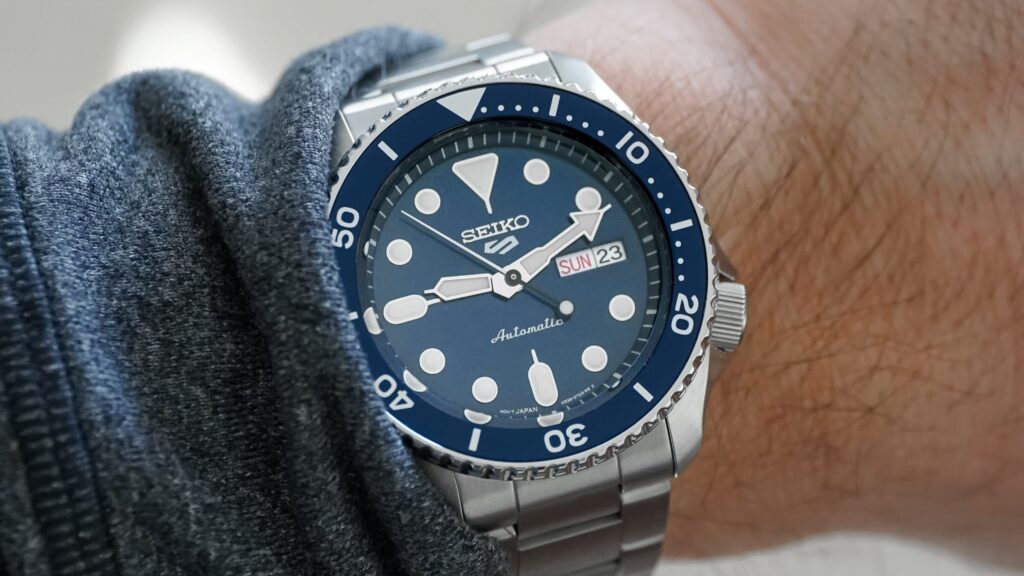
Both watches impressed us during their respective hands-on reviews, although not always for the reasons we expected. The Timex feels like a serious tool watch, complete with a sapphire crystal, screw-down crown, and 200 meters of water resistance. The Seiko makes its case through a mechanical movement, comfortable proportions, and a design closely connected to one of the most recognizable affordable dive watches ever produced. But when the less expensive quartz watch offers several practical advantages over its automatic competitor, it’s worth asking whether traditional watch enthusiast preferences are always pointing us toward the better purchase.
Overview and Identity
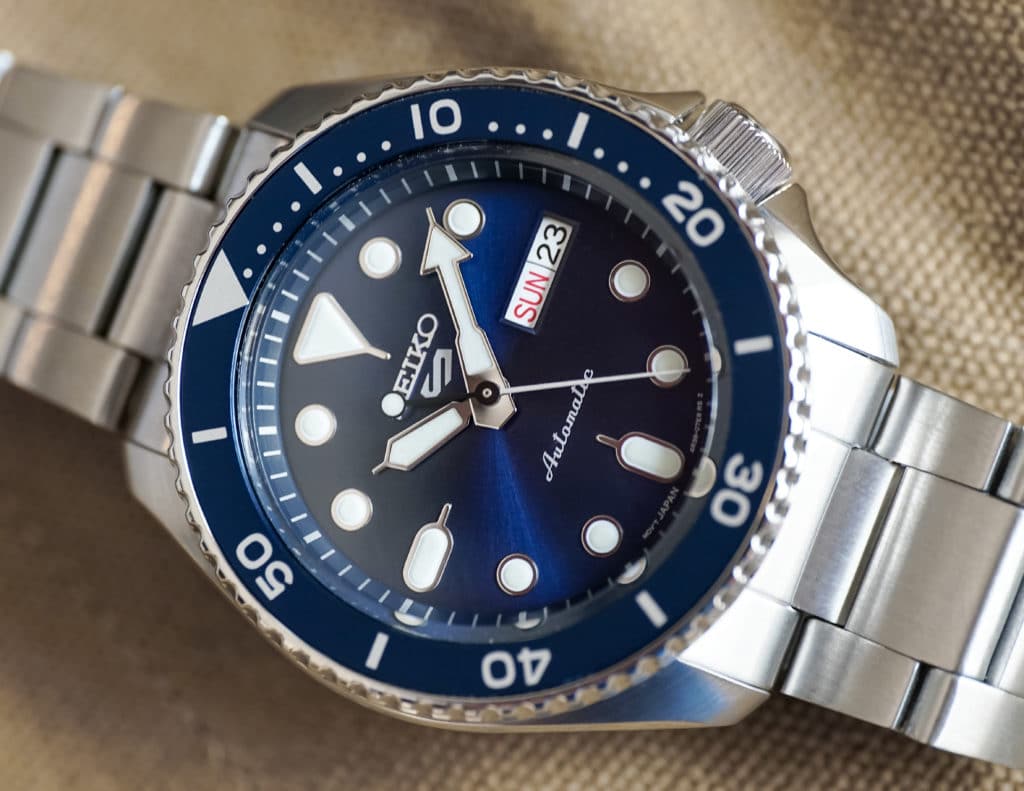
The Seiko 5 Sports SRPD51 arrived as part of a collection that effectively reinterpreted the legendary SKX formula for a broader audience. The recognizable case, four-o’clock crown, and familiar dial arrangement remained, but the emphasis shifted away from the dedicated diving credentials of the older SKX. Instead, Seiko positioned the 5KX as an accessible automatic sports watch, offering numerous dial colors and configurations while retaining much of the design enthusiasts already appreciated. Our hands-on review highlighted that familiar identity almost immediately. The case felt comfortable, the blue dial made a strong impression, and the updated movement addressed some longstanding criticisms of Seiko’s older entry-level automatics.
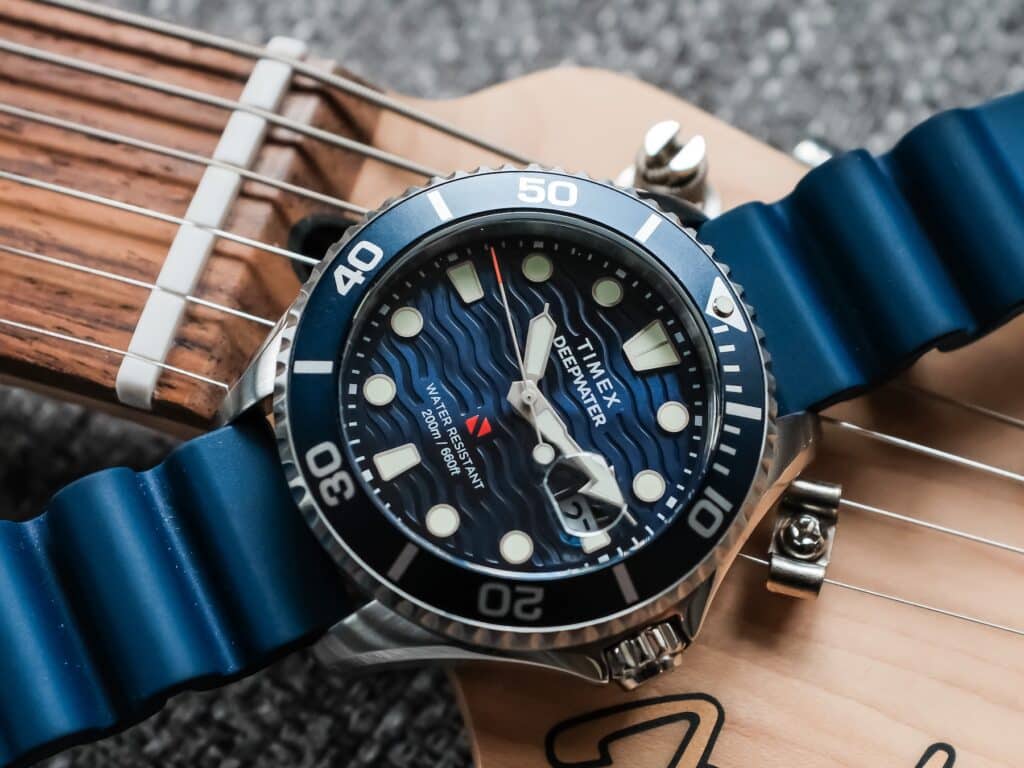
The Timex Deepwater Meridian 200 TW2W81500 takes a more straightforward approach to its identity. Rather than relying on a discontinued predecessor’s reputation, it attempts to establish Timex as a legitimate option for buyers seeking a robust, affordable dive watch. Our hands-on Timex Deepwater Meridian 200 review covered the blue sunburst version, which Michael borrowed from a friend and wore for several days. The watch was more substantial than expected, with a case that reminded him of the imposing character of a Rolex Sea-Dweller. That resemblance concerned its wrist presence rather than its specifications, but the broader impression was significant. This wasn’t a lightweight, nostalgic Timex trying to look like a tool watch. It felt like a watch designed to be taken seriously on its own terms.
Dial and Straps/Bracelets
The Seiko 5 Sports SRPD51 uses a blue sunburst dial that provides much of the visual appeal of the familiar SKX layout without reproducing it exactly. The finish changes character as light moves across the surface, appearing more subdued in indirect light and substantially brighter under stronger illumination. Applied hour markers replace the painted markers associated with older Seiko divers, giving the watch a more contemporary appearance. The recognizable Seiko handset remains, as does the day-date display at three o’clock. Our original reviewer appreciated the overall presentation, although the cursive Automatic text was less convincing than the older, more purposeful-looking dial printing found on Seiko’s traditional dive watches.

The SRPD51 comes fitted with a three-link stainless steel bracelet, and this was easily one of the weakest parts of our original review. The bracelet’s lack of taper, folded clasp construction, and pin-and-collar sizing arrangement felt disappointing beside the rest of the watch. Although the 22mm lug width is familiar territory for Seiko enthusiasts, carrying that width too far toward the clasp makes the bracelet feel unnecessarily substantial. Our reviewer recommended replacing it with a better-tapered aftermarket bracelet, particularly one of Strapcode’s compatible alternatives. That recommendation says quite a bit about the overall experience. The Seiko’s case and dial made a convincing argument for ownership, but the factory bracelet left meaningful room for improvement.
The Timex Deepwater Meridian 200 offers an equally attractive blue dial but approaches the visual details differently. Its sunburst finish incorporates a wave pattern that introduces additional texture, drawing comparisons to more expensive dive watches without simply duplicating their appearance. Applied indices and white printing provide strong contrast, while a small red diver’s flag introduces a welcome accent. We particularly enjoyed the interplay between the blue dial, bezel, and red detailing. The date magnifier at three o’clock is more divisive, and our reviewer wasn’t entirely convinced it was necessary. Nevertheless, the sapphire crystal and anti-reflective treatment kept distortion under control, allowing the overall design to remain clean and legible.
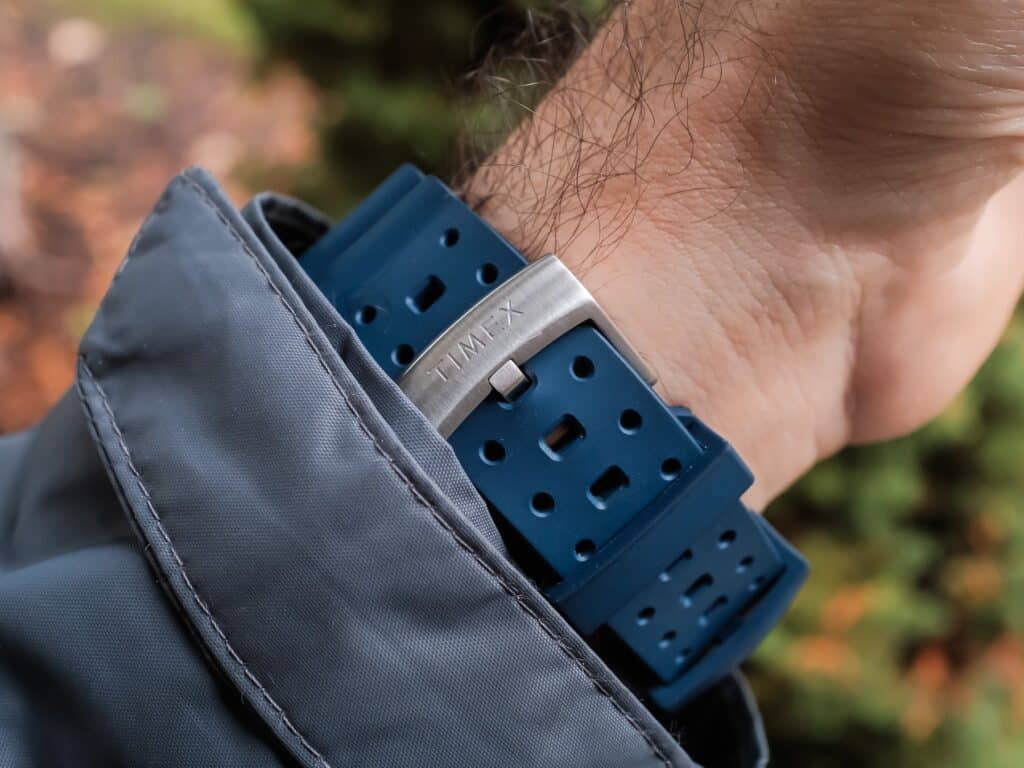
Rather than including a steel bracelet, Timex equips the reviewed TW2W81500 with a blue synthetic rubber strap. The material reinforces the watch’s practical diving identity and provides a useful counterweight to its relatively large case. Its flexibility, perforated design, and quick-release spring bars make it appropriate for everyday wear and convenient strap changes. This gives the Timex a very different starting point from the Seiko. Buyers who prefer a steel bracelet may immediately favor the SRPD51, even with its finishing compromises. But for someone who appreciates a straightforward rubber-strap diver, the Timex avoids asking the owner to pay for a bracelet they might immediately replace.
Build Quality & Technical Approach
The biggest difference between these watches goes beyond appearance. The Timex prioritizes conventional dive watch functionality, combining a quartz movement with a screw-down crown, sapphire crystal, and 200-meter water-resistance rating. Seiko chooses a more enthusiast-oriented formula, preserving an automatic movement and exhibition caseback while accepting compromises in water resistance and crystal material. Neither approach is inherently wrong, but they produce noticeably different ownership experiences.
Movements
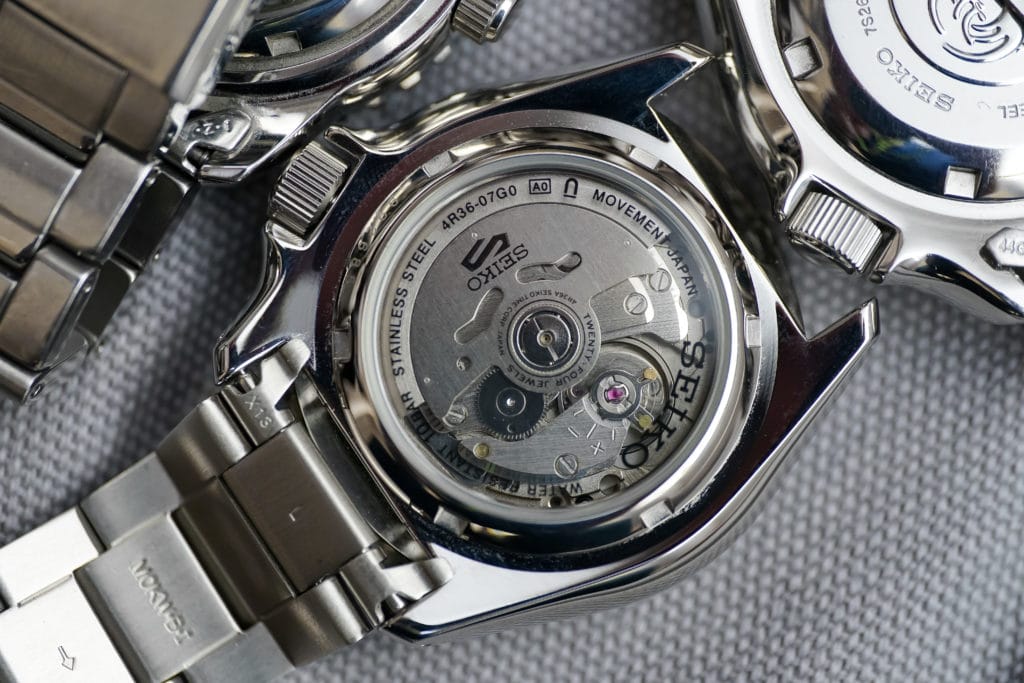
The Seiko 5 Sports uses the in-house 4R36 automatic movement, a familiar workhorse that offers approximately 41 hours of power reserve. Unlike the older 7S26 movement found in many previous-generation Seiko watches, the 4R36 supports both hand-winding and hacking seconds. Those improvements make setting the watch more convenient and provide opportunities to interact with the movement beyond simply wearing it. The exhibition caseback also reveals the mechanism, something our reviewer particularly appreciated at this price. The finishing is utilitarian rather than elaborate, but watching a mechanical movement operate remains part of the attraction for enthusiasts entering the hobby.
The Timex Deepwater Meridian 200 takes the opposite approach with the battery-powered Seiko Epson VX42E quartz movement. It offers a quickset date, hacking functionality, and an estimated battery life of approximately three years. Our experience with the watch highlighted how naturally this movement suited its practical personality. Time and date adjustments were straightforward, the crown operated without noticeable wobble, and the hands responded cleanly during setting. The appeal isn’t mechanical theater or an interesting view through an exhibition caseback. Instead, it’s the convenience of a watch that can be left unused for days and picked up again without requiring the owner to wind it or reset the time.
This difference ultimately comes down to what we want from an affordable watch. Seiko offers the satisfaction of a mechanical movement, with all the traditional appeal and involvement that come with automatic watch ownership. Timex offers quartz convenience and the accuracy advantages generally associated with battery-powered movements. For an enthusiast purchasing a watch specifically to enjoy mechanical engineering, the 4R36 is an obvious attraction. But if the goal is to own a dependable watch for swimming, travel, outdoor activities, or everyday wear, the simplicity of the Timex makes a convincing argument. Neither movement is particularly exotic, and that’s part of the point. Both are sensible choices for the products they’re designed to power.
Case Construction, Finishing & Wearability
The Seiko 5 Sports measures 42.5mm in diameter, approximately 13.4mm thick, and 46mm from lug to lug. Those proportions help explain why its case feels more approachable than its diameter might suggest. The familiar SKX-inspired shape wraps comfortably around the wrist, while the crown positioned at four o’clock avoids the more conventional three-o’clock arrangement. Our reviewer immediately recognized the familiar Seiko feel, describing the watch as exceptionally comfortable despite its relatively tall profile. Seiko also introduced drilled lugs, making strap changes easier and reinforcing the watch’s appeal as a platform for customization.

The overall case construction remains one of the SRPD51’s strengths. The rounded profile and practical layout are recognizable without feeling dated, and the exhibition caseback gives the watch a different personality from its more utilitarian predecessor. However, the display back and push-pull crown also reflect Seiko’s decision to move away from the older SKX’s dedicated diving credentials. It’s a sports watch with significant dive watch inspiration rather than a direct replacement for everything that made the SKX a traditional diver. For most casual owners, that distinction may have little practical impact. For buyers specifically seeking a rugged water-focused watch, it becomes more relevant.
At 44mm across and approximately 50.5mm from lug to lug, the Timex Deepwater Meridian 200 is undeniably larger. Its substantial case and pronounced crown protection help establish a distinctly rugged personality, although the dimensions don’t tell the entire story. Our reviewer found that the curved lugs and relatively flat caseback allowed the watch to sit comfortably despite its considerable footprint. The review measured its thickness at approximately 12.5mm, differing from Timex’s published specification. That relatively low-sitting construction helps prevent the substantial case from feeling as awkward as its diameter might initially suggest.

The quality of the Timex’s external controls also made a strong impression. Its screw-down crown operated with smooth threading and reassuring resistance, while the bezel rotated with clean, consistent clicks. These were noteworthy details because they helped distinguish the watch from inexpensive divers that look rugged but feel less convincing during use. Although the Timex’s large dimensions won’t suit every wrist, the finishing and tactile operation made it feel like a thoughtfully constructed tool watch rather than an exercise in oversized styling. The Seiko remains the easier recommendation for someone concerned about case footprint, but the Timex offers a level of perceived substance that its price doesn’t immediately suggest.
Crystals and Bezels
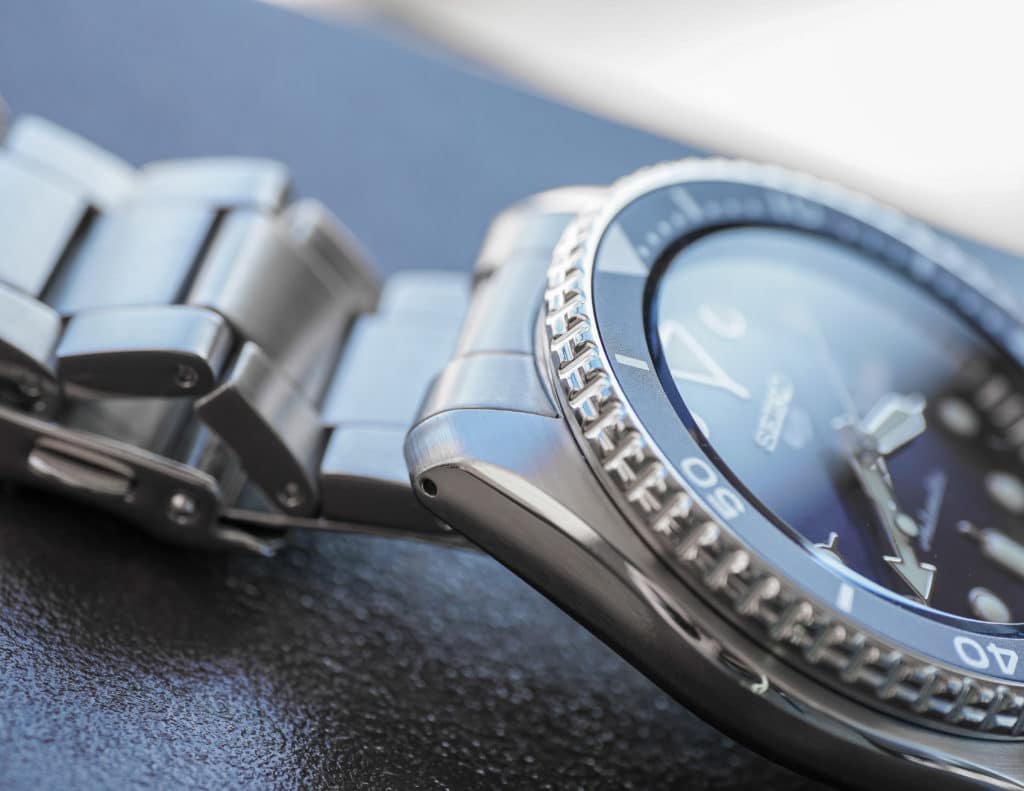
The Seiko 5 Sports uses a Hardlex crystal, remaining faithful to the material Seiko frequently selects for its affordable sports-watch collections. Hardlex provides a practical level of durability, although it doesn’t offer the same scratch-resistance benefits commonly associated with sapphire. The SRPD51 also features a unidirectional rotating bezel with a matte blue aluminum insert that complements the sunburst dial. Our original review praised its appearance, particularly the way the dial and bezel created a coordinated blue-on-blue presentation. The bezel retains the visual language enthusiasts associate with Seiko divers, even though the watch itself no longer carries the full specifications of the older SKX.
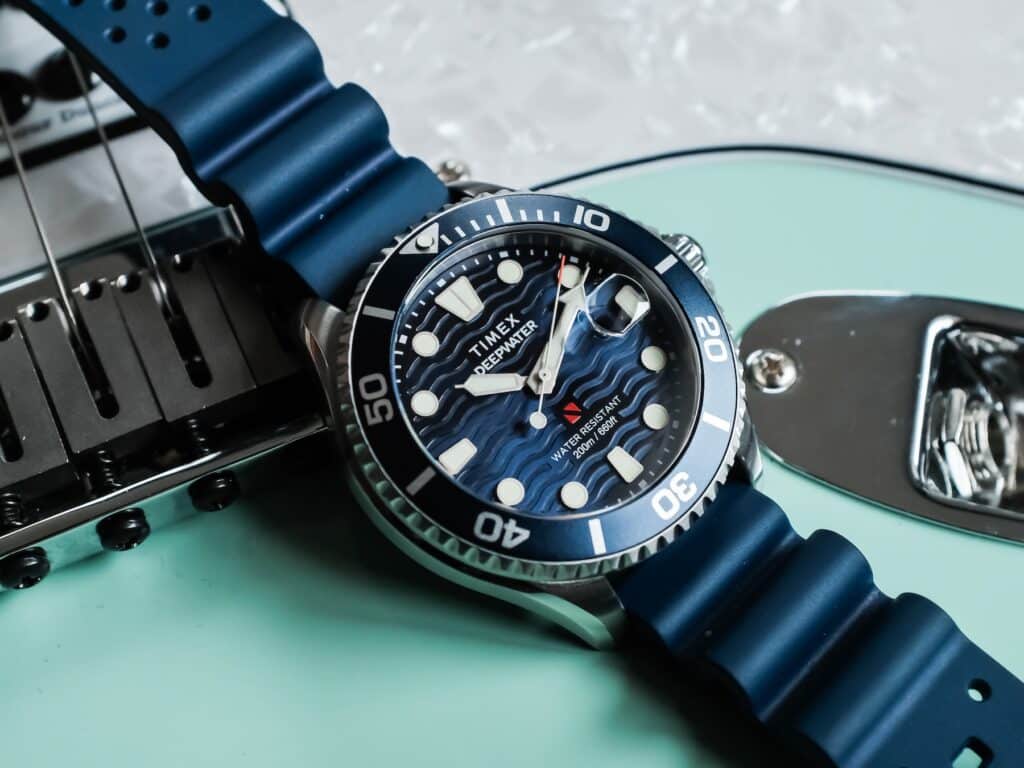
The Timex uses a sapphire crystal with anti-reflective coating, providing a notable material advantage at a lower list price. The integrated date magnifier may divide opinion, but we appreciated how cleanly the crystal handled it. Timex also equips the Deepwater Meridian 200 with a 120-click aluminum dive bezel, and this was one of the standout features of our hands-on review. Rotation felt tight and precise, without the loose or hollow sensation sometimes encountered on affordable watches. There’s a satisfying consistency between the bezel operation, crown action, and substantial case construction. For buyers who care about how these components feel during use, the Timex makes an especially persuasive case.
Water Resistance & Lume
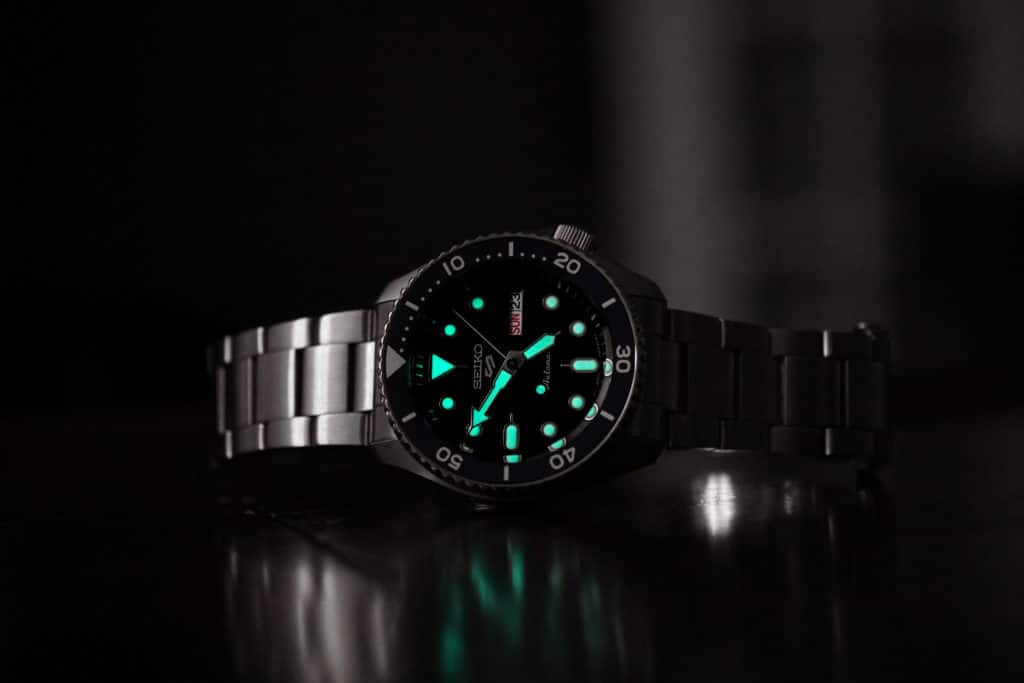
The Seiko 5 Sports carries a 100-meter water-resistance rating, supported by its familiar sports-watch case and push-pull crown. While that specification is sufficient for many ordinary water activities, it also represents one of the most meaningful differences from the discontinued SKX. Our reviewer wore the SRPD51 in a swimming pool and hot tub without encountering problems, although the push-pull crown prompted occasional checks to ensure it remained properly seated. The watch’s LumiBrite treatment was another strength, delivering the bright, lasting glow enthusiasts have long associated with Seiko. As an everyday automatic sports watch that borrows its appearance from a traditional diver, the 5KX succeeds remarkably well.
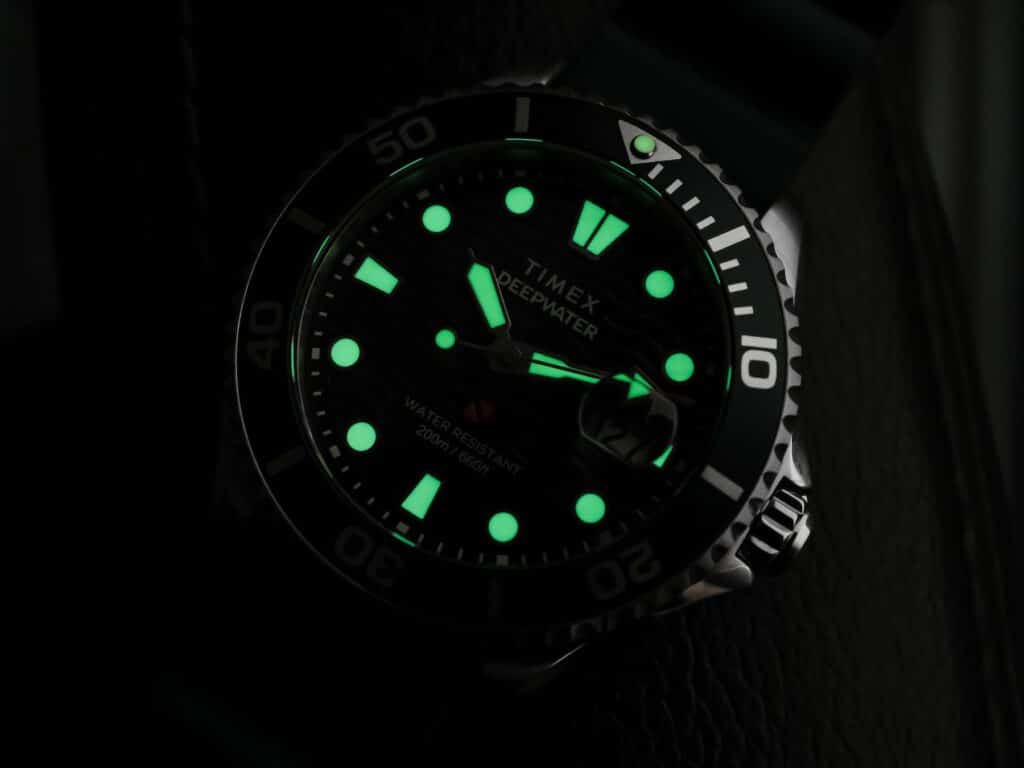
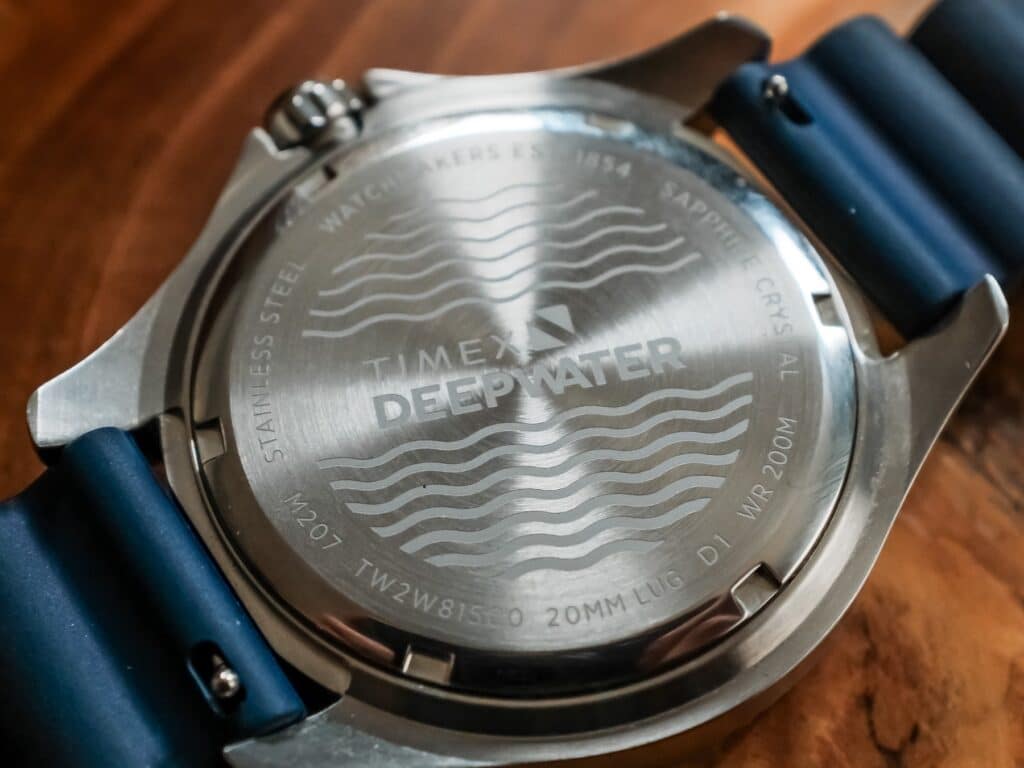
The Timex Deepwater Meridian 200 offers 200 meters of water resistance, along with a screw-down crown and screw-on caseback. That gives it a stronger conventional diving specification than the Seiko, an important distinction for anyone evaluating these watches primarily as practical water-focused tools. Timex also applies Super-LumiNova to the hands and hour markers, with our original review describing the glow as bright and sufficiently long-lasting for useful low-light visibility. Combined with the wave-pattern dial’s contrasting markers and the sapphire crystal, the result is a watch that takes legibility seriously. Both models offer convincing luminous treatments, but the Timex provides the clearer specification advantage when water resistance and crown construction become the deciding factors.
Cost Considerations
The Seiko 5 Sports SRPD51 currently carries a U.S. manufacturer’s suggested retail price of $350. That’s a different proposition from the substantial discounts mentioned in our original review, when an especially favorable department-store promotion brought the watch close to $200. Promotional pricing can still change the value calculation, but it’s important not to treat a historical sale price as the standard cost of ownership. At its current MSRP, the Seiko offers an automatic movement, recognizable case design, steel bracelet, and the versatility that comes with a widely supported collection. Those are meaningful advantages for someone seeking an accessible introduction to mechanical watch collecting.
The Seiko also benefits from an extensive enthusiast community and a broad selection of compatible straps, bracelets, and customization components. Our reviewer was particularly enthusiastic about replacing the factory bracelet, and that remains worth considering when evaluating the total cost. Buying a better bracelet can improve the experience considerably, but it also adds to the purchase price. Someone who prefers the stock bracelet or finds a substantial discount may reasonably view the SRPD51 as an exceptional value. At full retail, however, the Hardlex crystal, push-pull crown, and relatively basic bracelet make it harder to argue that Seiko offers the stronger package purely on materials and specifications.
The Timex Deepwater Meridian 200 TW2W81500 currently lists for $269 through Timex, placing it below the Seiko’s U.S. MSRP despite offering a sapphire crystal and 200-meter water resistance. That difference is striking because it reverses what many enthusiasts might expect from the two brands. Timex isn’t asking buyers to pay more for its stronger diving specifications. Instead, it’s offering them at a lower advertised price while relying on a quartz movement to keep the overall package affordable. The result is a compelling combination for buyers who prioritize practical functionality over mechanical complexity.
The Timex isn’t without compromises. Its 44mm case and longer lug-to-lug measurement may be less accommodating than the Seiko’s familiar shape, while the rubber strap won’t appeal to everyone who prefers a steel bracelet. The quartz movement also removes part of the enthusiast experience that makes watches such as the SRPD51 appealing. There’s no sweeping seconds hand associated with a conventional mechanical watch and no automatic rotor to admire through a transparent caseback. But these are largely differences in preference rather than shortcomings in execution. For buyers who simply want a capable dive watch with appealing finishing and reliable everyday operation, the Timex makes a remarkably complete argument.
Ultimately, the value comparison depends on whether we’re shopping for a mechanical watch or a practical diver. At their respective current MSRPs, the Timex offers the stronger specification package for less money. Its sapphire crystal, screw-down crown, 200-meter rating, and excellent bezel operation are difficult to ignore. The Seiko counters with an automatic movement, a slightly more approachable case, and the familiar ownership appeal that has made the 5 Sports collection so successful. A discounted SRPD51 could narrow or even reverse the price difference, but when comparing the manufacturers’ advertised prices, the Timex creates considerable pressure for the Seiko to justify its mechanical premium.
Final Thoughts: Seiko 5 Sports or Timex Deepwater Meridian 200?
The Seiko 5 Sports SRPD51 remains an appealing watch for many of the reasons the collection originally succeeded. Its SKX-inspired case feels familiar and comfortable, the blue sunburst dial has genuine character, and the 4R36 automatic movement provides the mechanical experience enthusiasts expect from an affordable Seiko. The addition of hand-winding, hacking, and an exhibition caseback makes it a particularly approachable introduction to automatic watch ownership. Even our disappointment with the factory bracelet doesn’t undermine the broader appeal of the watch. It’s versatile, recognizable, and supported by an enormous range of aftermarket options.

The Timex Deepwater Meridian 200 surprised us by offering a more convincing tool-watch experience than we expected from an affordable quartz model. Its substantial case, cleanly operating bezel, reassuring screw-down crown, and attractive blue dial all contributed to that impression. The sapphire crystal and 200-meter water-resistance rating reinforce the practical advantages, while the battery-powered movement suits a watch designed to be picked up and worn without much thought. The larger proportions will be a drawback for some buyers, but our hands-on experience suggested that the curved lugs and relatively flat caseback do a respectable job of managing its size.
These watches ultimately reflect two different definitions of value. The Seiko is the more obvious choice for someone entering mechanical watch collecting or seeking a modern interpretation of the SKX’s familiar appearance. The Timex is better suited to someone who wants a genuinely capable, affordable dive watch and isn’t particularly concerned about whether the movement is mechanical. There’s nothing wrong with preferring the sweeping seconds hand and visible movement of the Seiko. But when we separate mechanical enthusiasm from practical watch functionality, the Timex becomes increasingly difficult to argue against.
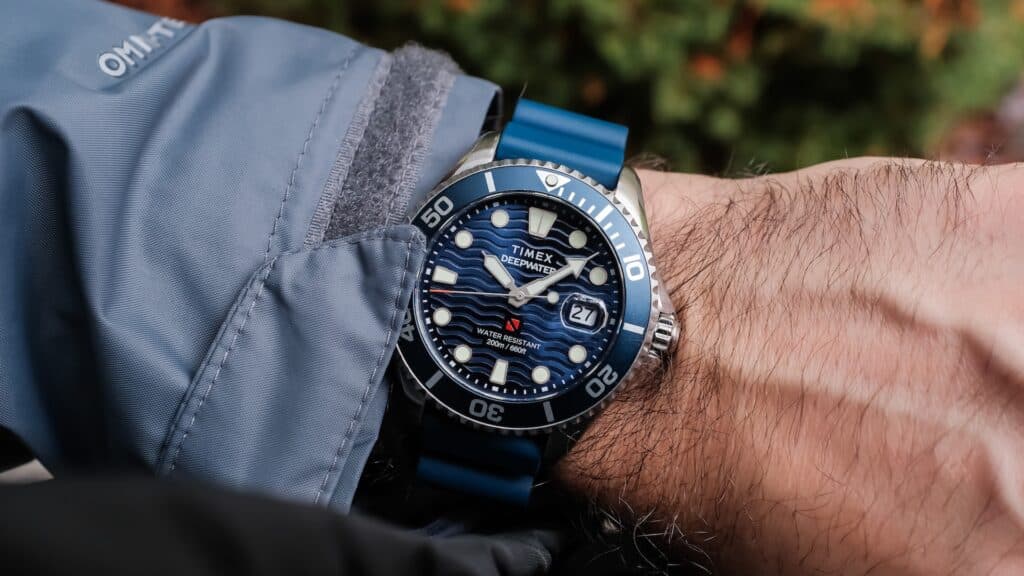
Our overall pick is the Timex Deepwater Meridian 200. At its current manufacturer’s suggested retail price, it delivers more of the traditional dive watch features we’d prioritize in a water-focused tool watch, including a sapphire crystal, screw-down crown, and twice the Seiko’s rated water resistance. The Seiko 5 Sports remains the better choice for buyers specifically seeking an affordable automatic watch, and we’d happily recommend it on those terms. But the Timex demonstrates why quartz shouldn’t automatically be treated as a compromise. Sometimes choosing a simpler movement gives a manufacturer room to build a more capable watch around it, and that’s exactly what makes this comparison interesting.

Co-Founder and Senior Editor
Kaz has been collecting watches since 2015, but he’s been fascinated by product design, the Collector’s psychology, and brand marketing his whole life. While sharing the same strong fondness for all things horologically-affordable as Mike (his TBWS partner in crime), Kaz’s collection niche is also focused on vintage Soviet watches as well as watches that feature a unique, but well-designed quirk or visual hook.