
Rado isn’t a brand I always spend a ton of time thinking about, if I’m being honest. Well… maybe their sportier dive watches. But every now and then the DiaStar lineup does something that catches my eye, and this is one of those moments. The brand has just announced three new limited edition DiaStar Original Skeleton models distinguished by blue, green, and red color accents. Each is limited to 555 pieces.

The Rado DiaStar Original has been around since 1962, when it made a name for itself as one of the first watches to use scratch-resistant materials. That oval case shape has remained largely unchanged for over six decades, which is either admirable consistency or stubborn resistance to change depending on how you look at it. Either way, the silhouette is unmistakable, and these new skeletonized versions lean into that identity while adding some visual punch through open-worked dials and seasonal colorways.
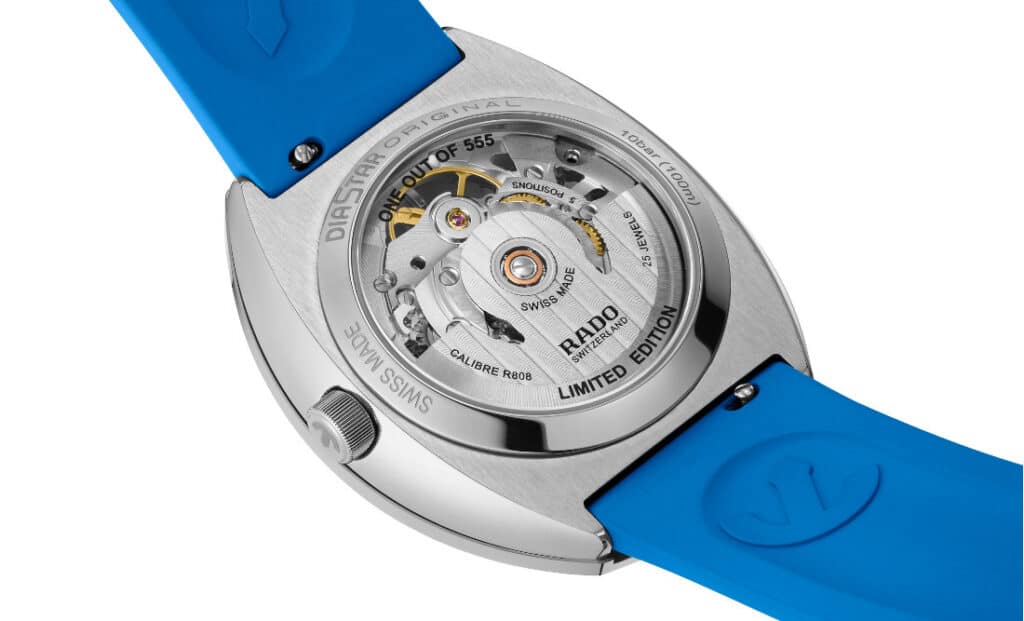
All three models share the same compact dimensions at 38mm wide, 45mm lug-to-lug, and 11.90mm thick. The signature convex bezel is made from Ceramos, Rado’s ceramic-steel composite material. Two of the three come in a polished silver-colored Ceramos with radial brushing, while the green version gets a yellow gold PVD treatment on both the bezel and case components. A faceted sapphire crystal sits up top, a sapphire caseback sits below, and you get 100 meters of water resistance.
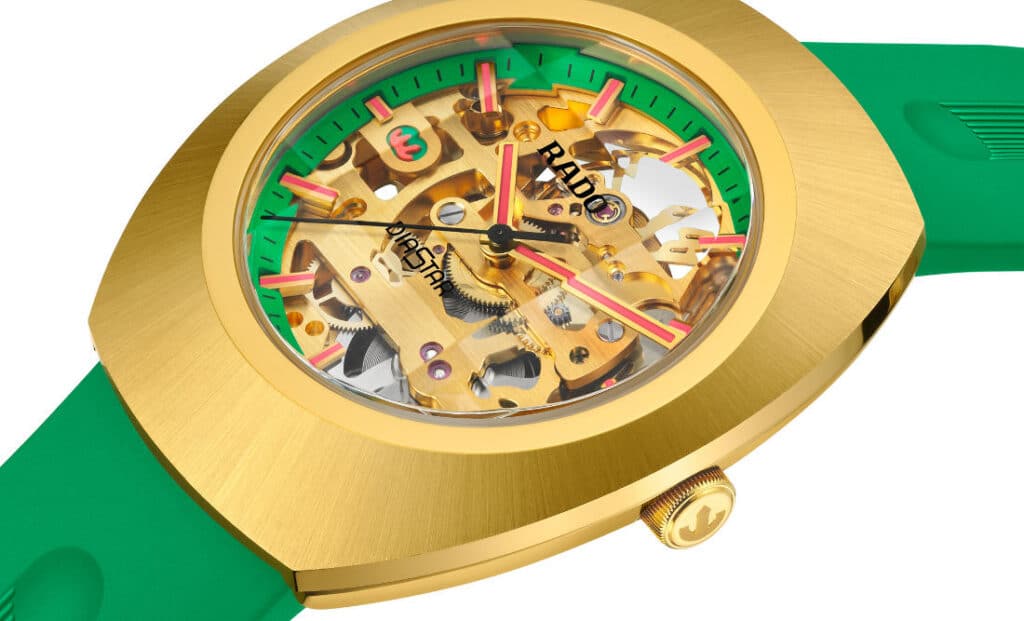
The real visual interest here comes from the open-worked dial and the colored chapter rings that frame each version. The blue model pairs rhodium hands and markers with yellow Super-LumiNova. The green goes with gold-colored hands and red lume, which is an unusual combination. And the red version uses rhodium hands with green Super-LumiNova. Each gets a color-matched rubber strap with Rado’s EasyClip quick-change system. The lume color choices across all three feel deliberately playful, almost like Rado is letting itself have a little fun with the formula.

Powering the trio is the Rado Calibre R808 automatic, featuring 25 jewels, a 21,600 vph frequency, and a Nivachron hairspring for improved magnetic resistance. The 80-hour power reserve is a nice practical touch. Rado says the movement is regulated in up to five positions, though I’d want to see how that translates in real-world accuracy before getting too excited about it.
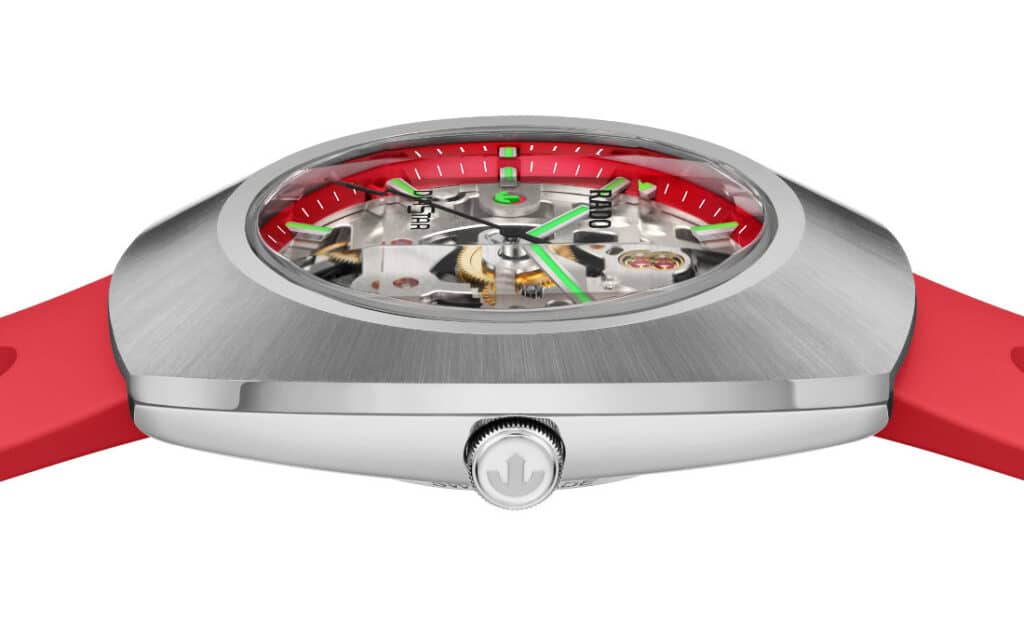
If I had to pick one, it’d be the red model. There’s something almost Vegas about the red and green lume contrast that I find weirdly appealing. It’s the kind of watch that doesn’t take itself too seriously, and that’s refreshing coming from a brand that can sometimes feel a bit clinical in its presentation. The whole collection, really, seems to offer a high-end complicated look for a reasonable buy-in, even if the 555-piece limited run will probably create some urgency among Rado collectors. Prices range from $2,550 to $2,800.

What I’m curious about is whether these land with the broader enthusiast crowd or stay firmly within Rado’s existing audience. The Rado DiaStar has always occupied a peculiar space in the market, one where brand loyalists appreciate the heritage and everyone else sort of forgets it exists. These skeleton editions feel like an attempt to bridge that gap.

Co-Founder & Senior Editor
Michael Peñate is an American writer, photographer, and podcaster based in Seattle, Washington. His work typically focuses on the passage of time and the tools we use to connect with that very journey. From aviation to music and travel, his interests span a multitude of disciplines that often intersect with the world of watches – and the obsessive culture behind collecting them.