Spend enough time shopping affordable dive watches and you’ll keep landing on the same two names from the same Japanese brand. On paper they look close enough that plenty of buyers assume the newer one simply replaced the older, then move on. That assumption skips the part that actually decides which one belongs on your wrist. We’ve reviewed both at length, and the split between the Orient Mako II and the Orient Kamasu comes down to a handful of choices that photos rarely capture.
After more than a decade of affordable-diver reviews at TBWS, we’ve learned to treat “newer” with some suspicion. Sometimes a follow-up model fixes real problems. Sometimes it just adds a bolder dial and a higher price. The Kamasu earns its reputation as the sharper, more modern option, while the Mako II keeps carrying the classic look that made this line a default recommendation for years. Figuring out which one to buy means looking past the shared parts and asking what each watch is actually trying to be. That’s what this comparison is about.
Overview and Identity

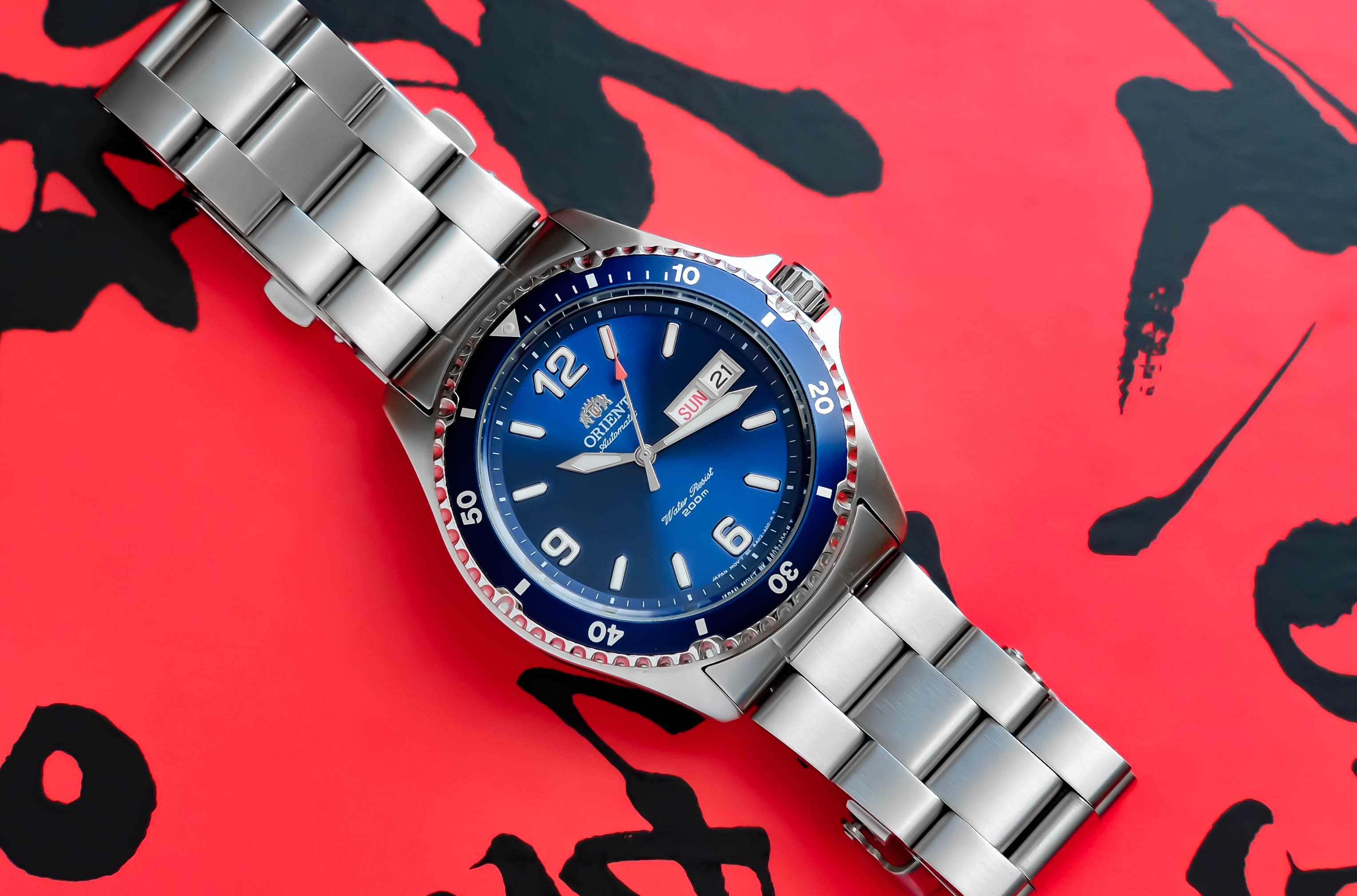
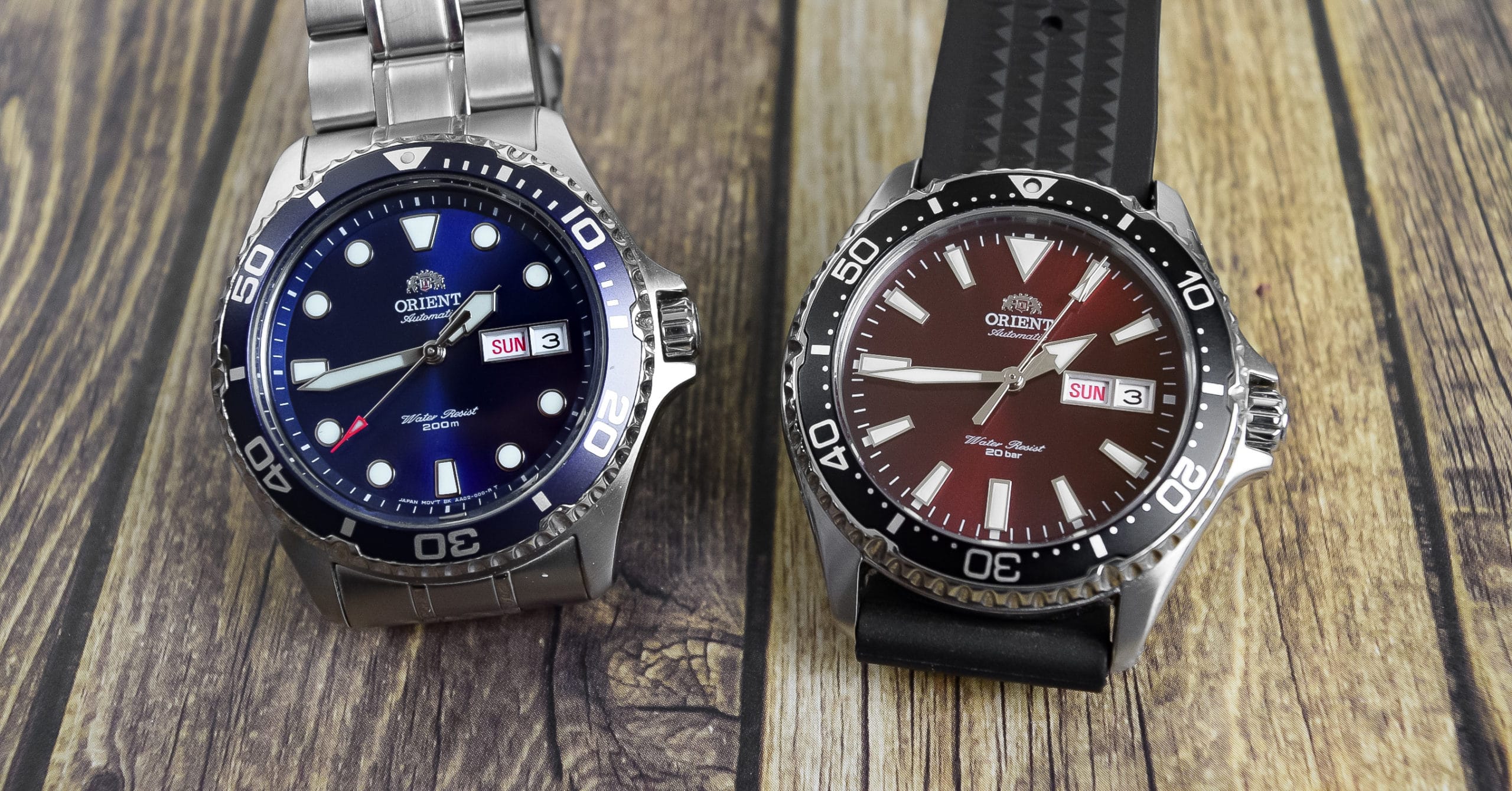
The Orient Mako II is the watch a lot of us point to when someone wants a real automatic diver without the drama. It carries the shape and proportions that made the original Mako a hit back in 2004, then updates the parts that used to frustrate owners. When we reviewed the Mako II, the thing that stood out was how comfortably it disappears into a rotation. The blue sunburst dial, the brushed-and-polished case, the classic 41.5mm footprint. None of it shouts, and that restraint is a big part of the appeal. It’s the kind of watch you stop thinking about once it’s on, in the best way.
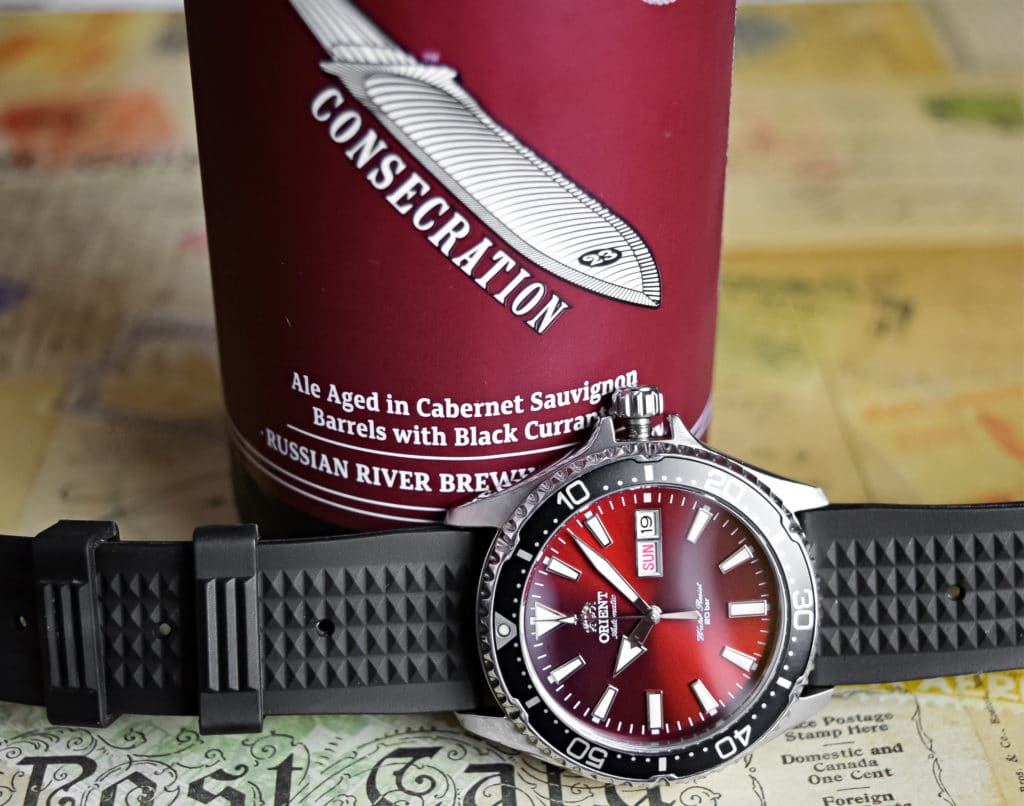
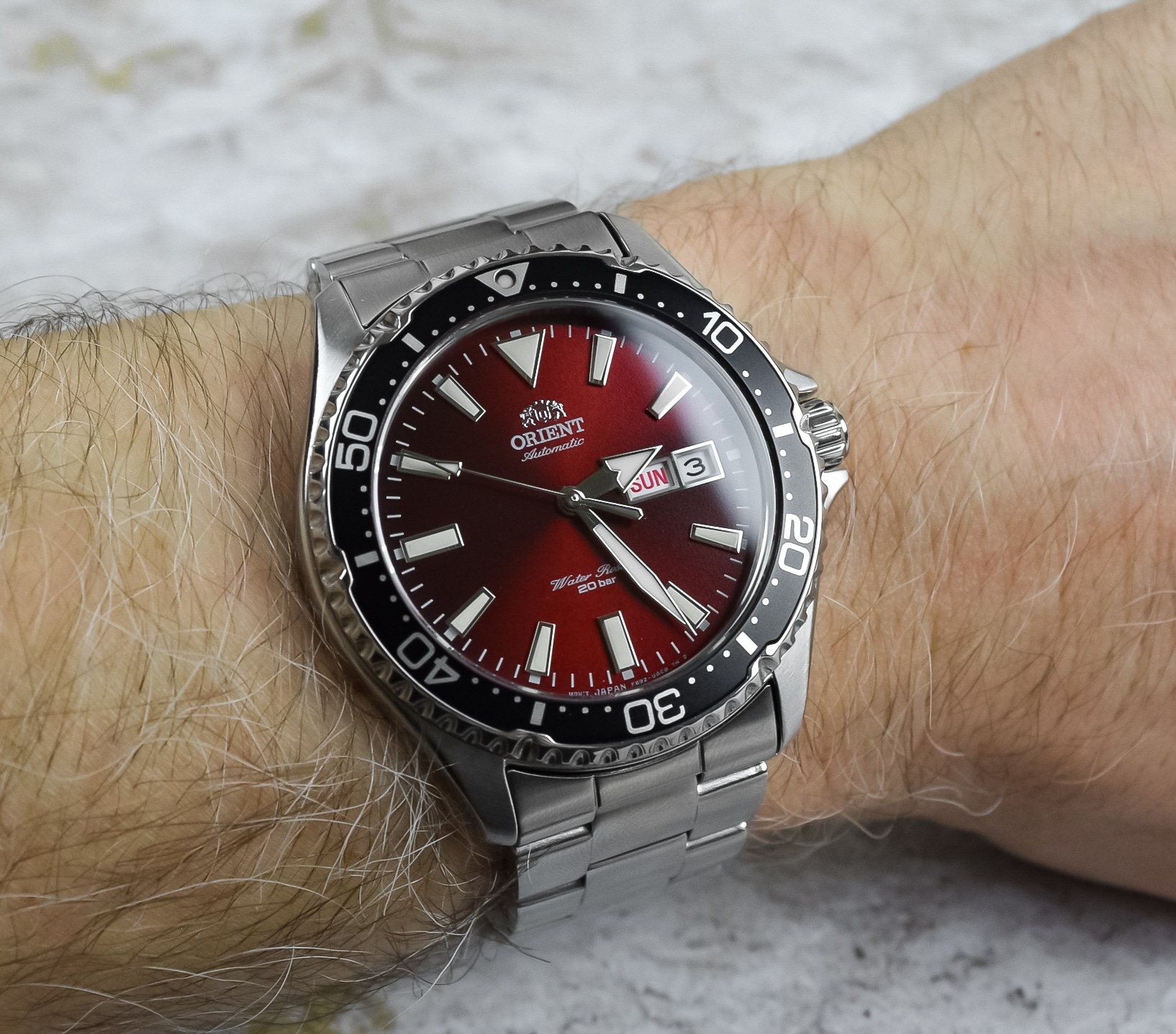
The Orient Kamasu covers the same core idea with a sharper edge. Orient positions it as the successor to the Mako II, and some retailers even list it as the “Mako 3,” which tells you where it sits in the family tree. Our Kamasu review kept circling back to the same word: value. A wine-red dial with a ruby sunburst, applied indices that seem to float without a chapter ring, and lume bright enough to trade blows with any Seiko diver. The Kamasu wants to be noticed a little more than the Mako II does, and it backs that up with a sapphire crystal the older watch skips at this reference. On the wrist, it reads as the more contemporary of the two.
- The Orient Mako II is the understated classic of the pair, and it earns its spot by making an automatic diver feel easy to live with at a low price.
- The Orient Kamasu is the sharper, more modern take, adding a sapphire crystal, brighter lume, and a bolder dial for a small step up in cost.
Dial, Bracelet & Wearability: Understated Blue vs Bold Wine Red
The Mako II plays its dial straight, and that works in its favor. The blue sunburst shifts with the light and gives the applied markers something to sit against. Thin polished frames line the indices and the day-date window, which keeps the whole face looking finished rather than flat. Sword hands and a red-tipped spear seconds hand round it out, with that single stroke of red doing more work than you’d expect. A raised, beveled chapter ring carries the minute track around the edge. It’s a familiar layout, executed with enough care that it never feels generic.

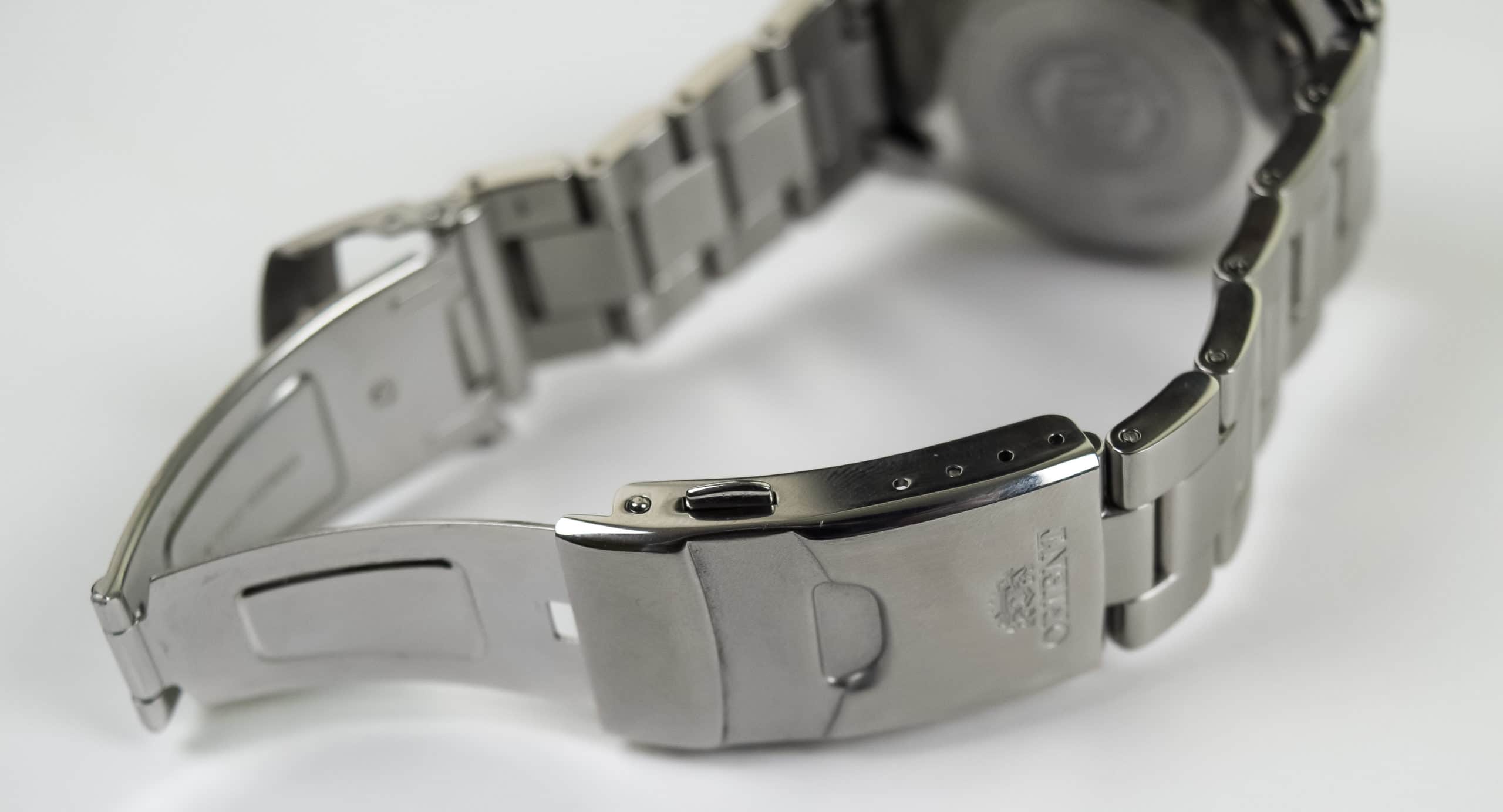
The bracelet surprised us more than the dial did. Orient went with oyster-style links, brushed on top and polished on the sides, and the way they meet the case gives the watch a cohesive feel that budget divers often miss. The end links are hollow, which you’ll notice the moment you handle them off the wrist. On the wrist, though, that compromise mostly fades. The double-locking clasp with micro-adjustments holds securely, and the sand-blasted inner fold is a small touch that shows someone was paying attention.
The Kamasu turns the dial up. That wine-red surface reveals a ruby sunburst in direct light, and the applied indices float above it without a chapter ring to hem them in. The handset stretches long, with the minute and seconds hands reaching all the way to the dashed outer track. It’s a busier, more assertive face than the Mako II’s, and the framed day-date plus the red-accented Orient logo keep it from tipping into chaos. Where the Mako II settles down, the Kamasu leans forward.
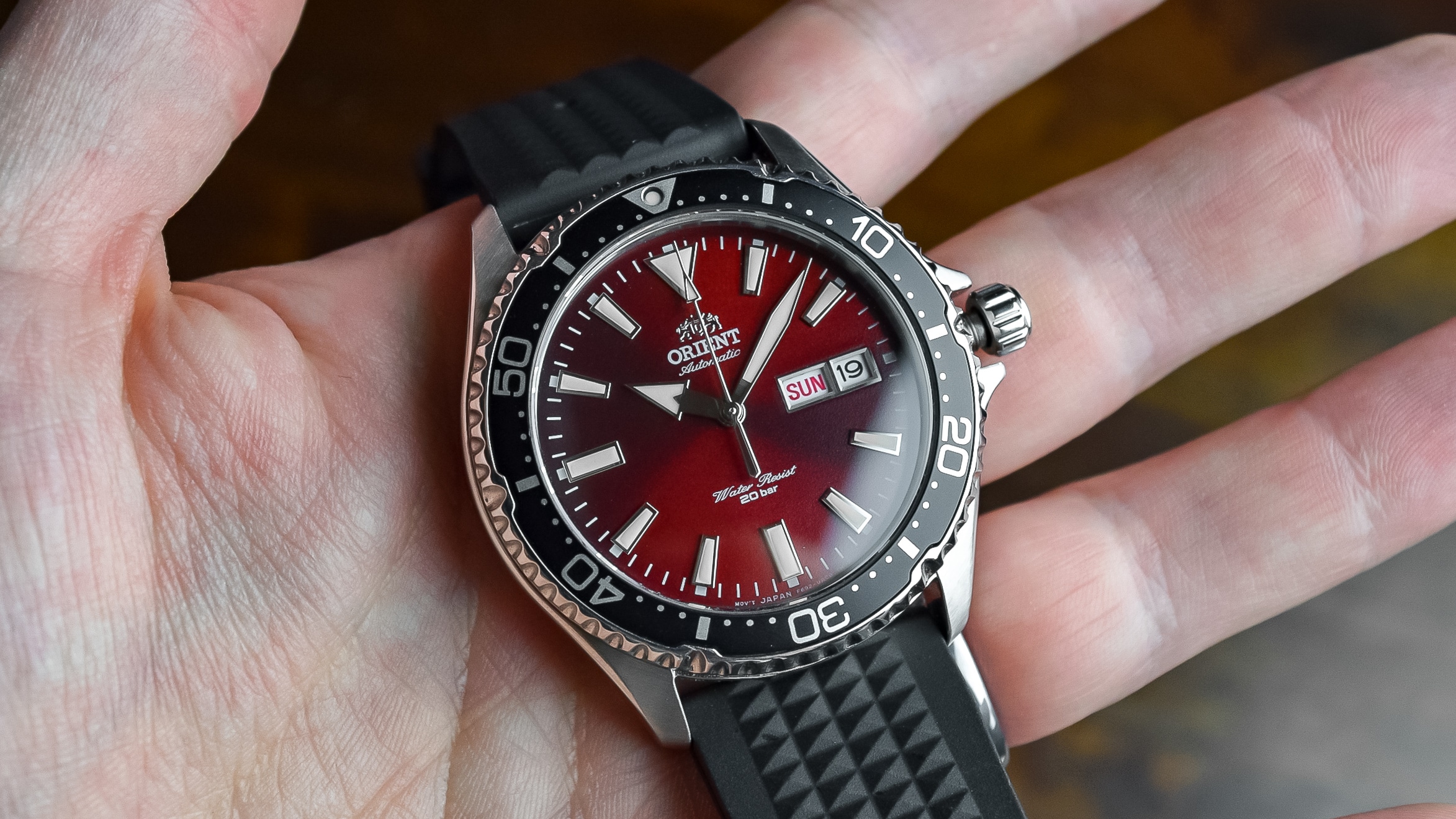
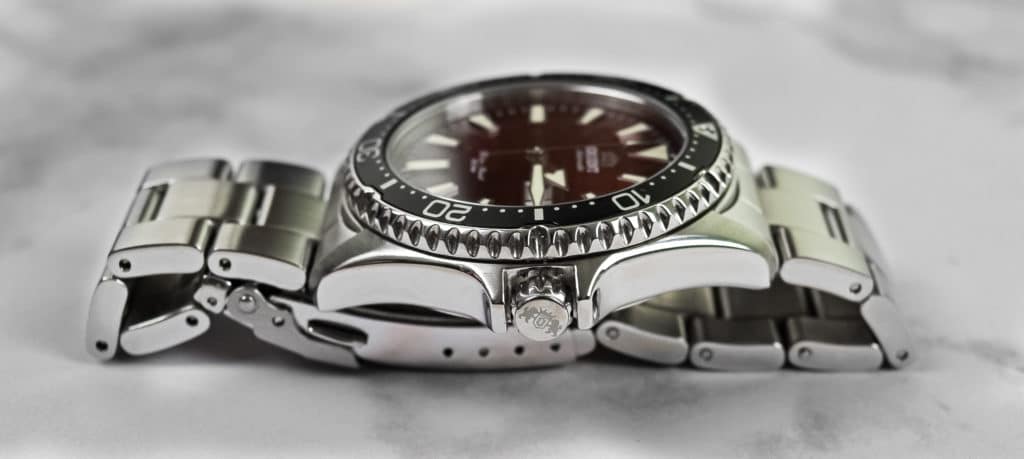
Orient chose a fully brushed bracelet for the Kamasu, and we’re glad they did. The matte finish suits the watch’s tool-diver character better than a mix of polish would. It’s another oyster-style design with hollow end links, sized with standard split pins. The clasp is a pressed-metal, double-push deployant with a fold-over safety and four micro-adjustment slots. It’s less refined than the Mako II’s stamped clasp in the hand, though it locks up secure and gets the job done. Comfort on the wrist is where both watches land in the same place.
- The Mako II keeps its dial understated and its bracelet cohesive, trading outright brightness for a look that’s easy to wear with anything.
- The Kamasu pushes a bolder dial and a fully brushed bracelet, giving it more presence at the cost of some visual calm.
Build Quality & Technical Approach
The Mako II and Kamasu share more hardware than almost any other pair we’ve cross-shopped, which makes the differences that remain worth examining closely. This is usually where a comparison splits two watches apart. Here, it mostly reveals how much the two have in common, then isolates the few areas where Orient drew a line between them. Movement, case, crystal, bezel, water resistance, and lume. Those are the pieces that decide this one.
Movements:

Both watches run the Orient F6922, so the movement conversation is really one conversation. This is the caliber that fixed the old Mako’s biggest complaint. The original 2004 Mako used the 46943, a movement that traced back to a licensed 1970s Seiko design and skipped both hacking and hand-winding. The Mako II swapped it for the F6922, which hacks, hand-winds, and folds the quickset day into the crown rather than the old 2 o’clock pusher. It’s a 22-jewel automatic beating at 21,600 bph with a 40-hour power reserve. Orient’s published accuracy sits around minus 15 to plus 25 seconds per day, and in practice it holds up fine for a watch at this price.
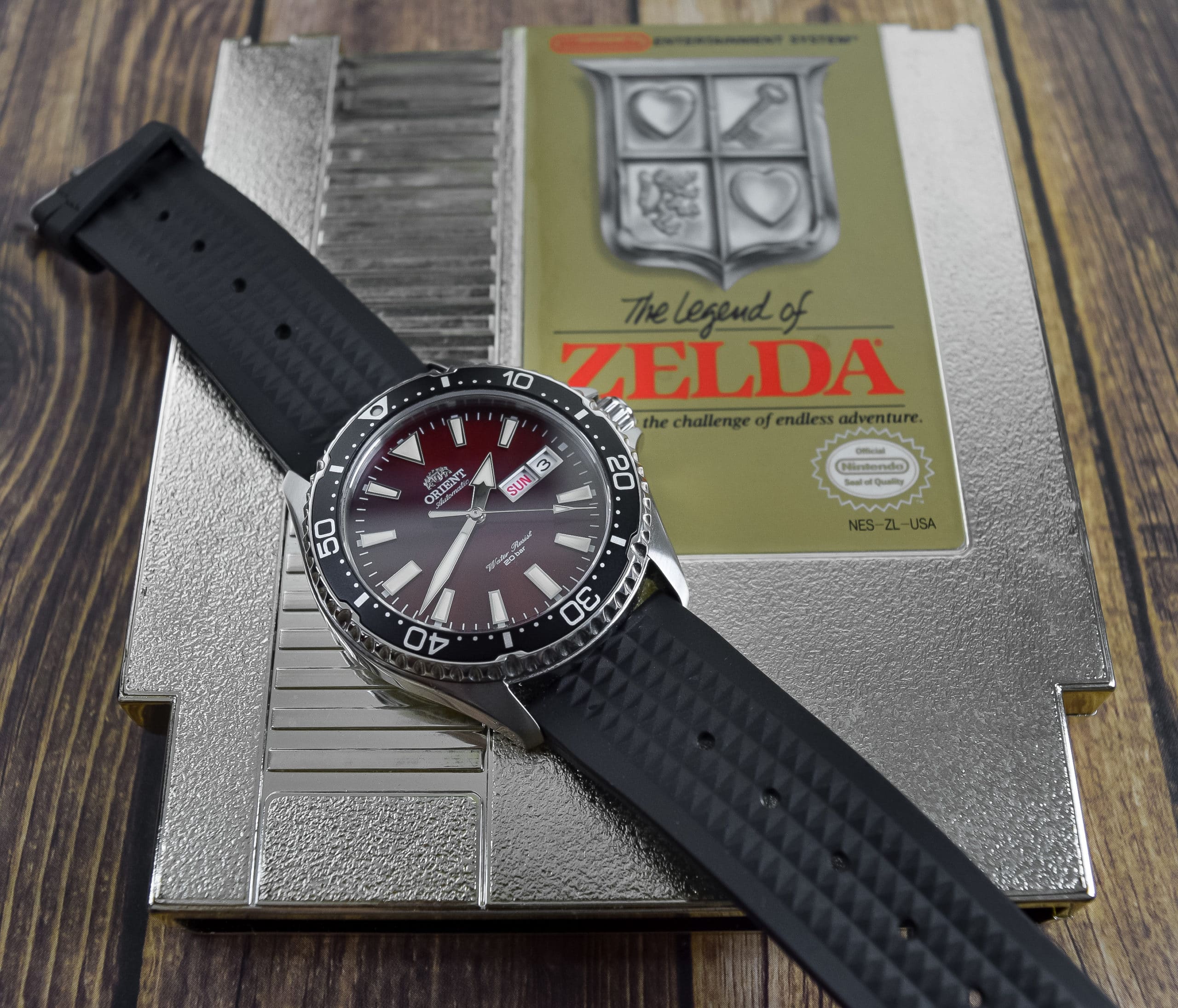
The Kamasu uses the same F6922, with the same hacking, hand-winding, and quickset day. That’s worth stating plainly, because the Kamasu’s “more modern” reputation can lead buyers to assume a better engine sits inside. It doesn’t. The two watches keep identical time by identical means. A few outside listings describe the Kamasu with a different caliber designation, but both of our reviews and the current retailer specs put the F6922 in each watch. If the movement is your deciding factor, there’s nothing here to separate them.
Case Construction & Finishing:

The case is the other place these two overlap almost completely. Both measure 41.5mm across, 47mm lug to lug, and 13mm thick, with 22mm lugs. On the Mako II, the standout detail is how the finishing transitions. The case sides are high polished, the lug tops are matte brushed, and the line between them is so clean it’s almost hard to spot. Orient nailed the handoff between bracelet and case too, so the two read as one object rather than a watch wearing a strap. For a diver in this bracket, that kind of continuity is rare.
The Kamasu shares that case, and the finishing follows the same brushed-top, polished-side recipe. Nothing about it is fancy, though it’s executed cleanly, and the gently downturned lugs help it settle onto a range of wrist sizes. The 13mm thickness keeps it accessible for daily wear. The one case-level knock is the crown. It runs small, and combined with the crown guards, screwing it down can take more fumbling than it should. We usually reached for a shirt cuff to get enough grip, which is the sort of thing you notice every single day.
Crystals & Bezels:

Here’s the first real fork. The Mako II reference we reviewed, the FAA02002D9, uses a mineral crystal rather than sapphire. At this price we don’t hold that against it, and Orient uses the savings to keep the watch cheap. Worth noting that the USA-market Mako II variant does ship with sapphire, so the line isn’t entirely without it. The bezel is a 120-click aluminum-insert unit with a high-polished coin edge. Getting a grip on it can be awkward thanks to the sloped top, but once it moves, the action is solid and the click is satisfying.
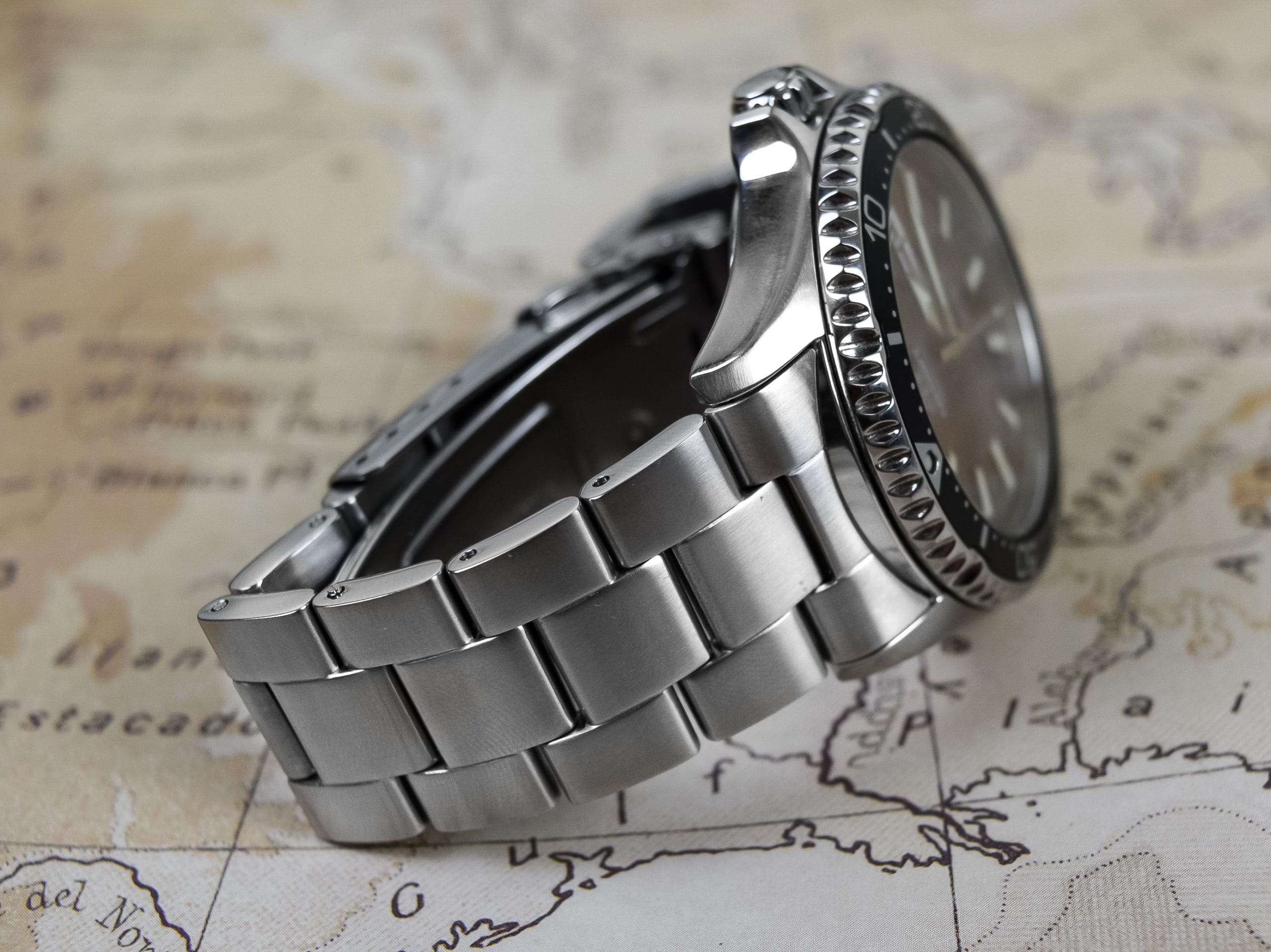
The Kamasu answers with a flat sapphire crystal, and that’s the single biggest reason to spend more here. Sapphire resists scratches in a way mineral simply doesn’t, and finding it at this price used to be the exclusive territory of pricier divers. The bezel is also a 120-click aluminum-insert design, and its coin edge can be tricky to grip just like the Mako II’s. On our example, the action was smooth and consistent enough that turning it was easy once you found purchase. If daily scratch resistance matters to you, the crystal alone starts making the Kamasu’s case.
Water Resistance & Lume:

Water resistance is another dead heat. Both watches carry a 200-meter rating with a screw-down crown and screw-down caseback, which is more than enough for swimming, snorkeling, or ignoring the rain entirely. Lume is where they part ways. The Mako II’s lume is fine for a glance in a dark room, though it won’t embarrass a modern Seiko. It does the job without ever becoming a selling point, and for a lot of buyers at this price, fine is plenty.
The Kamasu matches the 200 meters and the screw-down hardware, then pulls decisively ahead on lume. Ours glowed bright and charged fast, the kind of application that can stand next to any Seiko diver without flinching. It’s the sort of upgrade you don’t think about in the store and appreciate every night after. Paired with the sapphire crystal, the lume is the clearest evidence that the Kamasu spent its extra money on things you actually use rather than things you only read about.
- The Mako II gets every fundamental right, from the shared F6922 to the 200-meter case, and only gives ground on crystal material and lume brightness.
- The Kamasu takes the same foundation and adds the two upgrades that matter most in daily wear, a scratch-resistant sapphire crystal and noticeably stronger lume.
Cost Considerations
The Mako II remains one of the safer low-cost buys in this category. Depending on the retailer, the blue FAA02002D9 tends to land in the low $200s new, and it turns up used for well under that. For a made-in-Japan automatic diver with a hacking movement, a well-sorted bracelet, and 200 meters of water resistance, that number still looks a little unreasonable in the buyer’s favor. You’re accepting a mineral crystal and merely adequate lume to hit that price, and for plenty of people that’s an easy trade.
The Kamasu asks for a modest step up. Street prices generally sit in the $250 to $300 range depending on dial and retailer, against an Orient USA list price closer to $375. That’s roughly $50 to $100 over the Mako II in most carts. What that premium buys is specific and easy to point at: the sapphire crystal, the brighter lume, and the bolder dial. It isn’t a huge sum, and unlike a lot of upsells in this hobby, the extra money maps directly onto parts you’ll touch and see every day.
Final Thoughts: Does The Kamasu’s Upgrade Actually Matter?
After living with both, the question we keep coming back to is whether the Kamasu’s upgrades justify the step up in price. For most buyers shopping this pair, we think they do. The two watches are close to identical where it counts for reliability and wearability, since they share a case, a movement, and a water-resistance rating. The Kamasu then adds the two things people tend to wish for after a few months with an affordable diver: a crystal that won’t scratch and lume that actually lights up the night. Those aren’t dramatic changes on paper. In daily use, they’re the changes you feel most.

The Mako II is still an easy watch to recommend, and there are real reasons to choose it. It costs less, its blue-dial restraint has aged beautifully, and the mineral crystal keeps the price where it is. If the classic look pulls you and you don’t mind babying the crystal a bit, nothing about the Mako II will let you down.
So here’s our verdict:
- Choose the Orient Kamasu if you plan to wear it hard and want the upgrades that hold up over time. The sapphire crystal and brighter lume are worth the small premium for most buyers, which makes it our pick of the two.
- Choose the Orient Mako II if you’re after the lower price and the more understated, classic look. You give up sapphire and some lume brightness, though you keep the same movement, case, and dependability for less money.
The gap between these two is small, which is exactly why it’s worth getting right. Both watches deliver the affordable-diver experience that made Orient a default answer in this space, so there’s no wrong pick here, only the one that fits how you’ll actually wear it. For most people, the Kamasu’s sapphire and lume tip the scales for a price that barely moves. The Mako II is still the value play, and for some buyers that classic blue dial will settle the question before the crystal ever enters the conversation. Either way, you end up with a watch that’s tough to argue against.

Co-Founder & Senior Editor
Michael Peñate is an American writer, photographer, and podcaster based in Seattle, Washington. His work typically focuses on the passage of time and the tools we use to connect with that very journey. From aviation to music and travel, his interests span a multitude of disciplines that often intersect with the world of watches – and the obsessive culture behind collecting them.