The affordable automatic GMT market has gotten pretty crowded since Seiko introduced the 5 Sports GMT back in 2022. The NH34 movement eventually made its way into countless microbrand releases, giving enthusiasts plenty of options for tracking a second time zone without spending a fortune. Four years later, Orient has finally joined the conversation with the new Kamasu GMT. I think this one was overdue, and I’m glad to see it happen.
I’ve always had a soft spot for Orient. A Mako was actually my first mechanical watch, and I’ve enjoyed watching the brand develop its affordable dive watch lineup over the years. The Kamasu arrived in 2019 with a slightly more aggressive design than its Mako predecessors, and adding a GMT complication seems like a reasonable next step. I’m also happy Orient chose to build on an existing model rather than introduce an entirely new design.
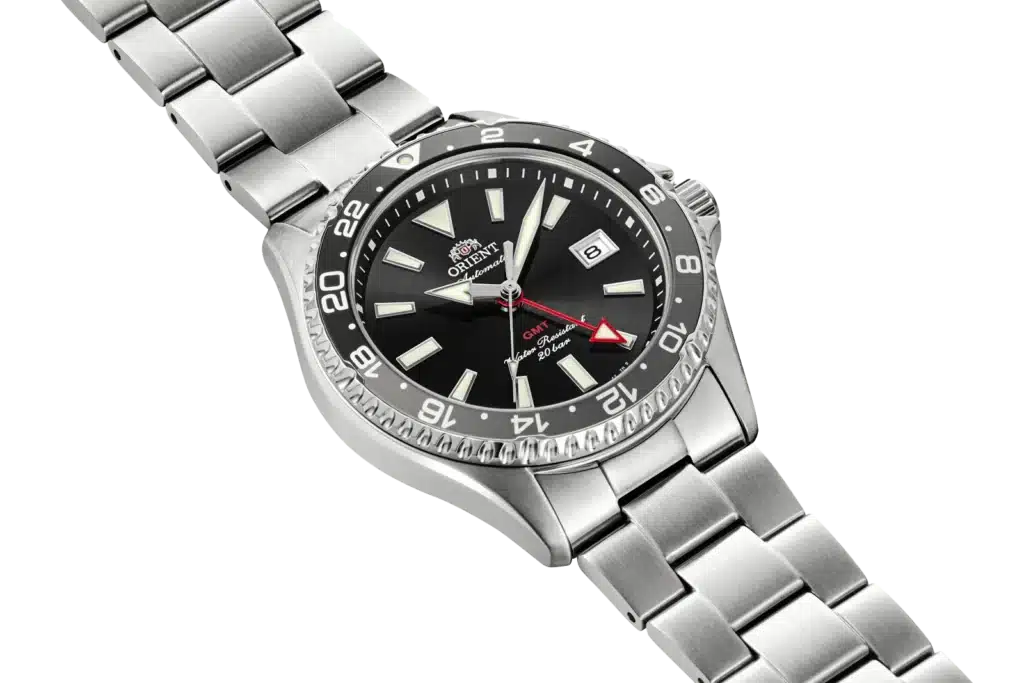
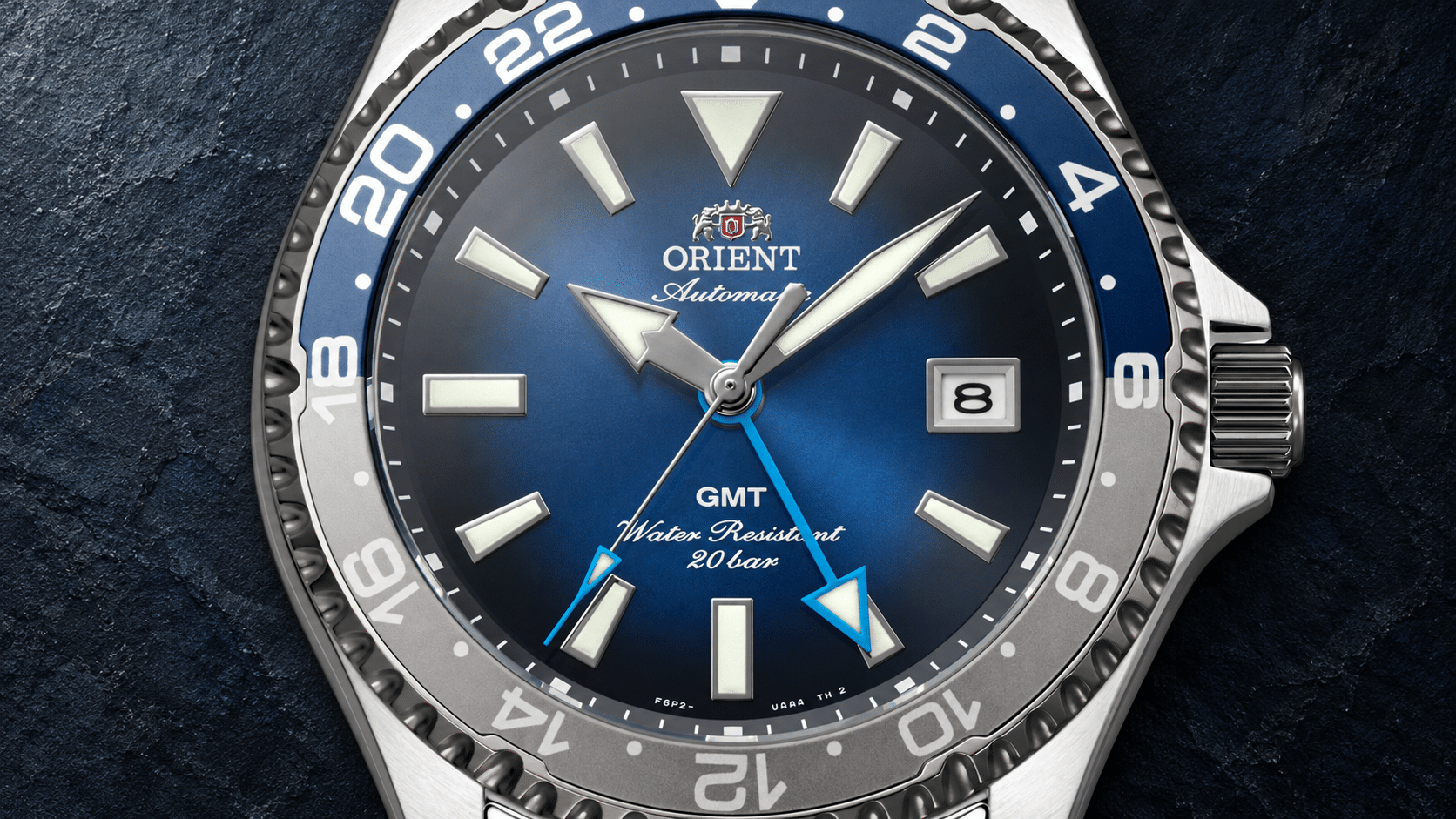
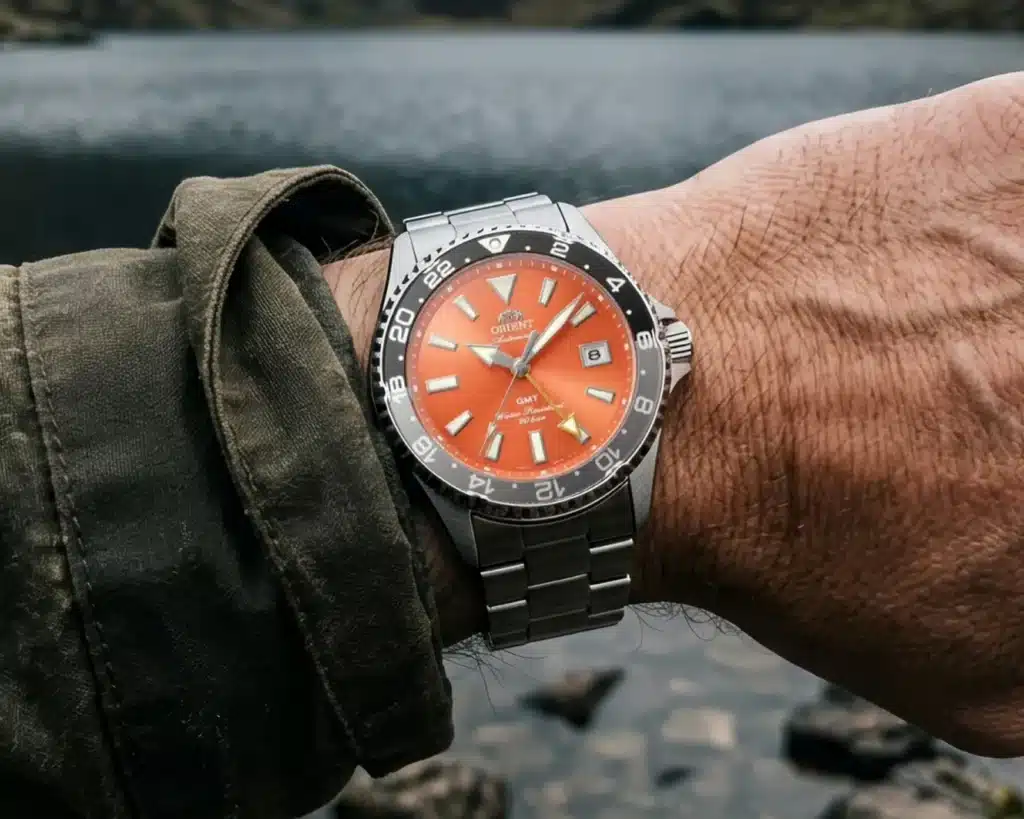
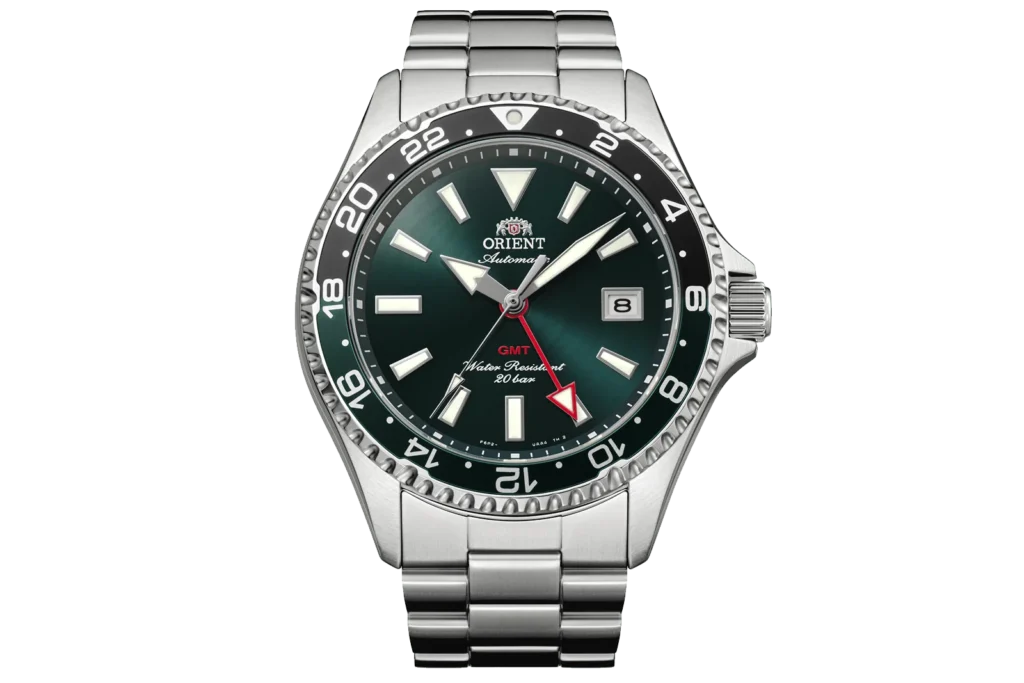
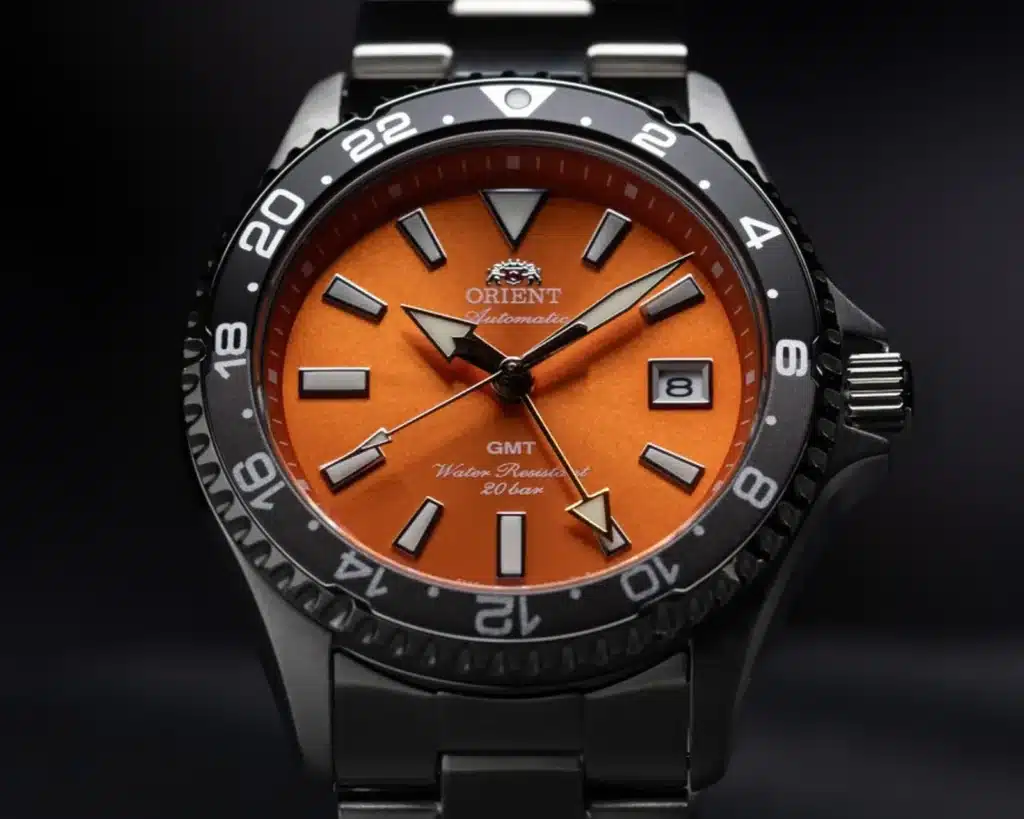
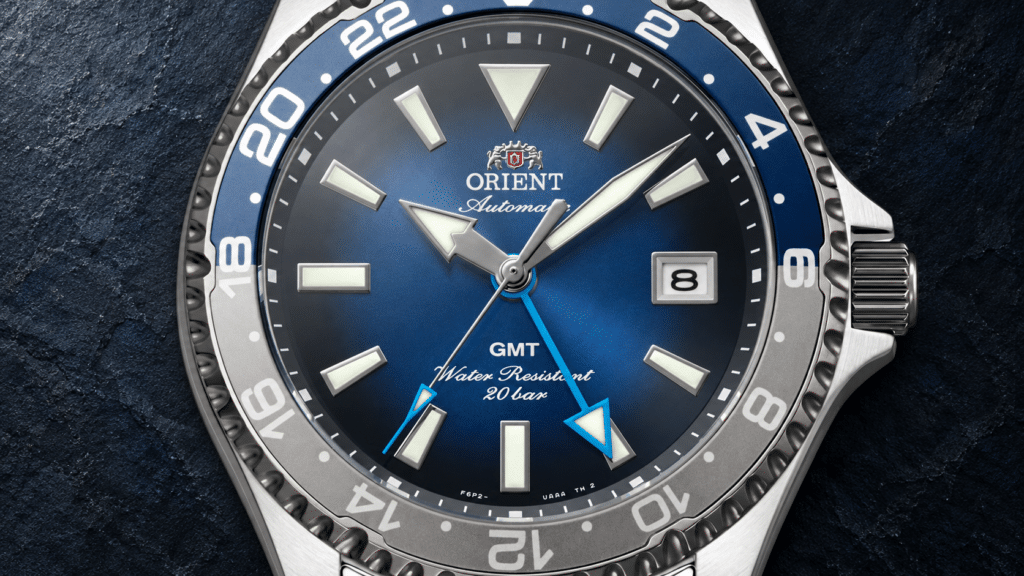
The new Kamasu GMT retains much of what made the original recognizable. Its stainless steel case has grown from 41.8mm to 42.8mm, with a thickness of 13.4mm and a lug-to-lug measurement of 49.5mm. The familiar angular handset and applied hour markers are still here, joined by an additional arrow-tipped GMT hand and a 24-hour bezel. The day-date display has also been replaced by a framed date window at three o’clock.
To me, the Kamasu (reviewed here) has always had a more appealing design than the Seiko 5 Sports. I prefer the sharper hands and traditional dive watch styling, and I think those details translate well to the GMT version. The dial retains its familiar character, even with the additional hand and markings. Of course, the slightly larger case is something I’d want to experience before drawing any conclusions about wearability.
Orient has also retained the sapphire crystal and 200 meters of water resistance. That gives the Kamasu a practical specification advantage over the 100-meter-rated Seiko 5 Sports GMT. One curious detail is the unidirectional 24-hour bezel, which offers less flexibility than a bidirectional bezel when adjusting for additional time zones.
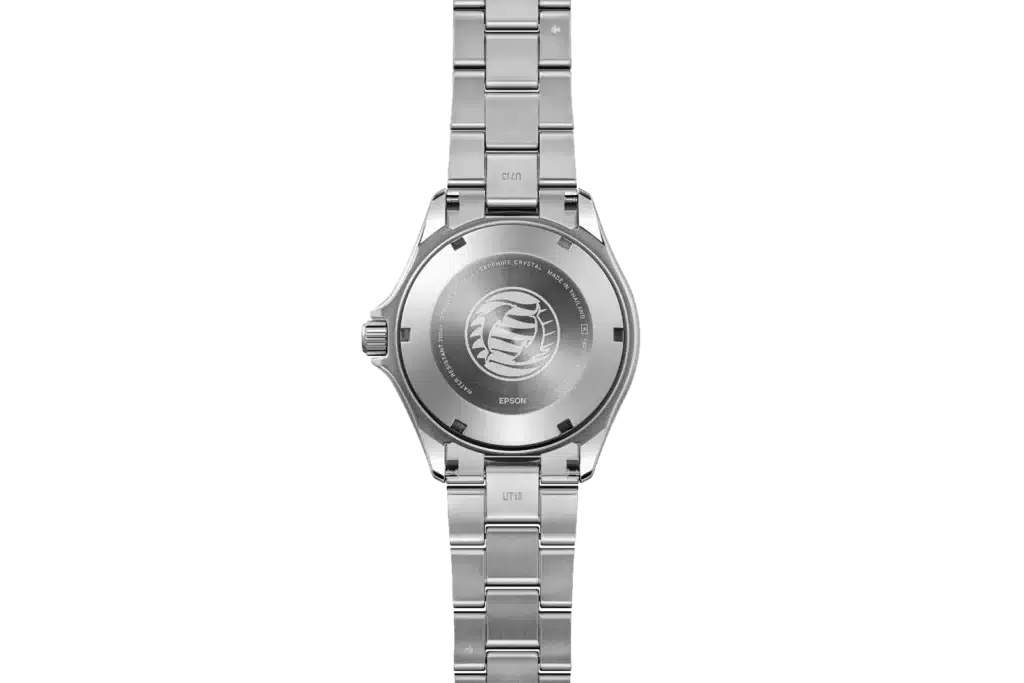
Inside, Orient uses its new Caliber F6P22 automatic movement, which appears to build on the company’s established F6922 architecture. It offers hacking, hand-winding, and a power reserve of over 40 hours. The movement (and this is where Orient may lose a few people) uses a permanently “slaved” GMT hand, meaning the secondary timezone can only be achieved by manipulating the 24-hour bezel.
I think the movement is one of the more interesting parts of this release. Orient continues to develop its own mechanical calibers, and I appreciate having another option in a market where the NH34 has become so common. But thanks to Seiko, caller GMT functionality is familiar territory at this price. We’ll really have to see if buyers will go for something like this when the GMT adjustment feels so limited.
The Kamasu GMT launches with four regular-production dial options in green, blue, black, and orange, along with a limited-edition dark blue model. Regular models carry a $625 MSRP, although Orient Watch USA currently lists them for $495.
In my opinion, $495 seems reasonable for an automatic GMT with a sapphire crystal, stainless steel bracelet, and 200 meters of water resistance. The $625 MSRP is a little harder to reconcile, especially given Orient’s tendency to advertise substantial discounts directly through its own storefront.
My take is that Orient has made a sensible addition to the Kamasu lineup. It took a few years to get here, and the affordable GMT market has changed considerably in that time. Still, I like the direction. I’d be curious to see how the larger case wears and whether the F6P22 delivers the same straightforward experience I’ve come to associate with Orient’s mechanical watches.

Co-Founder & Senior Editor
Michael Peñate is an American writer, photographer, and podcaster based in Seattle, Washington. His work typically focuses on the passage of time and the tools we use to connect with that very journey. From aviation to music and travel, his interests span a multitude of disciplines that often intersect with the world of watches – and the obsessive culture behind collecting them.
Hey there, big fan TBWS, but the GMT hand can not be moved independently. This is a GMT Master style watch; the bezel needs to be moved to indicate a second time zone.
Thank you! Fixed. Can’t believe I missed that. Certainly a strange choice for Orient. But in some ways, I like the ease of getting to my second time zone with just a twist of the bezel (original GMT Master or Glycine Airman).
Agreed. It is charmingly old school. Would love to know why they went that route, though. They used to have GMT movements…
While perhaps not the true “budget GMT-Master II” we all wish it was, it does still seem like a nice watch. I will make one quick point regarding bezel, though. While you’re correct a bidirectional bezel would be more useful for GMT purposes, a lume-piped uni-directional bezel does let it keep full dive watch functionality.
Considering that this is definitely a dive watch first, GMT second, that feels like the right choice for Orient to make. It also means they can just use the standard Kamasu bezel with a new insert (which is honestly probably the real reason they kept it that way).
True. I’m sure it helps with cost/retooling production. Either way, I want to get one in to test out once they’re more readily available in the US.