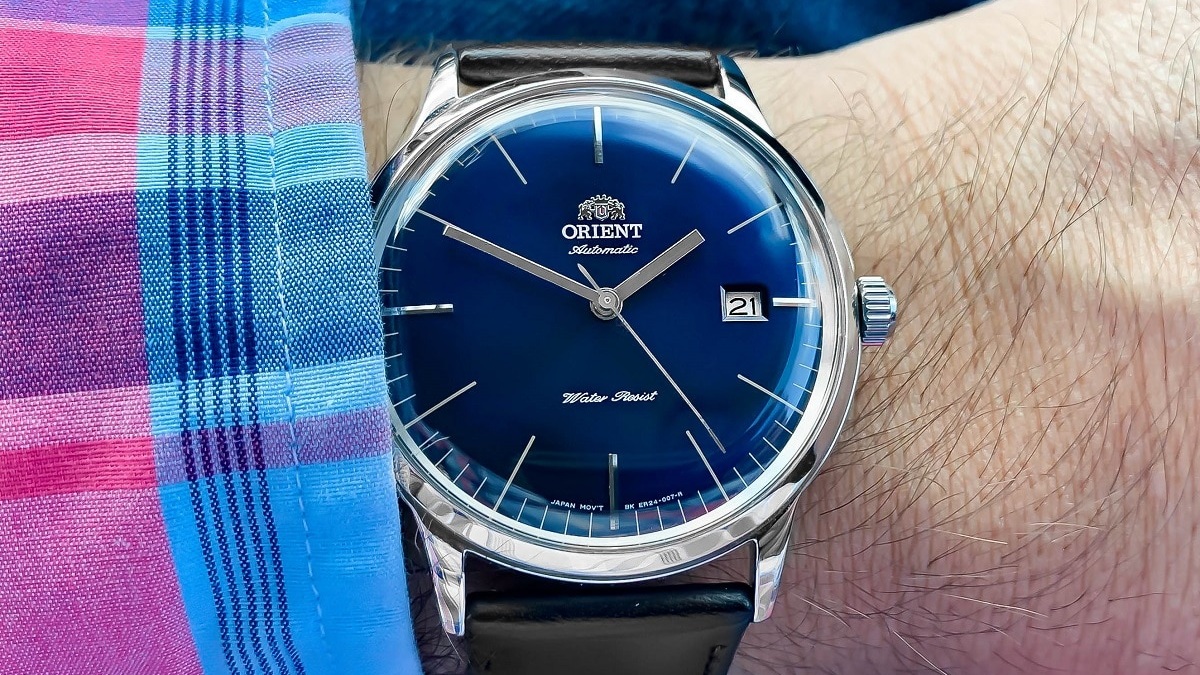
Dress watches are easy to overspend on, especially when people mistake a higher price for a better watch. The Orient Bambino and Mido Commander Datoday put that assumption to the test. Their price gap raises a more useful question than which one looks better: Does the Mido make a convincing case for the premium, or is the Bambino’s lower price harder to ignore? That’s the decision this comparison needs to settle.
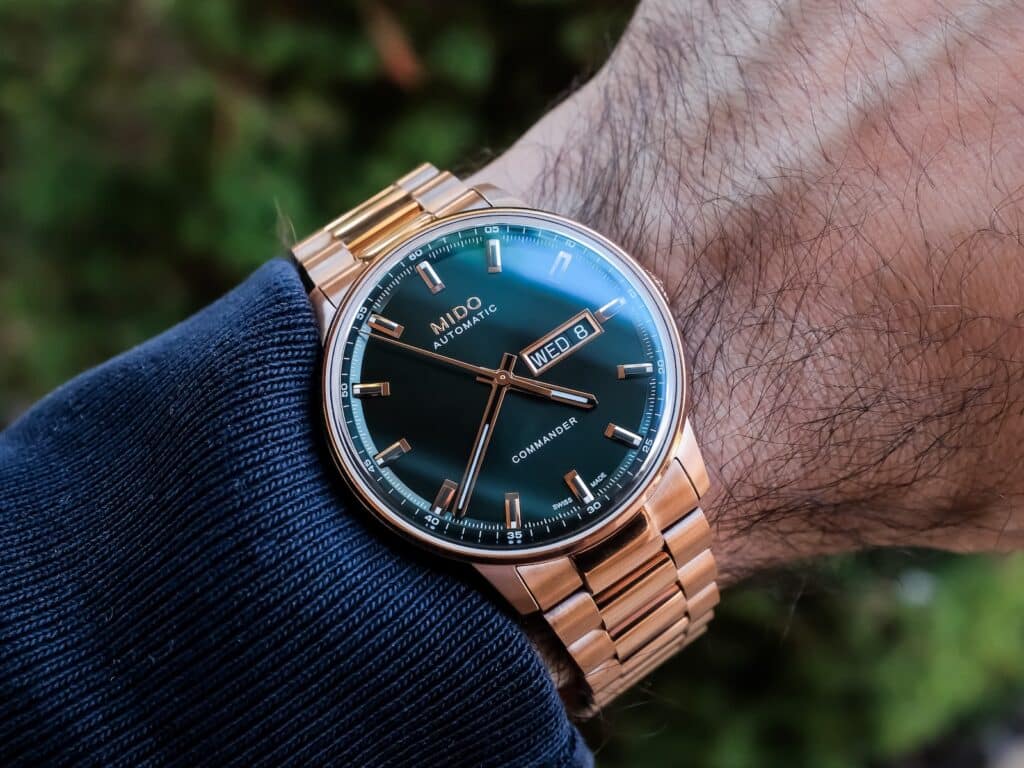
After a decade of hands-on reviews at Two Broke Watch Snobs, we’ve learned to treat specifications and brand reputation as a starting point, not the final word. Our reviews of the Orient Bambino and Mido Commander Datoday give us a grounded basis for examining what works, what falls short, and which compromises we’d be willing to live with.
Overview and Identity
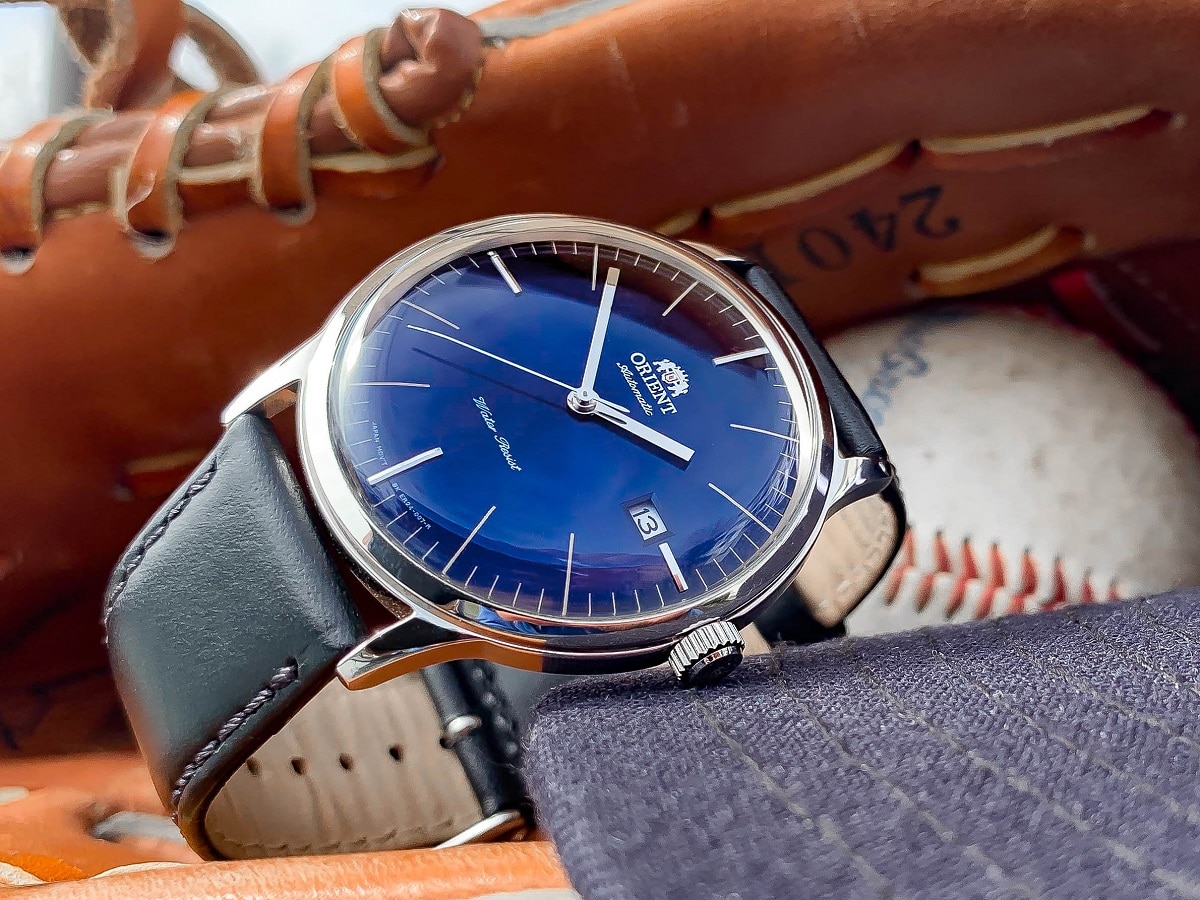
The Orient Bambino is one of those entry-level mechanical watches that people tend to love or hate, with very little room for a diplomatic middle ground. We get both sides, but its appeal is straightforward: it gives us a taste of mechanical watch collecting while still being affordable. In our Orient Bambino review, we saw it as a sensible starting point for anyone still figuring out what kind of watch enthusiast they want to be. It also makes a strong case for itself in the early-career wardrobe. At a business-casual or formal interview, the Bambino fits right in without requiring a luxury-watch budget. The Bambino is a starting point, not necessarily the watch we’ll spend the next 30 years talking about.
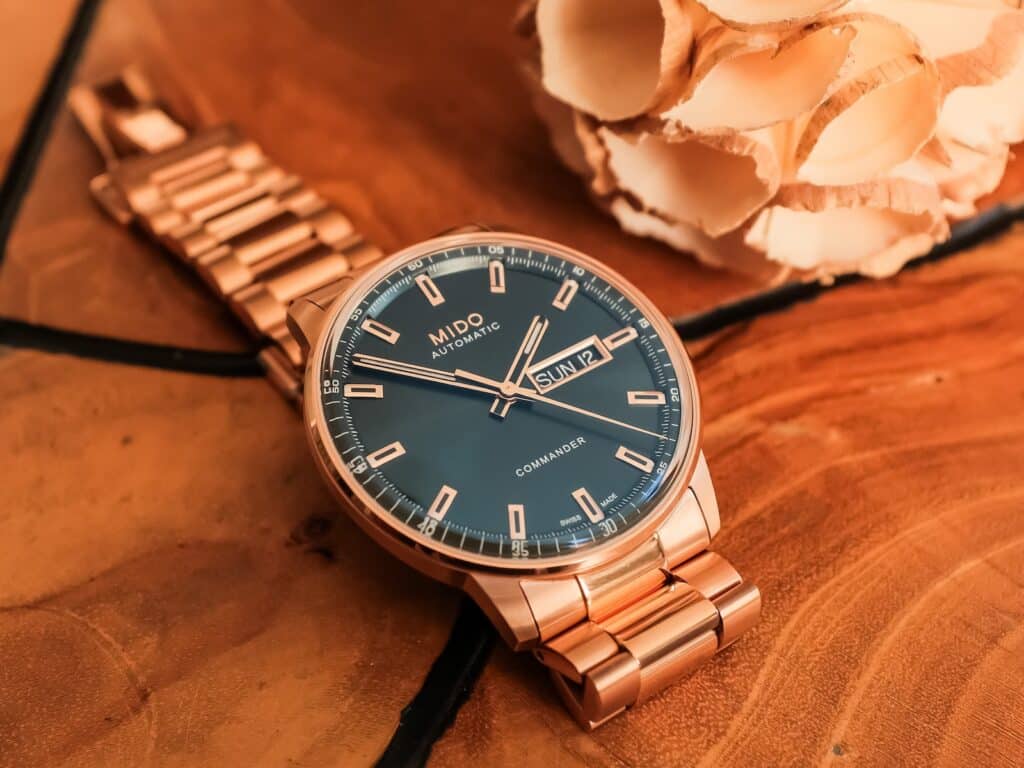
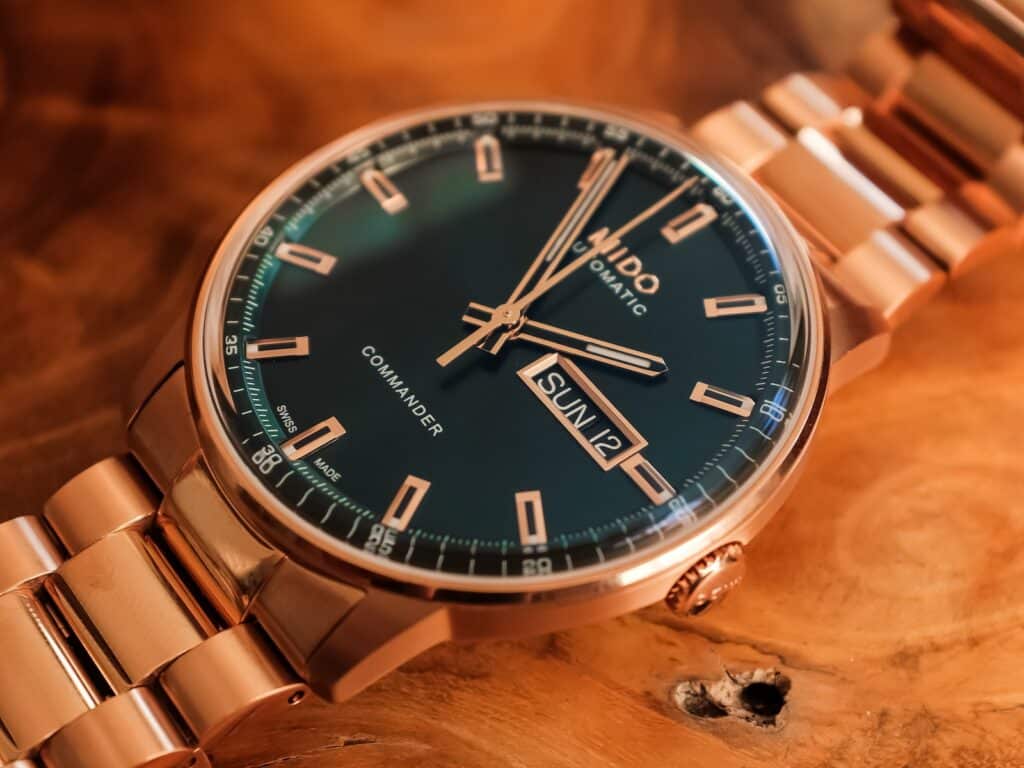
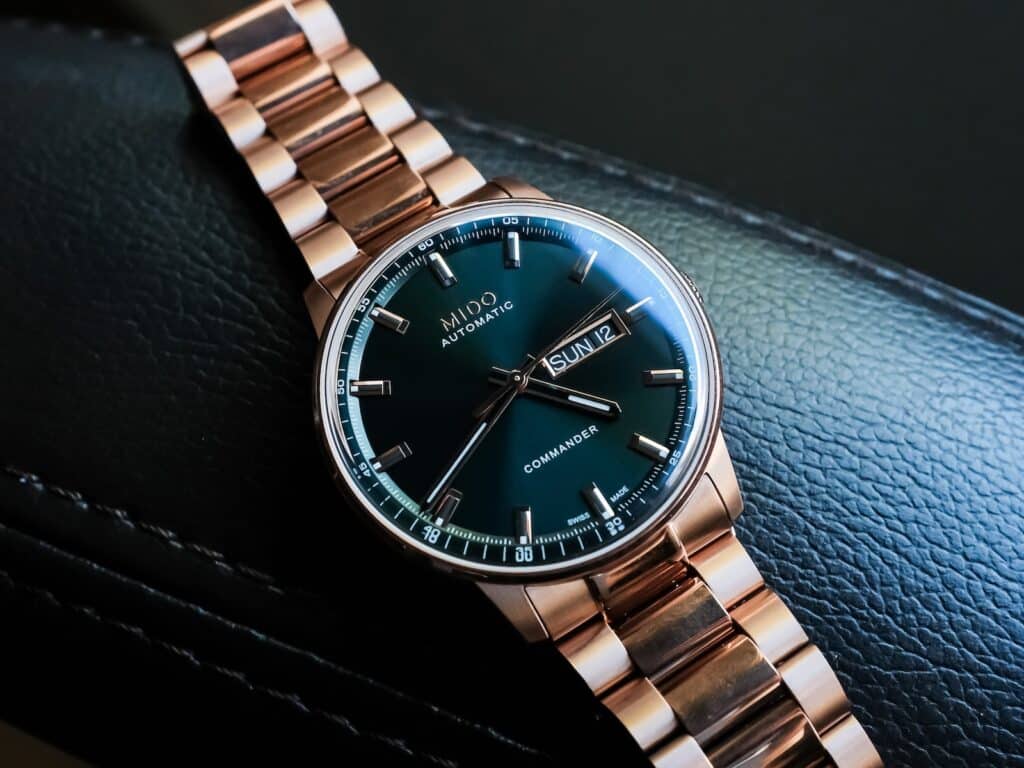
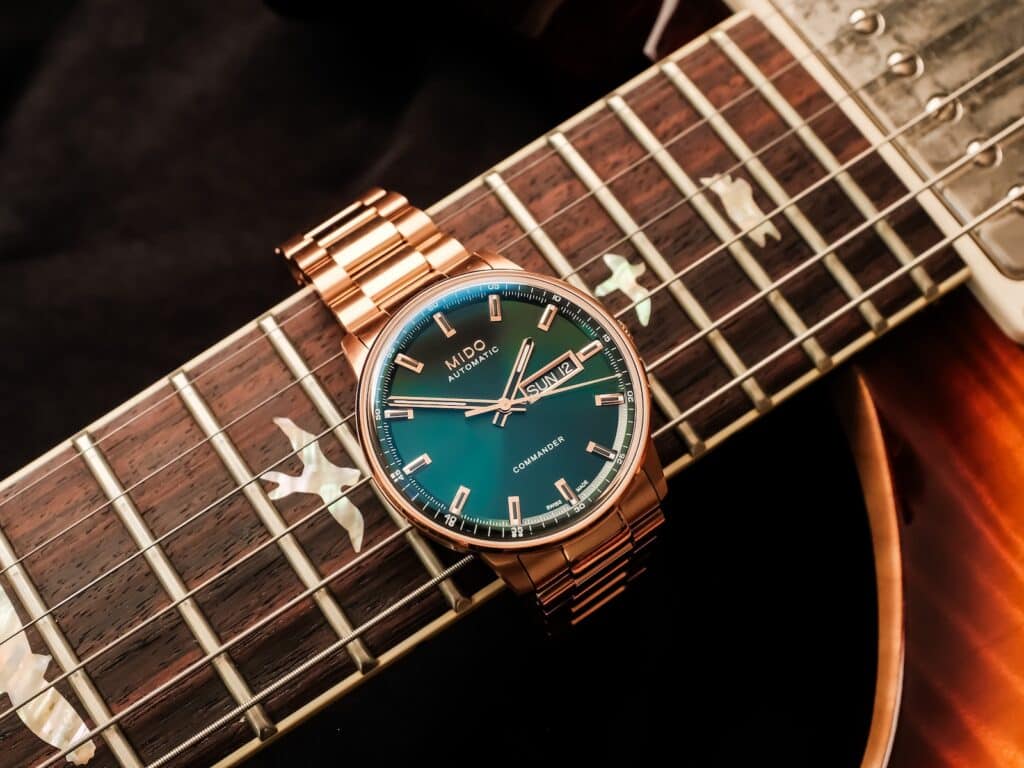
The Mido Commander Datoday takes a different route, with a design that feels at home during an ordinary workday but doesn’t need to be put away when the occasion gets a little dressier. We spent time reviewing the rose-gold-tone PVD-coated steel case and bracelet paired with a green dial. That combination gives the watch personality without letting the warm finish take over the whole look. The green dial keeps things grounded, and its character changes with the light. We like that the retro influence feels natural rather than manufactured to sell us a story about the good old days. It’s distinctive enough to hold our attention, but versatile enough that we don’t have to save it for special occasions.
Dial and Straps/Bracelets: Affordable Charm vs Better-Resolved Details
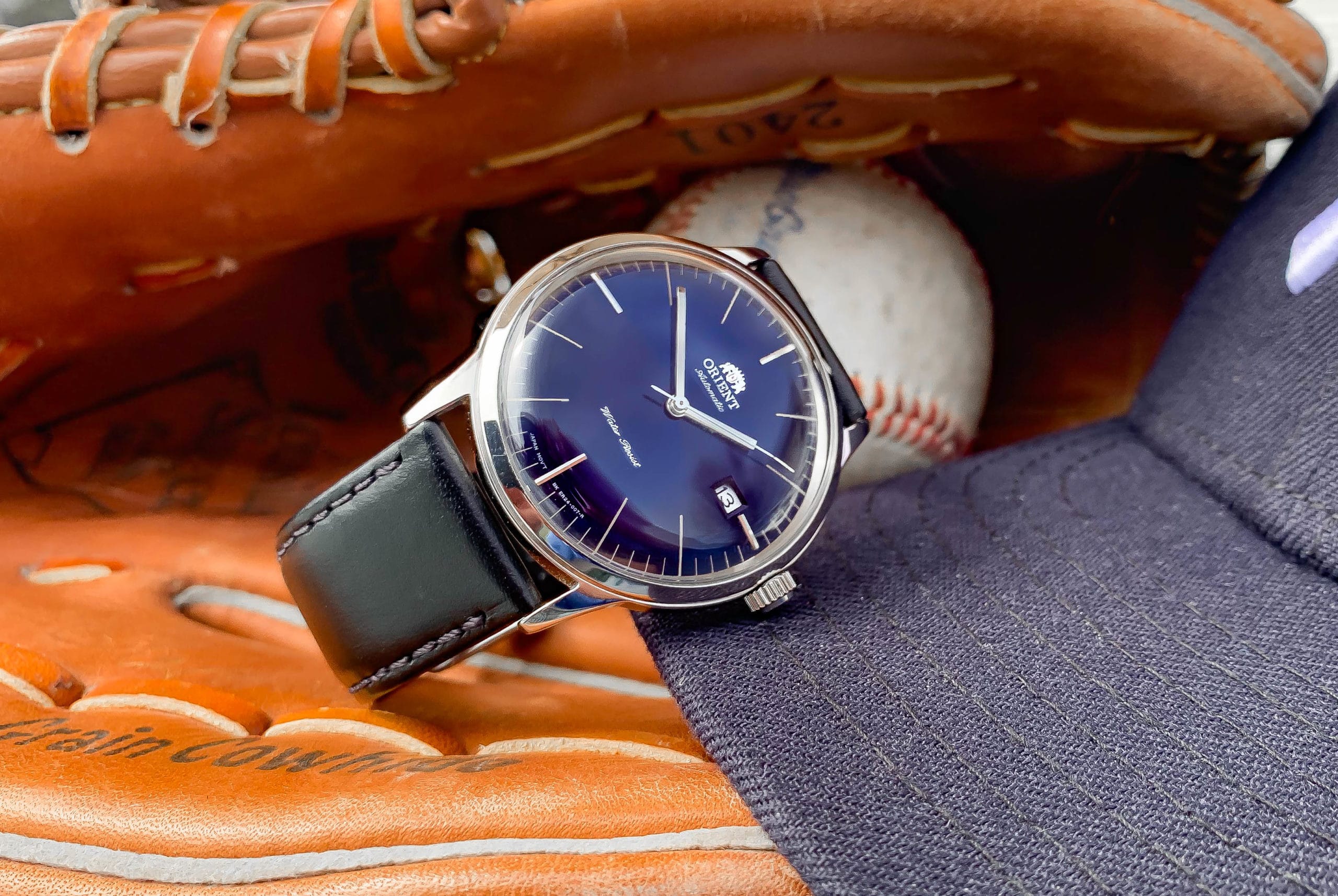
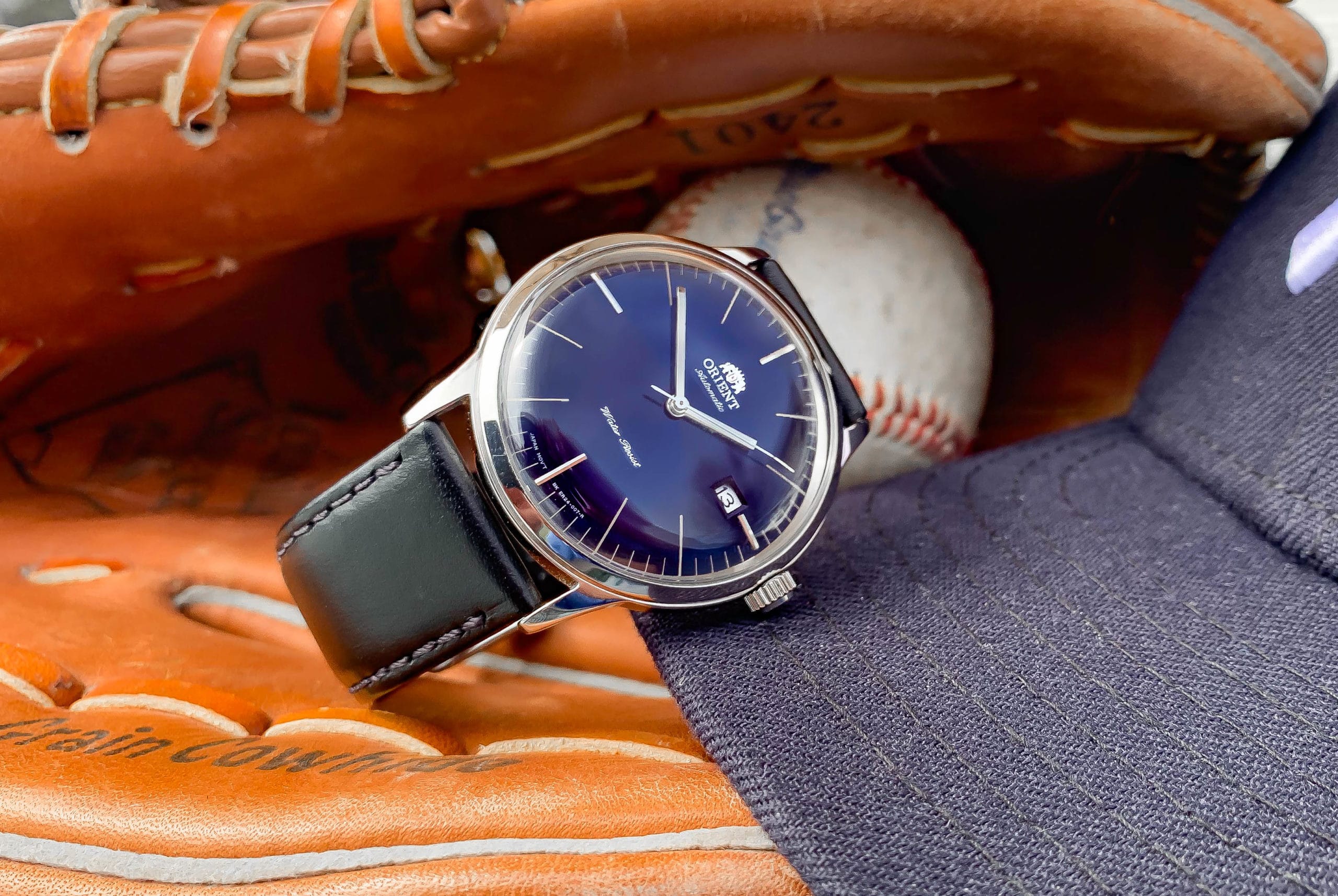
The Orient Bambino offers plenty of dial colors, but we focused on the blue version, whose deep, saturated shade gives this affordable watch a more expensive look. Unfortunately, the dial’s good looks come with a catch. The polished hands and hour markers reflect light, making them hard to read at certain angles. The flat hands can also disappear against the dial, especially off-axis. The date window gets the job done, though a color-matched date wheel would have made the layout more cohesive. We can forgive some compromises at this price, but we shouldn’t pretend they’re invisible.
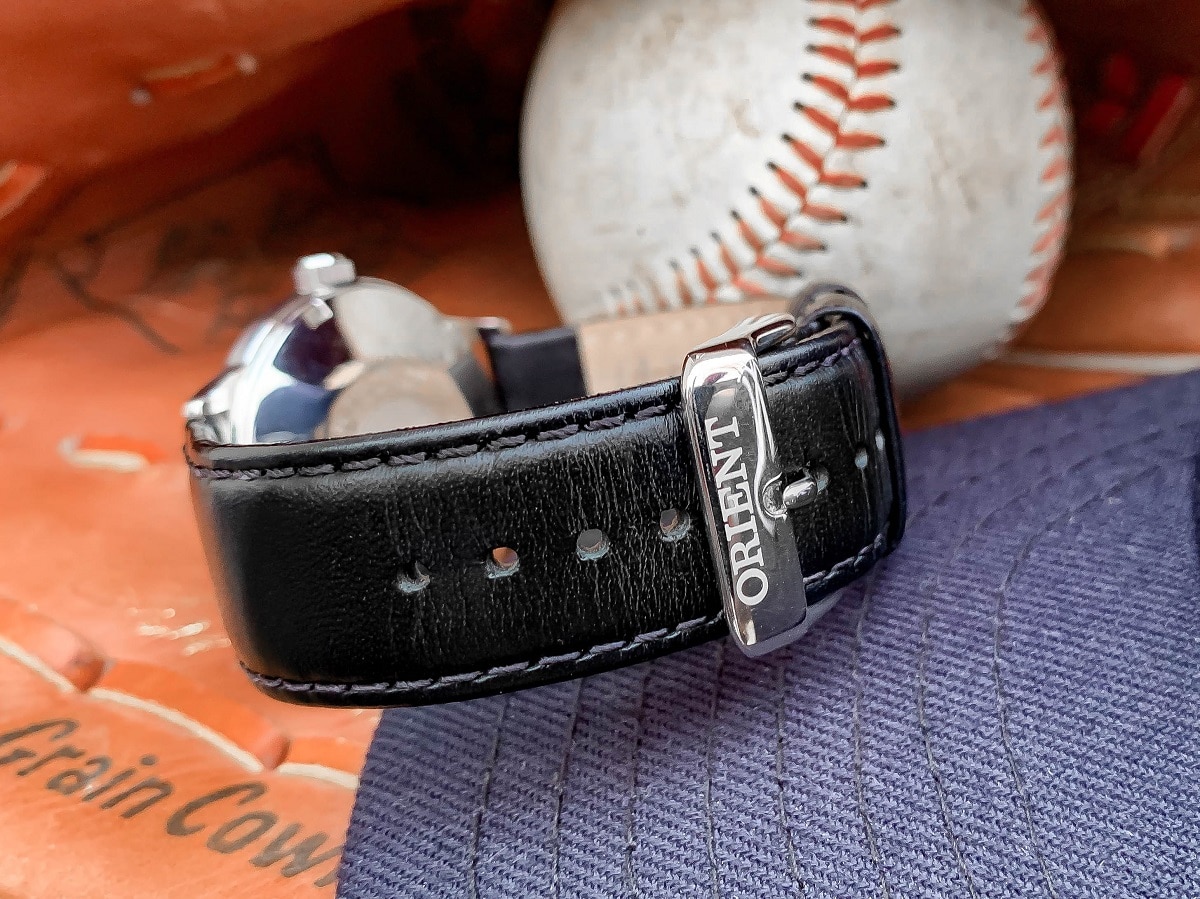
The supplied black leather strap is more successful. Its 21mm lug width can complicate replacement shopping slightly, but third-party options are easier to find now. The leather feels inexpensive, as expected, yet it’s comfortable and perfectly serviceable for everyday wear. It tapers subtly to 20mm at the buckle, while the case shape helps the Bambino sit comfortably without the strap feeling too chunky. We wouldn’t buy this watch for its strap, but we wouldn’t rush to replace it, either. For a budget mechanical dress watch, that’s a decent result.
The Mido Commander Datoday puts more thought into making its dial both distinctive and readable. As noted in our Mido Commander Datoday review, the green dial, paired with the rose-gold-tone PVD case and bracelet, stood out. The deep green shifts between bluish and warmer, forest-like tones depending on the light, giving it character without making the color combination feel overdone. A stepped outer section adds depth, while white perimeter markings keep the layout defined. The rose-gold-tone hands and applied markers stay legible against the green, avoiding the visual muddiness this combination could otherwise create. Compared with the Bambino’s reflective hands and markers, the Mido is noticeably easier to read at a glance. The large, framed day-date display is another practical advantage: both indications are easy to read, and watching them snap into place around midnight is a small mechanical pleasure.
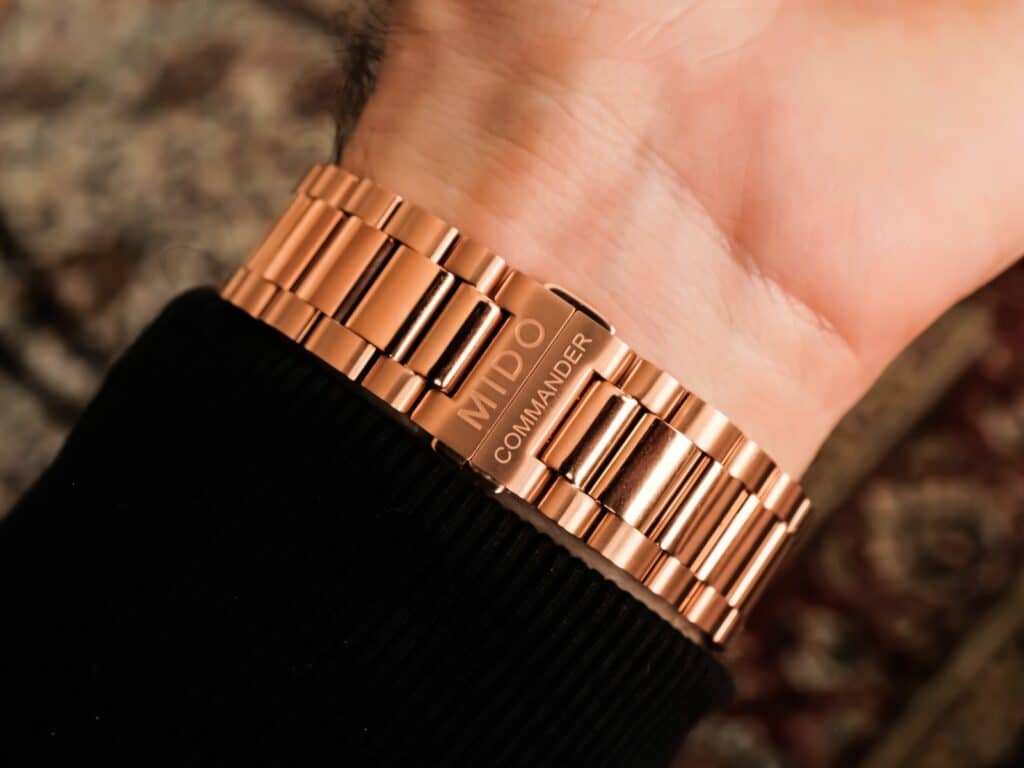
The three-link bracelet continues the cohesive design, mixing brushed and polished surfaces in the same rose-gold-tone finish. Quick-release spring bars make strap changes easier, and the butterfly clasp worked well in our testing, despite our usual reservations about this closure style. There are compromises, though. The links lack screws, making sizing less convenient, and the limited taper makes the bracelet feel broader under the wrist than we’d prefer. A dark brown leather strap could also complement the green-and-rose-gold combination, although we didn’t test that setup. As supplied, the bracelet gives the Mido a unified look that works beyond formal occasions, even if its finer details could use some attention.
Build Quality & Technical Approach
The differences between these two watches become more apparent when we look beyond their designs. From movement performance and case finishing to crystal materials and everyday durability, there are some meaningful distinctions worth exploring. Here’s where the Mido’s higher price starts to make a difference, and where the Bambino manages to hold its own.
Movements:
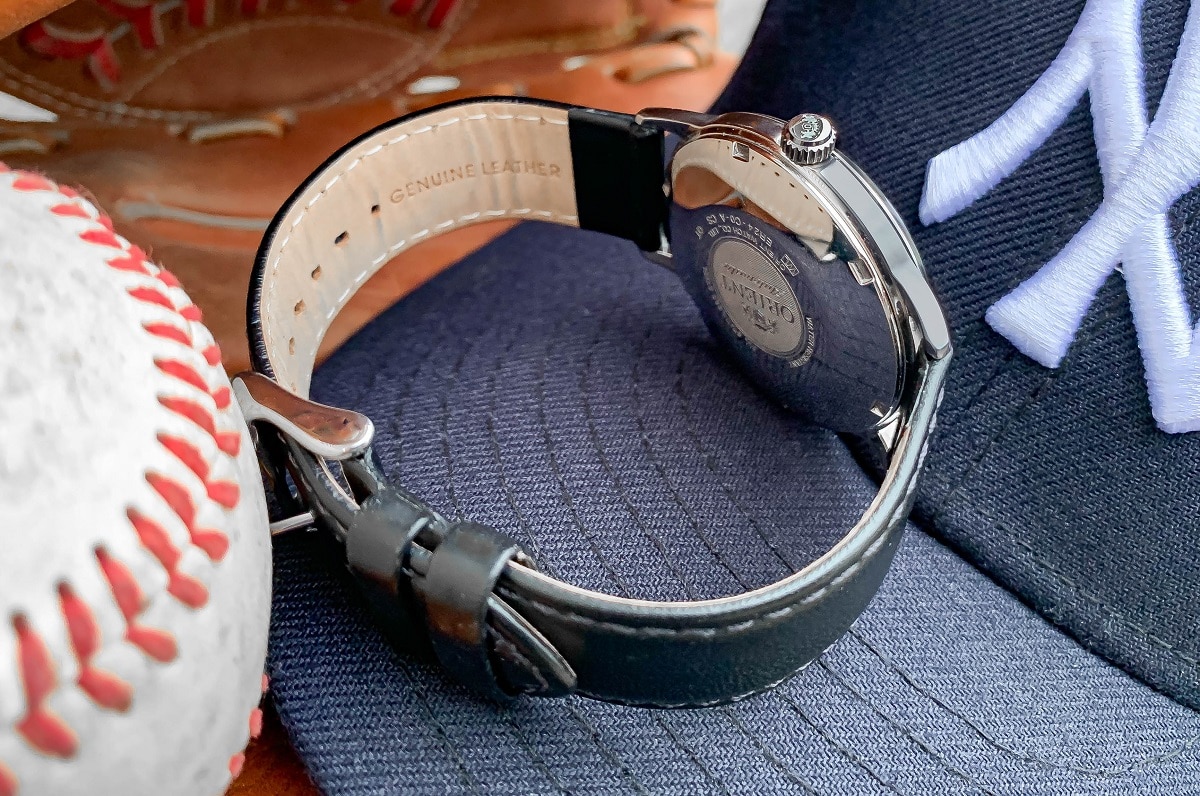
The Orient Bambino uses the F6724 automatic movement, which offers the essentials: automatic winding, hand-winding, and hacking for precise time-setting. The catch is that the rotor can get noisy, and despite the movement’s approximately 40-hour rated power reserve, our experience rarely exceeded 30 hours. That’s fine if the Bambino gets regular wrist time, but if you leave it sitting over a weekend, you may need to reset it before heading out Monday morning. The Version 3 we reviewed also lacks an exhibition caseback, so you won’t see any movement when you turn the watch over. It’s a practical, entry-level mechanical setup, but don’t expect it to turn every glance at your wrist into a horological experience.
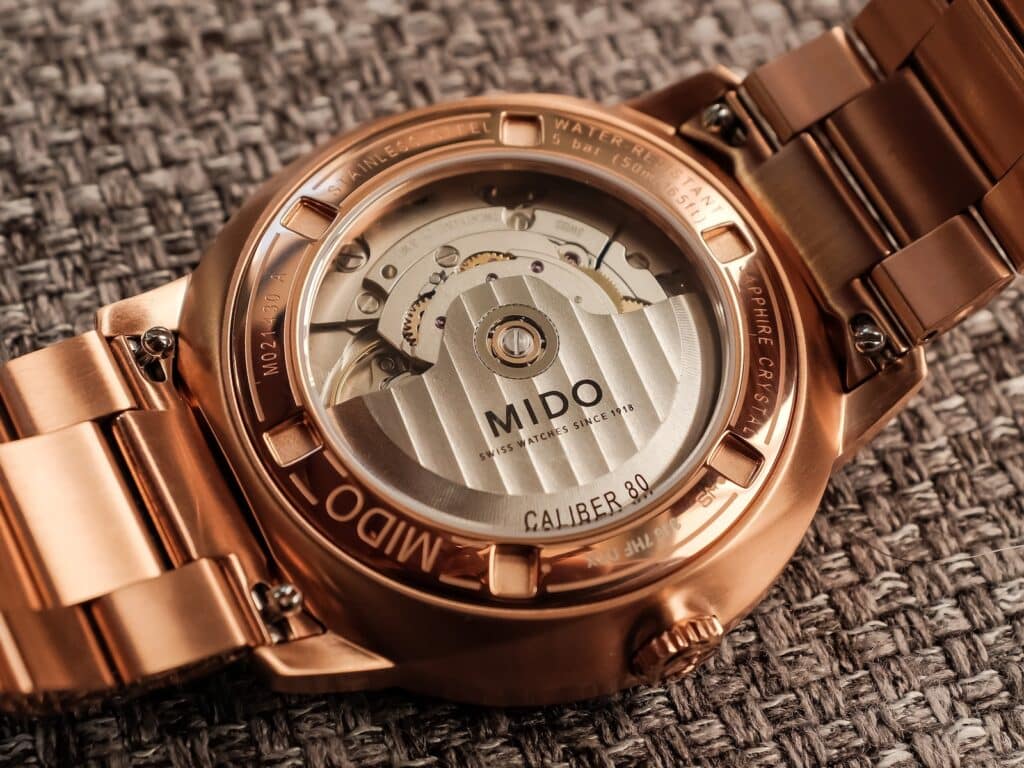
The Mido Commander Datoday takes a more convenient approach with its Caliber 80 automatic movement, visible through the display caseback. The headline benefit is its manufacturer-rated 80-hour power reserve, which gives it a substantial advantage over the Bambino when rotating between watches. Based on our experience with the closely related Powermatic 80 in a Tissot PRX, this movement architecture has also delivered consistent timekeeping and reliable performance. The Nivachron balance spring adds resistance to magnetism and shocks, useful protection for a watch intended for regular wear rather than a life spent coddled in a watch box. There’s no elaborate mechanical party trick here, and that’s fine. The Caliber 80 makes the Mido easier to live with, particularly for anyone who rotates watches and doesn’t fancy resetting one every time they return to it.
Case Construction, Finishing & Wearability:
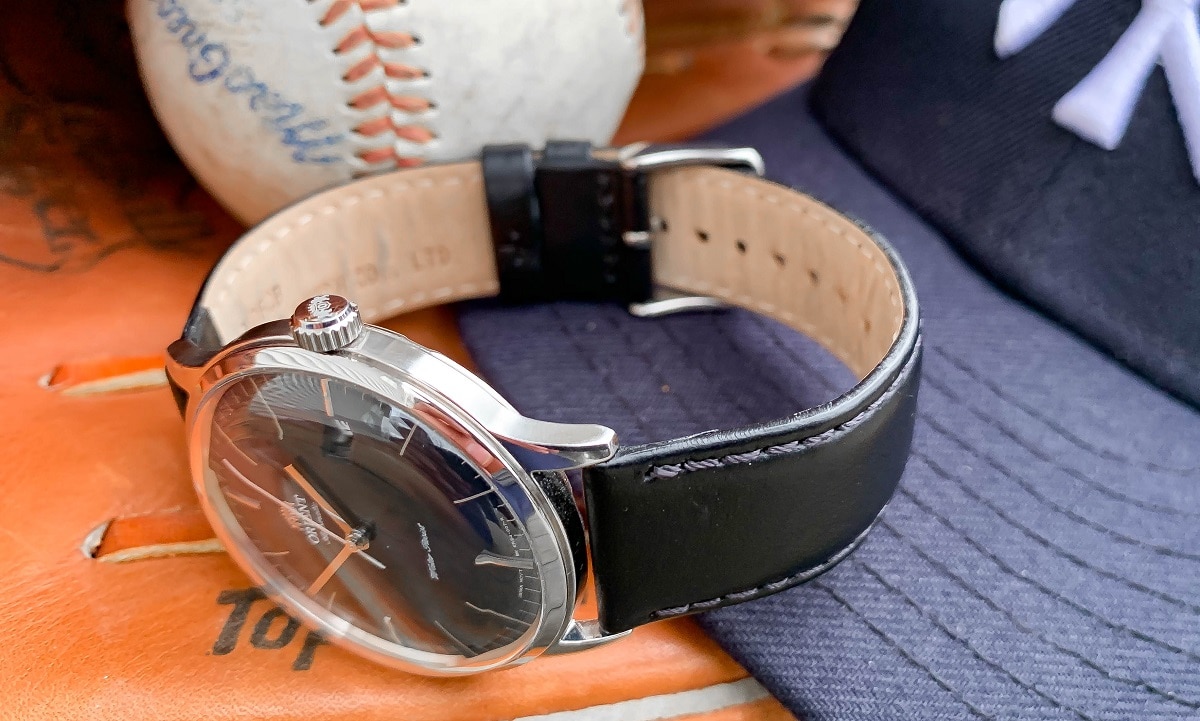
The Orient Bambino measures 40.5mm across, which might sound a little large for a dress watch until you put it on your wrist. Its 46.8mm lug-to-lug measurement, short lugs, and gentle downward slope help it wear comfortably. Our friends and coworkers who tried it found the sizing comfortable, and we felt the same. The smooth, curved bezel also plays with light, giving the stainless steel case visual interest without adding unnecessary fuss. At 12mm thick, the Bambino slips under a shirt cuff without making us wonder whether we’ve accidentally put on a sports watch.
The Mido Commander Datoday takes a slimmer, more integrated approach. Its 40mm case and 10.7mm thickness make for comfortable proportions, but the real appeal is how the case flows into the three-link bracelet. Rather than looking like a watch with a bracelet attached as an afterthought, the two form a cohesive unit. That integrated profile gives the Mido a cleaner presence on the wrist, while its slim case helps it wear comfortably beneath a shirt cuff.
The Bambino keeps things traditional with its separate case and leather strap; the Mido feels more like a complete package straight out of the box. Neither needs to shout about its dimensions, but the Mido’s slimmer profile and integrated design give it a different kind of versatility.
Crystals and Bezels:
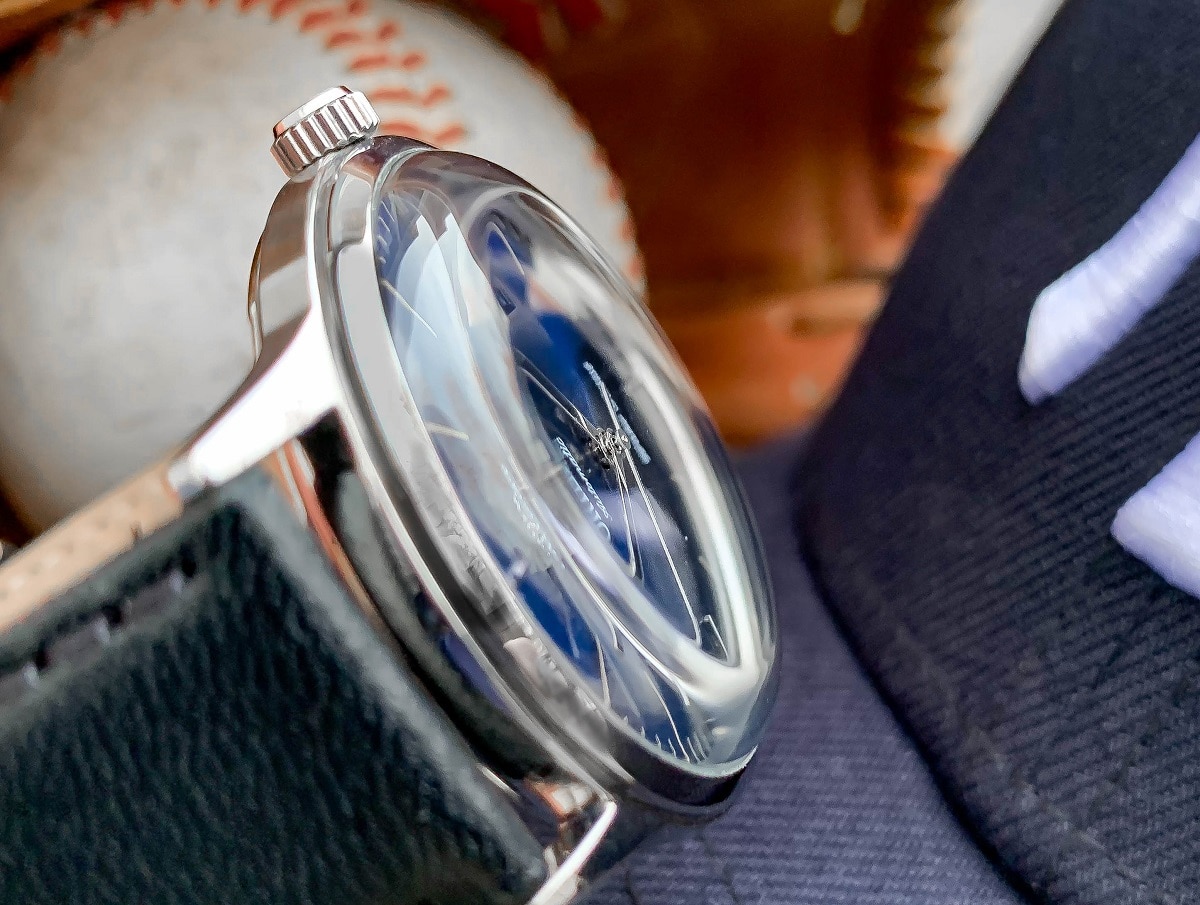
The Orient Bambino’s domed mineral crystal is a big part of its vintage dress-watch appeal. Viewed from about 45 degrees, it stands proud of the case and adds depth. The smooth stainless steel bezel hugs the crystal, leaving just enough separation to keep the two surfaces visually distinct. Orient got that detail right. The catch is that the crystal can be frustratingly reflective under certain lighting, sometimes making the dial harder to read and even complicating photography. The hands distort at an angle, which adds to the charm but doesn’t help legibility. The Bambino looks good when the light cooperates; unfortunately, the light doesn’t always take requests.
The Mido Commander Datoday uses a sapphire crystal with double-sided anti-reflective treatment, offering better scratch resistance than the Bambino’s mineral glass while helping reduce distracting reflections. That’s a practical upgrade on a watch we’d expect to wear regularly, especially when we’re not interested in treating every doorframe and desk edge like a potential crime scene.
Water Resistance & Lume:
The Orient Bambino V3 we reviewed has 30 meters of water resistance, which is watch-speak for keeping your aquatic ambitions modest. Handwashing and getting caught in the rain should be fine, but submerging it is a bad idea. Some Bambino models offer up to 50 meters, but this is still a dress watch, not something we’d take on a spontaneous snorkeling trip. It also has no lume on the hands, so checking the time in the dark becomes a guessing game.
The Mido Commander Datoday steps up to 50 meters of water resistance, which fits its everyday-watch ambitions without pretending it’s a dive watch in a dress-watch costume. Its push-pull crown worked as intended in our testing, though we’d have preferred something chunkier and easier to grip. The lume is there when we need it, but nobody’s buying this watch for midnight visibility. Neither model is built for serious aquatic duty, and neither makes lume a headline feature. The Mido simply offers a little more breathing room around everyday splashes.
Cost Considerations
The Orient Bambino costs around $150-$250, making it a relatively low-stakes way to experiment with mechanical watches. If we discover that automatics aren’t our thing, or move on to something else six months later, we’re not left explaining a four-figure purchase to ourselves. The Bambino gives us an accessible taste of mechanical watchmaking without requiring a major financial commitment. For first-time buyers who want a proper dress watch without emptying their wallets, that’s a pretty compelling starting point.
The Mido Commander Datoday we reviewed retails for approximately $1,260, putting it at roughly five times the price of the $250 Orient Bambino. At that price, Mido needs to offer more than a nicer name on the dial, and its integrated-bracelet design, everyday versatility, reliable movement, and distinctive green dial help make the case. The extra money buys a sapphire crystal, a longer power reserve, a more refined case and bracelet, and better overall legibility. Those improvements are meaningful, but whether they’re worth several times the Bambino’s price depends on how often we’d actually wear the watch. The catch is that the Bambino costs little enough to be an easy first step; the Mido costs enough that we’d better appreciate what we’re paying extra for.
Final Thoughts: Which Dress Watch Wins?
After weighing their strengths and compromises, we’d give the Mido Commander Datoday the win. Its slimmer case, more refined finishing, superior legibility, and longer power reserve make it the better all-around mechanical watch. It’s a more complete package, particularly for someone looking for a watch they can wear regularly rather than reserving for formal occasions.
That doesn’t necessarily make the Mido the better value. At a fraction of the price, the Orient Bambino delivers much of what makes a traditional mechanical dress watch appealing. Its comfortable proportions, attractive dial, and accessible price make it an excellent option for enthusiasts who want something dressier without committing to a four-figure purchase. The reflective dial and modest power reserve are compromises, but they’re easier to accept at this price.
Our verdict: We’d personally choose the Mido Commander Datoday for its versatility and overall execution. But if you’re shopping for a new dress watch and your budget is closer to the Orient Bambino, we’d suggest buying the Orient. The Mido is undoubtedly the more refined watch, but it’s not necessarily worth saving up several more paychecks when the Bambino already delivers much of what we’d want from an affordable mechanical dress watch. Sometimes the better watch isn’t the better purchase.

Co-Founder and Senior Editor
Kaz has been collecting watches since 2015, but he’s been fascinated by product design, the Collector’s psychology, and brand marketing his whole life. While sharing the same strong fondness for all things horologically-affordable as Mike (his TBWS partner in crime), Kaz’s collection niche is also focused on vintage Soviet watches as well as watches that feature a unique, but well-designed quirk or visual hook.