A chronograph can help us time a dog walk or keep dinner from overcooking. The harder part is deciding what we want from the watch beyond its job. That’s the dilemma behind the Omega Speedmaster vs Christopher Ward C63 Valour: when one watch has lived on our wishlist for years, can another satisfy the same urge, or are we trying to talk ourselves out of something we already want? For those of us who enjoy watches without wanting every purchase to become a major financial commitment, it’s a question worth taking seriously. After all, wanting a great chronograph and wanting an Omega Speedmaster aren’t necessarily the same thing.
At Two Broke Watch Snobs, a decade of hands-on reviews has taught us that the details that stay with us aren’t always the ones a spec sheet can settle: how a watch feels after a full day, how much pleasure we get from using it, and which quirks we’re willing to tolerate because the overall experience works. Our Christopher Ward C63 Valour review draws on recent wrist time, while our Omega Speedmaster Professional 3861 review reflects years of ownership across the Speedmaster family, including the earlier 1861. We’ll use those experiences to keep this comparison grounded in ownership rather than reputation alone, examining whether the differences between these two chronographs matter once they move from our wishlist to our wrist.
Overview and Identity
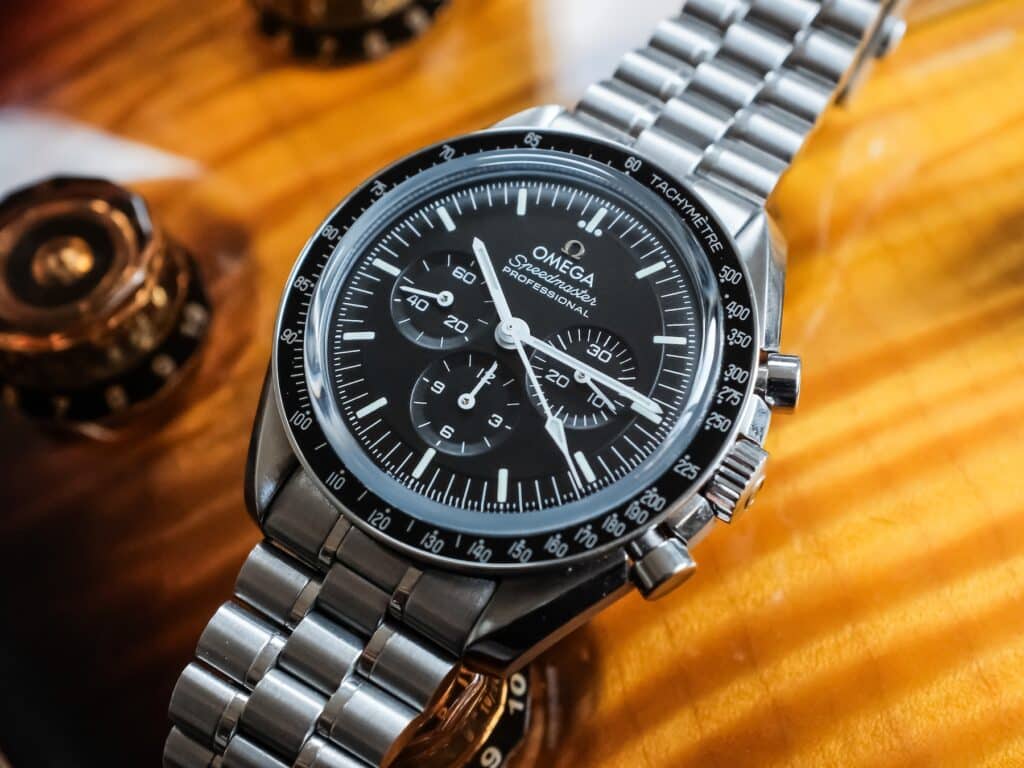
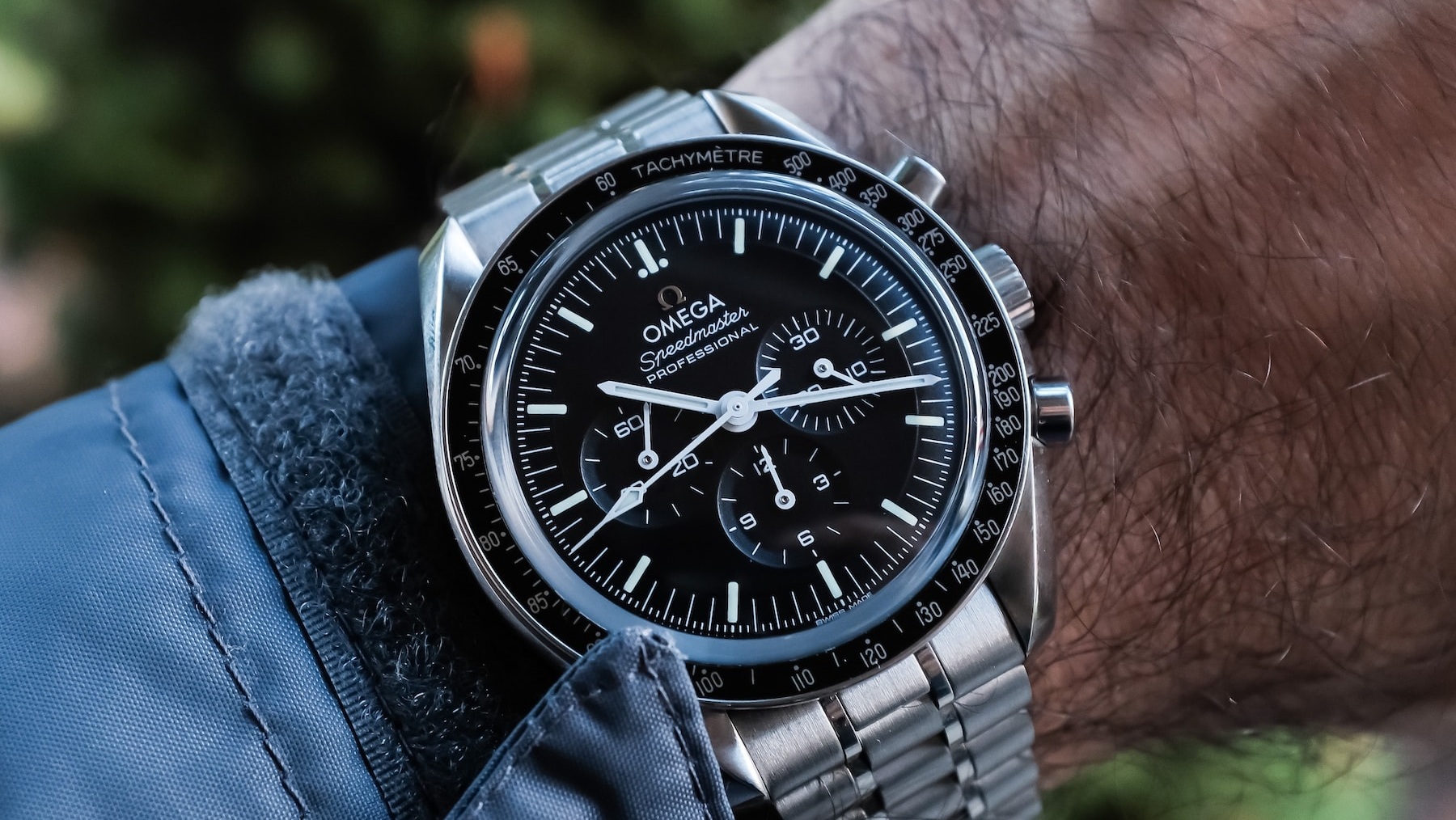
The Omega Speedmaster Professional 3861 is what happens when a watch spends decades getting under our skin and then gives us a good reason to fall for it all over again (especially during a hands-on review). Speedmaster obsessives can spend embarrassing amounts of time identifying tiny changes between references (some of us have clearly made worse use of our free time), but those incremental updates are part of the Moonwatch’s charm and gravity. Before the 3861, Omega had left the movement meaningfully unchanged since the late 1990s, carrying forward an architecture rooted in the late-1960s 861. The 3861 finally gives the familiar formula a more meaningful refinement. The changes might not look dramatic on paper, but they bring the whole package into sharper focus without messing with the character that made us want one in the first place. That’s the Speedmaster’s trick. Its connection to NASA and the Apollo moon landings gives it a place in watchmaking history that goes well beyond its mechanical specifications. For many collectors, owning a Speedmaster means participating in that history, even if the closest they’ll ever get to space is watching a documentary.
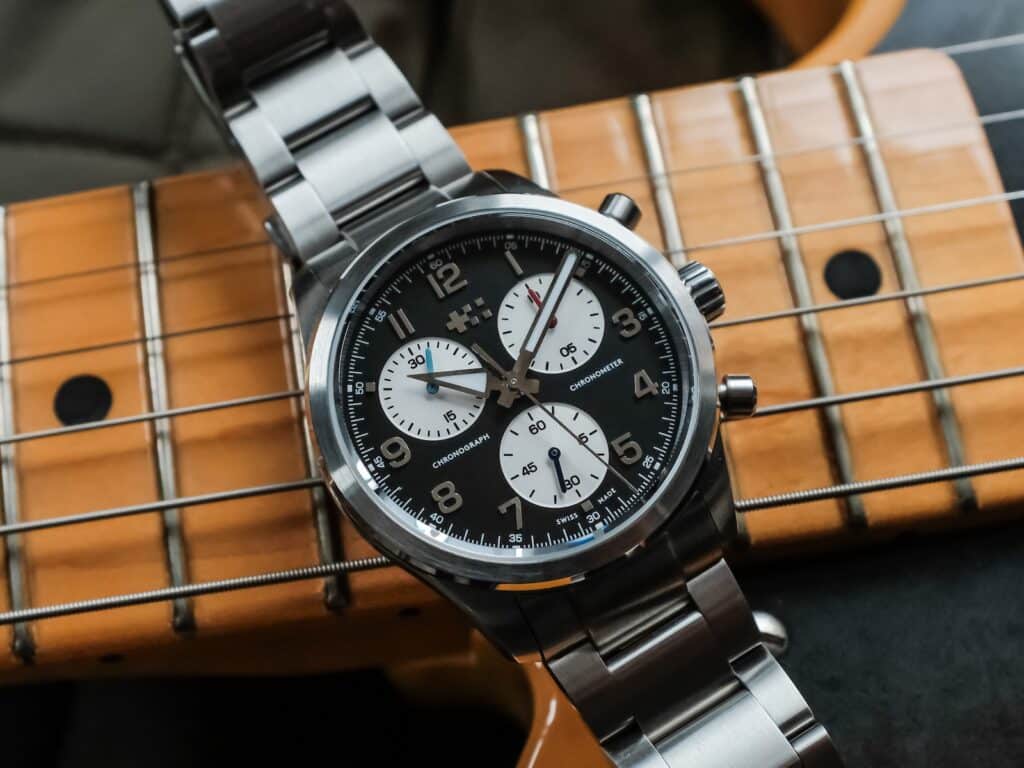
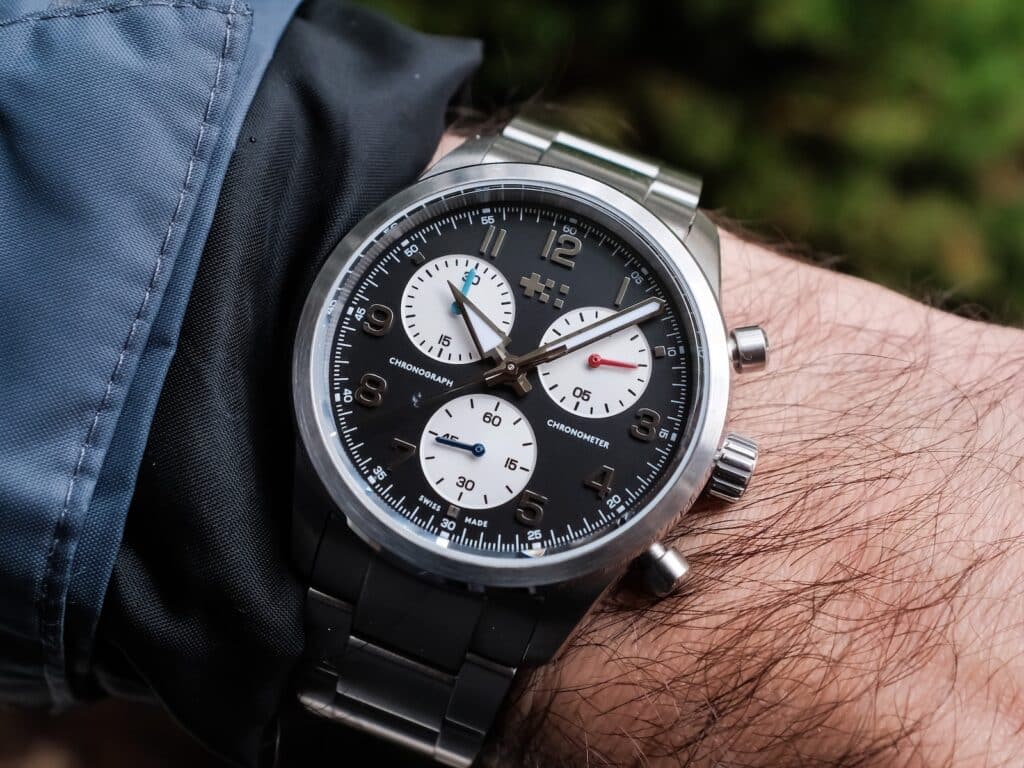
The Christopher Ward C63 Valour approaches the chronograph game from a different angle, with less Moonwatch mythology to lean on and more to prove through execution. Introduced in 2024 as part of CW’s Military collection, it occupied an unusual spot in the lineup at the time of our hands-on review: the brand’s only chronometer-certified chronograph. Designed in England and assembled in Switzerland, the Valour tries to balance military-inspired heritage with the cleaner finishing and tighter performance tolerances Christopher Ward has been pursuing. That’s a tricky combination in a chronograph. In short, it’s a more attainable, contemporary take on the complication, and it argues for judging a watch by what the brand delivers rather than how long its name has been on the dial.
Dials and Bracelets: Moonwatch Refinement vs Military Character
The Omega Speedmaster Professional 3861 sticks with a black-and-white dial that doesn’t need a personality transplant. The printing is crisp, the subdials are balanced, and the stepped dial adds depth with a subtle drop toward the minute track. On the sapphire version, the applied logo adds refinement without making the watch feel dressy. Omega hasn’t reinvented the familiar layout, but the details give it a more resolved feel. After all, this sports chronograph style has become a blueprint for so many others.

The bracelet is where the Speedmaster finally stops asking us to make excuses for it. The increased taper and more flexible links help it wrap around the wrist instead of perching on top, while the redesigned end links reduce the watch’s visual length and help the case sit lower. On the sapphire version we reviewed, polished interlinks add a little shine without turning the bracelet into wrist jewelry. The clasp remains straightforward, which is fine by us; we’re not buying a chronograph to admire its clasp. After years of swapping Speedmaster bracelets for aftermarket straps, the updated design makes a convincing case for staying put. There’s one catch: sizing it at home can turn a quick adjustment into an afternoon of muttering at tiny screws. That said, the bracelet is finally part of the attraction rather than a compromise to tolerate.
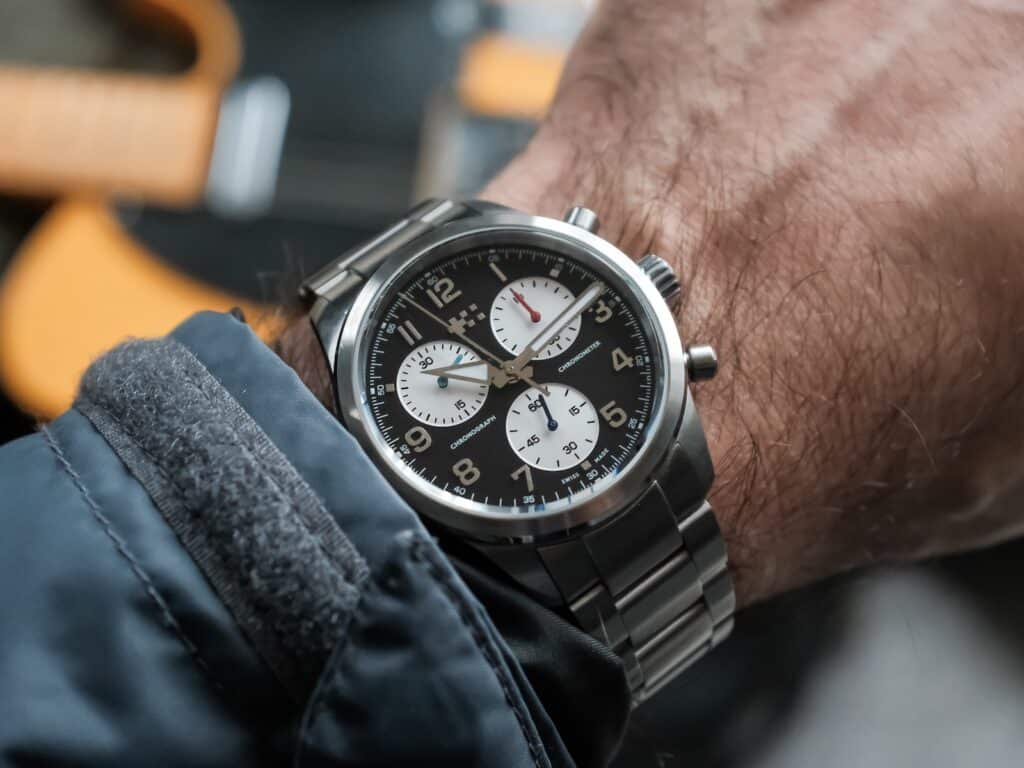
The Christopher Ward C63 Valour takes the reverse-panda route, pairing a matte black dial with three white subdials and enough military character to avoid looking like another monochrome chronograph clone. The colored second hands represent the Army, Navy, and RAF, while the running seconds, 30-minute counter, and 1/10th-of-a-second display each have their own place. It’s a busy layout, but the contrast keeps everything easy to pick out. The diamond-polished, applied Arabic numerals add a welcome twist: they catch the light outdoors, then darken indoors while retaining crisp definition. The applied flag logo at twelve ties the design together, and leaving the brand’s trident counterweight off the central second hand makes for a cleaner finish. The Valour has more going on visually than the Omega, but it doesn’t make reading the time harder. That’s a decent trick when your dial has three subdials competing for attention.
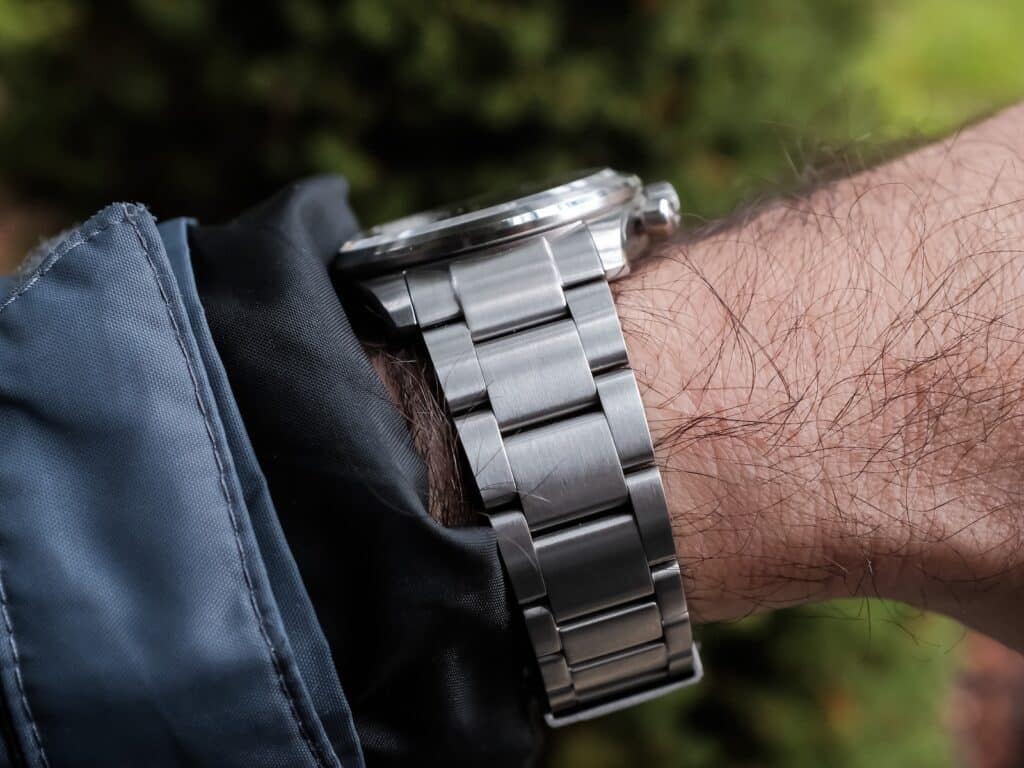
The Valour’s Bader bracelet gets the everyday details right without overengineering. Its Oyster-style links taper from 20mm at the lugs to roughly 16mm at the clasp, giving the watch a more polished feel than its military styling implies. Screw-secured links and a generous supply of full and half-links also make sizing painless. The dual-push-button clasp adds a basic on-the-fly extension, which comes in handy when your wrist swells in warmer weather, while quick-release spring bars and standard 20mm lugs make switching to leather a five-minute job rather than a spring-bar wrestling match. The bracelet feels comfortable and substantial without turning the Valour into a wrist anchor. There’s one minor irritant: a faint squeak from the links during movement. It may ease as the bracelet settles in, but it’s the sort of thing that’s hard to unhear once you notice it. Not a dealbreaker, just a reminder that even a well-executed bracelet can have its little quirks.
Build Quality & Technical Approach
The Omega Speedmaster Professional 3861 and Christopher Ward C63 Valour both handle chronograph duties, but their engineering philosophies take very different routes. The Omega builds on decades of mechanical refinement, while the Valour pairs a quartz movement with chronometer certification and a more value-driven approach. Put the logos aside, and the more interesting question is how those choices affect performance, operation, and everyday ownership.
Movements:
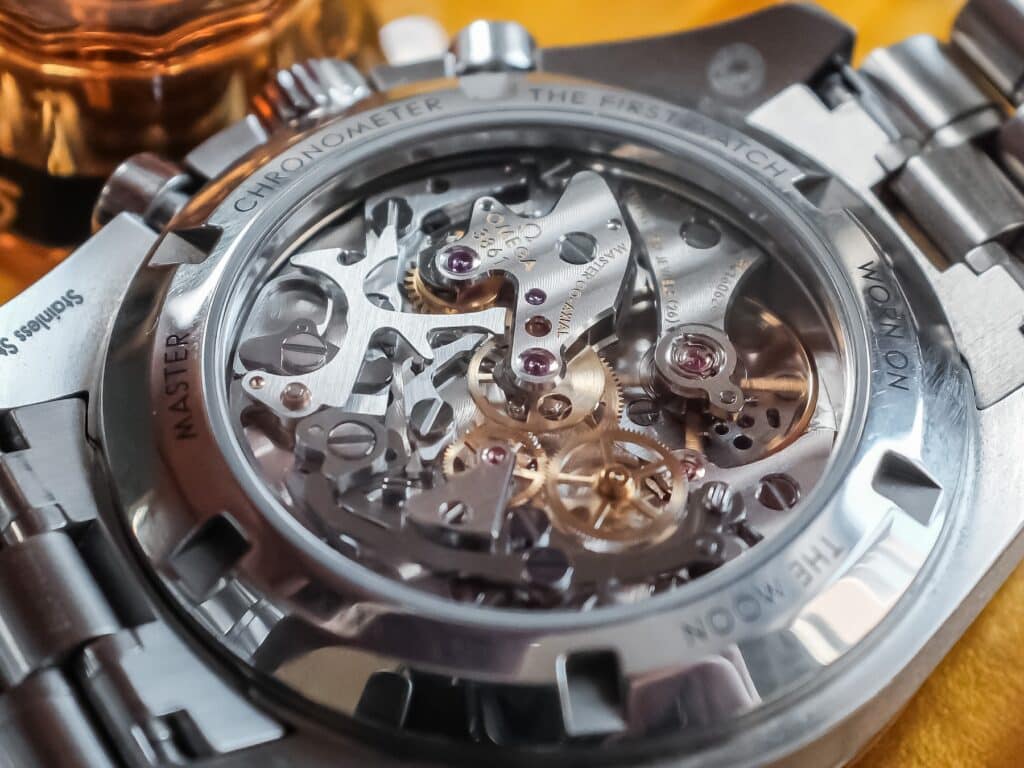
The Speedmaster Professional 3861 gives a decades-old movement formula a meaningful update without messing with the bits collectors love. Omega spent four years developing the 1861 architecture into a hand-wound, anti-magnetic Co-Axial chronograph that meets METAS certification standards. Inside are 26 jewels, a free-sprung balance, a 21,600 bph beat rate, and around 50 hours of power reserve. In our experience, accuracy has been consistently excellent, about three seconds fast per week, but the bigger improvement comes from interacting with the watch. Winding feels smoother and more reassuring than on the old 1861, while the pushers deliver a firmer, more deliberate click. Even timing something as mundane as a dog walk becomes a small mechanical pleasure. It’s gloriously unnecessary engineering for boiling pasta, but that’s part of the Speedmaster’s charm.
The C63 Valour takes a different route with the ETA G10.212 AD COSC quartz chronograph, rated to within ±10 seconds per year. That’s per year, not per month or the amount of time we lose scrolling through watch forums. The movement undergoes a 13-day COSC testing protocol across varying temperatures and humidity levels, putting its thermal stability through its paces. In daily use, the payoff is simple: set it, wear it, and stop wondering whether it’s gained or lost time. The pump pushers have a crisp action, and watching the hands snap back to zero is entertaining enough to make quartz skeptics give them another go. Some collectors will still draw the line at a battery-powered movement, and no certification can manufacture the pleasure of winding a mechanical chronograph. Fair enough. But the Valour isn’t trying to recreate that ritual. It prioritizes accuracy, consistency, and low-maintenance ownership, and the movement delivers on that brief without apology.
Case Construction, Finishing & Wearability:
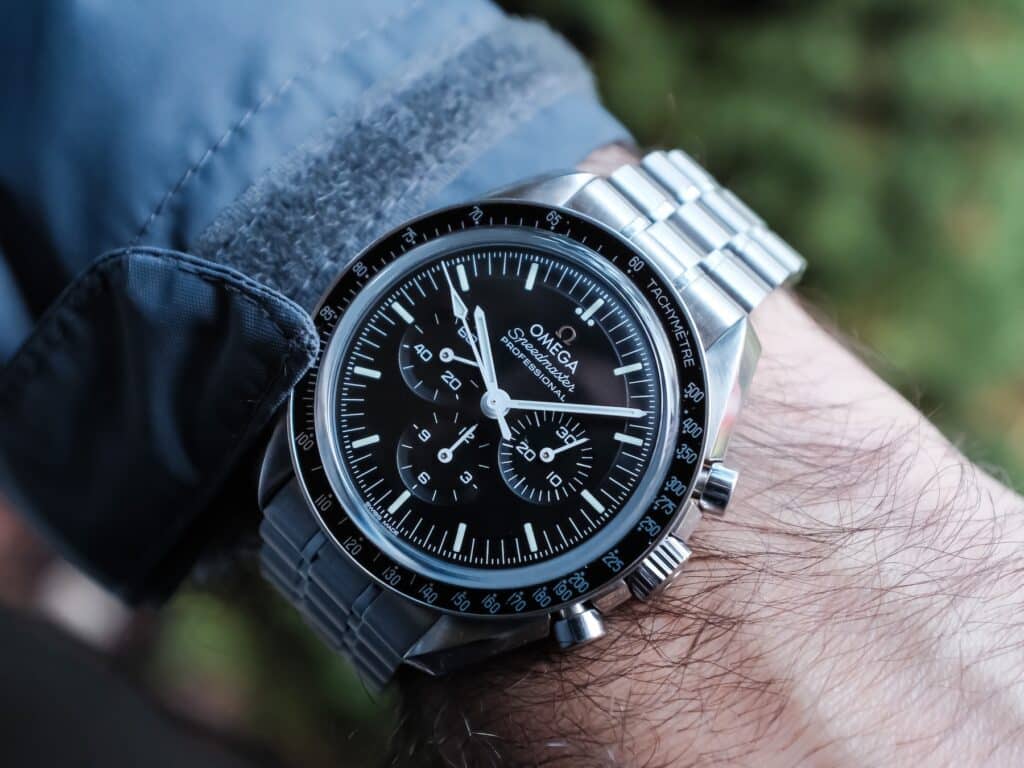
The Speedmaster 3861 is still a 42mm watch, but it doesn’t wear like a dinner plate strapped to your wrist. Small adjustments to the case proportions help it sit lower and feel more planted than the dimensions indicate. That’s the sort of refinement we appreciate: no dramatic redesign, just a few thoughtful tweaks to make an established design more comfortable. Flip it over, and you’ll see the sapphire caseback revealing the movement’s refined bridges and balance assembly. It’s a satisfying view, even if the real appeal comes from wearing and operating the watch rather than staring at its rear end all afternoon.
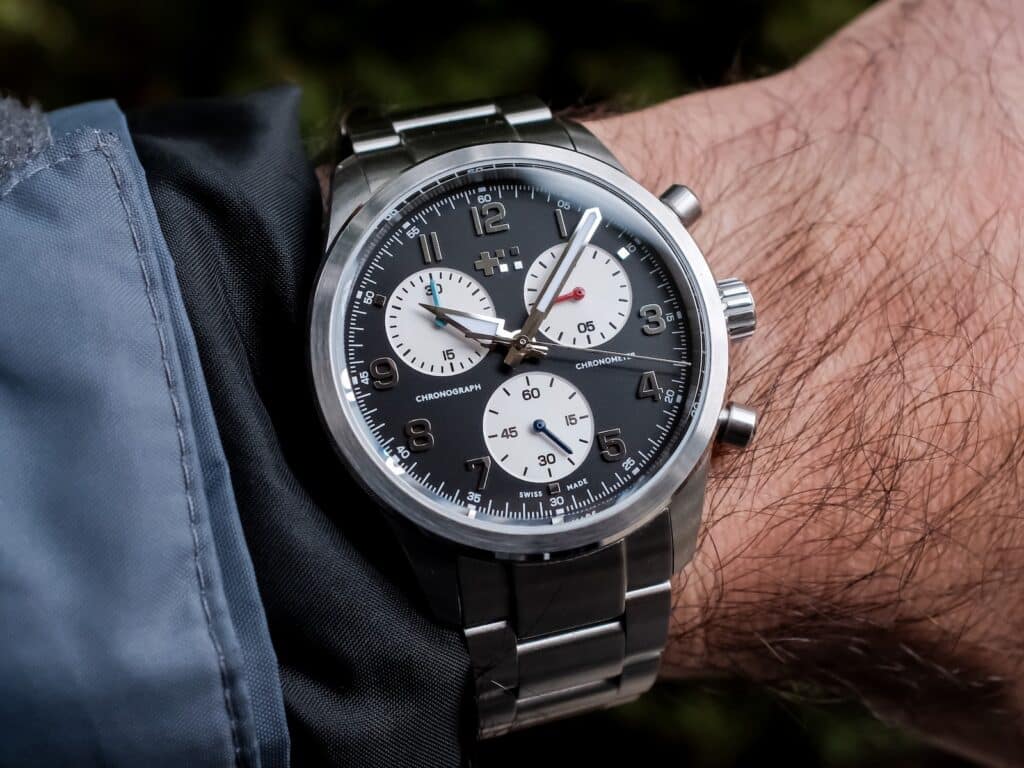
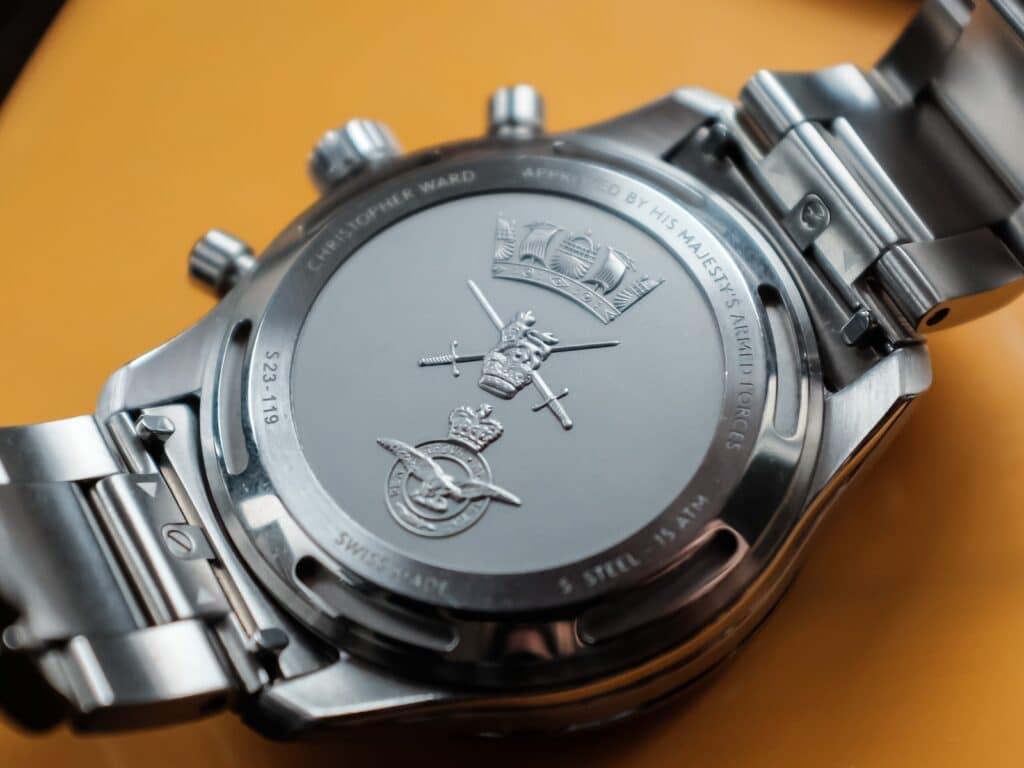
The Christopher Ward C63 Valour takes the more compact route at 39mm wide, 11.55mm thick, and just under 46mm lug-to-lug. Those dimensions help it sit close to the wrist without the top-heavy feel that can make some chronographs wear like miniature hockey pucks. There’s more substance here than the numbers suggest, too. CW’s Light-catcher case pairs brushed surfaces with polished accents that catch the light as your wrist moves, giving this military-inspired watch a dressier streak than its positioning. The deeply engraved Army, Navy, and RAF crest on the caseback, alongside the inscription noting approval by His Majesty’s Armed Forces, gives the military connection more weight than a few khaki accents ever could. Whether that provenance matters to you is personal; the engraving’s quality is harder to dismiss. Overall, the Valour proves a quartz chronograph doesn’t have to wear like a budget option.
Crystals and Bezels:
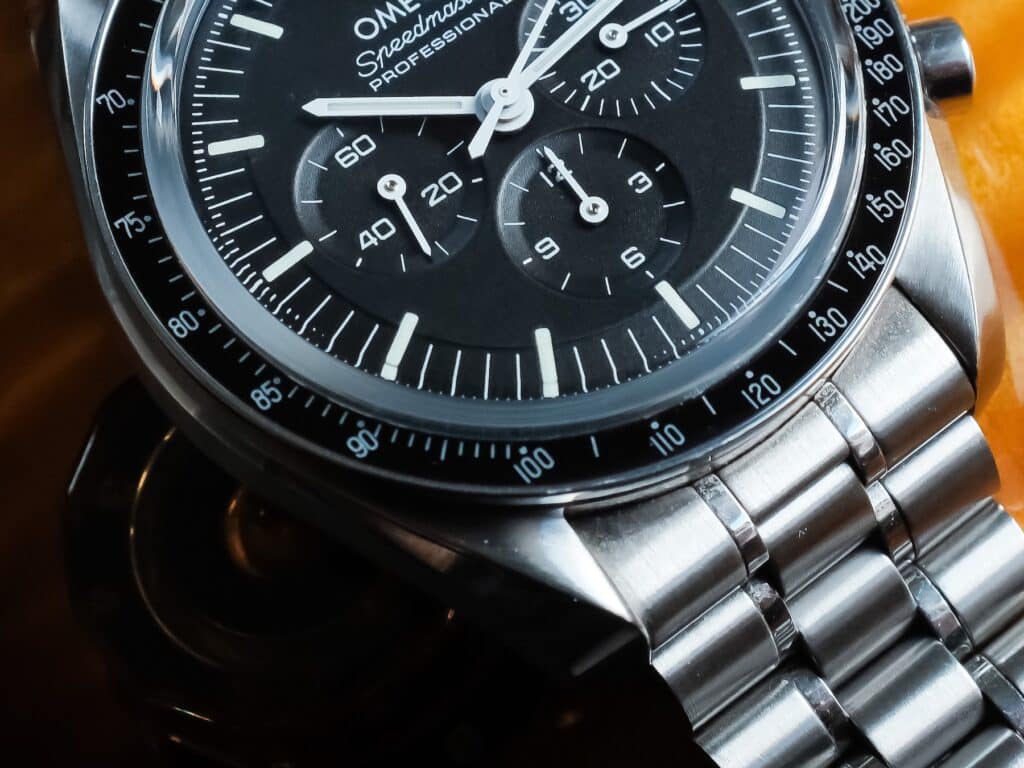
The Speedmaster Professional 3861 reviewed here uses sapphire crystal, so we spend less time worrying about scratches than with the older Hesalite version. The bezel also brings back the dot-over-90 detail, a tiny change that only serious Speedmaster obsessives might notice but one that restores a familiar part of the watch’s visual rhythm. It’s a classic Omega move: the kind of refinement that won’t change how you use the chronograph, but will make longtime fans quietly nod in approval.
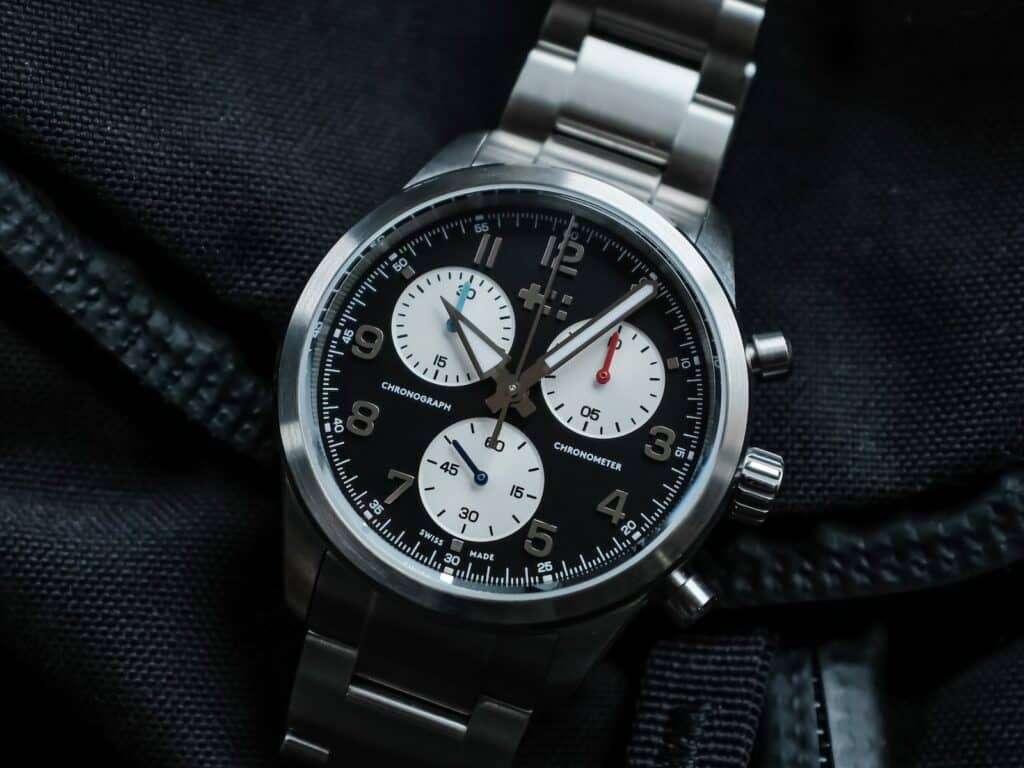
The Christopher Ward C63 Valour also uses sapphire crystal, giving its dial a hard-wearing layer suited to regular use. It’s a sensible choice for a chronograph that prioritizes everyday practicality over museum-piece treatment. The Valour gives us less to nitpick on the bezel front, so we’ll save the head-to-head nerding out for details that actually matter. The key distinction is that the Speedmaster’s bezel carries a small piece of its familiar design language, while the Valour keeps the focus on its modern, military-inspired execution.
Water Resistance & Lume:
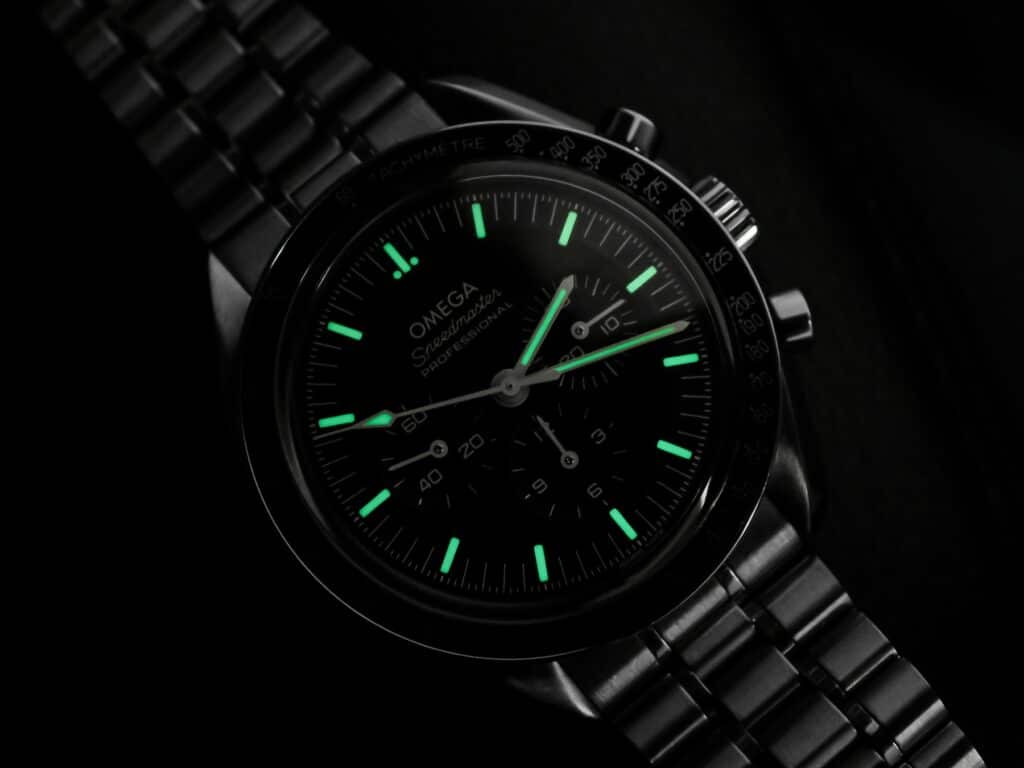
The Speedmaster Professional 3861 offers 50 meters of water resistance, which is fine for everyday splashes but hardly enough to plan a diving holiday around. We’d wear it without fuss through normal daily life. The lume makes a better impression. It glows brightly enough to read the time without turning the dial into a glow-stick convention, and it stays visible all night. That’s the kind of consistency we appreciate: no spectacular claims, just a watch that remains readable when we’re fumbling around in the dark and can’t be bothered to find our phone.
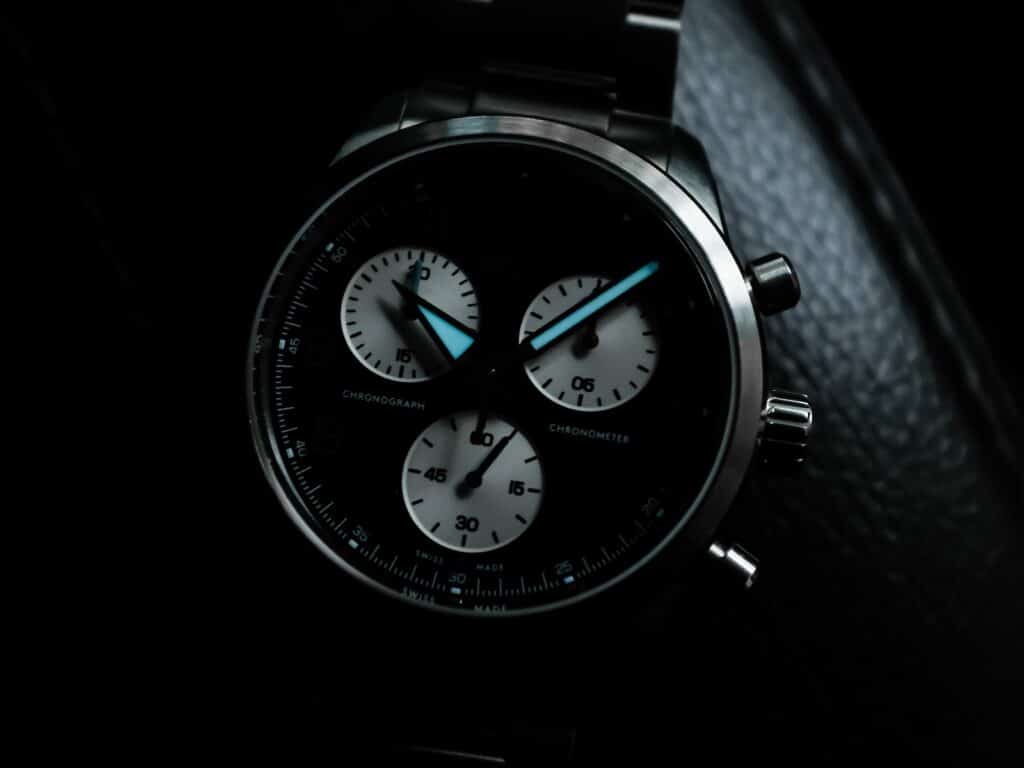
The Christopher Ward C63 Valour is considerably less precious about getting wet. Its screw-down crown helps deliver 150 meters of water resistance, giving us far more breathing room than the Speedmaster’s 50-meter rating. Most chronograph owners won’t need all that headroom, but we’d rather have a useful margin than treat every unexpected downpour like a threat to our watch’s existence. The lume is equally practical. Generously applied Super-LumiNova X1 BL C1 on the bold hour and minute hands makes the time easy to read in low light without turning the dial into a roadside flare.
Taken together, these differences reveal what we’re really choosing between. The Valour offers a more compact case, greater water resistance, and the convenience of quartz accuracy. The Speedmaster offers something harder to quantify: the satisfaction of interacting with a mechanical chronograph that’s been refined over generations. Both can satisfy an enthusiasm for chronographs, but only one can satisfy the specific desire to own a Moonwatch.
Cost Considerations
The sapphire Omega Speedmaster Professional 3861 now costs $9,000, which is enough to make even a longtime Moonwatch fan pause before reaching for a credit card. It launched at $7,150, so that price creep stings. At this level, you’re also weighing whether sapphire crystal and a display caseback justify the premium over the Hesalite version, or whether you’ve already decided you want the sapphire and are looking for reasons to feel better about it. We’ve all been there. The good news is that the pre-owned market offers plenty of alternatives for patient buyers who don’t fancy paying full retail to join the Moonwatch club. Still, we’re getting dangerously close to the point where a Speedmaster purchase requires a budget meeting rather than a moment of enthusiasm.
The Christopher Ward C63 Valour was $945 when we reviewed it, with the current official listing at $1,105. That’s still serious money for a quartz chronograph, particularly if you believe anything without a mechanical movement belongs in the bargain bin. We’d give the Valour a fairer hearing. Its chronometer-certified accuracy, substantial construction, polished casework, and military identity give it plenty of character beyond reliable timekeeping. It isn’t flawless: the bracelet can squeak, the dressed-up finishing may disappoint tool-watch purists, and a certification badge won’t sway quartz skeptics. Still, the Valour occupies a distinctive spot in CW’s lineup, offering a combination of performance and refinement with no direct equivalent elsewhere in the catalog. The question is whether that package gives you enough satisfaction to stop dreaming about the Moonwatch.
There’s also the question of what happens after the purchase. The Valour should be relatively straightforward to maintain, with periodic battery replacements rather than the more involved servicing a mechanical chronograph eventually requires. The Speedmaster comes with higher ownership costs, but also a more established collector market and long-term desirability. That doesn’t automatically make it the smarter purchase, but it’s worth considering when the price difference is this substantial.
Final Thoughts: What Are We Really Looking for in a Chronograph
The Christopher Ward C63 Valour can scratch the chronograph itch, but it won’t necessarily cure a full-blown Moonwatch obsession. On its own merits, the Valour delivers a distinctive design, excellent quartz accuracy, and a satisfying everyday experience without asking us to buy into decades of watchmaking mythology. For enthusiasts who want a capable chronograph and admire the Speedmaster from a distance, that may be all they need. There’s no consolation prize here, provided you’re buying the Valour because you genuinely want the watch on your wrist.
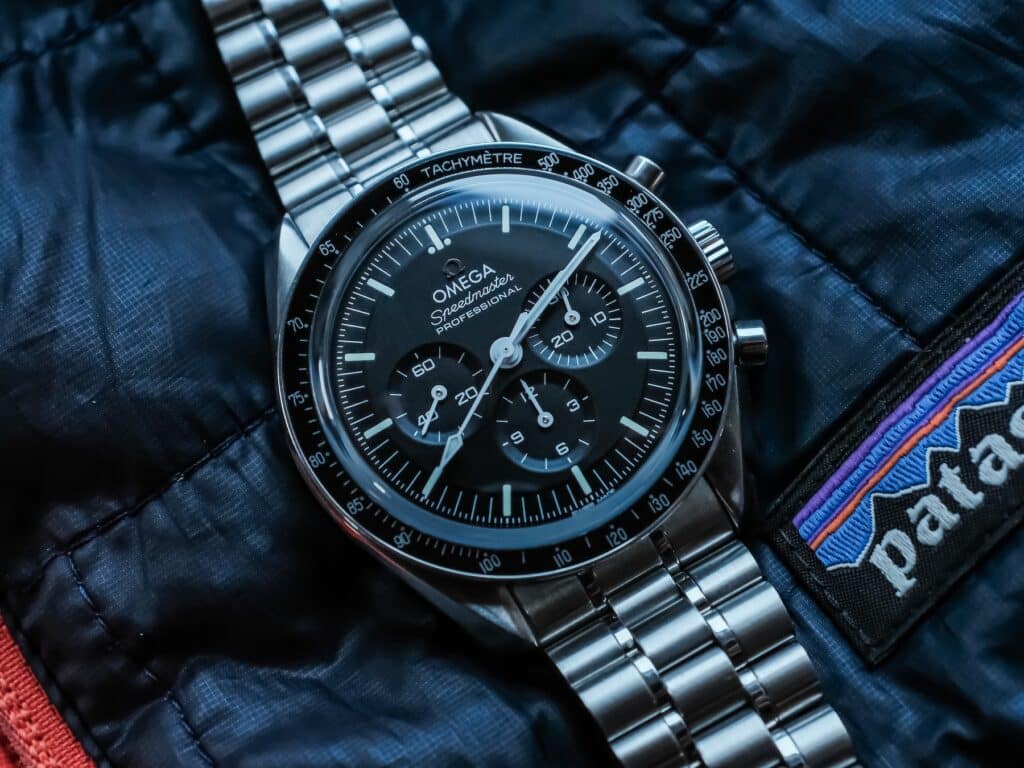
The Omega Speedmaster Professional 3861 is a different proposition. Its mechanical character, history, and decades of design continuity give it an emotional pull that specifications alone can’t explain. For some of us, winding the watch, operating its pushers, and finally owning something we’ve admired for years are as important as its performance. That connection isn’t irrational, and no amount of sensible shopping should require us to pretend otherwise.
Our verdict: choose the C63 Valour if you want an excellent modern chronograph that stands on its own merits; choose the Speedmaster if owning the Moonwatch itself is the point. The expensive mistake isn’t choosing one over the other; it’s buying the Valour to talk yourself out of wanting a Speedmaster.

Co-Founder and Senior Editor
Kaz has been collecting watches since 2015, but he’s been fascinated by product design, the Collector’s psychology, and brand marketing his whole life. While sharing the same strong fondness for all things horologically-affordable as Mike (his TBWS partner in crime), Kaz’s collection niche is also focused on vintage Soviet watches as well as watches that feature a unique, but well-designed quirk or visual hook.