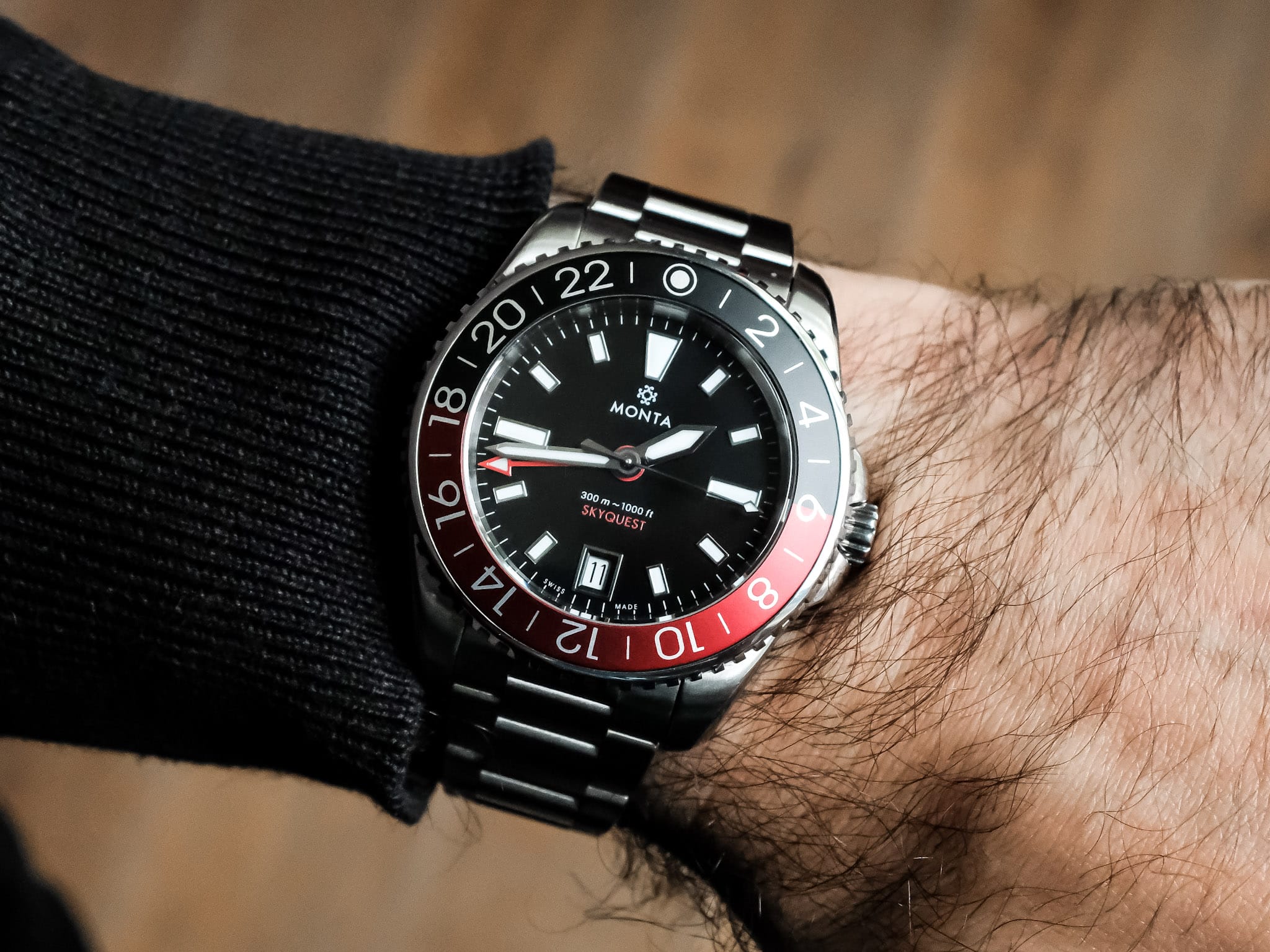
The Monta Skyquest GMT vs Jack Mason Strat-o-Timer GMT question gets interesting fast because this isn’t a simple “more expensive watch wins” situation. Both sit in that enthusiast-friendly lane where details matter more than logo recognition, and both make a different case for what a travel watch should be. So the real question for us is the one that matters after the spec sheet closes: which micro-leaning travel watch offers more value once it’s on your wrist and in your rotation?
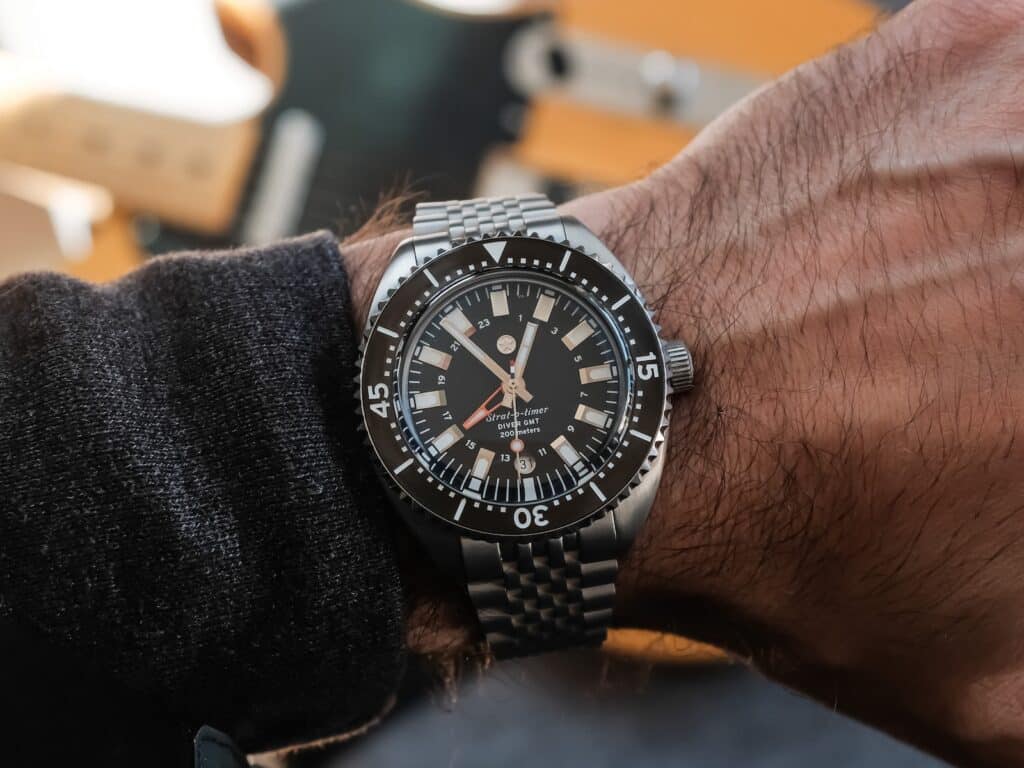
We’ve been doing this long enough to know that value in a GMT isn’t about who can cram in the longest list of features. It’s about what those features feel like during a full day of wear, while sizing a bracelet, while setting local time, or while figuring out whether a watch feels refined enough to dress up without becoming precious. In our hands-on time with both, one won us over with its fit, finishing, readability, and one of the better bracelets in this corner of the market, while the other stood out through comfort, a lighter-wearing titanium case and bracelet, and the kind of flyer-style GMT operation that makes travel feel less fiddly. That trade-off of polished refinement versus casual versatility is what this comparison is here to sort out.
Overview & Identity
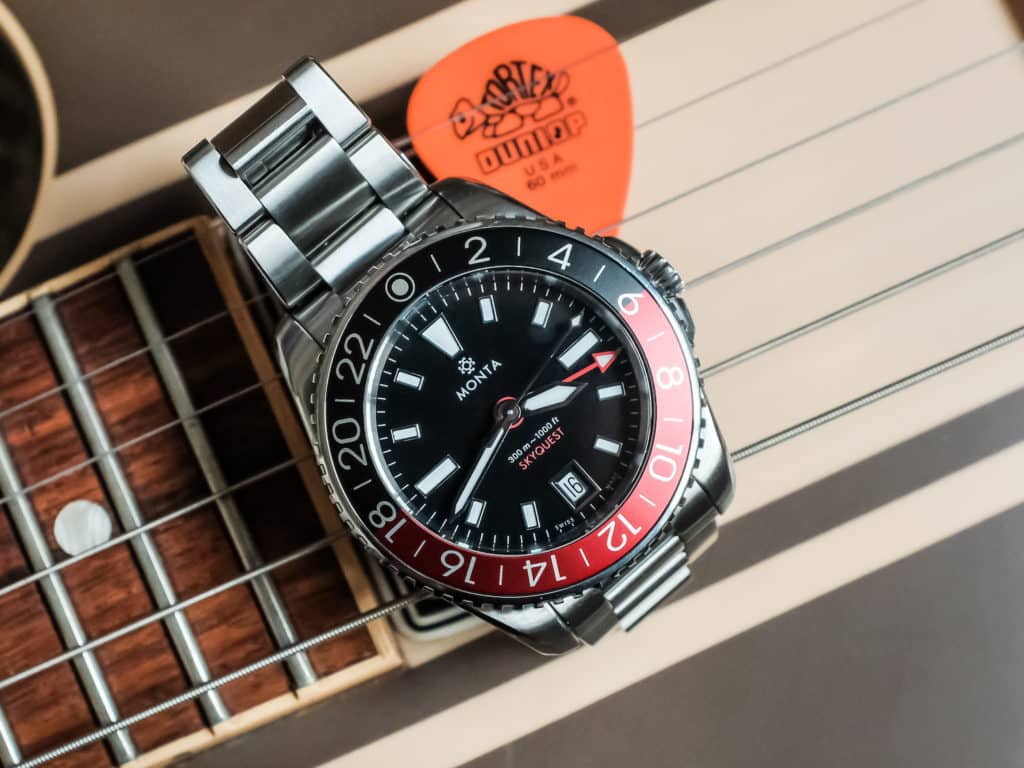
The Monta Skyquest GMT feels like the enthusiast-leaning option for someone who wants a travel watch with a more premium finish right out of the box. While testing, what stood out was how modern and complete the whole thing felt: compact proportions, a cleaner dial layout, a highly readable bi-directional bezel, and the fit and finishing that made the watch feel more polished than plenty of similarly priced Swiss competition. The bracelet reinforces that identity in a big way, thanks to Monta’s toolless quick-adjust system and the level of comfort that made it easy to keep reaching for. More than anything, it came across as a dedicated traveler’s watch that still had enough ruggedness to avoid feeling delicate.
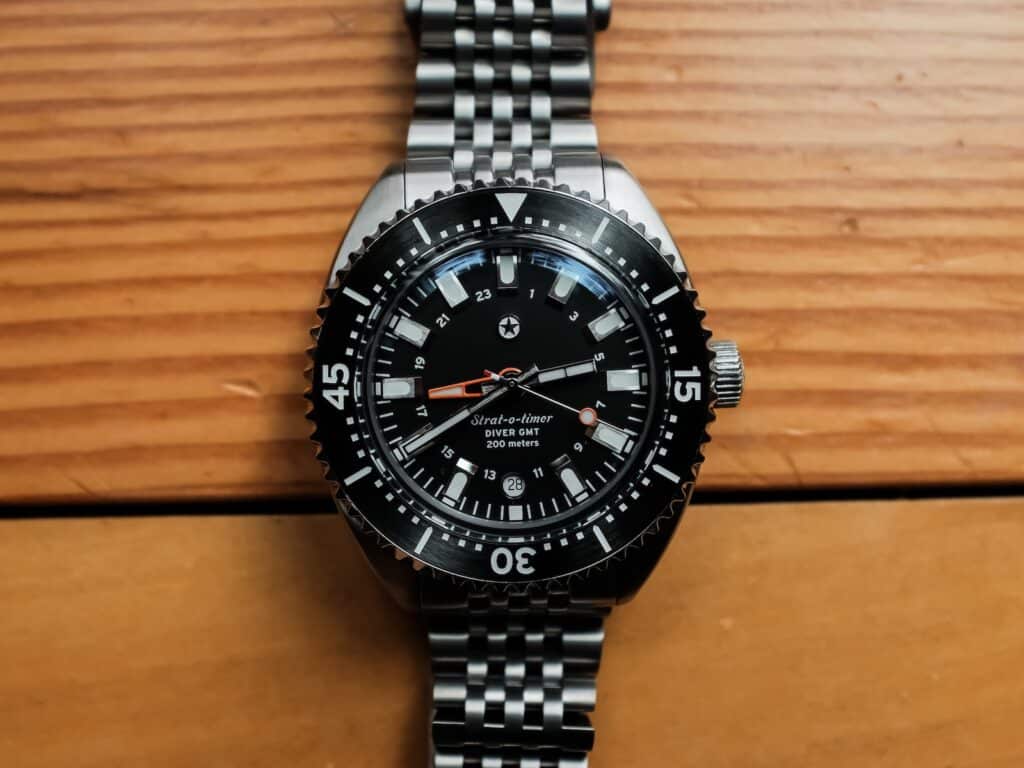
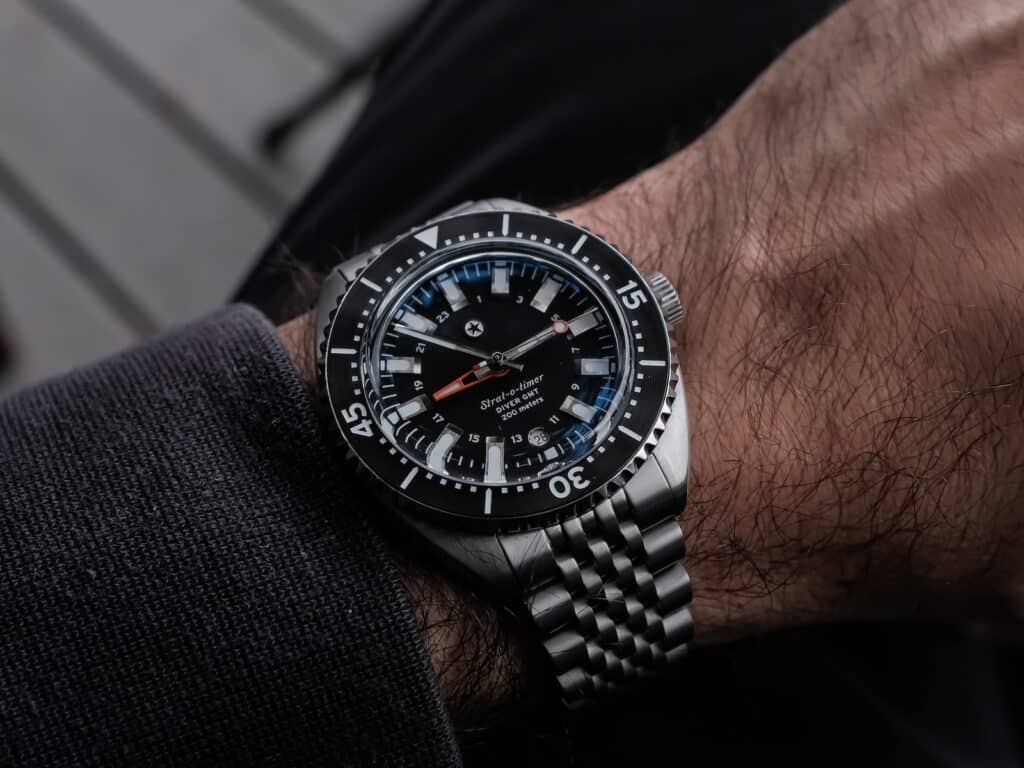
The Jack Mason Strat-o-Timer GMT takes a more casual, diver-forward path. In our dedicated review, the lightweight Grade 2 titanium case and bracelet set the tone immediately. At the same time, the dive bezel, dial-based 24-hour scale, and Miyota 9075 true GMT movement gave it a more practical, modern identity. It never felt like a watch trying too hard to be clever or refined. Instead, it wore light, stayed intuitive after a little time on the wrist, and leaned into everyday utility in a way that made a lot of sense. That gives it a diver-adjacent travel-watch personality with a strong value angle.
- The Monta Skyquest GMT is a more refined enthusiast favorite built around premium finishing, strong bracelet execution, and a polished travel-watch feel.
- The Jack Mason Strat-o-Timer GMT is a lighter, more casual true-GMT sports watch with diver-style practicality and a more relaxed everyday character.
Design & Wearability: Polished Travel Tool vs Lightweight, Everyday Utility
The Monta Skyquest GMT exudes a more refined approach to travel watches. During our hands-on testing, the larger, bi-directional 24-hour bezel took some getting used to, but in practice, the expanded size significantly improved legibility. It’s not bigger for its own sake; it makes the watch feel more cohesive, especially with the matte black dial, which feels a bit tighter. The decision to drop the internal 24-hour chapter ring was a smart one, cleaning up the dial and giving the applied hour markers more space to breathe. The rhodium-plated sword hands, while slightly beefier, retain their elegance and remain highly legible. You get nice symmetry between the Monta logo, wordmark, and the two lines of text just above the legible date window at 6 o’clock.
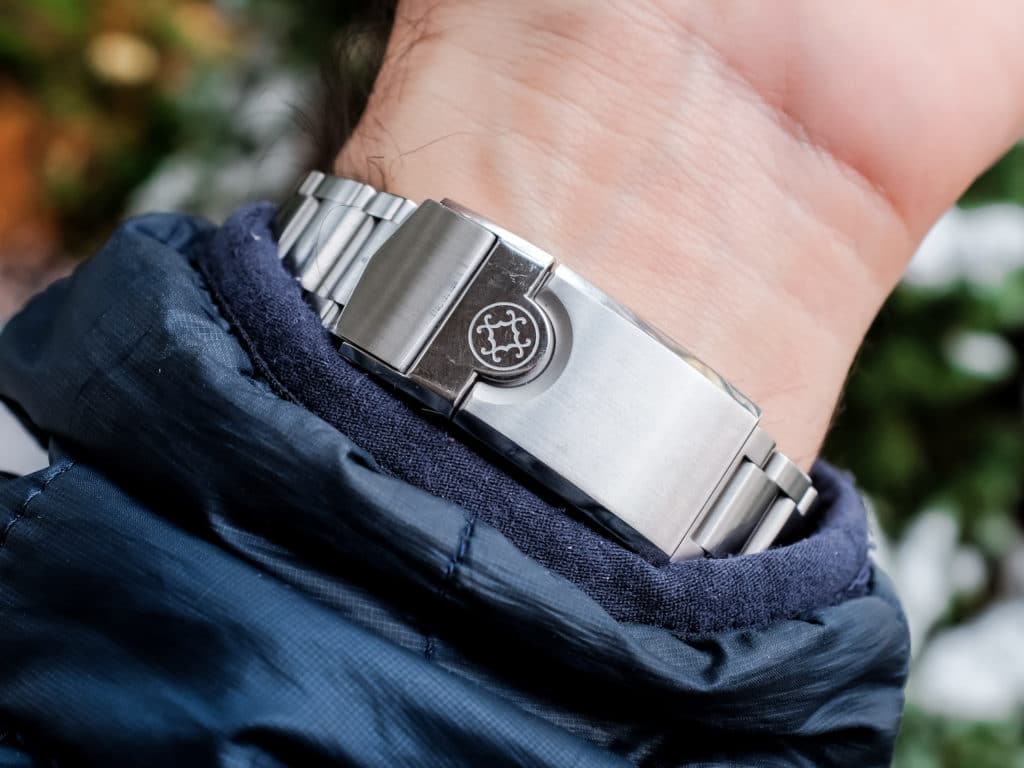
And then there’s the bracelet. Monta’s quick-adjust system remains one of the best in the microbrand space, and the overall build quality feels polished, functional, and very comfortable on the wrist. The stainless steel bracelet tapers down from 20mm, offering a solid clasp that can be adjusted on the fly—a must for a watch that’s designed to travel with you.
On the other hand, the Jack Mason Strat-o-Timer GMT makes its case through function first, but it doesn’t wear like a cluttered instrument panel. The ceramic dive bezel gets a proper 120-click action, and in use, it felt controlled, even, and deliberate rather than loose or too stiff. We did notice the bezel markings weren’t perfectly aligned on the sample we handled. The dial itself is busier than the Monta’s on paper, but the layout works better than expected. Keeping the 24-hour scale on the dial instead of the bezel turns out to be the right call in daily use, since it leaves the bezel free for timing while still making the second time zone easy to track at a glance. The black-on-black palette stays restrained, and the large applied markers, simple stick hands, and orange skeletonized GMT hand keep the information easy enough to sort once your eyes settle in.
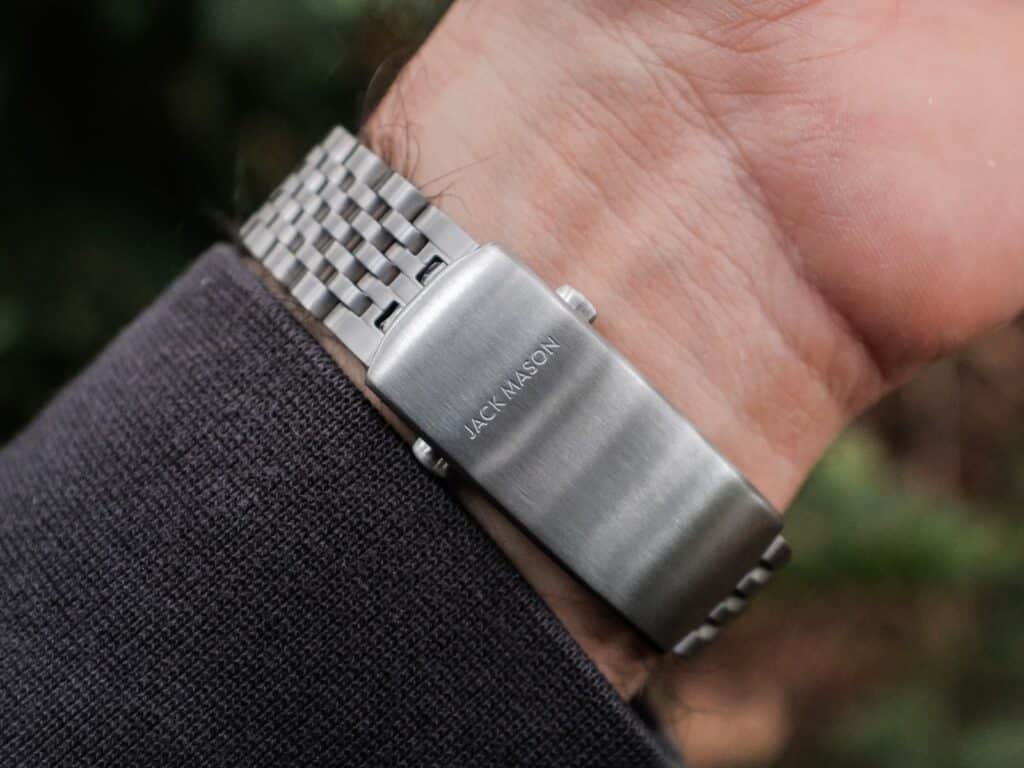
Where the Jack Mason really starts to win people over is on the wrist. Grade 2 titanium keeps the weight low in a way you notice immediately, then appreciate even more after a full day of wear. Its fully brushed surfaces reinforce that casual, tool-forward personality, and the seven-link bracelet drapes better than you might expect from the design. Once sized, it sits naturally and doesn’t fight the wrist. The clasp includes a toolless micro-adjust system, and while it took us a few tries to understand how to lock it in properly, it became genuinely useful once we got the hang of it.
- The Monta Skyquest GMT offers a premium feel with elegant design touches, superb bracelet quality, and a clean, travel-ready dial layout that prioritizes readability.
- The Jack Mason Strat-o-Timer GMT strikes a more casual, tool-oriented balance with its lightweight titanium case, intuitive GMT dial, and easy-to-wear comfort, making it a good fit for everyday use.
Build Quality & Technical Approach
Both the Monta Skyquest GMT and Jack Mason Strat-o-Timer GMT offer solid construction and technical reliability, but they approach durability and precision with distinct philosophies.
Movements and Travel Utility:
The Monta Skyquest GMT keeps things grounded in the kind of mechanical approach we tend to trust more over the long haul. It’s the Monta Caliber M-23, based on the Sellita SW330-2, and it works as a caller GMT. During our time with it, we had no alignment issues and no complaints about timekeeping. Something is refreshing about a movement like this because it doesn’t try to impress you with novelty. It’s reliable, easy to understand, and should be straightforward to service years down the line. The 55-hour power reserve is also a nice bump in daily use, though, truthfully, we wore the Skyquest often enough that it rarely had a chance to wind down. And because the bezel is so easy to use, we often found ourselves tracking another time zone there instead of bothering with the crown.
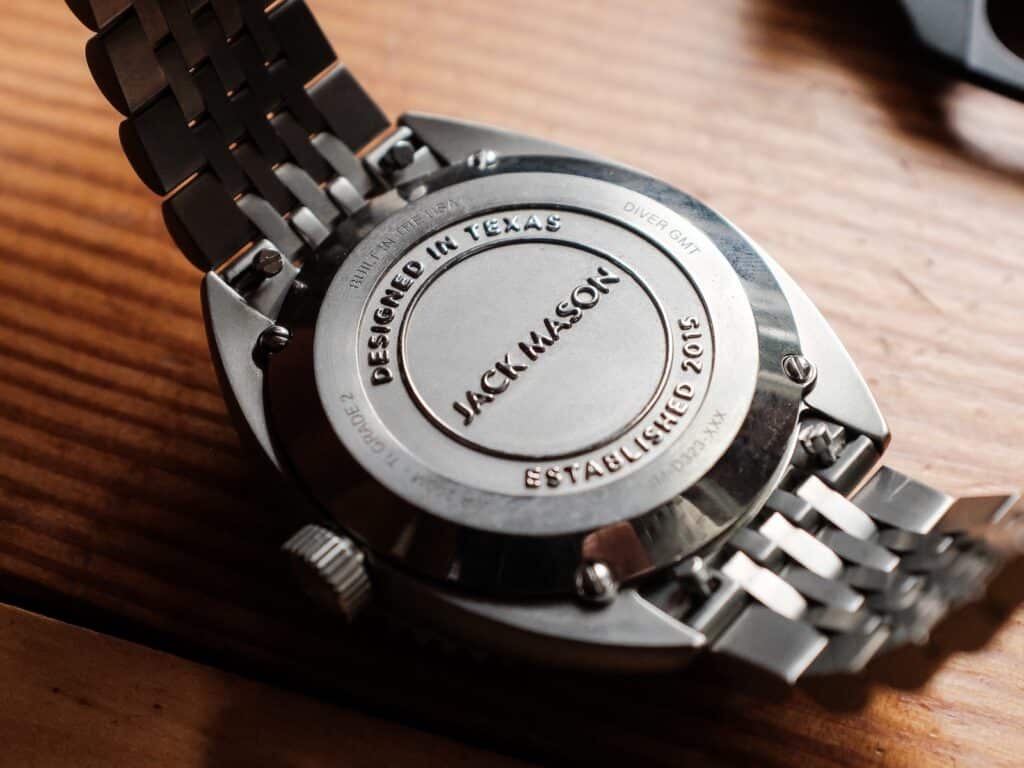
The Jack Mason Strat-o-Timer GMT takes the more modern enthusiast route with the Miyota 9075, and that changes the ownership experience more immediately. This is a flyer-style GMT, so the local hour hand jumps in one-hour increments, making it feel far more direct than the average GMT in this price range. Even when we weren’t using it for constant travel, that interaction still gave the watch a more purposeful feel. The setup was simple, it stayed out of the way once aligned, and the accuracy never drifted enough to become a concern. Jack Mason also regulates these in-house, and that came through in how little we had to think about it during wear. More than the raw specs, what stood out was how the 9075 brings genuinely useful GMT functionality into a range where that used to be much harder to find.
Case Construction and Finishing:
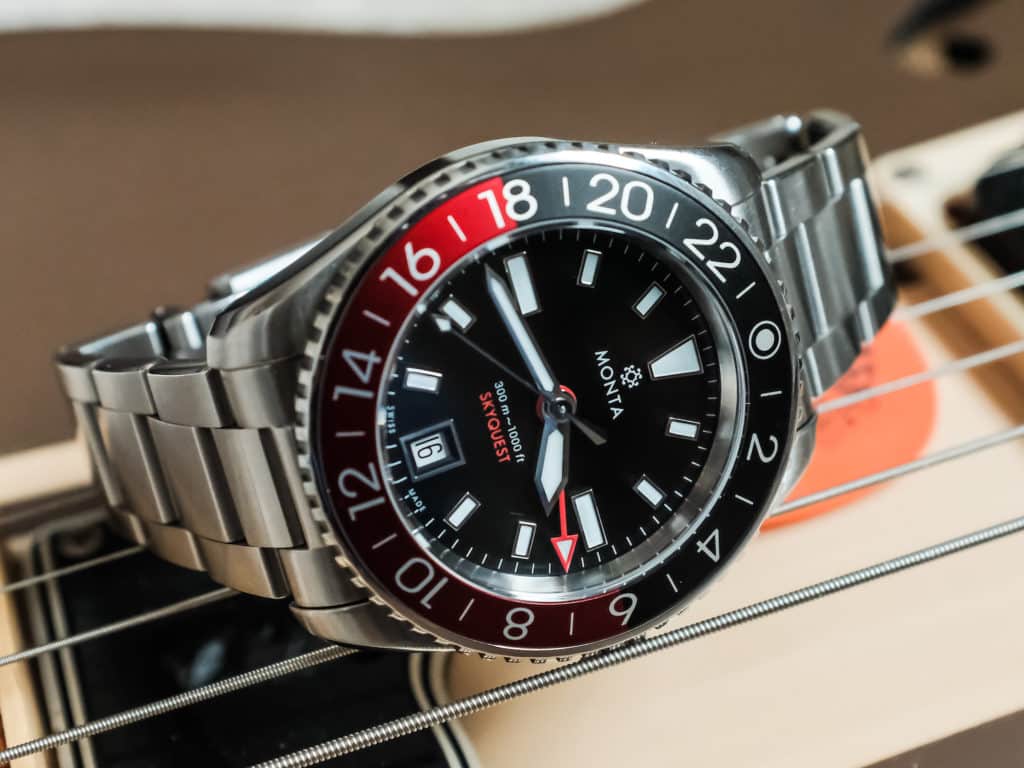
The Monta Skyquest GMT feels like the more refined case in this comparison, but not in a soft or overly polished way. In our hands-on time with it, the case hit that sweet spot that so many sporty GMTs miss: 40.7mm across, 47.4mm lug-to-lug, and 11.8mm thick, which gave it a compact, balanced feel without losing presence. What stood out most was the execution. The fit, finishing, and overall sophistication felt stronger than plenty of similarly priced Swiss watches we’ve handled, which is a big reason the Skyquest has become such an enthusiast favorite. There are polished accents along the case sides and lug bevels, but the watch still reads as capable and modern rather than dressy. It takes a familiar old-school GMT formula and tightens everything up in a way that feels more considered on the wrist.
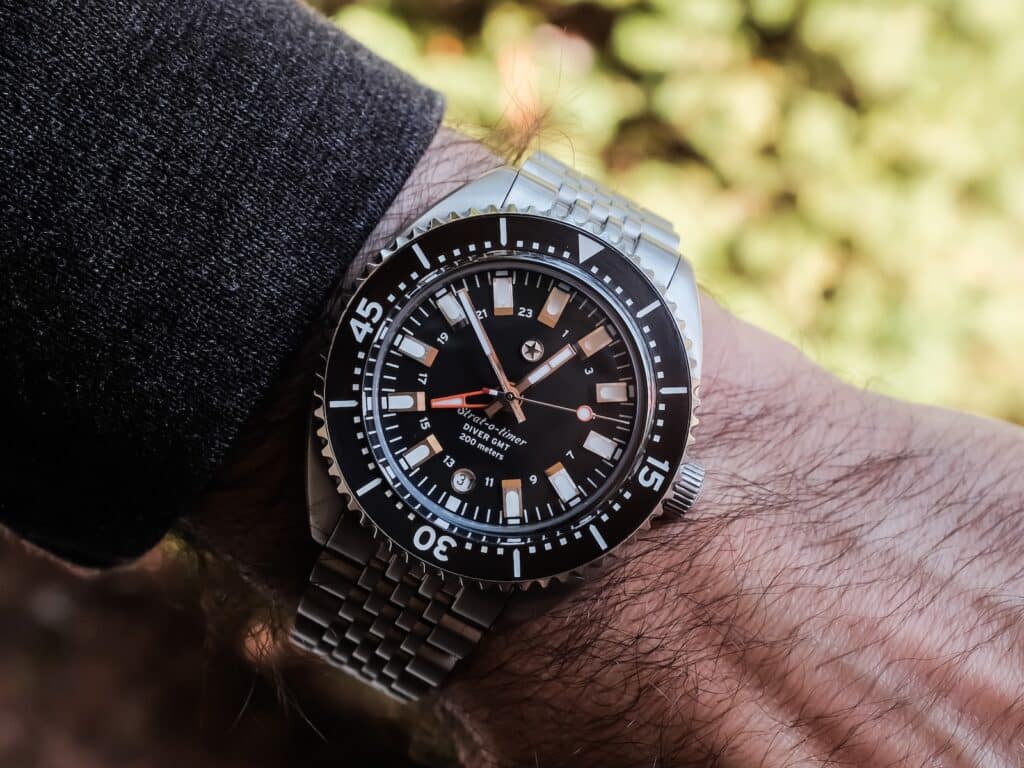
The Jack Mason Strat-o-Timer GMT goes in a different direction, leaning harder into functional case design and a more casual titanium character. Its 40mm case and 47mm lug-to-lug dimensions land in familiar, wearable territory, though the just-over-13mm thickness sounds more imposing on paper than it feels in use. That’s mostly because the case shape does its job well. The mid-case has a noticeable curve, the lugs arc downward, and the whole watch sits closer to the wrist than a flat-sided case at this thickness usually would. The Grade 2 titanium also changes the experience. With fully brushed surfaces and no polished flourishes, it comes across as more muted and tool-forward, less interested in showing off and more interested in being worn. It doesn’t have the same sharp refinement as the Monta, but it feels honest, cohesive, and well-judged for the kind of everyday GMT Jack Mason was clearly aiming to build.
Crystals:
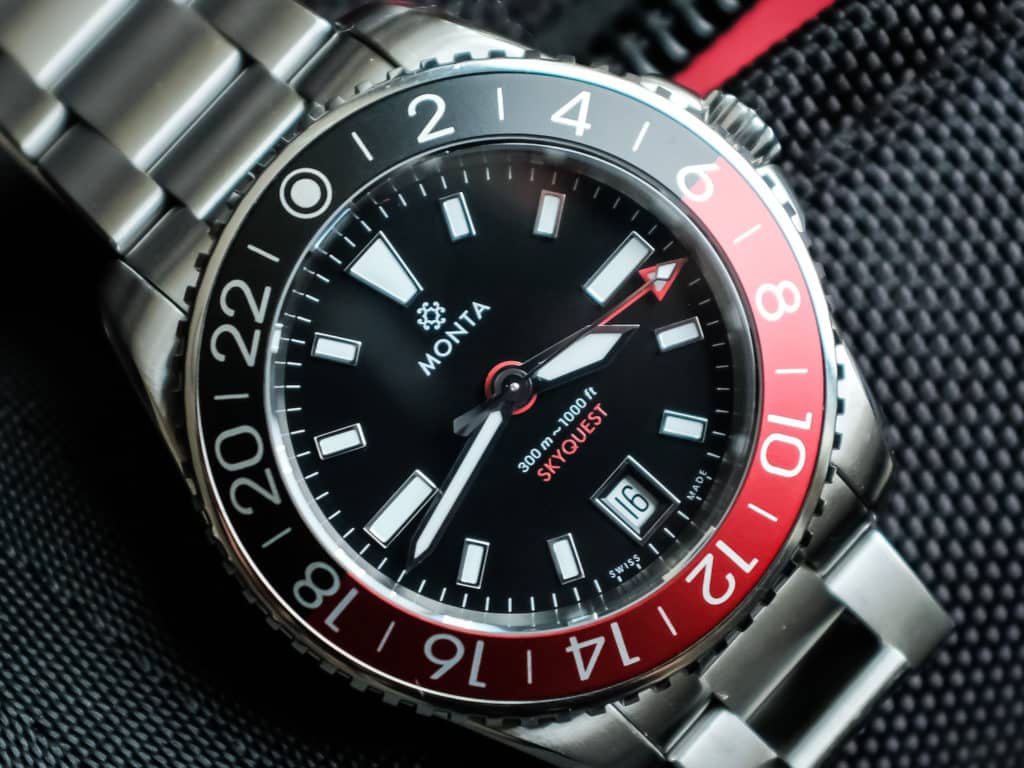
The Monta Skyquest GMT takes the more deliberate route here. It uses a sapphire crystal with seven layers of anti-reflective coating on the dial side, and in our experience, that paid off in the two ways that matter most: reading the watch and photographing it. Glare stayed under control, the dial remained easy to navigate, and the whole watch came across cleaner and sharper in changing light than many GMTs in this range. It’s one of those details that sounds minor until you live with it for a while, then start noticing when other watches don’t get it right. The Monta also features a sapphire display caseback.
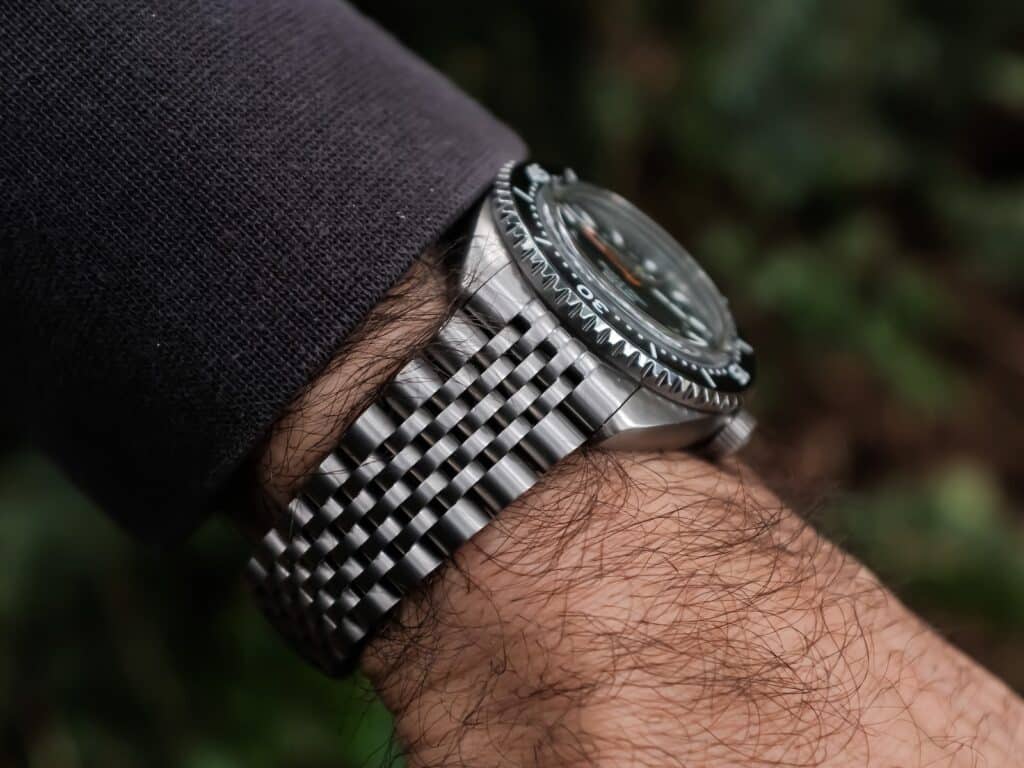
The Jack Mason Strat-o-Timer GMT keeps things simpler with a domed sapphire crystal, which fits the watch’s more casual, tool-forward character. It doesn’t try to turn the crystal into a talking point, and that feels consistent with the rest of the design. Where Monta feels more dial-first and visually polished, Jack Mason’s crystal choice supports the broader, more relaxed sports-watch package without drawing attention away from the bezel-and-dial functionality.
Water Resistance and Lume:
The Monta Skyquest GMT doesn’t leave much room for doubt about what it wants to be. With 300 meters of water resistance, substantial crown guards, and a screw-down crown, it’s built for more capability than most GMT owners will ever demand (unless your airport layovers get unusually aquatic). In hand, it felt every bit like a serious watch, even if we did find ourselves wishing the crown were a touch larger. Lume is equally convincing. Monta uses BGW9 Swiss Super-LumiNova on the hands and indices, and in our time with it, the glow was strong, even, and easy to trust when the light dropped.
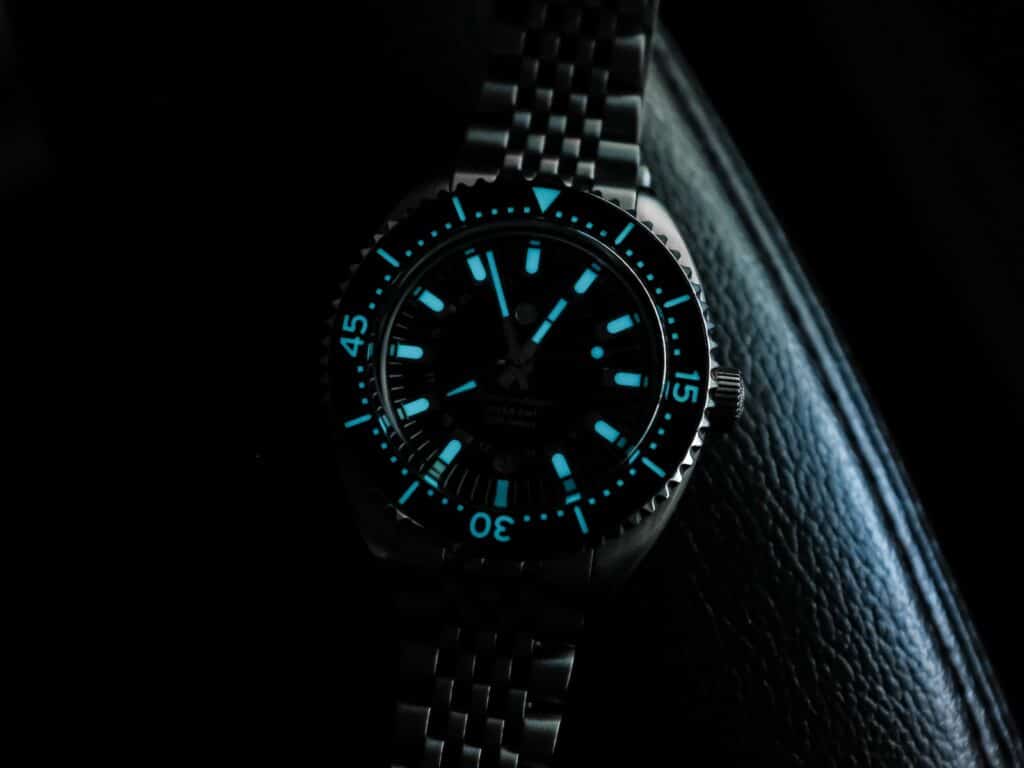
The Jack Mason Strat-o-Timer GMT takes a slightly more restrained approach on paper with 200 meters of water resistance, but that still puts it well beyond everyday swim-proof territory. More importantly, the lume setup feels thoughtfully executed for how this watch is meant to be used. The large applied markers are filled with BGW9, all of the hands are lumed, and even the bezel markings stay visible in the dark, which gives the watch a satisfyingly complete feel in low light. What stood out to us was how often the lume caught our attention without us trying to test it. Moving between indoor and outdoor light, it kept announcing itself in a good way. That kind of accidental confidence tends to matter more than any spec sheet chest-thumping.
- Monta Skyquest GMT: Better finishing, stronger water resistance, longer 55-hour reserve, and a more polished overall build. The trade-off is a caller GMT setup that feels less travel-friendly if you’re frequently resetting local time.
- Jack Mason Strat-o-Timer GMT: True flyer GMT functionality, lightweight titanium comfort, and a more casual tool-watch feel make it easier to justify on pure utility. The trade-off is less overall refinement, plus clasp and bezel execution that feel a bit less polished than the Monta.
Cost Considerations
The Monta Skyquest GMT sits at $2,435, which is not exactly impulse-buy territory. Still, in our experience, it earns that number more honestly than many watches in this bracket. The finishing feels elevated, the bracelet is genuinely excellent, and the whole package comes across like a watch that knows what it wants to be. There’s real competition here from brands like Zodiac, Oris, Mido, Longines, and even Seiko at far lower prices, so this is not a value play in the budget sense.
The Jack Mason Strat-o-Timer GMT lands at $1,399 in titanium, which makes its pitch a bit easier to appreciate right away. That modest bump over the stainless steel version feels fair once you factor in the Grade 2 titanium build, the flyer-style Miyota 9075, and the overall thought put into the watch. It doesn’t try to beat the Monta at refinement, and that’s probably the right move. Instead, it makes a stronger argument for utility and accessibility, offering true GMT functionality and a lightweight, casual-wear experience at a much lower entry cost.
If the Monta feels like the more finished option, the Jack Mason feels like the one reminding you there’s more than one way to spend your watch money without doing anything silly.
Final Thoughts: Which Micro-leaning Travel Watch Offers More Value?
After spending real time with both, the Monta Skyquest GMT vs Jack Mason Strat-o-Timer GMT debate comes down to what kind of value you’re chasing. Not spreadsheet value. Not a forum-spec value. The kind that shows up after a week of wear, a bracelet resize, a few timezone changes, and that moment when you realize one watch keeps getting picked over the others.
The Monta Skyquest GMT is the one we’d point toward if you care most about finishing, bracelet quality, compact proportions, and that polished enthusiast feel that punches above plenty of watches in its range. It wears like a watch for someone who notices case transitions, appreciates a great clasp, and wants a GMT that feels premium every time it goes on the wrist. It is not the watch we’d steer toward for someone who specifically wants flyer GMT functionality or who is trying to maximize utility per dollar. If your idea of value includes tactile quality, sharper execution, and a watch that feels a bit special even on boring days, the Skyquest makes a strong case for its price.
The Jack Mason Strat-o-Timer GMT is the one we’d recommend to the buyer who wants travel-friendly function, lighter weight, and a more relaxed sports-watch personality without creeping too far upmarket. The titanium build, true GMT movement, and diver-adjacent layout give it an ease that makes a lot of sense in daily wear. It is not the watch for someone chasing the last word in refinement, bracelet execution, or polished finishing. But if your version of value means practical GMT functionality, casual versatility, and a watch you can wear hard without feeling precious about it, the Jack Mason is the smarter buy.
So which microbrand travel watch offers more value? We’d give the edge to the Jack Mason Strat-o-Timer GMT if we’re judging value the way most buyers should: by what you get, how useful it is, and how little compromise it asks for at the price. That said, the Monta Skyquest GMT is still the watch we’d rather own if money were less of a concern.
Let us know your thoughts on our breakdown and analysis in the comments below.

Co-Founder and Senior Editor
Kaz has been collecting watches since 2015, but he’s been fascinated by product design, the Collector’s psychology, and brand marketing his whole life. While sharing the same strong fondness for all things horologically-affordable as Mike (his TBWS partner in crime), Kaz’s collection niche is also focused on vintage Soviet watches as well as watches that feature a unique, but well-designed quirk or visual hook.
This was a dumb comparison. Monta is way above the fashion brand Jack Mason. Monta watches are classic and refined one is just a ugly mess that is like any fashion brand watch.
Part of what we try to do is compare watches that people are actually considering with similar designs, even when the brands come from different backgrounds. The comparison is meant to highlight those differences, not equate the two.