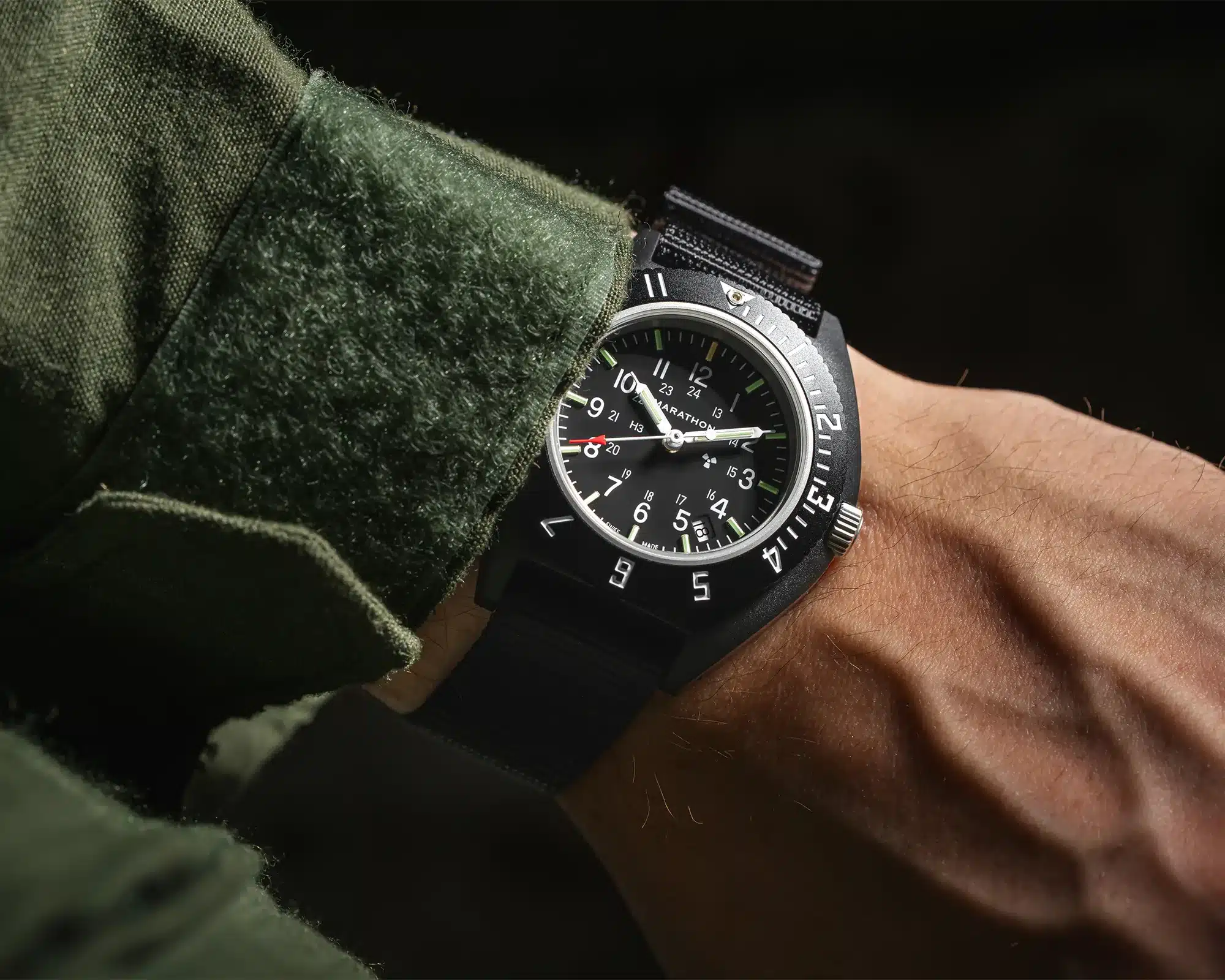
While the rest of the watch world has its eyes glued to Watches & Wonders 2026, Marathon dropped something pretty dang cool. The brand has announced two new versions of its beloved Pilot’s Navigator, the NAV and NAV-D, and while they look familiar on the surface, the real story here is underneath. Marathon is introducing a proprietary case material it’s calling CeraShell, and it marks the first major construction change for the non-steel Navigator in roughly three decades.
I’ve owned two Navigators over the years, one of which I reviewed here on the site, and I’ve always appreciated how the model has evolved without losing its identity. The full steel version a while back basically broke the tool watch corner of the internet. So when Marathon announces a material innovation on a model with this kind of lineage, it gets my attention.
For those unfamiliar, the Marathon Navigator traces its origins back to 1986, when it was developed in collaboration with Kelly Air Force Base in Texas. The goal was to build a specialized, durable watch for pilots and parachutists, and it’s remained a staple of Marathon’s catalog ever since. Since the ’90s, the watch has used a composite fibreshell case that became a defining trait of the line.

CeraShell replaces that with a new composition of bio-sourced plastic and ceramic powder. Marathon says the result is the same ruggedness but at an even lighter weight. That’s a big claim for a watch designed around real-world field use, though I’d want to hold one before drawing any real conclusions about the difference.
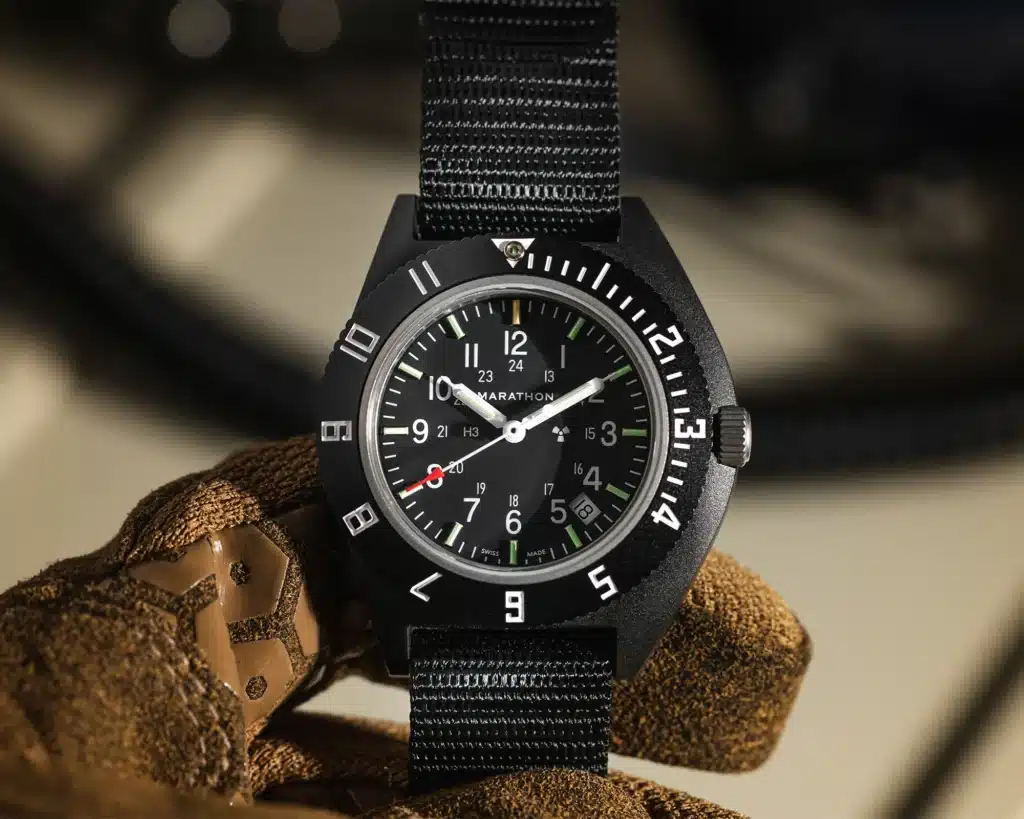
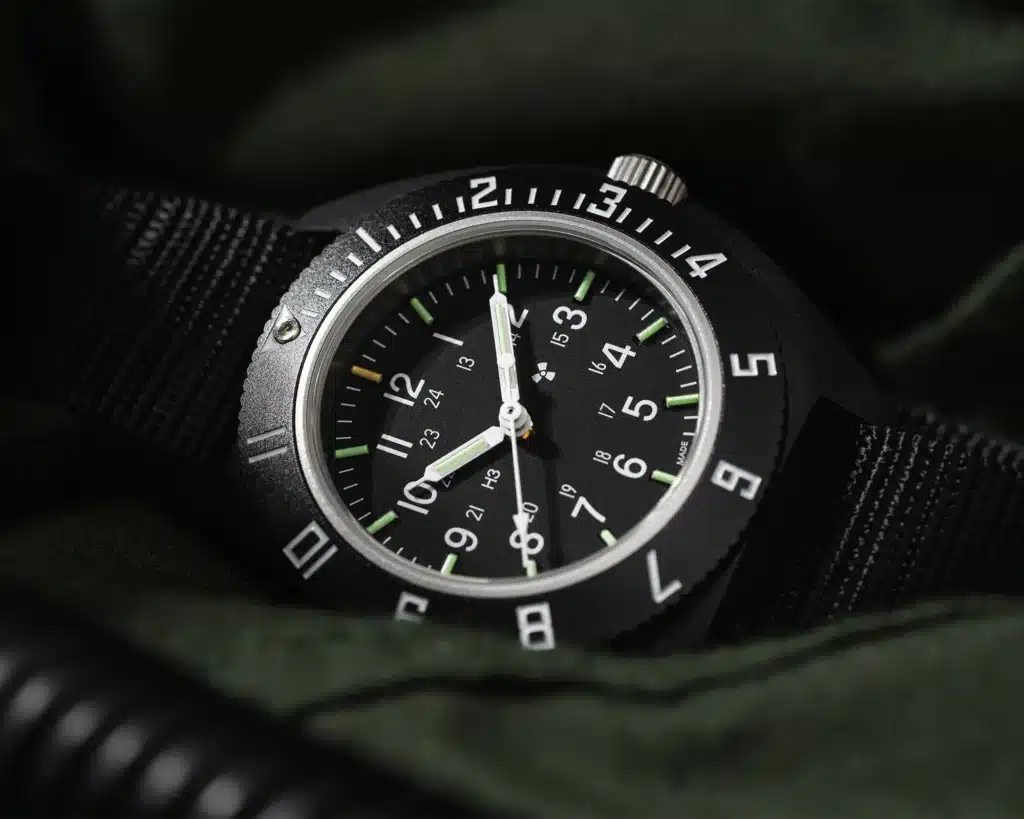
Both models come in at 41mm with the Navigator’s signature tonneau-shaped case and shielded crown. You get an aluminum bidirectional rotating GMT bezel with a new radial-mounted tritium tube insert, which Marathon says improves visibility and protection. The cases also now feature removable spring bars, a welcome update for anyone who swaps straps regularly. Add a sapphire crystal rated for temperature resistance, tritium dial markers, and a durable nylon strap (with other options available at extra cost), and the spec sheet looks solid for the price.
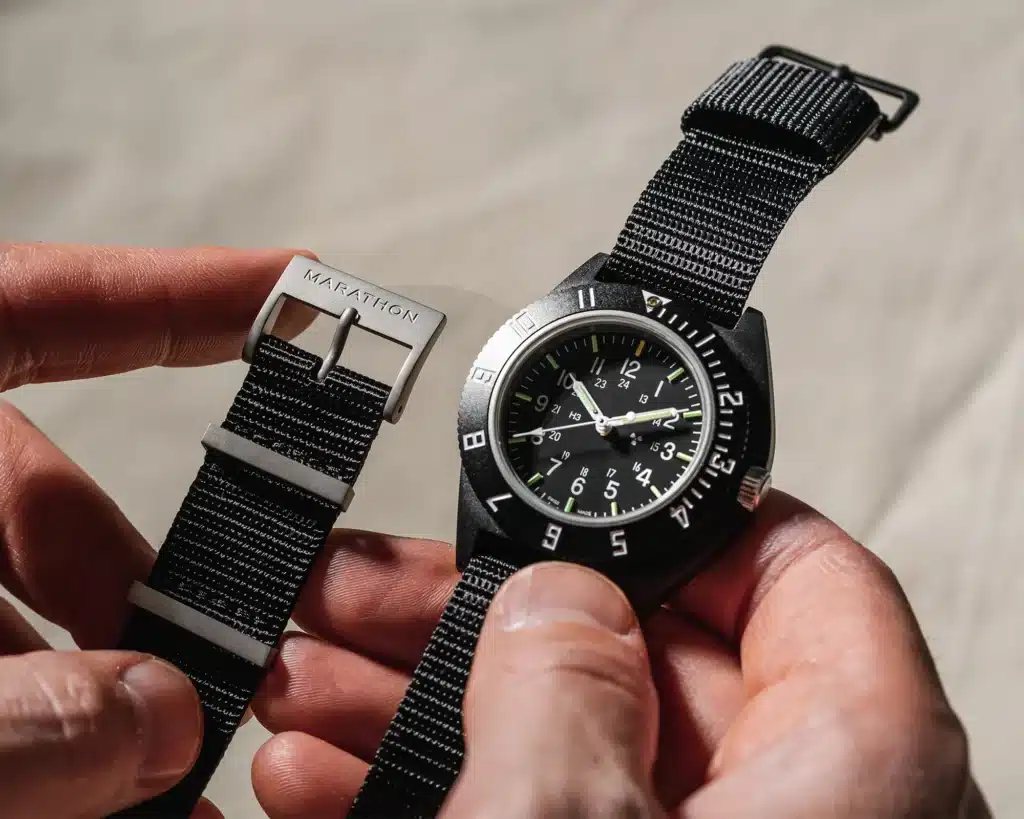
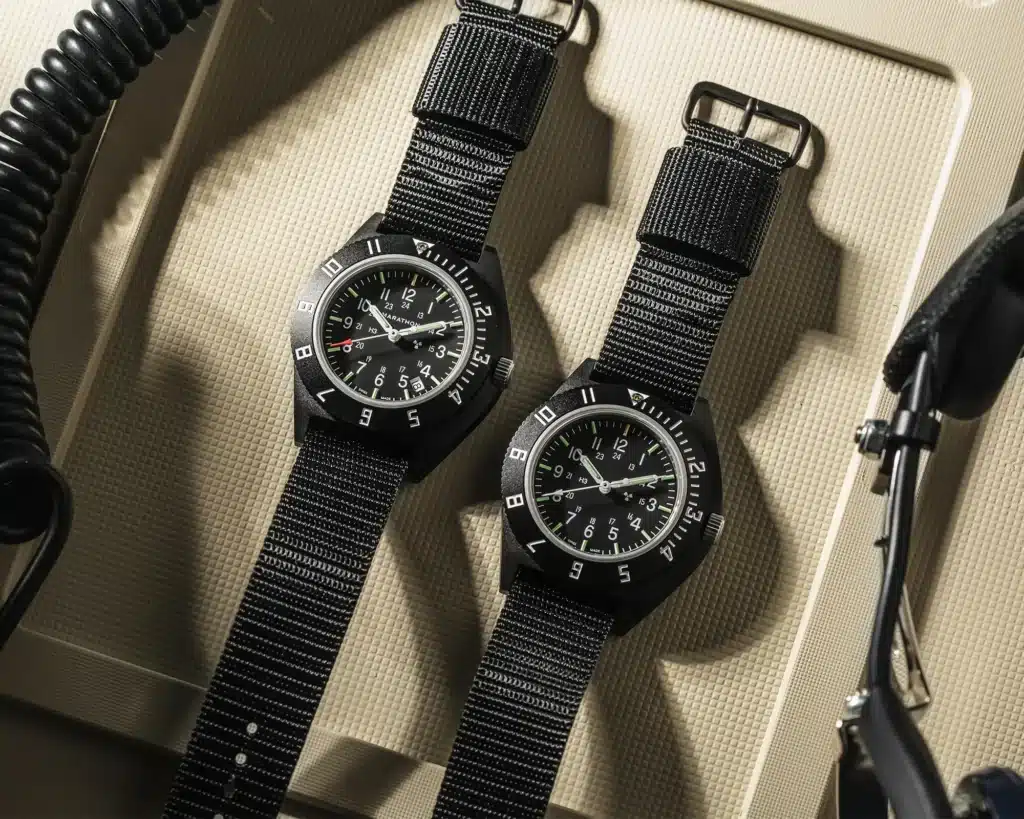
The split between the two models is minimal. The NAV runs an ETA F06.105 HeavyDrive Quartz movement, while the NAV-D uses the F06.115 variant, which adds a date window between 4 and 5 o’clock. The date model also picks up the Marathon logo above the hands and a red-tipped seconds hand. Beyond that, and the $40 price gap, they’re the same watch.
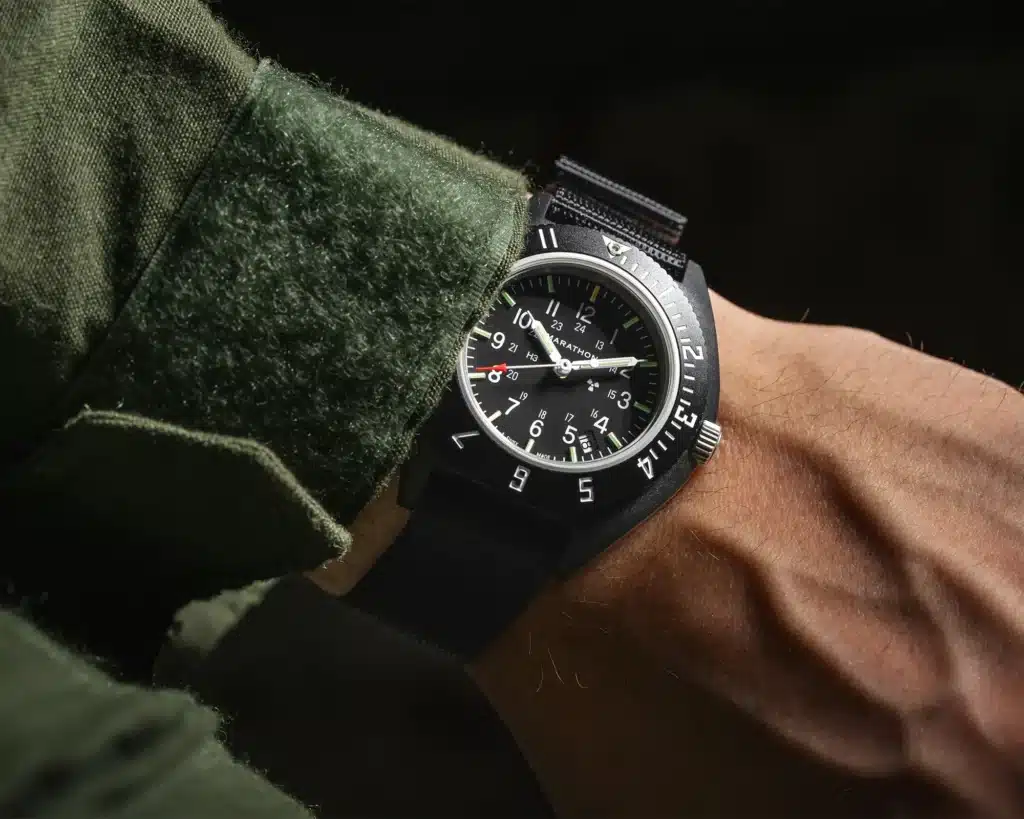
At $550 and $590 respectively, the pricing feels reasonable for what Marathon is offering here. These aren’t fashion pieces. They’re purpose-built tools with legitimate military provenance, and the Navigator has earned its reputation over nearly four decades of continuous production. I’m genuinely curious to get my hands on one of these to see how the CeraShell case compares to the older fibreshell models I used to own. Whether the material change is something you’d actually notice on the wrist remains an open question, and that might be the most interesting part of this release.

Co-Founder & Senior Editor
Michael Peñate is an American writer, photographer, and podcaster based in Seattle, Washington. His work typically focuses on the passage of time and the tools we use to connect with that very journey. From aviation to music and travel, his interests span a multitude of disciplines that often intersect with the world of watches – and the obsessive culture behind collecting them.