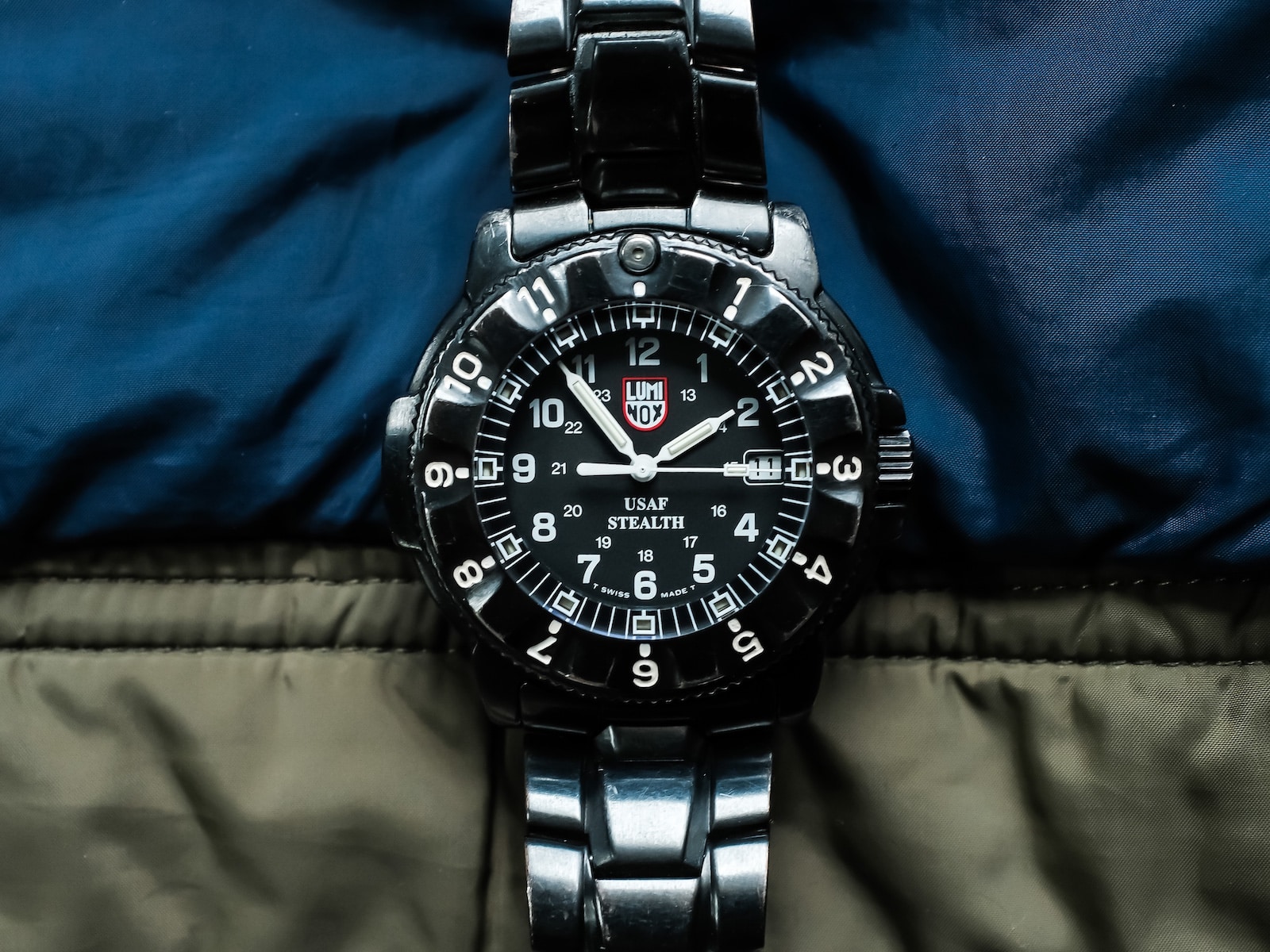
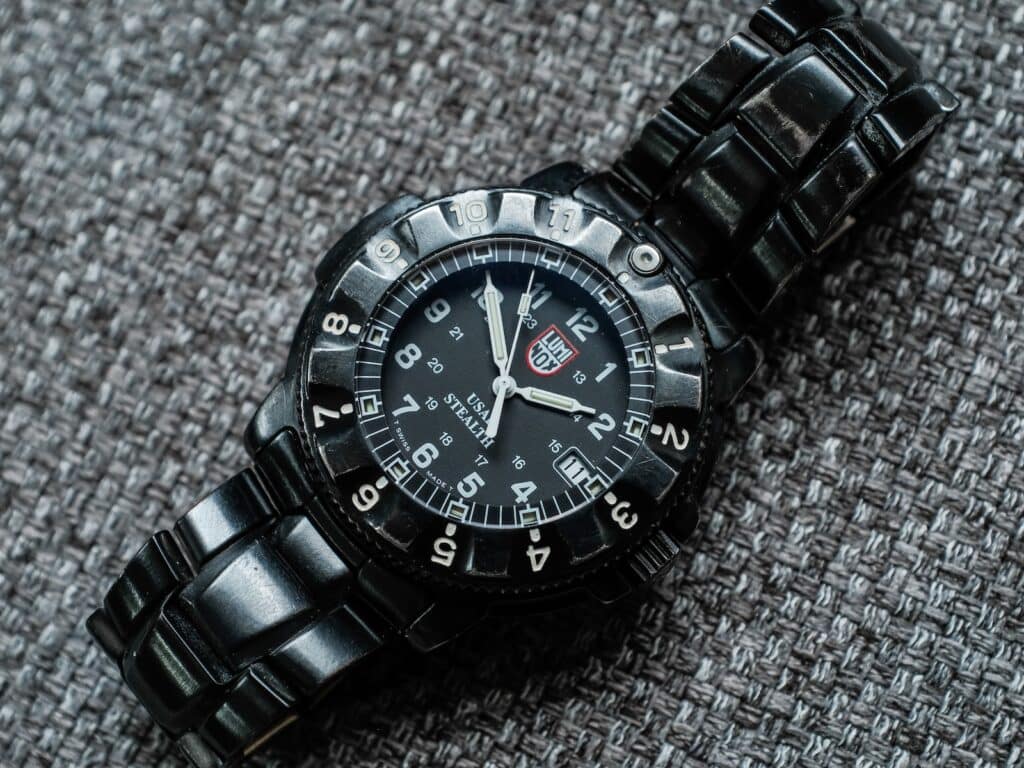
So, this is something you haven’t seen on TBWS yet. As you know, vintage watches usually arrive with stories attached to them. Vintage watches also aren’t totally my thing. Most of the time those stories are incomplete, built from worn edges and a bit of educated guesswork. This one came with a story I already knew, because the watch belongs to someone I’ve come to respect well beyond his taste in watches. This Luminox F-117 USAF Stealth Series 3400 isn’t part of my collection. It belongs to a friend in his seventies who spent decades building a dental practice, mentoring the people around him, and collecting experiences that make for better conversation than any watch ever could.
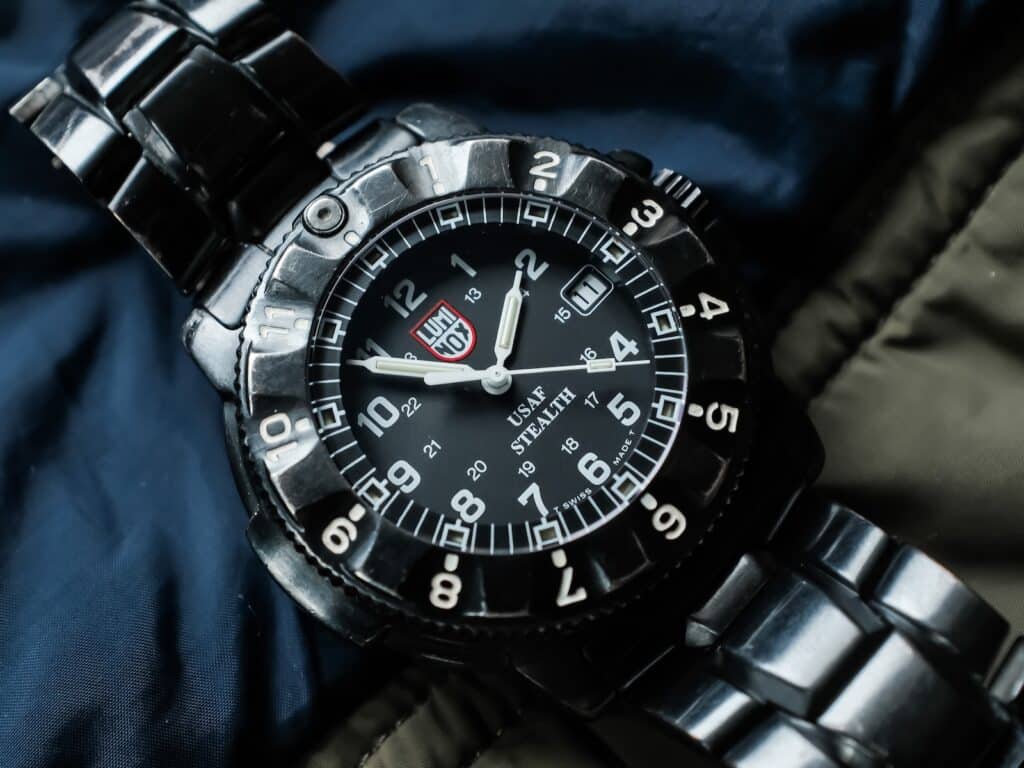
Now in retirement, he’s equally at home talking about sea kayaking, motorcycles, off-road vehicles, community volunteer work, or the latest project occupying his garage. Through all of that, this watch was simply there. It was worn through ordinary days, some really hard times, memorable adventures, and milestones that only reveal their significance in hindsight. When he handed it to me, the job was straightforward. It needed a fresh battery and a little attention to the bracelet before it could return to his wrist. As I worked through those small repairs, I found myself thinking less about the watch itself and more about what decades of regular use actually look like. Every scratch, every worn edge, and every stretch in the bracelet reflected a life that had been fully lived instead of carefully preserved.
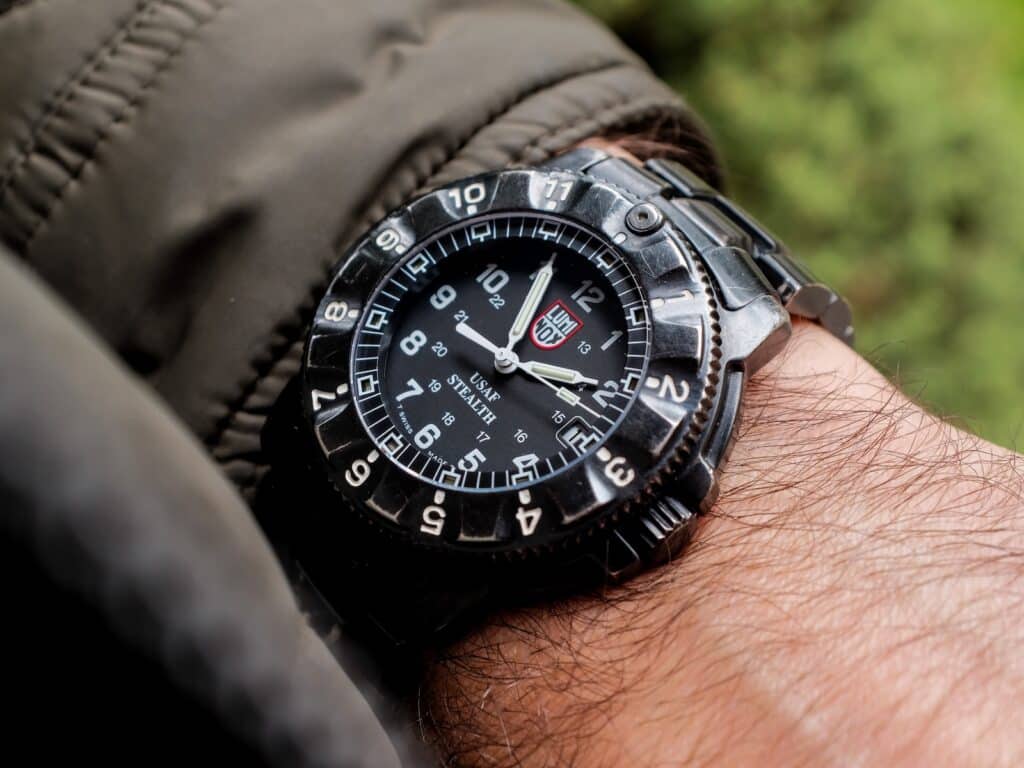
That perspective changed the way I looked at this vintage Luminox. Rather than asking whether it measures up to modern standards, I found myself asking a different question. What does a watch become after spending decades as a trusted companion to someone who never needed it to be anything more than a dependable tool?
Origin Story
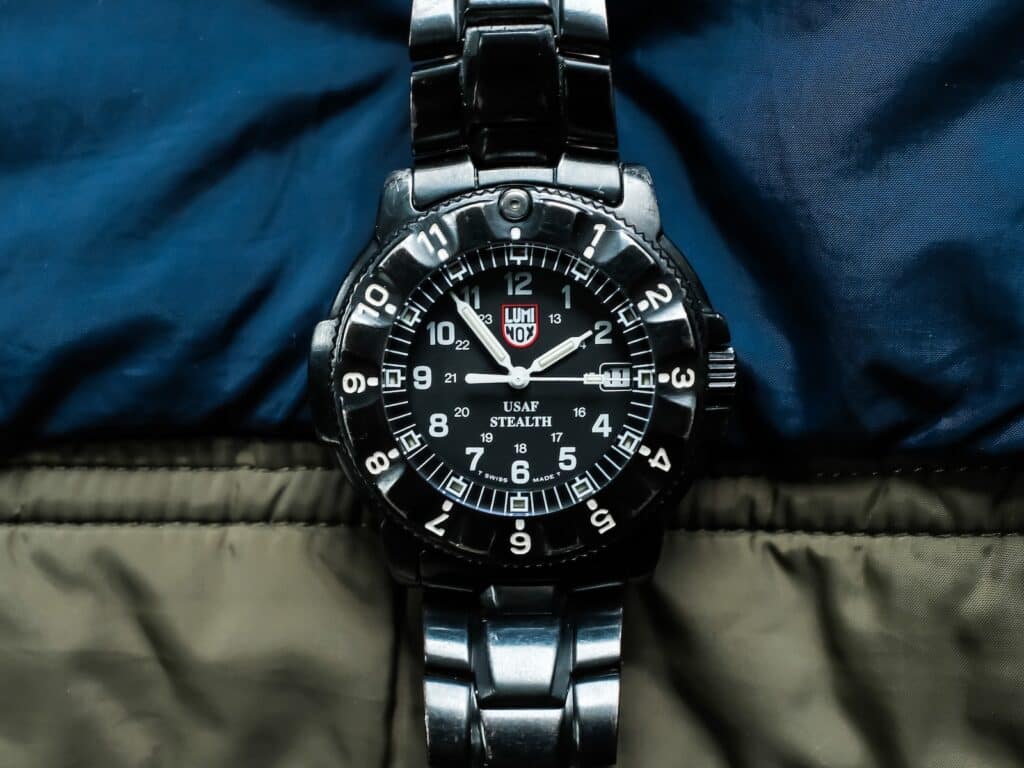
If you’re the nerdiest of military watch nerds, you might recognize where this design comes from. The Luminox F-117 USAF Stealth Series 3400 clearly draws from the MIL-W-46374F Type VI specification, best known through the Stocker & Yale 650 and Marathon watches produced for the U.S. military during the 1990s. Luminox never held that contract, but this feels like its interpretation of the formula, wrapped in branding inspired by the Lockheed F-117 Nighthawk. I haven’t been able to pin down the exact production year for this example, although the early 2000s seems like the most likely timeframe. Even today, you can still spot the same design DNA in Luminox’s current F-117 collection.
The Watch Itself
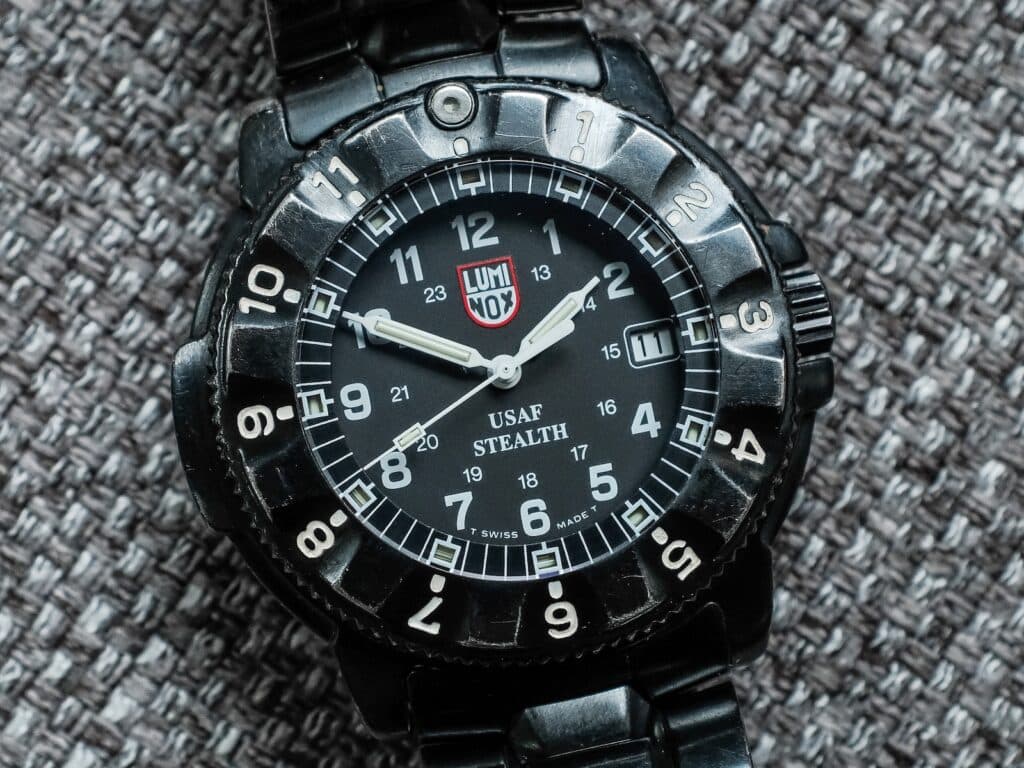
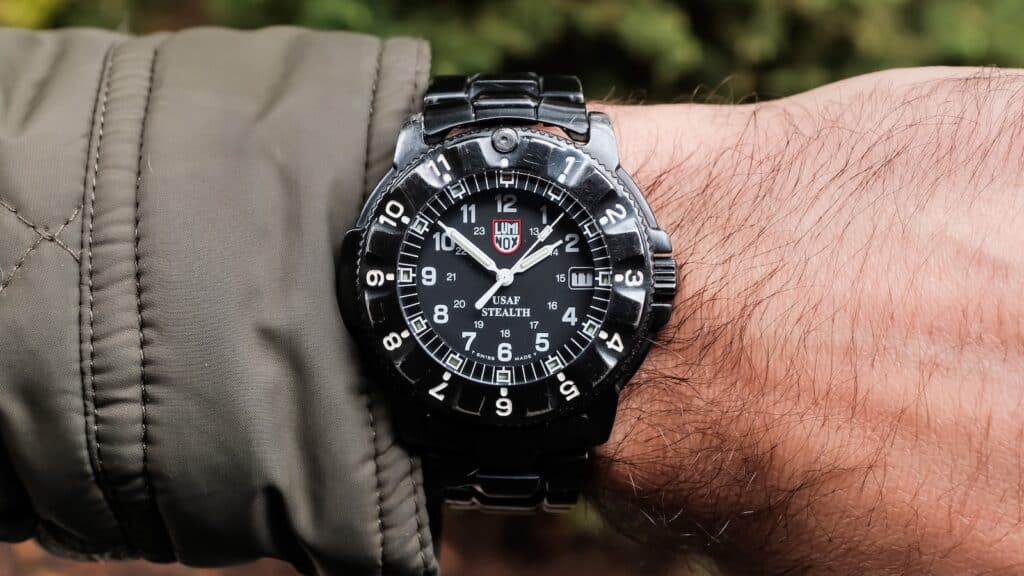
Picking it up for the first time, I was struck by how familiar it felt despite its age. Luminox has refined the formula over the years, but the fundamentals haven’t changed much. This is still very much the blueprint for the modern Luminox F-117 collection, right down to the oversized Arabic numerals, deeply recessed dial, and bezel that favors function over finesse.
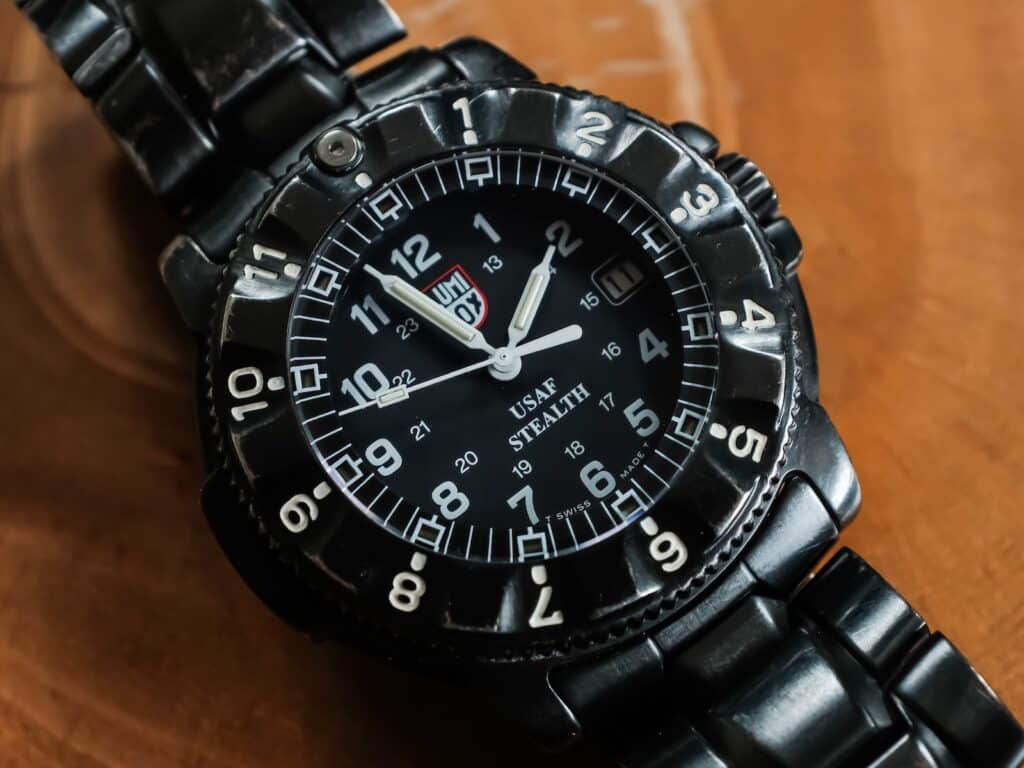
This particular example wears a little differently than the resin-cased Luminox watches most people picture. It’s got some weight to it. The 44mm stainless steel case and matching bracelet are covered in a black finish that has slowly worn away over years of regular use. The exposed steel around the bezel, case edges, and bracelet is a record of where the watch met the friction of everything that filled its owner’s days.
On paper, a 44mm case sounds substantial, especially paired with a thickness of roughly 13mm. In practice, the proportions feel appropriate for what Luminox was building at the time. The broad dial opening, 22mm bracelet tapering to 20mm at the clasp, and relatively short lugs keep it from feeling unnecessarily bulky. It has presence on the wrist without crossing into oversized territory.
The Dial
The dial tells the watch’s age more than the case ever could. The tritium tubes that made early Luminox watches famous have reached the point where they’re producing very little light at all. That’s simply the nature of tritium. With a half-life of about 12 years, these tubes were never meant to glow forever.
Oddly enough, I don’t think that takes much away from the experience. The large Arabic numerals, inner 24-hour scale, and generous spacing still make this one of those watches you can read almost without thinking about it. That underlying military field watch DNA comes through immediately. Whether the tritium is glowing brightly or barely at all, the layout remains exceptionally clear.
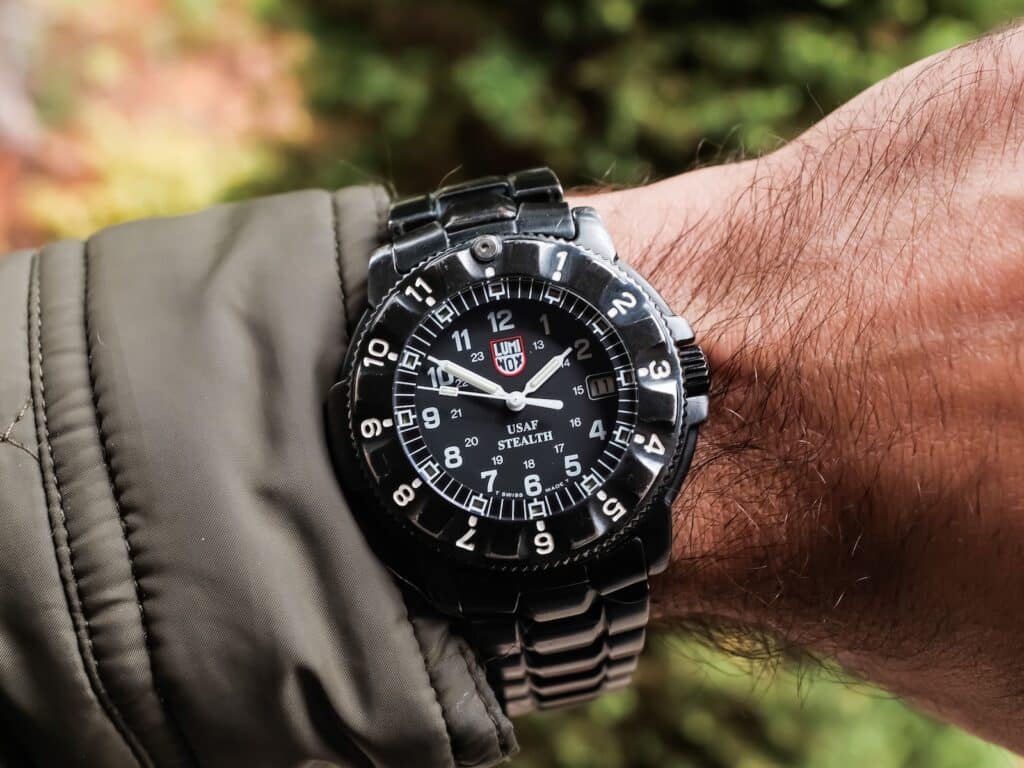
I found myself going back and forth on whether the dial should ever be restored. Luminox once listed service providers that specialized in replacing aging tritium tubes, although finding someone I’d confidently trust with a watch like this has proven more difficult than I expected. Part of me likes the idea of bringing back the feature that helped define these early models. Another part of me sees the fading tritium as a reminder that every tool watch carries a lifespan for some of its components.
For now, I’d leave it exactly as it is. The tubes may have lost their brightness, but they haven’t taken away what made this dial work in the first place. Twenty-ish years later, it’s still one of the easiest watches I’ve looked at all year.
The specifications reinforce that tool-watch mindset. A sapphire crystal has protected the dial remarkably well, the 200 meters of water resistance and screw-down crown meant there was never much reason to baby it, and the bidirectional 12-hour bezel remains useful for tracking a second time zone or simply keeping tabs on elapsed time. None of those features feel like crazy marketing bullet points here. They’ve simply been part of the watch for decades.
A Little Time on the Bench
The work itself turned out to be fairly uneventful, which is probably the best outcome you can hope for with a watch of this age. A fresh battery brought the Swiss quartz movement back to life immediately, and aside from the bracelet, there weren’t any unpleasant surprises waiting inside.
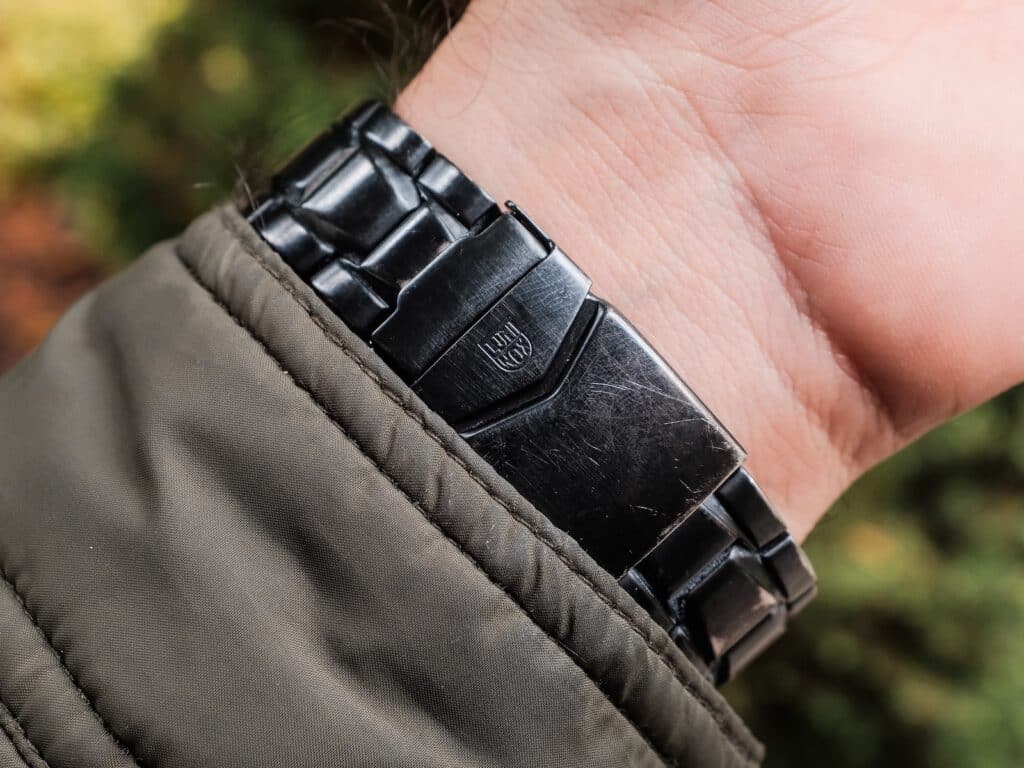
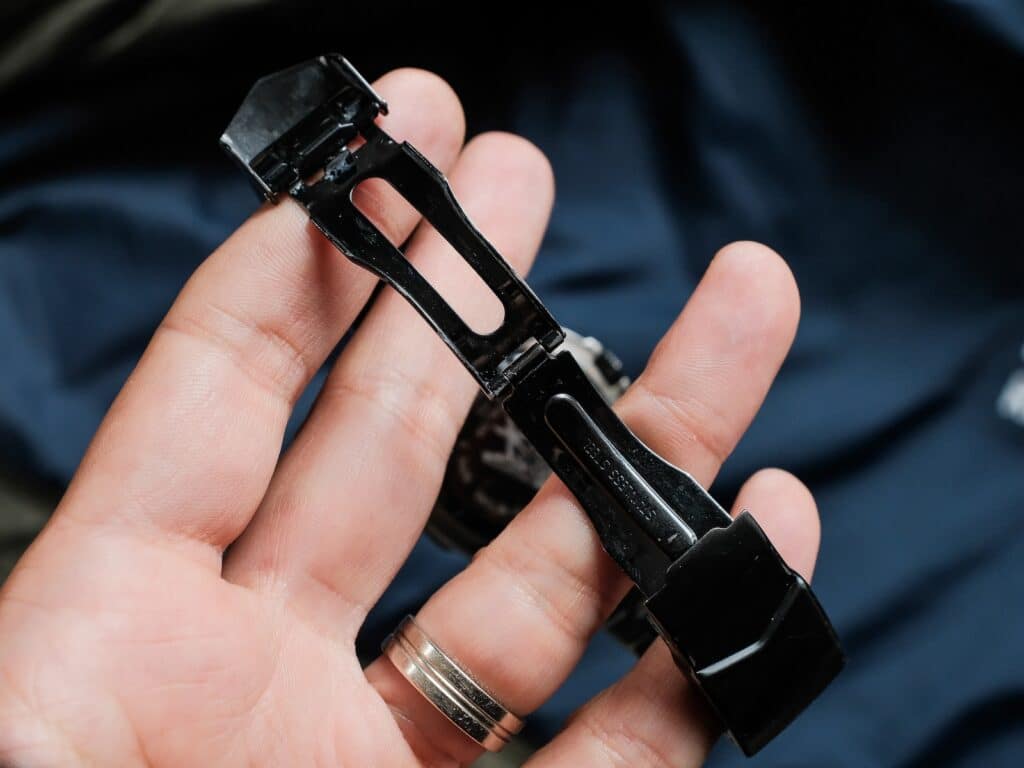
Most of my attention went to the original bracelet. Years of wear had introduced a bit of stretch, and the end links needed some persuasion before they would sit properly against the case again. One had worn beyond saving, so I borrowed a matching end link from a donor watch to complete the repair. It isn’t a remarkable bracelet by modern standards. There’s no on-the-fly adjustment or particularly clever clasp design. It simply does its job, and after all these years it’s still surprisingly comfortable.
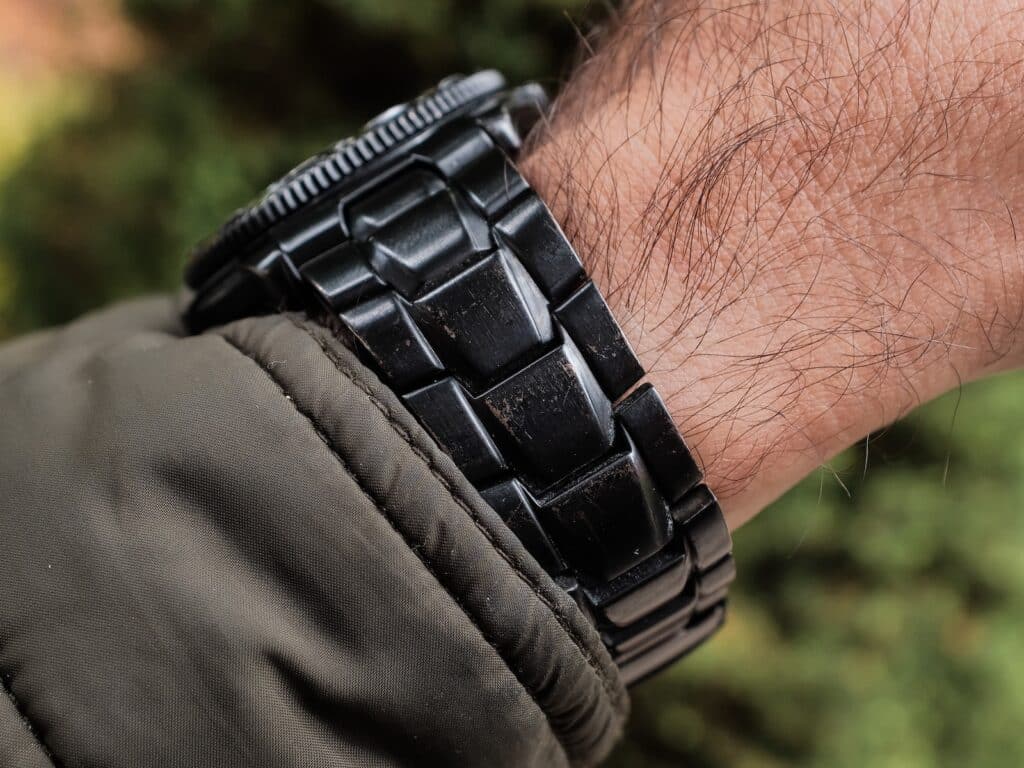
I briefly considered suggesting a nylon or rubber strap. Either would suit the military-inspired design perfectly. Then again, that wasn’t really why the watch was on my bench. My goal was to return it looking and functioning the way its owner remembered it, and that meant preserving the original bracelet as part of the package.
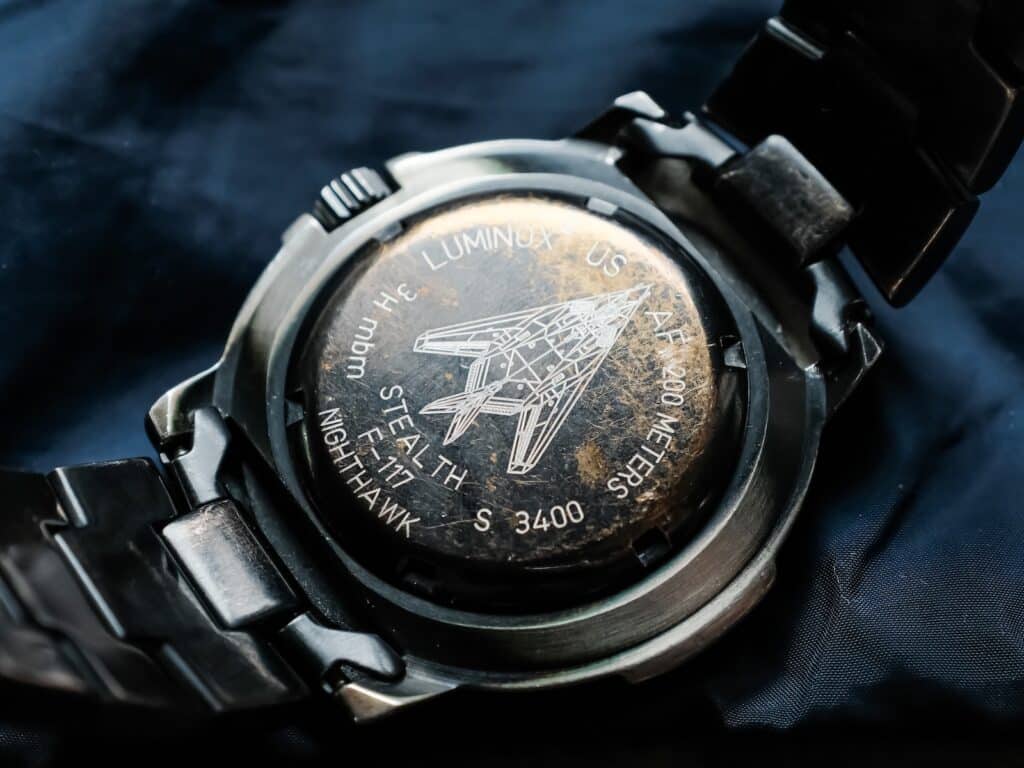
I took one more look at the caseback. Some of the engraved text has softened after years against a wrist, but the F-117 silhouette is still remarkably distinct. I found myself staring at it for a minute longer than I expected. After everything this watch had been through, it was ready to go right back where it belonged.
There’s a temptation to overlook quartz in vintage collecting, especially when mechanical movements tend to get all the attention. I don’t think that’s fair here. Whatever Swiss quartz caliber Luminox chose for this watch, it fulfilled its purpose exactly as intended. After sitting idle, it accepted a fresh battery and went right back to work without complaint. That’s the promise of a good quartz tool watch. It doesn’t ask for much, and when you finally need it again, it’s ready to get on with the job.
Wrapping Up
I’m getting ready to hand the watch back in a week or so, and that’s where this story was always supposed to end. It isn’t a rare collectible, and it isn’t the sort of vintage watch that sends enthusiasts digging through auction listings. What it represents feels much more meaningful than that.
I started this review wondering what a watch becomes after decades as someone’s trusted companion. By the time I finished working on it, I think I had my answer. It becomes part of a person’s life in a way that no specification sheet can really explain. Sometimes all it needs is a fresh battery, a little patience, and another chance to keep going. Such an awesome piece, and I’m glad I get to spend some time with it. Maybe in the future, I’ll pick up a modern Luminox F-117 version and try to get my thoughts down on how that might compare with this classic version.

Co-Founder & Senior Editor
Michael Peñate is an American writer, photographer, and podcaster based in Seattle, Washington. His work typically focuses on the passage of time and the tools we use to connect with that very journey. From aviation to music and travel, his interests span a multitude of disciplines that often intersect with the world of watches – and the obsessive culture behind collecting them.
Great story Mike! There’s a lot of watch content that’s so very polarizing, and this is a gentle reminder that everything in our boxes has a story to tell.
Thanks so much. This one was fun to put together.
Very good article and I own several Luminox watches. They are made well and have unique design features.
Thanks for reading, Brian. I now want to get my hands on the classic SEAL model. Maybe one day.
Great story hit home!
I was gifted a Luminox series 3000/3500 with a custom logo “International School of Tactical Medicine ” back in 2010 from Dr. Hyscal I have worn it everyday has helped train thousands of mil and 1st responders and took many a pulse check!
Thank you Bob! That must be a cool-looking Luminox. I’ll have to look it up.