For a while, my interest in Soviet watches revolved almost entirely around mechanical pieces and the enthusiasm Kaz had for them during the earlier days of TBWS. Every watch came with questions about where it had been, whether the dial had been refinished sometime over the last forty years, or if the movement inside was even the one it left the factory with. Hunting them down was half the hobby.
I knew cool electronic models existed, and I appreciated the strange place they occupied in Soviet watchmaking, but I never felt the urge to chase one. Most examples had become collectibles with all the baggage that comes with aging digital electronics, and finding one in dependable condition often felt like more work than the watch itself justified.
When KommandoStore offered to send the Elektronika 55B Melody Watch for review, it felt like a good opportunity to spend time with a design I’d admired more than pursued. My experience with Soviet watches has mostly been surface level, so this filled a gap I hadn’t explored before. Let’s check out everything that makes this a fun piece, which for me, came out of nowhere.
A Little Background
I’ll be clear, I’m not a Soviet watch expert by any means. From what I can tell, the original Elektronika watches appeared during the Soviet era, when digital quartz technology was becoming an increasingly important part of watchmaking. Unlike the mechanical Soviet watches, the Elektronika represented a different side of that history, one built around electronic timekeeping instead of traditional movements. The line eventually faded after the collapse of the Soviet Union, leaving surviving examples to collectors willing to navigate aging electronics and an increasingly limited supply. That lingering interest is what makes a modern interpretation like the Elektronika 55B worth a closer look.
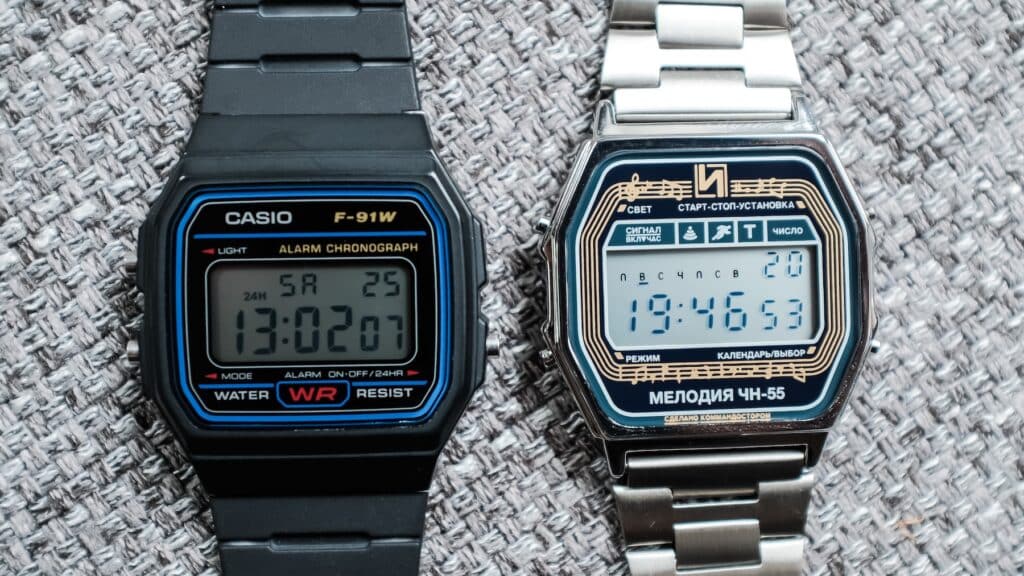
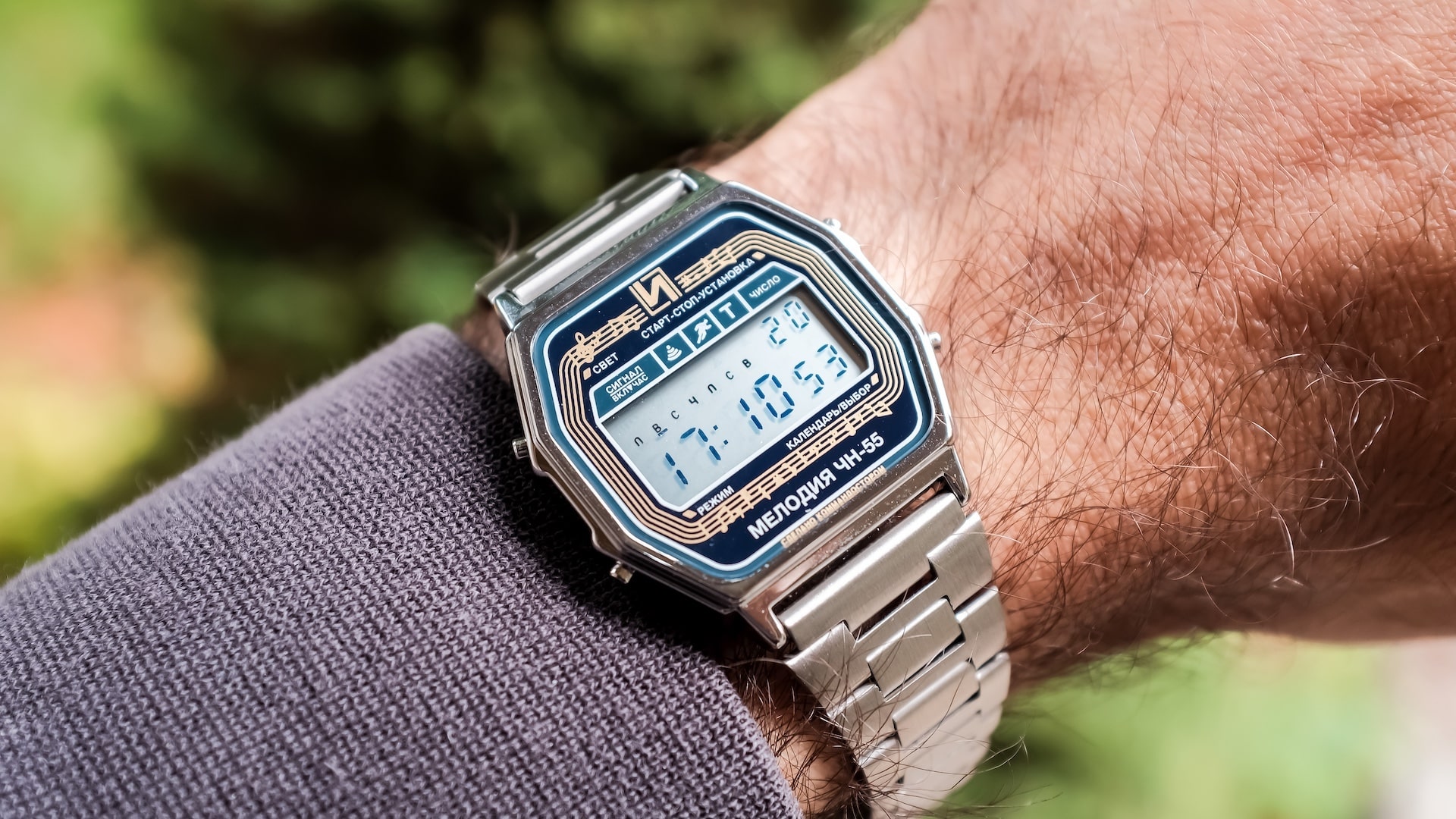
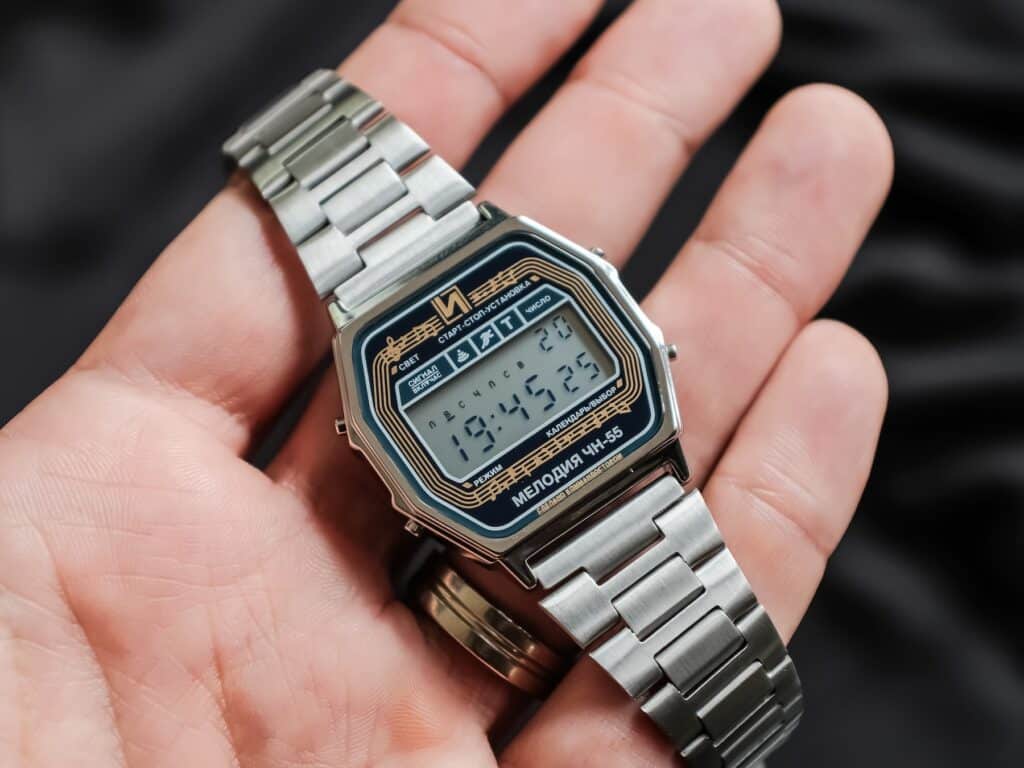
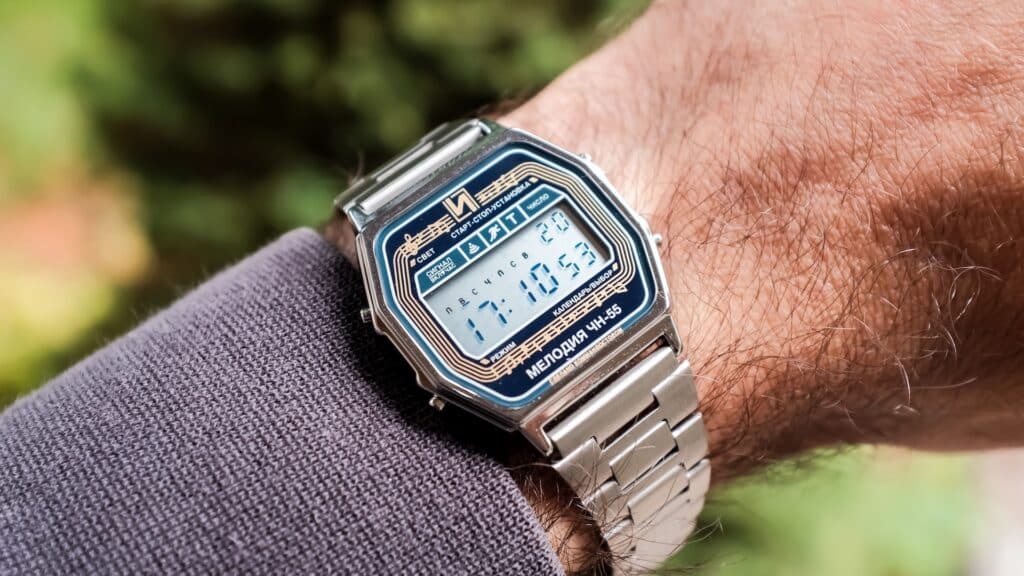
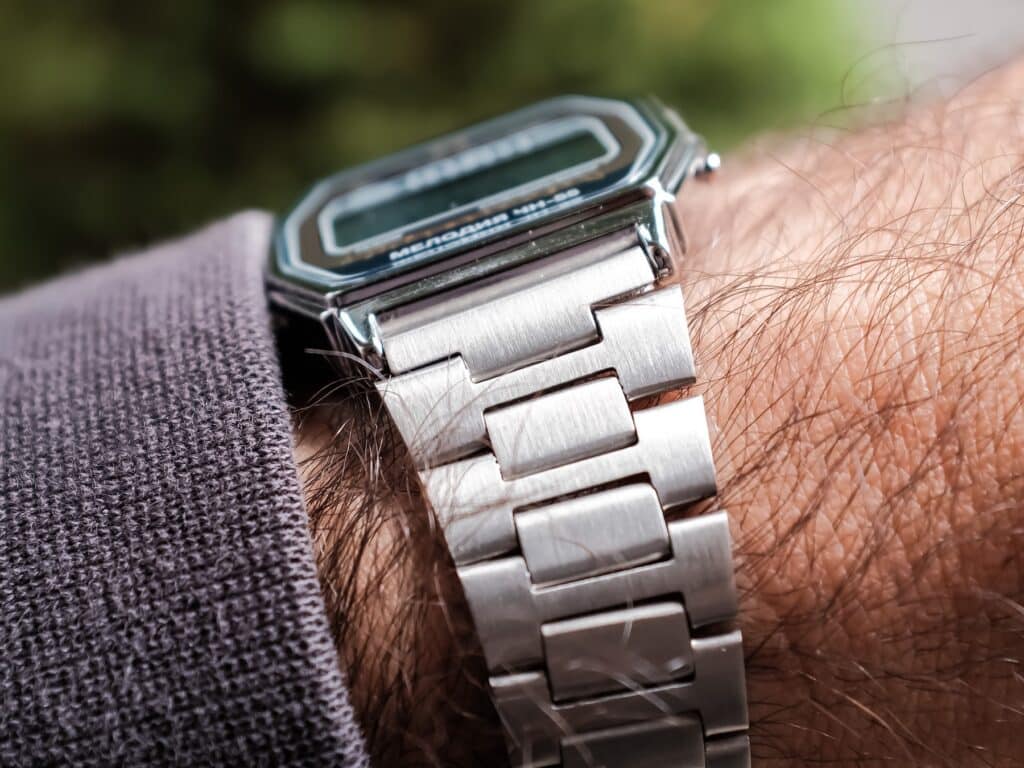
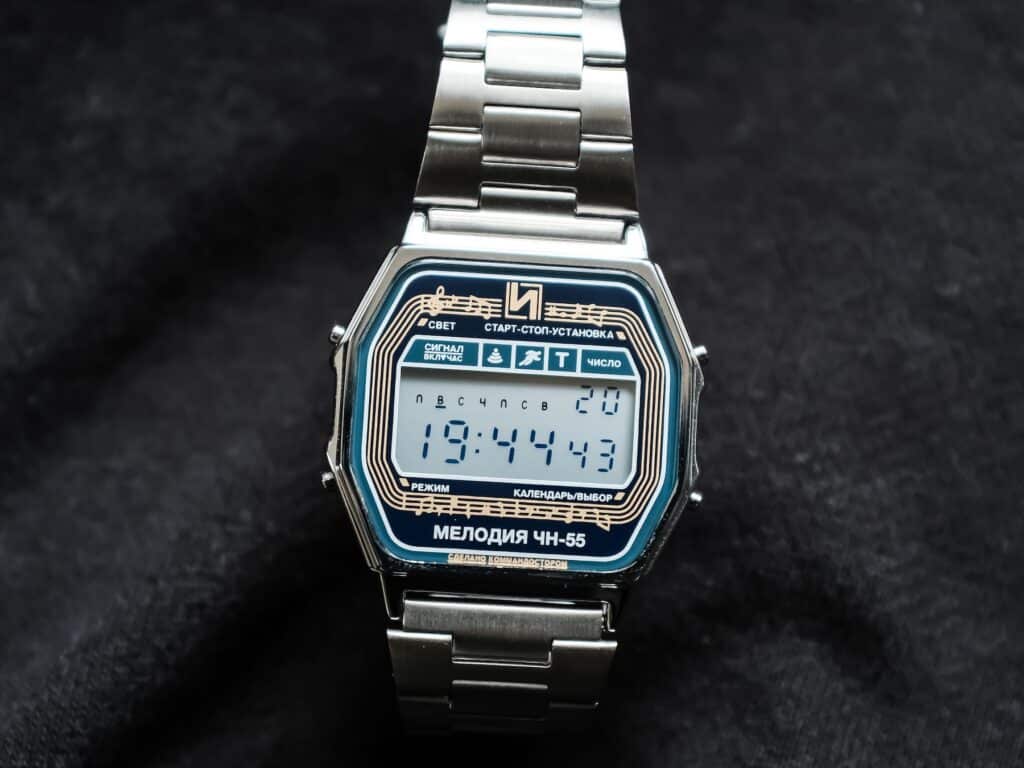
At 35mm wide with a compact 38mm lug-to-lug measurement, the Elektronika 55B stays remarkably close to the proportions of the vintage watches that inspired it. If you’re familiar with the Casio A158W or F91W, you’ll feel right at home from a size standpoint. The stainless steel case and bracelet reinforce that familiar look, while thoughtful concessions to modern ownership keep it from feeling like a museum piece. The bracelet can be adjusted without removing links, the 18mm lug spacing opens the door to aftermarket straps, and the stainless steel finish is also available with a gold-tone coating if that’s more your style. Personally, I think this steel model is where it’s at.
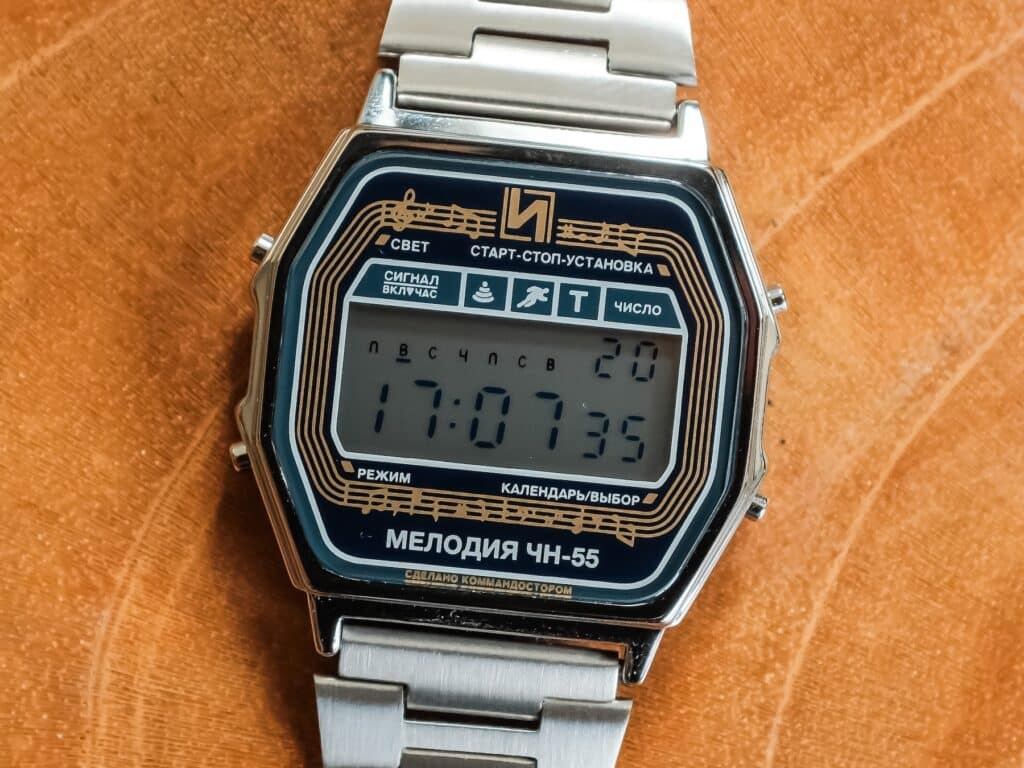
The feature set is equally faithful to the original concept. Alongside the expected alarm, stopwatch, timer, hourly chime, and perpetual calendar, the watch includes a reverse LCD display illuminated by a backlight and powered by a readily available CR2016 battery. The signature melodies return as well, this time with several newly composed tunes alongside familiar classics. On paper, it covers everything I’d expect from a modern reinterpretation of the Elektronika before I even spent time wearing it.
Living With the Elektronika 55B
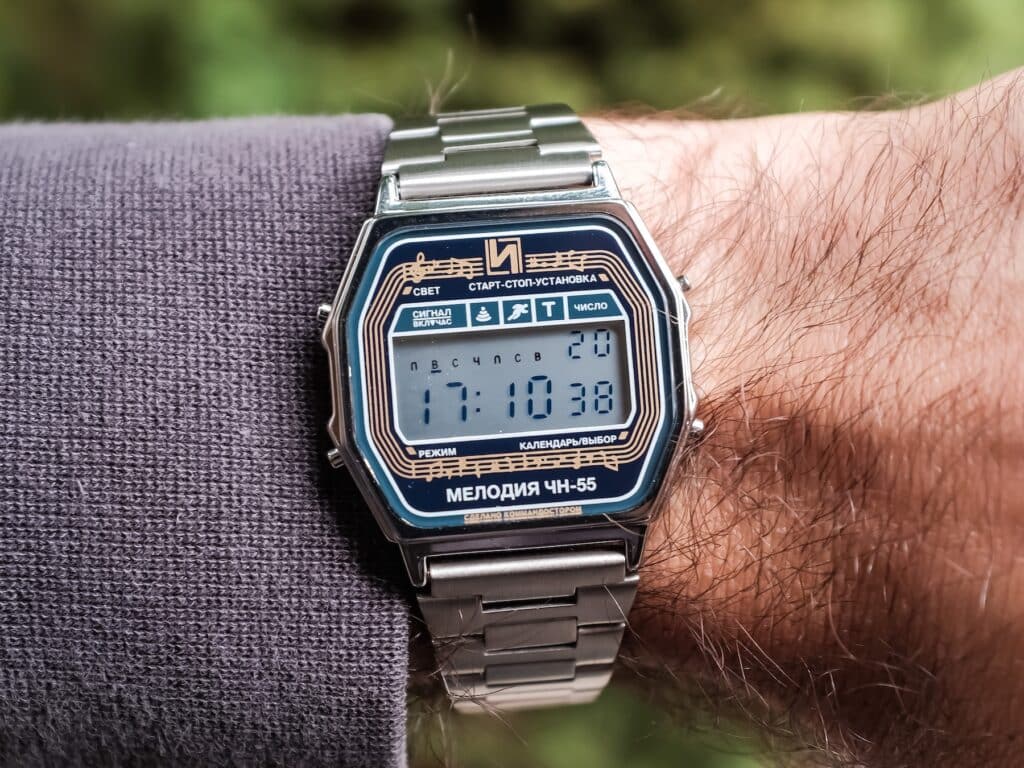
The moment I put the Elektronika 55B on my wrist, I understood why so many people have a soft spot for vintage digital watches. At just 35mm wide and impressively thin, it disappears in a way that very few modern watches do. Before long, I’d catch myself looking down just to admire the graphics surrounding the display or scrolling through the melodies for no reason other than they made me smile.
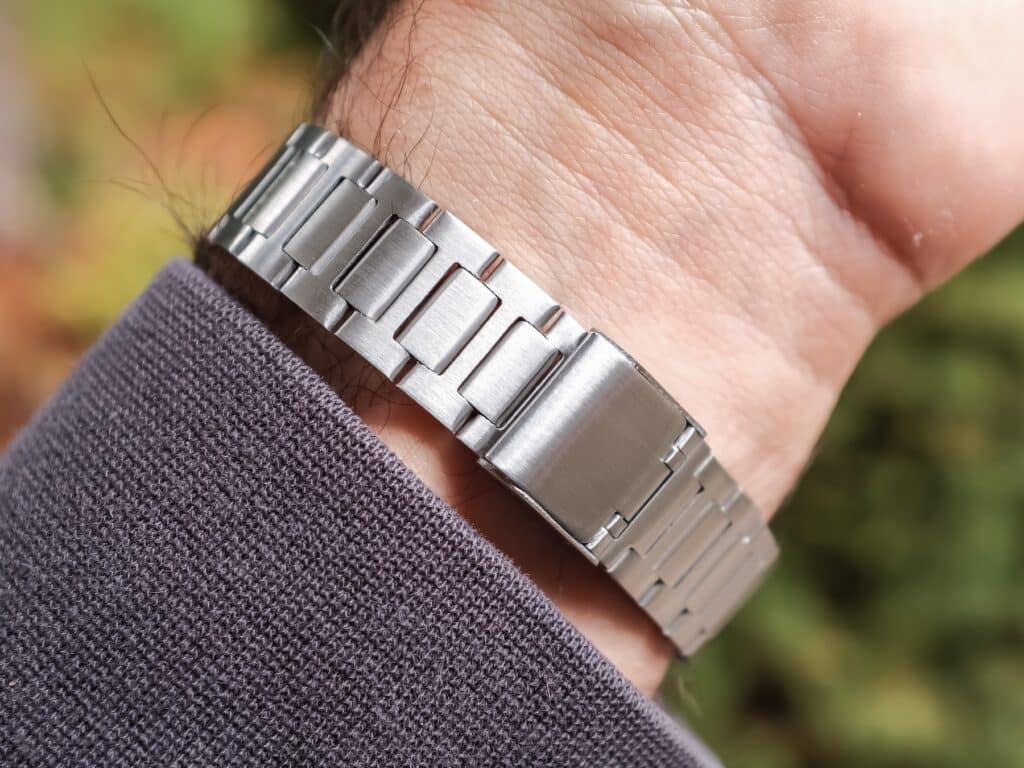
The bracelet deserves some credit here as well. It’s light, a little jangly, and exactly the kind of bracelet I’d expect on a watch inspired by this era. Some collectors won’t enjoy that quality, but I think replacing it with something heavier would have worked against the entire point of the watch. It stayed comfortable throughout the review period, never pulled at my arm hair, and was easy to forget once it settled onto my wrist. I never felt the need to swap it for another strap.
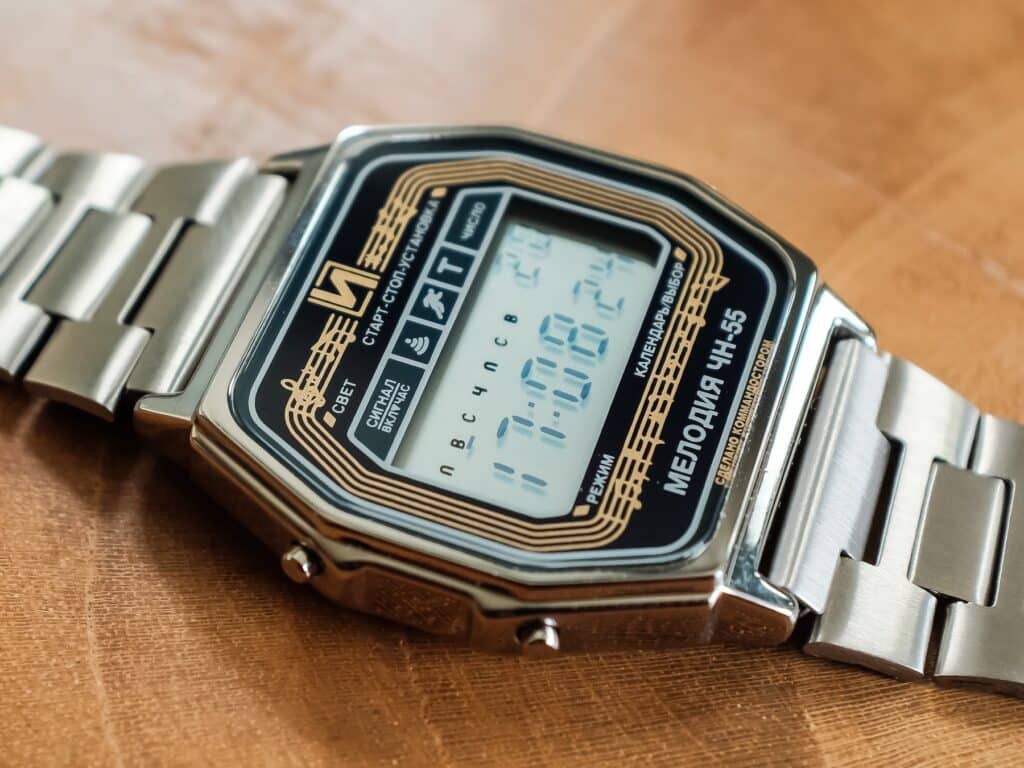
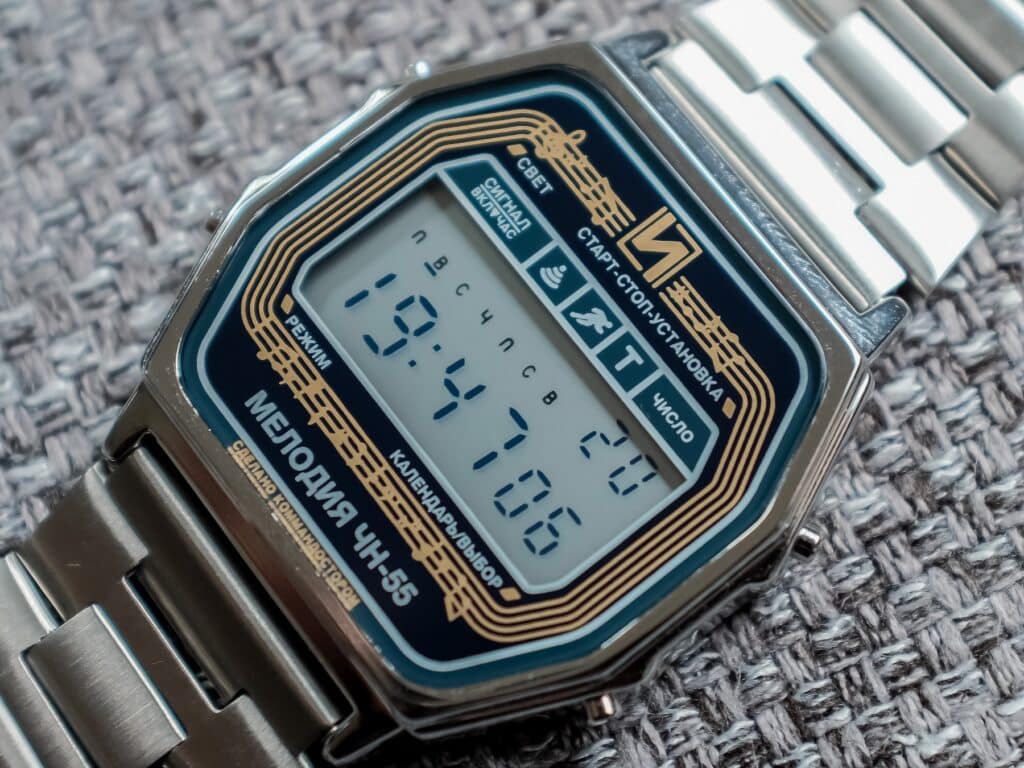
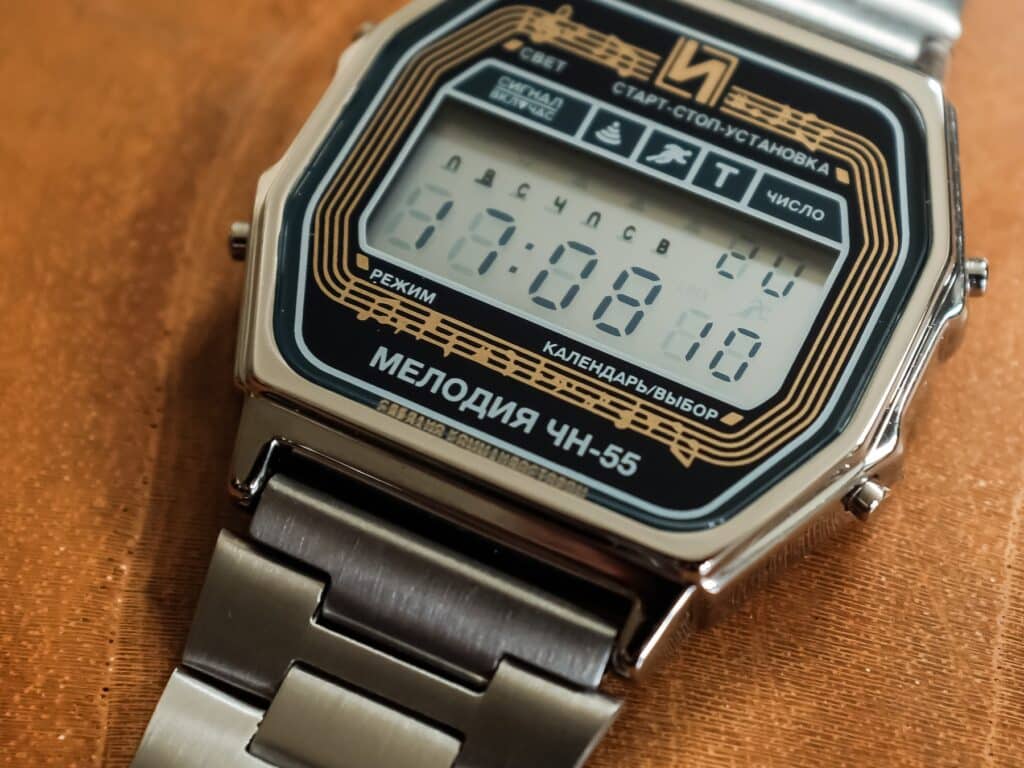
The case itself stays understated. Nothing about the finishing tries to steal the show, and I think that’s the right approach. Instead, my attention kept returning to the printed iconography framing the display. The graphics are crisp, clean, and give the watch much of its personality. Combined with the compact dimensions, it feels like something that could have been pulled from a display case decades ago.
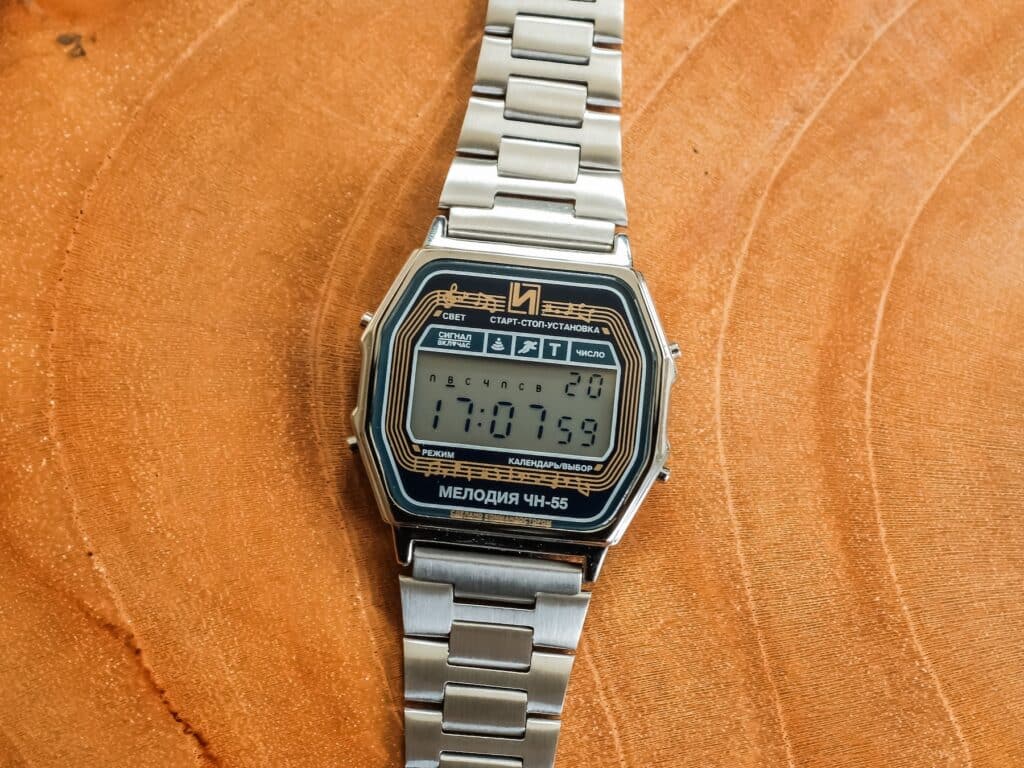
The reverse LCD is about what I’d expect. Indoors, I found it easy enough to read, while direct sunlight reduced legibility somewhat, which comes with the territory on displays like this. I never found myself fighting to read the time, and the backlight proved useful when the lighting wasn’t cooperating.
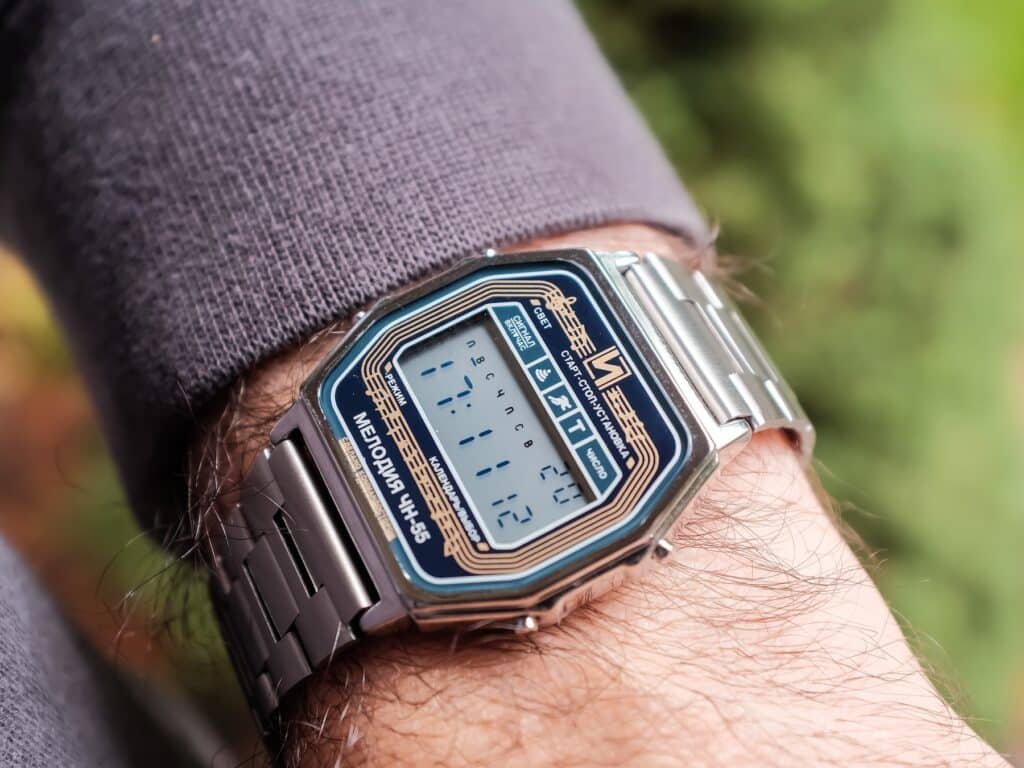
Like most digital watches I own, I primarily used it to tell the time. I’m not someone who spends much time digging through every available function, although the alarm, timer, stopwatch, and perpetual calendar are all here if you need them. The biggest adjustment wasn’t the features themselves, but the menu system. If you’ve spent years wearing Casios, the navigation takes a little rewiring before it starts to feel natural. Thankfully, KommandoStore has put together a helpful walkthrough that explains every menu and function, making the learning curve much shorter than it otherwise would have been.
The Melodies
I’ll admit I expected them to be little more than a novelty. Instead, they became one of my favorite parts of the watch. You get hits like Turkish March, Für Elise, Kalinka, the STALKER Bandit Radio theme, and the USSR national anthem. Because, why not?! I found myself playing through them far more often than I expected, partly because they sound surprisingly good and partly because they’re simply fun. That’s a word I kept coming back to throughout my time with the Elektronika 55B. Fun isn’t always something I associate with modern watches, especially those trying to recreate vintage designs, but it fits perfectly here.
Wrapping it Up
The Elektronika 55B succeeds because it understands what made the original concept appealing in the first place. It doesn’t modernize away the lightweight bracelet or the compact proportions. It embraces them. The result is a watch that feels authentic without requiring you to deal with the uncertainty that often comes with owning vintage digital electronics.
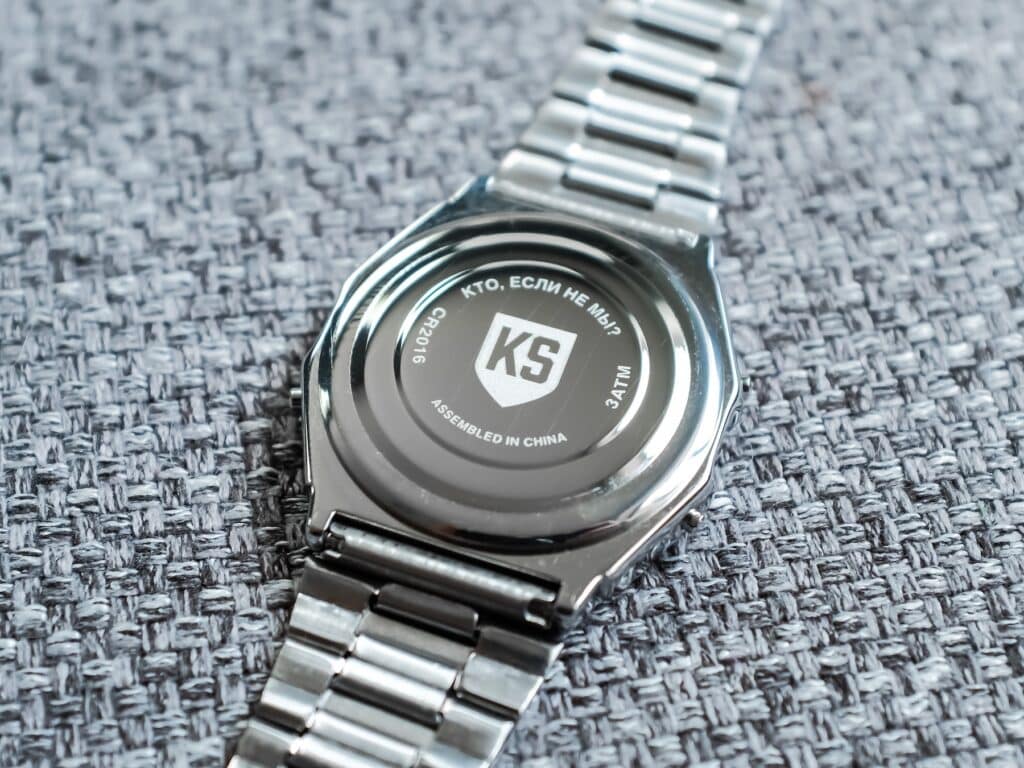
I do have one lingering question. KommandoStore describes the watch as using a proprietary movement module, but the details surrounding exactly what that means remain fairly limited. Throughout my time with the watch, it performed flawlessly, and if the company truly developed a new module to recreate the original experience, that’s an impressive accomplishment. I just wish they were more clear about the work that went into it because it’s one of the most interesting aspects of the project.
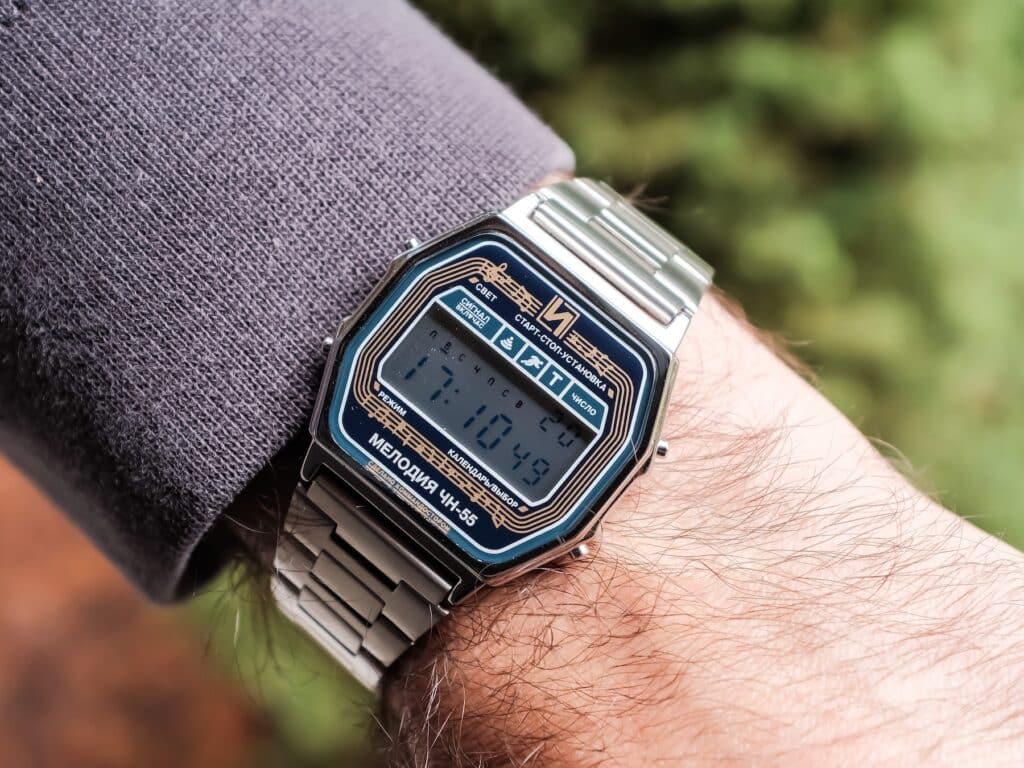
Perfect for being a Cosmonaut, steel mill working, potato farming, & other party-approved activities. -KommandoStore
At around $40, it’s also remarkably easy to recommend. If your collection already includes the usual Casio classics and you’re looking for something that scratches a different itch, this is an easy watch to appreciate. It won’t appeal to everyone. Collectors who expect every bracelet to feel substantial may never warm to its lightweight, vintage character. I think that’s part of its charm.
When I first opened the box, my immediate reaction was that this thing was awesome. By the time I packed it up to send back, that feeling hadn’t changed. I came away impressed by how faithfully KommandoStore recreated an obscure piece of watch history while keeping it approachable and affordable. More than anything else, I’ll remember just how much fun it was to wear. If this is the standard for future Elektronika revivals, I’ll be interested to see where the series goes next.

Co-Founder & Senior Editor
Michael Peñate is an American writer, photographer, and podcaster based in Seattle, Washington. His work typically focuses on the passage of time and the tools we use to connect with that very journey. From aviation to music and travel, his interests span a multitude of disciplines that often intersect with the world of watches – and the obsessive culture behind collecting them.
Nice review of a watch most other watch “guys” would not have bothered with, thank you.
Thanks – glad you enjoyed it.
Ordered the silver one for a friend, would have ordered the gold one for myself but it’s out of stock.
Nice!
Nice review, refreshed few pleasant memories. 1995 my mother gifted me similar (casio) watch, it was cost around 20$ in Sri Lankan airport duty free, as much i can remember
Thanks again for taking me back in time