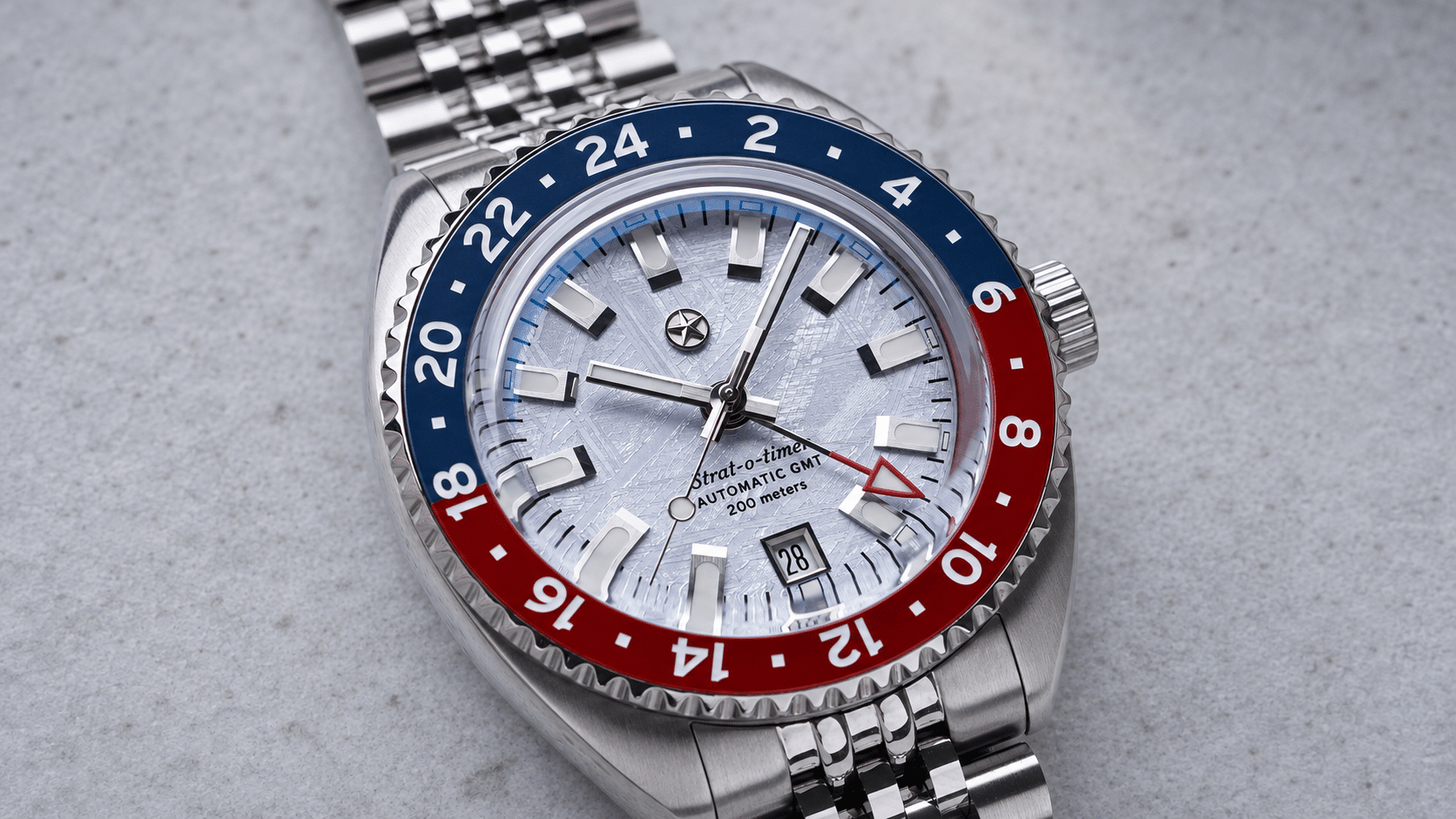
The Rolex GMT-Master II with a meteorite dial has always been a pretty ridiculous watch to me. White gold, a red-and-blue ceramic bezel, and a dial cut from an actual meteorite. It’s a combination that works remarkably well, even if the price puts it firmly outside what most of us would consider reasonable. With Rolex discontinuing the reference earlier this year, Jack Mason’s latest Strat-o-timer GMT arrives with some familiar styling and a considerably more approachable price.
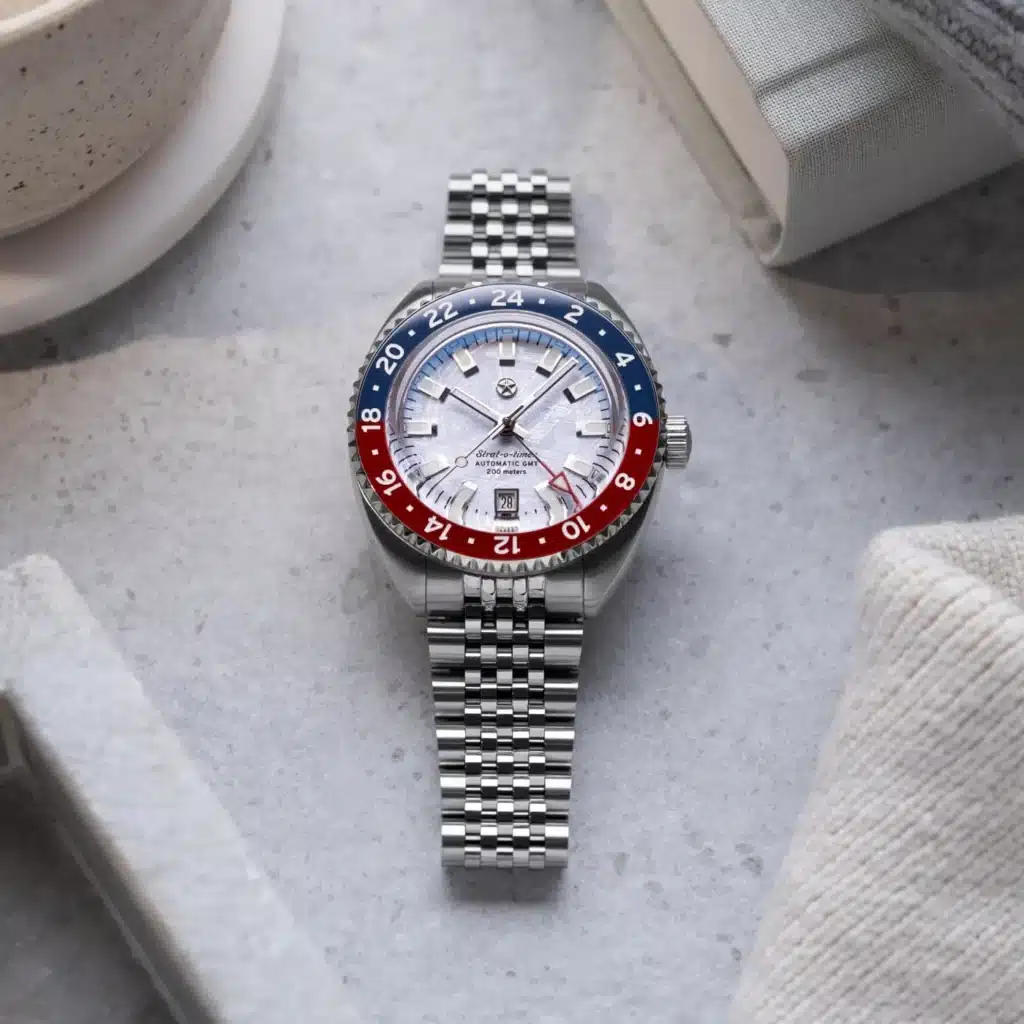
The new Strat-o-timer GMT Triton Meteorite will be limited to 200 pieces. At first glance, the Rolex influence is obvious. You’ve got the Pepsi bezel, meteorite dial, and a similar overall layout. I think Jack Mason has managed to give the combination enough personality to make it interesting on its own, though.
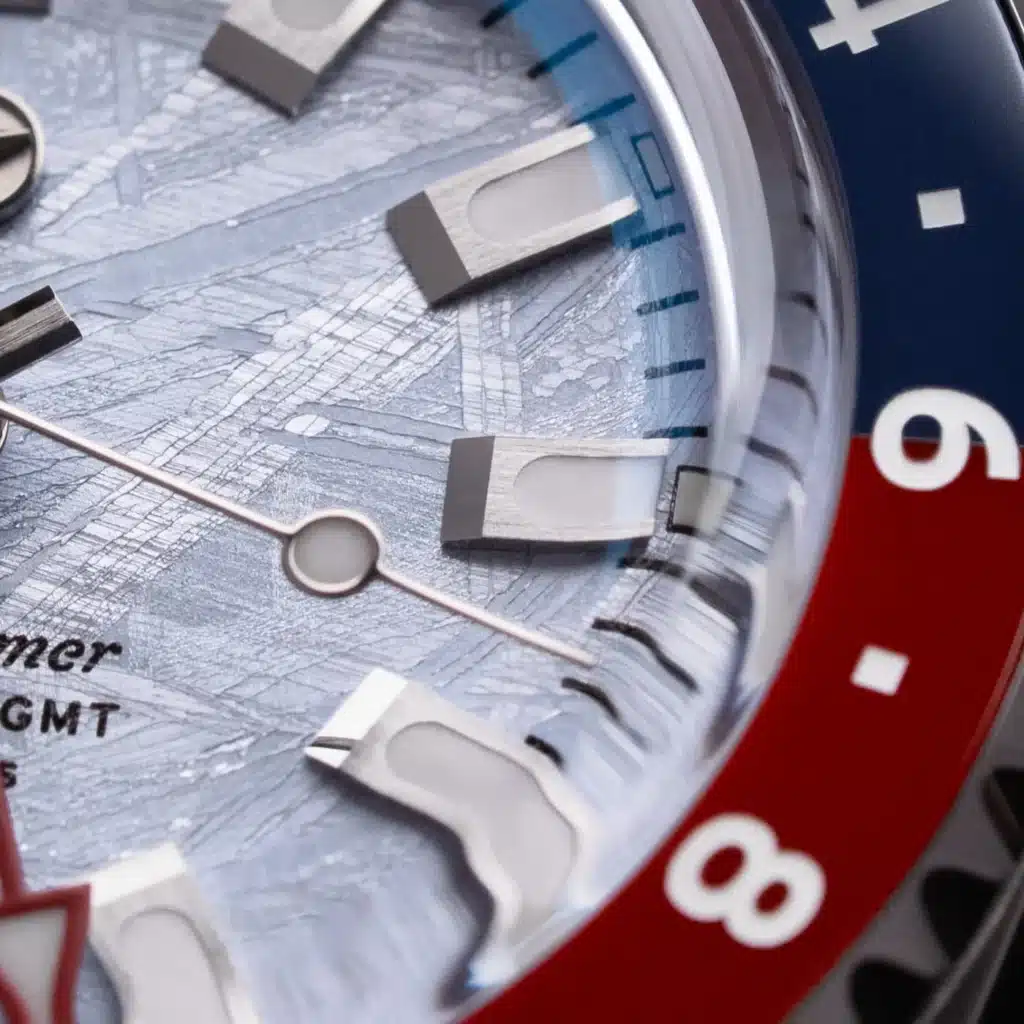
Most of that comes down to the dial. Jack Mason uses genuine Muonionalusta meteorite with an icy-blue treatment that I think looks particularly good alongside the red-and-blue ceramic bezel. The natural Widmanstätten patterns give each dial a slightly different appearance, and the cooler color makes the whole design feel a little more playful than the gray meteorite dial Rolex offered. To me, it’s probably the most appealing part of the release.
I’ve previously reviewed the Strat-o-timer Titanium Diver GMT, so I’m already familiar with what Jack Mason has been doing with this platform. I came away from that watch with an appreciation for the brand’s approach to the GMT complication, and I think this new model is a pretty natural extension of the collection. The meteorite treatment gives an existing design a different character without requiring Jack Mason to reinvent anything.
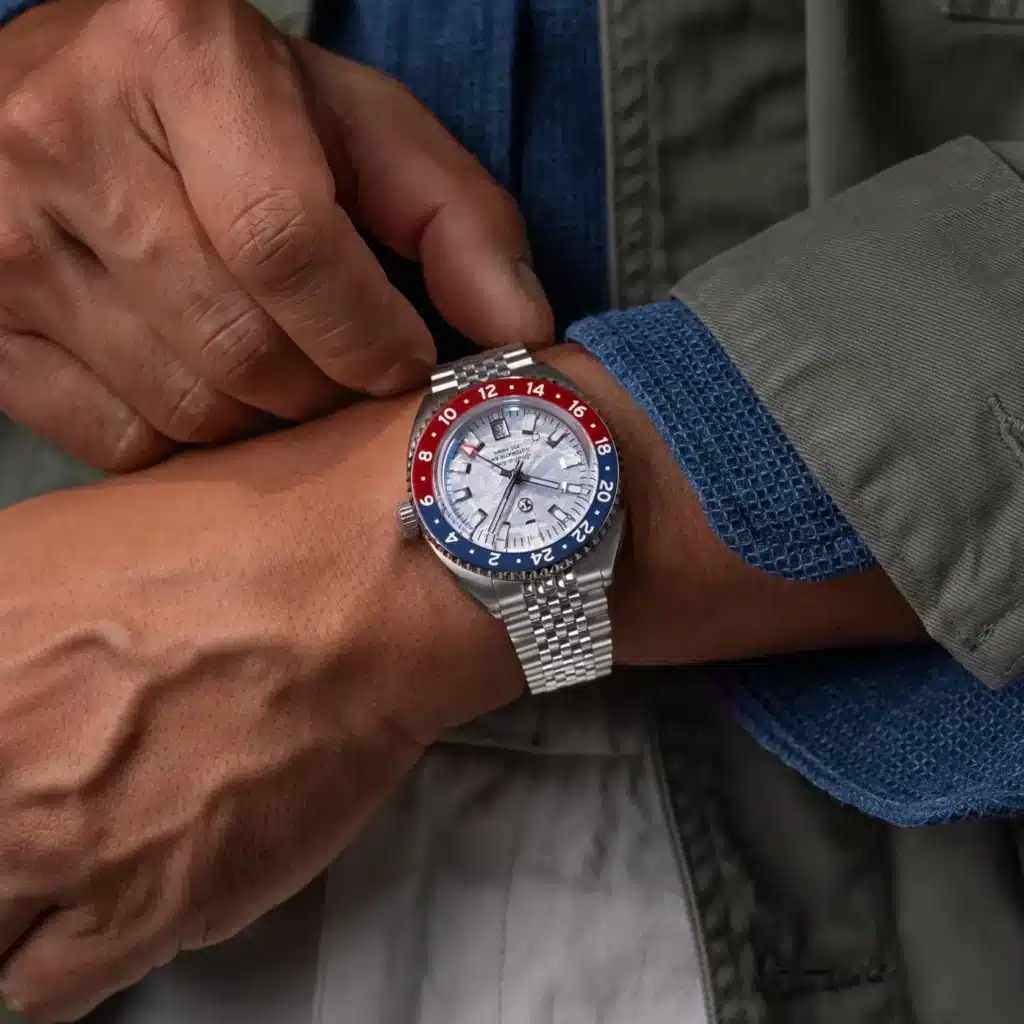
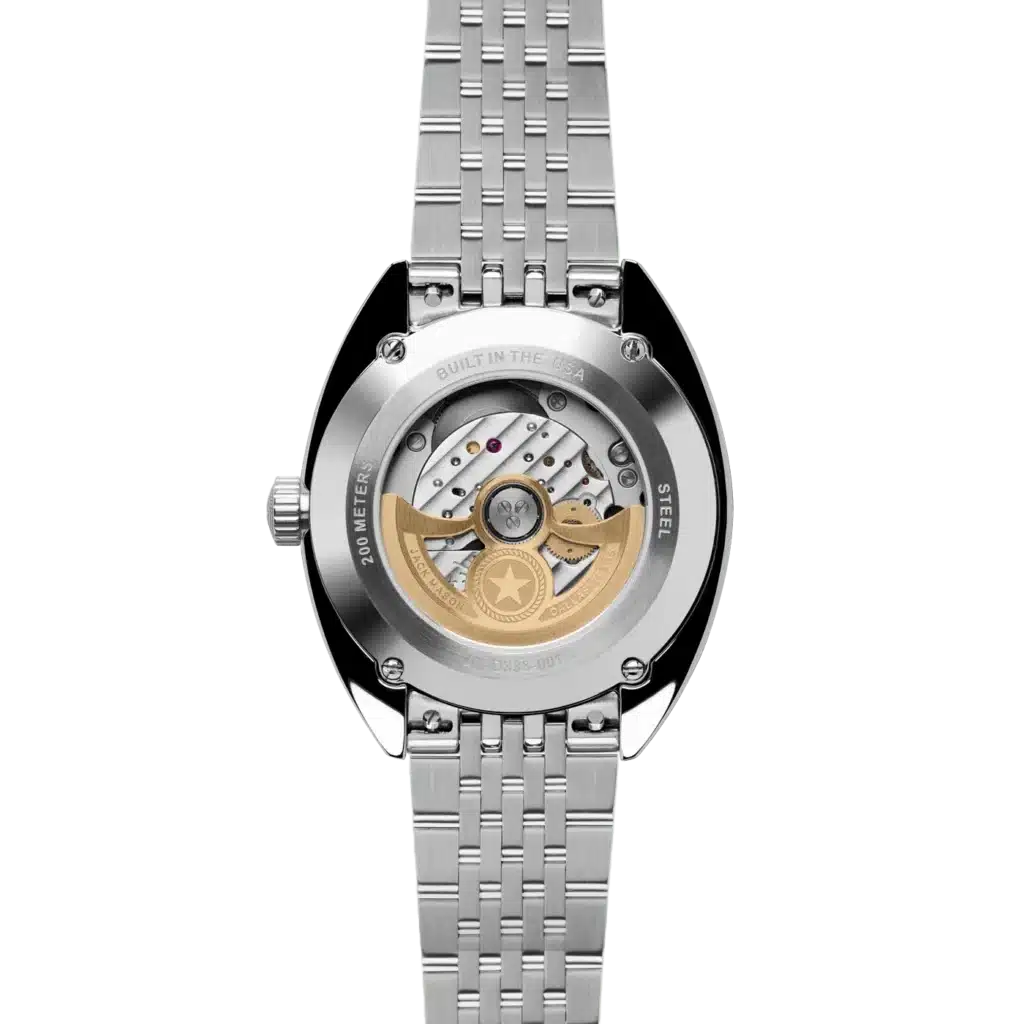
The stainless steel case measures 40mm across, 13.2mm thick, and 47mm from lug to lug. There’s a scratch-resistant coating, 200 meters of water resistance, and a box-style sapphire crystal. The seven-row bracelet includes quick-release spring bars and a tool-free microadjustable clasp. Jack Mason also fitted a sapphire exhibition caseback, which offers a look at the movement.
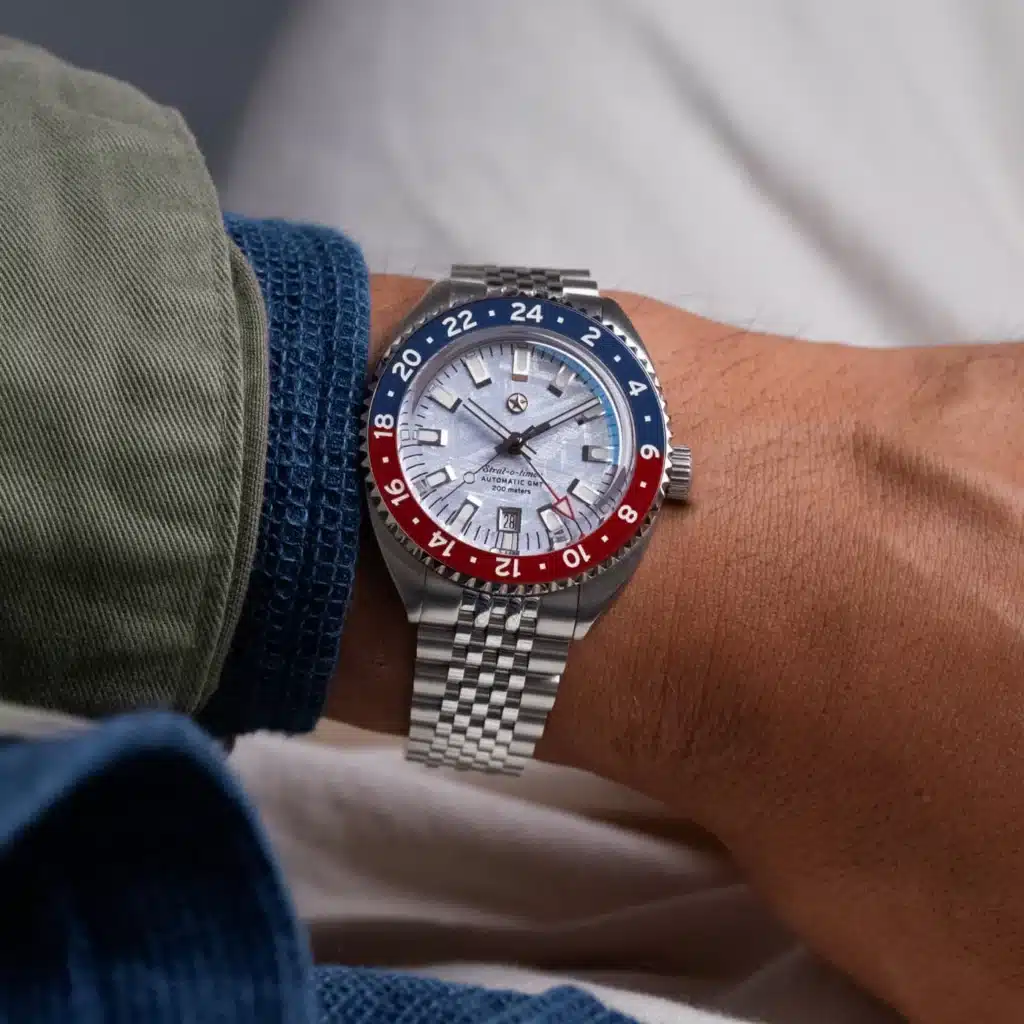
That movement is the Miyota 9075, an automatic caliber with an independently adjustable local hour hand. It’s a proper traveler GMT, which I think remains one of the stronger reasons to consider the Strat-o-timer in the first place. Jack Mason claims to regulate the movement to within ±5 seconds per day, although that’s a specification I’d want to verify through testing.
The fully lumed ceramic bezel is another detail I appreciate. It uses blue-emitting BGW9 Super-LumiNova, matching the hands and hour markers. It’s a small functional distinction from the Rolex GMT-Master II, which doesn’t have a luminous bezel insert.
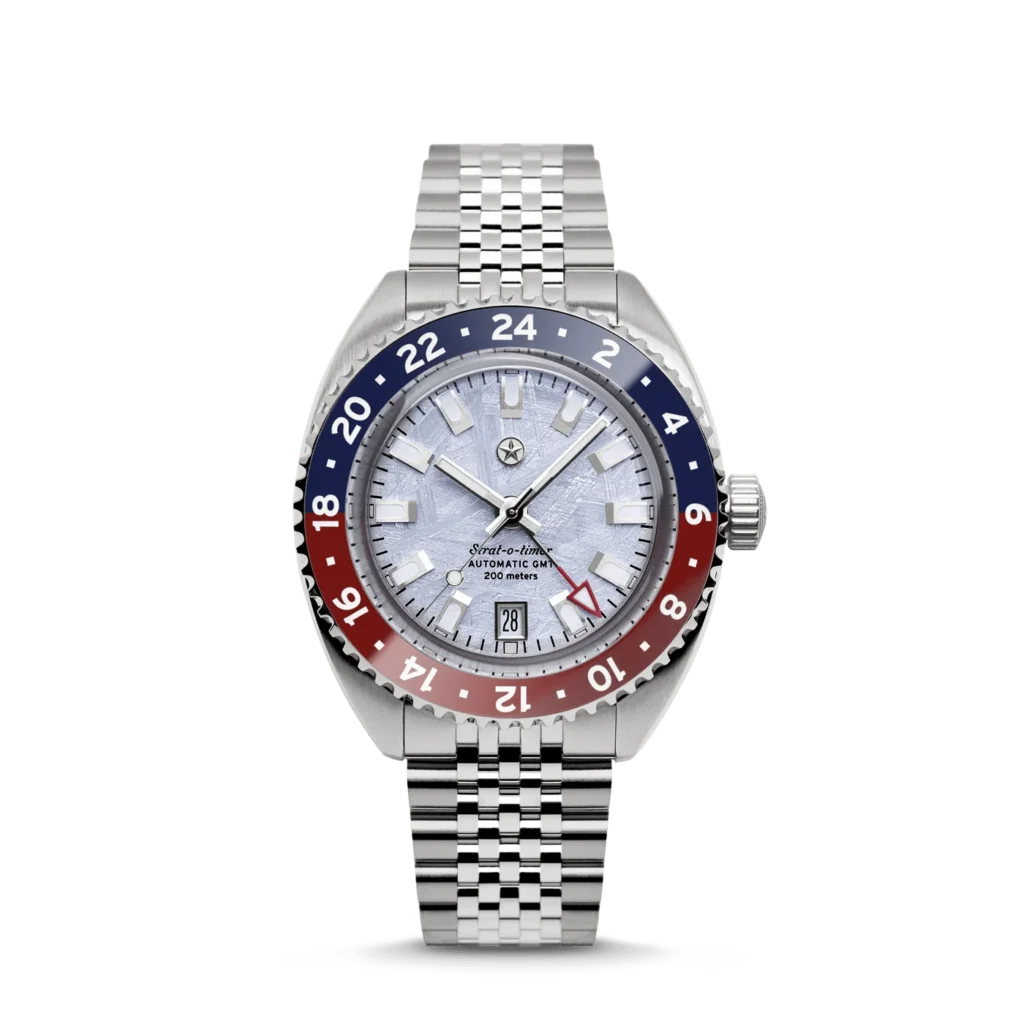
At $1,449, this version carries a $300 premium over the standard Strat-o-timer GMT. I think that’s fair considering the meteorite dial and limited production. Personally, though, I still find the standard model more compelling from a value perspective. You’re getting the same basic GMT functionality without paying extra for the dial treatment.
My biggest reservation is how that icy-blue meteorite will look in person. Meteorite patterns can change dramatically depending on the lighting, and the color treatment adds another consideration. The press images look good, but I’d want to see the dial under ordinary lighting before forming a stronger opinion.
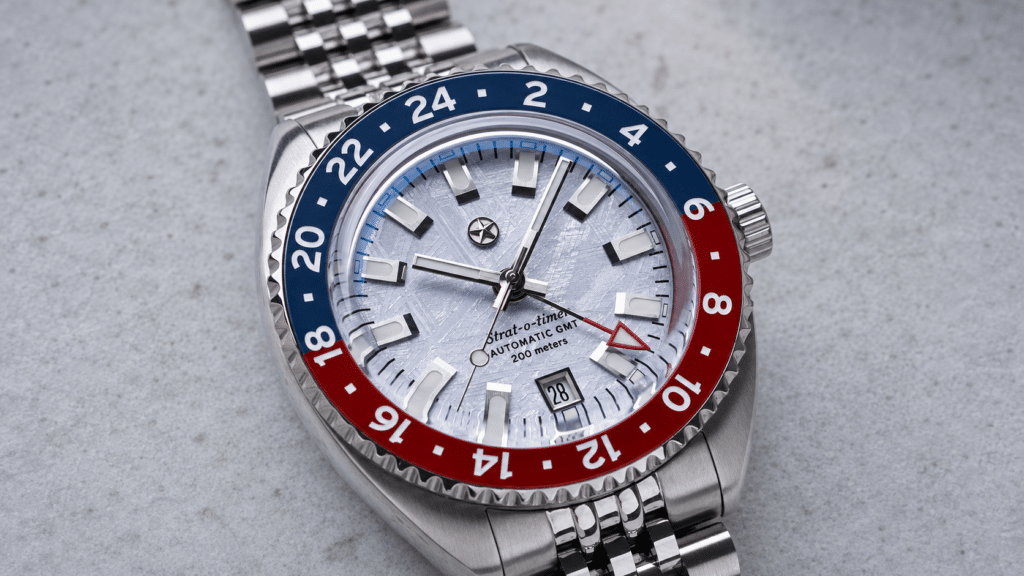
For anyone who appreciates the meteorite GMT-Master II aesthetic, there’s an obvious appeal here. I think Jack Mason has put together an interesting variation of an already familiar watch, and the Rolex resemblance doesn’t bother me much. I’m more curious to see whether that blue dial looks as convincing away from the studio photography.

Co-Founder & Senior Editor
Michael Peñate is an American writer, photographer, and podcaster based in Seattle, Washington. His work typically focuses on the passage of time and the tools we use to connect with that very journey. From aviation to music and travel, his interests span a multitude of disciplines that often intersect with the world of watches – and the obsessive culture behind collecting them.