How much does spending more actually improve an affordable dive watch? At $90, the Invicta Pro Diver already gives us an automatic movement, a steel bracelet, and the familiar proportions that draw so many people toward this category. Move up to the Timex Deepwater Meridian 200 at a $269 MSRP and we gain sapphire, but switch to quartz. The Seiko Turtle SRPE93 sits above both at a $525 MSRP, bringing us back to an automatic movement and a Hardlex crystal. There are worthwhile differences between them, although the order becomes less obvious once we start handling the watches. The most expensive option doesn’t simply collect everything we liked about the cheaper two and improve on it.
The Invicta surprised us with its comfortable case and the care given to parts of its bracelet. Timex made an impression through its substantial construction and the satisfying feel of its controls. The Turtle became a watch we kept in the rotation, with a case and dial that remained enjoyable after the initial excitement had passed. Those experiences matter because an upgrade can involve more than replacing one specification with another. We’re looking at what the additional money changes during ownership, which compromises remain, and whether any of these watches gives us a good reason to stop climbing the price ladder.
Overview and Identity
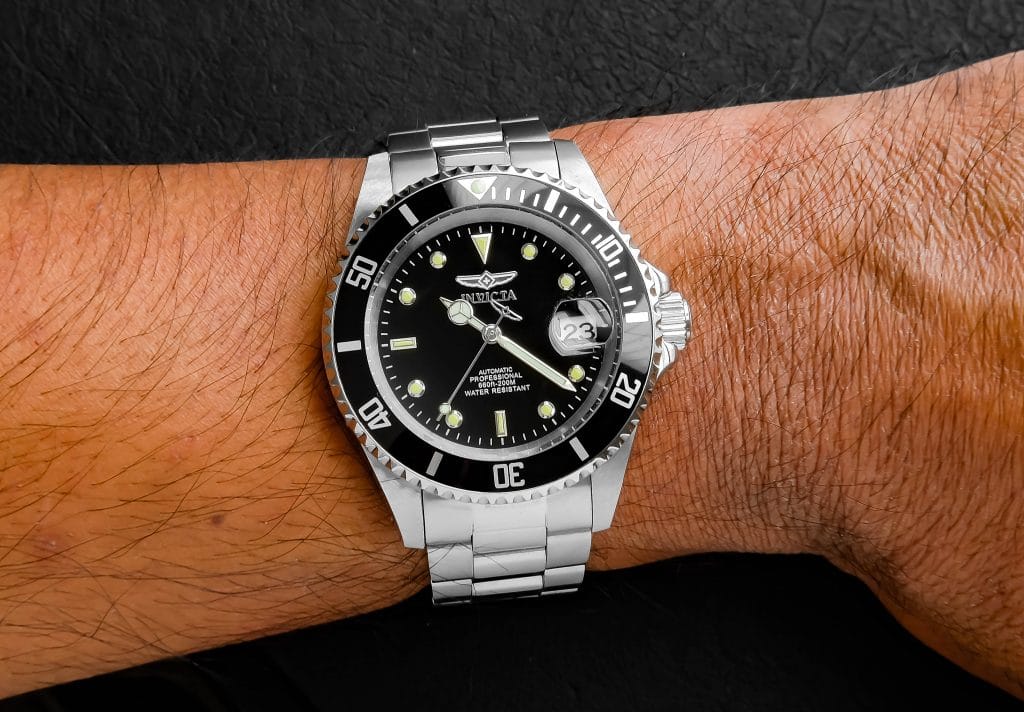
The Invicta Pro Diver 8926OB makes its intentions fairly obvious. This is a black-dial automatic built around the familiar 40mm Submariner shape, complete with a rotating bezel, date magnifier, and steel bracelet. We reviewed it hands-on because we wanted to see how well that straightforward formula could work at a very low price, and the wearing experience turned out to be one of its strongest qualities. Once the bracelet was sized, the case settled comfortably on the wrist without requiring much adjustment or getting used to. There are details we’d change, particularly the large branding engraved into the case side, but the basic proportions make sense. For someone drawn to this particular look, the appeal goes beyond getting a recognizable design cheaply. The watch itself is pleasant to wear, and that gives the rest of the comparison a demanding starting point.
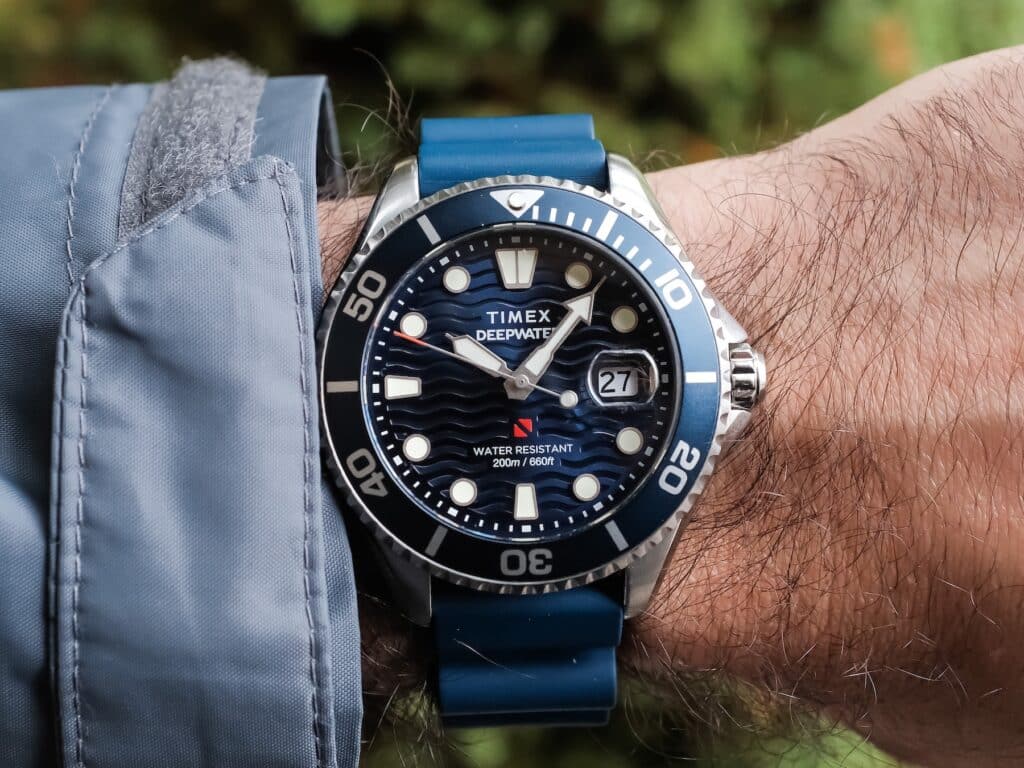
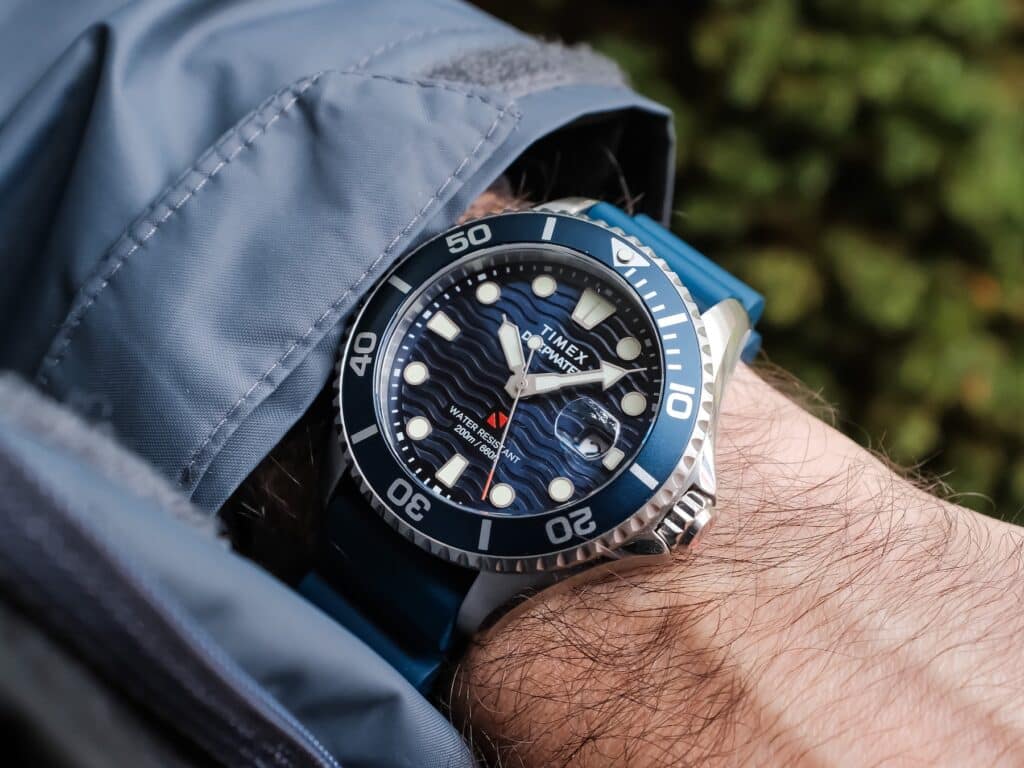
Moving into the middle bracket brings a larger and more expressive watch. The blue Timex Deepwater Meridian 200, reference TW2W81500, made a great first impression during our in-depth review. Its weight and chunkiness brought the Rolex Sea-Dweller to mind in terms of physical presence, although the Timex has its own combination of blue tones, dial texture, and substantial controls. This is a quartz watch with a sapphire crystal and a 200-meter rating. What made it interesting was how well those choices suited the overall design. The bezel and crown felt carefully executed, the case sat comfortably despite its size, and the watch had enough character to remain engaging without an automatic movement.
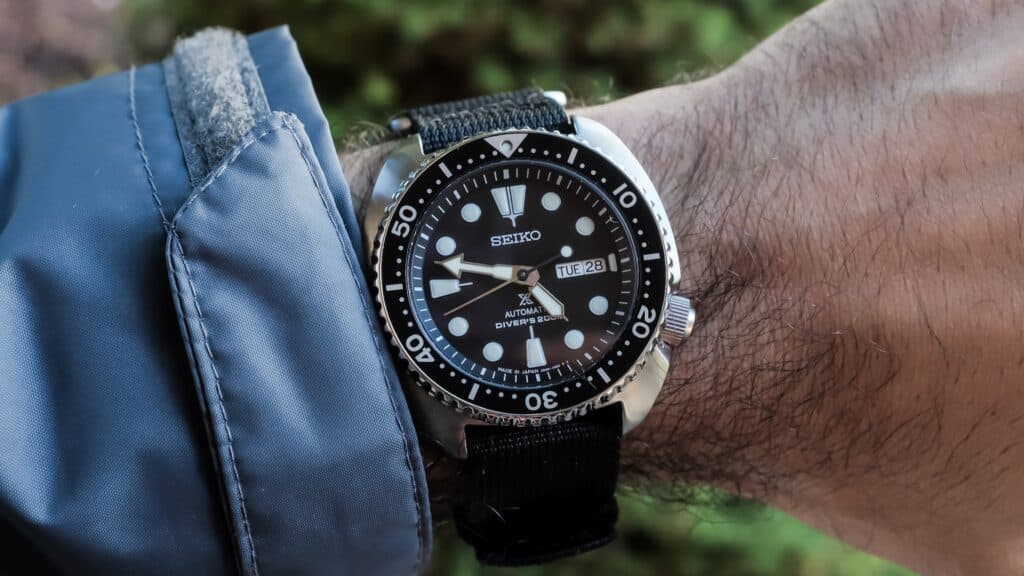
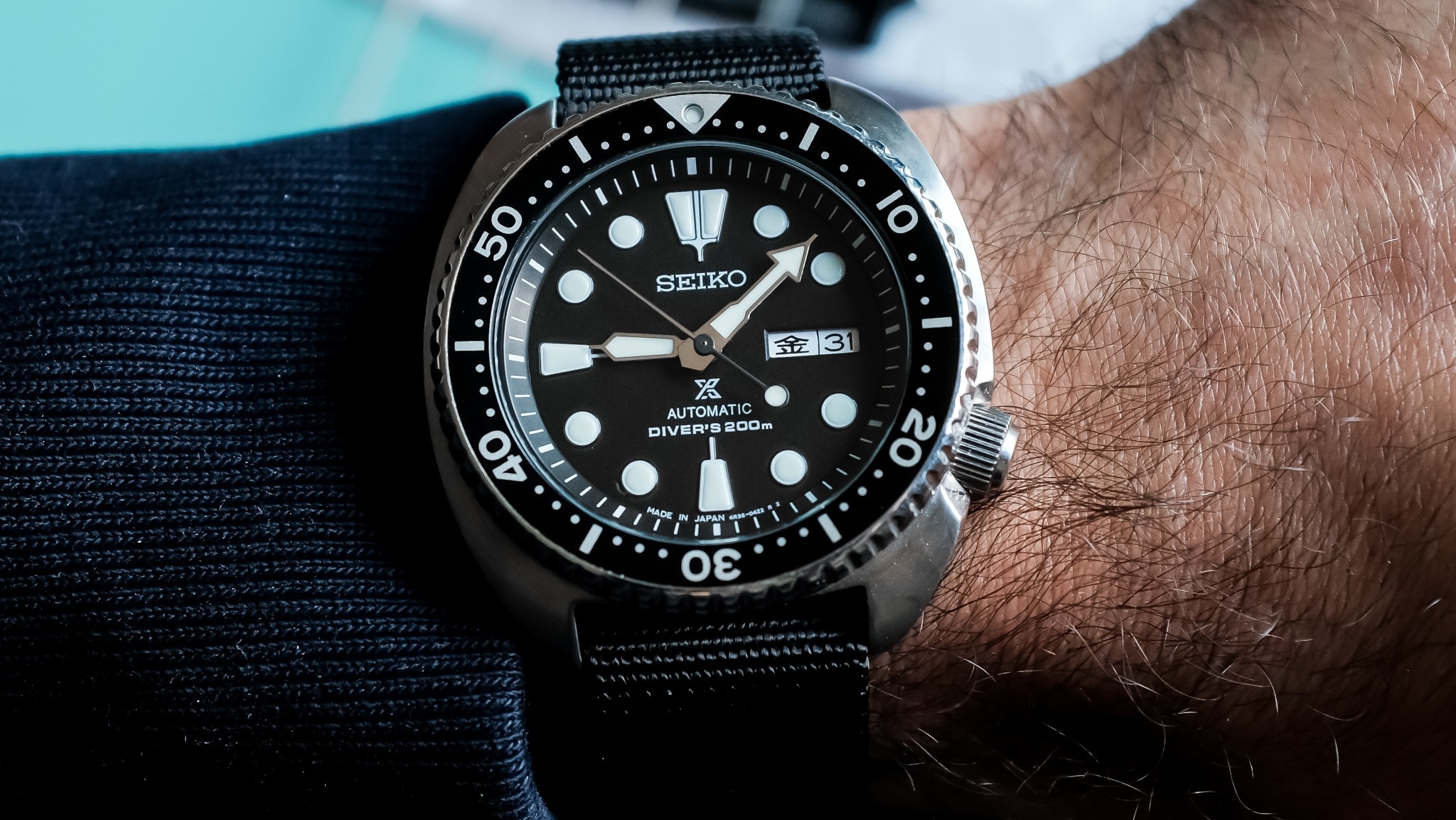
Seiko’s Turtle brings a different kind of familiarity. Its broad cushion case recalls the 6309 divers that inspired the modern reinterpretation, and the design has an appeal that goes well beyond its list of specifications. During our review we spend time with the Japanese-market SBDY015, a relative of the SRP777; we’re using the related current U.S. SRPE93’s $525 MSRP for this price comparison. The measurements and ownership experiences here belong to the SBDY015. That particular Turtle stayed in the collection after earlier examples had been bought and sold, and had been in rotation for a couple of years when we reviewed it. The comfortable shape, straightforward dial, and enjoyment of trying different straps all contributed to its staying power. We have a real fondness for it, which makes examining the extra cost more interesting.
Dial and Straps/Bracelets
A closer look at the Invicta’s dial reveals some of the work that makes the watch enjoyable beyond its familiar silhouette. The markers, logo, and brand lettering are applied, with polished details that catch the light as the watch moves. We particularly liked the way the larger markers reflected light, although the smaller round indices could use more visual presence. The hands also have polished surfaces that work well with the rest of the display. None of this changes the obvious Submariner influence, but it gives us something to appreciate while actually wearing the watch. The mineral crystal’s date magnifier does its job, and the overall layout is easy to recognize at a glance. For such an inexpensive automatic, the dial has enough detail to reward a closer look without becoming crowded.

The bracelet was another pleasant surprise. It starts at 20mm and tapers to approximately 18mm at the clasp, giving the watch a balance we enjoyed on the wrist. Even the polished center links worked better for us than expected, picking up the polished details elsewhere on the watch while the brushed surfaces kept everything from looking uniformly shiny. The end links are hollow, but the remaining links felt reasonably substantial, moved smoothly, and had comfortably finished edges. Our complaint was the double-locking clasp. Its flip lock required too much force to release, and small scrape marks showed where the components rubbed together. The micro-adjustments were useful during sizing, so this wasn’t a bracelet we immediately wanted to replace. It was a comfortable bracelet with an irritating clasp, which is a more specific compromise than simply calling the whole thing cheap.
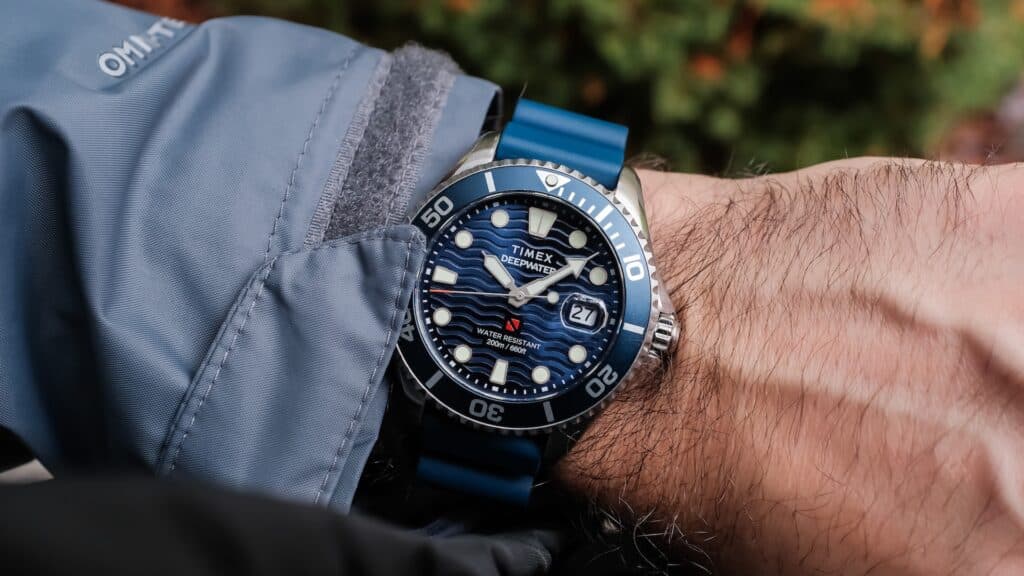
Blue gives the Timex a noticeably different personality. The dial combines a sunburst finish with a wave pattern, and we enjoyed the contrast between that textured surface, the applied indices, and the white lettering. A small red diver’s flag adds another color without taking over the design. The blue-and-red combination was one of the details that kept drawing our attention during the loan. There is more visual activity here than on the Invicta, but the large markers and clear handset keep the display understandable. We weren’t especially enthusiastic about the date magnifier at three o’clock as a styling choice, although it presented the date with little distortion. The result feels more expressive than the two black-dial watches, particularly for someone who wants a diver with a little color rather than another familiar monochrome design.
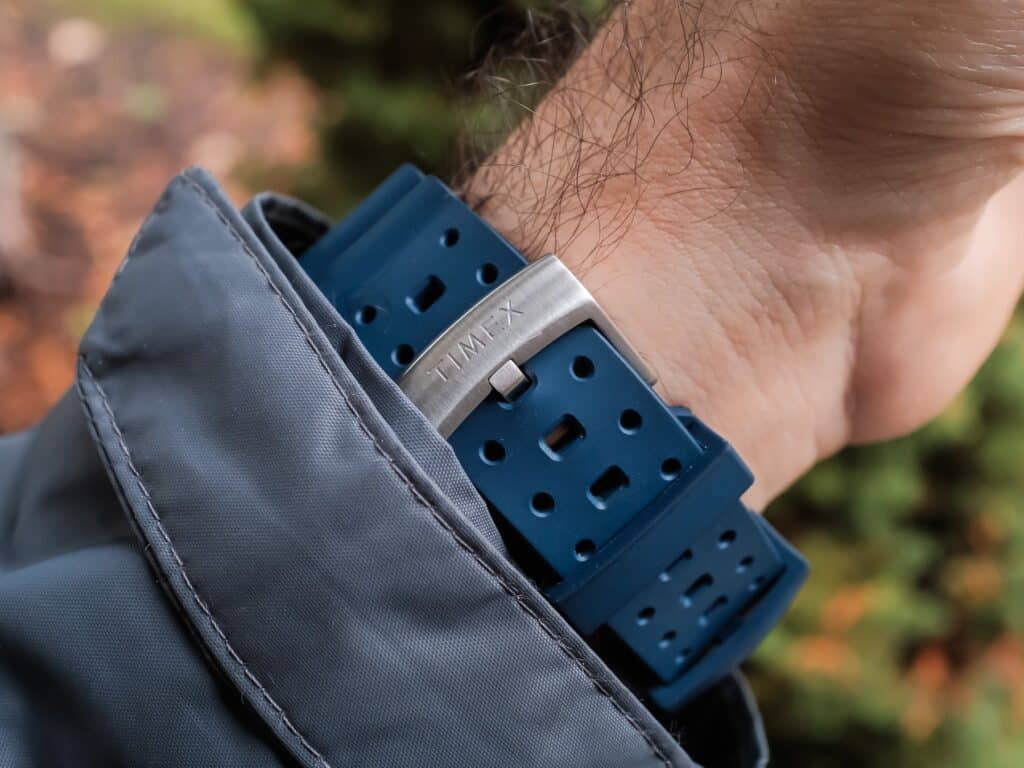
That blue continues onto the Timex’s strap, giving the dial, bezel, and wearing setup a cohesive appearance. The pronounced accordion-like sections near the lugs suit the substantial case, while the round perforations farther along break up the broad surface. The strap also makes this a much sportier-looking combination than the Invicta on its polished steel bracelet. We like how comfortably the blue tones sit together without requiring an exact match between every surface. A different strap could change that character considerably, although the supplied combination makes a convincing case for leaving the color scheme alone.
The Turtle takes a quieter approach to its dial, and that simplicity has remained one of our favorite things about it. A matte black background sits behind broad hands and large LumiBrite markers, with little competing for attention when we look down to read the time. The day-date display adds everyday usefulness without making the layout feel busy. We also never found the Prospex logo especially distracting; it sits within a design whose strongest features are the shapes and proportions of the hands and markers. Next to the Timex’s waves and sunburst finish, the Seiko can look almost plain at first. After spending time with it, we found that restraint easy to appreciate. It gives the watch a consistent, recognizable character and lets the substantial case carry more of the visual interest.
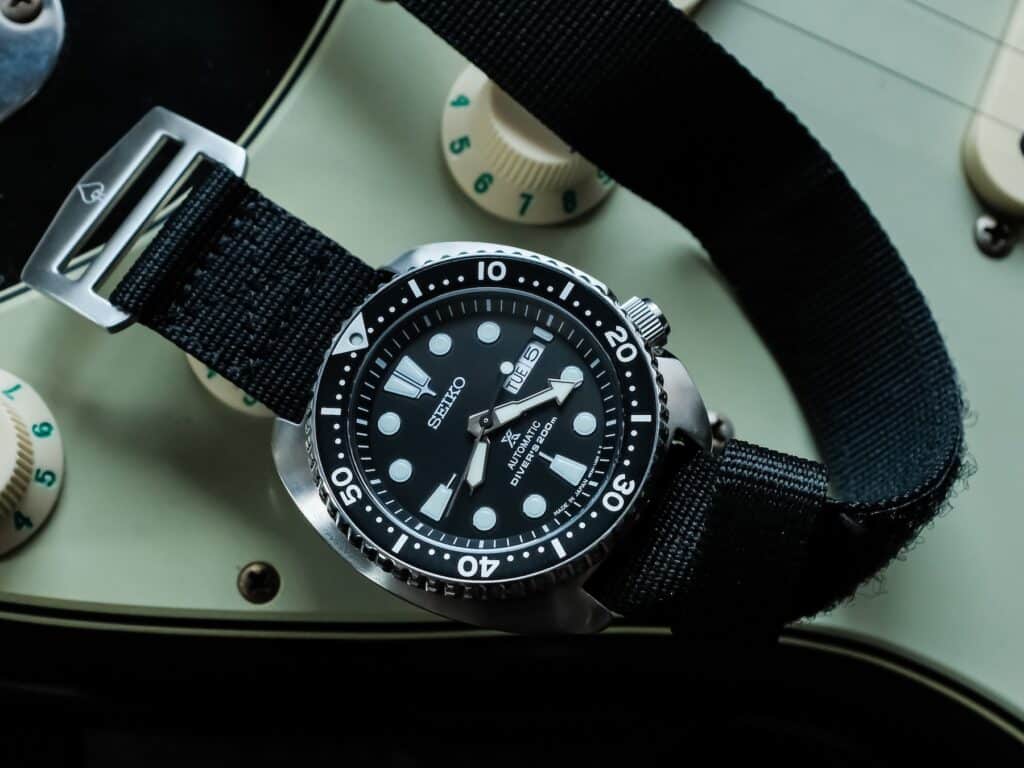
Seiko’s soft vented silicone strap is a good match for that case. We appreciated its softer feel, substantial buckle, and steel keeper, but a large part of the Turtle’s appeal emerged when we started changing straps. A Ute strap saw plenty of use, and a Prometheus Design Werx Ti-NATO with titanium hardware also became a favorite option. The 22mm lug width gives the broad watch enough strap beneath it to look balanced, and the black dial makes different combinations easy to work with. Those changes were part of enjoying the watch rather than an attempt to rescue an unpleasant factory setup. The supplied silicone was already nice. Compared with the Invicta, where the clasp remained a recurring irritation, the Turtle gave us more freedom to experiment simply because we liked seeing it in different configurations.
Build Quality & Technical Approach
These watches don’t spend their budgets in the same places. Invicta includes an automatic movement and steel bracelet at the lowest price. Timex combines quartz with sapphire and particularly satisfying controls. Seiko places a familiar automatic inside a distinctive case that we enjoyed over a longer period. The differences become clearer when we look at how those choices affect setting, handling, and wearing each watch.
Movements
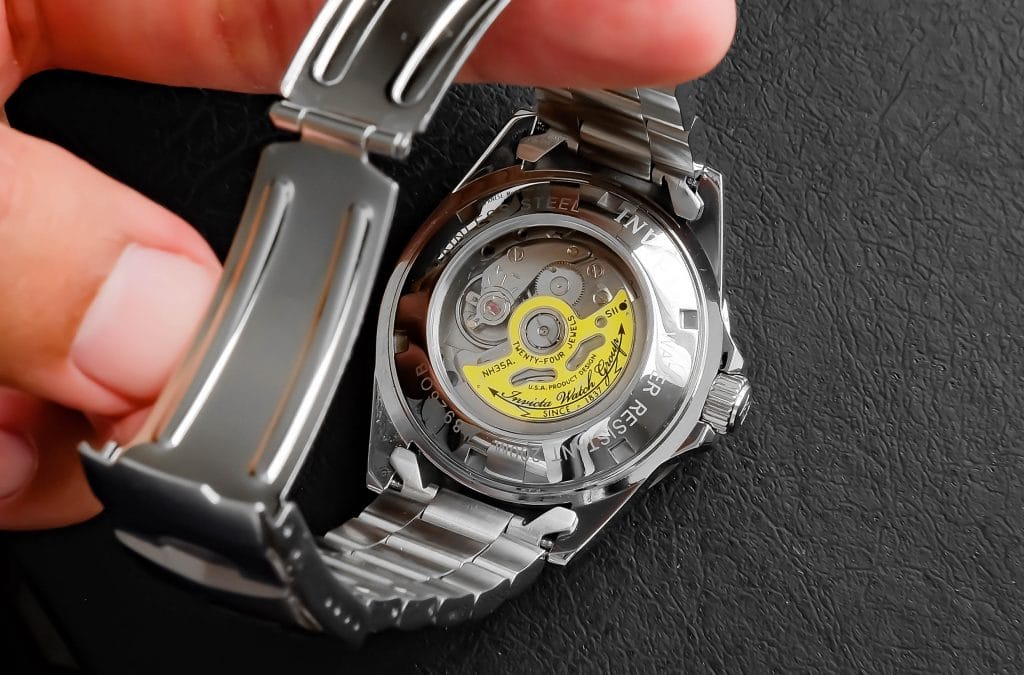
The Invicta’s NH35A is a substantial part of its appeal. It offers automatic winding, hand-winding, hacking seconds, and approximately 41 hours of power reserve, with a listed accuracy range of minus 20 to plus 40 seconds per day. We didn’t encounter a major timekeeping issue with our example, and the movement gave us the familiar interaction we enjoy in an affordable mechanical watch. The exhibition caseback adds something else to look at, with Invicta’s yellow rotor supplying a little color on the opposite side of an otherwise conventional black-dial diver. There is no need to spend several hundred dollars to get those basic mechanical pleasures here. For a first automatic, or simply an inexpensive watch to enjoy without much financial commitment, that is a meaningful part of what the $90 buys.
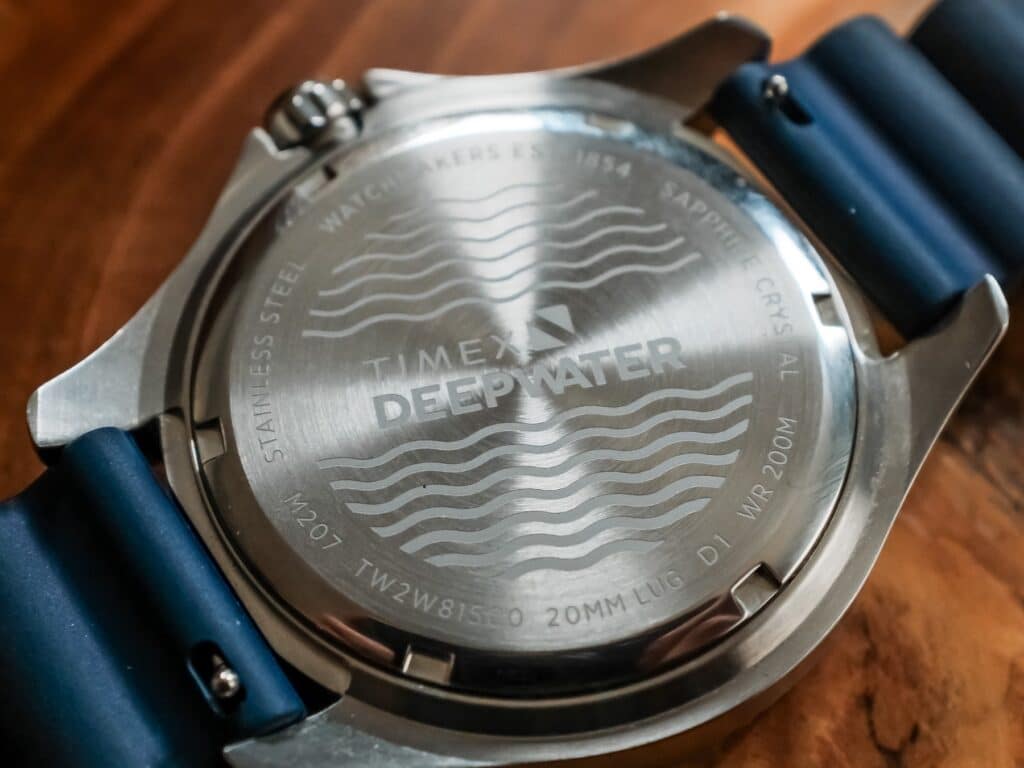
Timex uses the Epson VX42E quartz movement, with hacking seconds, a quick-set date, and an expected battery life of about three years. We liked how straightforward it was to set: the crown felt stable, and moving the hands into position was a positive, uncomplicated process. A solar movement would have been welcome, but conventional battery power suits a watch intended to be easy to pick up and use. There is no reserve to replenish by wearing it and no winding routine when it has spent a few days off the wrist. For someone who already rotates several mechanical watches, that convenience has an appeal of its own. The additional expense over the Invicta is going into other parts of the watch, so whether quartz feels appropriate depends partly on what we want from the purchase.
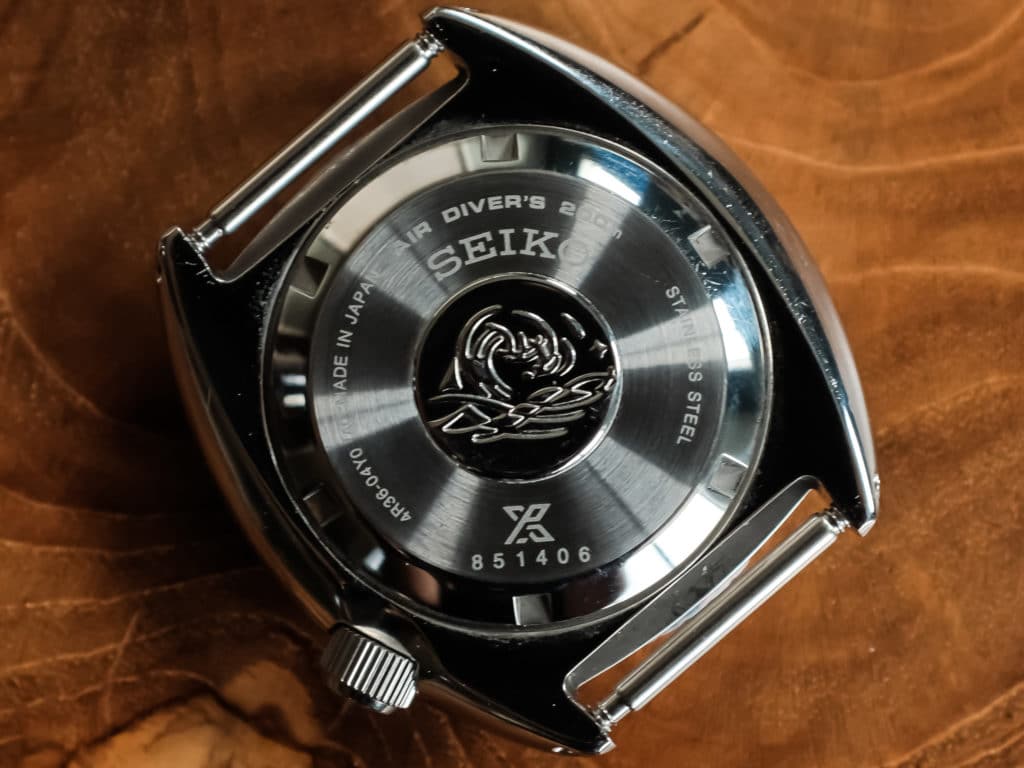
Inside the Turtle is Seiko’s 4R36, an automatic with hand-winding, hacking, and a day-date display. Its roughly 40-hour reserve puts the ownership routine close to the Invicta’s, while the stated accuracy range of minus 35 to plus 45 seconds per day is broad enough to deserve realistic expectations. Our example performed considerably better than those outer limits, although we remained interested in whether regulation could improve it further. The useful difference in daily operation is the additional day display. Otherwise, the attraction is familiar: we can wind it, set it precisely, and enjoy wearing a mechanical watch. Moving up to the Turtle doesn’t introduce a dramatically longer reserve or a fundamentally different level of movement performance. Much of what makes the Seiko more expensive has to be appreciated elsewhere.
It is revealing that the least expensive and most expensive watches offer the most similar mechanical routines. Someone mainly interested in trying an automatic already gets the essential features from the Invicta, including the ability to watch the movement through the back. The Timex offers a different benefit by reducing how much attention the watch needs between outings. Seiko adds a day display and wraps its automatic in a design we became particularly attached to. We enjoy setting and winding a watch when that interaction is part of the reason we bought it. We also appreciate being able to reach for quartz when we would rather spend those few minutes doing something else. Both experiences have a place in an affordable collection.
Case Construction, Finishing & Wearability
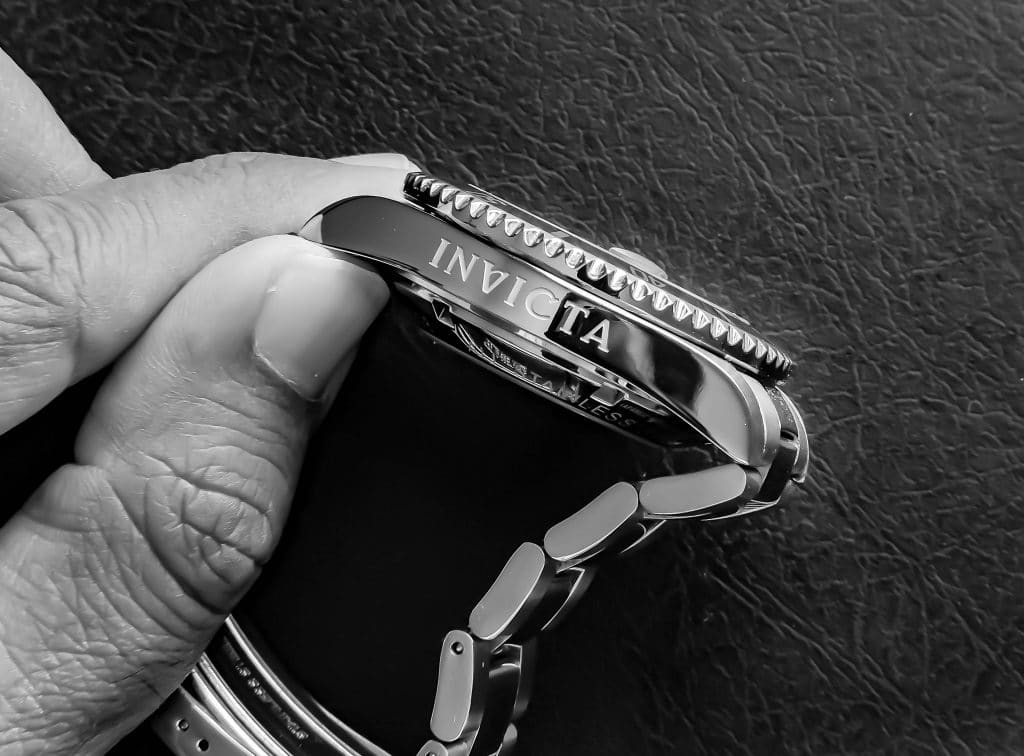
At 40mm in diameter, approximately 48mm from lug to lug, and about 14mm thick, the Invicta is the narrowest watch here, although it still has some height. Brushed lug tops provide texture above the polished sides, and the machining and finishing were better than we initially expected. The polishing continues around the back of the case, while the 7mm crown is large enough to make manual winding easy. Our frustration remained the prominent Invicta engraving along the case side. It interrupts an otherwise appealing shape, and we would happily lose it. Still, the underlying case was one of the strongest reasons we enjoyed the Pro Diver.
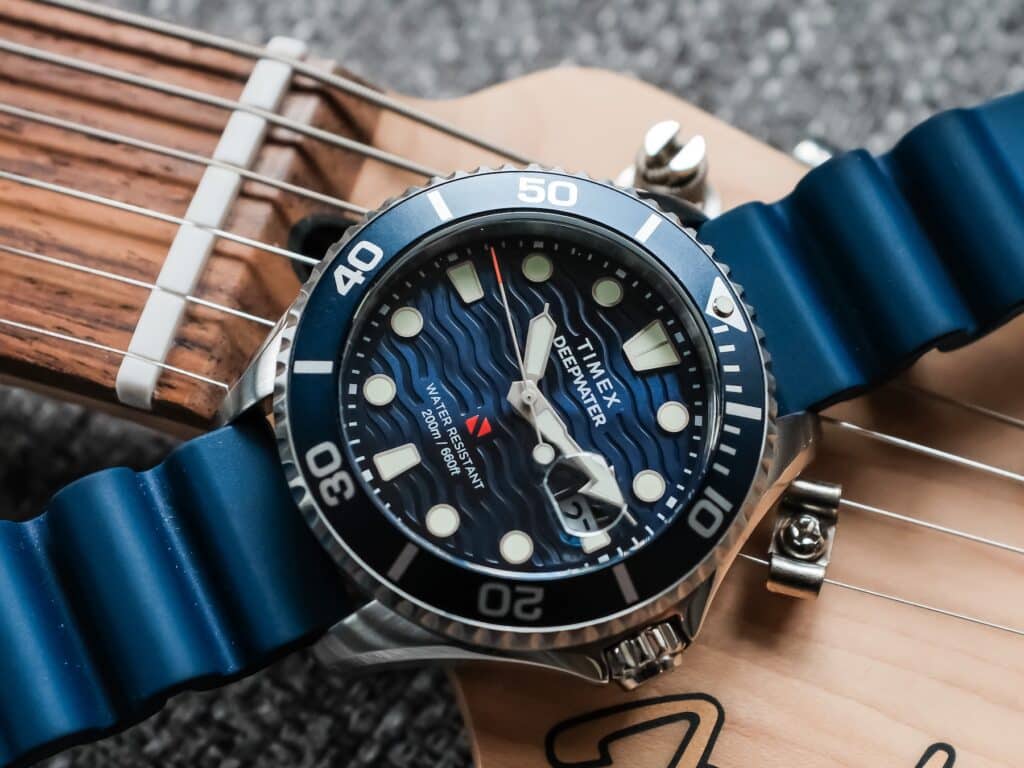
The Timex occupies more space at 44mm across and 50.5mm from lug to lug, with a thickness we measured at roughly 12.5mm. Those dimensions give it a substantial presence, but the lugs curve downward and the flat caseback helps it settle against the wrist. We found it more comfortable than its size initially suggested. The watch still feels large, which is part of its appeal if we like a diver with some weight and presence. Handling it also reinforces that impression of solidity. The crown screws down smoothly, with resistance in the right places, and there was no loose or wobbly feeling while setting it. Those small interactions contribute a great deal to how we judge an affordable watch, because we notice them every time we use its controls.
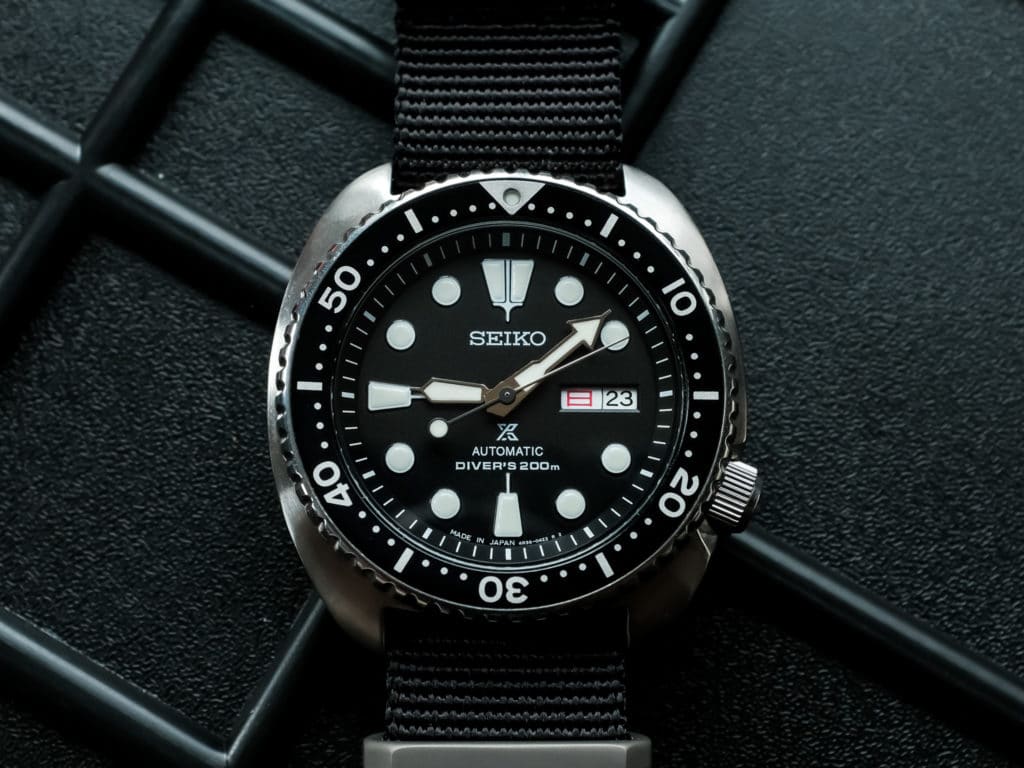
Our Turtle measured approximately 44.3mm across, 48mm from lug to lug, and 14mm thick. Its width suggests a large watch, but the cushion case and relatively compact reach across the wrist make those measurements easier to live with. It remained manageable on the 6.75-inch wrist in our review, and the asymmetrical shape incorporates the screw-down crown at four o’clock without making that side feel like an afterthought. The modern case has longer lugs than the older 6309 design, a change we weren’t entirely enthusiastic about, but we still preferred its overall proportions to the 6105-style cushion divers. That is part of the Turtle’s attraction: the case has a particular shape and personality that we enjoy independently of the specifications. Its comfort helped that appreciation survive well beyond the first few wears.
Comparing these cases makes diameter a fairly blunt way to predict which watch we will enjoy most. The narrower Invicta and broader Turtle both have roughly 48mm lug-to-lug measurements, while the Timex reaches farther across the wrist despite being thinner than either. Each arrived at a comfortable result for us through a different combination of proportions and construction. The Invicta’s immediate comfort is especially impressive given its price, while the Turtle’s broad case gives it a recognizable identity without making it unmanageable. Timex supplies the most substantial footprint and backs it up with well-executed controls. We wouldn’t assume that the more expensive watch will fit better, or that the smallest diameter automatically makes the best choice. Trying them on would tell a buyer more than the price order does.
Crystals and Bezels
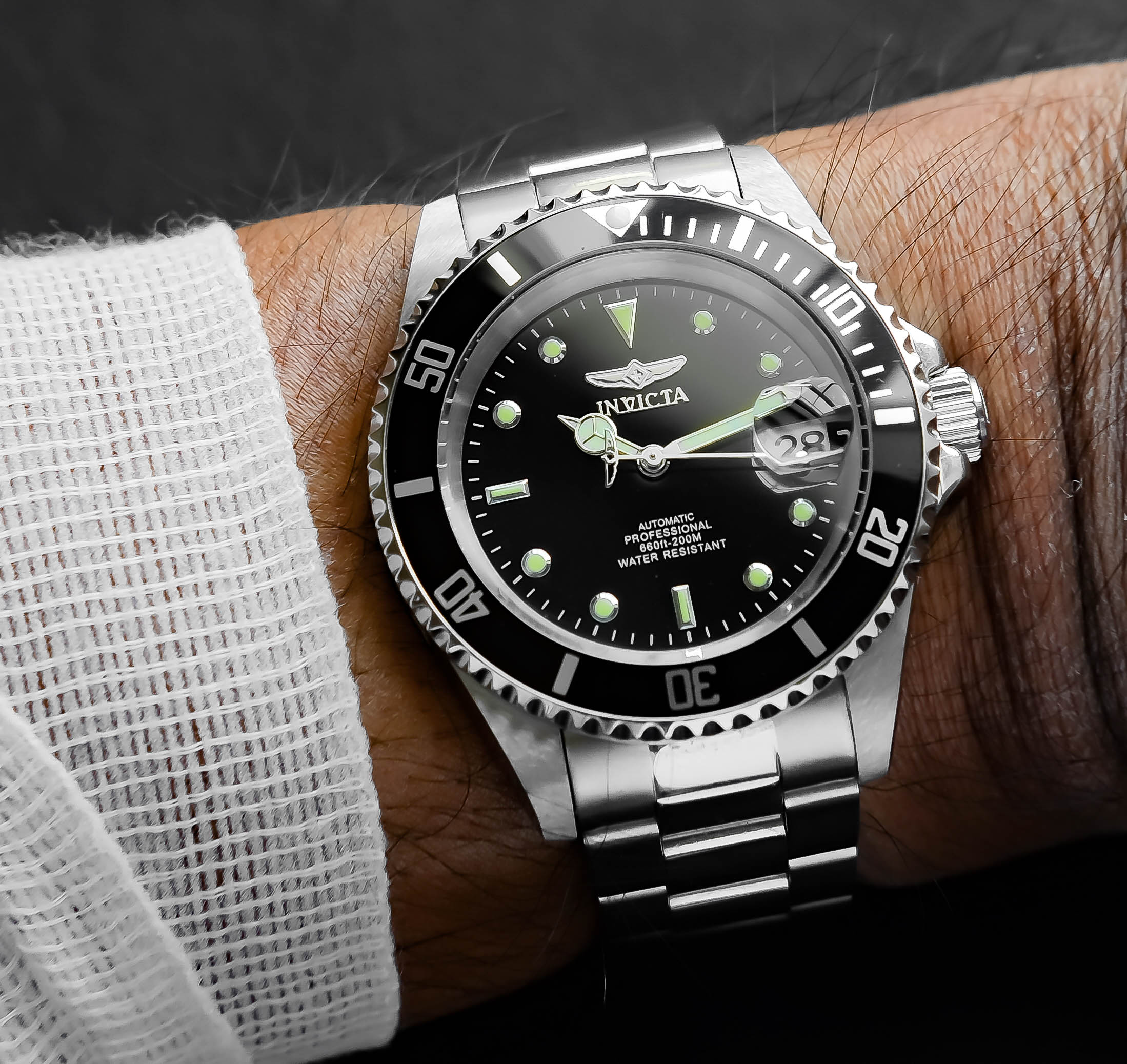
Invicta uses a mineral crystal with a date magnifier, surrounded by an aluminum bezel insert. The bezel action was better than we expected at this price, although there was some movement between clicks. We found ourselves using it for ordinary tasks such as timing coffee or taking a daylight break during work, which is a good reminder of how useful a dive bezel can be away from the water. It doesn’t have to feel exceptional to become part of the way we use a watch. The slight play is still worth acknowledging, particularly when we compare it with the tighter Timex mechanism, but the Invicta never felt like the bezel had been included only for appearance. Its basic operation was satisfying enough to make it useful.
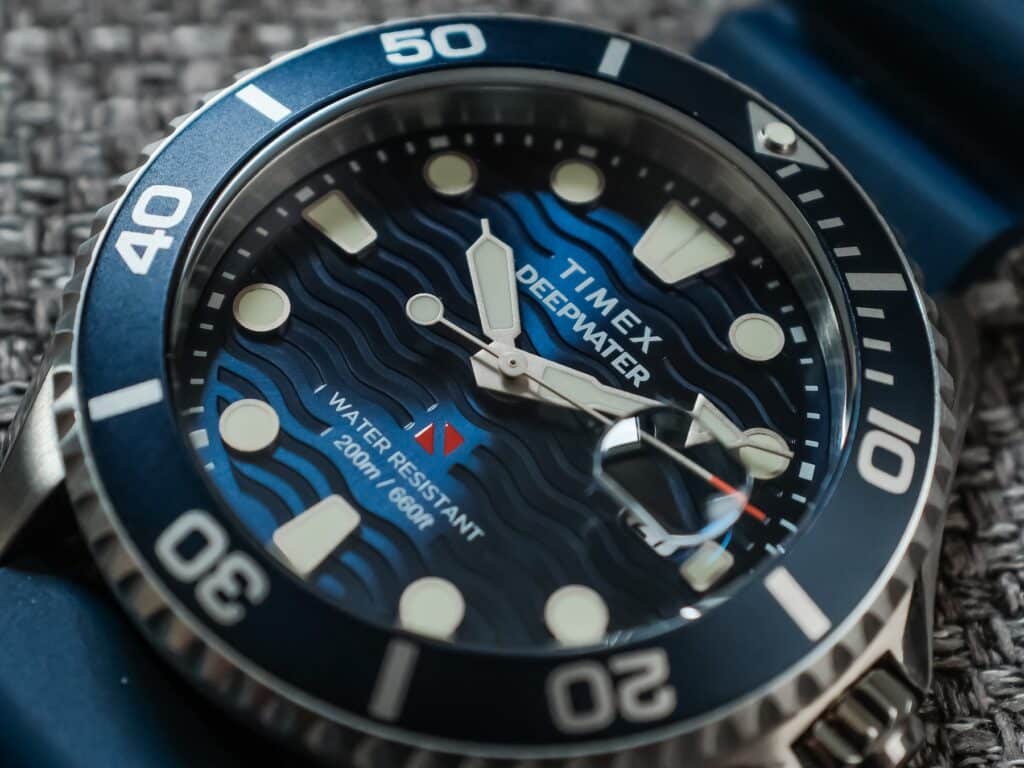
Sapphire is one of the clearest material advantages offered by the Timex. It has an anti-reflective coating and the date magnifier, with little distortion around the enlarged date despite our reservations about the styling. The bezel was equally convincing in use. Its 120-click mechanism felt tight and clean, held its position without noticeable slop, and avoided the gritty rotation or hollow sound that can make an inexpensive watch feel less carefully assembled. The aluminum insert isn’t an exotic material, but the action beneath it gave us little to criticize. This is an area where spending more than the Invicta produces an improvement we can identify directly. The crystal specification changes, and the bezel feels better when we turn it. Those are useful differences without requiring a change in our taste.
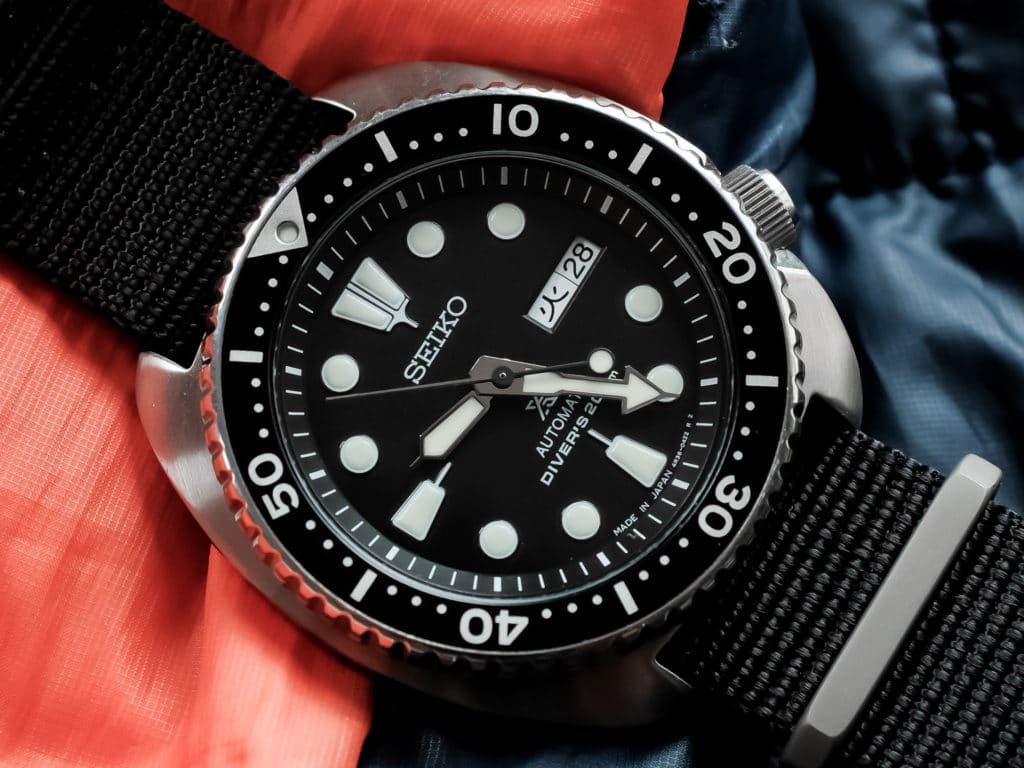
The Turtle combines Hardlex with an aluminum bezel insert, so the higher price doesn’t continue the Timex’s progression in crystal material. We had no problem with the Hardlex during ownership, and its presence never stopped us from enjoying the watch. Sapphire would still be welcome at this price. More frustrating was the bezel or insert alignment on our example, particularly because the rotation itself felt so smooth. A nice action makes us want to use the bezel, while markings that don’t line up properly give us something to notice every time we look closely at it. We can appreciate the Turtle’s broader qualities and still find that disappointing. In this part of the comparison, Timex makes the strongest impression through both its crystal choice and the execution of the bezel we handled.
Water Resistance & Lume
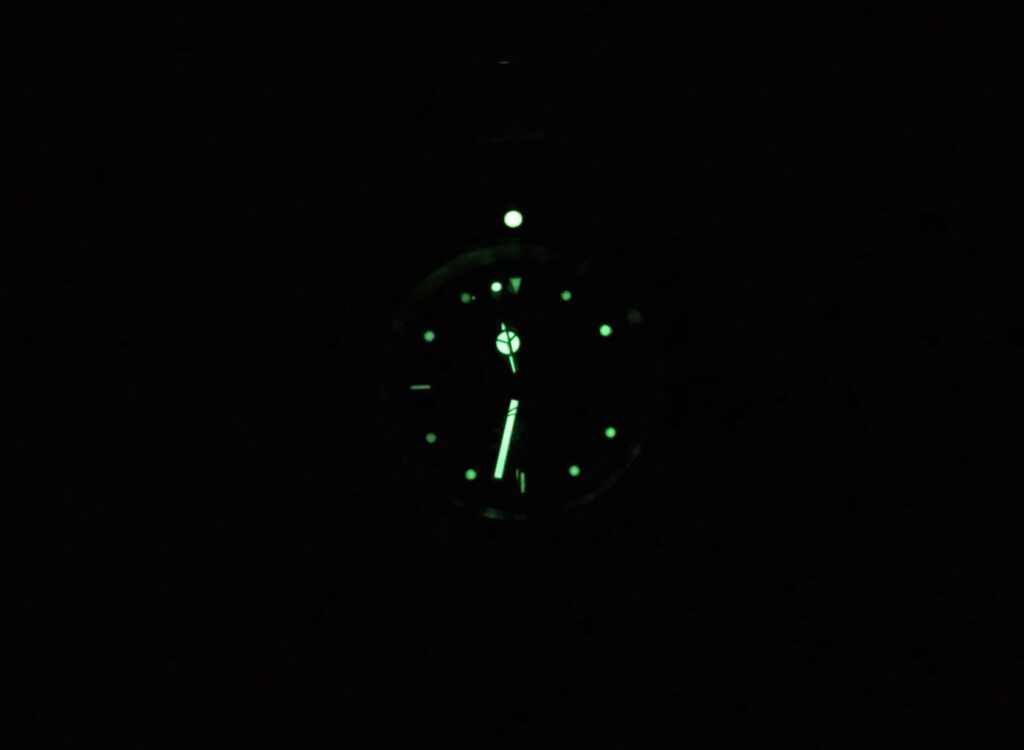
The Invicta carries a 200-meter water-resistance rating, with a screw-down crown and caseback. Our own water exposure included getting thoroughly drenched in a Florida thunderstorm, and the watch came through that without trouble. We were happy treating it as an inexpensive everyday companion, although our recommendation for actual diving was to choose another watch. More apparent in ordinary use was the weak luminous treatment. The application varied between the hands and markers, producing slightly different colors and a glow that appeared more readily on the hands. The smaller round indices also lacked some of the visual presence we wanted. That combination gave us less confidence in the display after dark than the dial’s polished daytime appearance might suggest. Here, the low price involves a compromise we could actually see.
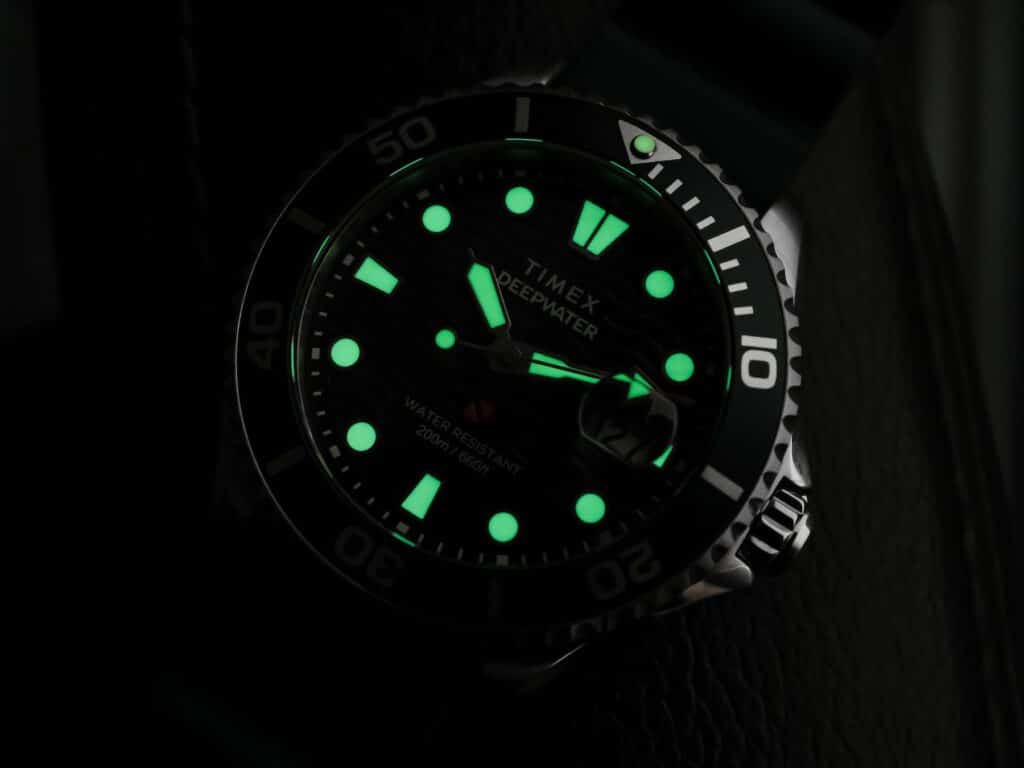
Timex also provides a 200-meter rating and screw-down construction, but its luminous treatment was more satisfying. The Super-LumiNova on the hands and markers glowed brightly and remained useful long enough to make reading the time straightforward. We liked that the prominent markers served a practical purpose as well as contributing to the dial’s appearance. There is plenty of decoration in the waves and sunburst finish, yet the luminous hands and indices remain the elements we need when the light falls away. For someone considering the move up from the Invicta, this is a more relevant improvement than simply expecting a larger number on the dial. The depth rating stays the same, while the quality of the display in lower light becomes easier to appreciate.
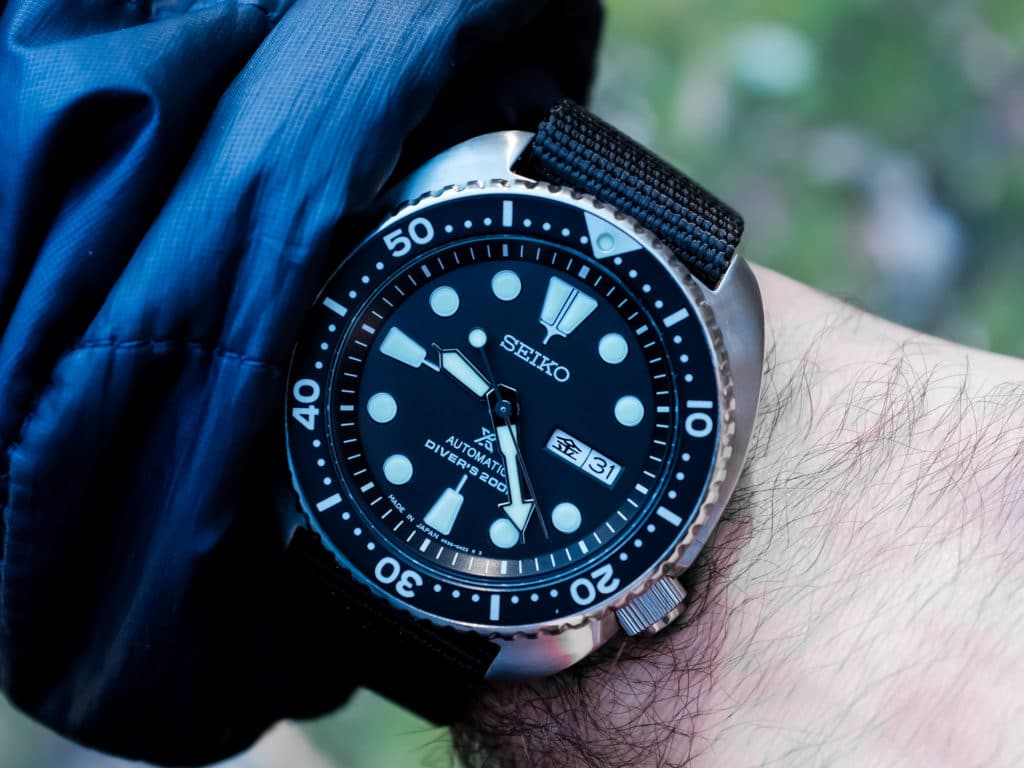
Seiko’s 200-meter rating likewise comes with a screw-down crown and caseback. Its large LumiBrite markers and simple matte dial make the display easy to understand, and we appreciated how little effort was needed to distinguish the time. The Turtle gives its functional elements plenty of space rather than surrounding them with elaborate textures or reflective decoration. That clarity is part of what made the watch so easy to keep wearing. All three watches arrive at the same stated depth rating, so this section doesn’t provide a straightforward numerical reason to spend more. The Turtle’s particular strength is its clear layout: the hands and markers are easy to distinguish, and the restrained dial lets them do their job without competing for attention.
Cost Considerations
At our $90 retail benchmark, the Invicta delivers a considerable amount of the affordable-watch experience in one purchase. We get an automatic movement, a comfortable steel bracelet, a case that suited the wrist immediately, and a dial with more applied detail than we initially expected. The clasp and lume are legitimate frustrations, and the case-side engraving remains an unnecessary distraction. Even so, those complaints sit alongside a watch we enjoyed wearing. For someone who wants a familiar 40mm automatic, the price leaves room to accept a few shortcomings without feeling that the whole purchase needs to be reconsidered. We would also resist assuming it requires an immediate aftermarket overhaul. The bracelet was comfortable, and its basic proportions were already right. There is value in enjoying an inexpensive watch largely as it arrives.
The Timex’s $269 MSRP places it $179 above the Invicta. That is a substantial increase, but sapphire, better lume, and the clean action of the bezel give us concrete things to appreciate for the money. The crown and setting feel also contributed to the impression of a carefully executed watch. Quartz will be a benefit for some buyers and a reason to look elsewhere for others, especially if the main appeal of the Invicta is its automatic movement. We wouldn’t treat that preference as something the Timex needs to overcome. Its strongest case is as an expressive, uncomplicated everyday diver whose construction is enjoyable to handle. The size deserves equal attention, because a large case is only an advantage when we actually want to wear one.
At a $525 MSRP for the SRPE93, the Turtle asks for another $256 beyond the Timex and $435 beyond the Invicta. Its 4R36, day-date display, recognizable case, and adaptable wearing character make an appealing combination, particularly for someone who already likes Seiko’s approach to dive watches. Our experience with the related SBDY015 gives us a good reason to take that appeal seriously: it remained enjoyable after earlier Turtles had come and gone. But Hardlex and the alignment issue on our example make it difficult to describe the price difference as a universal improvement in execution. The extra money buys a watch with a shape and personality we became attached to. That can be worth paying for, provided the qualities that sustained our interest also matter to the person considering it.
We’re using a retail benchmark for the Invicta and MSRP for the Timex and Seiko, so these figures describe the comparison we’ve chosen rather than a claim that every buyer will encounter identical prices. At those levels, the most instructive result is how the improvements are distributed. The move to Timex changes the crystal, lume, controls, movement, and overall size. Moving again to Seiko restores an automatic and introduces the Turtle’s particular wearing experience, but gives up sapphire. Each step deserves to be considered on its own merits. We can enjoy the inexpensive automatic, prefer the convenience and execution of the Timex, or find the Seiko’s design especially rewarding without expecting the price order to settle every part of the decision.
Final Thoughts: Invicta Pro Diver vs Timex Deepwater vs Seiko Turtle
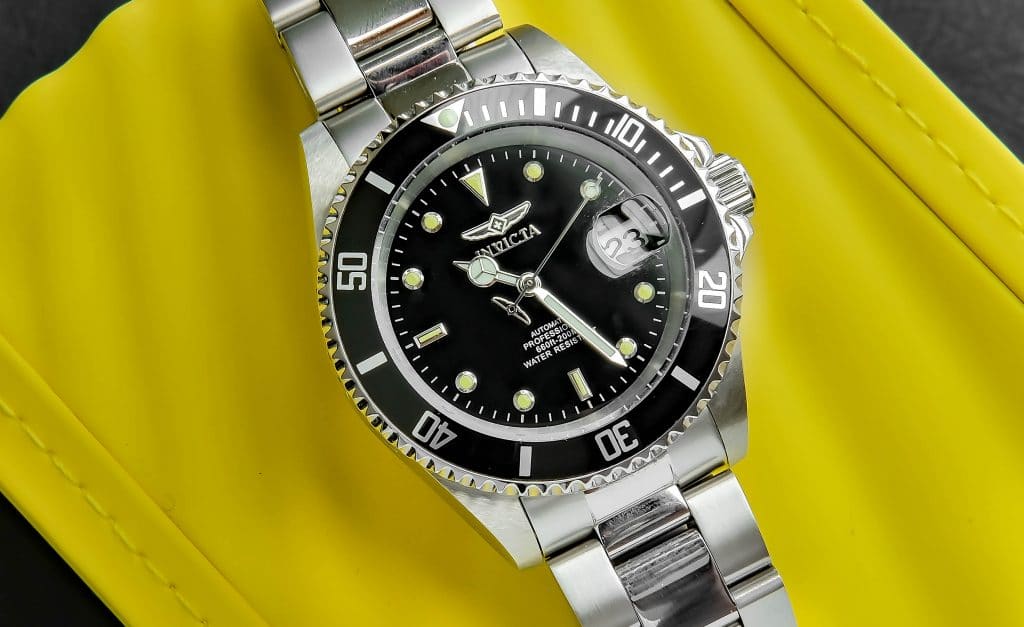
The Invicta Pro Diver makes the strongest argument for keeping the initial budget small. Its case was comfortable, the bracelet had smooth movement and pleasantly finished edges, and the NH35A supplied the mechanical interaction that draws many of us into this hobby. We also enjoyed the applied dial details more than we expected. The stiff clasp, uneven lume, and prominent case engraving are real criticisms, but they don’t erase those strengths. At $90, someone who likes the design gets a watch with enough substance to enjoy beyond the novelty of finding a bargain. We would recommend it most readily to a buyer who specifically wants this size and style of automatic, and who can accept its shortcomings without immediately turning the purchase into a list of planned upgrades.
The Timex Deepwater Meridian 200 makes spending more relatively easy to understand. Its sapphire crystal is useful, the lume is convincing, and the bezel and crown felt good in ways we noticed immediately. The blue dial and matching strap also give it enough personality to feel like a watch chosen for enjoyment as well as practicality. A short loan doesn’t provide the ownership history we have with the Turtle, but it was enough for the Timex to leave a strong impression. The main qualification is its substantial footprint. For someone comfortable with that size and happy with quartz, it offers a persuasive combination of materials, usability, and character. We wouldn’t dismiss it because the less expensive Invicta happens to be mechanical.
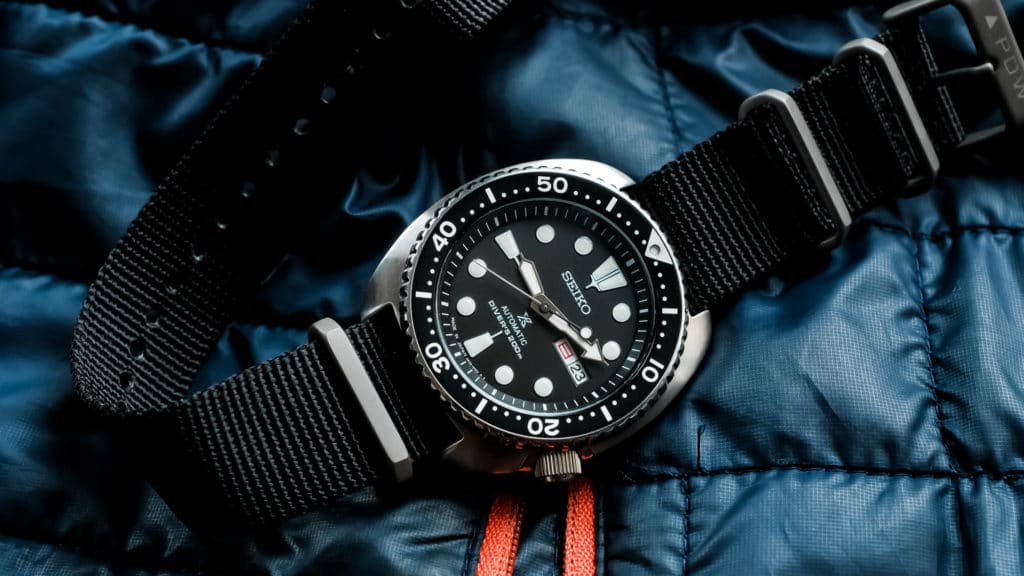
Our Turtle has the strongest personal attachment behind it. The cushion case, easily read dial, comfortable silicone, and enjoyment of changing straps all contributed to a watch that stayed interesting over years of rotation. Those qualities are harder to express as a single upgrade than a sapphire crystal, but they still matter when we are choosing something to wear regularly. The higher price also makes its compromises harder to ignore, particularly when the Timex handles the crystal and bezel discussion so well. We would happily recommend a Turtle to someone drawn to its shape and character. We would be less inclined to recommend stretching to $525 solely because it occupies the highest price bracket here. Its appeal becomes much clearer when the watch itself is what we want.
Our overall choice at these prices is the Timex Deepwater Meridian 200, while the Invicta is the strongest option for inexpensive automatic ownership. The Turtle remains the watch we would choose for its distinctive case and the longer enjoyment it has given us. Those are different reasons to spend money, and none needs to apply to every buyer. What makes the Timex our overall pick is how many of the improvements are immediately useful without asking us to spend the full Seiko budget. At the same time, the Invicta demonstrates how much enjoyment is already available for $90, and the Turtle reminds us why a familiar design can remain worth returning to. We would stop in the middle, but we can understand being quite happy on either side.

Co-Founder and Senior Editor
Kaz has been collecting watches since 2015, but he’s been fascinated by product design, the Collector’s psychology, and brand marketing his whole life. While sharing the same strong fondness for all things horologically-affordable as Mike (his TBWS partner in crime), Kaz’s collection niche is also focused on vintage Soviet watches as well as watches that feature a unique, but well-designed quirk or visual hook.