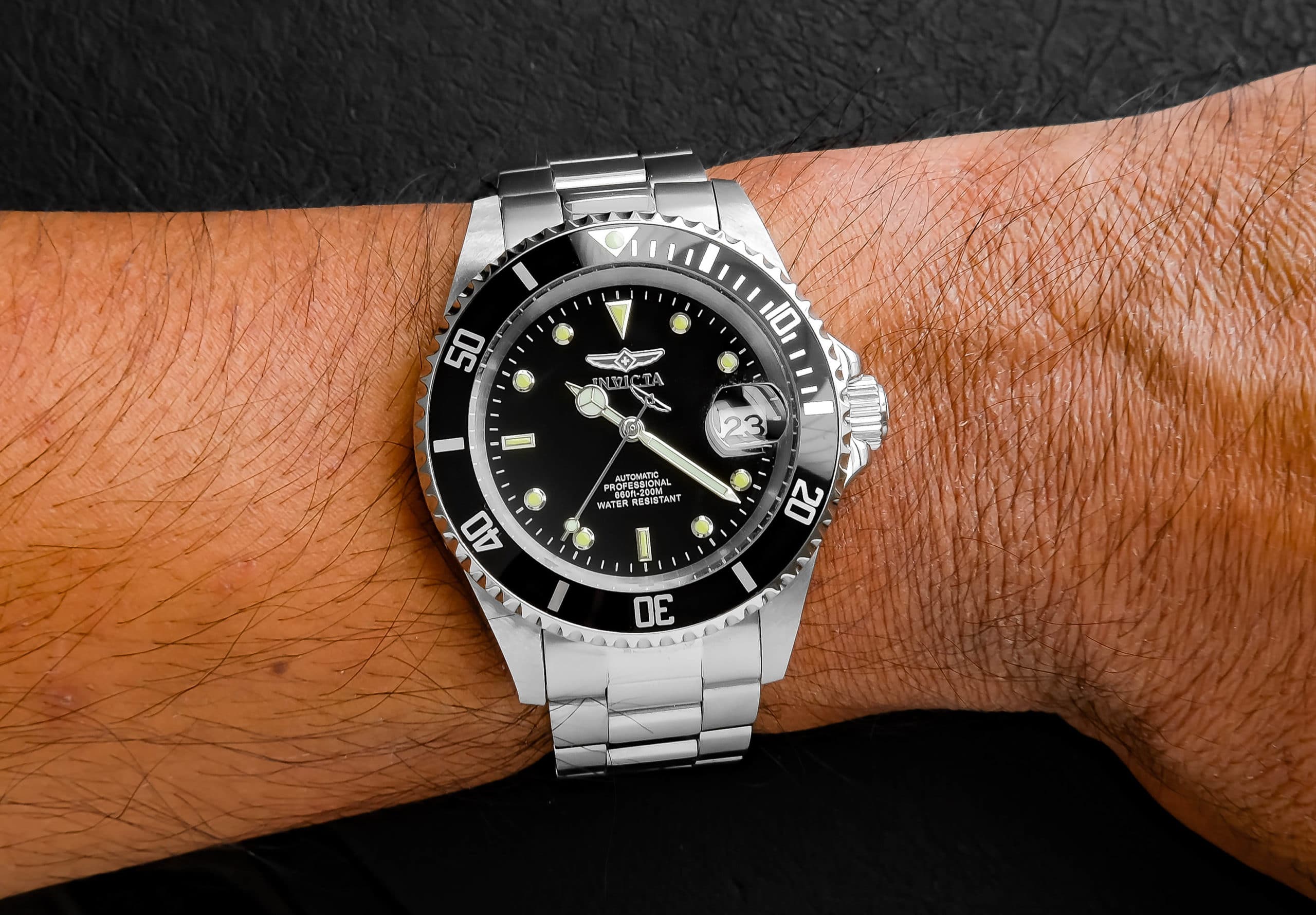
Comparing a sub-$100 Invicta Pro Diver to a Rolex Submariner that costs around $10,000 feels like setting one watch up to lose. The price gap alone tells you these two shouldn’t belong in the same conversation. Yet we’ve watched this debate resurface for years because it asks a question that spec sheets, YouTube B-roll, and side-by-side measurements never quite answer: how much does another ten grand actually change once the watch is on your wrist? That’s a far more interesting question than simply declaring one watch “better.”
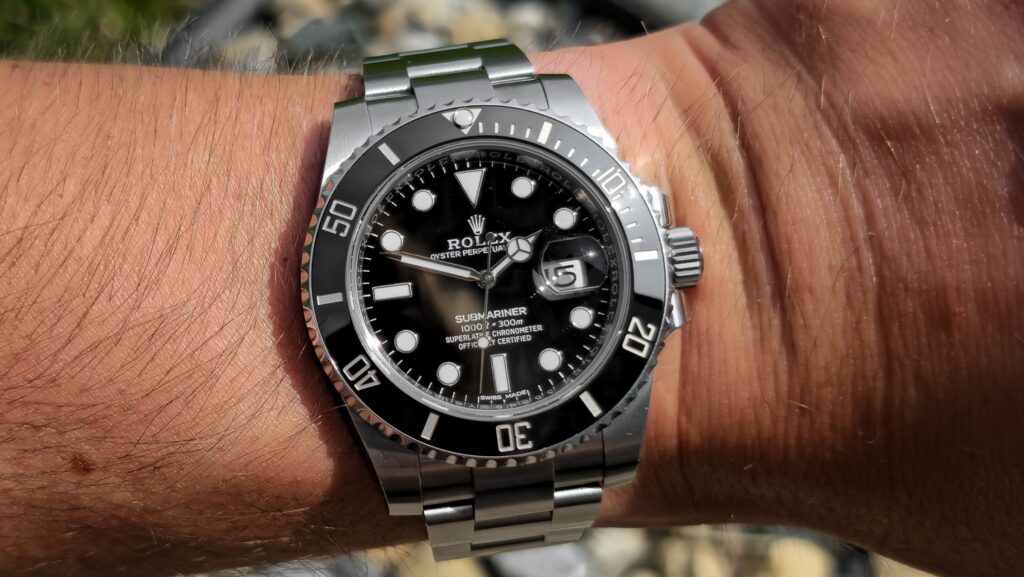
After more than a decade of hands-on reviews at TBWS, we’ve learned to be skeptical of conclusions based on price alone. Some watches justify every extra dollar, while others deliver way more than their price tag implies. The only way to separate hype from reality is through wrist time, paying attention to the details that only emerge after the novelty fades. That’s what this comparison is about. Not deciding whether an Invicta can replace a Rolex, but understanding where the extra money genuinely goes—and whether those differences matter to the person who has to wear the watch every day.
Overview and Identity
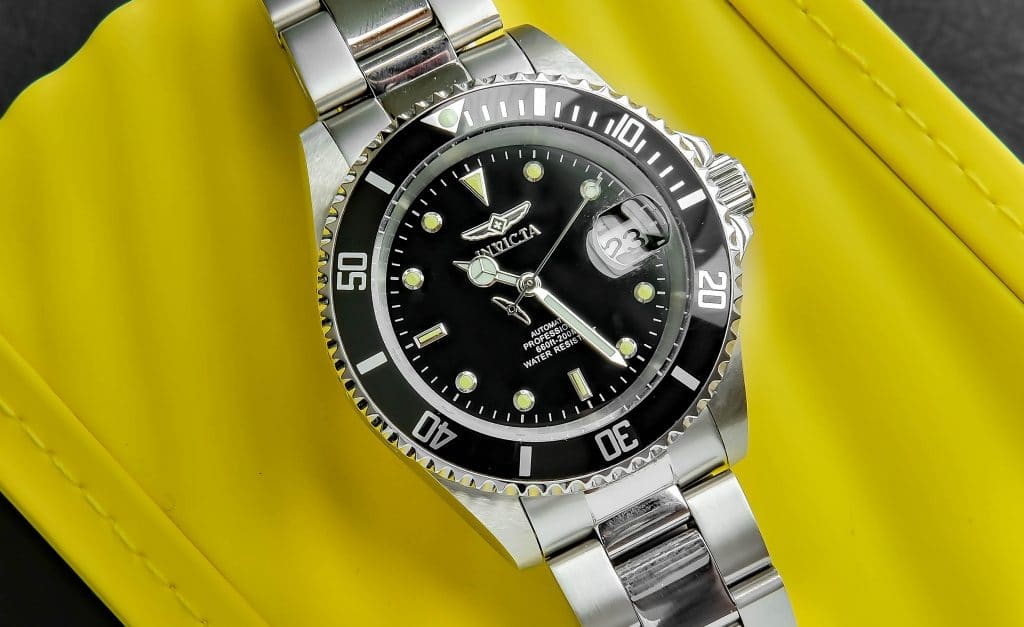
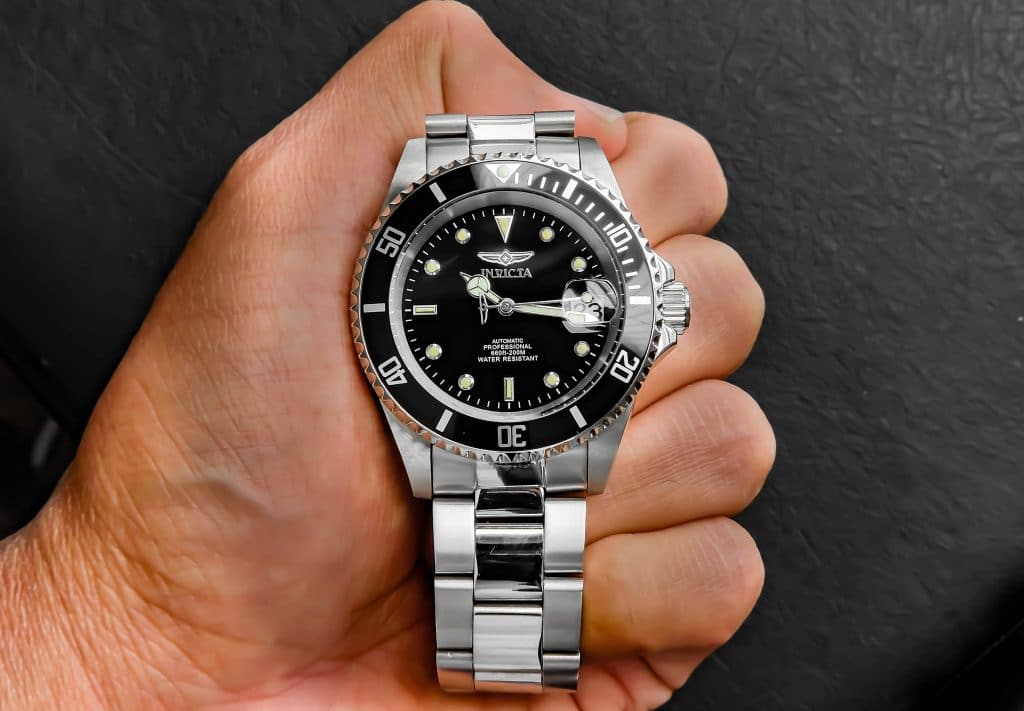
The Invicta Pro Diver is a watch many of us end up considering for the same reason: we want the familiar proportions of a classic dive watch without spending a serious amount of money. But the moment Invicta enters the conversation, the watch itself often takes a back seat. Brand stigma, endless internet opinions, and debates over what a watch “should” be have a way of hijacking the buying process before you’ve even strapped one on. However, after spending extended time reviewing the Pro Diver, we found it far easier to judge it on its own terms. It’s uncomplicated, comfortable, and enjoyable to wear, which is why it keeps showing up in enthusiast collections despite all the noise. The oversized case-side logo still feels unnecessary, but it doesn’t change the fact that this watch quietly delivers where it counts.
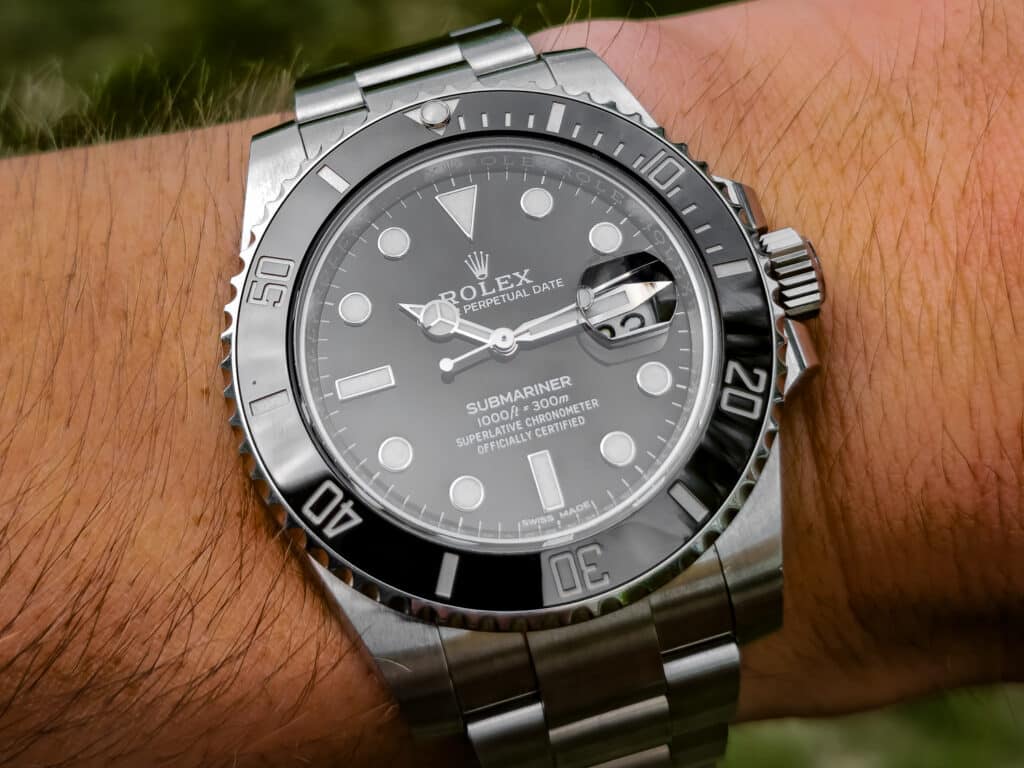
The Rolex Submariner carries more baggage than almost any other watch, yet it has a funny way of making that disappear once it’s on your wrist. Plenty of people chase the Crown on the dial before they ever think about the watch underneath it, which is a shame because the Sub earns its reputation through the ownership experience, not the logo alone. The longer we wore it during testing, the less we found ourselves thinking about individual features and the more we appreciated how seamlessly everything worked together. The bezel, bracelet, case proportions, and overall fit feel remarkably cohesive, reflecting decades of careful refinement rather than constant reinvention. It still wears like the tool watch that shaped the modern dive watch formula, even if most Submariners today never get anywhere near open water. That’s what makes it so easy to appreciate despite all the hype surrounding it.
- The Invicta Pro Diver is the easy, low-stakes way into the Sub-style look, and it earns its place by making the watch hunt feel uncomplicated.
- The Rolex Submariner is the benchmark diver that still feels cohesive on the wrist, even if the surrounding hype never stops talking.
Dial, Bracelet & Wearability: Functional Simplicity vs Meticulous Refinement
The Invicta Pro Diver borrows a familiar layout, so the real question isn’t originality but execution. We were genuinely surprised to find applied indices, an applied logo, and polished details that catch the light far better than we’d expected from a watch in this price range. That little bit of sparkle keeps the dial from feeling flat, especially around the larger cardinal markers. The smaller round indices don’t command the same presence and can look undersized from certain angles, but they never look cheap. Instead, the dial feels like one of those places where Invicta quietly spent more money than most people assume.

The bracelet follows the same pattern. On paper, hollow end links sound like an immediate compromise, yet they rarely stood out once the watch was on the wrist. What we noticed more was how smoothly the links articulated and how comfortable the 20mm-to-18mm taper felt during long days of wear. Even the polished center links, which we’d normally expect to dislike on an affordable diver, balance the polished case details better than expected. The biggest reminder that you’re wearing a budget watch comes from the clasp. The micro-adjustments make sizing easy, but the flip-lock takes far more force to open than it should, leaving little scrape marks over time if you’re not careful.
On the other hand, the Rolex Submariner’s dial isn’t trying to reinvent the dive watch formula, and that’s why it works. At first glance, there’s nothing particularly flashy about it, but everything is executed to a very high standard. The crisp dial printing, white-gold-surrounded indices, lume-filled Mercedes-Benz handset, and glossy black dial all feel well balanced. Even with seven lines of text, the layout never comes across as cluttered or distracting. The longer we wore it, the more we appreciated how drama-free the entire dial is.
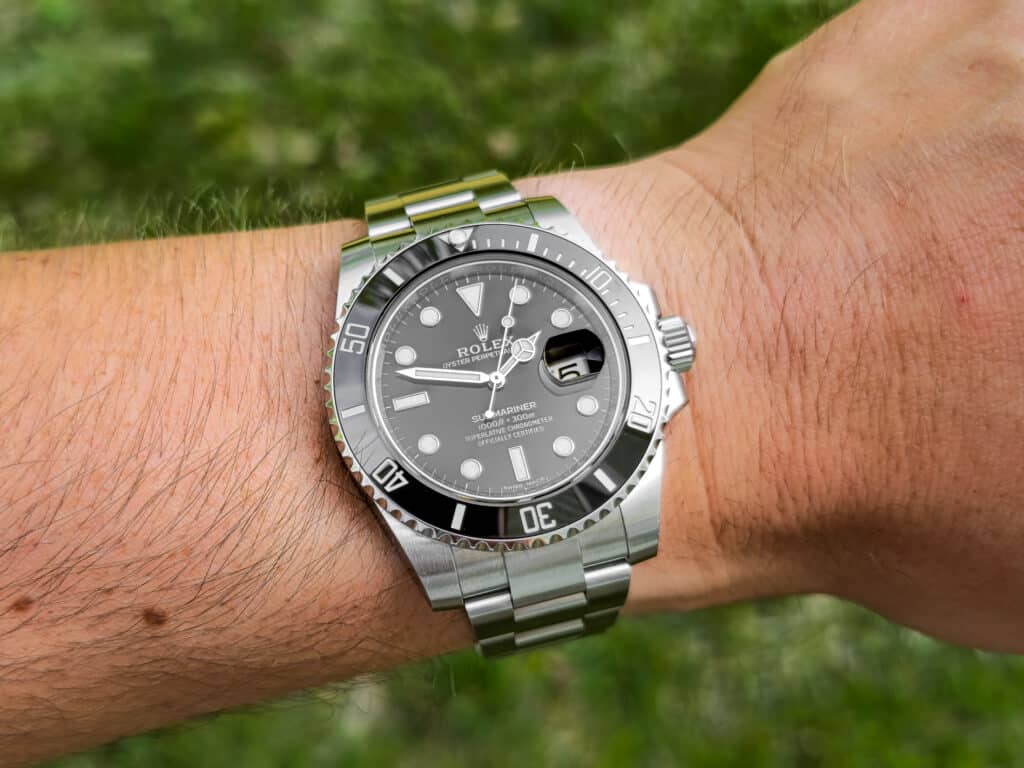
The Oyster bracelet is where the Submariner starts making a very convincing case for itself. We’ve worn plenty of excellent bracelets over the years, but this is still one of the few that almost disappears once it’s sized correctly. The 20mm-to-16mm taper gives the watch a substantial yet elegant feel, while the links articulate so naturally that there are no pressure points or awkward gaps anywhere along the wrist. The Glidelock clasp remains one of the best we’ve used, offering smooth, tool-free adjustments that feel useful rather than existing solely for the spec sheet. Even after plenty of desk diving, the brushed finish does an admirable job of hiding scratches. That reinforces why the Sub feels equally at home under a shirt cuff as it does as a true everyday tool watch.
- The Invicta Pro Diver punches above its price with a well-finished dial and a comfortable bracelet. However, the stiff flip-lock clasp is the clearest reminder of its budget roots.
- The Rolex Submariner pairs a restrained, highly legible dial with an Oyster bracelet that remains a benchmark for all-day comfort, seamless fit, and effortless adjustability.
Build Quality & Technical Approach
The Invicta Pro Diver and Rolex Submariner may share a familiar silhouette, but that’s about where the similarities start ending. Once you move past first impressions, you’re looking at two very different philosophies on what makes a dive watch “good.” This is where the conversation gets more interesting (and a little less emotional): movement, case finishing, bezel execution, water resistance, and all the small engineering details that only start to matter after the honeymoon phase is over.
Movements:
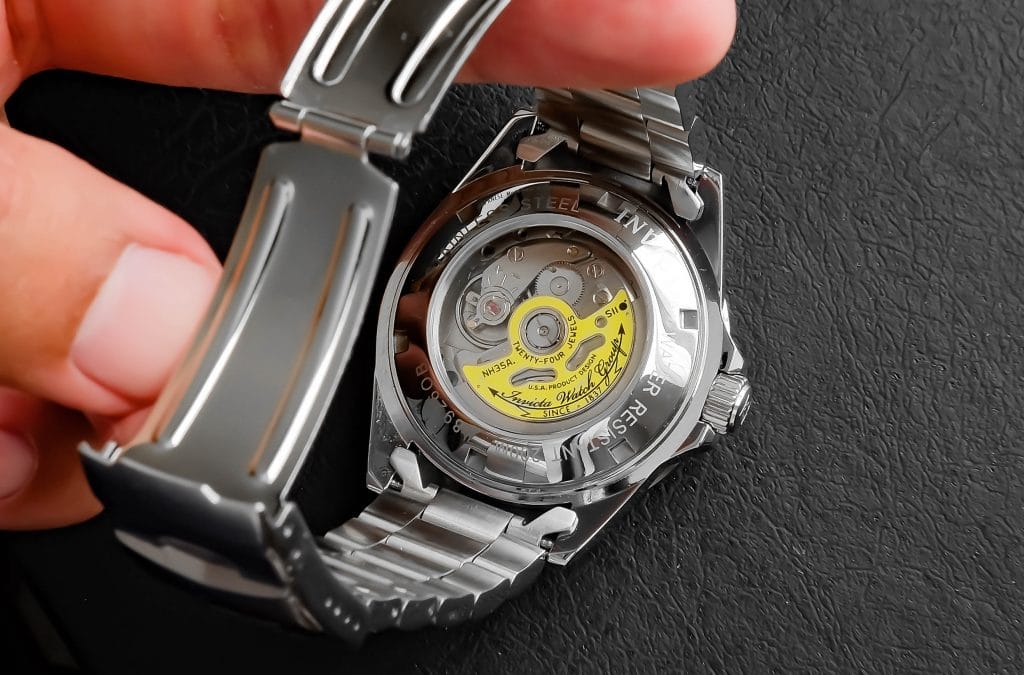
The Invicta Pro Diver uses the NH35A, and honestly, that’s where much of the watch’s value proposition starts to make sense. It’s the same reliable Seiko-based movement we’ve seen in watches costing several times more, which makes finding it in something that regularly sells for under $100 feel a little absurd in the best possible way. You get hacking, hand-winding, an accuracy rating of -20/ +40 seconds per day, and around 41 hours of power reserve. More importantly, you get a movement with a track record, not a marketing story. Invicta dresses up the rotor with its signature yellow branding, though we’d still take the proven reliability over decorative touches every time. We never found ourselves worrying about the movement, and that’s what we want from an everyday automatic.
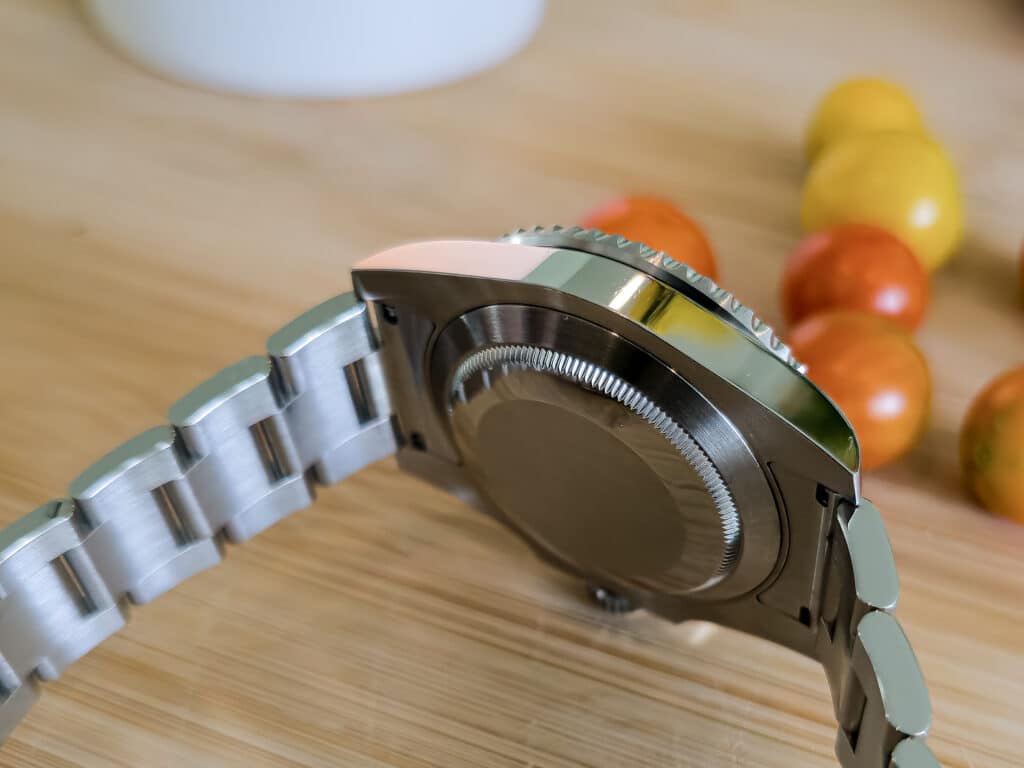
The in-house Caliber 3130 powers the Rolex Submariner. It’s a movement that’s been quietly proving itself across Rolex’s lineup since the early 2000s. It isn’t the sort of caliber that wins people over with decorative finishing or headline-grabbing specifications. In fact, the 48-hour power reserve feels quite ordinary today. What it does offer is the kind of rugged dependability that suits the Submariner’s personality perfectly. During our time with it, accuracy comfortably lived up to Rolex’s lofty standards (around +0.5 seconds per day), and that consistency is what sticks with you long after the spec sheet is forgotten. It’s a plain movement by luxury-watch standards, but we’d argue that’s the point.
Case Construction & Finishing:
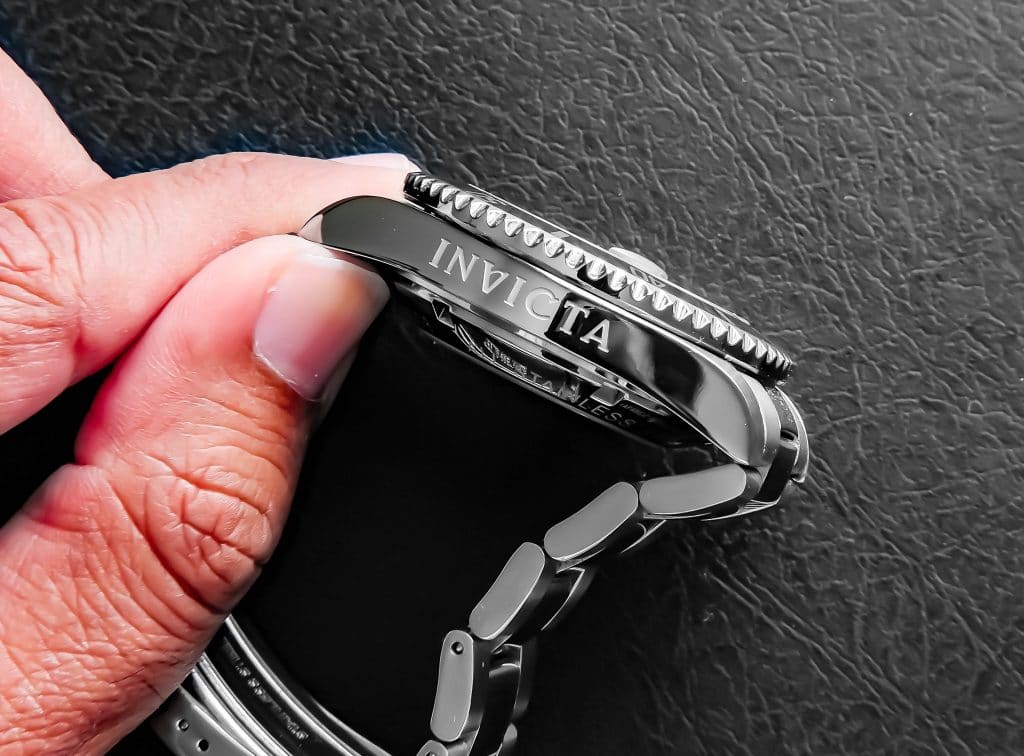
The Invicta Pro Diver’s case is probably the biggest reason most of us end up considering it in the first place. Finding a well-executed, classic 40mm dive watch without someone’s “modern interpretation” getting in the way is harder than it should be. Invicta keeps things simple here. The proportions (40mm in diameter, approx. 48mm lug-to-lug, and approx. 14mm thick) feel right straight away; the brushing on the lug tops contrasts nicely with the polished case sides, and the whole thing settles onto the wrist with very little fuss. The generously sized crown is another pleasant surprise, making hand-winding far easier than on plenty of watches that cost much more. Then there’s the giant Invicta logo stamped into the case side. We tried to ignore it, but failed. It’s one of those decisions that continues to frustrate us because it distracts from a case that’s otherwise executed far better than its price would suggest.
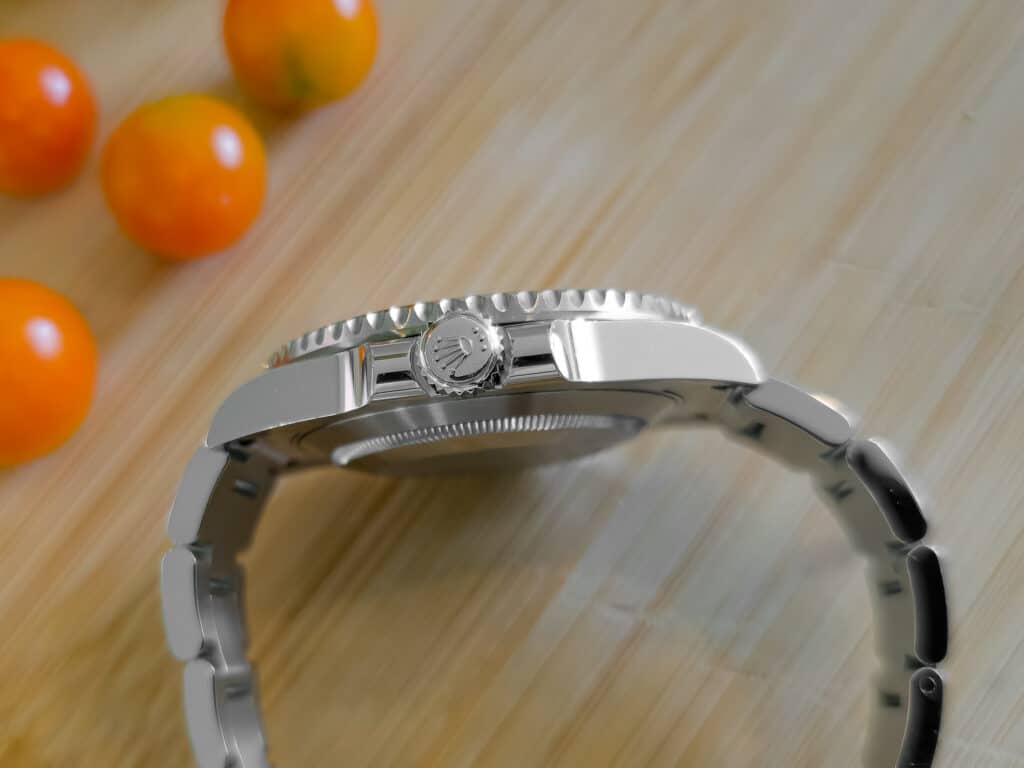
The Rolex Submariner approaches the problem from the opposite direction. There’s almost nothing about the case that demands your attention, and that’s why it works. At 40mm across, around 48mm lug-to-lug, and only 12.5mm thick, it strikes a balance between tool-watch substance and everyday wearability that few dive watches have matched. Rolex will happily tell you Oystersteel is tougher and more corrosion-resistant than conventional 316L stainless steel. Still, if we’re honest, we couldn’t point to a moment where that alone justified the excitement. What stayed with us instead was how natural the case felt on the wrist. The brushed surfaces, polished flanks, and slim profile come together so effortlessly that the watch feels just as comfortable disappearing under a cuff as it does doing what it was originally designed for. If anything, the case borders on being a little plain—but that’s also why it has aged so well.
Crystals & Bezels:

The Invicta Pro Diver keeps the crystal situation simple with mineral glass up front and a cyclops that gets the job done without pretending to be anything more than it is. In its price bracket, that feels fair. The bezel was the bigger surprise. We expected something loose or half-hearted, but the aluminum insert and overall action are quite decent for the money. There is a little wiggle between clicks if you look for it, though in real use it still works fine for timing coffee, breaks, or whatever low-stakes task is on the desk that day. It is not trying to be the best bezel in the world. It is just trying not to embarrass itself, and mostly succeeds.
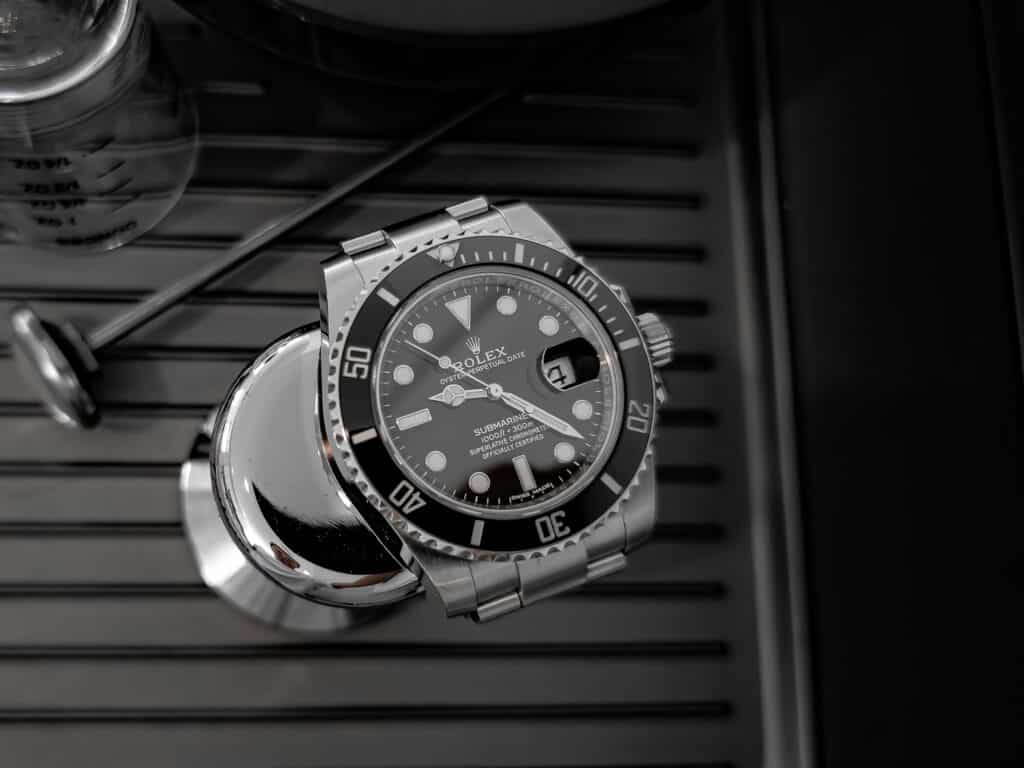
The Rolex Submariner takes the opposite approach: everything here feels refined to the point of being slightly overqualified for daily life. The sapphire crystal is clean and legible, and the date magnifier is one of those details that looks unnecessary until you use it a few times and stop arguing with it. There is a faint milky haze on the dial in certain light, which is one of those Sub quirks you either notice or you do not. The unidirectional rotatable bezel, though, is where the watch really sets itself apart. It turns with a level of precision that makes most dive watches feel a little clumsy by comparison, with no back play and a glide that feels perfect. The slim ceramic insert, crisp numerals, and easy grip all reinforce the same point: this is a bezel built to be used, not admired from across the room.
Water Resistance & Lume:
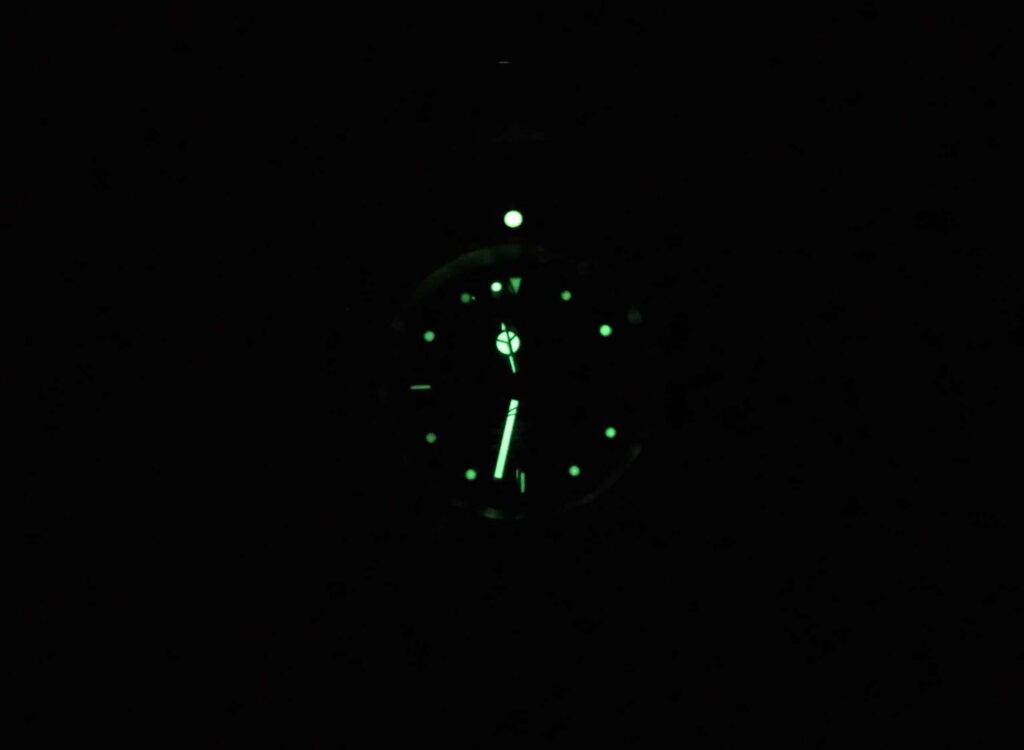
The Invicta Pro Diver carries a 200-meter water resistance rating, with both a screw-down crown and screw-down caseback helping it feel solid in everyday use. We never hesitated to wear it through rain or around the pool, and after one particularly unforgiving Florida downpour, it carried on without missing a beat. That said, we’d still treat the 200-meter rating with a bit of perspective given the price. If you’re buying this watch, it’s probably because you want the classic dive-watch look, not because you’re planning your next scuba certification. The lume tells a similar story. It’s perfectly serviceable for a glance in the dark, but the smaller markers and uneven application mean the hands tend to outshine the markers before long.
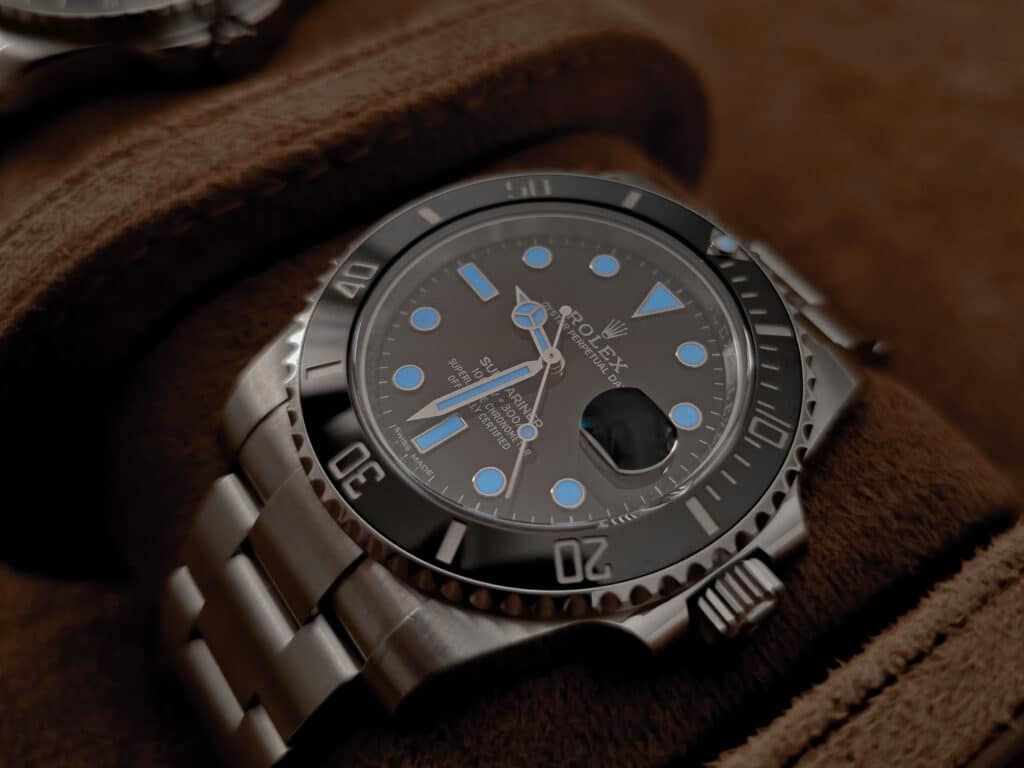
The Rolex Submariner inspires confidence without making a fuss about it. Its 300-meter water resistance is backed by the Triplock screw-down crown, whose silky action is noticeably smoother than most crowns we’ve used. The gasket system also helps maintain some water resistance even if the crown is accidentally left unscrewed. Unlike Seiko 5 pieces, the Chromalight lume isn’t the brightest available, but it glows consistently through the night with a distinctive blue hue. We also appreciate the raised lume pip at 12 o’clock, which sits beneath a tiny sapphire cap and is easy to locate by feel in the dark. These aren’t headline features, but they’re the kind of thoughtful details that make the Submariner easy to live with every day.
- The Invicta Pro Diver gets the fundamentals right where they matter most, pairing a proven NH35 movement with a well-executed case and bezel despite a few budget-driven compromises.
- The Rolex Submariner earns its premium through meticulous engineering, where every component, from the Caliber 3130 to the Triplock crown and Oyster case, works together with remarkable consistency in daily wear.
Cost Considerations
The Invicta Pro Diver usually stays between $60 and $80, which makes it one of those purchases that feels almost too good to be true. The question we see most often is whether you’ll regret buying it. That’s impossible for anyone else to answer because it depends on what you’re expecting. If you’re hoping the quality will match the look, dollar for dollar, to a luxury diver, you’ll probably come away disappointed. But after spending real time with the watch, we found its value for the price quite strong. Add Invicta’s three-year warranty on registered watches, covering the hands, dial, and movement, and the Pro Diver starts feeling less like a risky impulse buy and more like one of the safer bets in the affordable dive-watch space.
The Submariner sits at the opposite end of the ownership experience. Spending $10,250 at retail is only part of the story; getting the opportunity to spend it often feels like the harder task. Waiting months—or even years—for an authorized dealer call has become part of the package, and paying even higher gray-market prices makes the value proposition much harder to defend. Then there’s the counterfeit problem. The Submariner is arguably the most copied watch in the world, and today’s super clones are convincing enough to make buying pre-owned feel like a gamble for many collectors. The watch itself remains excellent, but unlike the Invicta, it doesn’t exist in a vacuum. Buying one also means deciding whether you’re ready to accept the baggage that comes with owning the world’s most recognizable luxury watch.
Final Thoughts: Does the Extra Refinement Matter Every Day?
After spending time with both the Invicta Pro Diver and the Rolex Submariner, we think we’ve answered the question we started with. The extra money doesn’t buy a watch that tells time a hundred times better. It buys refinement that’s difficult to appreciate until you’ve lived with it. The smoother bracelet, the more precise bezel, the tighter tolerances, the effortless crown action, and the countless little details that quietly disappear into the background of ownership all add up. That’s where the money goes.
The bigger question, though, is whether those differences matter enough to justify the price gap. For most people, we’d argue they don’t. The Invicta delivers the parts of the dive-watch experience that make us want to wear it in the first place, without asking for five figures in return. It isn’t as refined, nor does it pretend to be. But it gets the fundamentals right often enough that the compromises become easy to live with.
So here’s our verdict:
- Choose the Invicta Pro Diver if you’re looking for the stronger overall value. It captures far more of the everyday dive-watch experience than its price has any right to, making it the recommendation we’d give to most enthusiasts.
- Choose the Rolex Submariner if those last layers of refinement genuinely matter to you, and you’re comfortable paying for an ownership experience that extends well beyond the watch itself.

The extra money goes somewhere. We felt it every time we handled the Submariner. The real takeaway is that not everyone needs to pay for those differences to enjoy wearing a great dive watch every day. That’s why, for most buyers, the Invicta Pro Diver makes more sense. The Rolex remains the better watch—but not necessarily the better decision.

Co-Founder and Senior Editor
Kaz has been collecting watches since 2015, but he’s been fascinated by product design, the Collector’s psychology, and brand marketing his whole life. While sharing the same strong fondness for all things horologically-affordable as Mike (his TBWS partner in crime), Kaz’s collection niche is also focused on vintage Soviet watches as well as watches that feature a unique, but well-designed quirk or visual hook.
you buy a Rolex because you can. My 25 year old 16610 has tripled in value
Never should’ve sold my 14060 🙁
Invicta Watch Company of America is a masterclass in deception when it comes to their warranty. They deliberately hide the proof of purchase—when you buy a watch, it arrives with no clear documentation. Then, when you finally need to rely on their so-called three-year warranty, they refuse to honor it because you can’t produce a valid proof. This isn’t a mistake—it’s a calculated tactic to deny customers their rightful repairs. If you’re considering an Invicta, know this: they don’t stand behind their product—they stand behind obfuscation, leaving customers with broken watches and empty promises..
Joe – warranty documentation should be straightforward. If others have had similar issues, it’s worth raising. I’d recommend keeping all purchase confirmation emails and screenshots going forward regardless of brand. Thanks for sharing.
Great comparison and I agree with everything you wrote. I own a Submariner. When I went to visit friends in London, they told me that I should not wear it there. I guess watch thieves are real there? I wanted a watch I felt comfortable with and grabbed an Invicta off Amazon. While it looked perfectly acceptable and felt comfortable on my wrist, unfortunately the one I got would not keep accurate time. In the week I wore it it would run up to 15 minutes fast per day, and one night, must have stopped for about two hours during the night. When I read the review on Amazon I saw that I wasn’t the only person to have this issue which is surprising given its proven movement. I returned it and got a Vaer C5 and took that instead.
Hey Scott. Fifteen minutes fast per day is well outside acceptable range for any movement, so that sounds like a QC miss rather than a movement issue. The Vaer C5 is a smart pivot. Glad you found a solid travel watch. Thanks for sharing.
Move up a couple notches with the Invicta 9937, been wearing it continuously for 20 years. Mine has the ETA 2024 movement, stronger fit and finish, sapphire crystals..absolutely bulletproof watch…conversely my 1984 Submariner has plastic crystal, scratches with a mere look, keeps the worst time 2-4 min a day, has been serviced a dozen times to no avail..
Hey Jay. Twenty years of continuous wear on the 9937 is a serious run. And a Sub losing 2 to 4 minutes a day after a dozen services sounds like something deeper is going on with that movement. At that point, the frustration is earned. Thanks for the real-world comparison.