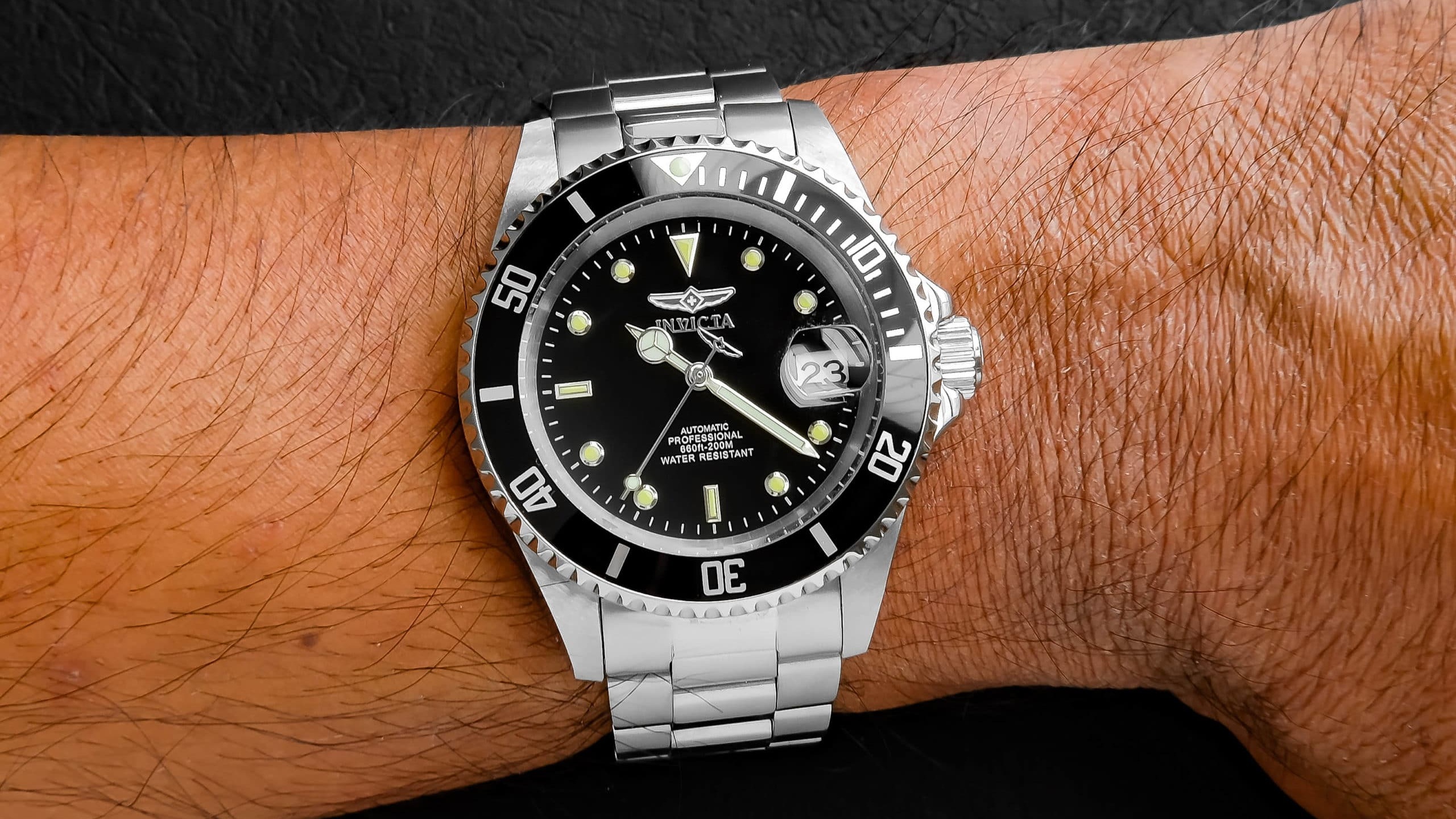
Finding an automatic watch we enjoy for around $90 should make this hobby easier. Then a green Omega Seamaster catches our attention, and suddenly we’re explaining why a watch that costs thousands more has become such a sensible idea. We can point to the movement, the finishing, the materials, and all the small things that make it tempting. The difficult part is deciding which of those things we’d appreciate enough to justify the purchase. An Invicta Pro Diver can already fit well, look good, and give us a mechanical movement to wind and set. Once we’ve found that, what are we still hoping to get from a $6,000 diver? We’d like a convincing answer before the savings account gets involved.
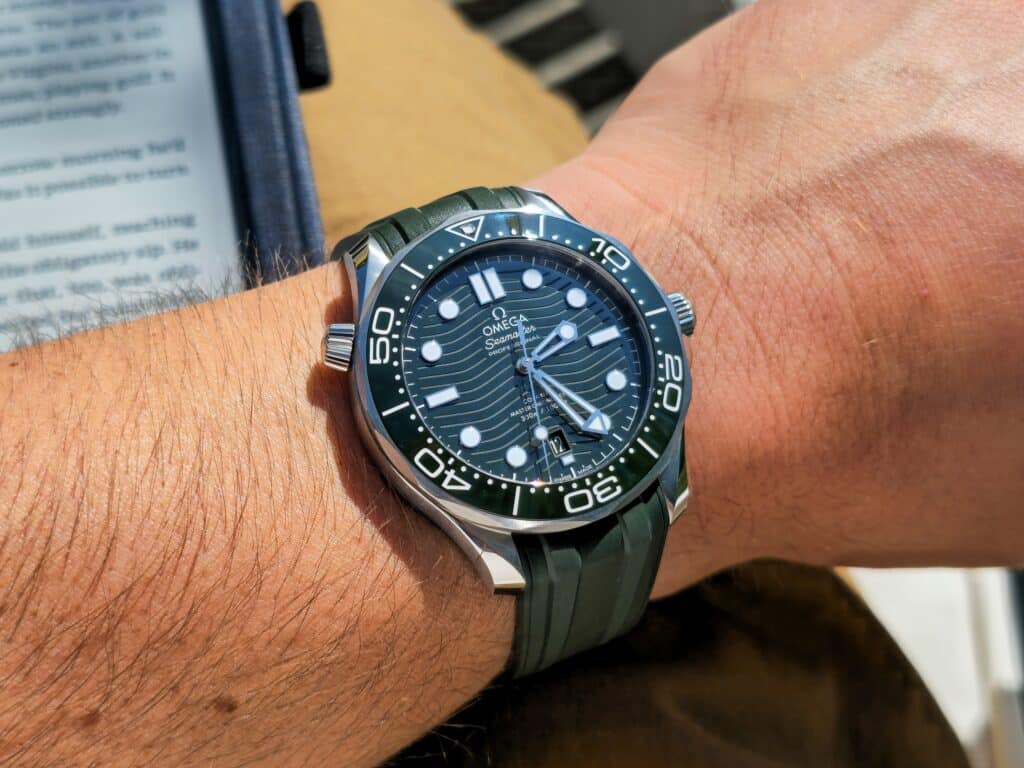
Our pair is the black-dial Invicta Pro Diver 8926OB on its steel bracelet and the green Omega Seamaster Diver 300M on matching rubber. Both are automatic, but their personalities are quite different, and our hands-on reviews gave us more to discuss than the obvious differences in materials. Invicta surprised us with how comfortably its case and bracelet came together. Omega gave us beautifully finished surfaces to examine alongside a few controls we wished were better. We want to give those reactions their proper weight, including the ones that don’t fit neatly with the price tags. The watches have to make sense as complete objects, with everything we admire and everything we have to put up with arriving in the same package.
Overview and Identity
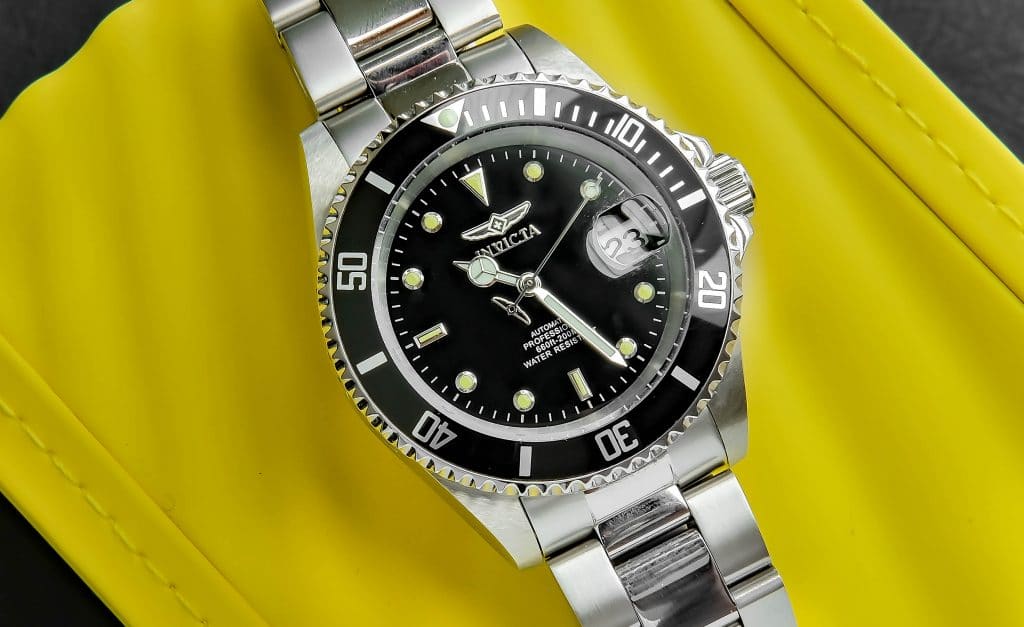
Invicta brings a remarkable amount of baggage to a watch that should be fairly easy to understand. The Pro Diver 8926OB exists for someone who likes the classic black-dial Submariner look and wants it in familiar 40mm proportions. That was the attraction when we reviewed the Invicta Pro Diver, and the watch delivered on it more convincingly than the surrounding arguments might suggest. There’s little design originality to defend here, but personal taste doesn’t become less valid because an inexpensive watch happens to satisfy it. We liked the way the case fit, the way the polished details caught the light, and how little adjustment our expectations needed once it was on. The awkward part was getting past other people’s opinions long enough to enjoy those things.
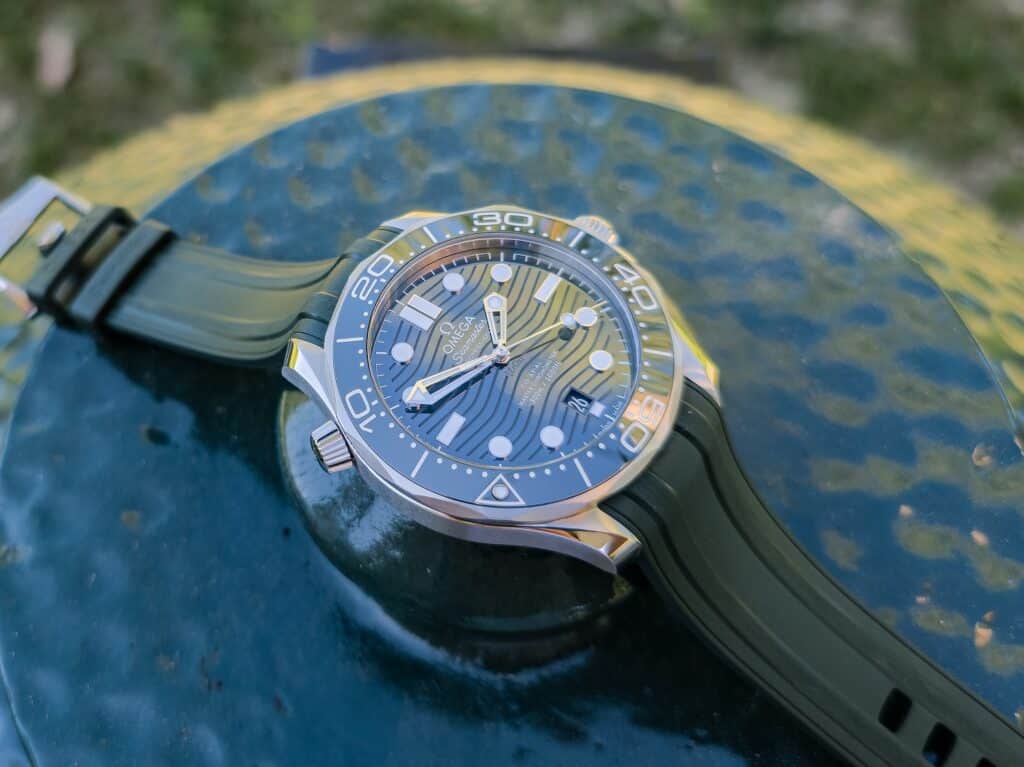
The Omega Seamaster Diver 300M has a much stronger identity of its own. The wave dial, skeleton hands, scalloped bezel, and extra crown at ten o’clock belong together in a way that makes the watch immediately recognizable. Our focus is the green, Caliber 8800-powered version on matching rubber, a configuration that brings out the dressier side of that familiar design. There’s a great deal of appeal in the way those elements have been executed, even before we get into Omega’s reputation or the Seamaster’s association with James Bond. Its individual features can be a little peculiar, but together they create something we have no trouble wanting. That gives the Omega a fair shot in a comparison where the arithmetic alone would have it out of the running.
Dial and Straps/Bracelets
At first glance, the Pro Diver’s dial is exactly what its familiar outline leads us to expect: black background, round hour markers, larger markers at the cardinal positions, and a date magnifier at three. What makes it enjoyable is the treatment of those otherwise predictable ingredients. The indices are applied, as are the logo and brand name, and their polished surfaces give the dial little flashes of light that keep it from looking flat. We particularly liked the larger markers, whose broader surfaces have more visual presence than the smaller circular ones. Those round markers can look slightly undersized, leaving the dial less assertive than it might have been. Still, the polished hands and applied details give us something to appreciate beyond recognizing the design. There is enough care here to make a closer look rewarding, which is a useful place for an inexpensive mechanical watch to start.
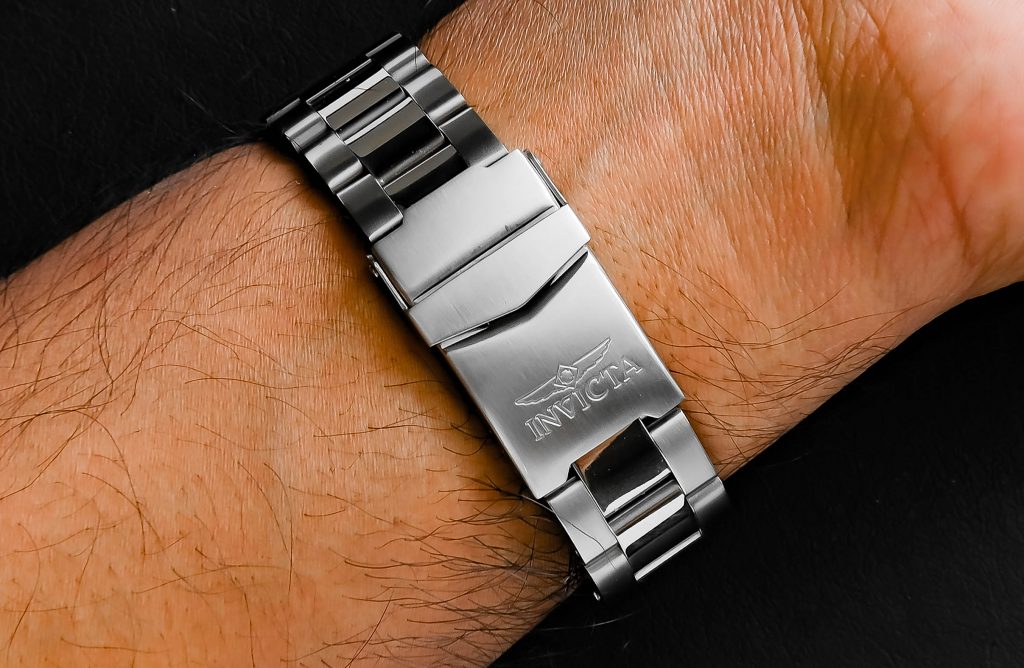
The steel bracelet supports that impression surprisingly well. Its 20mm width tapers to approximately 18mm at the clasp, and the links move smoothly without the rough edges or awkward stiffness that can make an affordable bracelet annoying. The hollow end links are an obvious concession to cost, but the rest of the bracelet feels more substantial than that specification might have us expecting. Even the polished center links work with the case and dial’s brighter surfaces; we found them easier to enjoy than anticipated. Sizing benefits from the clasp’s micro-adjustment positions, although opening the stiff flip lock is another matter. It takes too much force and leaves scrape marks where the metal rubs. That little struggle is a much more persuasive criticism than dismissing the bracelet simply because its end links aren’t solid.
Green ceramic gives the Seamaster’s dial a very different sort of presence. The engraved waves have depth, with recessed surfaces cutting through a glossy expanse that changes from muted olive to a much brighter green as the light shifts. It keeps some green in it even in dim conditions, and the matching date disc helps the color feel considered all the way across the dial. This is the kind of detail we enjoy discovering because it tells us someone resisted the easy option of dropping in a generic white date wheel. The skeleton hands contribute to the unmistakable Seamaster appearance, though they can become less immediate to read against the luminous hour markers. We can appreciate that tension without pretending it disappears. Omega has made a dial worth lingering over, and some of its personality comes from choices that put appearance ahead of absolute visual simplicity.
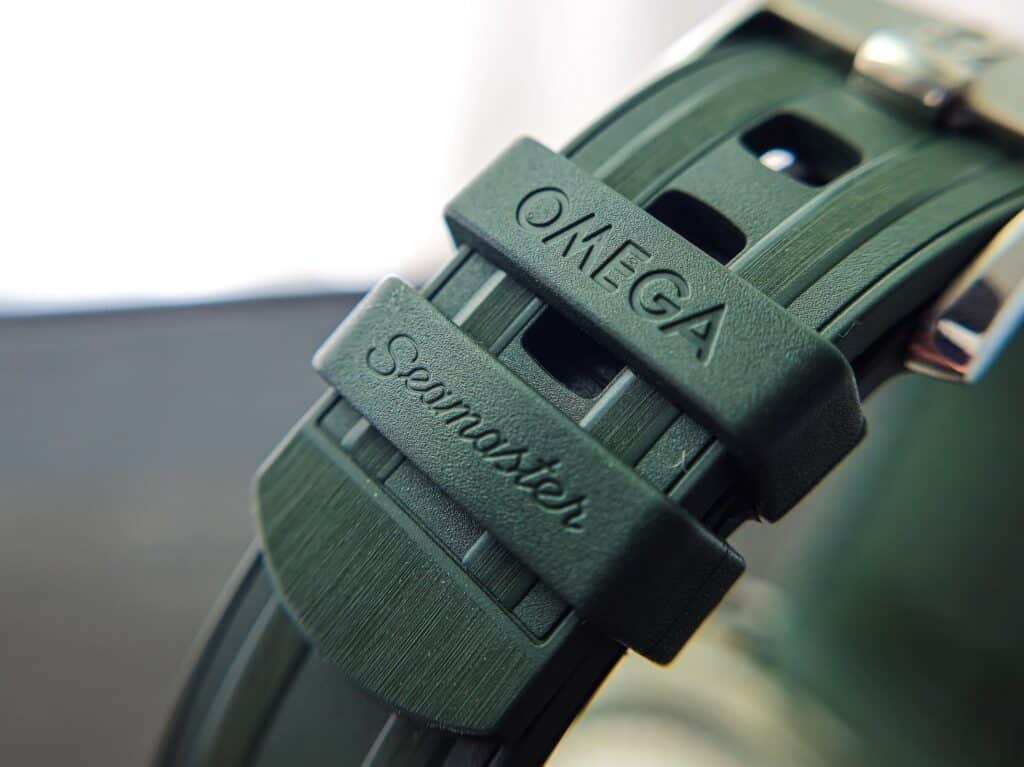
Matching green rubber gives that dial a cohesive setting and a soft, comfortable band against the wrist. We prefer it to the Seamaster’s heavy, untapered steel bracelet, and there’s more attention to the strap than we usually find ourselves discussing. The raised center ribs have a brushed texture against the flatter surrounding finish, while the tang buckle combines polished and brushed surfaces with the same care visible elsewhere on the watch. The rubber is soft and supple, although good modern FKM straps can feel more pliable, and we’d appreciate slightly closer spacing between the adjustment holes. Neither observation overwhelms the overall comfort. What we like is how thoroughly the strap belongs to the watch, from the color to the small finishing decisions. Its subdued texture leaves the bright dial and polished case room to stand out.
Build Quality & Technical Approach
A watch can feel comfortable before we’ve studied a single specification. It takes closer attention to work out why, and the answer isn’t always the feature that catches our eye in a product photo. Case height can be disguised by a well-shaped profile, while a beautifully finished bezel can prove awkward to operate. With these two watches, the construction and the handling deserve to be considered together. Winding, setting, and turning a bezel put our fingers in contact with parts we might otherwise judge by appearance alone. They also reveal how consistently the case, movement, and controls carry the same attention to detail.
Movements
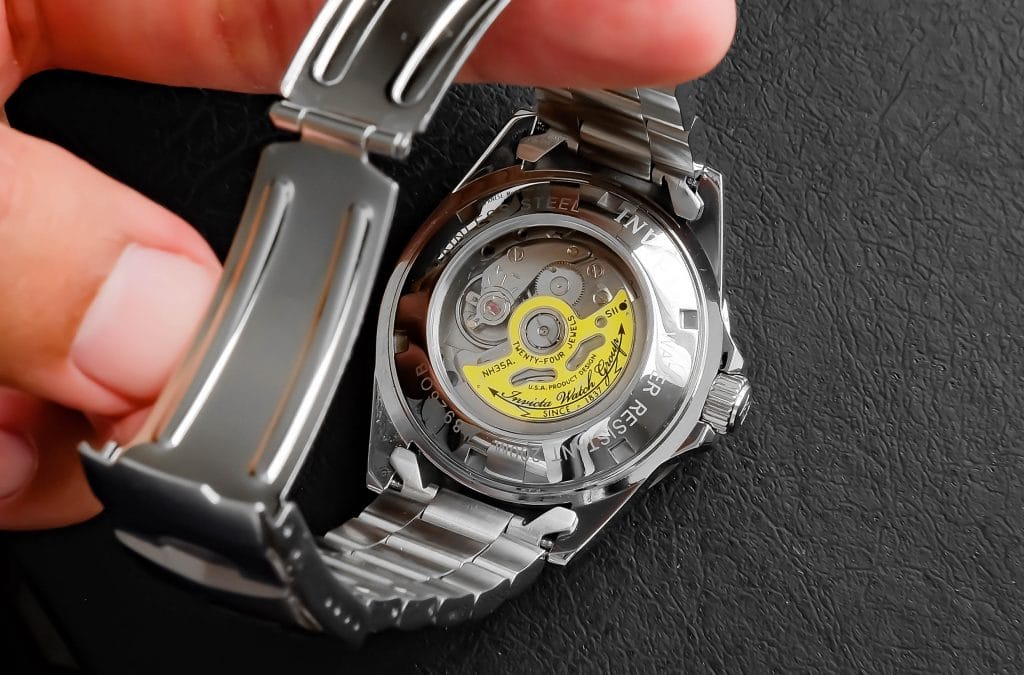
The Pro Diver’s NH35A is a large part of why the watch feels like such an accessible way into mechanical collecting. It offers automatic winding, manual winding, hacking seconds, and a stated 41-hour power reserve, with a movement family familiar from plenty of more expensive watches. The stated accuracy range is a broad minus 20 to plus 40 seconds per day; in use, we encountered no major timekeeping issues with our example. Through the display back, Invicta’s yellow rotor adds a rather enthusiastic splash of branding to an otherwise workmanlike view. There’s nothing particularly exotic about the mechanism, but we appreciate being able to see it doing its job. Winding it, stopping the seconds hand to set the time, and wearing it through the day already give us a fairly complete introduction to the involvement that makes an automatic interesting.
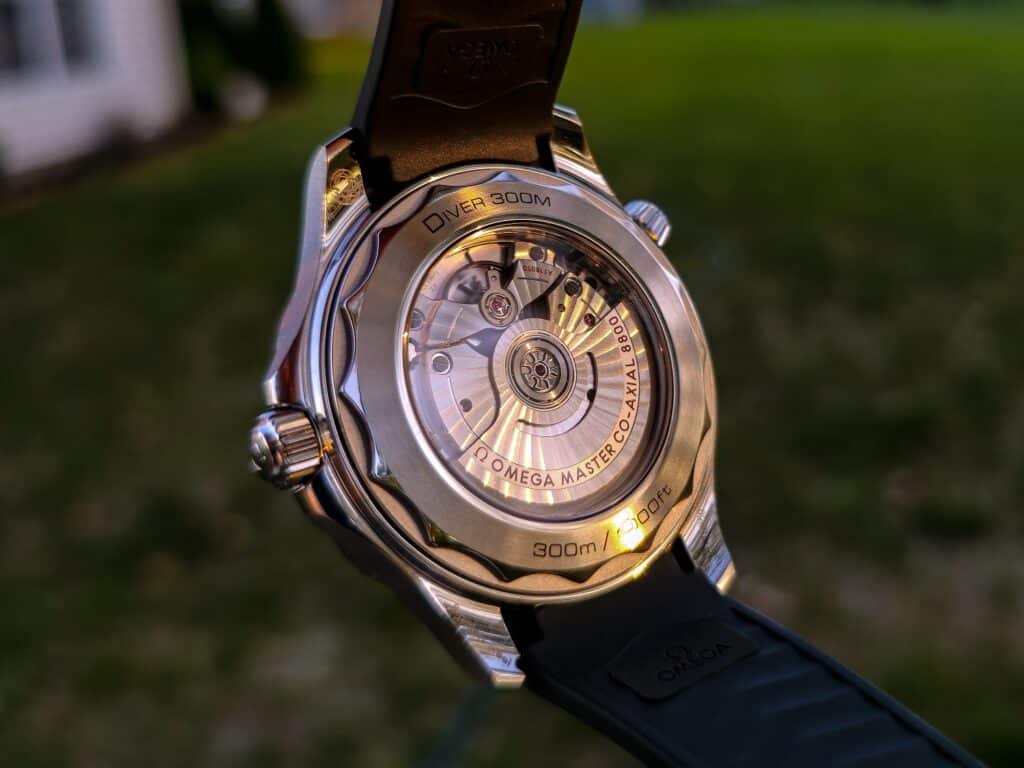
Omega’s Caliber 8800 takes those same activities much further. The 55-hour reserve extends the running time, while Master Chronometer certification brings a stated accuracy range of zero to plus five seconds per day and the movement is rated for resistance to magnetic fields of 15,000 gauss. Our example ran within approximately a second fast per day, an encouraging observation alongside the certification. We also found winding exceptionally smooth, with a consistent action that makes the interaction enjoyable in its own right. Looking through the caseback reveals Omega’s distinctive swirling decoration, giving the mechanism a visual character the Invicta doesn’t approach. It remains production watchmaking, with some limits to the finishing apparent under magnification. We’d still be happy to spend a few minutes looking through this side of the watch before putting it on.
The longer reserve gives the Seamaster another 14 hours of running time after a full wind, a useful margin when we alternate watches. For someone wearing the same watch daily, we’d put more weight on the timekeeping standard and the feel of the winding. The NH35A’s broad stated accuracy range leaves considerable room for variation, while Omega commits to a much tighter certified range. That distinction matters to someone who pays close attention to their watch’s rate. Then there is the less measurable appeal of the 8800’s consistent winding action and decorated view through the caseback. We would give Omega a clear advantage here: it combines more demanding performance standards with details that reward the time we spend handling and inspecting the movement.
Case Construction, Finishing & Wearability
Putting the Pro Diver on was one of those occasions when the proportions made sense immediately. At approximately 40mm across, 48mm from lug to lug, and 14mm thick, it captures the familiar case shape that drew us to it without adding an oversized interpretation of its own. That last measurement is worth noticing: this isn’t an especially thin watch merely because it has a moderate diameter. What worked was the complete shape and the way it settled on the wrist. We didn’t need a period of convincing ourselves that an awkward fit would eventually become normal. For a watch bought largely because we wanted a particular appearance and set of proportions, getting that first physical impression right was a considerable part of the appeal.
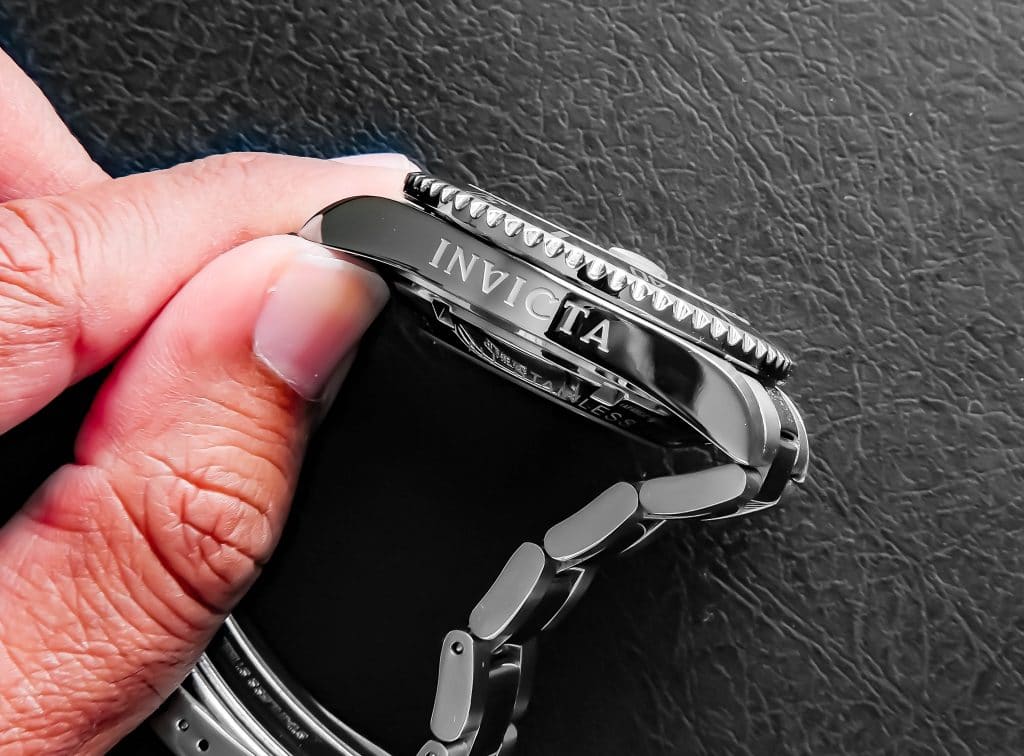
Finishing holds up to that favorable start. Brushing across the lug tops contrasts with polished case sides, and the machining looks more convincing than the price initially led us to expect. The 7mm crown also gives our fingers enough to work with when winding, a practical detail we appreciate without needing it to be elaborate. Then there’s the large Invicta name engraved into the case side. It’s a frustrating addition because the surrounding shape already makes such a coherent impression; the lettering draws our eye away from the case’s clean shape. We can live with it, but we haven’t learned to admire it. This is where the Pro Diver’s design restraint runs out, and we’d happily trade some of that enthusiasm for a plain case flank. It’s hard to ignore once we’ve noticed it, particularly because we otherwise like the shape so much.
Moving to the Seamaster’s 42mm case doesn’t produce the increase in perceived bulk we initially expected. Its 49.9mm lug-to-lug length and 13.9mm thickness suggest a substantial diver, yet on the wrist it feels much thinner than that last figure implies. The impression was closer to a watch around 12mm thick, with the width remaining visible but the overall proportions feeling natural. It is still a broad watch, and the horizontal waves contribute to that appearance. What impressed us was how comfortably the shape carried those dimensions. The expensive watch doesn’t have to earn its place by being smaller, and the nominally smaller Invicta doesn’t automatically own the comfort argument. Each case makes sense as a complete object, which matters more than comparing the diameter figures in isolation.
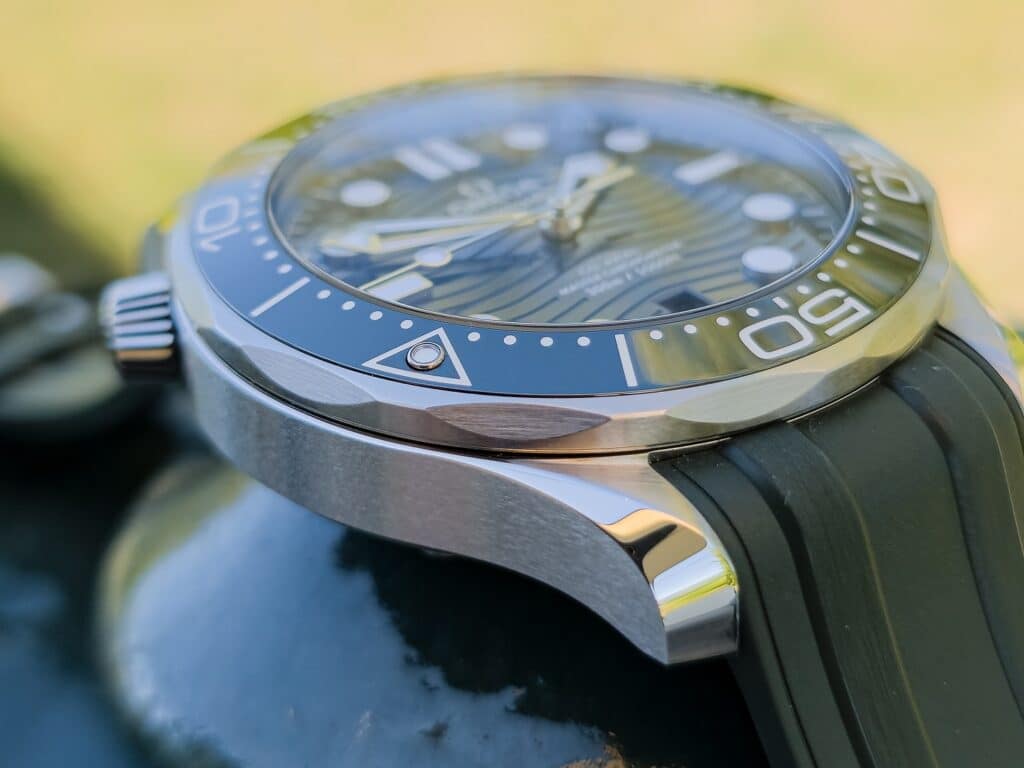
The difference becomes much more obvious when we follow the Seamaster’s surfaces. Polished tops twist along the lyre lugs into a very narrow polished bevel beneath the bezel, while fine brushing gives the inner lug sections and case flanks a different texture. Those changes in finish help break up the width visually, with the polished edges catching light as the wrist moves. The decorated surround of the display back continues that attention to shape. We do wish the small crown were easier to unscrew, particularly given how pleasant the winding becomes once we’ve reached it. The helium escape valve adds another conspicuous element to the outline, one we’ve enjoyed as part of the Seamaster’s character. This is elaborate casework with some genuine quirks, and appreciating the workmanship doesn’t require liking every decision equally.
Crystals and Bezels
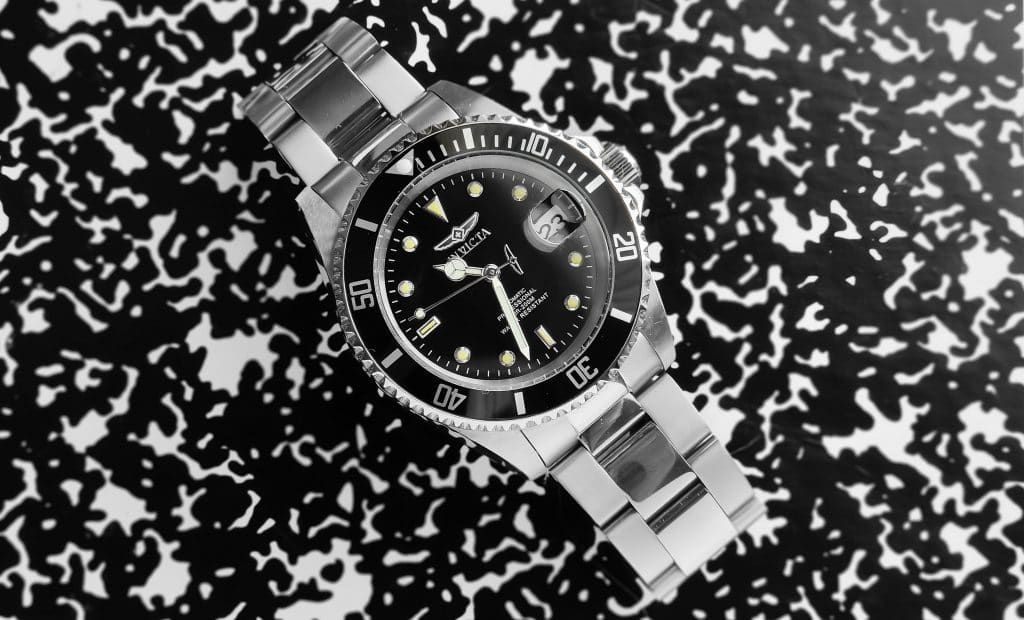
Mineral glass and a straightforward date magnifier keep the Invicta’s front end fairly uncomplicated. The aluminum bezel feels more solid than we expected, with a respectable action for the money despite some play between clicks. We found it useful for timing coffee and breaks during the day, which is considerably closer to our ordinary relationship with a rotating bezel than anything involving scuba equipment. The small amount of movement is still there if we look for it, and nobody should mistake this for an especially precise luxury component. What we appreciated was having a useful part of the watch that didn’t spoil the experience through obvious flimsiness. The mineral crystal remains a material compromise beside the Omega’s sapphire. The date magnifier does its job, though, and turning the bezel to mark a break feels perfectly natural.
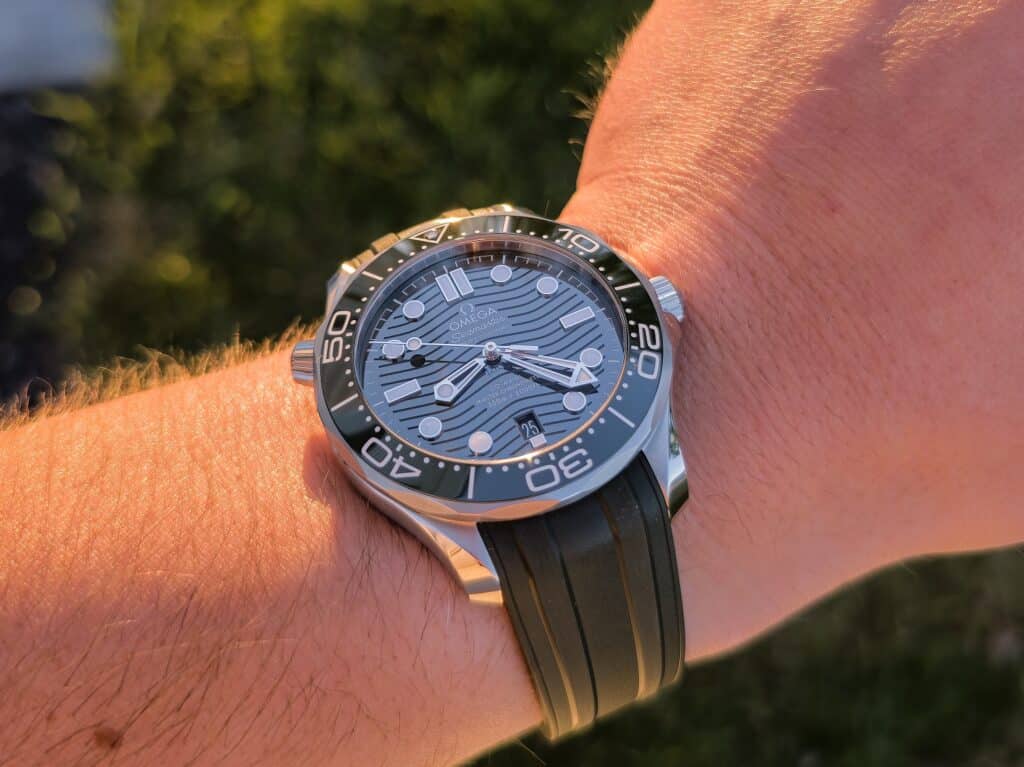
Omega’s sapphire crystal delivers one of the clearest improvements in the comparison. The anti-reflective treatment makes the glass seem to disappear in many lighting conditions, leaving an unusually unobstructed view of the dial. Externally applied coatings can pick up fine scratches, a concern based on experience with that treatment rather than damage we encountered on this Seamaster. The green ceramic bezel also looks excellent and matches the dial’s shifting color particularly well. Its 60-click action is crisp and free of back play, yet the feel is less satisfying than the surrounding execution promises, and the scalloped edge can be awkward to grip. We admire it more readily than we enjoy turning it. That doesn’t establish the Invicta as the better bezel; its play is a real compromise. It does make the Omega’s material advantage an incomplete description of the experience, because the component we touch can be more frustrating than the one we look through.
Water Resistance & Lume
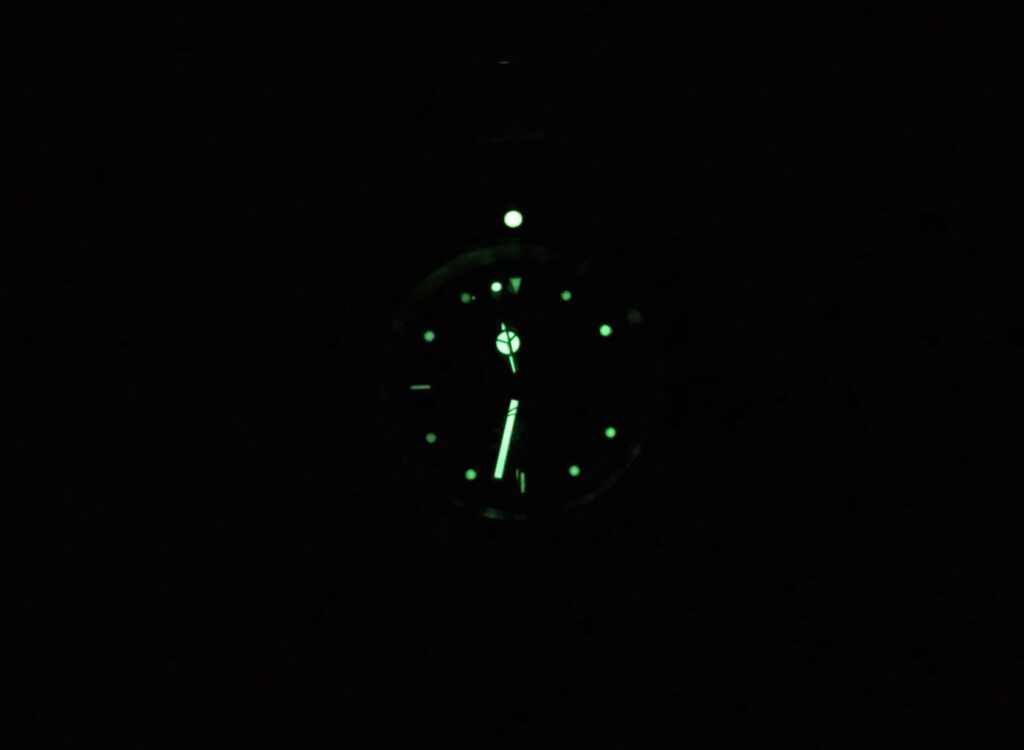
Invicta states 200 meters of water resistance, and the screw-down crown and caseback give the Pro Diver reassuring everyday construction. Our example came through a thoroughly unpleasant Florida downpour without trouble. That downpour gave us reassurance about ordinary wet-weather use, but our recommendation remains to choose a watch with more firmly established diving suitability for actual scuba use. We wouldn’t turn the number on the specification sheet into a diving guarantee based on a rainstorm. The lume is another place where the modest budget is apparent: application across the hands and markers is inconsistent, with the hands tending to glow more readily than the indices. The smaller markers also leave the dial with less luminous presence than we’d like. These are meaningful limitations to understand, especially if the appeal of a dive watch for you depends heavily on what it can do in darkness or underwater.
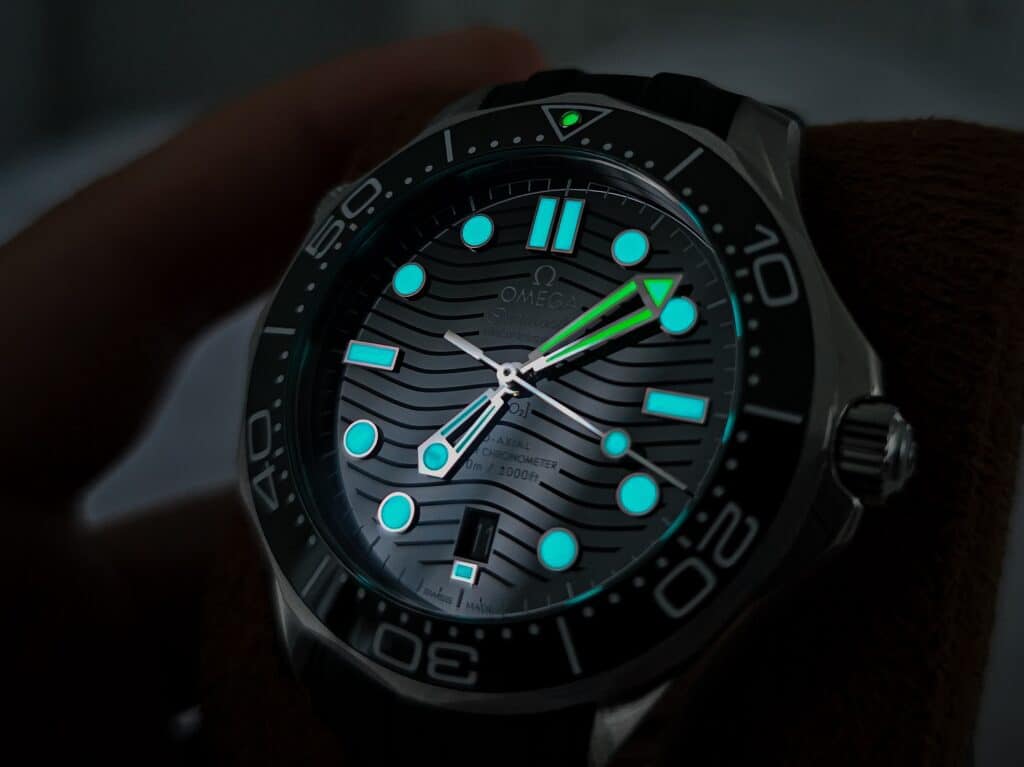
The Seamaster carries a 300-meter rating and adds the familiar helium escape valve, but its nighttime display is the more immediate thing to appreciate in ordinary use. Blue illumination identifies most of the hands and indices, while green distinguishes the minute hand and bezel pip. That pairing makes the elapsed-time elements easy to associate visually and gives the watch a distinctive appearance in the dark. We found the treatment attractive and readily understandable, although brightness and persistence weren’t exceptional. Taken together, the water-resistance specification and more thoughtfully differentiated display strengthen Omega’s capability argument. They also deserve to be weighed alongside the bezel’s grip and the skeleton hands’ daylight legibility, because using a diver involves more than any single impressive specification.
Cost Considerations
The Pro Diver’s roughly $90 position reflects the typical online retail price for the 8926OB. Treat that as a benchmark for this particular black-dial automatic, since figures vary and the wider Pro Diver range includes plenty of different watches. At this level, the most compelling part of the purchase is how little money it takes to find out whether this combination of proportions, familiar styling, and mechanical involvement makes us happy. We already know the watch carries compromises, but we also know that its appeal survives handling it. That is more useful than a collection of impressive specifications attached to a watch we don’t particularly want to wear. The appeal has to survive the novelty of finding such an inexpensive automatic.
We’d also resist the temptation to excuse every frustration because the initial bill was small. If the case-side logo bothers us every time we notice it, or the clasp makes removing the watch irritating, being reminded of the bargain won’t necessarily solve either problem. The same applies to weak lume or a concern about using it for serious diving. Those are reasons to consider whether this specific watch suits our priorities. For the collector drawn to its classic proportions and automatic movement, however, the imperfections are easy to understand before buying. The Pro Diver can satisfy a fairly precise preference without setting off another search for an upgrade. That is a more useful kind of value than simply finding the greatest number of features below a price ceiling.
For the green Seamaster on rubber, we’re using the MSRP of $6,300 for the reference 210.32.42.20.10.001. The $6K in the headline is rounded, and this is a new-watch retailer benchmark rather than a claim about the lowest price available anywhere. The financial commitment is substantial even for someone comfortable buying watches, so we’d want to be clear about what has made this particular model worth saving for. Omega’s execution gives that desire something solid to rest on. There are details to appreciate across the dial, case, and movement, and they come together in a watch with a very specific personality. If those are the qualities we keep returning to, the purchase has a more convincing foundation than the general idea that an expensive automatic ought to feel more special.
At $6,300, the awkward crown access and bezel grip become harder to dismiss. We’d want the refinement to carry through the whole watch, especially the parts our fingers meet regularly. It’s reasonable to accept that a design has trade-offs, but we’d want to be sure we could live with these particular ones. We’d spend time handling a Seamaster before buying, paying attention to whether those controls merely draw a comment or actually irritate us. A dial we can stare at happily and a bezel we dislike using would both come home in the same box. The quality of the best parts doesn’t settle that question for us. We’d want to be comfortable paying for the complete watch, including its least convincing details.
The listings put $6,200 between these watches. For that additional spending, Omega offers a much more distinctive design, more elaborate finishing, a clearer view of the dial, and a movement with higher performance targets. The specifications explain some of the difference; the treatment of surfaces explains more once we handle the watch. The money doesn’t produce a uniformly easier watch to operate, however. We’d be paying for a mixture of engineering, appearance, and tactile refinement, while accepting the compromises that accompany them. That is the purchase we’d want to understand before committing. We could admire those improvements and still decide that keeping $6,200 mattered more to us than bringing them into our collection.
Final Thoughts: Invicta Pro Diver vs Omega Seamaster
The Pro Diver leaves us with a fairly clear sense of what we’d be buying. We wanted those familiar proportions, and putting the watch on confirmed why they appealed. That early impression matters because comfort is difficult to argue ourselves into, whatever the price. The Invicta also has enough small visual pleasures to make us look at it willingly, and enough irritating details that we wouldn’t recommend buying it blindly. Getting past the brand’s reputation allowed us to judge those things for ourselves. We know what we like, we know what we’d put up with, and the watch hasn’t required much persuasion to get us there. That makes it a purchase we’d feel comfortable recommending to someone with similar tastes.
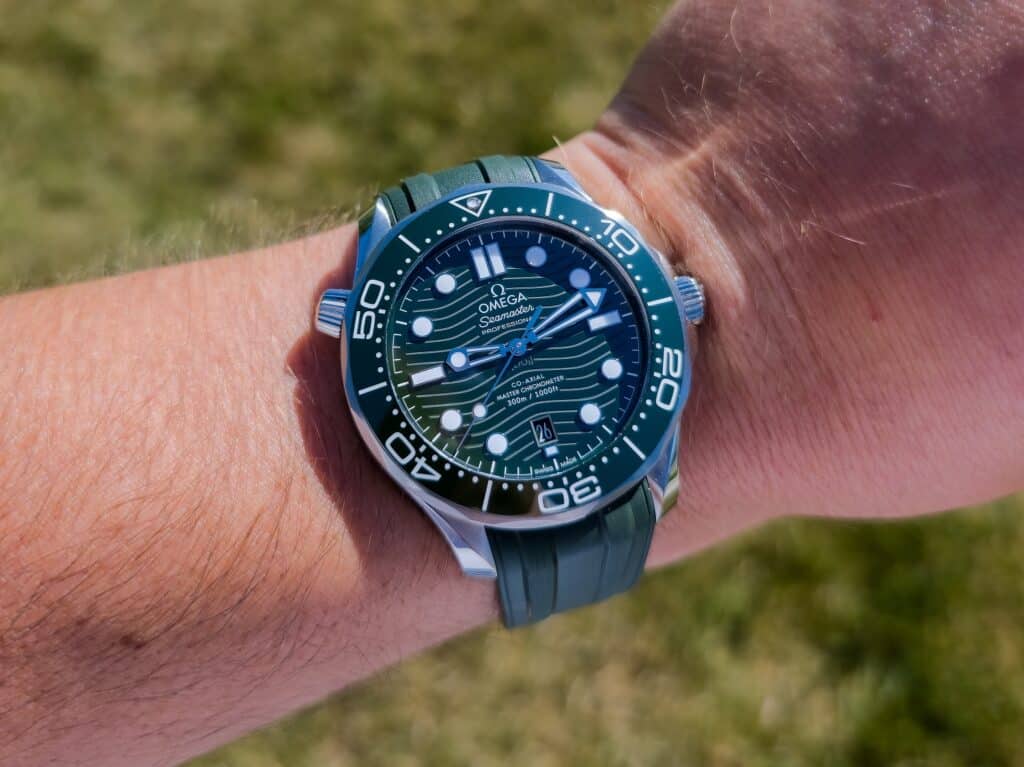
The Seamaster remains the more accomplished watch, and our affection for it survives the price comparison. There is a pleasure in seeing an individual design executed with enough care that we keep finding something worth our attention. Omega gives us that, together with mechanical engineering we enjoy understanding. We’d be happy to own it for those reasons. We’d also expect to live with the irritating parts of its character, because spending the money doesn’t remove them. That combination of attraction and annoyance is familiar territory for a collector. It’s possible to know exactly what would bother us about a watch and still look forward to putting it on. The Seamaster is an unusually convincing example.
The qualities we’d give the most weight are the ones that affect whether we want to wear the watch regularly. We like sophisticated engineering, but we don’t need every watch we own to be a demonstration of it. Sometimes the attraction is a familiar shape executed well enough that the watch simply feels right. The Invicta gave us that reaction, and it carries considerable weight in our choice here. We’d have to want Omega’s individual qualities more strongly before putting thousands of dollars behind them. That is a personal judgment about what we’ve found. It leaves room to admire the Seamaster without treating its higher level of execution as a reason everyone should spend more.
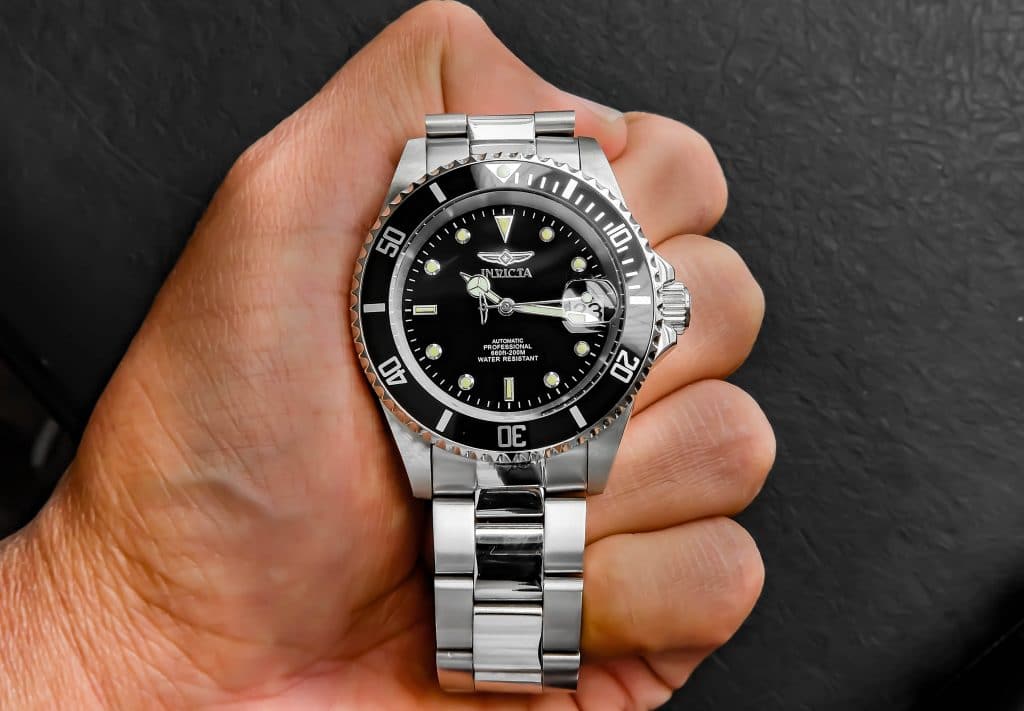
For everyday automatic-watch enjoyment at these prices, we’d buy the Invicta Pro Diver. We’d make that choice knowing the clasp needs patience, the lume is modest, and the branding will occasionally annoy us. Those compromises are part of the recommendation, just as the comfortable fit and attractive dial are. We’d also keep its limitations around actual diving in mind. For ordinary daily wear, though, we find the overall balance convincing enough to spend our own money on it. At around $90, it has earned more than our approval as a good deal. It’s a watch we’d choose with the more expensive option still in view.

Co-Founder and Senior Editor
Kaz has been collecting watches since 2015, but he’s been fascinated by product design, the Collector’s psychology, and brand marketing his whole life. While sharing the same strong fondness for all things horologically-affordable as Mike (his TBWS partner in crime), Kaz’s collection niche is also focused on vintage Soviet watches as well as watches that feature a unique, but well-designed quirk or visual hook.