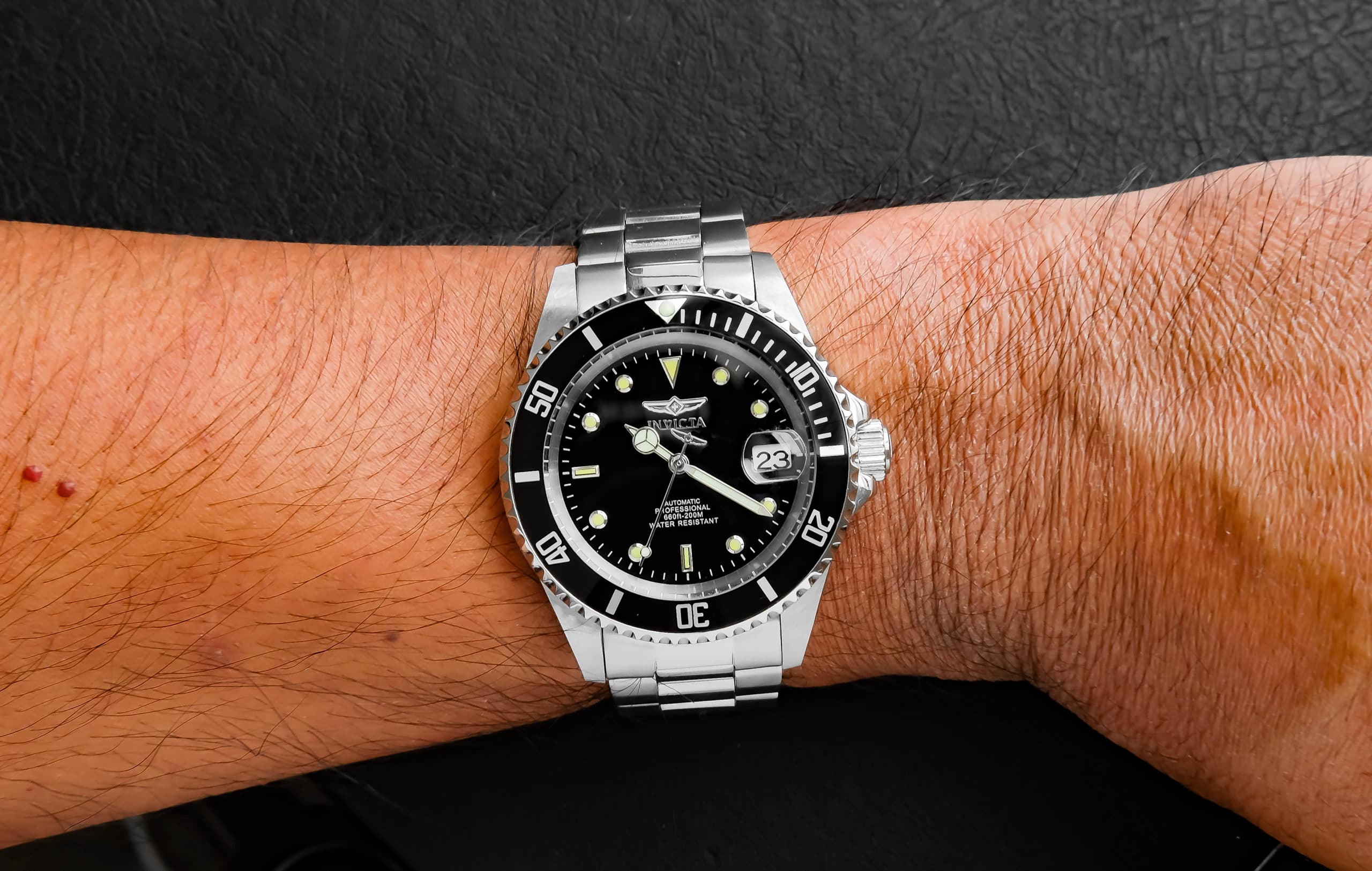
Putting the Invicta Pro Diver 8926OB and the Casio Duro next to each other feels a little unfair to both of them. Each one is a default answer in the “best dive watch under $100” conversation, and each has spent years collecting a devoted following that has nothing to do with marketing budgets. Yet they arrive at that price point from completely opposite directions. One is a quartz tool watch that has become a cult object on its own terms. The other is an automatic that exists almost entirely because people want the classic Submariner look without the classic Submariner invoice. Same money, totally different philosophies.
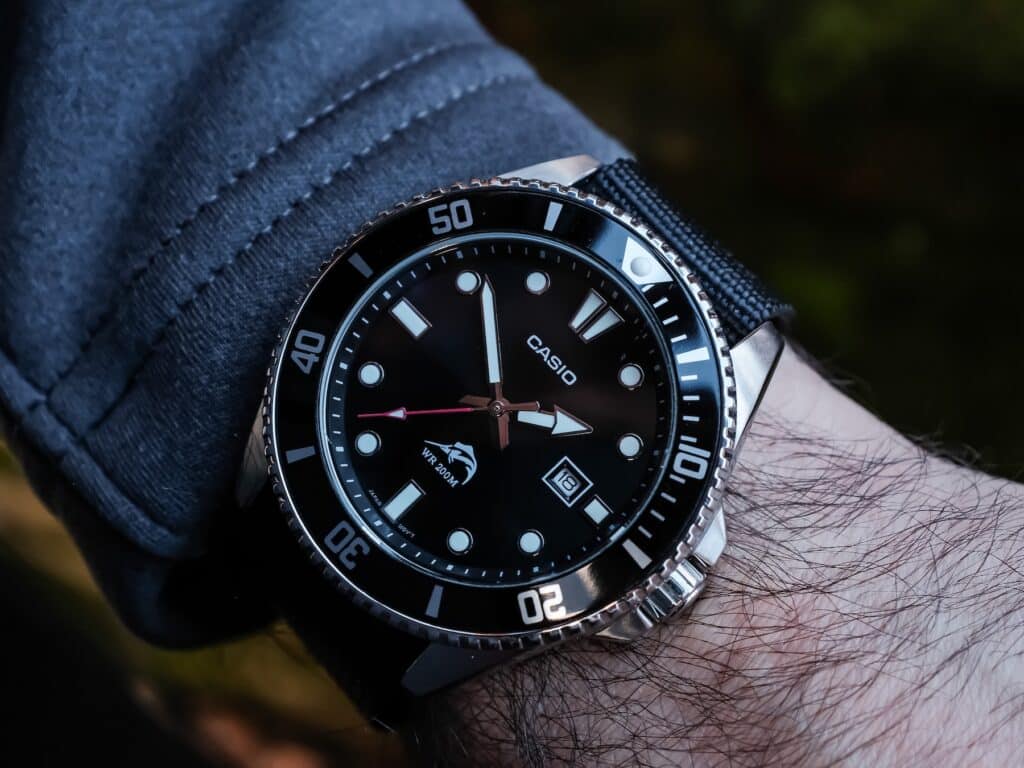
After reviewing both watches hands-on at TBWS, we kept coming back to the same realization: almost nobody is actually cross-shopping these two, and maybe they should be. The person hunting for a Sub-style case rarely considers a 44mm quartz Casio, and the Duro faithful tend to treat homage watches as a separate hobby entirely. But if you have $80 and you want one great dive watch, the real decision sits between these two, and it comes down to what you want that money to buy. So instead of declaring a winner on specs, we wanted to figure out which type of buyer each watch actually serves.
Overview and Identity
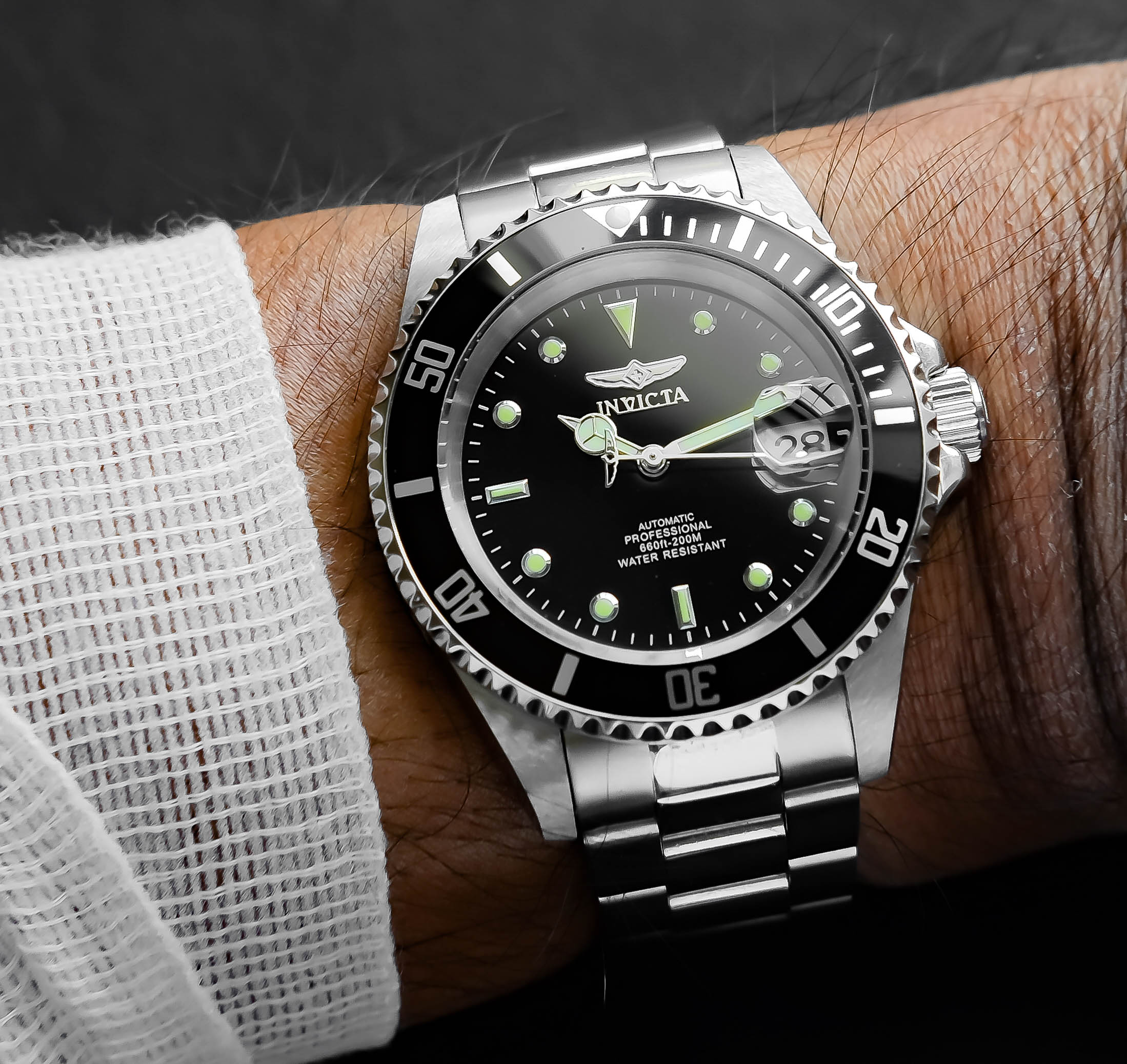
The Invicta Pro Diver 8926OB comes with plenty of baggage. Almost everyone considering it wants the same thing, a classic 40mm Sub case that doesn’t break the bank, but the watch itself gets buried under brand stigma before it ever hits a wrist. When we reviewed the 8926OB, the goal was to check that baggage at the door and judge the watch as a collection of its parts. Judged that way, it holds up shockingly well. The case is machined and finished better than plenty of watches costing several times more, the automatic movement inside has a long track record, and the whole package delivers exactly the look people come to it for. The oversized logo stamped into the case side remains a self-inflicted wound, but it doesn’t undo what the watch gets right.
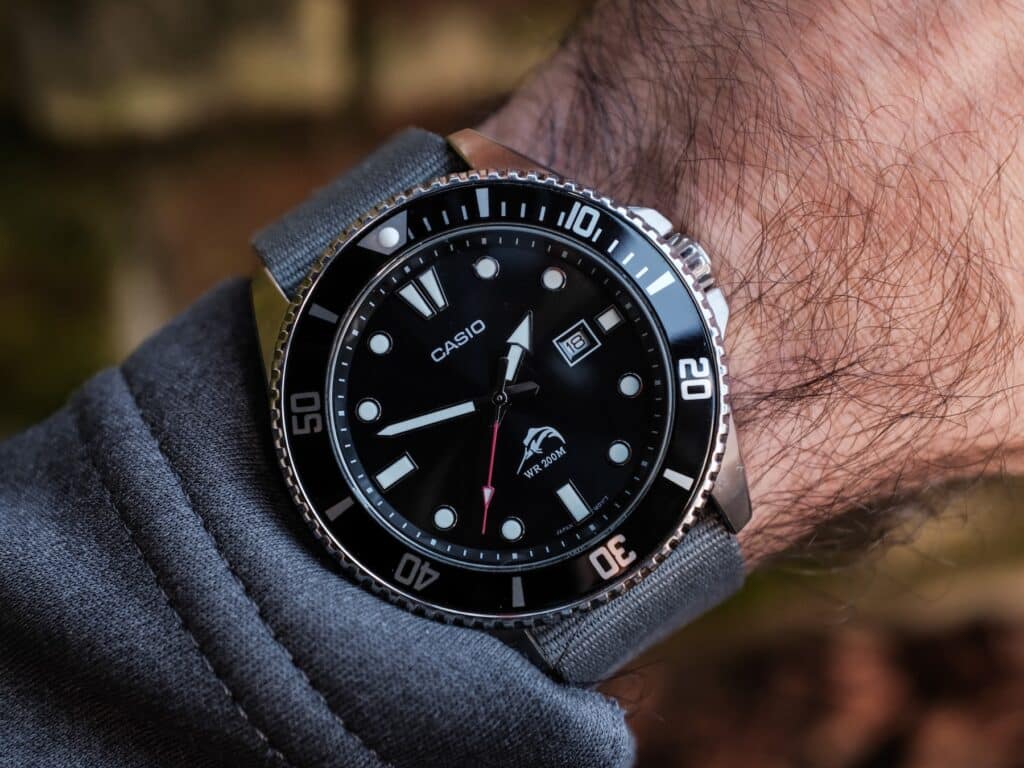
The Casio Duro built its identity in almost the opposite way. It sat in plain sight for years as an ordinary catalog diver until the internet, a few high-profile wrists (including Bill Gates), and communities like r/DuroGang turned it into a shared secret. When we hands-on review time with the Duro, the surprise was how grounded the whole thing felt once the mythology faded. It never pretends to be anything beyond a straightforward 200-meter quartz diver. The proportions are honest about their size, the finishing shows more care than the price suggests, and the marlin on the dial has become a badge collectors care about. This is a watch people buy because of what it is, and that turns out to be rarer than it sounds at this price.
- The Casio Duro is the honest tool watch of the pair, a purpose-built quartz diver that earned its cult status without borrowing anyone else’s design language.
- The Invicta Pro Diver is the affordable route to the classic Sub look, and once you get past the brand noise, the execution justifies the attention it gets.
Dial, Strap & Wearability: Purpose-Built Clarity vs Borrowed Elegance
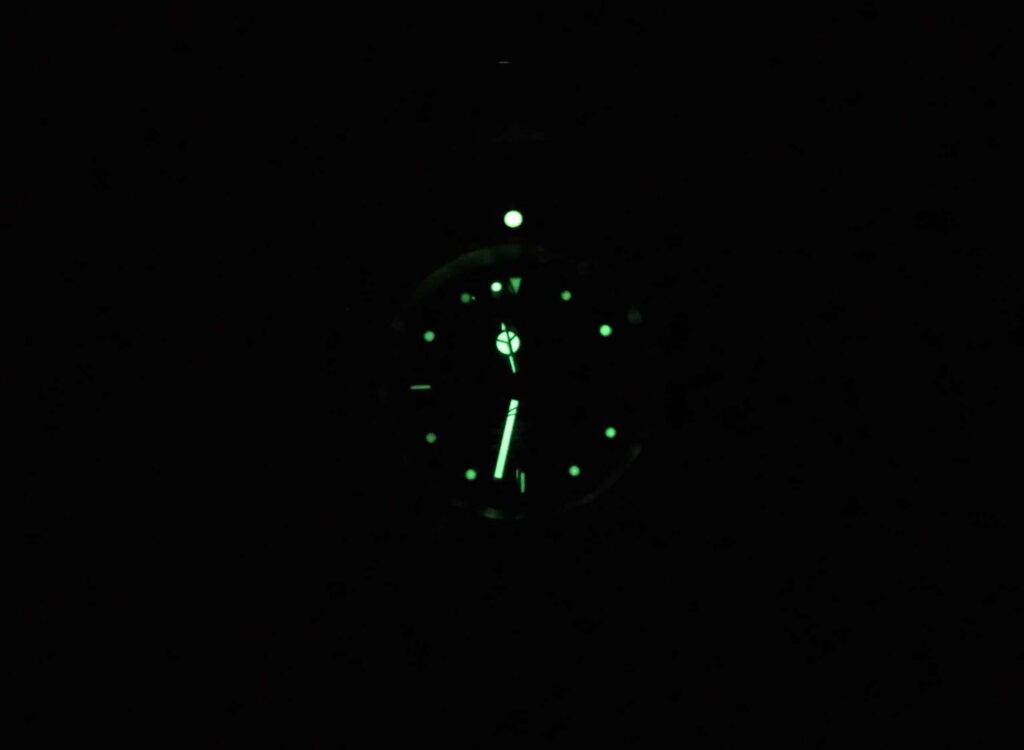
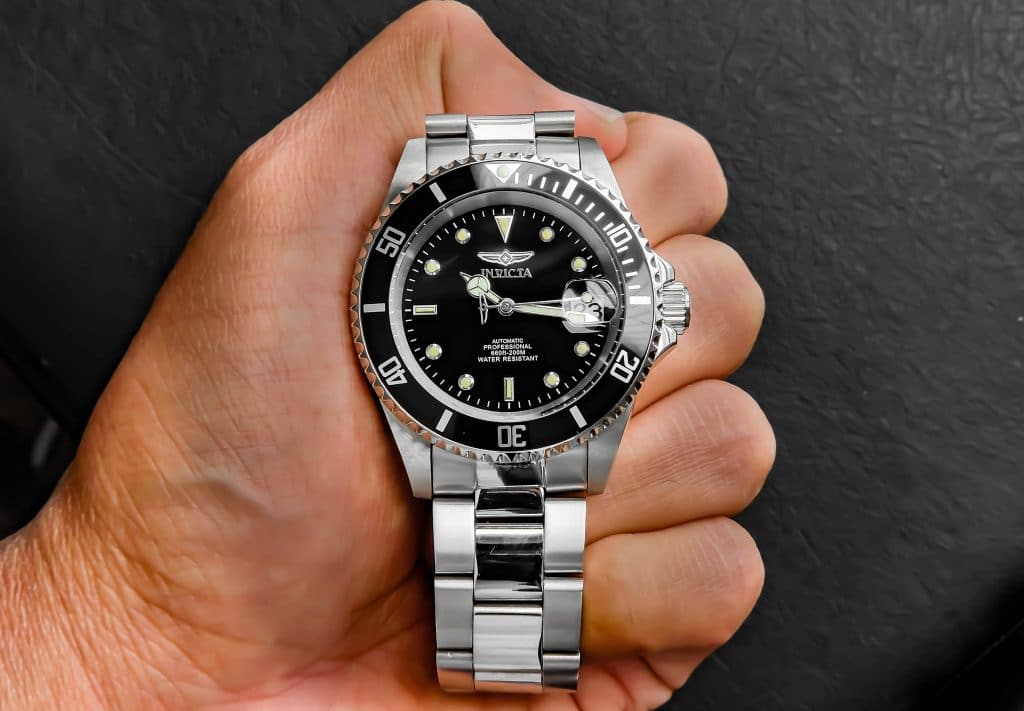
The Invicta’s dial is nearly 1:1 with a Submariner, so the question becomes craftsmanship rather than originality. Here the 8926OB surprised us. The markers, logo, and brand name are all applied and finished with high-polish detail that’s pleasing when it catches light. The compass rose markers at 12, 3, and 9 have real presence, though the smaller round indices can look undersized from certain angles. The tradeoff behind those small markers is lume, and it shows. Application is inconsistent between hands and markers, and the hands will keep glowing long after the indices give up. The Duro’s lume isn’t a torch either, but it’s the more even of the two.

Where the Invicta claws back ground is the bracelet, something the Duro simply doesn’t offer out of the box. The 20mm-to-18mm taper is well balanced, the links articulate smoothly without that tinny feel cheap bracelets have, and the polished center links complement the case better than expected. End links are hollow, which is no surprise at this price. The real annoyance is the clasp. Micro-adjustments make sizing easy, but the flip-lock is stiff enough that opening it takes real force, and it leaves little scrape marks on the clasp over time.
The Duro’s dial follows dive-watch convention without copying anyone in particular, and the execution is where it overdelivers. The arrow-shaped hands are faceted and polished in a way that catches light cleanly, the applied indices carry a generous lume fill, and the framed date window at 3 o’clock is more legible than what we’ve seen on watches costing considerably more. Dial text stays minimal: Casio at twelve, the 200-meter rating at six, and the marlin logo just above it. Whether your example carries the marlin depends on region. The U.S.-market MDV-106 keeps it, while the newer MDV-107 sold in parts of Europe drops the logo entirely. Functionally identical, but the emblem clearly matters to the community.
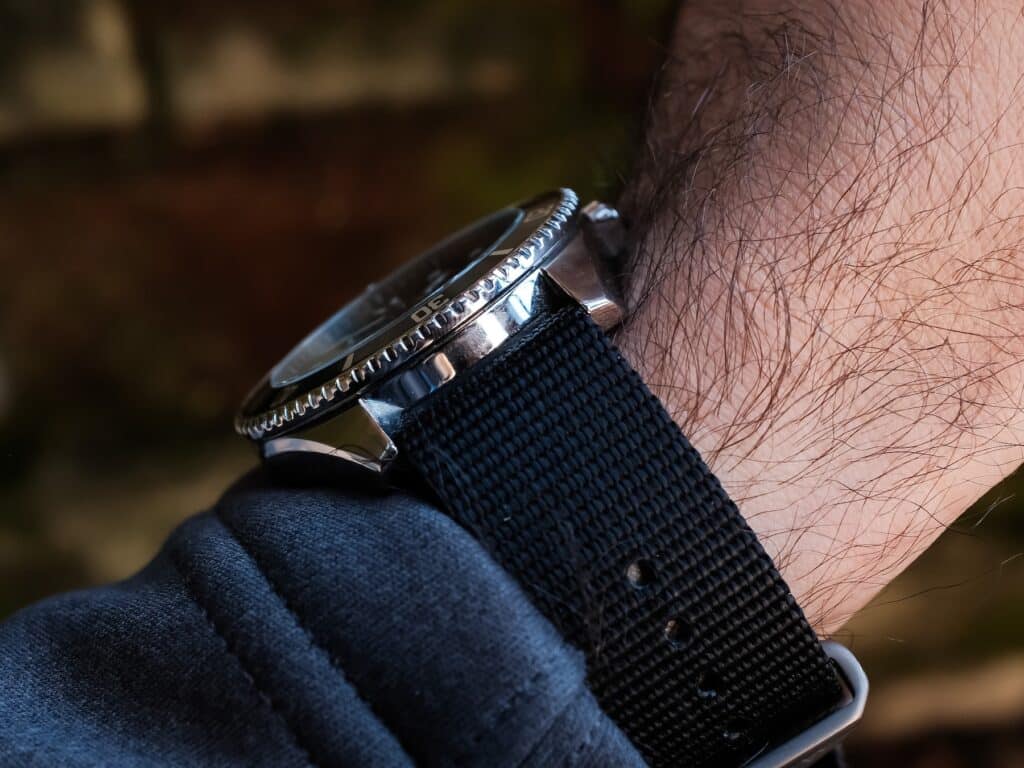
Wearability is the Duro’s most misunderstood trait. On paper, 44.2mm wide and 48.5mm lug-to-lug reads like a slab. On the wrist, the short lug-to-lug and downturned lugs keep the case from sprawling, and at 12.1mm thick it slides under a cuff more easily than most divers in this class. It wears large but never clumsy, in roughly the same territory as a Seiko Turtle. The stock rubber strap is serviceable, though the 22mm lug width and healthy aftermarket make this one of the most strap-friendly watches under $100. Our review example lived on aftermarket NATOs the entire time and never looked out of place.
- The Invicta Pro Diver delivers surprisingly refined dial finishing and a comfortable, well-tapered bracelet, with weak lume and a stiff flip-lock clasp as the main compromises.
- The Casio Duro pairs a cleanly executed, highly legible dial with proportions that wear far better than the numbers suggest, plus effortless strap versatility.
Build Quality & Technical Approach
These two share a price bracket and a 200-meter rating, and that’s roughly where the engineering overlap ends. The Duro is built around quartz simplicity and set-it-and-forget-it durability. The Invicta is built around delivering a mechanical experience at a price where mechanical movements normally don’t exist. Neither approach is wrong. They’re just answering different questions, and this is where the buy-in for each watch becomes clear.
Movements:
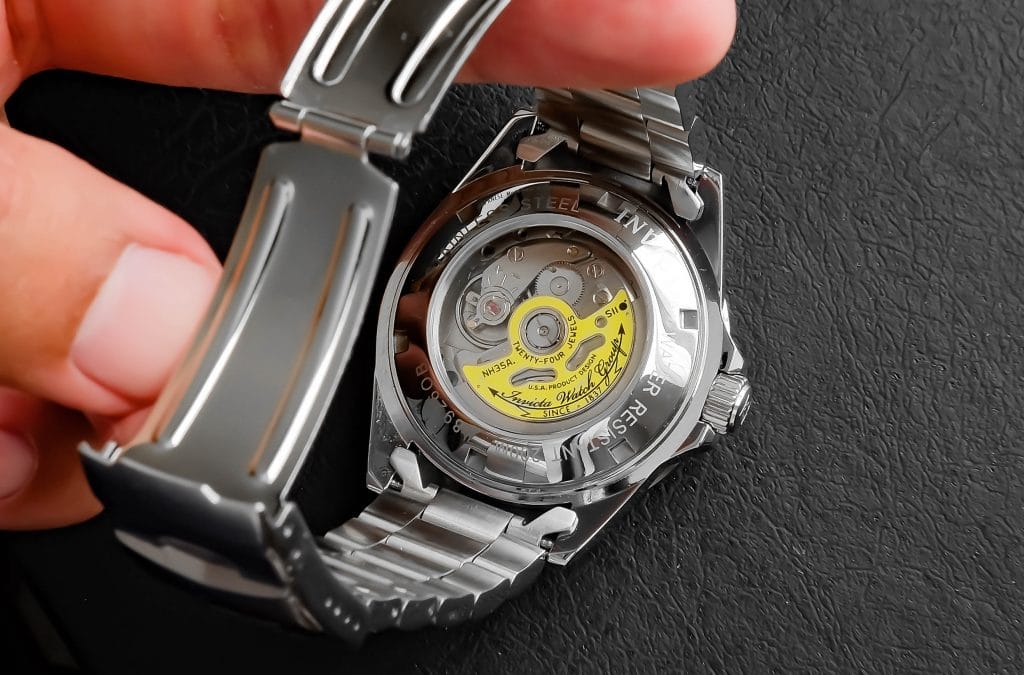
The Invicta’s NH35A is the entire value argument in a single component. It’s the non-branded version of Seiko’s 4R35, a movement with a long reliability record that normally shows up in watches costing $300 to $500. Finding it in something that regularly sells between $60 and $80 borders on absurd. Specs are modest but honest: 41 hours of power reserve, a factory rating of -20/+40 seconds per day, hacking, and hand-winding through a generously sized 7mm crown. Invicta dresses the rotor in its signature yellow, visible through an exhibition caseback, and while the decoration won’t win awards, the movement underneath is the real deal.
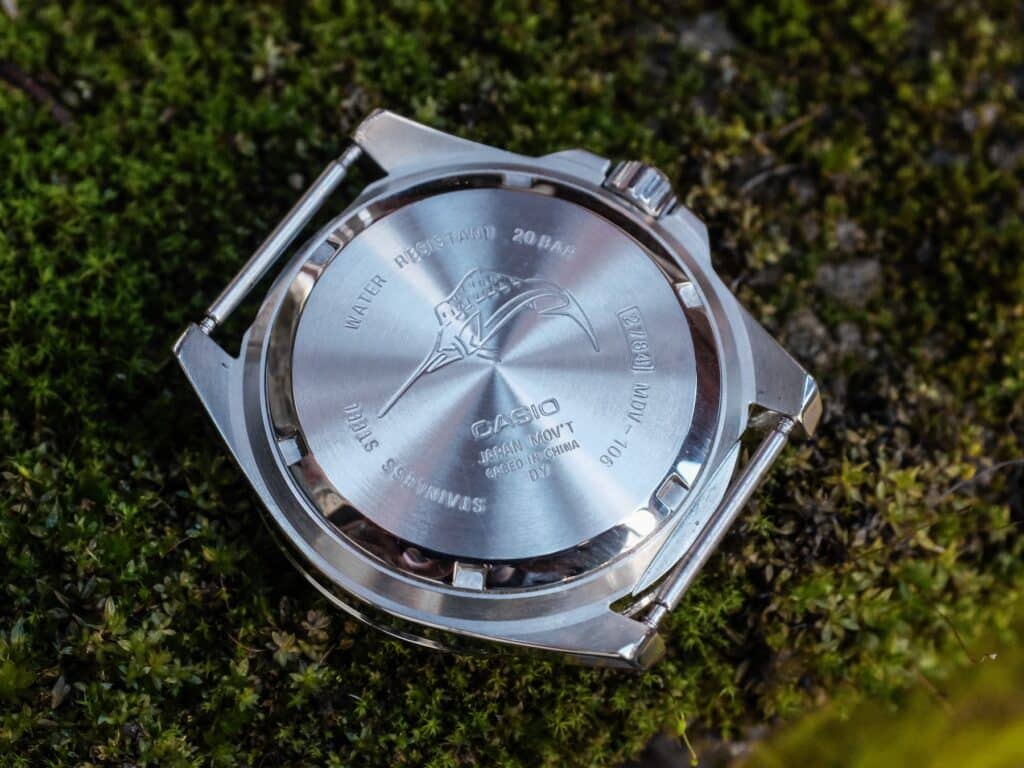
The Duro runs Casio’s 2784 quartz module, and the criticism it draws from mechanical purists has never made much sense to us. This is an inexpensive diver meant to be durable and easy to live with, and quartz serves that mission perfectly. You get hacking seconds, a quickset date, accuracy within about plus or minus 20 seconds per month, and roughly three years per battery. In practice, that means the watch is ready whenever you are. No winding, no setting, no thought. During our review period, that grab-and-go quality was exactly why the Duro racked up more wrist time than expected.
Case Construction & Finishing:
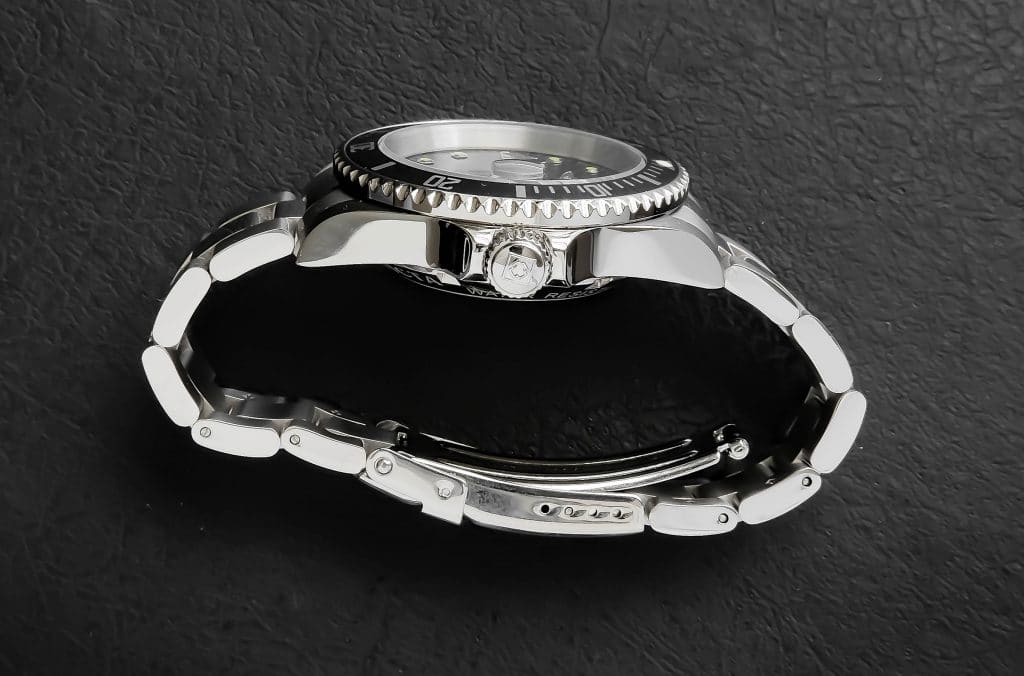
The Invicta’s case is the main event, a faithful 40mm Sub case measuring roughly 48mm lug-to-lug and 14mm thick, with solid machining and clean brushed-versus-polished contrast. Among the countless Sub-case interpretations out there, the 8926OB wins by refusing to reinterpret anything. Then there’s the giant Invicta logo blasted across the case side. It serves no purpose, it undermines the watch in the eyes of the exact enthusiasts hunting for this case, and it remains the one decision we can’t defend. Plenty of owners dremel it off, which says everything.
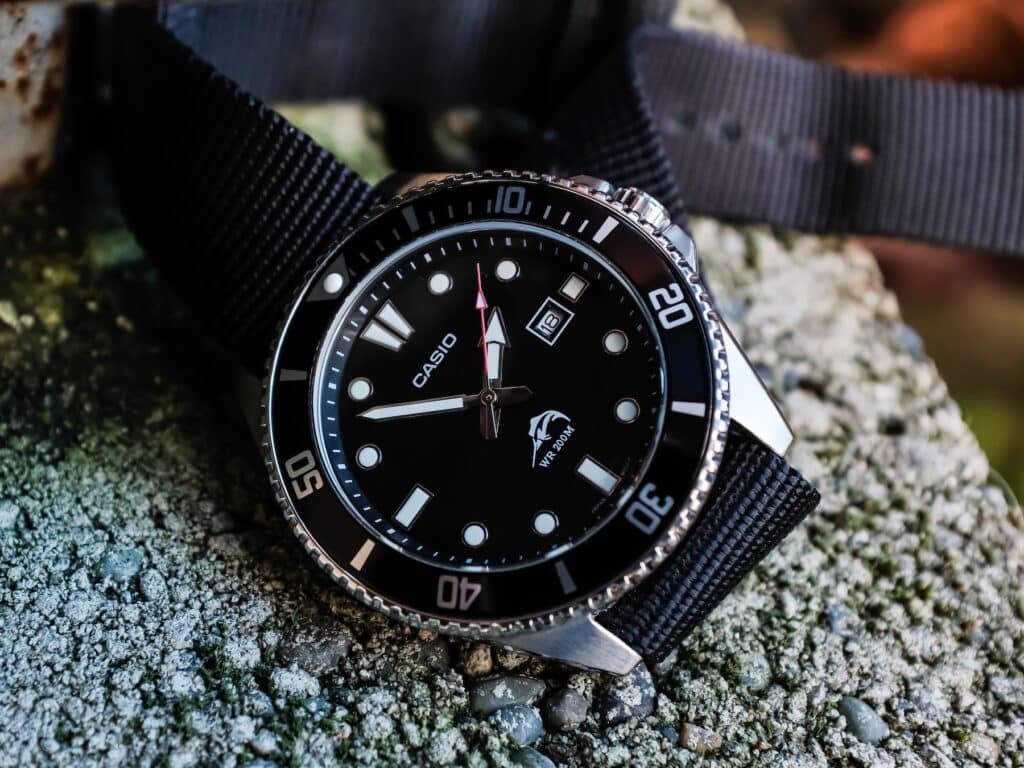
The Duro’s finishing is straightforward but handled with more care than the price implies. Brushed top surfaces contrast with polished case sides, a subtle bevel runs along the case and catches light just enough to break things up, and the lugs are properly shaped rather than functional stubs. A screw-down crown flanked by guards and a solid screw-down caseback complete a case that inspires baseline trust. Nothing about it is flashy. Everything about it feels deliberate.
Crystals & Bezels:
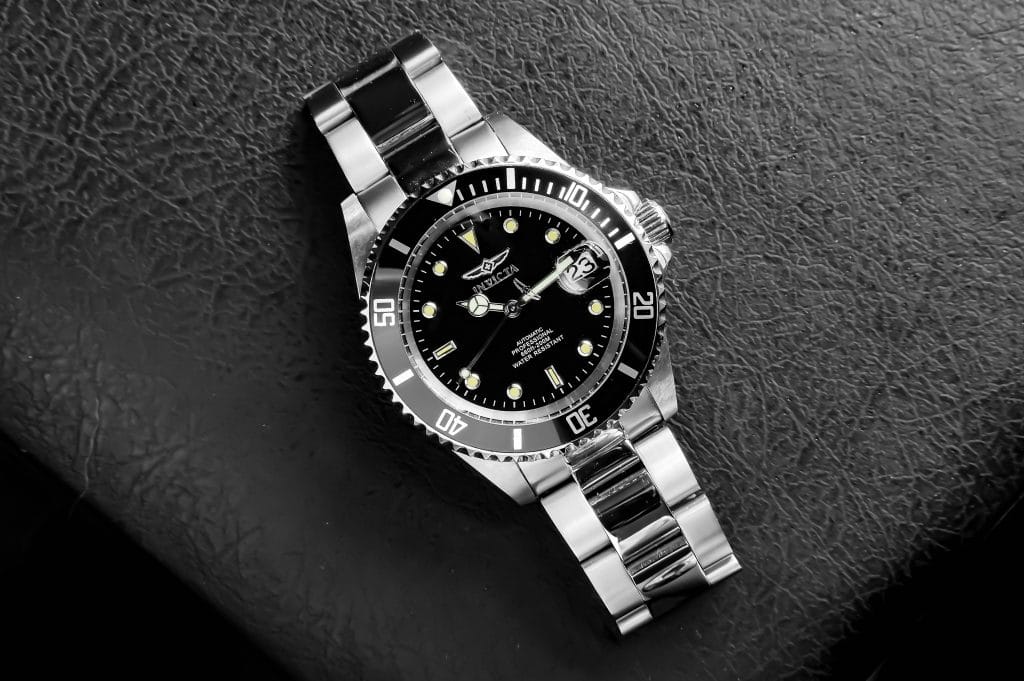
The Invicta uses a mineral crystal, a fair call at this price, and adds a cyclops over its date window. Its aluminum bezel earns similar praise with one caveat. Action is on point for the money, solid enough for timing coffee or breaks, but there’s a bit of wiggle between clicks if you go hunting for it. For roughly $70, the bezel does not embarrass itself, and honestly, that’s already more than this price bracket usually delivers.
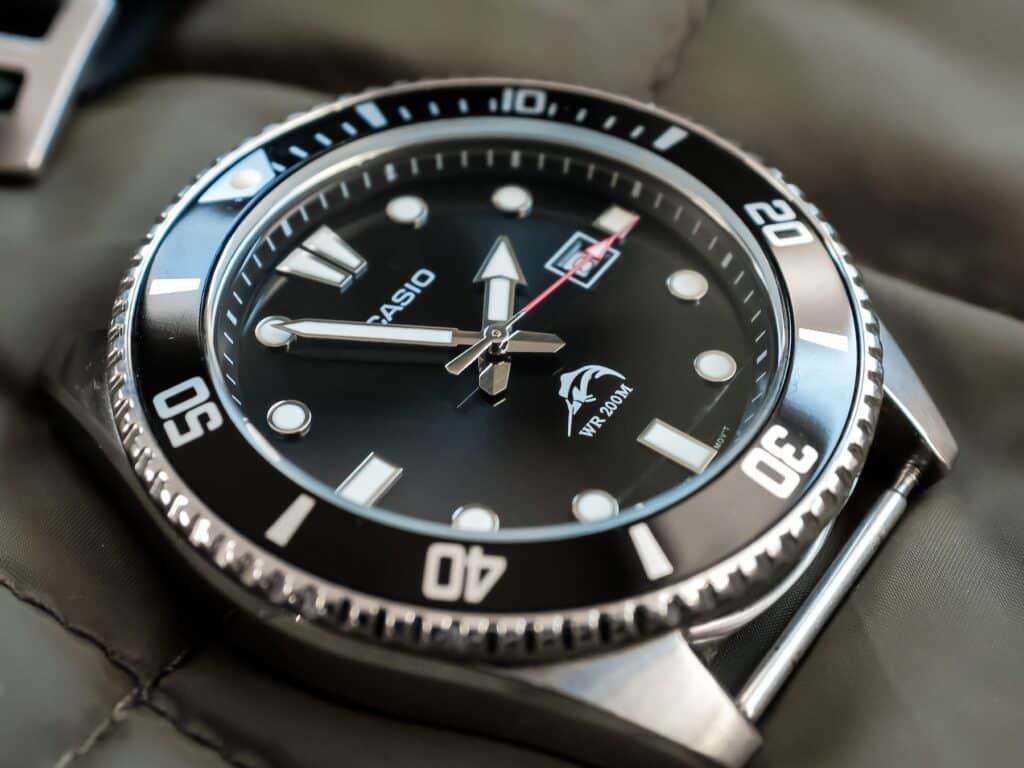
The Duro also uses a mineral crystal, though it keeps its crystal flat and uncluttered. Its unidirectional aluminum bezel clicks with a satisfying firmness, and the example we tested turned more smoothly than watches costing ten times more, though some of that may come down to break-in. Unit-to-unit variance is a reality with both brands at this price, so treat any single example as a data point rather than a promise.
Water Resistance & Lume:
Both watches carry a 200-meter rating, and both back it with screw-down crowns and casebacks, but our confidence splits along brand lines. The Duro is Casio’s designated 200-meter marlin-badge diver, and the community treats it as a swim-and-snorkel companion without a second thought. The Invicta’s rating deserves more perspective. Our review example shrugged off a soaking Florida thunderstorm without complaint, and swimming shouldn’t pose a problem with the crown screwed down. Even so, at this price we’d hesitate to plan a dive trip around it. If you’re buying an 8926OB, it’s for the look, and there’s no shame in that.
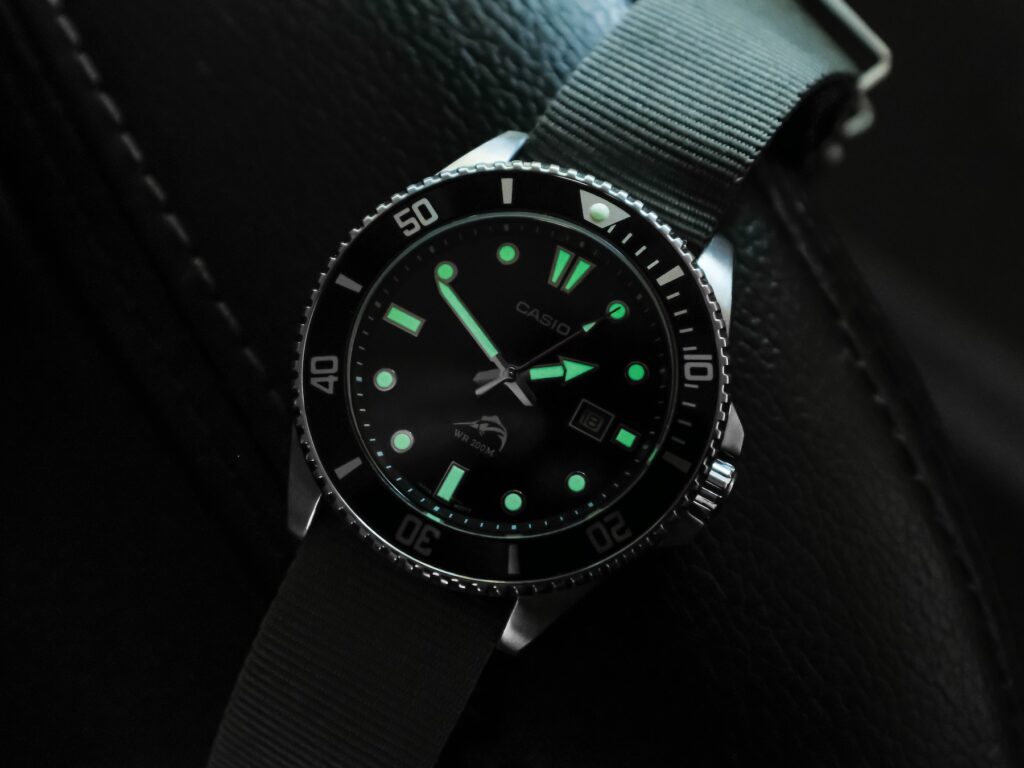
Lume is the weakest area for both. The Duro’s glow is even but fades sooner than we’d like, while the Invicta’s uneven application means the hands outlast the markers by a wide margin. Call it a draw, with a slight edge to the Duro for consistency.
- The Invicta Pro Diver builds its case around the NH35A, an automatic movement that has no business existing at this price, wrapped in a faithfully executed Sub case marred only by that logo.
- The Casio Duro commits fully to quartz practicality, pairing a trustworthy 2784 module with deliberate case construction and the more credible take on its 200-meter rating.
Cost Considerations
The Invicta typically hovers between $60 and $80, occasionally dipping as low as $40 during sales, which makes it the cheapest path to a reliable automatic movement that we can name. Invicta sweetens that with a three-year warranty on registered watches covering the hands, dial, and movement. The hidden cost is social rather than financial. This watch looks like a Rolex to everyone who compliments it, and some owners find the reveal awkward. Mechanical ownership also carries mechanical realities: daily rate variance, a 41-hour reserve that runs dry over a weekend off the wrist, and unit-to-unit lottery odds that quartz simply doesn’t play.
The Duro officially lists at $84.95 on Casio’s site, and street prices routinely land well below that, sometimes under $60. Ownership costs are nearly nonexistent. A battery every three years or so is the entire maintenance schedule, and there’s no service anxiety hovering over the long term. That makes the Duro one of the lowest-friction purchases in all of watch collecting. You buy it, you wear it, and it just keeps going. For a first watch, a beater, or a travel companion, that math is hard to argue with.
Final Thoughts: Which One Wins?
After time with both, the Casio Duro is our overall winner. It is the better watch for most buyers because it offers stronger dive-watch credentials, simpler ownership, a more original identity, and fewer compromises that affect the experience day to day.
That does not make the Invicta Pro Diver irrelevant. These watches serve different buyers so cleanly that the choice becomes fairly simple once you know what you want. The Duro is for the person who wants a straightforward tool watch. The Invicta is for the person who wants the classic Submariner look and wants a legitimate automatic movement behind it.
What surprised us most is how little either watch asks you to forgive. The compromises exist, weak lume here, a stiff clasp and regrettable logo there, but nothing about either package feels cynical. Both companies clearly decided which corners could be cut without gutting the experience, and both mostly chose well. That is rarer in this price bracket than it should be.
- Choose the Casio Duro if you want the honest tool watch. It is the better pure diver, the lower-maintenance companion, and the watch that earns affection for what it is rather than what it resembles. For most people looking for one great watch under $100, this is the one we recommend.
- Choose the Invicta Pro Diver if the classic Sub case is the itch you are scratching. Few automatic watches deliver this look, this movement, and this level of case finishing for so little money. Judged on its parts rather than its reputation, it is a far better watch than many enthusiasts are willing to admit.
The Invicta may be the more tempting watch for a particular kind of buyer, but the Casio Duro is the more complete and convincing package. It wins this comparison.

Co-Founder & Senior Editor
Michael Peñate is an American writer, photographer, and podcaster based in Seattle, Washington. His work typically focuses on the passage of time and the tools we use to connect with that very journey. From aviation to music and travel, his interests span a multitude of disciplines that often intersect with the world of watches – and the obsessive culture behind collecting them.
Got my Duro a couple days ago, very happy with it. I got the Batman color scheme because I’m a sucker for blue+black. I honestly did consider the Invicta after reading the TBWS review, but all the worries that come with automatic watch ownership are simply more than I want to be bothered with. I’d rather just throw a watch on and go. So quartz is the best option for me at this point in my life.
Hi, Jonathan:
That sounds like the Duro was absolutely the right choice for you. The Batman colorway looks great, and the grab-it-and-go convenience of quartz is difficult to beat. Automatics can be rewarding, but there’s nothing wrong with choosing the watch that best fits your life. Enjoy it!
Best,
-Kaz
I have generous collection. I have a Duro in all blue, with a nato strap and love it as an occasional knock about watch. get lots of compliments.
nothing worse than a knock off like the invicta. you buy a Rolex because you can. I have an older Sub 16610 and a newer Bluesy Sub… they are wonderful on thy wrist, with no embarrassment
I have both and disagree with the winner, I would put the Invicta in first for overall build quality.
Weak casio
Good to know. What makes the Invicta come out on top for you?
I own an 8930 OB blue and gold . I bought it 5 years ago and it has Performed remarkably well. I travel often to warm weather places and use it when I swim. I own a 2 tone date just so I’m not opposed to spending money for something I want. But this watch looks good, it’s comfortable and I’m not worried about it getting worn out, lost or stolen. Just what I wanted for under 100.00$!
We’re big fans, George. I’ve always especially liked the two-tone. Very tempting any time there’s a great deal.