
When you start looking at field watches, you don’t expect a Hamilton Khaki Field Mechanical vs. Timex Field Post Solar debate, but we feel strongly that the Timex is cheap and competent enough that it forces the question: is the Hamilton actually worth paying extra for? The Khaki Field Mechanical sits comfortably in that “mechanical watches under 1000” space, offering the ritual of daily winding and a design that feels pulled straight from military roots. The Timex comes in at a fraction of the cost, runs on solar quartz, and is built around the idea that a field watch should be simple, durable, and never demand your attention. We’ve spent real time with both, and what stood out wasn’t necessarily the price gap but how differently they fit into daily life.
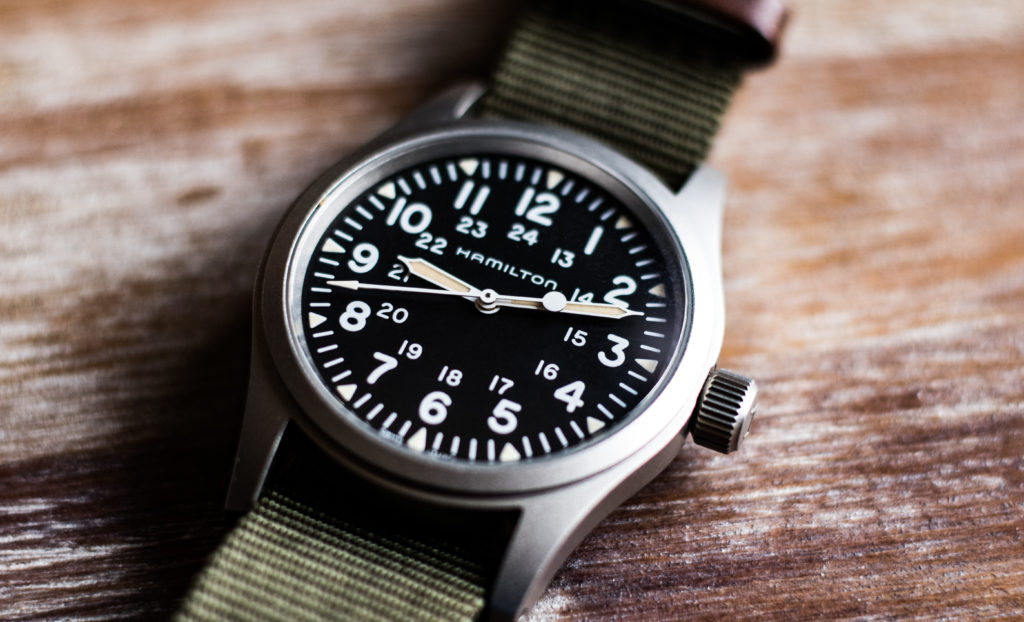
And after about a decade of wearing and reviewing several watches, we’ve learned that paying more doesn’t always mean getting more. Sometimes, it means getting something different. We’ve worn the Hamilton long enough to experience the rhythm and occasional inconvenience of manual winding, and we’ve lived with the Timex long enough to forget about it entirely, which, in many ways, is the point. That’s what makes the Hamilton Khaki Field Mechanical vs Timex Field Post Solar comparison so relevant. The real question is which of those experiences makes more sense once you’re the one wearing it every day.
Overview & Identity
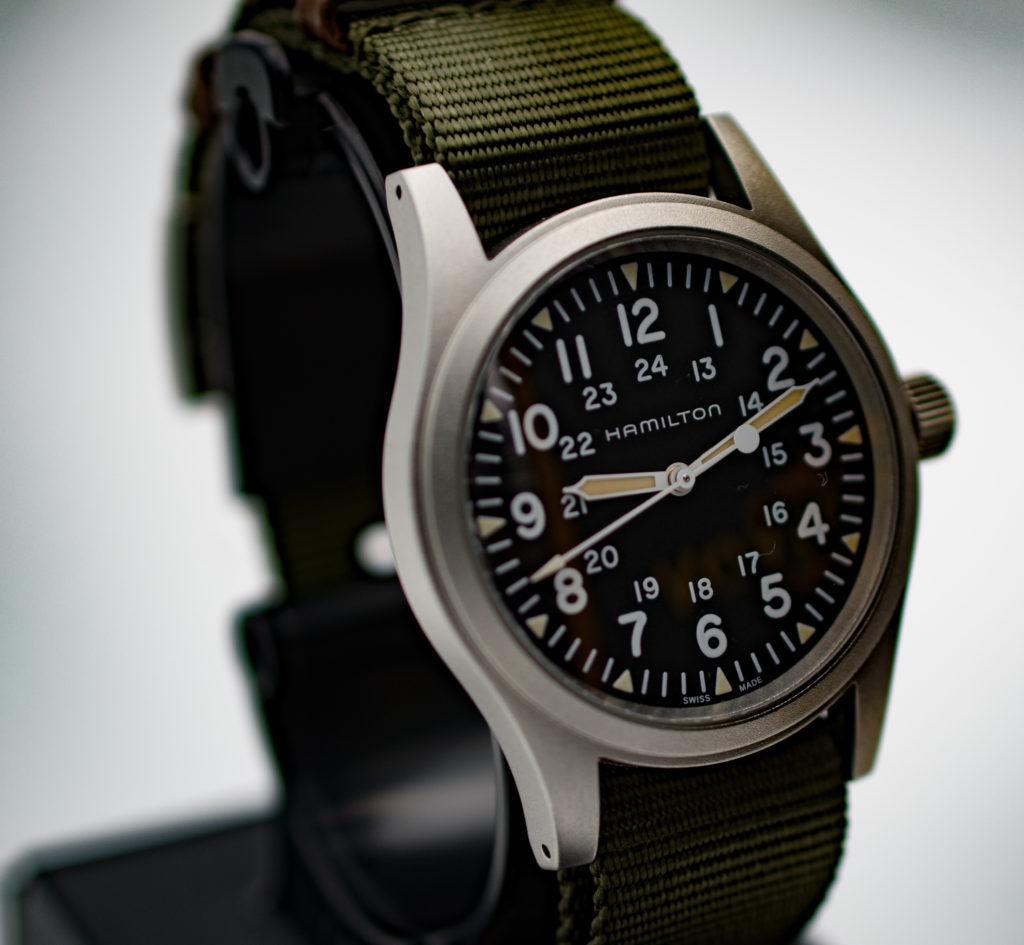
The Hamilton Khaki Field Mechanical wears its identity openly, and after spending significant reviewing it, that sense of purpose comes through in ways that go beyond specs. In our hands-on review, it felt like a faithful modern remake of Hamilton’s original U.S. military field watches from the 1960s. It’s part of the broader Khaki Field collection, which leans on military-inspired design. The vintage influence isn’t treated like a costume. It shows up in the restrained proportions, the hand-wound interaction, and the overall lack of excess. Wearing it daily, it felt like a mechanical watch that prioritizes connection over convenience. It doesn’t try to modernize the experience too much.

The Timex Expedition Field Post Solar approaches that same field watch identity from the opposite direction. In our testing, it felt like Timex doubling down on what the Expedition line has always represented: durable, affordable watches built to be used without hesitation. This model keeps that honest, no-nonsense personality intact but replaces the usual battery with solar charging, which removes one of the few maintenance concerns typical of budget quartz watches. It never tries to mimic the romance of mechanical watches. It’s the watch you put on without thinking and trust to keep going, which is why it sticks around.
- The Hamilton Khaki Field Mechanical is a modern mechanical remake rooted in military tradition and daily interaction.
- The Timex Expedition Field Post Solar is a practical, solar-powered field watch built around convenience and everyday reliability.
Design & Wearability: Military Faithfulness vs Practical Minimalism
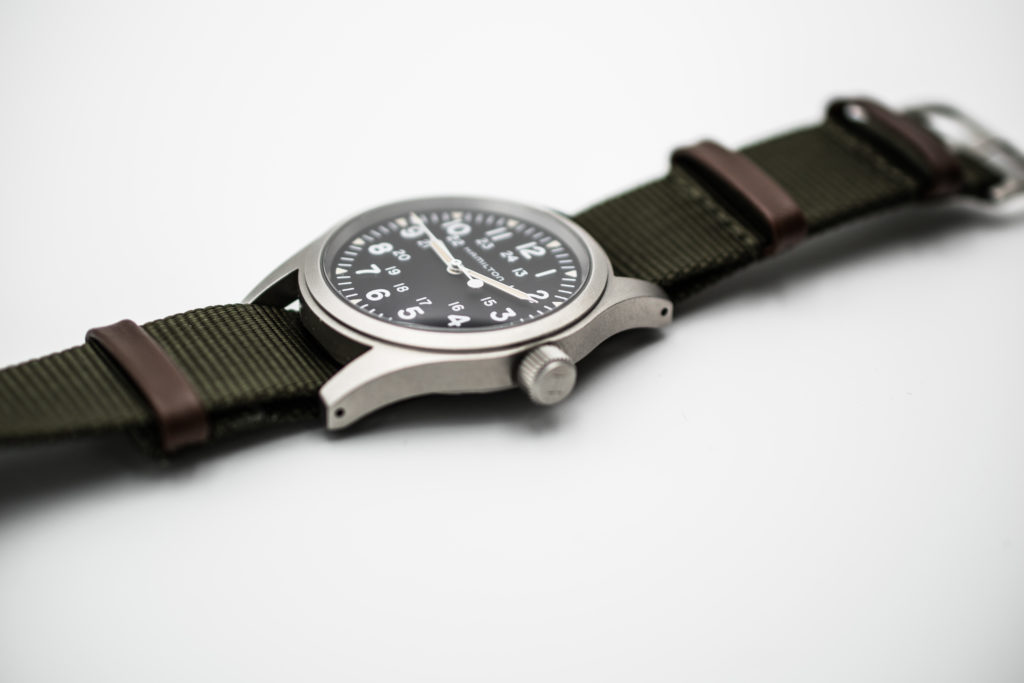
Hamilton approaches field watch design with a clear commitment to preserving what made the original worth remaking in the first place. During our time with the Khaki Field Mechanical, the dial stood out for its honest, utilitarian layout. The black surface carries full numerals and a dense minute track, which can feel visually busy at first glance, especially outdoors in bright light. But over time, that density starts to make sense. It reinforces the watch’s tool-first identity. The absence of a date window keeps everything balanced and clean, and while the Hamilton logo at 12 o’clock breaks from the original’s sterile dial, it never disrupts the overall symmetry. Small touches like drilled lugs also made a difference in daily use, letting us swap straps depending on mood or weather. It doesn’t try to charm you instantly, but offers versatility over inferior fixed spring bars. It grows on you through use, especially once paired with a simple nylon strap that feels true to its military roots.

Timex, on the other hand, leans into familiarity and restraint in a way that feels effortless. The Expedition Field Post Solar sticks closely to the classic MIL-W-46374 field watch template, with a black dial, full Arabic numerals, and zero unnecessary distractions. During our hands-on testing, it came across as honest: no stylized fonts, no attempts to dress it up beyond what a field watch needs. Even the included soft, leather strap surprised us by breaking in faster than expected, though its thickness made the watch feel slightly bulkier until we swapped it out for a more minimal nylon option. Once paired with a simpler strap, the watch settled into its role perfectly. It stayed unobtrusive, slipped easily under sleeves, and never demanded attention. That design restraint becomes its strength, especially if your goal is a watch that blends into daily life rather than defining it.
- Hamilton Khaki Field Mechanical: Military-inspired design with a dense dial and no date window, preserving balance and tool-watch authenticity. Drilled lugs make strap swaps easy, and it comes alive on nylon, reinforcing its intended field-ready versatility.
- Timex Expedition Field Post Solar: Classic MIL-spec layout with clean numerals and zero visual excess, making it easy to live with daily. Once paired with a slimmer nylon strap, it wears quietly, emphasizing comfort over presence.
Build Quality & Technical Approach
Both the Hamilton Khaki Field Mechanical and the Timex Field Post Solar are built around durability in the way field watches are supposed to be: quietly competent, never fragile. The difference is the level of involvement each asks of you. Once they move from sitting in a watch box to being part of your daily routine, that contrast becomes obvious.
Movements:
The Khaki Field Mechanical stays true to its name with a manually wound movement that prioritizes interaction over convenience. Earlier models ran the ETA 2801-2, while current versions use Hamilton’s H-50 caliber, which builds on that foundation but stretches the power reserve to an impressive 80 hours. In practice, that manual wind routine becomes part of ownership. If you forget to wind it, it stops—it’s that simple. During our testing, accuracy stayed very tight when kept consistently wound, even hovering around chronometer-level performance (+0.8 sec/day) on some days. There’s also something reassuring about the crown resistance once fully wound, which prevents overdoing it. It’s not a “grab and go” experience, but the lack of a date and the oversized crown make resets quick.

The Expedition Field Post Solar goes in the opposite direction, replacing ritual with quiet autonomy. Its solar quartz movement builds up to four months of power reserve from light alone, and in daily wear, that meant we never had to think about it. No winding. No wondering if it stopped overnight. It simply stayed ready. Setting the time was fast, and the crown had enough tactile feedback to feel secure without overcomplicating the process. Accuracy, as expected from quartz, stayed consistent without intervention. This approach doesn’t offer the emotional engagement of a mechanical movement, but it delivers something arguably more useful: complete reliability with zero maintenance.
Case Construction & Finishing:
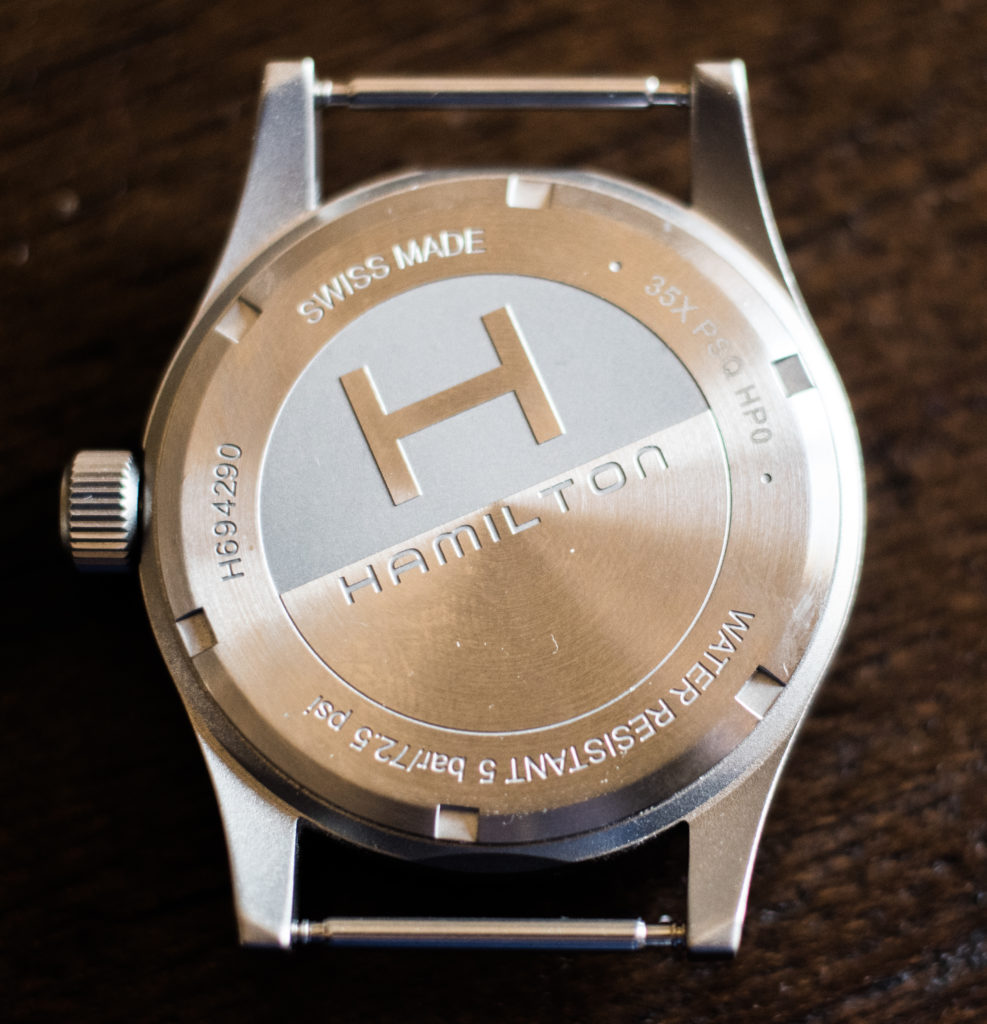
The Khaki Field Mechanical’s case plays a big role in how the watch reveals itself over time. At 38mm, it initially felt smaller than what many of us are used to, especially if your collection leans toward chunkier tool watches. But after a few days of wear, the proportions start to make sense. The 47mm lug-to-lug distance gives it enough wrist presence to avoid feeling fragile, while the restrained diameter keeps it comfortable through long days. The stainless steel construction feels honest and durable, while the 20mm lug width opens the door to a wide range of strap options you probably already own. The case back bears the Hamilton logo and name, apart from “Swiss Made”, depth rating, model number, and “35X PSQ HPO”. Overall, it’s a case that prioritizes balance and wearability over size-driven presence, and once it settles into your routine, the smaller footprint becomes an advantage rather than a compromise.

The Expedition Field Post Solar takes that wearability-first philosophy even further. Its 36mm case wears lean and flat, staying centered on the wrist without shifting or feeling top-heavy. At around 12mm thick, it never feels bulky, and the brushed, bead-blasted stainless steel finish gives it a subdued, scratch-tolerant character that fits its utilitarian purpose. During daily wear, it stayed subtle and comfortable, whether worn loosely or snug. The crown operation felt functional and dependable, reinforcing the watch’s no-frills construction. It doesn’t try to impress with elaborate finishing or sharp visual transitions. Instead, it delivers exactly what a field watch case should: durability, comfort, and the ability to disappear into daily life without becoming a distraction.
Crystals:

The Hamilton Khaki Field Mechanical keeps things simple with a flat sapphire crystal that prioritizes durability over visual tricks. In daily wear, the sapphire held up exactly as expected: resistant to scratches and free from distortion across the dial. The absence of an anti-reflective coating means glare can appear in certain lighting, especially outdoors, but it never made the watch difficult to read. Instead, it reinforced the watch’s no-frills, military-inspired character.

The Timex Expedition Field Post Solar takes a slightly more considered approach by pairing its sapphire crystal with an anti-reflective coating and a subtle dome. In practice, this made a noticeable difference. Our review team found that legibility remained strong even in bright daylight, and glare rarely interfered with dial reading. There’s also a faint distortion around the edges, which adds a bit of visual warmth and prevents the watch from feeling overly clinical. It’s a small detail, but one that makes daily use easier and more enjoyable, especially if you’re constantly checking the time on the go.
Water Resistance & Lume:
The Khaki Field Mechanical approaches water resistance with restraint and honesty. The 50 meters of water resistance, paired with a non-screw-down crown, means it’s perfectly fine for daily wear but not something we’d intentionally take swimming. In practice, that limitation never got in the way of desk work, handwashing, or getting caught in the rain, but it does reinforce that this watch wasn’t designed for aquatic abuse. The Super-LumiNova, however, performs far better than expected for something styled so heavily around vintage cues. The lume application is subtle during the day, blending into the faux-aged aesthetic, but at night it comes alive with clean visibility across the hands and markers. It’s functional without feeling excessive, though the lack of a distinct marker at 12 o’clock occasionally makes orientation harder when checking the time half-awake.
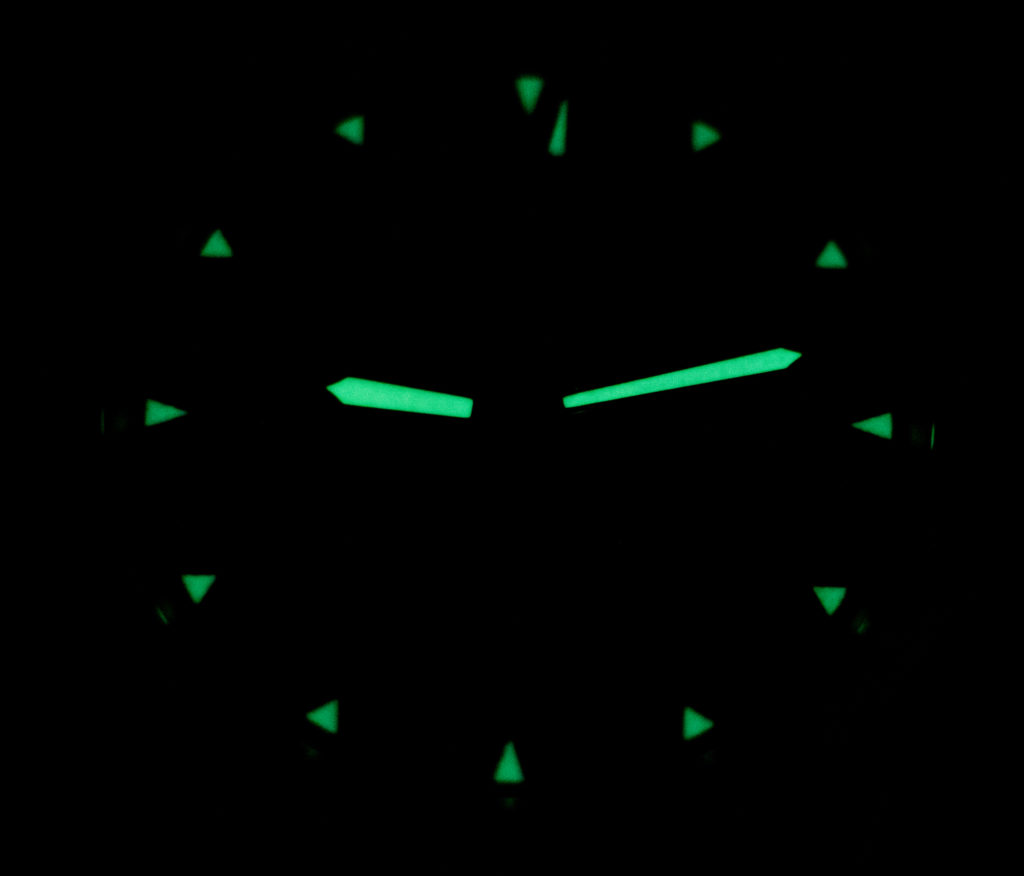
The Timex Expedition Field Post Solar takes a more confidence-inspiring approach to water resistance, offering 100 meters of water resistance that held up easily through rainy commutes, handwashing, and everyday exposure. It feels built for people who don’t want to think twice about wearing their watch in unpredictable conditions. That said, the lume tells a different story. While present, it fades quickly when exposed to light, making it difficult to rely on it in low-light situations. During testing, nighttime legibility dropped off faster than expected, which felt like a corner cut on a watch otherwise defined by its practicality. It doesn’t ruin the experience, but it’s one of the few reminders that Timex prioritized affordability and solar convenience over perfecting every last detail.
- Hamilton Khaki Field Mechanical: Manual-wind H-50 movement delivers strong accuracy and an 80-hour reserve, but requires regular winding and offers only 50m water resistance. Its 38mm brushed steel case, sapphire crystal, and versatile 20mm lugs prioritize balance, durability, and strap flexibility over modern convenience.
- Timex Expedition Field Post Solar: Solar quartz movement provides up to four months of hands-off power with excellent everyday reliability and 100m water resistance. Its compact 36mm bead-blasted case and AR-coated sapphire crystal enhance comfort and legibility, though lume performance fades quickly in low light.
Cost Considerations
The Hamilton Khaki Field Mechanical sits at an MSRP of $675. For that price, you’re getting a Swiss-made mechanical watch with real military lineage, not design inspiration alone. And that’s hard to find. During our time with it, the value made sense, especially once the initial hesitation about manual winding and smaller size faded. It even ships with a proper NATO strap, though the included strap wasn’t perfect for everyone (ours irritated the skin more than expected). Still, considering the mechanical movement, heritage-driven design, and daily wearability, it feels like money spent on experience rather than just function.
The Timex Expedition Field Post Solar, at $199, takes a completely different approach, and that’s exactly why it works. It doesn’t try to compete with mechanical charm or Swiss heritage. Instead, it focuses on delivering something dependable, solar-powered, and thoughtfully designed at a price that feels easy to justify. In daily use, that lower cost translates into freedom. We never worried about maintenance, damage, or whether it was “worth” wearing casually. It simply became part of the routine. At this price, it stands out among the best-value watches, offering practicality and usability.
Final Thoughts: Paying More vs Saving More—What Actually Makes Sense on Your Wrist?
After living with both the pieces, the honest answer comes down to what you want your watch to be in your life. If the goal is daily wear, low maintenance, and maximum practicality, the Timex wins. Easily.

The Timex Expedition Field Post Solar is the kind of watch that quietly solves problems. It charges itself. It handles rain and daily wear without hesitation. It slips under sleeves, disappears on the wrist, and never demands attention. There’s no winding routine to remember, no accuracy anxiety, no hesitation about where or when to wear it. It does exactly what a field watch is supposed to do: exist as a reliable tool. At $199, it delivers so much freedom that it makes you question how much more most people realistically need. This is what saving more buys you: mental space, simplicity, and trust.

The Hamilton Khaki Field Mechanical doesn’t win on convenience. It wins on experience. Winding it becomes part of your morning, like making coffee or putting on your shoes. The smaller case, the mechanical heartbeat, and the deliberate interaction create a connection that quartz watches rarely offer. It feels more intentional, more personal. But that connection comes with responsibility. If you forget to wind it, it stops. So, if you want pure grab-and-go reliability, it won’t compete with the Timex. The Hamilton isn’t trying to be the sensible choice. It’s trying to be the meaningful one.
In other words, the Timex is the better choice for most people, and saving more with it makes more sense if you value ease and freedom. Paying more for the Hamilton only makes sense if you value the mechanical experience enough to live with its compromises.
What do you think? Have you owned either (or both) of these watches? Let us know what you think of our comparison and final pick in the comments below.

Co-Founder and Senior Editor
Kaz has been collecting watches since 2015, but he’s been fascinated by product design, the Collector’s psychology, and brand marketing his whole life. While sharing the same strong fondness for all things horologically-affordable as Mike (his TBWS partner in crime), Kaz’s collection niche is also focused on vintage Soviet watches as well as watches that feature a unique, but well-designed quirk or visual hook.
Timex is the clear winner in my opinion. It has loads of heritage on it’s own right and though I don’t own this watch, I own three solar watches and have nothing but appreciation for them. As I’ve continued in the watch rabbit hole for over a decade I find myself selling off most of my mechanical watches and looking for good quality quartz. I’ll need to pay more attention to Timex.
Hi, Matt:
Thanks for writing in and sharing your insights! I think you’re right and people do honestly forget that Timex has its own horological heritage on the same level and greater than many of the other more well known and expensive brands. Sliding more towards quartz movements is something that I have found myself doing over the last few years with my collection – the care easier, the accuracy is superior, and there’s just something nice about not having to worry about keeping a watch wound.
Best,
-Kaz
I ended up returning this Timex – I found legibility to be worse than expected, between the gray dial and the cream numerals, and it wore thicker than I expected, feeling surprisingly chunky for its diameter on my 6″ wrist. (The 18mm lugs may have played a part there too, making the watch read smaller.) I purchased a Vaer S3 instead – curious if you’ve checked it out!