
Back in September I spent some time working through whether Hamilton had gotten a little too chatty with the dial on its newest field watch. The complication itself made complete sense. The “Power Reserve 80 Hours” text sitting at six o’clock was the part I couldn’t settle on, since it felt like Hamilton explaining a joke it had already told well. The brand has since doubled the lineup, and that text now shows up on two more dials.
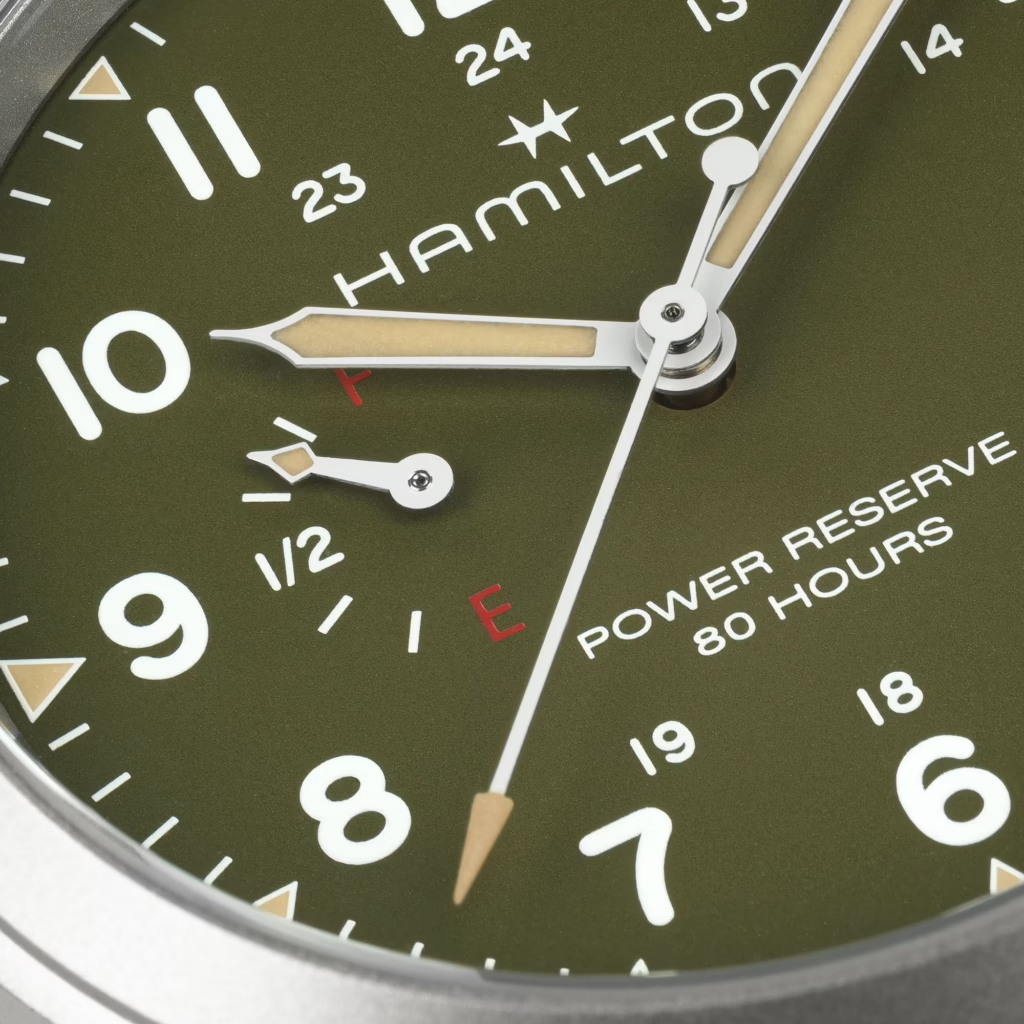
The Khaki Field Mechanical has held its spot since the 2017 revival largely by refusing to do much. Thirty-eight millimeters, hand-wound, no date, nothing decorative. Mine is even plainer, a 36mm hand-wind that does nothing but tell time, and I’ve never once wanted more from it. The power reserve version broke that streak with a 40mm bead-blasted case and a meter tucked just inside nine o’clock. Black and white dials came first, which was about as cautious as Hamilton could have played it.

Blue and green are the additions, and neither shade is new to the family. Hamilton carried both over from the Khaki Field Quartz refresh, so the mechanical and quartz sides of the collection now run the same palette. Green has a solid claim on a field watch.

Blue is harder to argue on heritage grounds, though I suspect Hamilton stopped losing sleep over that argument a long time ago. Old Radium Super-LumiNova stays on the handset, the hour track, and the meter hand, which keeps the whole dial reading warm instead of clinical.
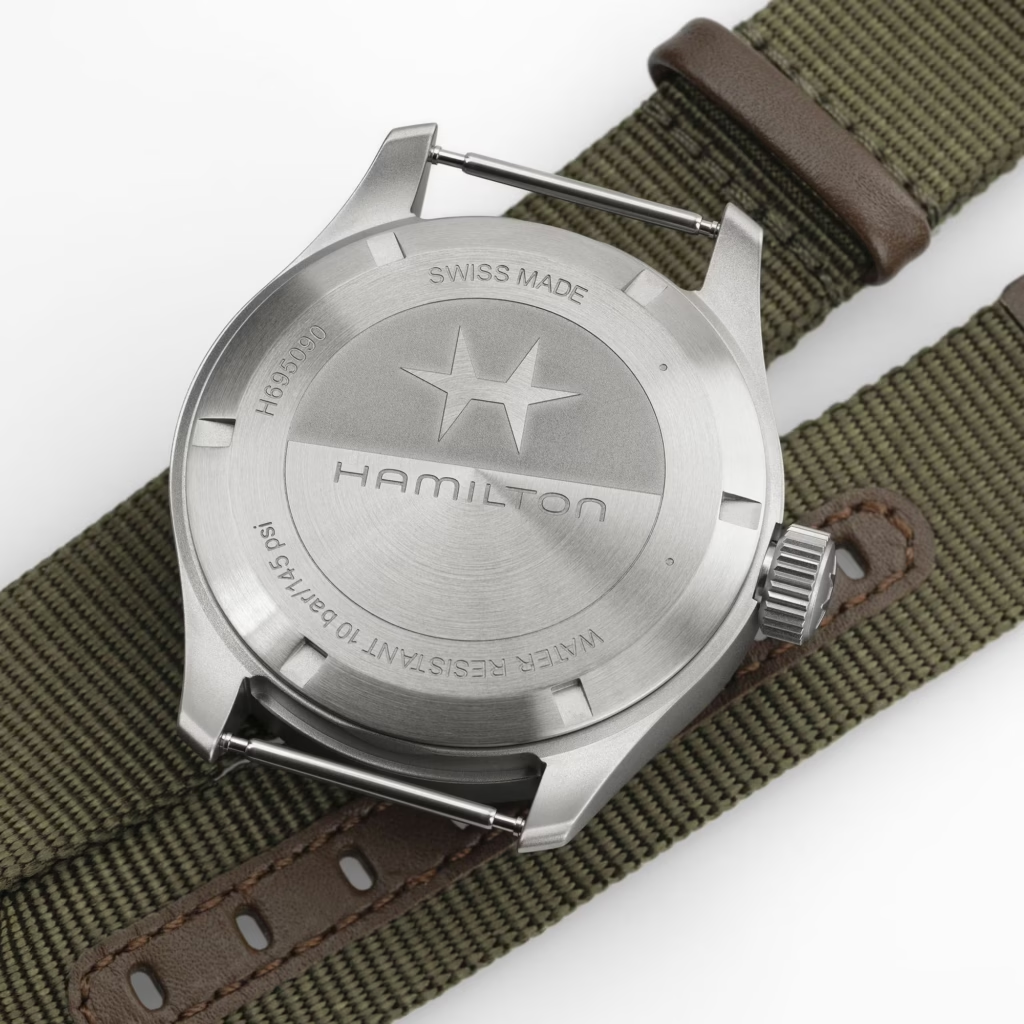
Inside is the same Caliber H-23, which shares its base architecture with the H-50 and adds a power reserve module on top. Hamilton’s material describes it as a hand-wound version of the ETA Powermatic 80, which is close enough for press copy but not quite right, since Powermatic 80 is the branding for the automatic C07 family. What you get is 80 hours from a movement with no rotor and no shortcut. So.. that six o’clock text we were talking about. It’s grown on me. On a dial built around a fuel gauge, labeling the tank capacity starts to feel like part of the bit.
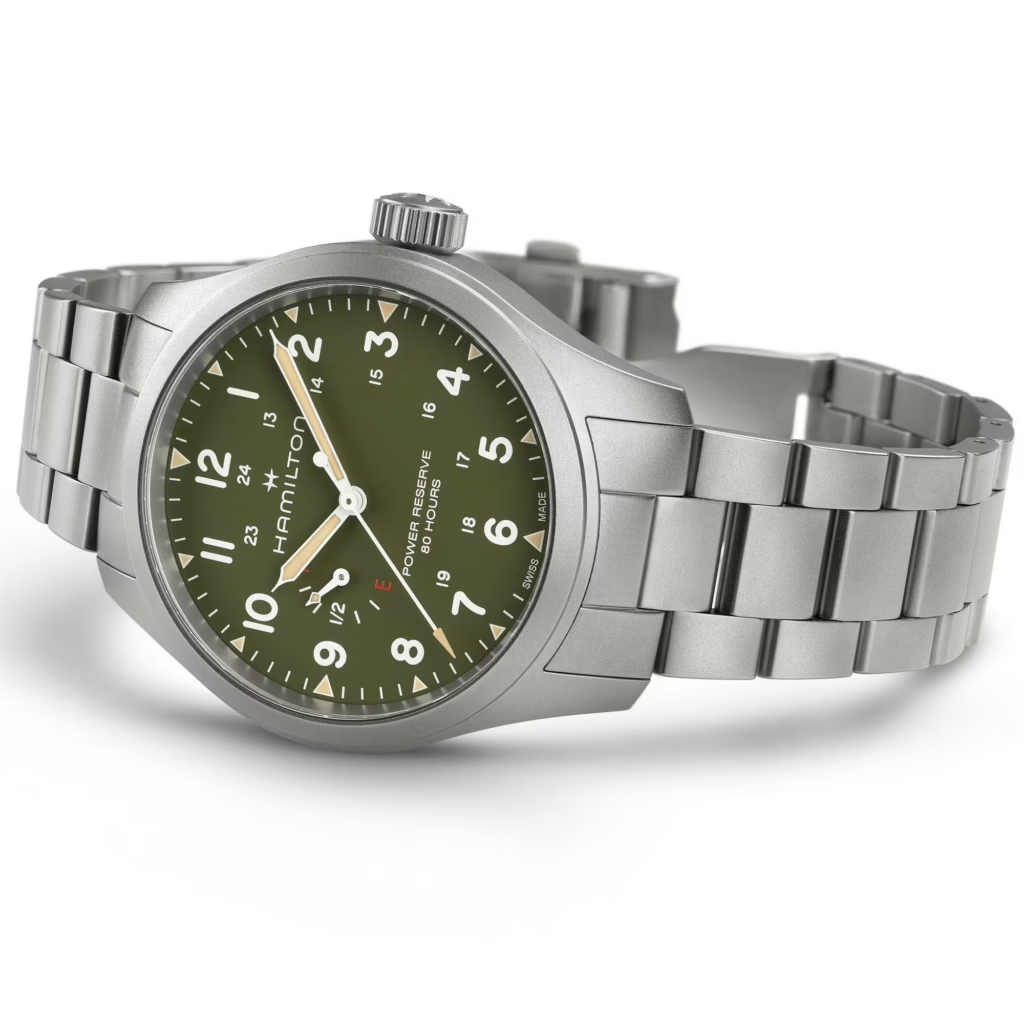
Strap options carry over unchanged. The NATO is color-matched to the dial with leather keepers, leather-reinforced buckle holes, and a steel pin buckle. The bracelet is a three-link in bead-blasted steel with a micro-adjustable folding clasp. Pricing hasn’t moved either, at $945 on nylon and $1,025 on the bracelet, which is worth flagging since brands rarely expand a lineup without finding a reason to charge for it.

Co-Founder & Senior Editor
Michael Peñate is an American writer, photographer, and podcaster based in Seattle, Washington. His work typically focuses on the passage of time and the tools we use to connect with that very journey. From aviation to music and travel, his interests span a multitude of disciplines that often intersect with the world of watches – and the obsessive culture behind collecting them.