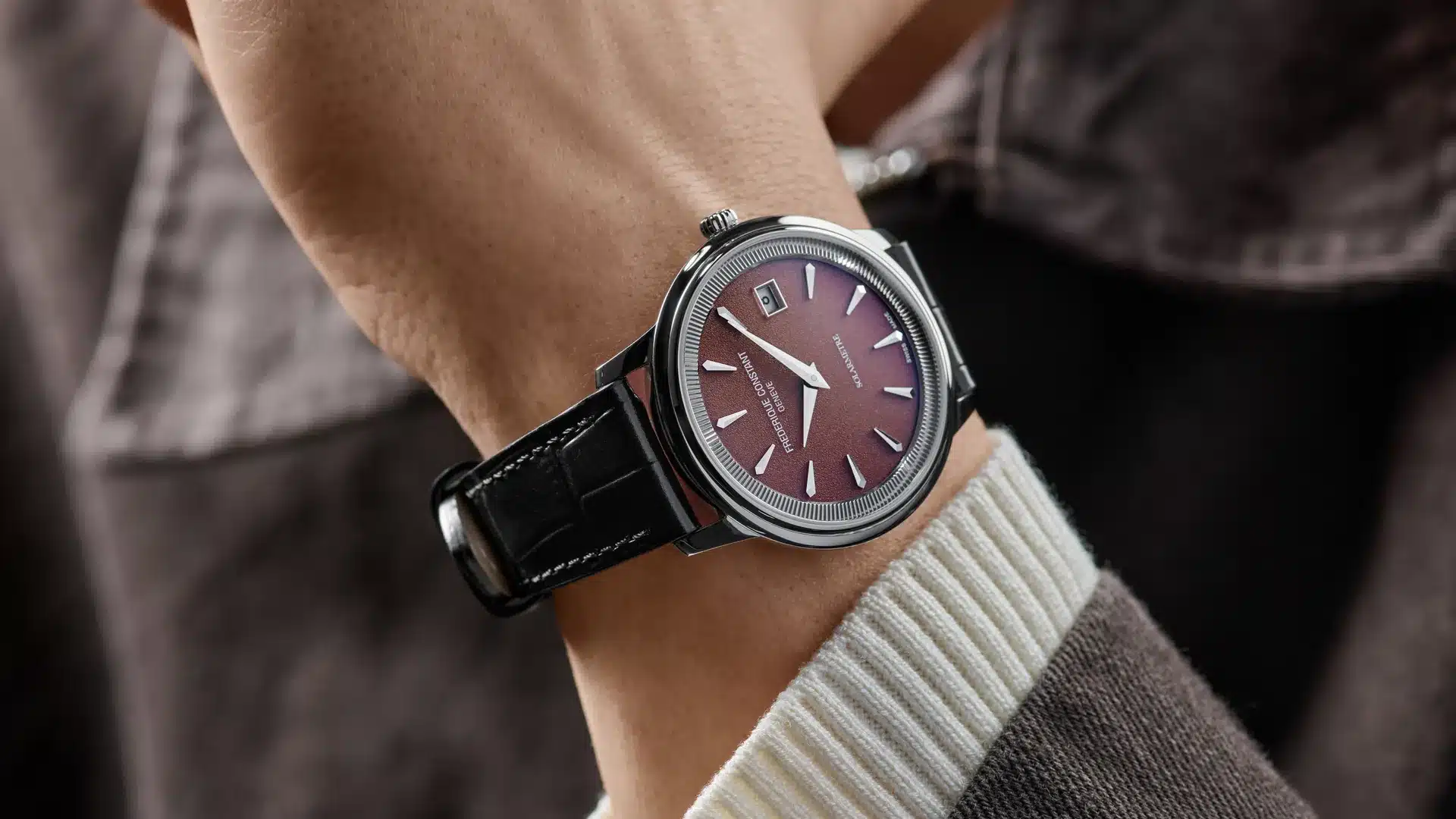
Frederique Constant doesn’t usually make news for technology. The brand built its reputation in the accessible luxury lane on tidy dress watches and the occasional in-house complication priced well below where you’d expect one. So a solar movement is a genuine first, and it shows up somewhere that surprised me a little: the Classics Moneta Solarmetre, a new addition to a dress line that only launched in 2024.
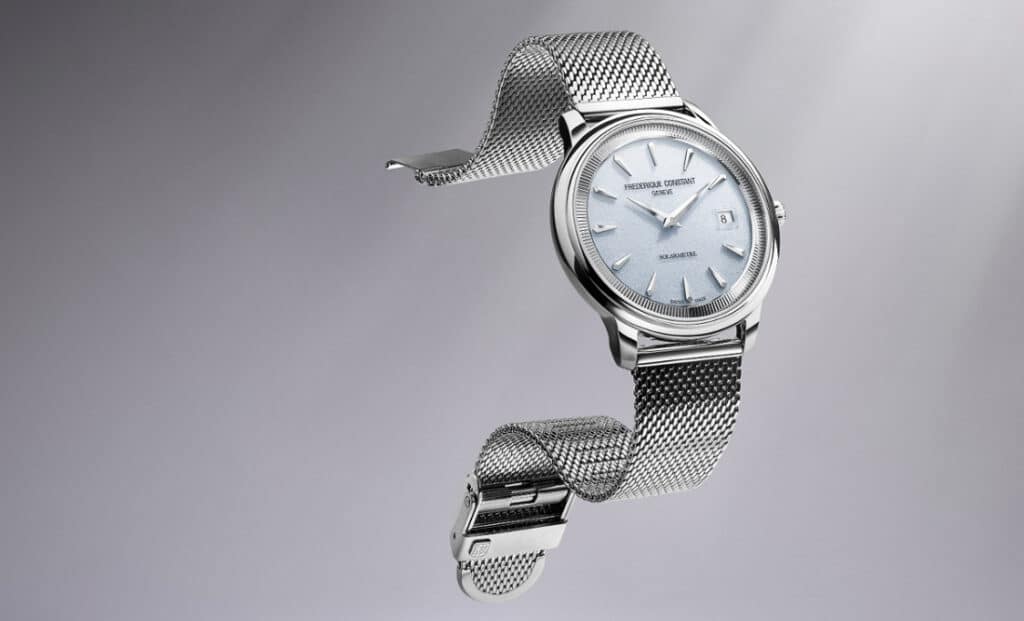
The Moneta collection arrived with a slim profile, clean dials, and a coin-edge bezel that became its calling card. The Solarmetre keeps all of that and drops in the FC-120, a solar-powered quartz caliber developed with La Joux-Perret. Photovoltaic cells sit beneath the dial, turning light into stored energy for the regulator. Frederique Constant says a single minute of light runs the watch for a day, and a full charge covers roughly ten months in the dark.
If “first solar movement” sounds like a leap for a Swiss dress brand, the context softens it. Frederique Constant has been owned by Citizen since 2016, and La Joux-Perret has been a Citizen company since 2012. Citizen, of course, is the outfit that turned light-powered watches into a mass-market category with Eco-Drive. So FC building a competent solar caliber was never really in doubt. The real curiosity is why a brand sitting on that kind of family resource waited this long to use it. Seen that way, the FC-120 feels less like a bold pivot and more like an overdue one.
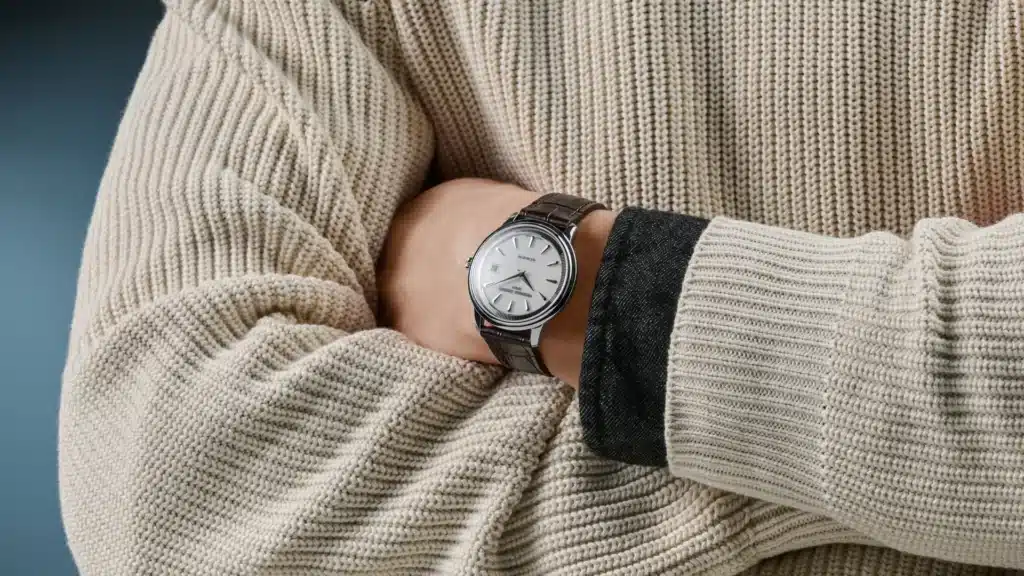
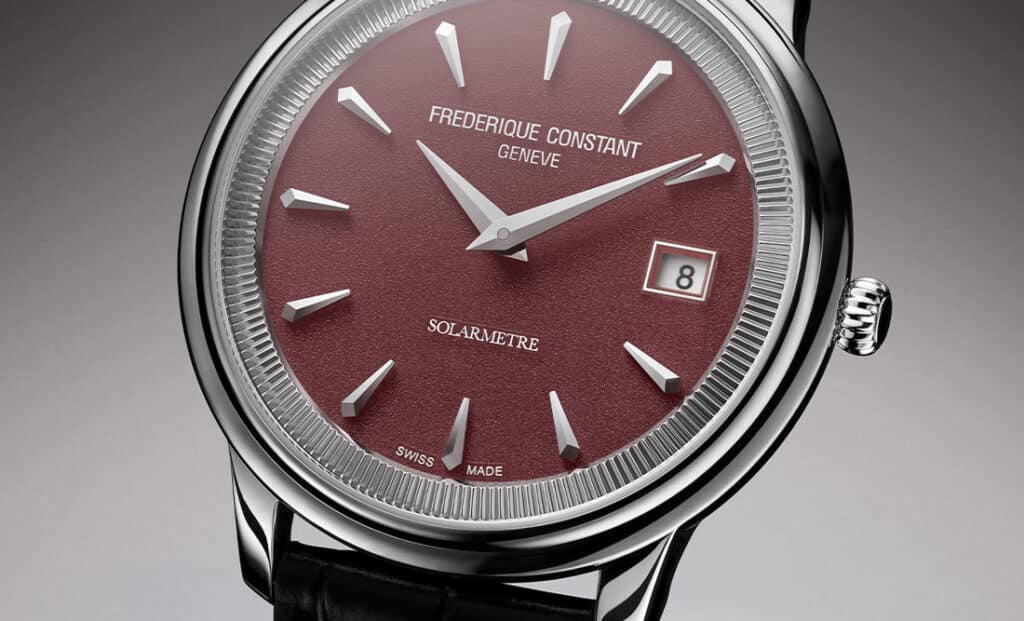
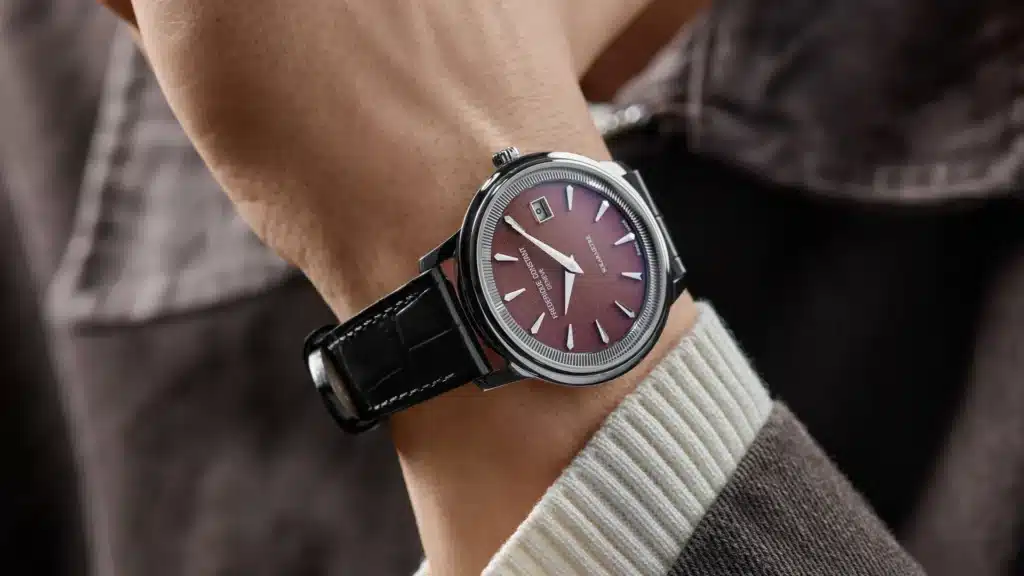
On paper, the watch reads well. The case grew to 39mm wide and 8.52mm thick to fit the new movement, which makes it larger than earlier Moneta models while staying within honest dress-watch territory. The three dials, in ice blue, burgundy, and cloud white, look solid but are actually translucent so light can reach the cells underneath. A new grained texture adds some depth, and the rest follows the usual dress-watch grammar: dauphine hands, faceted markers, a date window at 3.
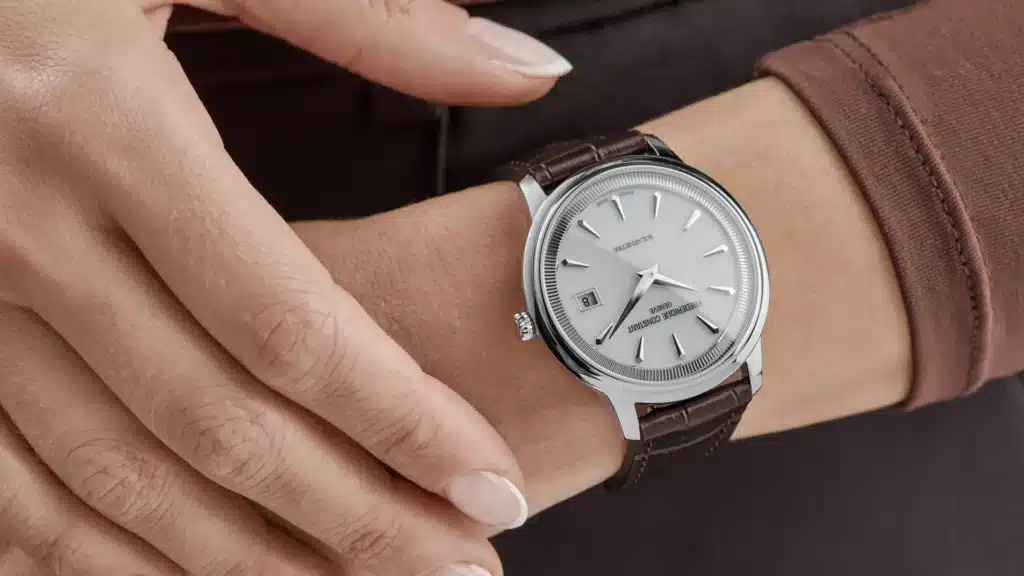
What stands out most to me is the value framing. Every Solarmetre ships with both a leather strap and a Milanese bracelet, and the price holds at around $1,467 regardless of dial. Two genuine wearing options at that number is a real point in its favor, and it keeps the watch in accessible luxury rather than nudging it upmarket on the strength of a new movement alone.
The open question is whether solar belongs in this conversation at all. Solar quartz has long lived in tool watches and everyday beaters, where never thinking about a battery is the entire pitch. A dress watch asks for a different relationship. You reach for it on occasions, not daily, which is exactly when a solar cell is most likely to run flat in a drawer. Ten months of reserve answers part of that. Whether dress-watch buyers actually want light-powered convenience, or just like the idea of it, is something only wrist time and sales will sort out. For now, it’s an interesting test of where Frederique Constant takes the Citizen toolkit next.

Co-Founder & Senior Editor
Michael Peñate is an American writer, photographer, and podcaster based in Seattle, Washington. His work typically focuses on the passage of time and the tools we use to connect with that very journey. From aviation to music and travel, his interests span a multitude of disciplines that often intersect with the world of watches – and the obsessive culture behind collecting them.
Solar makes perfect sense whether it’s inside a field watch, a diver or a dress watch.
So true. Very utilitarian in sport watches and it’s nice to see think in dressier watches like this and the Tank Solar.