Farer has always done the unexpected, and it’s one of the things I think makes the British brand so interesting to follow. Each release seems to pull from a completely different corner of watch history, from super-compressor divers to integrated sports watches, and every time the design language resets to match the source material. It’s an unusual approach, but I think it works for them.
The latest release continues that tradition. Farer has announced the Racing Chronograph, a 38mm hand-wound piece that draws directly from the 1960s auto racing chronograph playbook. Think Autavia. Think early Daytona. Think El Primero before the automatic movement showed up. That’s the territory here, and Farer seems to understand it well.
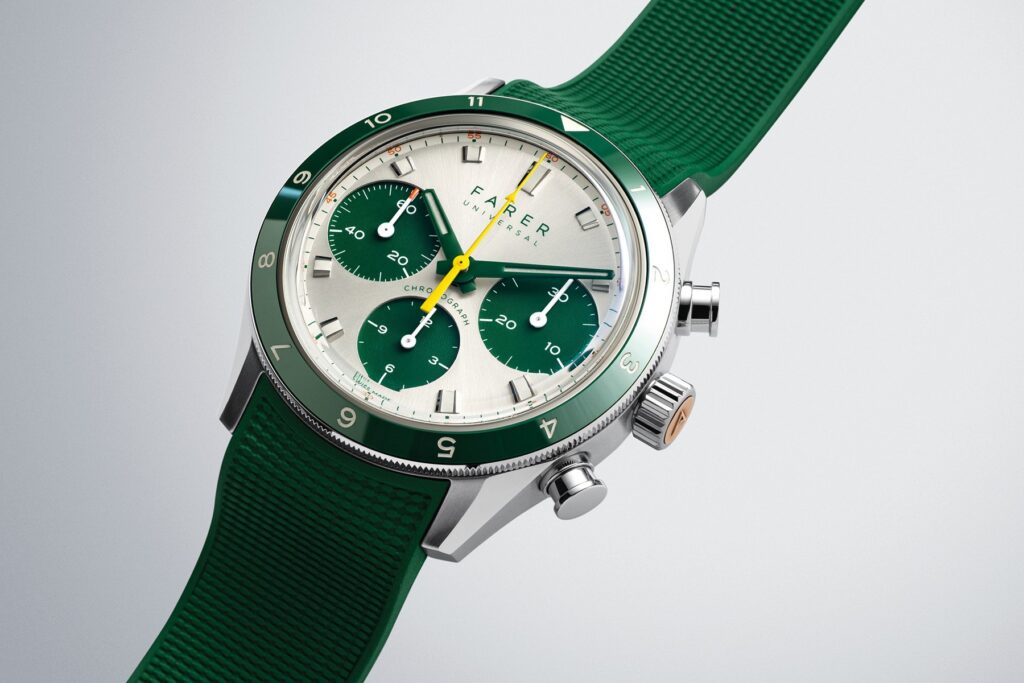
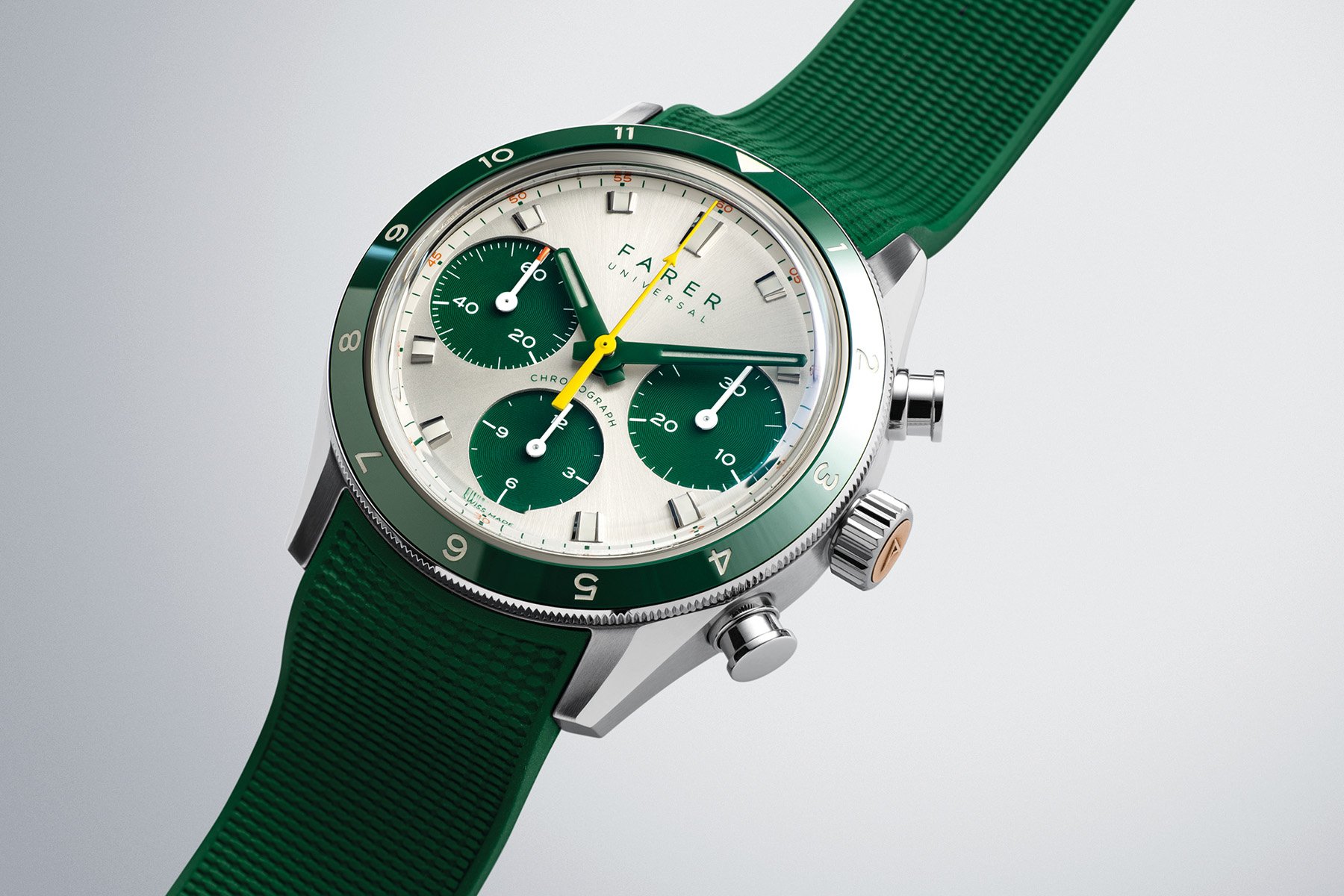
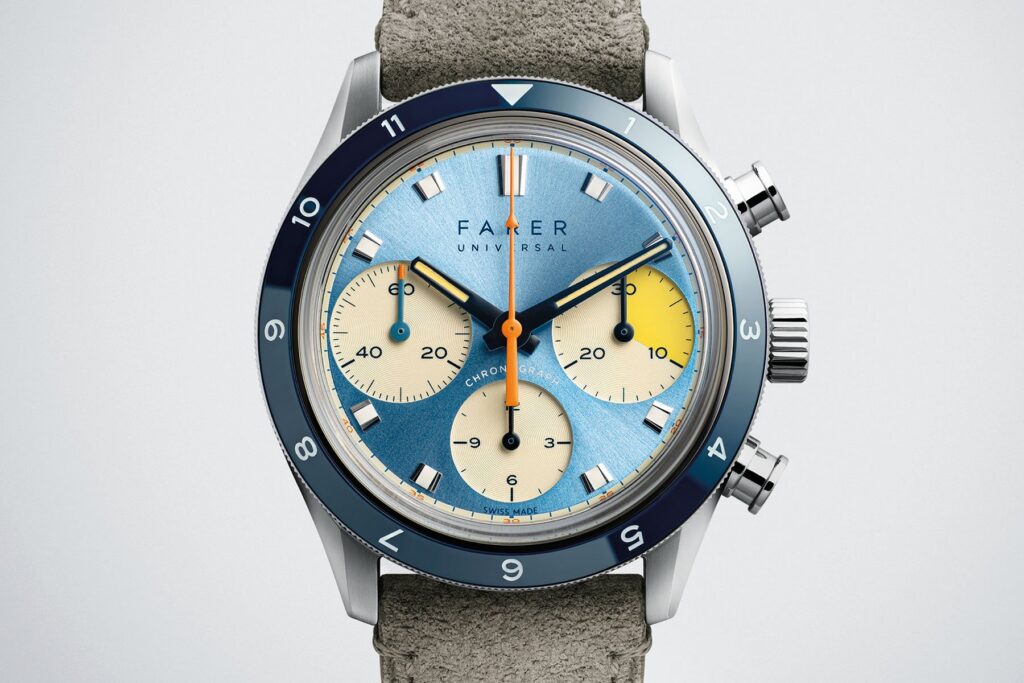
When I first saw the Gara reference, it had me. The silver sunburst dial paired with British racing green on the bezel and hands just looks right, and the yellow chronograph seconds hand gives it enough personality without trying too hard. Farer has always had a strong eye for color, and I think this might be one of their best executions yet. The collection launches with three references. The Volante features a sky-blue sunburst dial with eggshell-white subdials, accented by orange and yellow touches. The Gara takes the silver-and-green route.
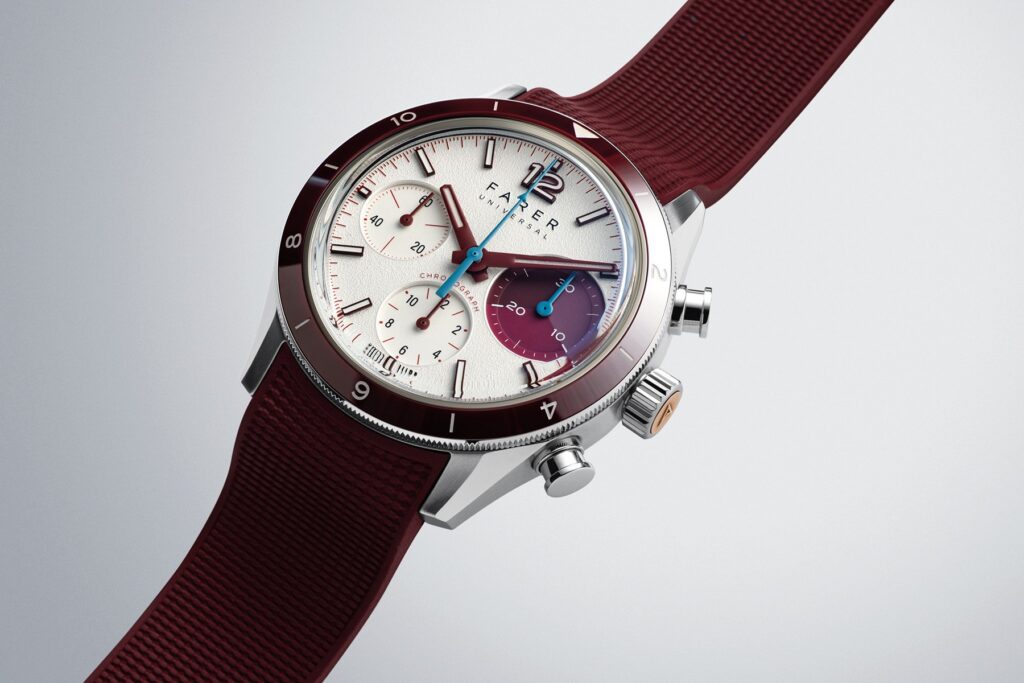
And the Libre does something different entirely, using a “big eye” tricompax layout where the 30-minute totalizer is significantly larger than the other two subdials. Its grainy white dial, burgundy bezel insert, and light blue chronograph hands give it a completely separate personality from the other two. All three arrange their subdials in a tricompax configuration with the 30-minute totalizer at 3, the 12-hour totalizer at 6, and small seconds at 9.
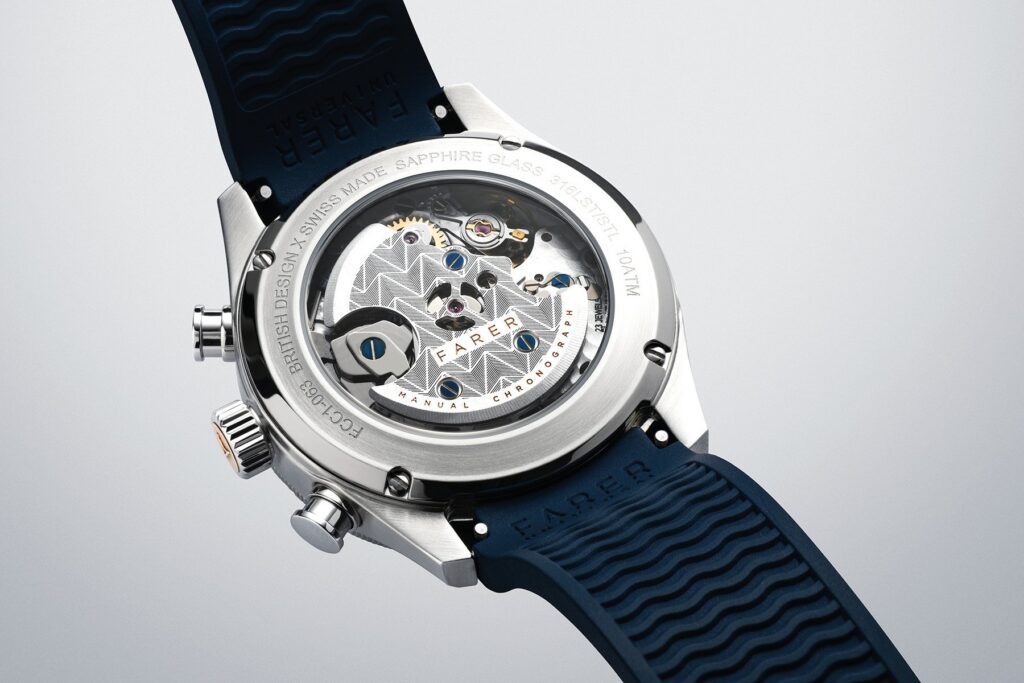
One detail worth paying attention to is the movement choice. Automatic chronograph calibers didn’t exist until 1969, which means every iconic racing chronograph from the early part of that decade ran on a hand-wound movement. Farer went with the Sellita SW510M b in Elaboré grade, offering 63 hours of power reserve and some nice finishing visible through the sapphire caseback. It’s a thoughtful call that lines up with the era they’re referencing, and it keeps the case profile in check at 38mm.
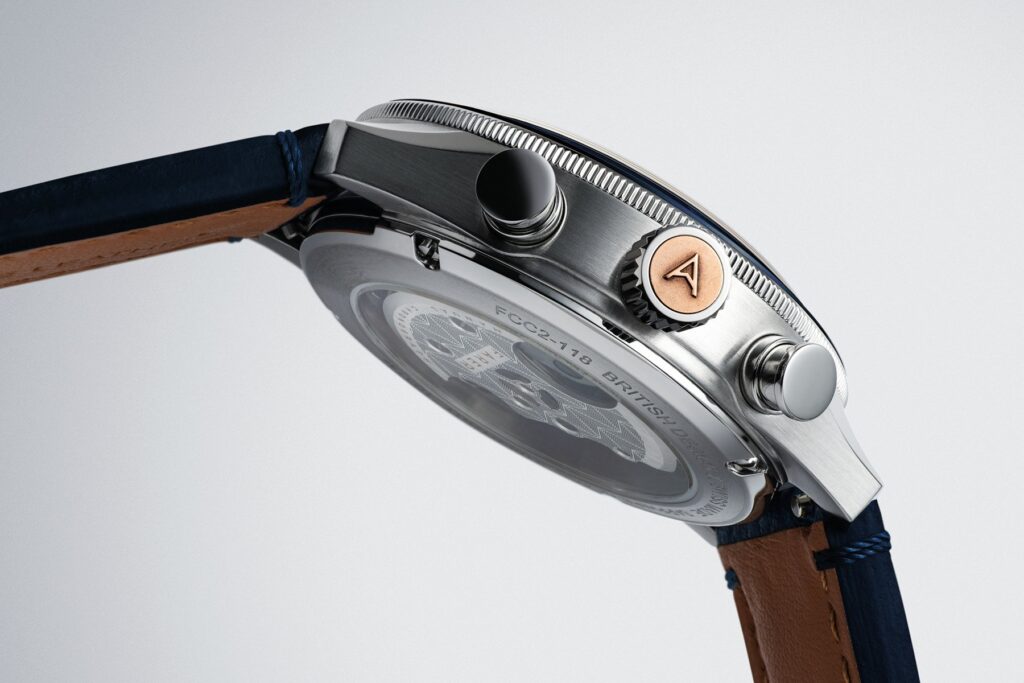
The bezel is another smart touch. It uses a ceramic insert with a 12-hour count-up scale and a lume track, nodding to the Autavia-style bezels that defined this genre. The applied hour markers and hands carry Super-LumiNova as well, with emission colors varying by reference. These are details that suggest Farer actually studied the source material rather than just borrowing the aesthetic.
Pricing lands at $2,095 on a fitted rubber strap that’s color-matched to the dial, with nine leather and suede strap options and a Milanese mesh bracelet available for an additional $20. At that price, you’re getting a hand-wound chronograph with a ceramic bezel, sapphire caseback, and the kind of colorwork most brands at this level don’t attempt. I wouldn’t call it cheap, but the value feels fair for what’s in the box.
Whether Farer can keep pulling off this genre-hopping approach without eventually spreading too thin is an open question. For now, though, the Racing Chronograph looks like a strong entry. And the Gara has me thinking about how well that green would wear on a fall afternoon.

Co-Founder & Senior Editor
Michael Peñate is an American writer, photographer, and podcaster based in Seattle, Washington. His work typically focuses on the passage of time and the tools we use to connect with that very journey. From aviation to music and travel, his interests span a multitude of disciplines that often intersect with the world of watches – and the obsessive culture behind collecting them.