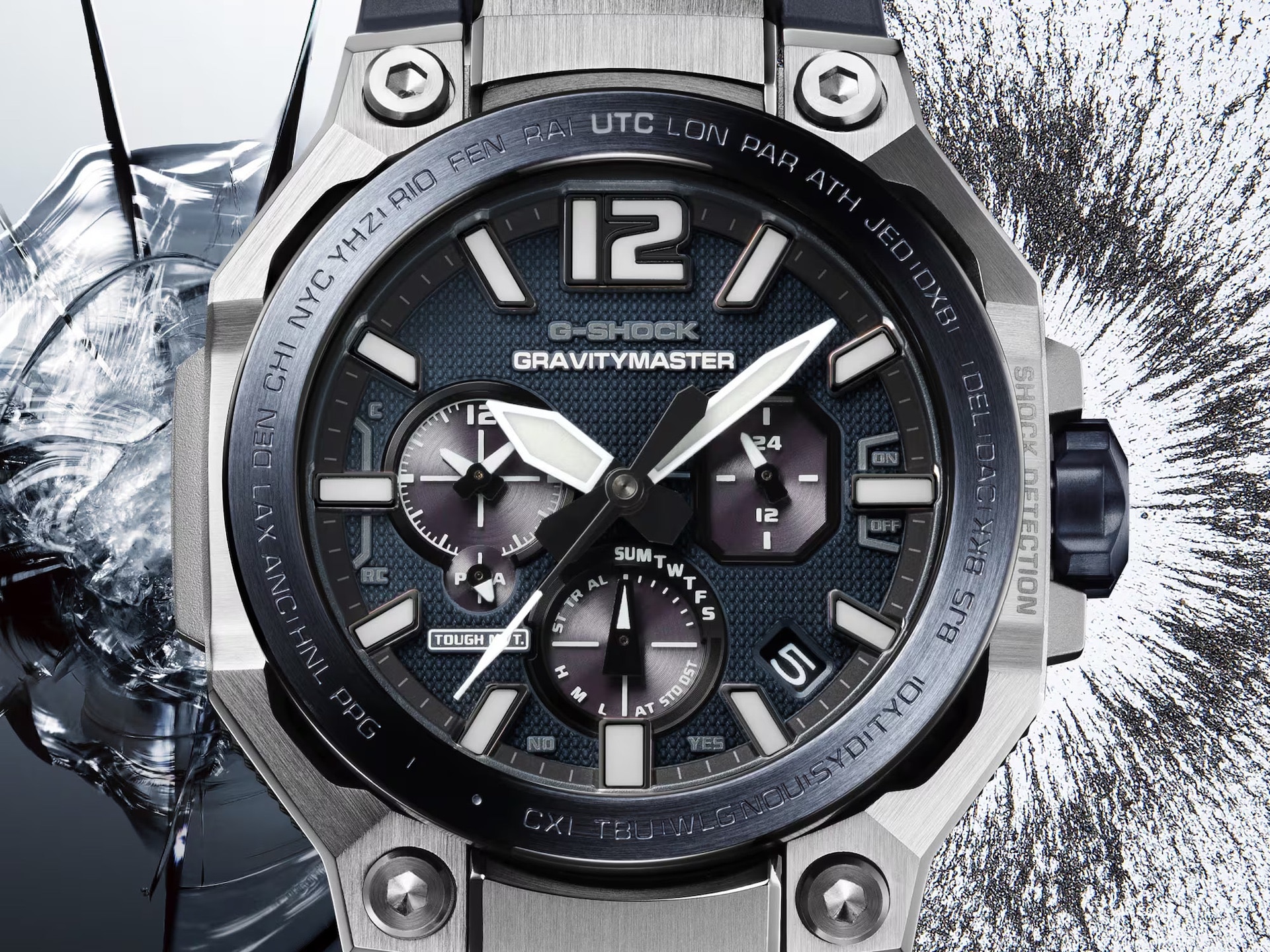
Analog watches have a flaw that digital displays don’t. Motor-driven hands can slip off their reference points after a hard enough knock, and the watch will keep showing you the wrong time while its internal clock ticks along just fine. Casio has fought this for years with hand-correction routines that run on a fixed schedule, checking alignment every so often whether the watch took a hit or not. Its newest pilot’s model tries a different approach, watching for the impact itself and snapping the hands back the moment they move. That watch is the new Casio G-Shock GRAVITYMASTER GWR-B3000.
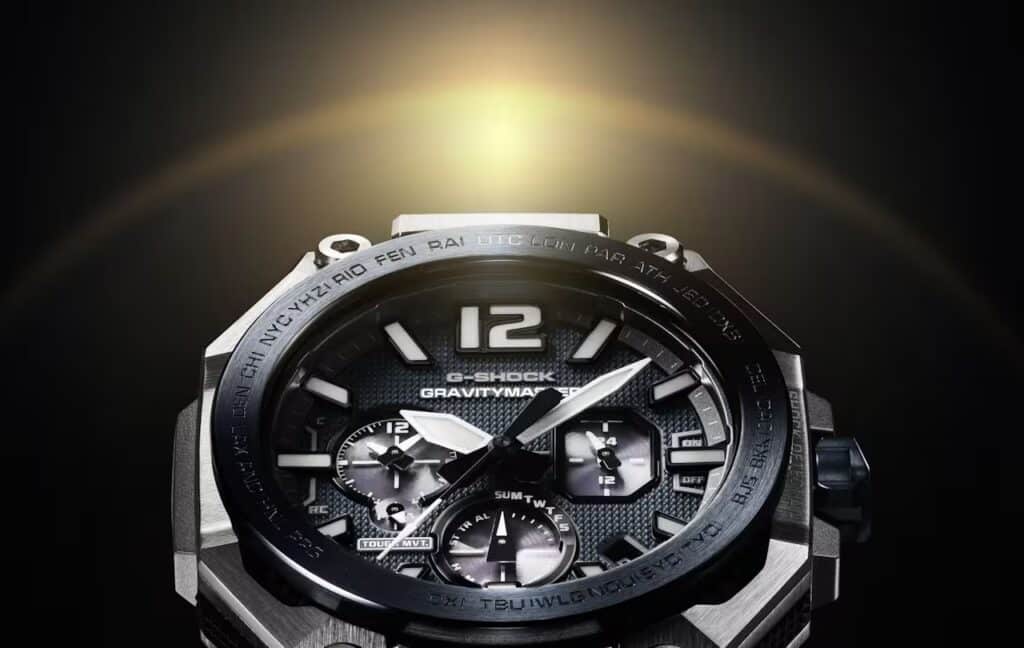
The GRAVITYMASTER has always been the technical showcase of the Master of G lineup, the aviation branch built around Triple G Resist, which guards against shock, centrifugal force, and vibration. It arrived in 2014 with the GPW-1000 and Casio’s GPS Hybrid Wave Ceptor system, pairing satellite and radio signals to set the time. The GWR-B1000 pushed the format further in 2019 with a carbon build and Casio’s first Tough Movement, a solar analog caliber designed to regulate itself. Nothing has topped that flagship since. The GWR-B3000 finally steps in as its successor, built around a second-generation Tough Movement.
What stands out is how far Casio extended that movement’s job. The Tough MVT.2 adds two functions aimed straight at the hand-drift problem. Auto hand home position correction now works with shock detection, so a strong impact triggers an immediate realignment instead of waiting for the next scheduled check. A magnetic field sensor covers the other common culprit, pausing the hands when it senses a strong field and returning them once the field clears. Neither feature changes how the watch keeps time, since solar power, Multiband 6 radio, and Bluetooth already handle that. What they protect is the part you actually read, which is also the part most likely to lie to you after a rough day.
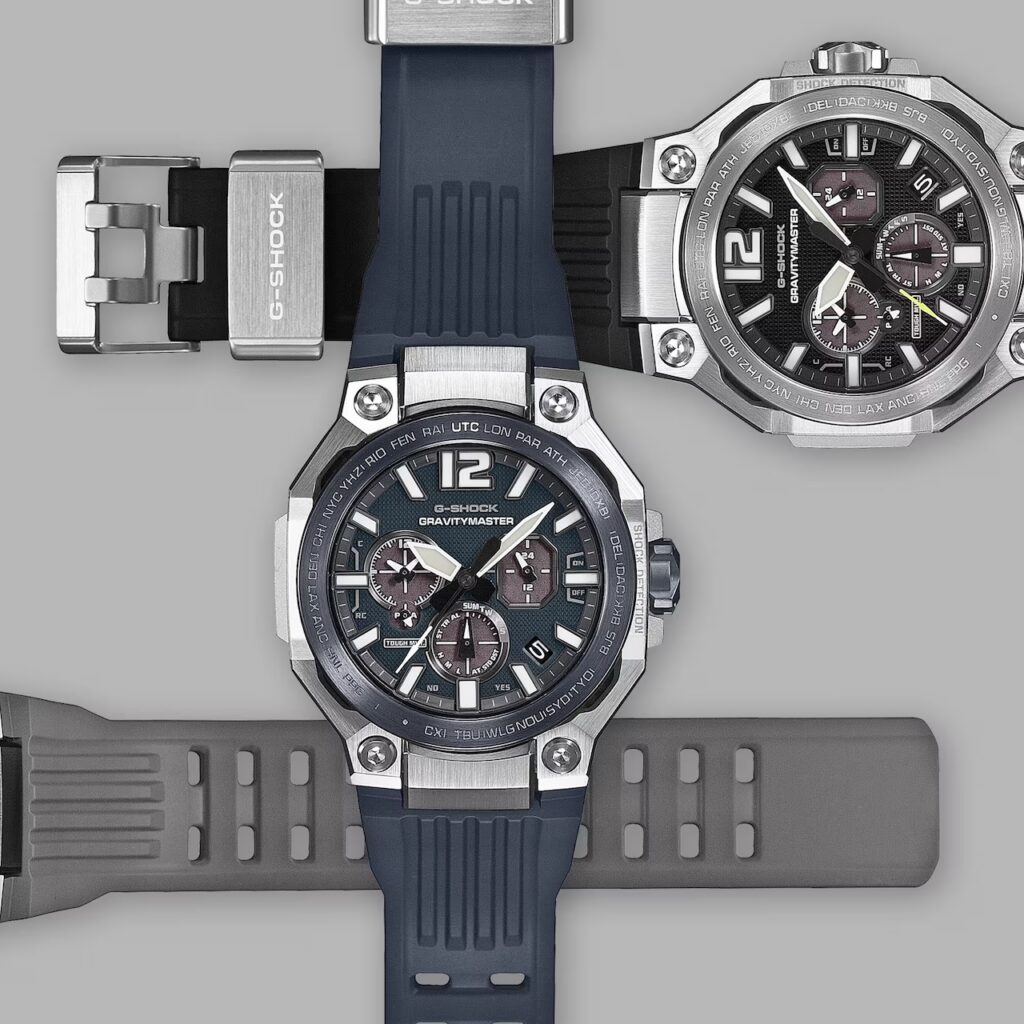
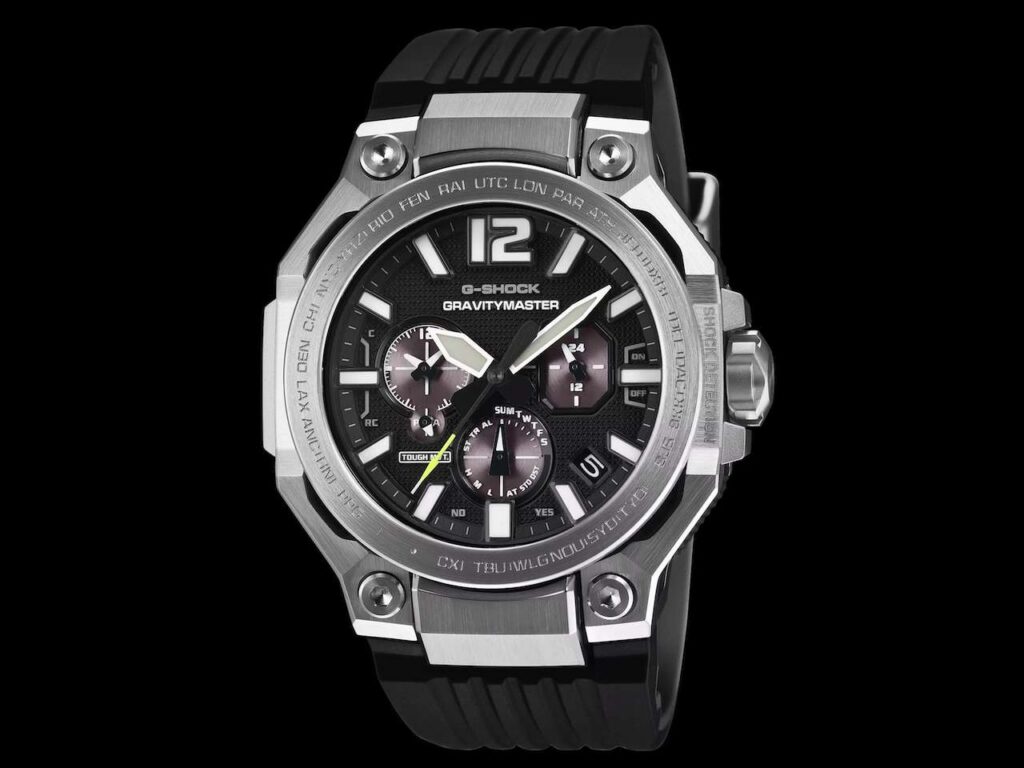
The case earned its own rethink. Casio built what it calls a dual hollow structure, with a carbon fiber-reinforced inner case and an outer shell of stainless steel protectors formed through metal injection molding, resin shock absorbers left visible between them. The center case looks like it floats, held at four points, and the whole shape was worked out through topology optimization and stress simulation. At 56.7mm by 47.3mm and 102 grams, it reads large on paper but stays lighter than the metal suggests. There’s a dark, low-reflection dial, an in-dial solar system, sapphire crystal, and 200m of water resistance. The bezel drops the usual G-Shock logo for engraved world time city codes, and the flight log and dual-time UTC display cover the actual aviation brief.
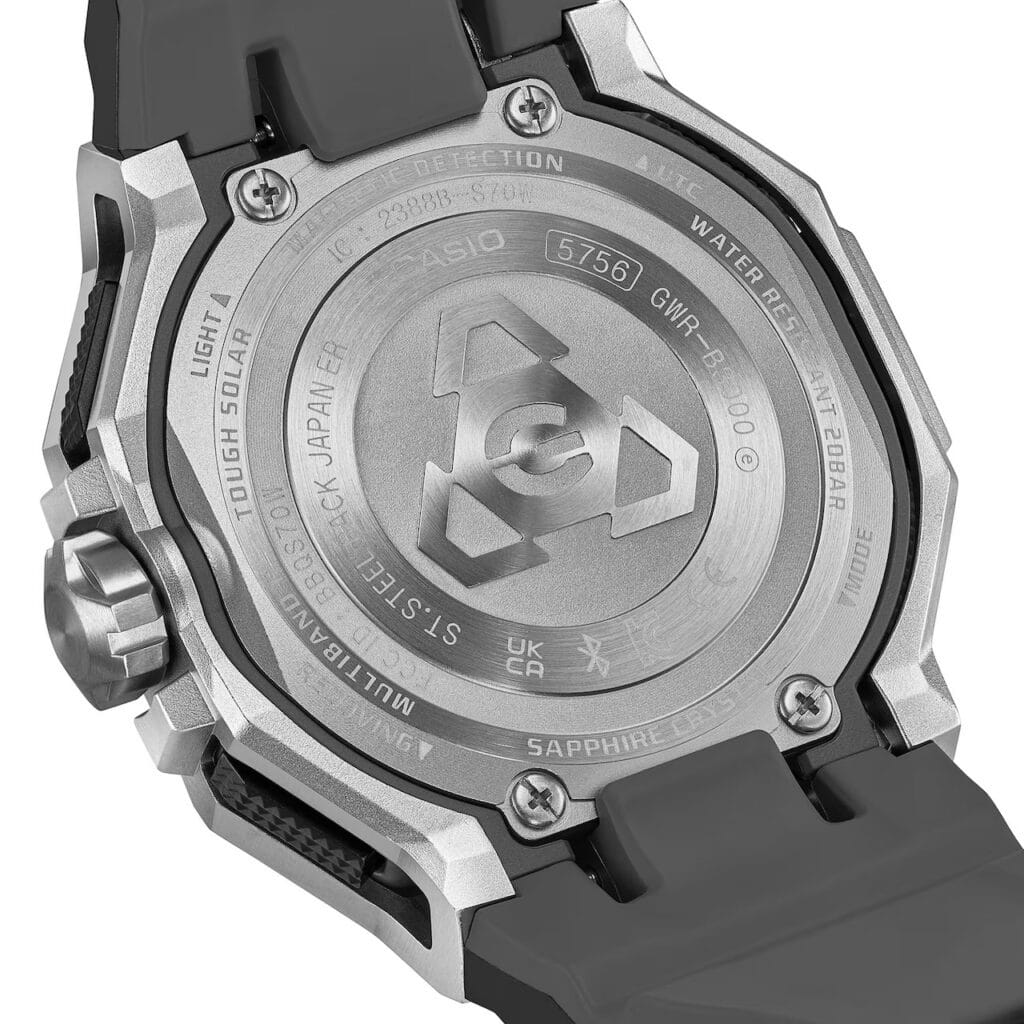
How much of this matters outside a cockpit is the open question. Most owners will never pull the g-forces the Supersonic pitch is built around. The real test is whether correction that reacts to an impact feels different from correction on a fixed timer, over an ordinary day of desk knocks and door frames. Casio hasn’t announced US pricing or a firm release date yet, so the value case waits for another day. For now, the GWR-B3000 is an unusually clever answer to a problem most people never knew their analog watch had.

Co-Founder & Senior Editor
Michael Peñate is an American writer, photographer, and podcaster based in Seattle, Washington. His work typically focuses on the passage of time and the tools we use to connect with that very journey. From aviation to music and travel, his interests span a multitude of disciplines that often intersect with the world of watches – and the obsessive culture behind collecting them.