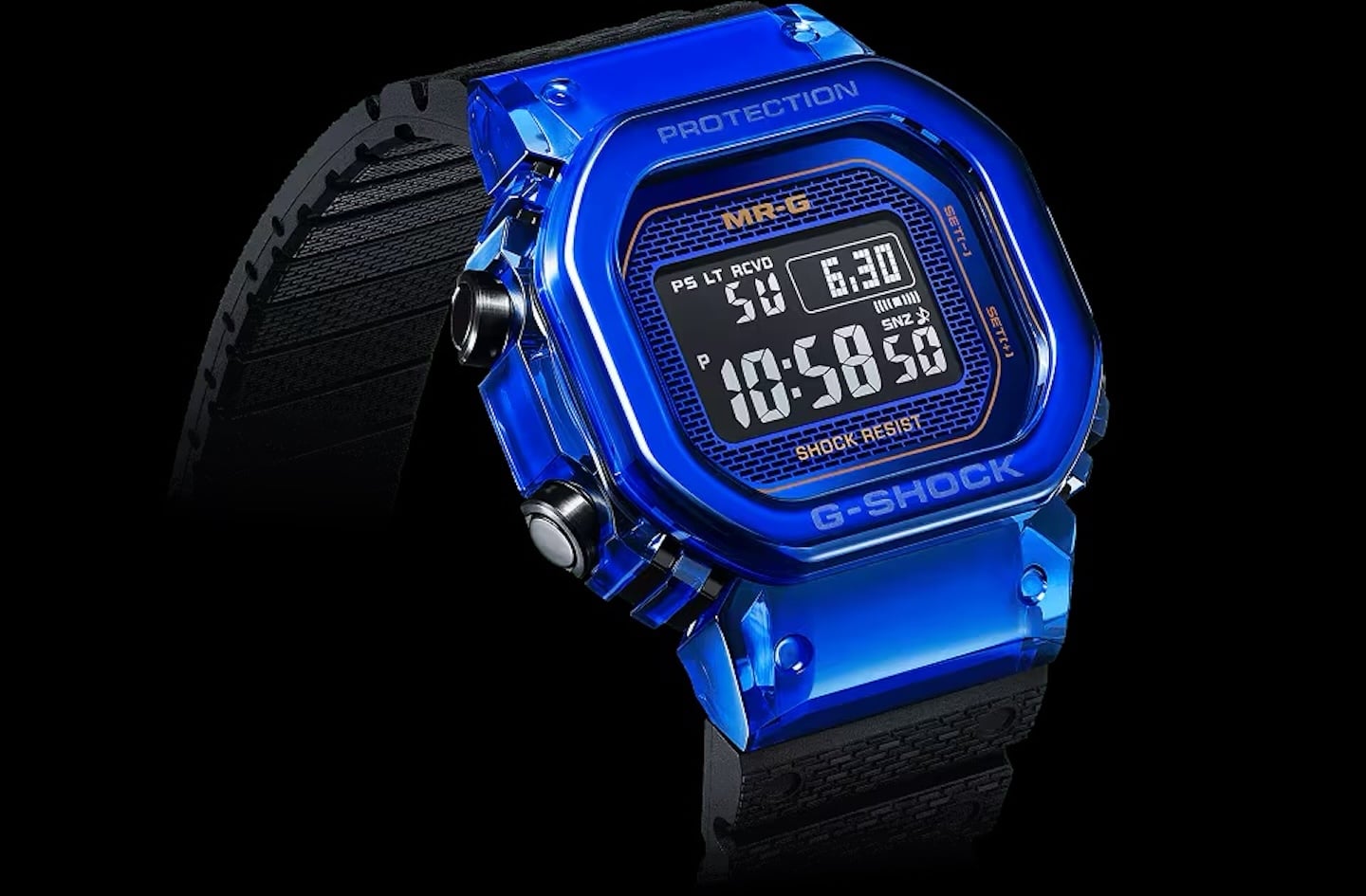
Casio has made an $80,000 G-Shock. For some perspective, you could spend another $4,600 and reach the current retail price of a platinum Rolex Daytona. Eyes wide… I’ve been staring at that comparison for a while.
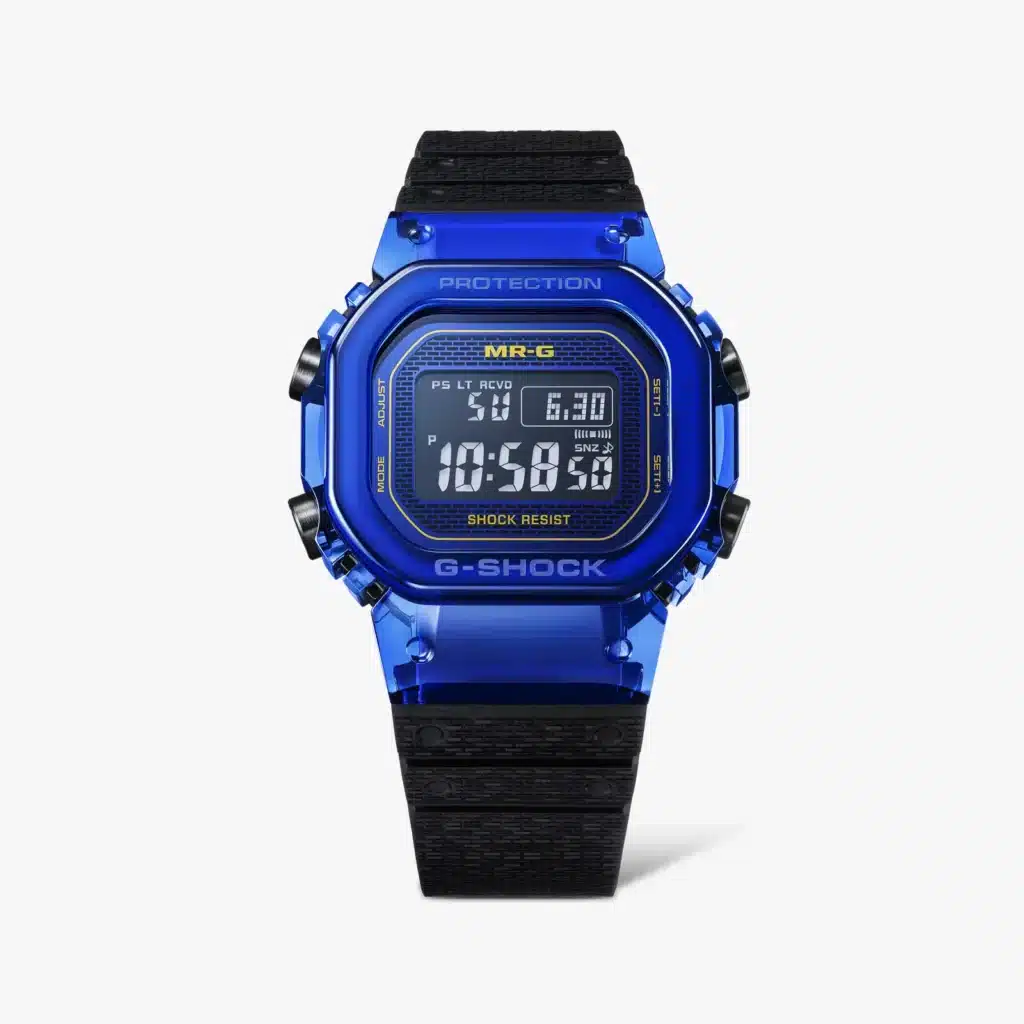
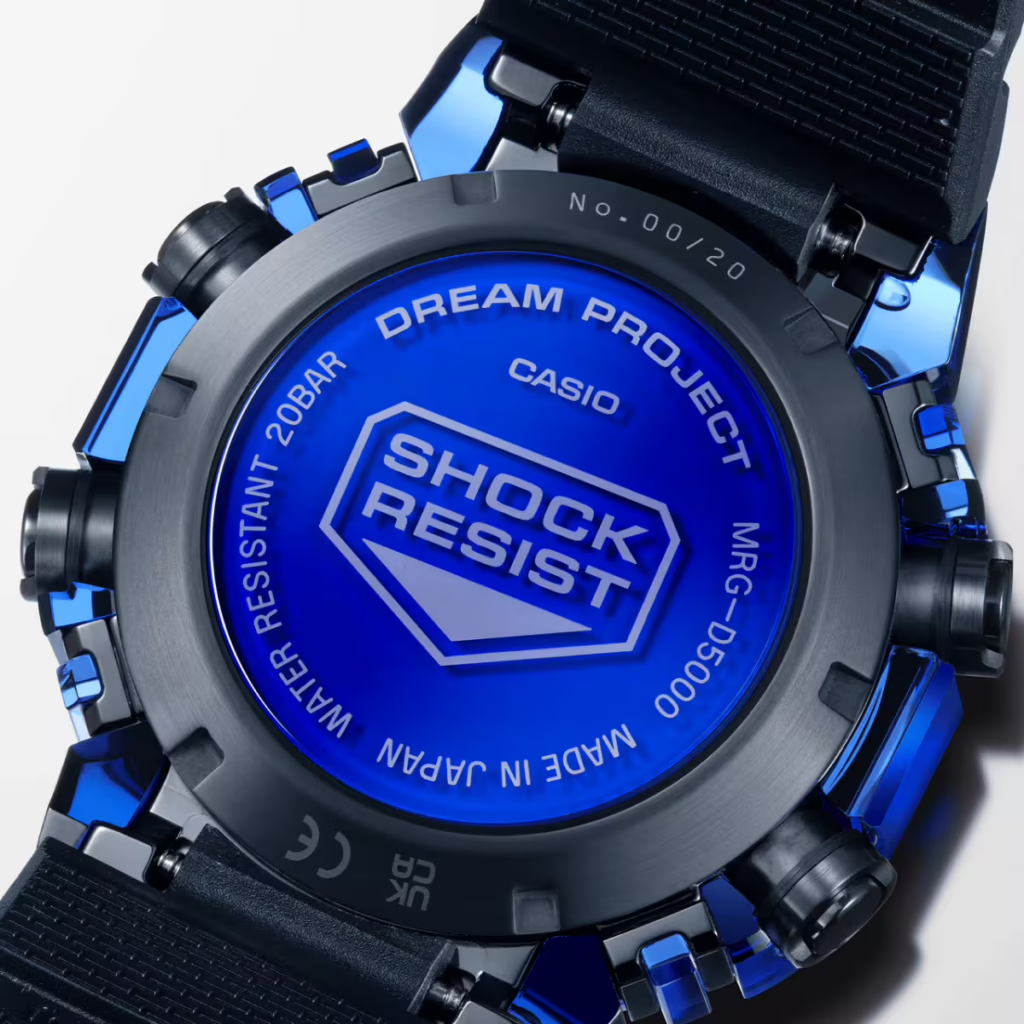
The new G-Shock MRG-D5000 is limited to 20 pieces worldwide and sits at the extreme end of Casio’s MR-G collection. Meanwhile, the platinum Rolex Cosmograph Daytona ref. 126506-0001 is currently priced at $84,600. That gets you a 40mm platinum chronograph with Rolex’s caliber 4131 and the Daytona’s ice-blue dial.
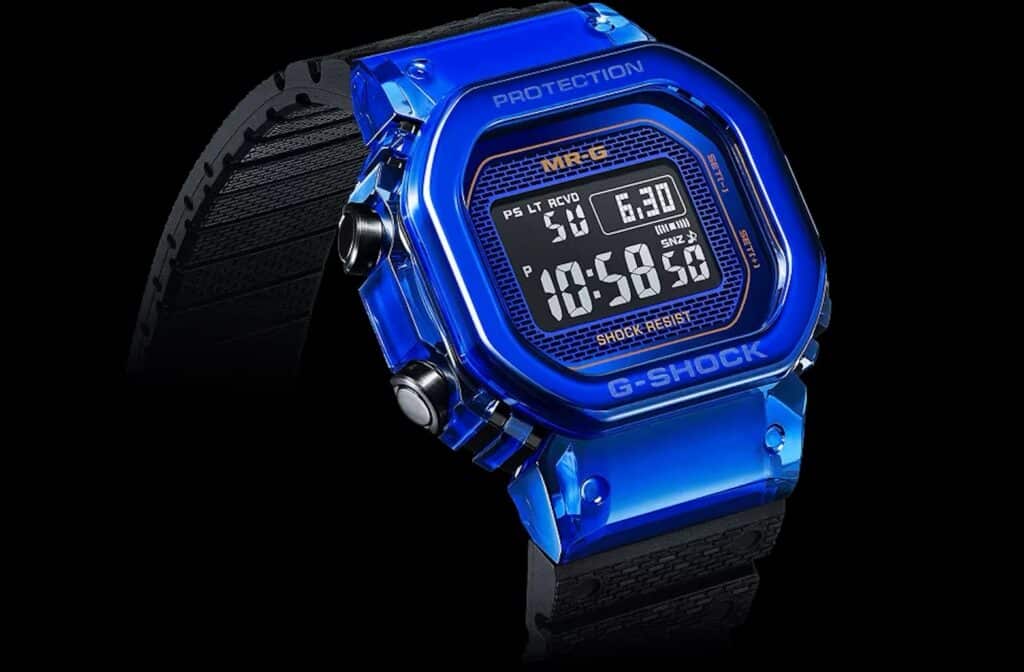
That particular Daytona also happens to be one of my favorite watches. So yes, seeing a square digital G-Shock separated from it by $4,600 is difficult for me to process. I think there’s more going on here than an outrageous price. The MRG-D5000 takes the familiar square G-Shock architecture and reconstructs much of its exterior from blue sapphire crystal. Sapphire is extremely resistant to scratches, though brittleness becomes a problem when the watch in question carries “G-Shock” on the dial.
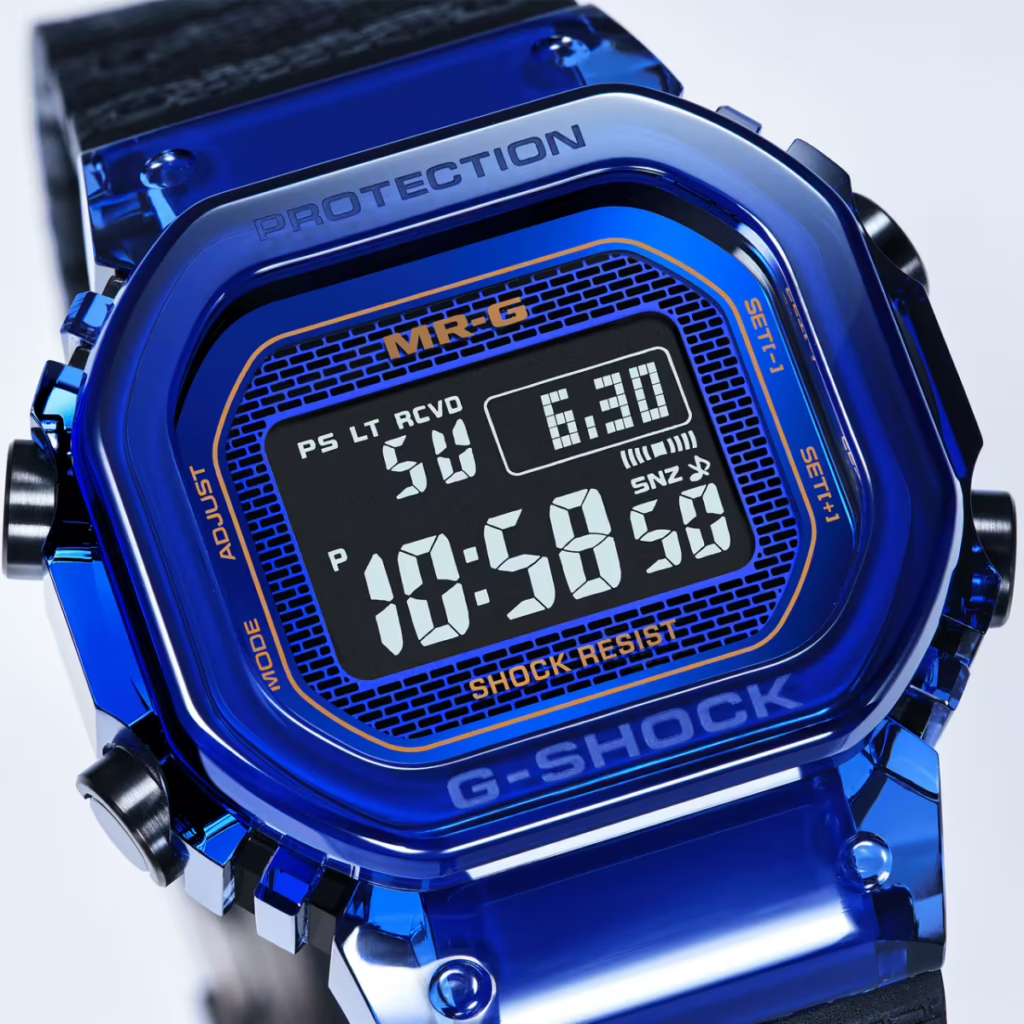
Casio says it addressed this through a new version of its Multi-Guard Structure. The case and bezel are made from multiple sapphire components fitted together around an internal titanium structure. Casio also avoided conventional screws in parts of the sapphire assembly because concentrated pressure could damage the material. That’s where this watch starts making more sense to me.
My take is that Casio needed to keep the square shape for the whole experiment to work. Make some wild, unfamiliar sapphire watch and the connection to G-Shock becomes considerably weaker. Here, you can glance at an $80,000 watch and immediately recognize the same basic design language Casio has been selling for decades. I think that’s funny, strange, and kind of great.
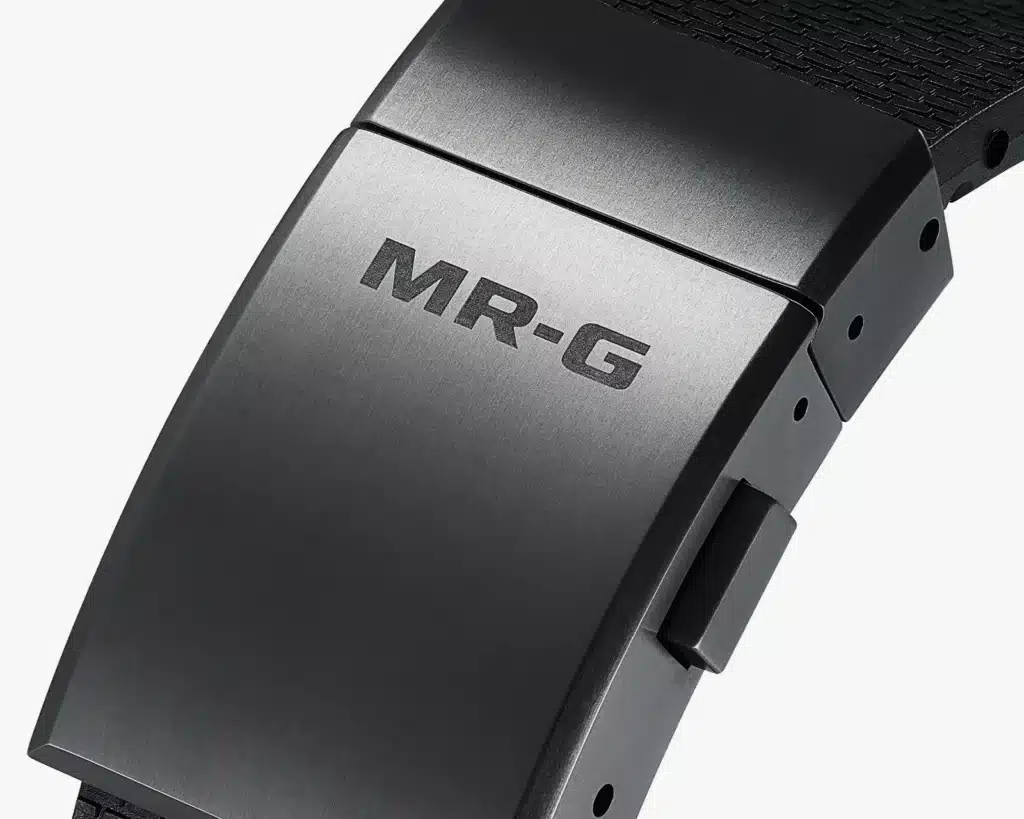
Casio also added 24-karat gold lettering around the display, including the MR-G logo and “SHOCK RESIST” text. Each watch is individually numbered. None of those details explains the price on its own, and I don’t think they’re supposed to.
Functionally, things remain surprisingly familiar. The MRG-D5000 measures 51.1 × 43.2 × 16.5mm, weighs 121 grams, and offers 200 meters of water resistance. You still get Tough Solar charging, Multi Band 6 radio-controlled timekeeping, a digital display, and a Dura Soft rubber strap with a folding clasp. And yes, we’re still talking about an $80,000 Casio.
In my opinion, the production number matters here. Casio is making 20 examples, with six reportedly allocated to the United States. At that scale, I have an easier time viewing the MRG-D5000 as an expensive manufacturing exercise. The project also has some history behind it, with Casio having shown sapphire G-Shock concepts as far back as 2017. Does any of that make $80,000 easy to rationalize? I don’t think so. We’re talking about platinum Daytona money. That remains completely absurd to me, especially when the Daytona is a watch I already hold in very high regard.
Still, I’m having a harder time dismissing the MRG-D5000 than I expected. Let’s face it… nobody is going to beat these things around. Casio took sapphire, a material that creates some obvious problems for a watch built around shock resistance, and figured out how to construct a G-Shock around it. Then Casio kept the square case, digital display, solar charging, 200-meter water resistance, and the general familiarity that makes a G-Shock a G-Shock. To me, that familiar shape is what makes this whole ridiculous $80,000 experiment work. I love this crazy hobby sometimes.

Co-Founder & Senior Editor
Michael Peñate is an American writer, photographer, and podcaster based in Seattle, Washington. His work typically focuses on the passage of time and the tools we use to connect with that very journey. From aviation to music and travel, his interests span a multitude of disciplines that often intersect with the world of watches – and the obsessive culture behind collecting them.
Why does my casio for sale for 10 times as much as the G-Shock?