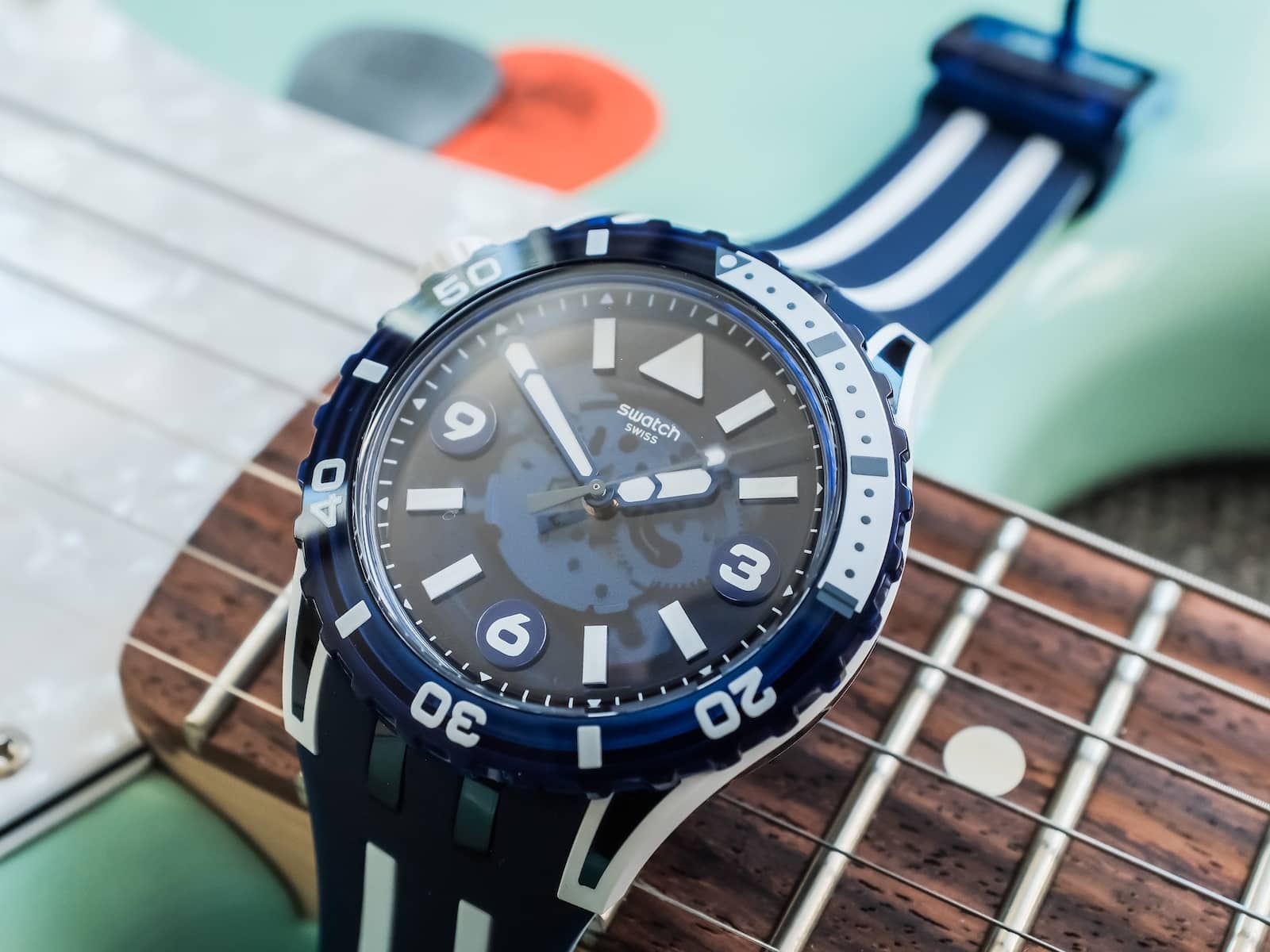
Earlier this year, two very different dive watches passed through my rotation, and I haven’t stopped thinking about either one. The first was a Casio Duro borrowed from a friend, a watch I’d somehow avoided for nearly a decade of TBWS despite the entire internet insisting I try one. The second was the Swatch Scubaqua Sea Wasp, a translucent blue oddball that Swatch sent over for review. They occupy the same general territory: affordable, quartz, dive-adjacent, and completely unbothered by what luxury watchmaking is up to. In practice, they represent two totally different ideas of what cheap fun looks like on the wrist.
The Duro is the sensible answer. It’s the watch people recommend when someone asks for a real diver under $100, and communities like r/DuroGang have turned it into a kind of shared secret. The Sea Wasp is the opposite of sensible. It’s oversized, loud, see-through, and priced nearly double the Casio. So instead of asking which one is “better,” a question that misses the point with watches like these, I want to figure out which kind of fun you’re actually shopping for. Practical cheap fun and weird collector fun rarely live in the same watch box for the same reasons.
Overview and Identity
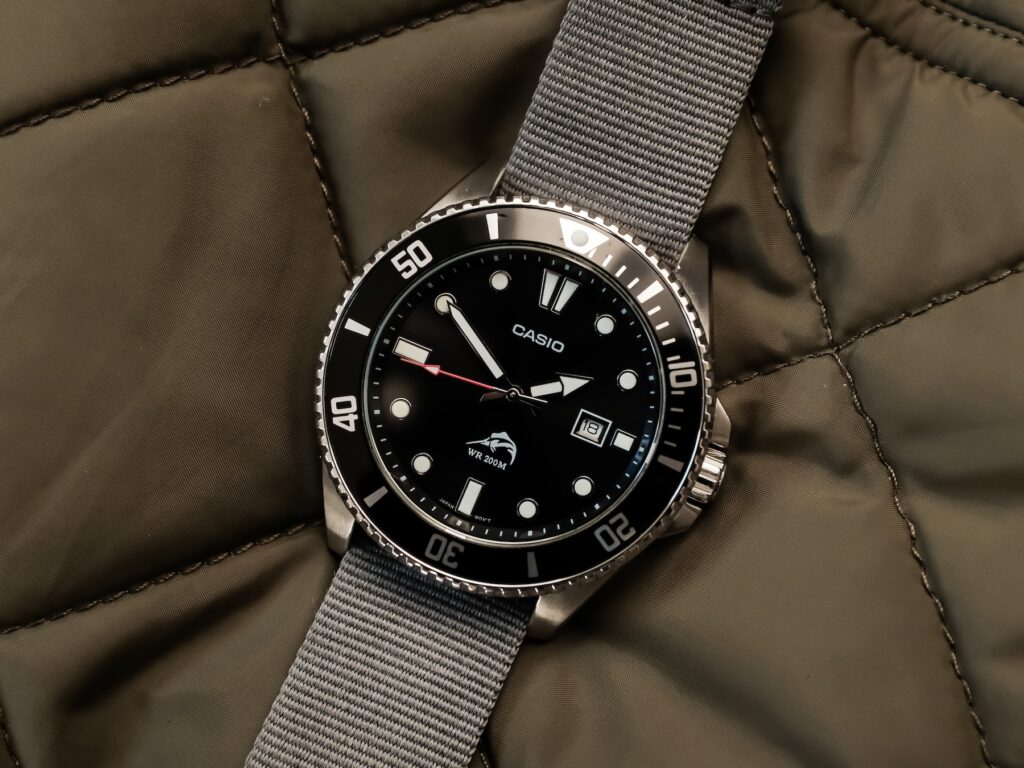
The Casio Duro MDV106 has been hiding in plain sight for years. It picked up a strange second life once it started appearing on Bill Gates’ wrist, and the community around it has only grown since. When I finally spent real time with one for my full Casio Duro review, the mythology became very real to me. It’s a proper 200-meter diver with a screw-down crown, a screw-down caseback, and the marlin logo that collectors treat as inseparable from its identity. At $84.95 on Casio’s site, and often much less at street prices, it’s one of the safest recommendations in the hobby. My loaner went back to its owner, and I’ve been browsing listings for my own ever since.
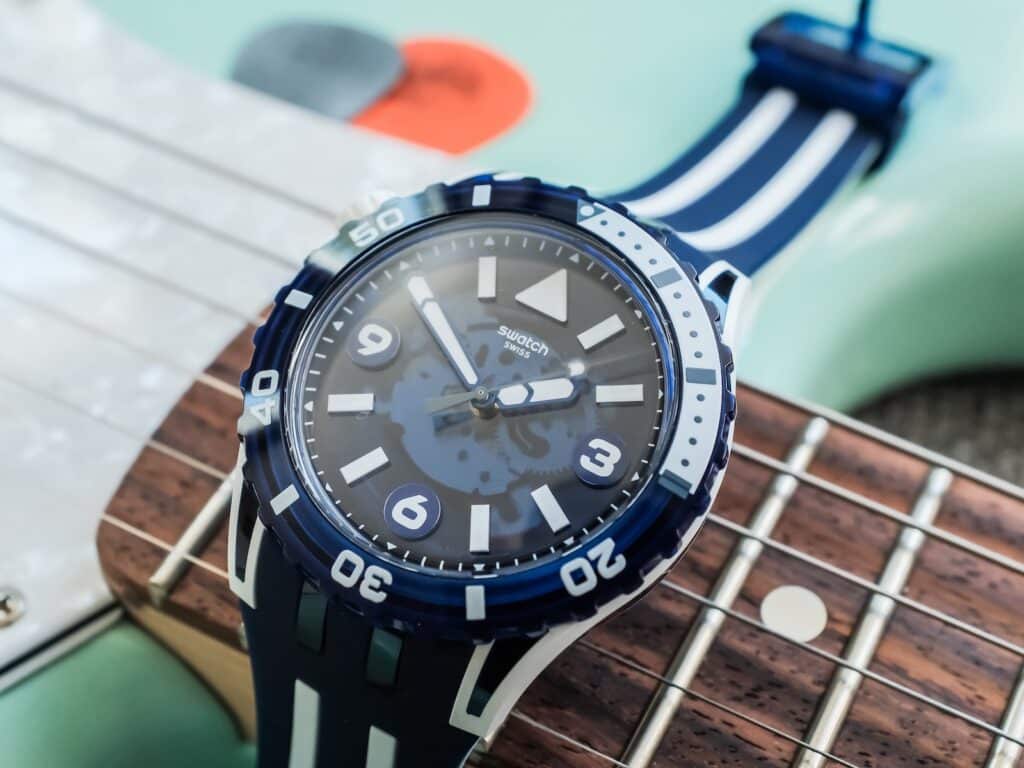
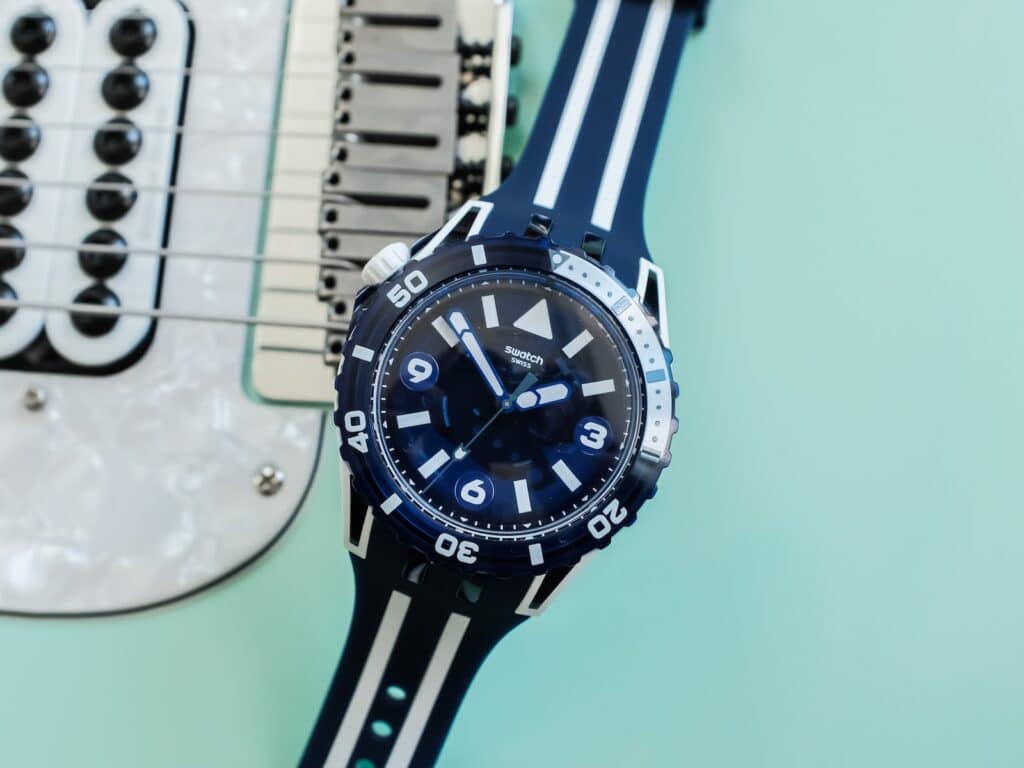
The Swatch Scubaqua Sea Wasp comes from a completely different place. With all the attention on the Moonswatch and the Blancpain collaboration, it’s easy to forget that Swatch runs its own dive lineup with no borrowed design language whatsoever. As I found in my Sea Wasp review, everything about it revolves around color and transparency. The translucent blue case matches the dial, bezel, and strap, and you can see portions of the quartz movement through the dial itself. The crown sits at 10 o’clock, the case is bio-sourced, and at $155 it costs nearly twice what the Duro does.
- The Casio Duro is the internet’s default budget diver, a straight-faced 200-meter tool watch with a cult following it never asked for.
- The Swatch Scubaqua Sea Wasp is unapologetically Swatch, a translucent, oversized design exercise that exists purely to be enjoyed.
Design and Wearability: Straight-Faced Tool vs Translucent Toy
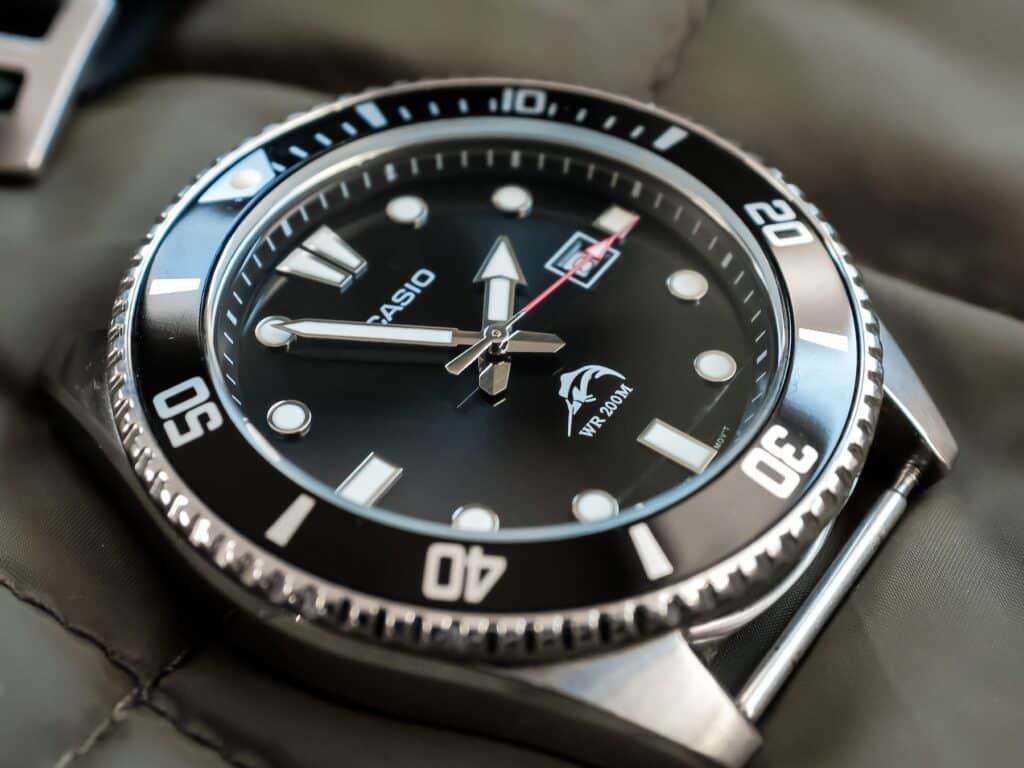
The Duro’s numbers made me nervous at first. A 44.2mm diameter, 12.1mm of thickness, and a 48.5mm lug-to-lug measurement don’t read as subtle, and I wondered whether it would feel needlessly oversized. On the wrist, that concern faded quickly. The short lug-to-lug and the way the lugs curve downward keep the case from sprawling, and it wears large without clumsiness, much like a Seiko Turtle. The finishing is handled with more care than the price suggests. Brushed top surfaces contrast with polished sides, and a subtle bevel runs along the case to break things up. I once thought a downsized Duro sounded appealing. Time with this one changed my mind, and I suspect a shrink would alter the exact character people are attached to.
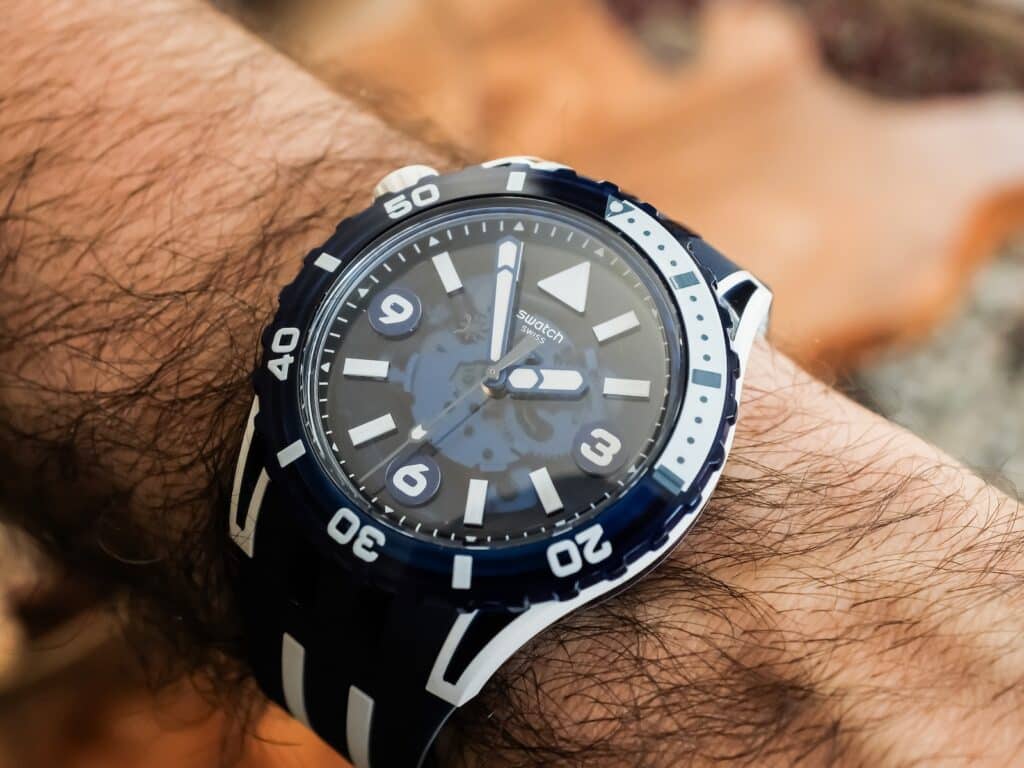
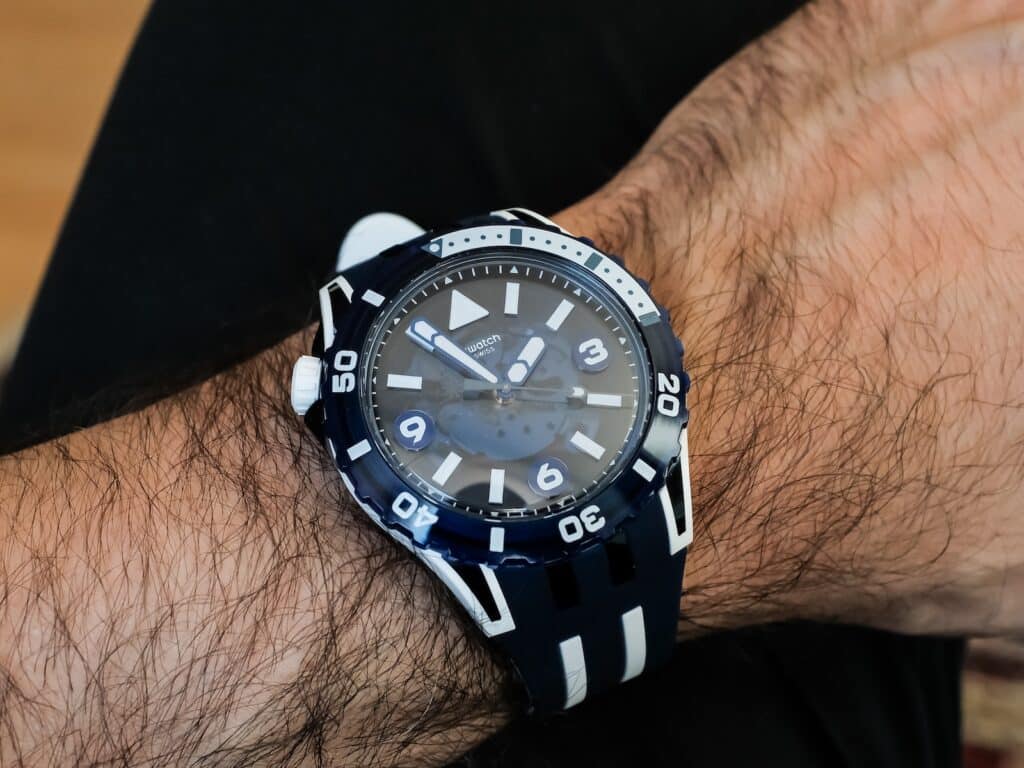
The Sea Wasp is technically the bigger watch, at 44mm across, 15.4mm thick, and roughly 51.5mm lug-to-lug, yet it was the one I stopped noticing first. The bio-sourced case keeps the weight remarkably low, so it never develops the top-heavy feel that usually comes with divers this size. The 10 o’clock crown placement removes the one contact point that bothers me most at a desk. I rarely felt it at all. Where the Duro tries to disappear into normal life, the Sea Wasp does the opposite in every visual sense. It’s a bright blue slab of translucent material, and it never tries to tone itself down. If you buy this watch hoping for discretion, that’s on you.
- The Duro wears smaller than its dimensions suggest, thanks to short, downturned lugs and a slim 12.1mm profile.
- The Sea Wasp is bigger on paper in nearly every direction, yet its featherweight bio-sourced case makes the size easy to live with.
Build Quality and Technical Approach
Once you get past the personalities, these two take different technical paths to the same low price bracket. The Duro plays everything by the traditional dive watch rulebook. The Sea Wasp rewrites the rulebook in translucent plastic and makes you wonder why you’re taking any of this so seriously. This is where the comparison gets more concrete: movements, cases, bezels, and the water resistance question that separates a beach watch from a tool watch.
Movements:
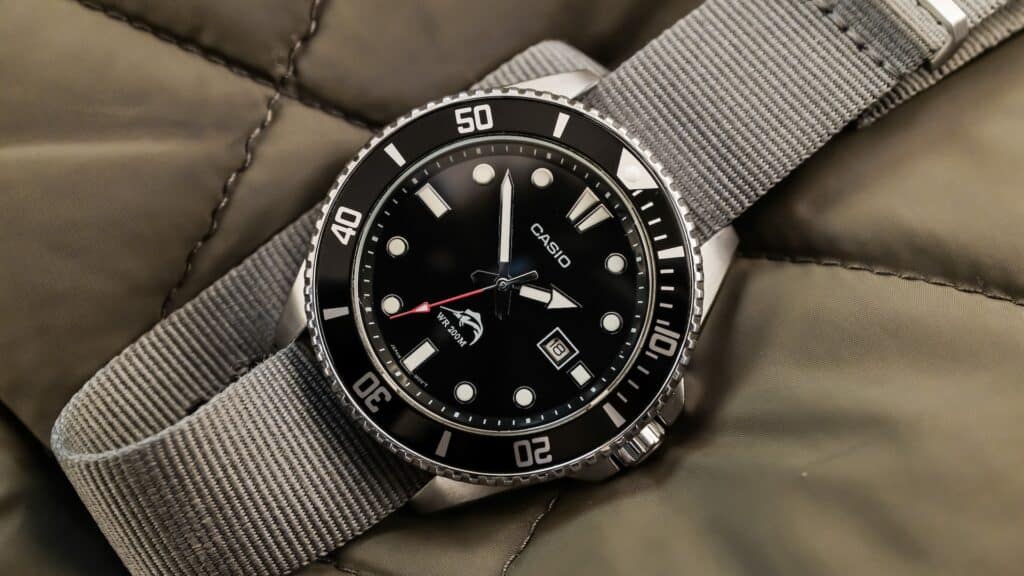
The Duro runs Casio’s 2784 quartz module, and the criticism it draws from mechanical purists has never made much sense to me. You get a quickset date, hacking seconds, accuracy around plus or minus 20 seconds per month, and roughly three years on a battery. In daily use, that means the watch is simply ready. I never thought about winding or setting it, and because of that I wore it for longer stretches than I realized. For an inexpensive diver built for durability, quartz is the honest choice.
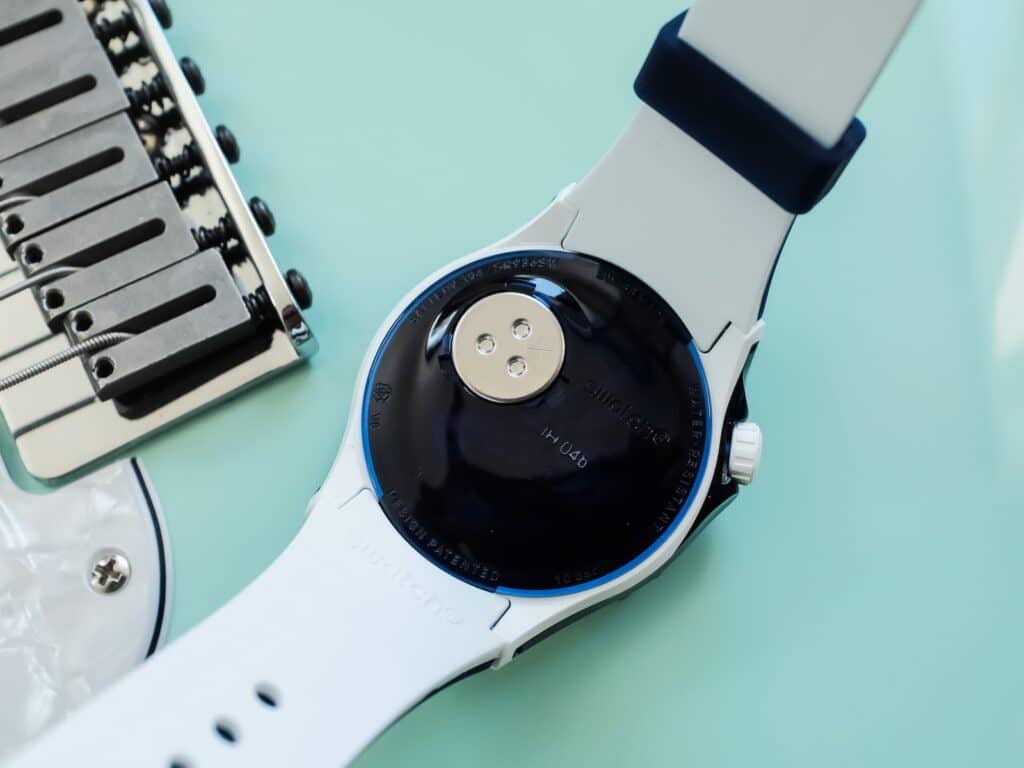
The Sea Wasp uses a simple three-hand quartz movement with no date, which suits the clean dial layout. The trade-off is noise. The ticking is clearly audible through the lightweight case, and while I stopped noticing it on the wrist, in a quiet room it was hard to miss. Battery changes happen through a small access panel on the caseback, a practical solution that keeps the case sealed the rest of the time.
Case Construction and Finishing:
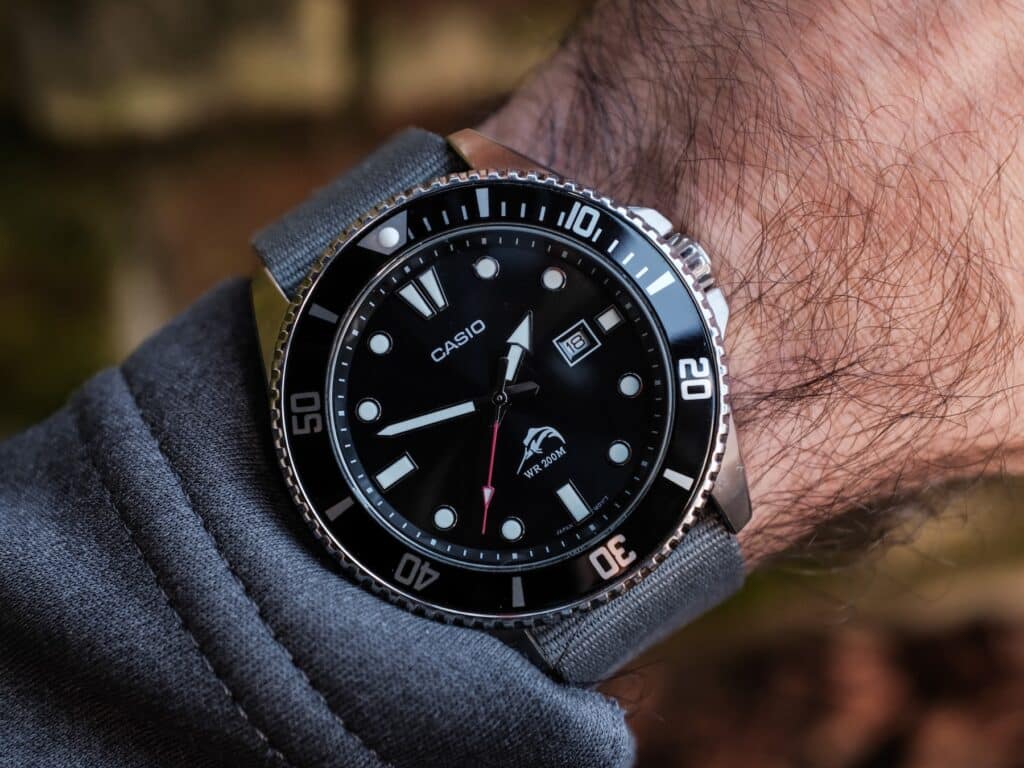
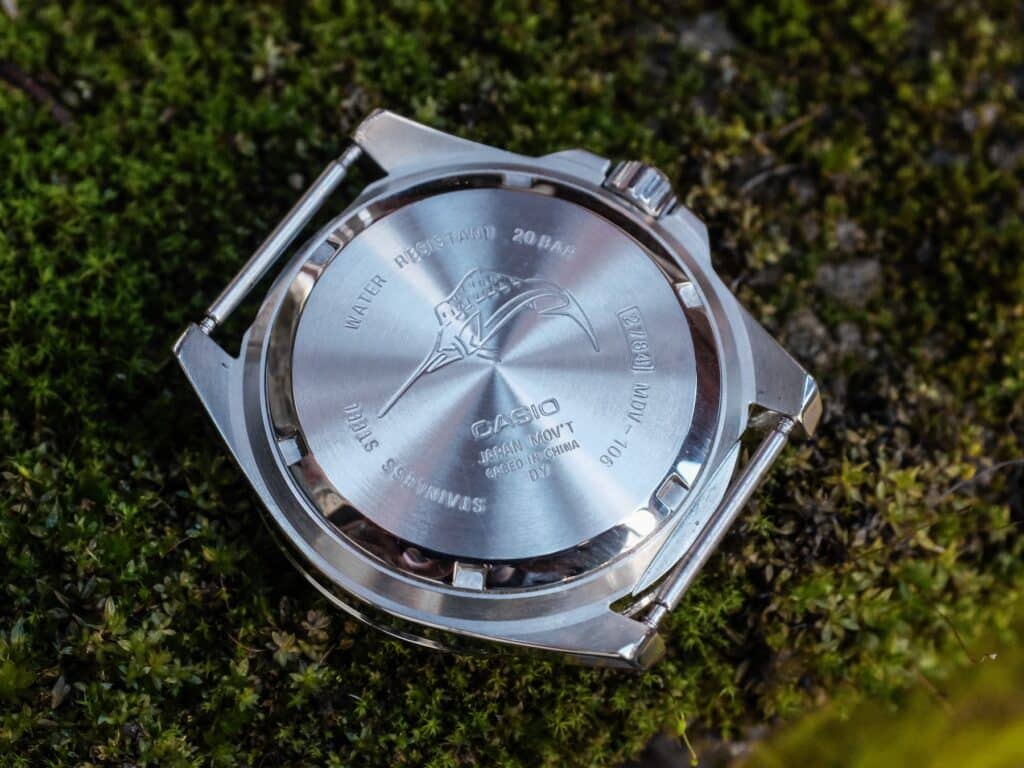
The Duro’s case is standard stainless steel diver architecture done well. The screw-down crown sits between proper guards, the caseback screws down, and the lugs are nicely shaped rather than functional stubs. That brushed and polished contrast, plus the light-catching bevel, gives the case a deliberate silhouette that never reads as generic. Nothing here is exotic. Everything here is correct.
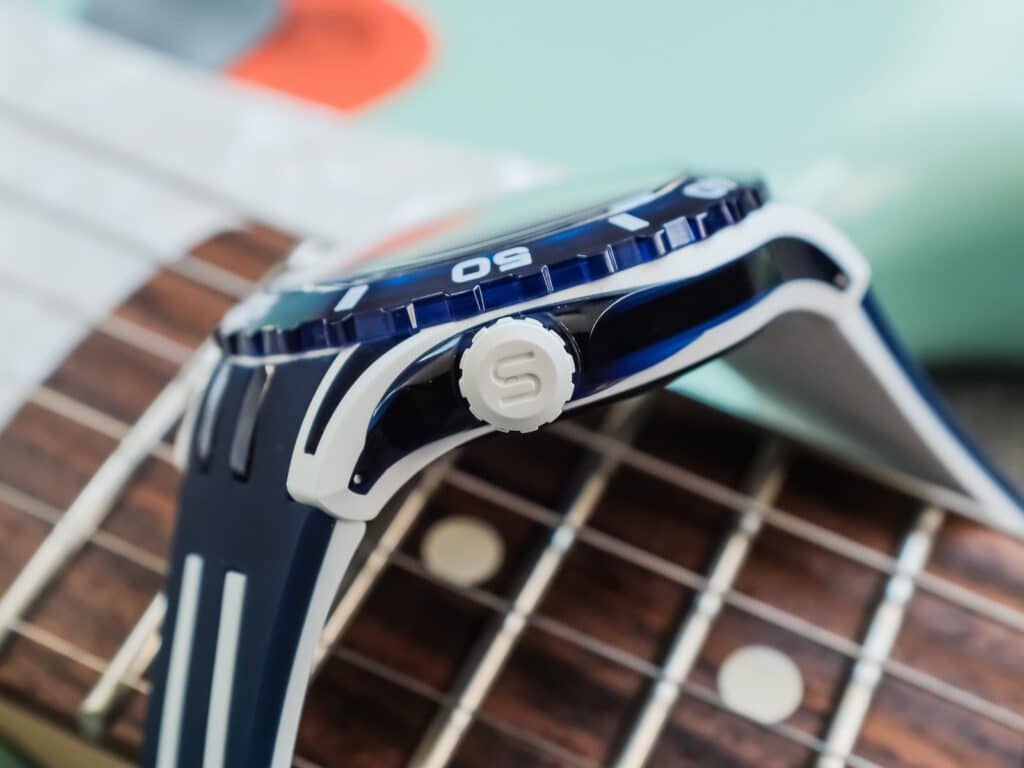
The Sea Wasp’s bio-sourced construction is the whole point of the watch, and it changes the ownership math. The material keeps weight down and lets Swatch pull off the translucent effect, though it comes with a proprietary lug design that shuts down the strap-swap hobby entirely. The included blue silicone strap is comfortable and color-matched, and I had no complaints during my time with it. Even so, collectors who rotate straps constantly will feel boxed in compared to the Duro’s conventional 22mm lugs and healthy aftermarket.
Crystals and Bezels:
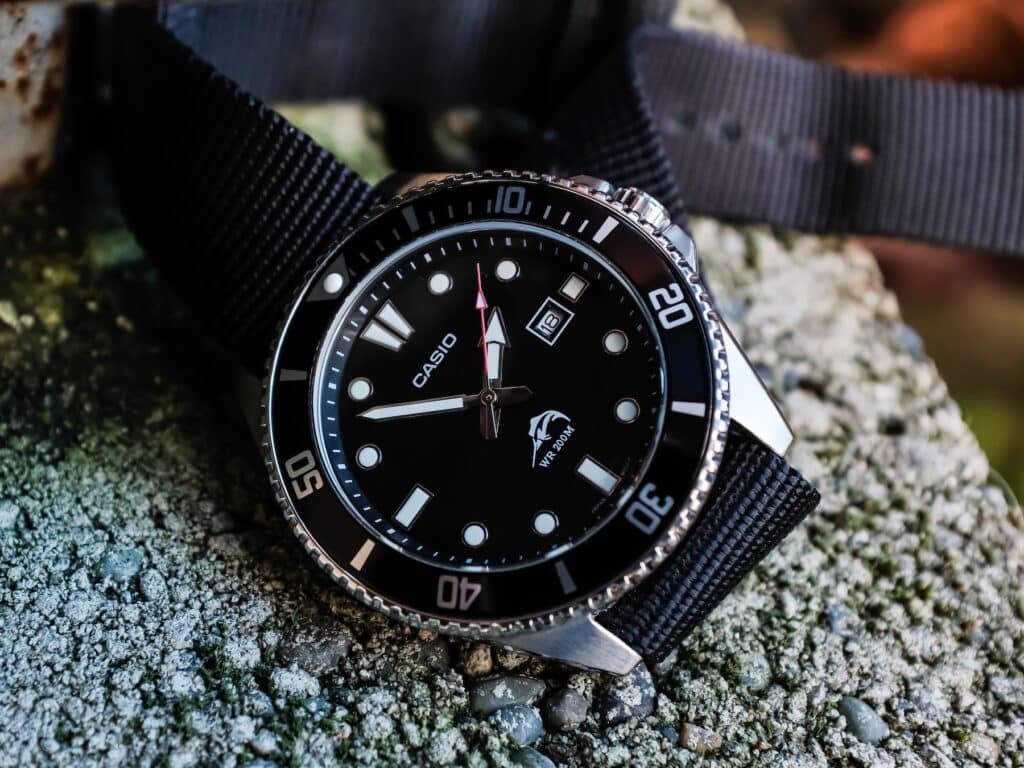
The Duro keeps things basic with a flat mineral crystal, and the unidirectional aluminum bezel clicks with a firmness that feels satisfying without drawing attention to itself. The example I wore was smoother than expected, possibly from break-in, and the action reminded me of watches that cost ten times more. Alignment on the seconds hand tracked cleanly enough on my loaner, though variance between examples is a known reality at this price.
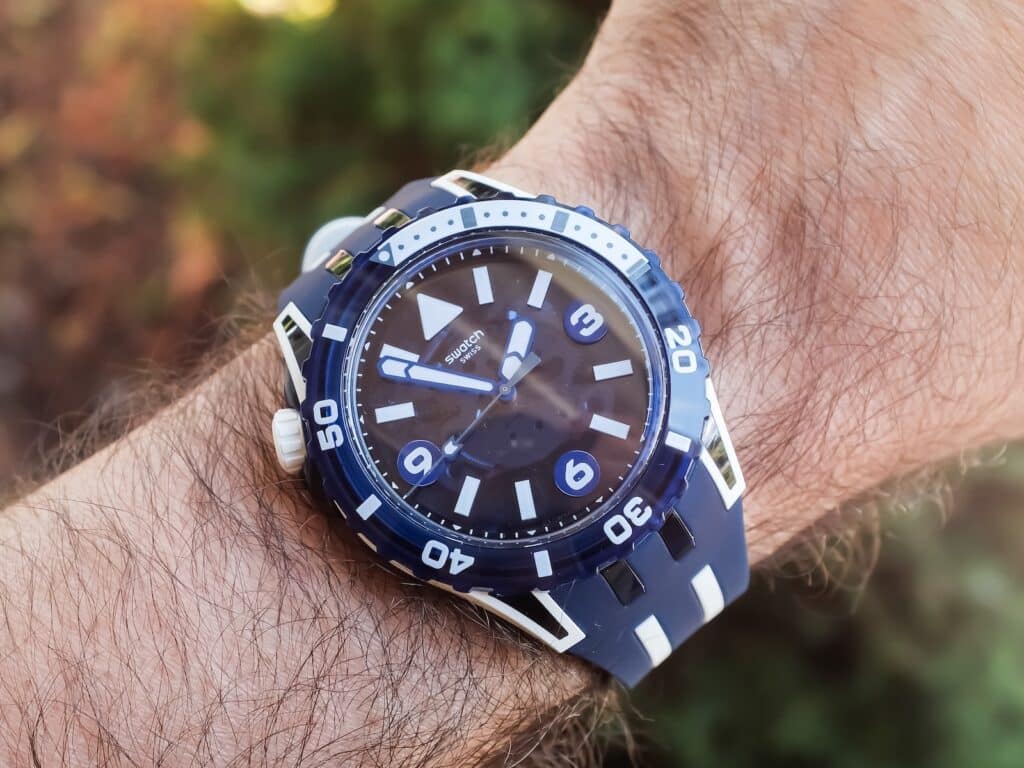
The Sea Wasp’s bezel was one of my favorite surprises of the year. Expectations run low when a watch leans this heavily on polymer components, yet the action feels precise and deliberate. I caught myself rotating it far more than necessary just because it was satisfying to use. Legibility through the crystal never gave me trouble either, even with the translucent dial underneath, thanks to the large white handset and oversized markers at 12, 3, 6, and 9.
Water Resistance and Lume:
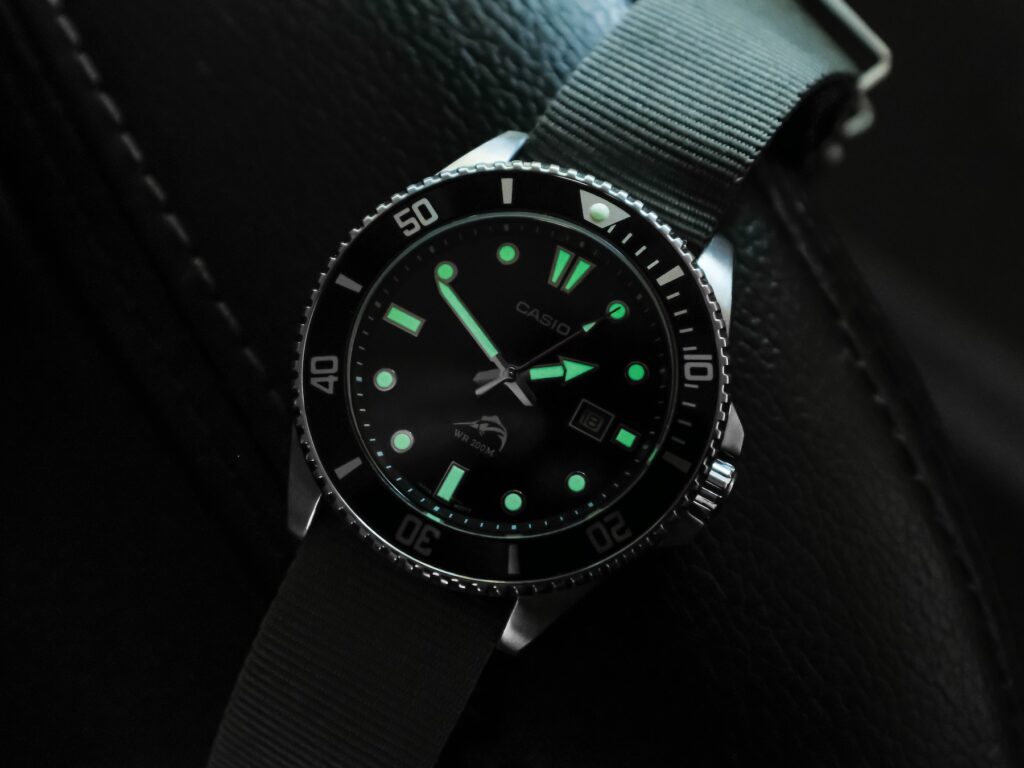
The Duro carries a legitimate 200-meter rating backed by its screw-down crown and caseback, and the marlin logo at 6 o’clock is Casio’s own designation for that depth class. Worth knowing before you buy: in the U.S., the MDV-106 keeps the marlin, while the newer MDV-107 sold in other regions drops it. The watches are functionally identical, but the emblem clearly carries weight with collectors, and I’d miss it if it were gone. Lume is applied generously across the faceted hands and applied indices, though the glow could stand to hang around longer.
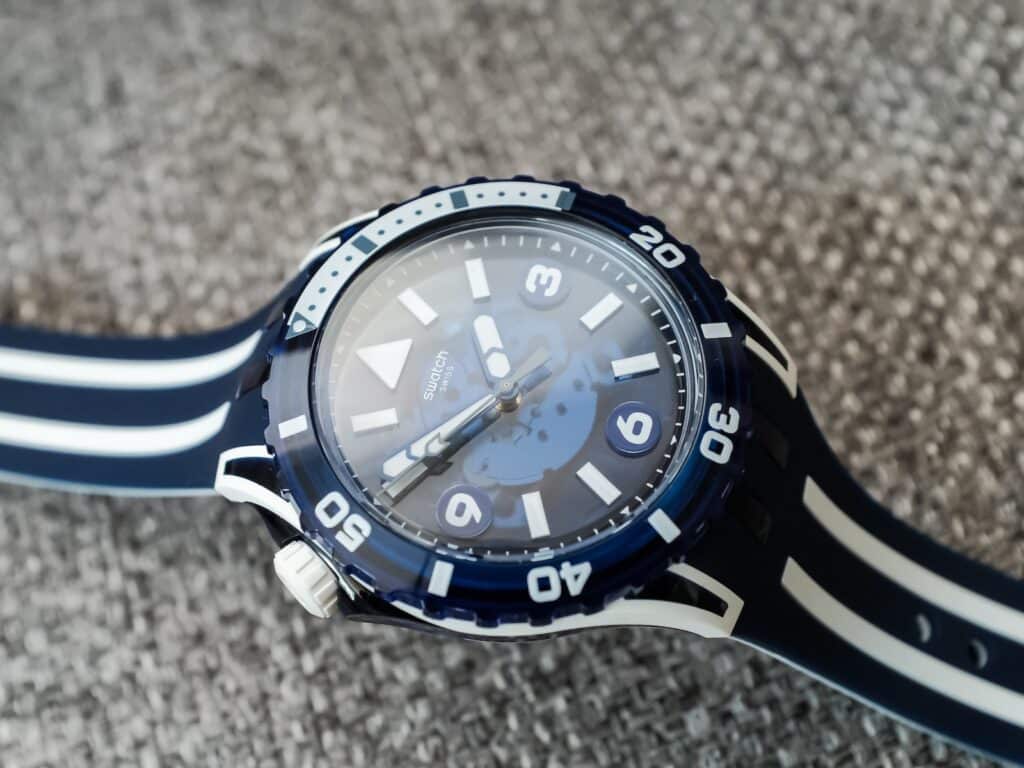
The Sea Wasp’s 100 meters feels appropriate for what it is. I wouldn’t choose it for serious diving, but I wouldn’t hesitate at a pool, in the ocean, or on a beach trip, which is where most of these will live anyway. Lume performance is adequate rather than exceptional, and the generous application across those oversized surfaces keeps the dial readable after dark. Neither watch will win a lume contest. Both will get you through a dark room.
- The Duro follows the traditional dive watch formula at every step: steel case, screw-down everything, aluminum bezel, 200 meters, and a proven quartz module with a three-year battery.
- The Sea Wasp trades certifiable seriousness for character, with a satisfying bezel, a visible movement, and 100 meters of very honest beach-watch capability.
Cost Considerations
The Duro’s official price is $84.95, and street prices regularly land well below that. At this level, the purchase barely registers as a decision. You’re getting a real 200-meter diver with a screw-down crown, a proven movement, and one of the strongest enthusiast communities in the affordable space. My own review called it the best affordable dive watch under $100, and nothing about this comparison changes that position. If anything, wearing it against the Sea Wasp reinforced how little friction there is in owning one.
The Sea Wasp asks $155, which is still cheap in absolute terms but nearly double the Casio, and the math works differently here. You’re paying for personality: the translucent construction, the color saturation, the 10 o’clock crown, the sheer strangeness of the thing. The proprietary strap system also means the price you pay is closer to the price you’ll stay at, since there’s no aftermarket rabbit hole to fall into. Whether that premium makes sense depends entirely on whether the design makes you grin. For me, it did, and the fun factor never wore off the way I expected it to.
Final Considerations: Two Kinds of Cheap Fun
After time with both, I don’t think these watches compete for the same slot at all. The Duro is the watch you buy when you want the dive watch experience distilled to its most practical form. It’s the recommendation, the default, the one that fits naturally into real collecting life. The Sea Wasp is the watch you buy when you already have the sensible stuff covered and want something that exists purely to entertain you. One is a tool that happens to be charming. The other is a toy that happens to be surprisingly well executed.
So here’s how I’d break it down:
- Choose the Casio Duro if you want the strongest pure value and a legitimate 200-meter diver that works as an only watch, a beater, or a strap-swap platform. It’s the answer for most people, most of the time.
- Choose the Swatch Scubaqua Sea Wasp if your collection already handles the serious jobs and you want a conversation piece that leans fully into color, transparency, and low-stakes summer fun.
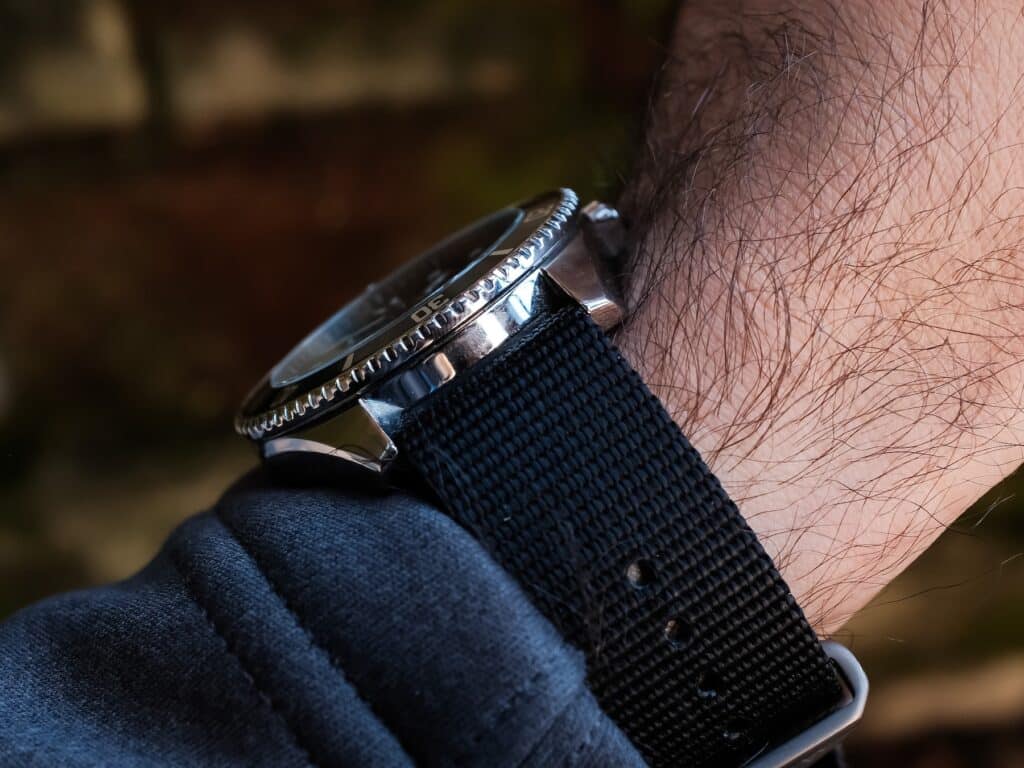
Both of my loaners are gone now. The Duro went back to my friend, and the Sea Wasp went back to Swatch. Only one of them has me actively browsing listings, and it’s the Casio, which probably tells you where I land as a buyer. Still, I’d be lying if I said I don’t miss glancing down at that ridiculous translucent blue case. The Duro earns its place through pure practicality. The Sea Wasp earns its place by refusing to take any of this seriously. Depending on the week, either one of those can be exactly what this hobby needs.

Co-Founder & Senior Editor
Michael Peñate is an American writer, photographer, and podcaster based in Seattle, Washington. His work typically focuses on the passage of time and the tools we use to connect with that very journey. From aviation to music and travel, his interests span a multitude of disciplines that often intersect with the world of watches – and the obsessive culture behind collecting them.