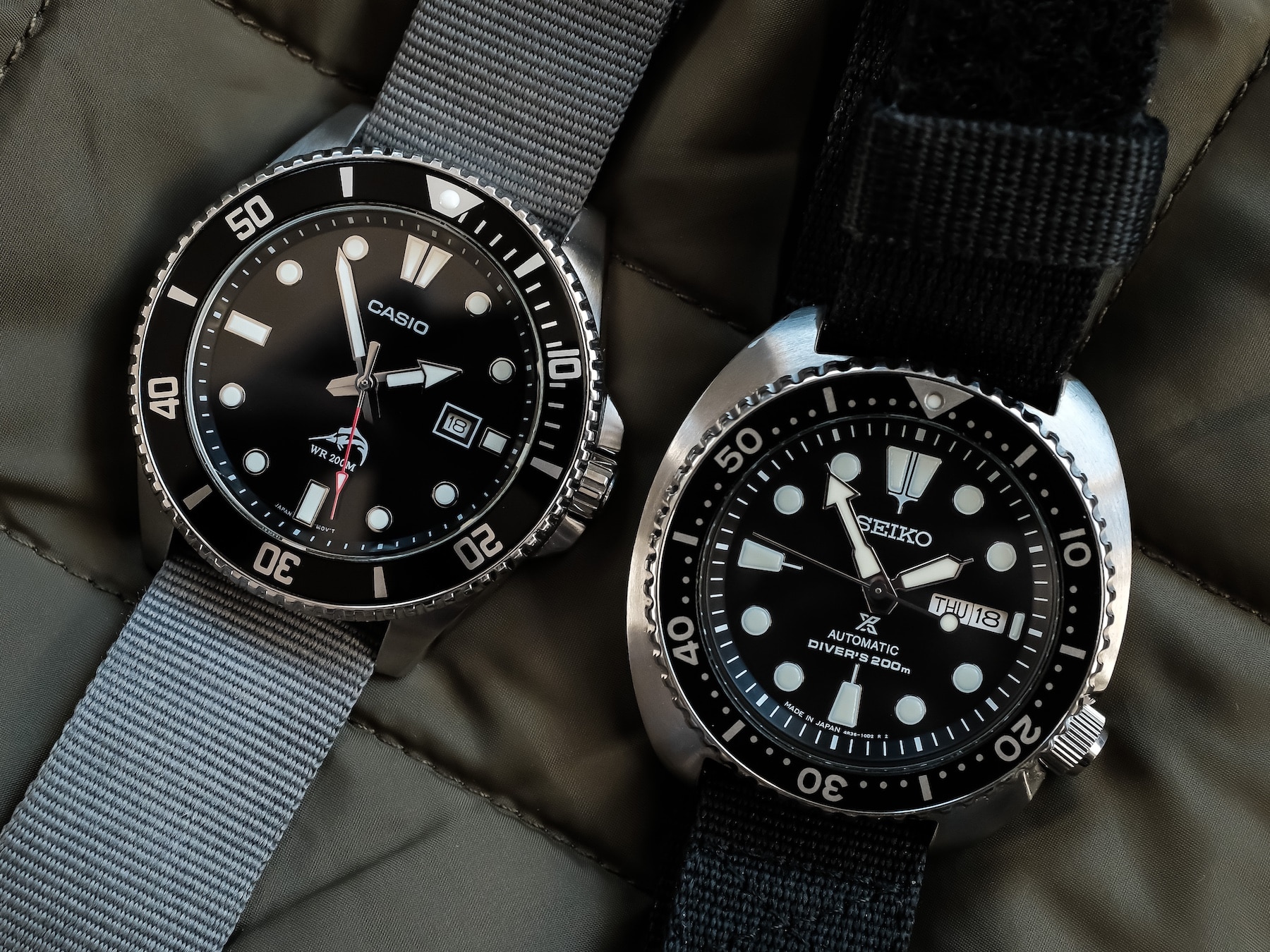
There’s a specific kind of watch that stops being a product and turns into a sort of… group project. The Casio Duro has r/DuroGang. The modern Seiko Turtle has more than a decade of forum threads, mod parts, and people who somehow own six of them. Neither watch asked for that, and neither is especially exotic underneath. Both are 44mm-ish divers with aluminum bezel inserts, 200 meters of water resistance, and 22mm lugs, which is where the similarities start getting interesting. What I wanted to know is which one holds up once the hype dies down and it’s just a watch on your wrist.
I’ve spent real time with both, though under very different circumstances. The Seiko Turtle has been part of my collecting life since 2016, and it took a couple of rounds of buying, selling, and rebuying before the current one finally stuck. The Casio Duro came to me as a loaner from a friend, and I gave it back. That difference matters here, because long-term satisfaction is the entire point of this comparison. One of these watches proved itself across years of rotation. The other made its case in a few weeks and left me shopping for my own.
Overview and Identity
The Casio Duro occupies strange territory for a watch that costs less than some straps. There’s a whole corner of the internet that treats it like a shared secret, and r/DuroGang has grown into its own small universe around a quartz diver most people would walk past in a department store. That kind of collective fixation doesn’t usually form by accident. When I finally spent proper time testing this one, the mythology didn’t evaporate so much as it got grounded. What’s left underneath is an unfussy, well-proportioned dive watch that asks almost nothing of you. It isn’t a statement piece and it isn’t pretending to be a substitute for anything. It just works, and it keeps showing up in collections that also contain far more expensive watches.
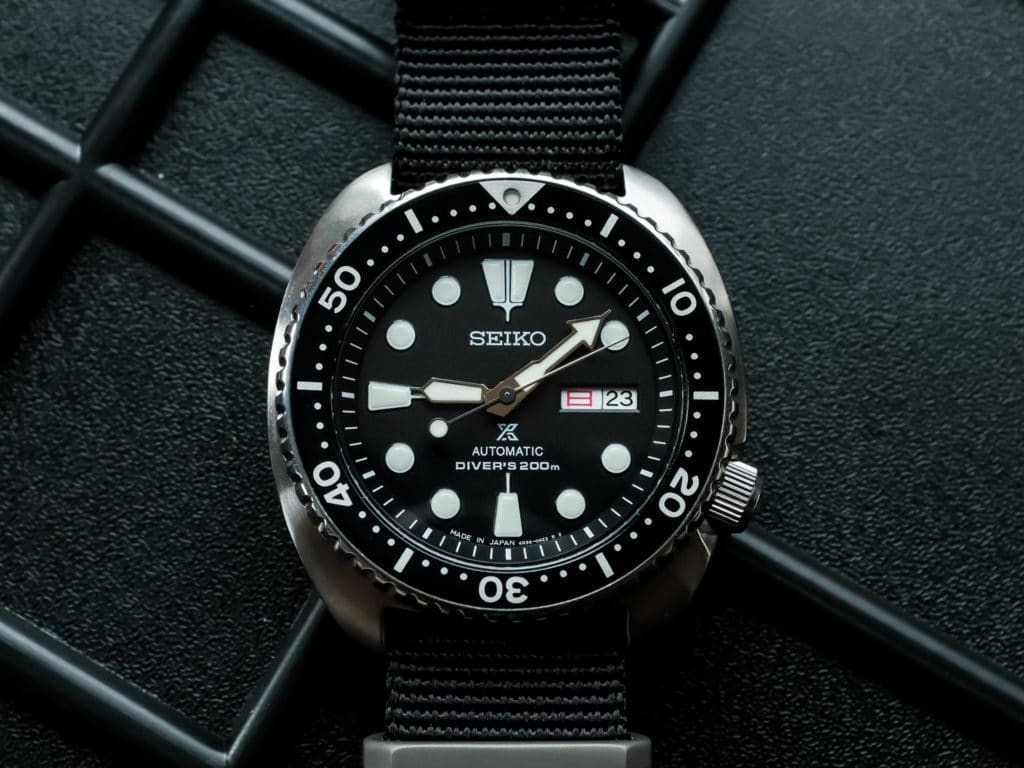
The Seiko Turtle carries a different kind of weight. Seiko manufactured the 6309 divers from 1976 to 1988, and those watches saw genuine service across a wide range of wearers, including military use. When the brand reissued the cushion case in 2016 as the SRP77x lineup, almost everyone was on board, and I still consider it one of the best values Seiko has produced in the modern era. The version I reviewed hands-on is the JDM SBDY015, which adds a “Made in Japan” dial and a Kanji day wheel to the standard black-on-black formula. Those details only impress me, which is sort of the point. The Turtle rewards the part of collecting that involves noticing things nobody else is going to ask you about.
- The Casio Duro is the low-friction entry into a proper dive watch, and it earns its following by removing every reason to overthink the purchase.
- The Seiko Turtle is the heritage pick with real lineage behind the case shape, and it holds up as a long-term keeper rather than a stepping stone.
Dial, Straps & Wearability: Quiet Competence vs Familiar Seiko Restraint
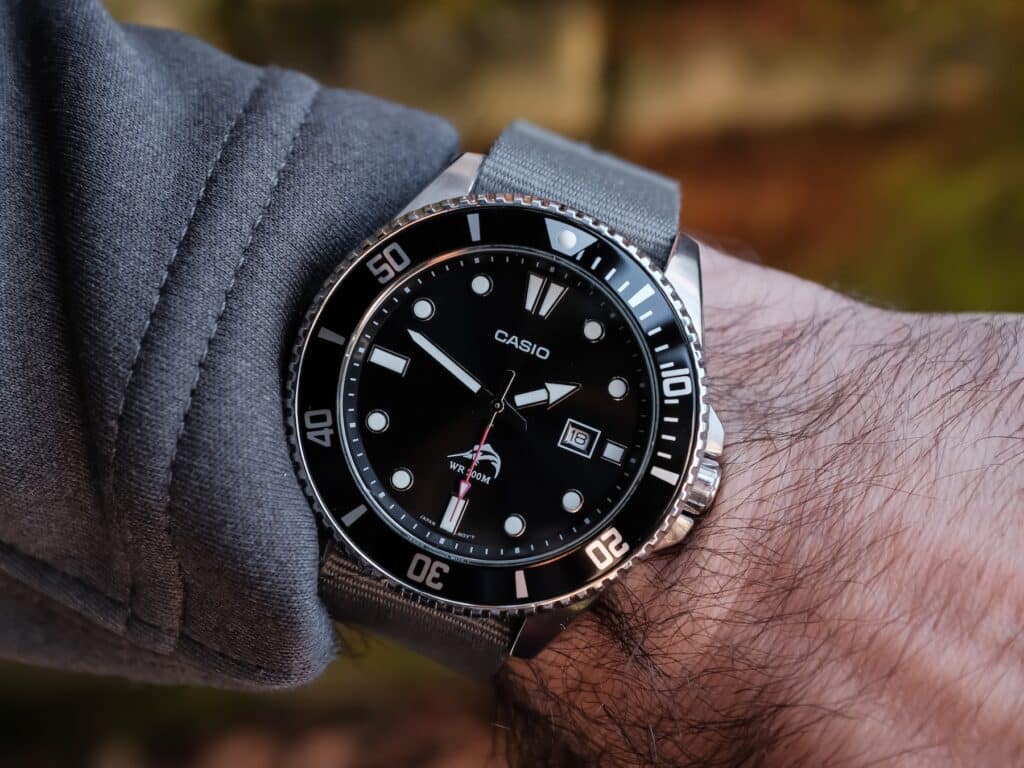
The Duro’s dial is where the price starts feeling suspicious. Under the flat mineral crystal, the layout follows dive-watch convention without trying to reinvent anything, and legibility is strong across the board. The arrow-shaped hands are faceted and polished in a way that catches light cleanly, which is not something I expected at this money, and that same care carries through to the applied hour indices. The date window at three is framed, proportionate, and easy to read. Dial text stays minimal, with Casio at twelve and the 200-meter rating down at six, sitting just below the marlin logo that has become inseparable from the watch’s identity. One thing to keep in mind is seconds hand alignment, which tracked cleanly enough on this example without being perfect. There will be variance between watches, and that’s the kind of thing that becomes impossible to unsee once you notice it.
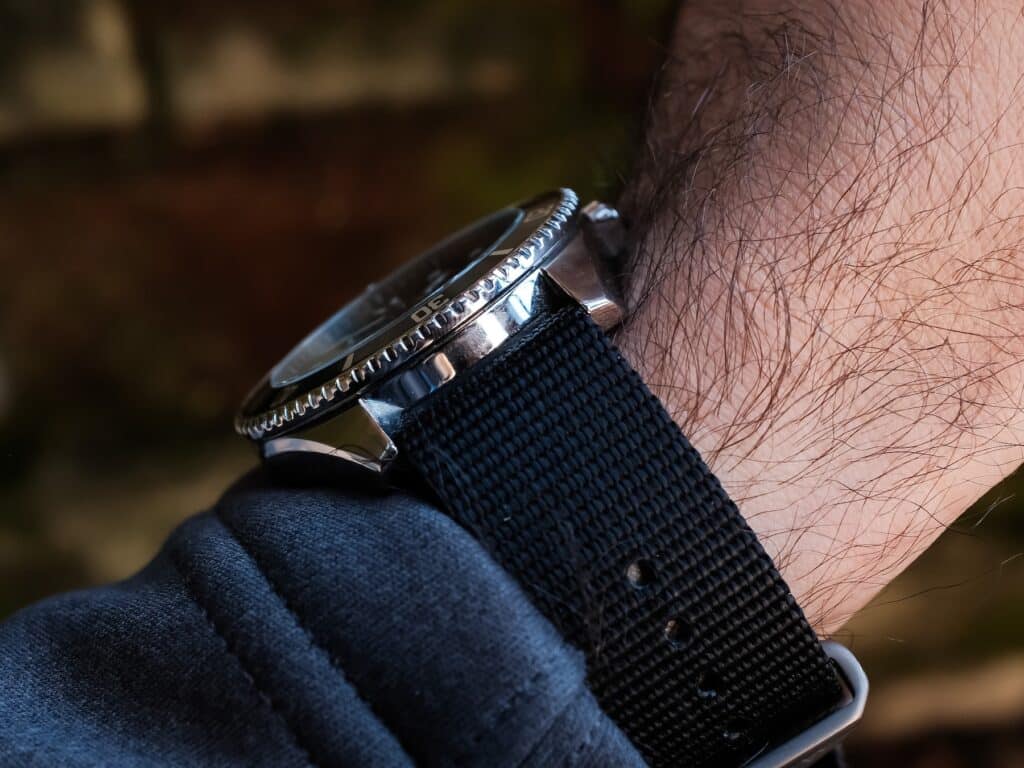
On straps, the Duro is almost embarrassingly easy. My loaner didn’t come with the stock rubber, so I ran it exclusively on my own Toxic NATOs and a Prometheus Design Werx strap. The 22mm lug width feels right for the case, and there’s no shortage of options that work aesthetically. There’s a healthy aftermarket for bracelets too, which makes sense given how many people treat this watch as a long-term companion rather than a disposable one.
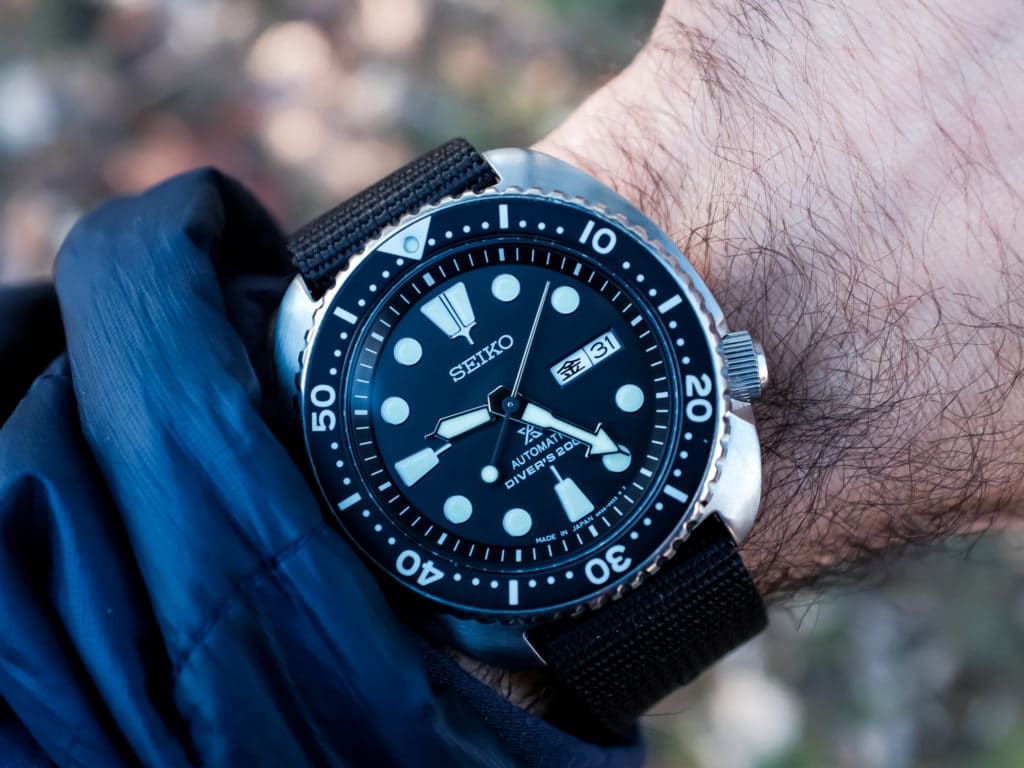
The Turtle’s dial is probably its most charming feature, and it’s an area Seiko has dominated for decades. The matte black texture pairs with beefy LumiBrite indexes that are virtually impossible to misread, and after years of people complaining about the Prospex “X” logo, I’ll go on record saying it never bothered me. There’s no sapphire here either, just Seiko’s Hardlex, and I’ve never had an issue with it. The JDM touches add a layer that the standard references don’t get. The Kanji day wheel is arguably less functional, since it means I can’t actually read what day it is, but that’s part of the fun.
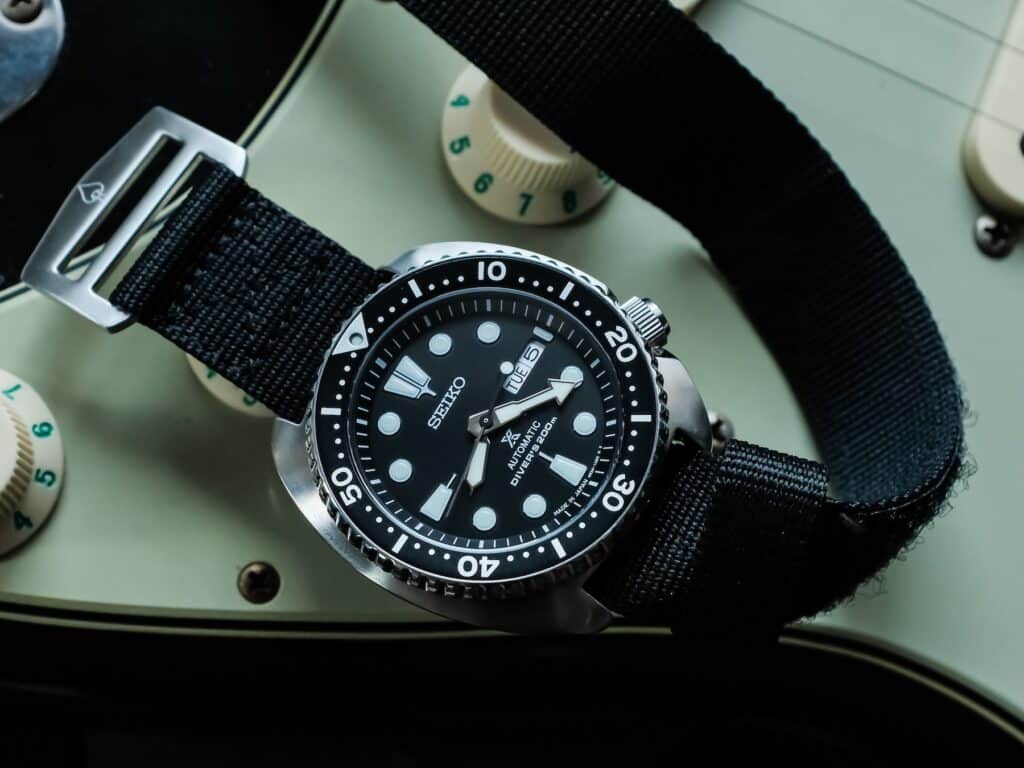
Strap swapping is where the Turtle really opens up. Seiko’s newer soft vented silicone is a legitimate improvement over what the brand used to ship, with a beefier buckle and a steel keeper. Still, a Turtle on a NATO just feels like home to me. Most of the time mine rides on a Ute strap, though lately I’ve been running a Ti-NATO with titanium hardware from Prometheus Design Werx. Like most Seiko sport models, it’s tough to go wrong here.
- The Casio Duro delivers dial finishing and legibility that outpace the price, with seconds hand alignment as the one variable worth checking before you commit.
- The Seiko Turtle pairs a matte black dial and oversized LumiBrite indexes with the kind of strap versatility that keeps the watch feeling new years into ownership.
Build Quality & Technical Approach
These two share a silhouette family and a spec sheet outline, but the engineering philosophies diverge quickly. One is built around removing friction from ownership. The other is built around a movement lineage Seiko has been refining since the 1970s. This is where the conversation gets less emotional and more useful: movement, case construction, bezel execution, water resistance, and the small details that only start to matter after the novelty wears off.
Movements:
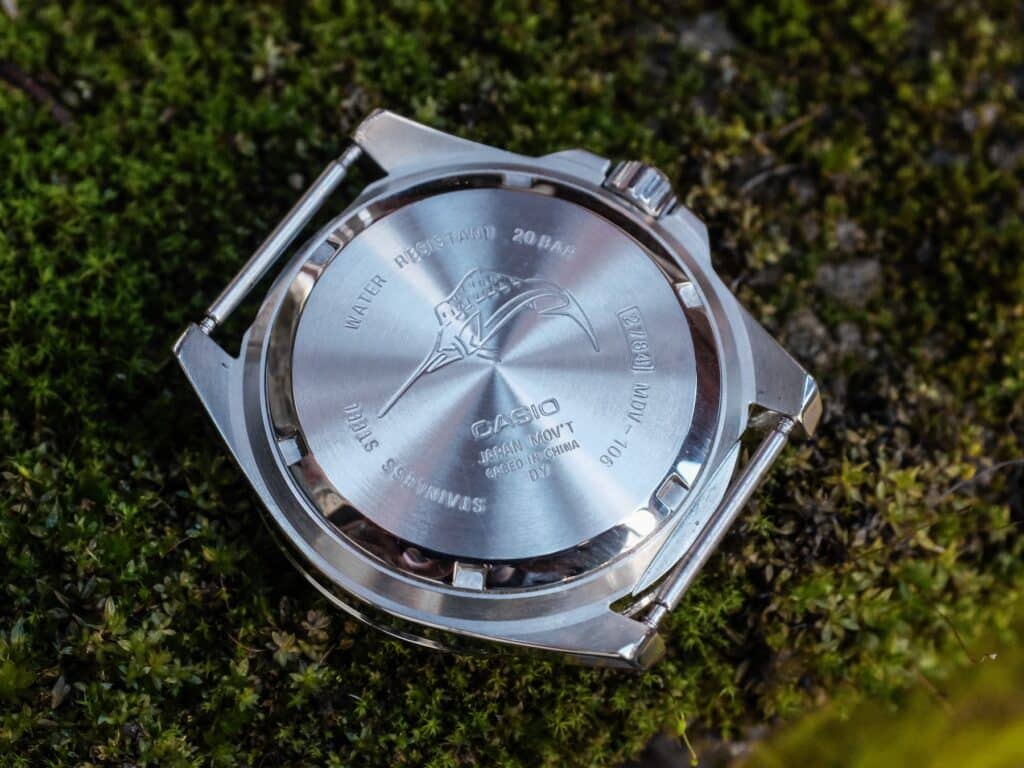
The Casio 2784 inside the Duro has drawn criticism from some corners, which I’ve never fully understood. Yes, it’s quartz, and mechanical bias runs deep in this hobby. However, this is an inexpensive diver built to be durable and easy to live with, and in that light the choice makes complete sense. You get quickset date, hacking seconds, roughly plus or minus 20 seconds a month, and about three years on a battery. In practice that means it’s ready whenever you are. I never thought about winding it, setting it, or syncing it. I just picked it up and wore it, which is exactly why I ended up wearing it for longer stretches than I initially realized.
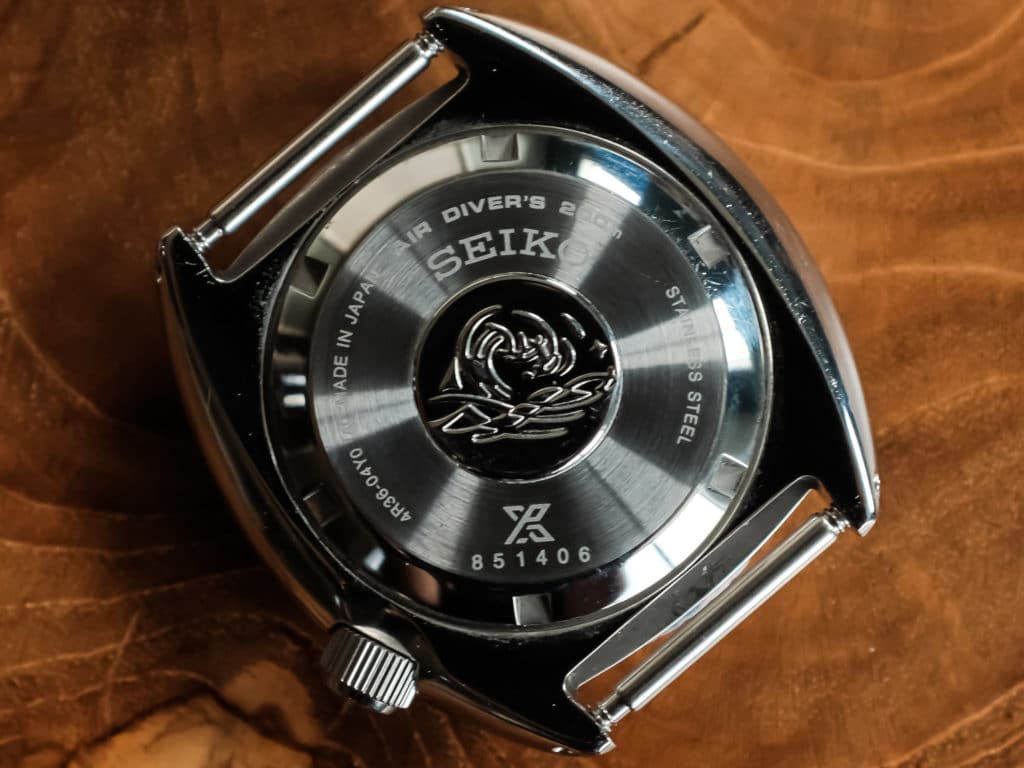
The Turtle runs Seiko’s 4R36, which is essentially a 7S26 with hacking and hand-winding added. Power reserve sits around 40 hours, and Seiko rates it at -35/+45 seconds per day. That’s a wide window, and accuracy really is luck of the draw with these. Mine has performed well inside those parameters, in fact considerably better than the spec suggests, but I’ve heard from plenty of people who landed on the wrong side of the distribution. By comparison, the Casio simply doesn’t ask you to gamble. What the 4R36 gives you instead is a serviceable mechanical movement with a long track record and an enormous support network, which counts for something over a decade of ownership.
Case Construction & Finishing:
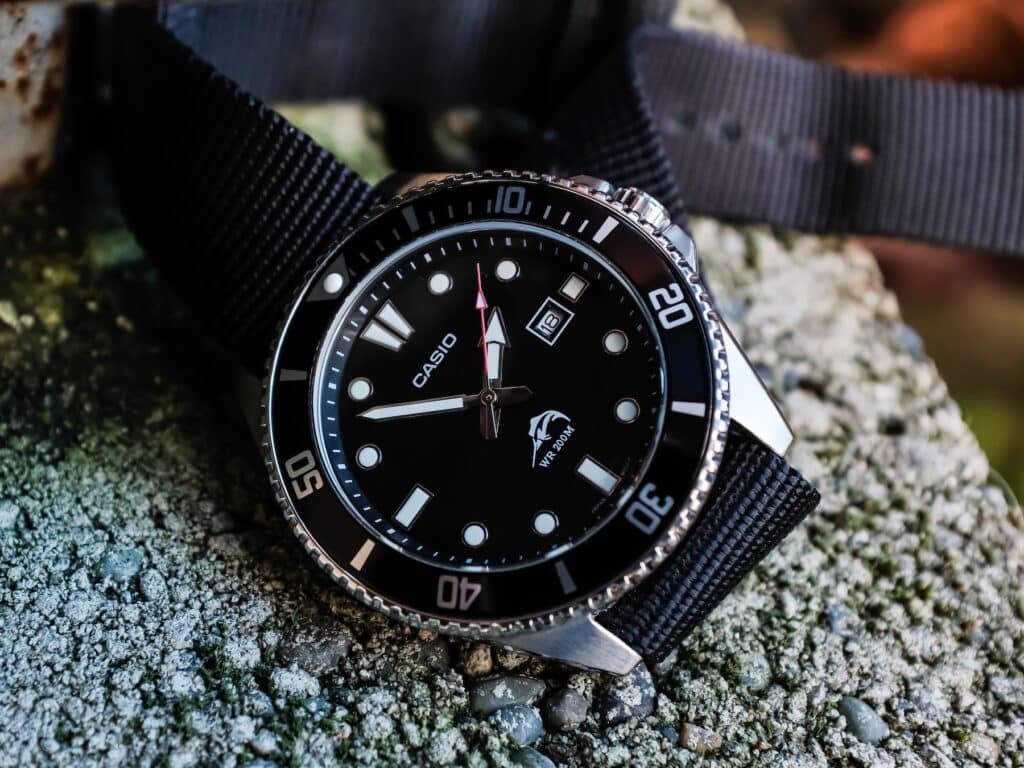
The first thing that confronts you with the Duro is size. On paper, a 44.2mm diver that’s 12.1mm thick with a 48.5mm lug-to-lug doesn’t read as subtle, and those numbers gave me pause before I strapped it on. That concern faded faster than I expected. The relatively short lug-to-lug helps, and the way the lugs curve down means the case doesn’t sprawl across the wrist the way the raw diameter implies. Finishing is straightforward but handled with more care than the price would lead you to expect, with a brushed top surface contrasting cleanly against polished sides and a subtle bevel running along the case that catches just enough light to break things up. The lugs are properly shaped rather than functional stubs. What surprised me most was how quickly I stopped wishing it were smaller. The proportions make sense once you accept the watch on its own terms, and I now suspect shrinking it would alter the character people are attached to.
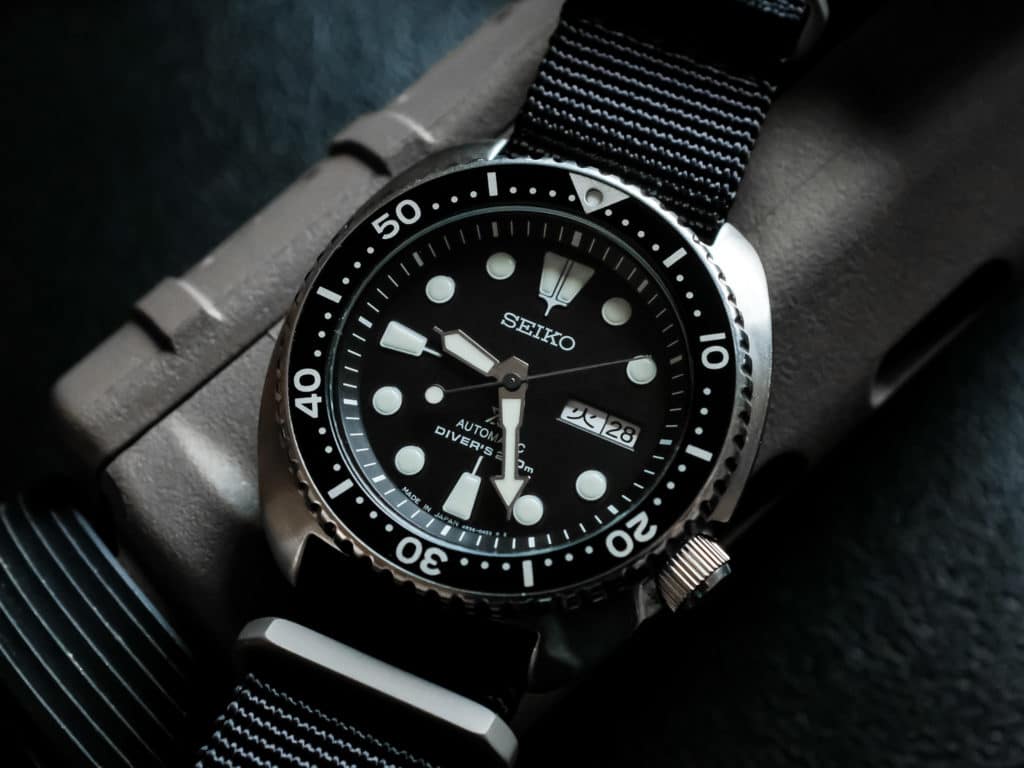
The Turtle lands in almost identical territory at 44.3mm across, 14mm thick, and 48mm lug-to-lug, and I used it as my size benchmark while wearing the Duro. The asymmetrical cushion case is the whole reason this watch exists, incorporating the offset screw-down crown into a shape that has aged remarkably well. Purists will note that the lugs on the SBDY015 and SRP777 aren’t as stubby as the original 6309, which produces a longer lug-to-lug than the vintage reference. Nothing about that is unmanageable on my 6.75-inch wrist. Seiko magic being what it is, this watch also wears smaller than the numbers suggest. Keeping the shorter 6309 lug style would’ve been a nice touch, though I still prefer this case shape and size to the 6105 “Willard” style cushion divers.
Crystals & Bezels:
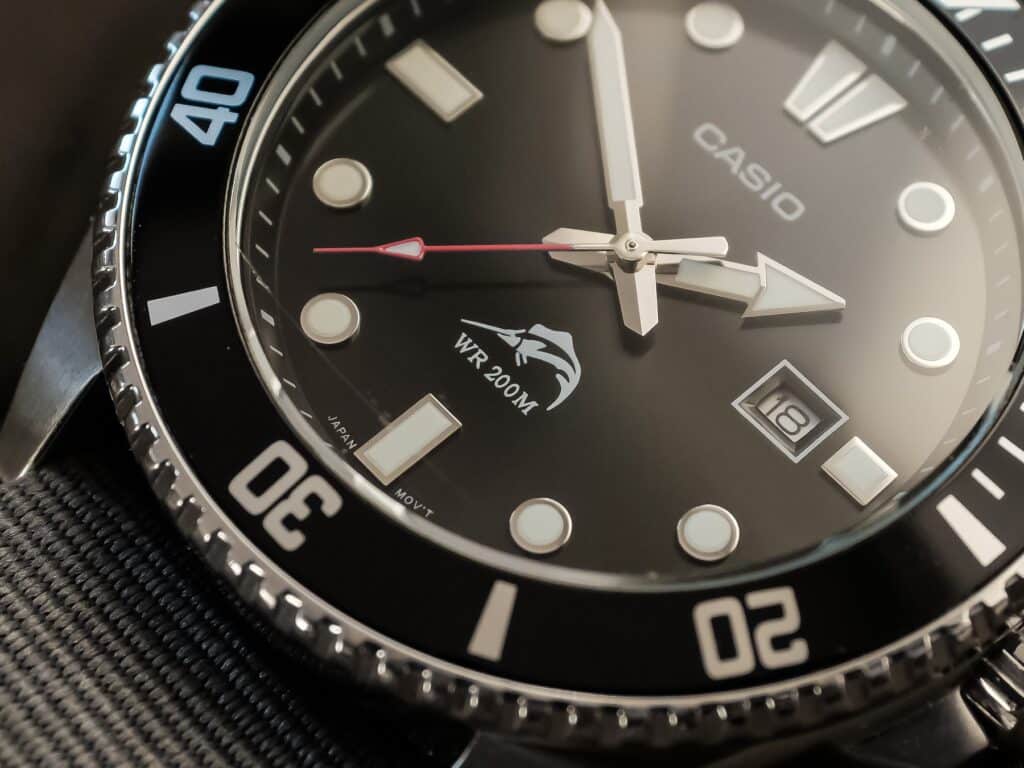
The Duro keeps things simple with a flat mineral crystal, which is the right call at this price and one less thing to worry about scratching on a watch you’re supposed to wear without thinking. The bezel was the bigger surprise. The unidirectional aluminum insert clicks with a firmness that feels satisfying without calling attention to itself, and the action on my loaner was smoother than I anticipated. Some of that may be break-in, since this example had already lived a life before it reached me. A brand-new one might feel stiffer. Either way, the experience was genuinely pleasing and very close to watches I’ve handled that cost ten times more.
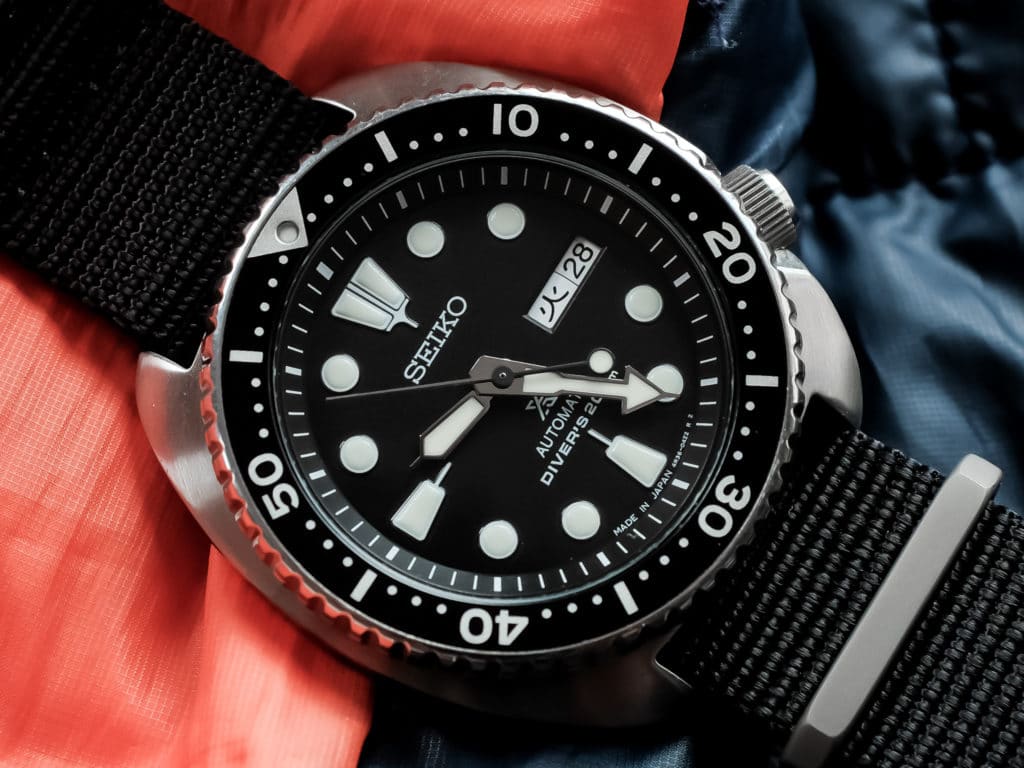
The Turtle uses Seiko’s Hardlex rather than sapphire, and I’ve never had a problem with it in years of wear. The bezel is where my one real complaint lives. The action itself is smooth and satisfying, but my example arrived with the alignment issue that has plagued a lot of modern Seiko divers, and it’s a shame given how good the bezel otherwise feels. The insert is aluminum, same as the Casio. This is the kind of quality control lottery that gets excused as character by people who didn’t get a bad one, and I’d rather just call it what it is. If you’re buying a Turtle, look at photos of the actual example before you pay.
Water Resistance & Lume:
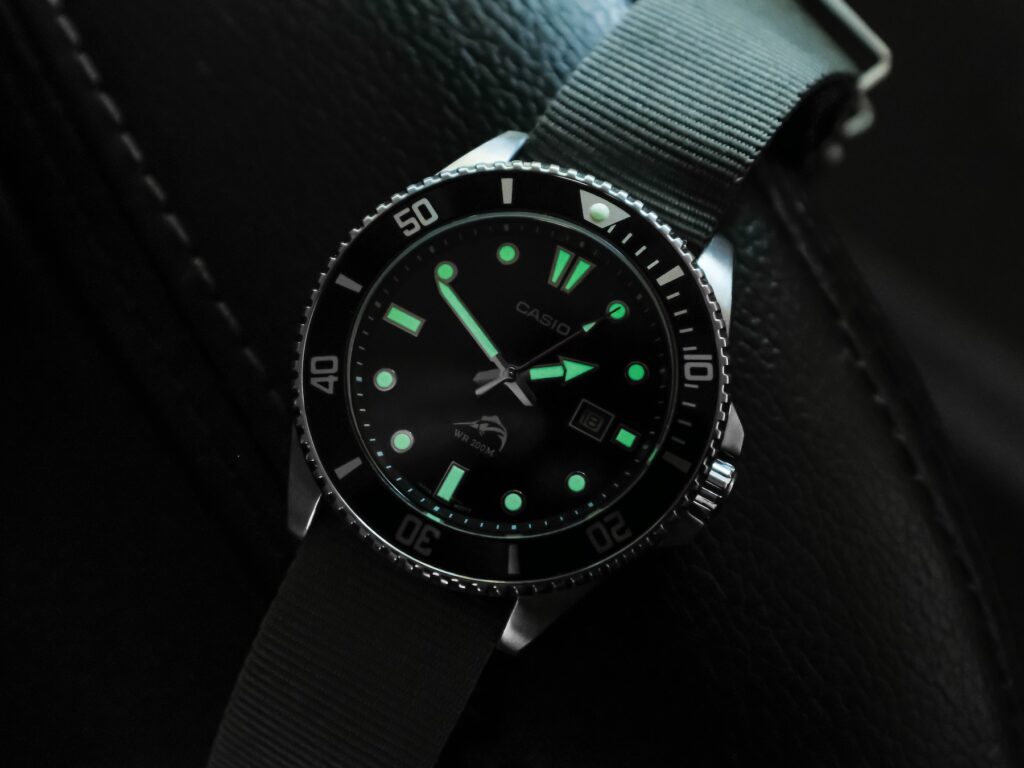
Both watches carry a 200-meter rating, and both back it up with real hardware. On the Duro, a screw-down crown flanked by guards and a solid screw-down caseback contribute to a baseline sense of trust that’s rare at this money. The lume is generous where it counts, with the applied indices filled well enough to do the job, though the glow could stand to hang around longer than it does. It’s serviceable rather than impressive, which feels about right for the price and the mission.
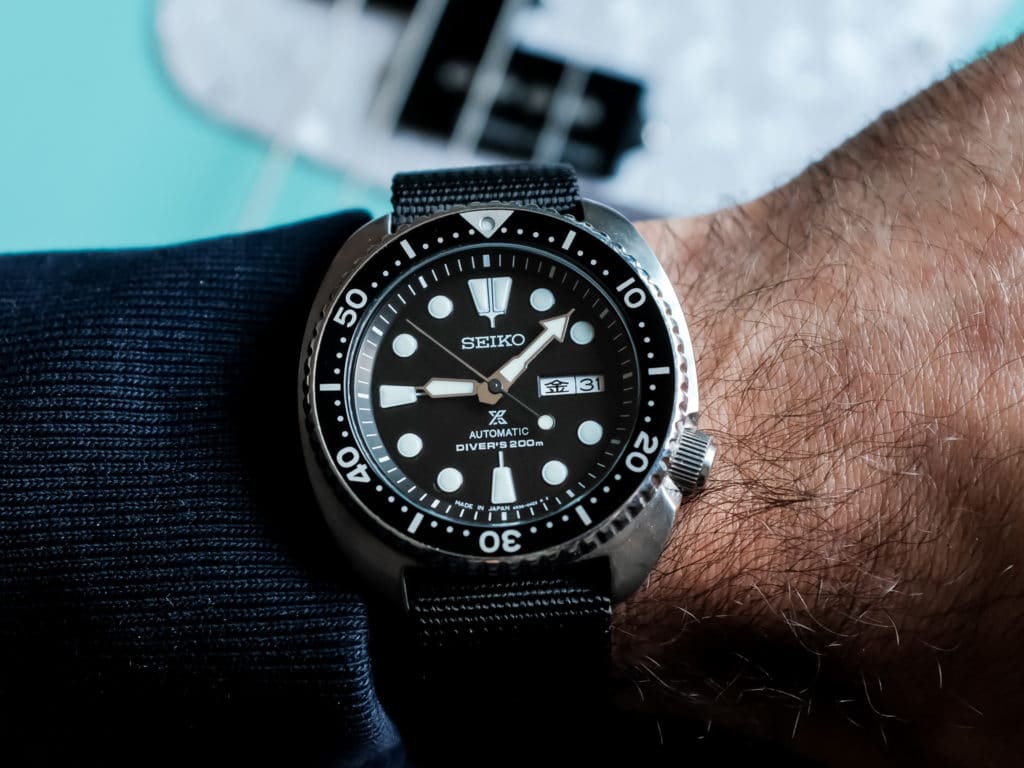
The Turtle matches the water resistance and pulls ahead on lume. Seiko’s LumiBrite on those beefy indexes and hands is one of the genuine advantages the brand has held for decades, and it’s the kind of thing you notice the first night you check the time without turning on a light. The offset screw-down crown is protected by the case shape itself rather than by separate guards, which is a design solution that dates back to the 6309 and still works. Neither of these is going anywhere near a saturation dive. Even so, both feel like watches you can stop thinking about around water, and that’s really what the rating buys most of us.
- The Casio Duro gets the fundamentals right with a proven quartz caliber, honest case finishing, and a bezel that outperforms its price bracket.
- The Seiko Turtle offers a mechanical movement with real lineage, superior lume, and a case shape with actual history behind it, though the bezel alignment lottery remains a legitimate risk.
Cost Considerations
The Duro sits at $84.95 on Casio’s official site, and street pricing has historically landed well below that. Prices have been climbing over the past year, which is worth knowing before you assume you’ll find one for $50 the way people did a few years ago. The MDV-106 with the marlin logo remains the U.S. reference. Elsewhere, including parts of Europe, the newer MDV-107 replaces it and the marlin disappears. Functionally the watches are identical, but the presence of that emblem clearly carries weight for collectors, and I’d personally miss it if it were gone. At this price, the buy-in is low enough that the decision barely qualifies as a decision.
The Turtle asks considerably more. The current SRPE93 carries a $525 MSRP through Seiko USA, with street and gray-market pricing typically landing in the $300 to $400 range depending on where you look and when. That’s a meaningful jump from the $475 or less the original SRP777 could be had for at launch, and it puts the Turtle in a spot where you’re actively choosing it over a lot of other capable divers. What justifies the buy-in is longevity. A serviceable mechanical movement, a case shape with genuine lineage, and a support network that will still exist in twenty years all make this an easier watch to keep than to flip. Worth noting: several later Turtle variants, including the King Turtle and various Save the Ocean and PADI editions, have pushed toward or past $1,000, which almost makes you wonder where things went sideways.
Final Thoughts: Which One Actually Stays In The Collection?
Here’s the part that surprised me. The Turtle is the watch I’ve owned across multiple cycles of selling and rebuying, and it’s the only modern Seiko diver still in my collection, not counting a Sumo I was graciously gifted. That’s a real endorsement earned over years. But spending a few weeks with a borrowed Duro left me actively shopping for one of my own, which is not what I expected when a $500 automatic and an $85 quartz are sitting side by side.
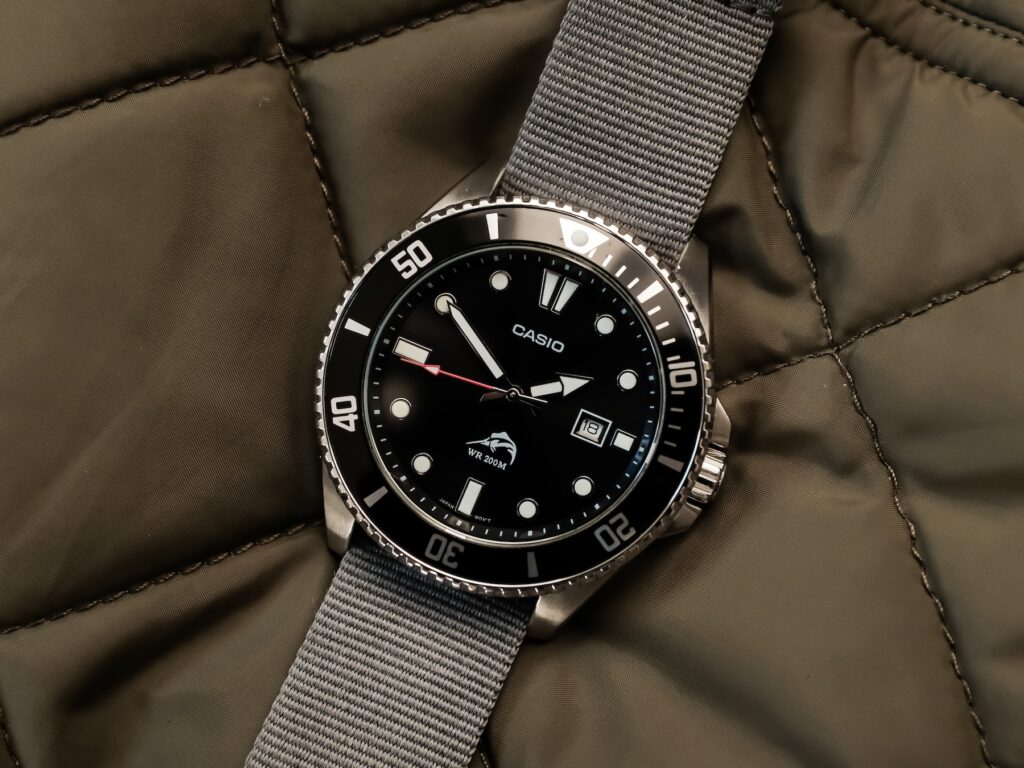
The difference comes down to what each watch asks of you. The Turtle asks for a little patience. You accept the accuracy lottery, you check the bezel alignment, you wind it or shake it after it sits for a weekend. In exchange you get history, better lume, and an object that feels like it belongs to a lineage. The Duro asks for nothing at all. You put it on, you wear it, and three years later you change a battery. For a certain kind of collecting week, that absence of friction is worth more than heritage.
So here’s my verdict:
- Choose the Casio Duro if you want a dive watch that disappears into your life without asking for anything back. It’s the stronger pure value play, the easier watch to hand to someone new to the hobby, and the one I’d grab without a second thought for travel, yard work, or anywhere I’d rather not think about the watch on my wrist.
- Choose the Seiko Turtle if the mechanical connection and the 6309 lineage genuinely matter to you, and you want a watch you can grow old with rather than replace. It’s the better long-term keeper, provided you accept the movement variance and check the bezel before you buy.
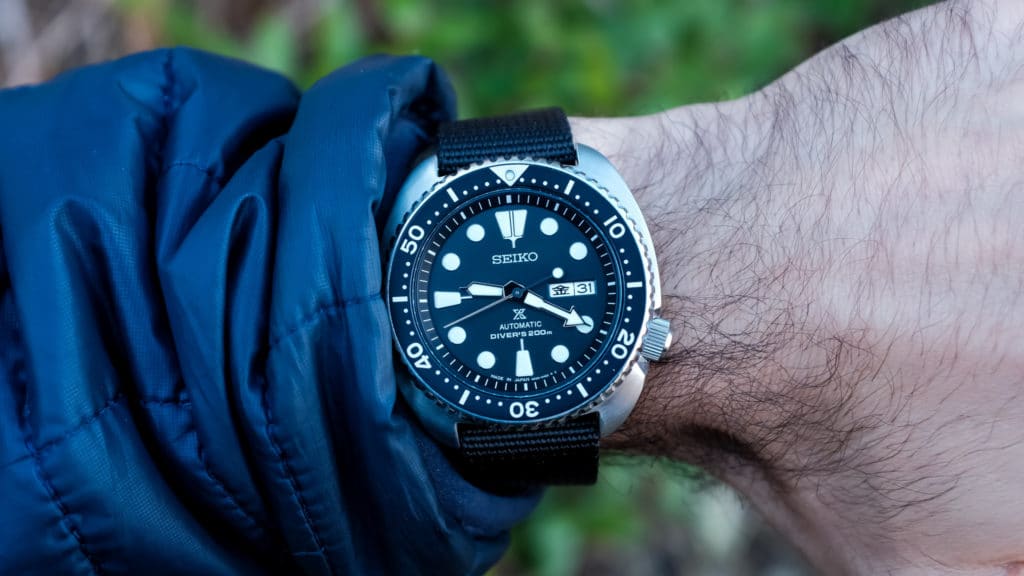
In our opinion of the hands-on testing experience, the Turtle is the winner here. It has survived multiple cycles of selling and rebuying, remains the only modern Seiko diver in my collection, and has proven its staying power over years rather than weeks. The Duro is the better value and may be the watch I would wear more casually, but the Turtle is the one I would keep if I could only own one. It asks more of you, costs considerably more, and comes with a few familiar Seiko frustrations. Even so, it delivers the deeper and more lasting ownership experience.
Let us know your thoughts on our analysis in the comments below, especially if you have hands-on time with both of these models as well.

Co-Founder & Senior Editor
Michael Peñate is an American writer, photographer, and podcaster based in Seattle, Washington. His work typically focuses on the passage of time and the tools we use to connect with that very journey. From aviation to music and travel, his interests span a multitude of disciplines that often intersect with the world of watches – and the obsessive culture behind collecting them.
Yes, I owning both watches and never sell them. Even now I am expanding my collection into realm of Hydroconquest and Black Bay 58, I still use these 2 watches as daily driver.
Can’t go wrong with either one Bryan!
I have an all blue Duro in an aged NATO ands its perfect knock around weekday watch on boat or beach. it’s cheap and gets the job done
Also have Seiko 1st Gen Orange Monster that also gets wrist time
Hey Clive – that’s like, a perfect two-watch dive collection. Still love seeing Gen 1 Monsters out there.
Of course the turtle. It’s not even a comparison. One is a day date automatic.
Day Date definitely adds to the convenience factor and all-around usefulness every day.