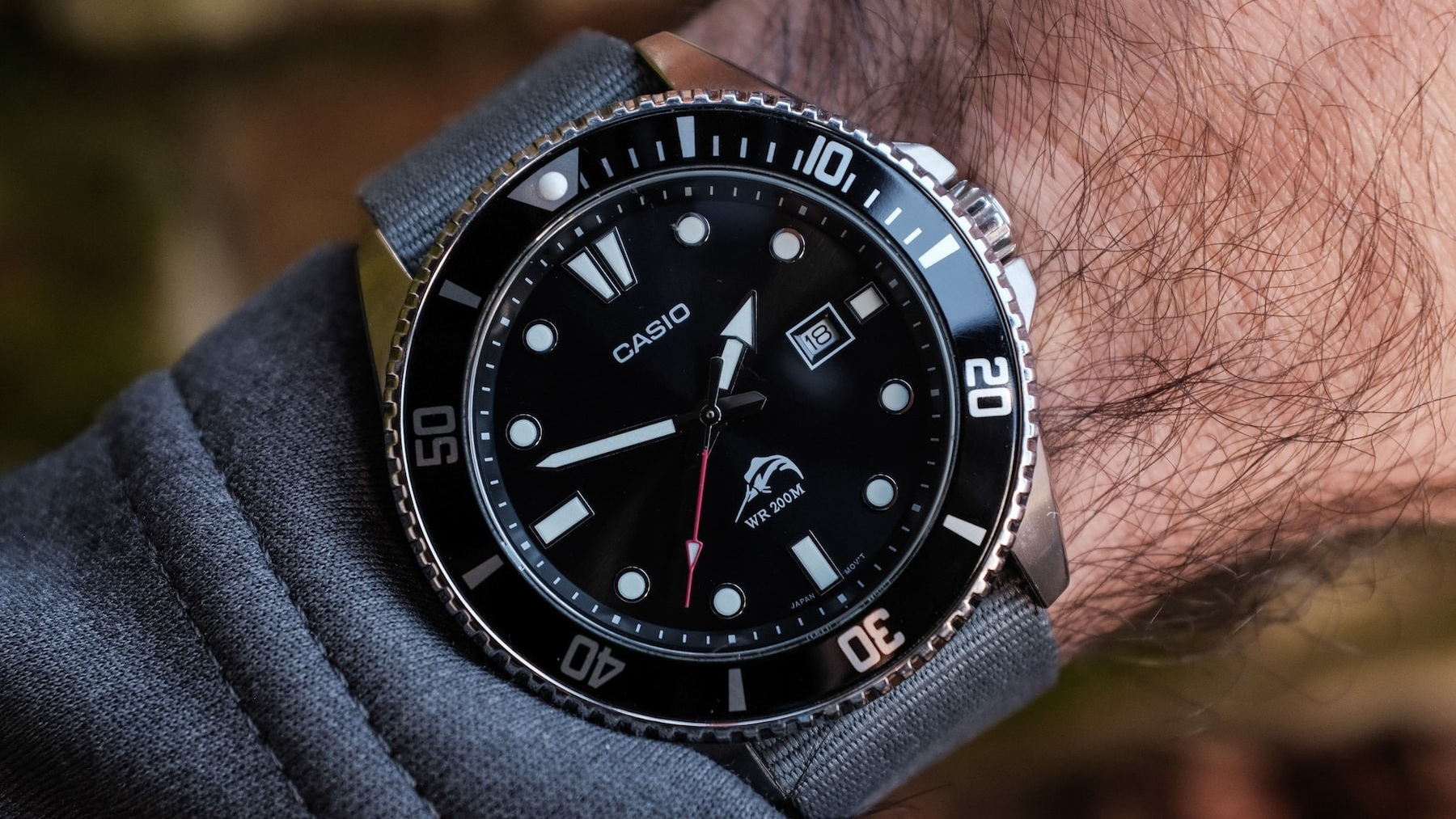
Choosing between the Casio Duro and Seiko 5 Sports seems simple until watch enthusiasts start arguing over what makes a watch worth owning. We can get caught up debating quartz versus automatic movements and forget that these things are supposed to be fun to wear. We’re here to settle a more practical question: Does the Casio Duro’s no-nonsense practicality beat the Seiko 5 Sports’ mechanical charm, or is the Seiko the more satisfying everyday companion? After all, we’re buying a watch to wear, not to defend our choices in a watch forum. What matters is whether we enjoy wearing it, whether its compromises get on our nerves, and whether we still reach for it after the honeymoon period ends.
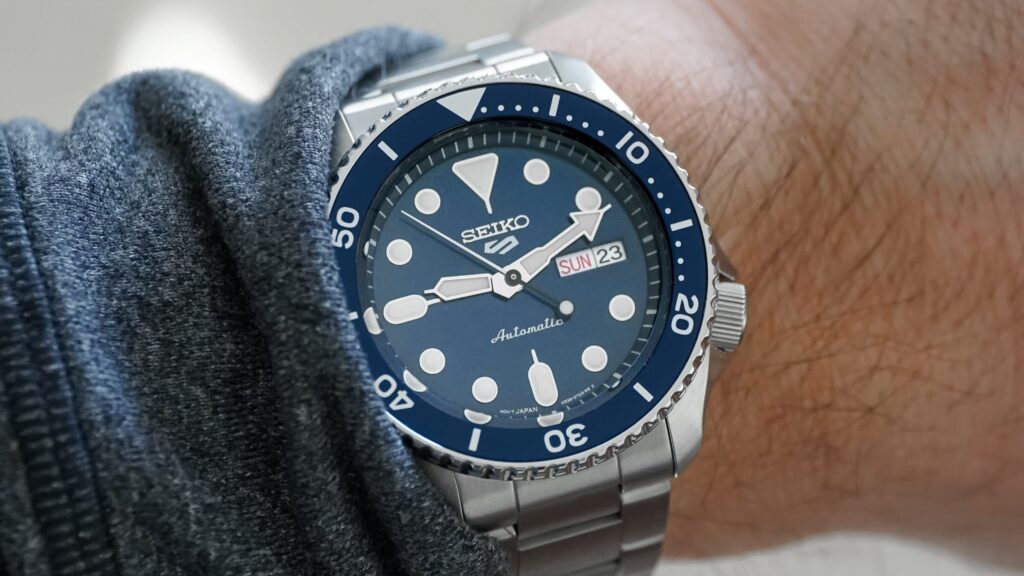
At TBWS, more than a decade of reviewing watches has taught us to look beyond spec sheets, brand loyalties, and whatever the enthusiast community is obsessing over this week. Our hands-on reviews of the Casio Duro and Seiko 5 Sports 5KX (SRPD51) give us a grounded starting point for this matchup. We’re interested in what each watch gets right, where the compromises creep in, and what those differences mean when we’re choosing a watch for everyday wear.
Overview and Identity
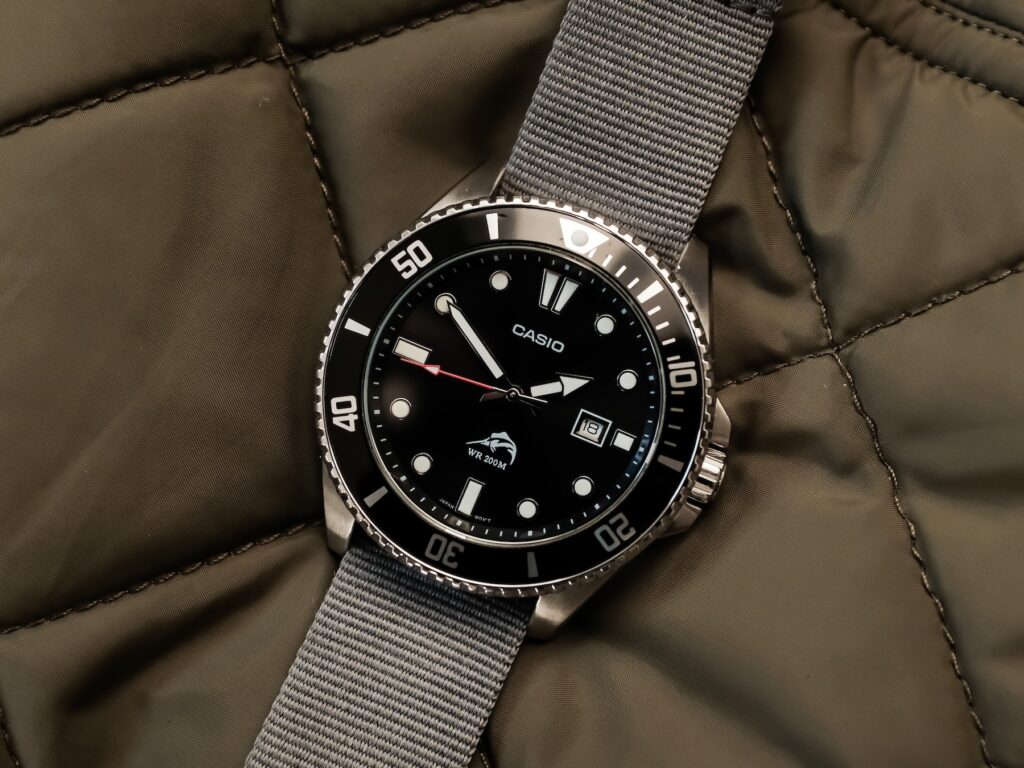
The Casio Duro has become an internet folk hero, an amusing fate for a watch that never seemed particularly interested in fame. Its appearance on Bill Gates’ wrist helped put it on more people’s radar, but the Duro’s following goes well beyond celebrity spotting. The r/DuroGang community has grown into its own corner of watch-nerd territory, and it’s fun to see enthusiasts rally around such an unpretentious piece of wristwear. As we explored in our review, the Duro’s appeal isn’t about complicating watch ownership. It offers an uncomplicated entry point into the hobby, with a classic dive-watch look and everyday practicality that make it easy to appreciate without requiring a significant investment or an interest in mechanical movements.
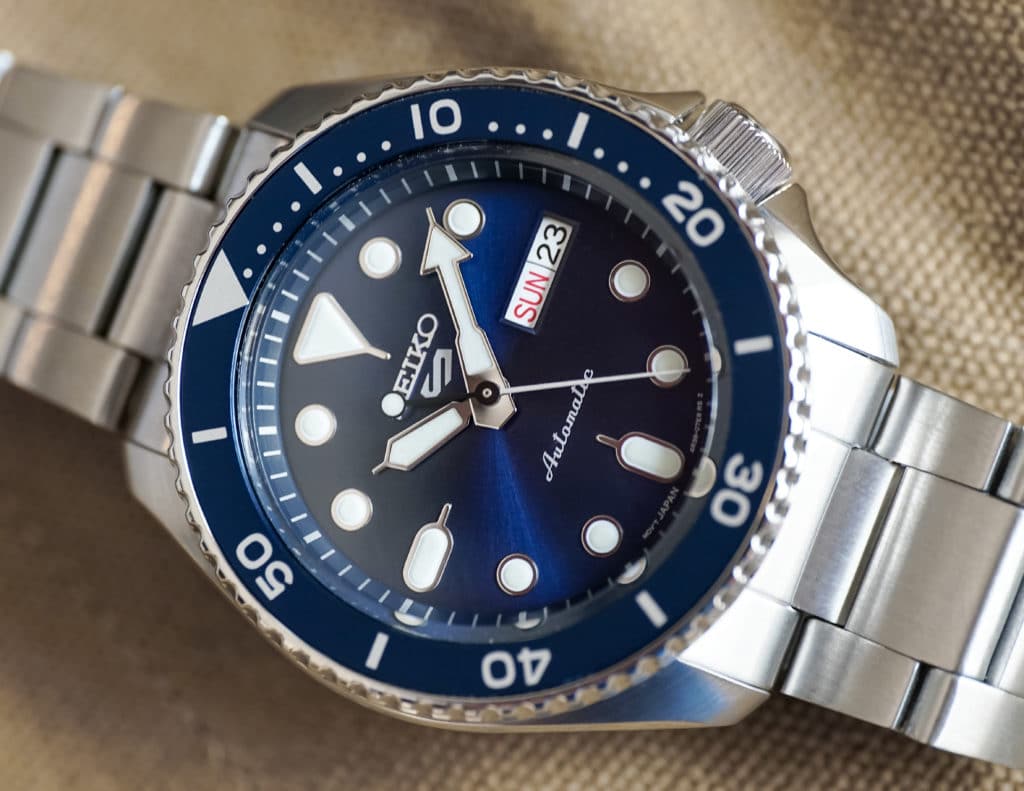
The Seiko 5 Sports SRPD51, better known as the 5KX, approaches the hobby from a slightly different direction. We needed a watch like this, especially as prices across Seiko’s newer offerings have made some entry points harder to justify. The 5KX gives aspiring enthusiasts a way into mechanical ownership, while offering seasoned collectors a perfectly reasonable daily watch that doesn’t require turning every purchase into a major collecting decision. We found during our review that you can wear it with your usual casual clothes, kick back in sweatpants after work, and enjoy the automatic movement without feeling obliged to spend every Sunday discussing caliber specifications online. If you already own an SKX, there’s no need to treat the 5KX as a compulsory upgrade. If you like how it looks, find a version that speaks to you and enjoy wearing it.
Dial and Straps/Bracelets: Straightforward Utility vs Seiko Personality
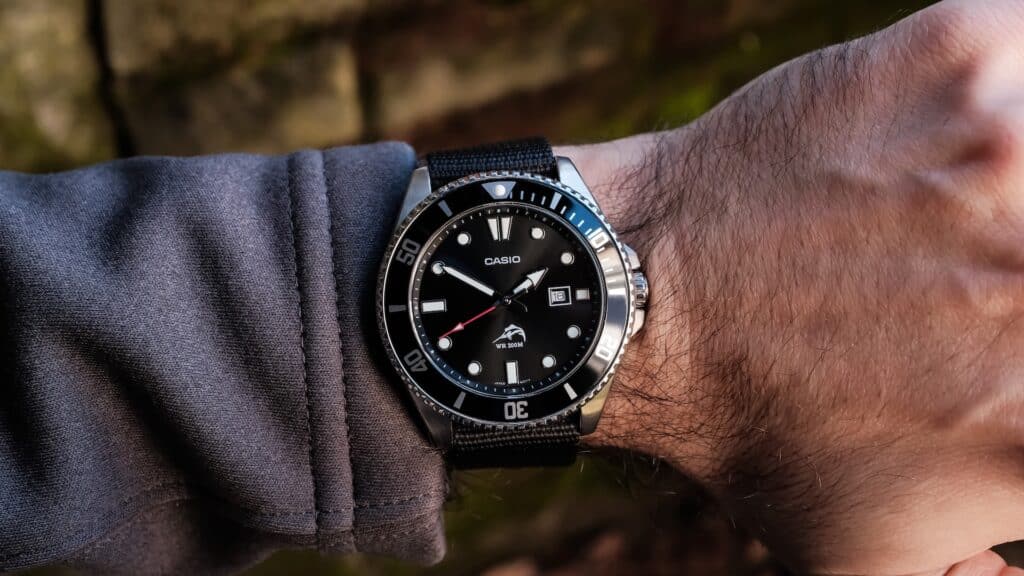
The Casio Duro keeps things simple without making the dial feel like an afterthought. The black dial follows familiar dive-watch conventions, but a few details stand out over time. The arrow-shaped hands have faceted, polished surfaces that catch the light, while the applied hour markers add depth without clutter. Even the date window at three o’clock gets a neatly framed opening that’s easy to read. The restrained dial text leaves room for the Casio branding, 200-meter water-resistance rating, and marlin logo. That little fish has developed its own following, and we’re firmly in the camp that would miss it if it disappeared. The original MDV-106 retains the marlin in the US, while the functionally equivalent MDV-107 drops it in some other markets. It’s a small difference, but tell that to the collectors who care. One thing worth checking before you buy is the second hand’s alignment. The example we tested tracked cleanly enough, but mass-produced quartz watches can vary from one example to another.
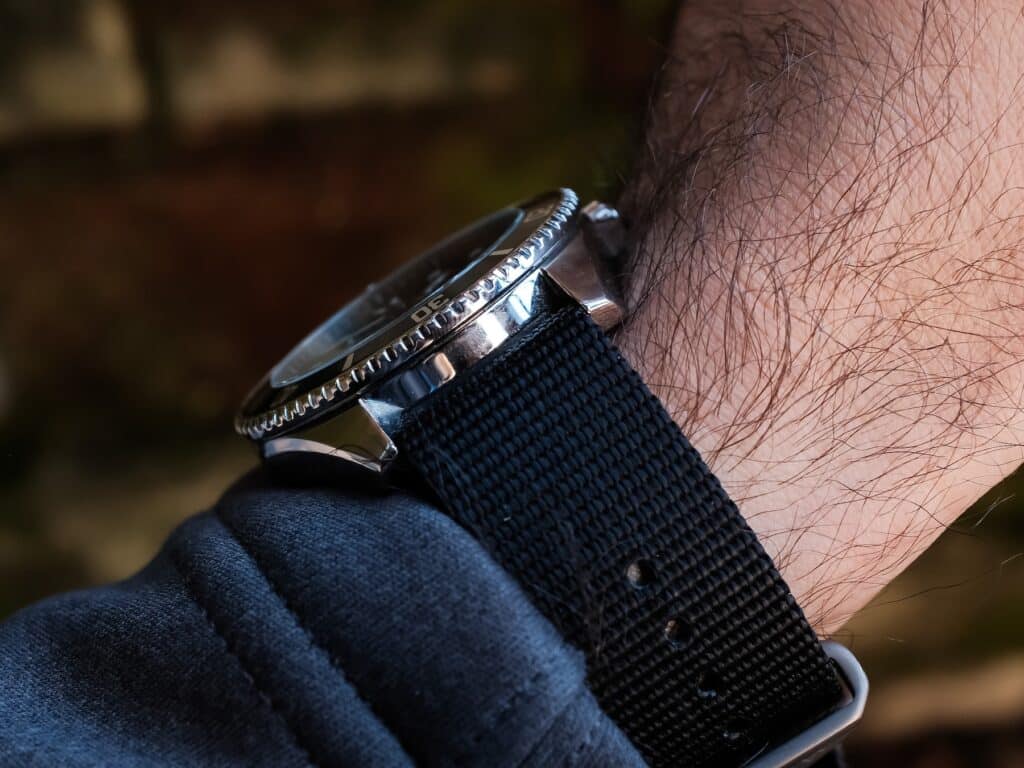
The Duro’s stock rubber strap is serviceable and perfectly appropriate for a watch at this price. It’s comfortable enough for everyday wear and gets the job done, but it suffers from a familiar problem with rubber straps in the affordable price range: it’s a magnet for lint, dust, and dirt. It doesn’t take long before the strap starts looking grimy, even with relatively light use. That’s why we’d recommend swapping it for an aftermarket option. We’ve worn the Duro on Toxic NATOs and Prometheus Design Werx straps, and the 22mm lug width makes finding replacements easy. There are plenty of options available, including steel bracelets if fabric isn’t your thing. A simple strap change can dramatically improve the wearing experience without adding much to the overall cost, which is part of what makes the Duro such an enjoyable watch to own.
The Seiko 5 Sports SRPD51 takes a more expressive approach, starting with its sunburst blue dial. Move your wrist under different lighting, and the blue changes character, appearing more subdued in indirect light and livelier when the sun catches it. The familiar Seiko handset won’t win over everyone, but it gives the watch an unmistakable identity. The applied hour markers and Seiko logo make the dial feel more modern than the older SKX and 7002, though at the expense of some vintage character. We’re happy to have the applied markers, but less enthusiastic about the cursive “Automatic” text. At least Seiko resisted the temptation to cram the dial with unnecessary information, leaving plenty of negative space around the main elements. The wider 5 Sports collection offers a variety of dial colors, textures, and collaborations, so finding a version that suits your taste shouldn’t be particularly difficult.

The SRPD51 came on a three-link steel bracelet, and that’s where the dial’s good impression starts to wane. The folded clasp looks particularly cheap against the polished sides, while adjusting the pin-and-collar links can test your patience. Seiko also kept the bracelet at 22mm all the way to the clasp instead of tapering it down, missing an opportunity to make the whole setup feel more refined. For a bracelet-first person, those details matter. Thankfully, drilled lugs make strap changes easier, and Strapcode offers aftermarket options, including bracelets that taper to 18mm. We’d consider those before spending another afternoon wrestling with pin-and-collar links. The 5KX is strap-friendly, but we wouldn’t sing its stock bracelet’s praises.
Build Quality & Technical Approach
A watch can look the part and still reveal a few compromises once we start using it. The Duro and 5KX make different bets on what deserves priority, from their movement engineering to their water-resistance limits. Let’s look beyond the familiar designs and see where those decisions pay off—and where they don’t.
Movements:
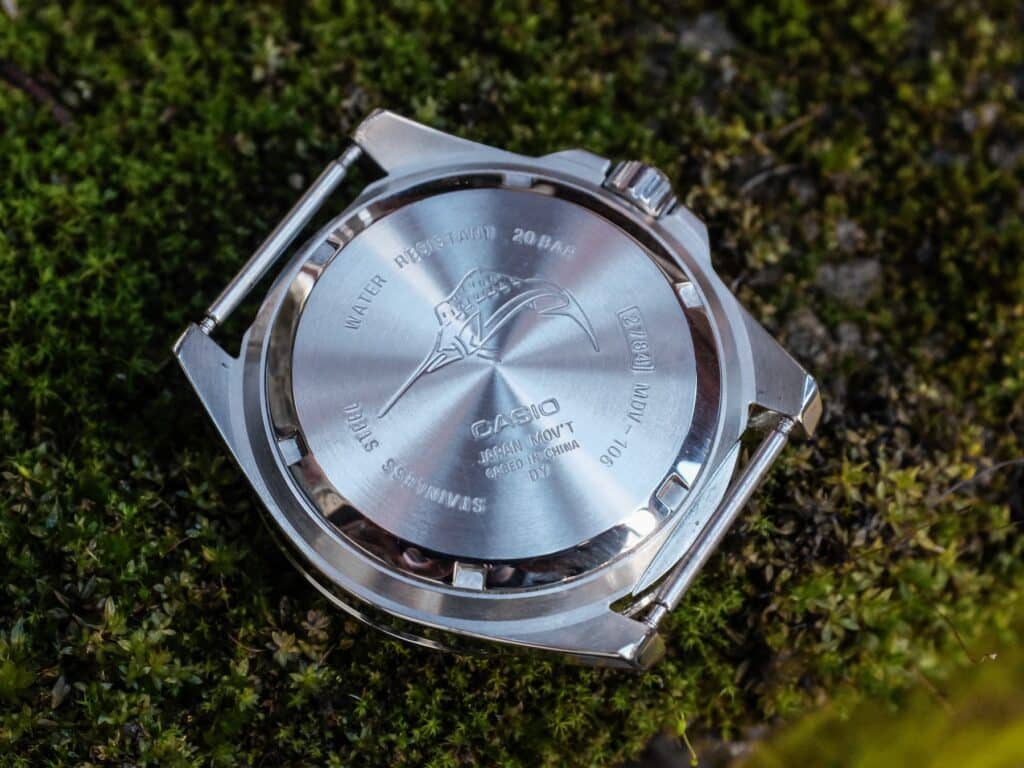
The Duro uses the Casio 2784 quartz movement, and we won’t pretend it deserves less respect just because it lacks a spinning rotor. Quartz makes perfect sense in a watch built around affordability, accuracy, and low-maintenance ownership. The movement offers hacking seconds, a quickset date, about ±20 seconds per month of accuracy, and roughly three years of battery life. Pick it up after a few days in the watch box, and no winding ritual or time-setting exercise awaits. The watch keeps time without demanding much attention, which is a pretty good arrangement for something we’re supposed to wear rather than babysit. If a mechanical movement is essential to your enjoyment of a watch, the Duro won’t change your mind. But dismissing it because it’s quartz misses the point entirely.
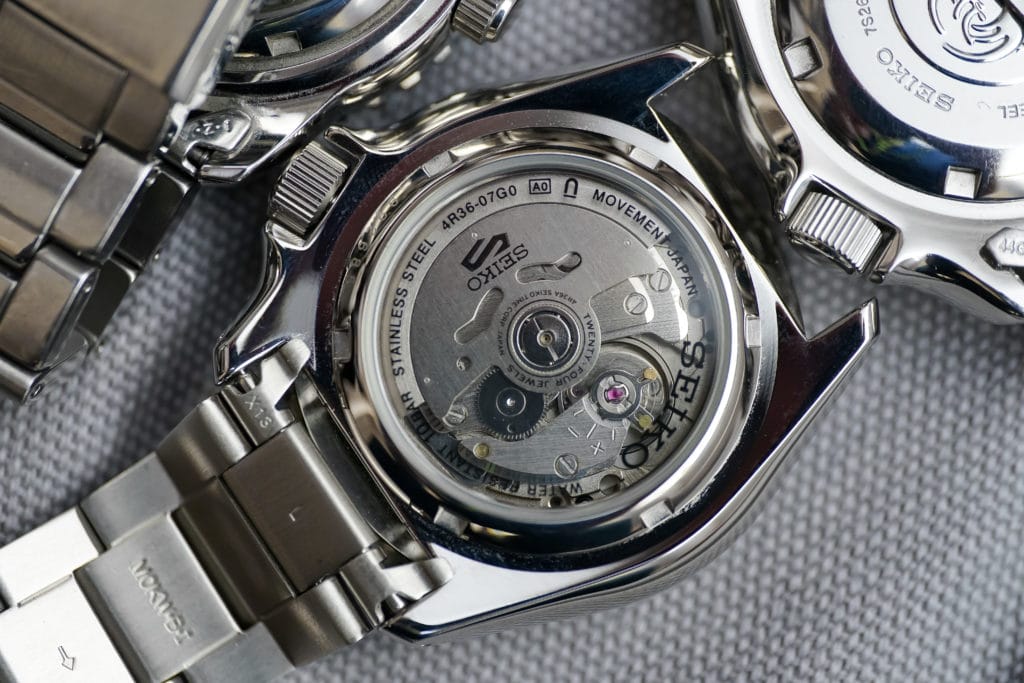
The Seiko 5 Sports SRPD51 takes the automatic route with Seiko’s in-house 4R36 movement, also known as the NH36 when supplied to outside watch brands. It offers approximately 41 hours of power reserve, plus manual winding and hacking seconds, making it more convenient to live with than some of Seiko’s older entry-level movements. These improvements are particularly welcome if you’re familiar with the older 7S26, which offered neither manual winding nor hacking. With a published accuracy specification of +45/-35 seconds per day, the 4R36 isn’t going to deliver quartz-like precision. That’s the trade-off with an entry-level automatic, but the more hands-on relationship with the movement is part of its appeal. Seiko also gives us a display caseback so we can watch the mechanism at work. The finishing won’t fool anyone into thinking it’s haute horology, but seeing the internals move adds an enjoyable detail to the experience. That mechanical connection is part of what makes the 5KX appealing.
Case Construction, Finishing & Wearability:
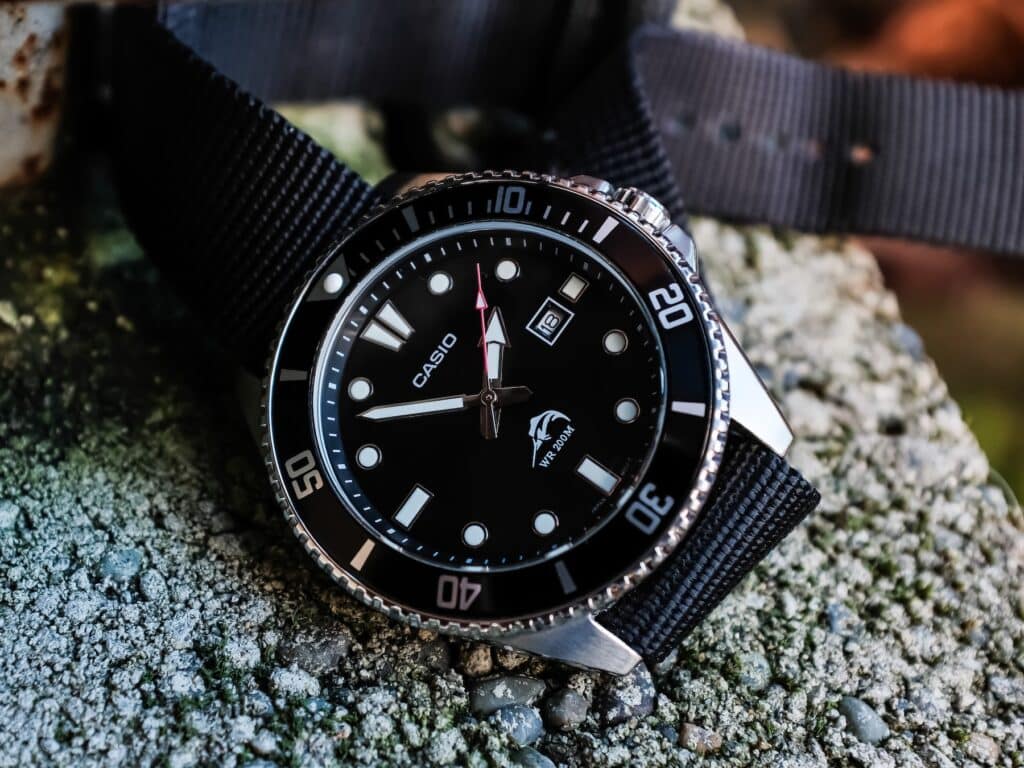
The Casio Duro doesn’t exactly whisper on the wrist. At 44.2mm wide, 12.1mm thick, and 48.5mm lug-to-lug, it looks like a lot of watch on paper. Yet its relatively short lug-to-lug measurement and downward-curving lugs stop it from sprawling across the wrist. We also appreciate the finishing, which is better considered than its bargain-bin reputation indicates. Brushed tops contrast with polished sides, while a subtle bevel and well-shaped lugs keep the case from looking like a generic lump of steel. The proportions make more sense once you wear it, too. We initially wondered whether a smaller Duro would be more appealing, but spending time with the full-size version makes a decent argument for leaving it alone. The case has character, and shrinking everything might take some of that away.
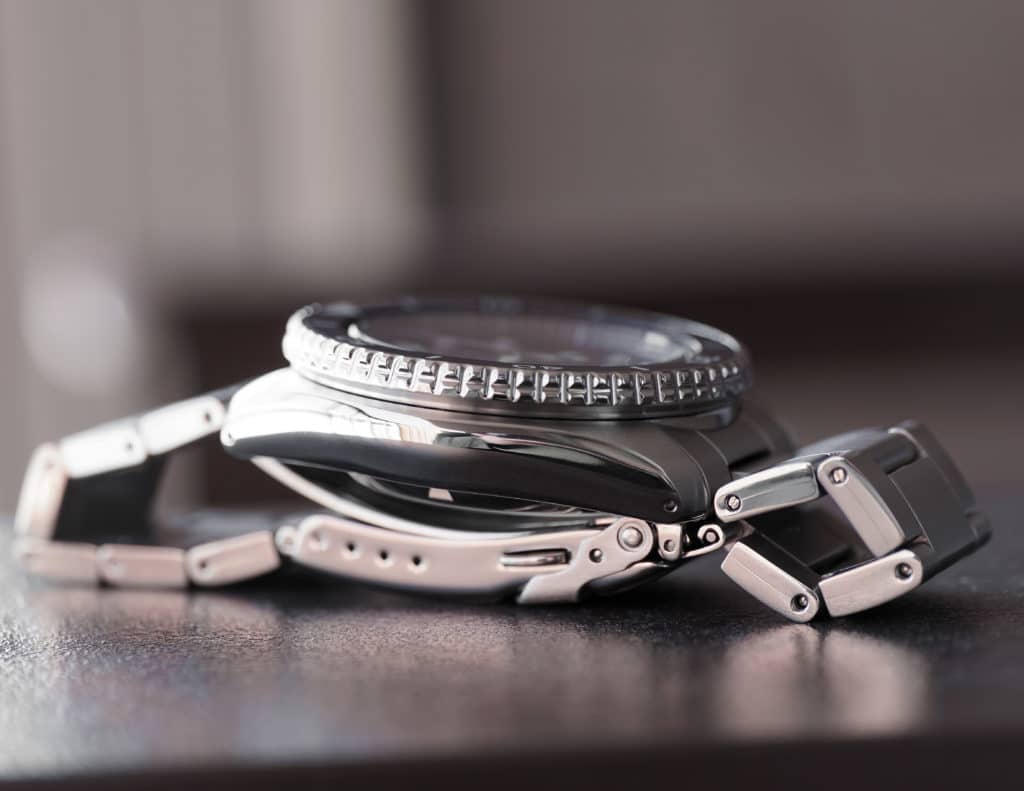
The Seiko SRPD51 feels familiar from the moment it hits the wrist, especially if you’ve spent time with the SKX. Seiko kept the recognizable case shape and the crown at four o’clock, where it belongs if you appreciate that particular bit of Seiko DNA. The crown remains unsigned, but milled rings add definition where a completely plain surface would be flat. Flip the watch over, and the display caseback replaces the SKX’s familiar Seiko wave; drilled lugs are another welcome change, making strap swaps less of a spring-bar wrestling match. There is a catch, though. At 42.5mm wide with a 46mm lug-to-lug measurement, the Seiko offers a more compact footprint than the 44.2mm Duro. That makes it particularly appealing if you have smaller wrists or prefer a watch that doesn’t dominate your wrist. The trade-off is its 13.4mm thickness, which makes the 5KX wear taller than its otherwise compact dimensions suggest. That’s worth considering if you prefer a sports watch that slides neatly under a cuff rather than announcing its presence every time you reach for something.
The difference becomes clearer when wearing these watches. The Duro offers a broader but flatter profile, while the Seiko’s shorter lug-to-lug measurement helps it sit more compactly, despite its additional thickness. Neither approach is inherently better. Those who prefer a slimmer profile may favor the Casio, while smaller wrists could benefit from the Seiko’s shorter dimensions.
Crystals and Bezels:
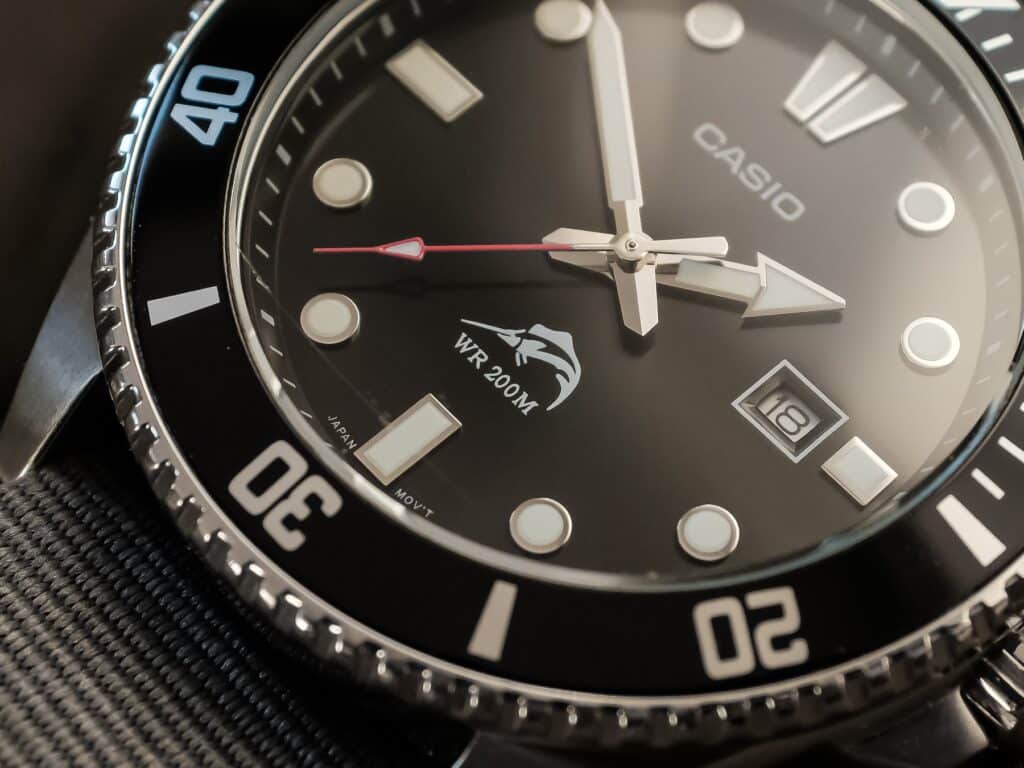
The Casio Duro uses a flat mineral crystal, one of those compromises that make sense at this price until you inevitably pick up a scratch. Sapphire would offer better scratch resistance, but we’re not talking about a luxury diver auditioning for a velvet-lined display box. The more interesting bit is the unidirectional aluminum bezel. While testing the Duro, its action felt smooth, with firm, satisfying clicks that wouldn’t have embarrassed watches costing considerably more. The example we handled may have been more broken in than a fresh-out-of-the-box Duro, so we wouldn’t assume every bezel will feel identical. Still, it was a pleasant surprise. The bezel feels like a functional part of the watch rather than an accessory Casio added to complete the dive-watch costume.
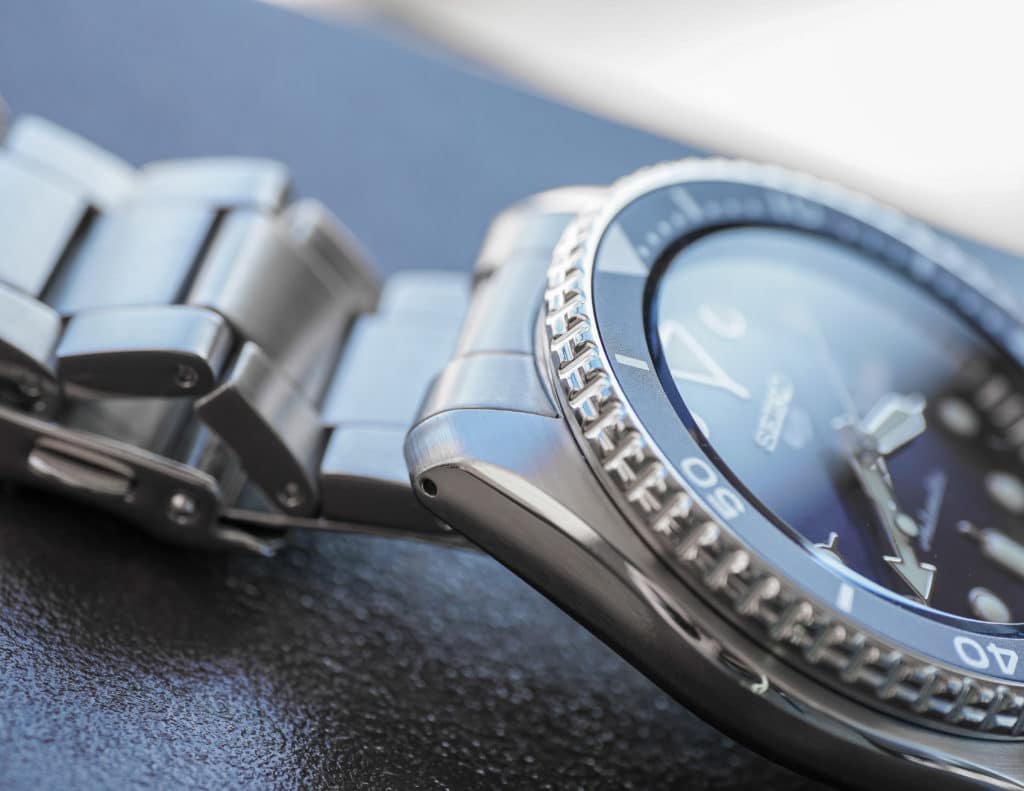
The Seiko 5 Sports SRPD51 uses Hardlex, Seiko’s hardened mineral crystal. It’s more shatter-resistant than standard mineral glass, but more prone to scratches than sapphire. In other words, it’s a reasonable middle ground, not a force field. The blue aluminum bezel makes a stronger visual impression. Its matte finish works particularly well with the SRPD51’s sunburst blue dial, giving the watch a coordinated look that wasn’t part of the classic SKX’s usual black-bezel setup. It’s a simple change, but it helps the 5KX feel like its own watch rather than an SKX tribute act.
Water Resistance & Lume:
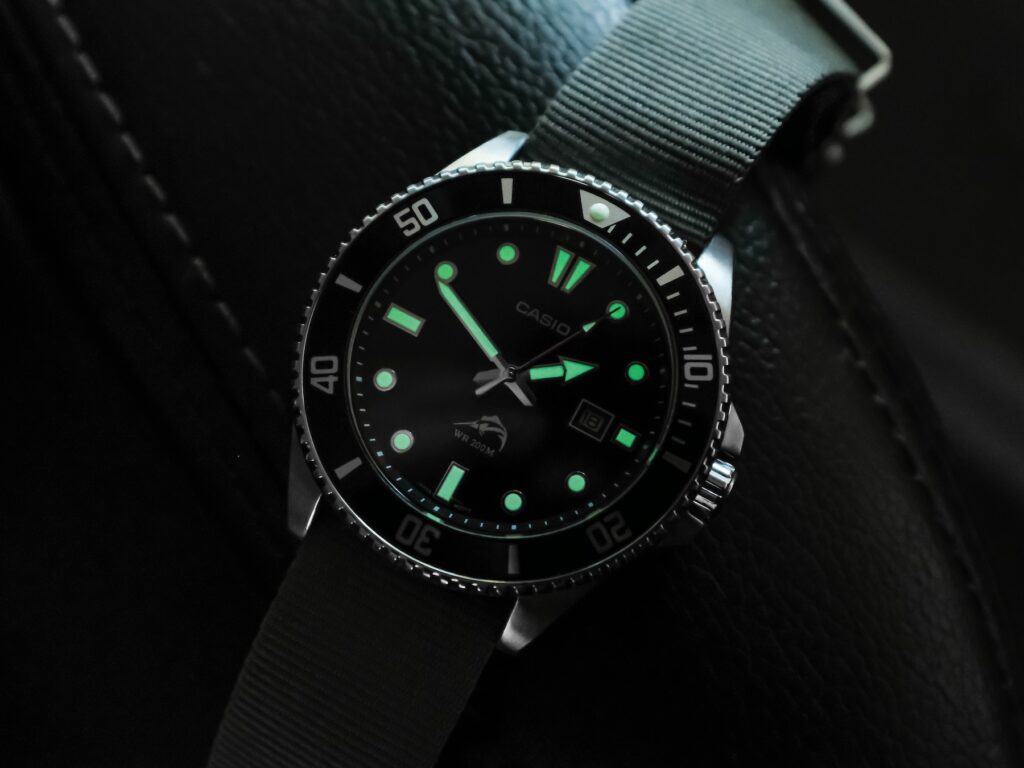
The Casio Duro gives us 200 meters of water resistance, a screw-down crown, protective crown guards, and a screw-down caseback. That’s a reassuring amount of hardware. We can take it swimming without treating every splash like a warranty negotiation. The generous lume on the hour markers is another practical touch, making the dial easy enough to read when the lights go out. It doesn’t glow for as long as we’d like, but at least Casio hasn’t skimped on the initial application.
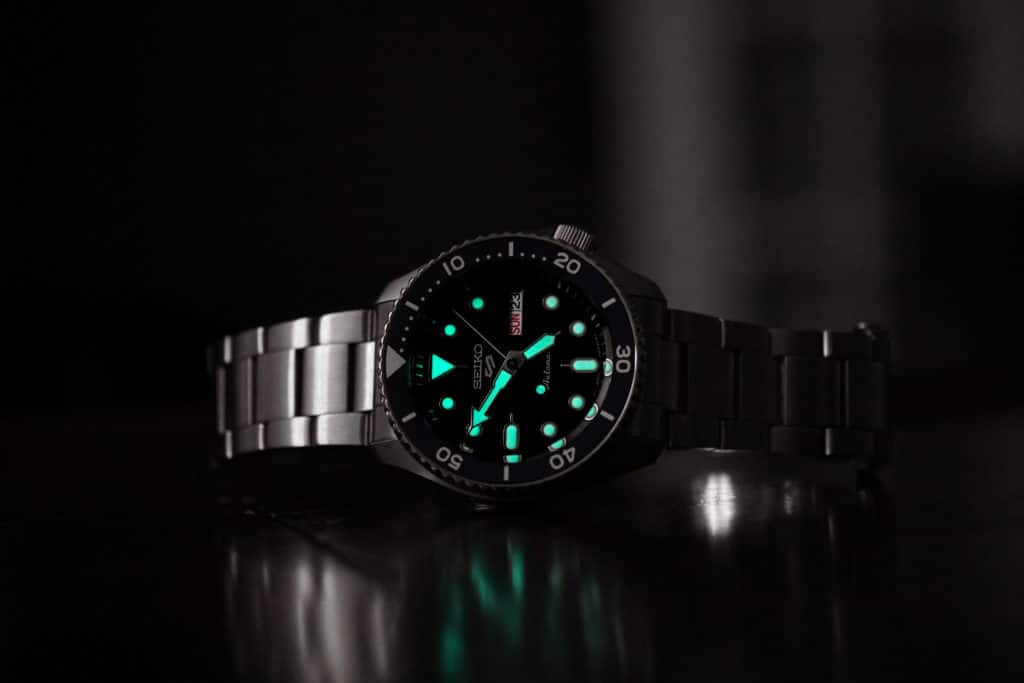
The Seiko 5 Sports SRPD51 offers 100 meters of water resistance, plenty for swimming and everyday water exposure. We put ours through its paces in a pool and hot tub without trouble, though the push-pull crown made us check it more than we’d prefer. The 5KX also lacks ISO 6425 dive-watch certification, so it isn’t a direct substitute for the old SKX if you need proper dive-watch credentials. For casual swimming, though, its limits are unlikely to matter. Seiko makes up some ground after dark with its Lumibrite treatment, which delivers the ample, long-lasting glow we’d expect. The hands and markers stay easy to read after dark, giving the Seiko the edge in nighttime legibility.
Cost Considerations
The Casio Duro is the kind of purchase that doesn’t require a committee meeting or a spreadsheet to justify. Casio’s official site lists the price at $84.95, though street prices can drop to around $50. Even at its full retail price, there’s a surprising amount of watch here. The stainless steel case has more thoughtful finishing than we’d expect, the unidirectional bezel feels satisfying to operate, and the 200 meters of water resistance gives the Duro genuine everyday versatility. Add the accuracy and convenience of its quartz movement, and it’s difficult to identify many areas where Casio has made compromises that meaningfully detract from the experience.
Those compromises do exist, however. The mineral crystal won’t offer the scratch resistance of sapphire, the lume could have better staying power, and the stock rubber strap has a habit of collecting lint and dirt. But none of these shortcomings feels particularly unreasonable at this price. We’d put the Duro on an aftermarket NATO or bracelet and enjoy what is otherwise a remarkably capable watch. That was certainly the impression we came away with after reviewing it. Rather than feeling like an inexpensive substitute for something better, the Duro left us thinking about which version we’d want to add to our own collection.
The Seiko 5 Sports SRPD51 presents a different value proposition at its $350 official US retail price, though we managed to pick one up from Macy’s for approximately $200 after taxes and discounts. For the additional investment, Seiko gives us an automatic movement with manual winding and hacking, a display caseback, an attractive sunburst dial, and excellent Lumibrite performance. The case also wears more compactly across the wrist than the Duro, while the broader Seiko 5 Sports collection offers considerably more variety in colors and configurations. These aren’t insignificant advantages, particularly for someone who finds genuine enjoyment in the mechanical side of watch ownership.
There are compromises here, too, and they’re harder to overlook when we’re spending several times the price of the Casio. The stock bracelet was a particular disappointment during our review, with its folded clasp, awkward pin-and-collar adjustment system, and lack of taper. We’d seriously consider the roughly $70 aftermarket upgrade, which only increases the price difference. The Seiko’s taller case and 100-meter water resistance also make it a somewhat different proposition from the Duro, although its stronger lume and more interesting dial give it advantages of its own. At around $200, these trade-offs become easier to accept. At $350, we’d expect a little more refinement from the bracelet in particular.
Ultimately, the question isn’t whether the Seiko is worth four to seven times as much simply because it contains a mechanical movement. It’s whether the additional expense delivers an ownership experience that matters to you. The 5KX offers something the Duro can’t replicate: the enjoyment of an automatic movement, the view through its display caseback, and the personality of a mechanical Seiko. Those qualities have genuine value, but they don’t necessarily make it a more capable everyday watch. The Duro delivers so much practical functionality for so little money that we’d give it the advantage on value, while recognizing that the Seiko’s mechanical appeal may be worth the premium to the right enthusiast.
Final Thoughts: Casio Duro vs Seiko 5 Sports—Which Watch Wins?
The Casio Duro takes the overall win, and we don’t think it needs an asterisk. The Seiko 5 Sports has more mechanical intrigue, but the Duro makes a stronger case for what an everyday sports watch should be: something we enjoy wearing without having to convince ourselves that every detail justifies its place in the collection. This hobby tends to treat mechanical movements as the main event and quartz as the opening act. The Duro reminds us that an enjoyable watch doesn’t have to follow that script.

The Seiko 5 Sports still has a legitimate pull for anyone who enjoys the little rituals of an automatic and the view through its display caseback. That experience is the point, and the Duro can’t replicate it. But it doesn’t need to. The 5KX appeals to the part of us that wants to engage with the machinery, offering a different kind of satisfaction from simply strapping on a watch and getting on with the day.
If you’re drawn to mechanical watches and want an approachable automatic to start your collection, the Seiko 5 Sports makes sense. If you’d rather have a capable sports watch that keeps things simple and leaves more money for the rest of the hobby, go with the Duro. At around $50, it doesn’t need an elaborate sales pitch or a philosophical debate about quartz versus mechanical. It just needs a spot in your watch rotation.

Co-Founder and Senior Editor
Kaz has been collecting watches since 2015, but he’s been fascinated by product design, the Collector’s psychology, and brand marketing his whole life. While sharing the same strong fondness for all things horologically-affordable as Mike (his TBWS partner in crime), Kaz’s collection niche is also focused on vintage Soviet watches as well as watches that feature a unique, but well-designed quirk or visual hook.