Military dive watches have a funny way of making otherwise reasonable collectors start using words like “issued” and “authenticity” with a straight face. We get it, because we’ve done it too. After nearly a decade of reviewing watches and spending real wrist time with pieces like the Marathon TSAR, CWC 1980 Royal Navy Diver Re-Issue, and CWC SBS Diver, the appeal here isn’t hard to understand. These aren’t shiny desk-divers pretending to be rugged after one mildly humid afternoon. They come from a corner of the watch world where the story, the wearing experience, and the whole “could this survive more than my email inbox?” question all matter. That’s what makes a Marathon TSAR vs CWC 1980 Royal Navy Diver Re-issue vs CWC SBS Diver comparison more interesting than another spec-sheet slap fight.
The real question we’re trying to answer isn’t which one has the most military flavor sprinkled on top. It’s which one makes the most sense to own now, after the initial romance wears off and you’re left with the watch on your wrist, the money gone from your account, and maybe a slightly self-satisfying feeling every time you glance down at it. One of these scratches the modern tool-watch itch, one leans harder into Royal Navy collector charm, and one sits somewhere in that dangerous zone where practicality and military nerdiness start enabling each other. We’ve liked parts of all three in our hands-on reviews, but this comparison is about trade-offs, and they say a lot about what you want from a military diver in the first place.
Overview & Identity
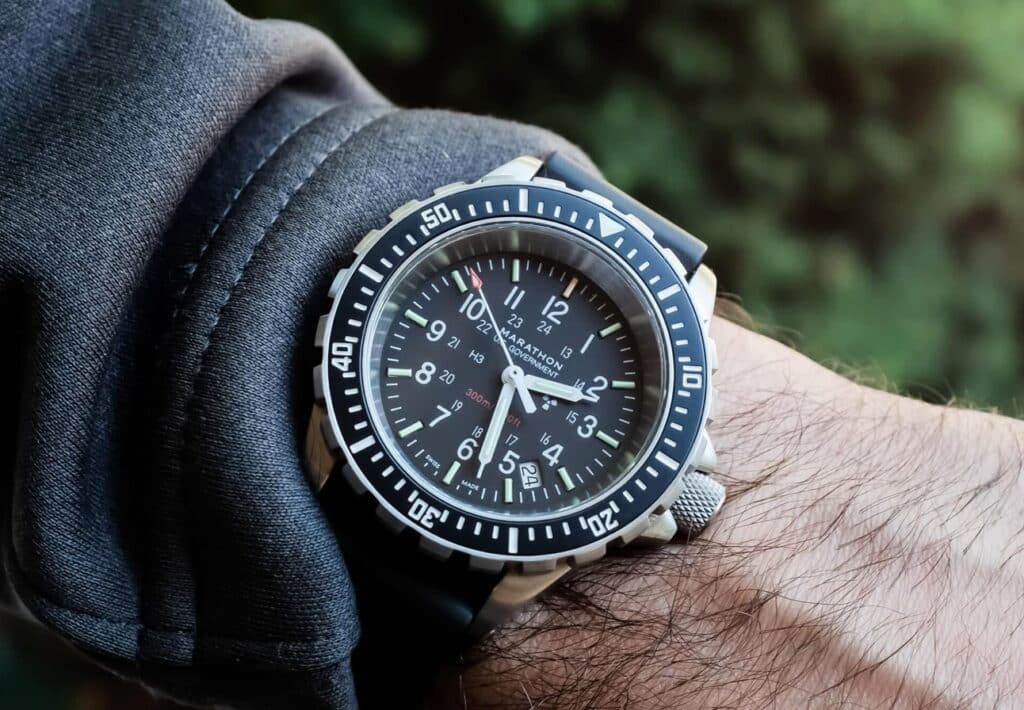
The Marathon TSAR comes into this comparison as the least romantic and probably the most stubbornly practical watch of the three. In our hands-on review, what stood out immediately was how little the watch cares about looking elegant or vintage-correct. It is a brushed, chunky, quartz-powered, function-first diver originally designed for Canadian search-and-rescue operations, and that personality quickly comes through on the wrist. The oversized crown, aggressive bezel grip, and heavy-duty case all make sense once you stop expecting refinement and start treating it like equipment. That also means it can feel too thick and blunt for casual daily wear.
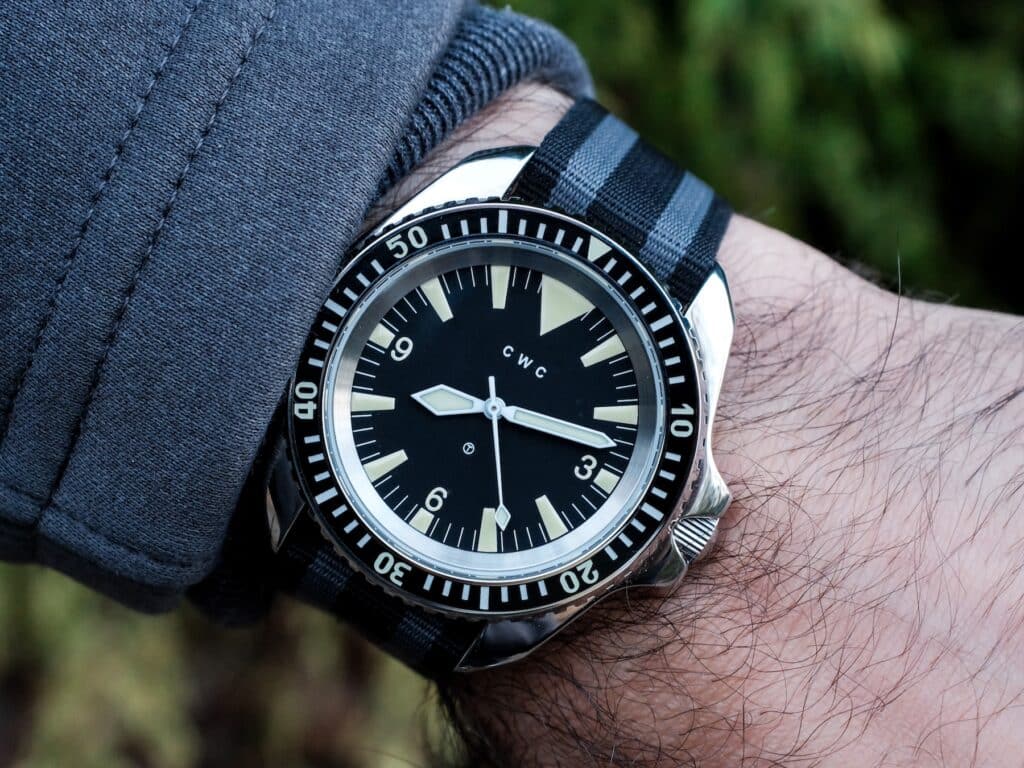
The CWC 1980 Royal Navy Diver Re-Issue sits at the opposite emotional end of the table. Over the course of our testing, the appeal was that the watch understands exactly what kind of collector it is speaking to. The fixed spring bars, fully graduated bezel insert, simple dial text, and old-school Royal Navy proportions all work together to make it feel like a proper continuation of CWC’s military-diver story rather than a costume piece. It also carries the kind of nerdy charm that makes the price easier to rationalize if you are already deep into this lane.

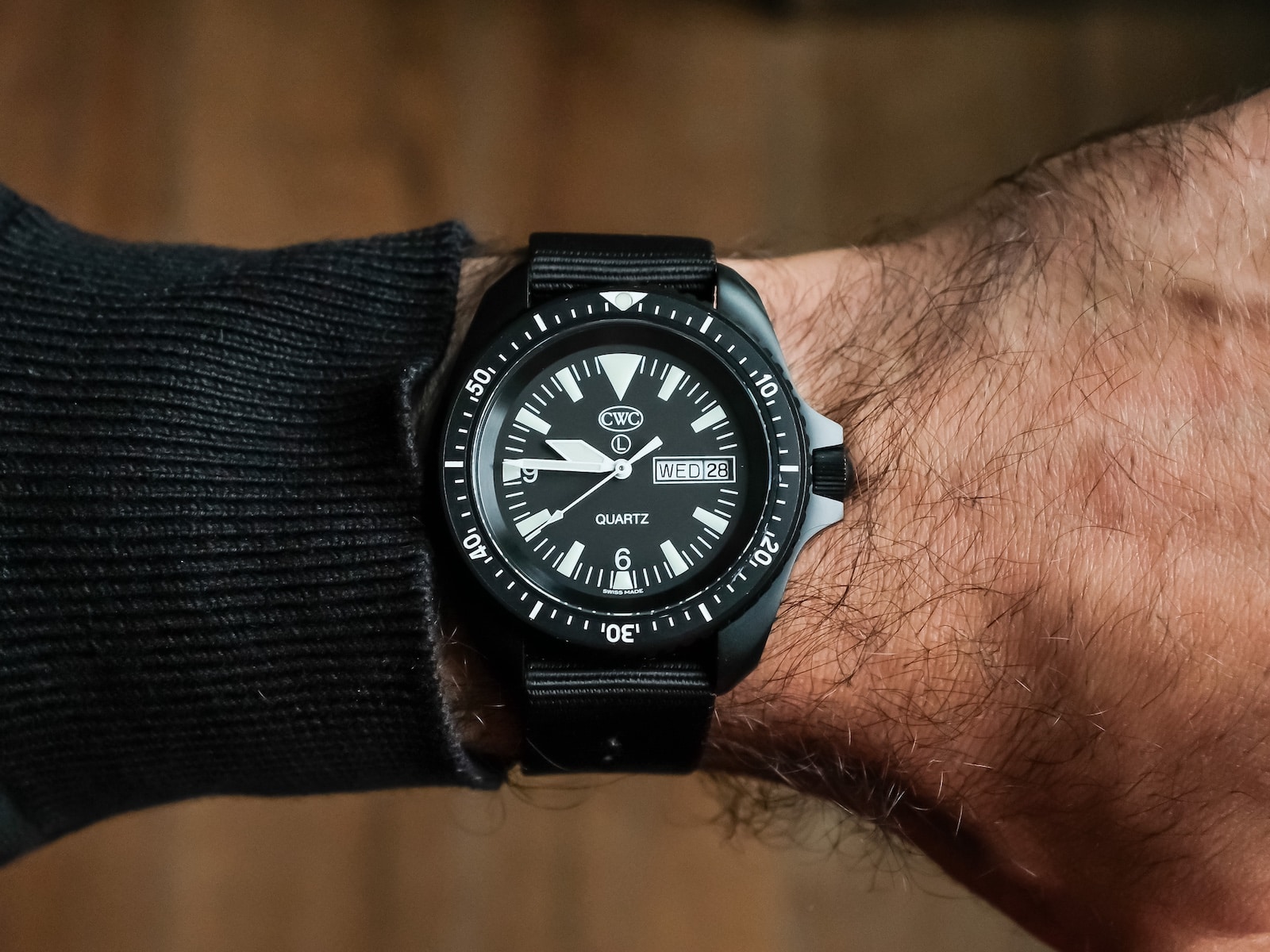
The CWC SBS Diver feels like the more contemporary CWC answer, giving it a different identity. During our hands-on testing experience, it came across as stealthier, tougher, and more immediately wearable than the older Royal Navy-flavored piece. The black PVD case, quartz movement, fabric-strap setup, and no-babying-needed build make it feel less like a historical object and more like something you can throw on without turning the moment into a whole ceremony. It still has that CWC military authenticity that hooks collectors, but the experience is more modern and low-maintenance.
Dial & Wearability: No-Frills Utility vs Royal Navy Clarity vs Strap-Ready Ease
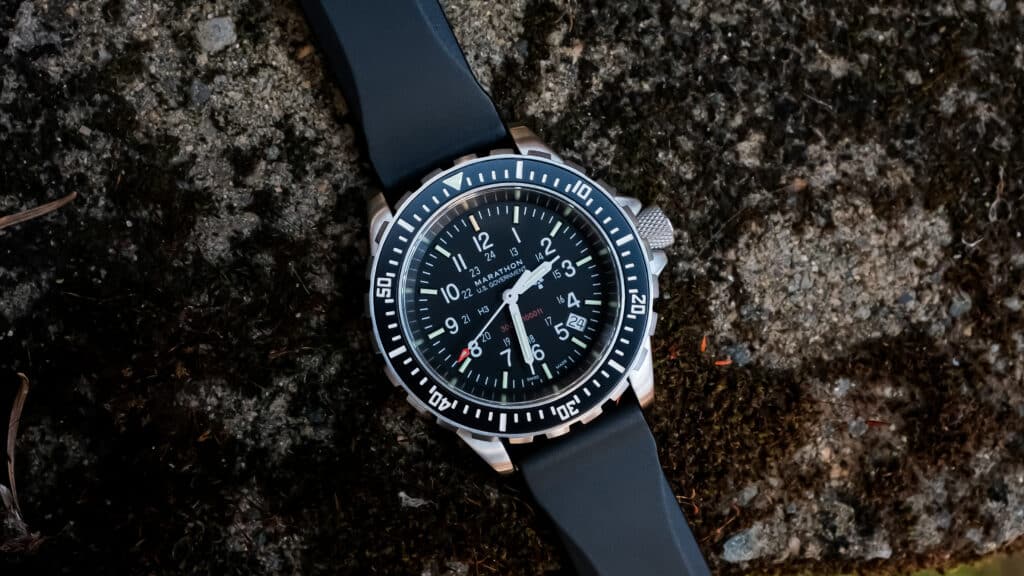
The Marathon TSAR keeps the dial about as businesslike as the rest of the watch. The black dial can be had with either the simple Marathon wordmark or the more official-looking “US GOVERNMENT” text underneath, and that choice changes the vibe more than you might expect. The red depth rating adds a subtle visual accent to the dial without making it feel decorated for its own sake. The date wheel at 4:30 currently uses a high-contrast white background with black numerals for maximum legibility, but for daily wear, it would be nice to invert the colors so the date blends in more. On the wrist, the TSAR’s wearability depends heavily on how much tool-watch bluntness you enjoy. The steel bracelet is well-built, but it stays in the same utilitarian lane as the watch itself: no quick release, no tool-free micro-adjustment, and a stamped clasp setup that feels solid rather than fancy. The rubber strap suits the watch’s personality, with a thick, sturdy feel and that familiar vanilla rubber smell. The catch is that the strap can be annoying to remove for use with watches without drilled lugs, so it’s practical but not effortless in every setup.
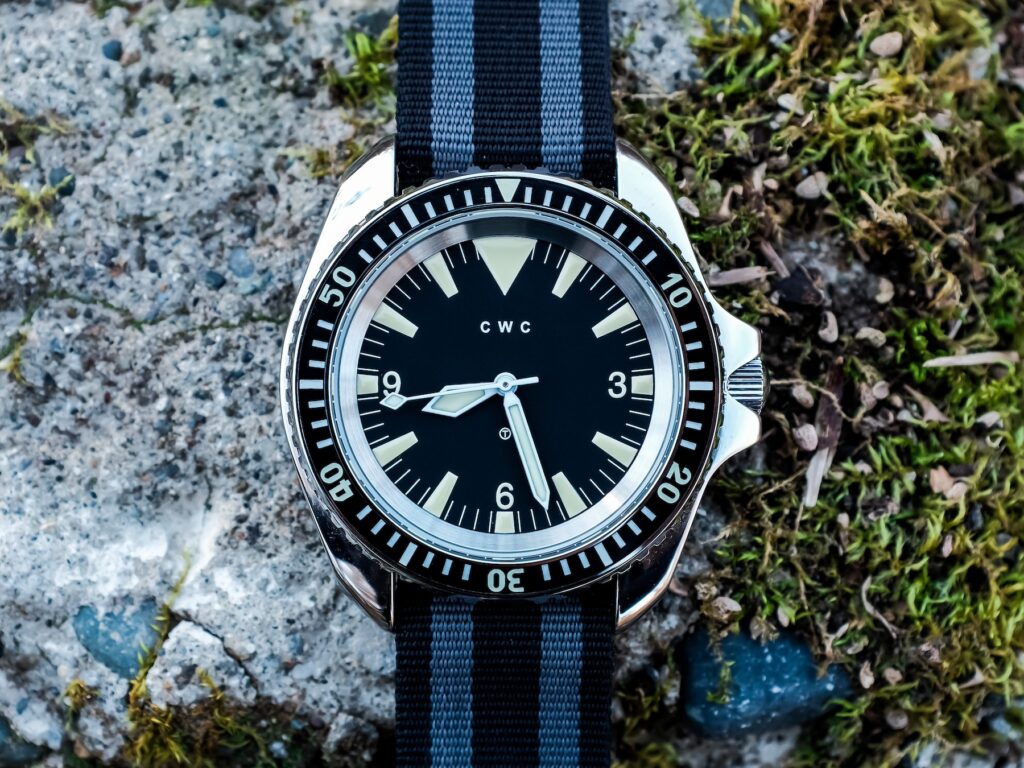
The CWC 1980 Royal Navy Diver Re-Issue takes a much cleaner approach, and the restraint is a big part of the charm. The dial keeps things simple with the small CWC logo and the tiny circle-T above 6 o’clock, which gives it that old military-watch quietness without trying too hard. Large trapezoidal hour markers, chunky sword hands, and Arabic numerals at 3, 6, and 9 make the whole thing very legible, almost like a pilot’s watch squeezed into a smaller everyday diver format. The minimal text is one of the best details because nothing feels like it’s shouting for attention. On the wrist, the supplied Cabot Military Watch Strap feels tough, modern, and properly suited to the watch. That said, the Royal Navy Diver has a special kind of magic on a Phoenix-style strap, especially in the black/grey Bond combo. The stock admiralty grey strap still earns its place, though, and keeps the watch feeling honest rather than precious.
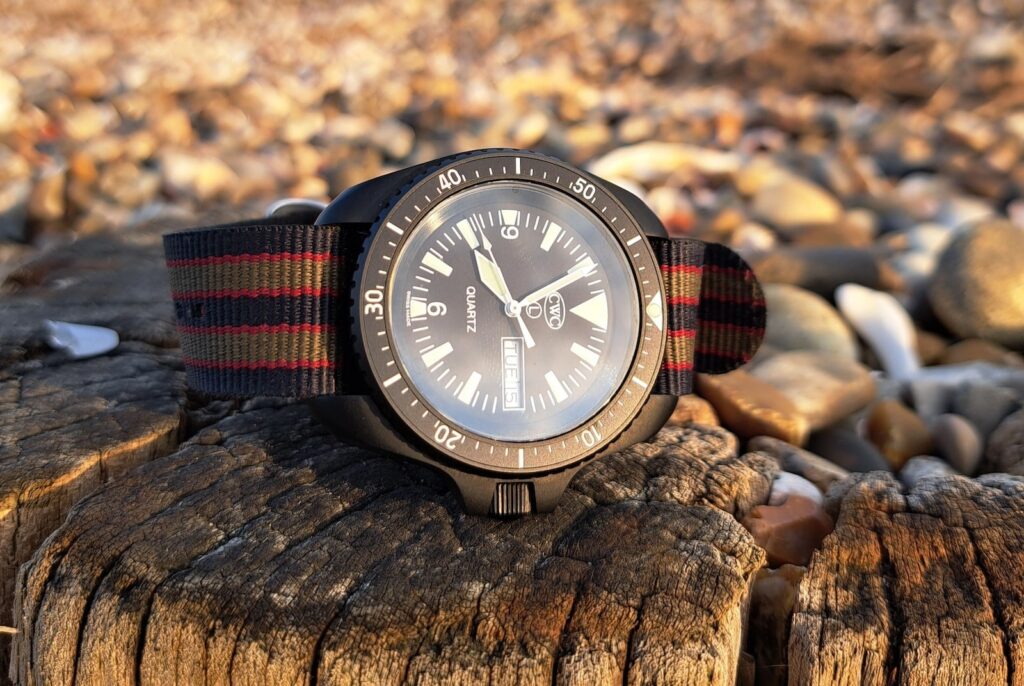
The CWC SBS Diver is busier by comparison, but in a way that suits its more modern military personality. The pronounced minute track, oversized hour markers, encircled CWC logo, and encircled L marking give the dial more visual tension than the 1980 re-issue. It lacks luxury shine, but that’s part of why it works; it has a strange attractiveness that comes from looking purposeful rather than polished. The sword hands also pull their weight here, adding that slightly addictive military-diver character without overcomplicating the layout. On the wrist, the SBS benefits from being worn exclusively on a fabric strap, which keeps the size and weight approachable. It feels light enough for regular wear, but still heavier and more substantial than a cheap quartz diver. The result is a watch that feels rugged, comfortable, and easy to wear hard without worrying about scuffing something delicate.
- The Marathon TSAR offers the most utilitarian dial-and-strap experience, with rugged charm coming from how little it tries to dress itself up.
- The CWC 1980 Royal Navy Diver Re-Issue delivers the cleanest and most traditional military-diver dial, helped by strap pairings that deepen its old-school Royal Navy feel.
- The CWC SBS Diver brings the most visually modern dial of the three, balancing busier military detailing with a comfortable, rugged fabric-strap wearing experience.
Build Quality & Technical Approach
All three watches are built around the same basic promise: military-diver toughness without much interest in pampering the owner. But the Marathon TSAR, CWC 1980 Royal Navy Diver Re-Issue, and CWC SBS Diver each get there differently.
Movements and Ownership Experience
The Marathon TSAR takes the most function-first approach here, which tracks with the rest of the watch. Inside is a high-torque ETA F06 quartz movement, and that matters because the TSAR has a chunky handset that needs more than some fragile little afterthought of a motor pushing it around. In our review, the appeal wasn’t romance; it was the lack of drama. Accuracy is rated at -0.3/+0.5 seconds per day, and while it isn’t the higher-accuracy F06.412 rated to 10 seconds a year, it still fits the TSAR’s whole “reliable equipment” personality. Battery life should be around three years, which means ownership is mostly wearing it, trusting it, and eventually remembering batteries exist.
The CWC 1980 Royal Navy Diver Re-Issue gives you the most traditional mechanical ownership experience of the three. It runs on a CWC-engraved ETA 2824-2, which feels right for a watch trying to balance military history with modern usability. During our time with it, the movement initially ran slower than expected, but CWC quickly addressed the concern, sent a label, inspected the watch, and returned it in under two weeks. After that, it settled around +/-3 to 5 seconds per day, which is more than fair for this kind of watch. The best part, honestly, is that it’s a basic ETA. There’s comfort in knowing the movement isn’t some exotic little problem waiting to happen when service time comes around.
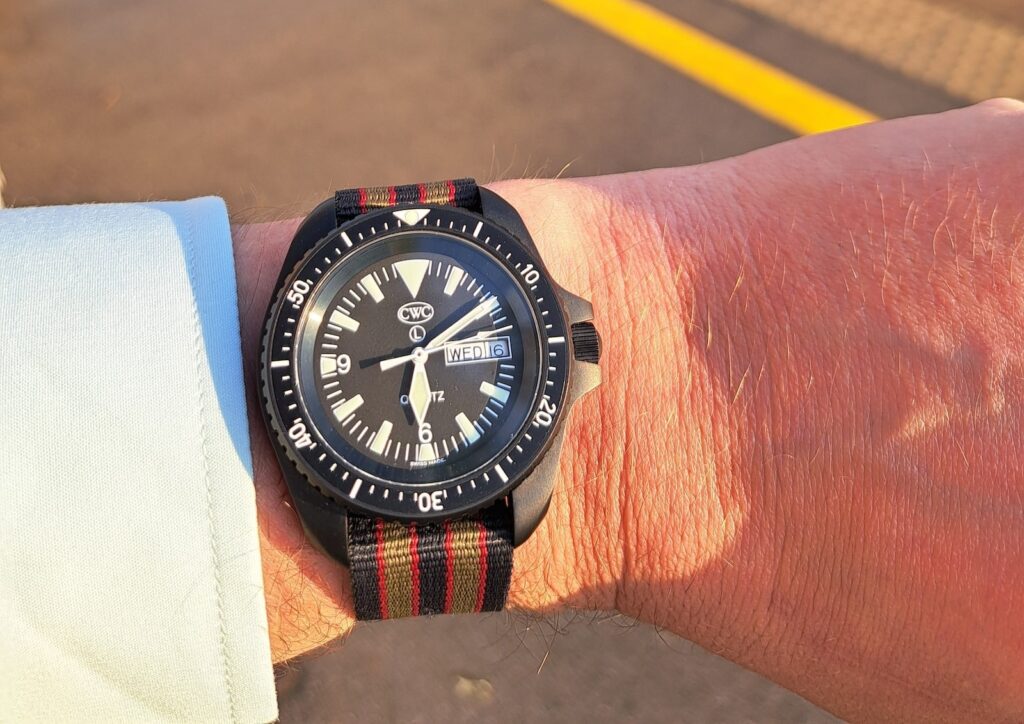
The CWC SBS Diver brings the hobby back to its low-maintenance side. The pleasure of quartz here is simple: set it, wear it, and mostly stop thinking about it until an odd-numbered month reminds you the date window still wants attention. In our testing period, the SBS ran accurately enough that the second hand needed only one correction over five weeks, and even then, it was only about five seconds fast. That kind of ownership experience suits the SBS well. It doesn’t ask for winding, timing checks, or mechanical patience. It just gets on with being a military-style diver, which is probably why the quartz movement feels less like a compromise and more like the point.
Case Construction & Finishing
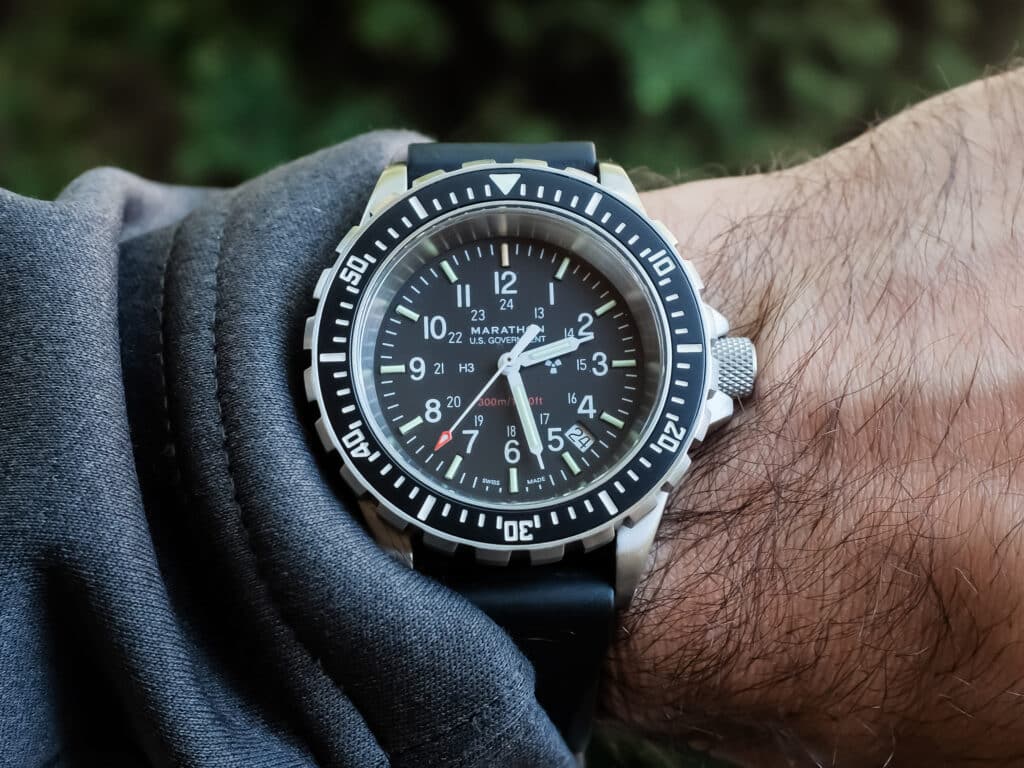
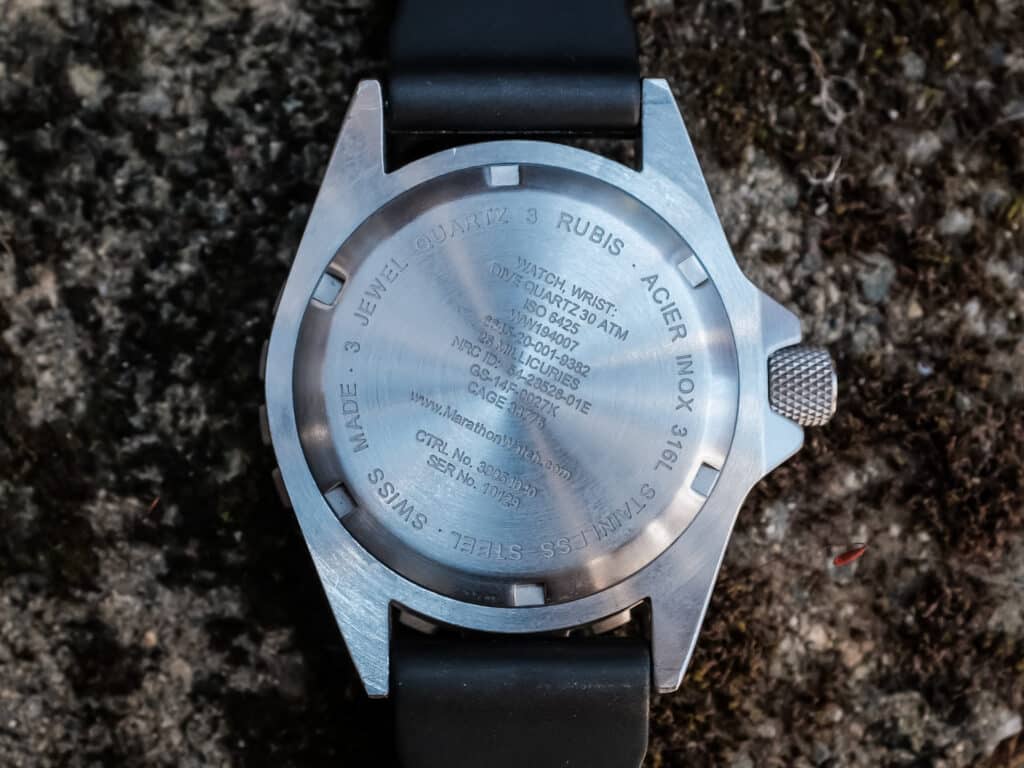
The Marathon TSAR feels like a reliable 41mm beast, and that impression starts with the case. In daily wear, the fully brushed, slab-sided construction immediately gave the watch its blunt military-tool personality. At 14mm thick, it has more wrist presence than its diameter alone suggests, and the case feels heftier than it technically is. The beefy 20mm drilled lugs are a practical touch, making strap and bracelet swaps easier, which fits the TSAR’s no-nonsense attitude. Around back, the screw-down steel caseback is etched with enough information to become accidental bathroom reading. There isn’t much delicate finishing to admire here, but that’s also the point.

The CWC 1980 Royal Navy Diver Re-Issue has a different kind of case charm. Even at 42mm, it wears smaller than expected, closer in feel to an older Submariner than a modern oversized diver. The case is entirely polished, which gives it a cleaner, more vintage-leaning look than the TSAR’s brushed, slab-sided build. As with the original-style military spec, it uses fixed spring bars, so pass-through or open-ended straps are the way to go here. Add the beefy crown guards and screw-down crown, and the measured width stretches closer to 45mm, but during our time with the watch, those numbers never felt as intimidating on the wrist as they look on paper. That case magic is a big part of why CWC divers keep pulling collectors back in.
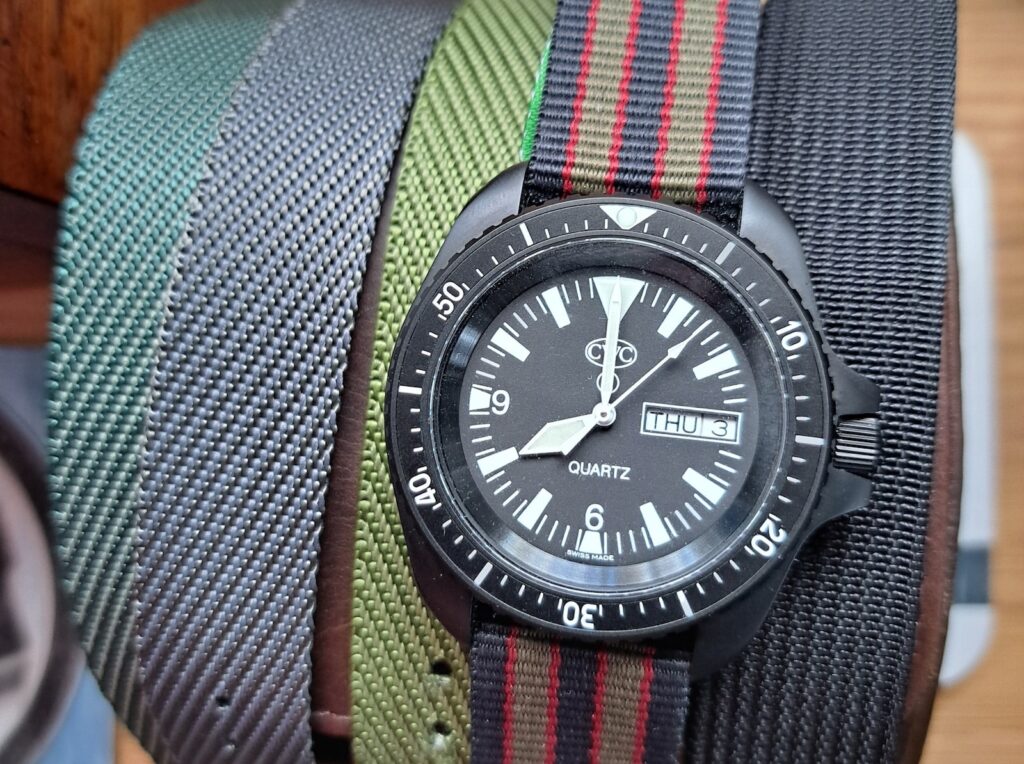
The CWC SBS Diver takes the more tactical route. Its black PVD-coated case feels like a welcome change if you’ve spent too much time staring at shiny steel divers, and it immediately gives the watch a more modern military edge. The case shape has that Pelagos FXD-style fixed-bar feel, which suits the SBS’s fabric-strap-only personality. It doesn’t read as refined in the luxury sense, but it also doesn’t seem interested in that lane. The black case helps the watch feel purposeful, a little stealthy, and easier to treat like gear rather than something you need to polish with the corner of your shirt every hour.
Crystals and Bezels
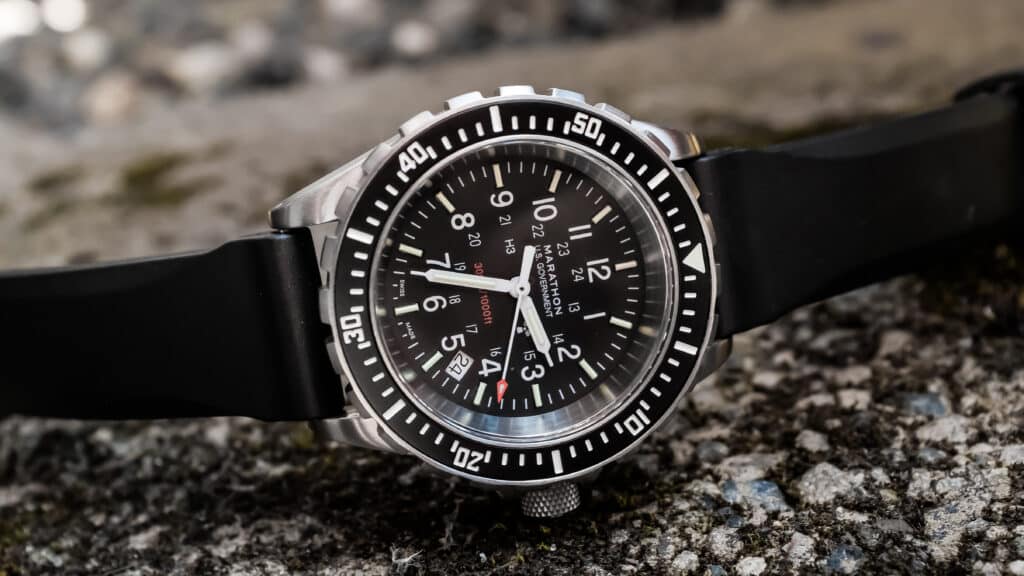
The Marathon TSAR keeps things modern and practical with a sapphire crystal, which feels right for a watch that otherwise refuses to make functional compromises for style points. The bezel is where the TSAR’s tool-watch personality comes through. It uses a very toothy 120-click bezel designed to be operated with gloves on in arctic waters, which is about as Marathon as a sentence can get. In use, that aggressive grip makes sense because the watch never pretends to be delicate or dressy. The bezel feels like one of the main reasons the case looks so unapologetically chunky in the first place.
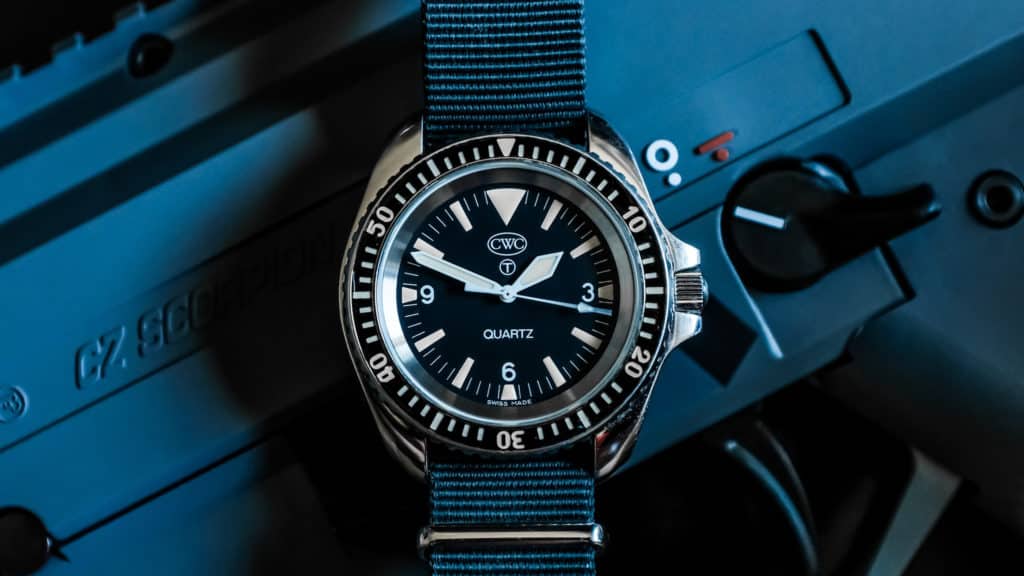
The CWC 1980 Royal Navy Diver Re-Issue also gets sapphire, and the anti-reflective treatment does its job without turning into something you constantly notice. During our time with CWC crystals, glare rarely became a problem, which matters because the whole dial experience depends on that clean military legibility. The bezel takes a more old-school path with a 60-click setup and a fully graduated glossy acrylic insert. The operation feels positive, though there is a little bit of wobble, and weirdly, that doesn’t really hurt the watch. The color-matched bezel markings and dial details are dialed in beautifully, giving it that old-CWC look without feeling like a lazy vintage imitation.
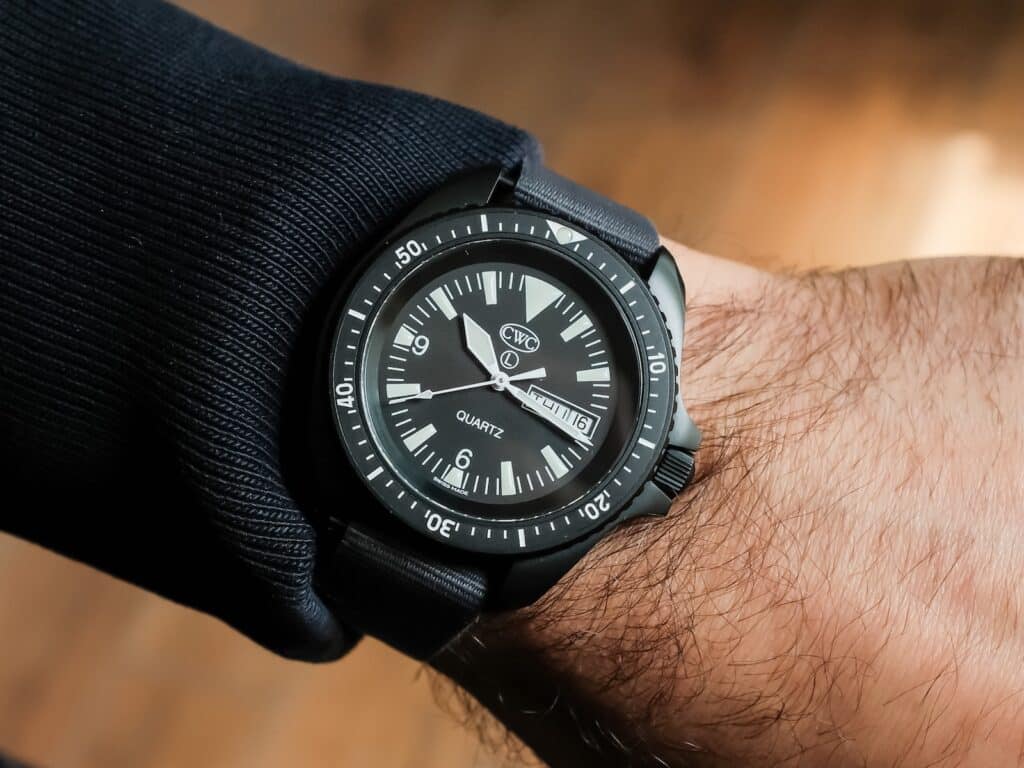
The CWC SBS Diver stays on the practical side with sapphire glass as well, and the flat crystal helps the watch feel clean and readable from different angles. The AR coating, or at least what appears to be one, helps legibility enough that the dial’s busier layout doesn’t become annoying in normal wear. Its 120-click bezel puts it closer to the TSAR in modern functional terms than the 1980 Re-Issue. That makes sense for the SBS, because its personality is less about vintage charm and more about straightforward military usability.
Water Resistance & Lume
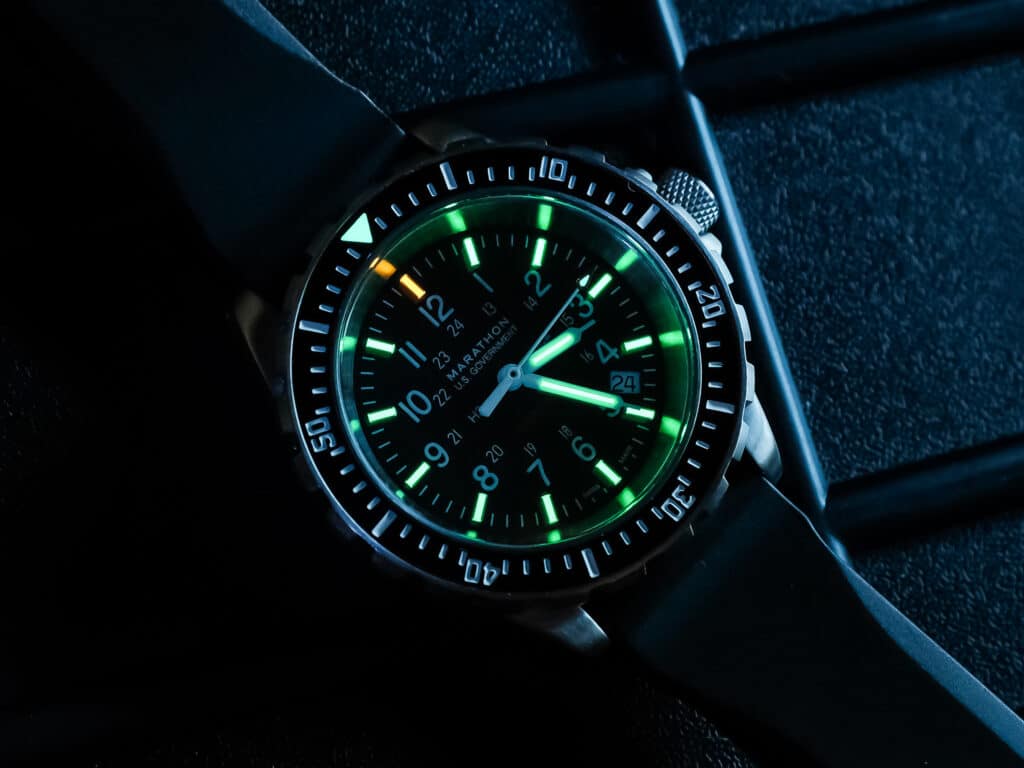
The TSAR backs up its chunky case with 300 meters of water resistance, so this is not one of those “dive-style” watches that get nervous near a sink. The oversized, knurled screw-down crown is easy to grip, which fits the rest of the watch’s cold-weather, gloved-hand logic. The lume setup is more interesting than a standard paint-and-pray approach. The H3 and radiation markings point to the tritium tubes used on the hour markers and hour/minute hands, while the bezel pip and seconds hand use MaraGlo (Marathon’s own version of Super-LumiNova). In actual darkness, the tritium doesn’t blast your retinas like a freshly charged lume monster. It gives off enough steady light to read the time without turning your wrist into a tiny emergency exit sign, and with a half-life of about 25 years, it suits the TSAR’s long-haul tool-watch personality.
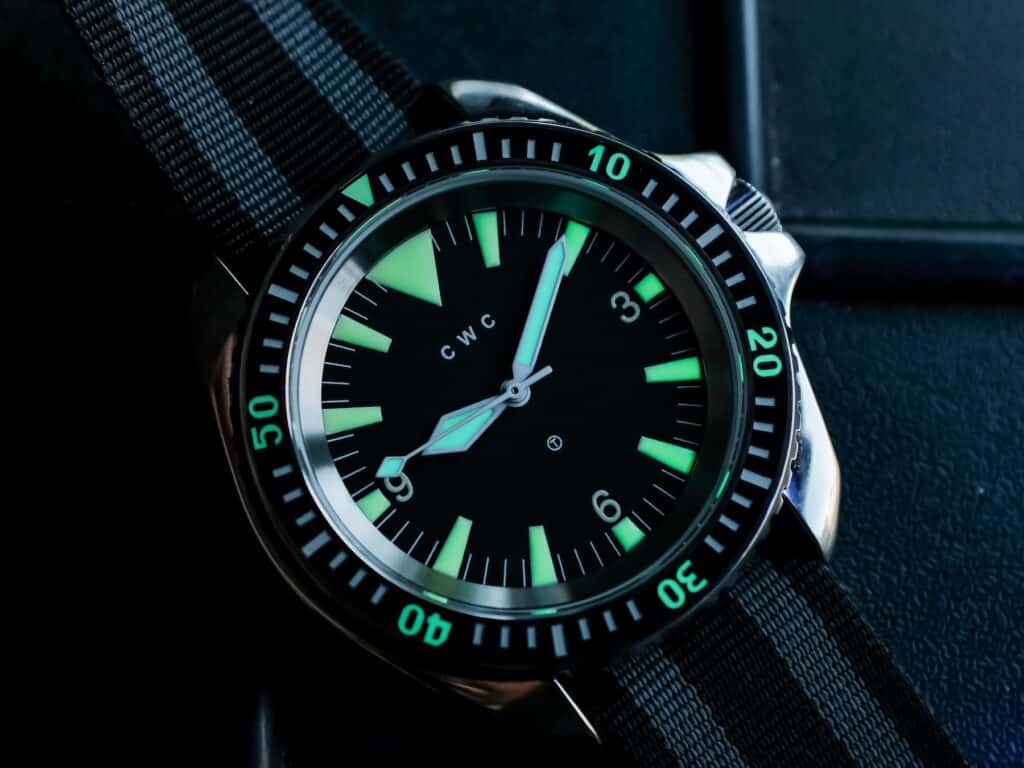
The CWC 1980 Royal Navy Diver Re-Issue also carries 300 meters of water resistance, which is more than enough for almost everyone reading this, unless your weekend plans involve arguing with a submarine. The watch feels properly covered on the water-resistance front, but the lume is where the vintage re-issue personality comes through more clearly. CWC uses a light vintage-colored Super-LumiNova on this modern version, and thankfully, it doesn’t go too far into fake-aged pumpkin territory. Earlier runs offered darker vintage and modern-colored lume options, but this lighter tone feels like the best fit. It keeps the watch looking period-correct without making the dial feel like it was aged in a toaster oven. The result is practical low-light visibility with the right amount of old-school warmth.
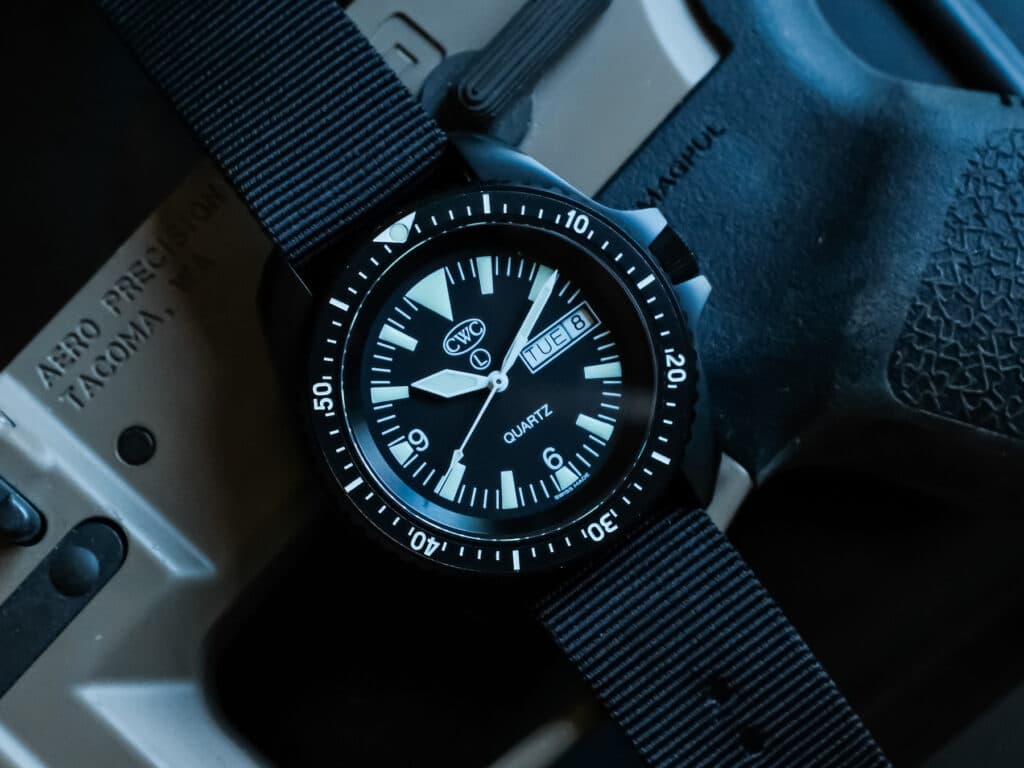
The CWC SBS Diver keeps the same 300-meter water-resistance rating, which matches its more modern military-diver attitude. This isn’t a watch that feels like it needs special treatment around water, dirt, rain, or whatever else your day throws at it. The dial uses an encircled “L” for Luminova rather than the older tritium-style “T,” and the lume performance is better than the thin hands might suggest. It reacts to direct sunlight within a few seconds and lasts well into the small hours. The funny part is that the hands are slim enough that you can sometimes read the dial text through them, which sounds like a complaint until you realize the watch remains easy to read in the dark.
- The Marathon TSAR takes the most practical route, pairing quartz reliability with a slab-sided brushed case, a sapphire crystal, and a glove-friendly bezel, all with tritium-based low-light visibility.
- The CWC 1980 Royal Navy Diver Re-Issue feels more old-school and mechanical, with a serviceable ETA 2824-2, a polished case, fixed spring bars, a sapphire crystal, and a 60-click acrylic-insert bezel with vintage-leaning lume.
- The CWC SBS Diver splits the difference with quartz ease, 300m water resistance, sapphire glass, a 120-click bezel, bright Luminova, and a black PVD case that feels more tactical than nostalgic.
Cost, Resale, and Long-Term Value
At $1,550 MSRP on strap, the Marathon TSAR is not exactly sneaking into “best dive watches under 1000” territory with a fake mustache and a trench coat. On paper, that makes the value argument a little harder, especially when the watch lacks the vintage elegance of CWC or the more luxurious touches you might get from brands like Sinn. But the TSAR does make its case through sheer toughness. It has a level of military credibility and abuse-ready construction that is hard to match outside of G-Shock territory, while still feeling more refined than a high-end Casio. Dealer or direct discounts of around 10-15% are common enough to soften the hit, and the watch’s fairly bulletproof nature means pre-owned examples are likely to survive ownership better than most of us survive Monday morning. Automatic and other-sized versions are also available.
The CWC 1980 Royal Navy Diver Re-Issue is the expensive emotional play here. At around £2,950, or roughly $3,950, it asks a lot of anyone trying to treat this as a rational watch-buying guide exercise. But that’s not how this watch works, either. In our experience, the appeal comes from how faithfully it executes the original Royal Navy diver formula and how much enjoyment that brings once it is actually on the wrist. It is pricey, no way around that, but the value is tied more to authenticity, collector satisfaction, and the feeling that CWC got the watch right rather than some clean spreadsheet argument.
The CWC SBS Diver sits in the strangest value position of the three. At £749, or about $1,000, it doesn’t feel wildly expensive compared to where modern watch pricing has gone, but it can still trigger that little internal cough when someone unfamiliar with CWC hears the number. Handing it to a watch-aware person who didn’t know the brand produced exactly that reaction: they liked it, asked the price, and then had to walk back the surprise politely. Still, the build quality, unusual design, authentic military heritage, and low-key “military diver without the actual danger” appeal make it feel worthwhile for the right collection. For newer buyers, though, the same money might stretch further elsewhere while they are still figuring out what kind of watches actually stick.
Final Thoughts: Which Military Diver Actually Makes Sense To Own Now?
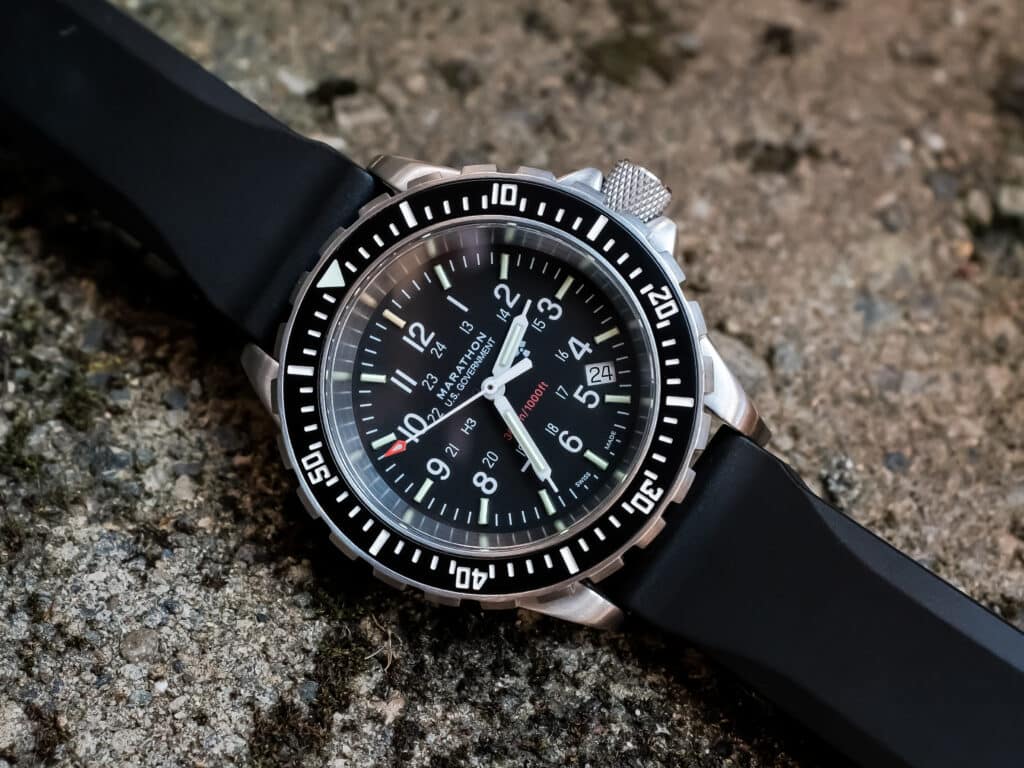
The Marathon TSAR is the one we trust most in the abstract. It has that rare quality where every detail feels pointed toward the same job, even when the result is not especially graceful. The trade-off is that its seriousness follows you around all day. If you want a watch that disappears under a cuff or softens into casual wear, this probably is not it. The TSAR is best when you want the watch to feel like a gear and are happy to accept the added bulk.
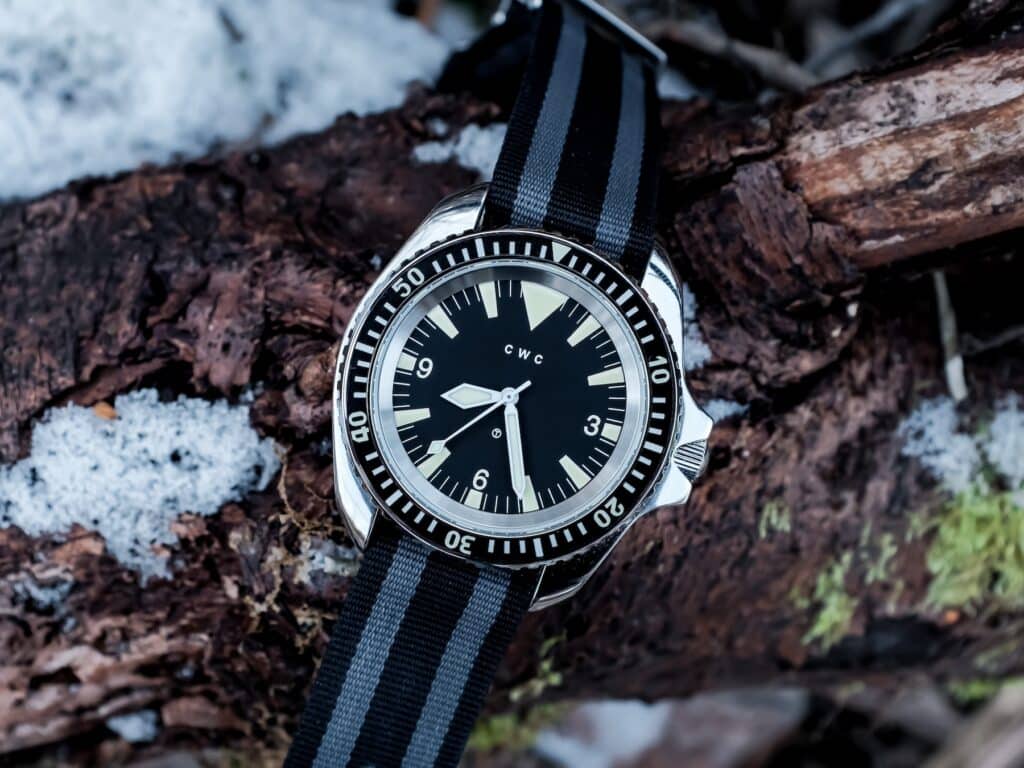
The CWC 1980 Royal Navy Diver Re-Issue is the one that creates the strongest attachment. It feels the most deliberate, the most historically grounded, and the most likely to make you care about details that would sound absurd to a normal person at dinner. Fixed bars, sparse dial text, and that old-CWC bezel character all add up to something truly satisfying. But it demands that you already care about this specific flavor of military watchmaking. Without that connection, a lot of its charm will probably feel invisible.
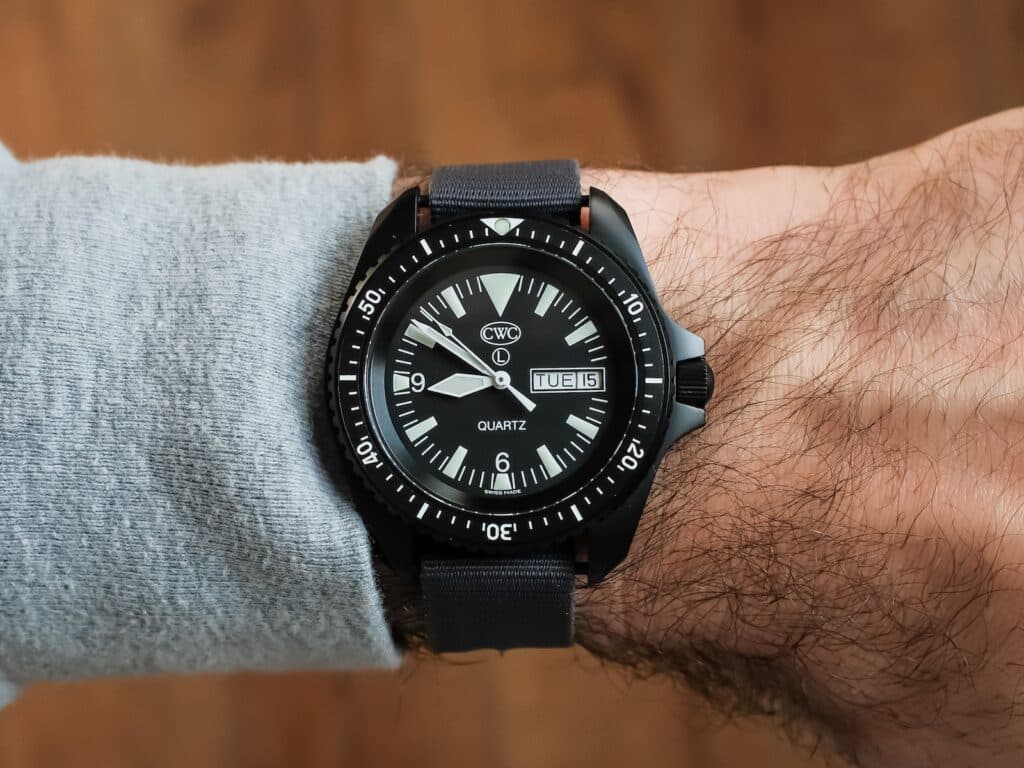
The CWC SBS Diver is where this comparison lands for us. It keeps the CWC nuances and credibility while making the experience easier to wear regularly. It is practical without feeling generic, distinctive without feeling precious, and tough without trying to win a shouting match with your wrist. Among these three, it is the one that best answers the original question: which military diver makes the most sense once the novelty wears off? For this corner of the hobby, that is the win.

Co-Founder and Senior Editor
Kaz has been collecting watches since 2015, but he’s been fascinated by product design, the Collector’s psychology, and brand marketing his whole life. While sharing the same strong fondness for all things horologically-affordable as Mike (his TBWS partner in crime), Kaz’s collection niche is also focused on vintage Soviet watches as well as watches that feature a unique, but well-designed quirk or visual hook.
Funnily enough, I sold my SBS in the end as my Scurfas were getting more wrist time and it was £700ish sat doing nothing. With the proceeds I bought: a lovely day out and meal out with my wife, a used Nintendo Switch, a used Xbox Series S, and I still have some left! Really makes you appreciate how far watch-money goes in the real world.
Glad the Scurfas are holding it down. 😀