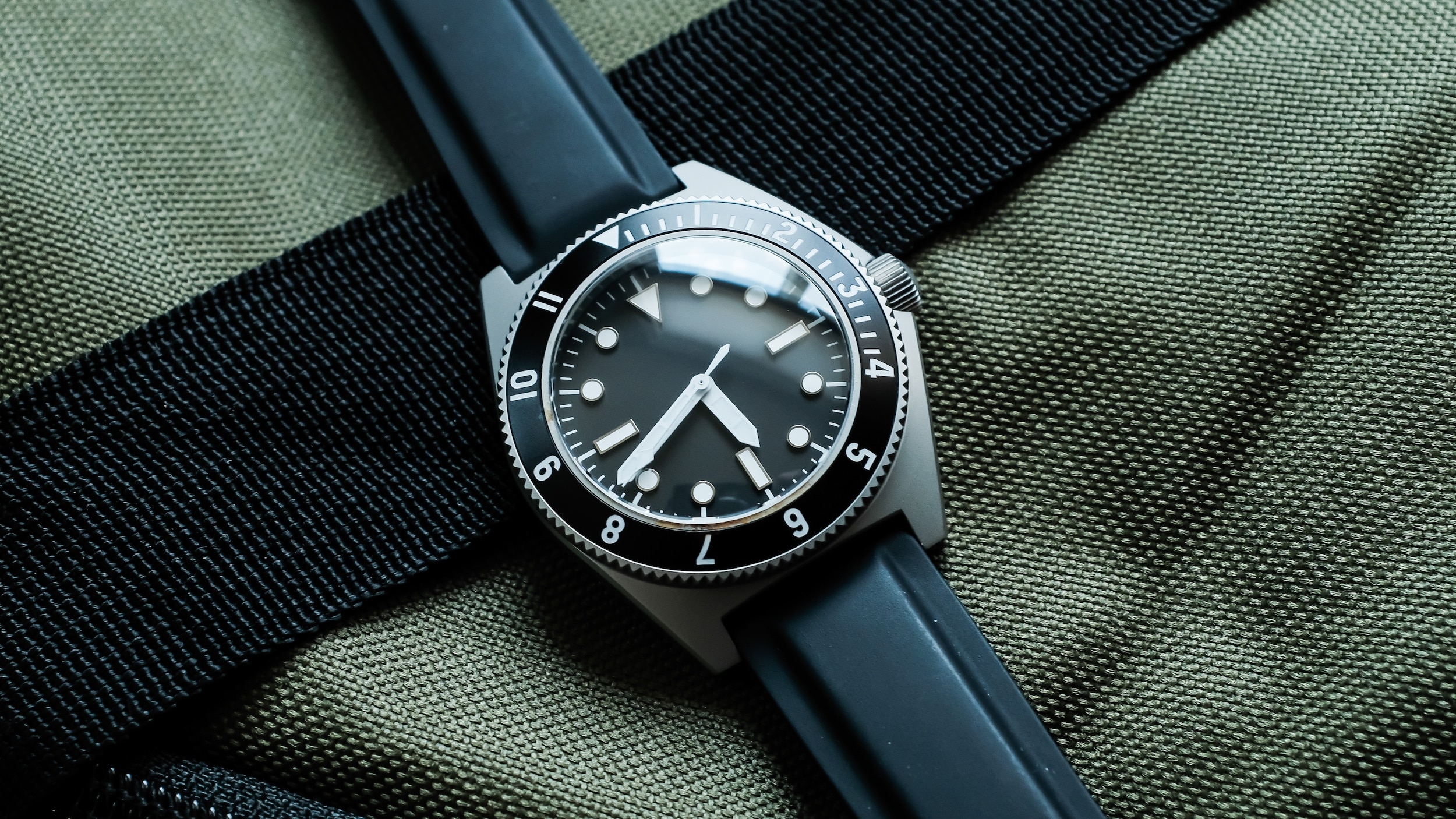
Years ago, I found myself deep in an obsession with asymmetric-case military dive watches. I’m talking about the kind of stuff you find once you start digging into the MIL-W-50717 spec, and similar watches like the Marathon Navigator, Precista Royal Navy Diver, and increasingly hard-to-find vintage Benrus Type 1 and Type 2 divers. A few watches in this general category have come and gone from my collection, but I still think about finding a solid modern example without all the headaches that can come with going vintage.
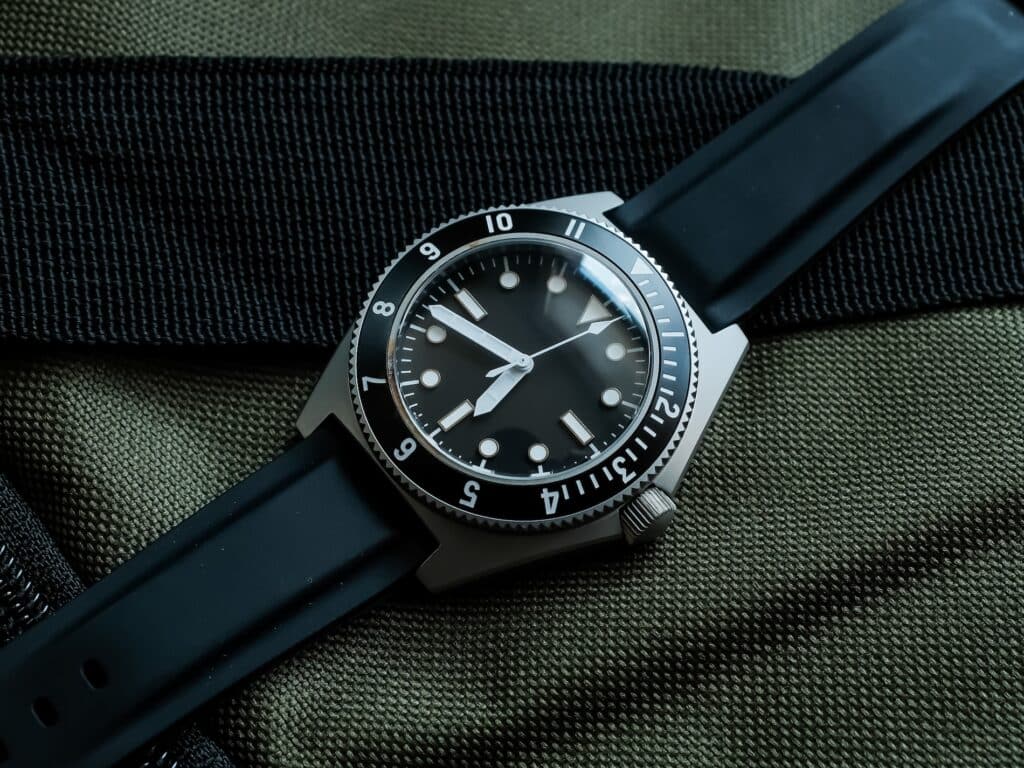
Like several heritage American brands, Benrus has returned under new ownership with a mix of contemporary watches and vintage-inspired reissues. The Type 1 Mil Spec is part of that effort, recreating one of the brand’s military dive watches from the 1970s. I had the chance to spend a week with this one, and it reminded me pretty quickly why I got so deep into these watches in the first place.
Getting the Type 1 Right
The original Type 1 and Type 2 watches were built around the MIL-W-50717 specification for military use, and the basic formula was appropriately simple. You got a steel case, rotating bezel, high water resistance, and a dial designed around legibility. The Type 1 used the cleaner 12-hour layout seen here, while the Type 2 added a 24-hour scale.
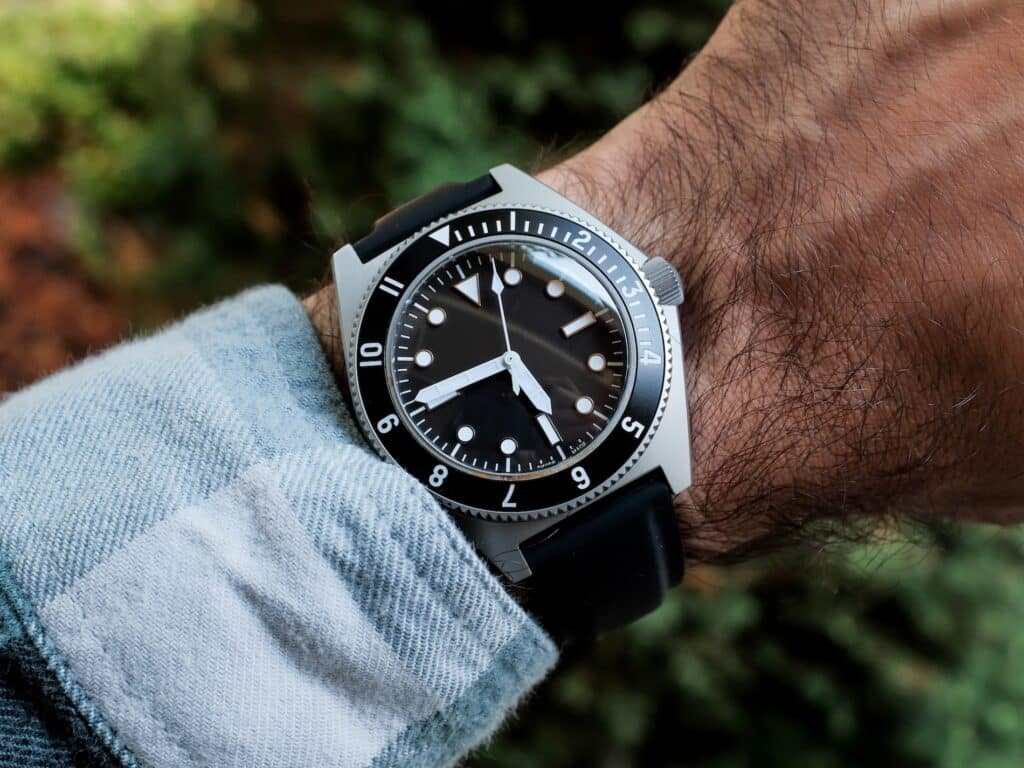
For this latest version, released in 2025, Benrus brought the case down to 39.5mm. I think that was the right move. The original watches were larger, and going smaller makes this reproduction considerably easier to wear while retaining the asymmetric case shape that defines the Type 1.
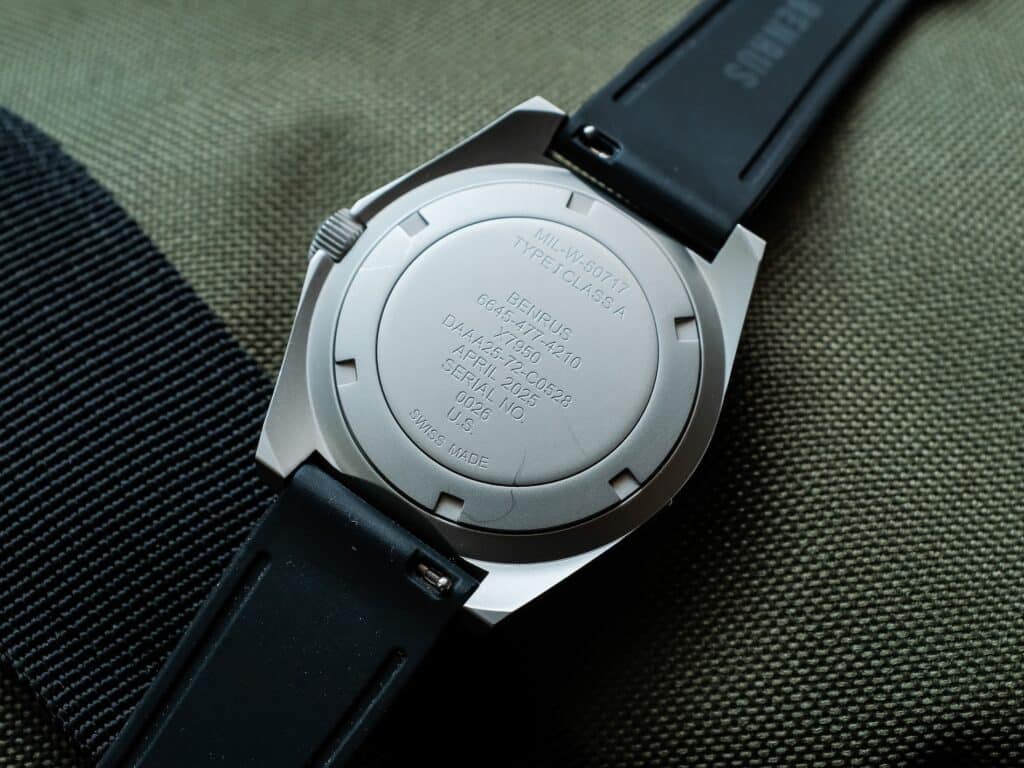
The case itself is 316L stainless steel with a full sandblasted finish. That surface treatment works particularly well here, both visually and in keeping reflections down. The screw-down crown sits within the protected side of the asymmetric case, and the solid caseback continues the military-style presentation with the MIL-W-50717 designation, model information, serial number, and production date engraved into it.
Benrus also kept the watch seriously water resistant at 36.5 ATM, or 1,200 feet. I never came remotely close to testing that during a one-week loan (or ever), but it reinforces the sense that the modern version wasn’t softened into a purely cosmetic reproduction.
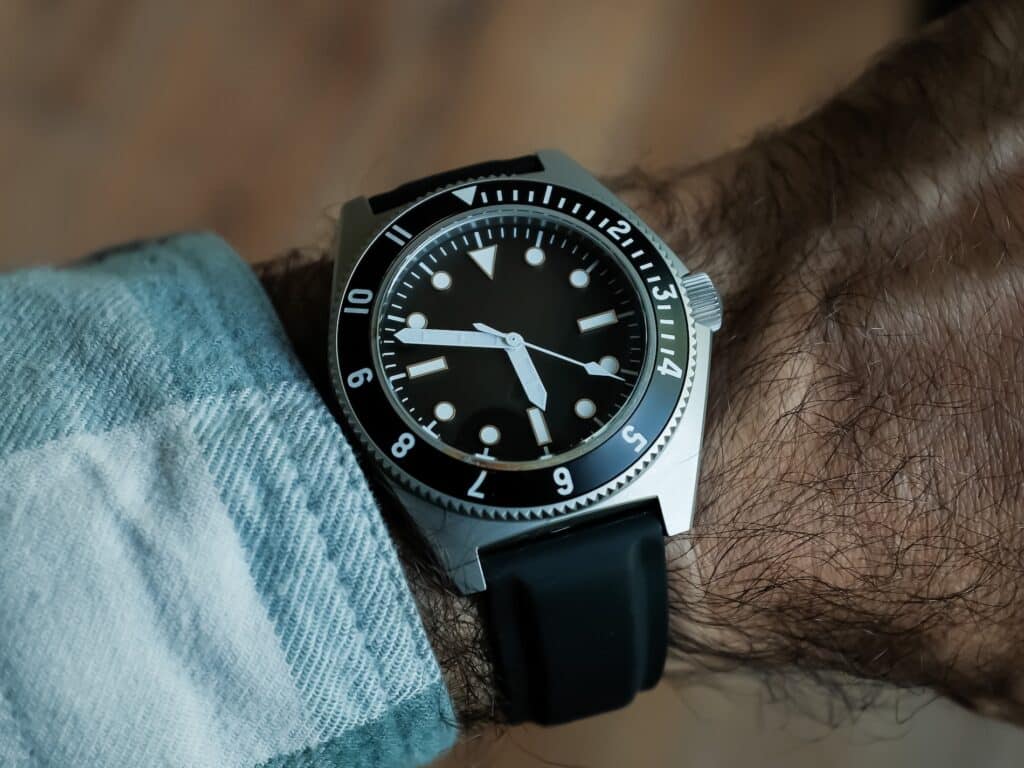
Case, Crystal, and Bezel
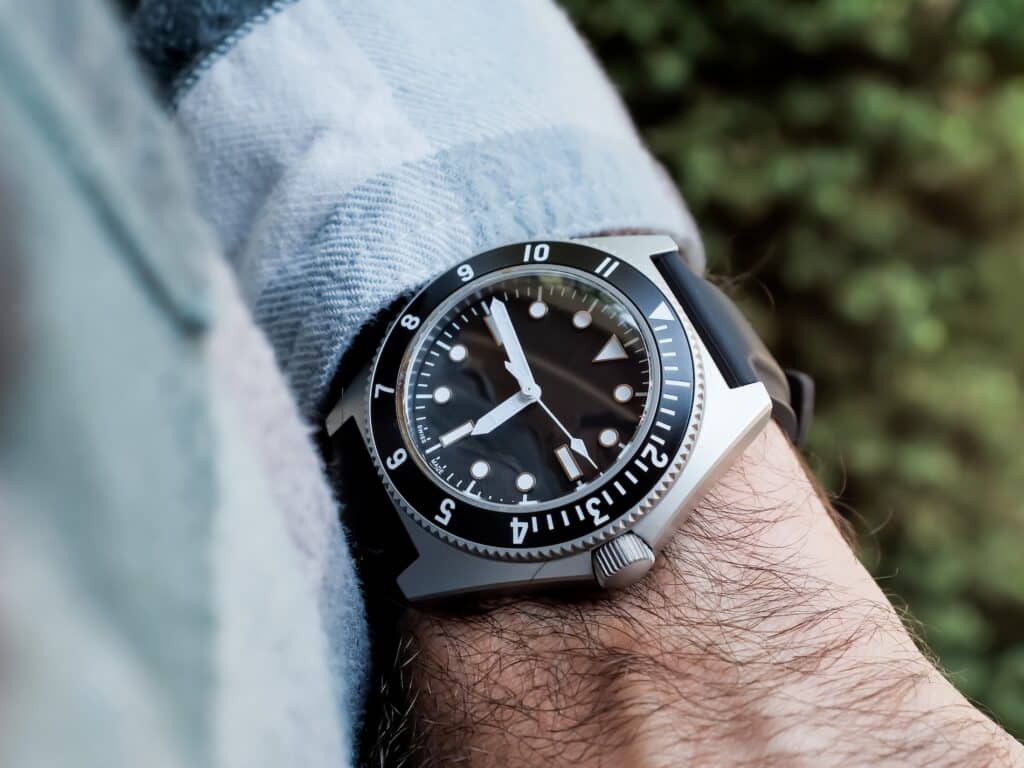
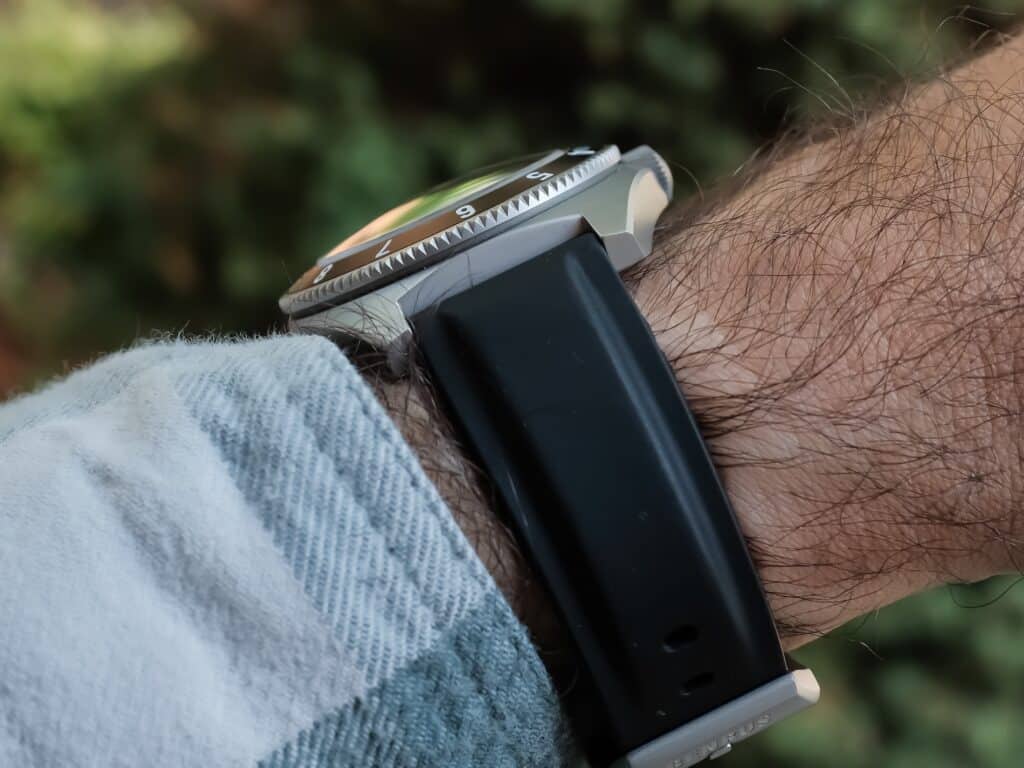
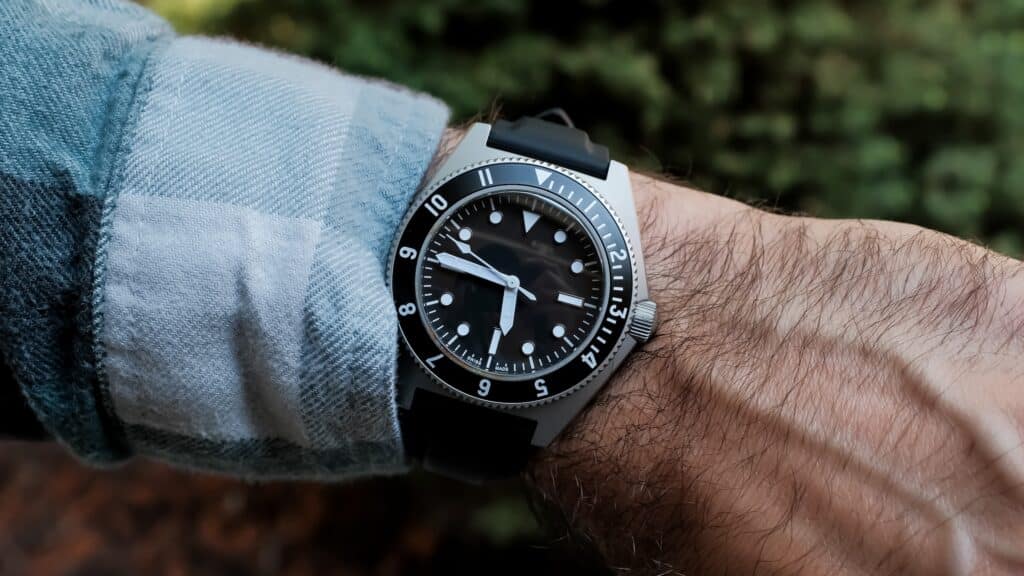
At 39.5mm across, 47.66mm lug-to-lug, and 14.40mm thick, the Type 1 sounds fairly substantial on paper. On my 6.75-inch wrist, it never felt that way. The shape spreads itself out nicely, and on the supplied rubber strap the whole thing felt surprisingly light. I found it comfortable enough that the thickness rarely crossed my mind during normal wear.
The double-domed sapphire also helps maintain some of the visual character I associate with older examples. You get a little distortion when viewing the dial from sharper angles, which I liked. Unfortunately, the crystal was also the biggest issue I had with the watch.
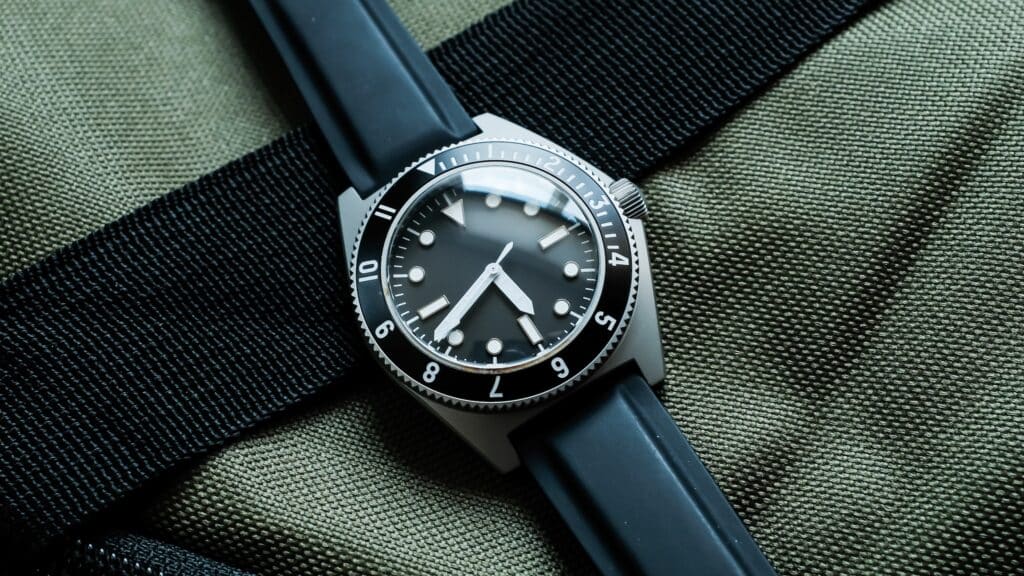
Despite the double anti-reflective coating, glare was hard to avoid. It showed up regularly during the week and was especially obvious when photographing the watch. For a dial this simple and legibility-focused, I found that frustrating. Better control of those reflections would be the first change I’d make.
I had more fun with the bezel. It’s a sandblasted steel unit with an aluminum insert and a 12-hour scale, and it rotates in both directions using friction rather than clicks. The action is incredibly smooth, and I enjoyed using it for tracking another time zone.
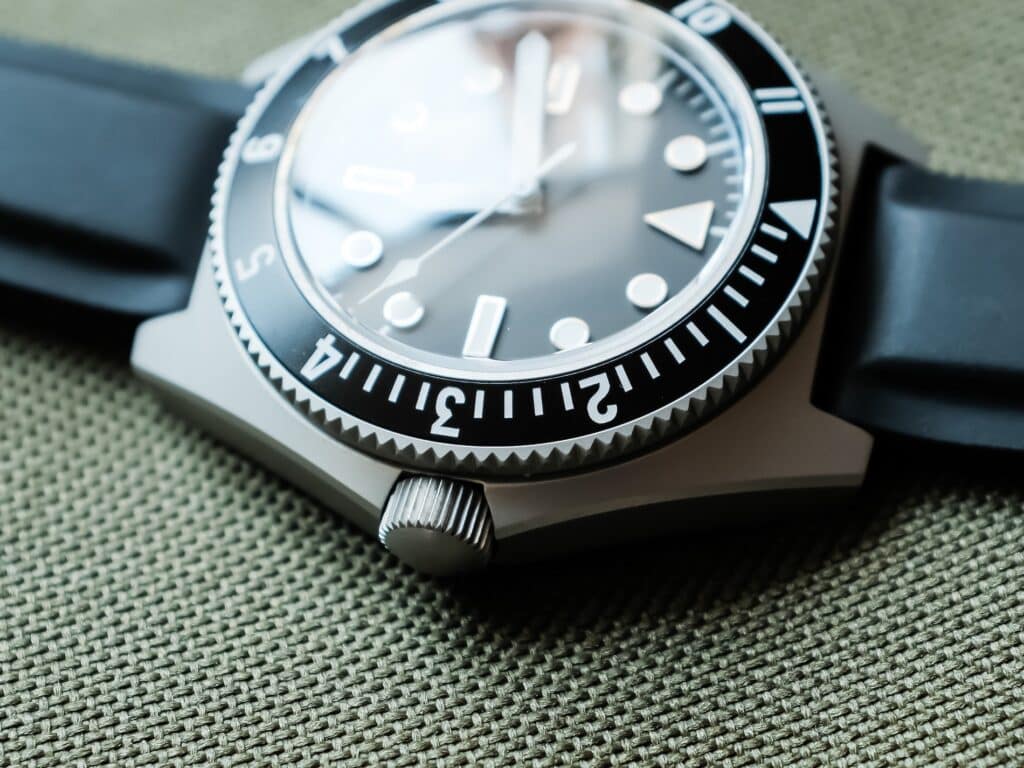
There is a trade-off. It turns with very little resistance, so knocking it out of position doesn’t take much. That could become annoying if you’re relying on it to keep track of a second time zone throughout the day. I loved how the bezel felt, although I’d take a little more resistance if it meant keeping it where I left it.
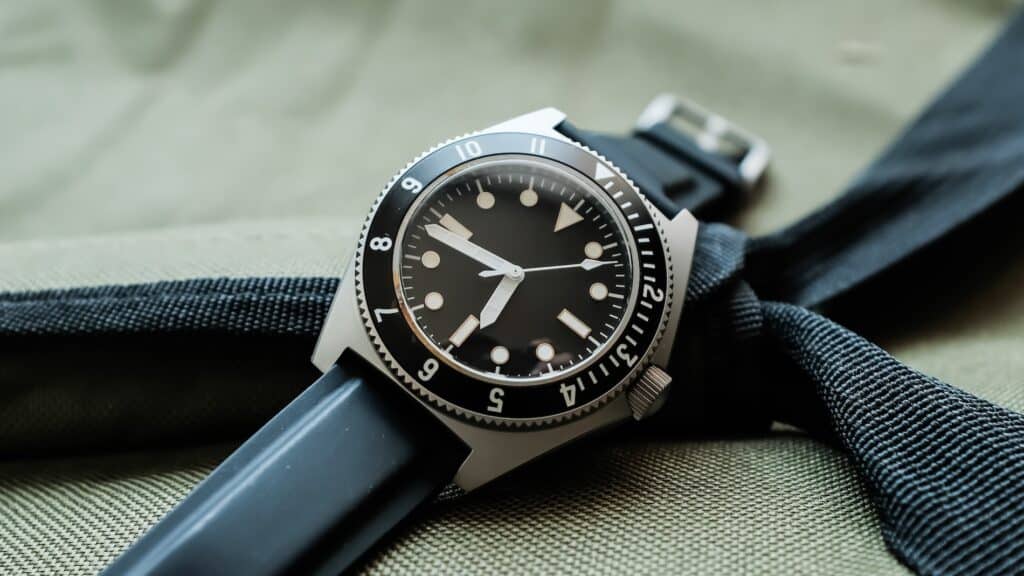
That Sterile Dial
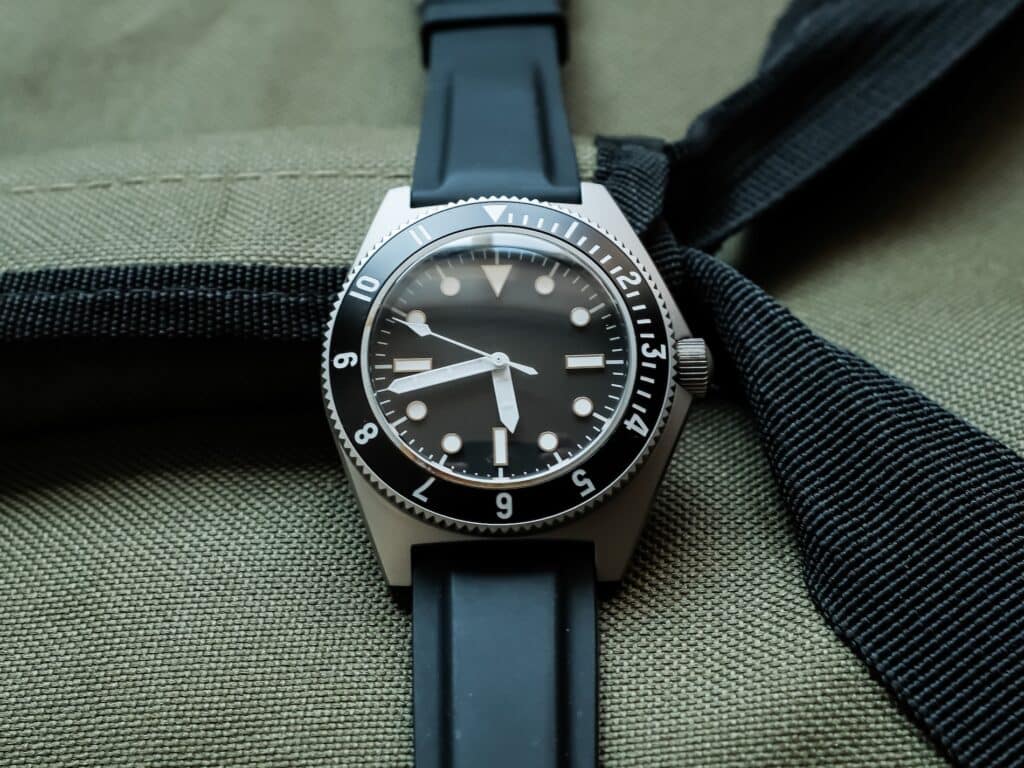
The dial is probably my favorite part of the entire watch. I’ve always preferred the sterile Type 1 layout, and a week with this version only reinforced that.
There is no Benrus logo and no date window competing for space. The matte black dial is broken up by large geometric markers, with rectangles at 3, 6, and 9, dots for the remaining hours, and the familiar triangle at 12. The broad sword-style hands fit naturally into that arrangement, and everything is easy to pick up at a glance.
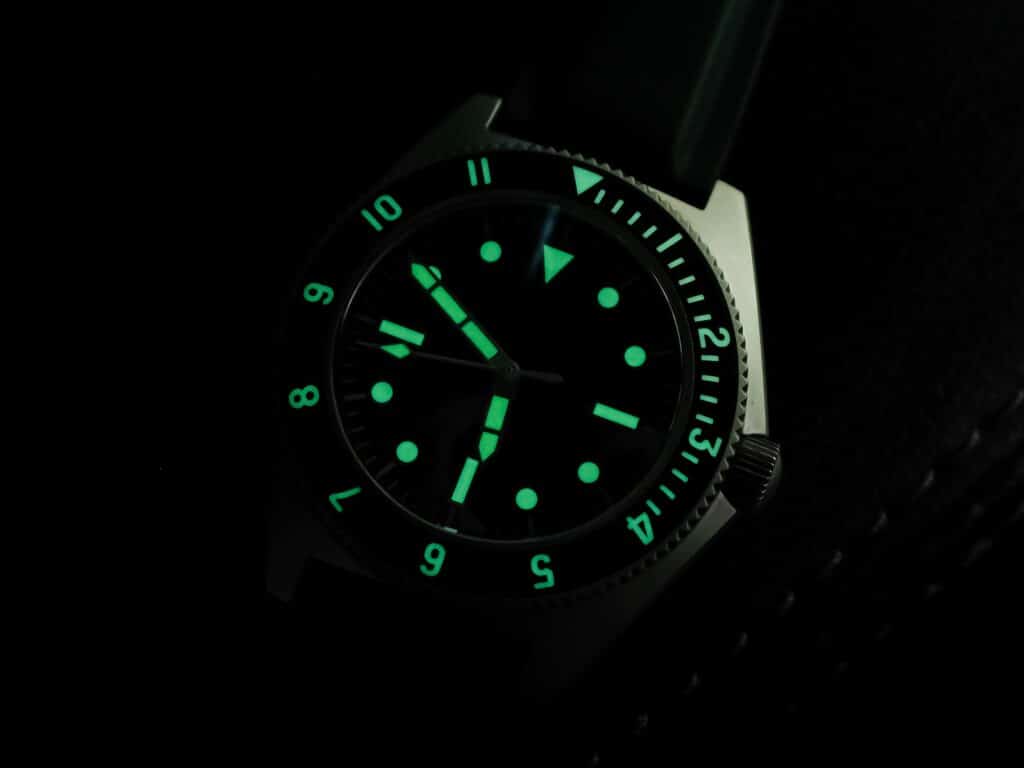
Benrus uses BG W9 Super-LumiNova across the markers and hands, and I found the lume more than adequate during the week. More than anything, I like how little there is to process when I look down at the dial. The proportions, negative space, and simple handset make sense together.
There’s a small “Swiss Made” signature down at six, but otherwise Benrus resisted the urge to put its name on the front. I’m glad it did. For me, adding branding would take something away from the Type 1 design.
Movement and Strap
Inside is an ETA 2892 automatic with a 42-hour power reserve. During a week with the watch, the movement never became something I thought much about. For this kind of watch, that’s fine with me. It wound, ran, and stayed out of the way.
The movement does become more interesting once I consider the $1,795 price. That’s a substantial amount for a watch running an ETA 2892, even if I think some of the cost comes from getting the Type 1 directly from Benrus rather than another manufacturer interpreting the same military design.
The MK II Paradive we went hands-on with here is the obvious comparison for me. It plays in very similar territory for under $1,000 and is an exceptionally strong alternative. There are compromises on that side as well. The Paradive uses a Seiko movement, and actually buying one directly from MK II can be difficult. I still think the comparison matters because it shows how much of a premium comes with having the Benrus name attached to a modern Type 1.
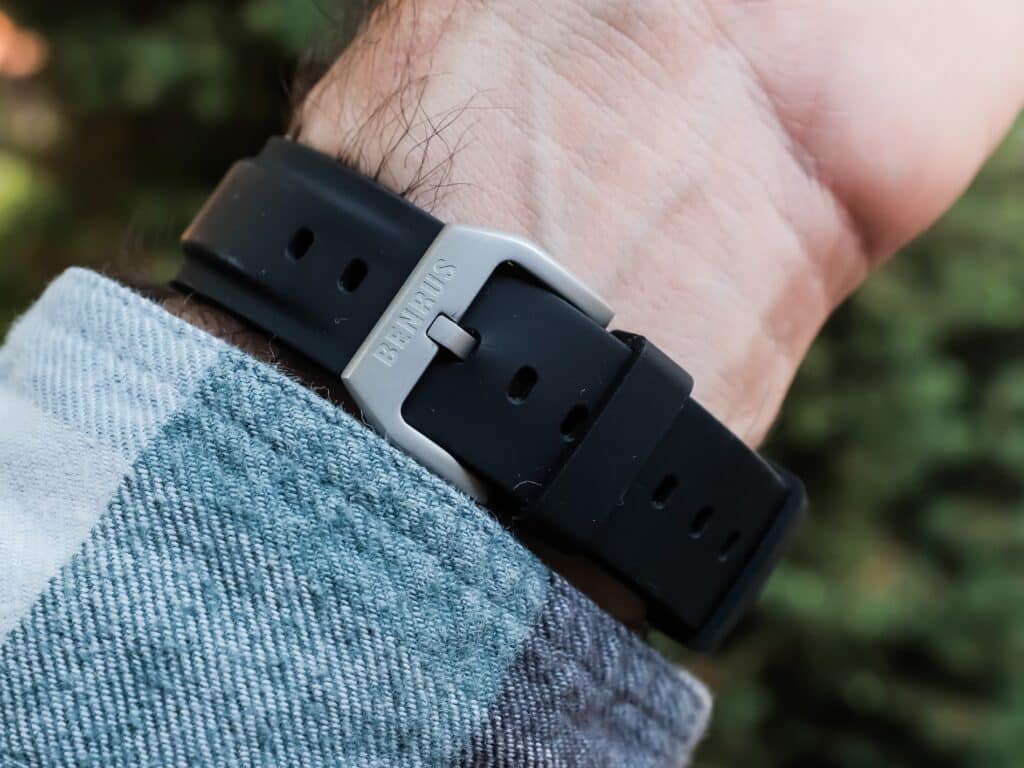
The supplied 20mm black rubber strap was another pleasant surprise. It’s soft, supple, and contributed quite a bit to how light the watch felt on my wrist. It also attracts dust like crazy, which became obvious almost immediately. Still, I wouldn’t be in a rush to replace it for comfort reasons. I’d probably throw the Type 1 on a NATO eventually because the case seems made for that kind of combination, and the conventional spring-bar setup makes experimenting easy.
After a Week
By the end of my week with the Type 1 Mil Spec, I had fallen right back into what I liked about these watches years ago. The asymmetric case, sterile dial, stripped-down military design, and overall simplicity all hit the same part of my collector brain that sent me digging into MIL-W-50717 watches in the first place.
I also think this is about as convincing as I’ve seen a modern Type 1 reproduction get. The smaller case makes it very comfortable, the modern materials make ownership easier, and Benrus preserved the details that give the design its identity. The crystal glare bothered me, and I’d prefer a little more resistance from the bezel. Neither disappeared from my mind simply because I liked the watch.
Then there’s the price. At $1,795, this isn’t something I’d casually add to the collection because I happen to be going through another military-diver phase. There are less expensive ways to get into this style of watch, and the MK II Paradive makes that particularly clear.
Still, mentally prepping to send the Benrus back left me wanting one. My collection is already pretty mil-diver heavy, which makes another one difficult to justify right now. If that weren’t the case, I could absolutely see the Type 1 Mil Spec finding a place in it. After years of thinking about finding a modern version of this format without the headaches of vintage ownership, a week with the Benrus reminded me that the idea still has a hold on me.

Co-Founder & Senior Editor
Michael Peñate is an American writer, photographer, and podcaster based in Seattle, Washington. His work typically focuses on the passage of time and the tools we use to connect with that very journey. From aviation to music and travel, his interests span a multitude of disciplines that often intersect with the world of watches – and the obsessive culture behind collecting them.
The new owner got rid of the old stock he inherited when he bought Benrus, and now he’s raised the prices more than 3 times as much as the previous iterations although there isn’t much, if any, that I can see, differences between them. Same ol’ story here; charge outrageous prices to buy themselves palatial palaces!
Damn I need to get myself a palace.