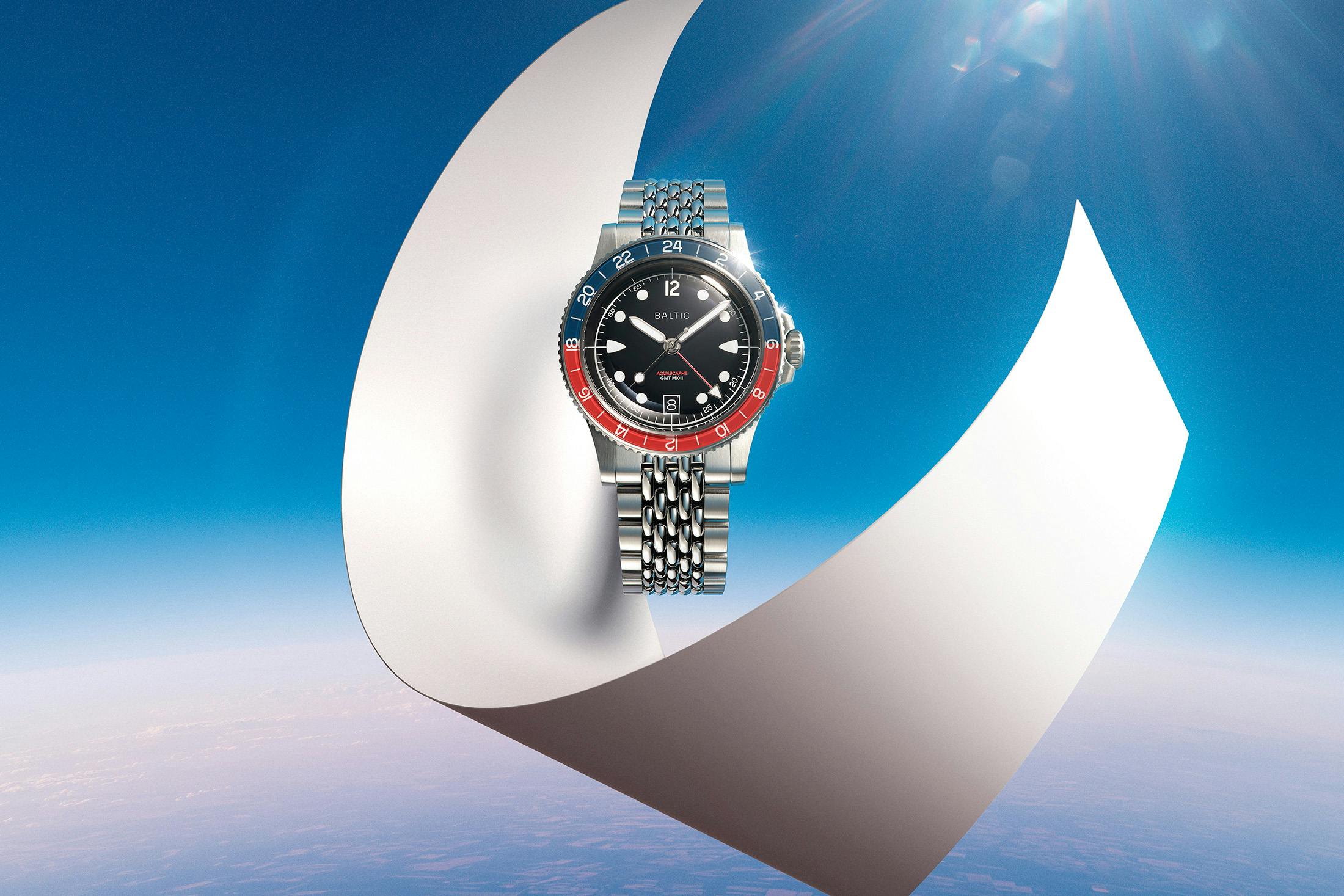
Baltic has returned to the Aquascaphe GMT with a new MK-II, and I think the most interesting change is one you won’t immediately see. The French brand has moved to Miyota’s 9075 GMT movement, giving the watch an independently adjustable local hour hand. To me, that makes way more sense for a watch designed around travel.
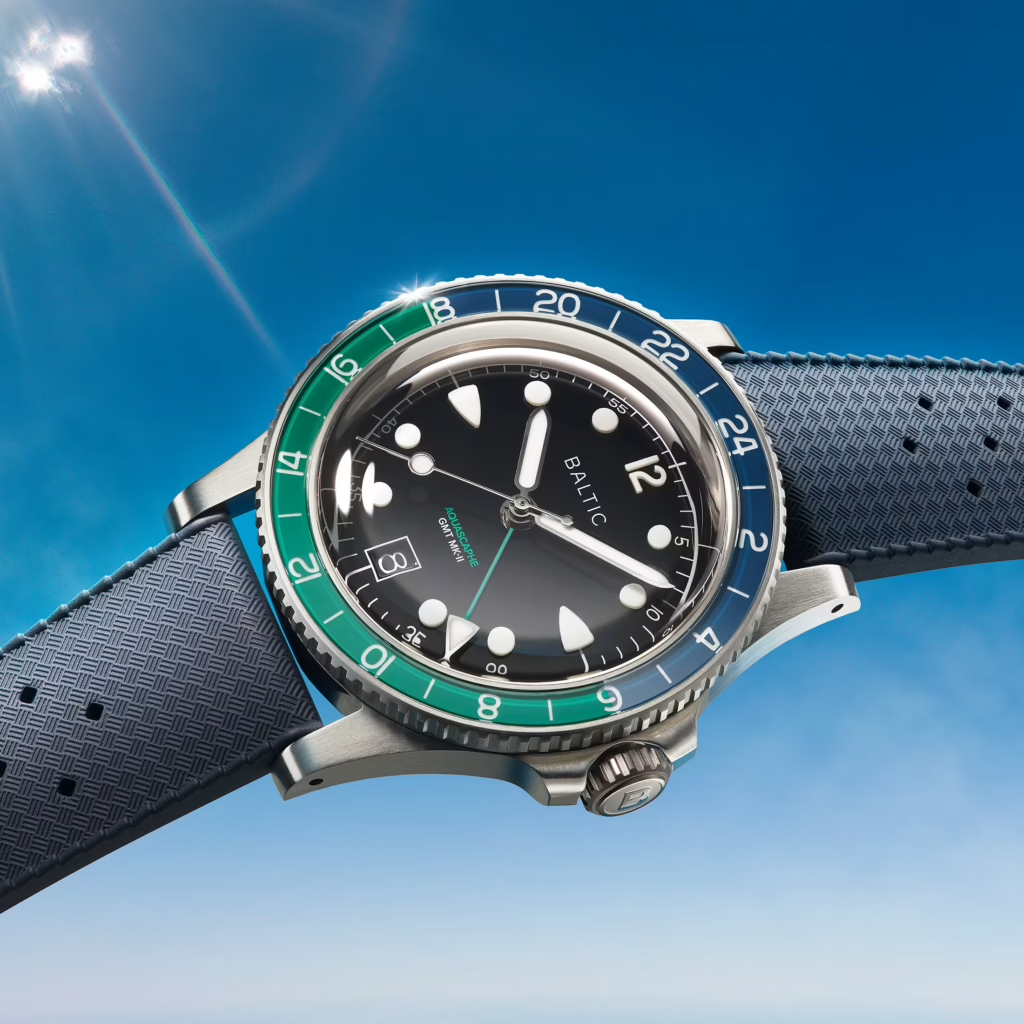
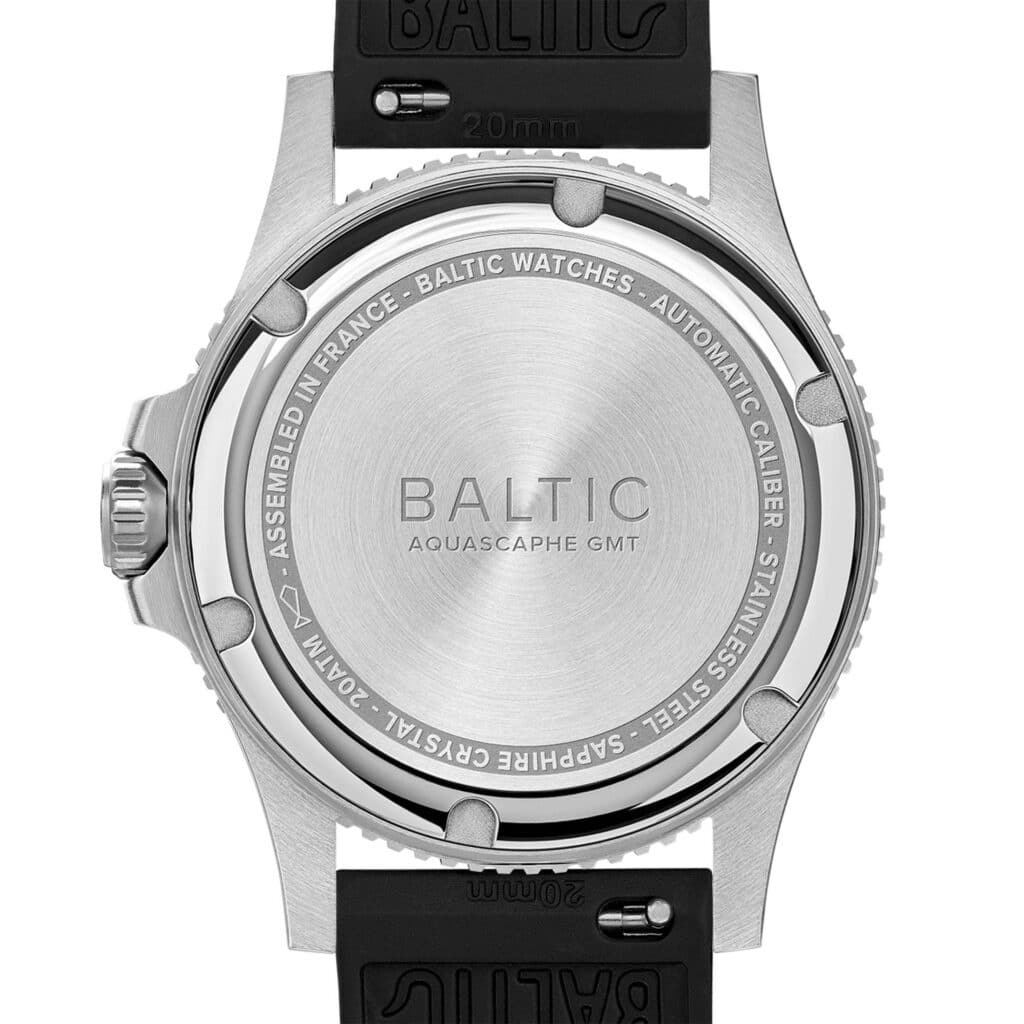
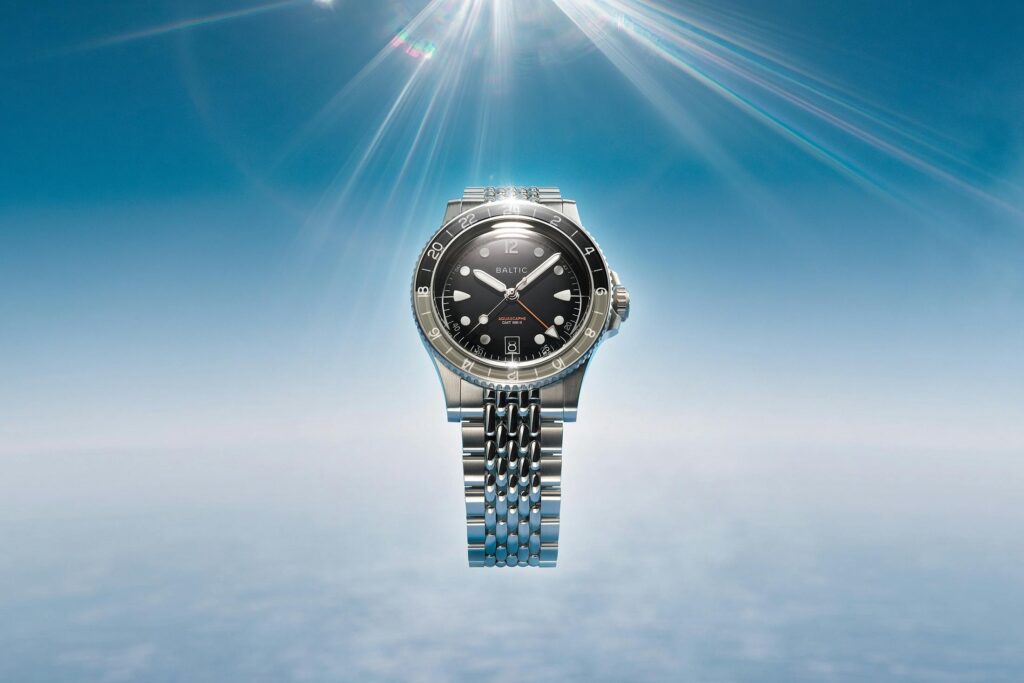
There are plenty of visual changes, too. The Aquascaphe GMT MK-II now measures 39.5mm wide, 13.8mm thick, and 47mm lug-to-lug, with a 316L stainless steel case and 200 meters of water resistance. Baltic has also added crown guards, which give the familiar Aquascaphe case a more modern, purpose-built profile. I think that was also the right move.
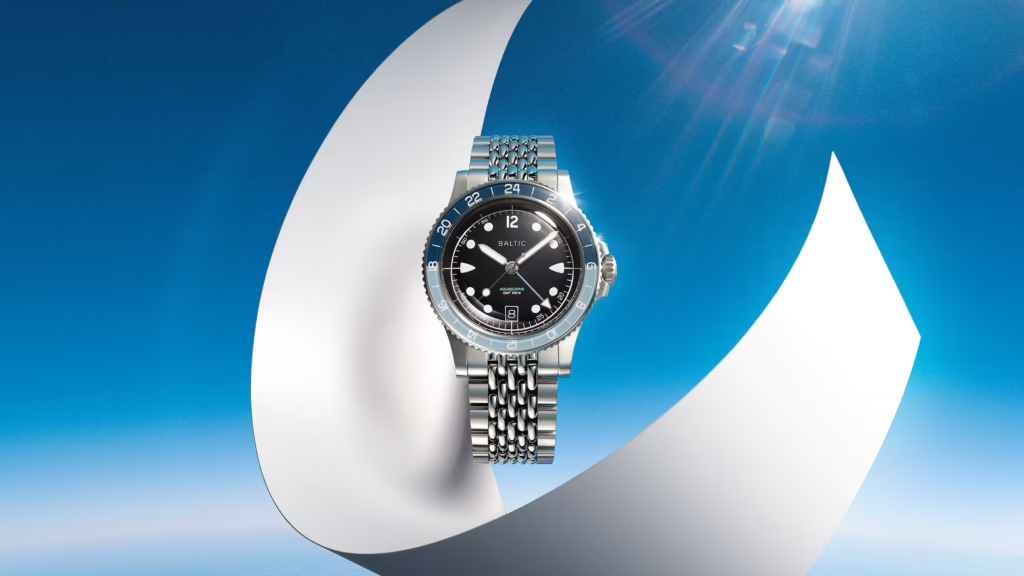
Throughout the years, Baltic has built much of its identity around vintage-inspired watches, and the original Aquascaphe GMT leaned heavily into that formula. This version still has plenty of those cues, like the glossy black dial and luminous sapphire GMT bezel. However, the larger case, crown guards, bolder hands and markers, and increased water resistance push the design slightly further into contemporary tool-watch territory.
To me, the GMT is a good candidate for that evolution. There’s only so much value in preserving vintage proportions and details if the watch is also supposed to function as a modern travel companion. The Miyota 9075 reinforces that point. Its independently adjustable local hour hand means you can jump the main hour hand forward or backward when changing time zones without stopping the movement or disturbing the minutes. I think most people buying a GMT specifically for travel will find that more useful than a caller-style arrangement.
There is a tradeoff. Miyota rates the 9075 at -10/+30 seconds per day with approximately 42 hours of power reserve. The outgoing Aquascaphe GMT used the Swiss SOPROD C125, which carried tighter stated accuracy figures. My take is that Baltic has prioritized GMT functionality here, even if the specifications don’t make the Miyota an upgrade in every measurable respect.
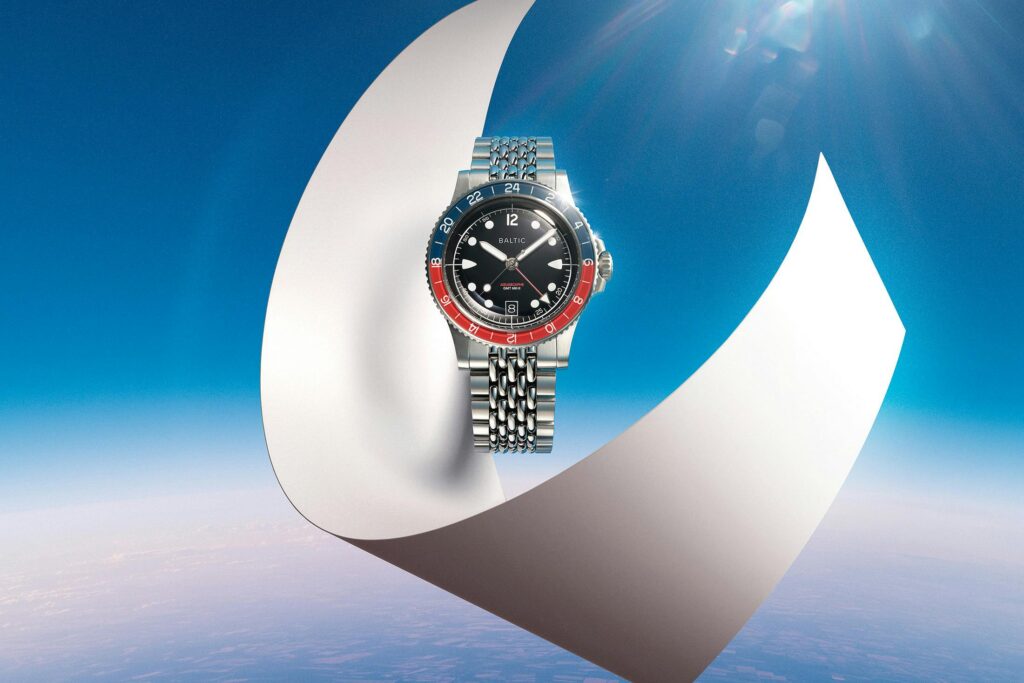
Four versions are available, all built around glossy black dials with BGW9 Super-LumiNova. There’s blue/light blue, blue/green, grey/black with orange accents, and the familiar red-and-blue Pepsi configuration. The Pepsi is probably my pick. It’s predictable GMT territory, sure, though I think it works particularly well with the Aquascaphe’s existing design language.
Then there’s the price. The Aquascaphe GMT MK-II starts at €850 on Baltic’s FKM rubber strap and rises to €915 with either the beads-of-rice or flat-link steel bracelet. Interestingly, that makes the MK-II cheaper than the watch it replaces.
I wouldn’t call that disruptive pricing or anything. There are simply too many capable boutique-brand GMTs floating around this general territory for that argument to hold much weight. Still, I think €850 makes the changes easier to appreciate. Baltic has doubled the water resistance, introduced a traveler-style GMT movement, and substantially reworked the case without using those changes to push the watch further upmarket.
To me, that’s the real story of the Aquascaphe GMT MK-II. Baltic seems willing to let one of its established designs become slightly more modern when there’s a functional reason for doing so. Whether the thicker case and Miyota’s broader accuracy tolerance feel like worthwhile compromises will require more than a spec sheet to determine. For now, though, I think this is a more convincing travel watch than the Aquascaphe GMT was before.
The Baltic Aquascaphe GMT MK-II is available now, with shipping scheduled to begin September 14, 2026.

Co-Founder & Senior Editor
Michael Peñate is an American writer, photographer, and podcaster based in Seattle, Washington. His work typically focuses on the passage of time and the tools we use to connect with that very journey. From aviation to music and travel, his interests span a multitude of disciplines that often intersect with the world of watches – and the obsessive culture behind collecting them.