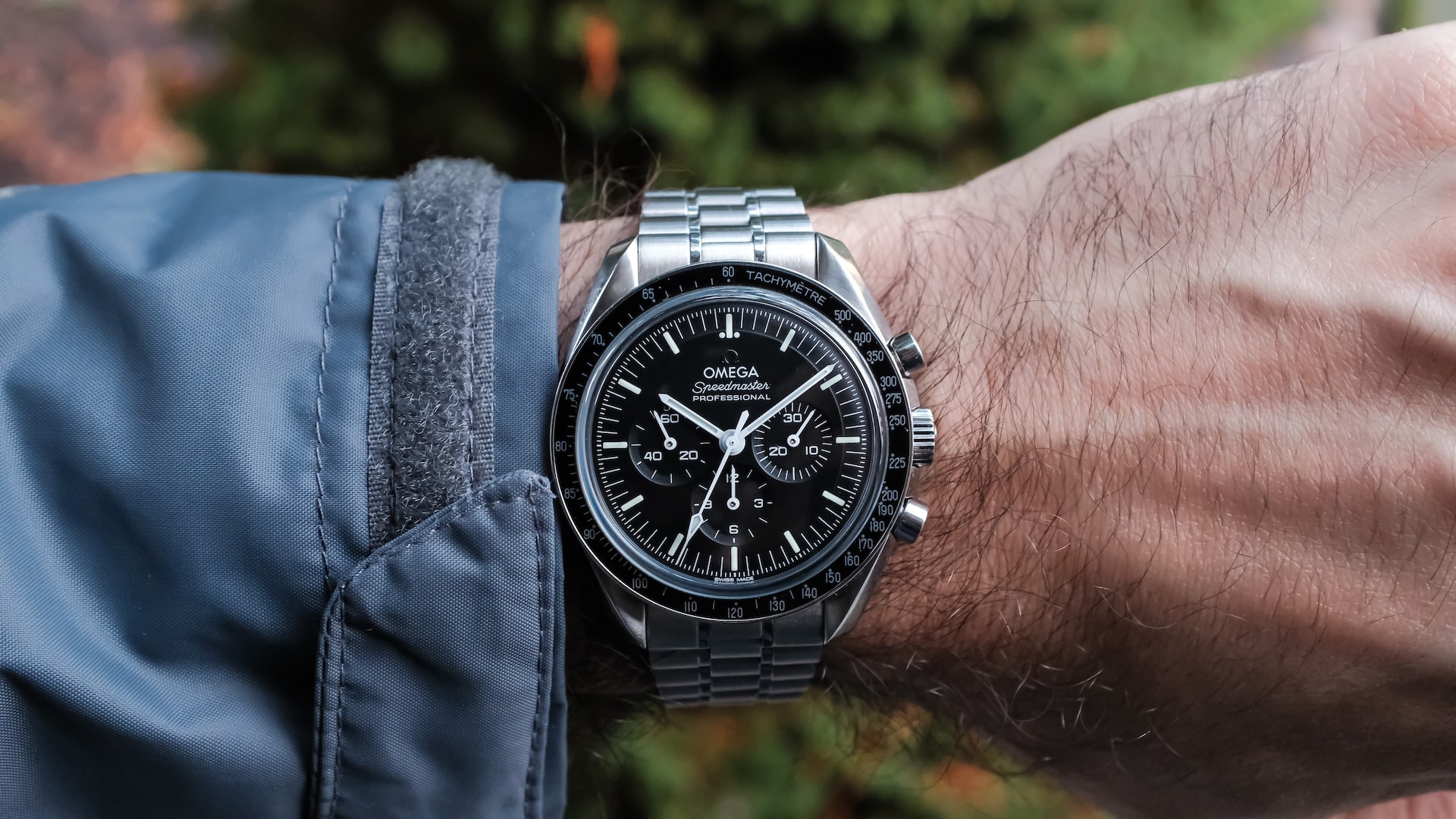
A lot of us arrive at Omega after circling the brand longer than we’d like to admit. Maybe it starts with a Speedmaster that feels too obvious until enough wrist time explains why people won’t shut up about it. Maybe it’s a Seamaster that pulls us in through Bond nostalgia, then stays because it works as a real everyday watch. Or maybe it’s a quieter Railmaster or older quartz Seamaster that proves Omega is not only for status-chasers, boutique theater, or dinner-table recognition. So, are Omega watches any good? Short answer: Yes, often excellent, especially if you care about history, movement tech, daily wearability, and enthusiast credibility more than status signaling.
That answer comes from nearly a decade of TBWS reviews, ownership stories, comparisons, and the usual collector behavior of buying, wearing, second-guessing, defending, selling, missing, and occasionally rebuying watches like emotionally compromised adults. We’ve spent time with the obvious pillars, like the Speedmaster Professional and Seamaster Diver 300M, and also the less shouted-about stuff: the 2254.50 Seamaster Professional, quartz 2541, First Omega in Space, Speedmaster Reduced, and Railmaster. That range matters because Omega is easy to respect but not always easy to choose. This is a practical look at whether Omega still makes watches worth the money, where the brand genuinely delivers, and where the ownership experience can start to feel more complicated than the brochure suggests.
Omega Seamaster 2541
| Price: | $2,000 – $3,500 (second-hand, based on condition) |
| Water Resistance: | 300m |
| Case Dimensions: | 41mm (diameter) x 47.5mm (lug-to-lug) x 11mm (thickness) |
| Lug Width: | 20mm |
| Movement: | Omega Caliber 1438 quartz |
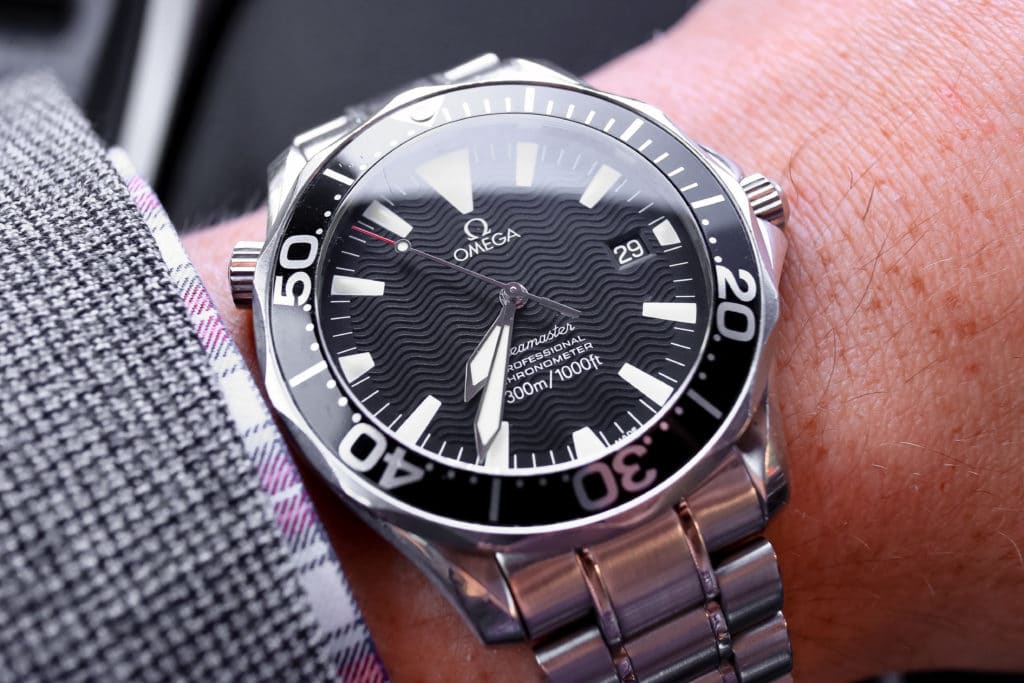
The Omega Seamaster 2541 is useful here because it shows Omega at its practical, less precious best, beyond the current-production luxury automatics. This is the quartz Bond-era Seamaster, ref. 2541.80.00, and while the mechanical version often gets more collector attention, the quartz model may be the easier watch to live with. You get the design, the nostalgia, and the cultural connection without feeling like you have to treat it as an untouchable icon. On the wrist, it comes across more like a solid, well-designed diver that happens to carry some cinematic history in its back pocket.
The proportions explain a lot of its appeal. At 41mm wide, 47.5mm lug-to-lug, 11mm thick, and 20mm lug width, it sounds larger than some smaller-watch fans might want. But the Omega Caliber 1438 quartz movement keeps the case slim, so it wears flatter, lighter, and more comfortably than many automatic Seamaster models. That low profile helps it hug flatter wrists quite well, though rounder wrists may feel the lug span more. The stainless steel case feels sturdy without being bulky, the sharply executed hippocampus caseback adds a little old-school Omega charm, and the 300m water resistance keeps it firmly in real diver territory rather than nostalgia-only collecting.
The dial and controls carry the watch’s best personality and its most obvious quirks. The earlier wave pattern is softer than that of modern Seamaster dials, giving the muted grey surface a more relaxed feel. Applied markers, readable skeleton hands, and the red-tipped second hand keep the dial lively without crowding it. The slightly domed sapphire crystal adds mild off-angle distortion, which looks charming until you need the cleanest read and have to look more head-on. The bezel is similar: alignment is usually fine, but the action is not very satisfying, and the low-set angled facets can be hard to grip with warm or damp hands. The crown is well-sized and neatly tucked, but the guards can feel tight for larger fingers. Since it’s quartz, at least you’re not fiddling with it every morning.
The bracelet is the most “Omega ownership” part of the experience, for better and worse. The classic Seamaster bracelet looks right, wears well once sized, and suits the watch better than a NATO, even if the NATO photographs nicely. But the collar-and-pin sizing system is a pain, and the diver’s extension can sometimes pop loose, even after a clasp replacement. The Caliber 1438 helps forgive a lot of that. It is a certified chronometer-grade quartz movement that keeps better time than most mechanical watches. However, servicing still meant sending the watch to Omega in Switzerland and going without it for a few weeks. That is the 2541’s case for Omega in miniature: not flawless, not mechanical-romantic, and not trying to be. It is light, accurate, reliable, nostalgic, capable, and better on the wrist than quartz skeptics usually want to admit.
Pros
- The slim 11mm case wears flatter and lighter than many automatic Seamasters.
- Caliber 1438 quartz movement delivers excellent real-world accuracy.
- 300m water resistance keeps it credible as a proper diver.
- Subtle wave dial, applied markers, and red-tipped second hand add character without clutter.
- The stainless steel case and hippocampus caseback feel premium.
- Bond-era charm adds fun without making the watch feel performative.
Cons
- The 47.5mm lug-to-lug can stretch on rounder or smaller wrists.
- The bezel grip is weak, especially with warm or damp hands, and it lacks satisfying tactile feedback.
- The collar-and-pin bracelet sizing is frustrating.
- Crown guards may feel tight for larger fingers.
- Omega servicing can mean additional cost and weeks away from the watch.
Omega Speedmaster Reduced
| Price: | $2,300 – $6,000 (pre-owned, based on condition) |
| Water Resistance: | 30m |
| Case Dimensions: | 38mm (diameter) x 44mm (lug-to-lug) x 12mm (thickness) |
| Lug Width: | 18mm |
| Movement: | Omega Cal. 3220 (based on the ETA 2890) |
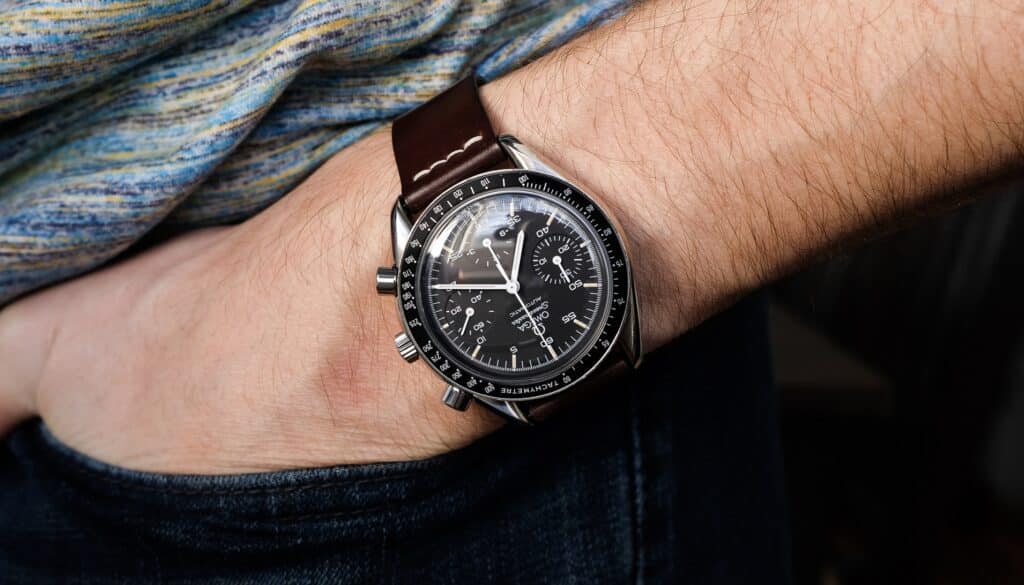
The Omega Speedmaster Reduced helps answer one of the more practical Omega buyer questions: whether a smaller, often more attainable Speedmaster still feels like a real Omega, or whether it mostly exists as the watch people buy when the Moonwatch is out of reach. That second framing has followed the Reduced around for years, and it does the watch a disservice. The Professional Moonwatch is 42mm, while the Reduced comes in at 38mm with a 44mm lug-to-lug, which changes the ownership experience more than the spec sheet makes clear. On small to medium wrists, the Reduced wears like something you can keep in rotation without constantly thinking about overhang, cuff clearance, or whether the watch is trying to cosplay as your entire personality.
The movement is where the Reduced starts to explain both its charm and its baggage. The Omega Cal. 3220 uses an ETA 2890 base with a DD2020 chronograph module stacked on top, which is why the crown sits lower than the chronograph pushers and the subdial spacing differs from that of the Professional. That offset can look strange once you notice it, and collectors who want classic Speedmaster symmetry may never fully make peace with it. It also means servicing deserves a sober conversation. Full-service costs can surprise buyers, replacement dials can be difficult to source, and watches with spotty service histories require extra caution. At the same time, the horror stories can get overblown. Many independent watchmakers replace the chronograph module rather than fully rebuild it, and the watch itself remains useful, functional, and automatic. You lose the hand-wound ritual, but you gain the convenience of a chronograph that can be worn daily without making winding part of your morning routine.
Visually, the Reduced keeps enough of the Speedmaster formula to feel connected to the family without pretending to be a shrunken Moonwatch. The black dial, white hands, and 3-6-9 chronograph layout give it that familiar Omega chronograph read from across the room. Up close, the differences become part of the deal. The running seconds move to the opposite side, the subdials press outward against the indices, and the minute markers sit below the indices, giving the dial a slightly busier, less balanced feel than the Professional. For some collectors, that becomes background noise after a week on the wrist. For others, it becomes the thing they stare at every time they check the time, which is an annoying way to live, but also extremely watch-collector accurate. Later 38mm Speedmaster Automatic models added more colors and a date at 6 o’clock, but the classic monochrome Reduced still feels like the cleanest route into this corner of Omega.
The case and bracelet add another layer to the trade-off. At around 12mm thick, the Reduced is not dramatically thinner than the Moonwatch, so the smaller diameter can make it look a little squat from certain angles. The lugs are shorter and less sharply cut than the Professional’s, too, which matters if the lyre-lug shape is part of the Speedmaster magic for you. The 18mm bracelet looks correct at a glance and uses a pressure clasp without a safety, but the narrow lug width and limited taper can make the watch feel slightly under-braceleted for its case style. A thicker leather strap, a tan or brown vintage-style strap, or even a NATO can help give the watch more visual footing and make the proportions feel more natural.
That is why the Speedmaster Reduced belongs in this conversation. It shows that Omega watches can be good even when they are not the most famous or most “correct” version of the thing. The Reduced is easier to wear, more convenient, widely available, and still carries enough Speedmaster DNA to feel emotionally connected to the larger story. The compromises are real: dial balance, pusher alignment, bracelet proportions, and service costs all deserve attention before buying. But for collectors who want the Speedmaster experience in a smaller, often more approachable package, the Reduced makes a strong case that Omega’s appeal is not limited to the Moonwatch. For more detailed insights, read our dedicated review and comparison between the Reduced and the Professional Moonwatch.
Pros
- 38mm case and 44mm lug-to-lug wear well on small to medium wrists.
- Automatic movement adds daily convenience.
- Black dial, white hands, and 3-6-9 layout keep the Speedmaster feel intact.
- Strong availability gives buyers plenty of examples to compare.
- More approachable than a Moonwatch without feeling like a knockoff.
Cons
- Dial balance is busier than the Professional.
- Offset crown and higher pushers can be hard to unsee.
- 12mm thickness can look squat on the smaller case.
- 18mm bracelet and limited taper feel a little narrow.
- Servicing can be expensive, and replacement dials are hard to source.
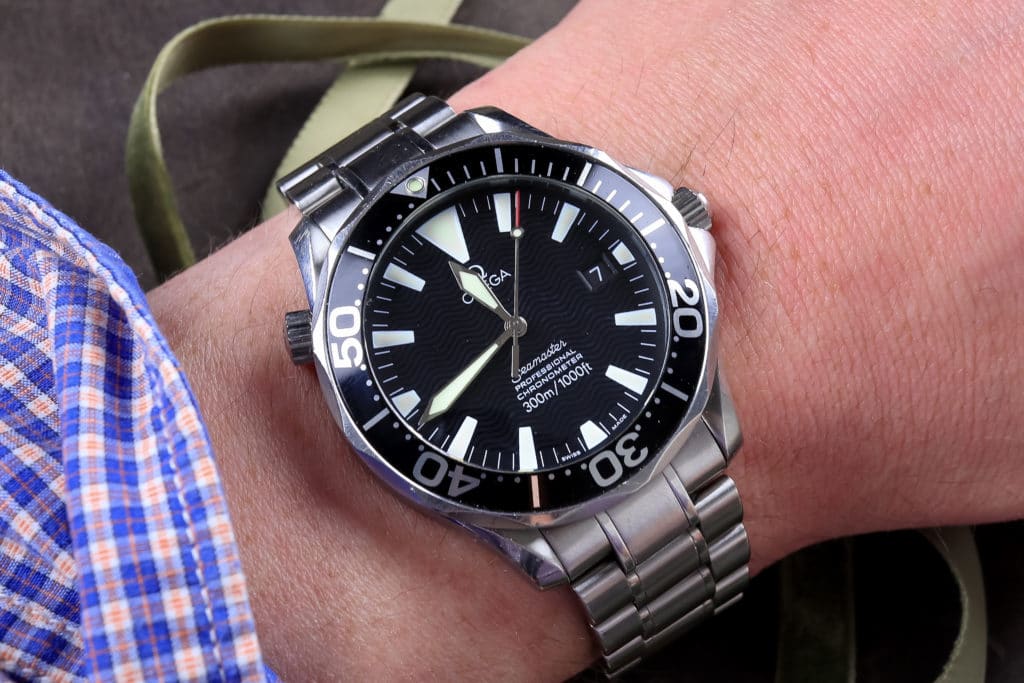
Omega Seamaster Professional 300M 2254.50.00
| Price: | $2,500 – $4,800 (pre-owned, based on condition) |
| Water Resistance: | 300m |
| Case Dimensions: | 41mm (diameter) x 47mm (lug-to-lug) x 12mm (thickness) |
| Lug Width: | 20mm |
| Movement: | Omega Cal. 1120 |
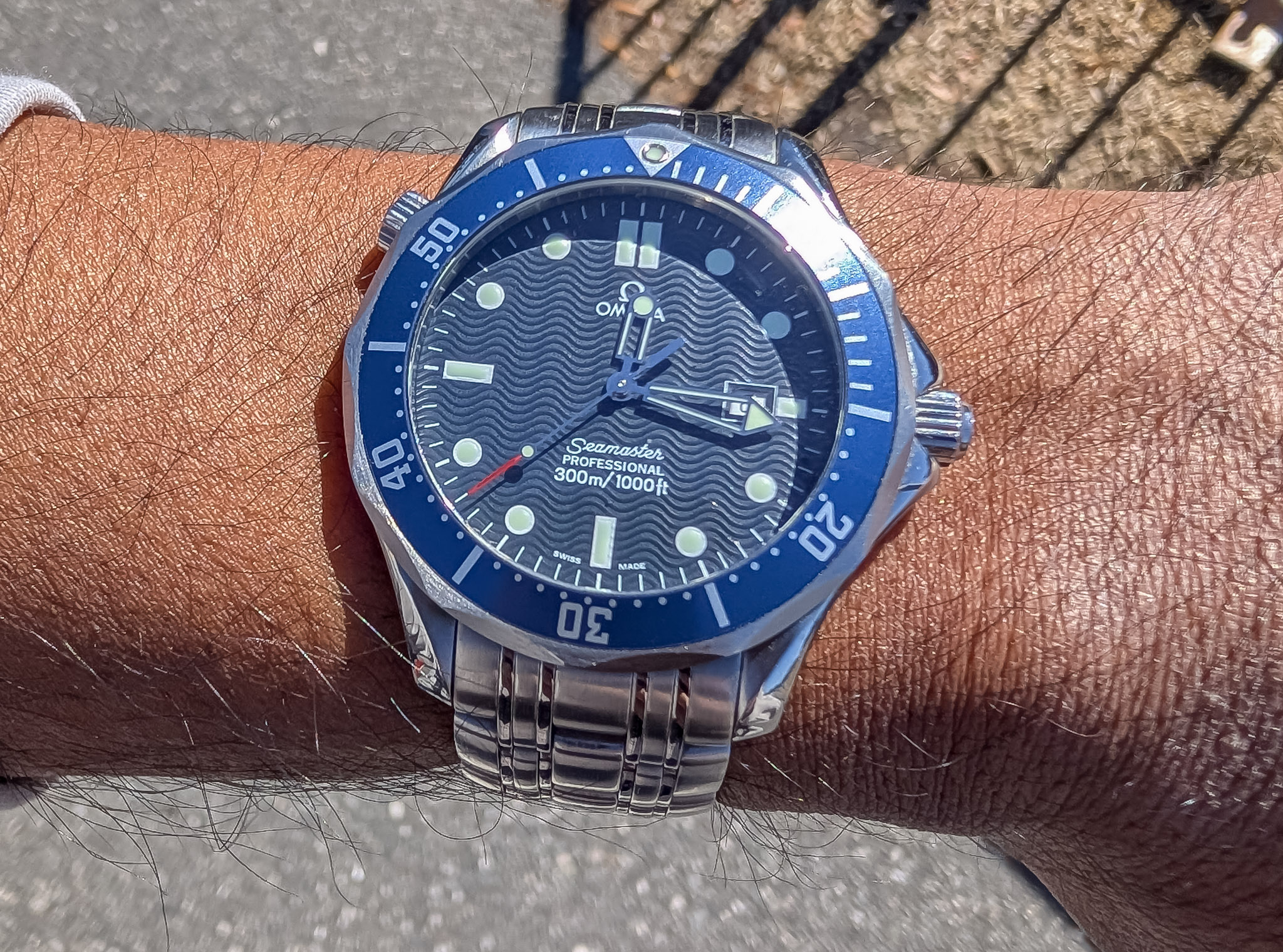
The Omega Seamaster Professional 300M 2254.50.00 is one of the better arguments that Omega watches are good when the brand keeps things practical. This fifth-generation neo-vintage SMP from the early 2000s does not feel like a watch trying to win you over with novelty. It feels like Omega is tightening a formula around wearability, legibility, and everyday usefulness. The 41mm case and roughly 12mm thickness, including the sapphire crystal, hit a sweet spot that still feels modern without wearing like a dinner plate. The lyre lugs do their usual Omega thing, giving the case shape and motion, while the narrow brushed midcase and thin polished chamfer keep it sleek enough to slide under a cuff. It can handle the beach, but it also looks like it knows how to behave indoors. That balance is a major reason enthusiasts still cite this reference.
The dial is where the 2254.50 earns most of its credibility for daily use. The black wave pattern can disappear in flat light, then wake up when the angle changes, which gives the watch texture without turning the dial into a distraction. The layout borrows heavily from the Seamaster 300 “Big Triangle” idea, with the large 12 o’clock triangle, smaller truncated markers, and stubby cardinal indices. More importantly, the solid fully lumed hands are clear day and night. Compared with skeleton-hand Seamasters, this one feels more readable at a glance, which matters when you are checking the time while driving, walking into a dark restaurant, or pretending you are timing something important when it is probably pasta. The printed Omega text, classic Seamaster script, and color-matched date wheel keep the lower half busy but coherent, and the beveled date window does not bulldoze the dial. The C3 Super-LumiNova is strong too. It charges quickly in sunlight, glows hard at first, then fades unevenly from the edges inward because of how the lume sits inside the white borders. Not perfect, but very useful.
The controls are more mixed, which keeps the watch honest. The 3 o’clock screw-down crown is tucked neatly into flowing crown guards and bears the embossed Omega logo, but it could use a bit more width. The length provides enough grip, though larger fingers may still want a little more to hold onto. The 10 o’clock helium escape valve is classic Seamaster, and also mostly useless for normal owners unless your commute involves saturation diving. The sloped stainless steel bezel with a black aluminum insert looks right and continues the case’s fluid shape, but the scalloped edge is not great in practice. Dry hands are fine. Sweaty hands make it annoying. Wet hands make the bezel feel like it has chosen violence. The aluminum insert also brings the usual risk of nicks and scratches, which some collectors will call character and others will call evidence of poor life choices.
The bracelet and movement round out why this watch still makes sense. The 3-link bracelet, with satin and polished finishes, feels cleaner than the busier 5-link option and is articulated well enough for real comfort. The folding push-button clasp works, though worn clasp springs can cause popping and may need replacement. The good news is that replacing the spring is easy and lets you tune the closure tension. There is no micro-adjustment, but the hidden diver’s extension adds about 3.1cm to actual wetsuits, or to the more common condition of “wrist got bigger because it is July.” The bracelet never sits perfectly flush because of the lyre lugs, so the case-to-bracelet flow is not seamless, but the watch is wildly strap-friendly. Suede, silicone, leather, different colors, it handles nearly all of it.
Under the screw-down hippocampus caseback, the Caliber 1120, based on the ETA 2892-A2, offers COSC certification, 23 jewels, rhodium plating, a 44-hour power reserve, and a 28,800 vph beat rate. Our example, despite an unknown service history, ran around +4.2 seconds per day over three days. That is the 2254.50 in one sentence: not flawless, not the most tactile diver, but sleek, accurate, legible, versatile, value-conscious, and one of the clearest examples of Omega giving enthusiasts a watch worth keeping. For more wrist-time insights, read our hands-on review.
Pros
- Lyre lugs, brushed midcase, and polished chamfer give the case real Omega character.
- The black wave dial adds depth without compromising legibility.
- Solid, fully lumed hands are easier to read than skeleton Seamaster hands.
- C3 Super-LumiNova charges quickly and stays useful.
- Works well on a wide range of straps, from suede to silicone.
- Color-matched date wheel and beveled window keep the dial tidy.
Cons
- The scalloped bezel is hard to grip with sweaty or wet hands.
- The aluminum bezel insert can pick up nicks and scratches.
- The bracelet lacks micro-adjustment.
- Worn clasp springs may need replacement.
- The bracelet does not sit perfectly flush because of the lyre lugs.
Omega Seamaster Diver 300M
| Price: | $5,600 – $5,900 |
| Water Resistance: | 300m |
| Case Dimensions: | 42mm (diameter) x 49.9mm (lug-to-lug) x 13.9mm (thickness) |
| Lug Width: | 20mm |
| Movement: | Caliber 8800 Co-Axial Master Chronometer |
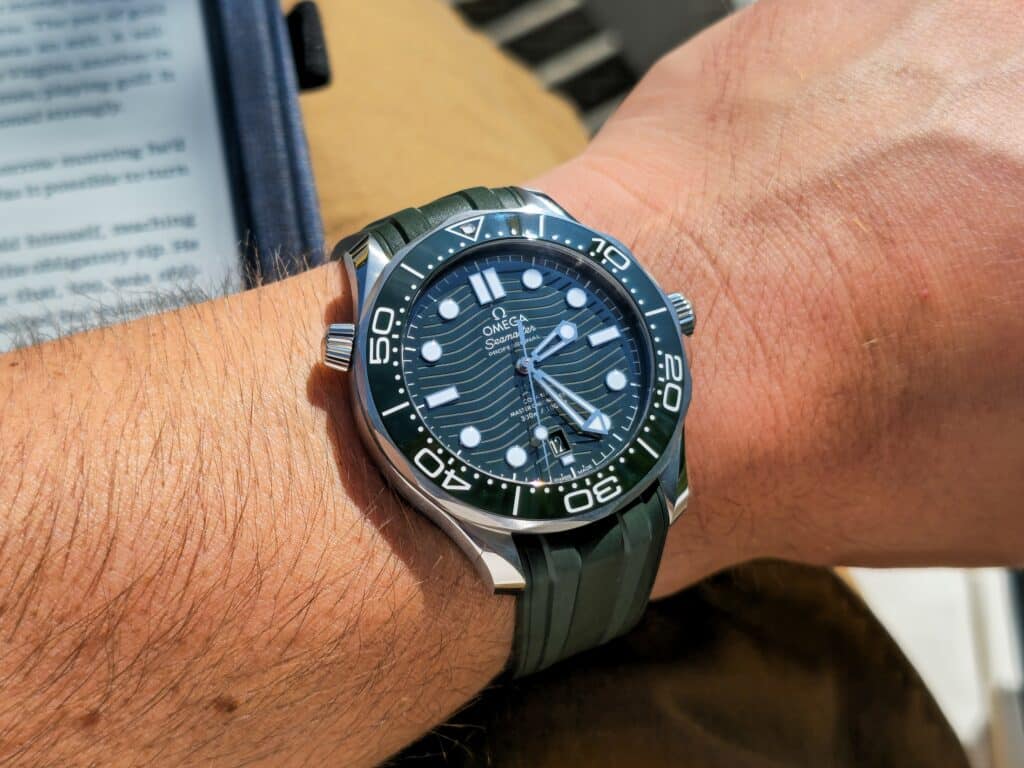
The Omega Seamaster Diver 300M is one of the easiest places to see why Omega watches are good, but also why the brand is not always the tidy, conservative choice. This is Omega aiming at the same daily luxury-diver territory as the Rolex Submariner without copying the Sub’s cleaner, quieter formula. In our hands-on review, that was the whole appeal. It felt broader, shinier, and more expressive on the wrist, yet still practical enough to wear as an everyday diver rather than something saved for “nice watch” moments.
The movement helps make the case for Omega in a way that goes beyond styling. The METAS-certified Caliber 8800 in our sample ran at around +1 second per day, which is the kind of real-world accuracy that makes ownership feel easy. Winding felt smooth and refined, too, though the crown itself was smaller than we’d like, and screwing it back down was not as satisfying as it should be on a watch built for daily use. That’s a recurring Seamaster thing: the technical execution is impressive, but a few physical touchpoints remind you that specs and handling are not the same experience.
On the wrist, the case wears better than the numbers suggest. The 42mm size sounds large, and the stated 14mm thickness could scare off anyone who has been burned by chunky divers before, but the watch felt closer to 12mm. The twisted lyre lugs do a lot of that work, while the polished upper surfaces and brushed case flanks keep the profile from looking like a flat slab. The rubber strap was also the better match in our experience. The bracelet looked the part, but it felt heavy and lacked enough taper, while the rubber made the watch settle down and behave more like an everyday piece.
The dial and bezel are where the Seamaster earns its personality. The ceramic wave dial has real visual depth, and the green version shifts with the light instead of sitting there like a flat color sample. The color-matched date disc keeps the date window from feeling like an afterthought, and the sapphire crystal almost disappears thanks to the strong anti-reflective coating. That external AR coating may pick up light scratches over time, but the glare control is hard to argue with while wearing it. The helium escape valve at ten o’clock is still there; that’s still very Seamaster, and still the kind of detail people either accept as part of the design or quietly side-eye forever. Legibility is mostly strong, especially because of the dual-color lume setup: the minute hand and bezel pip glow green, while the hour hand and markers glow blue. That makes the dive-time information easy to separate in low light, which is more useful than another paragraph about “heritage” would be. The skeleton hands can lose contrast against the dial at some angles, though, and the scalloped ceramic bezel, while crisp and free of noticeable back play, was not as satisfying to grip as a more traditional dive bezel.
That is the Seamaster Diver 300M in miniature: accurate, comfortable on the right strap, visually distinct, and a little fussy in the places your hands interact with it most. For the larger Omega question, that balance matters because the watch clearly shows both sides of the brand: serious engineering and real wearability, with a few design choices that ask the owner to meet it halfway.
Pros
- METAS-certified Caliber 8800 delivers excellent real-world accuracy at around +1 second per day.
- Strong AR coating helps the sapphire crystal nearly disappear on the wrist.
- Dual-color lume makes low-light reading more intuitive.
- Ceramic bezel action is crisp with no noticeable back play.
- Color-matched date disc keeps the dial cleaner than a mismatched date window would.
Cons
- Skeleton hands can lose contrast against the dial at certain angles.
- External AR coating may collect light scratches over time.
- The bracelet feels heavy and lacks enough taper.
- The small crown makes the screw-down operation less enjoyable than expected.
- The scalloped bezel edge is less practical to grip than a traditional dive bezel.
Omega Railmaster
| Price: | $6,400 |
| Water Resistance: | 150m |
| Case Dimensions: | 40mm (diameter) x 46.5mm (lug-to-lug) x 12.5mm (thickness) |
| Lug Width: | 20mm |
| Movement: | Omega 8806 Master Chronometer Co-Axial |
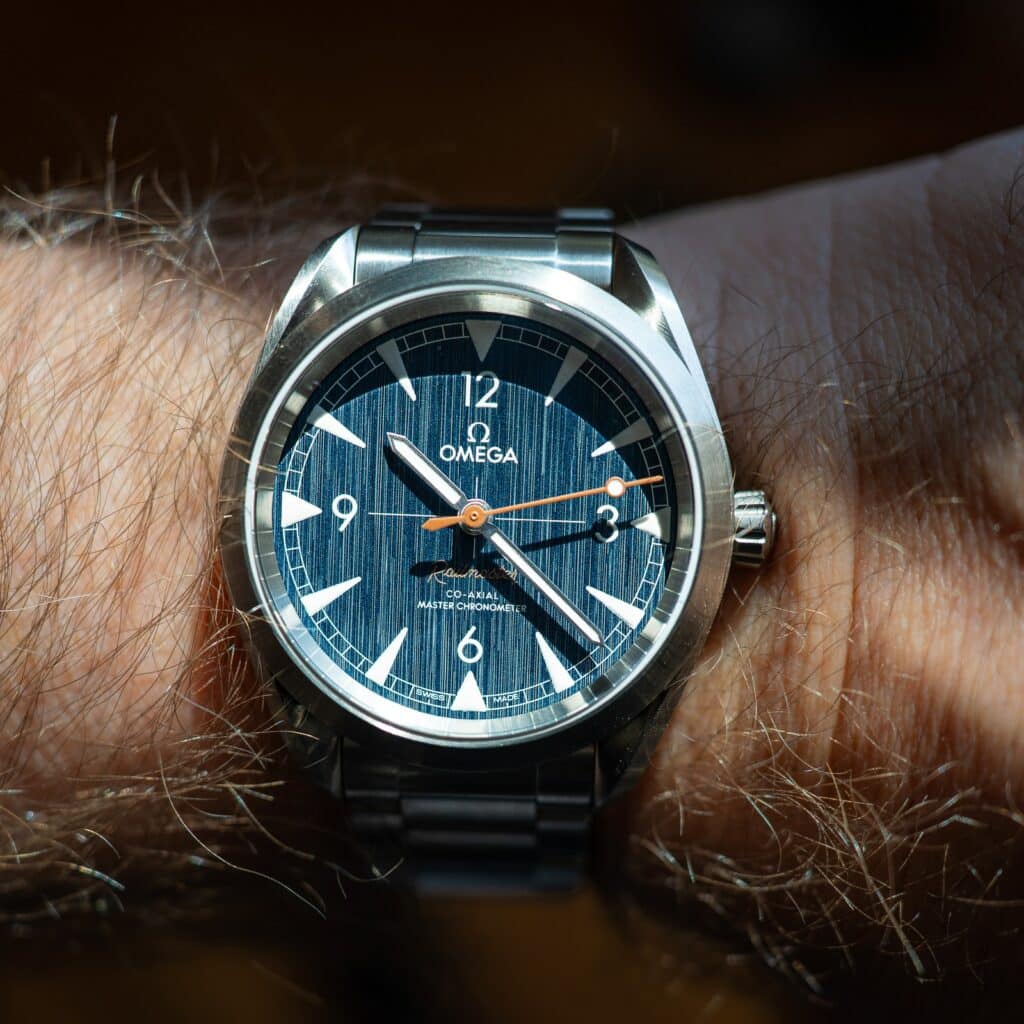
The Omega Railmaster matters here because it shows the side of Omega that does not need the Speedmaster or Seamaster spotlight to make sense. This is the brand doing a restrained, time-only everyday watch, and that can be a harder sell than a chronograph with lore or a diver with built-in recognition. The Railmaster asks a simpler question: can Omega make the basics feel good enough to justify the badge and the price? After time with it, the answer is yes, though not in a flashy way. The appeal is quieter than that.
The movement does a lot of the heavy lifting. During our in-depth testing, Omega’s Co-Axial Master Chronometer caliber ran at roughly +1 second per day. That kind of consistency becomes more meaningful the longer the watch stays in rotation. The METAS certification and strong magnetic resistance are not just brochure padding, either. Around laptops, phones, bags with magnetic clasps, airport trays, and the general electronic junk drawer of modern life, the Railmaster feels built for daily trust rather than collector theatrics. It does not make the watch exciting in an obvious way, but it makes ownership easier. That counts.
The dial is where the Railmaster begins to show its personality without raising its voice. The time-only layout keeps everything open and easy to read, while the vertically brushed surface keeps the watch from feeling flat. Depending on the light, the dial shifts between darker and warmer tones, so it has movement without resorting to a pattern that screams for attention. The bronze second hand adds enough contrast to break up the restraint, but it does not turn the watch into a novelty piece. That balance is the Railmaster’s whole thing: quiet, but not lazy.
On the wrist, the case supports that same idea. At 40mm wide, 46.5mm lug-to-lug, and about 12.5mm thick, it has enough presence to feel substantial without becoming clumsy. It sits low enough to slip under a cuff, and the mostly brushed case makes day-to-day marks feel less tragic. The polished chamfers along the edges help, too, giving the watch enough definition so it does not become a brushed metal pebble. The bracelet fits the character well, with a solid three-link build and mostly brushed finish, but the lack of micro-adjustment is an annoying flaw that shows up whenever the fit is slightly off. Not catastrophic. Still irritating.
That is the Railmaster’s role in answering whether Omega watches are good. It proves the brand can make a watch that feels thoughtful without leaning on obvious drama. The trade-off is that restraint costs money here. Buyers who want extra functionality may find the time-only format too quiet, and the price can feel ambitious when the design is this understated. But for someone who wants an Omega that works across settings, wears comfortably, resists daily magnetic nonsense, and does not announce itself from across the room, the Railmaster makes a convincing case.
Pros
- Master Chronometer movement delivered roughly +1 second per day in testing.
- Strong magnetic resistance adds real everyday reassurance.
- The brushed dial has more depth than the simple layout suggests.
- The mostly brushed case and bracelet hide daily marks well.
- Polished chamfers keep the case from feeling too plain.
Cons
- Bracelet lacks micro-adjustment, making a fine fit harder than it should be.
- Price can feel ambitious for such an understated design.
- A time-only layout may feel too restrained for buyers wanting more function.
First Omega in Space Speedmaster 311.32.40.30.01.001
| Price: | $8,500 – $8,900 |
| Water Resistance: | 50m |
| Case Dimensions: | 39.7mm (diameter) x 47mm (lug-to-lug) x 14mm (thickness) |
| Lug Width: | 19mm |
| Movement: | Caliber 1861 |
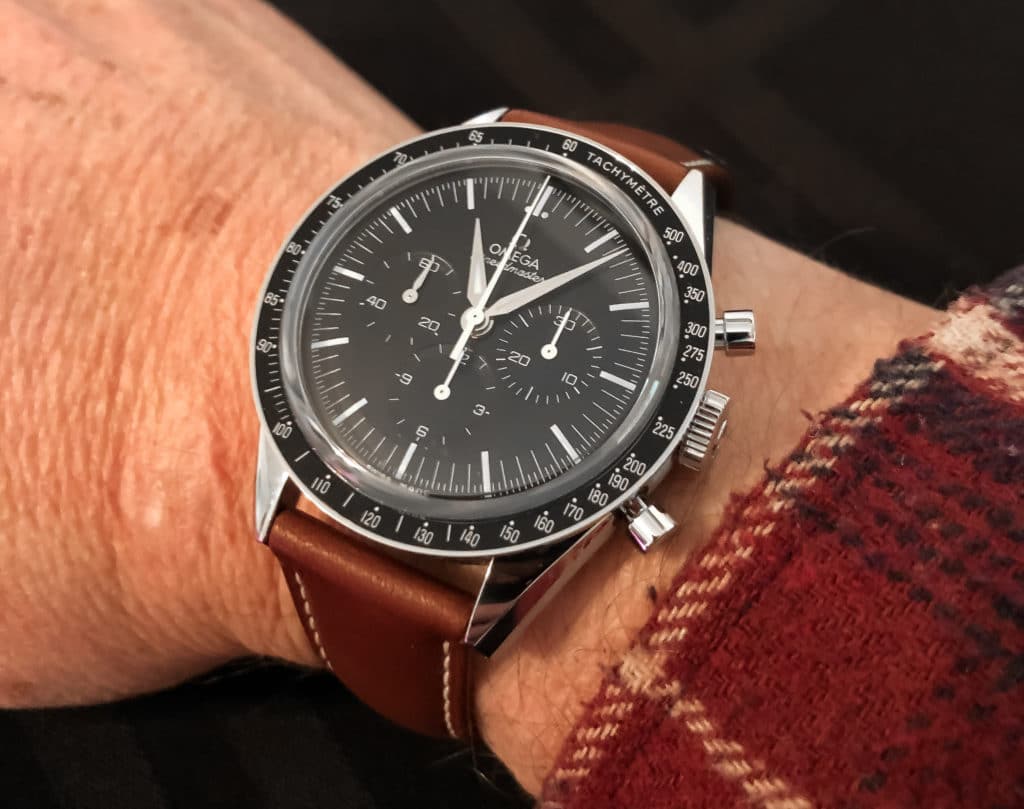
The First Omega in Space helps answer the Omega question from a more collector-specific angle. It shows that Omega can lean into its space history without making the buyer deal with the stress of owning an actual vintage chronograph. The watch is not a direct CK2998 reissue, even though it draws from the watch worn by Walter Schirra, one of the original seven NASA astronauts. That distinction matters. It gets close enough to feel historically connected, but it avoids the fragility, sourcing anxiety, and general “please don’t sneeze near it” energy that can come with true vintage ownership.
The ownership side is helped by the caliber 1861. It is not exotic, and that is part of the point. The movement is proven, familiar to Speedmaster people, and easier to service than something rare or precious for its own sake. The box sapphire crystal follows the same logic. It gives the watch a period-correct silhouette while adding the durability most of us want when a watch will be worn often, rather than admired under soft lighting like a museum object. That practical streak is where the FOIS starts feeling like a good Omega, not just a charming Speedmaster side quest.
The dial gives the watch most of its personality. The subtle gloss and pie-pan contour bring more depth than a flat vintage-style dial would, especially as light hits the recessed subdials. The longer five-minute indices and layered track layout make the proportions feel deliberate rather than nostalgic for its sake. Lume is present but limited, with useful nighttime visibility closer to an hour than anything we’d call modern tool-watch performance. The mixed hand set remains the detail that splits people. The polished silver alpha hands feel dressier and more delicate, while the white chronograph hands stay focused on function. In normal use, the contrast works well enough, though the second hand can disappear in certain light. That trade-off makes the watch feel more refined and historically grounded, but less immediately legible than a purely utilitarian one.
On the wrist, the 39.7mm case is the other reason the FOIS earns its spot. Compared with a modern Speedmaster Professional, it feels more compact and restrained, and the straight lugs with no crown guards give it a cleaner profile. That shape wears comfortably through desk work, errands, and long ordinary days, which is usually where a watch proves itself anyway. The supplied leather strap is the weak link. It feels underwhelming for the price, and the 19mm lug width makes replacement options a bit more annoying than they should be. Put it on a NATO, though, and the straight lugs and compact case start making much more sense.
For the bigger “Are Omega watches any good?” conversation, the First Omega in Space proves that the brand’s appeal does not have to come only from the standard Moonwatch formula. For someone who wants Omega’s space-era design language in a watch that can live a normal life, the FOIS makes a strong, quietly charming case. Check out our dedicated review for a more detailed round-up.
Pros
- 39.7mm case wears compact and comfortable compared with a modern Speedmaster Professional.
- Caliber 1861 is proven, familiar, and easier to service than rarer vintage movements.
- The box sapphire crystal keeps the vintage silhouette while adding modern durability.
- Straight lugs and no crown guards give it a clean, vintage-leaning profile.
- Glossy pie-pan dial, recessed subdials, and long five-minute indices add real depth.
Cons
- The supplied leather strap feels underwhelming for the price.
- 19mm lug width makes strap hunting more annoying.
- Polished silver alpha hands can reduce contrast in certain lighting.
- Lume is limited, with useful nighttime visibility for around an hour.
Omega Speedmaster Professional 3861
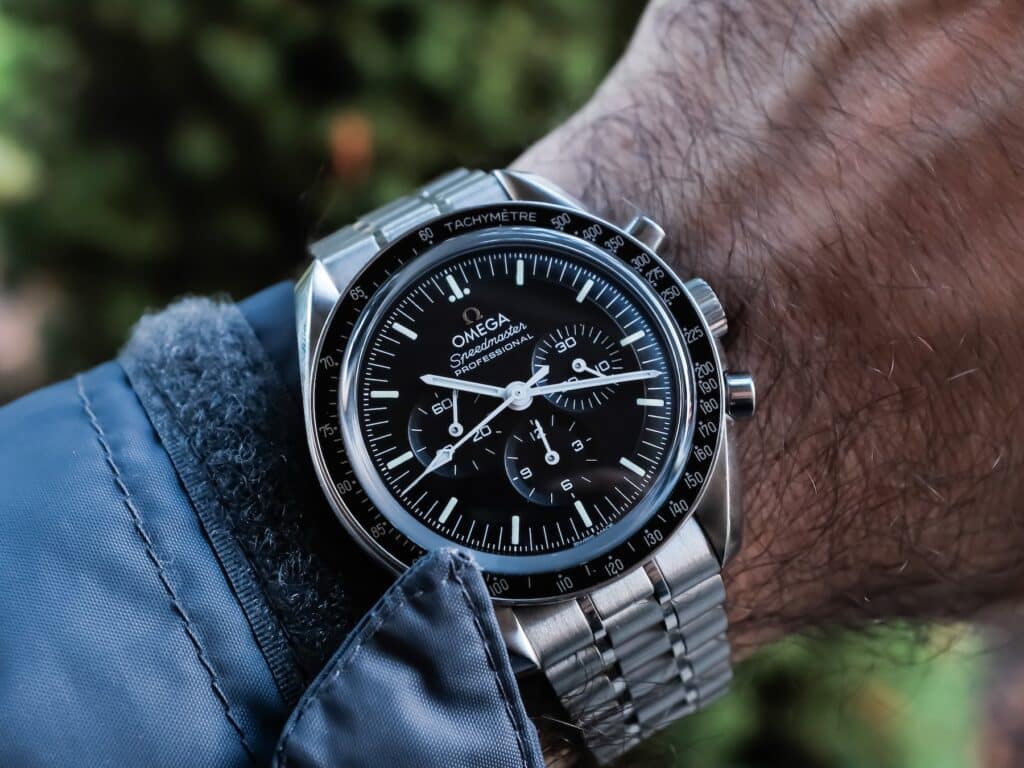
| Price: | $9,000 |
| Water Resistance: | 50m |
| Case Dimensions: | 42mm (diameter) x 47.5mm (lug-to-lug) x 13.2mm (thickness) |
| Lug Width: | 20mm |
| Movement: | Omega 3861 |
The Omega Speedmaster Professional 3861 is the obvious anchor in this whole “are Omega watches any good?” conversation because it is the watch most people already expect to carry the brand’s argument. The Speedmaster has decades of baggage, praise, mythology, and forum repetition attached to it, and none of that matters much if the current watch feels clumsy on the wrist. After living with and reviewing the 3861, though, the appeal becomes less abstract. This is not just a famous Omega. It is a watch that makes daily interaction feel like part of ownership rather than a chore.
The movement is a big part of that. The 3861 improves on the older Speedmaster architecture with better accuracy and anti-magnetic performance, but the more memorable thing is how steady it feels in use. In our hands-on testing, accuracy remained within +3 seconds per week, which is excellent and quietly builds trust. The manual-wind routine matters too. The crown action feels smooth and deliberate, and winding the watch becomes one of those small habits that make ownership more personal. The chronograph pushers have a firm, satisfying click as well, which makes timing ordinary things feel quite engaging.
The dial keeps the Speedmaster’s biggest strength intact: easy legibility without trying too hard. The black dial and white markers are familiar, but they work because the design is clean and settled. The stepped dial brings back a sense of depth, especially when light moves across it during the day, without making the layout busier. Lume performance is more useful than dramatic. It is not a wrist flashlight, but it stays consistent and lasts through the night, which matters more than a bright first impression that disappears by midnight. On the sapphire version, the applied logo adds a small lift to the dial without making the watch feel dressy or precious.
The case and bracelet are where the current Speedmaster becomes easier to live with than the 42mm number suggests. It is still not tiny, and anyone chasing strict vintage proportions may find it large. But the case wears more compact and planted than expected, thanks to subtle trimming and improved balance. The updated bracelet does even more work. The stronger taper, earlier link articulation, and shorter-feeling end links help the watch wrap around the wrist rather than sit flat and proud on top of it. That changes the daily experience more than a spec chart can explain. It is comfortable enough that strap swapping no longer feels mandatory, which is almost rude given how much of the Speedmaster hobby is built around buying straps.
That is why the Speedmaster 3861 still makes such a strong case for Omega. It shows the brand at its best: historically loaded, mechanically improved, emotionally engaging, and wearable. As a long-term ownership piece, the 3861 proves that some Omega hype survives contact with actual wrist time.
Pros
- The stepped black dial adds depth, and the white markers stay easy to read day or night.
- Updated bracelet improves comfort with better taper, articulation, and shorter-feeling end links.
- Caliber 3861 delivers strong accuracy (around +3 seconds per week) and smooth manual winding.
- Chronograph pushers have a firm, satisfying action.
- Lume lasts through the night, even if it is not too bright.
Cons
- Still relatively large for buyers chasing strict vintage proportions.
- Sizing the bracelet can be frustrating without the right tools.
Let us know what you think in the comments below. If there’s an Omega we missed, or one you think makes a stronger case for the brand than the usual Speedmaster-and-Seamaster greatest hits, tell us, and we’ll try to get it in for a hands-on review. Bonus points if it’s overlooked, oddly specific, quartz, neo-vintage, or the kind of Omega that makes forums argue for 14 pages before anyone remembers to enjoy the watch.

Co-Founder and Senior Editor
Kaz has been collecting watches since 2015, but he’s been fascinated by product design, the Collector’s psychology, and brand marketing his whole life. While sharing the same strong fondness for all things horologically-affordable as Mike (his TBWS partner in crime), Kaz’s collection niche is also focused on vintage Soviet watches as well as watches that feature a unique, but well-designed quirk or visual hook.
Bummer. Was looking for the Aqua Terra.
I wonder if I’ll ever be an Aqua Terra man.
Two words: Great White
Wears every day, doesn’t catch on a shirt cuff like the Rolex Polar, looks great on the weekends. My grail watch.
That’s a great one, Bruce. I’ve caught myself checking eBay listings for those and the prices don’t seem totally outrageous.
I have an Omega Speed master Mark 2 manual winding 51 years old still in good running condition
Dang… that’s the kind of mileage I want out of my Speedmaster
Great article!!!
I used to own the Omega Seamaster 300m 2531.80.00 – from about 2005, the automatic Brosnan Bond era. It was pre-owned and I wasn’t prepared for the sheer wearability of the piece – super slim. In the end I couldn’t live with the 5 link bracelet – just a touch too flashy for me.
I still own an Omega 3513.30.00 Date from 2005 – silver hands on silver face, 39 mm. I wore that watch for about 13 years straight until I seriously started collecting watches. Now I need glasses to see it because the silver on silver design isn’t great for legibility – a faff so i don’t wear it. The watch is destined for my daughter – I think she’ll rock a chrono like that.
I also still own a Speedmaster Moonwatch 3861 Sapphire Sandwich – I have the OEM bracelet, rubber, fabric and nato straps. Amazing legibility for the design. It is quite simply unbelievable. Currently running at +1 second per day after 2 years of ownership. Although the bracelet is great – I think it looks great on a simple black nato – giving it a really tool watch vibe.
On my wish list is the Omega Seamaster Professional 300M 2254.50.00 you’ve covered – I think a good one of those is pretty much the perfect daily diver.
Over the past few years I’ve owned a Rolex Explorer 40 and a Rolex GMT Master II 16710 (black bezel) and they’ve both left the collection within 12 months. There is something more honest about my Omegas – I wear them because they’re just really bloody good watches and you don’t get the Rolex status nonsense with them – in the UK you’re crazy to wear a Rolex in London.
In fact I nearly bought the No Time To Die recently but actually went for a field/pilot watch design with an IWC Mark XX (the best luxury field watch available IMO). However, it was really really close – that NTTD is something else.
As I said great article. Oh and one you did on the Citizen Promaster diver Eco-Drive was also great.
Hey Mike. Thirteen years on one watch before the collecting bug hit is a great origin story. The point about Omega feeling more honest than Rolex is something a lot of UK collectors are landing on right now, and the fact that two Rolexes came and went within a year while the Omegas stayed says everything. The 2254.50 on your wish list is a solid target. Hope it finds you. And thanks for the kind words on the Promaster piece too. Appreciate you reading. I still think about “ending it all” with a Seamaster Diver 300m sometimes.
Very well written. Thanks.
Thanks for reading