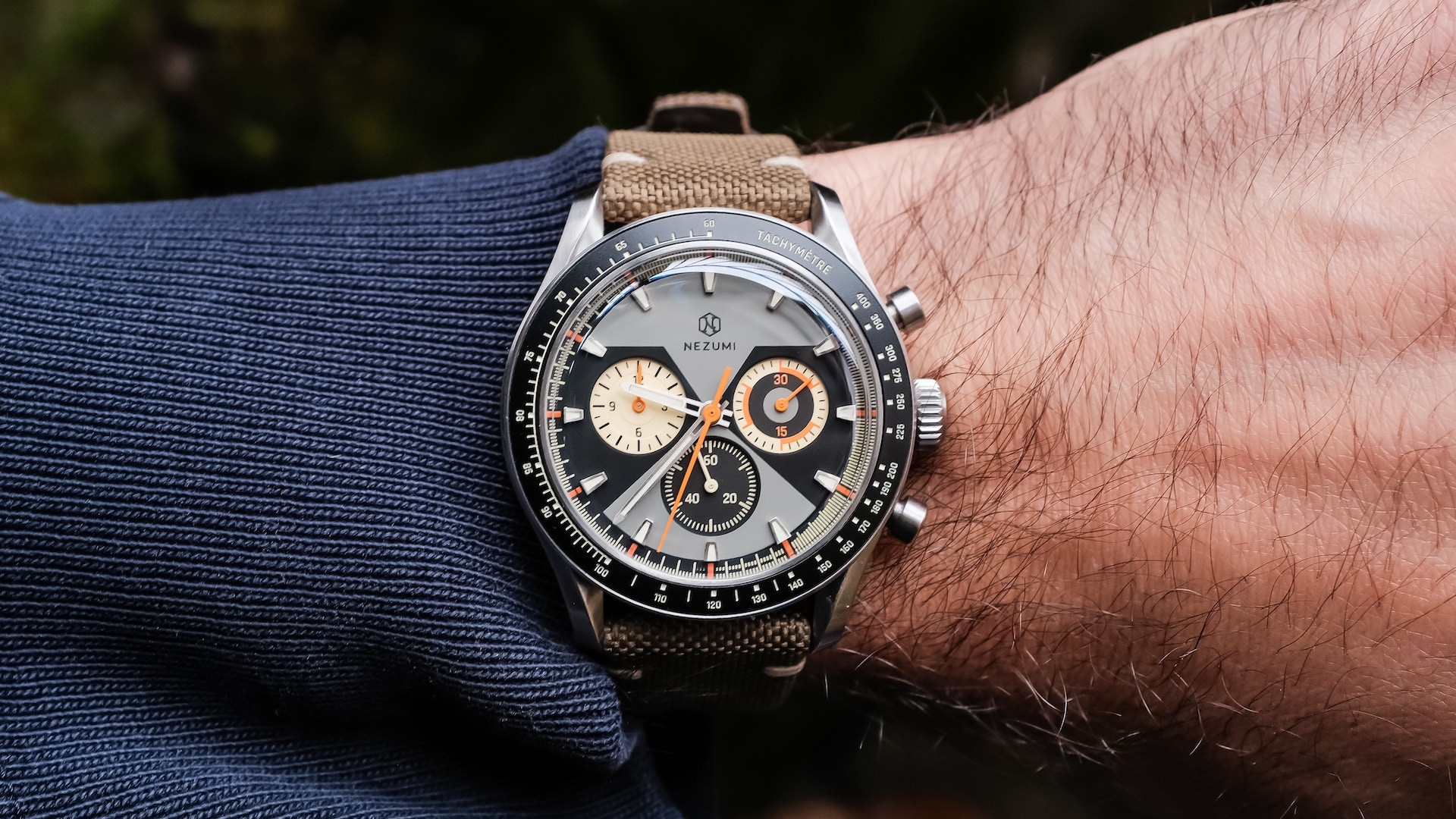
Nezumi is one of those brands that I feel earned its place during the earlier days of the microbrand boom. They’ve been around for a while now, and I’ve always had a fair amount of respect for what they’ve managed to build over the years. Somehow, though, I was surprised to realize that I’d never actually reviewed one of their watches. A contributor covered an earlier version of the Voiture chronograph for TBWS back in 2020, but I never had the opportunity to spend time with one myself.
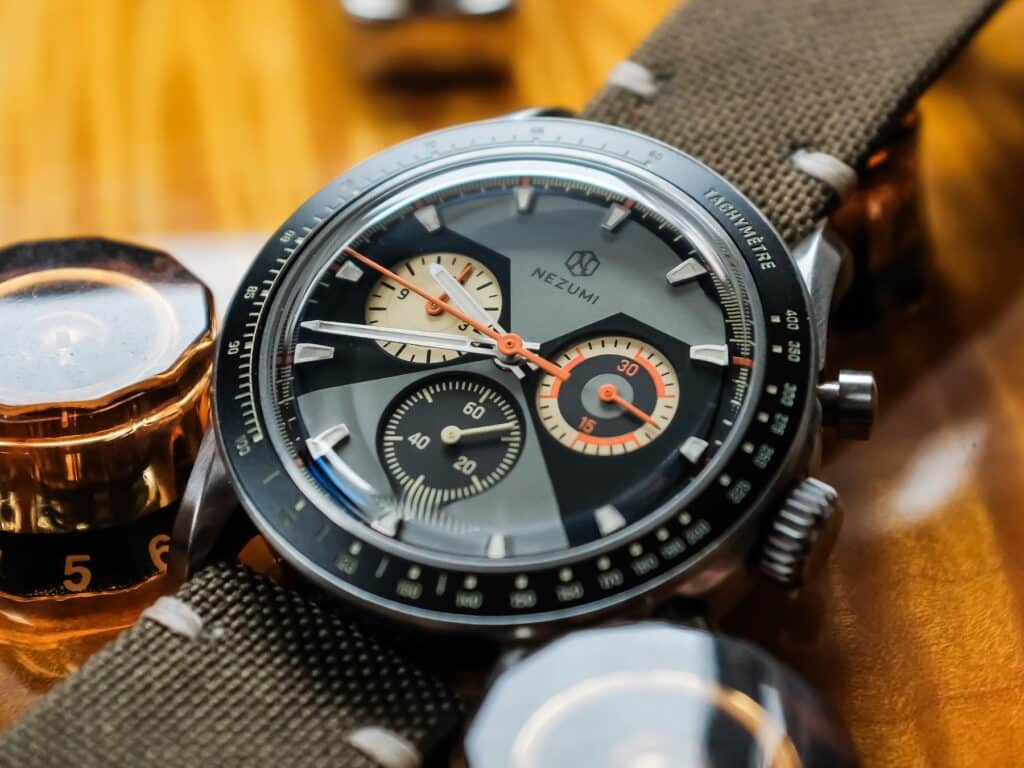
Now, in 2026, I’ve finally had the chance to get acquainted with the Voiture VM2, the brand’s automatic take on its racing-inspired chronograph. I’ll admit that my interest in racing chronographs has always been fairly selective, usually hovering somewhere around the Carrera and Monaco side of things. Still, I’ve always appreciated the design language, and I was curious to see how Nezumi’s interpretation would fit into my own collecting tastes. After a couple of weeks with the VM2 on the wrist, I have a much better sense of where this particular chronograph stands for me.
A Familiar Design With a New Movement
The Voiture has been around since 2015, when it debuted as Nezumi’s first release. Since then, the brand has explored a variety of color combinations while maintaining the general design that made the original recognizable. I’ve always appreciated that consistency, especially in a segment where brands sometimes seem eager to introduce something new every few months.
The inspiration is fairly obvious. Vintage racing chronographs from the late 1960s and early 1970s established much of the design language here, from the contrasting registers and colorful accents to the external tachymeter scale. Nezumi has been working within that aesthetic for over a decade, and I think the Voiture has developed a recognizable identity of its own.
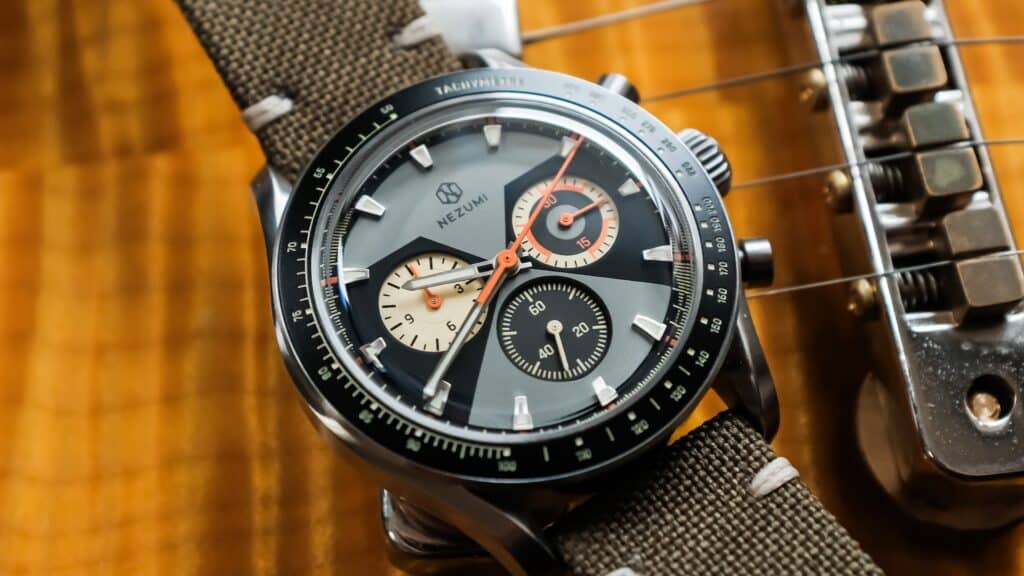
For the VM2, Nezumi offers two configurations. There’s a relatively restrained black, gray, and white version, along with the VM2.1102 I received, which brings orange and cream into the mix. I was immediately drawn to the latter, although I found the colors considerably more appealing once I had the watch in hand.
The biggest change, of course, involves the movement. Previous standard-production Voiture chronographs have used Seiko’s VK63 mecha-quartz caliber, which I’ve never had much of an issue with. It’s a practical solution for an affordable chronograph, and I’ve always appreciated the mechanical feel of its chronograph operation.
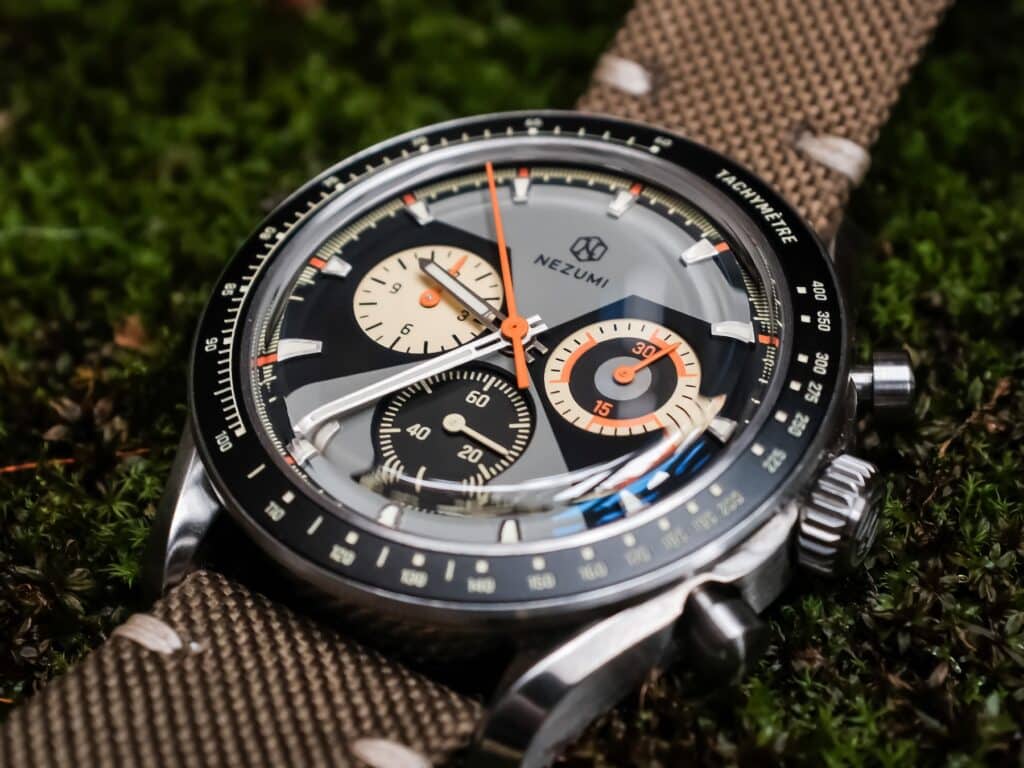
Nezumi experimented with a mechanical Voiture for its 10th Anniversary release, using a Sellita movement. The VM2 takes that concept into regular production with the Peacock SL-4801 automatic column-wheel chronograph.
I’m glad Nezumi has decided to keep the mecha-quartz versions around. There’s still plenty of appeal in that simpler configuration, especially for someone who appreciates the design without necessarily wanting the additional expense or complexity of a mechanical chronograph. Having both available makes sense to me.
Case and Wearing Experience
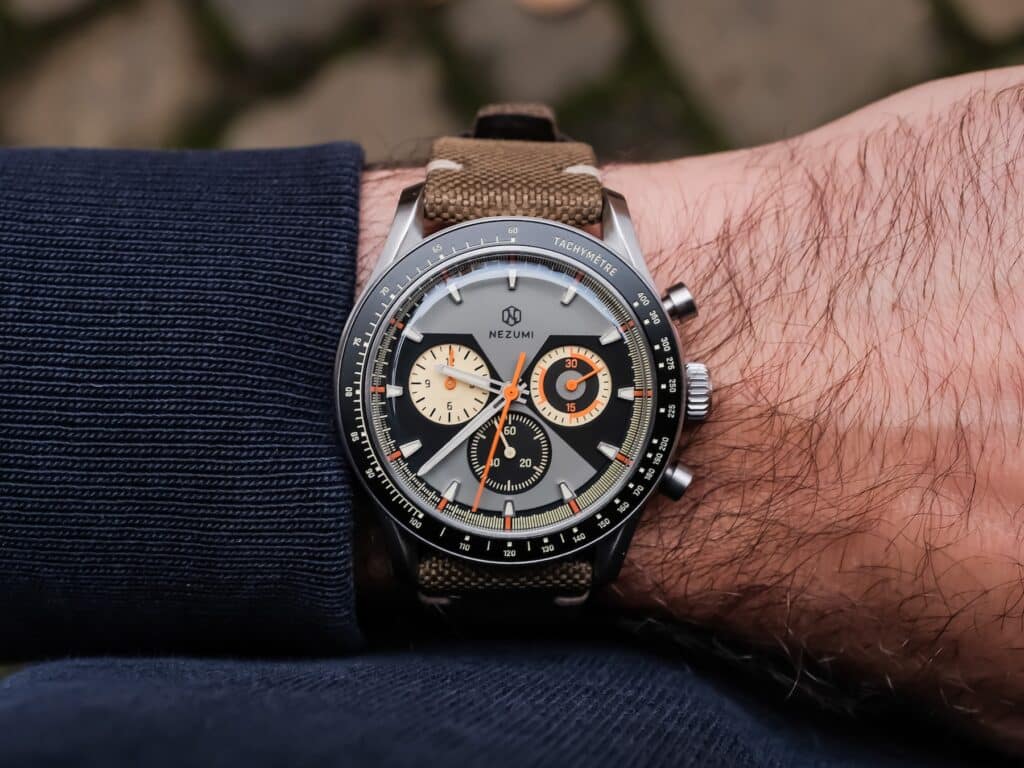
One of the first things I noticed about the VM2 was how compact it felt on my wrist. Automatic chronographs can get pretty thick, and I had some reservations about how the movement might affect the Voiture’s proportions. Thankfully, the dimensions turned out to be fairly manageable.
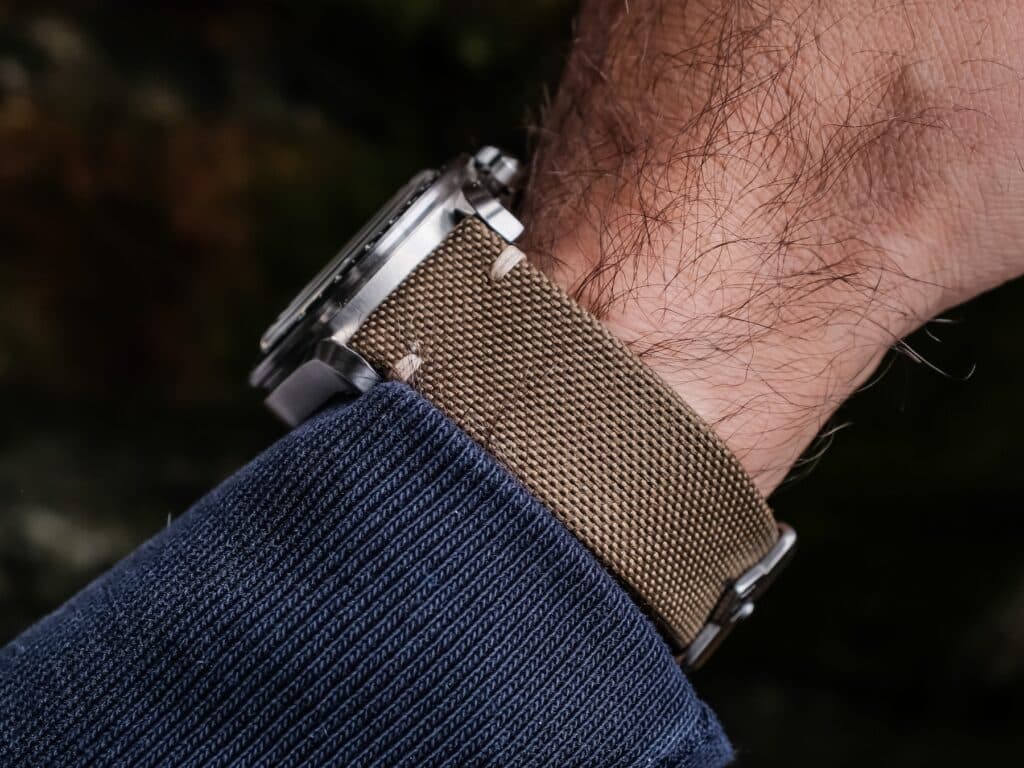
The brushed stainless steel case measures 40mm across, with a 47mm lug-to-lug distance. On paper, those measurements are reasonable enough, but I was surprised by how contained the watch felt once I started wearing it. The curved lugs help keep everything comfortable, and the slightly smaller 39mm bezel gives the case a balanced appearance.
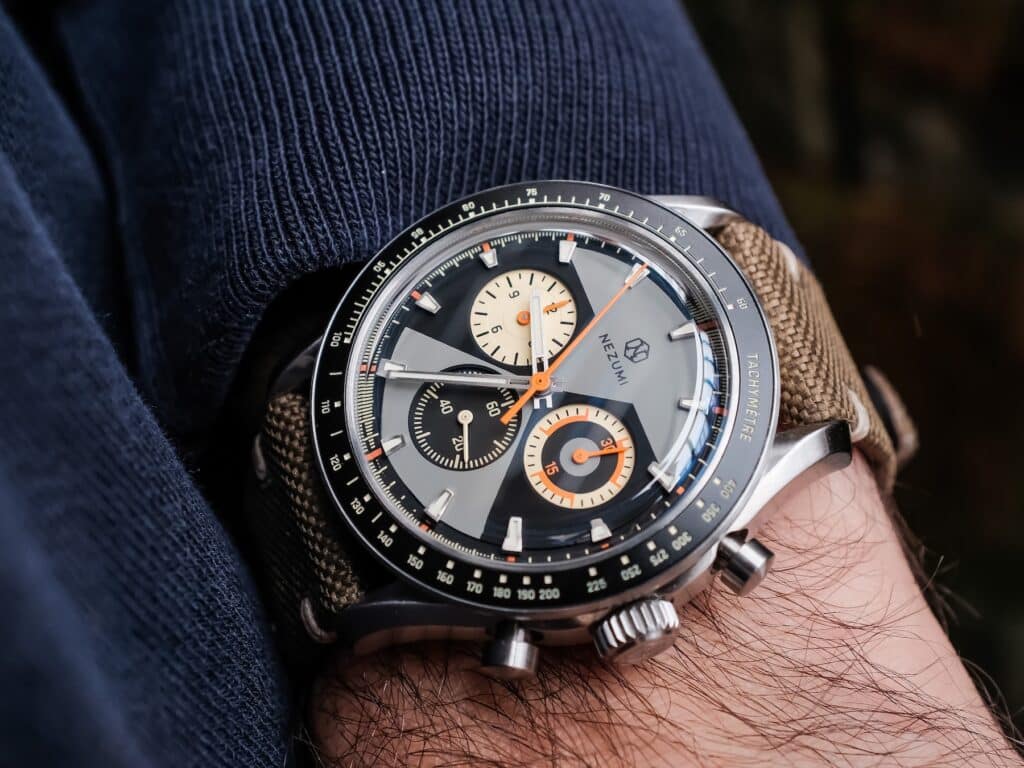
At 12.9mm thick, including the double-domed sapphire crystal, the VM2 carries some noticeable height. The steel case itself measures 11mm, with the crystal accounting for the remaining 1.9mm. I was occasionally aware of the thickness during everyday wear, although it never became particularly bothersome.
I also appreciate Nezumi’s relatively straightforward approach to finishing. The case is predominantly brushed, with clean surfaces and a construction that feels appropriate for the asking price. Nothing about the finishing struck me as especially elaborate, but I didn’t find myself looking for improvements either.
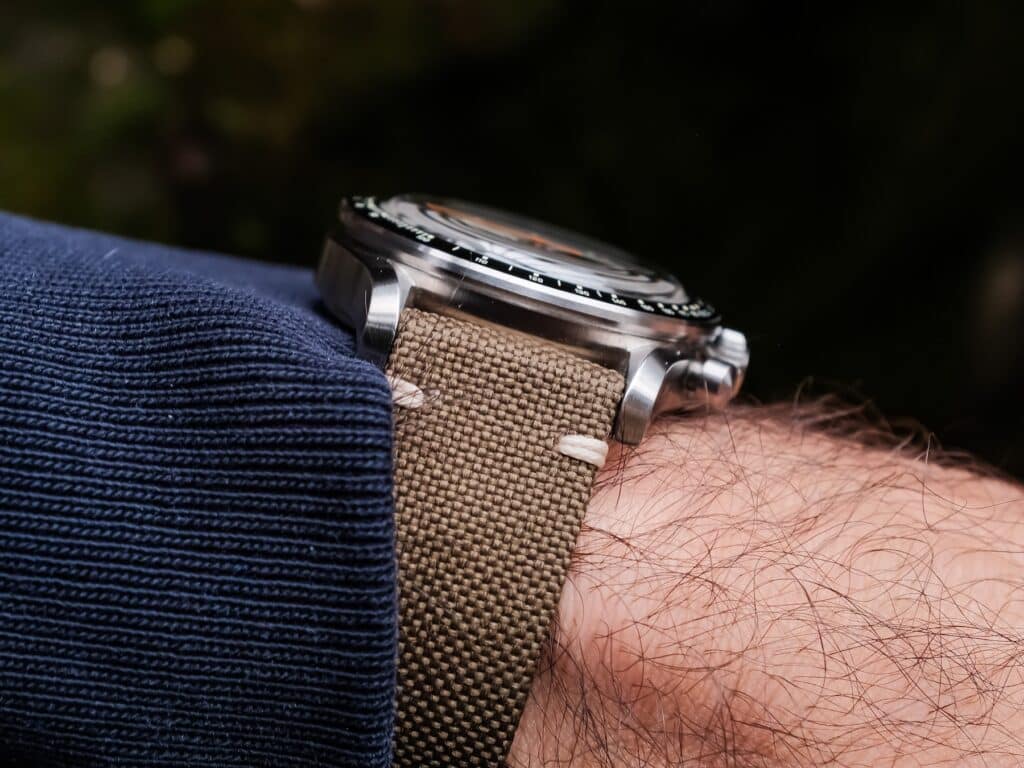
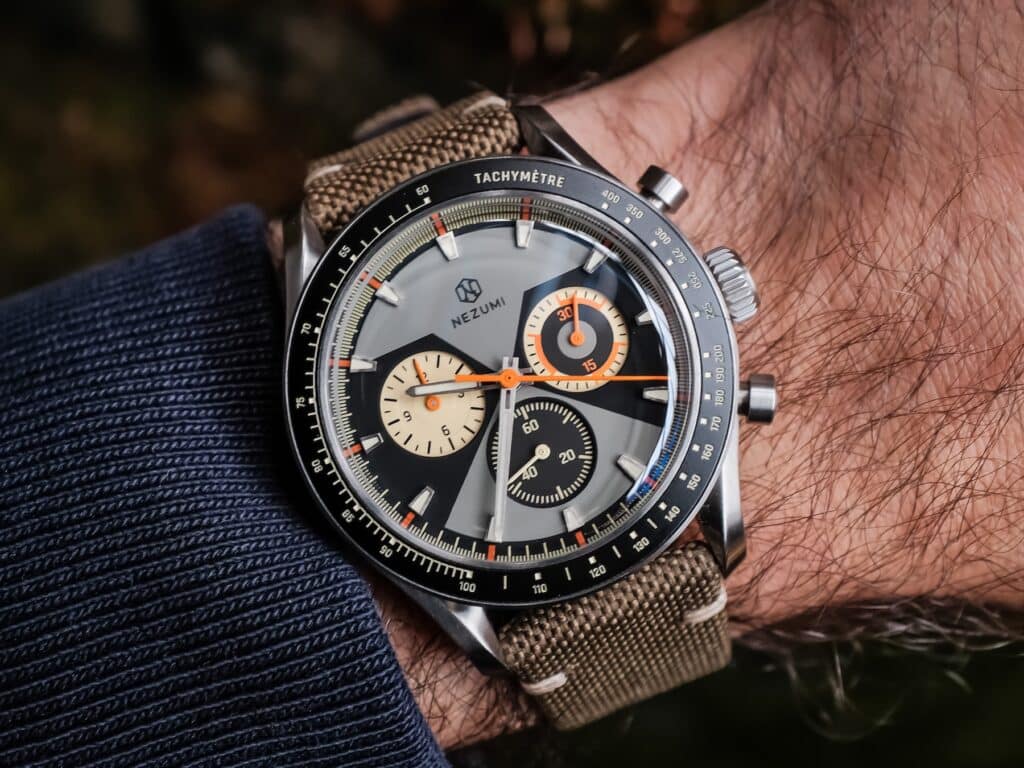
The fixed black tachymeter bezel helps maintain the vintage racing aesthetic, while the pump-style chronograph pushers and knurled crown fit comfortably within the overall design. It’s a familiar arrangement, and I think Nezumi has done a good job keeping everything visually consistent.
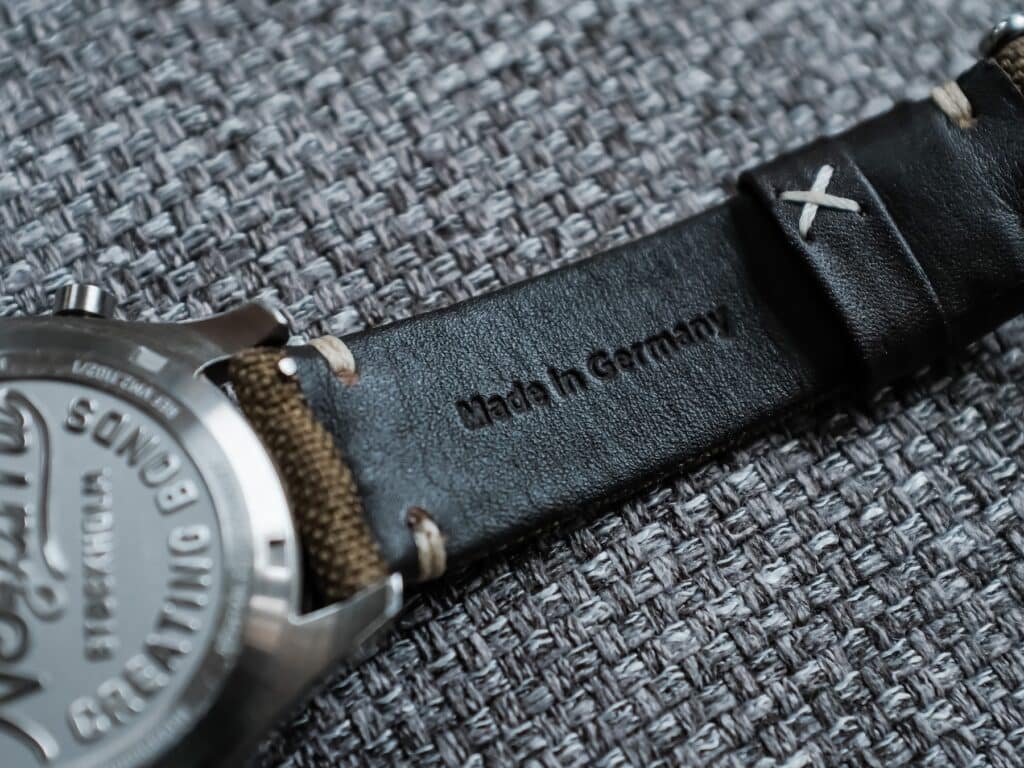
The watch is assembled and quality-controlled in Germany, although I can only speak to the example I received. My loaner felt solid throughout the review, and I didn’t encounter anything that raised concerns about the general construction.
Water resistance is rated to 50 meters, which I consider reasonable for a chronograph of this type. I wouldn’t choose this watch for swimming or extended water exposure, especially with its push-pull crown. For the everyday situations I encountered during the review, the rating was sufficient.
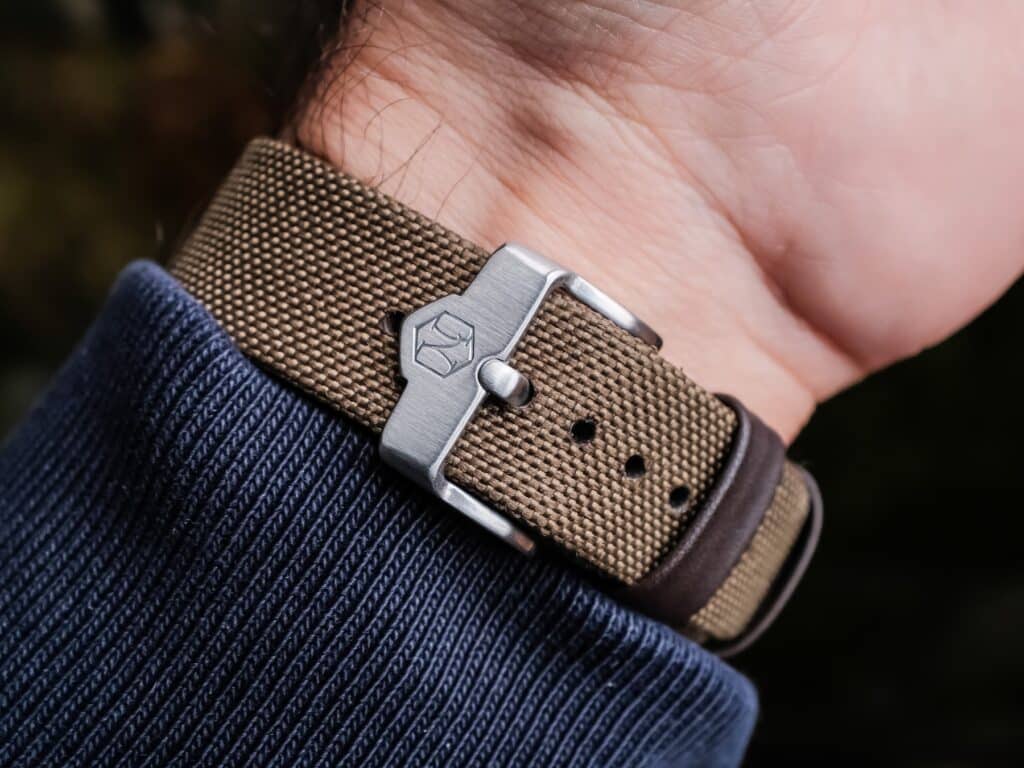
My example arrived on a moss-green canvas strap, and I ended up enjoying this combination quite a bit. The green complements the warmer dial accents, and the strap was comfortable enough that I never felt much interest in changing it.
Nezumi offers several strap configurations, including a stainless steel bracelet, although I didn’t receive that option. I can only evaluate the canvas strap supplied with my loaner, and personally, I think it’s a particularly good match for this version of the Voiture.
Dial Design and Movement
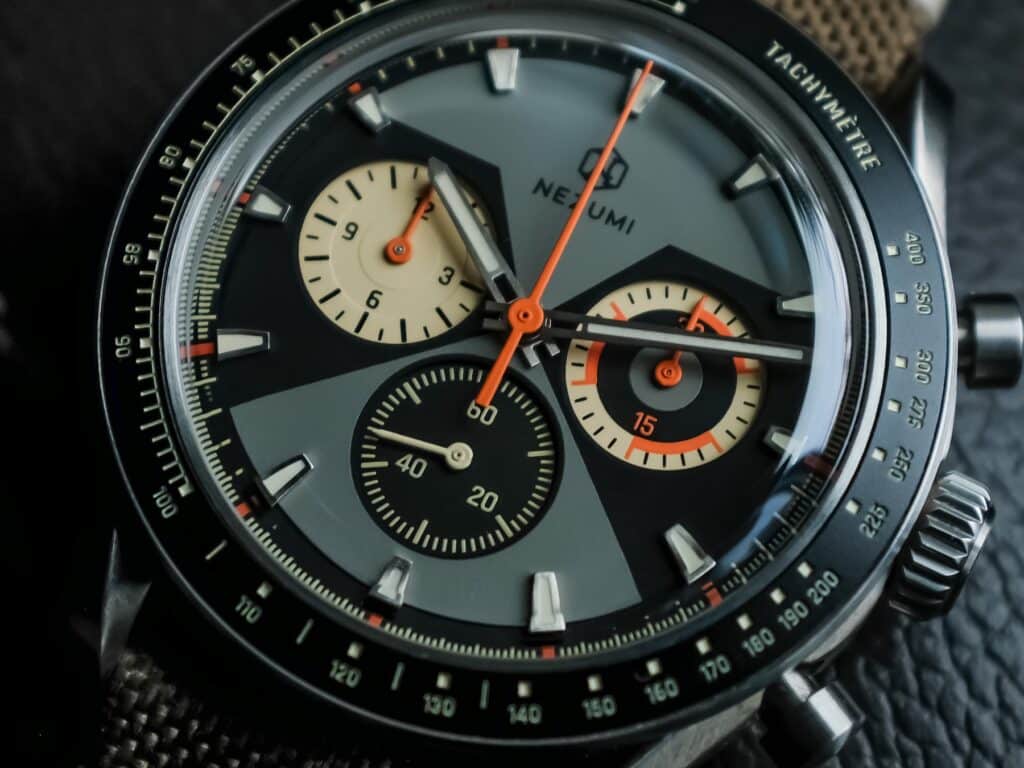
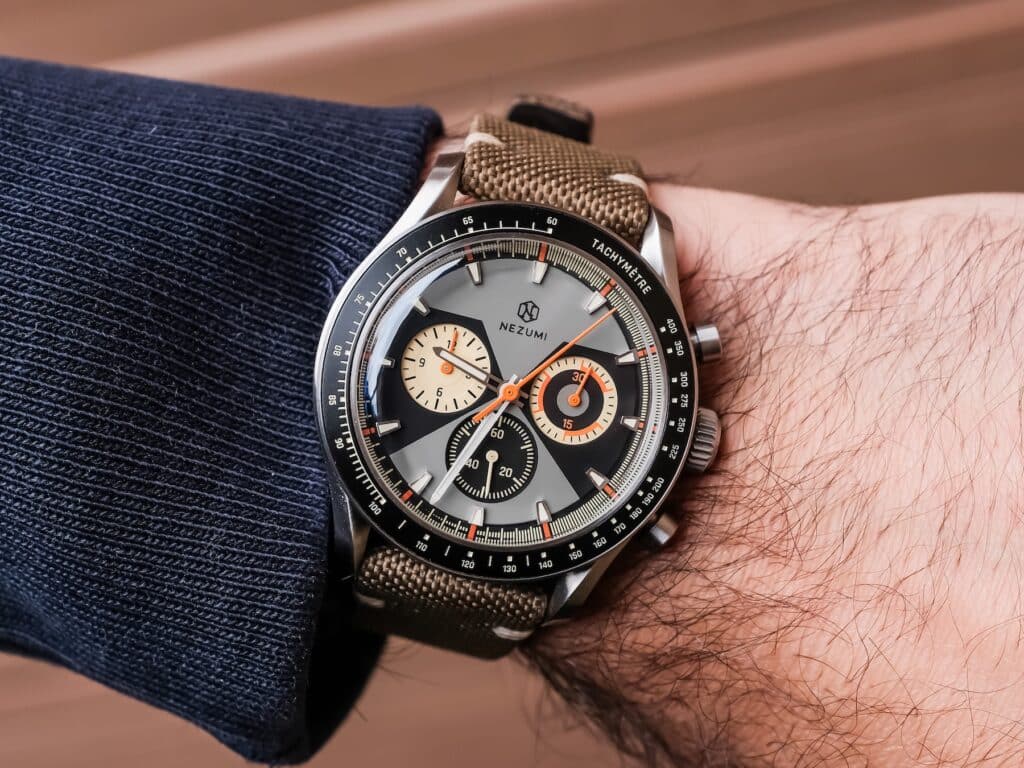
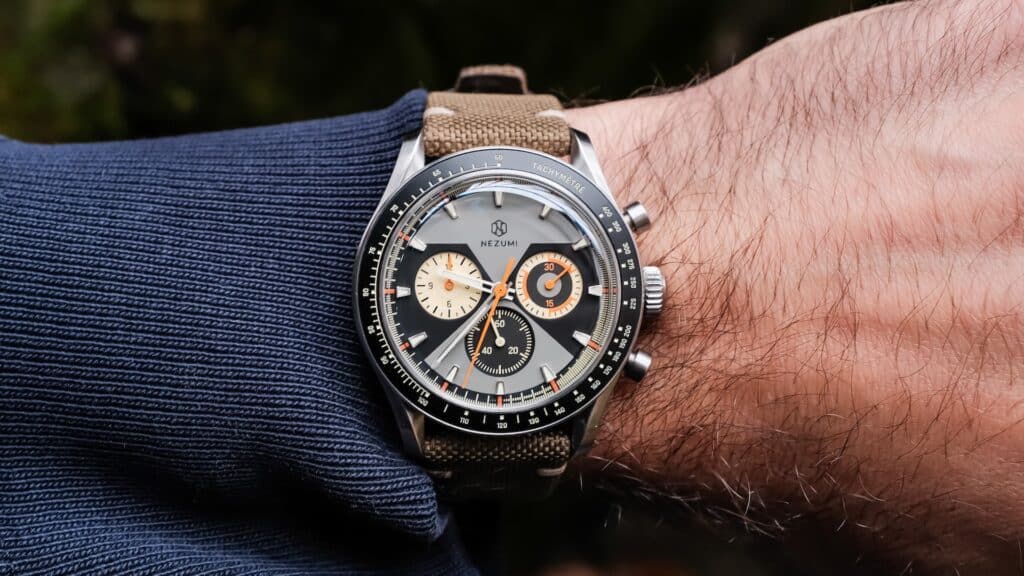
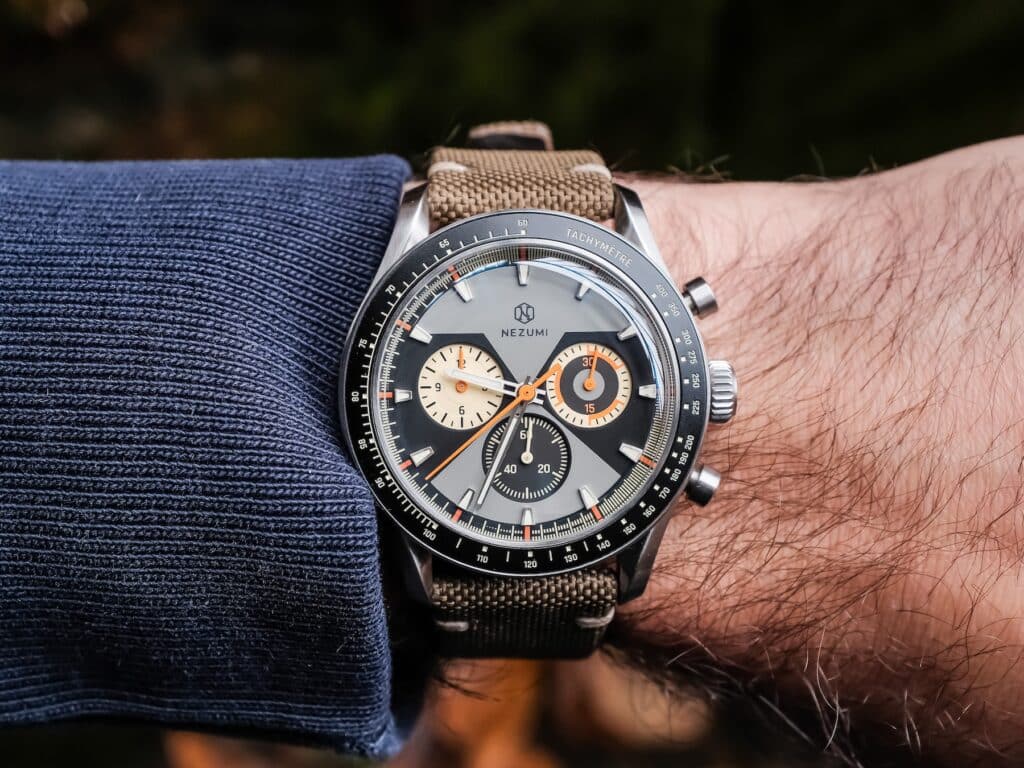
The dial was probably my favorite aspect of the VM2, especially after spending some time with it. I liked the general appearance when I first saw the watch, but the gray, black, orange, and cream combination worked considerably better in person than I expected.
There’s a fair amount happening here, and I can understand why the design might appear busy in photographs. The black area surrounding the chronograph counters creates a strong visual contrast against the gray dial, while the cream and orange accents add some variety without overwhelming the overall arrangement.
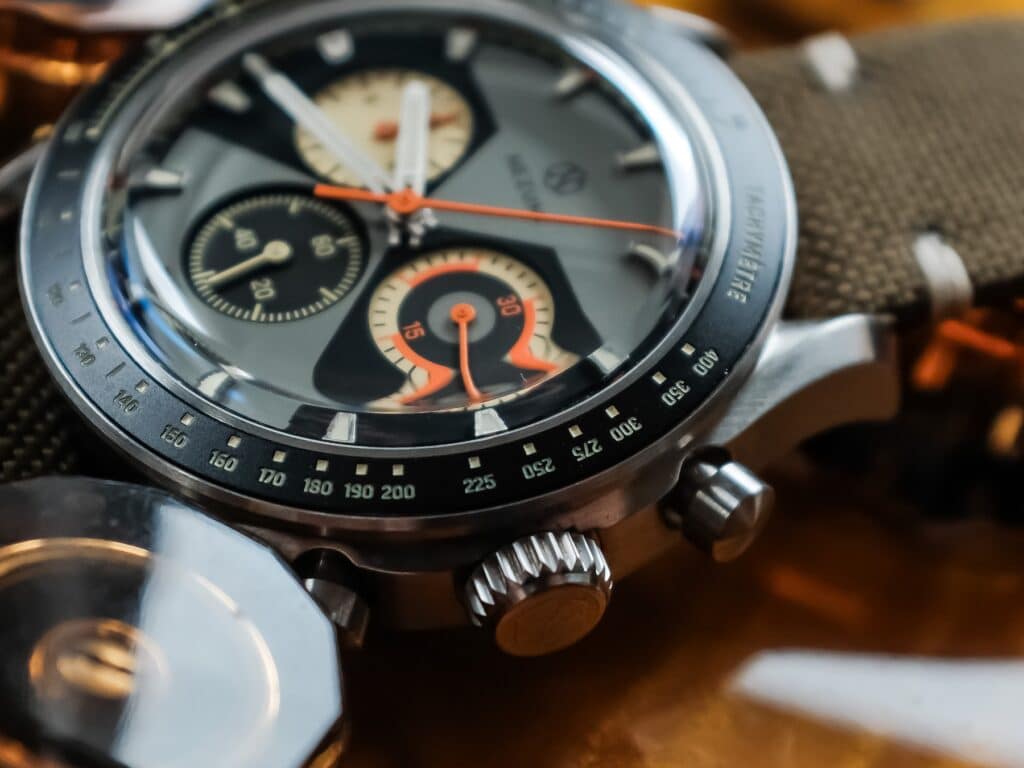
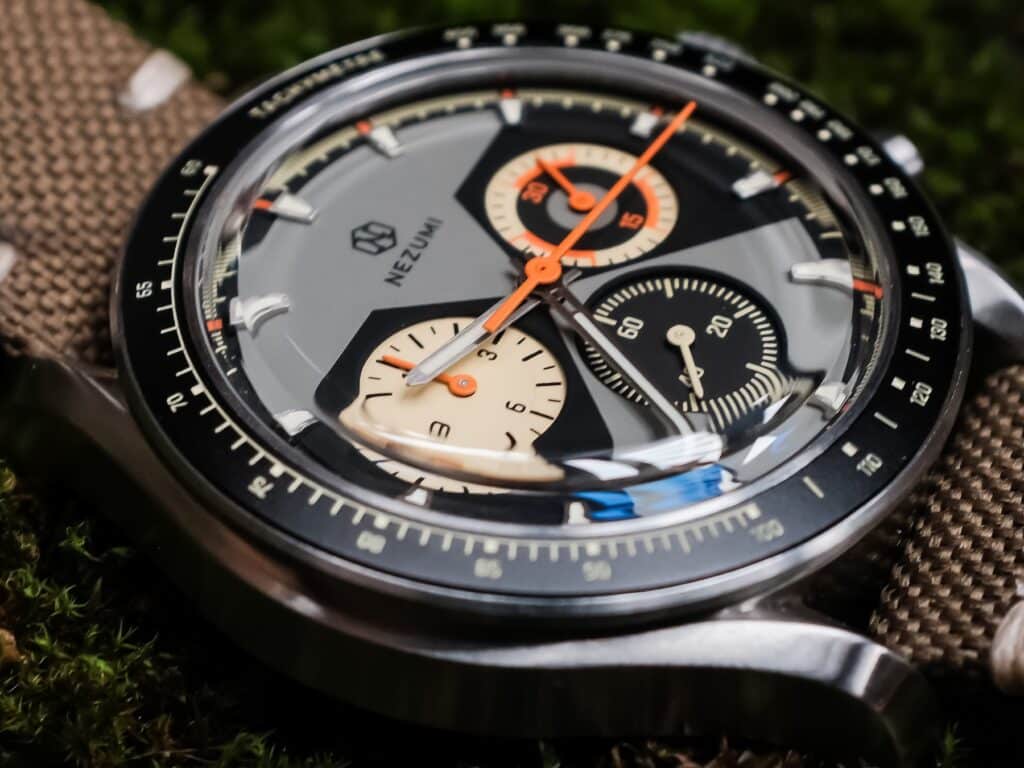
The traditional three-register layout places the 30-minute chronograph counter at 3 o’clock, running seconds at 6, and the 12-hour counter at 9. The recessed registers and stepped chapter ring introduce some depth, which I appreciated as I became more familiar with the dial.
I particularly like how Nezumi has differentiated the running-seconds register from the chronograph counters. The individual treatments help separate the functions visually, and the orange central chronograph hand is easy to identify against the surrounding colors.
The applied brushed steel markers and matching hour and minute hands help bring some consistency to the design. They’re treated with Swiss Super-LumiNova, although I didn’t conduct any extended testing of its performance.
Despite the various colors and registers, I found the dial exceptionally easy to read. That’s something I appreciated throughout the review, especially since vintage-inspired chronographs occasionally sacrifice practicality in favor of visual detail. I never had much trouble distinguishing the time or reading the chronograph information.
The double-domed sapphire crystal, with its internal anti-reflective coating, also contributes to the overall appearance. I think the curvature suits the design nicely, and I enjoyed the slightly vintage character it brings to the watch.
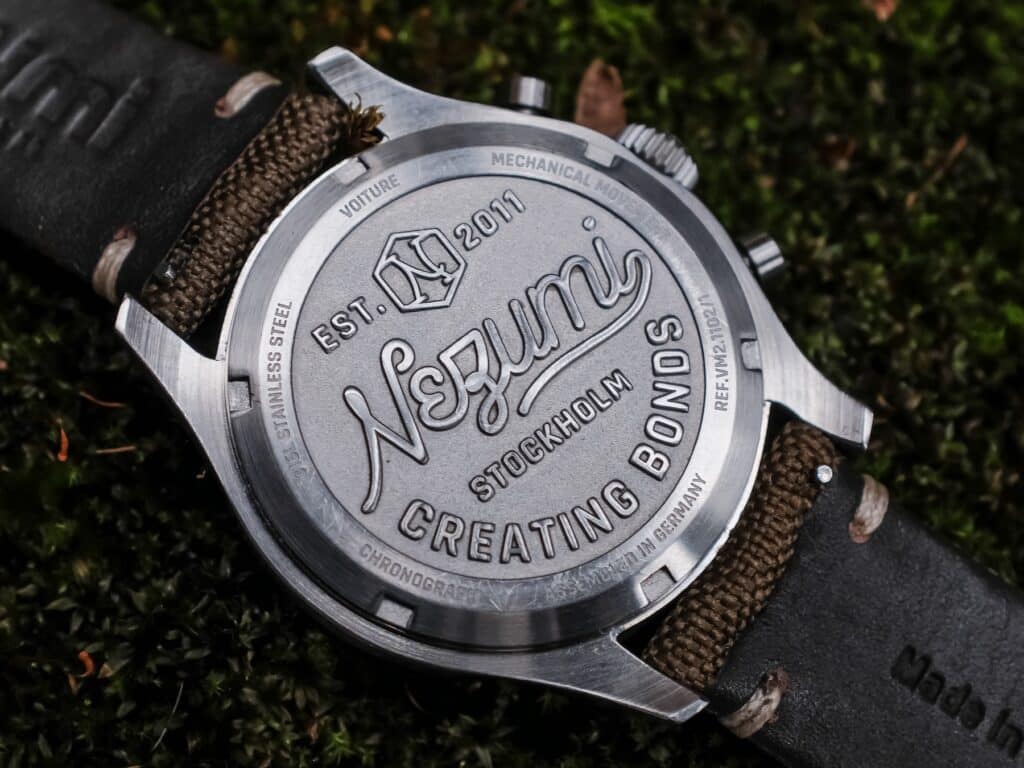
Inside the VM2 is the Peacock SL-4801, a Chinese-made automatic column-wheel chronograph operating at 28,800 vibrations per hour. It features 41 jewels, a unidirectional winding rotor, and a stated power reserve of approximately 55 hours.
I tend to rotate watches frequently, so having more than two days of reserve is useful, even if I didn’t specifically test the full 55-hour figure. Throughout my two weeks with the Voiture, the movement operated reliably, and I didn’t experience any issues with its basic functions.
I particularly enjoyed operating the chronograph. The pushers have a crisp, positive feel, and starting, stopping, and resetting the mechanism was consistently satisfying. I didn’t notice any meaningful differences between the individual actions, although the overall tactile experience was one of the more enjoyable parts of wearing the watch. My biggest reservation concerns the movement’s long-term serviceability, specifically the availability of replacement parts.
The SL-4801 is a relatively recent caliber, and I haven’t seen enough information about its parts supply to feel entirely comfortable making assumptions about servicing years down the road. With a mechanical chronograph, that uncertainty matters to me.
To be clear, I encountered no reliability problems during my review. My concern is simply what happens when the watch eventually requires attention beyond routine maintenance. I’d be interested in learning more about Nezumi’s long-term support for the caliber, particularly regarding replacement components.
It’s also part of why I continue to appreciate the mecha-quartz versions of the Voiture. The mechanical VM2 provides an enjoyable experience, but the additional complexity brings considerations that wouldn’t necessarily apply to the VK63-powered models.
Wrapping Things Up
After a couple of weeks with the Nezumi Voiture VM2.1102, I came away with a greater appreciation for the brand and its approach to this particular collection. The watch made a stronger impression than I anticipated, especially considering how selective I tend to be about racing chronographs.
I enjoyed the dial considerably more than expected, found the case comfortable, and appreciated the mechanical experience offered by the Peacock movement. At approximately $937 for this configuration, I think the pricing is reasonable considering the construction and automatic chronograph movement.
I’d still like more clarity around long-term servicing before considering one for permanent ownership. That uncertainty is probably my biggest hesitation, although I don’t think it takes away from the positive experience I had with this particular example.
There’s also the matter of my Speedmaster, which already occupies a pretty important place in my collection. I’ve become increasingly selective about adding watches that cover familiar territory, and I don’t currently feel much need for another mechanical chronograph.
I can appreciate the Voiture for what it offers, though. Nezumi has maintained a recognizable design for more than a decade, and the mechanical VM2 feels like a reasonable extension of that history. I also appreciate that the brand has continued offering the original mecha-quartz configurations alongside it.
Looking back at my initial curiosity about the Voiture, I’m glad I finally had the opportunity to spend some time with one. The experience hasn’t changed my collecting priorities, and I suspect my Speedmaster will continue satisfying most of my chronograph interests.
Still, the VM2 left me with a better understanding of why Nezumi has maintained a following over the years. I enjoyed wearing it, appreciated the decisions behind its design, and found more to like than I initially expected. For a watch that was somewhat outside my usual collecting interests, that’s a pretty good outcome.

Co-Founder & Senior Editor
Michael Peñate is an American writer, photographer, and podcaster based in Seattle, Washington. His work typically focuses on the passage of time and the tools we use to connect with that very journey. From aviation to music and travel, his interests span a multitude of disciplines that often intersect with the world of watches – and the obsessive culture behind collecting them.