TAG Heuer has two of the most recognizable chronographs in watchmaking, and choosing between them should be relatively straightforward. The Monaco is the one with the square case, Steve McQueen association, and enough personality to stand out from practically everything else in a collection. The Carrera takes a more traditional approach, combining classic racing-watch proportions with one of the most interesting crystal designs we’ve encountered on a modern chronograph. Both have decades of history behind them, impressive automatic movements, and plenty of reasons to attract enthusiasts. But having spent time with each, we’ve found that their greatest strengths come with some frustrating compromises.
Our experiences with these watches revealed something we hadn’t entirely anticipated. The Monaco looked fantastic in person, and we enjoyed operating its chronograph, but getting comfortable with the case was another matter. The Carrera Glassbox delivered almost the opposite experience. Its proportions, crystal, and movement were exceptional, while several details on the dial left us wondering how TAG Heuer had gotten so much right elsewhere. Drawing on our TAG Heuer Monaco Chronograph review and Carrera Glassbox review, we’re looking at what separates these two racing chronographs and which we’d be more inclined to add to our collections.
Overview and Identity
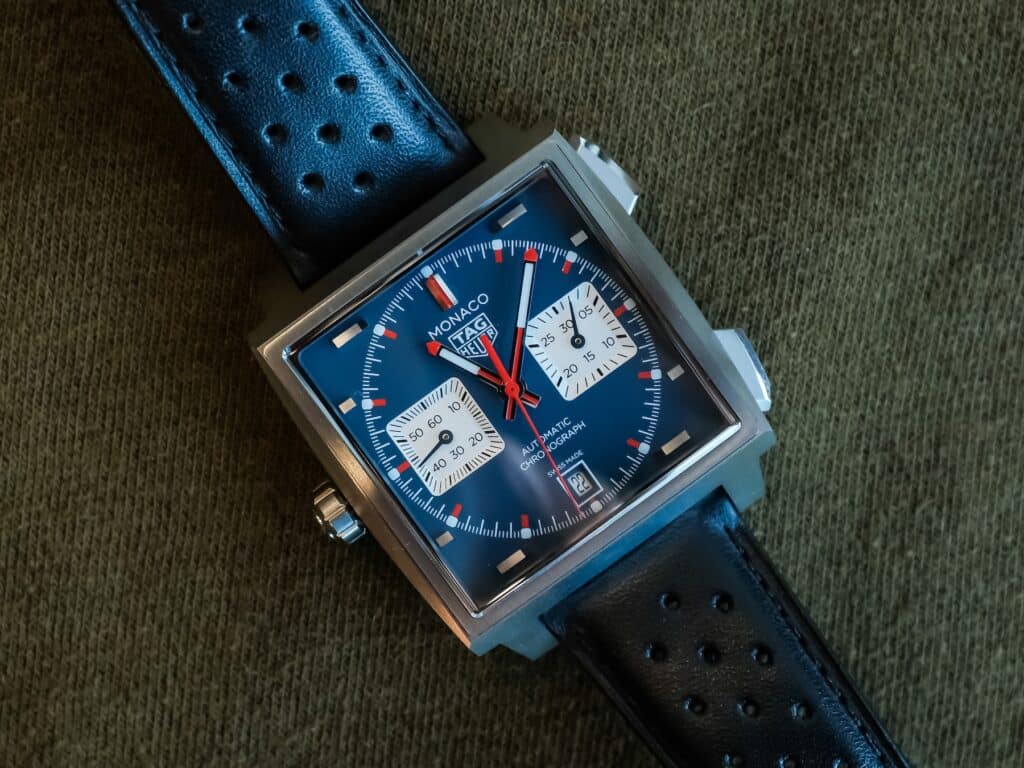
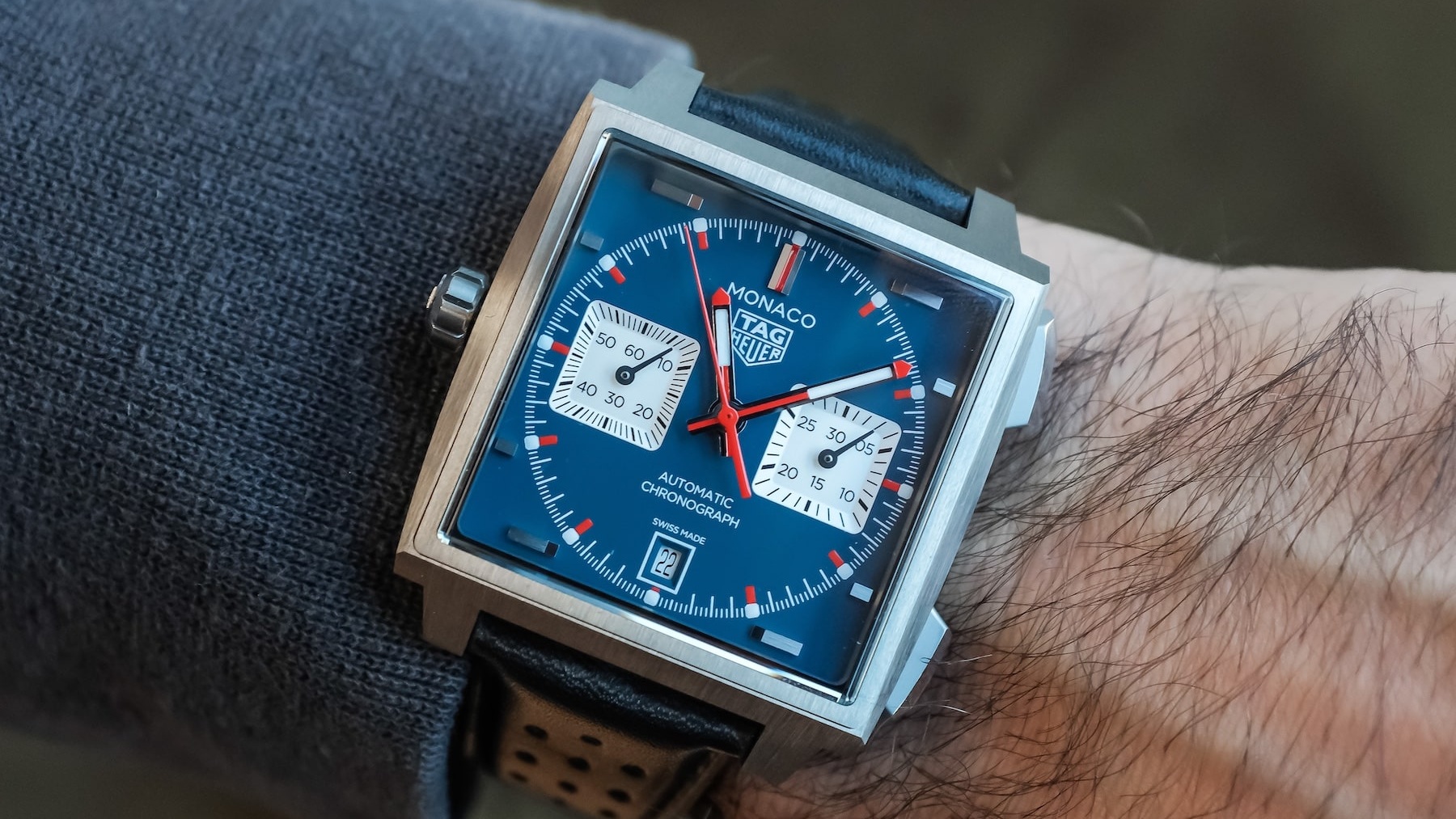
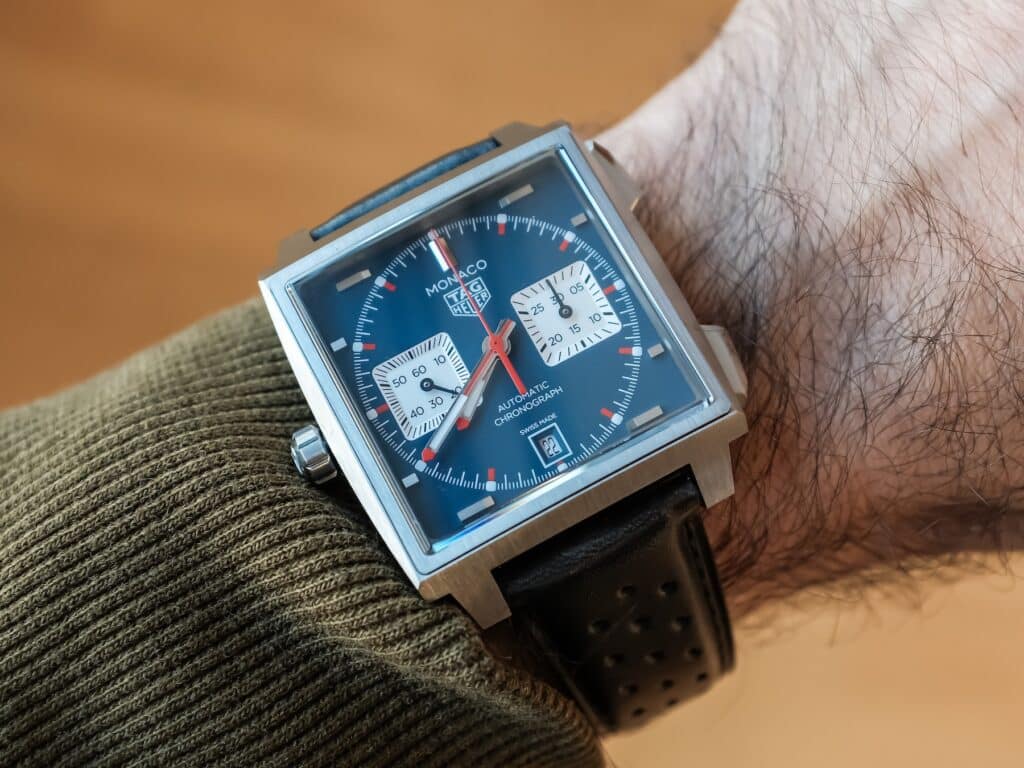
Few watches are as immediately recognizable as the TAG Heuer Monaco. Introduced in 1969, the original Heuer Monaco helped establish the square chronograph as something more than an unusual design experiment. Steve McQueen’s appearance wearing one in Le Mans gave it an enduring connection to motorsport, although our own fascination with the model also owes something to its appearances in television and popular culture. The contemporary Monaco Chronograph reference CDW2181.FC8360 carries that identity forward through its 39mm square case, blue dial, contrasting silver counters, and red accents. TAG Heuer has updated the construction with grade 5 titanium and its TH20-11 movement, but the watch remains unmistakably connected to the original. It’s a design we have admired for years, and the latest version gave us plenty of reasons to keep paying attention.

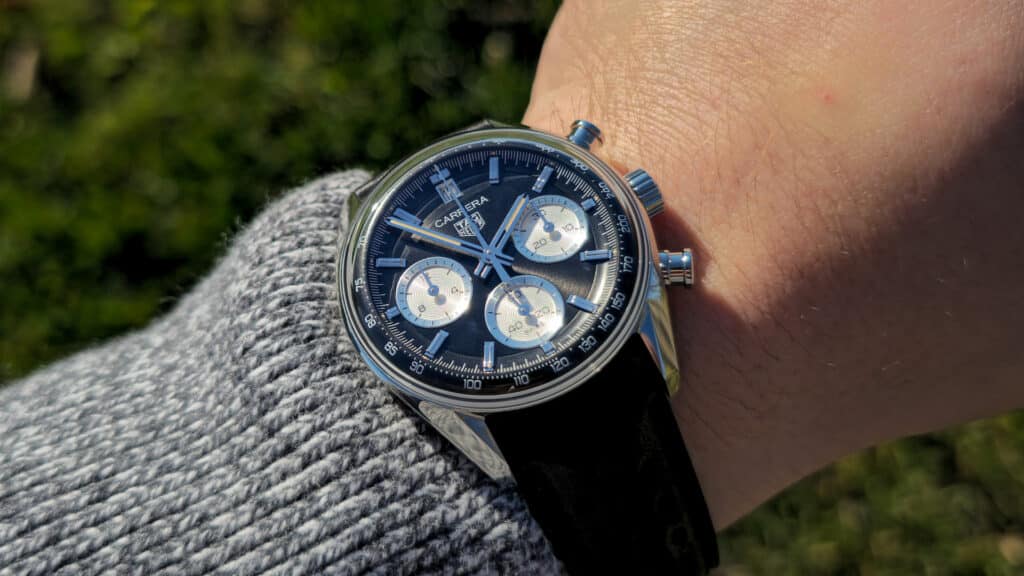
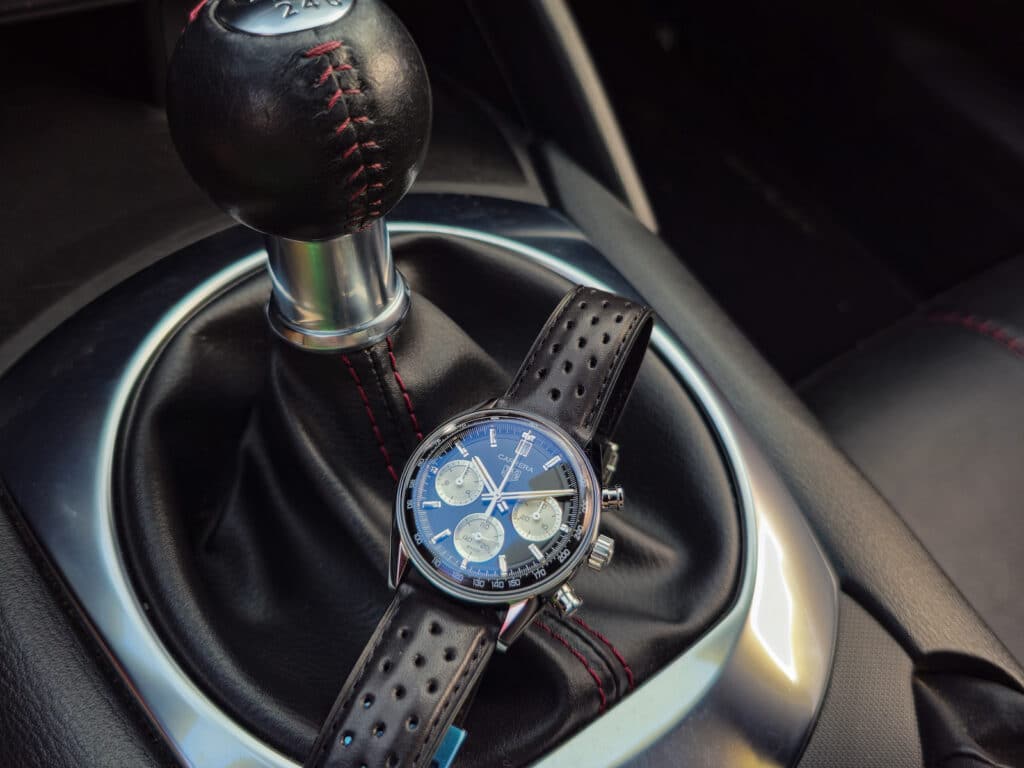
Where the Monaco celebrates unconventional design, the Carrera Glassbox revisits a considerably more restrained part of Heuer’s racing history. The Carrera first appeared in 1963, and its clean dial arrangements and carefully considered cases became central to the brand’s identity. The modern Glassbox reference CBS2210.FC6534 builds on that history with a 39mm stainless steel case, reverse-panda dial, and a dramatically domed sapphire crystal. It incorporates the in-house TH20-00 automatic chronograph movement without abandoning the proportions that made earlier Carreras so appealing. We were particularly enthusiastic about this model before our original review, having long appreciated vintage Heuer chronographs without necessarily feeling the same attraction toward every modern TAG Heuer release. The Glassbox appeared to offer exactly the kind of thoughtful revival we’d been hoping to see.
Dial and Straps/Bracelets
The Monaco’s blue dial was one of the immediate highlights of our hands-on experience. Photographs tend to emphasize the intensity of the color, but the opaline finish looked somewhat more restrained in person, which we actually preferred. The silver chronograph counters establish the familiar Monaco arrangement, while small red accents provide enough contrast to keep the display visually interesting. Applied hour markers and luminous rhodium-plated hands remain easy to identify against the blue background. There’s quite a bit happening here, but the composition feels deliberate rather than crowded. We also appreciated how naturally the counters fit within the square case. The design has a personality that would be difficult to reproduce in a conventional round chronograph, and TAG Heuer has resisted the temptation to modernize away the characteristics that make the Monaco distinctive.
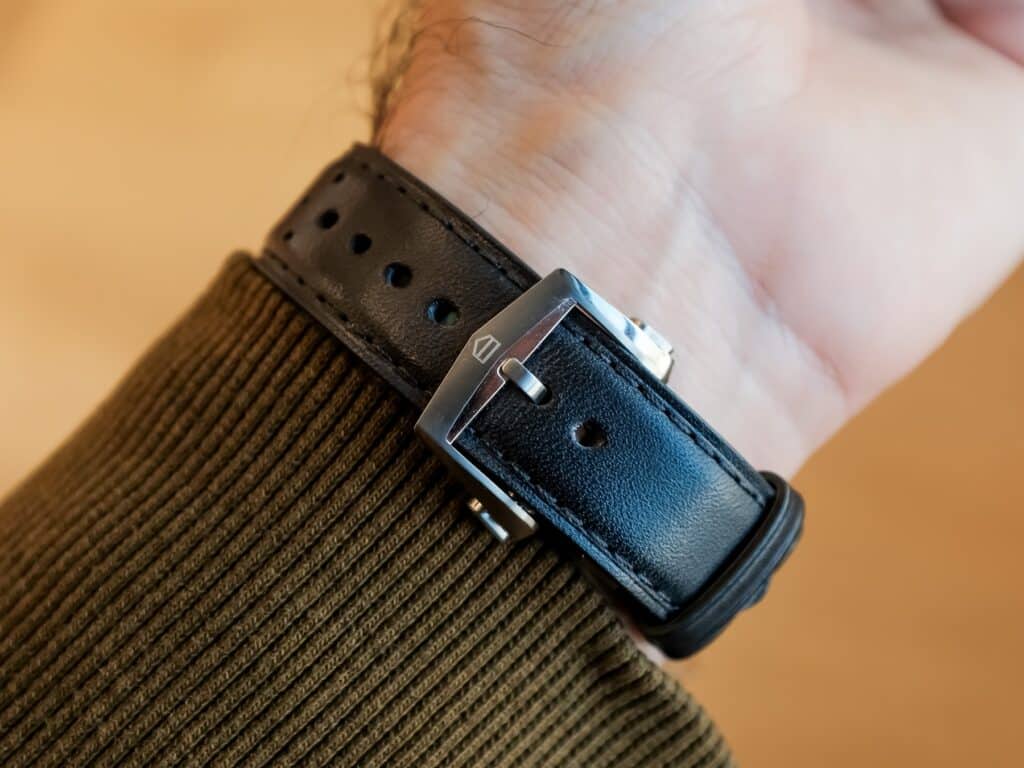
Perforated black calfskin is an obvious choice for a racing chronograph, and here it works. We found the leather comfortable, and its thickness worked well with the substantial case. TAG Heuer pairs it with a grade 5 titanium folding clasp featuring double safety push-buttons, which complements the materials used throughout the watch. We wouldn’t feel compelled to replace this strap immediately, something that isn’t always true when handling a watch at this price. The perforations, black leather, and restrained clasp treatment all reinforce the Monaco’s identity without competing with its unusual case. Our reservations about the wearing experience had much more to do with the watch itself than anything attached to it.
At first glance, the Carrera’s reverse-panda dial looks like everything we’d want from a modern racing chronograph. Its reverse-panda arrangement combines a dark dial with contrasting chronograph counters, while the internal tachymeter scale follows the curvature of the sapphire crystal. Depending on the lighting, the dial can shift from slate black toward a dark chocolate-brown appearance, giving it more depth than the photographs initially suggest. We also appreciate the arrangement of the chronograph registers and the placement of the date at 12 o’clock, even if that date becomes difficult to read when the chronograph is reset. From a distance, the overall composition looks fantastic. The problem became apparent when we examined the details more closely, particularly the finishing of the applied indices and chronograph hands.

Rather than the crisp, carefully finished surfaces we’d expect at this price, several polished dial components looked uneven in person. The indices had a slightly wavy appearance, while the chronograph hands lacked the refinement of the otherwise impressive case. We also noticed how high some of the subdial hands sat above their registers, exposing more of their mounting points than we would have liked. Those criticisms matter because the dial is the part of a watch we spend the most time looking at. Fortunately, the included black perforated leather strap was considerably more convincing. It felt soft and supple, while the relatively slim deployant clasp avoided becoming a distraction during wear. We’d be cautious about scratches on its fully polished surfaces, but the overall strap arrangement was one of the better examples we’d encountered among chronographs below $10,000.
Build Quality & Technical Approach
Despite their shared manufacturer and racing heritage, the Monaco and Carrera Glassbox approach modern chronograph construction differently. The Monaco emphasizes its unusual case geometry, lightweight titanium, and a contemporary interpretation of a design that was unconventional from the beginning. The Carrera prioritizes traditional proportions, carefully executed steel finishing, and a crystal that contributes considerably to the watch’s appearance. Both have technically impressive movements, but the details that impressed or disappointed us were often found outside the specification sheets.
Movements
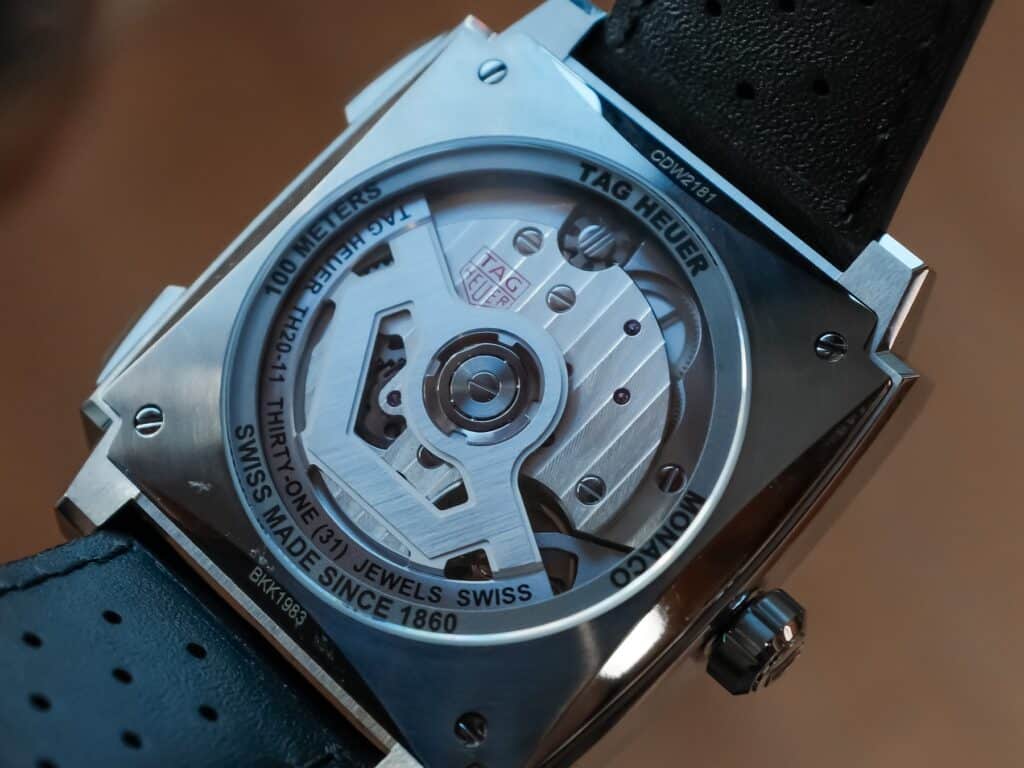
Operating the Monaco’s chronograph was one of the most satisfying parts of our hands-on experience. The movement features bidirectional winding and supports the chronograph’s quarter-second indication and 30-minute counter. An extended power reserve is a welcome feature for anyone who rotates through a collection, particularly when a watch might spend several days unworn between outings. We also appreciated being able to examine the movement through the sapphire exhibition caseback. The chronograph pushers were especially satisfying to operate, providing crisp, positive feedback that encouraged us to use them repeatedly. That tactile quality matters more to us than an impressive specification that doesn’t translate into an enjoyable experience.
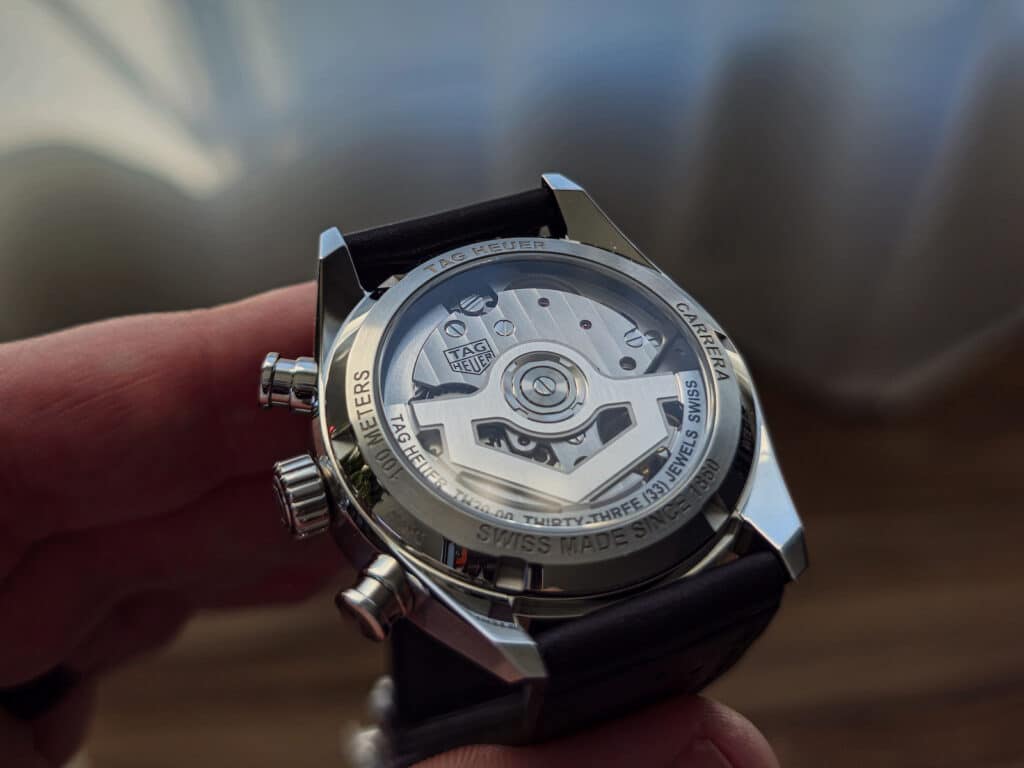
The Carrera Glassbox uses the TH20-00 automatic chronograph, another in-house caliber offering 80 hours of power reserve and bidirectional winding. Its column-wheel and vertical-clutch construction makes it particularly appealing from an engineering perspective, especially alongside the number of chronographs in this segment that still rely on older movement architectures. We appreciated the winding action during our original review, finding it more positive and mechanical-feeling than the grainier sensation we’ve experienced with certain ETA- and Valjoux-derived chronographs. The pushers were similarly impressive, delivering satisfying feedback that complemented the design of the case. Although the movement’s visible finishing is comparatively restrained, its engineering remains one of the strongest reasons to consider the Glassbox.
For all their visual differences, these chronographs are surprisingly close mechanically. Both offer 80-hour power reserves, automatic winding, and the kind of satisfying pusher action we’d expect from watches at this price. The Carrera’s TH20-00 uses a column wheel and vertical clutch, while the Monaco’s TH20-11 delivers similarly engaging operation with a different chronograph display. We enjoyed operating both, and neither movement gave us a compelling reason to dismiss the other. The Carrera’s 12-hour counter is arguably more useful for longer timing sessions, but that’s a fairly specific advantage. What matters more is how these movements fit into the rest of the watches. We’re not choosing between a sophisticated chronograph and an inferior one. We’re choosing between two technically capable watches whose most noticeable differences have little to do with what’s happening beneath their casebacks.
Case Construction, Finishing & Wearability
A square watch can be surprisingly difficult to judge from its stated dimensions, and the Monaco reinforced that lesson almost immediately. TAG Heuer lists the contemporary model at 39mm across and 13.9mm thick, which doesn’t sound particularly intimidating for an automatic chronograph. But the square case distributes its dimensions across a much broader area of the wrist than a similarly sized round watch. The grade 5 titanium construction helps keep the weight manageable, and we appreciated the combination of brushed, polished, and sand-blasted surfaces. The finishing looked excellent, particularly where the different treatments met around the angular case. There was no shortage of interesting details to examine, and the construction felt worthy of the model’s prominent place within TAG Heuer’s collection.
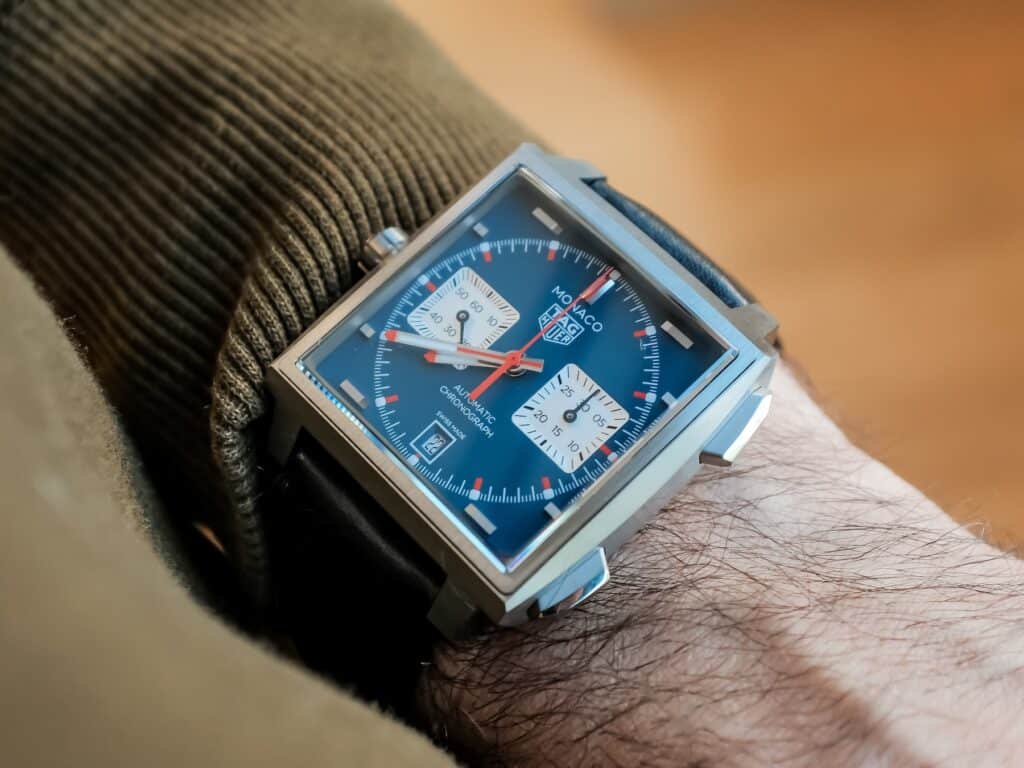
Our difficulty came from the actual fit. Despite appreciating the relatively lightweight material and the way the Monaco looked on the wrist, we struggled to find a position where the broad, flat case felt entirely natural. The 13.9mm thickness was noticeable, but it wasn’t the primary issue. We had expected some additional height from the case and automatic chronograph movement. What proved harder to reconcile was how much of the watch seemed to occupy the top of the wrist. That experience made us question whether we’d wear a Monaco as regularly as we’d initially imagined. We still admire the design, and someone accustomed to larger square watches could have a completely different reaction. For our preferences, however, the case proportions introduced an uncertainty that the impressive finishing couldn’t entirely overcome.
The Carrera Glassbox also measures 39mm across and 13.9mm thick, but its round case and approximately 46mm lug-to-lug length create a noticeably different experience. We appreciated how naturally it settled on the wrist, despite being fairly substantial in height. TAG Heuer combines a finely brushed mid-case with polished upper lugs that twist outward, creating attractive transitions and helping the watch appear more compact. The crown and pump-style chronograph pushers are particularly well executed. Their slightly enlarged proportions suit the modern case, while the polished bevels and brushed centers provide enough detail to reward closer examination. We found the construction impressive throughout, especially because it captured much of the appeal of vintage Carrera designs without making the watch feel fragile or overly delicate.
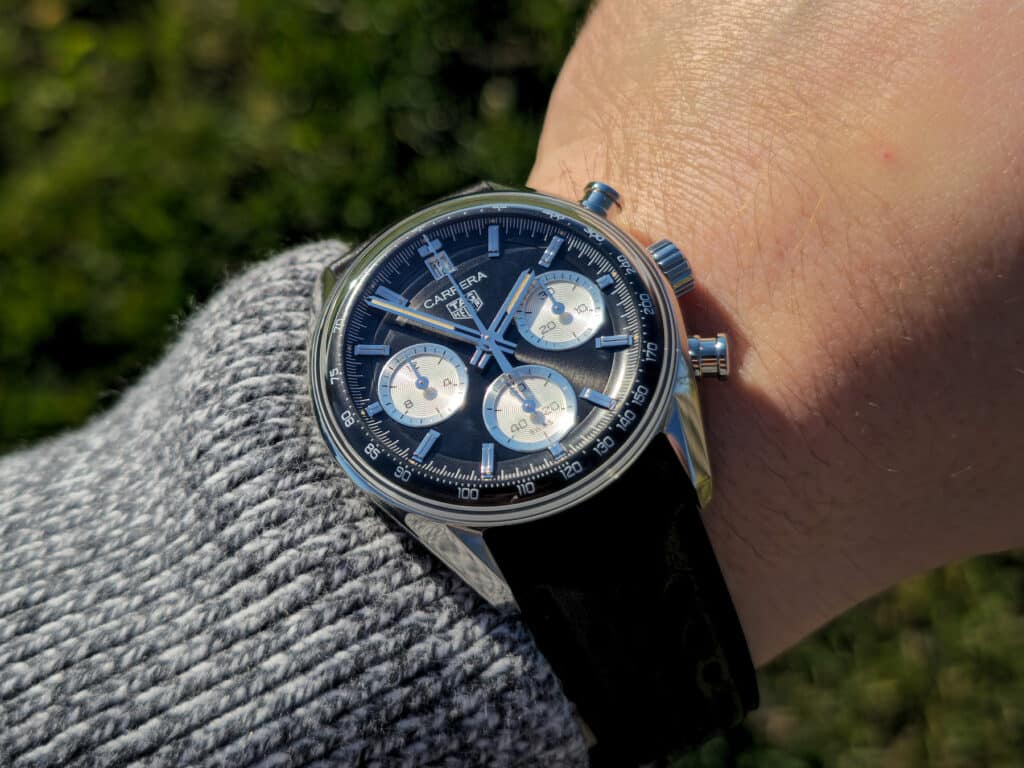
The difference becomes obvious once these watches are on the wrist. Both measure 39mm across and 13.9mm thick, yet they couldn’t feel more different. The Monaco’s square titanium case spreads across a broader area, making its dimensions considerably more noticeable than they appear on paper. The Carrera’s round case and curved lugs create a more natural fit, despite sharing that substantial thickness. We love the Monaco’s design, and its finishing is genuinely impressive, but there’s no getting around how awkward its proportions felt to us. The Carrera avoids that problem without sacrificing much of the visual character we want from a racing chronograph. We can admire unusual case architecture all day, but when we’re spending this much money, comfort shouldn’t require a compromise we’re constantly aware of.
Crystals
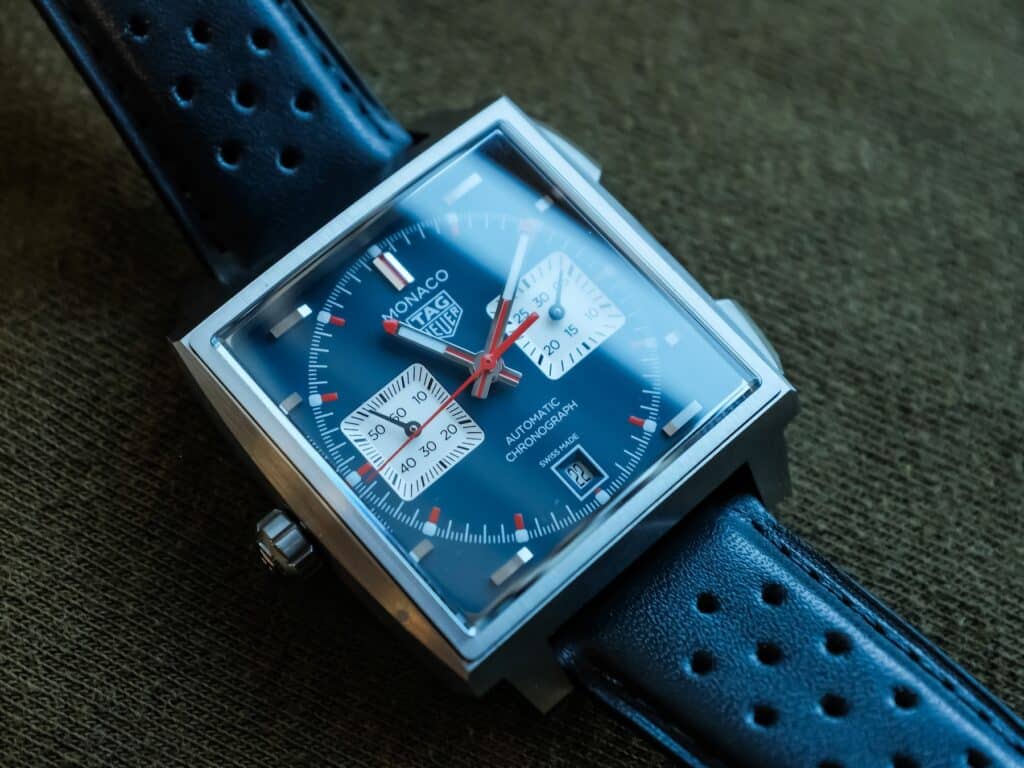
The Monaco uses sapphire crystal as well, but its visual identity comes primarily from the relationship between the crystal, square dial, and angular case. Where the Carrera seems to draw the eye inward toward the dial’s curved edges, the Monaco emphasizes the overall shape of the watch. We appreciated how clearly the blue dial and silver counters could be read, along with the way the crystal preserved the visual impact of the familiar Monaco layout. The contemporary case also incorporates a fixed bezel that reinforces its geometric appearance. Neither watch needs a rotating bezel to fulfill its purpose as a racing-inspired chronograph, but the different approaches to case and crystal integration are important. The Carrera’s glassbox construction is a feature we’d actively seek out, while the Monaco’s crystal works in support of an already distinctive design.
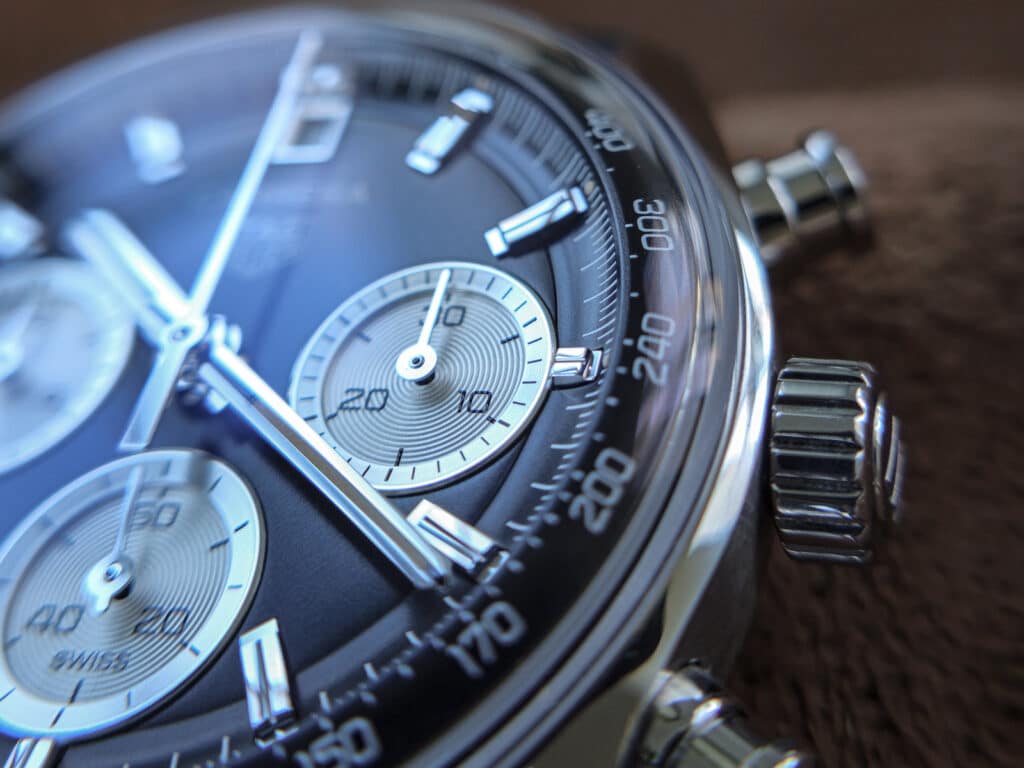
Much of the Carrera Glassbox’s identity comes from its domed sapphire crystal, which extends across the dial and curves over the internal tachymeter scale. Instead of placing the scale on a conventional external bezel, TAG Heuer integrates it into the overall dial architecture, creating a distinctive sense of depth. We were particularly impressed by the clarity of the crystal and the way it interacted with the surrounding case. The anti-reflective treatment could have been stronger under certain lighting, but it generally remained highly legible. The dome also accounts for a meaningful portion of the watch’s total thickness, helping explain why the Carrera wears more comfortably than its measurements might suggest. It’s one of the most successful elements of the entire design and a major reason the Glassbox feels different from more conventional modern chronographs.
Water Resistance & Lume
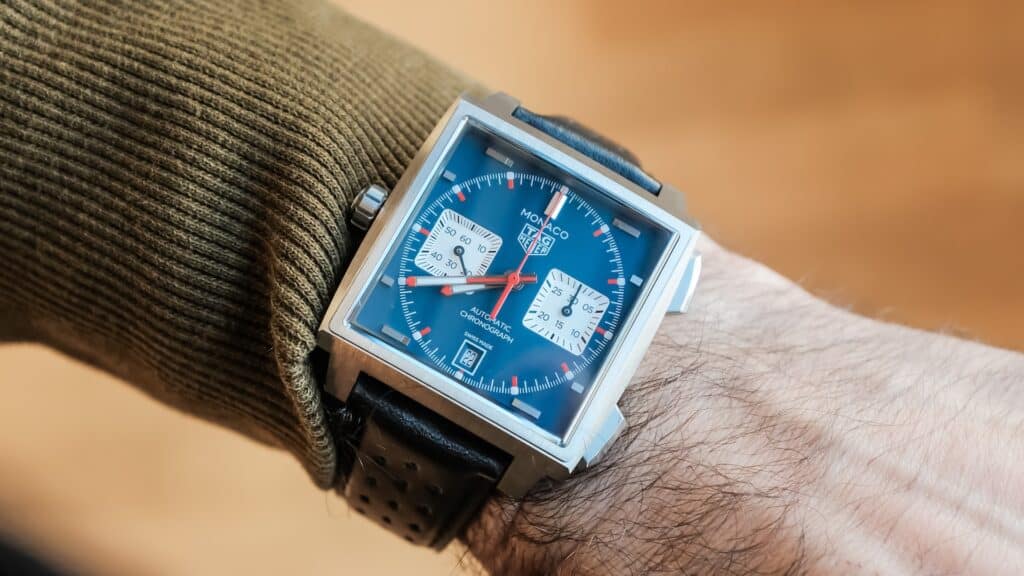
For all its unconventional styling, the Monaco offers a practical 100-meter water-resistance rating, which is more than sufficient for the sort of ordinary daily exposure we’d expect from a premium racing chronograph. TAG Heuer uses luminous rhodium-plated hands and markers against the blue dial, providing clear contrast without disrupting the familiar Monaco appearance. We found the watch legible during our hands-on experience, and the arrangement of the contrasting chronograph counters helped keep the display organized. The black perforated leather strap also reinforces the model’s motorsport character, although it wouldn’t be our preferred setup for prolonged water exposure. The water-resistance rating is reassuring, but the Monaco’s appeal comes primarily from its design and chronograph functionality.
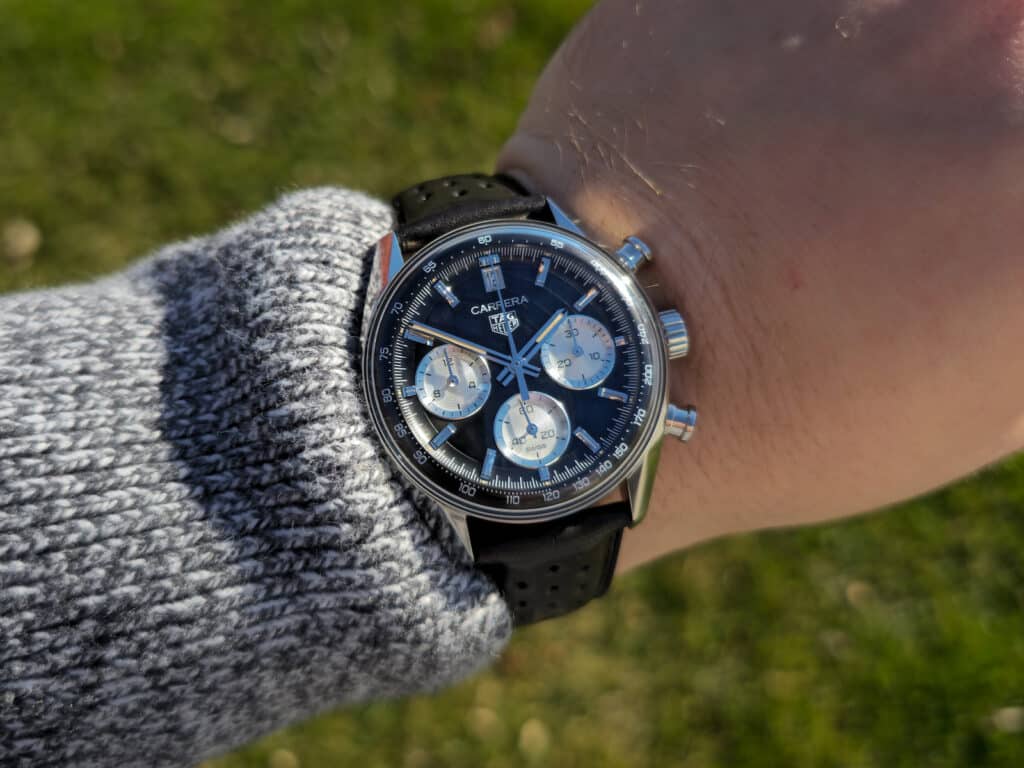
Matching that 100-meter rating, the Carrera Glassbox offers similar nominal water protection within a considerably more traditional case. The hour and minute hands incorporate luminous material, and the contrasting reverse-panda dial provides useful visibility across ordinary lighting conditions. We appreciated the overall readability of the watch, particularly through the dramatically curved sapphire crystal. The polished indices and chronograph hands remain our principal concerns, although those criticisms relate more to finishing quality than to the basic ability to identify the time. Neither model is intended to compete with TAG Heuer’s Aquaracer collection as a dedicated diving instrument. For everyday ownership, their water-resistance specifications are effectively equal, leaving comfort, dial execution, and chronograph operation as the more meaningful deciding factors.
Cost Considerations
At $9,350, the contemporary blue TAG Heuer Monaco Chronograph represents a substantial purchase even within the premium Swiss chronograph category. The price reflects an in-house automatic movement, grade 5 titanium construction, and the complicated finishing of a case that has never followed conventional design rules. There’s also the considerable recognition associated with the Monaco name. Few watches are as immediately identifiable, and that distinctiveness has an appeal that isn’t easily captured by comparing technical specifications. We can understand why collectors become attached to this design, particularly when its history and unusual appearance align with their personal tastes. The difficulty is deciding how much we’re prepared to spend on a watch whose proportions may not suit us.
Our experience with the Monaco made that question more complicated than we’d expected. We enjoyed the dial, appreciated the finishing, and found the chronograph pushers satisfying to operate. The leather strap and titanium clasp also felt appropriate for the price. Nothing about the experience suggested that TAG Heuer had failed to execute the design it intended to produce. The concern was whether we’d be comfortable wearing that design regularly. Spending this much on a watch that we might hesitate to wear seems difficult to justify, regardless of how much we admire it. For someone who loves square cases and finds the Monaco comfortable, that calculation could look entirely different. But our own reservations are significant enough that we’d want more confidence in the fit before committing to a purchase.
The Carrera Glassbox reference CBS2210.FC6534 currently carries a U.S. list price of $7,250, placing it $2,100 below the Monaco. That difference is substantial, although the Carrera hardly qualifies as an inexpensive chronograph. For the money, TAG Heuer provides an impressive TH20-00 movement, a beautifully executed stainless steel case, and one of the most distinctive sapphire crystals available in this segment. We were particularly impressed by how naturally those components came together during our original review. The watch offered the sort of mechanical and tactile satisfaction we’d hoped for from a premium Carrera, and its traditional proportions made it easy to appreciate as an everyday chronograph rather than simply a historical design exercise.
Unfortunately, the dial keeps the Carrera from being an uncomplicated recommendation. At more than $7,000, we expect the finishing of the hands and indices to match the quality of the movement and case. The uneven polished surfaces and less convincing chronograph hands were difficult to overlook once we’d noticed them. We can accept minor compromises on affordable watches, but the standards change considerably at this price. That doesn’t mean the Carrera’s exceptional movement or case become irrelevant. It means we’d be buying a watch whose most frequently viewed component doesn’t consistently deliver the level of refinement found elsewhere. The frustrating part is how close TAG Heuer came to producing something genuinely exceptional. Better dial detailing could have transformed our impression without requiring a fundamental change to the design.
That $2,100 difference becomes particularly interesting when we consider what each watch gets wrong. The Monaco asks $9,350 for an exceptional titanium case, a distinctive design, and a capable automatic chronograph, yet we struggled to get comfortable wearing it. The Carrera costs $7,250 and delivers an equally compelling movement, a beautifully finished steel case, and a spectacular domed crystal. Its weakness is right there on the dial, where the finishing of the hands and indices doesn’t consistently meet our expectations. Neither criticism is insignificant at these prices. But we’d have a much easier time accepting imperfect dial details on a watch we enjoy wearing than paying another $2,100 for a case that never quite settles on our wrist. That doesn’t excuse the Carrera’s shortcomings. It simply makes the additional expense of the Monaco harder for us to justify.
Final Thoughts: TAG Heuer Monaco vs Carrera Glassbox
There’s something about the Monaco that continues to appeal to us, even after our hands-on experience raised questions about its wearability. The contemporary titanium version looks excellent, and the blue dial, contrasting counters, and crisp chronograph action make it easy to understand the model’s lasting popularity. Its case finishing is also genuinely impressive. We appreciate watches that take risks with design, and the Monaco certainly hasn’t survived for decades by trying to look like everything else. But admiration isn’t always enough to make a watch worth owning. If we’re constantly aware of how broad and flat the case feels against the wrist, it’s difficult to imagine reaching for it as often as we’d want to.
The Carrera Glassbox comes remarkably close to being the modern TAG Heuer chronograph we’ve been hoping for. Its TH20-00 movement is technically impressive, the pushers feel excellent, and the domed sapphire crystal adds genuine personality without compromising the watch’s traditional proportions. The case is beautifully executed and comfortable, making the overall package particularly appealing. We still have a hard time getting past the dial. Several details that should reinforce the premium experience instead feel unfinished, and that’s disappointing in a watch whose design otherwise demonstrates so much attention to detail. The Carrera gets the fundamental wearing experience right, but it doesn’t quite achieve the consistency we’d expect at this level.
Here’s what makes this comparison frustrating: neither watch falls short where we’d necessarily expect it to. The Monaco’s movement, dial, and case finishing are excellent, but its iconic square shape is precisely what makes it difficult for us to wear comfortably. The Carrera gets the proportions, movement, and crystal right, only to disappoint us with details on the dial that should have been relatively straightforward to execute properly. At these prices, we don’t think either criticism deserves a free pass. Still, there’s a difference between a flaw in execution and a fundamental characteristic of the design. TAG Heuer could improve the Carrera’s hands and indices without changing the watch we love. Making the Monaco more comfortable for our wrists would require changing much of what makes it a Monaco.
Our overall pick is the TAG Heuer Carrera Glassbox. Its more natural wrist presence, impressive movement, and outstanding case and crystal design make it the chronograph we’d be more inclined to wear regularly. We wouldn’t pretend that its dial finishing is acceptable simply because the rest of the watch is so good, and we’d encourage anyone considering one to examine those details closely in person. The Monaco remains the more distinctive design, and for collectors who love its proportions, that character may be worth the additional expense. But given our own experiences with both watches, we’d rather live with the Carrera’s disappointing dial details than spend more money on a Monaco we aren’t entirely comfortable wearing. Sometimes the watch that looks most exciting isn’t the one we’d actually want on our wrist every day.

Co-Founder and Senior Editor
Kaz has been collecting watches since 2015, but he’s been fascinated by product design, the Collector’s psychology, and brand marketing his whole life. While sharing the same strong fondness for all things horologically-affordable as Mike (his TBWS partner in crime), Kaz’s collection niche is also focused on vintage Soviet watches as well as watches that feature a unique, but well-designed quirk or visual hook.