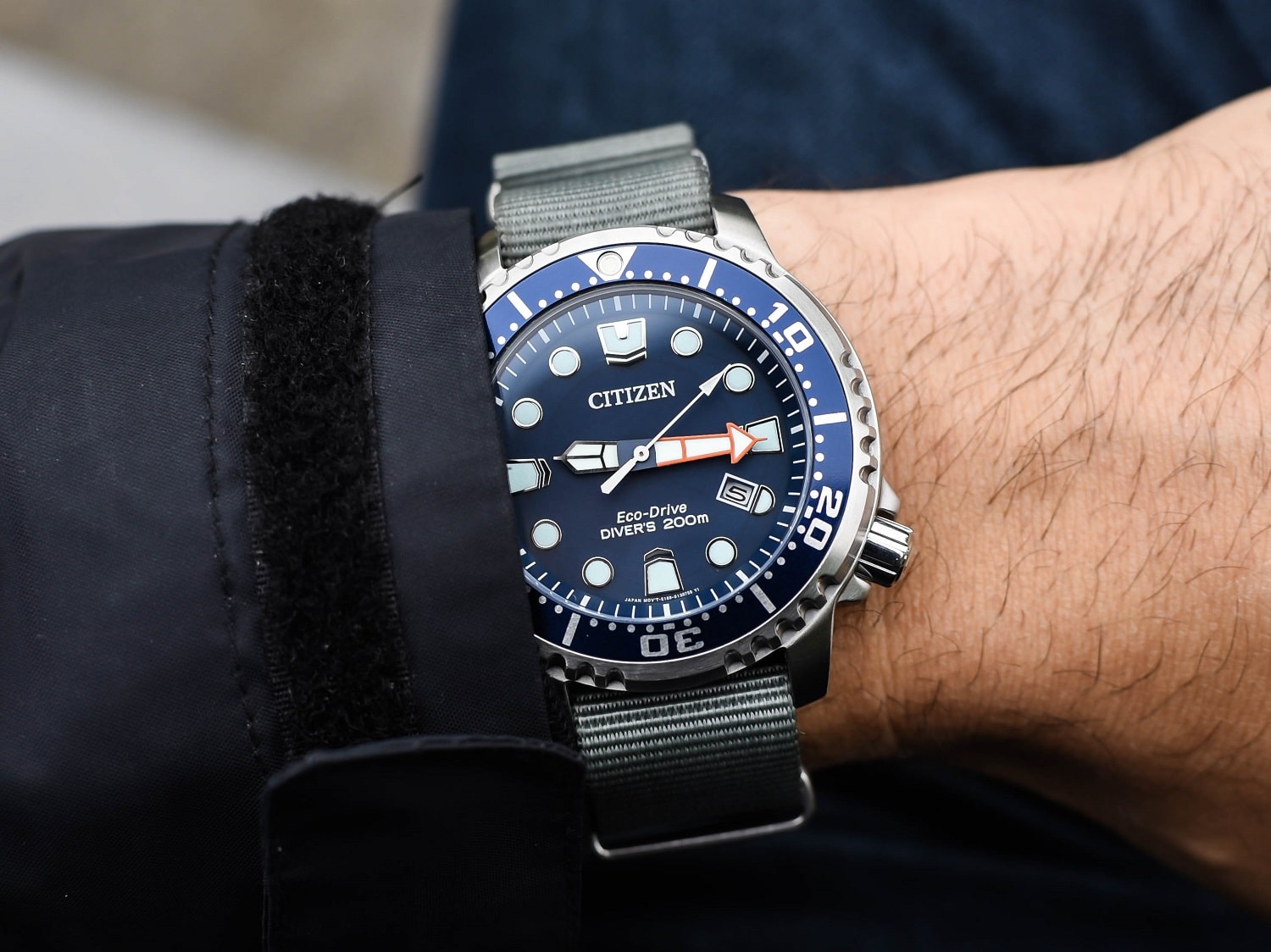
Affordable dive watches have become surprisingly difficult to evaluate. There are plenty of models offering 200 meters of water resistance, automatic movements, and designs that borrow from decades of diving history. But specifications only tell part of the story. The Citizen Promaster Diver BN0151 and Bulova Caravelle Sea Hunter approach the category with noticeably different priorities, despite occupying a similar price range. Citizen has spent years refining its reputation for durable, straightforward dive watches, while Bulova has revived a distinctive piece of Caravelle history with a compact automatic diver. Both make convincing cases on paper, but that doesn’t necessarily translate into the same experience on the wrist.
We’ve spent considerable time with both watches, although their places in our collections have been very different. The Citizen Promaster has been with us for years, earning regular wrist time through everything from swimming and hiking to ordinary days at the office. The Caravelle Sea Hunter was a more recent purchase, driven by our interest in finding a compact black-dial automatic diver on a steel bracelet. Having reviewed each individually, we’re now comparing the details that stood out during ownership, including their movements, construction, wearability, and the compromises that become more apparent after the initial excitement of a new watch wears off.
Overview and Identity
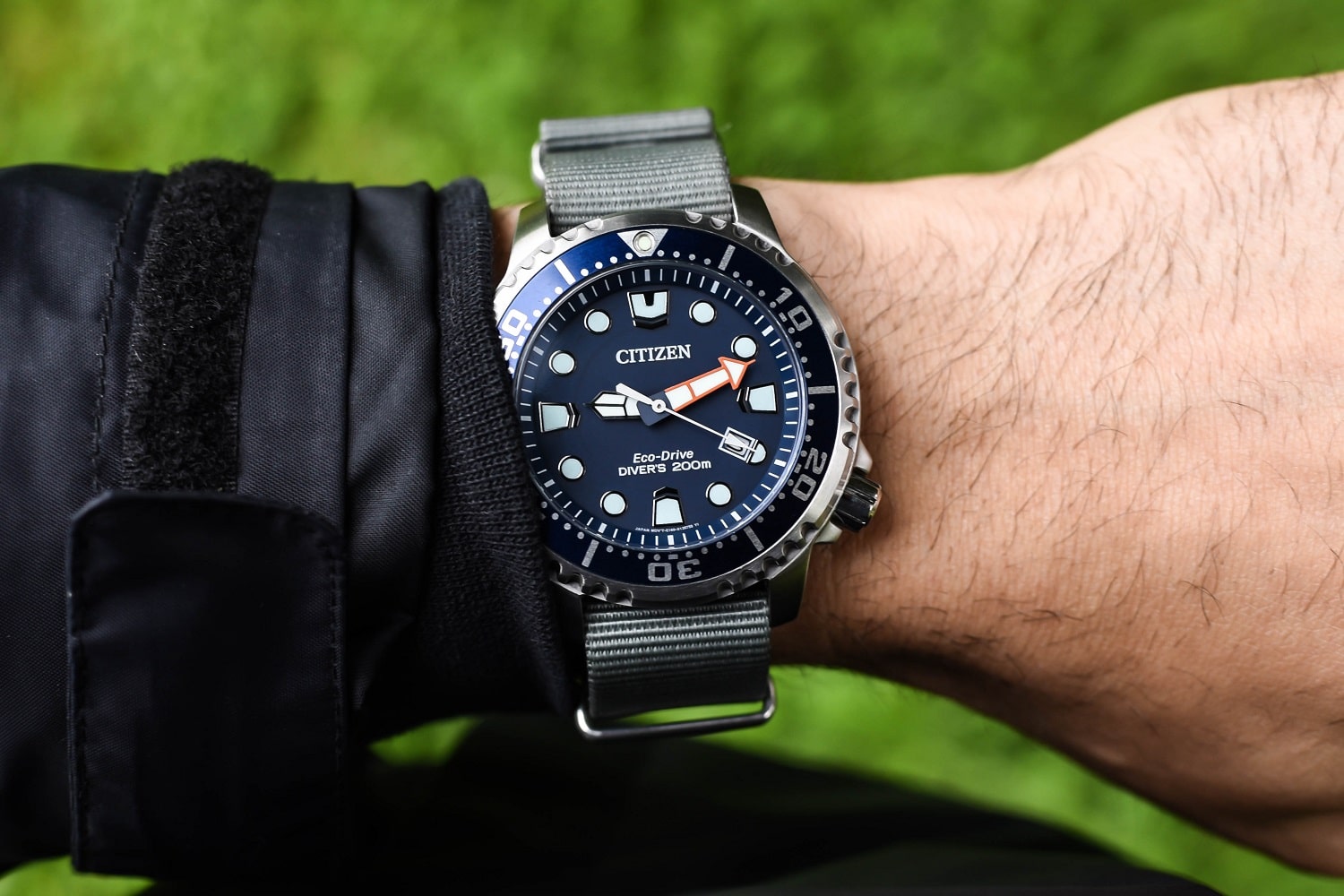
The Citizen Promaster Diver BN0151 has established itself as one of the more dependable affordable dive watches we’ve encountered. Its appeal comes from the straightforward way Citizen approaches the category, prioritizing legibility, reliable timekeeping, and water resistance over elaborate decoration or historical references. This is an ISO-certified dive watch powered by Citizen’s Eco-Drive technology, meaning its quartz movement can recharge from exposure to light. Our original Citizen Promaster Diver review followed years of ownership after the watch entered the collection as a gift back in 2016. What stood out wasn’t a particular design innovation or unexpected specification. It was the way the Promaster became a dependable option whenever we wanted a watch that could handle an ordinary day without requiring much attention.
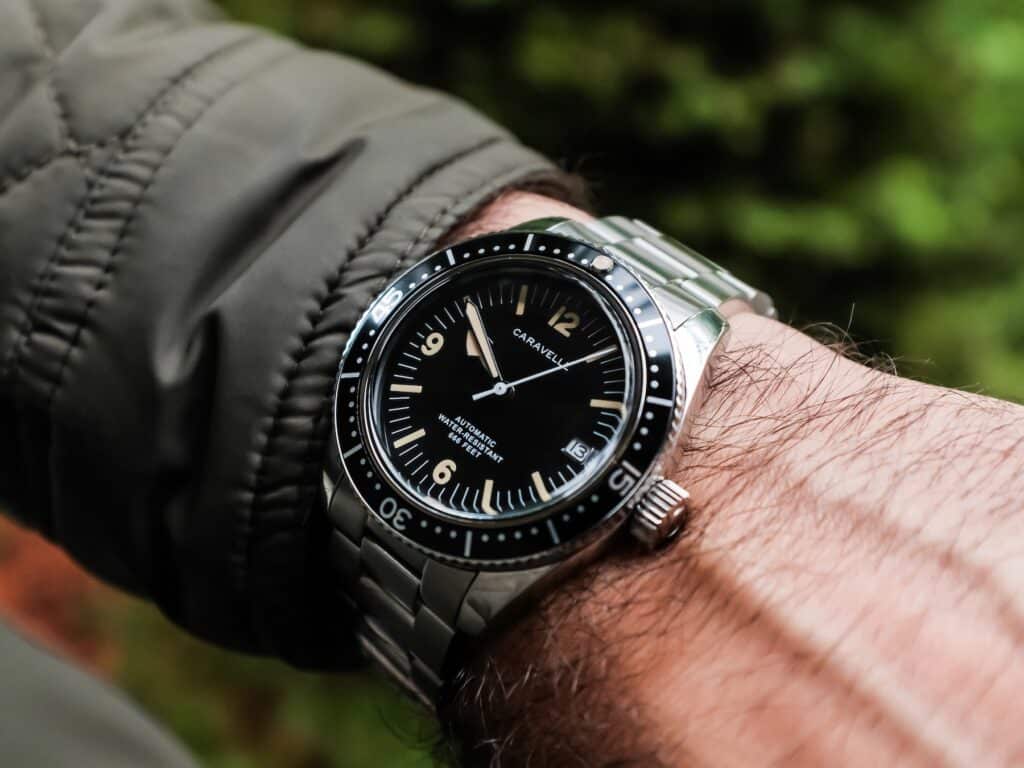
The Bulova Caravelle Sea Hunter draws on a considerably older design tradition. Caravelle began as Bulova’s more affordable watch line in the 1960s, and the original Sea Hunter became associated with the distinctive 666-foot water-resistance markings that helped establish the Devil Diver nickname. The modern watch brings that character into a 39mm stainless steel case with an automatic movement, domed crystal, and traditional dive-watch bracelet. In our hands-on Caravelle Sea Hunter review, we appreciated how Bulova preserved the proportions and visual character without attempting to recreate every element of a vintage watch. The Sea Hunter feels deliberately traditional, but its appeal also depends on whether those historical design choices suit the way we actually wear watches today.
Dial and Straps/Bracelets
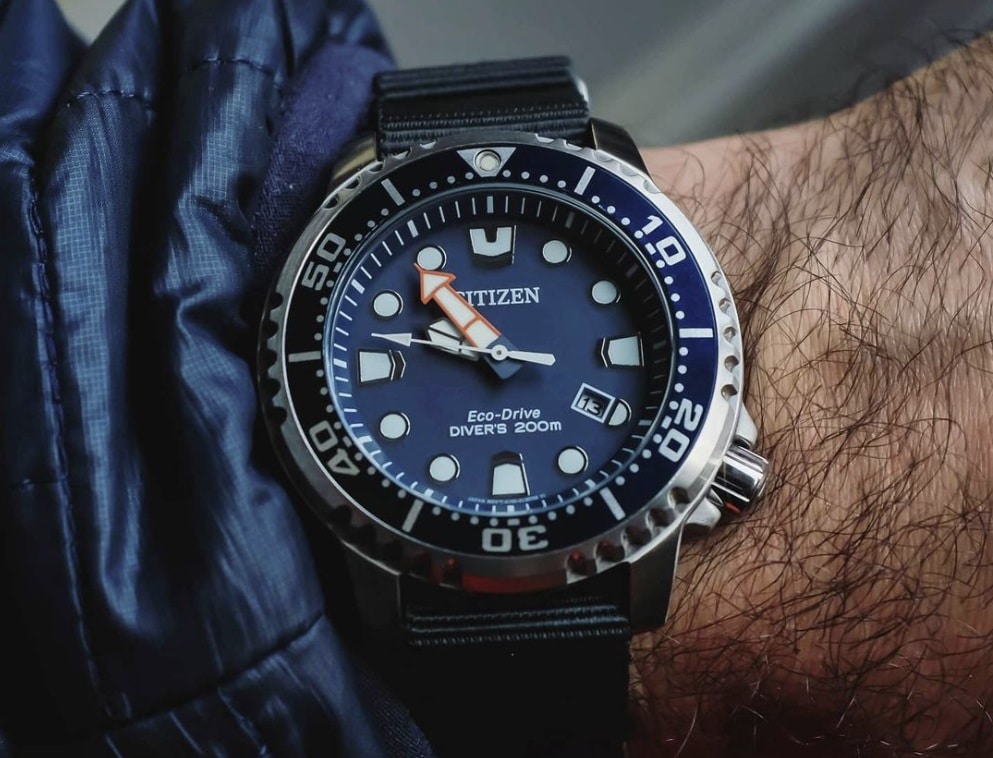
The Citizen Promaster Diver takes a straightforward approach to dial design, and that simplicity remains one of its greatest strengths. Large hands, clearly defined hour markers, and strong contrast make the time easy to read without requiring any adjustment to the viewing angle. The blue dial also has more personality than its practical appearance initially suggests, occasionally developing a deep purple cast as the lighting changes. We appreciated that subtle variation during ownership because it adds visual interest without compromising the dial’s primary function. Even the date window at four o’clock feels reasonably integrated, despite taking up a small portion of the adjacent hour marker. Citizen hasn’t attempted to create an especially elegant or decorative dial here. Instead, the layout reflects the watch’s purpose, with each element contributing to a display that’s immediately understandable.
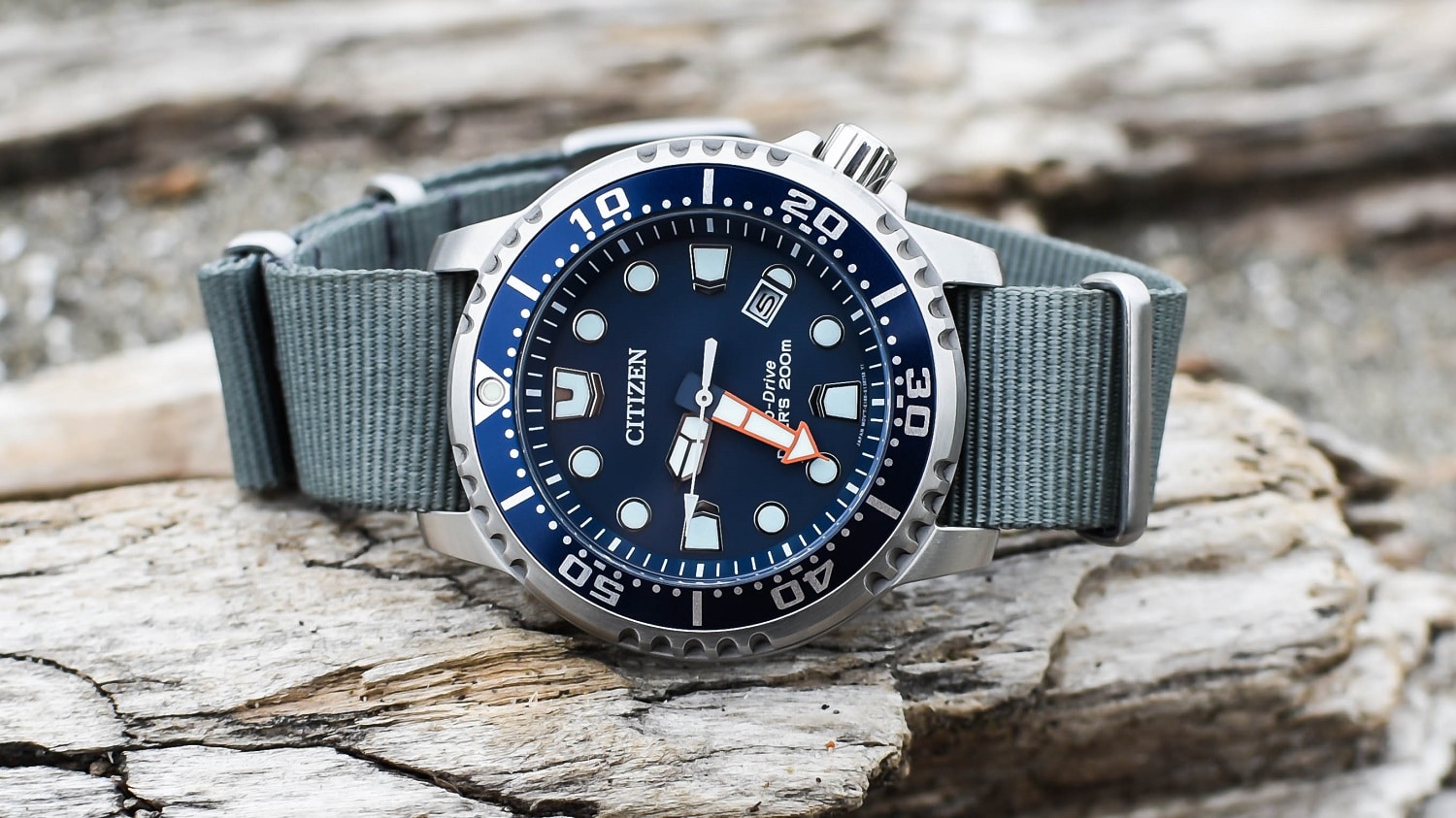
The Promaster comes on a blue polyurethane strap featuring printed no-decompression limits, a detail that reinforces its professional diving identity. While the strap works with the overall design, it was never our favorite part of the watch. The material initially felt relatively stiff and required more manipulation than we preferred when trying to achieve a comfortable fit. We eventually removed it and spent most of our time wearing the Citizen on a standard NATO strap, which complemented the watch’s lightweight construction and compact wearing proportions. The 20mm lug width makes alternative straps easy to source, and the case works particularly well with simple nylon options. We wouldn’t consider the stock strap a reason to avoid the Promaster, but replacing it helped us appreciate the watch considerably more.
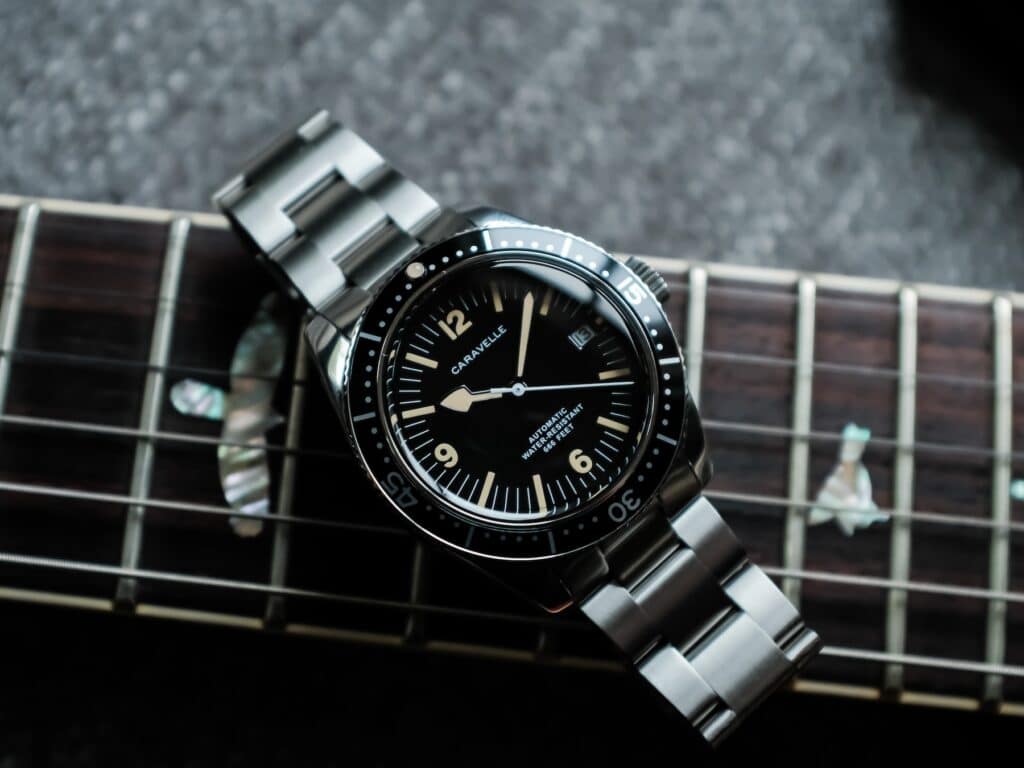
The Bulova Caravelle Sea Hunter offers a more distinctive dial, particularly in the black configuration we purchased. Its unusual handset immediately separates it from many contemporary divers, while the small date window provides a useful complication without dominating the layout. The brown-toned luminous material reinforces the vintage aesthetic, although it became one of our principal criticisms during the original review. We would have preferred a more neutral treatment, especially because the domed crystal, handset, and case proportions already provide enough historical character. The warm lume doesn’t ruin the design, but it pushes the vintage influence farther than we’d personally choose. Even so, the overall composition feels thoughtfully considered, with enough individuality to avoid looking like another generic dive watch inspired by the same familiar references.
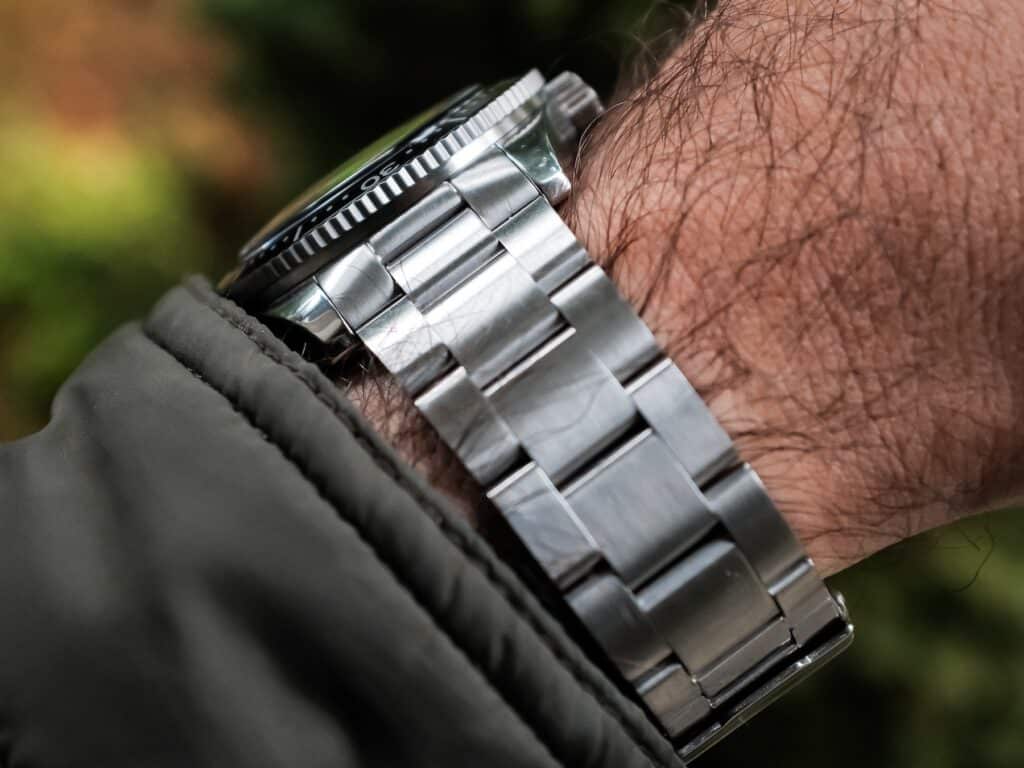
The Sea Hunter’s stainless steel bracelet gives it a different wearing character from the Citizen’s polyurethane and NATO configurations. It measures 20mm at the lugs and tapers to 18mm near the clasp, with several micro-adjustment positions and a fold-out diving extension. Bulova also includes solid end links and quick-release spring bars, making strap changes more convenient than we expected. The bracelet has a noticeable amount of rattle, and the construction doesn’t create the impression of a substantially more expensive watch. Once we had it sized properly, however, those characteristics became less distracting. The taper worked well with the compact case, and the bracelet completed the traditional diver appearance that originally attracted us to the watch. Its finishing isn’t especially refined, but it contributes to an overall package that makes sense at this price.
Build Quality & Technical Approach
The Citizen Promaster Diver and Bulova Caravelle Sea Hunter share several important specifications, including stainless steel construction, 200-meter water resistance, and mineral crystals. The similarities become less significant once we examine how the watches are engineered and how they wear. Citizen uses a comparatively thin case and solar-powered movement to emphasize practical ownership, while Bulova combines a compact diameter with a taller profile, an automatic movement, and vintage-inspired construction. Neither approach is inherently superior, but their differences help explain why two affordable divers with similar specifications can feel so distinct.
Movements
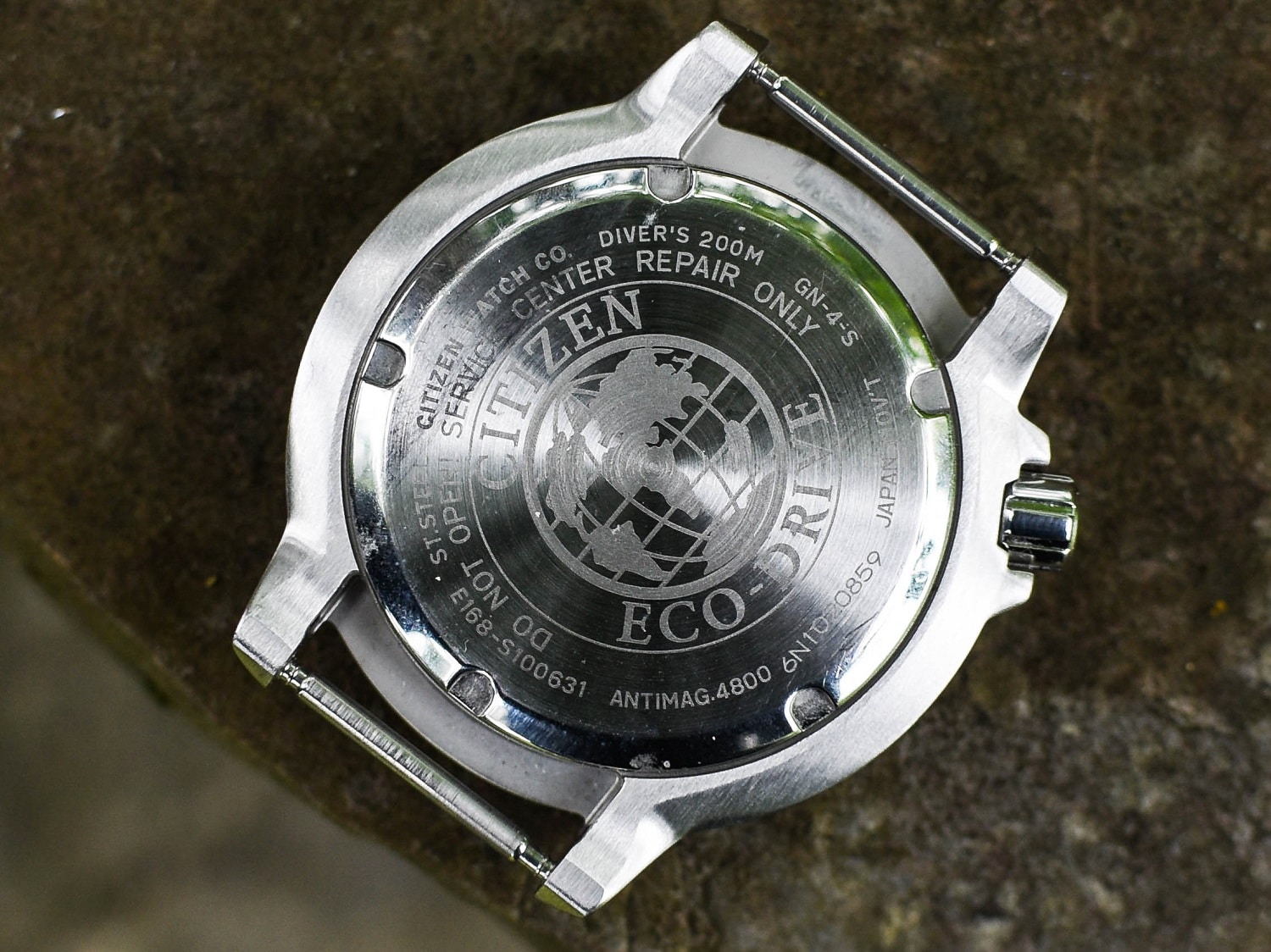
The Citizen Promaster Diver uses the Eco-Drive E168 solar quartz movement, one of the most important elements of its appeal. Citizen rates the movement for approximately six months of operation after a full charge, with an accuracy specification of around plus or minus 15 seconds per month. During our extended ownership, we appreciated how little attention the movement demanded. The watch remained dependable across regular rotation, and when we eventually encountered its low-charge indication, exposure to light restored normal operation. There’s no routine hand-winding, and the movement doesn’t stop simply because we haven’t worn the watch for several days. For anyone maintaining a larger collection, that convenience becomes increasingly valuable. The Eco-Drive system is also a particularly natural fit for a dive watch intended to be ready whenever it’s needed.
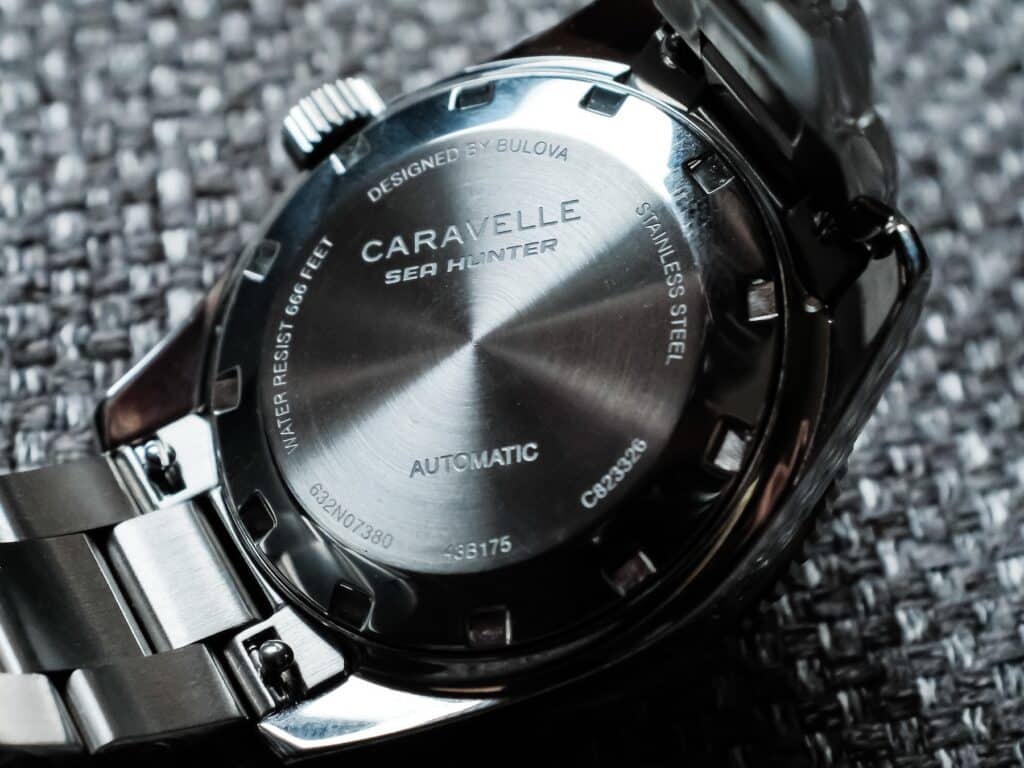
The Caravelle Sea Hunter uses the Miyota 8215-33E automatic movement, a 21-jewel caliber operating at 3Hz with approximately 42 hours of power reserve. Bulova’s published accuracy range is considerably broader than Citizen’s quartz specification, although the Sea Hunter’s appeal isn’t primarily about precision. Instead, it offers the familiar mechanical experience of an automatic movement inside an accessible dive watch. The movement hacks, can be wound manually, and provides a straightforward date complication without introducing unnecessary complexity. During our review, the Sea Hunter moved in and out of a larger rotation, and resetting it after the power reserve expired wasn’t especially inconvenient. The hand-winding experience was less satisfying, however, with a gritty sensation through the crown that reminded us of the movement’s relatively modest positioning.
The differences between these movements become more meaningful when considering how each watch fits into regular ownership. The Citizen offers the accuracy and convenience associated with quartz, with the additional benefit of recharging its power reserve through light exposure. The Bulova provides the traditional appeal of a self-winding mechanism, but it also requires more involvement when left unworn and won’t maintain the same level of timekeeping precision. Neither characteristic should automatically determine the better purchase. We enjoy mechanical watches for reasons that extend beyond their accuracy, and the Miyota is a sensible choice for an affordable automatic diver. But the Promaster demonstrates why quartz continues to make sense in a practical tool watch, particularly when reliability and ease of use are priorities.
Case Construction, Finishing & Wearability
The Citizen Promaster Diver measures approximately 43mm across, 48mm from lug to lug, and 11.5mm thick according to the dimensions recorded in our original review. Those numbers suggest a reasonably substantial sports watch, but the case wears more compactly than its diameter might imply. The relatively short, downward-curving lugs help the watch sit comfortably, while the lightweight construction reduces the impression of bulk. During our time with the Promaster, we found that its proportions translated especially well when paired with a NATO strap. The watch maintained the reassuring presence of a capable diver without becoming cumbersome during ordinary activities. That balance is one of the reasons it continued earning wrist time long after its initial novelty had faded.
Citizen also positions the screw-down crown at four o’clock, keeping it away from the usual contact point between a watch crown and the back of the hand. We appreciated how unobtrusive that arrangement felt during extended wear, particularly when the watch accompanied us through hiking, swimming, and everyday routines. The stainless steel case is utilitarian rather than decorative, with a shape that serves the dial and bezel without drawing unnecessary attention to itself. Although the Promaster isn’t a small watch, its proportions are exceptionally well considered for the category. The combination of curved lugs, a modest thickness, and an accessible crown position makes it considerably easier to wear than its case diameter might initially suggest.
The Bulova Caravelle Sea Hunter measures 39mm across with a compact 45.5mm lug-to-lug distance, making it the smaller of the two watches in horizontal dimensions. Its 14.3mm thickness, however, tells a very different story. Much of that height comes from the domed mineral crystal and the overall construction, producing a distinctly top-heavy profile that recalls older dive watches. We noticed that height immediately when wearing the Sea Hunter, although the compact case footprint helped prevent it from feeling excessively large. The result is an unusual combination of restrained diameter and substantial vertical presence. For enthusiasts who appreciate the proportions of vintage-inspired divers, that character may be part of the attraction rather than an inherent drawback.
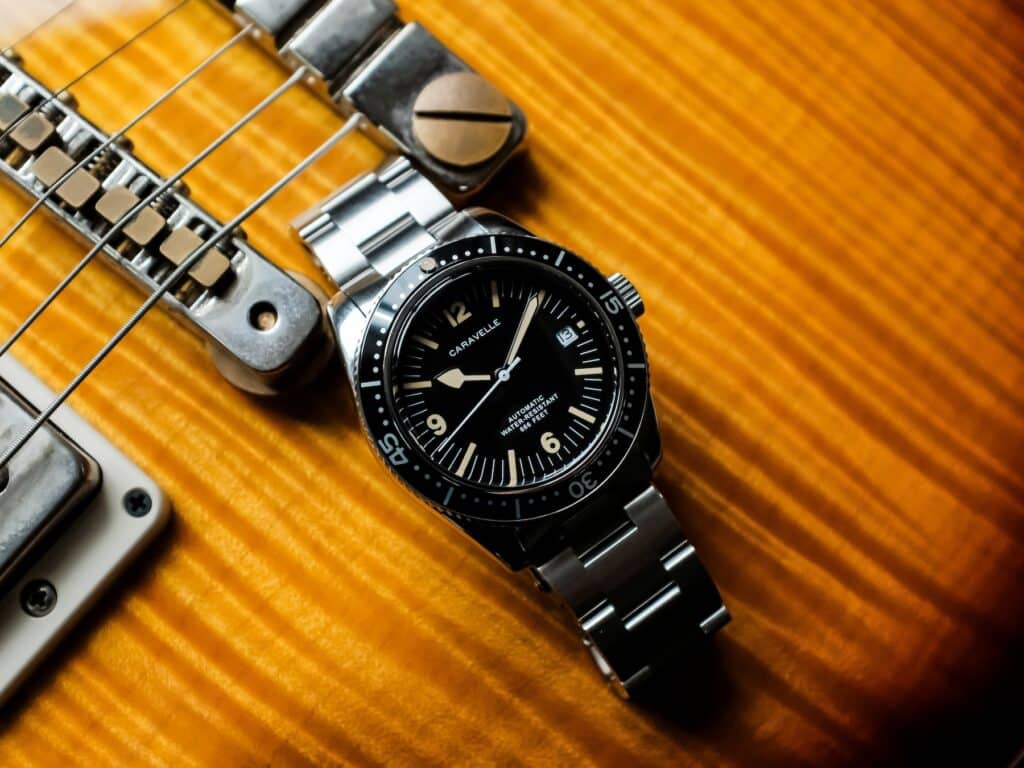
The Sea Hunter’s finishing is comparatively simple, with polished stainless steel surfaces providing much of the visual character. We expect those exposed areas to develop scratches through regular use, although that doesn’t feel particularly inconsistent with the watch’s intended personality. Its compact dimensions suited our preference for smaller dive watches, and we appreciated the way the domed crystal reinforced the historical inspiration. At the same time, the additional thickness gives it a noticeably different presence from the flatter Citizen. The Sea Hunter feels like a traditional automatic diver scaled to a manageable diameter, while the Promaster feels engineered around an efficient, comfortable fit. Both were wearable during our reviews, but their proportions illustrate just how little case diameter alone tells us about the experience of wearing a watch.
Crystals and Bezels
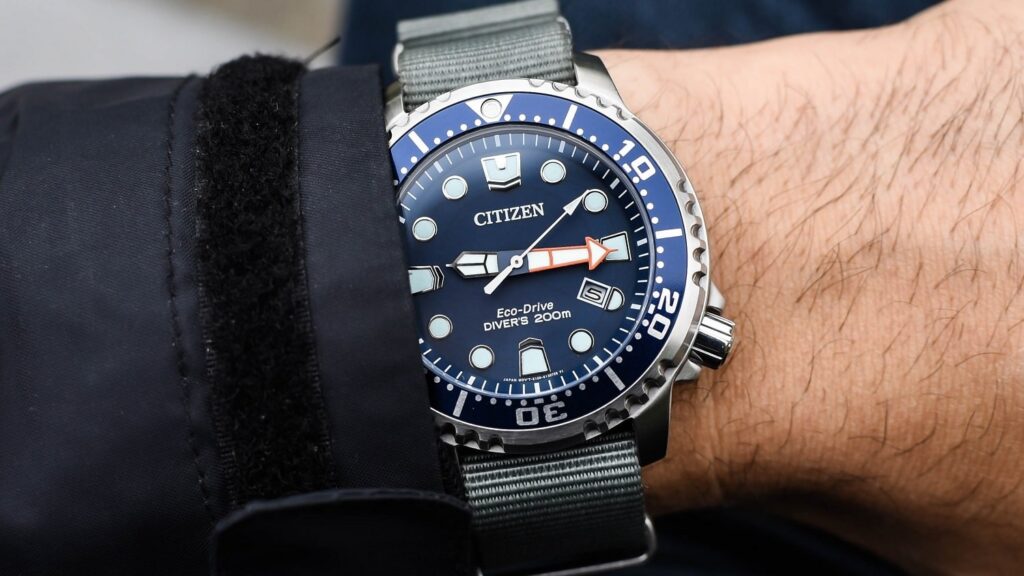
The Citizen Promaster Diver uses an anti-reflective-coated mineral crystal, which provided clear visibility and held up well during our extended ownership. Our original review noted no noticeable chips or scratches despite years of regular use, although mineral glass generally offers less scratch resistance than sapphire. The unidirectional aluminum bezel uses a 60-click mechanism, an arrangement we appreciated for its deliberate movement and straightforward elapsed-time tracking. Alignment on our example was accurate, and the bezel landed cleanly on its markers. Our criticism concerned the grip. The teeth weren’t quite as pronounced as we’d have preferred, making the bezel more difficult to manipulate when our hands were wet. That limitation didn’t fundamentally undermine its usefulness, but it’s worth considering in a watch designed for use around water.
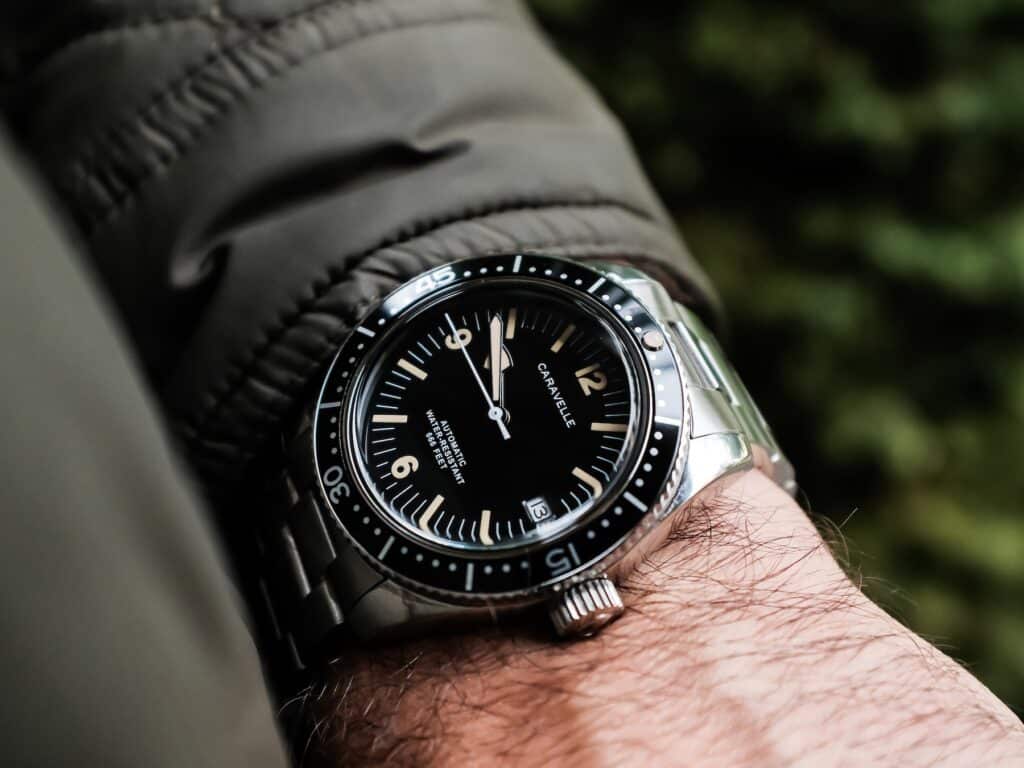
The Caravelle Sea Hunter also uses a mineral crystal, although its pronounced dome creates a considerably different appearance. We liked the way the crystal complemented the vintage-inspired case, giving the watch a visual character that a flatter design might not achieve. Nevertheless, sapphire would have provided greater reassurance against long-term scratching, and that was one of the upgrades we would most have appreciated. The unidirectional bezel uses an aluminum insert and offers enough grip to operate without difficulty. Its action felt somewhat thin and metallic during our review, lacking the more satisfying tactile feedback we’ve experienced on other affordable divers. It remained functional, however, and the design worked well with the traditional styling. Neither watch offers a flawless combination of crystal material and bezel execution, but their compromises are quite different in practice.
Water Resistance & Lume
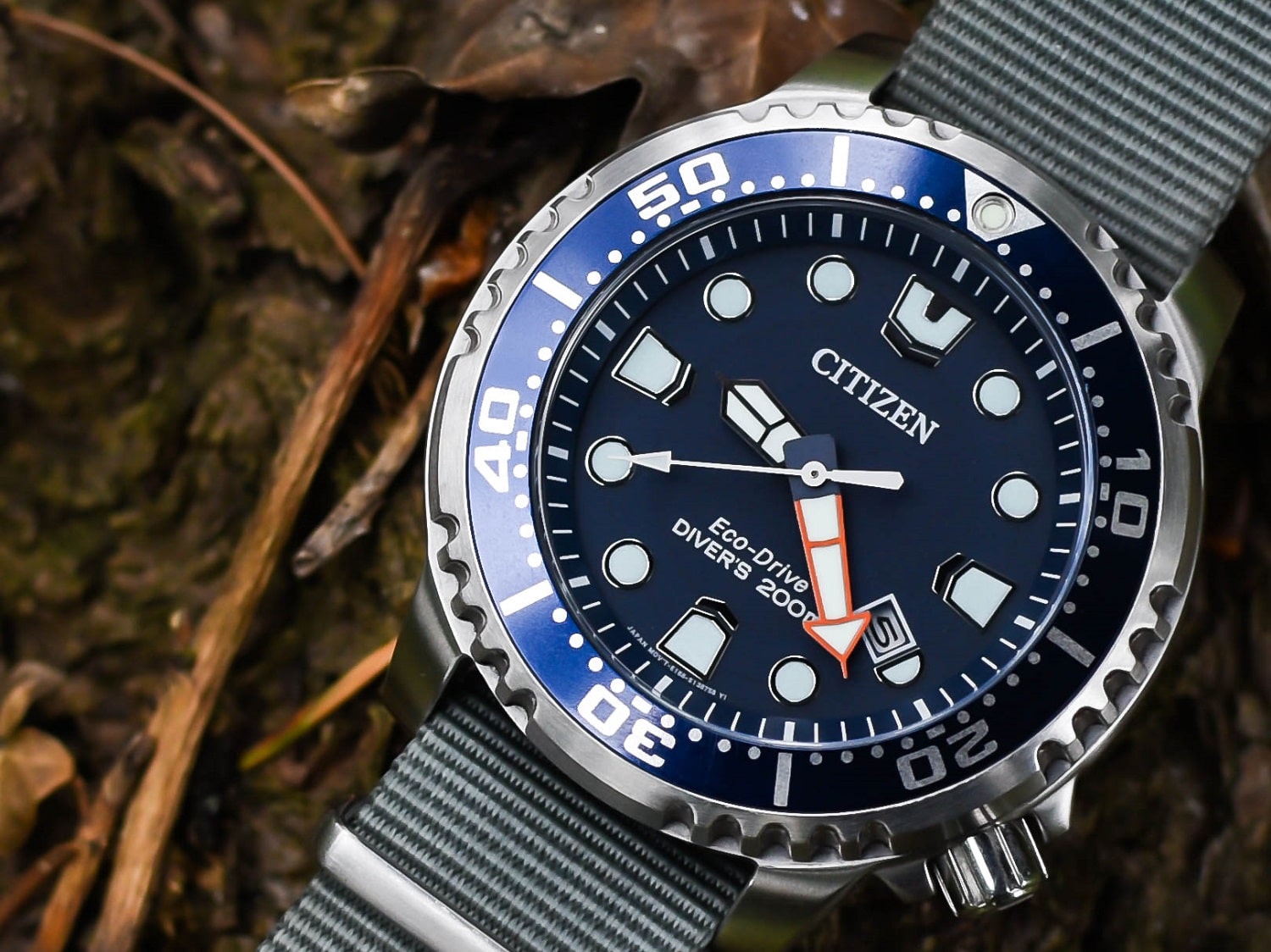
The Citizen Promaster Diver carries an ISO-certified 200-meter diving rating, supported by its screw-down crown and purpose-built construction. We were comfortable taking the watch swimming and wearing it during activities where exposure to water was expected, reinforcing the confidence we’d developed through ownership. Citizen also equips the Promaster with bright BGW9 luminous material that gives the dial a distinctive aqua-toned appearance in darker conditions. We were particularly impressed by the visibility of the large hands and hour markers, along with the luminous detail on the seconds hand. That additional feature makes it easier to confirm that the watch is running in low light. The combination of clear dial design and strong lume remains one of the Promaster’s most convincing practical advantages.
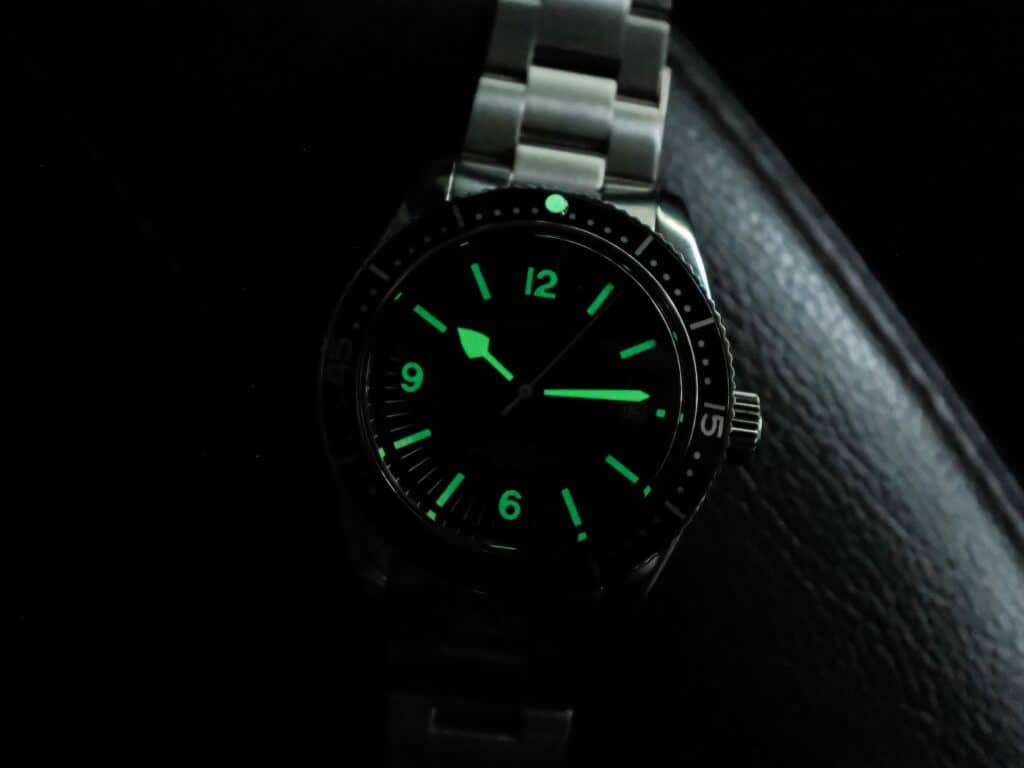
The Bulova Caravelle Sea Hunter also carries a 200-meter water-resistance rating, using a screw-down crown and threaded caseback to support its traditional dive-watch construction. Its bezel includes a luminous pip, while the hands and indices receive the brown-toned luminous treatment that reinforces its vintage styling. We appreciated the way Bulova preserved the familiar design elements associated with older divers, even if our preference would have been for a more neutral lume color. Unlike the Citizen, whose luminous performance was a particular highlight of our extended ownership, the Sea Hunter’s lume stood out more for its contribution to the watch’s appearance. The two watches share the same nominal water-resistance rating, but Citizen’s ISO certification and proven legibility give it a more explicitly functional identity.
Cost Considerations
The Citizen Promaster Diver BN0151-09L carries a U.S. manufacturer’s suggested retail price of $450, although Citizen was listing it at $360 when we checked for this comparison. The model has also been available at considerably lower prices through various retailers over the years, something we’ve discussed in earlier TBWS coverage. At its regular retail price, the Promaster competes with a growing selection of automatic divers, including watches that offer mechanical movements or more elaborate finishing. However, its value proposition centers on a different set of priorities. Eco-Drive technology, ISO-certified water resistance, strong legibility, and a comfortable case all contribute to a watch that doesn’t need to impress through mechanical complexity.
Our long-term experience also influences how we evaluate the Citizen’s price. Having owned and worn the Promaster for years, we’ve had the opportunity to see how its specifications translate into practical use. The movement remains convenient, the case continues to feel comfortable, and the watch has handled a range of activities without requiring especially careful treatment. The stock polyurethane strap isn’t ideal, and the mineral crystal and bezel grip leave room for improvement. But those are manageable compromises in a watch that otherwise performs its intended role consistently. An inexpensive NATO strap also addresses much of our frustration with the original wearing setup. The result is a dive watch whose appeal has endured well beyond the initial purchase.
The Bulova Caravelle Sea Hunter in the black-dial configuration currently carries a $395 list price, with Bulova offering it for $316 when we checked. That pricing makes it an accessible route into automatic dive-watch ownership, particularly for someone attracted to its compact diameter and historical styling. The Miyota movement, stainless steel bracelet, screw-down crown, and 200-meter water-resistance rating create a reasonably comprehensive package. Bulova has also incorporated useful details such as quick-release spring bars, bracelet micro-adjustment positions, and a fold-out diving extension. None of these features is particularly groundbreaking on its own, but together they give the Sea Hunter a degree of practicality that complements its vintage-inspired appearance.
The Caravelle’s value becomes more complicated when considering its finishing and movement execution. Its bracelet has a noticeable amount of rattle, the bezel action feels less refined than we’d prefer, and the mineral crystal creates some concern about long-term scratches. The Miyota movement is dependable enough for the category, but the gritty hand-winding sensation also reminds us that this is a relatively basic automatic caliber. We can accept those compromises at the asking price, particularly because addressing them would likely increase the cost. What ultimately matters is whether the watch’s appearance and wearing character are compelling enough to outweigh them. In our original review, we found plenty to respect about the Sea Hunter without developing the connection we’d initially expected.
At their current manufacturer-listed sale prices, the Citizen costs approximately $44 more than the Bulova, while their list prices differ by $55. Those amounts aren’t especially large in the context of purchasing a watch, but they do highlight the different experiences on offer. Bulova gives buyers an automatic movement, a steel bracelet, and a more traditional design for slightly less money. Citizen asks a modest premium for its solar quartz movement, ISO-certified construction, and a case that has proven particularly comfortable through extended wear. Neither approach makes the other irrelevant. The Caravelle offers considerable appeal to buyers interested in affordable mechanical divers, while the Promaster presents a convincing argument for prioritizing everyday performance over traditional watchmaking appeal.
Final Thoughts: Citizen Promaster Diver vs Bulova Caravelle Sea Hunter
The Bulova Caravelle Sea Hunter is a worthwhile addition to the affordable dive-watch category, particularly because it offers something different from the usual assortment of modern tool-watch designs. Its compact case diameter, domed crystal, unusual handset, and mechanical movement create a distinctive experience that draws on legitimate Caravelle history. We also appreciate several of the smaller ownership details, including its bracelet taper, quick-release spring bars, and straightforward date display. The watch isn’t without its rough edges, and the tall case profile won’t suit everyone, but Bulova has managed to preserve much of the original design’s personality without making the modern Sea Hunter feel like a purely decorative revival.
Our feelings toward the Sea Hunter became more complicated after wearing it for an extended period. We purchased it with a fairly specific goal in mind: finding a compact black-dial automatic diver on a stainless steel bracelet that could occupy a lasting place in the collection. Although the watch met many of those requirements, it didn’t ultimately become something we reached for particularly often. The brown-toned lume, basic movement feel, and less refined finishing all contributed to our reservations, but no single flaw was responsible. We liked the watch and appreciated what Bulova had accomplished. It simply didn’t establish the lasting connection we’d hoped for when we bought it.
The Citizen Promaster Diver has followed almost the opposite trajectory. It wasn’t purchased to satisfy a particularly specific collecting ambition, yet it became one of the most consistently useful watches in our rotation. Its Eco-Drive movement eliminated much of the routine attention associated with mechanical ownership, while the comfortable case, excellent legibility, and reliable water resistance encouraged us to wear it across a wide variety of activities. The mineral crystal, somewhat slippery bezel, and original polyurethane strap remain valid criticisms. But after years of ownership, those limitations haven’t meaningfully changed our opinion of the watch. The Promaster continues to demonstrate how satisfying a practical, well-executed dive watch can be.
Our overall pick is the Citizen Promaster Diver BN0151. Its combination of proven everyday comfort, Eco-Drive reliability, strong luminous performance, and ISO-certified diving capability makes it the more convincing all-around choice. We’d still recommend the Bulova Caravelle Sea Hunter to buyers who specifically want a compact, vintage-inspired automatic diver with a distinctive design and traditional bracelet. But our experiences with these two watches illustrate an important distinction between appreciating a watch and consistently wanting to wear it. The Sea Hunter earned our respect, while the Citizen has continued earning a place on our wrist.

Co-Founder and Senior Editor
Kaz has been collecting watches since 2015, but he’s been fascinated by product design, the Collector’s psychology, and brand marketing his whole life. While sharing the same strong fondness for all things horologically-affordable as Mike (his TBWS partner in crime), Kaz’s collection niche is also focused on vintage Soviet watches as well as watches that feature a unique, but well-designed quirk or visual hook.