Some watches become famous because of what they accomplish, while others become recognizable because they refuse to look like anything else. The Omega Speedmaster and TAG Heuer Monaco are two of the most enduring examples. One built its reputation through space exploration and an exceptionally functional chronograph design. The other became inseparable from motorsport, Steve McQueen, and a square case that remains unmistakable more than half a century after its introduction. Both have legitimate histories, but neither reputation tells us much about whether we’d actually enjoy wearing one.
That’s where this comparison becomes particularly interesting. We’ve lived with the modern Omega Speedmaster Moonwatch 3861 long enough to understand why it became a permanent part of our collection. The TAG Heuer Monaco, meanwhile, has occupied our wish list for years, although a recent hands-on experience with the blue titanium Chronograph raised some unexpected concerns. These are two expensive Swiss chronographs with very different personalities, but the real question isn’t which has the stronger historical credentials. It’s whether the watch that captures our imagination is necessarily the one we’ll enjoy owning.
Overview and Identity

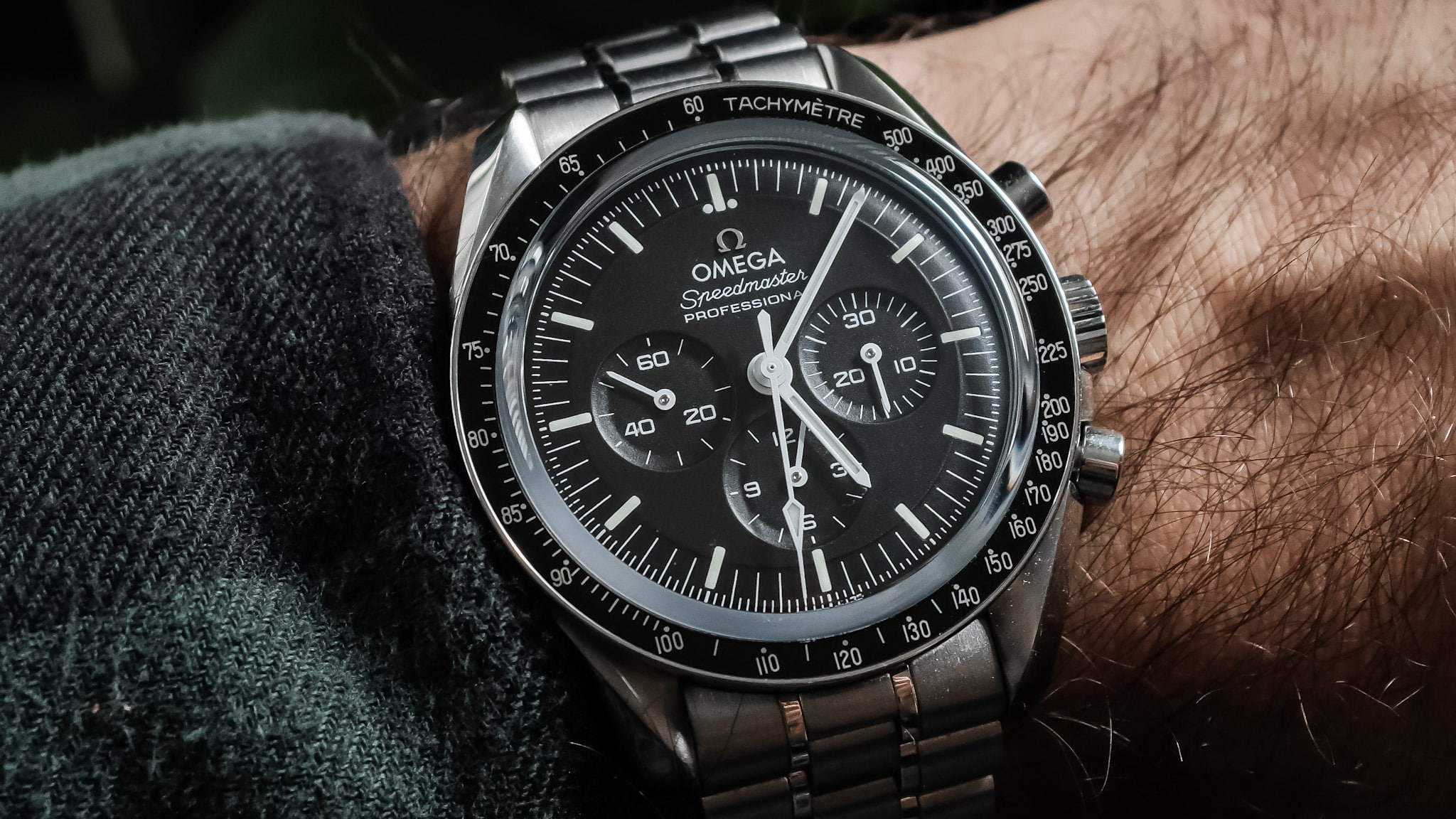
The Omega Speedmaster Professional needs relatively little introduction, although the modern Moonwatch deserves to be considered independently from its historical reputation. The collection’s connection to NASA and the Apollo missions established its place in watchmaking history, but Omega has continued refining the design rather than simply preserving it unchanged. Our hands-on review covers the sapphire version of the current Moonwatch, a watch that followed years of ownership with an older caliber 1861 Speedmaster. That earlier model had been meaningful to us, but its scratched Hesalite crystal and relatively disappointing bracelet eventually became frustrating. The updated 3861 offered an opportunity to revisit something we already loved without accepting every compromise of its predecessor.
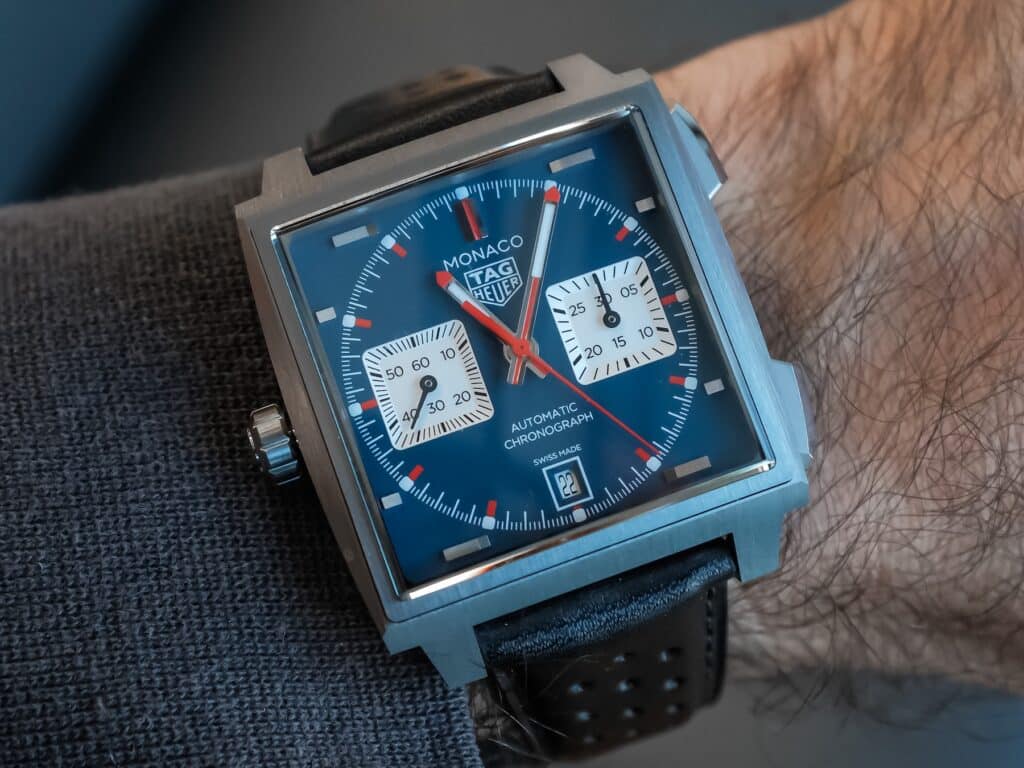
The TAG Heuer Monaco approaches chronograph history from an entirely different direction. Introduced in 1969, it helped establish the automatic chronograph as a distinctly modern sports-watch category, while its square case and association with Steve McQueen’s appearance in Le Mans contributed to its enduring reputation. Our hands-on review focuses on the blue titanium reference CDW2181.FC8360, a modern interpretation powered by the automatic TH20-11 caliber. Our fascination with the Monaco began through its appearance in Breaking Bad, and we’ve considered owning one for years. But experiencing its unusual proportions firsthand challenged some of our expectations about whether it would make sense in our collection.
Dial and Straps/Bracelets
The Omega Speedmaster 3861 retains the familiar black dial and three-register chronograph arrangement that have defined the Moonwatch for decades. Omega’s refinements are subtle, but they’re surprisingly effective once we spend time with the watch. The return of the stepped dial creates additional depth near the minute track, while the applied Omega logo on our sapphire example introduces a small amount of visual refinement without changing its functional personality. White printing and carefully proportioned subdials preserve the excellent daytime legibility we’ve always appreciated. There’s something reassuring about how immediately recognizable the Speedmaster remains, especially when viewed alongside more elaborate modern chronographs that prioritize visual drama over readability.

The redesigned bracelet is arguably one of the most meaningful improvements to the modern Moonwatch. Our older 1861 Speedmaster had a bracelet we tolerated rather than genuinely enjoyed, but the current version feels much better integrated with the case. The taper is more pronounced, the links articulate comfortably around the wrist, and the redesigned end links help reduce the watch’s apparent length. On the sapphire model, polished intermediate links add a little visual contrast without making the bracelet feel excessively decorative. We were so satisfied with the result that the usual temptation to experiment with aftermarket straps largely disappeared. Sizing the bracelet at home was frustrating, but once adjusted, it became one of the reasons this Speedmaster remained in our collection.
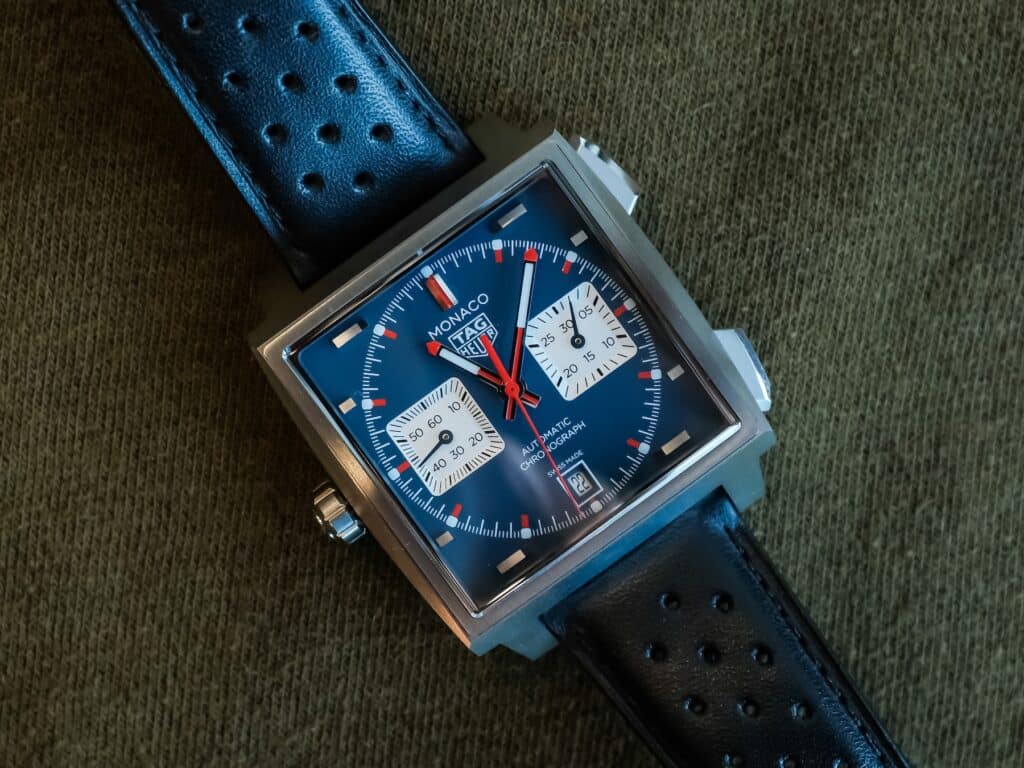
Where the Speedmaster emphasizes legibility and familiar proportions, the TAG Heuer Monaco makes a stronger visual statement. The blue opaline dial on our reviewed reference was more subdued in person than some official photographs suggested, something we particularly appreciated. Silver chronograph counters create the recognizable contrast associated with classic Monaco designs, while red accents introduce a restrained connection to the watch’s motorsport identity. The applied markers and luminous rhodium-plated hands were easy to distinguish against the background, and we didn’t struggle to read the time in person. Although the dial contains plenty of information, the arrangement feels balanced. It’s a design that attracts attention immediately without becoming as difficult to interpret as its unusual shape might suggest.
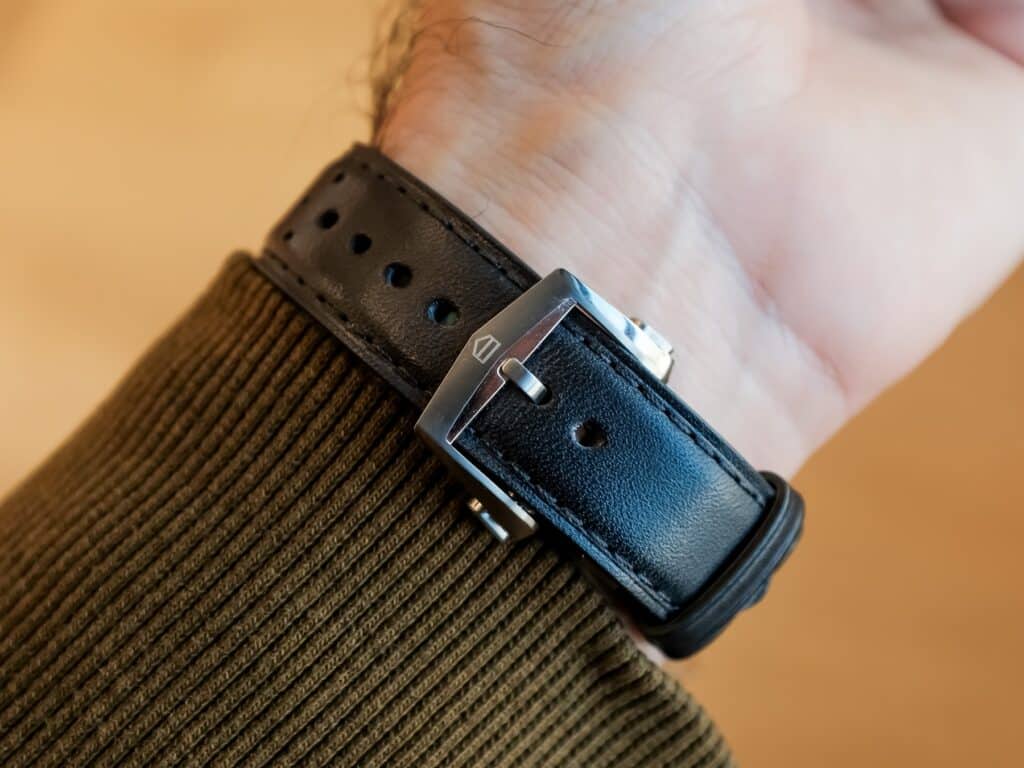
TAG Heuer pairs this Monaco with a black perforated calfskin leather strap that reinforces the watch’s racing identity. The material felt comfortable on the wrist, and its appearance suited the blue dial and angular titanium case particularly well. A grade 5 titanium folding clasp with double safety push-buttons adds a more substantial finishing touch than we’d expect from a conventional pin buckle. We could easily imagine keeping the Monaco on this factory strap rather than immediately searching for an alternative. Unlike the Omega, our reservations about the wearing experience had relatively little to do with what secured the watch to our wrist. The strap was comfortable; it was the shape and proportions of the case that ultimately made the experience more complicated.
Build Quality & Technical Approach
These watches share the fundamentals of mechanical chronograph construction, but their engineering priorities are noticeably different. Omega concentrates on precise timekeeping, magnetic resistance, and preserving the familiar manually wound Moonwatch experience. TAG Heuer offers a modern automatic chronograph with substantially more power reserve, lightweight titanium construction, and an unmistakable case design. Neither approach is inherently more appropriate for a modern enthusiast, although the differences become meaningful when considering how often we’re likely to wear and interact with either watch.
Movements
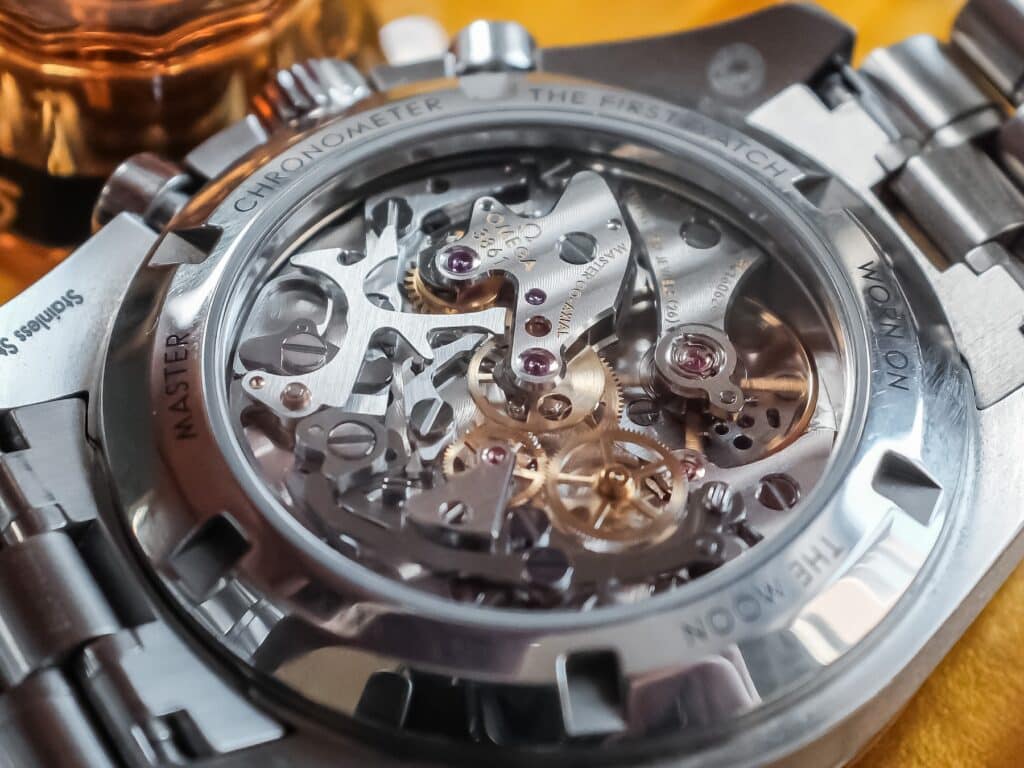
The Omega Speedmaster uses the manually wound caliber 3861, a modern evolution of the movement architecture associated with earlier Moonwatch generations. It provides approximately 50 hours of power reserve, operates at 21,600 vibrations per hour, and carries METAS Master Chronometer certification. The movement also incorporates Omega’s Co-Axial escapement and resistance to magnetic fields reaching 15,000 gauss. Those are substantial technical improvements over the older 1861, but the most satisfying changes have emerged through daily ownership. Winding feels smoother, the chronograph pushers respond with greater confidence, and our example has demonstrated exceptionally consistent accuracy. During our original review, we reported performance around three seconds fast per week, a particularly impressive result from a watch we regularly wear.
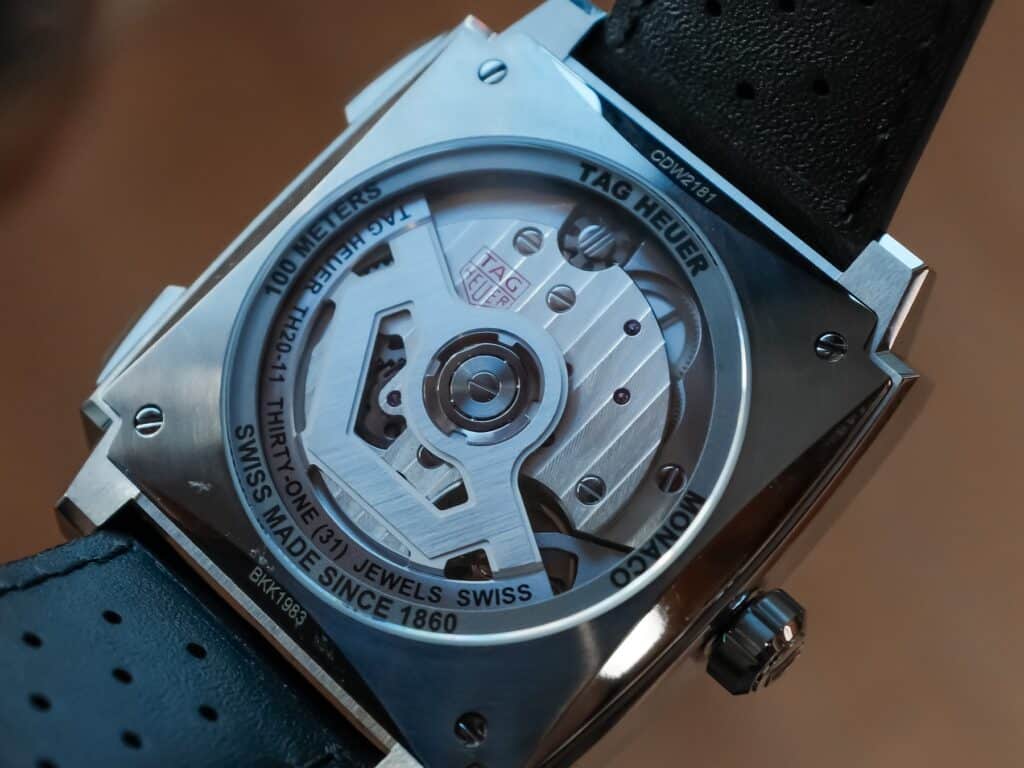
The TAG Heuer Monaco reference CDW2181.FC8360 uses the automatic TH20-11 caliber, operating at 28,800 vibrations per hour with approximately 80 hours of power reserve. Its bidirectional winding system removes the need for daily manual winding, while the extended reserve is especially appealing for collectors who rotate between multiple watches. The chronograph pushers felt crisp and satisfying, while the sapphire caseback provided an excellent view of the movement. While we haven’t established long-term accuracy or reliability through ownership, the TH20-11’s specifications make a convincing case for its suitability as a modern automatic chronograph.
The two movements ultimately offer different ownership experiences. Omega’s manually wound caliber invites daily interaction, rewarding us with excellent measured performance and an unusually satisfying mechanical feel. TAG Heuer’s automatic movement offers greater convenience and more running time between wears, making it attractive for someone who doesn’t want to wind a watch regularly. The Monaco wins on stated power reserve, while the Speedmaster offers the stronger evidence of precision from our own experience. We’d hesitate to declare one movement categorically superior based on those differences alone, particularly because our experience with the Speedmaster includes long-term ownership, while our impressions of the Monaco come from hands-on evaluation. Nevertheless, the 3861 has earned our confidence in a way the Monaco’s caliber hasn’t yet had an opportunity to demonstrate.
Case Construction, Finishing & Wearability
The Omega Speedmaster Professional retains its familiar 42mm stainless steel case, but the current generation incorporates several small refinements that make a noticeable difference on the wrist. Our sapphire version measures approximately 13.2mm thick, and the shortened effective footprint created by the updated end links helps the watch feel more compact than its diameter suggests. Having worn earlier Speedmasters extensively, we immediately appreciated how naturally the 3861 settled into place. The familiar twisted lugs and asymmetrical case continue to provide a distinctive profile, yet the overall proportions feel more comfortable than before. It’s still a substantial mechanical chronograph, but it has become remarkably easy to wear regularly.
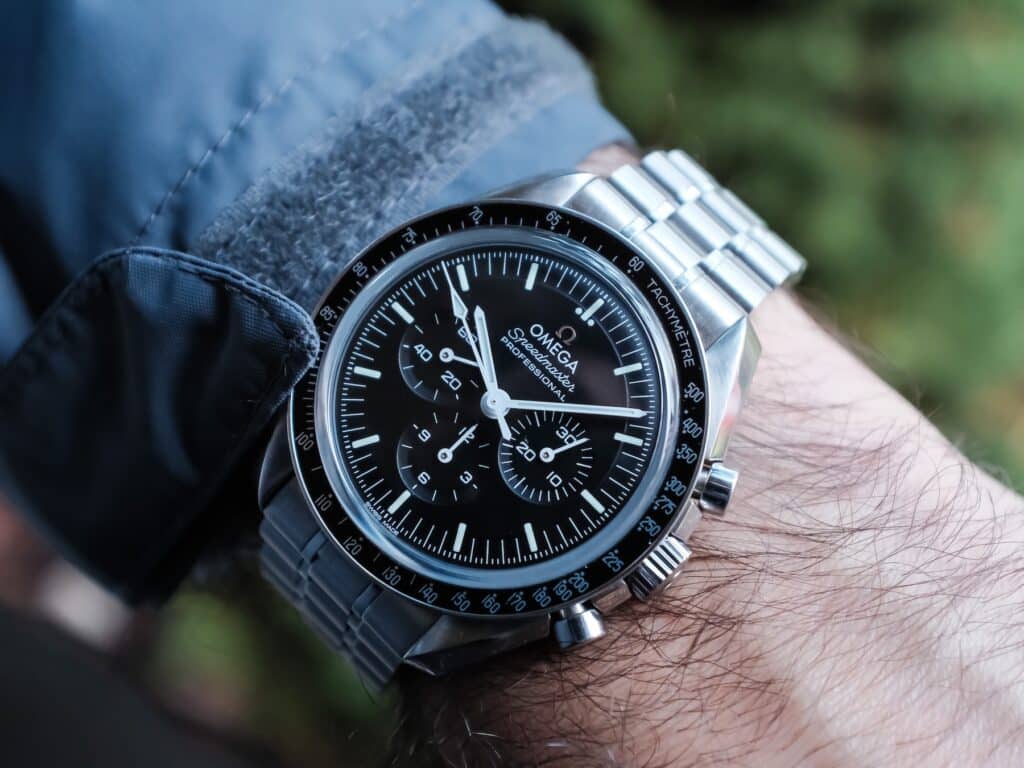
Omega’s finishing strikes a balance between practical durability and the refinement we’d expect at this price. Brushed surfaces dominate the case, while polished details emphasize the shape of the lugs without making the watch look excessively elaborate. The construction remains faithful to the Moonwatch’s familiar identity, but the adjustments to the case and bracelet contribute to a more cohesive experience. We particularly appreciate that Omega resisted the temptation to redesign the entire watch simply to communicate that the movement had been upgraded. The changes are incremental, and some may seem insignificant in photographs. After years of wearing Speedmasters, however, those small improvements have become central to why this particular version feels so satisfying.
The TAG Heuer Monaco measures 39mm across and 13.9mm thick, although its square construction makes those numbers difficult to compare directly with the Omega. The reviewed reference uses grade 5 titanium, combining brushed, polished, and sandblasted surfaces throughout the angular case. We were genuinely impressed by the finishing, especially the way those different textures met around its sharply defined edges. The lighter material also prevented the substantial visual presence from translating into excessive weight. From a design and manufacturing perspective, there was plenty to appreciate, and the modern titanium case retained the unmistakable identity that had attracted us to the Monaco in the first place.
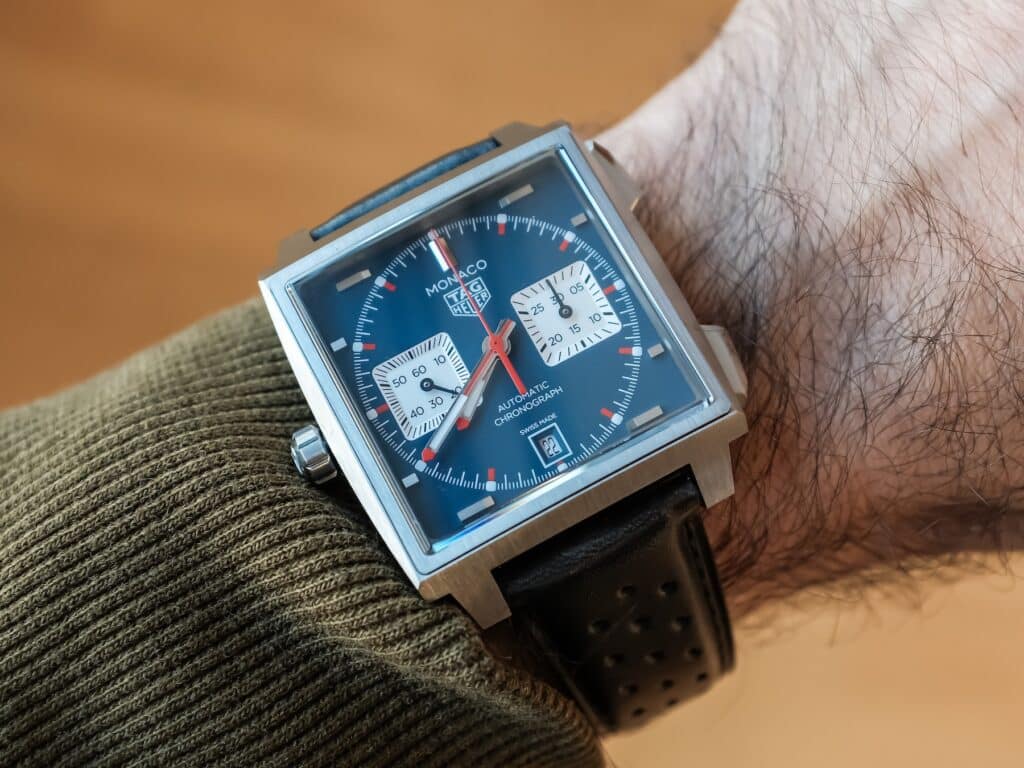
Unfortunately, the Monaco’s case was also responsible for our biggest reservation. Its broad, relatively flat geometry made it difficult to find a position where the watch felt entirely natural on the wrist. The square design distributes its footprint differently from a round chronograph, making the watch feel more substantial than its 39mm measurement suggests. Although the titanium construction kept the weight manageable, it couldn’t entirely overcome the discomfort created by those proportions. We admired the Monaco’s appearance and finishing, but the experience left us questioning whether we’d reach for it regularly. For someone accustomed to square watches, that calculation might be entirely different.
Crystals and Bezels
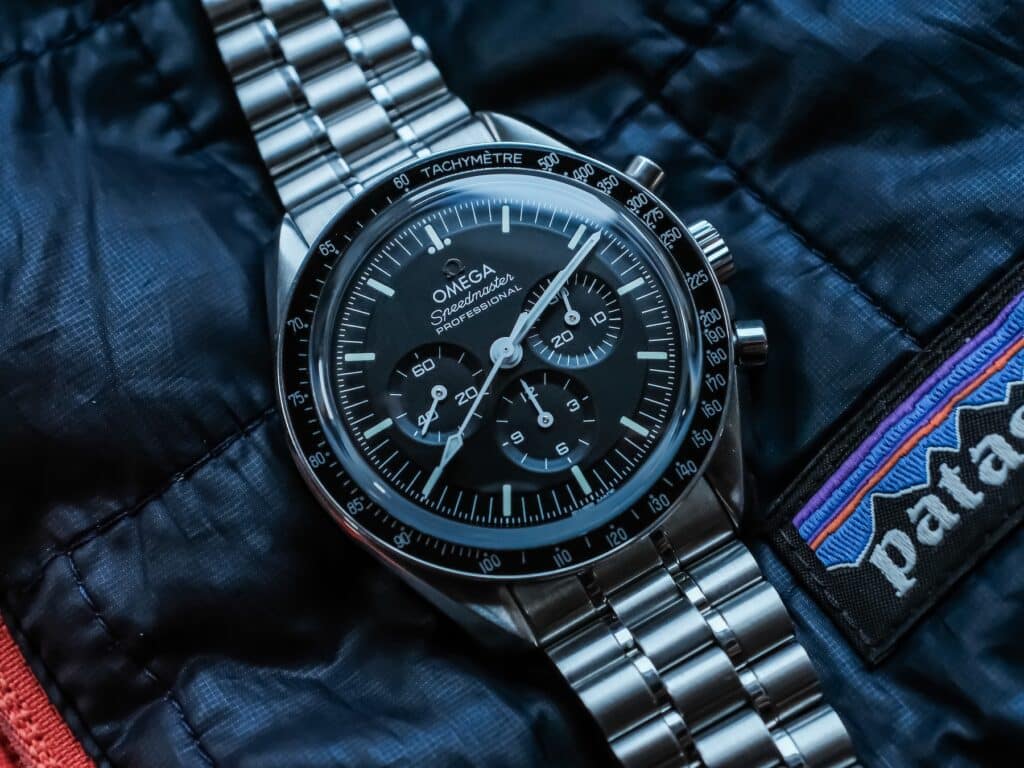
Our Omega Speedmaster 3861 uses a domed sapphire crystal rather than the Hesalite found on the more traditional Moonwatch configuration. After years of managing scratches on an earlier Hesalite Speedmaster, we particularly appreciated the reduced maintenance associated with sapphire. The transparent caseback also provides a clear view of the movement, introducing a visual element absent from some earlier configurations. Around the dial, the fixed tachymeter bezel retains the familiar black insert and the historically significant dot-over-ninety detail. These features don’t fundamentally change how the chronograph operates, but they reinforce the thoughtful evolution that distinguishes the current Moonwatch from its predecessor. The overall presentation remains restrained and highly functional.
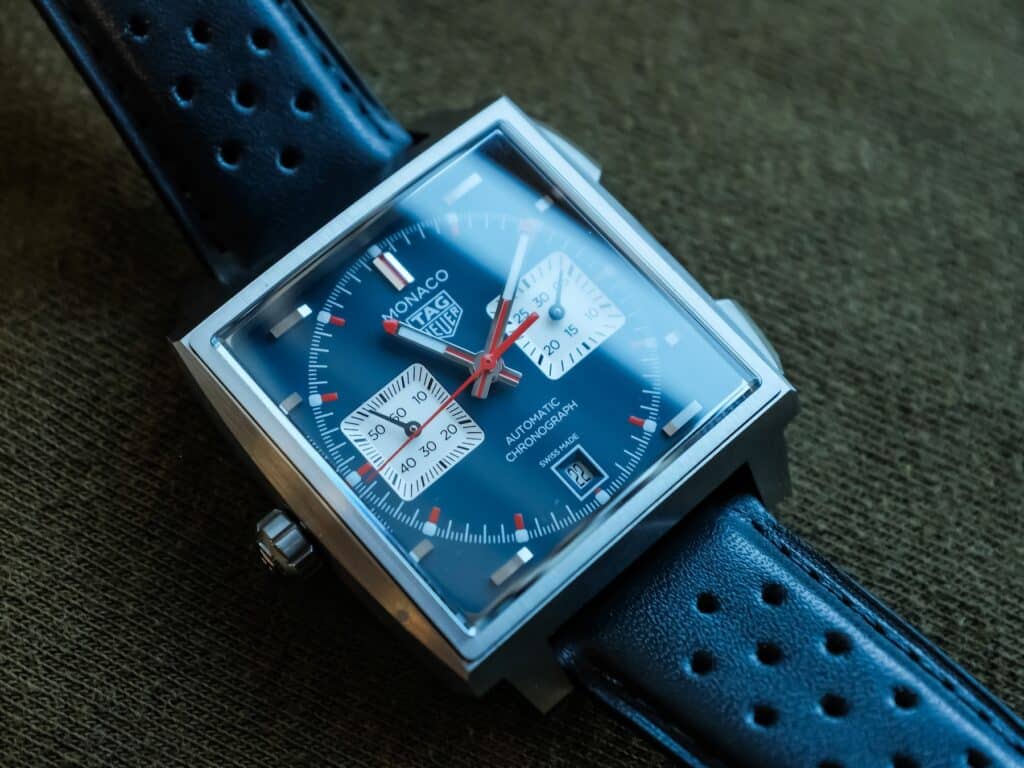
The TAG Heuer Monaco uses a sapphire crystal and a fixed titanium bezel that integrates naturally with its square case. Unlike the Speedmaster, the reviewed Monaco doesn’t feature an external tachymeter scale, leaving its distinctive dial and case geometry to establish the visual identity. We appreciated the clean transitions between the crystal, surrounding surfaces, and sharply defined edges. The sapphire exhibition caseback also allows the TH20-11 movement to become part of the ownership experience. These details make the Monaco particularly enjoyable to examine from different angles, even if they don’t address the ergonomic concerns we encountered. Omega’s bezel reinforces traditional chronograph functionality, while TAG Heuer’s construction prioritizes the visual identity that has always distinguished the Monaco.
Water Resistance & Lume
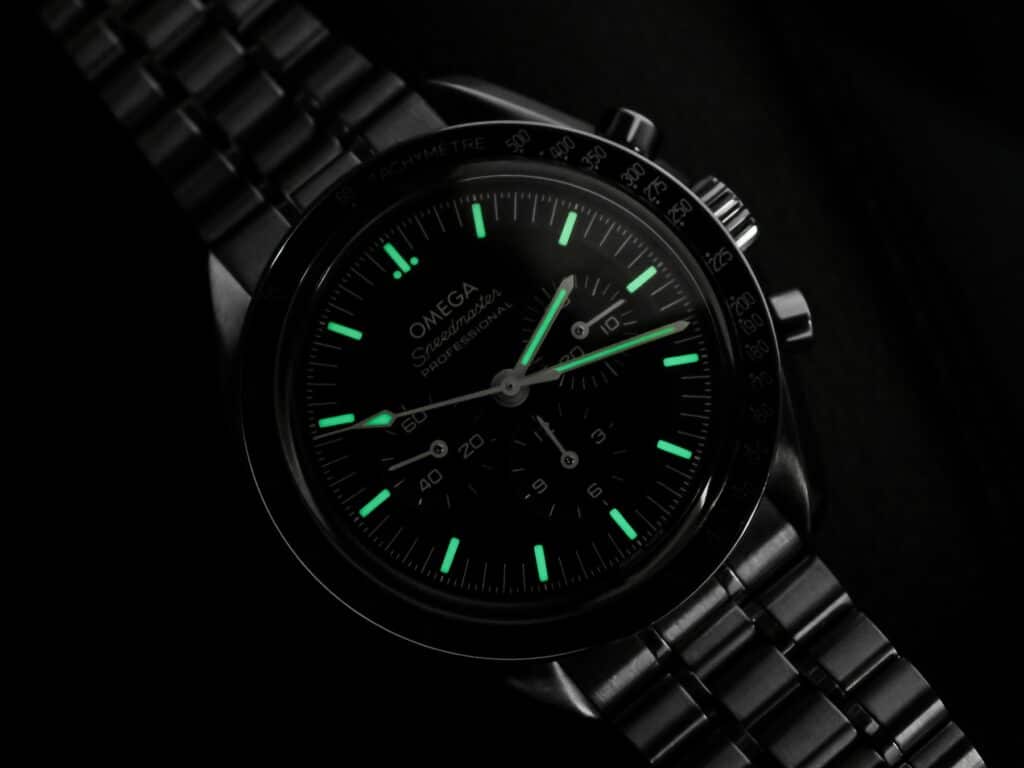
The Omega Speedmaster Professional offers 50 meters of water resistance, a specification that occasionally surprises people given the watch’s history as a professional instrument. It’s important to remember that the Moonwatch was developed around different requirements than a conventional dive watch. We wouldn’t select it specifically for swimming or other water-focused activities, even though the rating provides useful protection during ordinary wear when the watch is properly maintained. Its luminous hands and markers performed exceptionally well during our long-term experience, remaining readable throughout the night. The high-contrast black dial also provides excellent daytime clarity, demonstrating why the Speedmaster’s functional layout has endured with relatively few changes.
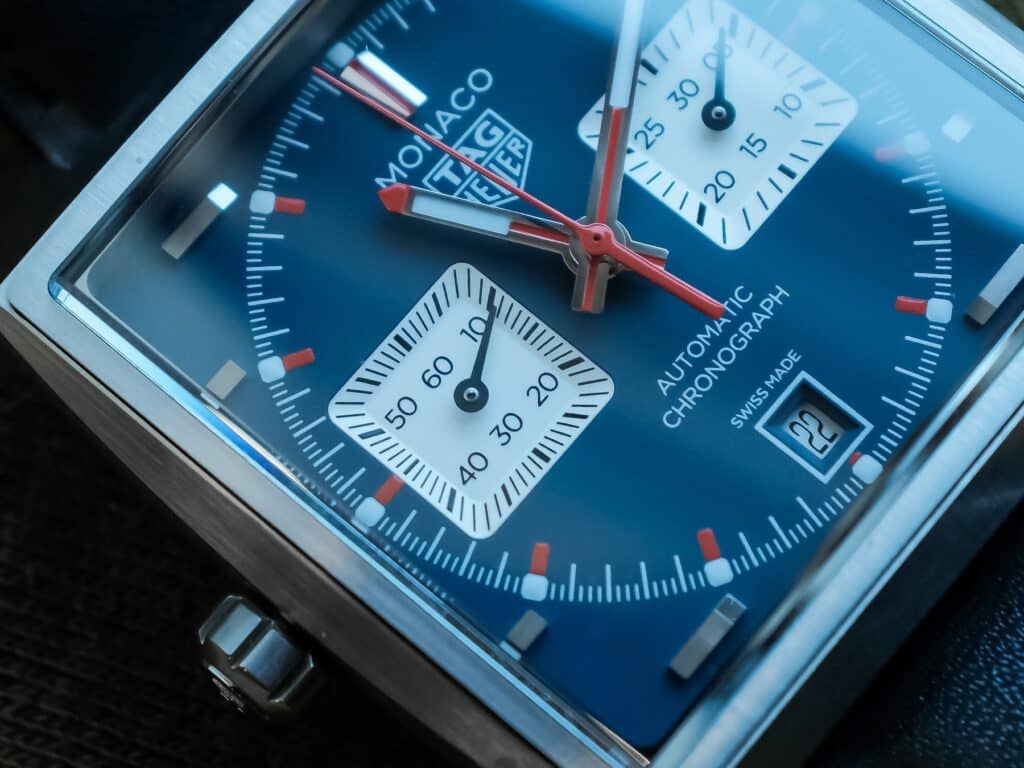
The TAG Heuer Monaco carries a higher 100-meter water-resistance rating, providing greater nominal protection than the Omega. However, the supplied leather strap and the watch’s overall character make it an unlikely first choice for prolonged water exposure. TAG Heuer uses luminous rhodium-plated hands that complement the dial’s contrasting markers and chronograph counters. The arrangement provides clear legibility while preserving the Monaco’s distinctive visual identity. Although the Speedmaster emphasizes straightforward readability through its high-contrast dial, the Monaco takes a more elaborate approach without sacrificing clarity. Its greater water-resistance rating is a genuine specification advantage, even if it isn’t the feature most likely to influence our purchase.
Cost Considerations
The Omega Speedmaster Moonwatch 3861 in the sapphire-and-steel-bracelet configuration currently carries a U.S. retail price of approximately $9,000. That’s a substantial increase from the price at which the generation originally debuted, and it’s difficult to overlook how much more expensive the modern Speedmaster has become. Nevertheless, our experience with the watch provides some justification beyond its specifications. The improved bracelet, refined case, excellent movement performance, and satisfying tactile operation have made it a long-term keeper. We’re not simply evaluating what Omega promises on paper; we’ve had the opportunity to see whether those improvements remain meaningful after the initial excitement of ownership wears off.
The Speedmaster also benefits from an established pre-owned market that can make the purchase considerably more approachable. Recent market estimates place used sapphire 3861 examples substantially below current retail, although condition, age, included accessories, and seller reputation influence individual prices. That creates a meaningful alternative for someone drawn to the modern Moonwatch but reluctant to spend the full retail amount. We’d still consider maintenance history and warranty coverage before buying, especially given the complexity of a modern mechanical chronograph. But our own experience suggests that the 3861’s improvements aren’t simply marketing refinements. They have translated into a watch that we continue to enjoy wearing after years with the broader Speedmaster collection.
The TAG Heuer Monaco reference CDW2181.FC8360 currently lists for $9,350, placing it in essentially the same retail bracket as our Speedmaster. That makes this a particularly interesting comparison because the choice isn’t primarily about saving money by selecting one brand over another. The Monaco offers lightweight grade 5 titanium, an automatic movement with an 80-hour reserve, and a distinctive design connected to decades of motorsport history. Its finishing impressed us firsthand, and the blue dial remains one of the most attractive Monaco configurations we’ve encountered. At this price, the watch certainly offers more than a recognizable name and an unusual case shape.
But spending more than $9,000 on a watch also changes how seriously we need to consider comfort and everyday suitability. We can admire the Monaco’s construction, appreciate the operation of its chronograph, and find its history compelling without necessarily wanting to wear it for an entire day. Wearing the Monaco made that distinction impossible to ignore. The fit concerns weren’t hypothetical complaints based on photographs or specifications; they emerged from wearing the actual watch. We wouldn’t dismiss it because of those reservations, particularly when wrist shape and personal preference vary considerably. But we’d hesitate to commit that amount of money without becoming more confident that the Monaco would occupy a meaningful place in our regular rotation.
Ultimately, these watches offer different interpretations of what makes an expensive mechanical chronograph worthwhile. The Speedmaster rewards us through comfort, dependable performance, and the accumulated satisfaction of ownership. The Monaco offers stronger visual individuality, an automatic movement, and a design that remains striking decades after its introduction. Neither needs to justify its price through specifications alone, and we wouldn’t suggest that choosing the more familiar Omega is automatically the sensible decision for everyone. But when both watches require a similar financial commitment, we place considerable value on knowing that we’ll actually enjoy wearing the one we purchase. That’s where our experience with the Speedmaster provides a meaningful advantage.
Final Thoughts: Omega Speedmaster or TAG Heuer Monaco?
The Omega Speedmaster 3861 has become the watch we hoped earlier Moonwatch generations would eventually deliver. Its dial remains immediately recognizable, the upgraded movement has demonstrated exceptional accuracy, and the redesigned bracelet addresses one of our most persistent complaints about older Speedmasters. More importantly, the watch has become a natural part of our regular rotation. We no longer feel compelled to explore another reference in search of a better version of the same experience. That confidence comes from ownership rather than a particularly exciting first impression, and it’s difficult to overlook when considering another expensive chronograph.
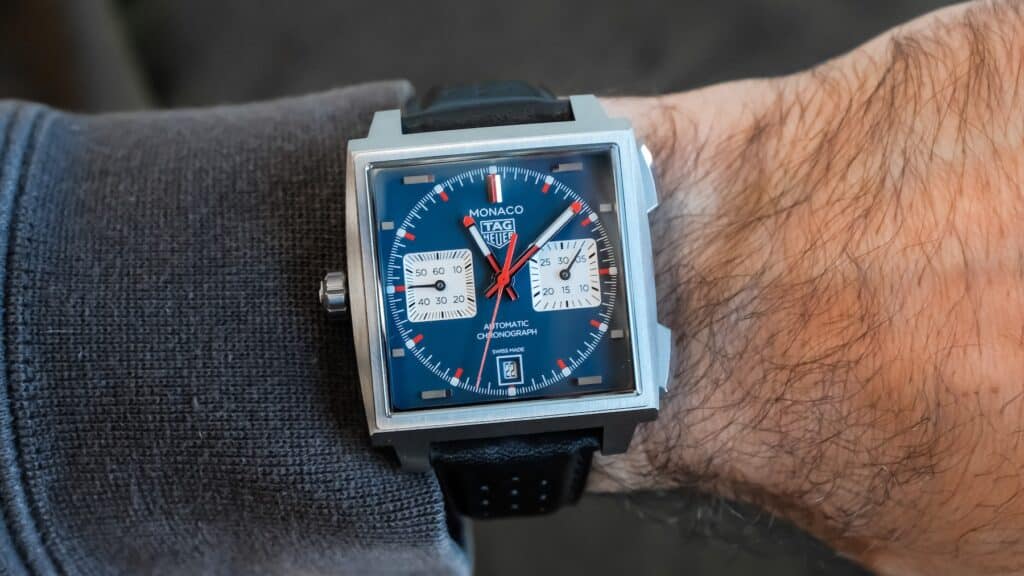
The TAG Heuer Monaco remains one of the most visually compelling watches we’ve considered adding to the collection. Its blue dial, silver counters, sharply defined titanium case, and motorsport connections give it a personality that the Speedmaster doesn’t attempt to replicate. The chronograph pushers felt excellent, the strap was comfortable, and the finishing impressed us considerably. We came away from the experience appreciating the Monaco’s design more than before. But we also left with a concern that had been difficult to anticipate from photographs: the square case simply didn’t feel as natural on our wrist as we’d hoped.
The difference between admiring a watch and wanting to own it becomes particularly important at this price. The Monaco has occupied our wish list for years, and its history, distinctive styling, and impressive construction continue to make it appealing. But the experience of wearing it introduced reservations that photographs and specifications hadn’t revealed. The Speedmaster represents the opposite side of that equation. Its appeal has only grown through ownership, with the movement, bracelet, and proportions continuing to satisfy long after the initial excitement faded. A different wrist or set of preferences could easily favor the Monaco, but our experience points toward the Omega.
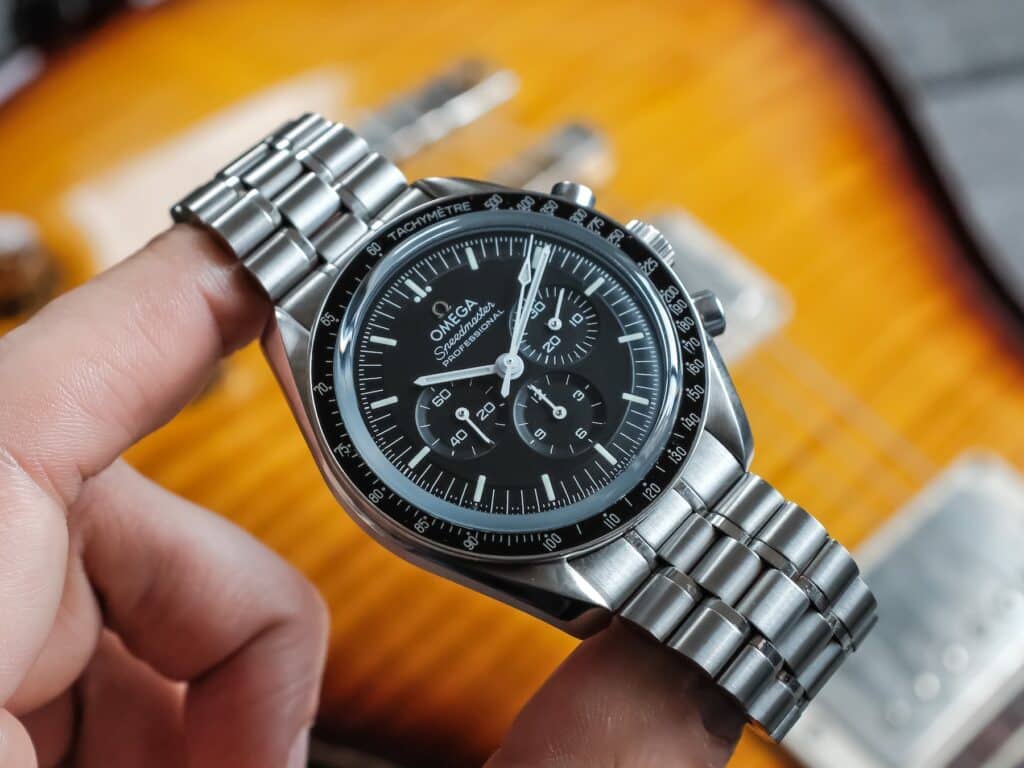
Our pick is the Omega Speedmaster 3861, not because the TAG Heuer Monaco lacks substance, but because the Speedmaster has already demonstrated everything we value in a mechanical chronograph. The Monaco remains a watch we admire, and we wouldn’t rule out eventually owning one if the right configuration changes our impression of its fit. For now, though, the Omega delivers something more convincing than technical superiority or historical significance: the satisfaction of reaching for the same watch again and again. At this price, that’s more important to us than owning the chronograph we’ve spent years imagining on our wrist.

Co-Founder and Senior Editor
Kaz has been collecting watches since 2015, but he’s been fascinated by product design, the Collector’s psychology, and brand marketing his whole life. While sharing the same strong fondness for all things horologically-affordable as Mike (his TBWS partner in crime), Kaz’s collection niche is also focused on vintage Soviet watches as well as watches that feature a unique, but well-designed quirk or visual hook.