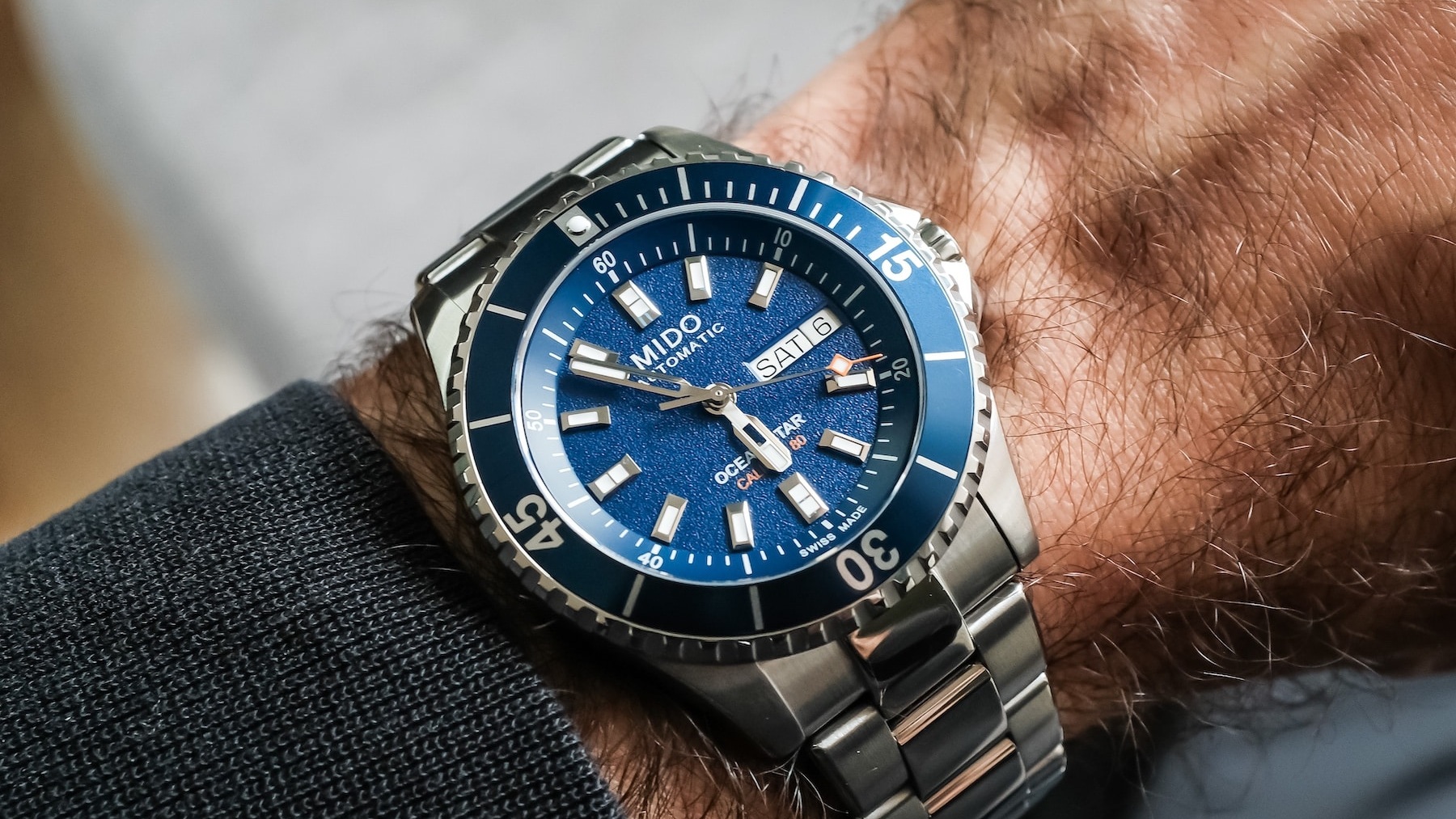
At $990, the Mido Ocean Star 200 delivers a compelling Swiss dive watch experience. The Oris Aquis New York Harbor II costs $3,000, raising an obvious question: what exactly are you getting for three times the money? We’re happy to pay more for a watch that genuinely gets under our skin, but neither a familiar logo nor a limited-edition label should settle the argument before we’ve spent time with it. With the Mido Ocean Star 200 and Oris Aquis New York Harbor II, the real question is what that extra spending gets us beyond the first impression. Does the Oris offer enough in return, or do the differences matter less once we consider what both watches deliver on the wrist?
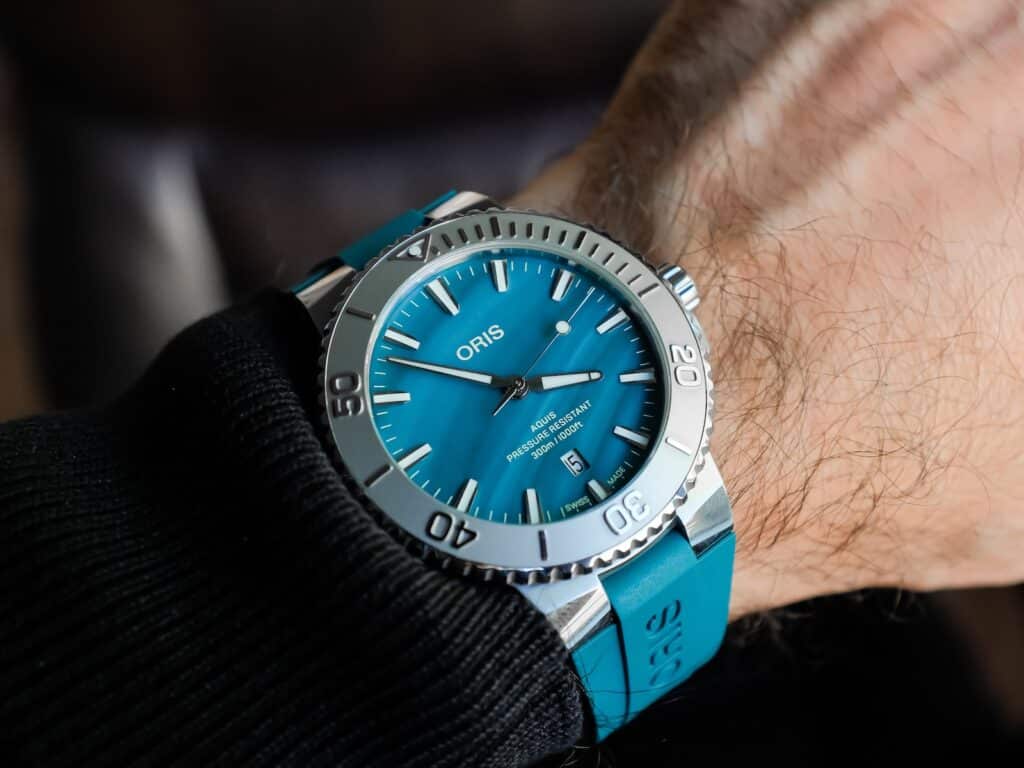
At TBWS, a decade of hands-on watch reviews has taught us to trust time on the wrist over a watch’s pitch. We spent several weeks rotating through three versions of the refreshed Ocean Star 200, and our initial lack of interest in the New York Harbor II gave way to genuine appreciation once we had it in hand.
Overview and Identity
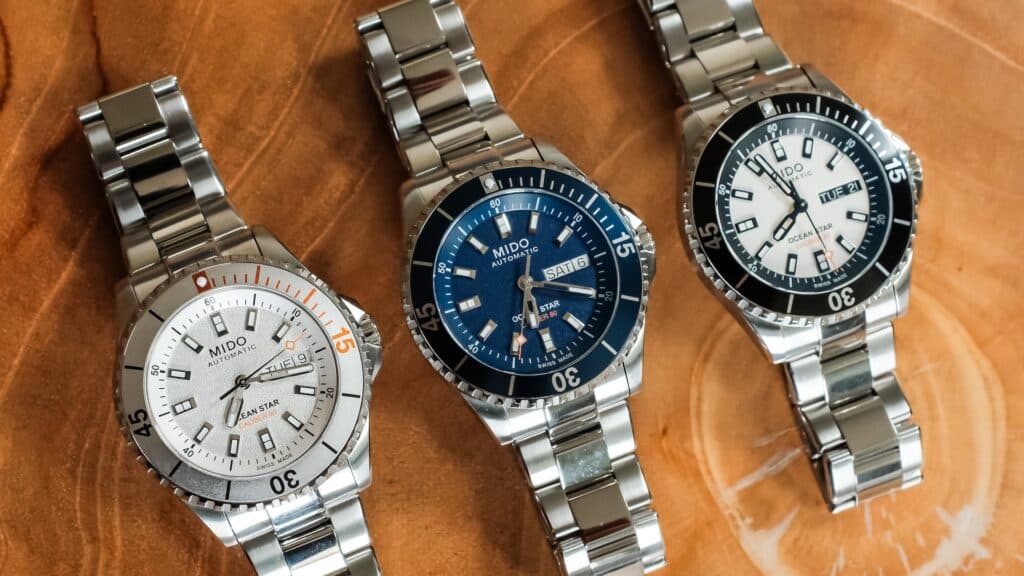
The Mido Ocean Star 200 refresh reminds us why the brand has earned our goodwill over the years. When the updated collection arrived in June 2026, we called it one of the summer’s most compelling Swiss dive watch releases. After spending several weeks with three new references, we’re sticking with that assessment. Having all three colorways in hand revealed more than we expected. They weren’t simply different colors on the same watch; each brought its own personality to the wrist. Mido didn’t need to start over with a collection we already liked. It needed to give us fresh reasons to appreciate it, and the three new references did just that without abandoning the thoughtful design and execution that have made the brand so easy to recommend.
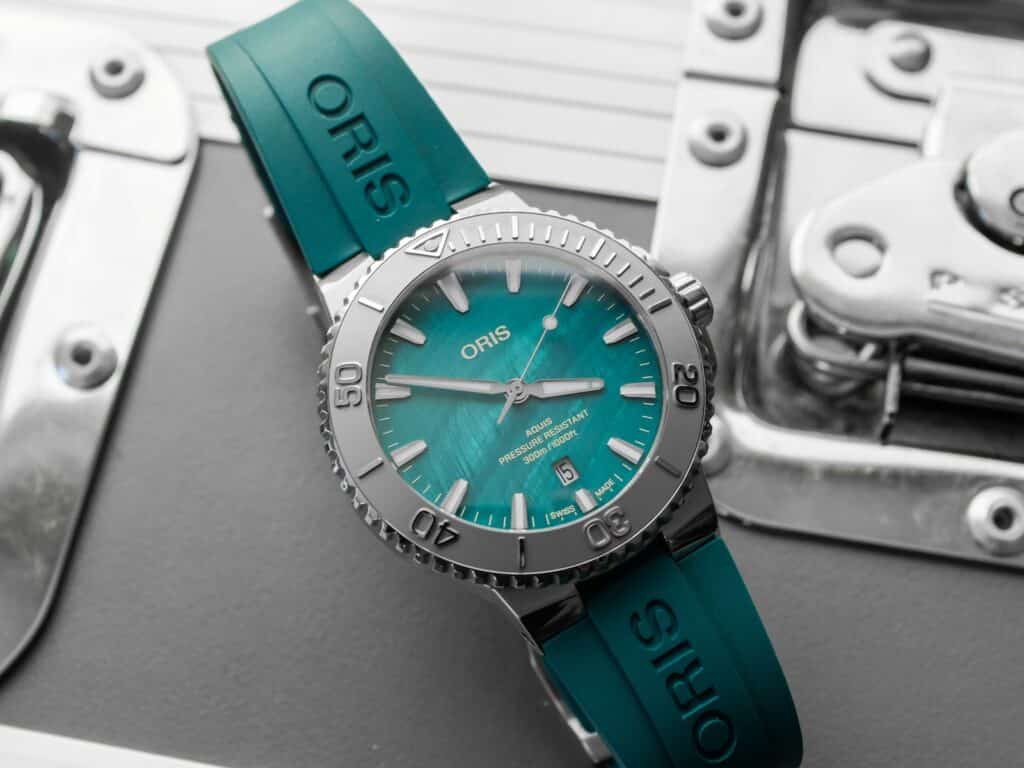
The Oris Aquis New York Harbor II needed more convincing. We’ve seen Oris experiment with plenty of Aquis dial variations and limited editions, and not all of them have landed with us. This one initially looked like another release outside our usual tastes, but handling it during the review changed our perspective. We found ourselves paying more attention than expected, even if parts of its character still weren’t an obvious fit for us. The Billion Oyster Project connection also gives the watch more substance than a limited-edition colorway with a convenient story attached. Part of the proceeds supports efforts to restore oyster populations in New York Harbor, giving the 2,000-piece release a purpose beyond exclusivity. We won’t pretend every Aquis limited edition needs to win us over, but this one gave us a better reason to look twice.
Dial and Bracelet/Strap: Everyday Refinement vs. Mother-of-Pearl Character
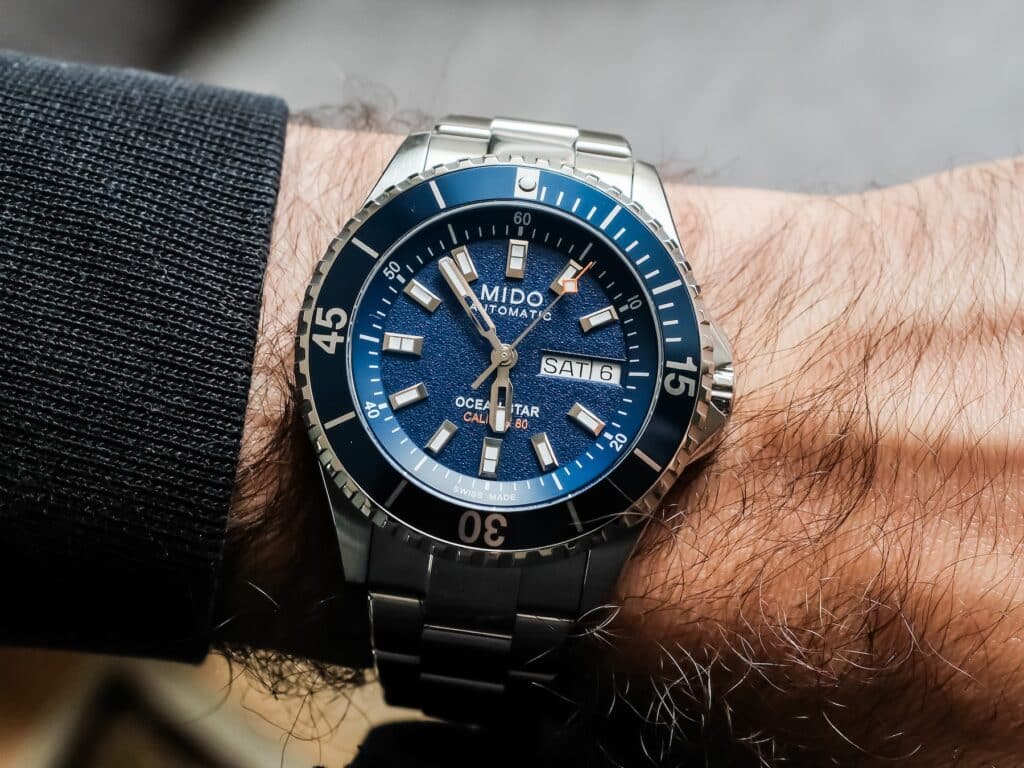
Mido did more than slap some texture on the Ocean Star 200’s dial and call it a refresh. The raised outer flange adds depth, the applied markers have more substance, and the thicker hands bring the whole layout into better balance. The grained finish is another detail that makes a difference, shifting with the light instead of leaving the dial flat. Mido also knows when to leave things alone. The orange tip on the second hand and the Caliber 80 text provide a familiar splash of color without turning the dial into an orange-accented distraction. Of the three versions we wore, the white dial was our clear favorite. Its contrast against the black bezel gives it the strongest tool-watch character, and the textured surface keeps the white from looking plain. The blue version plays it safer with the familiar matching-dial-and-bezel combination. The silver offers a middle ground, with its changing texture and restrained orange details growing on us over time.
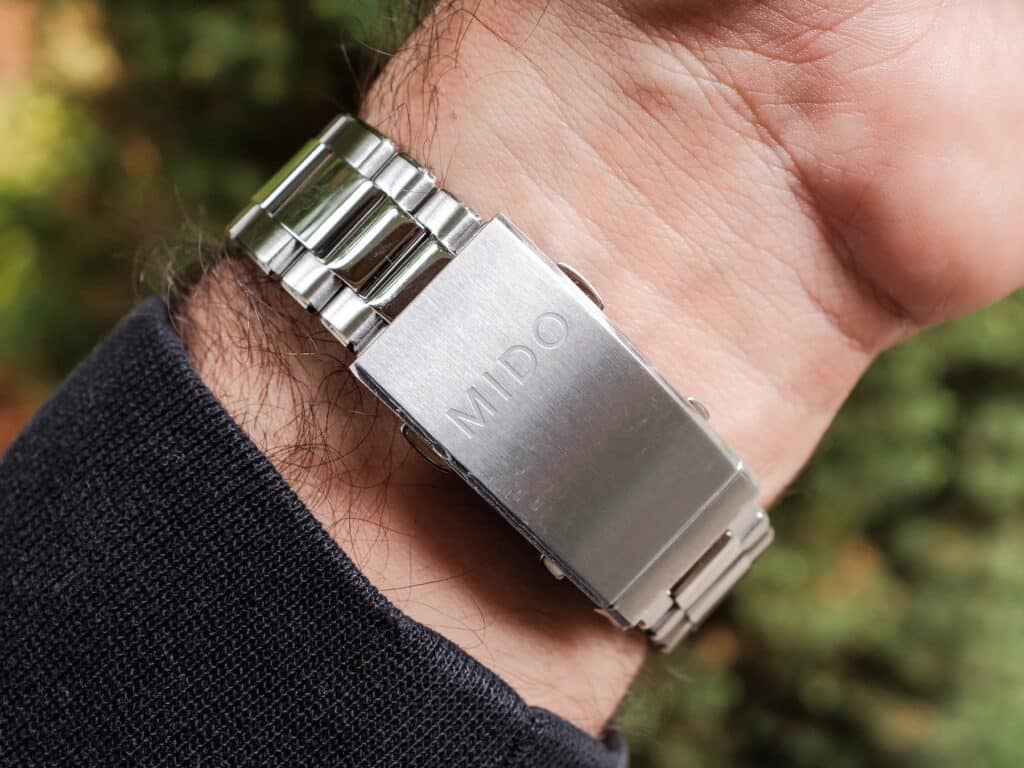
The bracelet is another example of Mido getting the details right without overcomplicating things. Its redesigned three-link construction mixes brushed outer links with polished center links, adding some visual polish without making the Ocean Star 200 look like it’s trying to moonlight as a dress watch. The quick-release spring bars are a welcome touch for anyone who likes switching straps, and the integrated diver’s extension adds useful flexibility without turning the clasp into a puzzle. None of this is revolutionary, and it doesn’t need to be. These are sensible improvements to a watch that already had a lot going for it.
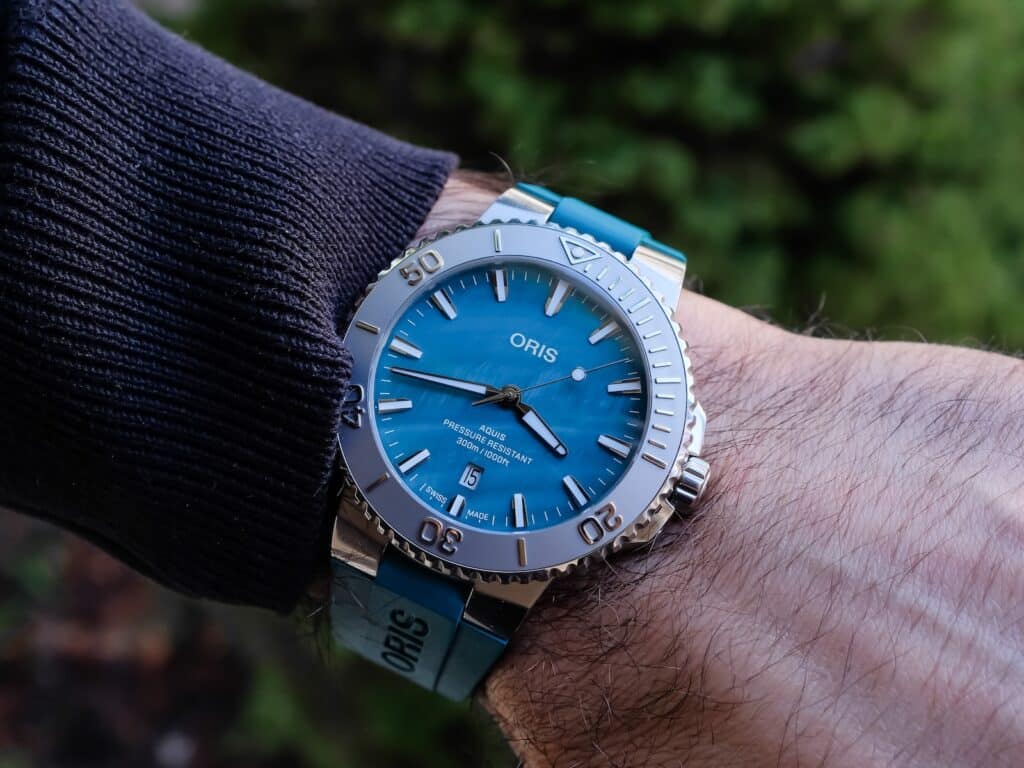
The Oris Aquis New York Harbor II takes a bigger swing with its dial, and this time the unusual choice works. We don’t see colored mother-of-pearl on a dive watch every day, and the aqua-green surface gives the Aquis a distinct personality. In brighter light, green tones move across the dial; in dimmer conditions, it settles into a muted, almost stone-like finish. That change in character is what sold us on it. A dial like this could easily become distracting or sacrifice legibility for visual novelty, but we never found it difficult to read. The mother-of-pearl effect has enough presence to make us look twice without demanding our attention every time we check the time. As mentioned in our dedicated review, we weren’t immediately drawn to this edition when it was announced, but seeing how the dial behaves in different lighting made a convincing case for it.

We also came away happier with the matching aqua-green rubber strap than we expected. Deployant systems aren’t usually our first choice, but this one worked well once sized, feeling comfortable and secure on the wrist. We also preferred it to a bracelet on this particular Aquis. There’s already plenty of case on the wrist, and adding more weight could have made it less enjoyable to wear throughout the day. The rubber strap keeps things comfortable while tying the whole look together. It feels consistent with the wearing experience we remember from earlier Aquis models, which is a good thing. Oris didn’t need to get clever with the strap here; the dial already does enough of the talking.
Build Quality & Technical Approach
The Mido Ocean Star 200 and Oris Aquis New York Harbor II both bring Swiss dive-watch credentials to the table, but one asks considerably more from your wallet than the other. This is where we look past the mother-of-pearl dial and limited-edition story to the stuff that matters after the honeymoon phase: movement performance, case construction, water resistance, crystal, and lume. A fancy dial can win the first date, but the engineering has to carry its weight once you start wearing the watch.
Movements:
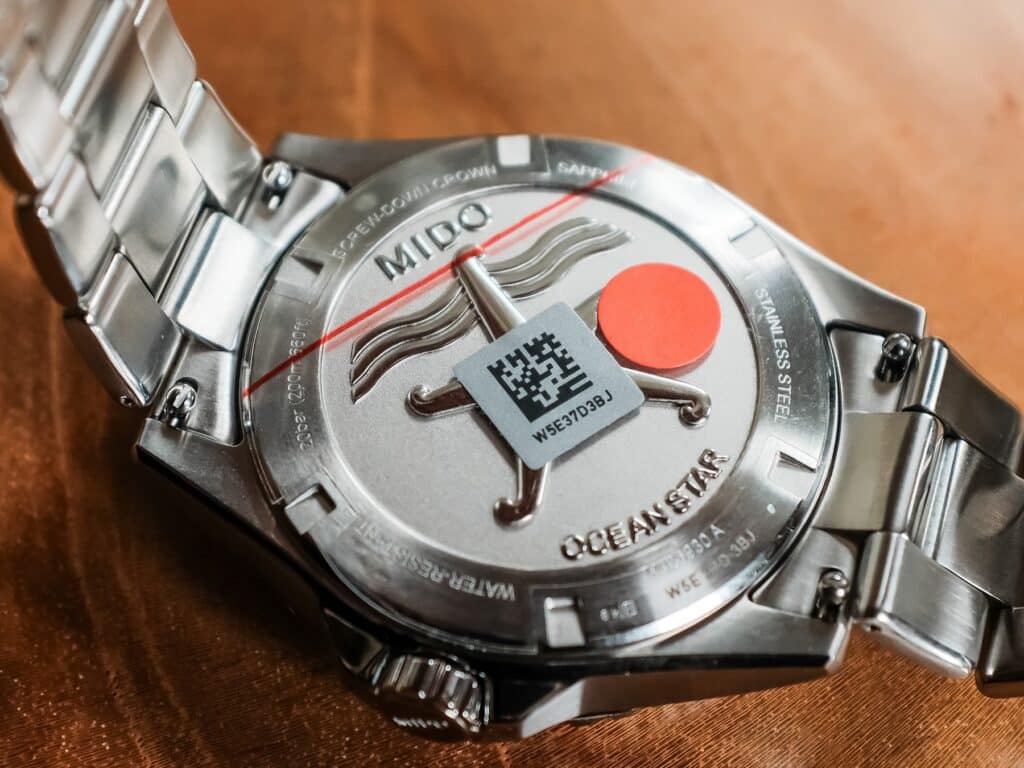
The Mido Ocean Star 200 runs on the Caliber 80 Day-Date, a movement we’ve seen across the Swatch Group portfolio, and it keeps making a strong case for itself. The big selling point is its 80-hour power reserve, which proved useful when we were rotating between three versions of the Ocean Star 200. We could park one for a couple of days, pick it up again, and find it still ticking. No resetting the time and date, no winding ritual, no muttering at the watch box before coffee. The Nivachron balance spring also improves resistance to magnetism and everyday environmental influences. That’s the kind of practical engineering we appreciate more than another impressive-sounding acronym. The movement is hidden behind an embossed solid caseback, so there’s no exhibition window to admire the machinery. That’s fine by us.

The Oris Aquis New York Harbor II uses the Caliber 733, based on the Sellita SW200-1. You get automatic winding, hacking seconds, a date display, and around 41 hours of power reserve. It’s a familiar setup, and we’d rather have a movement that’s easy to understand and service than one wrapped in an in-house mystique that doesn’t improve the experience. The SW200-1 is widely understood, straightforward to service, and predictable. In the review, its accuracy landed where expected, with no surprises or drama. The catch is that 41 hours leaves little room for a watch-box vacation. Wear the Oris regularly, and the reserve is perfectly workable; rotate it out for a couple of days, and you may be setting it again before heading out. The Mido’s extra autonomy is hard to ignore here, particularly given its substantially lower price.
Case Construction, Finishing, and Wearability:
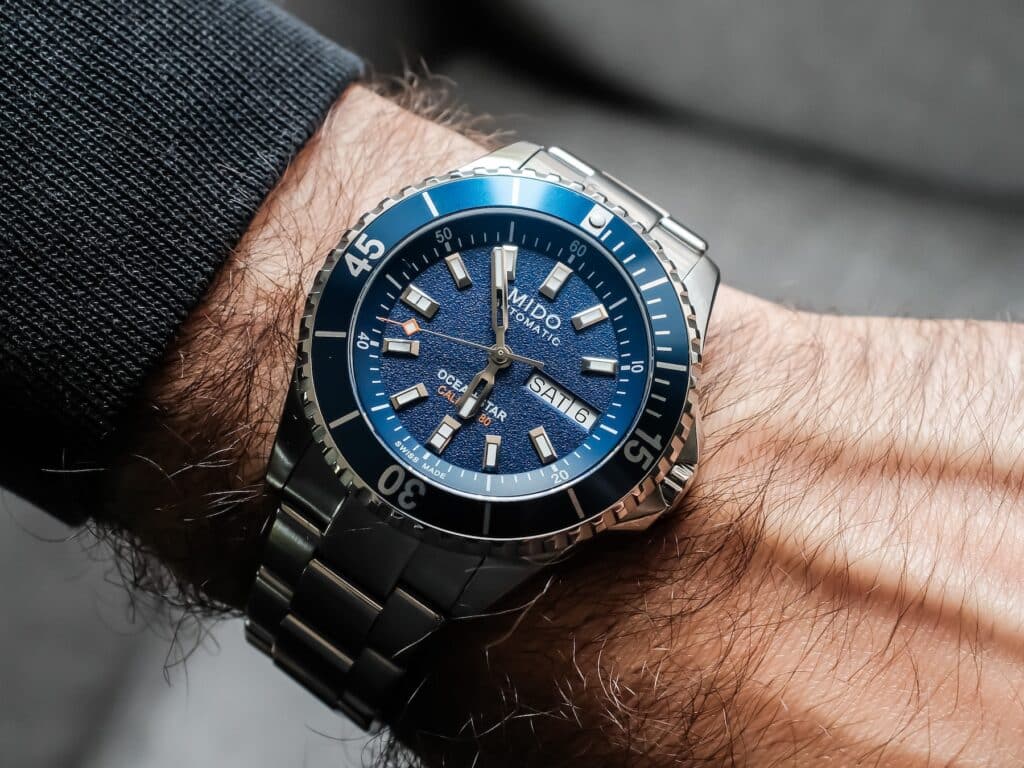
The Mido Ocean Star 200 proves a dive watch doesn’t need to become a wrist-mounted dumbbell to feel substantial. At 41mm wide, 47.03mm lug-to-lug, and just 11.7mm thick, it felt well-proportioned over several weeks as we rotated through three versions. Even at 172 grams on the bracelet, it never became cumbersome during a full day of wear. That’s a welcome change from bulkier dive watches. The refreshed case also brings a broader chamfer that catches the light more effectively, giving the Ocean Star 200 a sharper profile than its predecessor. What we appreciate most is the restraint. The redesign doesn’t rely on exaggerated angles or unnecessary bulk to look modern; the case, dial, and bracelet feel like parts of the same well-considered package.

The Oris Aquis New York Harbor II looks like it should wear larger than it does. A 43.5mm case, just over 13mm thick, and roughly 51mm lug-to-lug make for an imposing set of numbers, but on a 6.75-inch wrist, it sat more compactly than expected. The curved lugs and integrated rubber strap do the heavy lifting here, keeping the case close to the wrist instead of letting it sprawl. Most of the stainless steel case is brushed, while polished edges along the sides catch enough light to add life without becoming a distraction. It’s a sensible approach for a watch whose dial already demands attention. The engraved caseback, with oyster details tied to the Billion Oyster Project, gives the collaboration a complete identity. The Oris still has plenty of presence, but its case shape and strap integration keep that size from becoming a daily-wear penalty. The Mido remains the more manageable option for smaller wrists, although the Oris wears better than its dimensions suggest.
Crystals and Bezels:
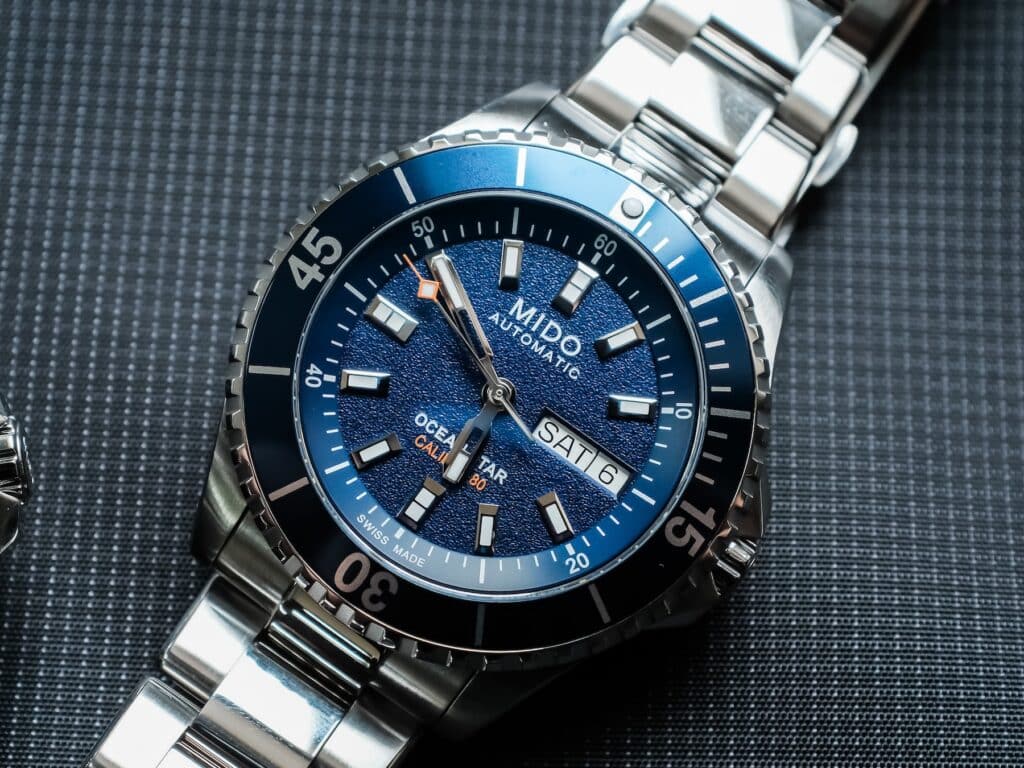
The Mido Ocean Star 200 gets the crystal treatment right without overcomplicating things. Its sapphire crystal has an anti-reflective coating on both sides, keeping the dial visible without excessive reflections. The bezel sticks to the same practical brief. Larger numerals and markers make elapsed time easier to read at a glance, while the bezel’s substantial appearance reinforces the Ocean Star’s dive-watch character. There’s no need to reinvent a component that’s supposed to be functional first. We want a crystal that gets out of the way and a bezel we can read without squinting, and Mido keeps both firmly in focus.

The New York Harbor II takes a more industrial approach to its bezel, pairing a domed sapphire crystal with an AR coating on the inside and a stainless steel bezel insert instead of ceramic. The crystal does its job quietly, keeping reflections under control without exposing the coating to the scuffs that external treatments can pick up. The bezel is where things get more interesting. We were more impressed by its action than by the material choice: firm and precise, with a purposeful feel that suits the substantial case. The crown follows suit, operating smoothly without play or wobble. Ceramic might have been the more familiar choice, but the steel insert gives this Aquis a rawer look, while the tactile feedback reinforces its functional character.
Water Resistance & Lume:
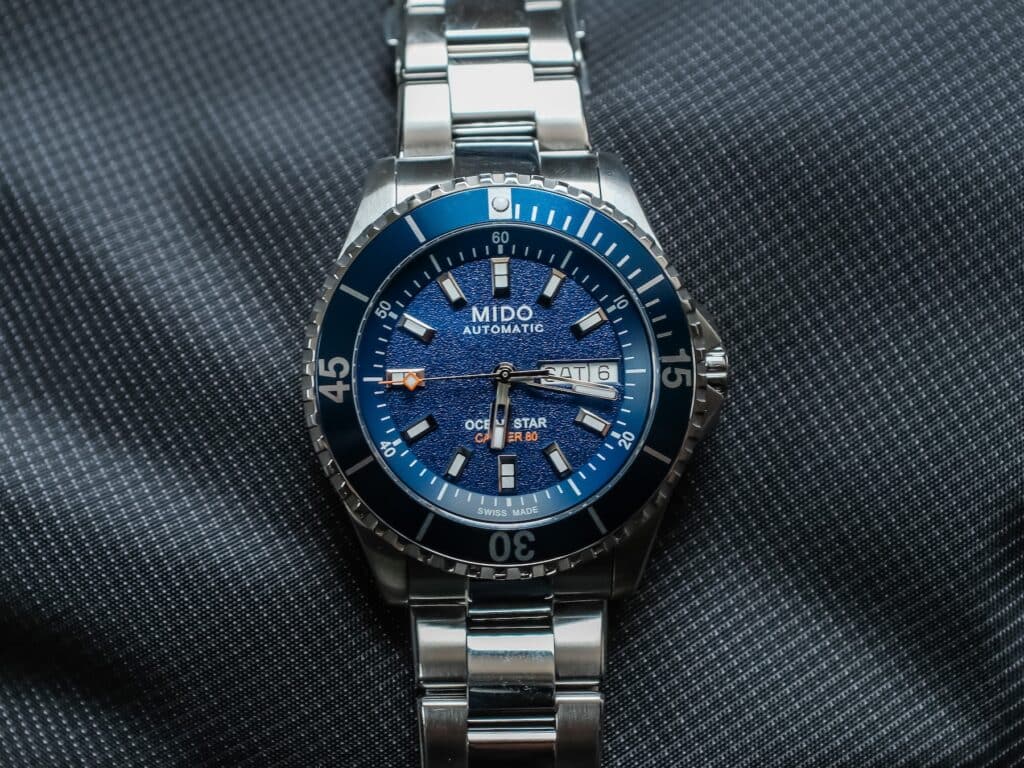
The Mido Ocean Star 200 offers 200m of water resistance and a screw-down crown, providing more than enough protection for swimming, recreational diving, and everyday wear. Most of us won’t get anywhere near that depth, but it’s reassuring to know the watch can handle more than the occasional splash. The Super-LumiNova-coated hands and indexes also keep the dial readable in the dark. No extra tricks here, just the essentials done right: enough water resistance for a capable dive watch and clear markers when daylight disappears.

The Oris Aquis New York Harbor II raises the water-resistance rating to 300 meters. That’s more than most of us will ever need, but it confirms there’s a proper dive watch beneath that mother-of-pearl dial. Oris uses BGW9 Super-LumiNova on the shield-shaped hour markers, hour and minute hands, and lollipop second hand, so the key time-telling elements are covered when ambient light fades. The additional 100 meters of water resistance gives the Oris a technical advantage on paper, although it’s unlikely to make a meaningful difference for most owners.
Cost Considerations
At around $990 at the time of review, the Mido Ocean Star 200 makes a convincing case for spending wisely without settling for less watch than you want. After several weeks with three versions, we found that the refresh brought more to the table than a few new dial colors. The sharper case definition, added dial depth, and more cohesive design all make the watch feel more refined on the wrist. None of these changes needs a press-release drumroll, and that’s precisely the point. We’d rather pay for thoughtful refinement than a marketing story about how everything has changed when it really hasn’t.
There’s also something to be said for how much versatility Mido delivers at this price. The 41mm case feels manageable throughout the day, the redesigned bracelet is comfortable, and the 80-hour power reserve makes the Ocean Star especially convenient for anyone rotating between multiple watches. Those aren’t necessarily features that grab attention in a product announcement, but they’re the kinds of details that matter after months of ownership. We also appreciate that the three dial options offer genuinely different personalities without fundamentally changing the watch’s appeal. Whether you prefer the white, blue, or silver version, you’re getting the same capable everyday diver.
At $3,000, the Oris Aquis New York Harbor II has a much tougher argument to make. The mother-of-pearl dial gives the watch a personality a standard black-dial Aquis can’t replicate. But we’re still looking at roughly three times the Mido’s price, and even after spending time with the Oris, we found it better suited to the right mood than an automatic we’d reach for every day. That’s not necessarily a knock against it. If the dial and conservation partnership are what drew you in, those are meaningful reasons to buy this particular Aquis. But you’re paying for that distinctive experience, not three times the everyday usefulness.
That distinction becomes more important when considering what the additional money actually buys. The Oris offers greater water resistance, a distinctive case design, and a limited-edition identity that the more conventional Mido can’t match. Its finishing and bezel action also impressed us during the review. However, the shorter power reserve and larger dimensions make it difficult to argue that the extra spending translates into a more practical ownership experience. The Oris feels special in ways that aren’t necessarily reflected on a specification sheet, but those qualities are inherently more subjective than the advantages offered by the Mido.
Ultimately, the roughly $2,000 difference comes down to what you expect from a watch at this price. The Mido delivers the features, refinement, and wearing experience we’d want from a Swiss automatic diver without demanding much compromise. The Oris makes more sense for someone who already appreciates the Aquis platform and finds something particularly compelling about this edition’s dial and conservation connection. Neither approach is inherently wrong, but the price difference is substantial enough that we’d want a strong personal attachment to the Oris before choosing it over the Ocean Star 200.
Final Thoughts: Is the Oris Aquis Worth Three Times the Price?
We’d take the Mido Ocean Star 200 as the better overall purchase. Its balanced proportions, 80-hour power reserve, and thoughtful finishing make it a complete everyday diver without asking us to spend luxury-watch money. More importantly, the refresh improves a formula that already worked instead of relying on exclusivity to justify its appeal. After spending several weeks with three different versions, we came away appreciating how little Mido asks us to compromise. The Ocean Star isn’t trying to be the most unusual watch in the collection, but it’s exactly the kind of diver we’d find ourselves reaching for regularly.
The Oris Aquis New York Harbor II isn’t trying to win the same argument. Its aqua-green mother-of-pearl dial gives it a distinctive identity, and its connection to the Billion Oyster Project adds substance to the limited-edition story. Those details make it more emotionally engaging, particularly for someone who values owning something less conventional. What surprised us most was how much our opinion changed after getting it on the wrist. We initially dismissed it as another Aquis variation that wasn’t particularly suited to our tastes, but the dial’s shifting character and the comfort of the integrated rubber strap made us reconsider. That doesn’t mean we’d necessarily choose it over the Mido, but we understand its appeal far better than we did when it was announced.
So, is the Oris worth the 3x premium? For most buyers, we’d say no. The Mido delivers more of what we value in an everyday dive watch, and the price difference makes that recommendation relatively straightforward. Still, a watch doesn’t have to be the most practical choice to be worth owning. We’d recommend the Mido to anyone looking for a Swiss automatic diver to wear hard and often. Choose the Oris because its particular character speaks to you—not because a bigger price tag must mean a better watch.

Co-Founder and Senior Editor
Kaz has been collecting watches since 2015, but he’s been fascinated by product design, the Collector’s psychology, and brand marketing his whole life. While sharing the same strong fondness for all things horologically-affordable as Mike (his TBWS partner in crime), Kaz’s collection niche is also focused on vintage Soviet watches as well as watches that feature a unique, but well-designed quirk or visual hook.