There was a time when buying an affordable quartz dive watch meant accepting a few compromises. You could get something reasonably accurate, reasonably water resistant, and probably durable enough to survive a few vacations, but there wasn’t much reason to get excited about the watch itself. That’s changed quite a bit, particularly as familiar manufacturers like Timex and Citizen have continued developing inexpensive divers that offer more than their pricing might suggest. We’re now at a point where spending a few hundred dollars can get us a genuinely capable watch without having to make excuses for its construction or appearance.
The Timex Deepwater Meridian 200 and Citizen Eco-Drive Promaster Diver are particularly interesting examples, although they approach the category from different directions. Timex offers a substantial stainless steel case, sapphire crystal, attractive blue dial, and traditional battery-powered quartz movement. Citizen counters with a lighter, more compact design and solar-powered Eco-Drive technology that eliminates routine battery changes. Both offer compelling features at relatively accessible prices, but we’re interested in figuring out which one makes the stronger argument for our money.
Overview and Identity
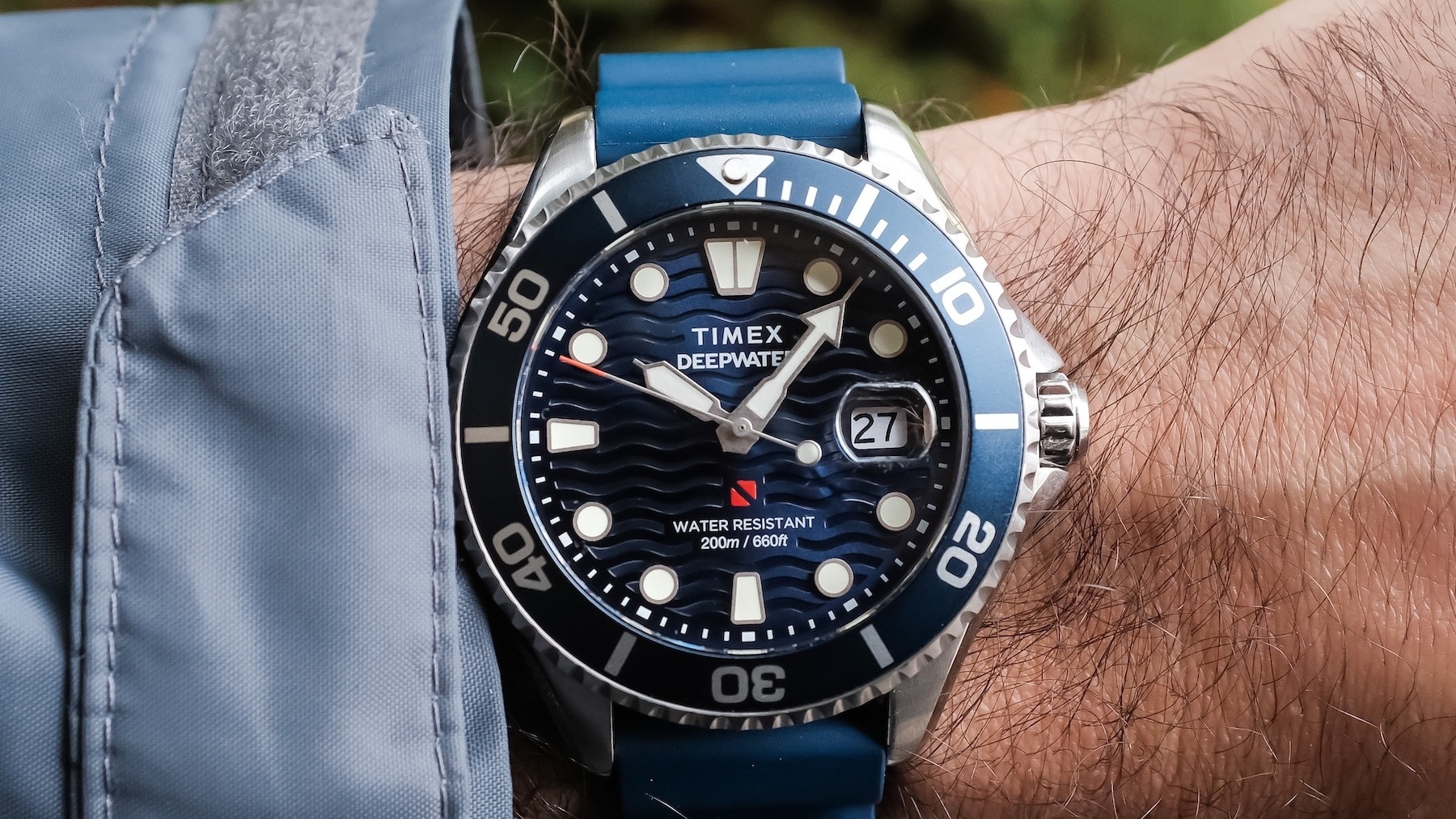
Timex has spent the last several years expanding beyond the inexpensive everyday watches and nostalgic reissues that many of us associate with the brand. The Deepwater collection, introduced in 2024, represents a more serious attempt to compete in the affordable dive watch category, with improved materials and designs that don’t rely entirely on the company’s historical reputation. The Deepwater Meridian 200 we reviewed was the blue-dial TW2W81500, a 44mm stainless steel diver that immediately reminded us of the substantial presence associated with watches like the Rolex Sea-Dweller. We aren’t suggesting the Timex offers anything approaching the same technical specifications or level of refinement, but there’s something appealing about how unapologetically substantial it feels. We borrowed the watch from a friend who had recently become interested in collecting, and it made a considerably stronger impression than we’d expected after just a couple of days.
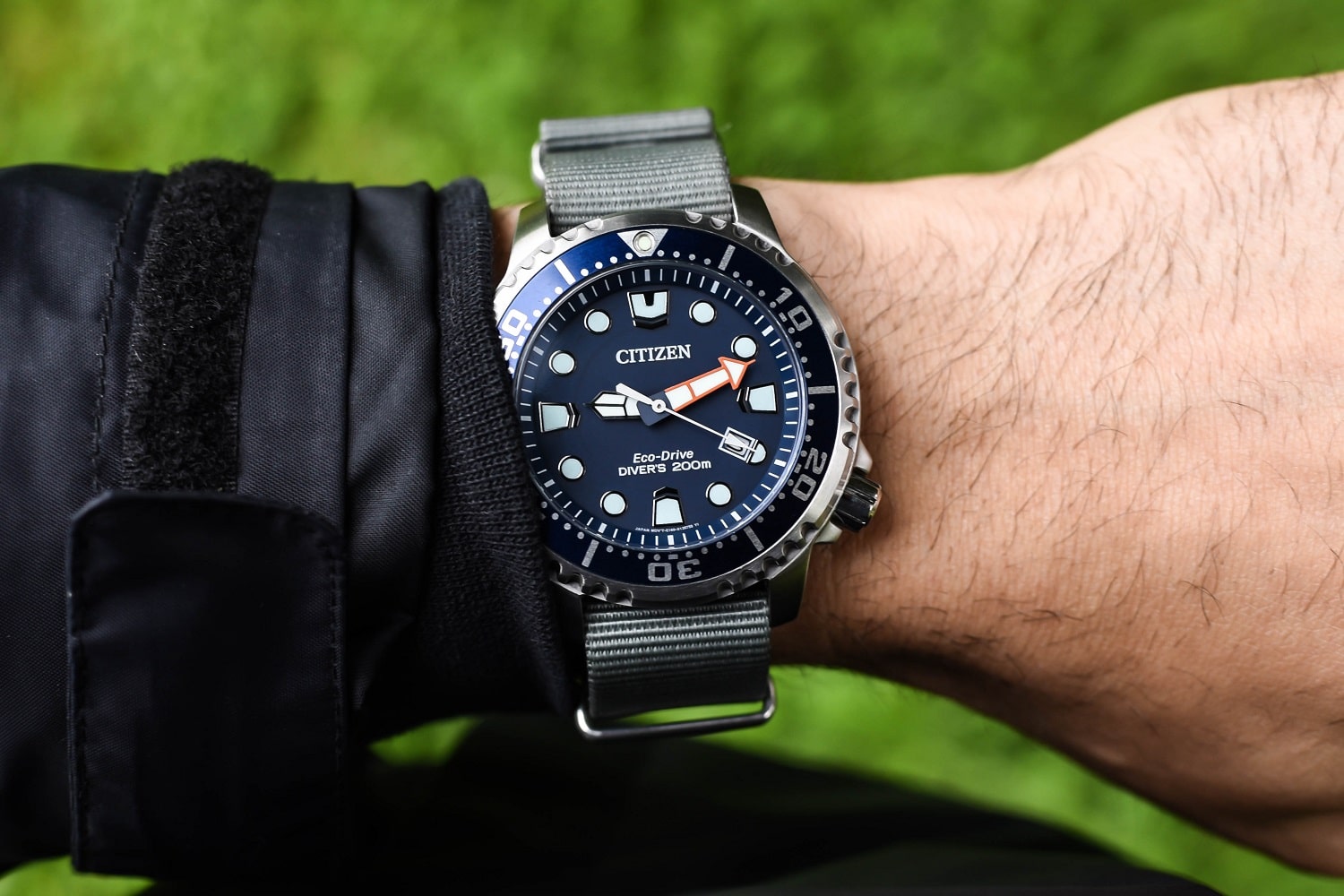
Citizen has a much longer history of producing serious dive watches, and the Promaster collection has become an obvious recommendation for anyone interested in something inexpensive, durable, and relatively uncomplicated. The Eco-Drive Promaster Diver BN0151-09L occupies a particularly interesting position within that collection because it combines an ISO-certified 200-meter dive-watch design with Citizen’s light-powered quartz technology. Our relationship with this particular model goes back considerably further than a normal review period. It entered the collection as a Christmas gift in 2016 and subsequently became one of our most frequently worn watches, accompanying us on hikes, swimming trips, and countless ordinary days. That’s a difficult track record to ignore when comparing it with something we’ve only had the opportunity to wear briefly.
Dial Design & Legibility: Timex’s Modern Styling vs Citizen’s Practical Simplicity
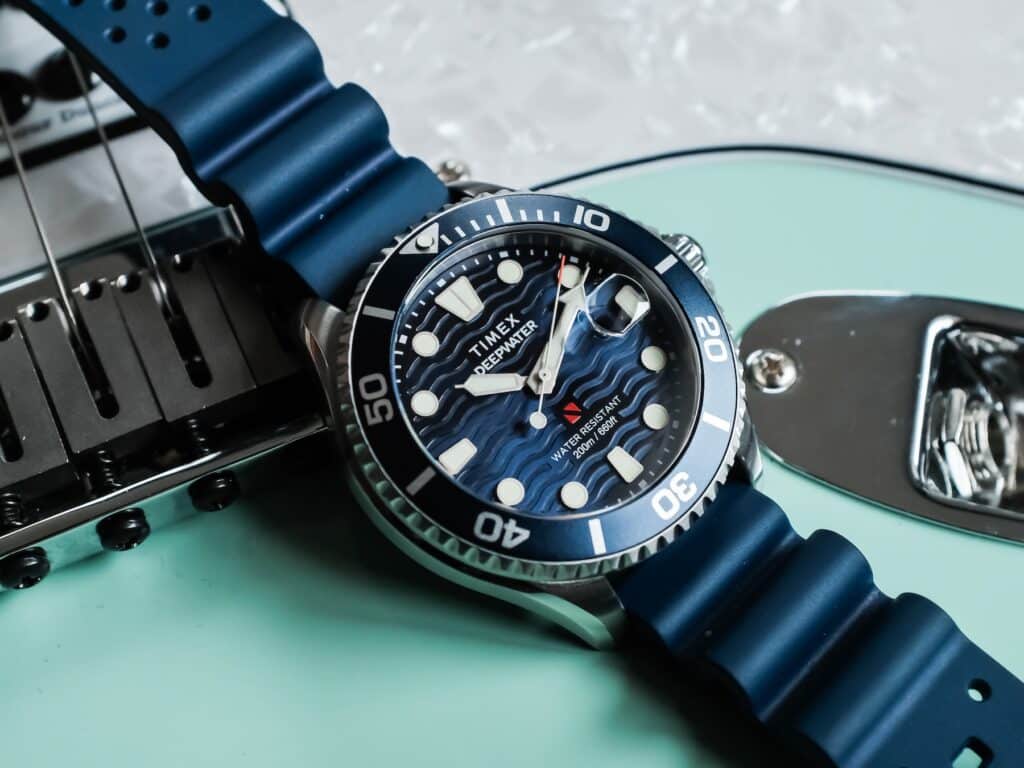
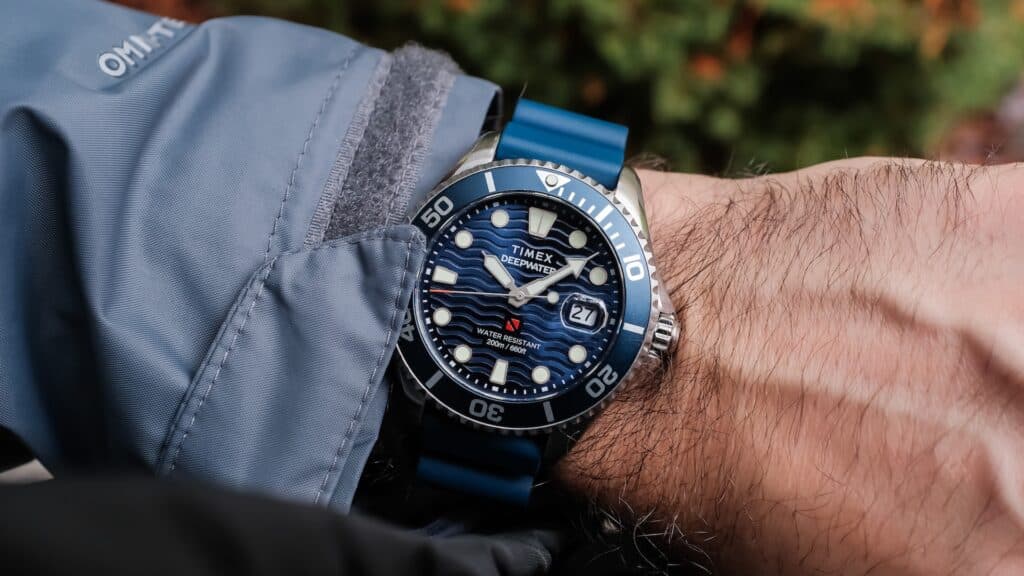
The Timex Deepwater Meridian 200 makes a strong first impression with its blue sunburst dial and engraved wave pattern. It’s a combination that inevitably brings certain more expensive Swiss dive watches to mind, but the execution has enough personality to avoid feeling like an outright imitation. The blue finish changes noticeably under different lighting conditions, while the applied hour markers and contrasting white text keep the dial from becoming too busy. There’s also a small red diver’s flag that adds a welcome bit of color without distracting from the overall arrangement.
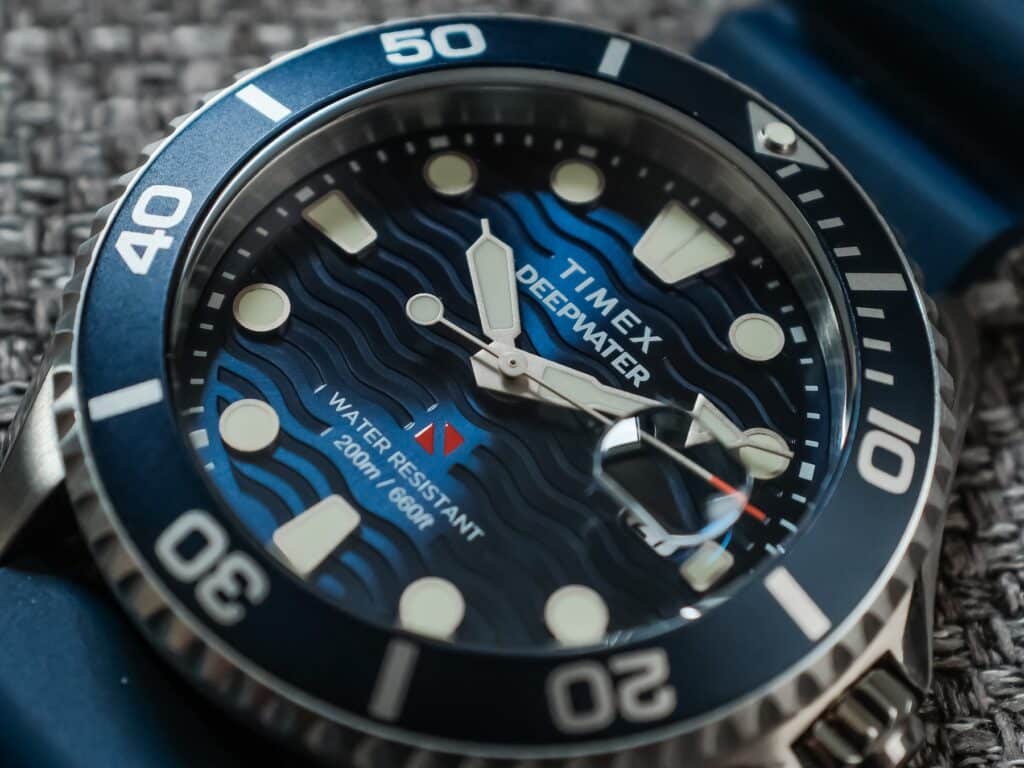
Timex also includes a date window at three o’clock with a magnifier positioned above it. Cyclops magnifiers aren’t universally popular, and we wouldn’t necessarily have missed this one if Timex had left it out. Fortunately, the sapphire crystal handles the magnification without introducing much distortion, and the feature feels reasonably integrated into the design. We were particularly impressed with how well Timex balanced the different shades of blue and decorative details without compromising the dial’s practicality.
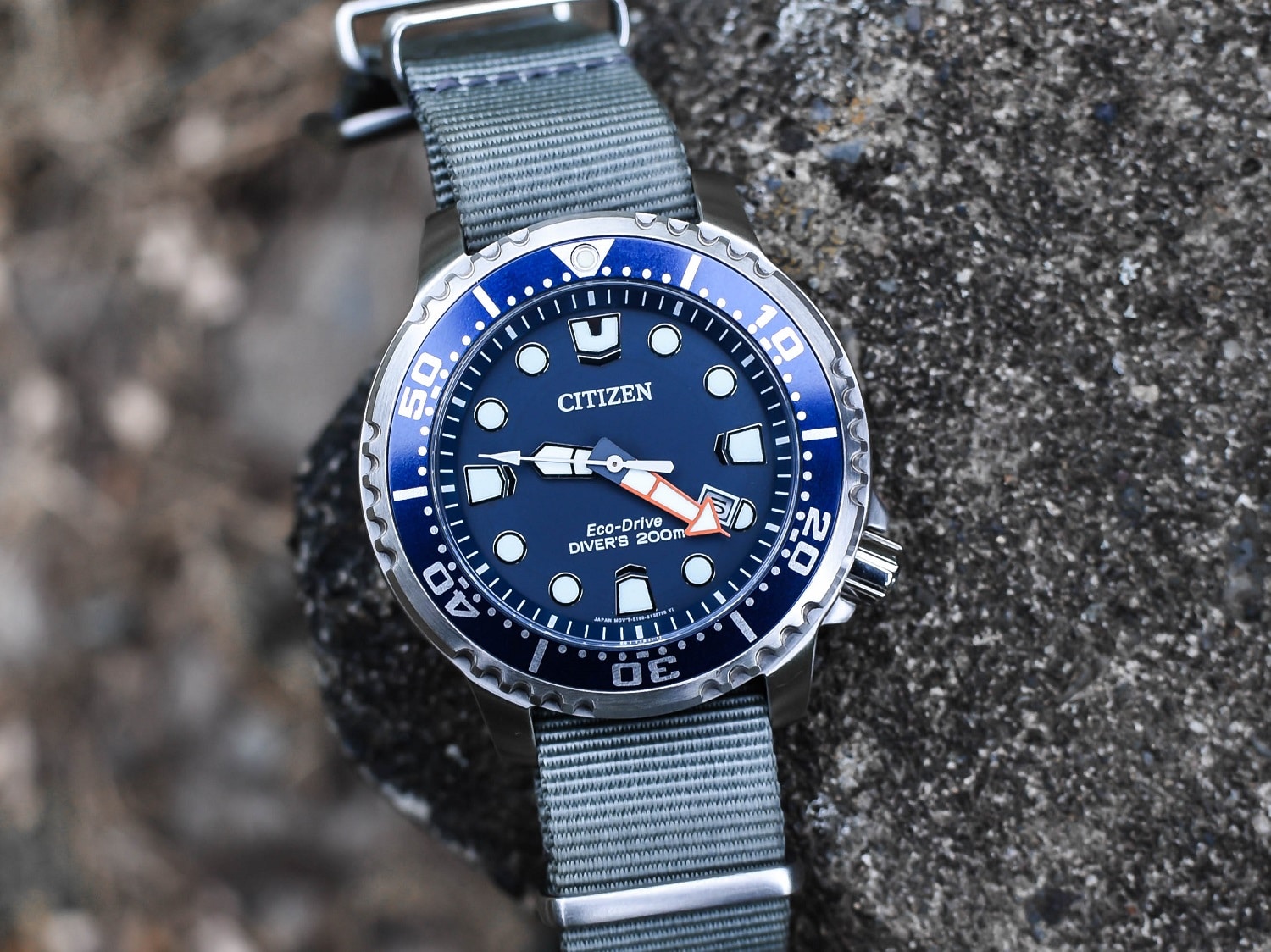
The Citizen Promaster Diver is considerably more restrained, but its dial is one of the reasons we’ve enjoyed wearing it for so many years. The large hands and clearly defined hour markers prioritize legibility, while the date window at approximately four o’clock manages to remain useful without drawing too much attention to itself. Our blue-dial example also has an attractive tendency to shift toward a deeper purple depending on the lighting, giving an otherwise straightforward design a little more personality.
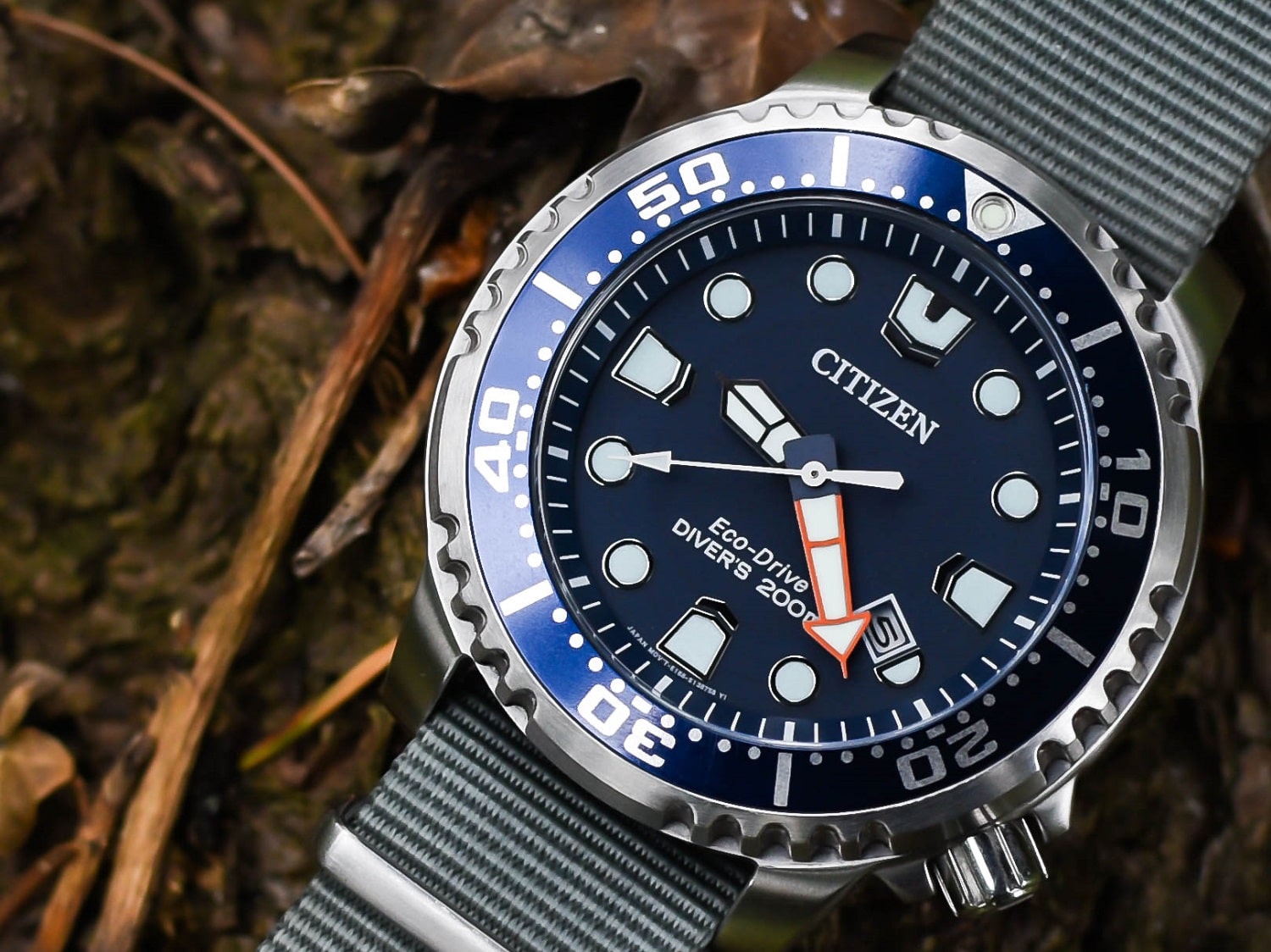
There’s nothing particularly elaborate about the Citizen’s dial construction, but that simplicity works in its favor. Where the Timex relies on its engraved wave pattern, applied markers, and decorative details to create visual interest, the Promaster concentrates on presenting the time as clearly as possible. We appreciate both approaches, although the Citizen’s straightforward layout has proven particularly satisfying during everyday wear. It’s a dial we can read almost immediately without having to think about it.
Build Quality & Technical Approach
Both watches offer 200 meters of water resistance and quartz movements, but the similarities become less obvious once we start examining the details. Timex emphasizes materials, a substantial steel case, and surprisingly satisfying mechanical controls. Citizen has built its reputation around an efficient light-powered movement, practical proportions, and a straightforward design that has proven itself over years of use. Neither approach is inherently better, although our experiences suggest they appeal to slightly different priorities.
Movements:
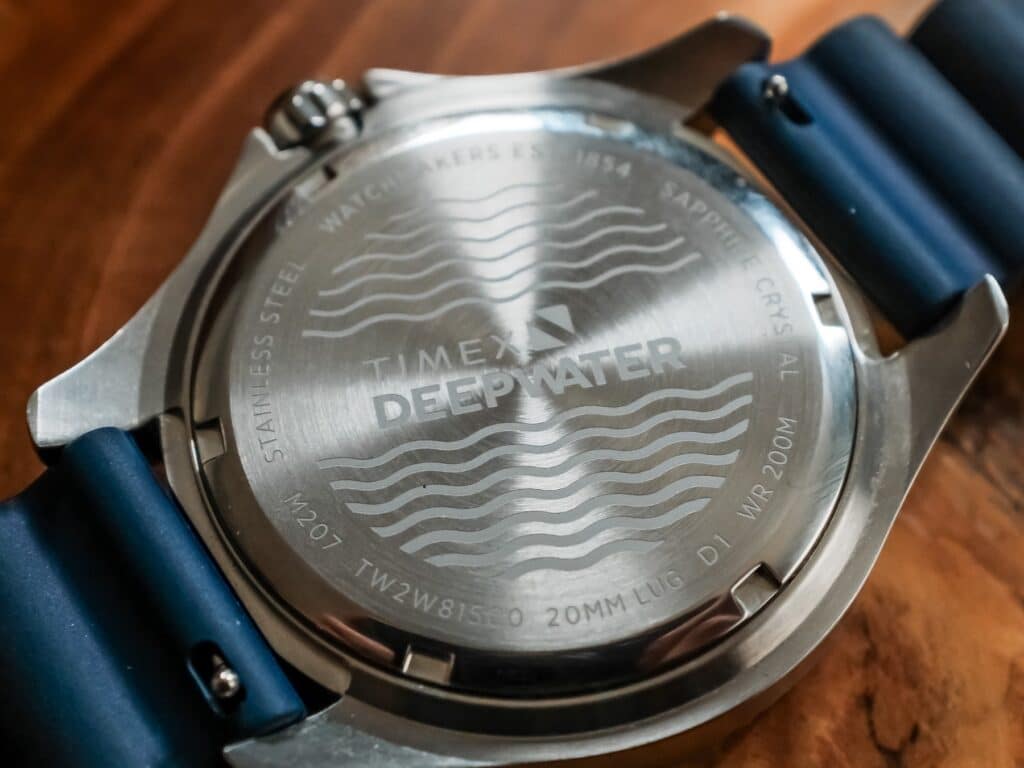
The Timex Deepwater Meridian 200 uses the Seiko Epson VX42E, a conventional battery-powered quartz movement with hacking seconds and a quickset date complication. Battery life is approximately three years, which should be more than adequate for most owners, although periodic replacements are part of the ownership experience. There’s nothing especially exotic about the movement, but we appreciated how straightforward it was to operate. Setting the time and date was uncomplicated, the hands responded cleanly, and the screw-down crown felt secure throughout the process. Timex could have chosen something more elaborate, but we’re not convinced this particular watch needs it.
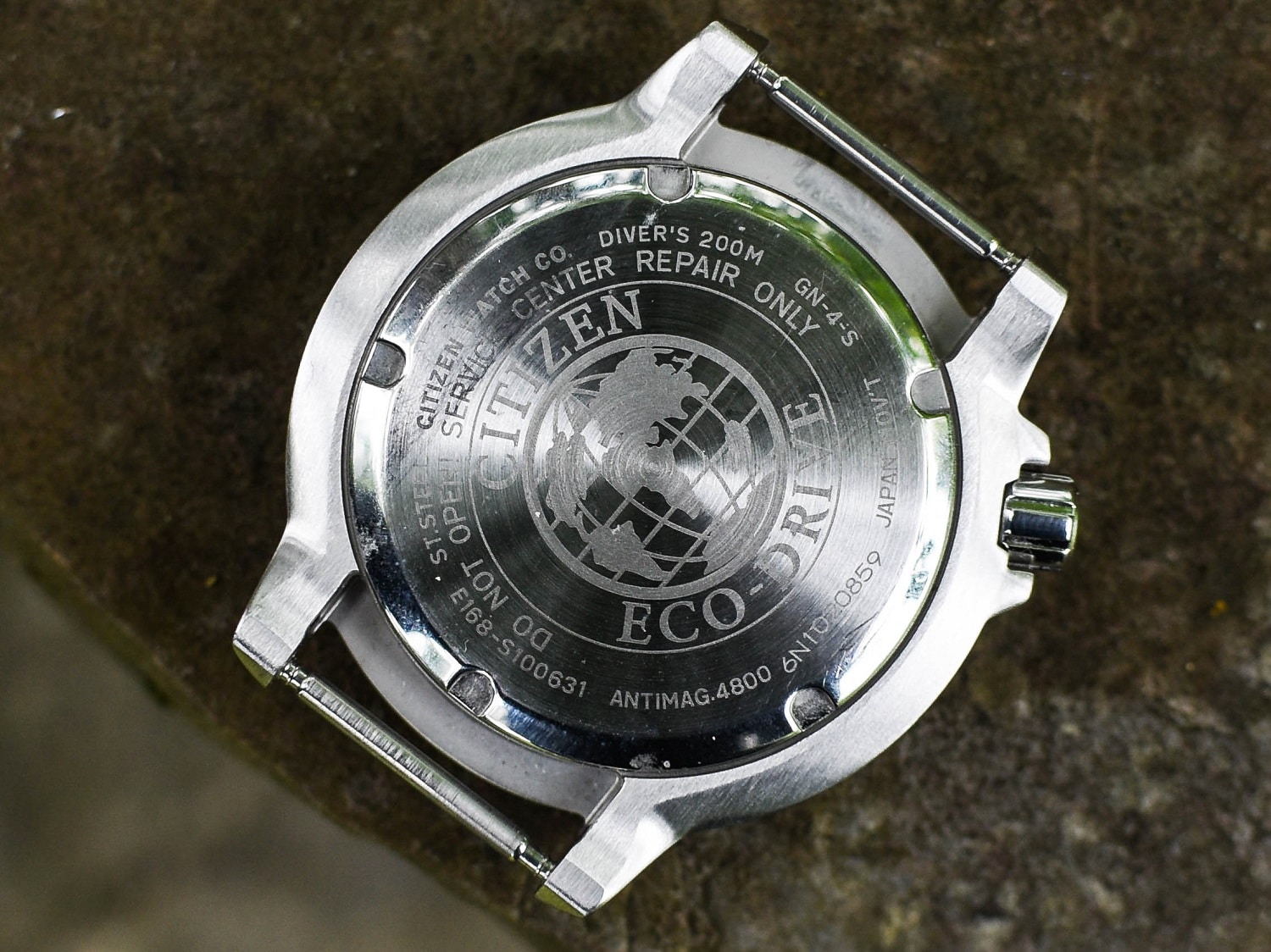
The Citizen Promaster Diver uses the Eco-Drive E168, a light-powered quartz caliber with approximately six months of operation available after a full charge. Citizen claims accuracy of around plus or minus 15 seconds per month, and the movement includes a low-charge indicator that causes the seconds hand to advance in two-second intervals. We’ve actually encountered that warning during ownership, although a few hours of light exposure were enough to restore normal operation. For a watch that frequently rotates in and out of the collection, there’s something particularly appealing about not having to think about conventional battery replacements every few years.
Would we choose Citizen’s Eco-Drive technology over the Timex’s traditional quartz movement? Absolutely, although that’s not a criticism of the VX42E. Both movements provide the accuracy and convenience we’d expect from a quartz diver, but Citizen eliminates one of the few recurring maintenance requirements associated with ordinary battery-powered watches. The Timex remains perfectly practical, and we wouldn’t avoid buying it simply because the movement isn’t solar powered. Still, when everything else is relatively close, Eco-Drive gives the Promaster a meaningful advantage.
Case Construction, Finishing & Wearability:
The Timex Deepwater Meridian 200 measures 44mm across, approximately 50.5mm lug to lug, and roughly 12.5mm thick based on our hands-on measurements. It’s a substantial watch, although we were surprised by how comfortably it wore given its dimensions. The lugs curve downward toward the wrist, and the relatively flat caseback helps keep the watch from feeling excessively tall. There’s definitely some weight to the construction, but it feels appropriate for a diver that seems determined to communicate its toughness through sheer physical presence.
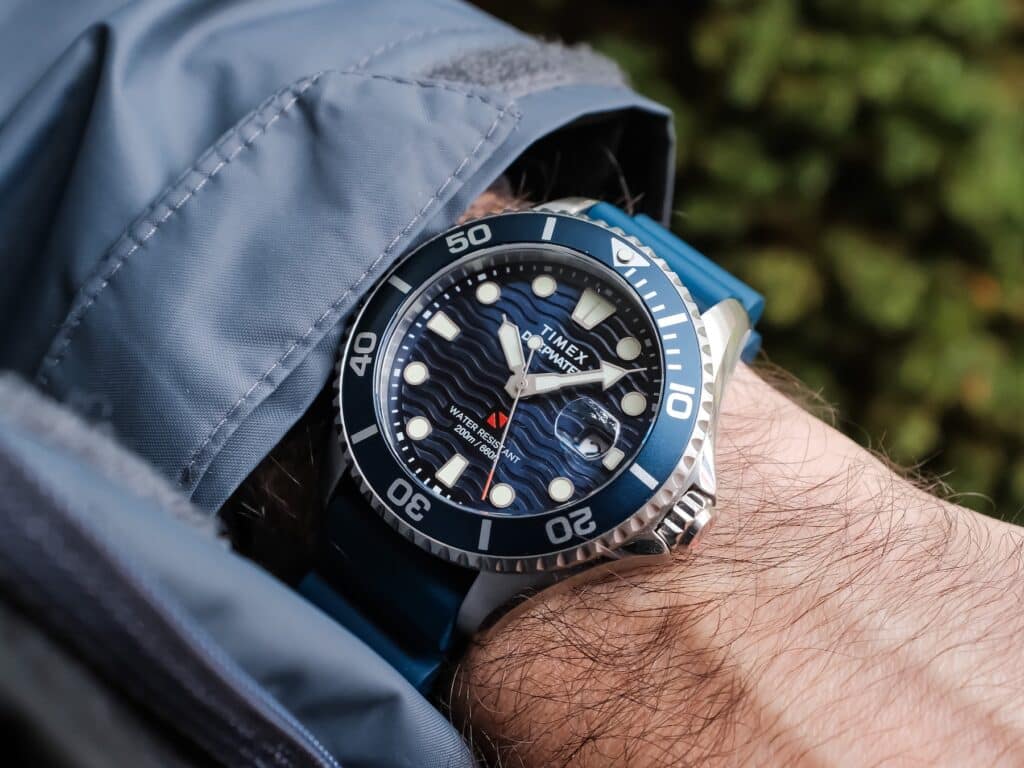
What impressed us most was how thoughtfully the smaller mechanical details were executed. The crown threads smoothly, with enough resistance to feel secure without becoming unpleasant to operate. The case also feels more substantial than the inexpensive Timex watches many collectors probably remember from years ago. We wouldn’t mistake it for a considerably more expensive professional diver, but the materials and construction create an experience that feels genuinely satisfying. It’s the sort of watch that makes us wonder why Timex doesn’t pursue this direction more often.
The Citizen Promaster Diver measures 43mm across, approximately 48mm lug to lug, and just 11.5mm thick. Those dimensions might initially suggest something only marginally smaller than the Timex, but the actual wearing experience is noticeably different. The compact lug arrangement gives the Citizen an almost lugless appearance, while its lightweight construction makes it particularly comfortable, especially after we replaced the original polyurethane strap with a NATO. During our years of ownership, we’ve found it easy to wear for extended periods without becoming overly conscious of its size.

There’s also a practical advantage to the Citizen’s relatively simple case design. The screw-down crown sits near four o’clock, tucked close to the case where it remains accessible without digging into the wrist. We’ve worn this watch swimming, hiking, and through plenty of ordinary activities without wishing it had a more elaborate construction. The Timex made a stronger impression through its weight and substantial feel, but the Citizen’s compact proportions and proven comfort give it the advantage for the kind of daily use we’ve actually put it through.
Crystals and Bezels:
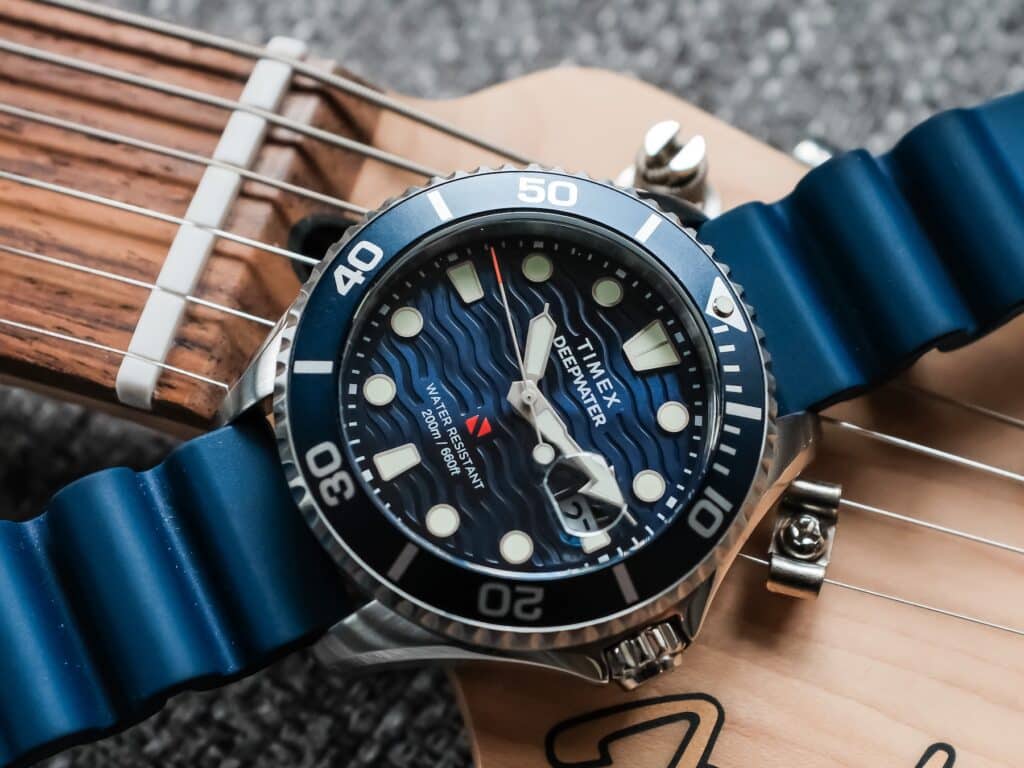
Timex equips the Deepwater Meridian 200 with an anti-reflective sapphire crystal, which is a particularly welcome feature at this price. The date magnifier isn’t necessarily our favorite design choice, but we didn’t encounter meaningful distortion during our review. The aluminum bezel was even more impressive. Its 120-click action felt firm and precise, with none of the looseness, hollow feedback, or gritty rotation we’ve encountered on some inexpensive divers. It’s satisfying enough that we’d happily spend a little more time operating it than any reasonable person actually needs to.
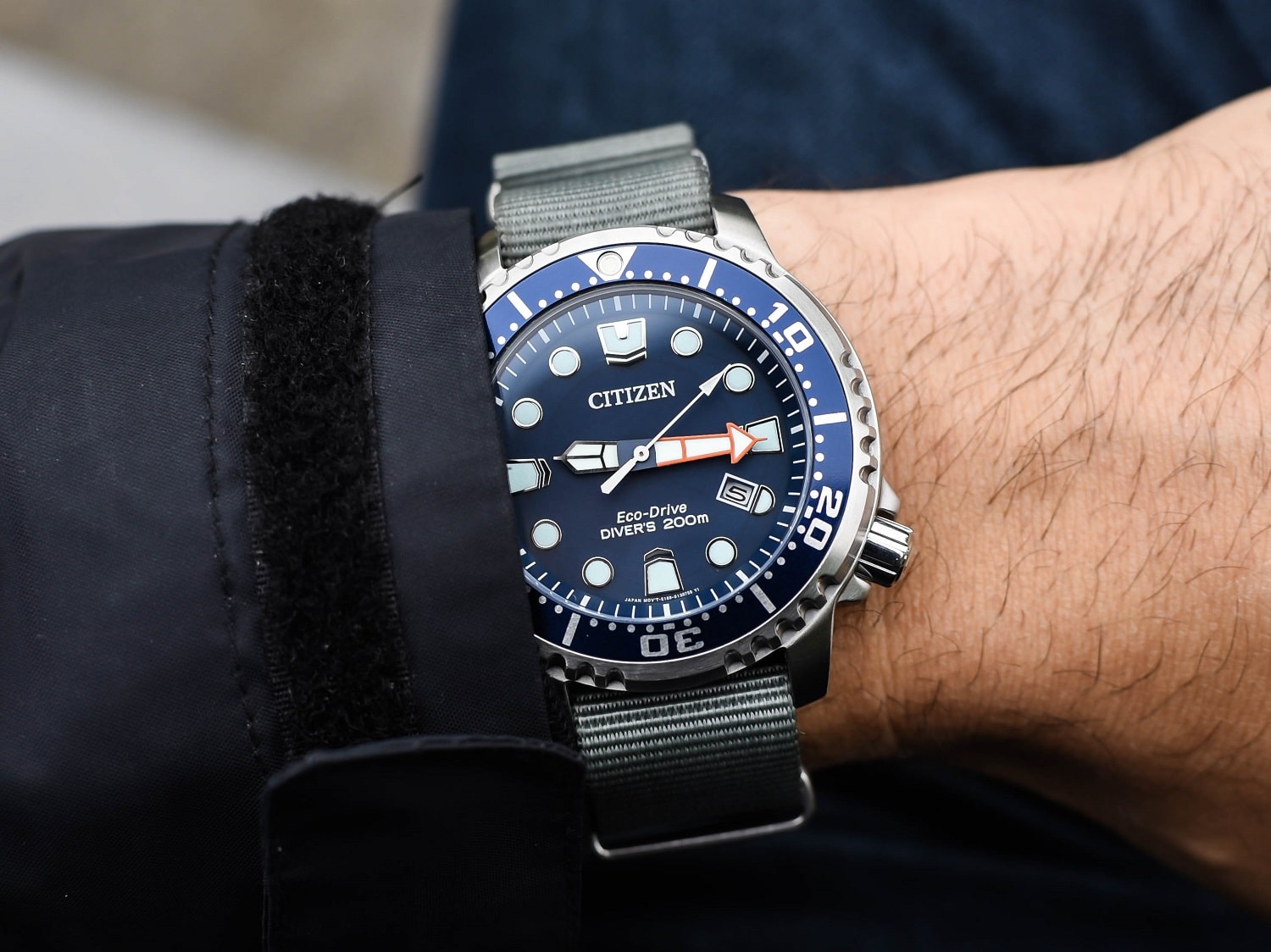
The Citizen uses an anti-reflective mineral crystal, a specification that appears less impressive on paper but has proven entirely adequate throughout our ownership experience. We haven’t encountered the chips or scratches we’d ordinarily worry about with mineral glass, although sapphire would obviously provide greater resistance to everyday wear. Citizen also uses an aluminum bezel with a 60-click mechanism that aligns accurately and provides straightforward timing functionality. We appreciate the shorter rotation sequence, but the bezel’s teeth aren’t particularly easy to grip. The Timex has the better tactile experience here, and its sapphire crystal gives it another advantage for buyers who prioritize materials and scratch resistance.
Water Resistance & Lume:
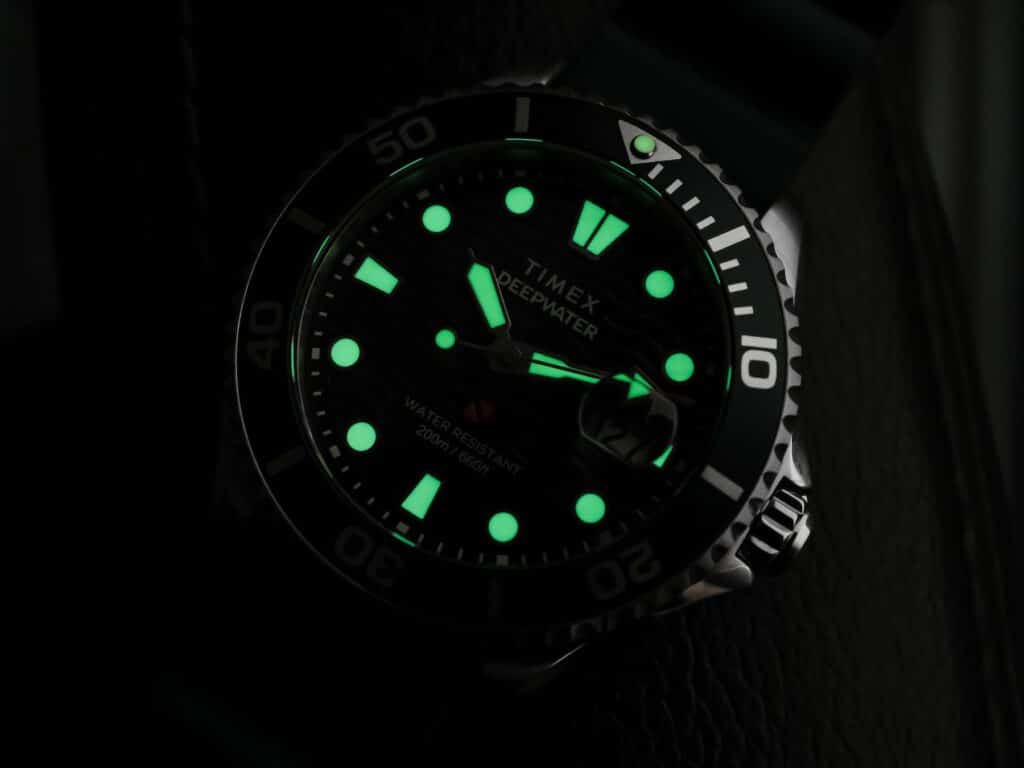
The Timex Deepwater Meridian 200 offers 200 meters of water resistance, supported by a screw-down crown and caseback. That’s a reassuring specification for a watch intended to handle swimming and other activities around water, even if we’re unlikely to approach anything resembling its maximum rated depth. Timex also applies Super-LumiNova to the hands and hour markers, and our hands-on experience revealed impressive brightness and useful staying power. The combination of clearly defined markers and effective luminous treatment helps reinforce the Deepwater’s identity as a functional dive watch rather than something designed merely to look the part.
The Citizen Promaster Diver also offers 200 meters of water resistance, with the added distinction of ISO dive-watch certification. We’ve taken this watch swimming without hesitation, so its credentials aren’t something we’ve appreciated exclusively on a specification sheet. The luminous treatment uses BGW9 with an attractive aqua-colored glow that remains easy to read in low light. Even the seconds hand includes some luminous material, which is a small detail we appreciate on a watch designed for practical use. Both watches have convincing nighttime legibility, although the Citizen’s combination of ISO certification, familiar dial layout, and proven experience around water makes it particularly reassuring.
Cost Considerations
At $259 when we originally reviewed it, the Timex Deepwater Meridian 200 offered a surprisingly convincing package for the money. Timex has traditionally occupied the more accessible end of the watch market, so finding this level of attention paid to the construction was encouraging. There’s a noticeable difference between a watch that’s inexpensive because corners have been cut and one that feels thoughtfully put together despite its price. The Deepwater falls much closer to the latter category, which makes it an interesting option for collectors who might otherwise overlook Timex when shopping for a serious dive watch.
Of course, buying the Timex also means accepting a fairly traditional ownership experience. The battery will eventually need replacing, and its substantial dimensions won’t necessarily make sense for someone who prefers a smaller everyday watch. Neither concern would discourage us from recommending it, particularly at this price. What makes the Deepwater appealing is how much satisfaction it delivers through the basic experience of handling and wearing it, rather than relying on elaborate movement technology or a famous dive-watch pedigree.
The Citizen Eco-Drive Promaster Diver occupied roughly the $250 to $300 range when we originally reviewed it, placing it in essentially the same price category. That’s an important distinction because we’re not comparing two watches separated by hundreds of dollars. Instead, we’re looking at two established manufacturers making different decisions about where to concentrate their resources. Citizen has invested heavily in developing practical, low-maintenance quartz technology, and that approach becomes particularly appealing when we’re considering a watch intended for regular use over many years.
We’ve never felt particularly compelled to replace our Promaster with something more expensive, which probably says more about its value than another list of specifications could. It’s comfortable, uncomplicated, and has handled the activities we’ve subjected it to without demanding much attention in return. The factory strap isn’t our favorite, and we’d certainly welcome some improvements to the materials, but those shortcomings haven’t significantly affected our enjoyment of the watch. Sometimes value comes down to how little we find ourselves wishing we’d purchased something else.
The choice ultimately depends on what we’re expecting from an affordable diver. The Timex offers an immediately impressive experience, particularly for collectors who appreciate substantial cases and satisfying mechanical controls. The Citizen is less concerned with making that first impression and more convincing as something we’d happily wear for years without giving it much thought. Both approaches have merit, but our ownership experience makes it difficult to argue against the Promaster as the more sensible long-term purchase.
Final Thoughts: Timex Deepwater Meridian 200 or Citizen Promaster Diver?
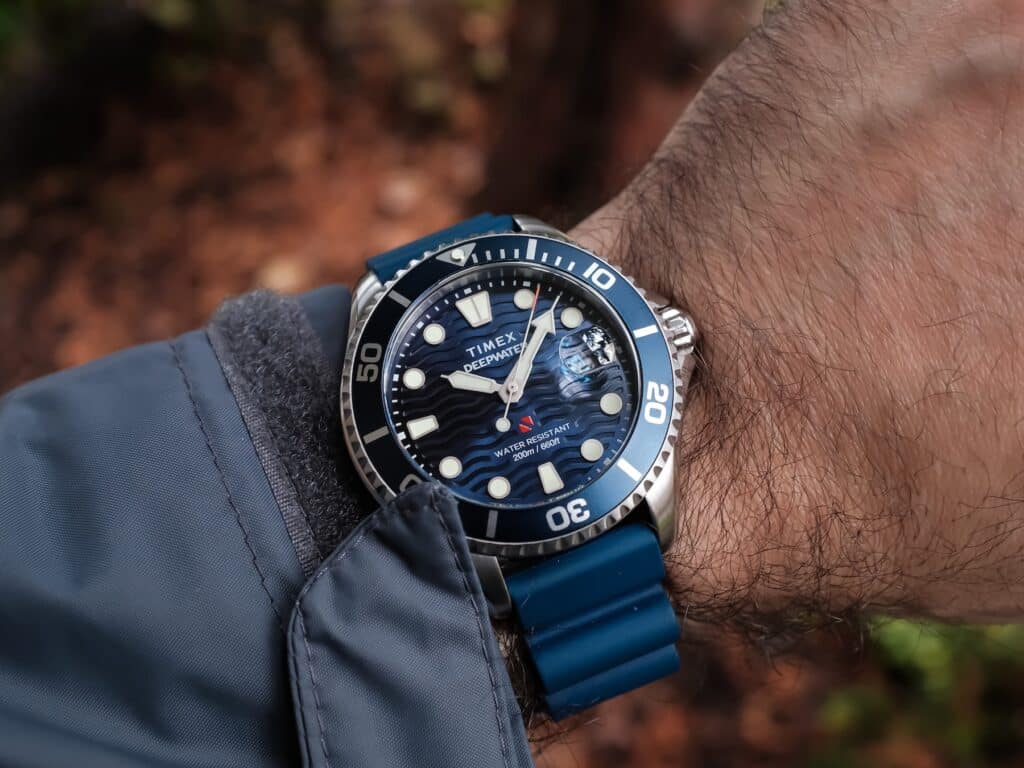
The Timex Deepwater Meridian 200 surprised us. We borrowed it without particularly high expectations and came away impressed with its substantial construction, attractive blue dial, and unusually satisfying bezel and crown operation. At $259 when reviewed, it offered a compelling combination of materials and features, particularly for anyone interested in a larger quartz diver that feels more substantial than its price might suggest. We also appreciate that Timex has been developing watches that don’t rely entirely on nostalgia to justify their existence.
The Citizen Promaster Diver has a different kind of appeal. Its Eco-Drive movement, compact wearing experience, and straightforward dial design make it one of those watches we can wear without giving much thought to what’s happening on our wrist. That sort of familiarity matters more to us than another impressive specification.
There are legitimate reasons to prefer the Timex, particularly if you’re interested in a sapphire crystal, a more satisfying bezel, and a substantial stainless steel case. The Citizen’s mineral crystal and occasionally awkward bezel grip are worth acknowledging, and we aren’t particularly attached to its stock polyurethane strap. But we’d also hesitate to overlook how comfortable the Promaster feels on a NATO or how little attention its Eco-Drive movement requires. Both watches have their strengths, although we find ourselves appreciating Citizen’s priorities more during everyday use.
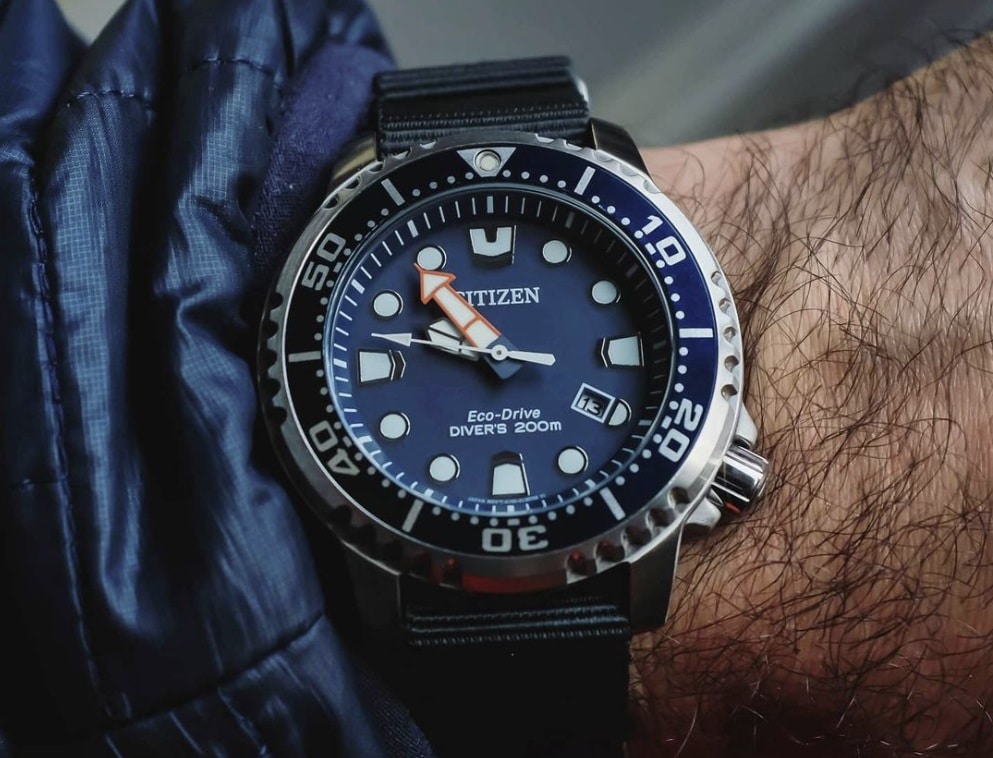
Our pick is the Citizen Eco-Drive Promaster Diver. It isn’t necessarily the more impressive watch when comparing materials and bezel performance, but its reliable solar-powered movement, comfortable proportions, and proven durability make it the one we’d rather keep in our collection. The Timex Deepwater Meridian 200 is a genuinely appealing alternative, especially for collectors who prefer a larger and more substantial diver. But when we’re spending our own money on an affordable quartz watch, we’re inclined to choose the one that’s already demonstrated just how easy it is to live with.

Co-Founder and Senior Editor
Kaz has been collecting watches since 2015, but he’s been fascinated by product design, the Collector’s psychology, and brand marketing his whole life. While sharing the same strong fondness for all things horologically-affordable as Mike (his TBWS partner in crime), Kaz’s collection niche is also focused on vintage Soviet watches as well as watches that feature a unique, but well-designed quirk or visual hook.