There was a time when buying an attractive automatic dress watch didn’t require much financial planning. You could find something relatively simple from a familiar manufacturer, put it on a leather strap, and have a perfectly respectable watch for occasions when your usual dive watch or chronograph felt a little out of place. These days, the affordable watch market has become considerably more interesting, particularly as smaller brands experiment with elaborate dials, unusual movements, and designs that would have been difficult to find at these prices not that long ago.

That brings us to the Timex Marlin Draper Automatic and Baltic MR01, two watches we’ve reviewed hands-on that approach the same general category from very different directions. At $280, the Timex brings familiar American watchmaking heritage, distinctive mid-century styling, and a straightforward automatic movement. The $610 Baltic asks us to spend more than twice as much for an intricately finished dial, a slim 36mm case, and a mechanical movement with an unusual micro-rotor. Both have plenty going for them, but we’re interested in figuring out whether the Baltic actually delivers enough to justify the additional expense.
Overview and Identity
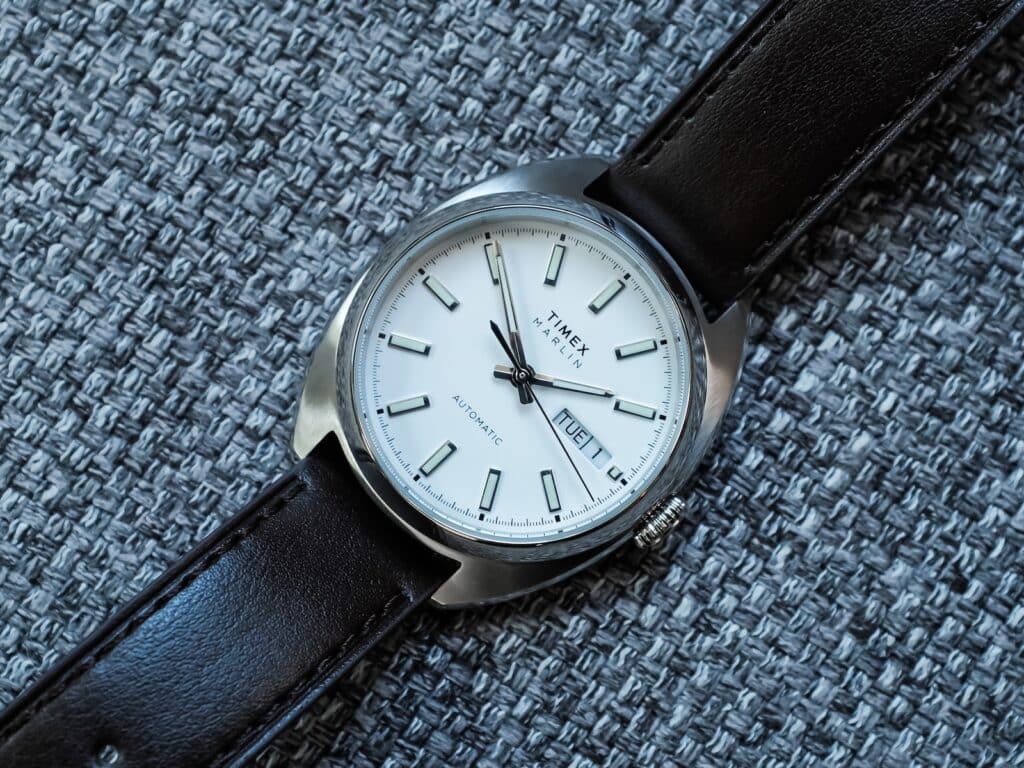
Timex has spent much of its modern history making watches that ordinary people can afford, which gives the brand a certain advantage when discussing value. The Marlin collection has become one of its more successful attempts to revisit that history, bringing back smaller case sizes, mechanical movements, and styling that draws heavily from the middle of the twentieth century. The Marlin Draper Automatic takes that idea in a slightly different direction with a cushion-shaped case and a restrained dial that feels more connected to the period than some of the brand’s other retro-inspired releases. When we reviewed the Timex Marlin Draper hands-on, we appreciated that Timex hadn’t tried to make the watch feel more contemporary than it needed to be. The result was comfortable, attractive, and refreshingly straightforward, even if it never quite became something we felt compelled to wear every day.

Baltic has built its identity around a different interpretation of vintage watchmaking. The French microbrand has become particularly recognizable for designs that borrow from historical references while incorporating contemporary manufacturing and relatively accessible pricing. The Baltic MR01, introduced in 2021, was a particularly interesting departure from the sport watches that dominate much of the microbrand market. Rather than developing another vintage-inspired diver or chronograph, Baltic produced a compact automatic dress watch with Breguet-style numerals, an offset small-seconds display, and a movement featuring a micro-rotor. We were particularly enthusiastic about the result when we first reviewed it, especially because the MR01 delivered a visual experience that we rarely encounter in watches at this end of the market.
Dial and Straps/Bracelets: Timex Restraint vs Baltic’s Elaborate Details
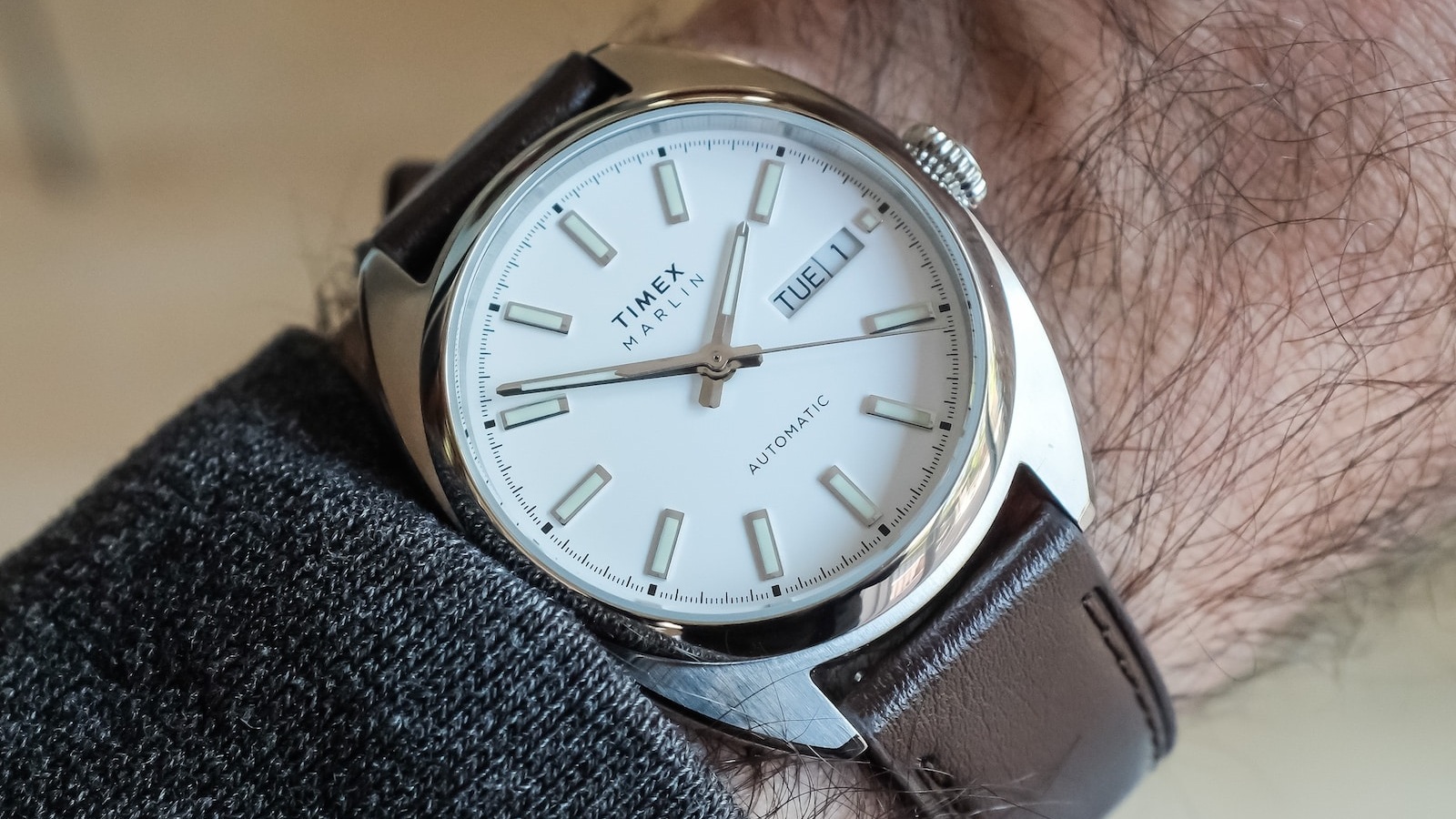
The Timex Marlin Draper has a relatively simple dial, but we wouldn’t describe it as boring. The silver-tone surface provides enough texture and tonal variation to catch the light, while applied hour markers and darker hands keep everything legible. There’s also a practical day-date complication, which gives the watch a little more everyday functionality than we’d normally expect from something leaning so heavily into mid-century dress-watch styling. We appreciated how Timex avoided cluttering the dial with unnecessary design elements, allowing the case shape and overall proportions to do most of the work.
There’s a certain discipline to that approach, particularly when plenty of affordable vintage-inspired watches seem determined to include every historical detail they can find. The Marlin Draper doesn’t rely on excessive patina, unusually elaborate typography, or a complicated dial layout to establish its character. Even the luminous material is relatively understated. We wouldn’t call it an especially exciting watch to examine under magnification, but that probably wasn’t Timex’s intention. It looks good at a glance, remains easy to read, and feels appropriate for a watch that costs less than $300.
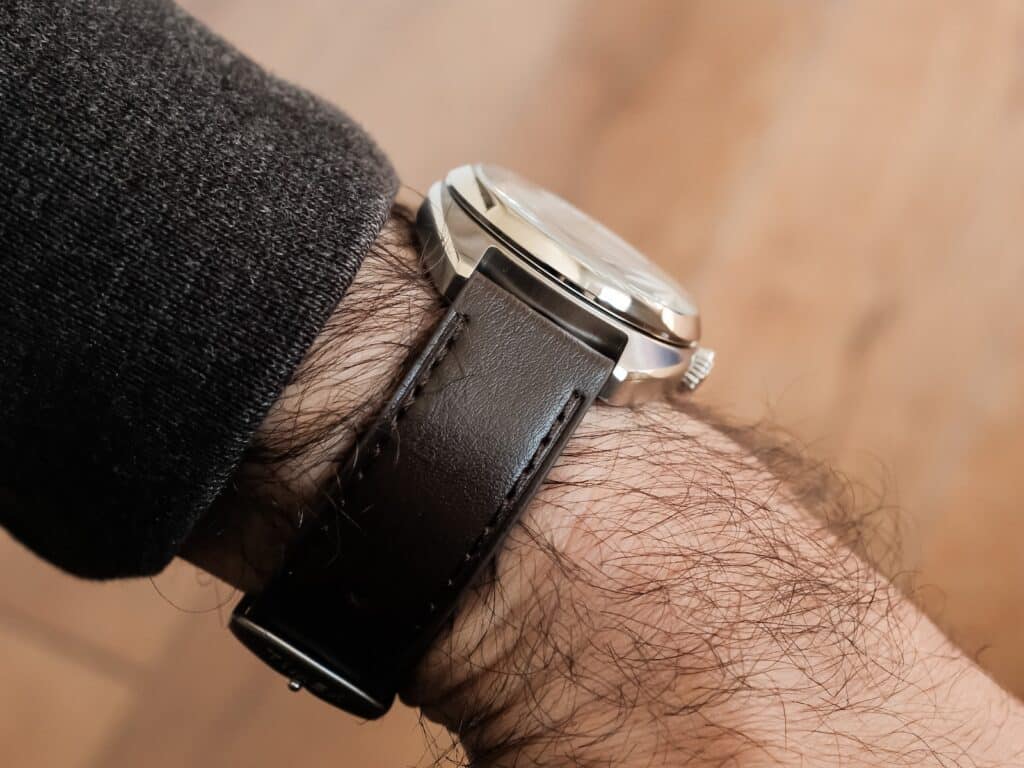
The stock brown leather strap also turned out to be one of the strongest parts of our hands-on experience. Timex kept it relatively thin, with a gentle taper that helps the 12.5mm case sit comfortably against the wrist. The leather complements the silver dial without making the overall design feel overly formal, and the quick-release spring bars make changing straps relatively painless. We experimented with alternative options during the review but repeatedly returned to the original brown leather. That’s a good indication that Timex understood what the watch needed, especially when aftermarket straps are often the first thing we consider replacing on an affordable automatic.
The Baltic MR01 approaches dial design with considerably more ambition. Our silver-dial example featured a finely textured main surface, an offset guilloché-style small-seconds subdial, and a circularly brushed railroad minute track. The polished leaf-shaped hands complement the arrangement, while the Breguet-style numerals introduce a level of visual sophistication that we don’t often see at this price. There’s quite a bit happening here, but the different finishes work together remarkably well. The asymmetrical seconds display might initially seem unusual, although the arrangement remains balanced thanks to the surrounding numerals and the proportions of the dial.
What impressed us most was the attention paid to details that could easily have been overlooked. The capped central pinion, the contrast between the dial textures, and the reflective qualities of the flat bezel all contribute to a watch that rewards closer examination. The execution wasn’t absolutely perfect, with some minor imperfections becoming visible under strong magnification, but we wouldn’t expect flawless finishing from a watch in this price category. More importantly, those details remained enjoyable during ordinary wear rather than being things we only noticed when deliberately looking for them.

Baltic’s stock leather strap was less convincing. Although we found the calfskin perfectly acceptable, we replaced it almost immediately with alternatives featuring contrasting stitching that better complemented the dial. Baltic also offers a beads-of-rice bracelet for collectors who prefer something less formal. The Timex earns some credit here for arriving with a strap we genuinely enjoyed wearing, while the Baltic makes a stronger argument through the dial itself. We’d happily experiment with different straps on the MR01, but we’re not convinced we’d improve the overall appearance of the Draper by moving away from its original leather configuration.
Build Quality & Technical Approach
These watches are both relatively compact, vintage-inspired automatics, but the similarities become less obvious once we examine how they’re constructed. Timex has concentrated on producing a comfortable, attractive watch without making the mechanical side unnecessarily complicated. Baltic has taken a more ambitious approach, particularly with its movement and dial construction. The question is whether those differences contribute enough to the experience to justify spending more than twice as much.
Movements:
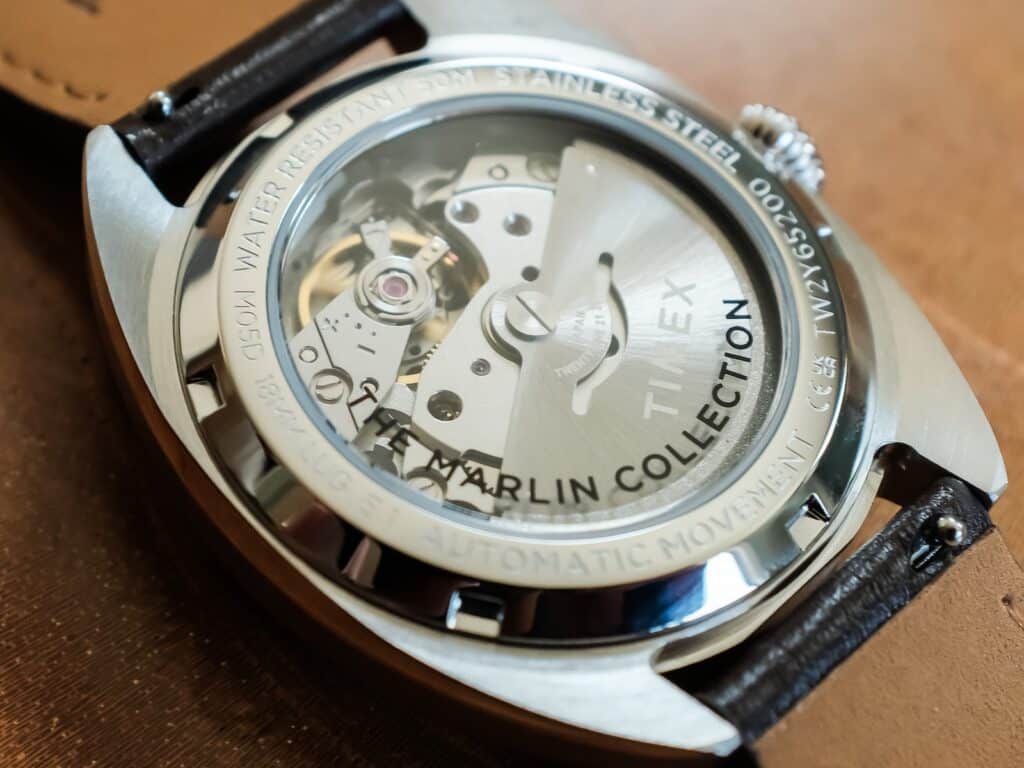
The Timex Marlin Draper Automatic uses what appeared to be a Miyota 8-series automatic movement beneath its exhibition caseback, with approximately 40 hours of power reserve. It’s a familiar choice for affordable mechanical watches, and we wouldn’t expect anything particularly exotic at $280. More importantly, the movement performed reliably throughout our review. Timekeeping remained consistent, and the rotor noise never became distracting. We appreciated that Timex chose something straightforward rather than trying to add mechanical complexity to a watch whose strongest qualities were already established by its design and proportions.
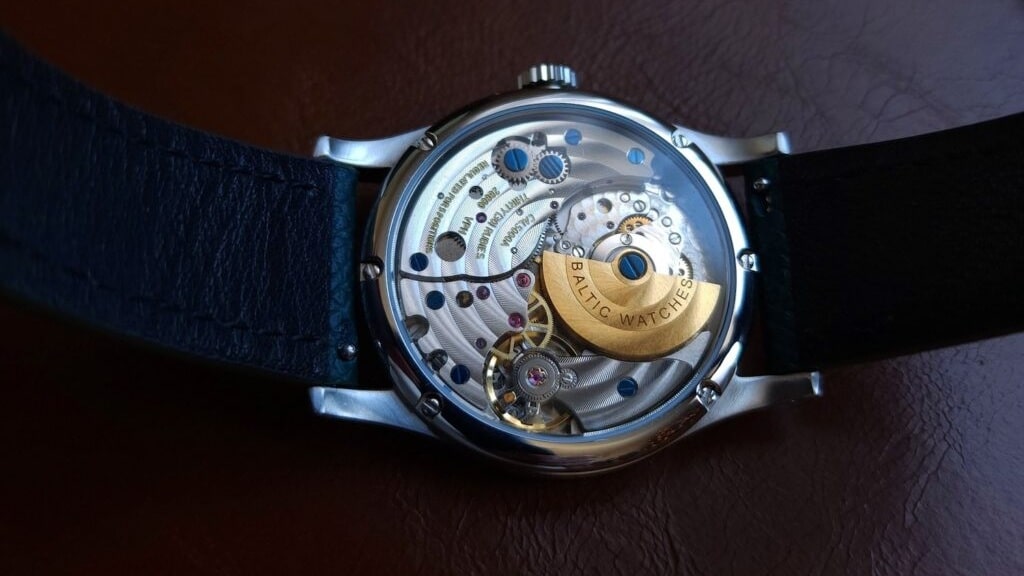
The Baltic MR01 uses the Hangzhou 500a, a Chinese automatic movement featuring a micro-rotor and approximately 42 hours of power reserve. It’s an unusual choice, particularly when collectors at this price sometimes expect movements from more familiar Japanese or Swiss manufacturers. We had some concerns about long-term reliability, but the movement’s appearance was difficult to ignore. Decorative finishing, polished components, and the compact rotor create an exhibition caseback that we found remarkably attractive. The movement also fills the caseback particularly well, reinforcing the impression that the watch was designed around it rather than simply fitted with whatever caliber happened to be available.
Would we choose the Baltic’s movement over the Timex’s conventional automatic? From an enthusiast’s perspective, probably. The micro-rotor arrangement gives us something genuinely interesting to appreciate, and the exhibition caseback was among the MR01’s biggest attractions during our review. There’s a practical argument for the Timex’s simpler movement, particularly for buyers who value familiarity and straightforward maintenance. The micro-rotor alone wouldn’t convince us to spend an additional $330, but when we factor in the elaborate dial and slimmer case construction, the Baltic starts making a considerably stronger argument for its price.
Case Construction, Finishing & Wearability:
The Timex Marlin Draper measures 37mm across, 43.5mm lug to lug, and 12.5mm thick. Its cushion-shaped case gives it a broader visual presence than those numbers might suggest, but the relatively compact dial opening helps maintain the restrained appearance. During our review on a 6.75-inch wrist, the proportions felt particularly comfortable. The thickness initially seemed a little excessive for a watch with such a dress-oriented personality, although the thin leather strap helped it settle naturally against the wrist. We wouldn’t describe it as especially slim, but it never became bothersome during normal wear.
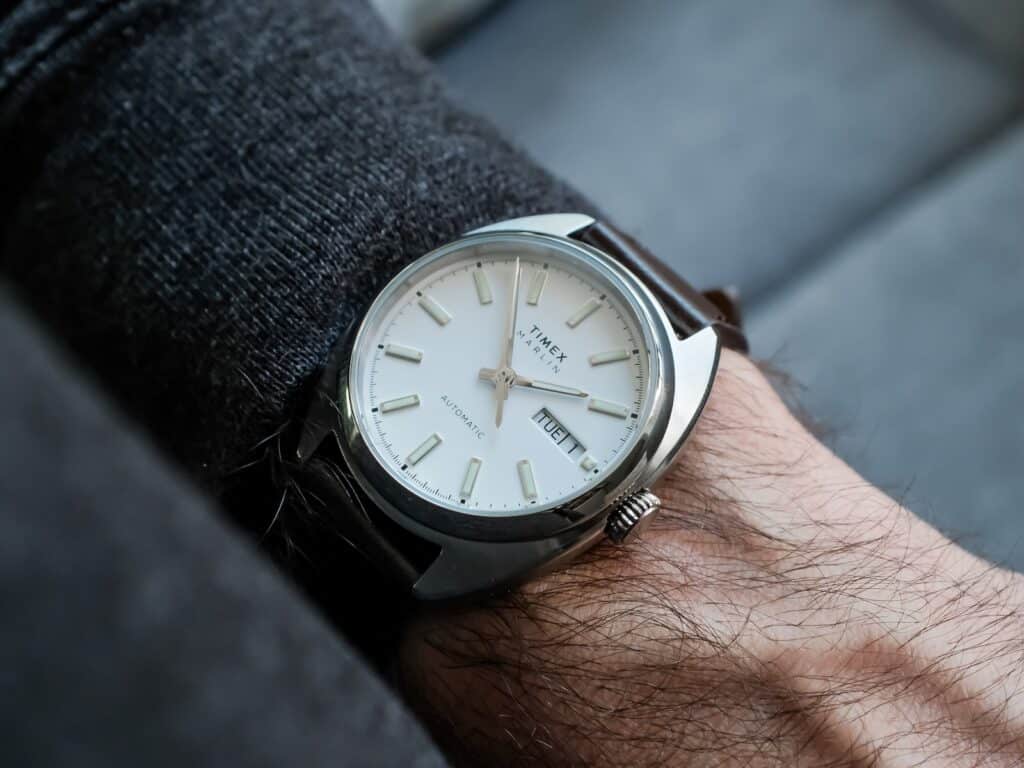
The finishing is similarly restrained. Timex uses predominantly brushed surfaces, contrasting them with a polished bezel and a narrow polished chamfer around the case. It’s a simple arrangement, but one that suits the mid-century styling considerably better than a more elaborate mixture of decorative finishes might have. We also appreciated the brushed buckle, which continues that understated approach. The Marlin Draper doesn’t pretend to offer the finishing of a substantially more expensive watch, and we think it’s better for that.
The Baltic MR01 measures 36mm in diameter, approximately 44mm lug to lug, and just 9.9mm thick. Despite its smaller diameter, the relatively wide 20mm lug spacing and dial proportions gave our silver example a little more presence than expected. We compared the overall wearing experience to familiar compact Oyster-style cases, although the Baltic is clearly pursuing a different aesthetic. The slimmer construction also makes it particularly appropriate for more formal settings, where we’d generally prefer a watch that slips comfortably beneath a shirt cuff.
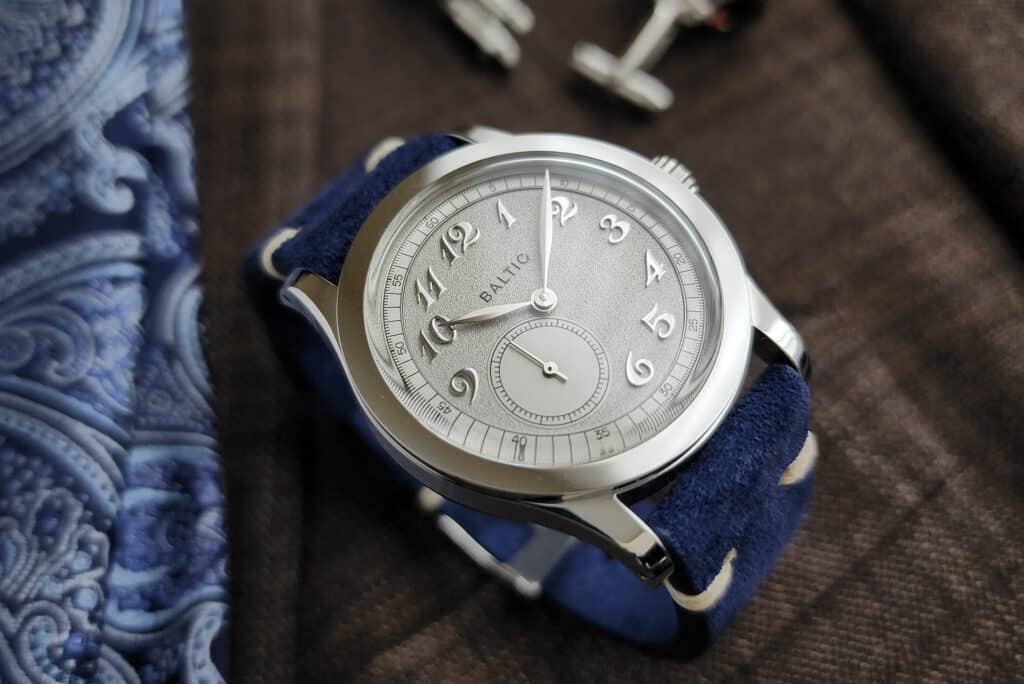
Baltic uses highly polished surfaces across the upper case, lugs, and bezel, with sharply brushed finishing along the sides. The execution impressed us, although we wouldn’t describe it as extraordinary. That’s an important distinction because the MR01’s most elaborate details are concentrated on the dial and movement rather than the case itself. Both watches make sensible use of finishing to complement their designs, but the Baltic’s slimmer proportions give it a meaningful advantage for anyone specifically shopping for a traditional dress watch.
Crystals:
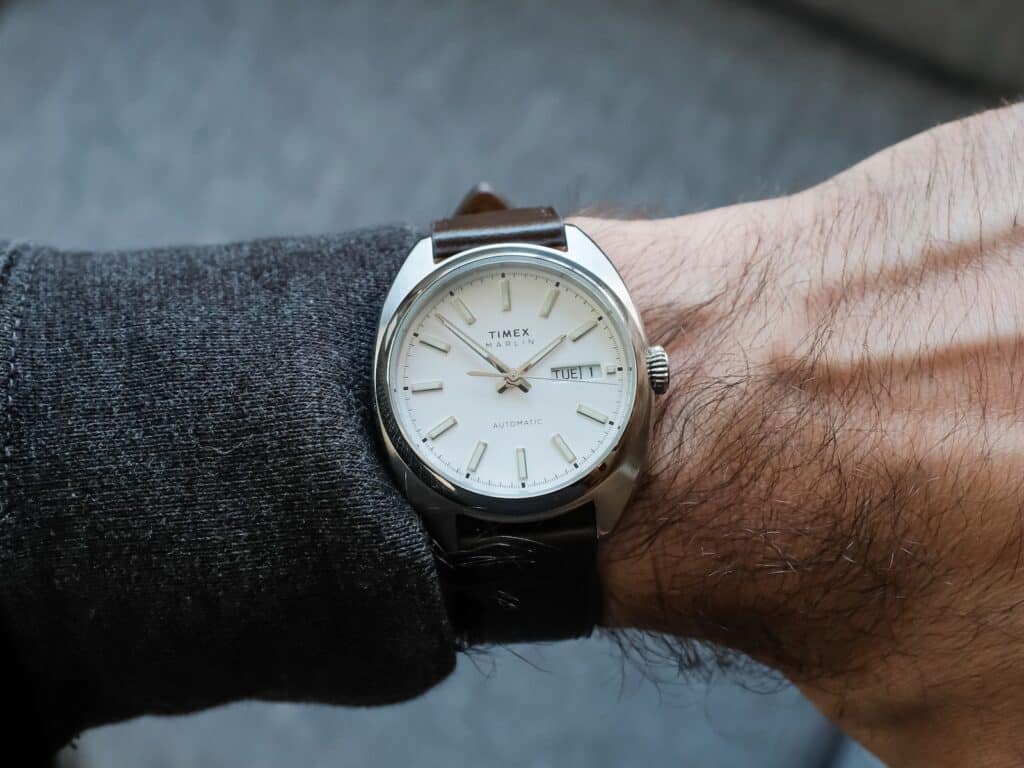
Timex equips the Marlin Draper with a mineral crystal, which was one of the few specifications we wished the brand had improved. During our review, it didn’t create any noticeable problems, and we’ve become accustomed to encountering mineral crystals on relatively inexpensive watches. Still, sapphire would have made the package more appealing for long-term ownership, particularly when scratch resistance becomes more important after several years of regular wear. At $280, we understand the compromise, although that doesn’t mean we have to be enthusiastic about it.
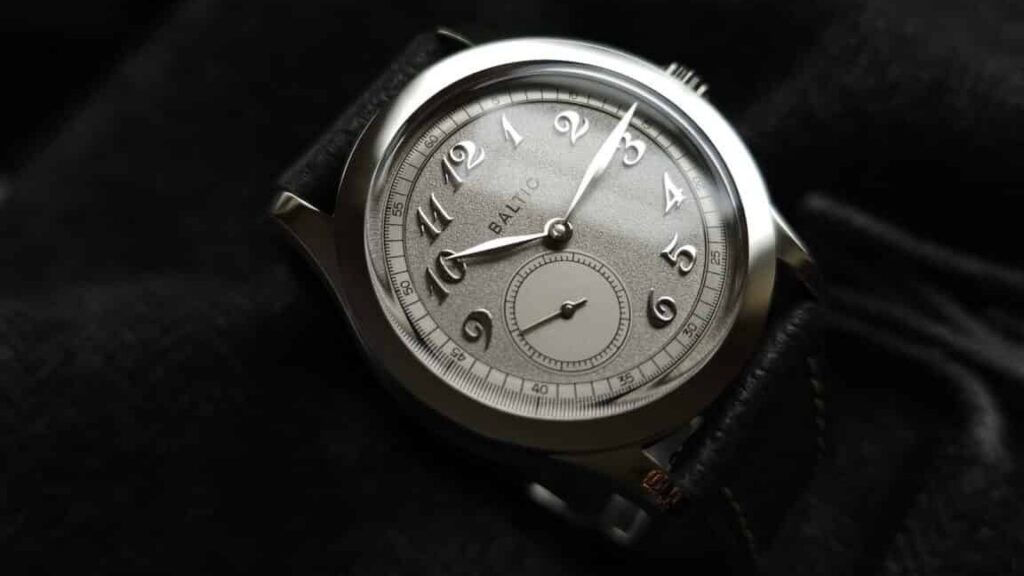
Baltic opted for an acrylic crystal on the MR01, sometimes described as Hesalite. It’s a material that can scratch more easily than sapphire, but we appreciated the warmer vintage appearance and subtle visual distortions it introduced. There’s also the practical advantage of being able to polish away minor scratches with an appropriate product. Neither brand gives us the sapphire crystal we’d ordinarily prefer for durability, although Baltic’s choice feels more deliberate from a design perspective. Timex uses a conventional cost-conscious material, while the MR01 embraces acrylic as part of its historical character.
Water Resistance & Lume:
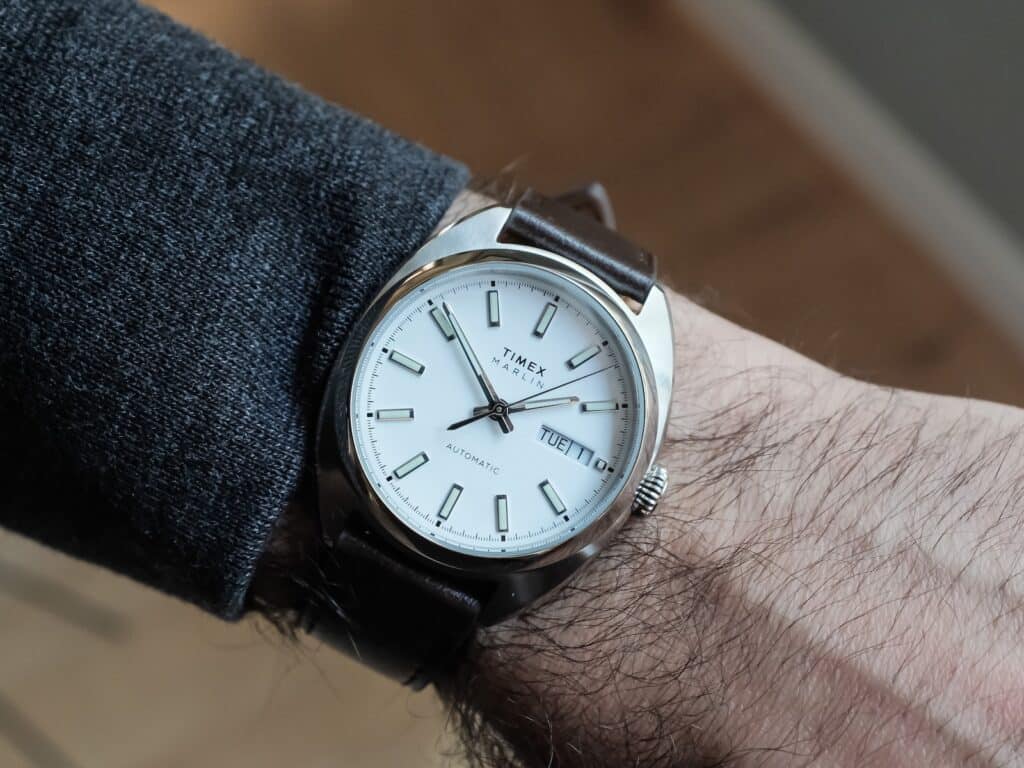
The Timex Marlin Draper offers 50 meters of water resistance, which is adequate for the sort of ordinary wear we’d expect from a dress-oriented automatic. We would have preferred 100 meters, particularly because additional water resistance could have made the watch more versatile without changing its appearance. The dial also incorporates luminous material, although we treated it as a relatively minor feature rather than a meaningful performance highlight. We wouldn’t buy the Draper for its nighttime visibility, but it’s nice to have some illumination available when needed.

The Baltic MR01 is rated to just 30 meters of water resistance, making it the less reassuring option around water. We were cautious enough about the rating to remove the watch for practically anything beyond ordinary handwashing. That’s understandable for a watch built around traditional dress-watch proportions, but it does limit versatility compared with the Timex. We didn’t document a comparable lume test for the Baltic, so we won’t pretend to have a meaningful nighttime performance comparison. For everyday practicality, the Timex’s higher water-resistance rating gives it a modest but legitimate advantage.
Cost Considerations
The Baltic MR01 is considerably more expensive at approximately $610, based on its €545 price converted to US dollars. At that price, buyers get a distinctive cushion-shaped stainless steel case, applied hour markers, a day-date complication, and an automatic movement that performed dependably during our review. The stock leather strap is also better than we might have expected, eliminating the temptation to immediately spend additional money on an aftermarket replacement. There’s something appealing about a watch that arrives feeling complete without requiring us to make excuses for its price.
We do have some reservations, particularly regarding the mineral crystal and relatively modest 50-meter water-resistance rating. Neither issue makes the Draper a poor purchase, but both remind us that Timex had to make compromises to reach this price. The movement is also relatively ordinary, and the case isn’t especially thin for a watch inspired by mid-century dress designs. Still, there’s an argument that none of those shortcomings significantly affects the reasons someone would buy the watch in the first place.
The Baltic MR01 is considerably more expensive at approximately $610, based on its €545 price converted to US dollars. At $610, the Baltic costs $330 more than the Timex, or roughly twice as much. That’s a substantial premium when we’re talking about affordable dress watches, particularly for collectors who might only wear something this formal a handful of times each year.
Baltic has clearly put much of that additional expense toward elements that appeal specifically to mechanical watch enthusiasts. The elaborate dial, compact micro-rotor movement, attractive exhibition caseback, and relatively slim proportions create a package that feels considerably more ambitious than the Timex. We also appreciate that Baltic hasn’t simply attempted to recreate a familiar design from a larger manufacturer at a discount. The MR01 has a recognizable personality, even if its historical influences are fairly obvious to collectors familiar with more expensive dress watches.
But we’re hesitant to suggest that spending more automatically makes sense. The Timex provides much of what someone might reasonably want from an affordable vintage-inspired dress watch for less than half the price. If you’re primarily interested in something attractive to wear to work, dinner, or an occasional formal event, the Draper already makes a convincing case. What makes the MR01 worth considering is everything it offers beyond simply looking attractive on the wrist. Whether those additional details are worth $330 depends largely on what kind of collector we’re talking about.
Final Thoughts: Is the Baltic MR01 Worth Spending More Than Twice as Much?
For us, the Baltic MR01 is the more interesting watch, particularly if we’re choosing something specifically for its dress-watch qualities. Its slim case, elaborate dial, and unusual micro-rotor movement give it a level of character that the Timex Marlin Draper doesn’t quite match. We were particularly enthusiastic about the movement visible through the exhibition caseback and how much attention Baltic had paid to the smaller details.
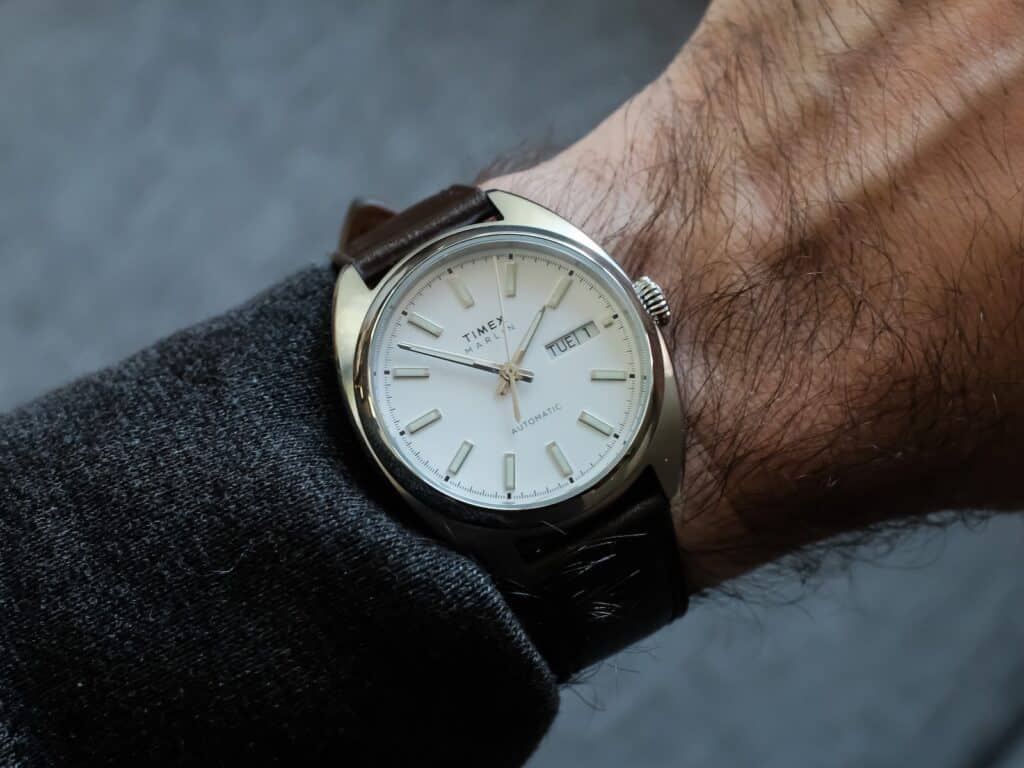
The Timex deserves considerable credit, though. At $280, it offers attractive proportions, a distinctive cushion case, and a comfortable leather strap that we had little reason to replace. We also appreciate that Timex didn’t try to make the Draper unnecessarily elaborate. The watch understands what it is, and there’s something refreshing about an affordable automatic that doesn’t seem particularly concerned with convincing us it’s more expensive than it actually is.
The biggest distinction comes down to how we’d approach wearing either watch. We enjoyed the Draper but rarely felt compelled to reach for it, largely because our collecting preferences leaned toward more utilitarian designs. The Baltic inspired a stronger attachment through its mechanical presentation and unusually detailed dial. That doesn’t automatically make it the more sensible purchase, but it matters when we’re discussing watches that many of us buy because they make us happy rather than because we genuinely need another way to tell the time.

Our pick is the Baltic MR01, provided we’re comfortable spending the additional money. We’d rather have its slimmer case, distinctive dial, and captivating exhibition caseback when choosing a dedicated dress watch. But we wouldn’t hesitate to recommend the Timex Marlin Draper to someone who simply wants an attractive, affordable automatic with plenty of vintage character. The Baltic delivers more for enthusiasts who appreciate the details, while the Timex demonstrates that we don’t necessarily have to spend $610 to put something genuinely attractive on our wrists.

Co-Founder and Senior Editor
Kaz has been collecting watches since 2015, but he’s been fascinated by product design, the Collector’s psychology, and brand marketing his whole life. While sharing the same strong fondness for all things horologically-affordable as Mike (his TBWS partner in crime), Kaz’s collection niche is also focused on vintage Soviet watches as well as watches that feature a unique, but well-designed quirk or visual hook.