September is usually when the watch industry starts warming up for the holidays, and this year the cheaper end of the market had more to say than usual. The best affordable releases of the month kept borrowing from watches that cost a lot more. A helium escape valve landed on a sub-$500 Timex diver. Citizen packed Datejust ingredients into a 37mm automatic. Tissot made the PRX chronograph thinner and roughly a quarter of the price by going quartz, and Timex dug up a 1940s-style navigational chronograph dial for less than $300. A couple of these also ask for more money than the versions that came before them, which is its own kind of signal. All five cost less than $600, all five have confirmed US pricing, and three of them are Timex, which says plenty about how the brand spent its September. Here are our favorite affordable watches from September 2026.
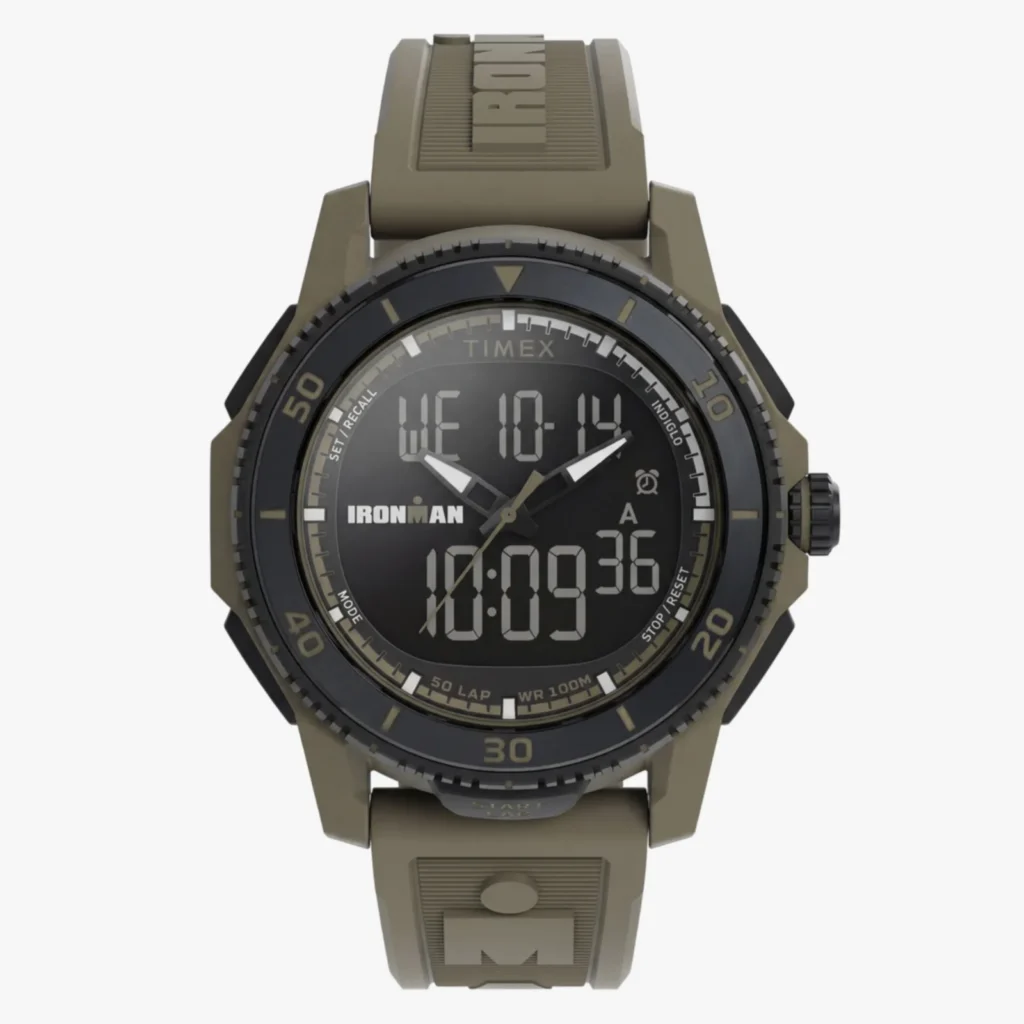
Timex Ironman Adrenaline
Timex has been putting the Ironman name on inexpensive digital sports watches since the mid-1980s, and the Ironman Adrenaline takes that formula somewhere bigger and more aggressive. This update comes in two subdued colorways, a monochrome sand version and a black model on a dark blue strap, both without the bright orange accents of the earlier Adrenaline. I’d go sand, since the single color lets the case architecture do the talking. The ana-digi layout covers a 50-lap memory, countdown timer, alarm, second time zone, Indiglo, and a unidirectional elapsed-time bezel. There’s also a neat trick where holding the 4 o’clock pusher switches off the negative digital display and leaves the analog hands to tell the time alone. The resin case wears a steel bezel, carries 100 meters of water resistance, and weighs under 57 grams. The catch is size. At 46.5mm wide, 52mm lug-to-lug, and 15mm thick, this is G-Shock territory in footprint as well as attitude, and $229 is a lot more than the Ironman watches most of us grew up with. Timex is betting the name and the execution carry that premium.
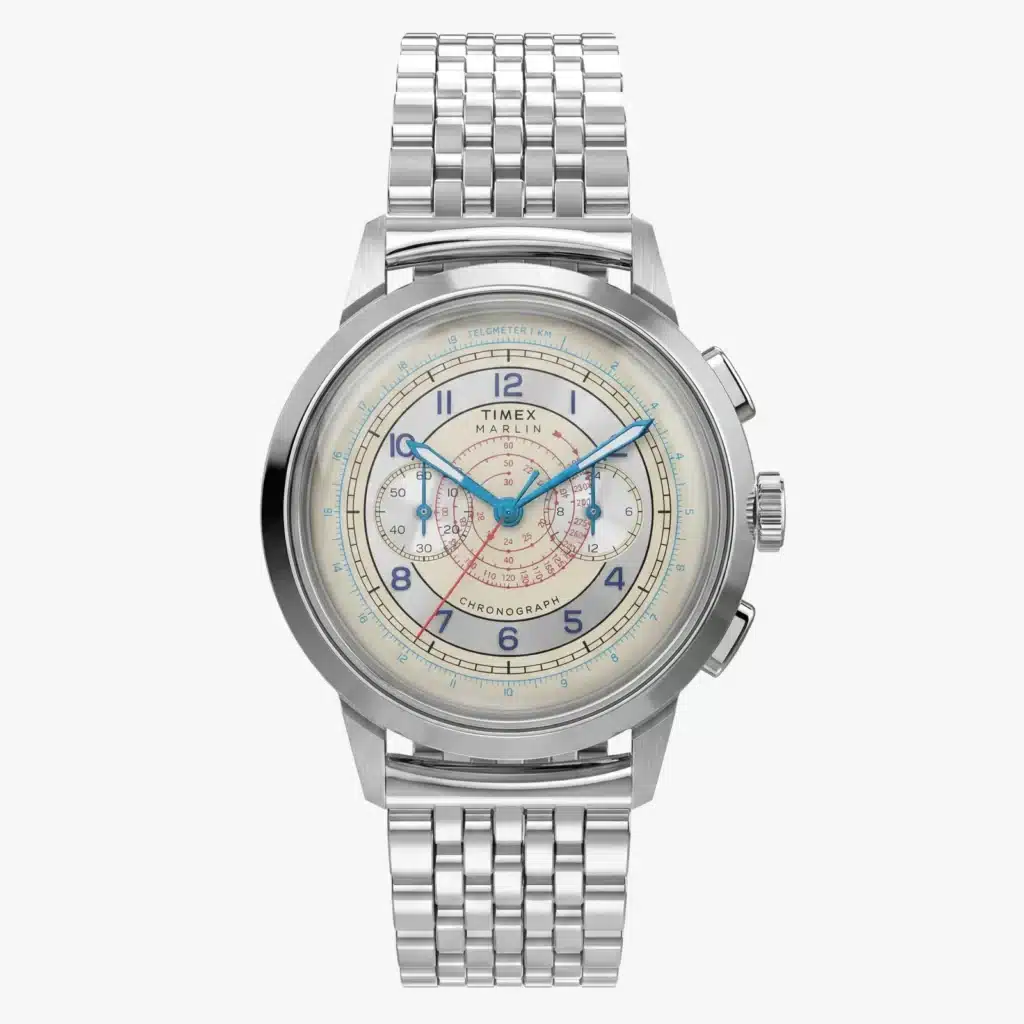
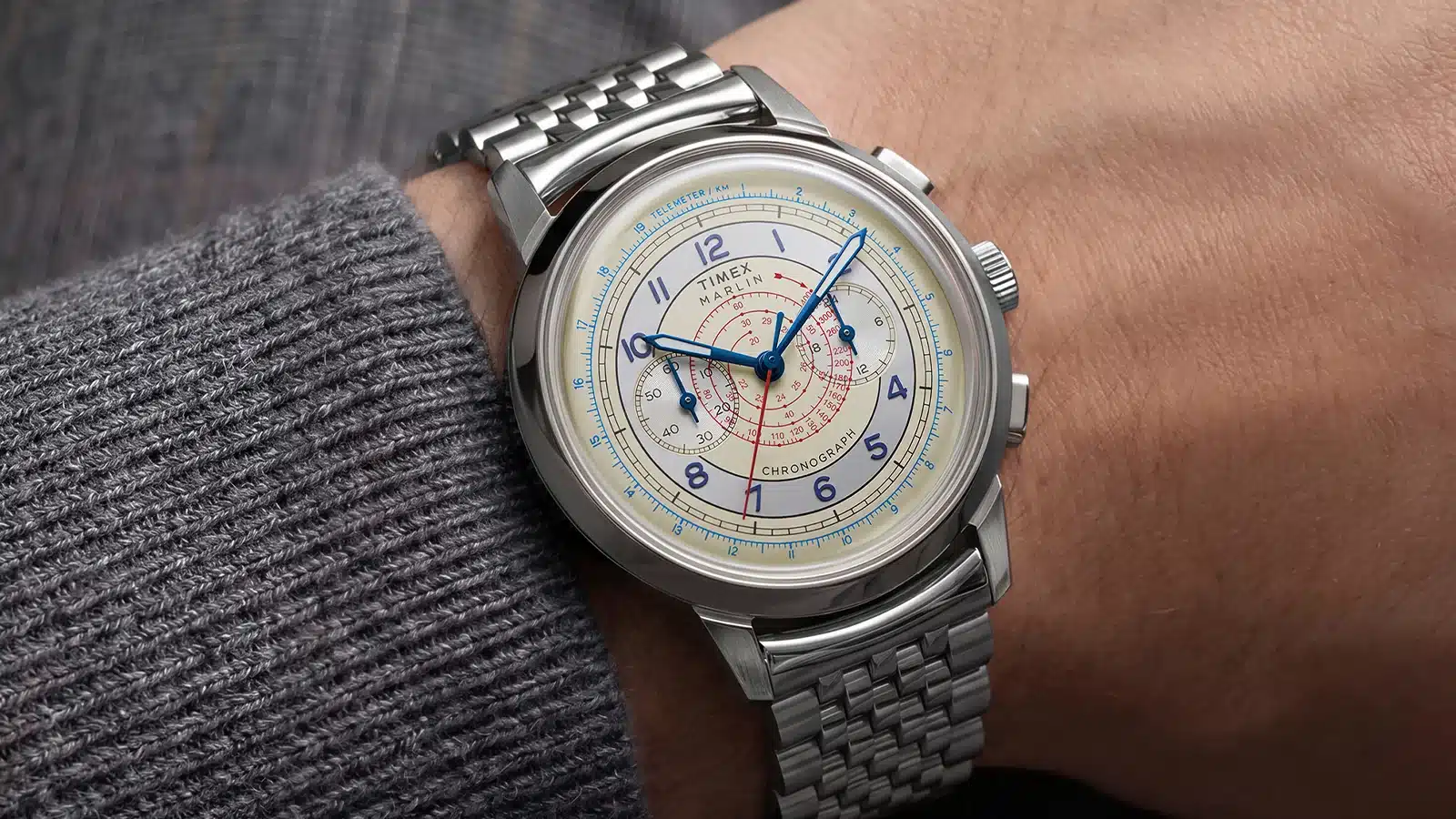
Timex Marlin Neo Classic Chronograph
Spend enough time around vintage chronographs and you eventually run into dials covered in overlapping scales, where reading the time feels almost secondary. The Marlin Neo Classic Chronograph brings that look to Timex. Instead of the clean 1960s cues the Marlin usually trades on, this one reaches back to the navigational chronographs Breitling, Longines, and Angelus were making from the 1930s through the 1950s, with a snail-style tachymeter in the center and a telemeter around the edge. Red, blue, and black markings separate the functions on a cream dial, and it’s every bit as busy as that sounds. That’s the appeal. Underneath, the 40mm steel case is 13mm thick with curved pushers, a fluted crown, a domed acrylic crystal, and a quartz chronograph movement that keeps the price in familiar Timex territory. Pricing starts at $279 on leather, and the cream dial on a steel bracelet with a butterfly clasp runs $319. This is the next Timex I want in for review, though stock already looks thin, and 50 meters of water resistance plus acrylic make it more of a weekend chronograph than a beater.
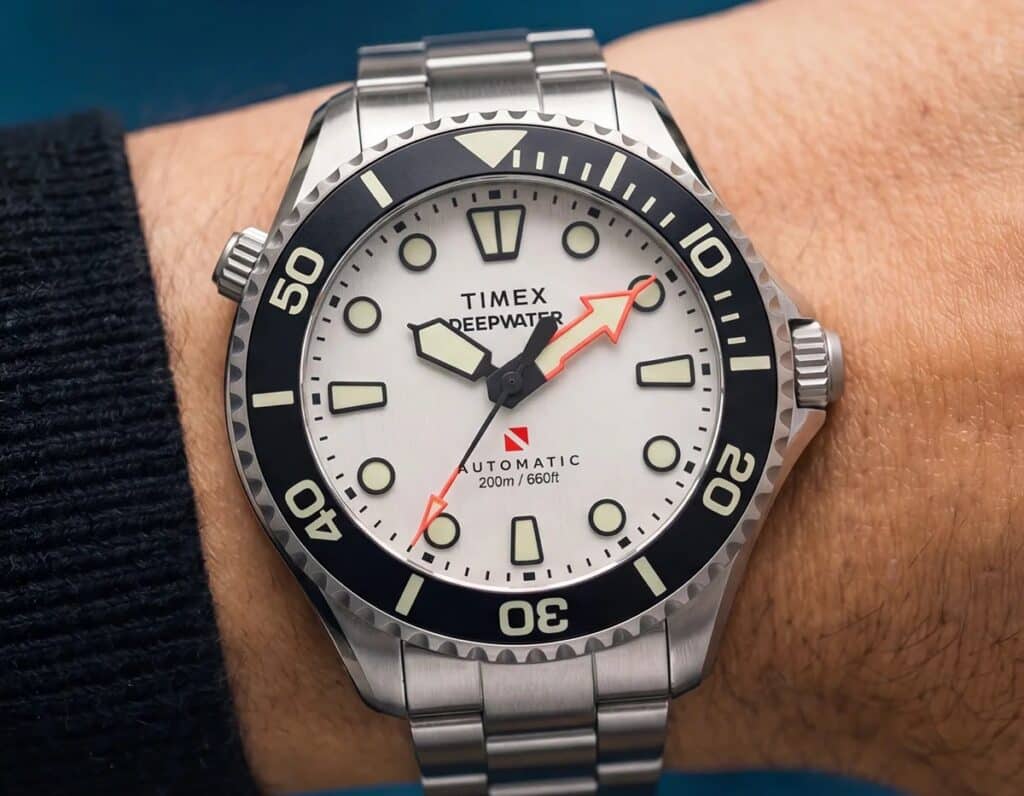
Timex Deepwater Meridian 200 HEV
I remember when plenty of Timex dive watches were dive watches in looks alone. The Deepwater Meridian 200 HEV is a long way from that. Its headline feature is an automatic helium escape valve at 10 o’clock, hardware built for saturation divers that first appeared on Timex’s $999 titanium Meridian 300 earlier this year and now lands on a steel diver for less than half the money. Around it you get 200 meters of water resistance, a screw-down crown and caseback, a unidirectional ceramic bezel, anti-reflective sapphire, Super-LumiNova, and a Miyota automatic with roughly 40 hours of power reserve. Almost nobody buying this watch will ever use the valve, and I kind of like that Timex included it anyway. It’s $469 on rubber and $499 on the steel bracelet, which drops it right into the middle of affordable Seiko and Citizen diver territory. Size is the real hurdle. At 44mm wide, 15.5mm thick, and 51mm lug-to-lug, it’s a lot of watch for casual wear on a smaller wrist.
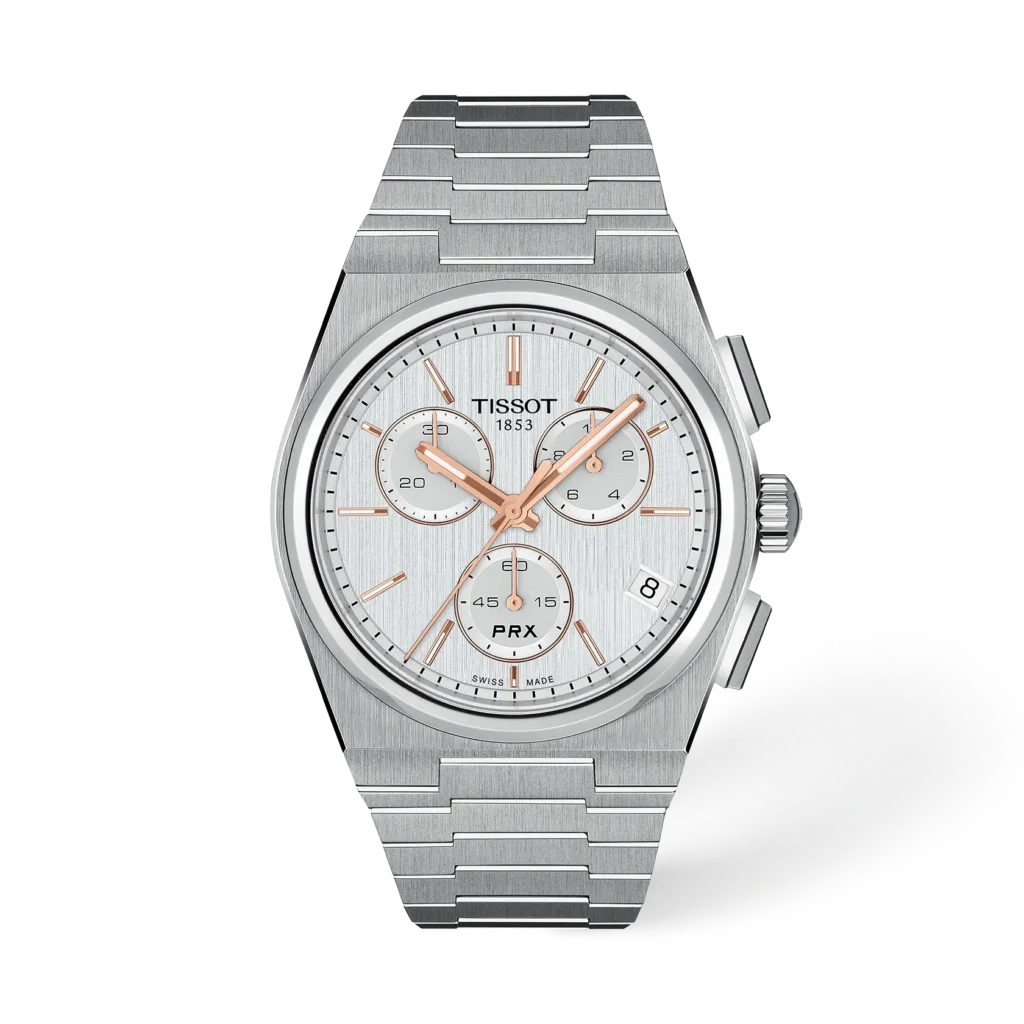
Tissot PRX Chronograph Quartz
The automatic PRX Chronograph always felt a little far from what made the PRX appealing in the first place, with a 42mm case, 14.54mm of thickness, and a $2,150 price. The new PRX Chronograph Quartz brings the idea back down to earth, which feels fitting for a collection whose modern version launched as a quartz watch. Tissot trimmed the case to 41mm and 11.65mm thick, and losing nearly three millimeters of height matters a lot more than the single millimeter off the diameter. Inside, the ETA G10.212 PowerDrive movement adds a 30-minute counter, a 1/10-second display, and ADD and SPLIT functions, so quartz earns its place here beyond the price. The rest is familiar PRX: a steel case and integrated bracelet, sapphire, 100 meters of water resistance, and vertically brushed dials in silver, black, or blue with a three-register layout all its own. At $525, it’s only $75 more than the standard 40mm quartz PRX. That still doesn’t make it a bargain in a crowded field of quartz chronographs, and the 4 o’clock date will split people. The PRX is also a broad watch, so 41mm may wear bigger than the number suggests.
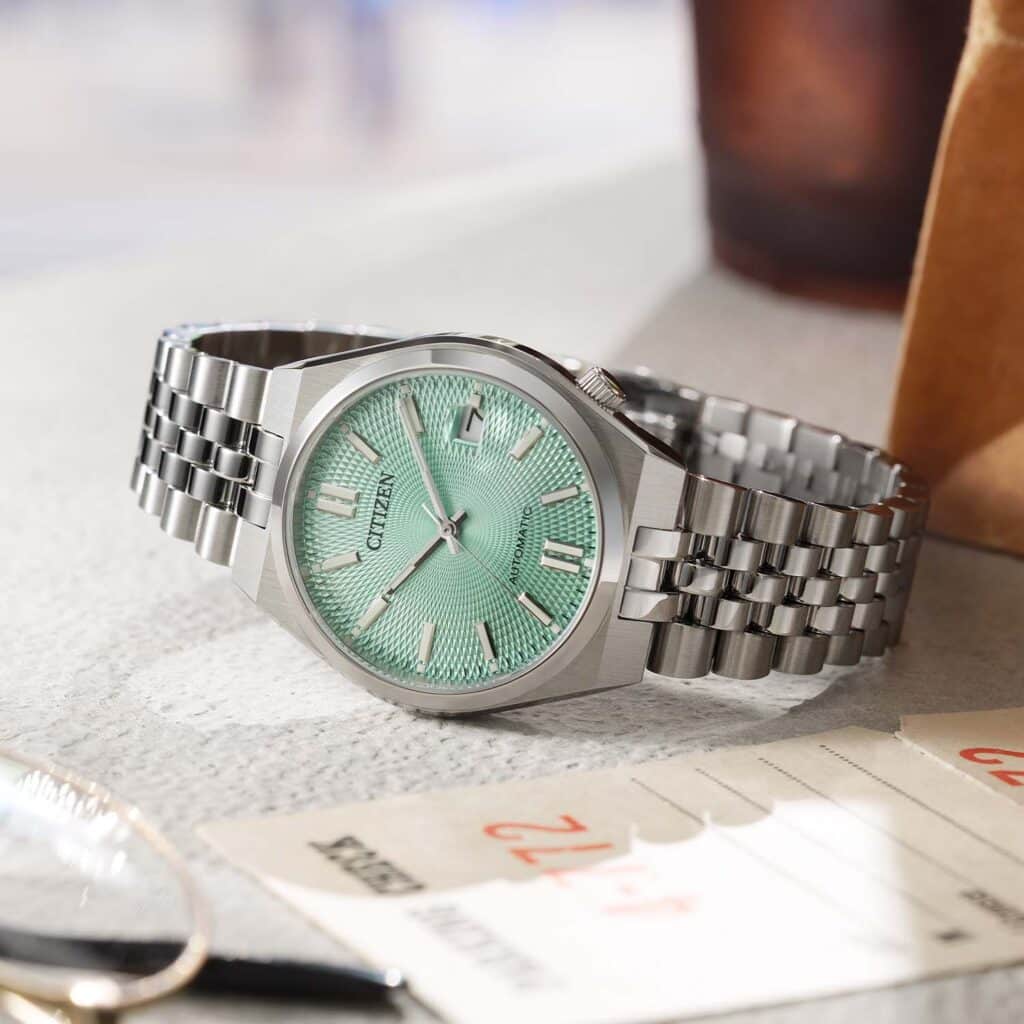
Citizen Tsuyosa 60 37mm
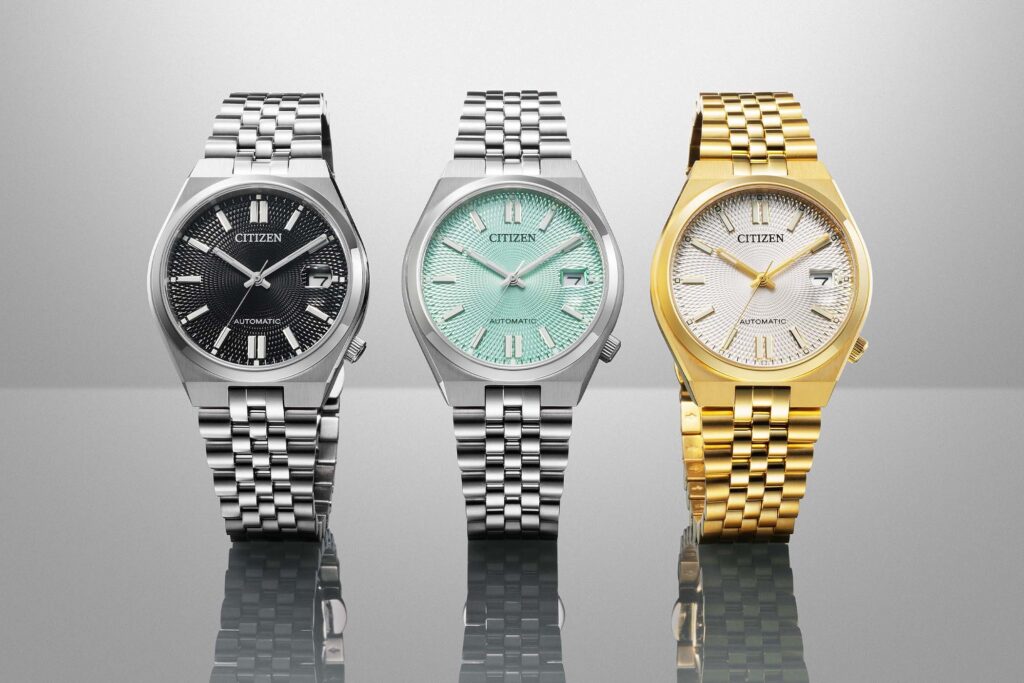
The Tsuyosa has grown from a single 40mm automatic into one of Citizen’s broadest collections, and the Tsuyosa 60 37mm finally puts its best pieces into one watch. The smaller case, the textured dial, the five-link bracelet, and the longer-running movement all existed separately before. Together, in black or mint green on steel, they push the Tsuyosa closer to Rolex Datejust territory than it has ever been. Citizen’s Caliber 8310 automatic brings hacking seconds and a 60-hour power reserve, about 20 hours more than the standard Tsuyosa 37mm, along with anti-reflective sapphire and a date. The recessed crown near 4 o’clock and the integrated case shape keep it recognizably Tsuyosa. At $595, it’s $100 more than the standard 37mm, and I think the dial and bracelet explain most of that premium. Water resistance stays at 50 meters, and nobody will mistake it for a Datejust up close. As a compact everyday automatic with some personality, it looks like the most complete Tsuyosa yet.
Where this leaves us
Line these five up and the month has a clear shape. Affordable watches kept absorbing ideas from pricier ones, whether that meant a helium valve, a mid-century navigational dial, a split-time quartz movement, or a Datejust-style bracelet. The flip side showed up too. The Ironman and the Tsuyosa both ask more than the versions before them, and a few other September announcements are still waiting on the US prices that will decide where they land. We haven’t had any of these five on the wrist yet, so the real verdicts come later. For now, September made a decent case that the sub-$600 range still has plenty of room for ideas, and October is already off to a busy start.

Co-Founder & Senior Editor
Michael Peñate is an American writer, photographer, and podcaster based in Seattle, Washington. His work typically focuses on the passage of time and the tools we use to connect with that very journey. From aviation to music and travel, his interests span a multitude of disciplines that often intersect with the world of watches – and the obsessive culture behind collecting them.