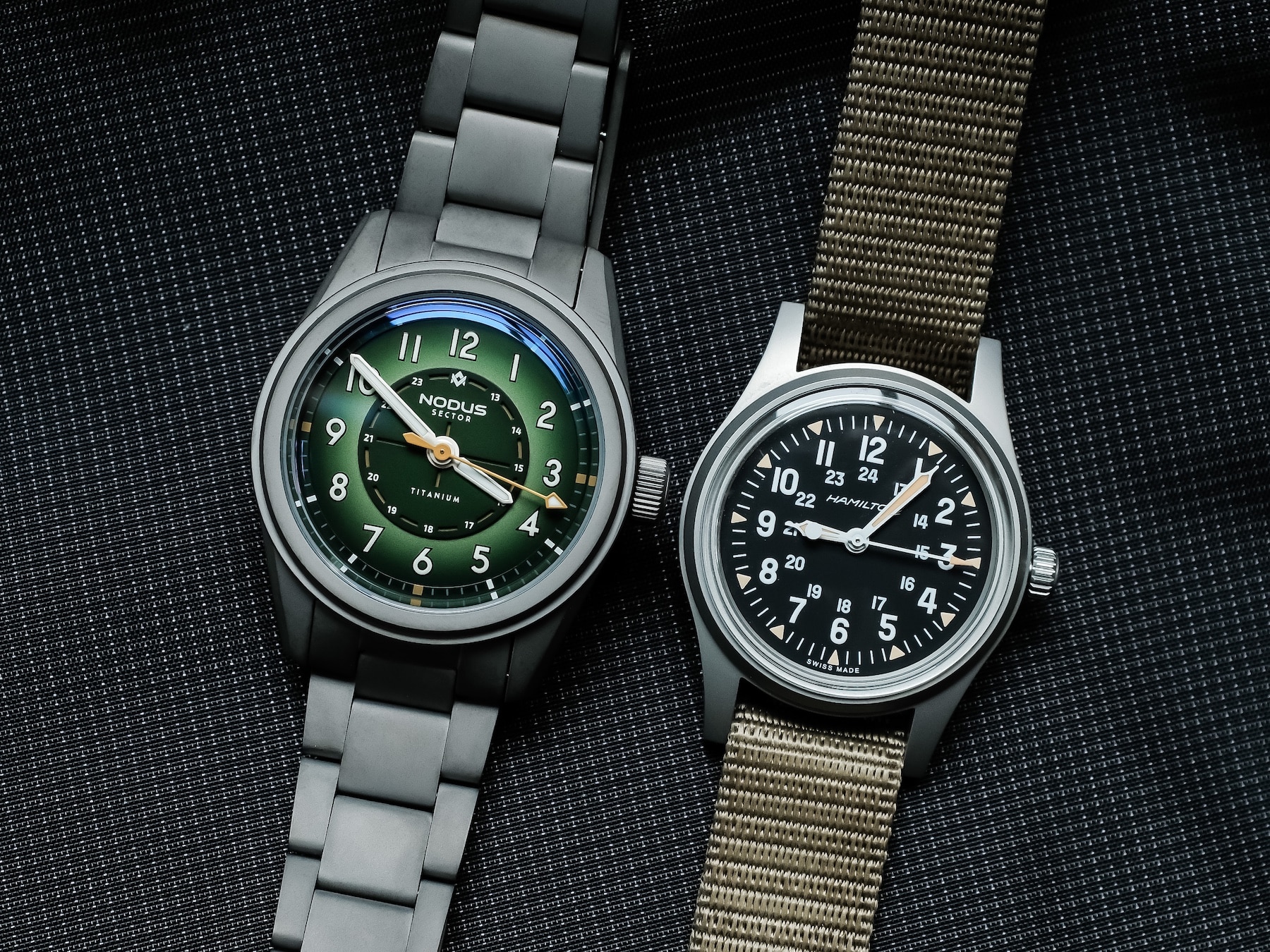
This matchup sounds like the sort of comparison where the answer should be obvious. Pick a field watch, put it on a strap, enjoy the legibility, and get on with the day. In practice, we’ve found that choosing the watch we’d actually wear most often is where things get more interesting. A field watch has to be easy to live with at work, while running errands, traveling, or doing nothing more exciting than checking the time for the fifth time in an hour. So the question here isn’t which watch makes the better field-watch argument. It’s which one makes the better everyday companion for most of us.
We’ve spent more than a decade reviewing watches the same way we’d approach a purchase with our own money: wearing them, testing the details, and paying attention to what becomes annoying, useful, comfortable, or surprisingly enjoyable over time. That matters because neither watch needs a sales pitch. We want to know whether either one becomes the easy reach from the watch box once the new-watch excitement has worn off.
Overview and Identity
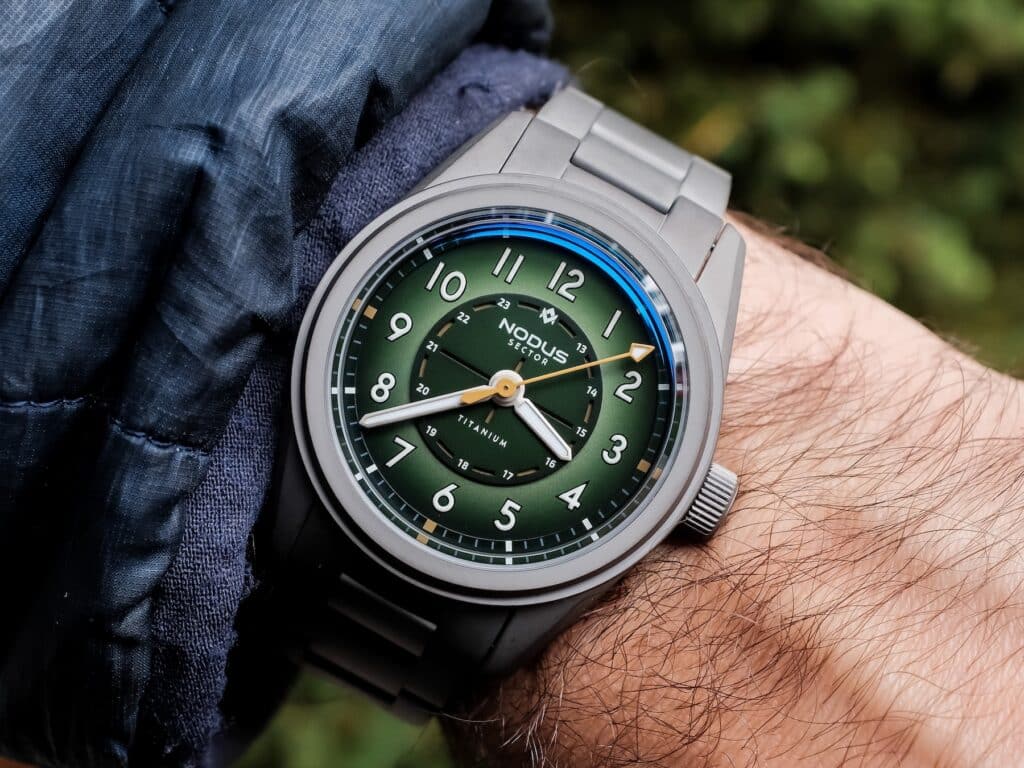
The Nodus Sector II Field Titanium is Nodus taking the field-watch format and refusing to treat “military-inspired” as a requirement. We’ve had enough time with Nodus divers and GMTs to know the brand likes putting its own spin on familiar shapes, and that carries over here. This is the first Nodus field watch we’ve spent hands-on time with, and the Sequoia dial gives a category that often plays things safe some welcome personality. More importantly, Nodus didn’t need to reinvent its case architecture to do that. The Sector II platform was refined for more balanced proportions and improved wrist comfort, then adapted to titanium, and the result feels like a natural member of the lineup rather than a field-watch costume borrowed for the occasion.
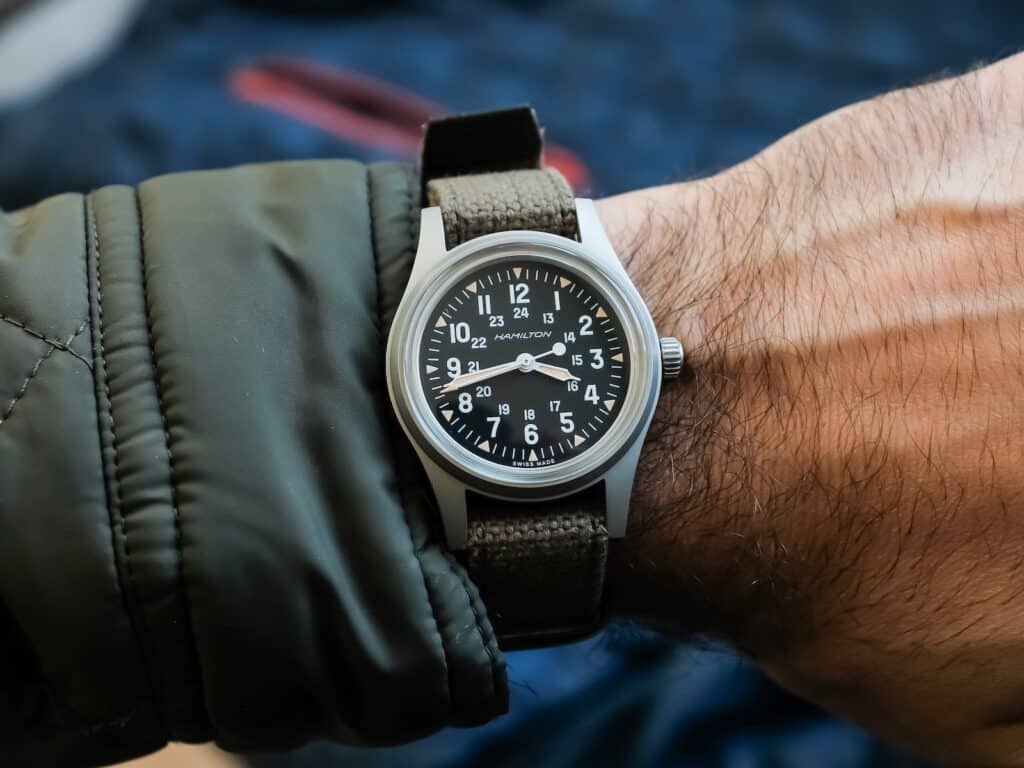
The Hamilton Khaki Field Mechanical 250 hits a different nerve because it’s the version of the Khaki Field that finally stopped us from wondering whether a better reference existed. We’d looked at plenty of Khaki Field models over the years, and something always seemed slightly off, whether it was the aesthetics or the mix of features. This one finally got the proportions right. Hamilton based it on the obscure FAPD 5101 Type 1 navigator’s watch issued to U.S. military pilots, and the execution stays disciplined rather than turning the reissue into a history lesson strapped to the wrist.
- The Nodus Sector II Field Titanium is the more modern interpretation, using a proven Nodus platform to make the field-watch formula lighter, more contemporary, and distinctly its own.
- The Hamilton Khaki Field Mechanical 250 is the more faithful military-style execution, with proportions and design decisions that made the long-running Khaki Field finally feel like the version we’d been waiting for.
Dial, Bracelets/Straps & Wearability: Modern Texture vs. Military Simplicity
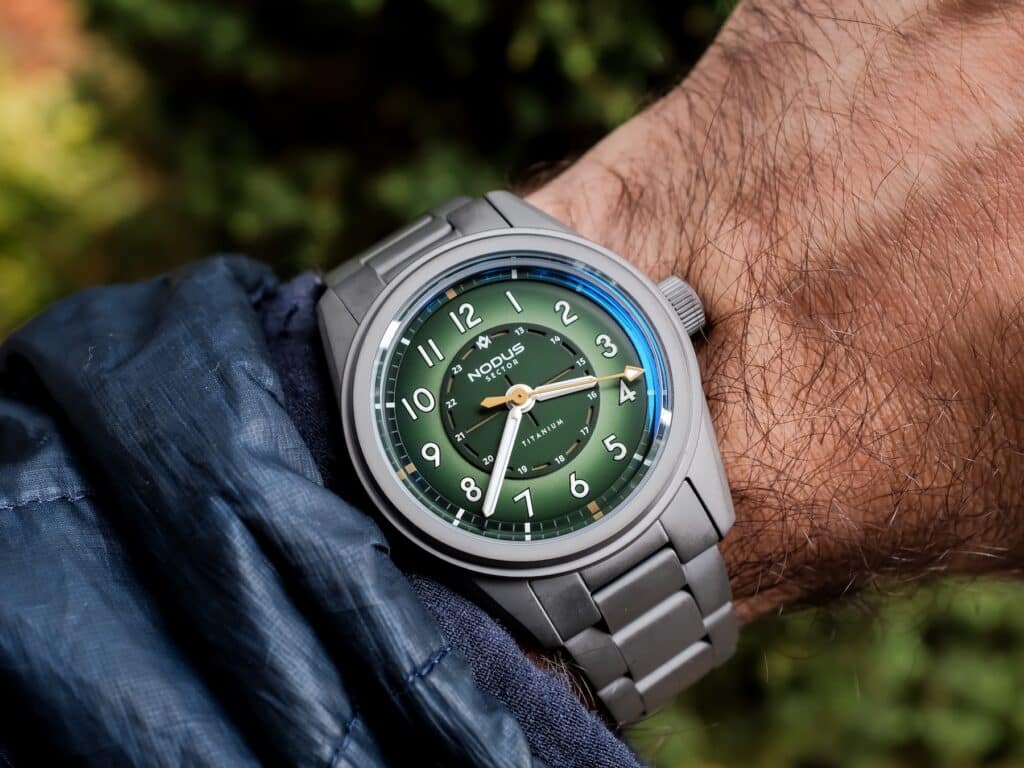
The Nodus Sector II Field Titanium does more with its dial than we normally expect from a field watch, and that’s a big part of why it feels like its own thing. Instead of giving us a flat military-style layout and calling it a day, Nodus builds some depth into the dial with a raised center, recessed numeral ring, and elevated chapter ring around the minute track. The openings in that center section create a subtle sandwich-dial effect, while the matte metallic gradient around the Arabic numerals changes as the light moves. Then there’s the Sequoia green. It shifts throughout the day and gives the watch some personality without turning legibility into a scavenger hunt. We kept coming back to it because it makes the dial more interesting without trying too hard.
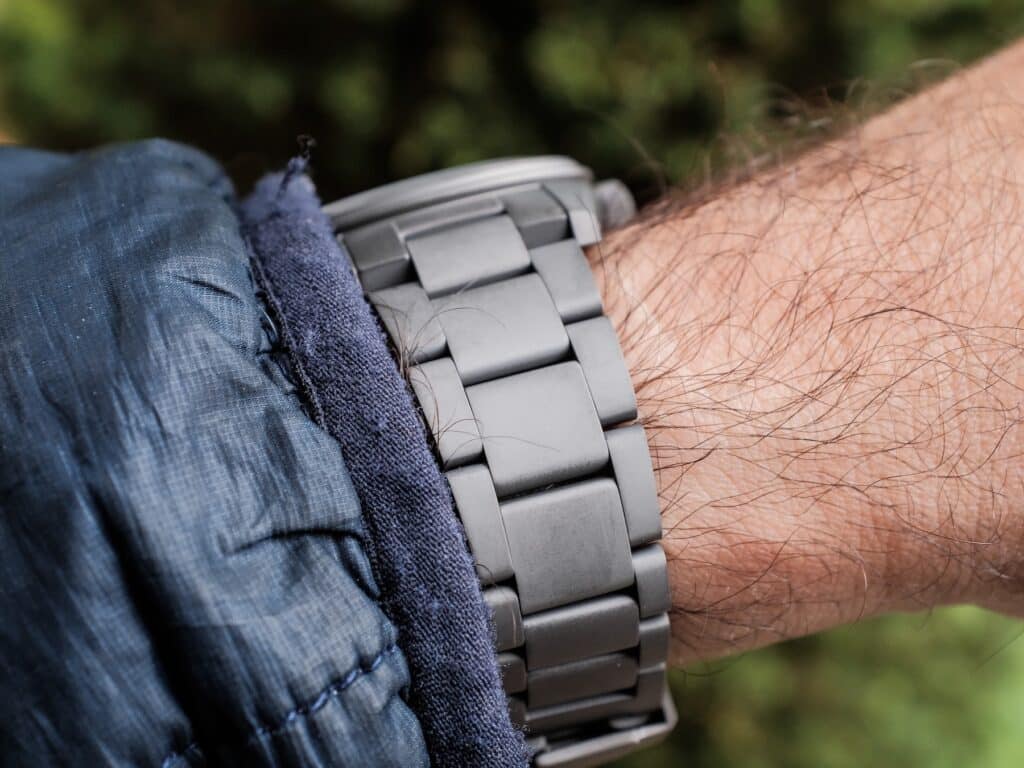
The bracelet helps the Nodus feel like a proper everyday watch rather than something we’d baby to keep the titanium clean. The matte finish matches the case, the solid links have none of the cheap jangling we sometimes encounter at this price, and the 20mm-to-16mm taper lets the bracelet settle naturally around the wrist. The NEM (Nodus Extension Mechanism) clasp is another small win, with enough adjustment to deal with the familiar “why is my wrist suddenly bigger?” problem that appears halfway through the day. The watch stays light but doesn’t feel hollow or flimsy. Add drilled lugs and quick-release spring bars and strap swapping (to NATO straps, leather, or canvas) becomes low-drama. We still kept it on the bracelet most of the time.
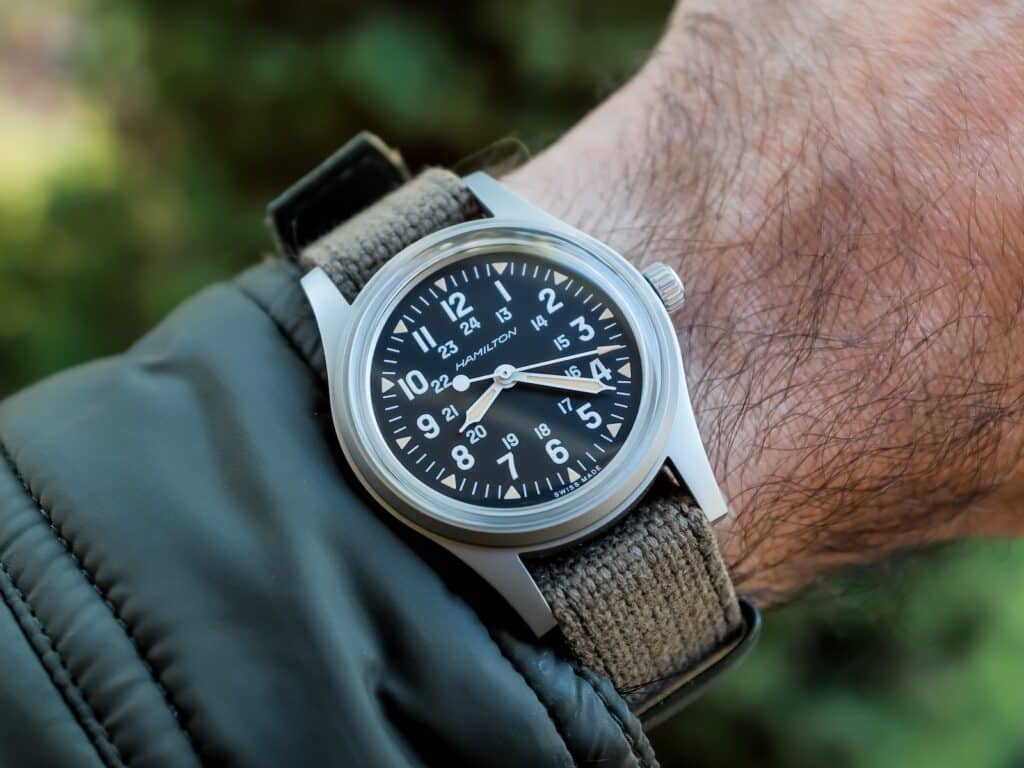
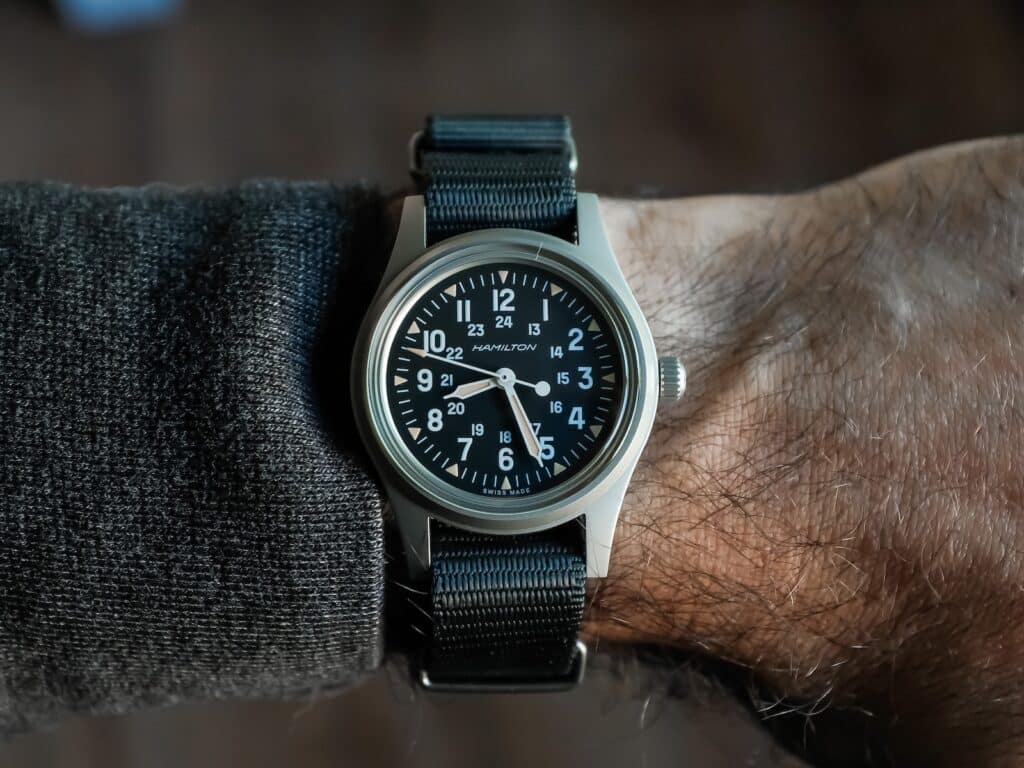
On the other hand, the Hamilton Khaki Field Mechanical 250 we reviewed hands-on is much more disciplined. Its matte black dial isn’t trying to entertain us; it’s trying to make sure we know the time. The large hour numerals jump out immediately, the inner military track adds useful information without cluttering the layout, and the white minute track frames everything cleanly. Still, the dial never feels crowded. We’re also glad Hamilton showed some restraint with the faux-aged details. The treatment on the triangular markers and second hand takes some of the clinical edge off the black-and-white layout, but stops well short of “new watch pretending it has war stories.” Even the Hamilton logo sits quietly beneath 12 instead of barging into the composition.
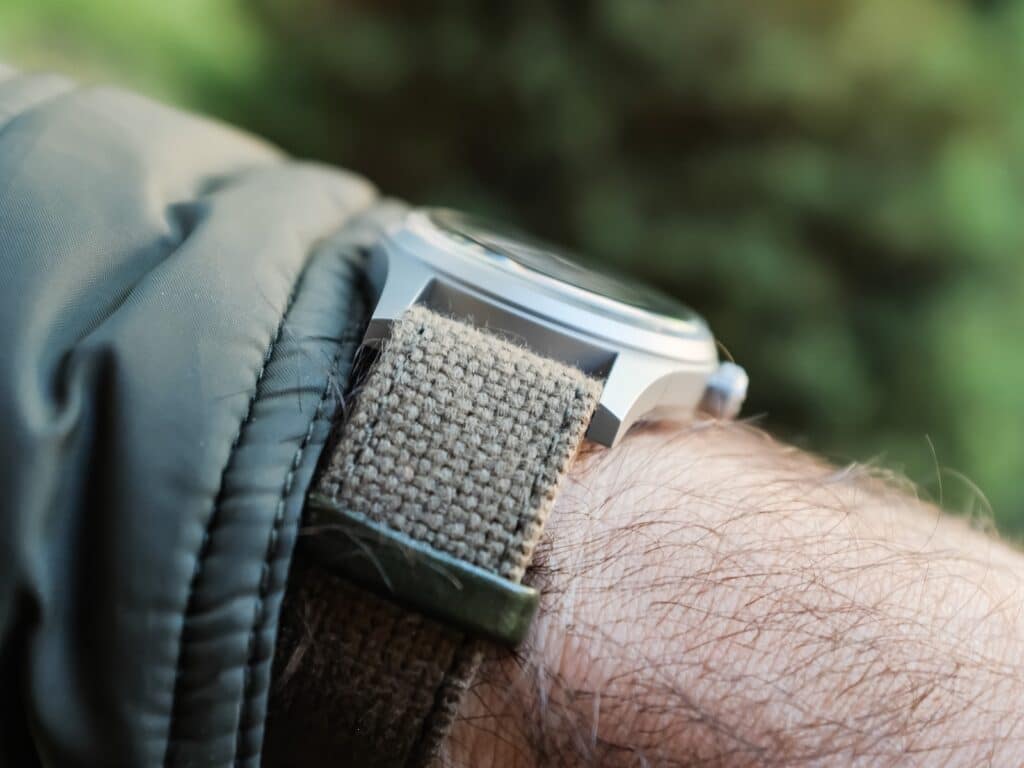
The fixed bars initially look like the sort of thing that could turn strap changes into an unwanted hobby, but they suit the Hamilton better than we expected. The supplied straps are perfectly usable, but the watch starts to make more sense to us with military-style nylon. An olive drab Maratac single-pass strap was an early favorite, while a grey ADPT NATO changed the watch’s feel without making it look like we’d wandered into a different watch entirely. The fixed bars limit the usual bracelet-and-leather shuffle, but they also encourage the kind of NATO experimentation that fits the watch naturally. Sometimes fewer options are easier to live with.
- The Nodus Sector II Field Titanium is the better setup if you want more dial personality, a genuinely comfortable bracelet, and painless strap changes.
- The Hamilton Khaki Field Mechanical 250 wins for straightforward legibility and military character, especially when paired with the nylon straps it seems happiest wearing.
Build Quality & Technical Approach
Both the Nodus Sector II Field Titanium and Hamilton Khaki Field Mechanical 250 take the field-watch brief seriously, but they go about it in very different ways. This is where the comparison moves beyond dial preference and into what we notice after the new-watch honeymoon has packed its bags: case construction, finishing, movement choice, crystal, water resistance, and how each watch holds up to real wrist time. In other words, the bits that matter once we’ve stopped staring at the watch and started asking whether it’s still something we want to wear.
Movements:
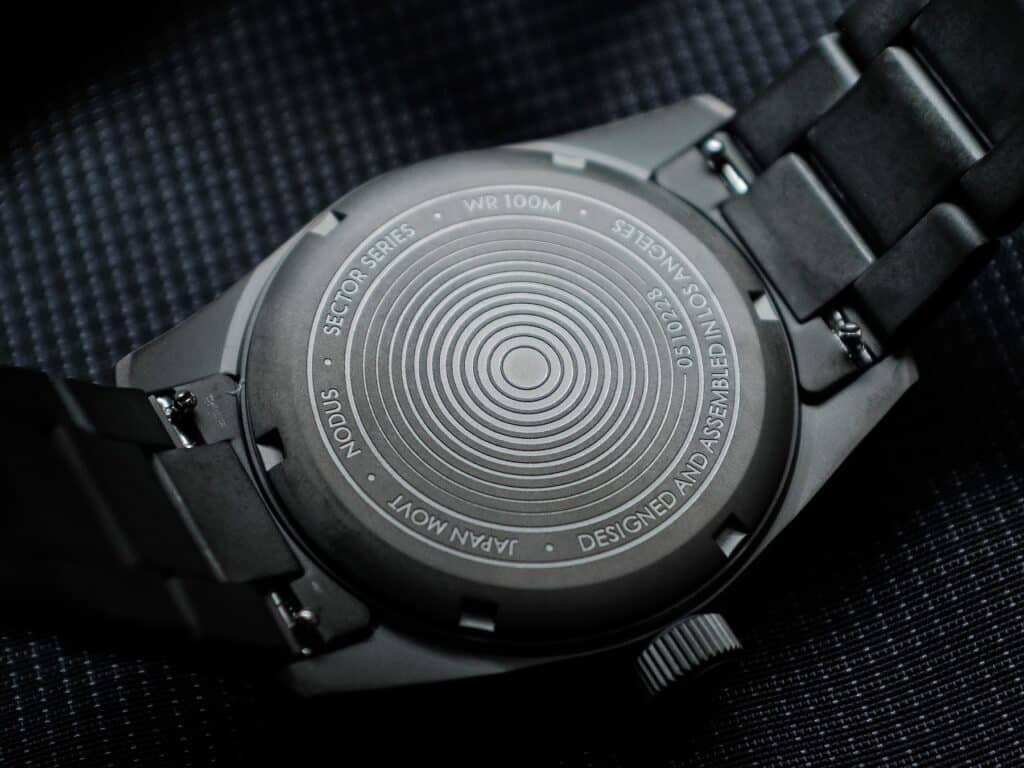
The Nodus Sector II Field Titanium runs the Seiko/TMI NH38 automatic, a caliber we’ve seen plenty of times in affordable watches and one that makes sense here. It beats at 21,600vph and gives us roughly 41 hours of power reserve, but the more useful detail is that Nodus regulates it in-house to a claimed ±10 seconds per day. That gives the otherwise familiar NH38 a bit more attention than the bare minimum. It’s also a dedicated no-date movement, so there’s no phantom date position when we pull the crown out. During our time with the Sector II, the movement performed beautifully without making itself the star of the show, which is a good place for a field-watch caliber to be.
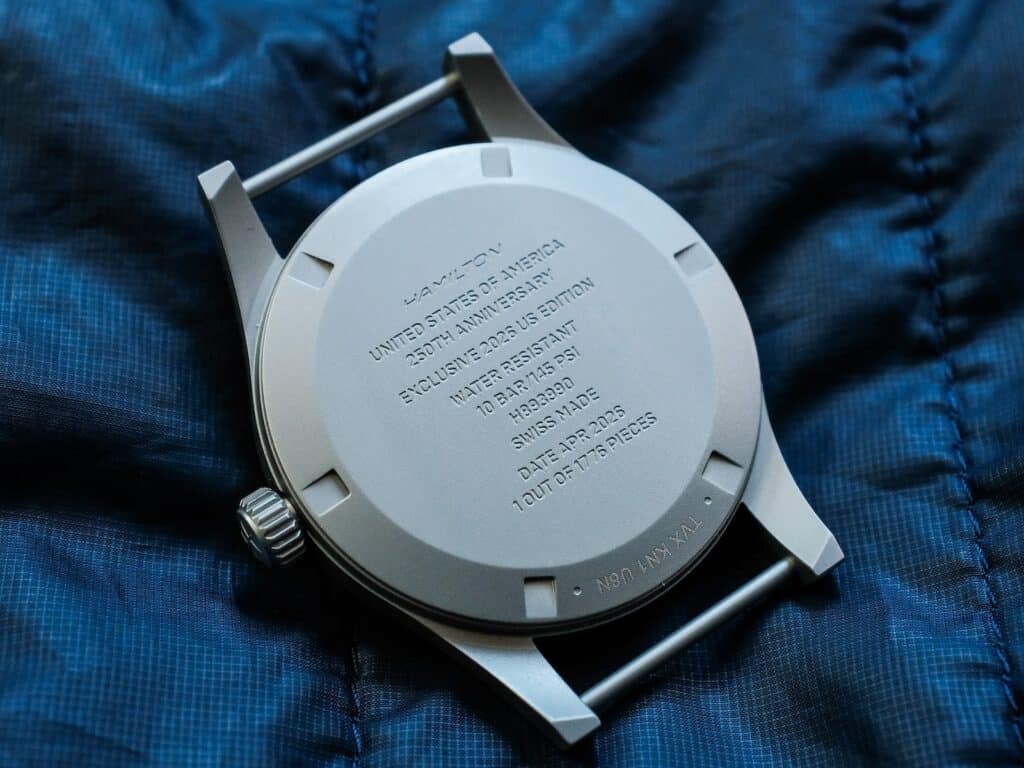
The Hamilton Khaki Field Mechanical 250 uses Hamilton’s H-50 hand-wound movement, with its 80-hour power reserve doing what we want a longer reserve to do: make ownership less demanding. Leave it sitting over the weekend, and there’s a good chance it’s still ticking when Monday rolls around. More importantly, the winding itself is quite satisfying. The crown turns smoothly and consistently, and what could easily become a repetitive chore instead fits the watch’s military character. Hamilton also adds a Nivachron balance spring and hacking seconds, giving the movement modern practical touches rather than just stacking in an old military caliber. The movement dust cover is another nice nod to the original design, but the real appeal is simpler: after a while, the H-50 just keeps doing its job and doesn’t ask much beyond the occasional crown twist.
Case Construction & Finishing:
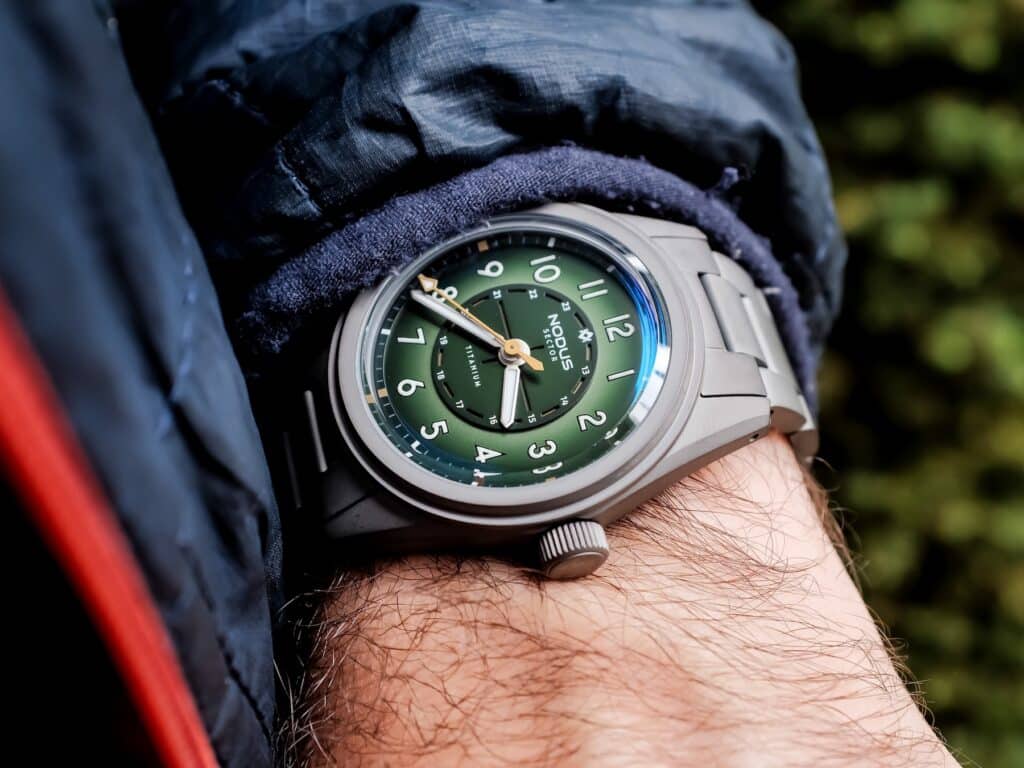
The Nodus Sector II Field Titanium makes a strong argument for why titanium matters beyond sounding good in a product description. At 38mm wide, 11.7mm thick, and 47mm lug to lug, it should feel compact, and it does on the wrist. However, the squared-off lug tips give it a little more presence than those numbers indicate. We liked that balance. The lugs curve downward enough to keep the watch planted on a 6.75-inch wrist without making the case feel cramped, while the Grade 2 titanium construction keeps the whole package light. Even on the bracelet, the watch comes in at about 100 grams before sizing, which makes the “field watch you can forget is there” argument considerably easier to believe. The matte, media-blasted finish across the exterior also suits the watch better than a shinier, dressier treatment would, and Nodus adds a scratch-resistant coating to help protect it. That combination feels thoughtfully considered rather than merely lightweight for its own sake.
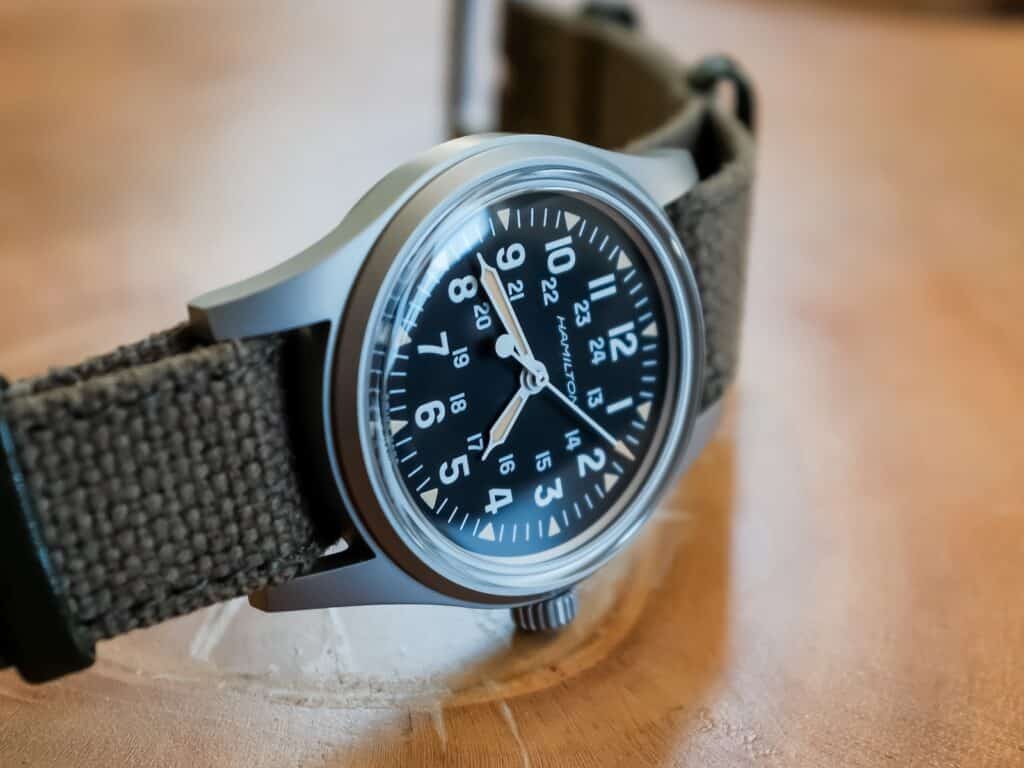
The Hamilton Khaki Field Mechanical 250 goes smaller, and this is where the case dimensions became more meaningful during wear. At 36mm across and just over 10mm thick, it sounds tiny by current standards, but the 46mm lug-to-lug measurement keeps it from disappearing. On a 6.75-inch wrist, that balance worked far better for us than the larger 38mm Khaki Field we’d previously struggled to connect with. It feels compact without feeling underwhelming, which is a difficult line to hit. There’s also something satisfying about a watch that doesn’t need extra case size to create wrist presence. The Hamilton simply settles in and stays there, which becomes more valuable the longer we wear it. It’s the sort of sizing that makes us wonder why every field watch needs to audition for the role of wrist furniture.
Crystals and Bezels:
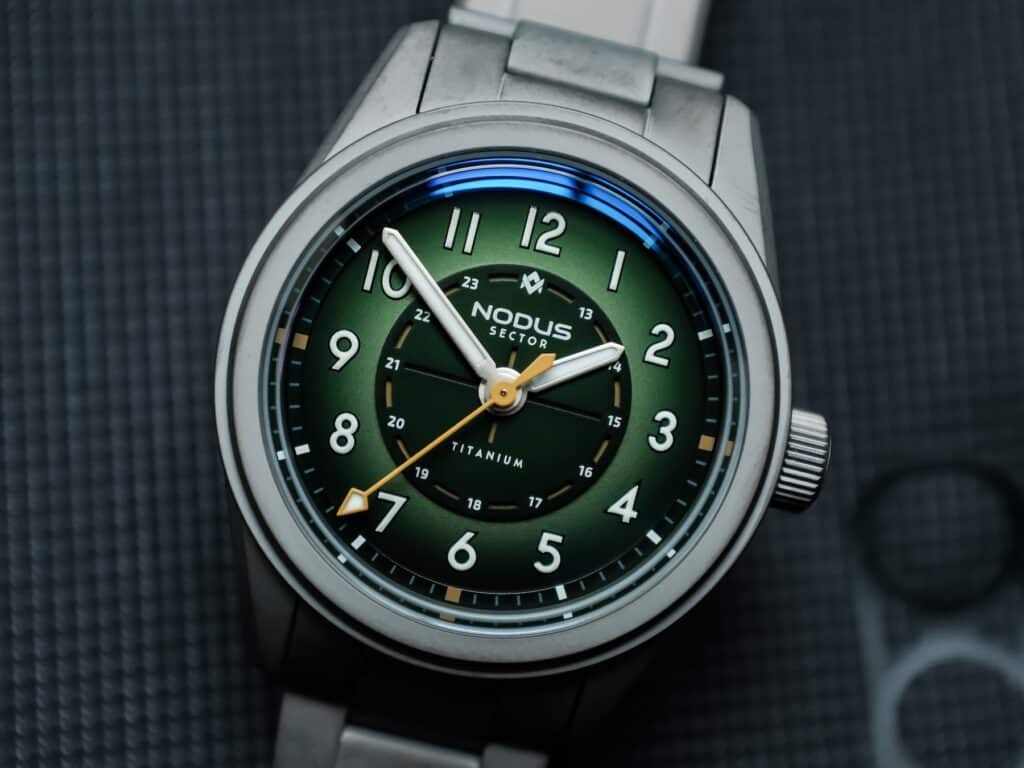
Nodus uses a box-shaped sapphire crystal that sits inside the stepped bezel, with a small bevel around the edge carrying that stepped profile into the crystal. The underside gets blue anti-reflective coating, which helps keep reflections under control without becoming something we notice every time the light hits the wrist. It’s a good match for the watch’s modern construction: sapphire gives us the scratch resistance we want from an everyday watch, while the shaped crystal adds enough visual character to keep the front end from feeling completely clinical.
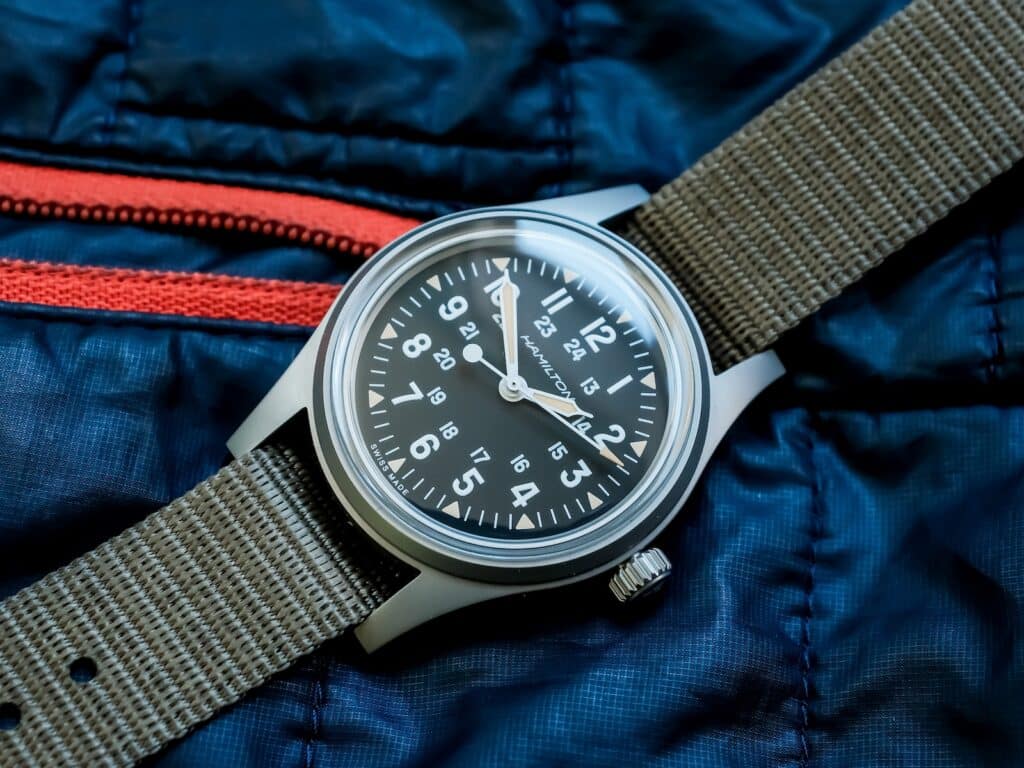
The Hamilton Khaki Field Mechanical 250 goes in the opposite direction with an acrylic crystal, and honestly, we’re glad Hamilton didn’t try to “upgrade” it into sapphire. The boxed profile becomes more apparent from an angle, and the acrylic brings the warmth and slight distortion that make the vintage-inspired design work. Yes, scratches are part of the deal. We’ve never found that especially troubling, though, because Polywatch exists and removing a few marks is hardly a full-blown watch crisis. More importantly, Hamilton seems to have improved the glare issues we’ve encountered on earlier Khaki Field models, so the acrylic choice feels like a deliberate part of the experience rather than a compromise we have to apologize for.
Water Resistance & Lume:
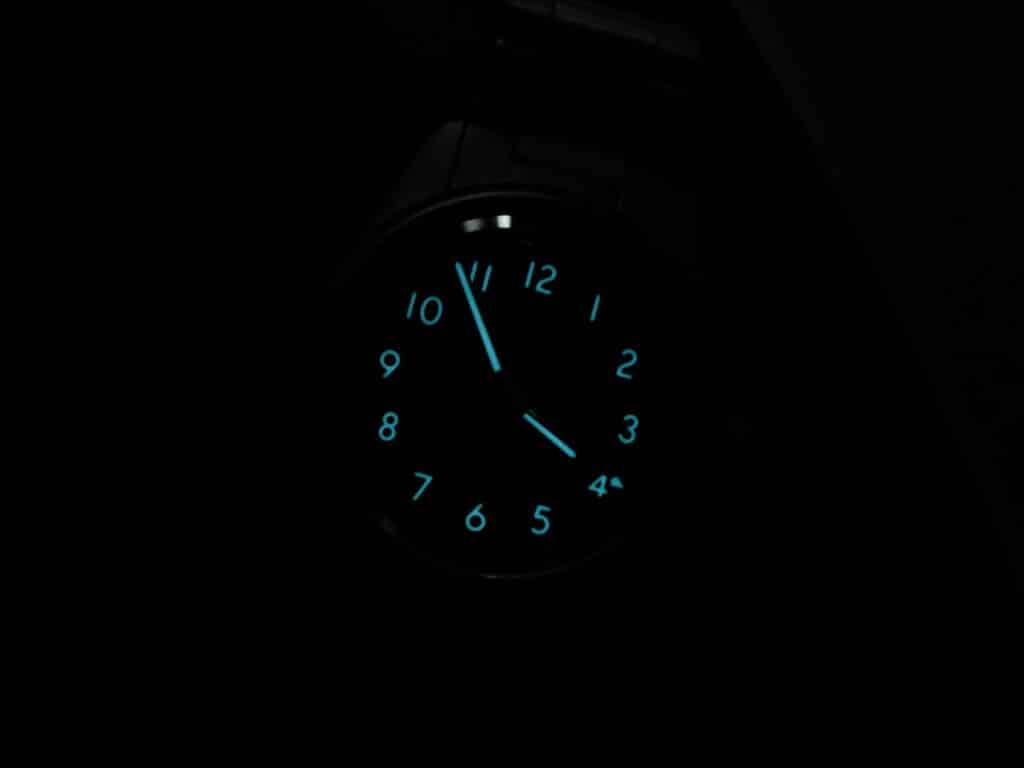
The Sector II Field offers 100 meters of water resistance, with a signed screw-down crown and a solid screw-down caseback made from coated Grade 2 titanium. It’s the sort of specification we like because it doesn’t require a paragraph of excuses. Rain, washing dishes, getting caught in a downpour, and the occasional ill-advised decision to wear your watch near water are all well within its comfort zone. The lume is arguably more fun than the water-resistance rating, though. Nodus uses Swiss Super-LumiNova BGW9, and it charges remarkably fast. We’re not normally the people standing in a dark bedroom refreshing a stopwatch for lume tests, but the Sector II made us pay attention. It gets bright quickly and gives the dial plenty of contrast once the lights go out.
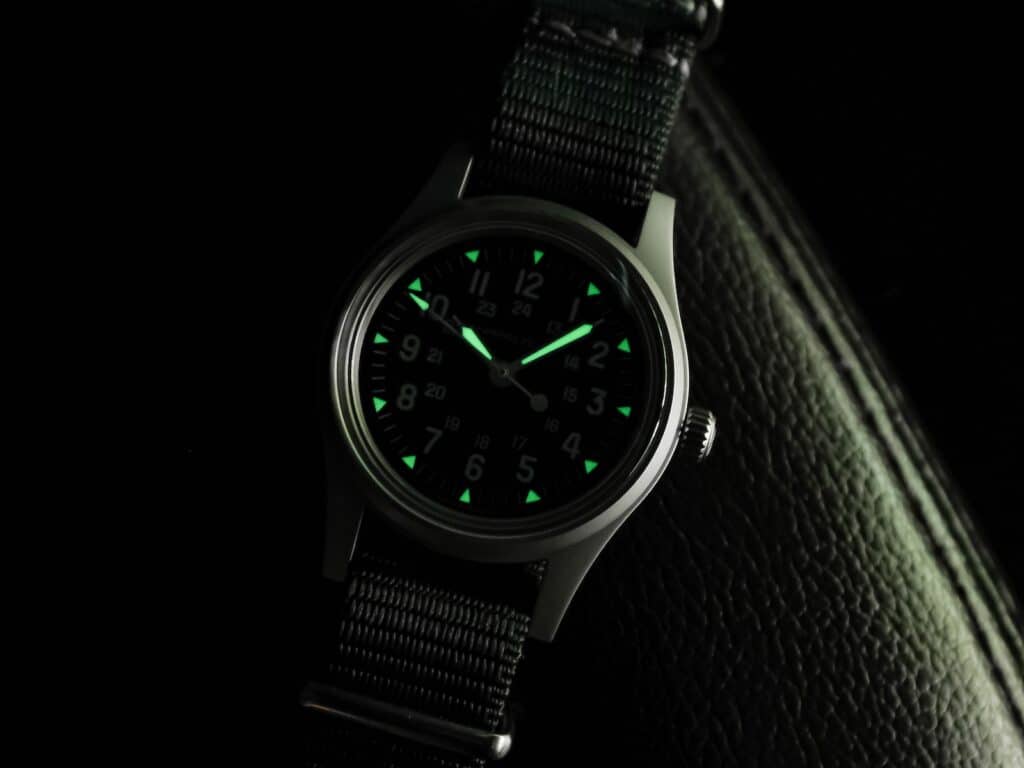
The Khaki Field Mechanical 250 also gives us 100 meters of water resistance, but the number matters less than how unrestricted the watch feels because of it. Pair that rating with the compact case, matte finishing, acrylic crystal, and straightforward dial, and there’s very little about the watch that makes us want to baby it. That’s a big part of its everyday appeal. Legibility is excellent in normal light, too, whether we’re indoors, outside, or trying to read the time from some ridiculous angle while driving. The Super-LumiNova follows the same practical approach, with a warm lume tone that fits the watch rather than turning it into a glow-stick competition. It does what we need and gets out of the way.
- Nodus Sector II Field Titanium: The more modern technical package, combining regulated NH38 performance, lightweight titanium construction, sapphire, and fast-charging BGW9 lume for low-fuss daily wear.
- Hamilton Khaki Field Mechanical 250: The more traditional setup, pairing the long-running H-50 manual-wind movement with compact dimensions, acrylic warmth, and practical 100-meter water resistance.
Cost Considerations
The Nodus Sector II Field Titanium comes in at $625, and that price feels straightforward for what we get. It isn’t trying to win the “cheapest field watch on the internet” contest, and it doesn’t need to. The lightweight titanium case, regulated NH38, sapphire crystal, and well-executed bracelet add up to a watch that feels considered rather than cost-cut. More importantly, our review experience backed up the price. Nodus takes the everyday practicality we expect from a field watch and gives it a more contemporary personality without sending the bill into “maybe I should discuss this purchase with my accountant” territory. At $625, we’d have a hard time calling it anything other than an easy recommendation for someone who already likes what Nodus is doing.
The Hamilton Khaki Field Mechanical 250 asks $725, putting it $100 above the Nodus, but this is one of those cases where the extra money buys a more specific kind of satisfaction. During our review, the watch started pushing other pieces out of the rotation almost immediately, despite our usual skepticism about the honeymoon period. The proportions finally felt right, the design clicked, and the package felt both historically informed and genuinely enjoyable to wear today. At $725, that gives the Hamilton a strong case for the extra spend if we’ve spent years looking for the Khaki Field that finally feels right. In a hobby where there’s always another watch to investigate, finding one that makes us stop browsing is worth something.
Final Thoughts: Which Field Watch Makes More Sense as an Everyday Watch?
After wearing both, we’d give the Hamilton Khaki Field Mechanical 250 the everyday-watch win. The Nodus is the more contemporary package and probably the easier one to justify rationally, but that isn’t quite the test. We care about what happens when both watches stop feeling new, and we have to choose one without overthinking it. In that situation, the Hamilton kept pulling us back.
That was the surprise of this comparison. We went into the review expecting to stay cautious about the honeymoon effect, yet the Hamilton kept pushing other watches out of the rotation. At some point, that stops being a novelty and starts becoming the point. No doubt the Nodus is a very good modern field watch, but the Hamilton created the stronger attachment, and that is harder to measure than millimeters or movement specifications.
So our pick is the Hamilton. It is the one we’d choose for the person who wants to put a watch on, stop browsing alternatives, and enjoy wearing the damn thing. In this case, the watch that kept winning the wrist was the better everyday watch.

Co-Founder and Senior Editor
Kaz has been collecting watches since 2015, but he’s been fascinated by product design, the Collector’s psychology, and brand marketing his whole life. While sharing the same strong fondness for all things horologically-affordable as Mike (his TBWS partner in crime), Kaz’s collection niche is also focused on vintage Soviet watches as well as watches that feature a unique, but well-designed quirk or visual hook.